Issues
The opener
Correspondent’s corner
From Madrid
By Liam Aldous
Joy can be heard on Madrid’s pavements once again. After a trying year, the city’s perky soundtrack of cañas being poured and terrace chairs shuffling on cement is back to its former tempo. This alfresco cacophony is at the heart of what it means to be a Madrileño: being able to sit in the sun, sip a beer or vermut and talk the day away with the people you love.
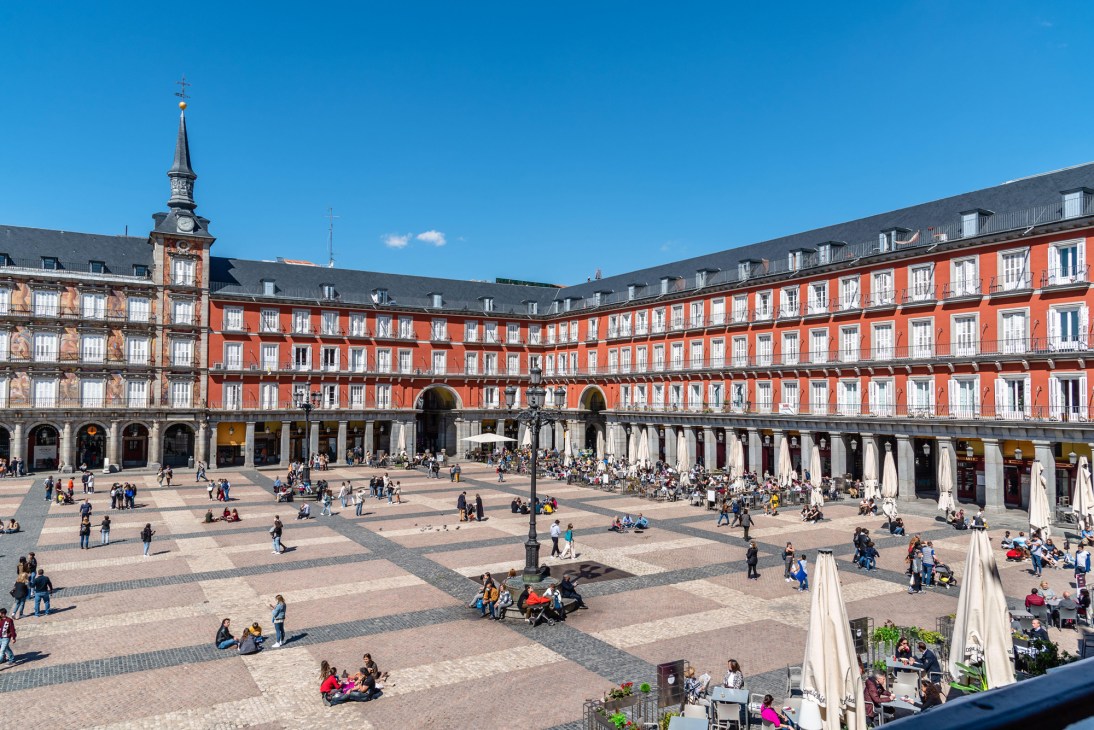
Much of the conversation has swirled around the region’s gung-ho premier Isabel Díaz Ayuso, whose successful re-election bid centred on “keeping bars open”. Ethical and medical debates have subsequently raged across newspaper pages, while planeloads of French and German youngsters have arrived for their own taste of this inebriating flavour of freedom. But Madrileños have responded with relief, characteristic jollity and occasional disbelief that the Spanish capital is suddenly painting itself as Europe’s stubborn enclave of quotidian fun.
The city’s collective mood has soared as a result. Sociologists still struggle to accurately measure the spirit or so-called “emotional capital” of our cities. But perhaps they’ve been constrained by over-complicated science or technology. To gauge how a city is really feeling, sometimes one only has to step outside, stroll down the street and listen to the intertwining tones of voices ringing across plazas, pavements and restaurant tabletops. Peel away all the stresses and superfluous distractions of urban life and, eventually, all we really need is a table-shaped nucleus held together by friendly faces and tasty sustenance. In Madrid, the only challenge is finding a good seat.
To me, to you
Careful with that sculpture delivery…
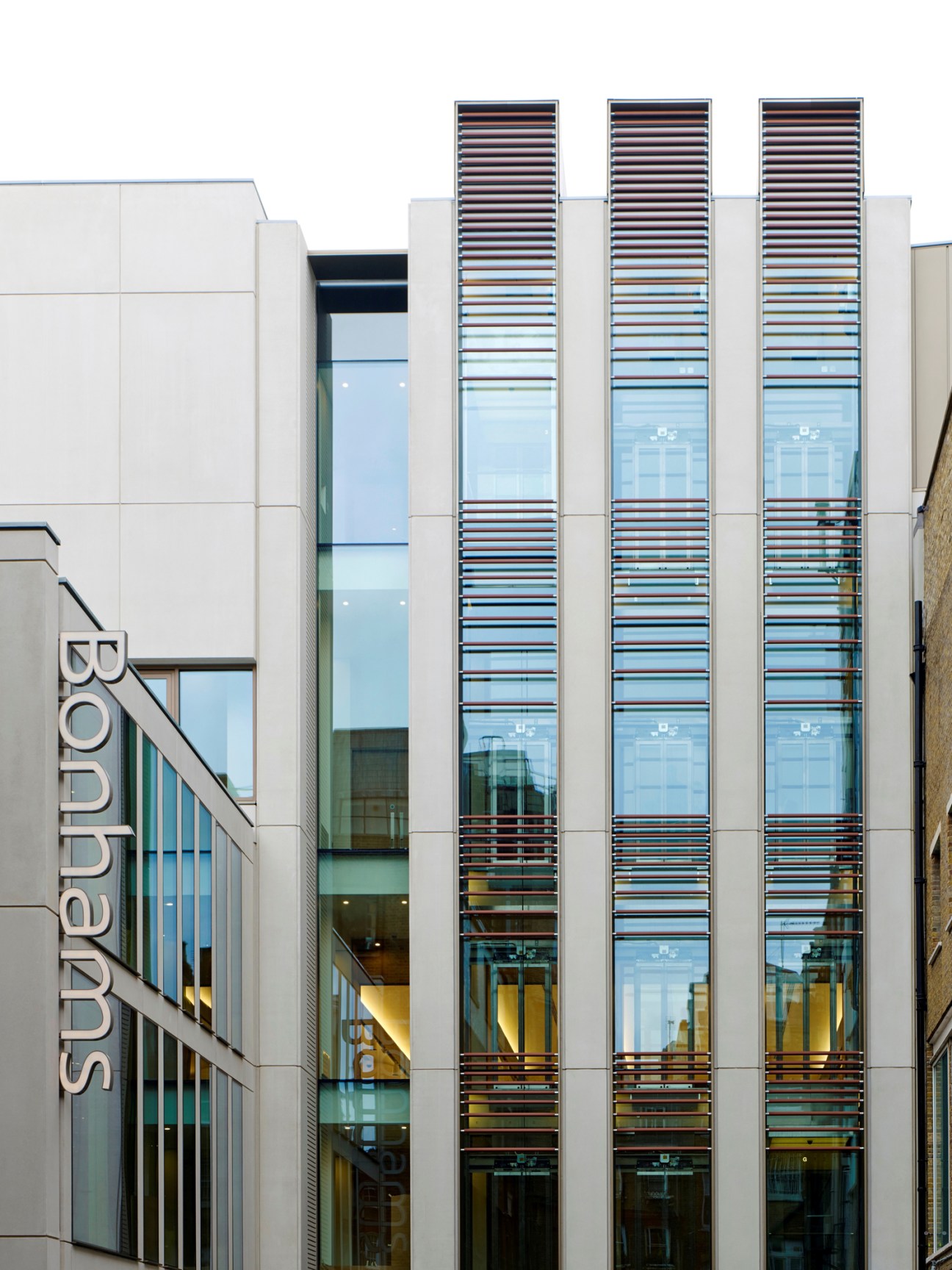
If you’ve ever been worried for the state of your furniture or wine delivery, spare a thought for the specialists at Bonhams: they too place their faith in delivery companies (albeit specialist ones). But the contents of their boxes are not the kind of thing you’d bear to lose in the post. On a recent visit to the auctioneer’s New Bond Street salerooms for this issue’s Arts Special, monocle baited its breath together with a gaggle of employees who observed every move of a delivery company’s last mile outside their doors: a huge sculpture was being unloaded from a truck. The descent was jittery: gasps were heard. All ended well ahead of the British and Irish sale in June. As for the next delivery – break a leg, not a sculpture.
Fur deal
By Julia Webster Ayuso

Many questions arise after a break-up but a particularly tricky one is, “Who gets the dog?” To answer this, Spain’s parliament has taken steps towards recognising pets as “living beings with feelings” and not “objects” in divorce hearings. The proposed change to the law opens the possibility for a formal joint custody of domestic animals, just as with children. Spain has the fourth highest rate of divorce in the EU but at least now there’s hope that when dog lovers are jilted things don’t get catty.
More than a game
Outcry at attempts by some European football clubs to form an exclusive “super league” earlier this year highlighted the growing divide between monied-up sports teams and the communities they represent. For the likes of Turin’s Juventus, which is trying to repair relationships with supporters after the fallout, we would suggest looking to Uruguay, where teams such as Club Colón help to run Salí Jugando, a programme to help teenagers that sees them turning up in communities in need of some assistance. Now that really is super.
Correspondent’s corner
On Transport
By Gabriel Leigh
As a teenager, the Concorde played an important role in my life, despite the fact that I never actually flew on one. For part of the 1990s my family lived in Reading, a forgettable UK town that had one distinction: it sat beneath the westbound departure path for the Concorde out of Heathrow. The plane would come thundering overhead on most days, audible well before it passed over and then for quite a while after. I was fascinated by it and, occasionally, would even go to the observation deck at the old Terminal 2 at Heathrow to see it depart. It was smoky and antisocial but it was fantastic.
The Concorde was grounded for good in the early 2000s and one of the enduring questions since has been, why has there not been another supersonic plane to replace it? We could point to fuel prices and the fact that it was simply built by the British and French more or less to outdo the Soviets at whatever cost. But the lack of a successor has often felt more like a failure of imagination.

That’s why it’s especially exciting to hear about the handful of supersonic aircraft that are being prepared to make their debuts in the coming years (see here), including at least one aimed at commercial airlines. They promise to fly at twice the speed of sound and eventually even faster – and to be carbon-neutral while doing it.
In an aviation industry that is mostly characterised by slow and incremental improvements, we’re finally seeing some wild, inspiring and occasionally revolutionary ideas, some of which might become reality within the next 10 years. Whether you’re in a hurry to get across the Atlantic or not, that’s something we can all get behind.
Train of thought
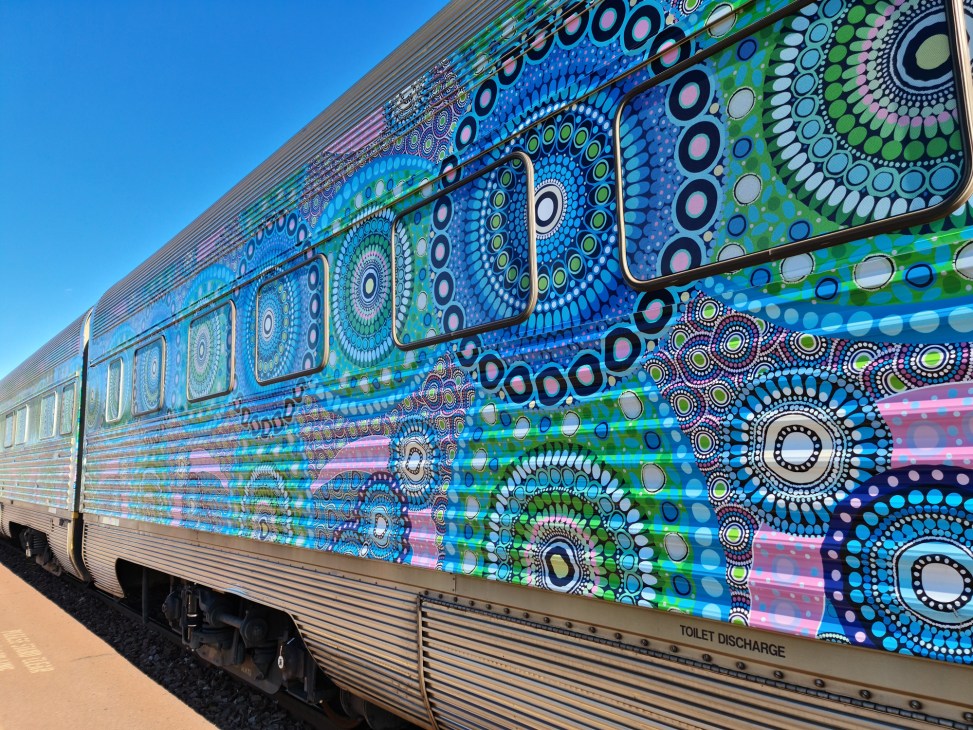
Many rail routes sell themselves on the view from the train. Few give much thought to the view of the train. The operators of The Ghan, which trundles nearly 3,000km across Australia, have changed that. The exterior of three of its carriages have been painted by Aboriginal artist Chantelle Mulladad. The result? In a word, marvellous.
Mulladad’s work is an iridescent blue-green hallucination entitled “Crossroads”. As is often the case with Australian Indigenous art, it is a startling demonstration of the vivid beauty that can be perceived in the country’s outwardly forbidding landscapes.
“Crossroads” was commissioned to promote the Parrtjima Aboriginal light festival in Alice Springs but it should be a permanent addition to The Ghan. And other trains should follow suit.
Mean spirited
By Tomos Lewis
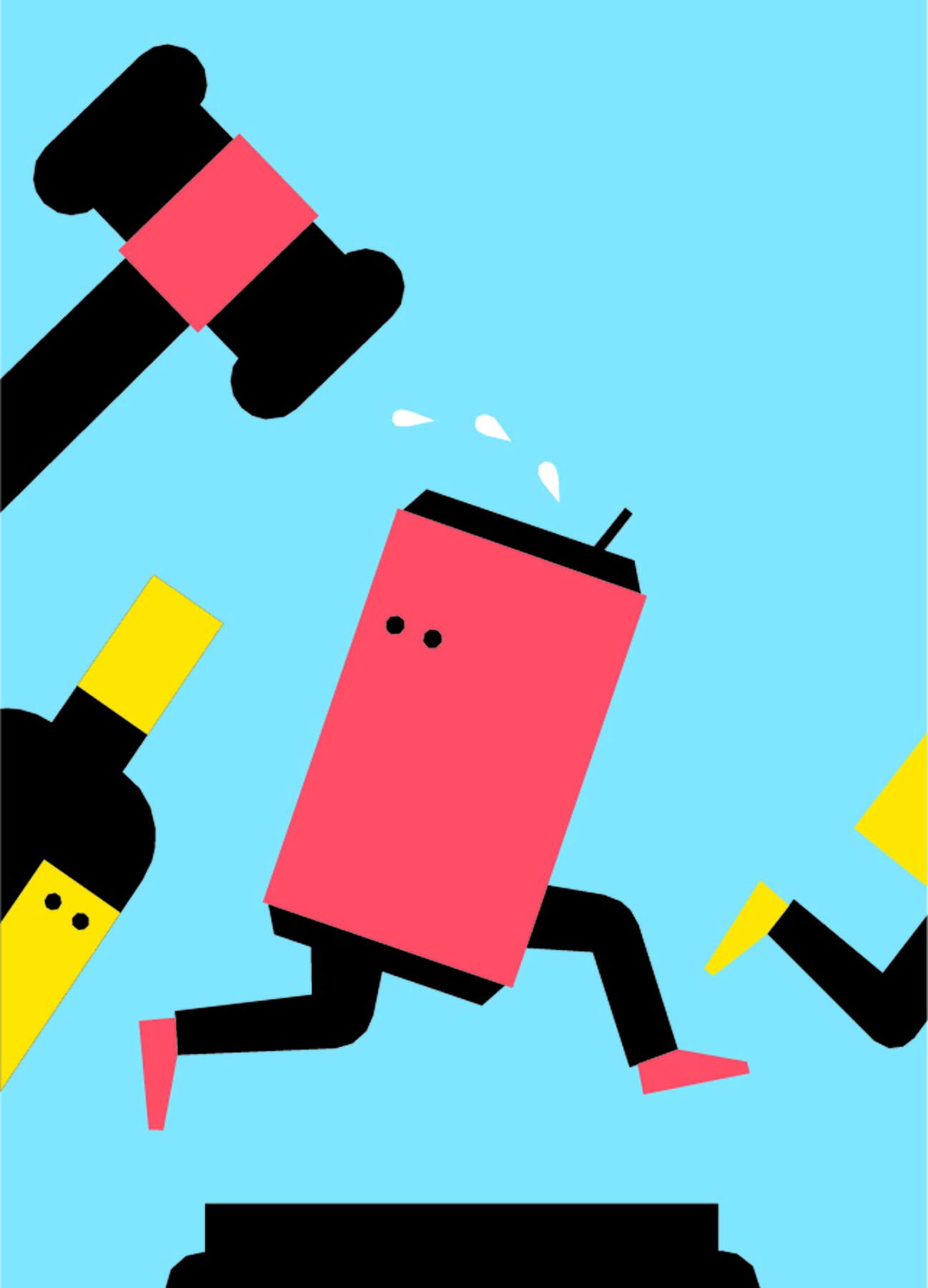
A motion in Toronto to decriminalise drinking alcohol in parks has been blocked by the council, an unwise move that will only stifle life in its public places. However, the city’s not alone. Here are three other places finding the balance.
Turkey: Hoping to raise a glass to your favourite political candidate? Time your toast carefully. Election days are dry here, so put the celebratory bubbly on ice.
Sydney: Common sense has prevailed and the lockout laws that shuttered Sydney’s nightlife have now been rolled back.
Munich: Social environments rather than laws dictate drinking behaviour. Bavaria’s beer-garden-goers prove that you can hang out without a hangover.
Chain reaction
The saying “you never forget how to ride a bike” might be true but, if the uptick in adult bike lessons in Manila is anything to go by, it doesn’t resonate with the many urban Filipinos who never learned in the first place. Coinciding with an improvement in bike infrastructure in the city – 338km of lanes will be rolled out by the end of the year – the National Bicycle Organization is now offering riding classes for grown-ups, in locations across the capital. A single one-hour session can help (most) people realise that taking to two wheels is just as easy as, well, riding a bike.
Bridge too far?
Morocco and the UK are to begin talks about building a crossing between Gibraltar and Tangiers, giving credence to previous proposals for a Euro-African connection. While mega engineering ideas can be mad (a bridge-cum-island from Spain to Morocco, anyone?), some really are worth considering.
For some big ideas that should fly, see our feature on grand transport projects here.
Images: Alamy, Courtesy of Bonhams, Courtesy of Northern Territory Government of Australia, Getty Image
Let the games begin
Are you ready to get on board yet? It’s a question that’s come up again and again while putting this transport-themed issue together as we have spoken to aviation geeks, railway players and the ambitious urban planners who are keen to get everyone walking and cycling. But the same question has also played out in numerous other conversations in recent weeks because, even though much of the developed world seems set to move on from the pandemic, you sense a nagging hesitation in the air.
It seems as though some people are not quite sure whether they want to get back to work, see their friends or even go on holiday. Leaving the past 18 months behind is not going to be as simple as you might imagine – lockdowns have dented people’s ambitions and made them unsure of how to move ahead (surely there’s a limit to how many rainbow cakes you can spend your afternoons baking?). And it’s not just individuals. It feels as though entire nations have lost their nerve. People really are not sure they are on board with the programme after all.
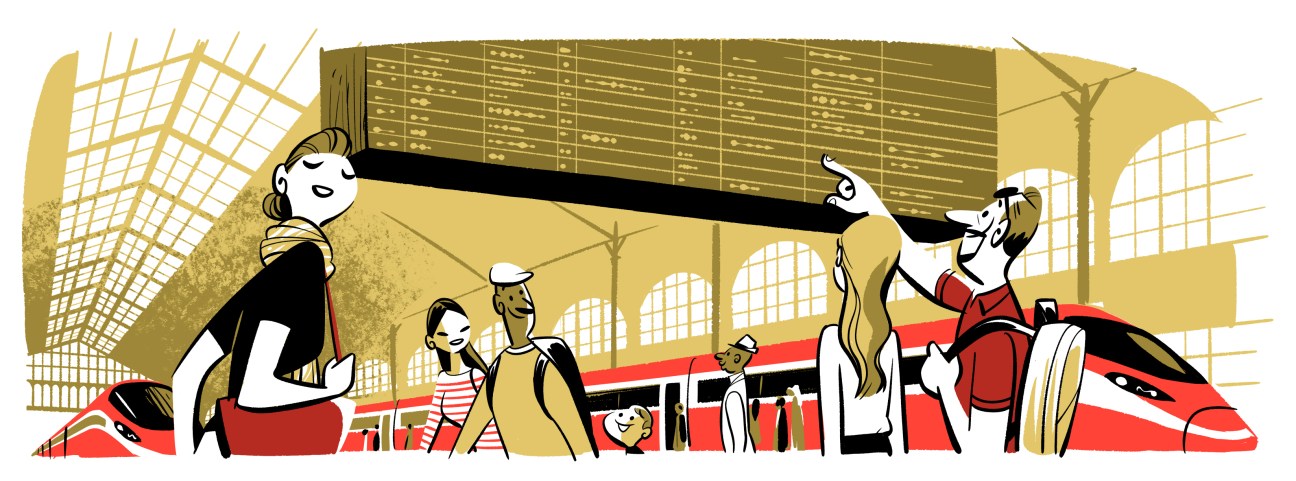
Here’s a good example: the Tokyo Olympics. Delayed from 2020, the Games are scheduled to start on 23 July but in a format that will bar international spectators – perhaps Japanese spectators too. Yet even this stripped-back Games is struggling to gain public support in Japan and, as Monocle goes to press, there are many in the country who remain convinced that the event will be cancelled again. I hope it goes ahead.
These leaner Games, with rigorous testing in place, could be a moment that brings people together and sees us cheering on other nations instead of debating the merits or failings of their health services and vaccination programmes. It could be a time when we focus on people who have trained for years for a few fleeting moments that will determine whether they get to stand on the podium with a medal as the winner’s national anthem plays. And it could be a first step towards reconnecting our world, getting international travel back.
Some months ago when we first talked to our colleagues in Tokyo about pulling together an Expo looking at the people behind the Games, you could tell that even they were unsure whether this was wise. It seemed to go against the mood in the city but as Fiona and Jun started meeting the makers of the Olympic torches, of the mattresses that will allow fatigued athletes to get a good night’s kip, the wheelchairs that will be used by many of the leading Paralympians and the architects who have created the stadiums, they began to see that many Japanese people actually want the Olympics to happen and have been working away with unswerving commitment. These are the engineers and designers who understand that someone is going to have to be a little brave. And let’s also remember that the athletes attending know about risk – the odd javelin in the toe, volleyball in the face.
Elsewhere, this message has already hit home. Venice is pushing ahead with its Architecture Biennale, Milan has said that it will host Salone del Mobile, its celebrated furniture fair, and London is going to host the Frieze art fair. Yes, these events will not be at the same pace or size as in previous years but as Europe’s vaccination programmes push ahead, they have decided that it’s time to bring people back together again.
And we want to do this too. First we will be hosting a series of events to celebrate the launch of The Monocle Book of Homes, including here at Midori House (come and see us – tickets are available at Monocle.com/events). We are also planning a return of The Chiefs Conference in the Alps and summer markets too. It’s not quite the Olympics but it’s the taking part in your city’s life that matters. If you need any more information, have a clever idea or just want to say hello, you can email me at at@Monocle.com.
Business
Creative sparkle
UK
Jewellery
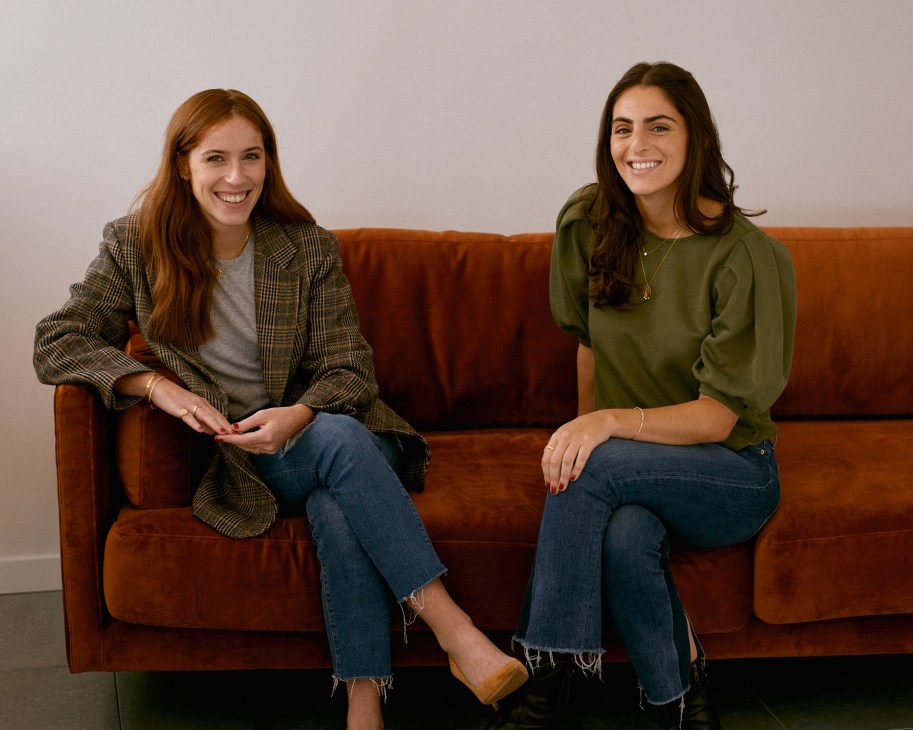
For many years synthetic diamonds were used in tools such as polishing machines for their practicality rather than their looks. But as technological gains led to bigger, more fetching stones, jewellers took notice. Production of lab-grown diamonds has now risen more than twofold since 2018. Kimaï, a UK-based jewellery house with production in Antwerp, sells its lab-grown gems to a nascent market. “We’re a small company but we’re growing fast,” says co-founder and CEO Jessica Warch (pictured above, on right, with co-founder Sidney Neuhaus), describing a sales increase of more than 200 per cent year-on-year. Marketing synthetic diamonds as an ethical alternative to gems associated with conflict zones and poor working conditions is also making an impact. “We’re just getting started,” says Warch.
UK.kimai.com

Personal taste
Global
F&B
After travelling extensively and learning about wine while working as an environmental engineer, Portuguese native Ana Monforte devised a plan for a new vintner business model: Grapekeeper. Launched in 2018, the concept allows clients to own part of the production process at some of Europe’s most prized vineyards and receive a batch of wine every year. “Grapekeeper is not about slapping a customised label on a bottle and calling it yours,” says Monforte. “It’s about an experience and a way of life. I call my clients keepers because they support a sustainable form of agriculture.”
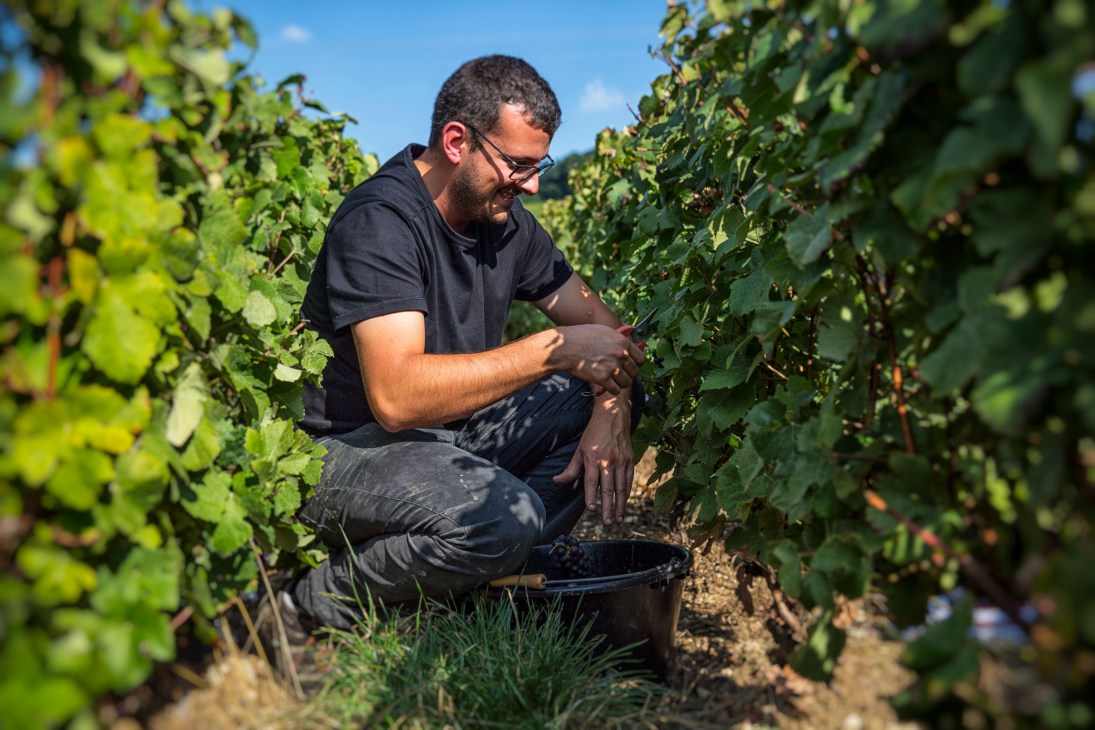
Grapekeeper provides consumers with updates on their vineyard and news from the cellar. After partnerships with wine-makers in Champagne, Piemonte, Garda, Tarragona and Mosel, the latest addition is from Niepoort in Portugal’s Douro region. “People dream about making wine because it’s a romantic notion,” says Dirk Niepoort, the first Portuguese wine-maker to sign with Monforte.
“The world of wine is beautiful but also difficult,” says Monforte. “Grapekeeper gives access to it without shattering the romance. Investment starts at €2,700 per year for 117 bottles but that comes with extras, such as classes on organic wine or private dinners with the wine-maker. There is nothing more satisfying for a wine aficionado than toasting a good harvest in the company of the wine-maker.”
grapekeeper.com
Making it count
USA
Surveillance
Mention a start-up that specialises in monitoring people and you might expect some discomfort over surveillance and privacy. That hasn’t been the case with the backers of San Francisco’s Density, which closed a round of financing last year with $51m (€42m). It doesn’t use cameras or harvest personal data to analyse people’s movement but instead incorporates technologies such as AI, infrared and radar.
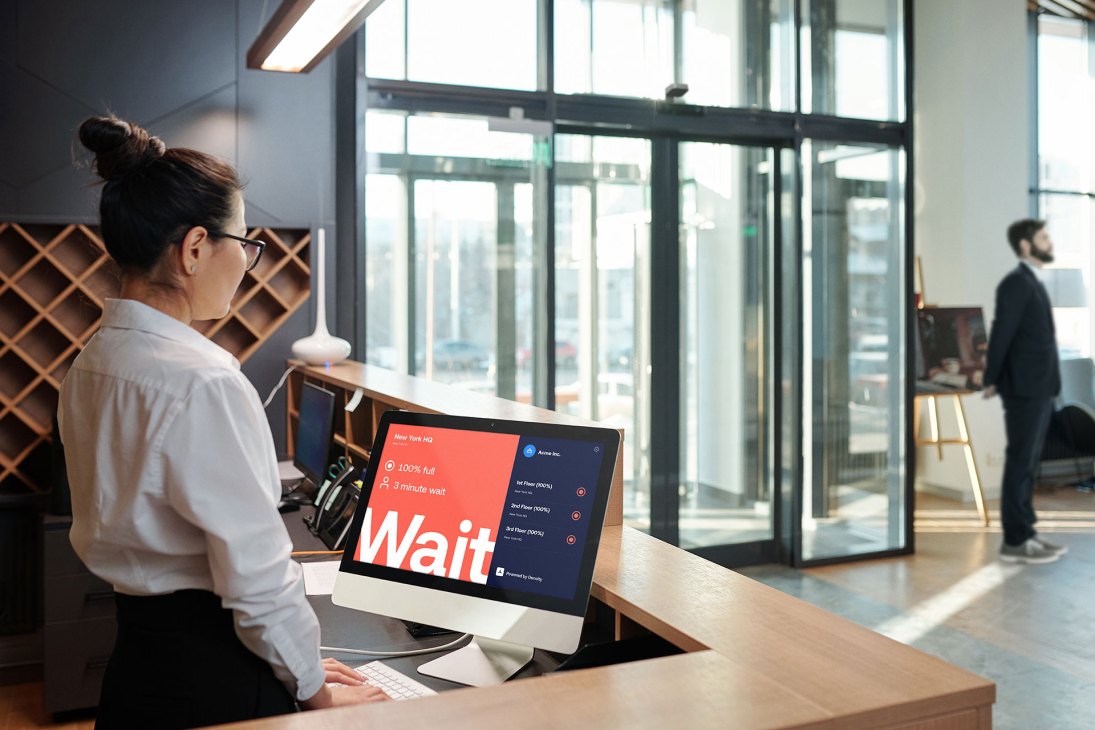
So what would people want to use Density for? Granted, it seems purpose-built for a health pandemic when businesses might need to track who is entering and leaving a building. But Density sees wider uses for the technology, even helping city hall to plan better buildings. Time will tell whether it’s simply a swirl of more data or a genuine game-changer for business.
density.io

Caffeine rush
Tokyo
F&B
Have we reached peak coffee? Not quite. A well-conceived neighbourhood café can still be a catalyst for change.
Although Higashi Nagasaki is something of an unknown residential pocket of Tokyo, it can provide some answers on what makes a good neighbourhood in the long term. For here lies proof that a small, independent café can reinvigorate a community.
“I didn’t know anything about the place,” says Rie Allison, the co-founder of Mia Mia, which opened in April 2020. “I spotted a cute property on the internet by chance.” After many hours of researching and walking around the area, she and her Australian husband, Vaughan, knew that this was the location for them. “The neighbourhood used to be home to young artists and still accommodates everyone and anyone,” says Rie. “It has the potential to generate a new flow of people and become a cultural hub.”
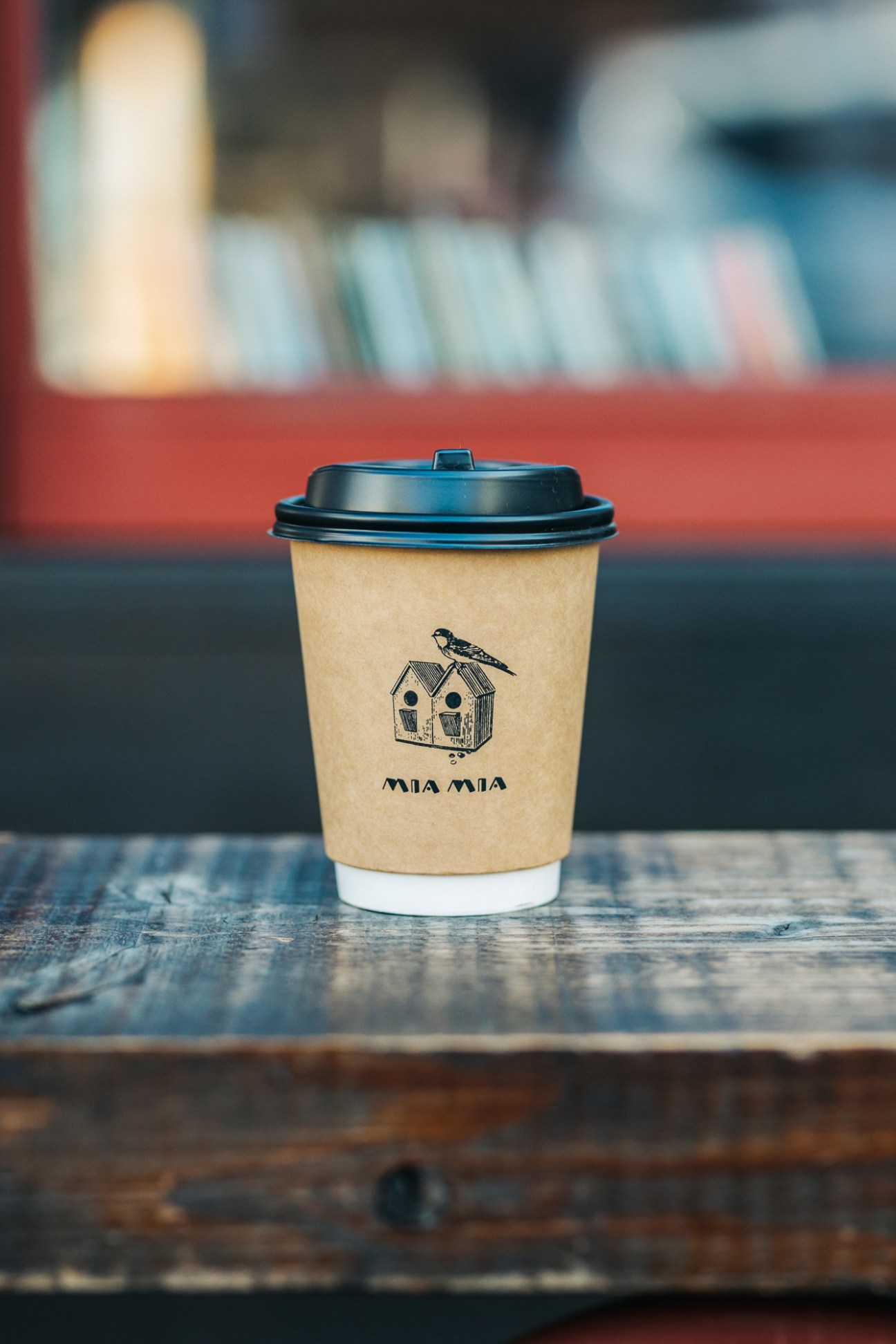
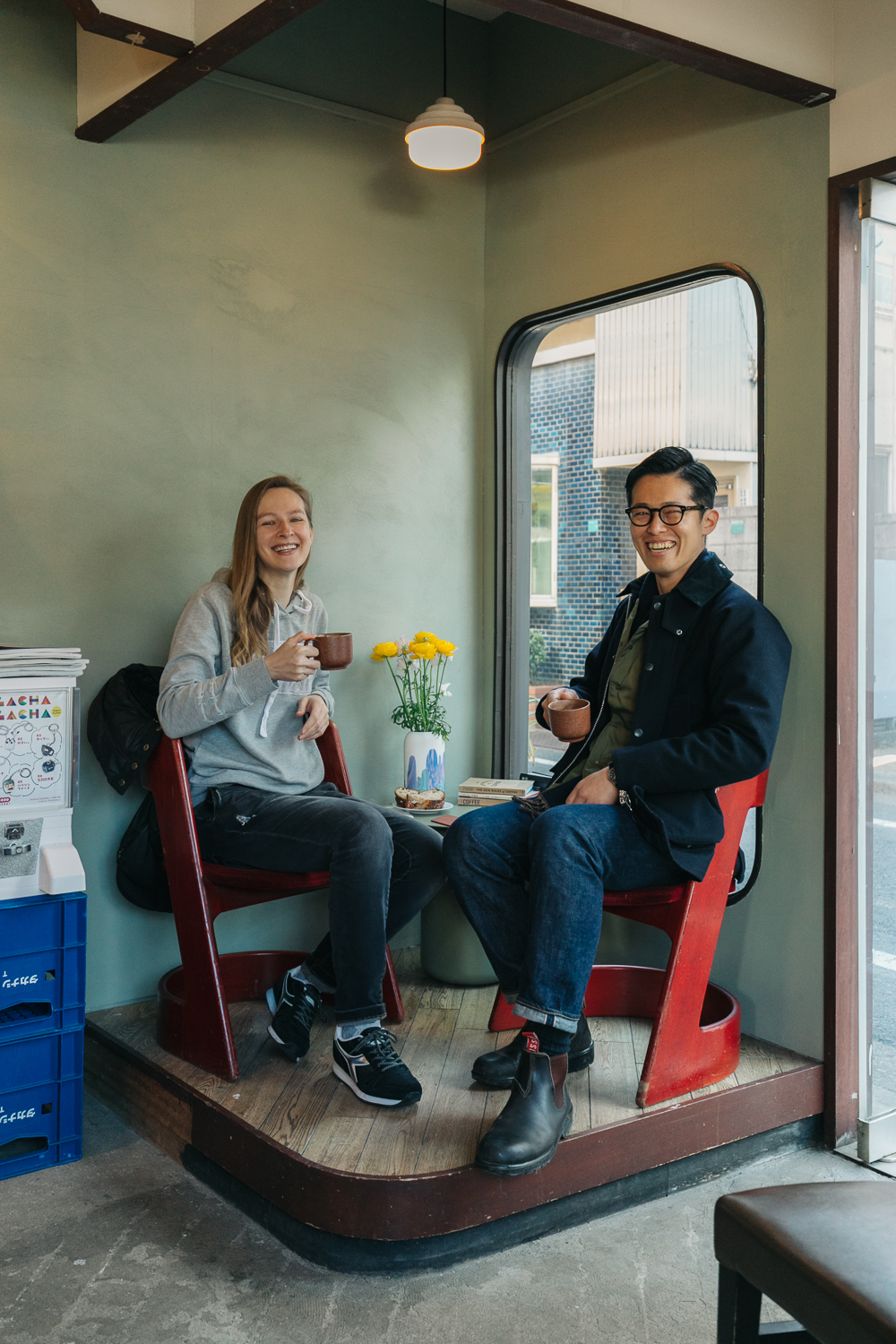
Undertaking their dream café project, Rie, an architect, renovated the former boutique into a cosy café, while Vaughan, a coffee enthusiast, put together an impressive array of beans and passionate staff. The café is first and foremost dedicated to serving the community. “We’re the only place around here that is open from 08.00,” says Vaughan. “It’s not so profitable to open early but surely there has to be a place for the locals at the start of their day other than McDonald’s?”
That Higashi Nagasaki’s residents have started to drop in for a daily chat might have something to do with Mia Mia’s staff, who are highly visible, greeting everyone walking past and also cleaning the nearby streets. “I was looking for a tenant to revitalise the area because shops were closing,” says the property’s landlord, Tomonori Adachi. “The couple wanted to create a space for people to gather by not only using their network and know-how but also local resources. Now it’s bringing in men and women, young and old, and revitalising the community.”
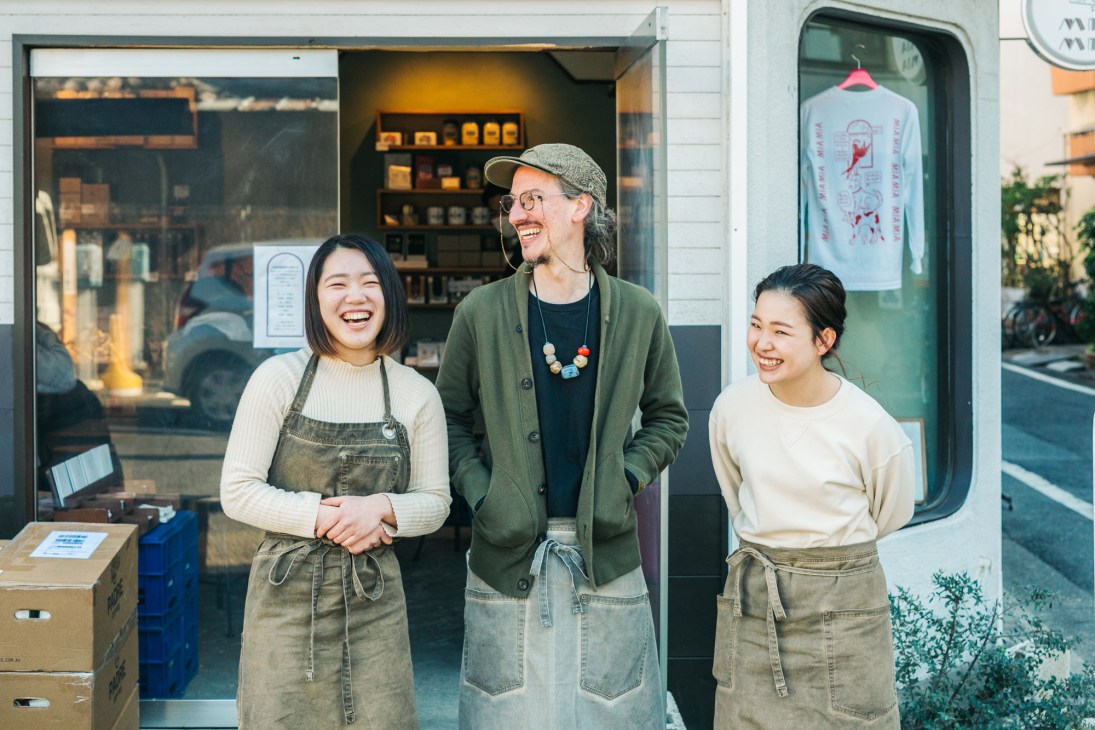
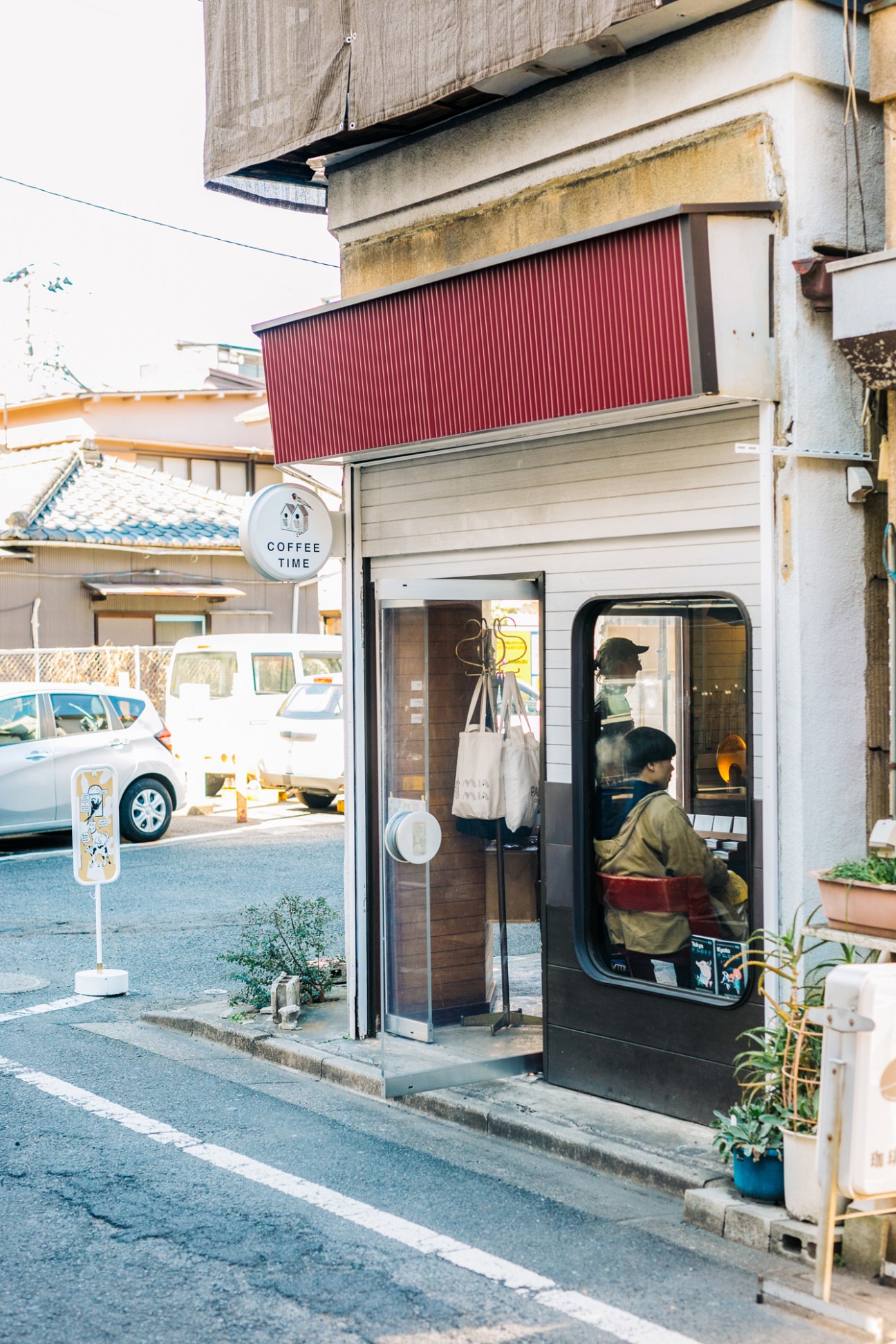
Adachi has also commissioned the couple to renovate a nearby three-storey building into a mix of a cultural kiosk, design studio, flats and rooftop that opened in April. The duo have a list of future projects, including making public benches and producing a Higashi Nagasaki neighbourhood guide. “Mia Mia is more than just a coffee shop,” says Adachi. “They care about the community.”
The café is proof that it only takes a tiny spark to bring change and a small business can have a large impact. “A lot of people appreciate us,” says Vaughan. “We have become a big part of their lives.”
mia-mia.tokyo
Change the channel
Global
Shipping
The Suez Canal was blocked by the stranded vessel Ever Given for less than a week in March but the blockage held up an estimated $10bn (€8.5bn) of trade every week and cost the Suez Canal Authority about $15m (€13bn) in lost daily revenue. We look at some of the biggest global trading bottlenecks – and the prospects for alternatives being (re)considered.
The Suez Canal
About 12 per cent of global shipping trade passes through the 193km Suez Canal, the only viable shipping connection between Europe and Asia. Israel has periodically considered its own canal from the Red Sea to the Mediterranean; the recent normalisation of ties with the United Arab Emirates provides a fresh opening. The two nations are reportedly exploring all options. Success is uncertain but the talks are worrying Egypt.
The Panama Canal
About 5 per cent of the world’s shipping trade heads along this 80km route linking the Atlantic and Pacific. Panama’s neighbours look on with envy. A Nicaraguan plan backed by a Chinese investor remains in limbo – the country’s president insists that he hasn’t given up on the idea – while Costa Rica is considering an overland “dry canal” route. If Central American nations could only agree on a plan, they’d stand a chance of achieving it.
The Strait of Malacca
Some 40 per cent of global trade goes via the Strait of Malacca, between the Malay Peninsula and Indonesia’s Sumatra island. Thailand once hoped to build a rival canal but this year announced plans to create an overland shortcut instead, by connecting two seaports on either side of the Kra Isthmus via road and rail links. The fact that China stands to gain from the proposal means that this is one project with prospects for success.
Q&A
Andy Mooney
CEO, Fender
Los Angeles
Fender, a brand with a storied guitar-making history dating to 1946, has been looking to capitalise on the uptick in people learning the instrument in lockdown. A pivot to technology through a teaching app (guitar not included) called Fender Play is part of the story. So too is the success of the American Acoustasonic Jazzmaster hybrid guitar that uses digital technology to shift between acoustic and electric sounds. CEO Mooney spoke to us from LA.
Fender is about physical product. So why an online platform?
When I joined Fender I asked who was buying our guitars and nobody knew. So we conducted research and out of that came five key initiatives. One was that 45 per cent of guitars that we sell go to first-time players and 50 per cent of these are women. The big “ah-ha” was that 90 per cent of those first-time players abandon the instrument in the first year; the 10 per cent that don’t quit tend to commit for life and spend about $10,000 [€8,500] in the industry over a lifetime. Now we knew what digital product to create [with Fender Play]; if we were able to reduce the abandonment rate by even 10 per cent we could double the size of the hardware industry.
You made Fender Play free during the pandemic. Is this a long-term move?
We liked what happened so much that we offered it again during the fourth quarter of last year. What we’re doing is working on a free-to-play model so people can get full exposure to the product for a period of time and then if they choose to upgrade to the product in the long-run then they can.
Where else do you see yourself growing digitally?
We have three apps: Fender Play, Fender Tune and Fender Tone. We have 250,000 paying users on Fender Play, spending an average of 14 months on it, which means they’re committed. We’ve created a cohort that’s valuable to the industry. There’s a long runway of growth; these are tools to bring new people into the industry.
Do you see digital overtaking physical?
Not at this point. A lot of digital businesses are very margin rich. In our case, 30 per cent comes off the top [to Google and Apple] and then a large percentage goes to the artists who create the music that we’re teaching people to play. We’re happy to do that because we’re building revenue for the artist community and we’re building hardware sales.
Tell us about the Acoustasonic guitar.
Players have resisted technology. The exception to that, fortunately for us, has been the Acoustasonic, where we’ve melded pretty sophisticated digital modelling to create a range of sounds. So that’s worked. It’s different on the amp side; there’s definitely a trend towards more sophisticated digital amps.
Air support
Argentina
Aviation
Argentina’s low-cost airlines, FlyBondi and JetSmart, moved to Aeroparque Jorge Newbery airport in central Buenos Aires recently, having previously been forced to take off from the city’s third airport, a military base, after it began accepting commercial flights in 2018. Now they can compete with national carrier Aerolíneas Argentinas’s expensive domestic-flight monopoly. Over the past three years both budget carriers gained passengers’ trust, adding new routes out of El Palomar, 18km from the capital. But when Argentina’s airport regulator and transport ministry confirmed in December that the military base would no longer manage commercial flights, the two carriers were left homeless.

Low-cost airlines’ advantage relies on convenience, and the move now gives them close proximity to the city proper’s three million residents. Nonetheless, challenges lie ahead, says Mauricio Sana, CEO of FlyBondi, whose 12 routes will be jostling for time slots with Aerolíneas’s 40 daily flights. “Now that we’ll be exposed to greater numbers of passengers, we need to show that we are up to the job of moving them,” he says.
Office politics
USA
Co-working
As people retreated to their homes in the pandemic, co-working spaces suffered greatly. But the sector is well-placed to win customers back by adapting to shifting demands and demographics.
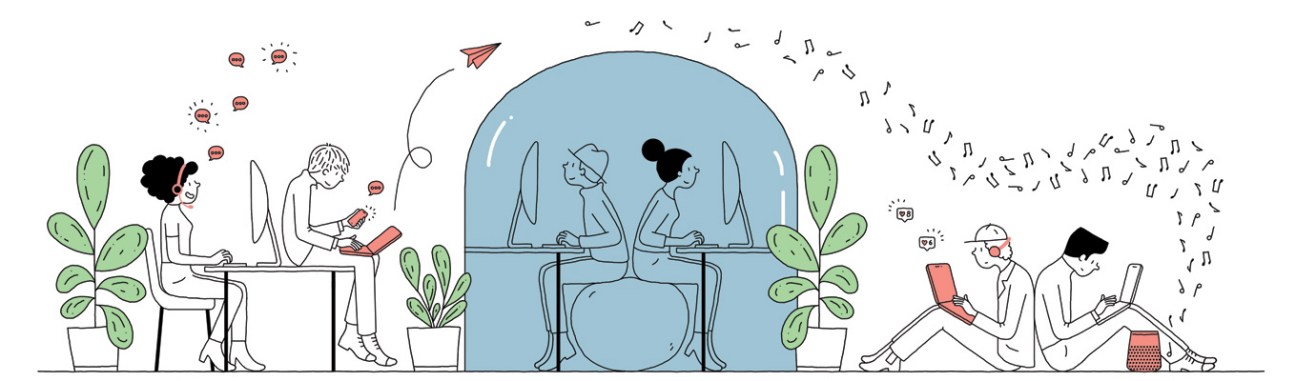
At the end of March, WeWork revealed that it would be going public as part of a merger with a special purpose acquisition company – a mechanism for becoming a publicly traded company that bypasses the initial public offering process. Why this appeals to WeWork is no mystery. In 2019 it tried to go public via the conventional method and had to withdraw due to huge losses and mismanagement. Many who had found themselves in a WeWork location in the preceding years likely felt some schadenfreude. The spaces were often noisy, cramped and decorated in a style more suited to a university common room than an office.
The US sector that WeWork was once synonymous with has faced much turbulence during the pandemic. Co-working directory Upsuite estimates that one in five co-working locations either closed or changed hands in 2020. To lure customers back, these spaces must adapt to the complex needs of employers and workers emerging from the pandemic.
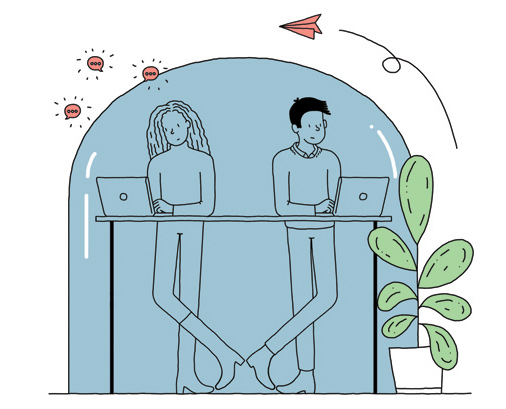
One of the ways they’re doing this is by being more flexible, both in terms of spaces rented and facilities available to workers, some of whom might be reluctant to resume toiling alongside strangers. Industrious, a private-office rental company based in New York, covers both of these bases. Inside its co-working facilities, attendees have access to a range of environments to suit different tasks. “If you’re in a high-stakes sales meeting, you have access to an external-facing conference room,” says Jamie Hodari, Industrious’s CEO. “Whereas if you need to work on a four-hour memo that requires all your concentration, you have a sensory-deprivation focus room open to you.” That’s meant to be a good thing.
Co-working spaces also need to adapt to shifting populations. Over the first six months of the pandemic, many densely populated US cities lost residents. This opened up a market for co-working spaces outside of the cbds of metropolises. Many of the 110,978 people who moved out of New York City in 2020 (up from 18,887 in 2019) relocated upstate, a short drive away but a very different life. Barnfox, a co-working company that caters to this crowd, opened its first space upstate in the town of Hudson in February 2020. “Within a few months we realised that more people were coming from the city whether temporarily or permanently,” says Barnfox co-founder Frederick Pikovsky. “And this was accelerating the trend of remote working.”
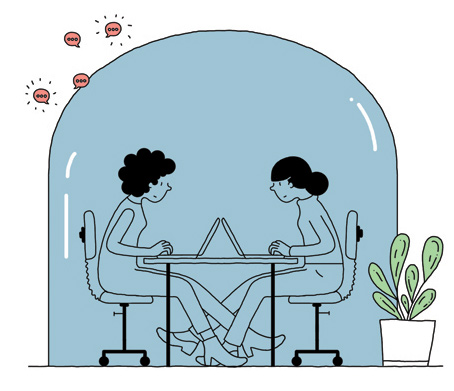
In October the company opened a second site 53km down the Hudson River in Kingston. Barnfox enables the new arrivals and locals alike to make the most of their rural surroundings by offering community-led cycling rides, kayaking trips and dinner soirées. Although the permanent summer camp might not be for everyone.
To sell itself anew, the co-working sector must grasp the value of what it has to offer. This involves understanding what’s been lost while people have been working from home. Humanyze, a Boston-based company that analyses workforce behaviour, has studied how remote working has affected collaboration among information-economy workers. Part of its findings is that “strong ties” (interactions between workers who communicate often) got stronger. But “weak ties” (connections between workers who interact for 15 minutes a week or less) dwindled.
Ben Waber, Humanyze’s president, thinks that the dwindling of weak ties “changes how information flows” in a company and can have a negative impact on creativity. If co-working is to survive, it will need to convince people that serendipitous relationships can’t be forged from the spare bedroom. If that fails, maybe the sensory-deprivation room will do the trick.
Image: Kimaï, Density, Rafnar, Fender, Getty Images, Shutterstock
Open spaces: new hotels and design-led stays from Cornwall to California
The Pig at Harlyn Bay
Cornwall, UK
“Even though each Pig hotel has its own personality, you’ll always know you’re in one,” says Mark Jones, director of the newest member of the porcine pack at Harlyn Bay in Cornwall. This 30-bed hotel is the seventh in the collection, which was started by Hotel du Vin founder Robin Hutson in 2011. Each premises has a sizeable kitchen garden and each has been designed with care by Judy Hutson, who has an eye for antique furniture.
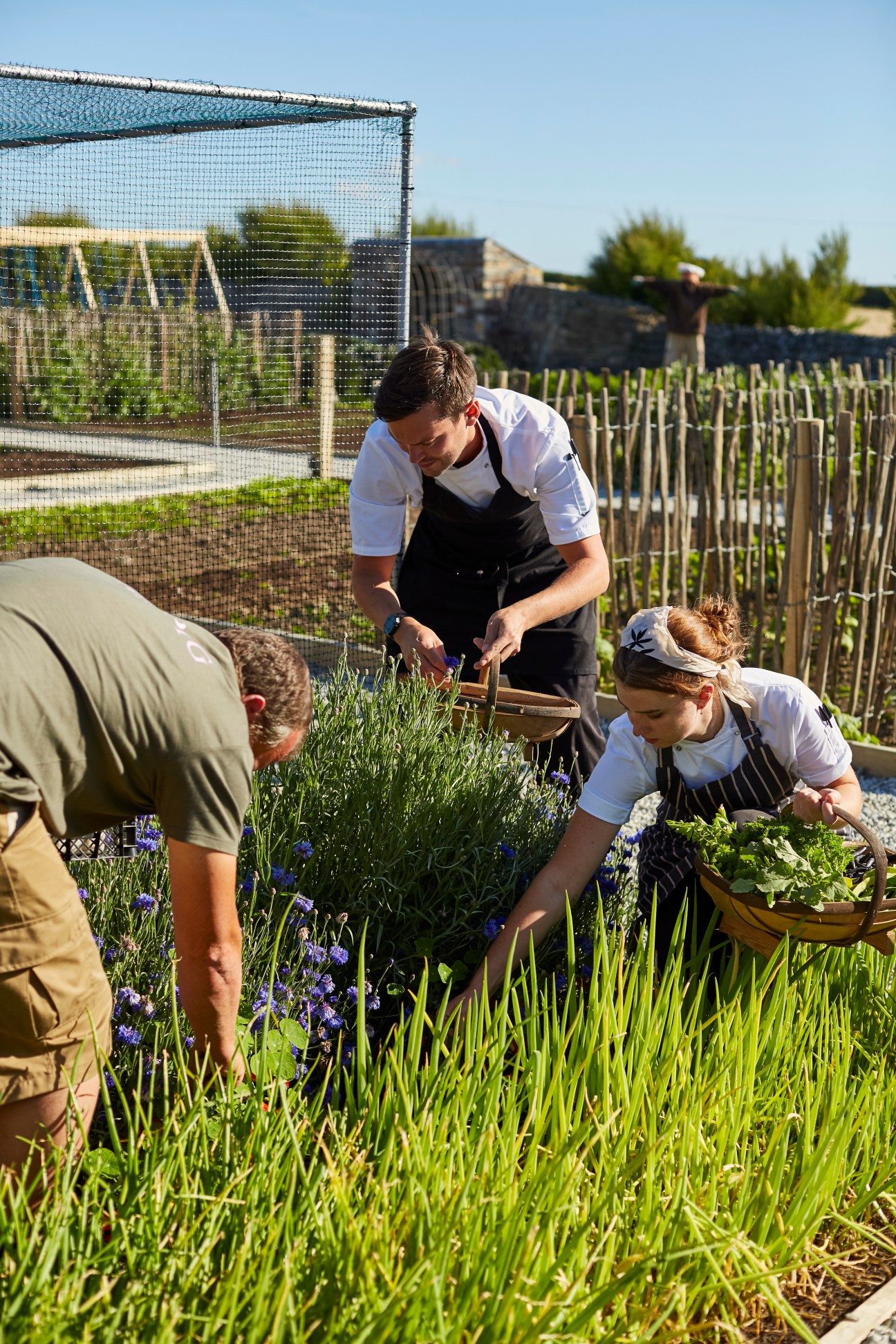
The Hutsons have brought this 15th-century house back to life, restoring interiors and adding two additional barn-like blocks clad in Cornish slate, which will soon start to blend with the original buildings. There are views of the nearby beach, plenty of coastal paths to explore and real pigs to visit. But don’t get attached, says Jones, as the pigs will soon find their way onto the menu. It’s all about local produce here: anything the kitchen gardener can’t grow or forage is found within a 40km radius.
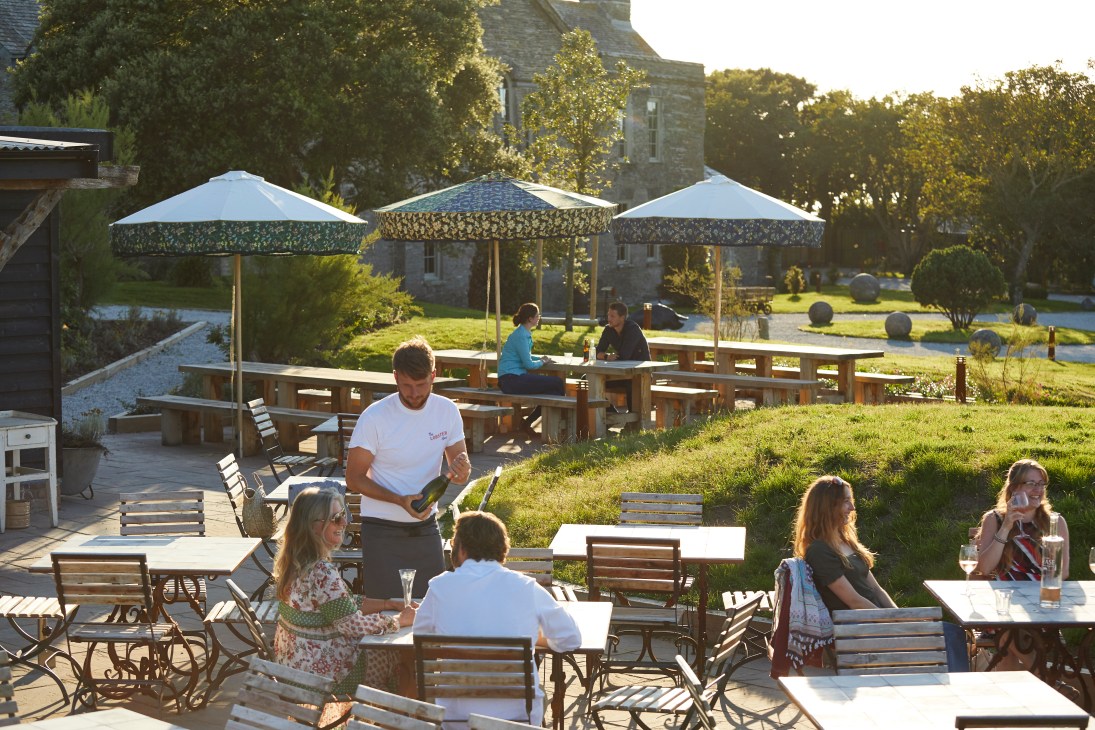
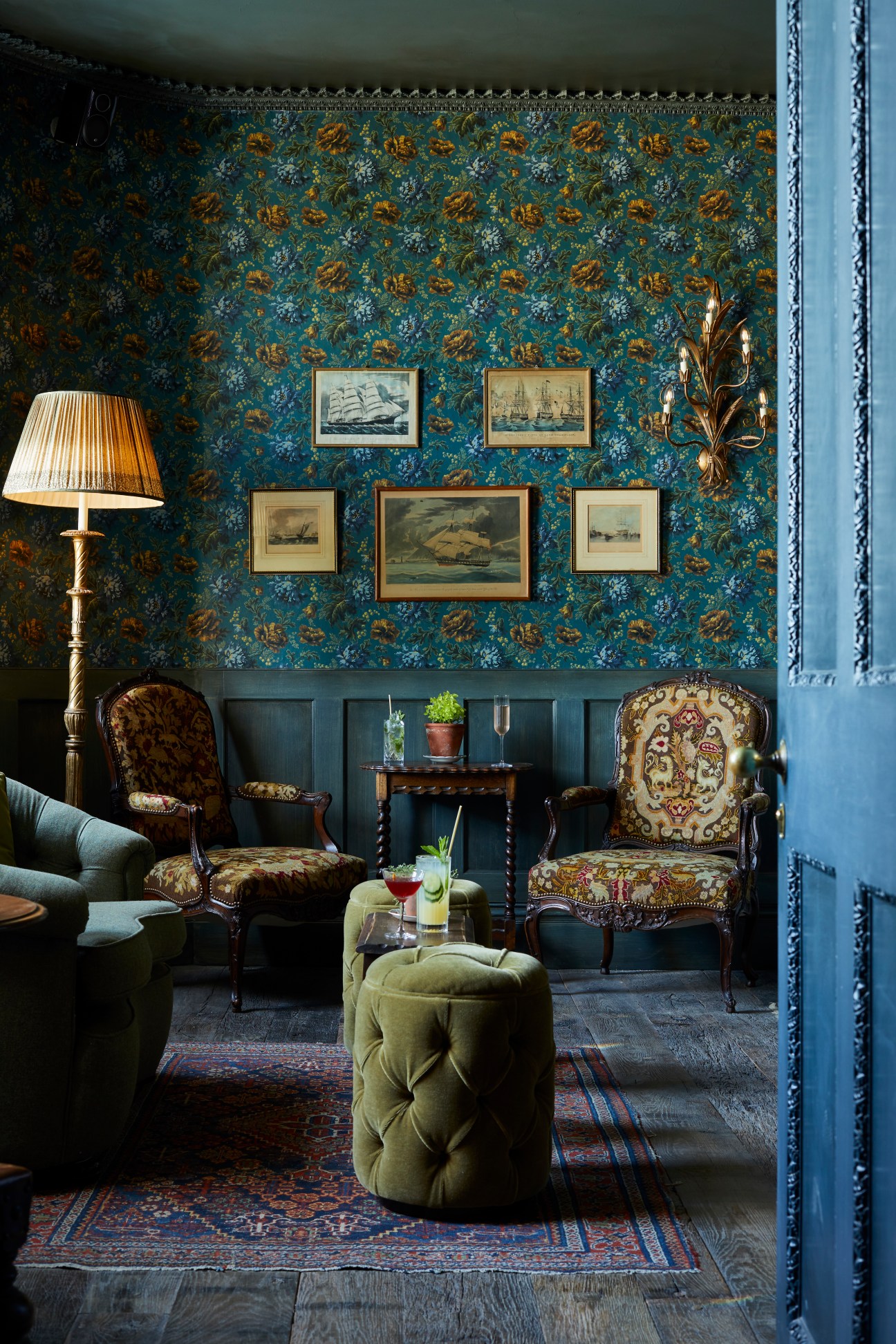
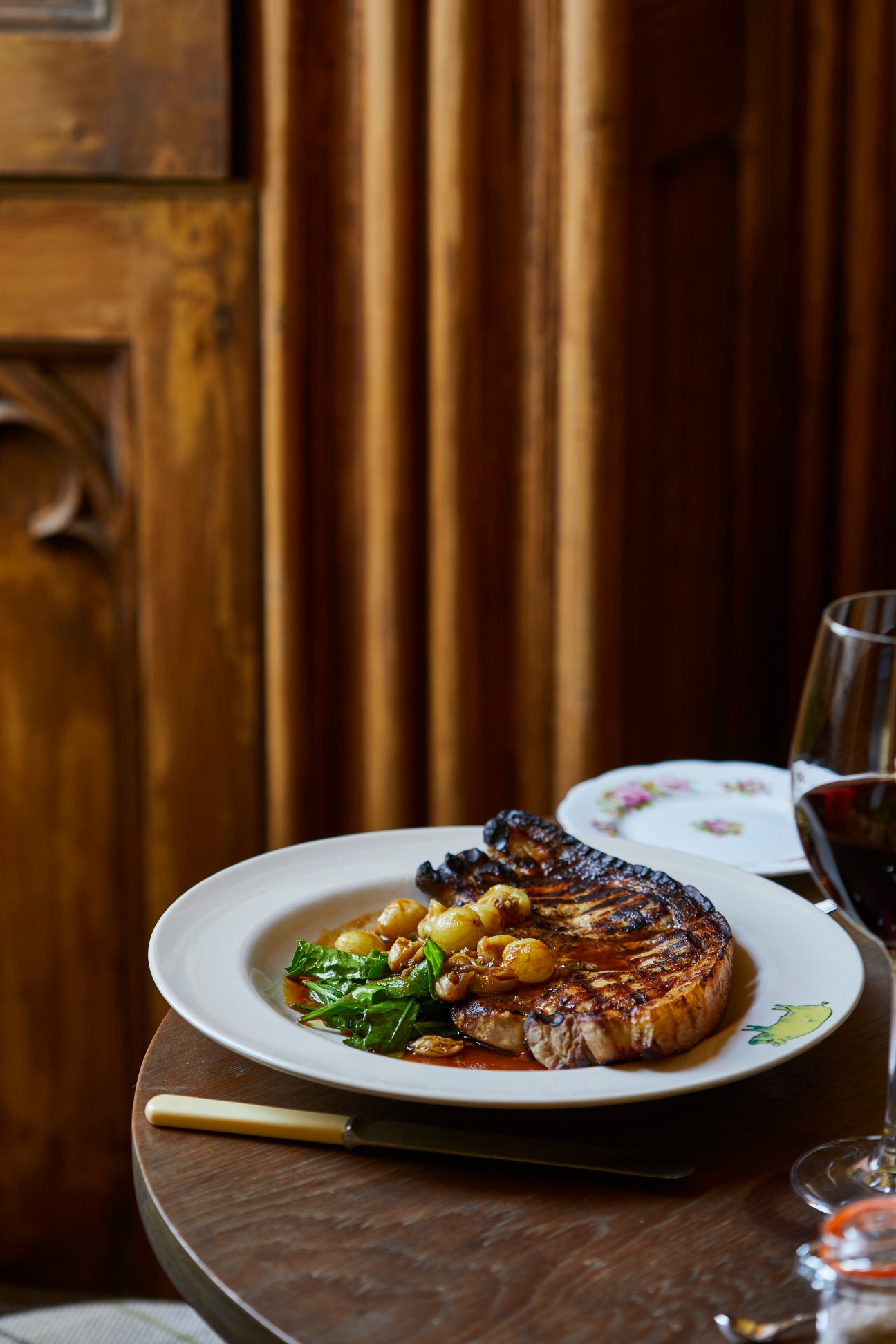
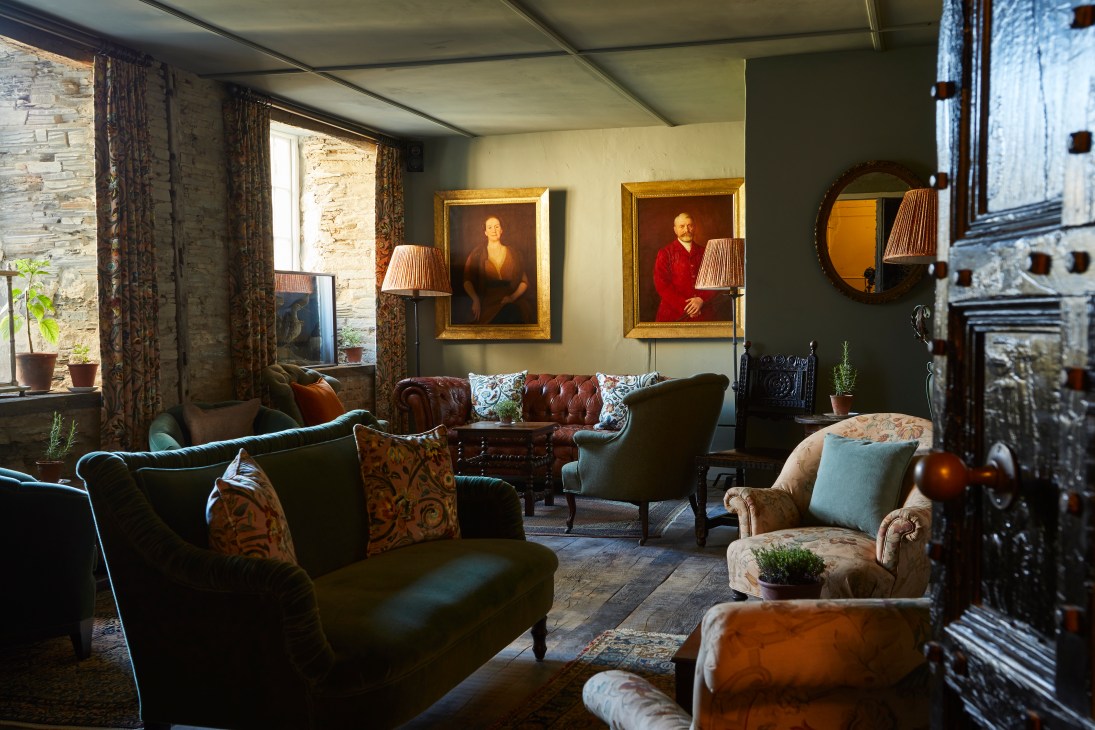
Visitors won’t go hungry, especially as the on-site Lobster Shed serves locally netted crustaceans. There’s even an outdoor shower so surfers can rinse off and get stuck in. For those seeking peace and quiet, The Pig has four garden wagons dotted throughout the grounds, which look weathered on the outside but have been constructed especially for the hotel: each comes with its own log burner, king-sized bed and en suite bathroom with monsoon shower and free-standing bath.
thepighotel.com
Sussurro
Vilankulo, Mozambique
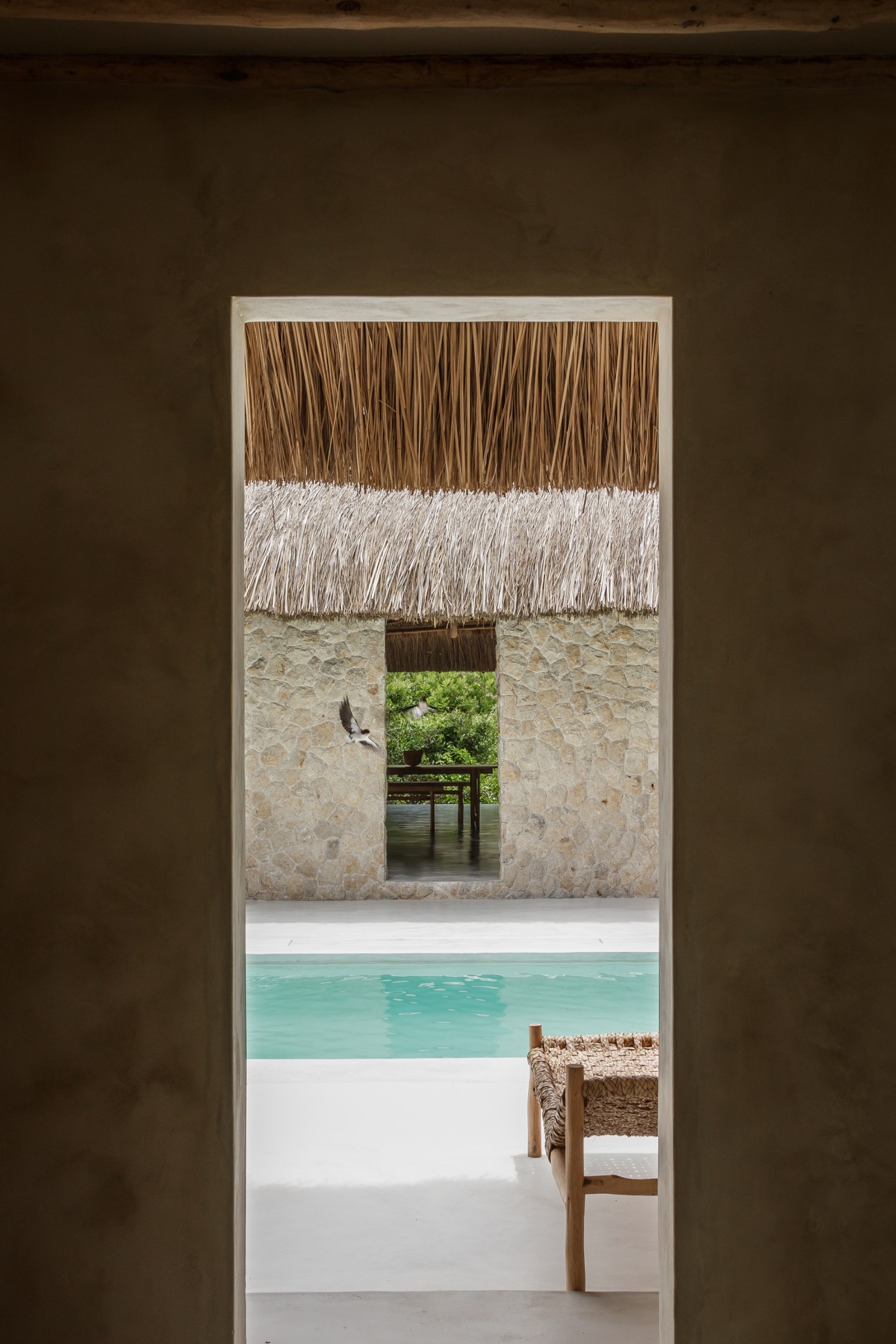
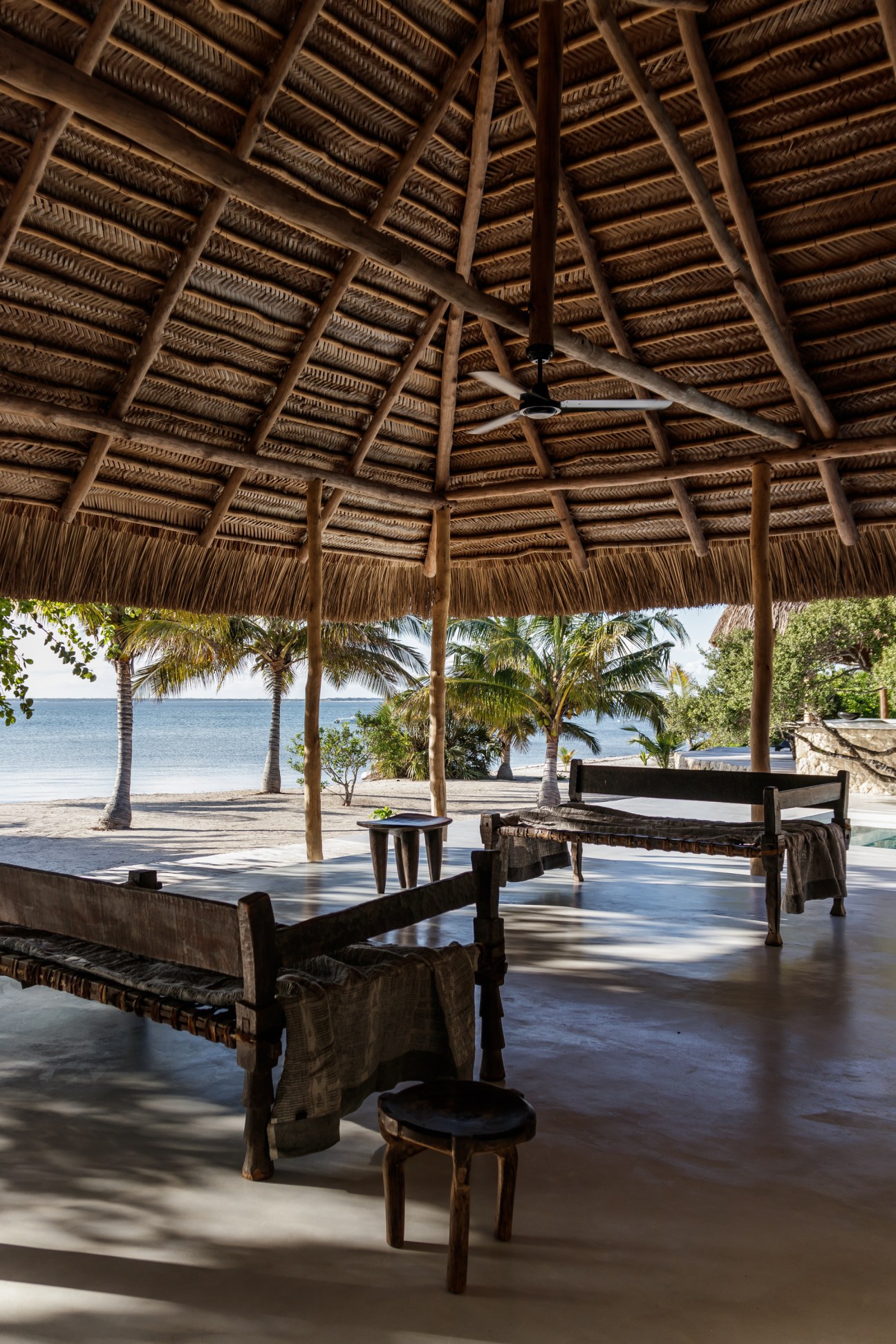
On a peninsula north of the coastal town of Vilankulo in Mozambique, Sussurro is a six-bungalow lodge on a glimmering lagoon. A celebration of craft and design, it is decorated with carved items such as senufo stools and woven baskets. Almost everything – from the woven palm roofing to the stone baths, doors and window frames – has been handmade. “It’s very minimal, which is key to showcasing the items,” says co-owner Sarah Birkett. Better still are the views of the mangrove-filled lagoon and the the magical sunsets that streak the sky right in front of the lodge. You might spot dolphins too.
sussurro.co
The Bull and Last
London
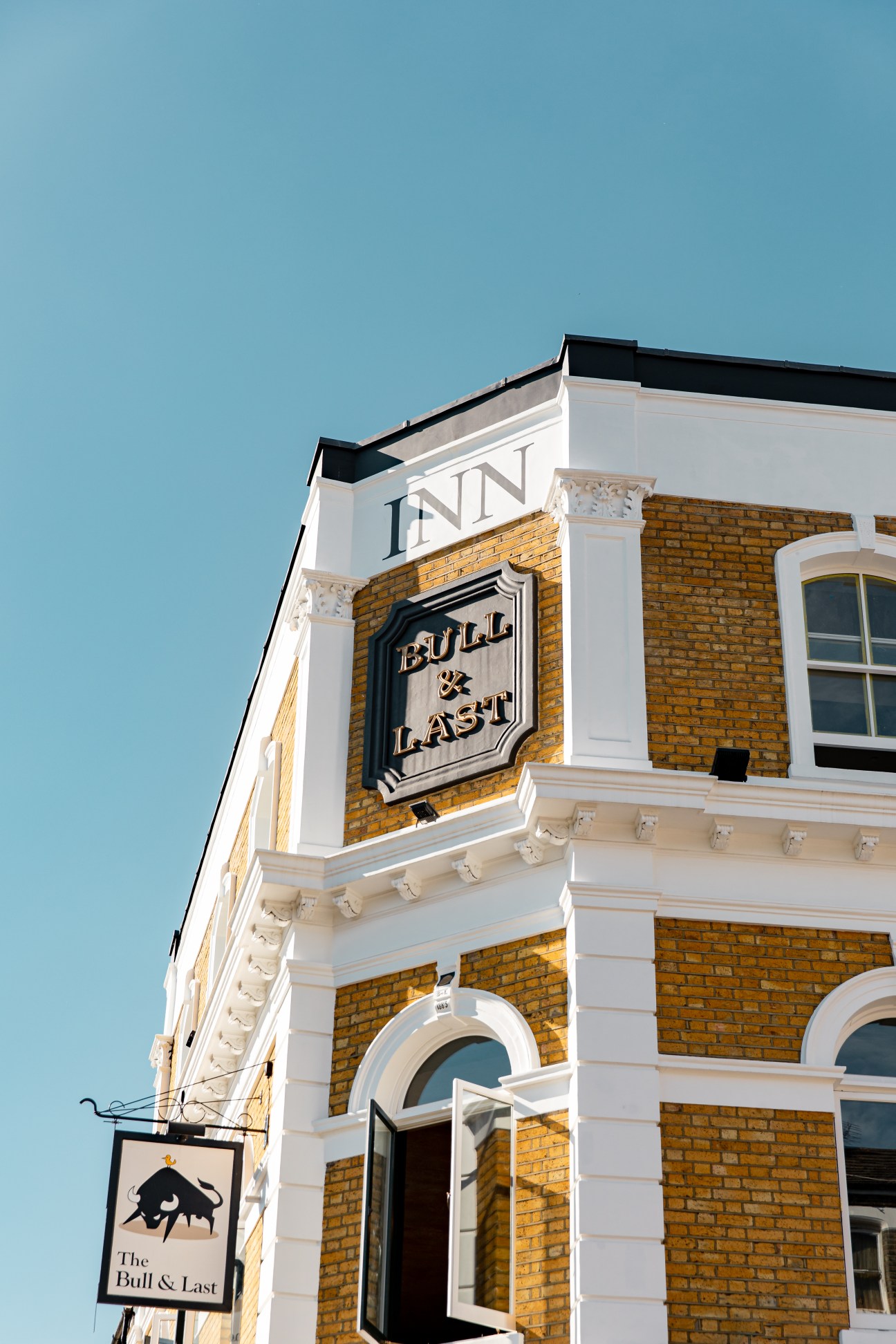
The Bull and Last pub in Hampstead Heath has reopened with bedrooms. Guests can hire pétanque, croquet or tennis racquets or have a dip in the ponds on the Heath before a warm beef sandwich or Suffolk chicken and ham hock pie. Many pubs are hellbent on modernising but owners Ollie Pudney and Joe Swiers took a different approach. “Pubs are the glue of local culture,” says Swiers. “We want to embrace that. The pub is bigger than us; we’re only looking after it, so what right do we have to change it?”
Habitas Bacalar
Quintana Roo, Mexico
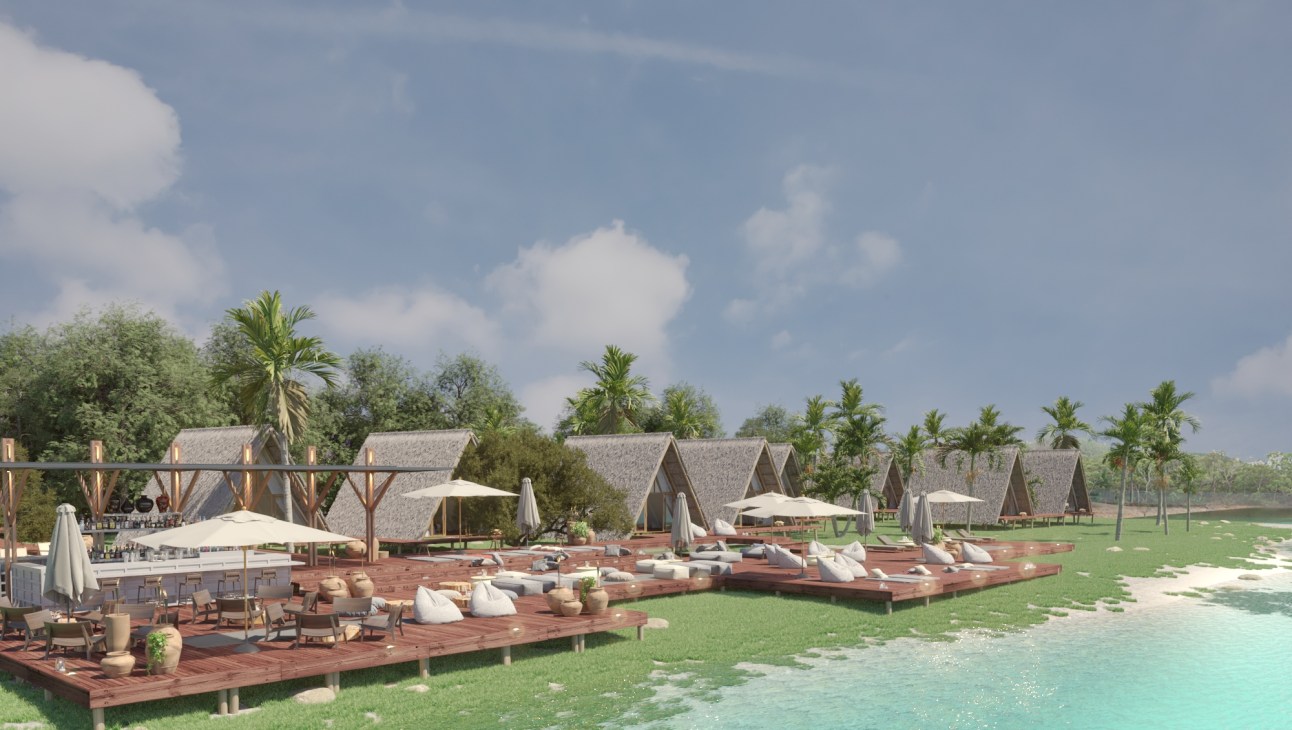
This spring, Oliver Ripley, Kfir Levy and Eduardo Castillo launched their third property (their second in Mexico) in the form of the idyllic Habitas Bacalar. Its 35 A-framed cabanas overlook the Bacalar Lagoon and are replete with earthy interiors and awe-inspiring views. There is a restaurant with an open-air kitchen and a spa spread across Mayan-style straw houses. Four hours from Cancún airport and less than 40 minutes from Chetumal International Airport, in the state of Quintana Roo, the escape is surrounded by stromatolite rock formations, thick mangroves and mineral clay banks. The thoroughly modern escape takes its cues from Mayan culture and the botanical garden yields medicinal herbs, cacao and melipona honey – all put to excellent use by the restaurant and in spa treatments.
ourhabitas.com
Hotel Waliea
Maui, Hawaii
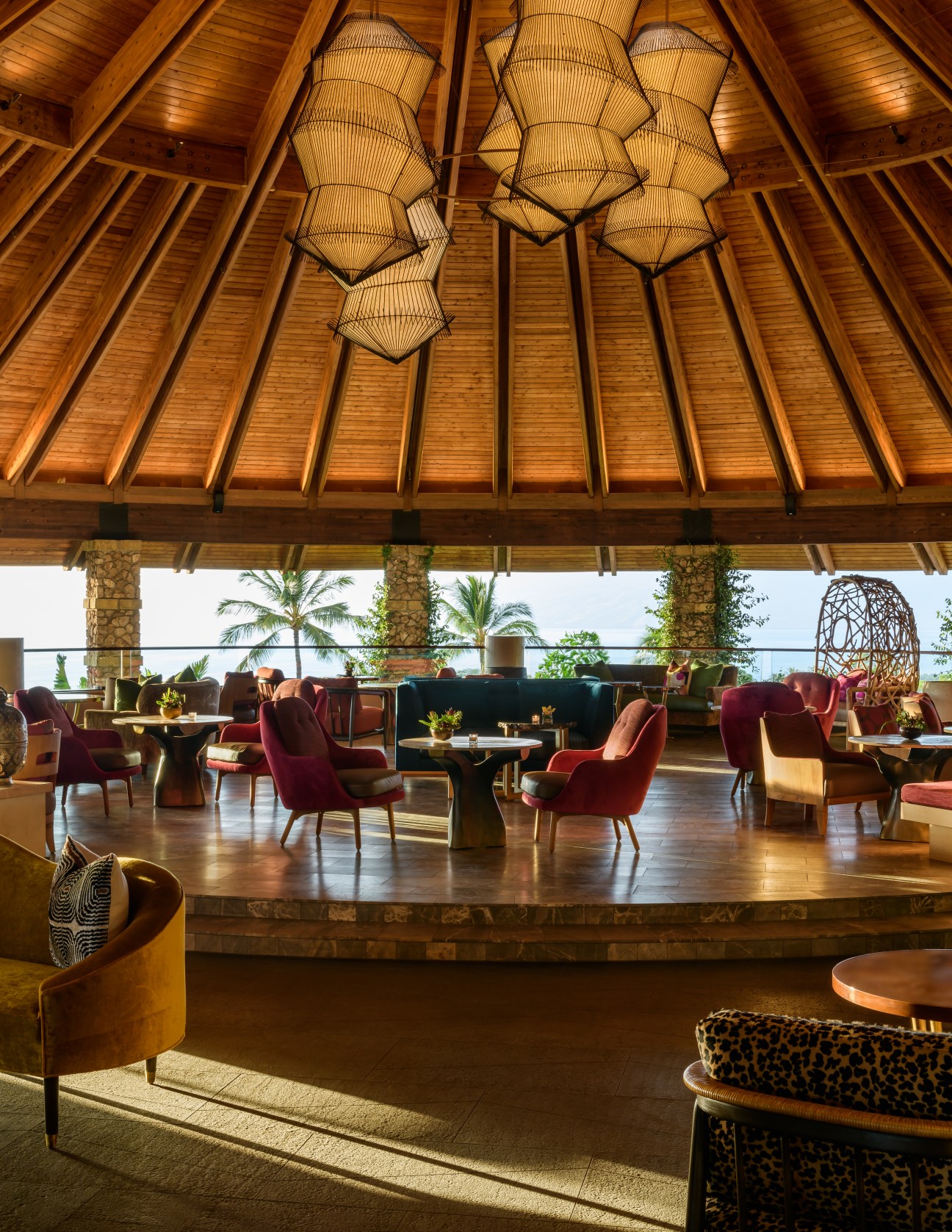
Guests at the Hotel Waliea, opened on the Hawaiian island of Maui’s picturesque southern shore in 1991, will be familiar with unexpected guests at the hotel’s lobby bar. The most notable are the island’s tropical birds, known to flit in and out of the partially open-air space and nestle on the rafters. This inspired the bar’s recent renovation, which was completed during Hawaii’s lockdown last year. “We wanted to celebrate the open air,” says Marion Philpotts-Miller, whose eponymous Honolulu-based studio, founded in the 1960s, undertook the renovation. “We melded indoors and outdoors in a slightly eccentric way.” The room’s striking centrepiece, a locally designed bar, has a fine cocktail menu, guaranteeing that it isn’t only the avian patrons who are left feeling chirpy.
hotelwailea.com
Fynbos House
Paarl, South Africa
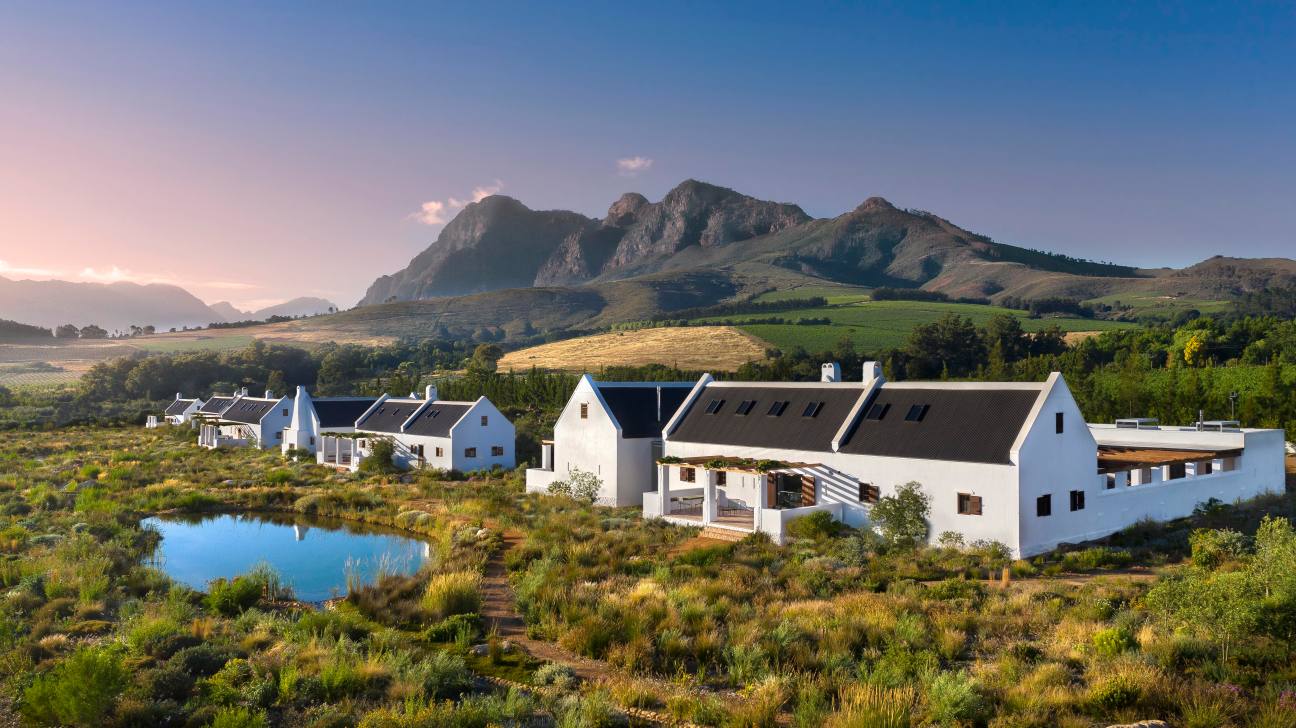
The bright five-bedroom Fynbos House is a fine new addition to the Babylonstoren farm and wine estate. It is centred on a courtyard with a long pool surrounded by rattan daybeds to match the overriding Cape Dutch style. The all-white rooms have pitched ceilings with skylights that gaze down onto four-poster beds. In the en suite bathrooms, accessed through giant barn-style doors, oversized white tubs take centre-stage. There is plenty of communal space in the house: a kitchen with a long wooden dining table and a glass wall overlooks the courtyard and there is a living room with sleek couches and basket chairs. The front patio spills out onto a sprawling fynbos garden so fragrant that you can almost smell the indigenous plants from the sunbeds.
babylonstoren.com
Stay in the know
Global
Every subscription to this magazine comes with access to Monocle Digital Editions, which enables readers to access Monocle’s extensive back catalogue of global reporting. Also included are regularly updated guides to some of our favourite cities containing up-to-the-minute advice on the best places to see, eat at or lay your head at night. Here is a taste: three city stop-offs to help you plan ahead.
Publishing House B&B
Chicago
Every detail of this West Loop bolthole has been carefully considered, from the fresh pastries in the butler’s pantry to the Malin1Goetz products in each en suite – and keep an eye out for pugs Angus and Louie. Owner Kimberly Lowery sourced the modern and vintage furniture herself. “I spent two years travelling around the US to flea markets, antiques shops and auctions,” says Lowery. She moved from Melbourne to Chicago in 2014 and opened the 11-room hotel in a building that started life in 1909 as the Free Methodist Publishing House.
publishinghousebnb.com
Villa Dagmar
Stockholm
Villa Dagmar in well-heeled Östermalm is one of Stockholm’s newest hotels. It has 70 guest rooms and suites decorated with a mix of hand-picked classic and contemporary pieces. The space includes a flower shop and a fully equipped spa in which to unwind at the end of the day. The hotel restaurant, headed up by the chefs behind Michelin-starred venue Aloë, serves Mediterranean-inspired dishes and refreshing cocktails.
hotelvilladagmar.com
Lloyd’s Inn
Singapore
An outlier in terms of Singapore hotels, which tend towards the tacky at times, Lloyd’s Inn is a 34-room affair with a pared-down, minimalist charm. The raw concrete finishes of the deck and roof terrace contrast cleanly with the surrounding lawns, trees and shrubs. What Lloyd’s Inn lacks in restaurants and gyms is made up for in the ways in which it gets the basics right. Meticulous attention is paid to the details; guests are treated to kimono-style bathrobes and there are power sockets at both sides of the bed. When the tropical weather becomes too steamy, you can cool off in the mosaic-tiled dipping pool. Or, if you’re staying in the Big Skyroom suite, you can relax in a private outdoor tub.
lloydsinn.com
For more, subscribe to gain access to Monocle Digital Editions. Sign up now at Monocle.com/subscribe.
The Thatcher Hotel
Hopland, California
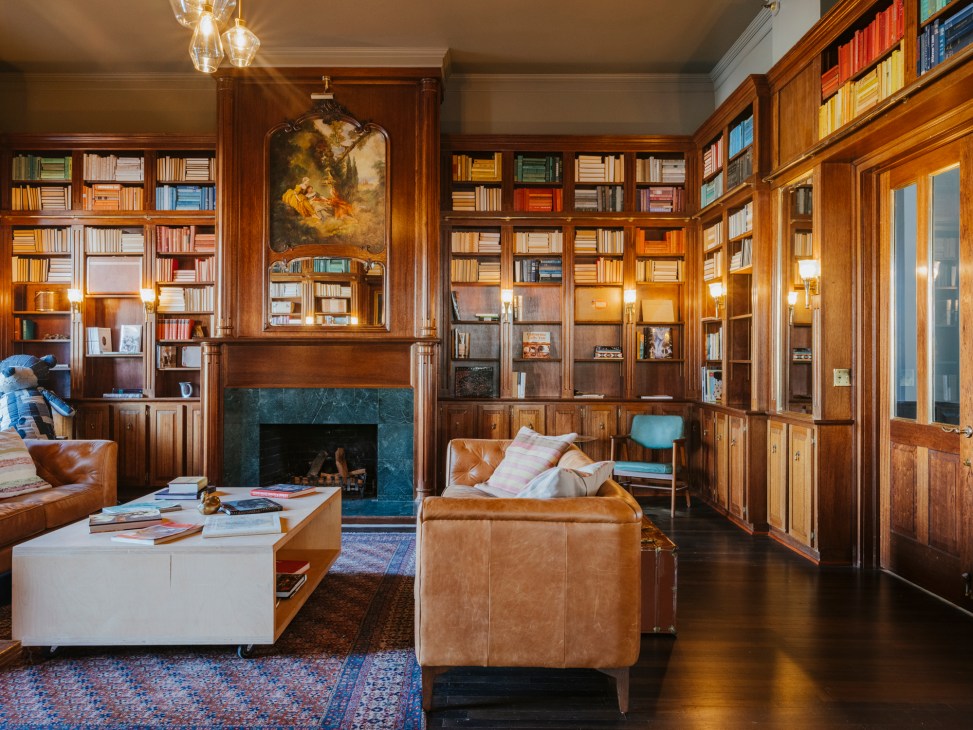
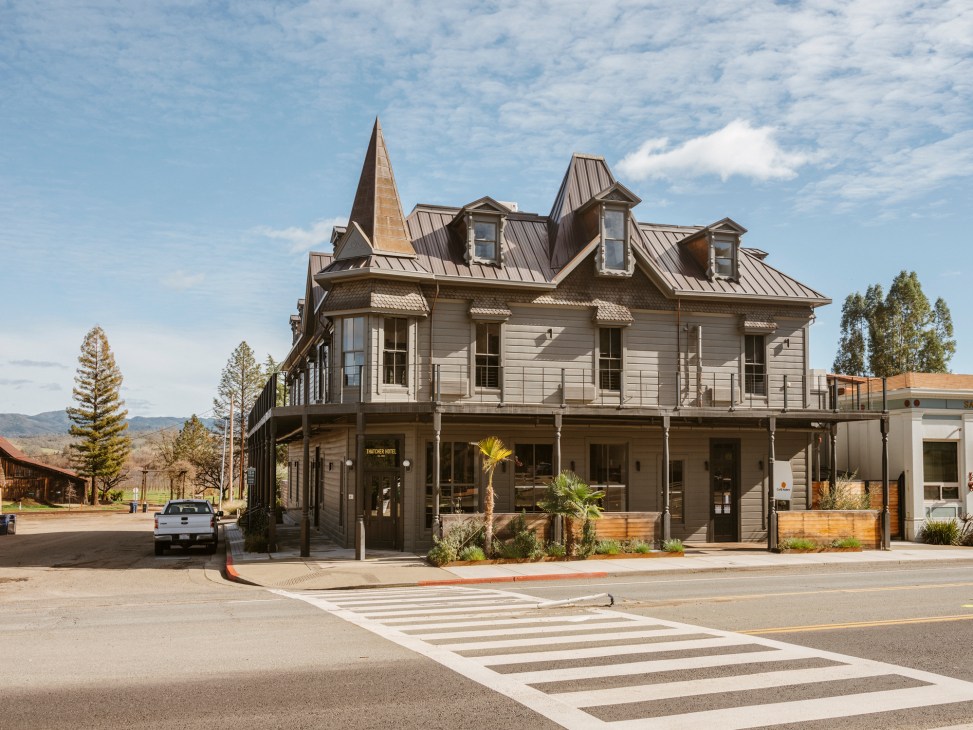
Pacific Coast Highway 101, a ribbon along the coastline of northern California, is one of the world’s most storied strips of road. In the small town of Hopland, which borders California wine country, stands The Thatcher Hotel, a newly restored inn and café that was seen as the area’s grandest hotel when it first opened its doors in 1890.
“Let’s say that you’re travelling from Portland to San Francisco along the 101,” says Mark Rogero, the hotel’s co-owner, who bought the Victorian, wood-slatted building in 2019 after it had stood in a state of decay for several years. “If you were to plot your course and if you were to find this place, it would appear like an oasis because there’s nothing like it around here, in either direction, for – who knows? – 50 or 100 miles.”
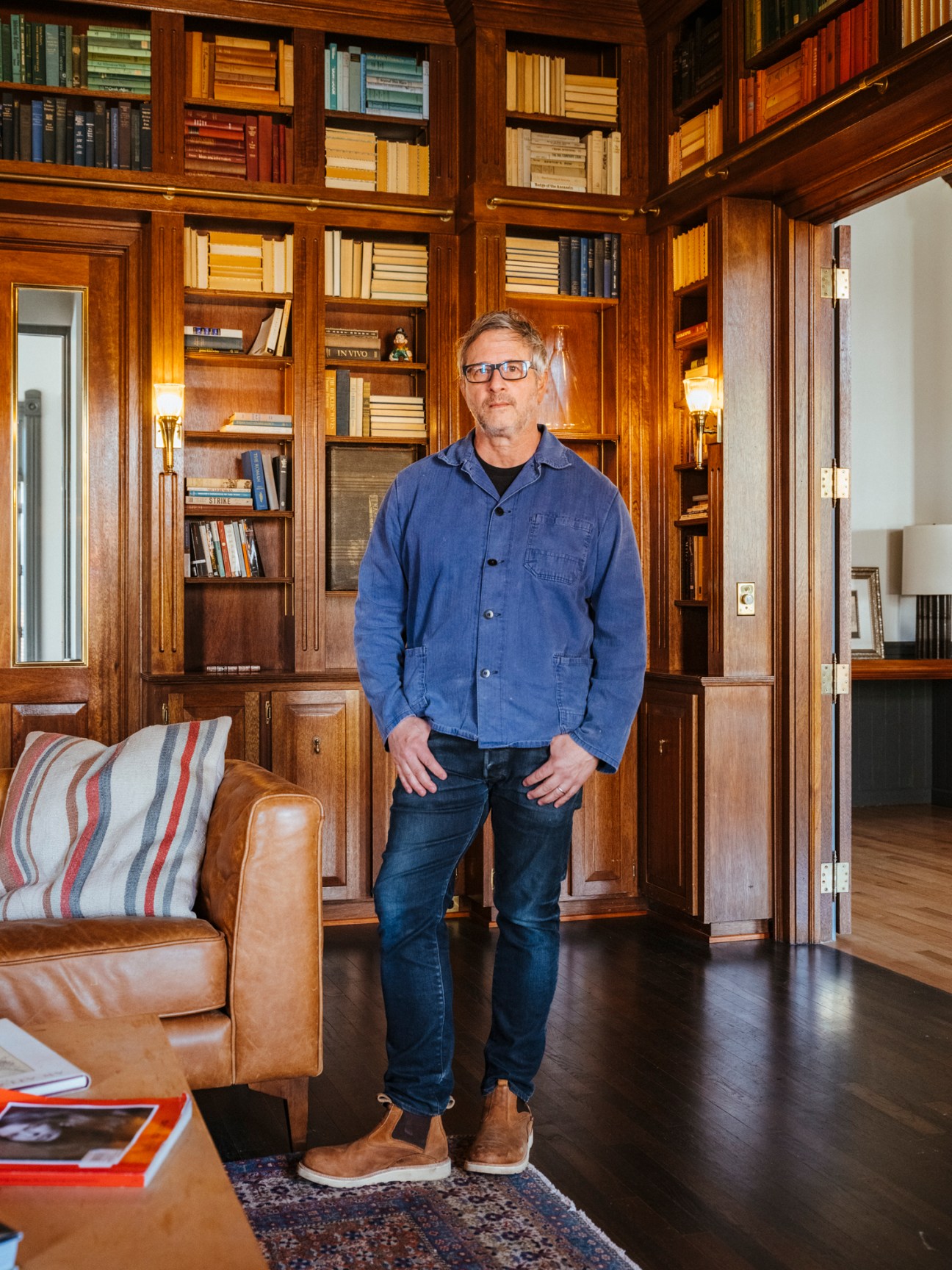
The notion of the hotel as an outpost, a solitary but welcoming silhouette surrounded by the wineries, farms and open countryside of southern Mendocino county, was central to the hotel’s redesign. “The idea was to restore, repair and reimagine,” says Rogero, who is sitting near the grand, teal-hued marble fireplace among the bookshelves of the hotel’s mahogany-lined library. As a building with several chapters to its history (it is rumoured to have been a bordello and, less credibly, a spot for ghost-sightings), there were several layers of history to show. “It started to reveal itself as this amazing retreat from the Bay Area, which is just 90 minutes away, and for those on the road, taking excursions up and down the California coast,” says Rogero.
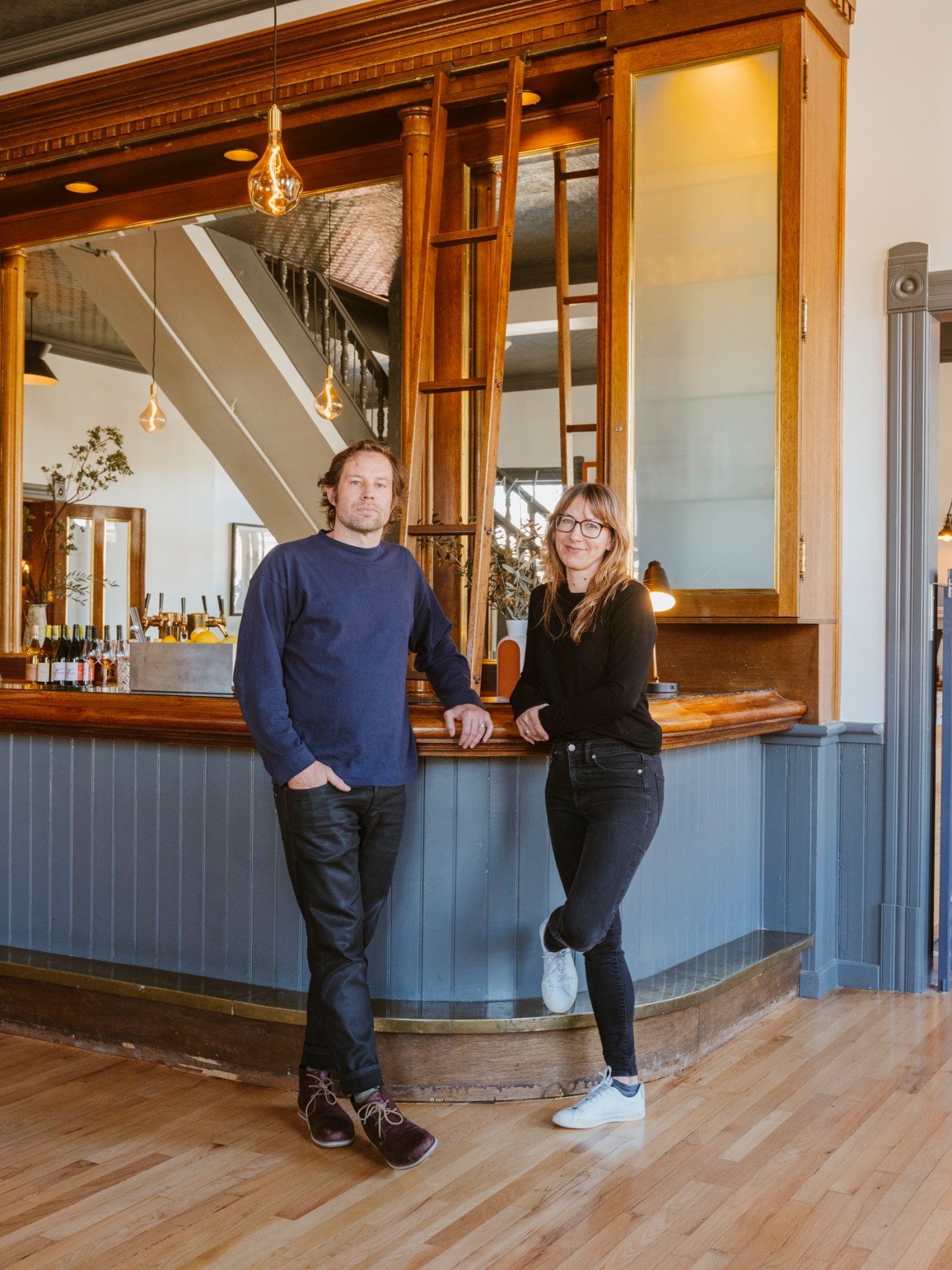
The number of rooms was reduced to 18 to restore the intimacy of an inn and the reception area has been combined with the bar near an imposing wooden staircase in the centre of the lobby. Every room is furnished with new designs and quality finds from vintage and flea markets in and around San Francisco. “Neither of us are period designers by any means,” says Ian Reed, co-founder with his partner Gretchen Krebs of the Medium Plenty design studio, which redesigned the space. “We both have a passion for comfort and for approachability. We did not want the rooms to feel stark but to have some flavour and character.
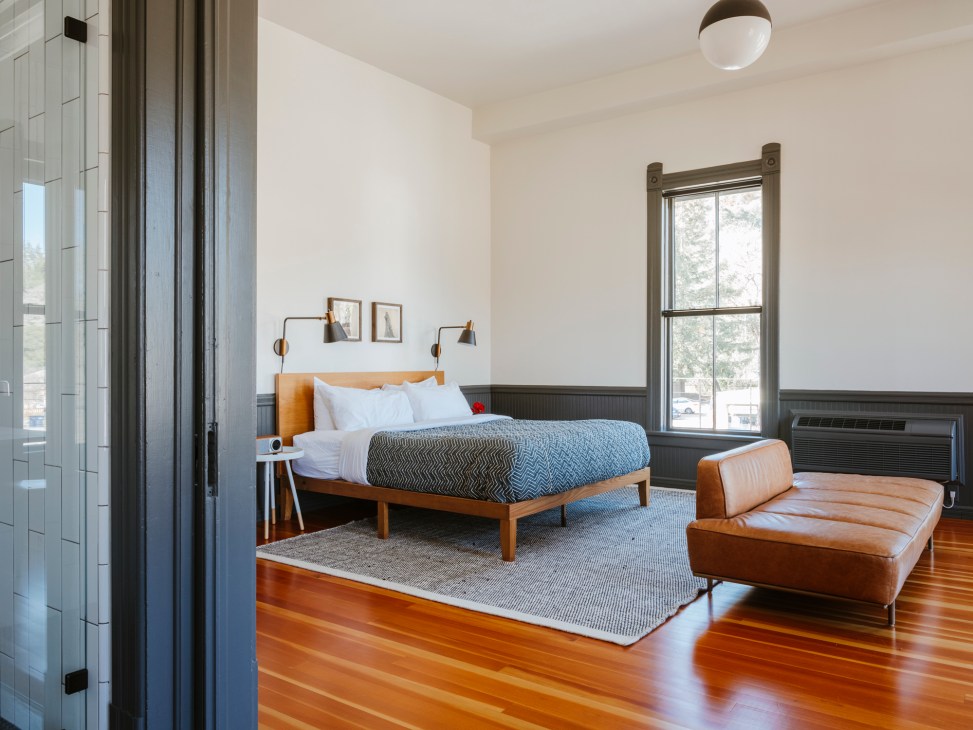
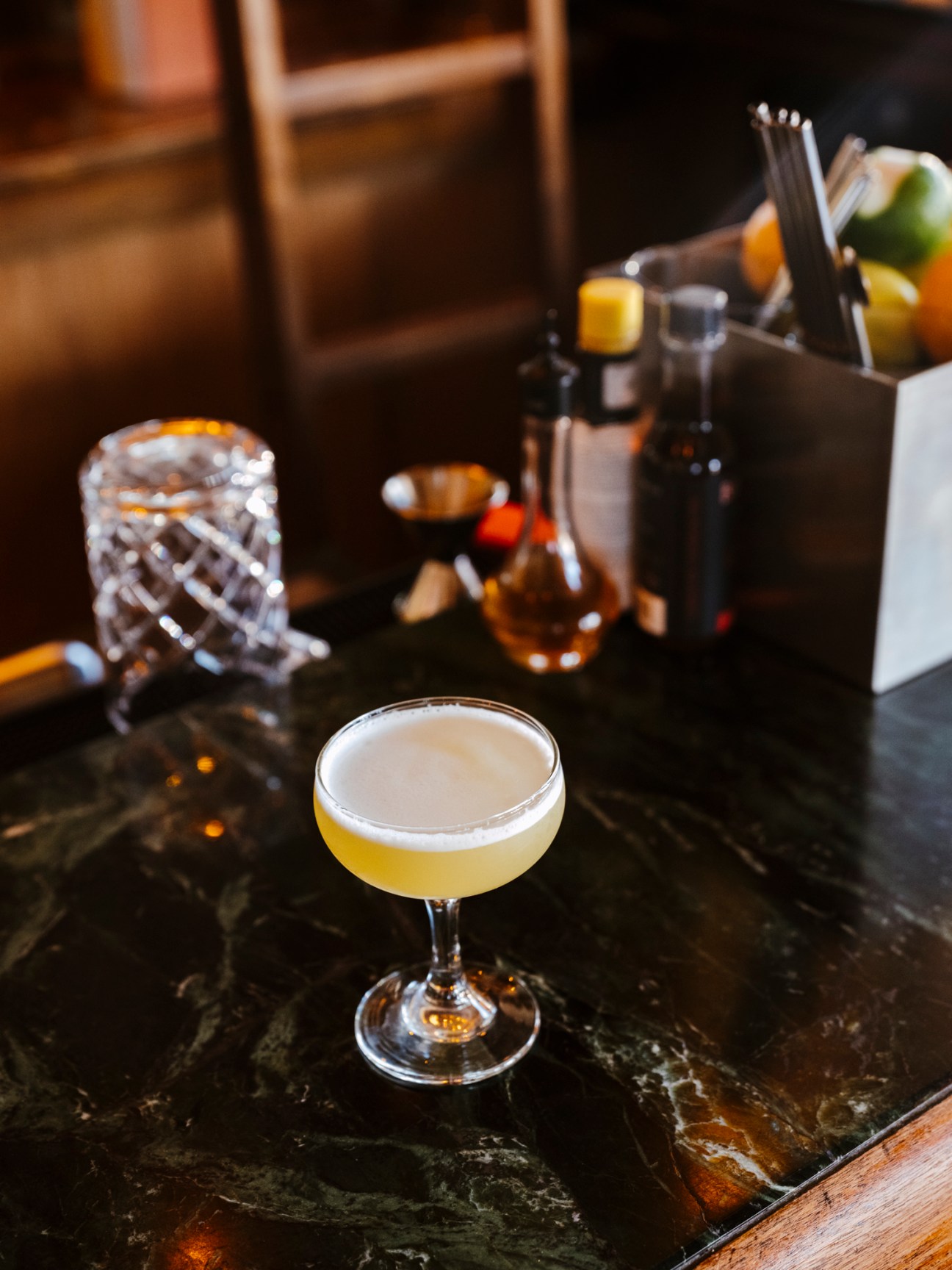
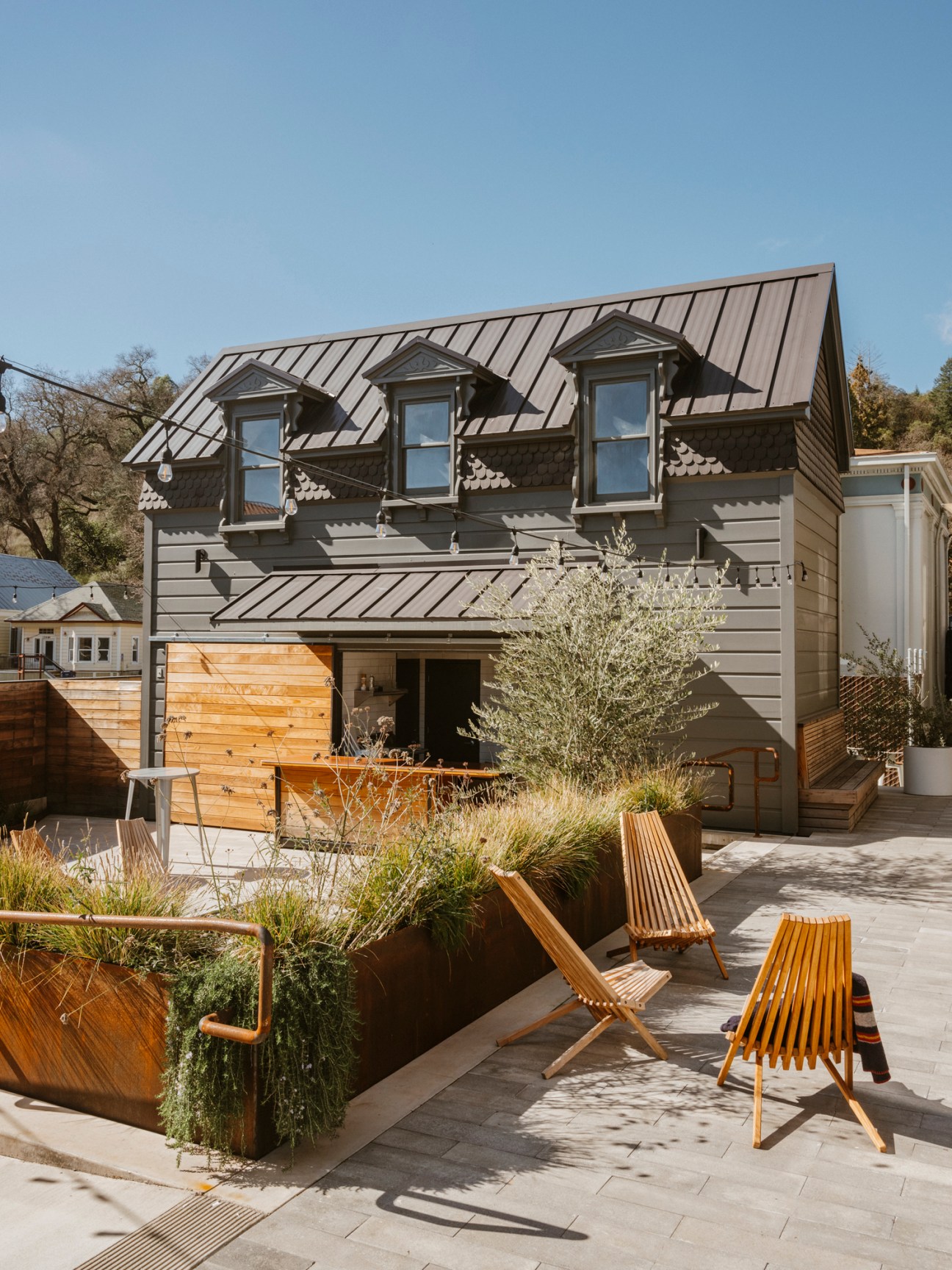
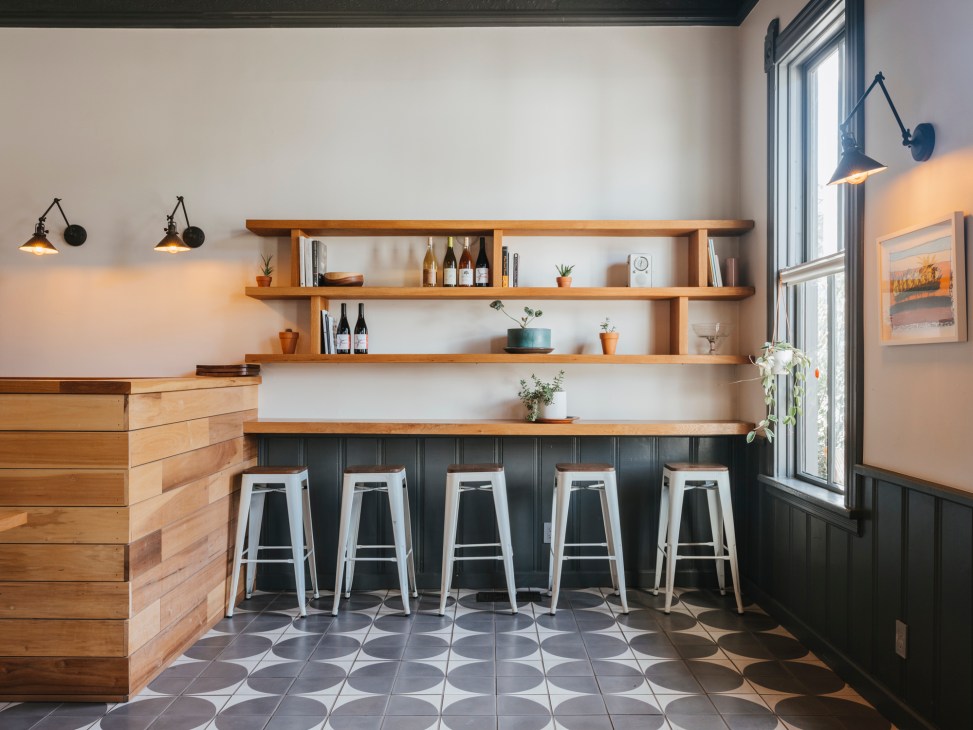
That character is dotted through the communal spaces too. The food is produced in collaboration with farms and producers in the region and is served on crockery by San Francisco’s Heath Ceramics. The tabletops in the new café and the terrazzo tiles were made specifically for the space by Rogero’s own architectural concrete company, Concrete Works. “It comes down to the transition between the old and the new,” says Krebs. “We’ve blended the two. The city feels far away when you’re here. That helps to make that feeling of the place shine as well.”
When restrictions are finally lifted, Rogero adds, The Thatcher will also host artists’ residencies, the works from which will be displayed in the hotel. “We wanted to bring a special experience that you don’t get in corporate hospitality,” says Rogero, referring to the glitzier members’ clubs and hospitality offerings in the Napa Valley. “We wanted to appeal to those people who are looking for a destination for the weekend that’s off the beaten path.”
thatcherhotel.com
Wineries near The Thatcher
Terra Savia
Located in picturesque Sanel valley, this organic winery and olive oil producer was established in 2004. A portion of all proceeds go to wildlife conservation organisations based nearby.
terrasavia.com
Saracina
Spread across 16 hectares, Saracina is known for its limited runs of bottles including malbec and petite syrah, as well as for its vegetable gardens, beehives and the wildlife that populates its landscape.
saracina.com
Campovida
A small family-run farm and winery, overseen by Mark Rogero’s business partner, Campovida is a great venue for wine tastings and outdoor gatherings, including performances by musicians from the region.
campovida.com
Images: Habitas Bacalar, Sarah Birkett, Jack Eastham, Joe Howard, Travis Rowan.
Rise again
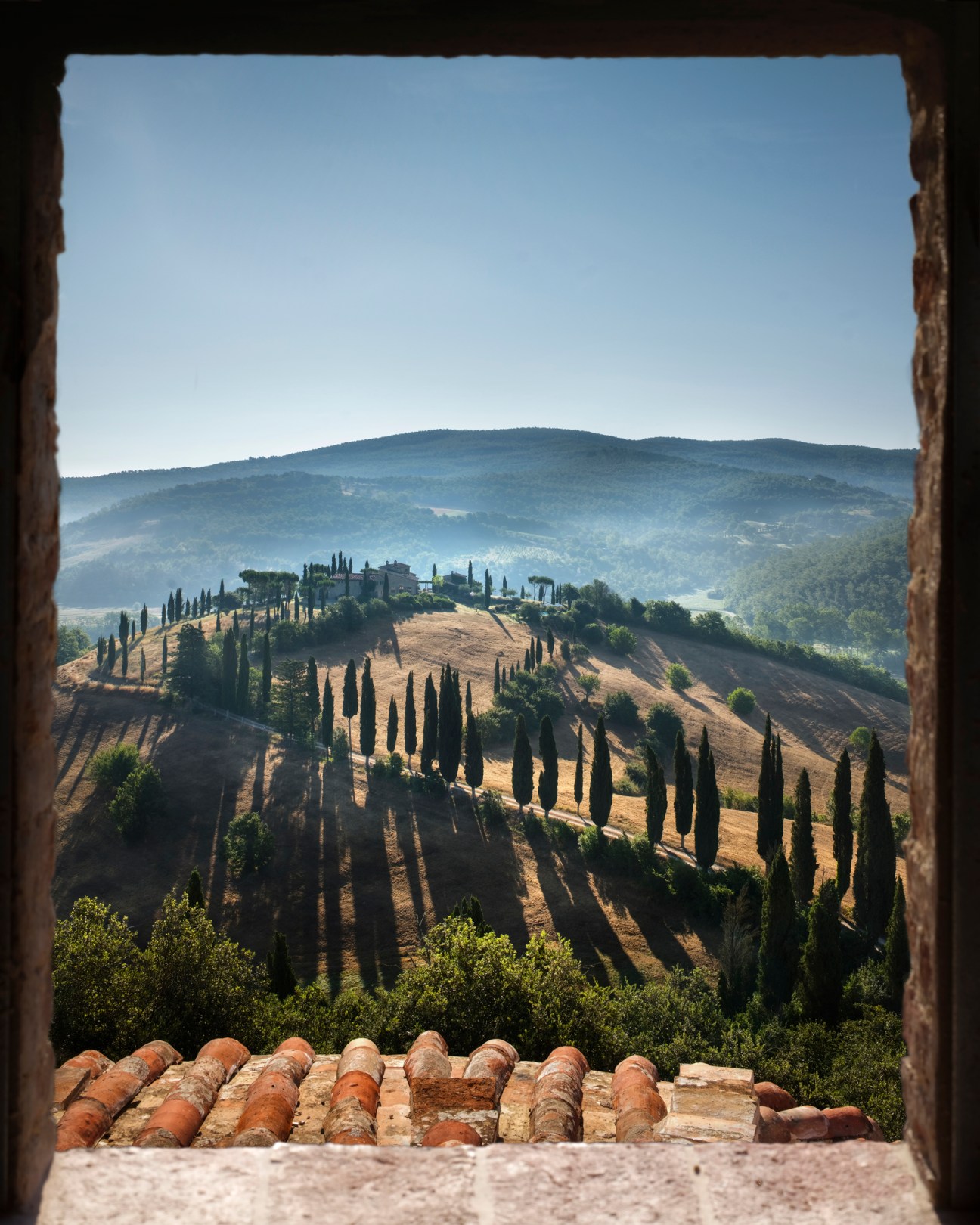
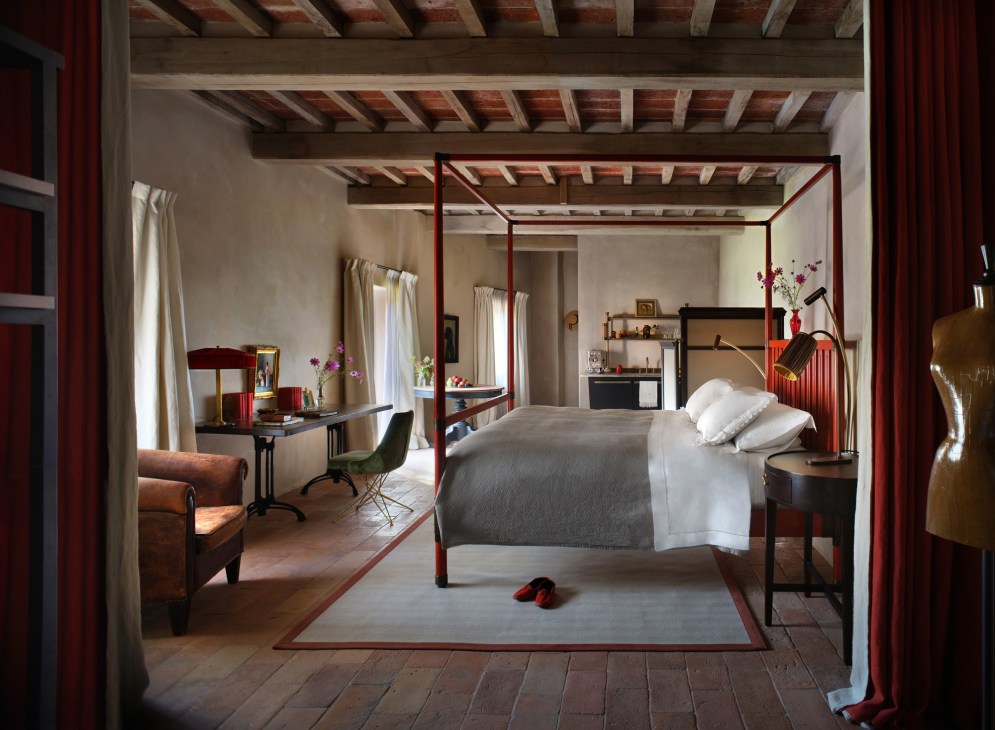
The pale stone castle that gives Castello di Reschio its name overlooks its estate of grassy slopes, oak forests and vineyards in Umbria, Tuscany’s wilder, less-touristy neighbour. Reschio’s fortress has surveyed this frontier between the regions for a millennium – its oldest tower dates to 900ad – and after decades as a tobacco plantation and farm, the castle will open its gates to visitors in May 2021 as Italy’s most intriguing new hotel.
“It was just crazy as an undertaking but the whole idea behind this hotel is time,” says Count Benedikt Bolza, an architect whose family bought the vast Reschio estate in 1994 and who has dedicated the past five years to transforming it into flawless accommodation. The slow process of gutting, converting and furnishing the castle – unlike a typically rushed hotel development – seems to inspire a similarly leisurely pace in the guests.
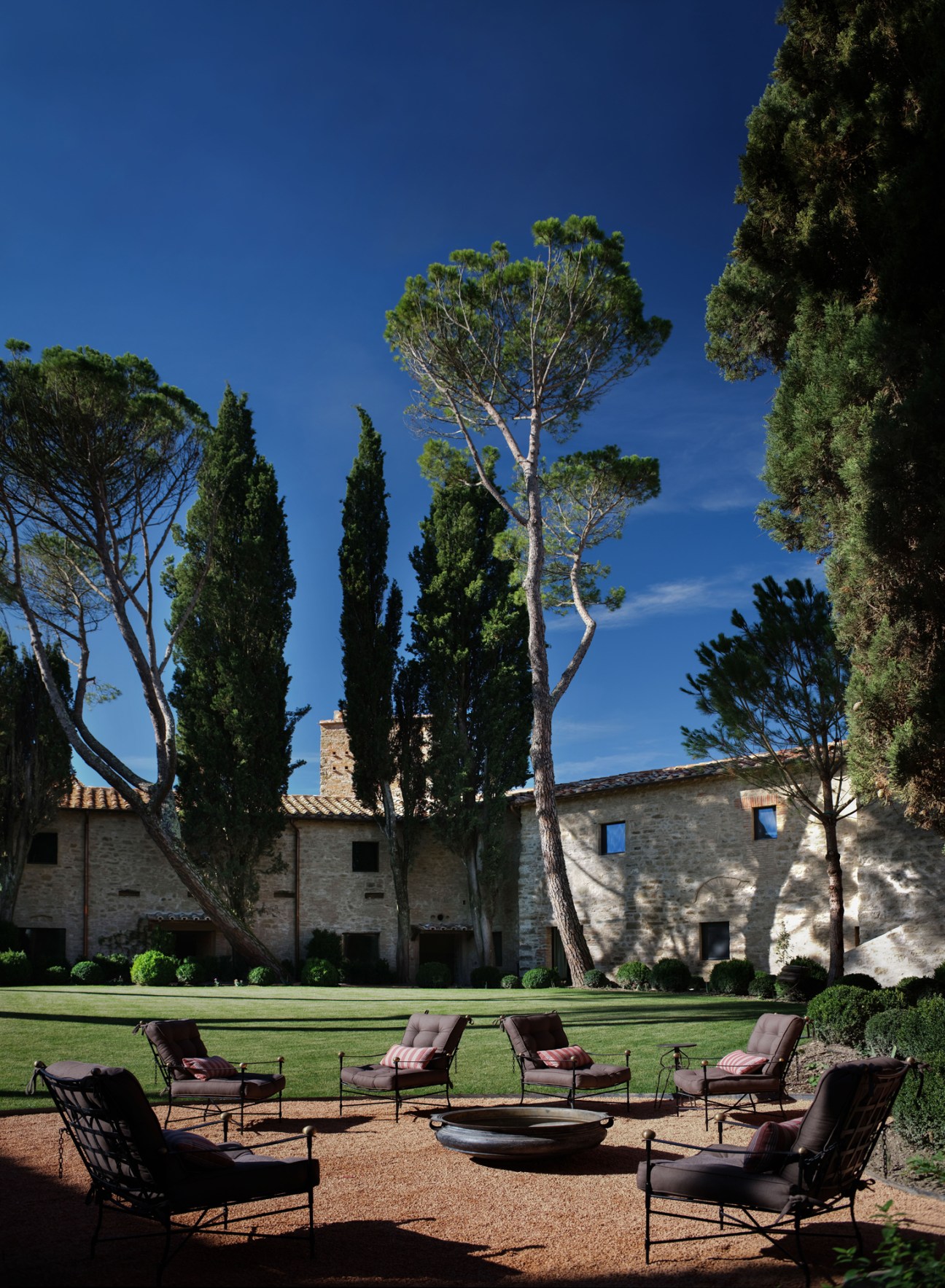
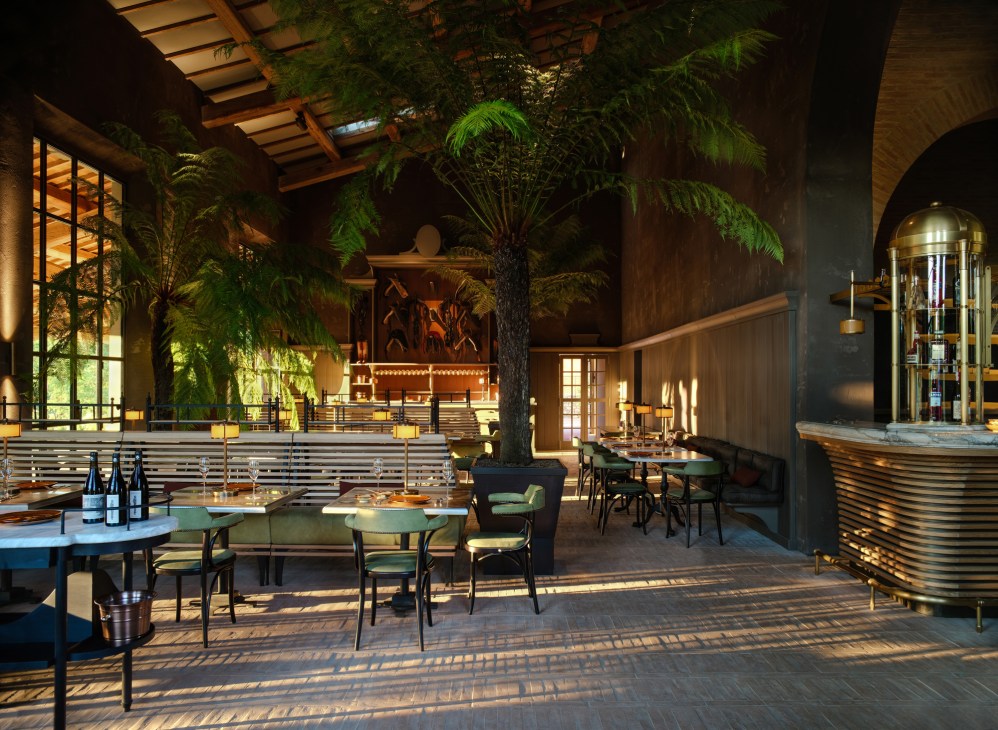
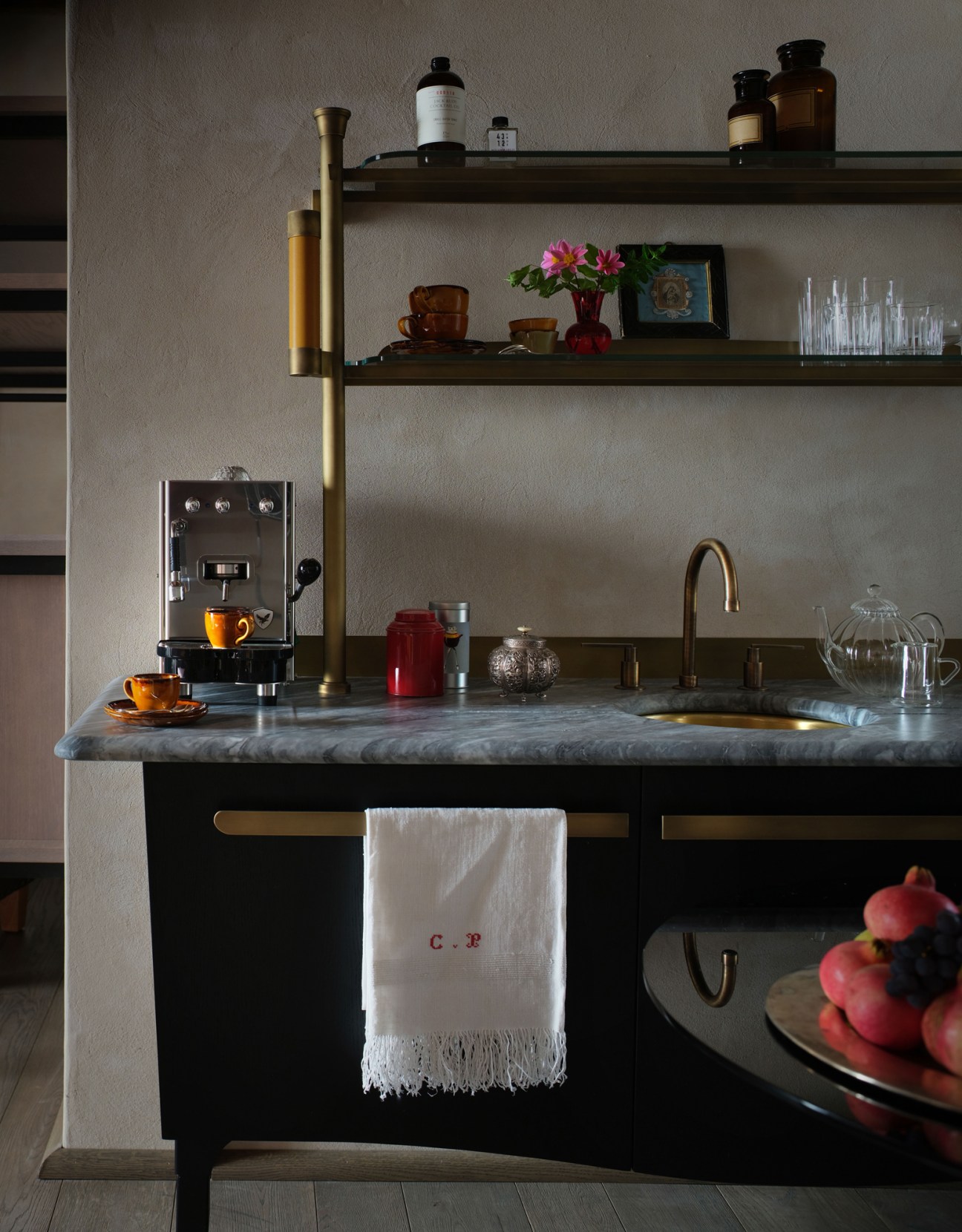
Castello di Reschio is an antidote for anyone fed up with the dispiriting sterility and inattention of many luxury hotels run by bigger brands. Bolza has worked with Umbrian makers and craft folk to create the furnishings, all inspired by Italian design of the first half of the 20th century, he says, “when crafts were celebrated”. The detail can be seen in items such as a brass-plated light with art deco lines and a lampshade corseted in velvet to cast a mellow glow. “Nothing here comes from a catalogue – everything is made by hand; everything is custom,” says Bolza, tipping the peak of his brown fedora that holds a porcupine quill in its grosgrain band. “This is a huge project completed with small artisans, which would only be possible in Italy, where they’re still making things with passion.”
Each room is unique, an extravagant medley of Bolza’s furniture designs and antiques found over the years in markets and auctions. There’s also decorating insight from Bolza’s wife, Nencia Corsini – “my unconventional advisor, who pushes me to a wackier level,” as he puts it. “We hate things that match,” says Corsini, whose reputation for eccentricity can be traced to the years when she went everywhere with a pet parakeet perched on her head.
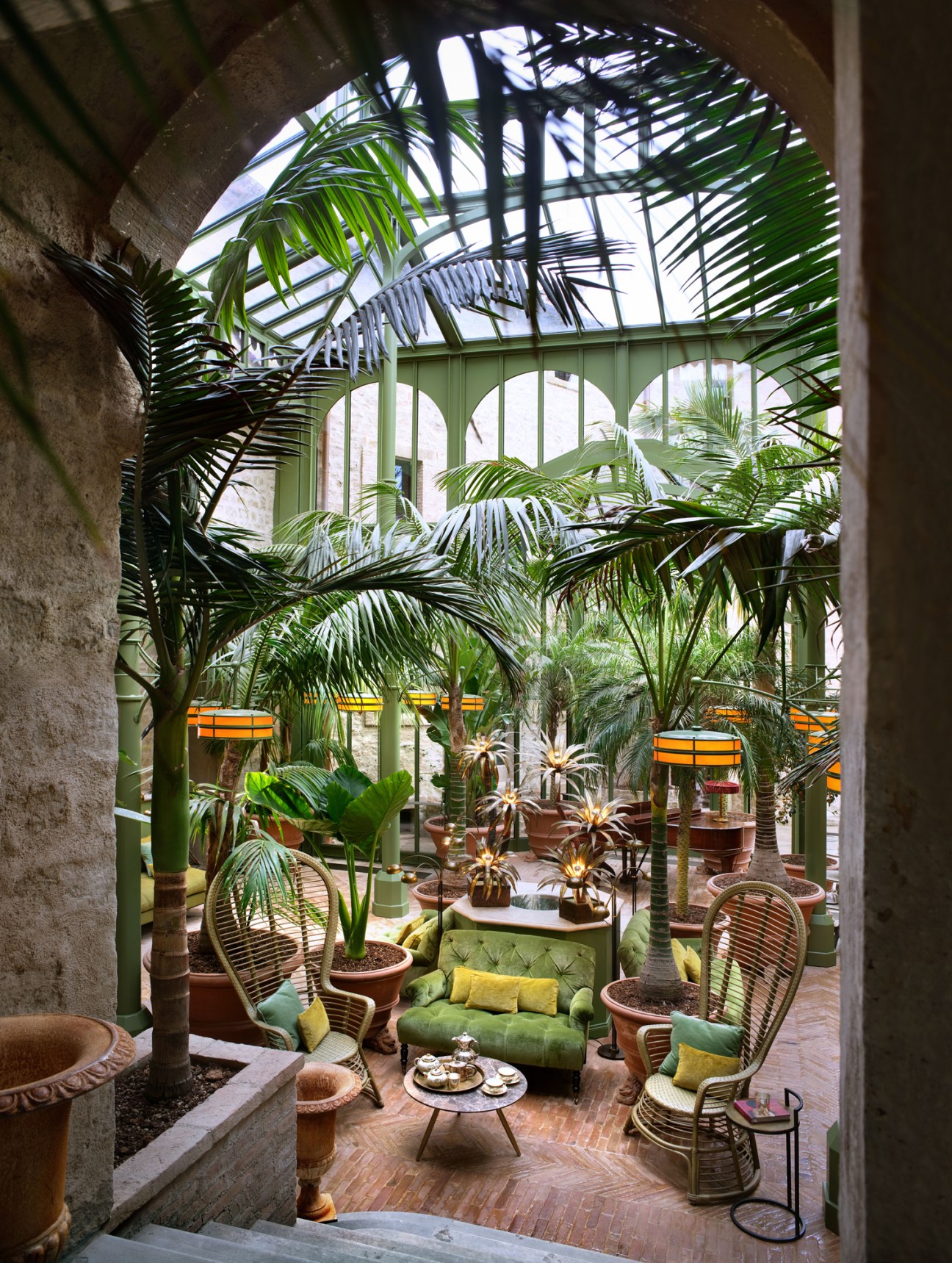
The pleasures of castle life go well beyond the furnishing though. There’s a spa built into stone wine cellars where a masseuse uses treatment oils infused with Reschio’s own herbs. Not to mention the grass-edged 30-metre pool surrounded by umbrella pines, with a poolside bar inside a watchtower – plus a pianist playing a 1909 Steinway in the lofty, beaux arts-style palm tree conservatory that serves as the castle’s lobby.
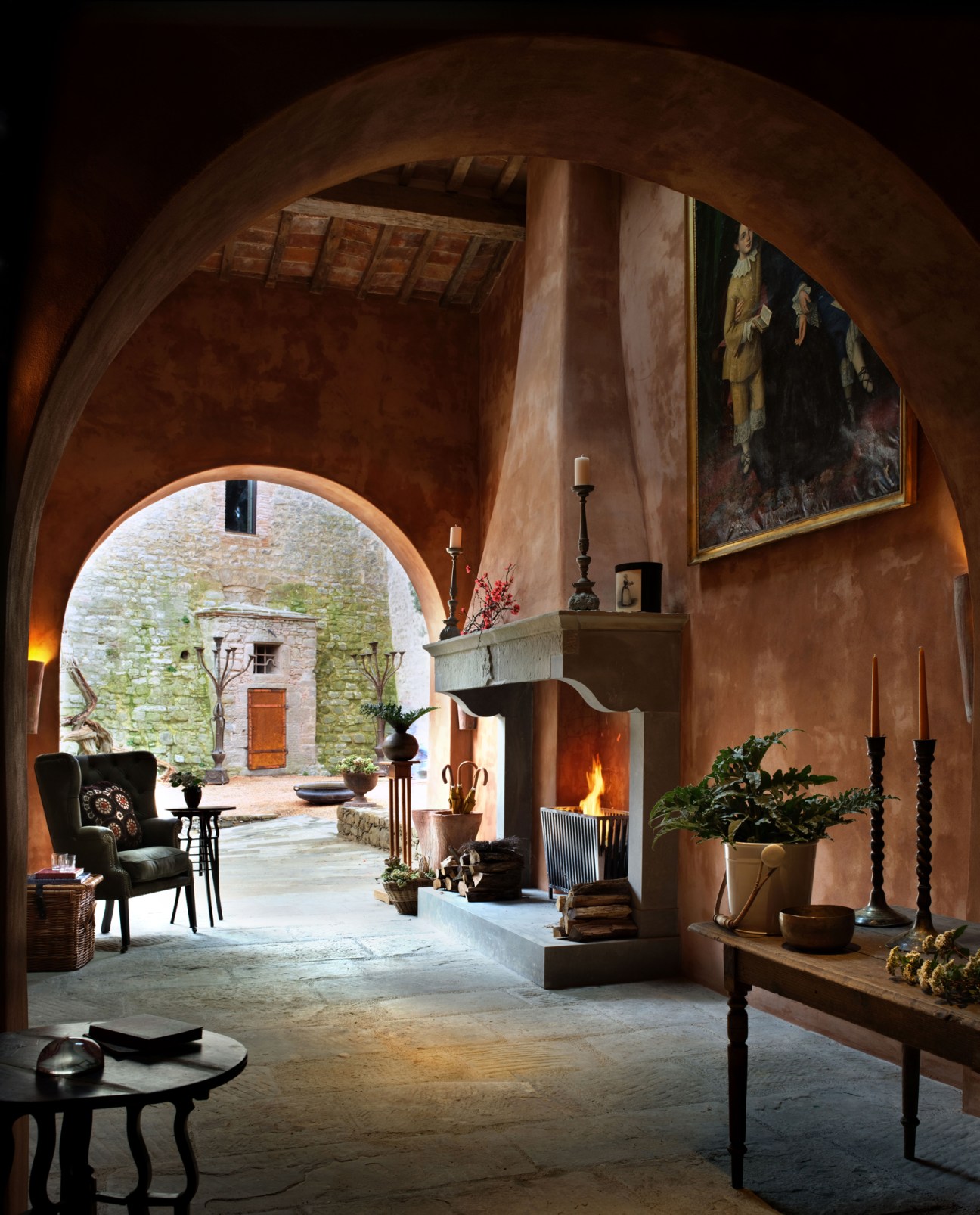
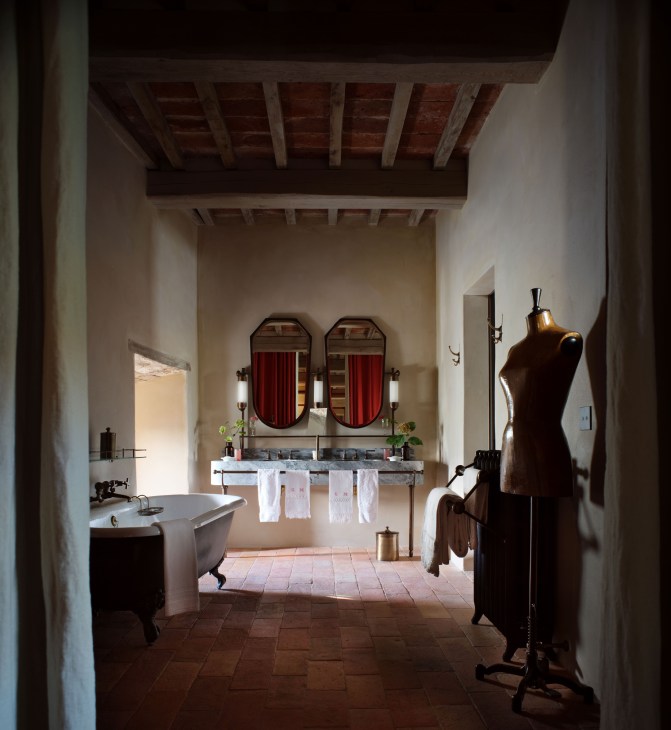
“Everyone used to do everything in their bedrooms and we wanted to bring back that pleasure,” says Bolza, showing Monocle into a castle suite. The bathroom is stocked with enough sumptuous furnishings to fill a large apartment. Double brass sinks are set into a thick slab of grey Bardiglio marble; an antique table and bentwood chair sidle up beside a clawfoot tub, with a marble-and-brass cocktail bar against the bathroom wall. “I like to imagine Churchill taking his morning whisky in the bath here, as an aide at the table reads him the day’s schedule,” says Bolza. A “quirky but very practical” dressing table in marble and dark-stained beech flanks the bathroom entrance – a piece that the count created to encourage unhurried grooming and which is present in all of the hotel’s 36 rooms. “The furniture encourages you to spend time here,” says Bolza, running a hand along the needlepoint-embroidered sheets of the four-poster bed he designed. “Don’t come for a day,” he says, half-architect and half-hotelier. “Come for a week.”
In another suite a centuries-old olive press sits at the centre of the room, while a velvet daybed designed by Bolza rests on a former olive-sorting table by a castle window. Throughout the hotel there are age-old painted portraits, soft-toned linen-velvet chairs, logs piled up next to working fireplaces and other eccentric relics: an altar covered in gold leaf; a walnut jeweller’s bench that seats five. “I wanted the rooms to look as though they’d been furnished through the centuries,” he says.
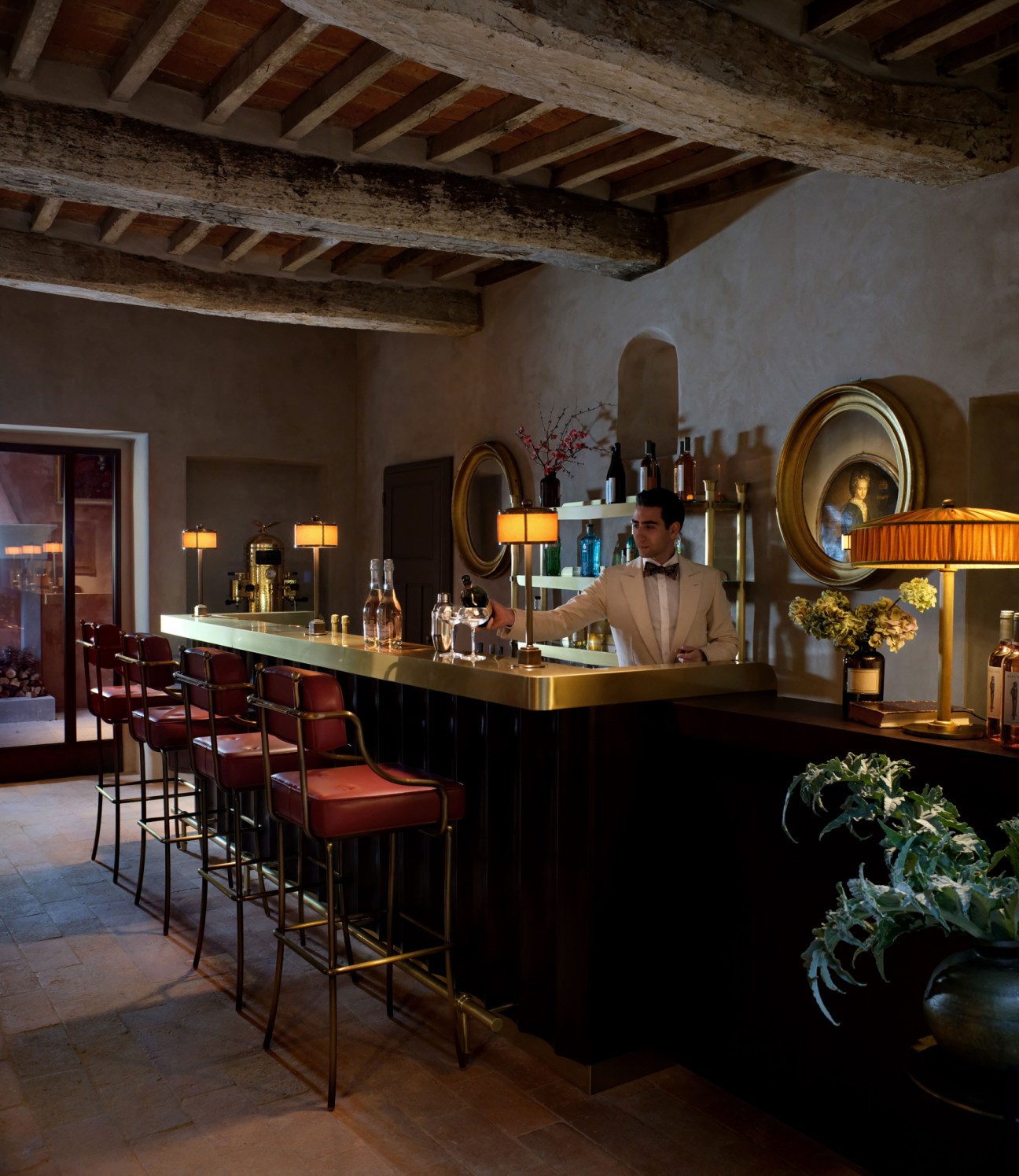
Before the renovation Bolza and Corsini lived in the castle for a decade, home-schooling their five children under a crumbling roof. “It was like a birdcage with the wind blowing through the rooms,” says Bolza. It was Bolza’s father, Antonio, who reclaimed Reschio’s equestrian tradition and who still oversees the stables and dressage. Bolza’s mother, also an architect, revived the first of the estate’s 50 dilapidated cottages as vacation residences to rent or buy. There are now 26 refurbished homes, each with its own pool, dotted around Reschio’s hills, with 10 available for rent. Corsini, a decorative painter, met Bolza in 1997 when employed by his mother to create frescoes. Today the pair occupy a sprawling house near the stables, with room for their five children.
Corsini, who rides a horse around the estate, also oversees the gardens. As she walks through one with a Swiss Army knife slung from her belt bag, she points out garlic mustard, primrose and radicchio – all destined for Reschio’s two restaurants. “We interfere as little as possible and let nature give us what works well,” she says, the wooded hills behind her stretching out to the horizon. “If you take the time to observe, you understand what works.” Time, it seems, is a key ingredient in Reschio’s recipe for success.
reschio.com
Riding at Reschio
At Castello di Reschio, there’s mountain biking, tennis (and a surprisingly competitive Reschio cup), cooking and painting lessons on offer – but equestrian activities take pride of place. When Antonio Bolza fell in love with horseback riding in later life, he dedicated himself, and Reschio’s stables, to dressage – the centuries-old sport of training horses to perform intricately controlled steps with their riders. Every Monday, Reschio’s residents gather at the bar beside the stable’s arena to watch the Spanish steeds do their prancing, patrician dance with dapperly attired riders.
Address book
Visit
Perugia
A lively university city of well-preserved medieval architecture. The Galleria Nazionale dell’Umbria is unmissable, as are the restaurants (try Civico 25), and newsstand and cultural hotspot Edicola 518.
See
La Scarzuola
A surrealist cityscape constructed in 1956 on the remnants of a Franciscan monastery to represent the ideal life, dreamed up by esoteric architect Tomaso Buzzi.
Città di Castello
The Fondazione Alberto Burri holds 130 works by the Città di Castello artist, one of Italy’s foremost modern artists, plus the Renaissance-rich Pinacoteca Comunale here was decorated by Giorgio Vasari.
Spello
Renowned for its flower displays, the charming hilltop town boasts a chapel by Pinturicchio at the Santa Maria Maggiore church, and excellent food at La Cantina di Spello.
Drink
Cantine Paolo Bea
This biodynamic winery gives the native sagrantino grape 10 years of ageing to create sophisticated Umbrian wines.
Stick ’em up!
Good graphic design can transform advertising into an artform. At their best, great campaigns use deft illustration or artfully rendered ideas to create idealised, soft-edged and simplified versions of the world. They pique our interest with promises and appeal to our desires: for order, exploration, ideas or excitement.
The pleasing shapes in these posters, their tight typography and eye-catching colours, come together to raise awareness – of an exhibition, perhaps, or about consumer electronics – but they can simultaneously cause us to raise an eyebrow, crack a smile or start making plans.
Who wouldn’t want to hop on a flight to Rome, Greece, Geneva, or even Kandersteg after taking in the glowing representations of these pretty postwar posters? Here’s our paean to the alchemy of advertising done well.
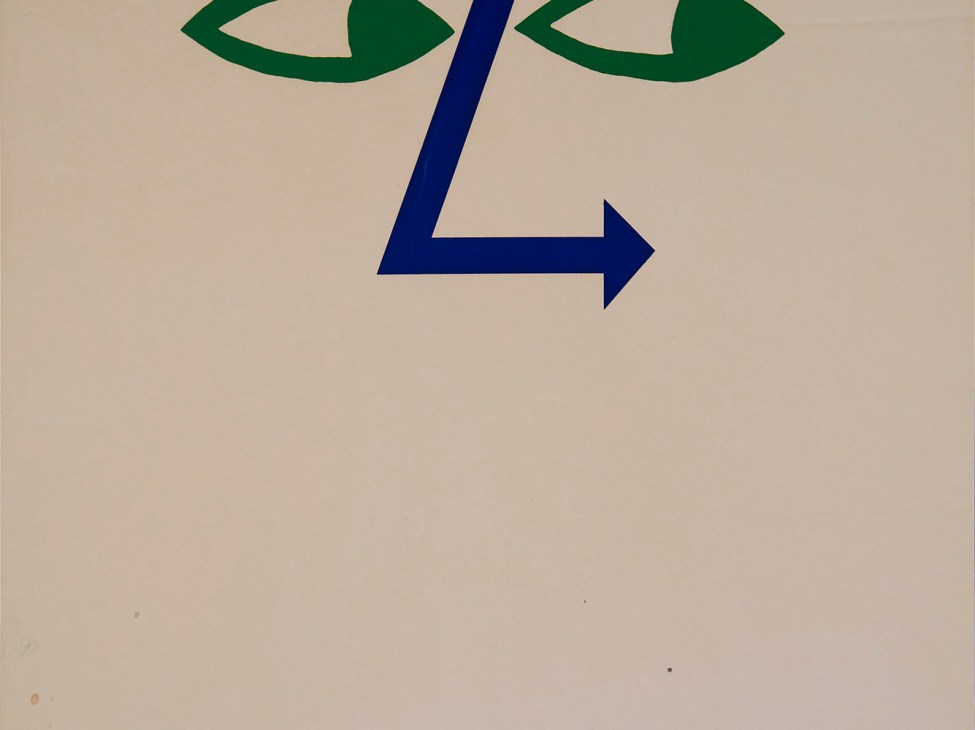
twentiethcenturyposters.com
Designed in 1960 by Tom Eckersley for an exhibition organised by the Society of Industrial Artists.
twentiethcenturyposters.com
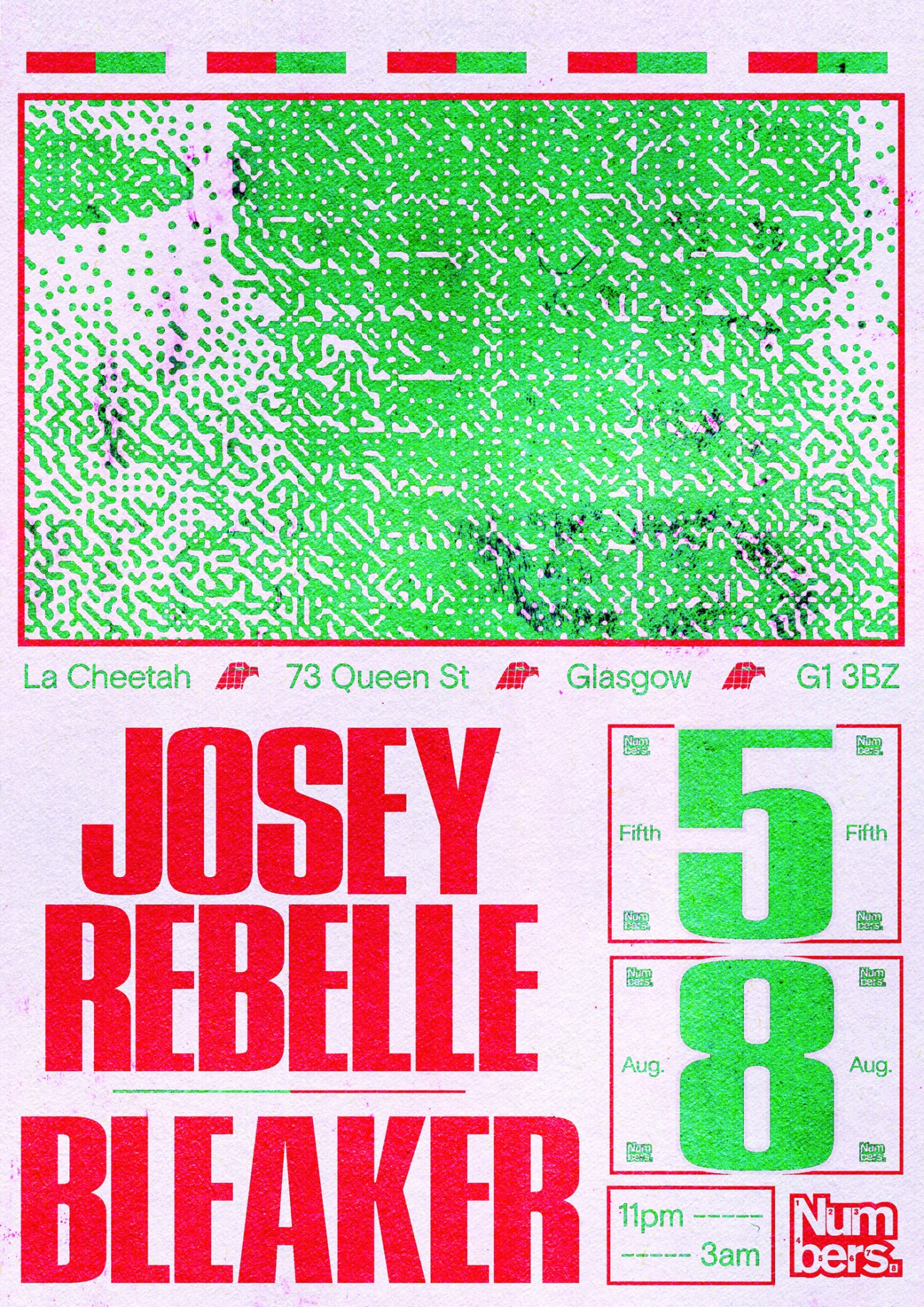
Contemporary poster advertising a night at Glasgow’s Numbers club.
designmuseumshop.com
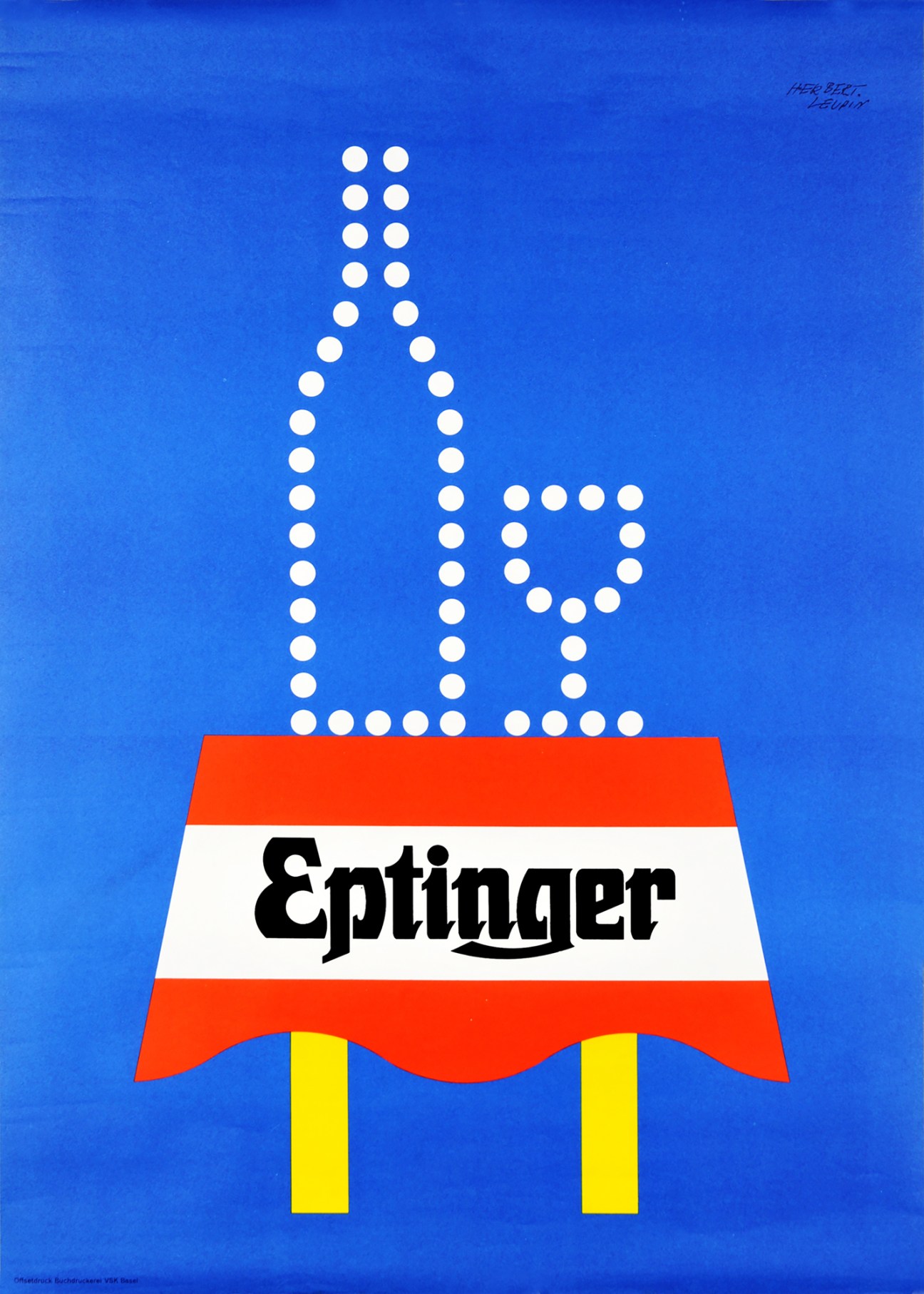
Herbert Leupin poster from 1962 for sparkling water brand Eptinger.
galerie123.com
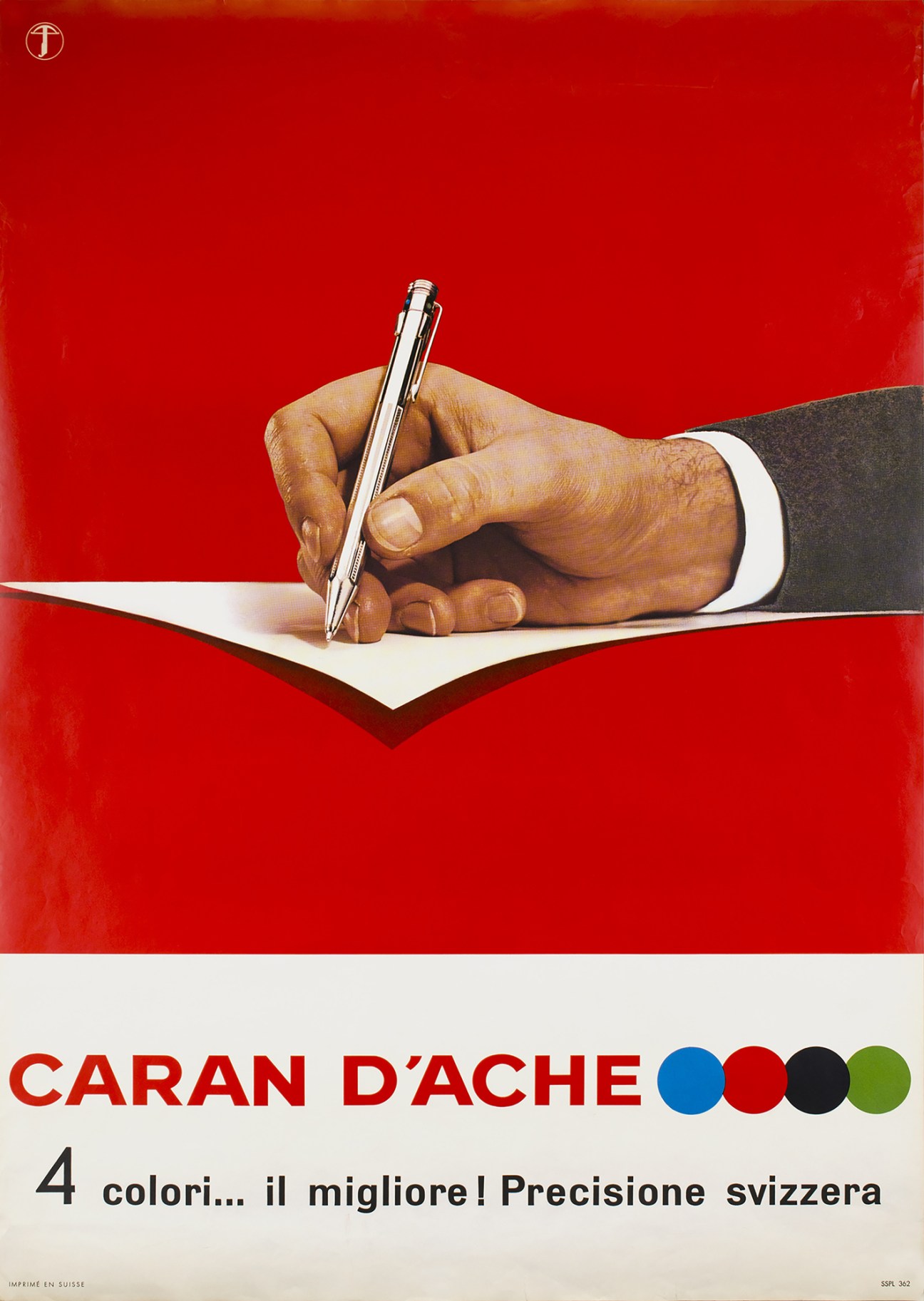
A 1960s design by Reymond Zahler for Swiss stationers Caran d’Ache.
galerie123.com.
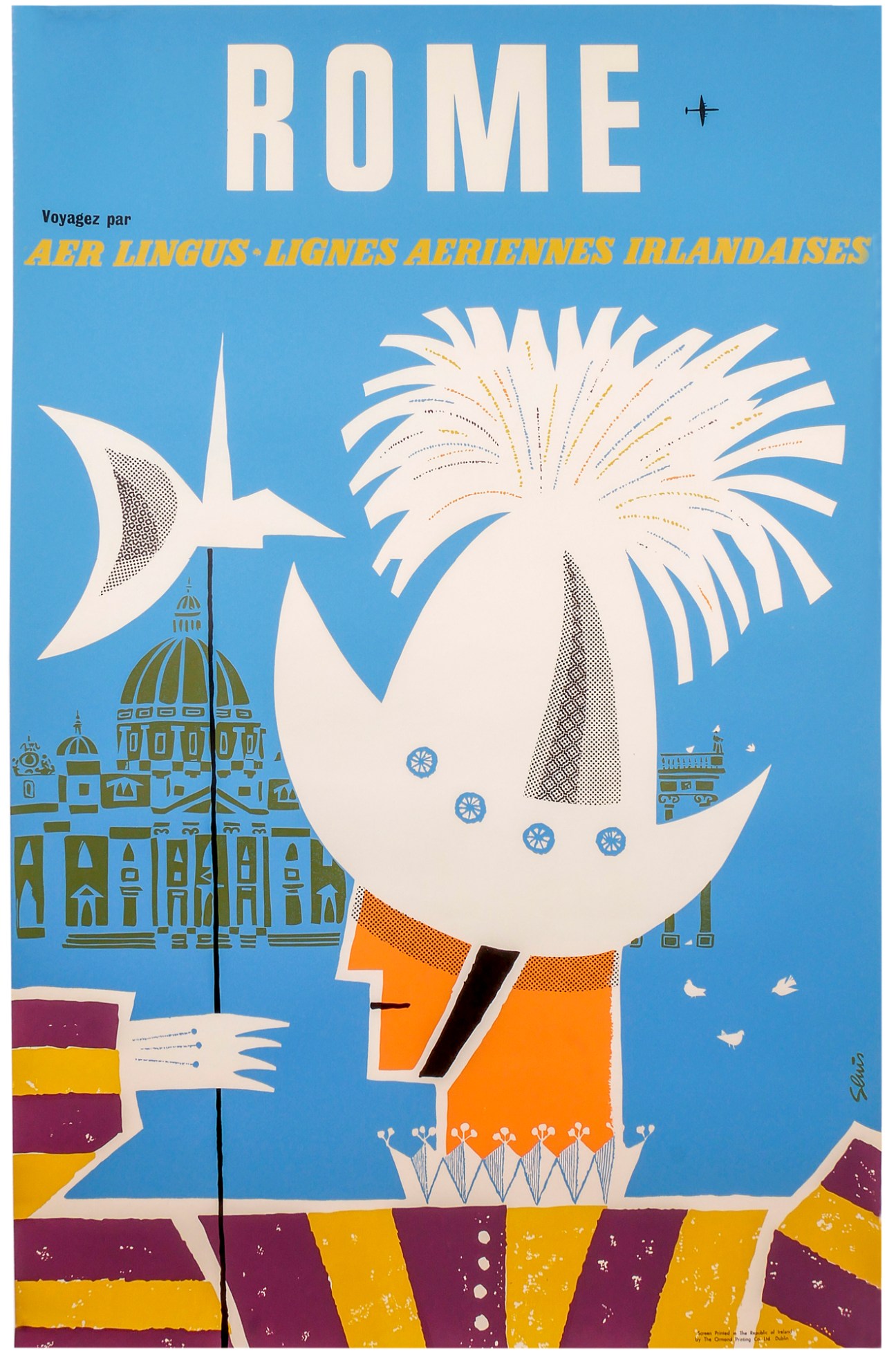
Piet Sluis designed this poster for Aer Lingus in 1950.
sotherans.co.UK

polishpostergallery.com
Miroslaw Adamczky’s design was created for the Wybrezeze theatre in Gdansk.
polishpostergallery.com
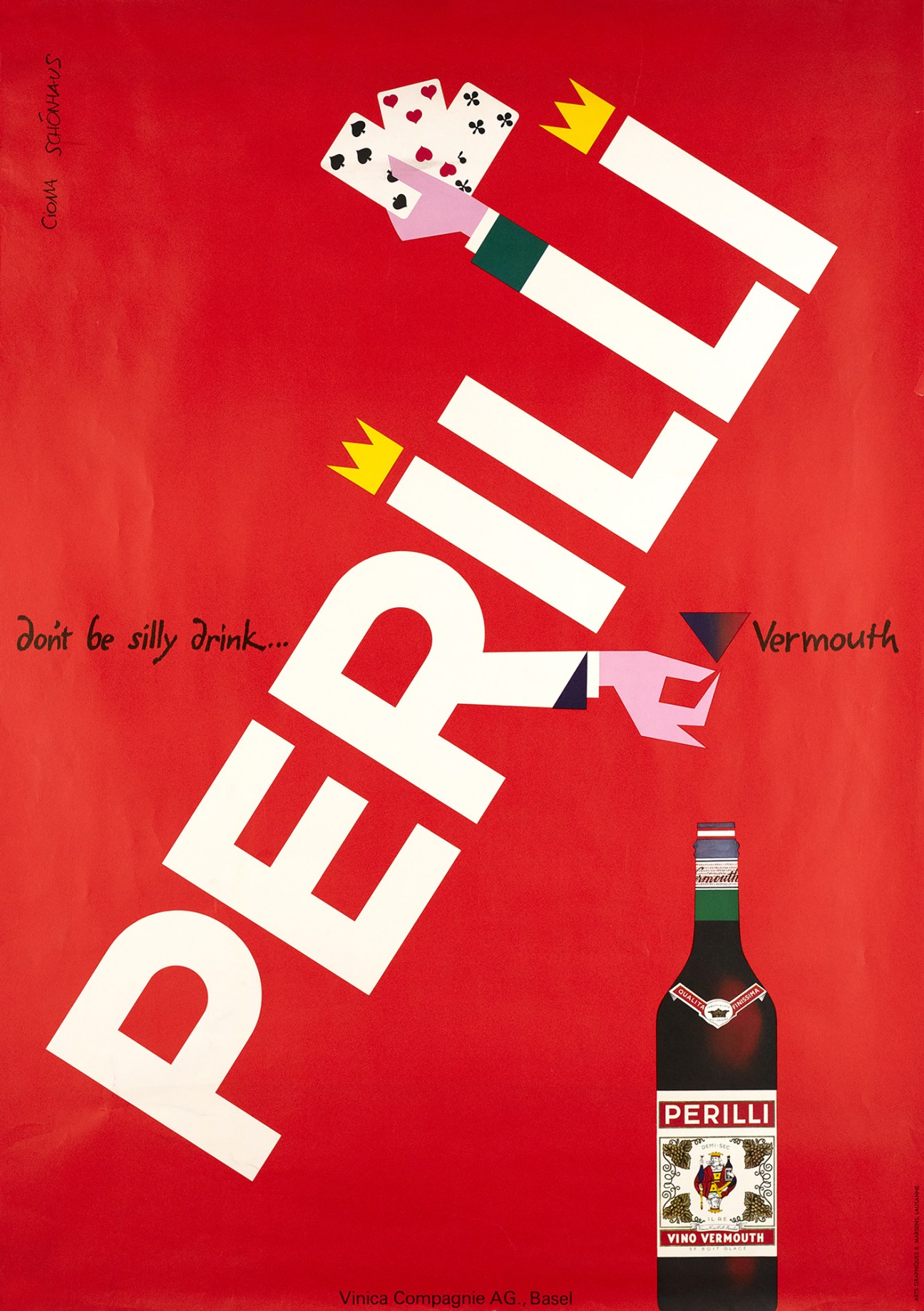
“Don’t be silly, drink Perilli” reads Cioma Schonhaus’s design for the vermouth brand.
galerie123.com
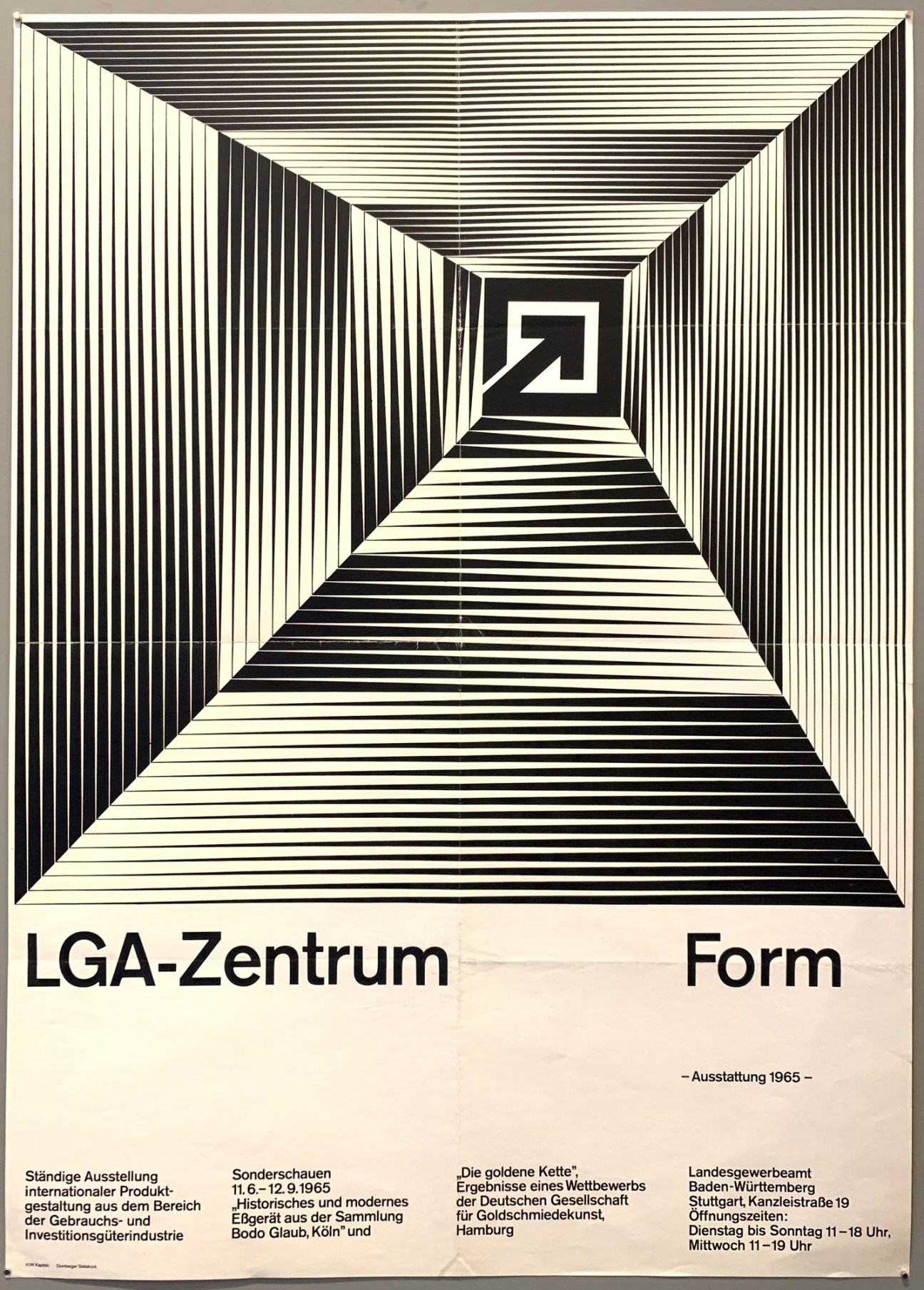
A 1965 exhibition at Germany’s LGA-Zentrum is the focus of HW Kapitzi’s design.
postermuseum.com

Frederick Vincent Carabott designed this poster in 1961 for the Greek tourist board.
galerie123.com
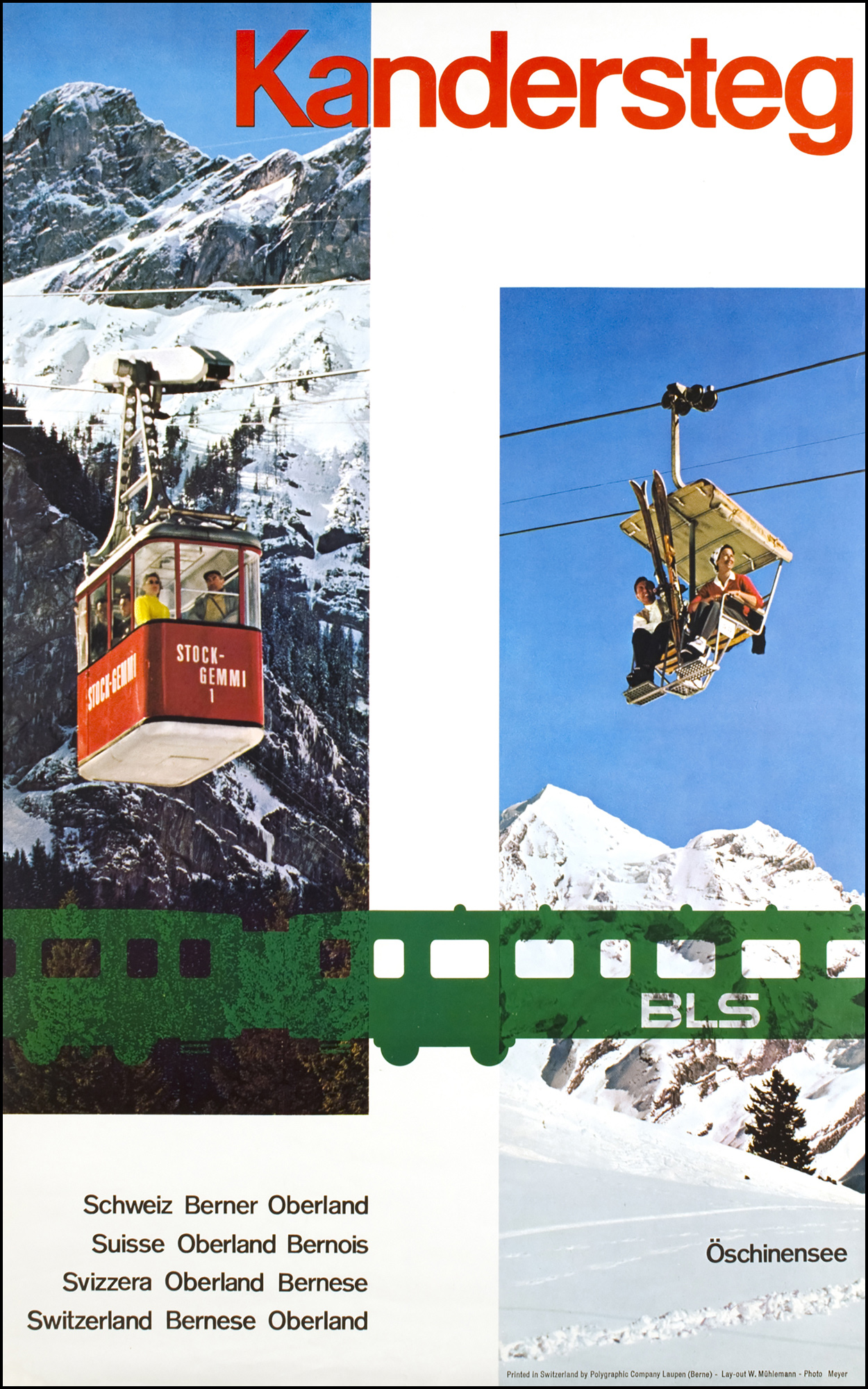
The Swiss region of Kandersteg is showcased in this 1960s print.
galerie123.com
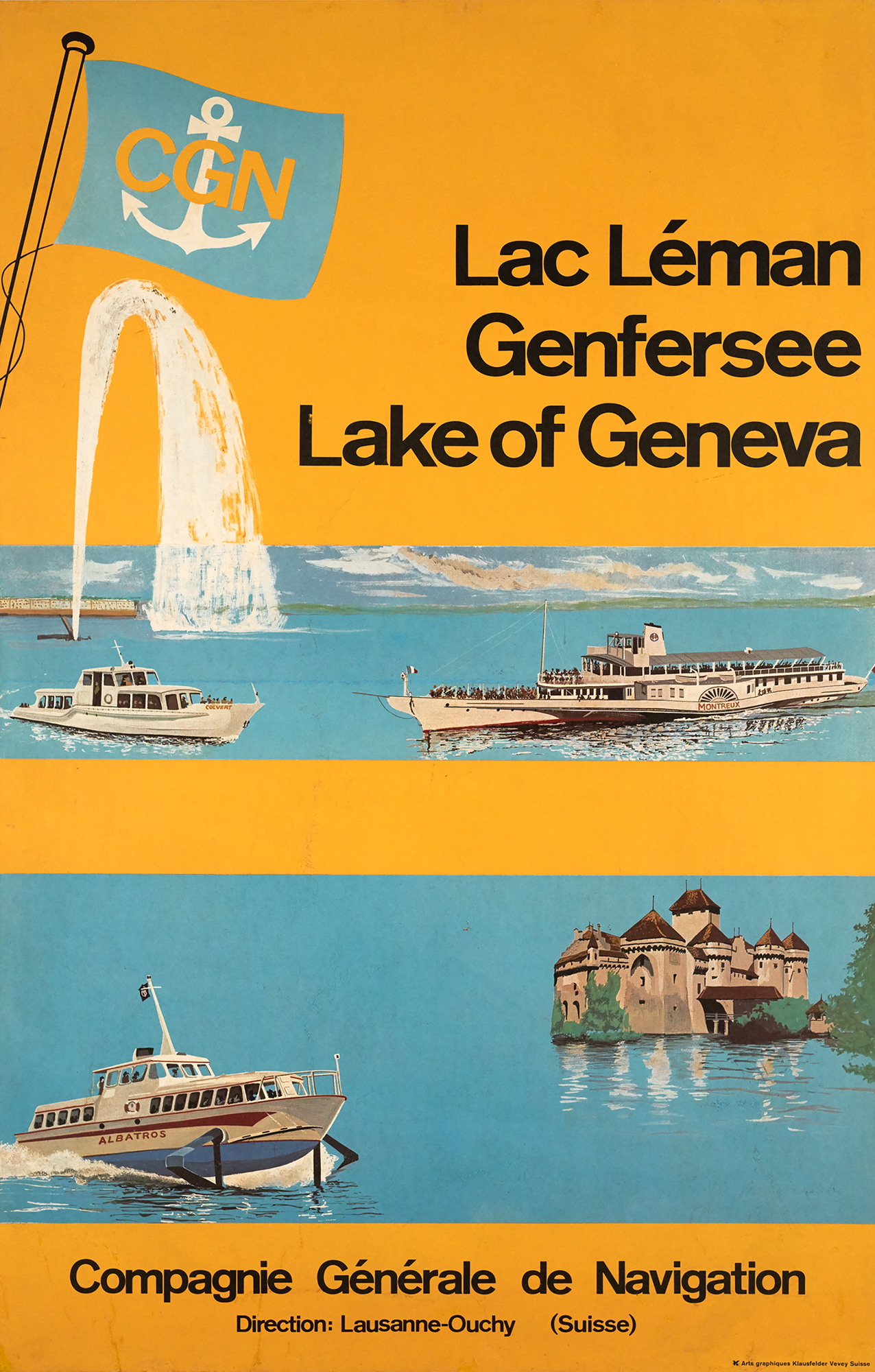
A poster from 1964 advertising boat trips on the Swiss lakes.
galerie123.com
elbe.paris
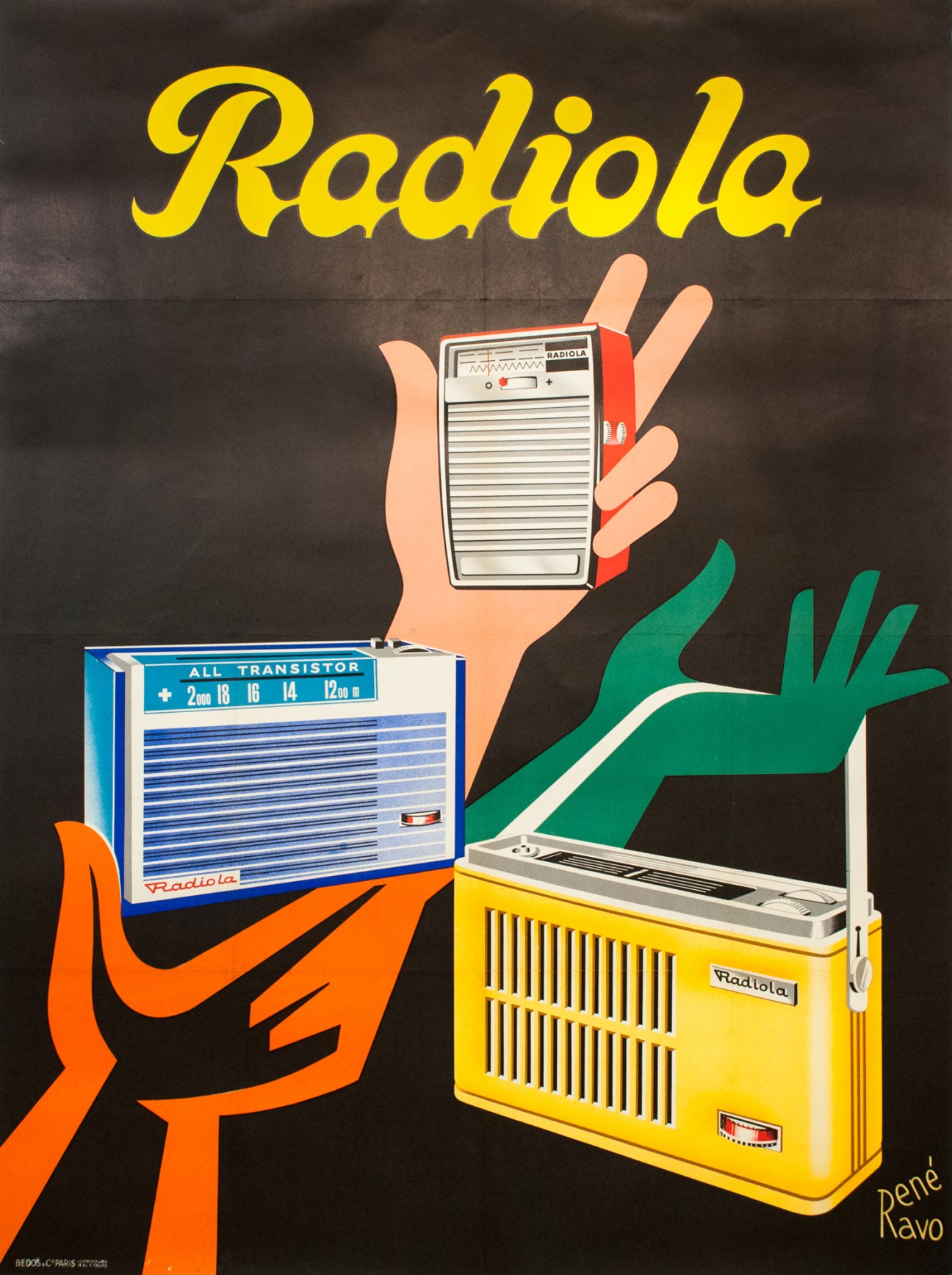
Swedish radio-makers Radiola enlisted René Ravo to create this design in 1960.
elbe.paris
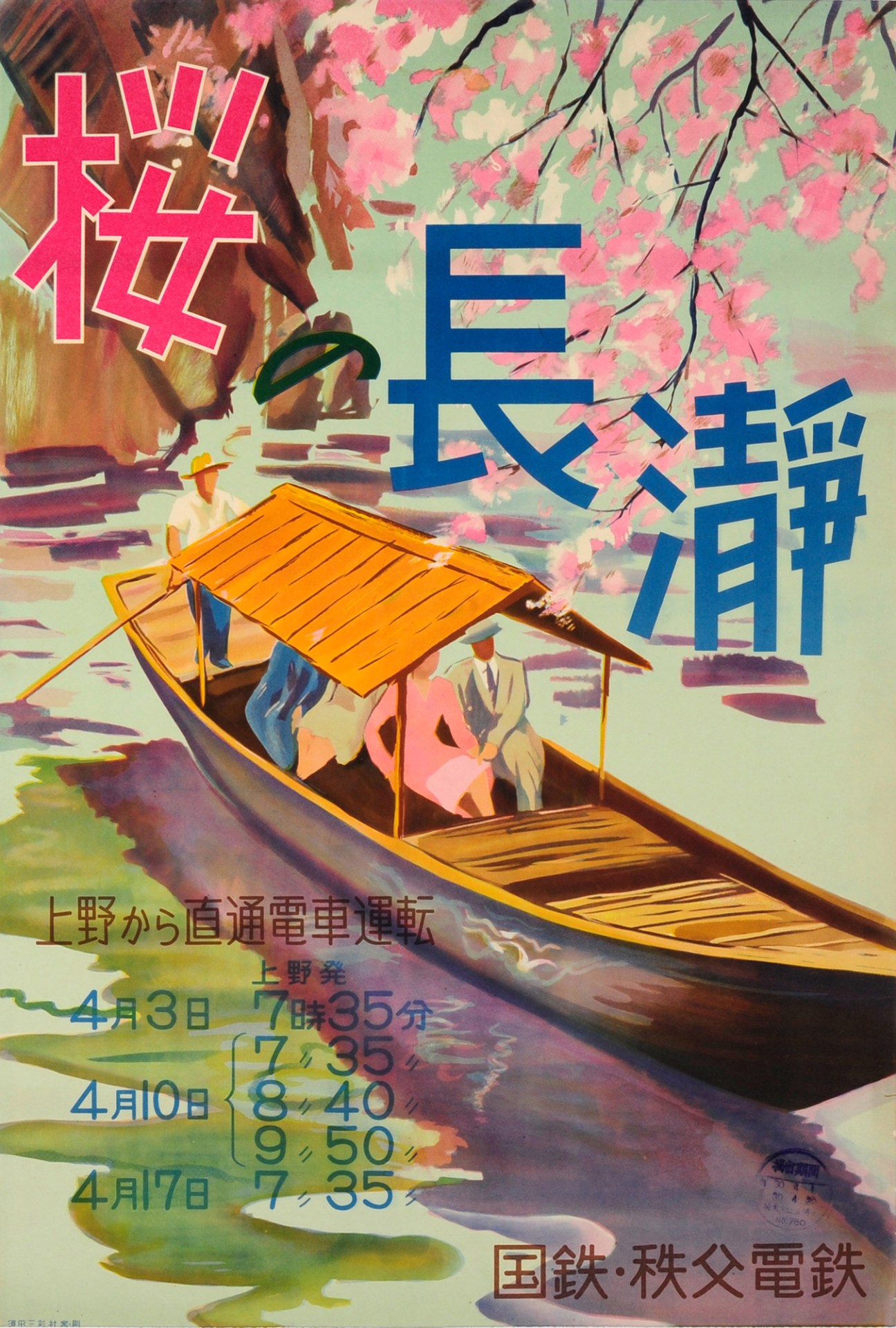
A Japenese poster from the 1930s advertising riverboat trips.
antikbar.co.UK

polishpostergallery.com
Hibner Maciej’s design for Polish carrier LOT was originally printed in 1961.
polishpostergallery.com
Kerb appeal
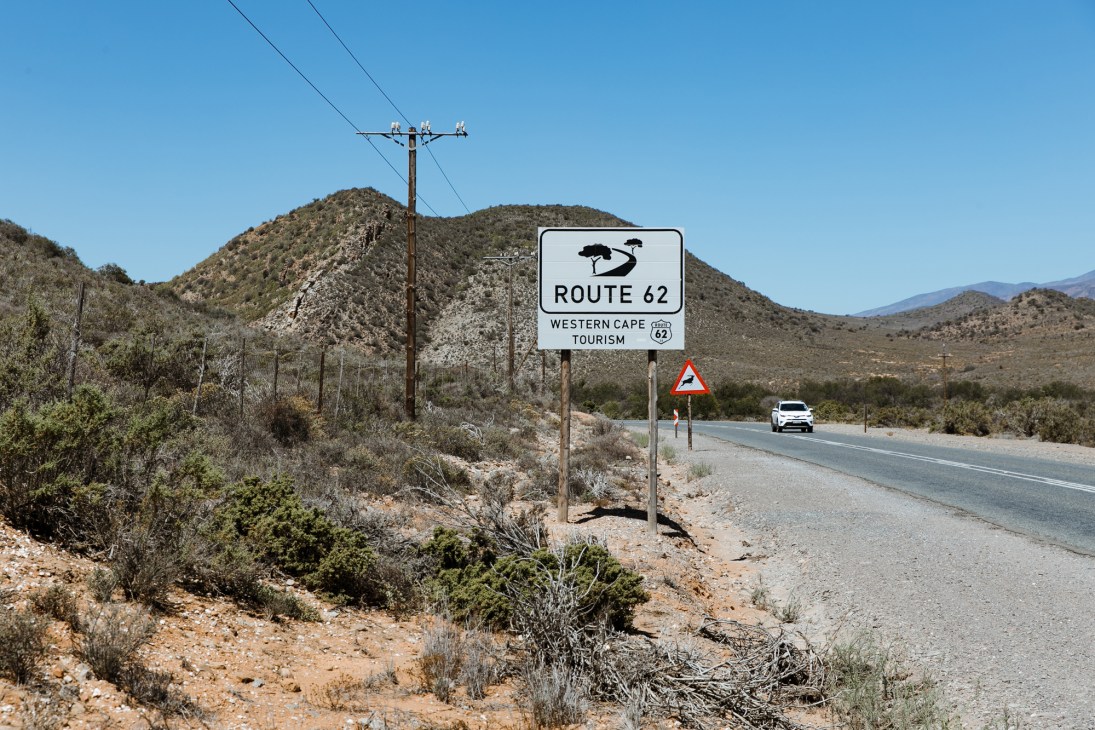
Route 62, a road that stretches between South Africa’s Eastern and Western Capes, has become a popular alternative to the coastal Garden Route, one of the country’s prettiest – and busiest – drives. Rolling through the Karoo, a semi-desert area with tumbling mountains, the r62 winds past clusters of farm stalls and through pristine towns that have in recent years proved a pull to entrepreneurs in search of a simpler life. Buckled up? Then we’ll begin.
Day 1.
Cape Town — Montagu
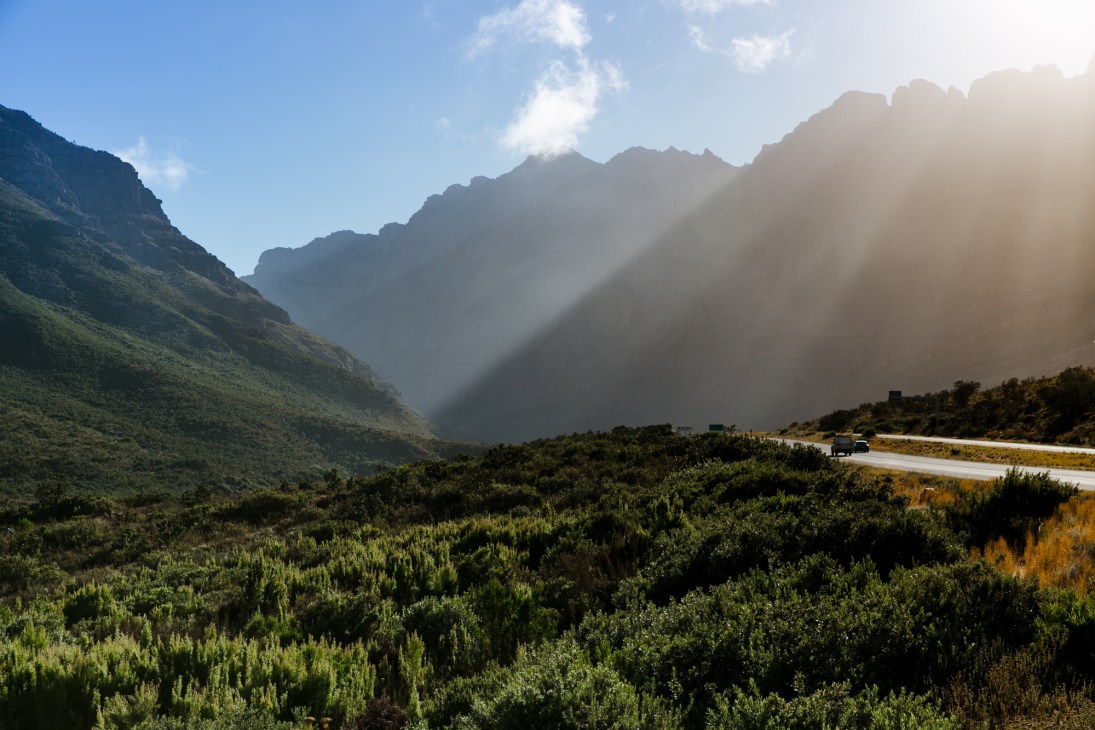
Route 62 technically starts outside the town of Montagu, a two-and-a-half-hour drive from Cape Town. This area is an oasis tucked in a valley of the Cape Fold mountains, which twist and arc in ways that rocks rarely manage. These magnificent contorted sierras stretch through the Karoo and form a backdrop that has tempted many passers-by to put down roots in these parts. Montagu is dotted with apple and pear orchards, and is a good place to settle for the first night of our trip.
We opt to stay the night at Jonkmanshof, a guesthouse on the town’s main street that has four suites shared between two restored houses: one bright white, like a gallery, and the other mandarin-hued with sage shutters. Overhauled by Hein Liebenberg and Jacques Erasmus, a chef and founder of Cape Town’s Hemelhuijs restaurant, Jonkmanshof is all atmospheric wooden floors, antique furniture and four-poster beds with custom linen.
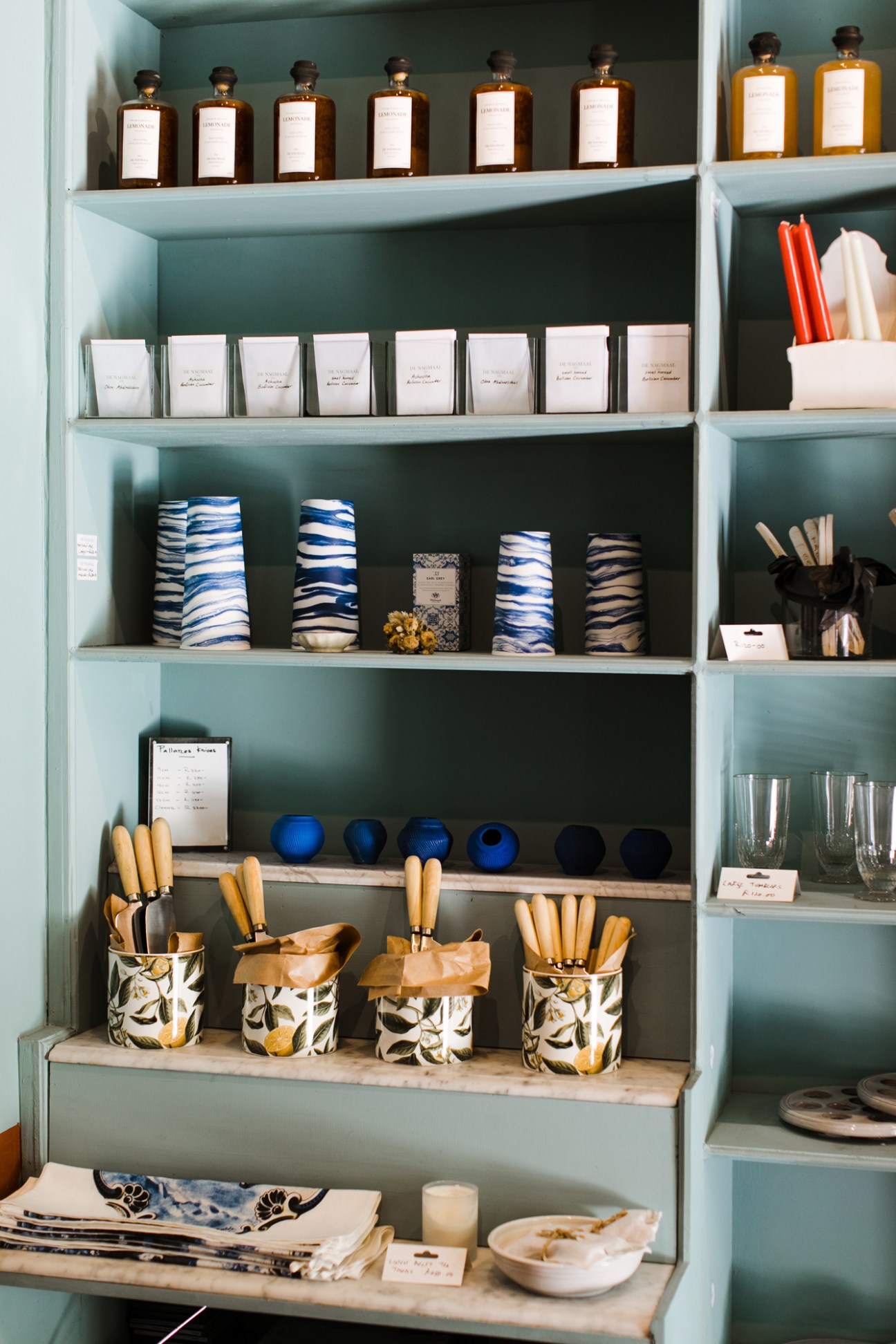
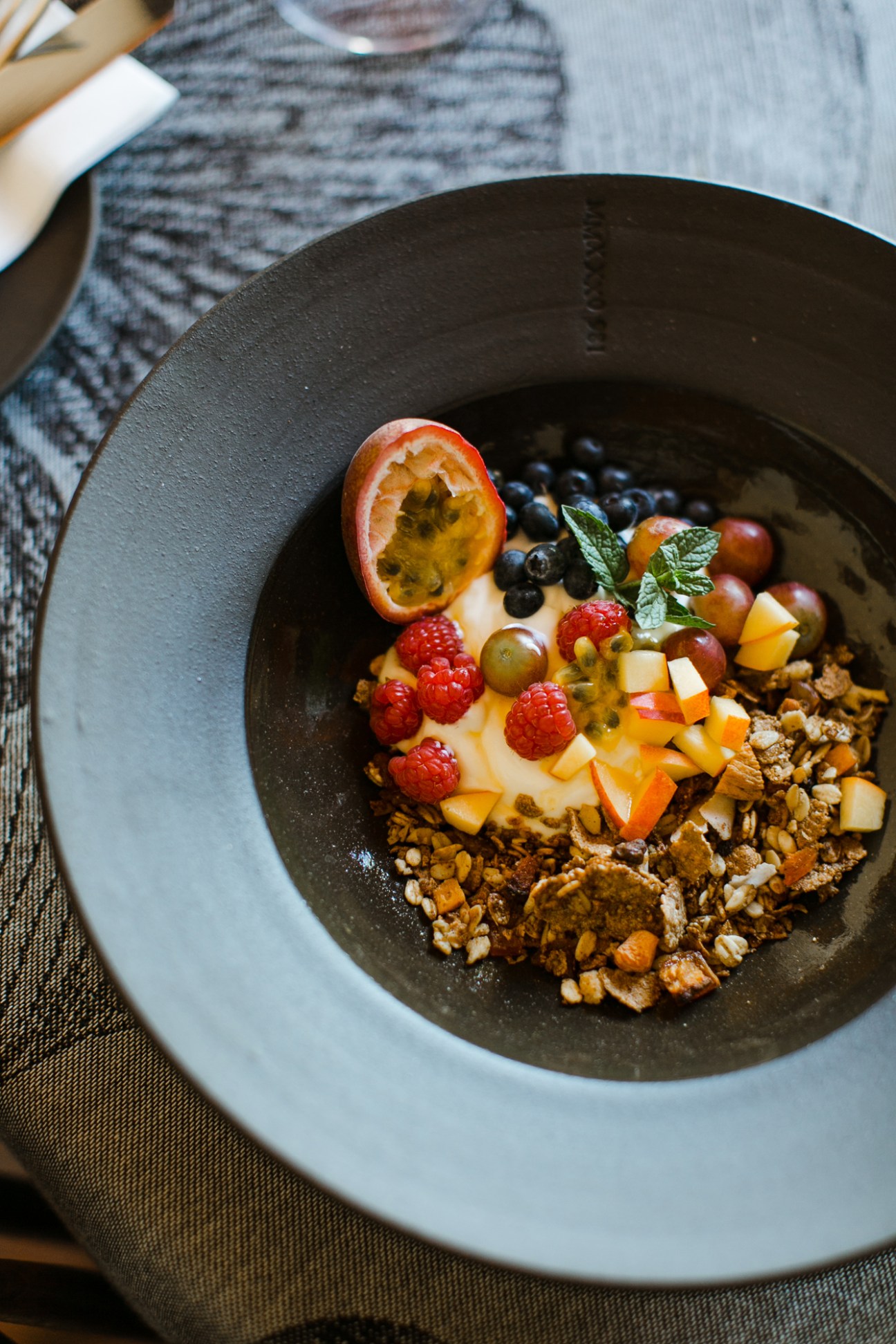
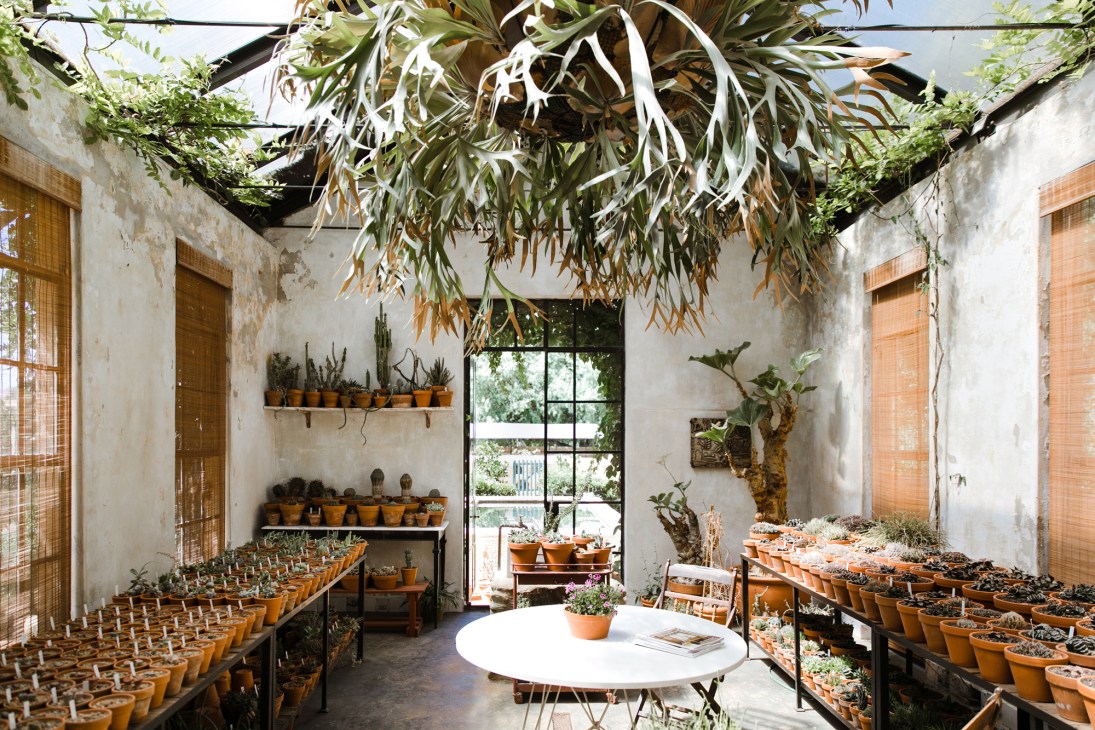
In the mornings, a breakfast of scrambled eggs and bacon is served in the dining room, set between the open-plan farm-style kitchen and a greenhouse that’s bursting with succulents. Ask someone from the team to unlock De Nagmal, a shop open on Saturday mornings and by appointment through the week, and you’ll find plenty of take-homes, from handmade ceramics to linen napkins.
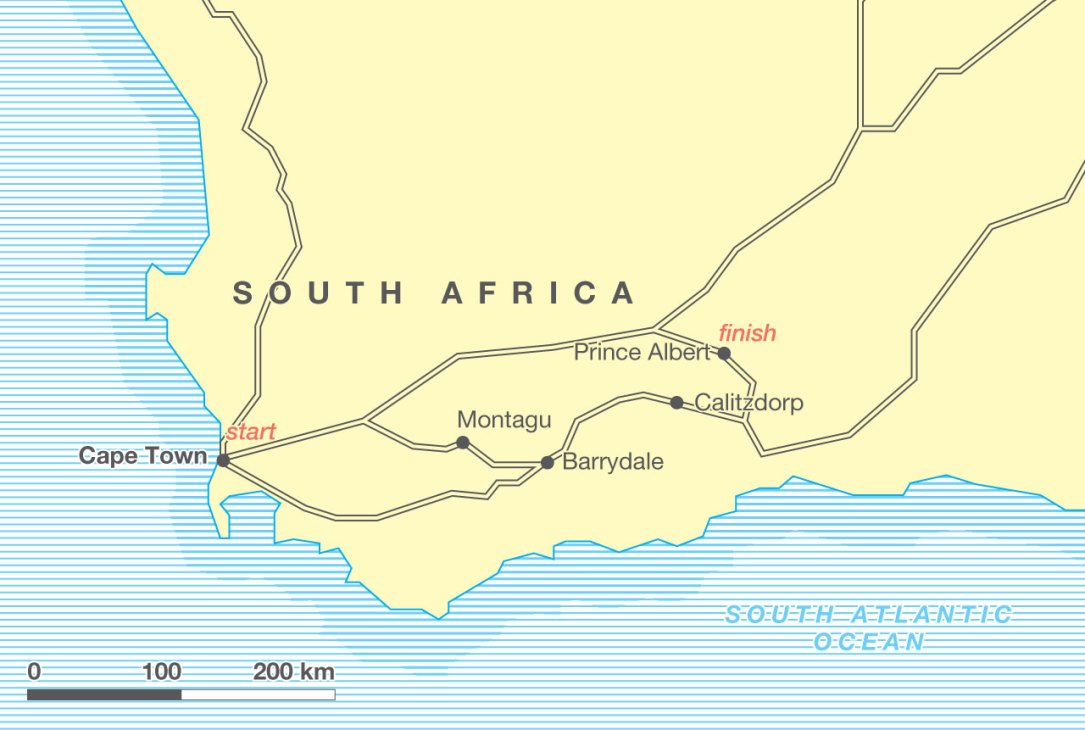
Day 1: Cape Town to Montagu – 186km – about two and a half hours
Day 2: Montagu to Barrydale – 63km – about 40 minutes
Barrydale to Calitzdorp – 125km – about one and a half hours
Day 3: Calitzdorp to Prince Albert – 164km – about two hours
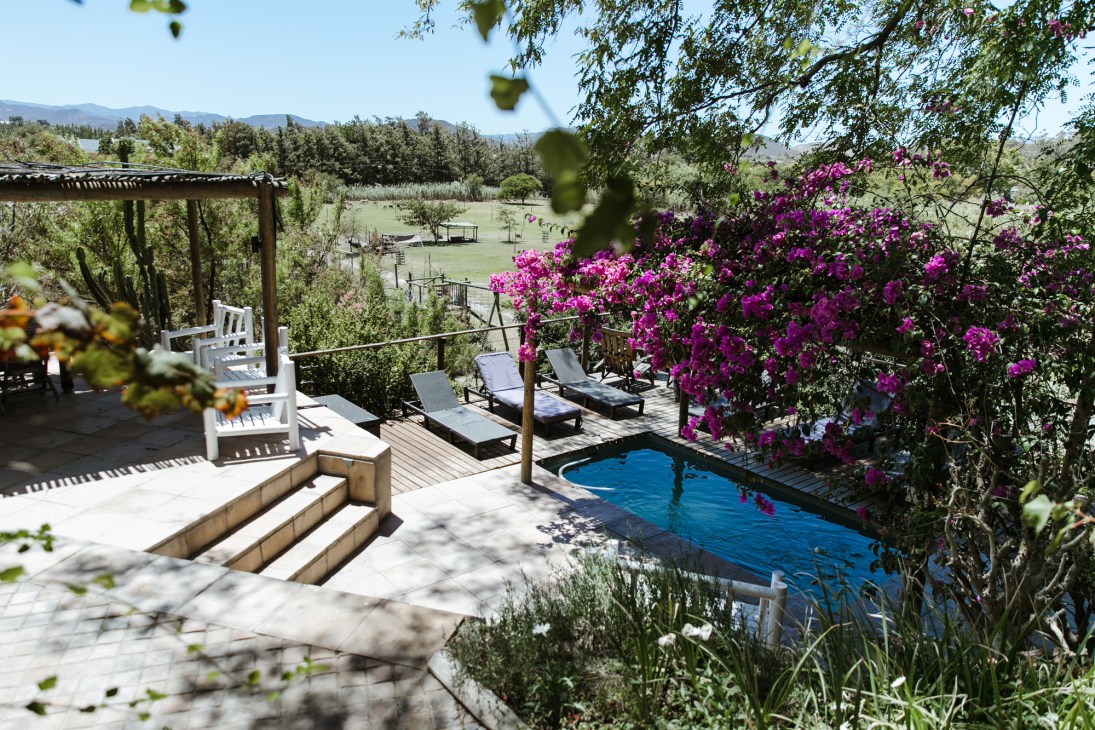
On the edge of town is Kogman & Keisie, a farm and guesthouse owned by Petrus and Liana Jansen. Jansen stocks her own line of body creams and oils, which she formulates from herbs and fynbos shrubs grown on the farm, which she and her husband moved to in 2008. “It’s calm here,” says Jansen, a landscape architect and anthropologist. As we sit on the deck overlooking their farm, the sun begins to set beyond the Cape Fold mountains.
Address book:
Jonkmanshof, Montagu
A beautifully restored guesthouse spread between Cape Dutch-style heritage buildings.
jonkmanshof.com/home
Kogman & Keisie, Montagu
A peaceful guesthouse stocking fynbos-scented oils and creams that are made on the farm.
kogmanandkeisie.com
Day 2.
Montagu — Calitzdorp
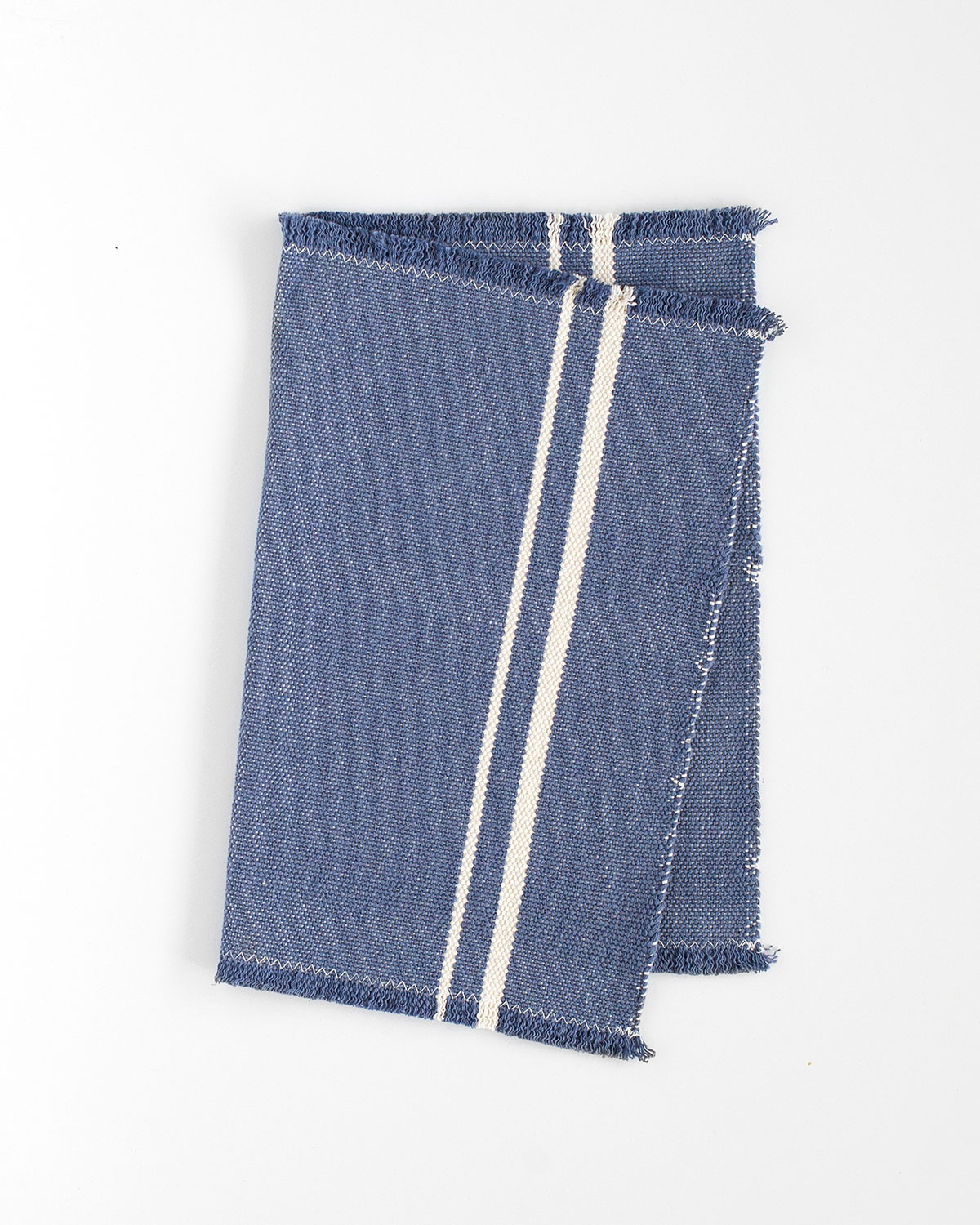
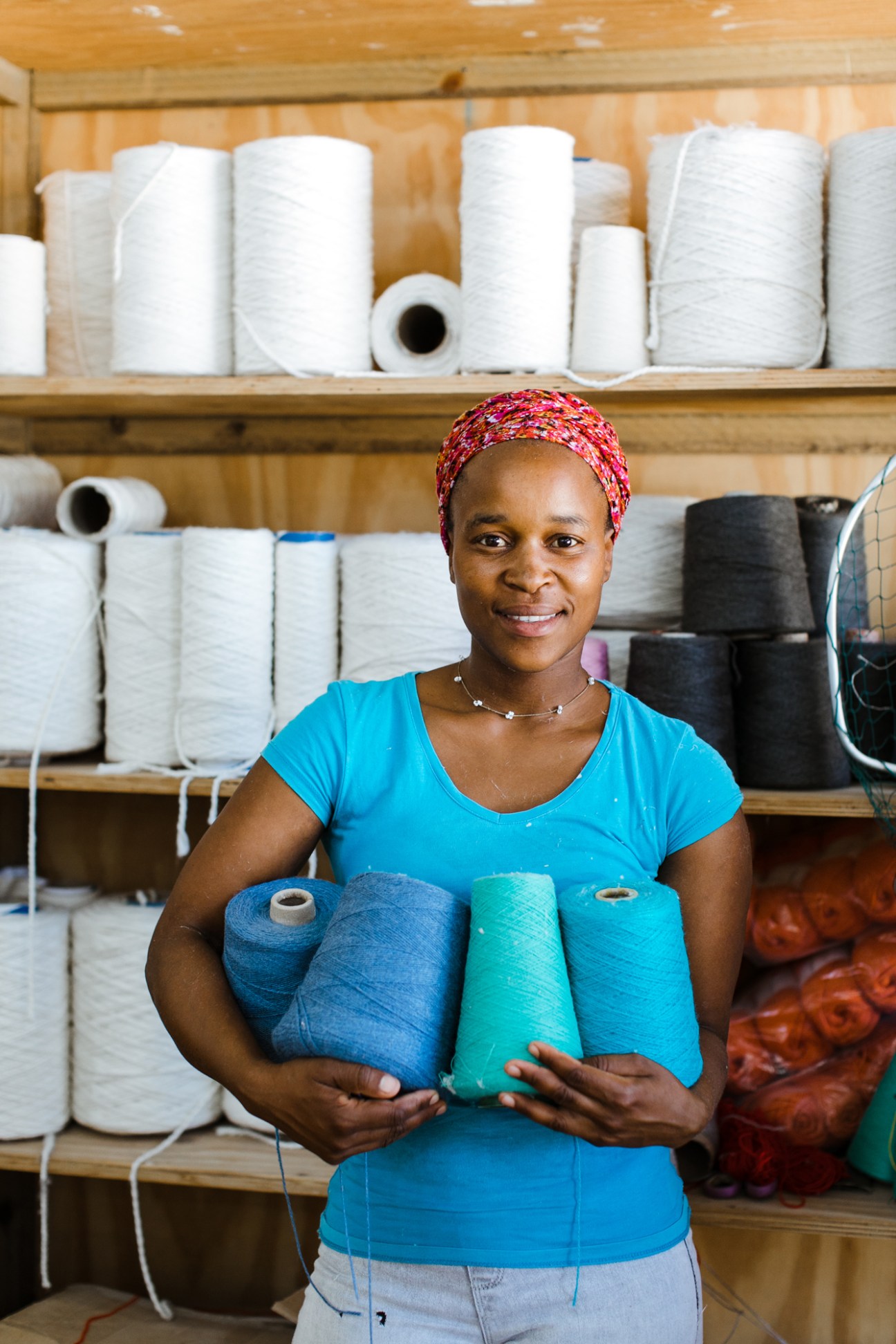
The drive from Montagu to the town of Barrydale, at the foot of the Langeberg mountains in the Tradauw valley, is just 40 minutes in good traffic. In this farm-focused town, Barrydale Hand Weavers is one of the main draws. The shop is located on a main road but the workshop, where you can see the weavers turn cotton threads into fabric for towels and tablecloths, lies deeper in the town.
Arran Bastable, a Scotsman who recently bought the company with his South African wife, Kate, moved here from the UK a few years ago. For him, the town’s sense of community is the real reward for the move. “On Wednesday night the whole town gathers and we play bowls,” he says over the clip-clop of the looms, which sound like horses trotting along a cobbled street.
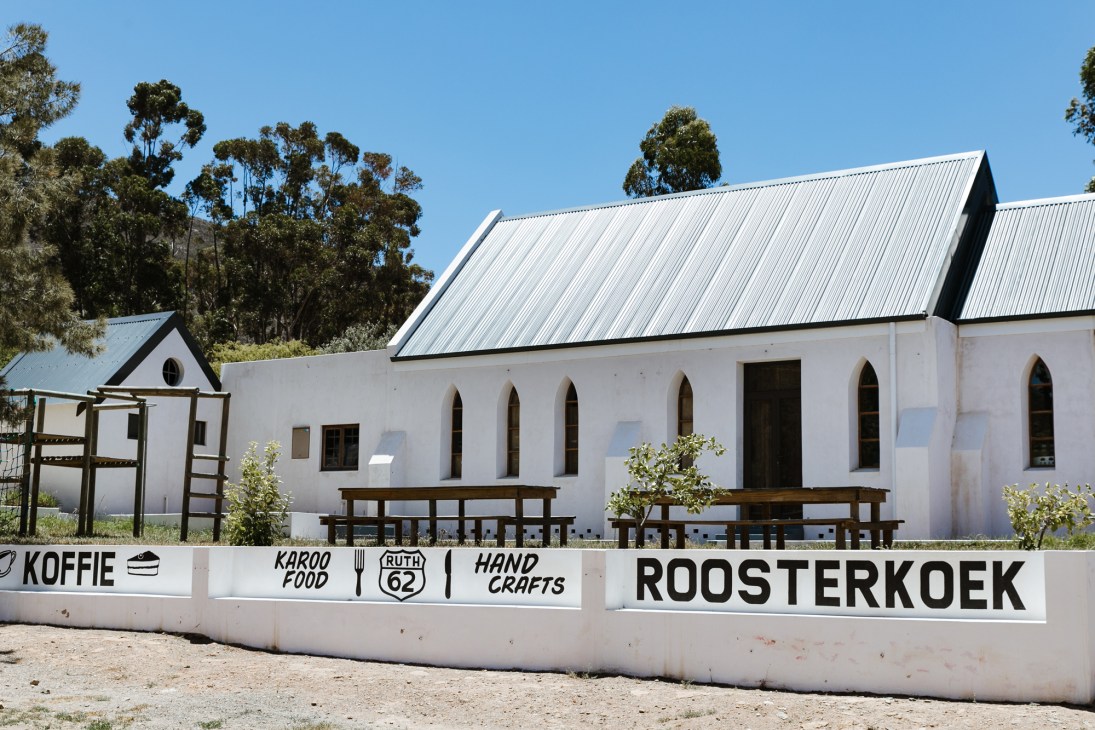
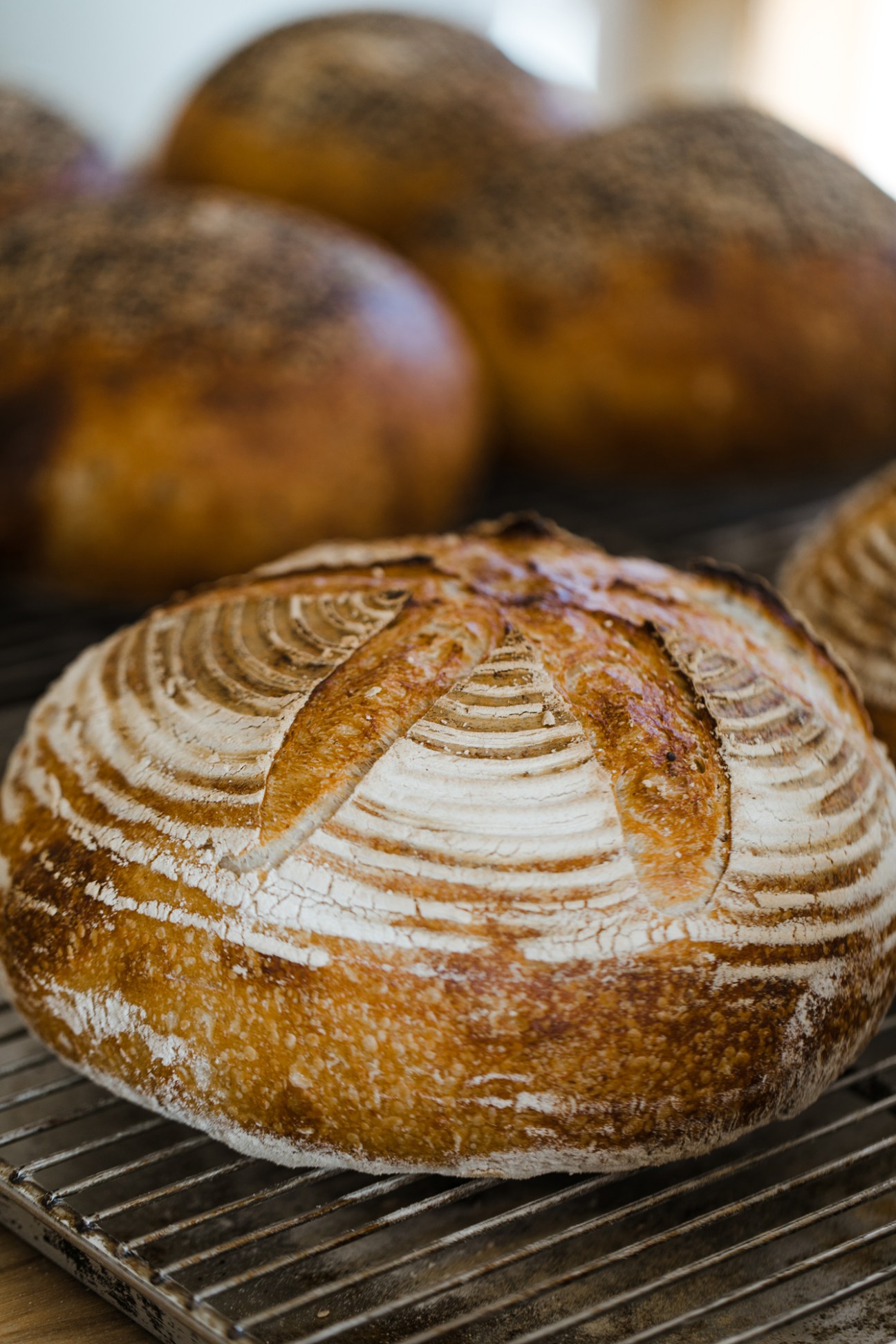
Back on the r62, it’s another hour and a half to Calitzdorp, a less obviously pretty town than our previous stops that makes up for its plainness by being at the foot of a majestic mountain pass. Before hitting the town, we turn left along a dirt road, along which we find The Accidental Baker, a business opened by Mo and Steve Lewis. The Dutch couple settled here after spending a year travelling from Kenya and then down through southern Africa. They too were captivated by the mountains and credit “serendipity” for bringing them to Calitzdorp. “Coming from the Netherlands, we always thought we were sea people,” says Mo, who previously worked in fashion. “But we’ve discovered that we’re mountain people.” They started the bakery in the shadow of the imposing mountains two years ago after Mo had struggled to find good homemade bread in the area. On Saturdays the patio hums with Calitzdorp residents and blow-ins stopping in for a hunk of sourdough slathered with the couple’s homemade jam.

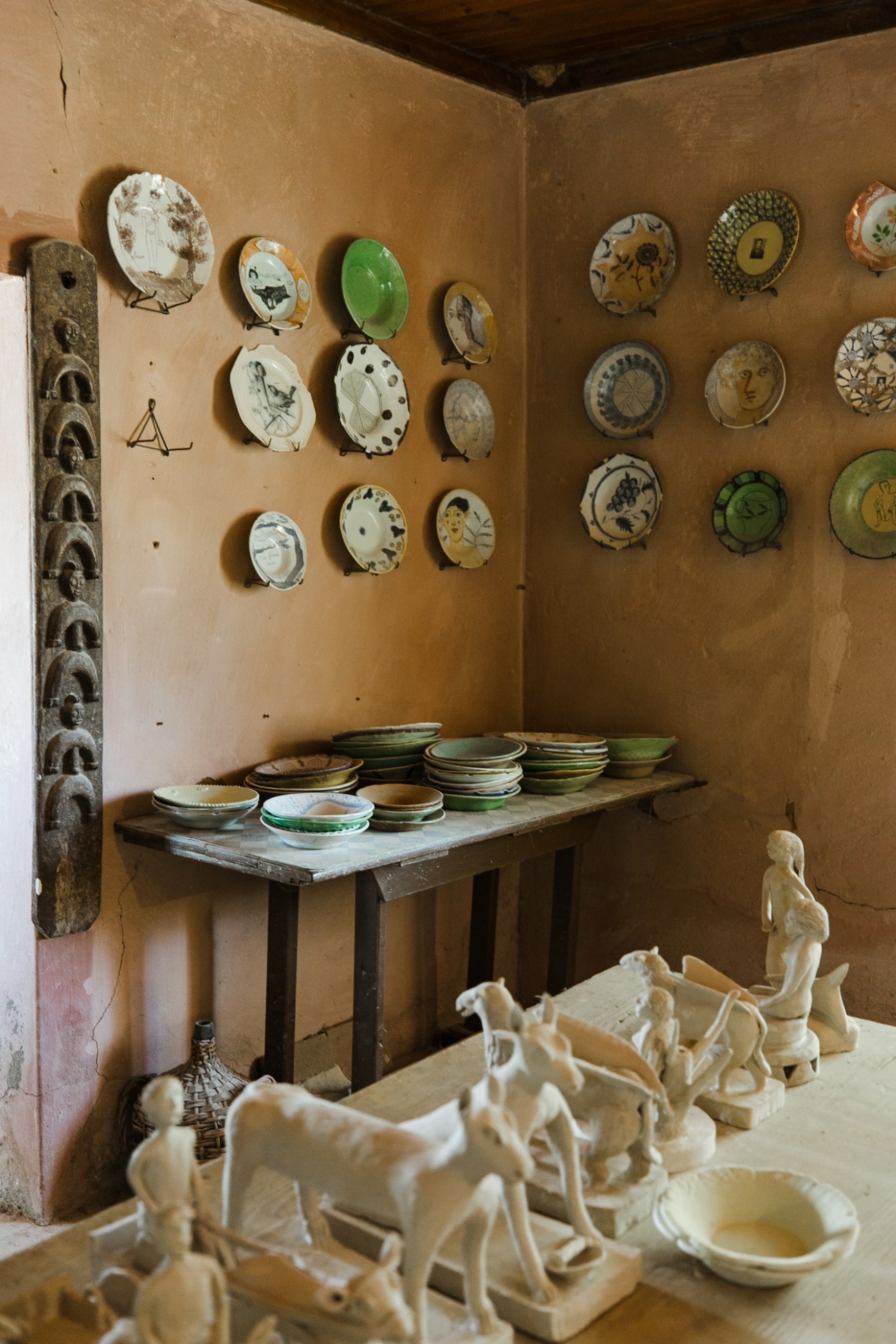
Look over the bakery’s railing and down the road and you’ll spy the studio of ceramicist Hylton Nel. Though it’s not an open studio per se, people do stop by and if Nel is home, he will often welcome them into his Aladdin’s cave of craft, which is packed with shelves of playful ceramics. “The landscape here is spectacular,” says Nel, who was attracted to the area’s warm and dry climate, which he insists is ideal for crafting clay.
On the other side of the r62, along another dirt road (are you seeing a pattern?), there’s a path that crawls deep into the mountains. It’s here that you’ll find Danielskraal, an overhauled farmhouse that dates back to 1836. Owner Rosheen Kriegler moved to Calitzdorp from Johannesburg to live on the farm throughout the year and to operate her former holiday home as a guesthouse. “I’m mad about the Karoo,” she says, adding that she came to this quiet place from South Africa’s biggest city to regroup. Inside the old home the rooms are bedecked with four-poster beds and the seat-strewn patio spills onto a neat lawn that tumbles towards the mountains, which are as still as a painting as the dusk rolls in and the sky begins to bruise.
Address book:
Barrydale Hand Weavers, Barrydale
In this workshop, creamy cotton is woven into simple towels, tablecloths and napkins.
barrydaleweavers.co.za
The Accidental Baker, Calitzdorp
At this bakery founded by a Dutch couple, you’ll find slices of sourdough slathered with jam – they’re best enjoyed on the outdoor terrace.
lenieshof.com/grain2loaf
Danielskraal, Calitzdorp
Located along a remote valley road, this opulent four-bedroom house spills onto a lawn overlooking the mountains.
danielskraalfarm.co.za
Day 3.
Calitzdorp — Prince Albert
We wake with the roosters and head back onto the r62 towards Oudtshoorn. From here, there are two routes to get to Prince Albert, a town slap bang in the middle of the Karoo desert. Although it’s not technically on the r62, it’s also awash with interesting souls and entrepreneurs such as textile designer Frances van Hasselt, who designs and spins mohair rugs with artisans, and blacksmith Kashief Booley, who hammers out household objects that aren’t to be missed. Getting there also offers heart- stopping views. More adventurous wayfarers opt to drive the Swartberg Pass route, a narrow gravel road that twists dramatically up, down and through the Swartberg mountains. Others choose Meiringspoort, a flatter tar road that winds through a gorge under giant shards of rock. Both are gorgeous and both will get you to our final destination: Prince Albert.
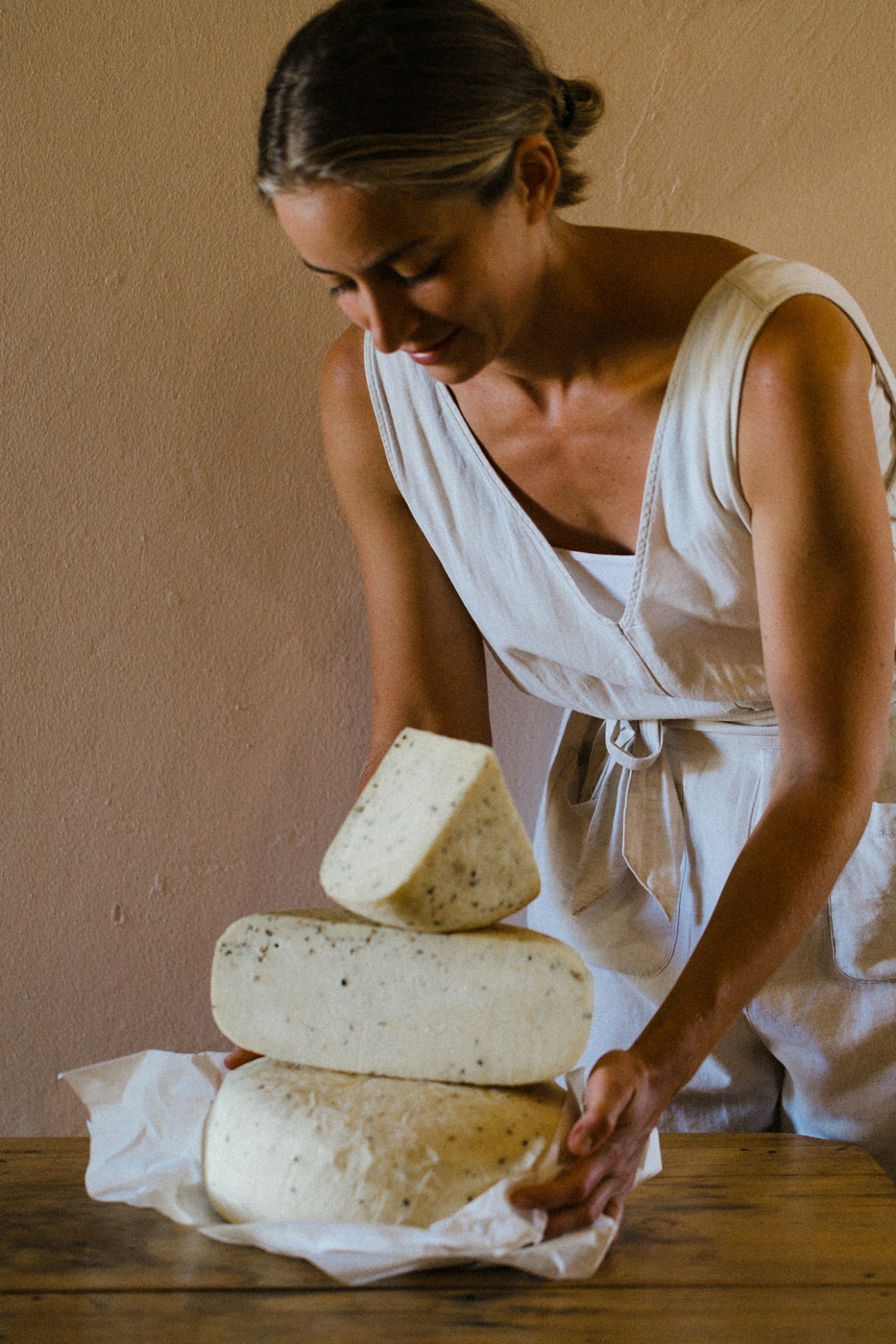
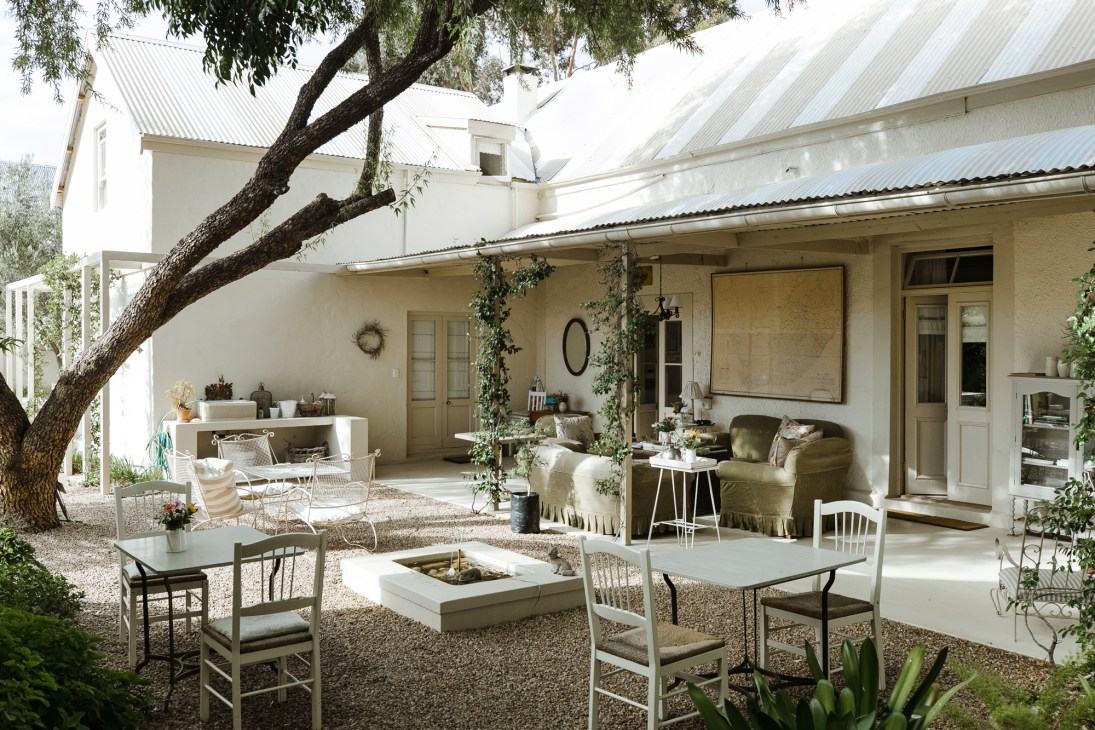
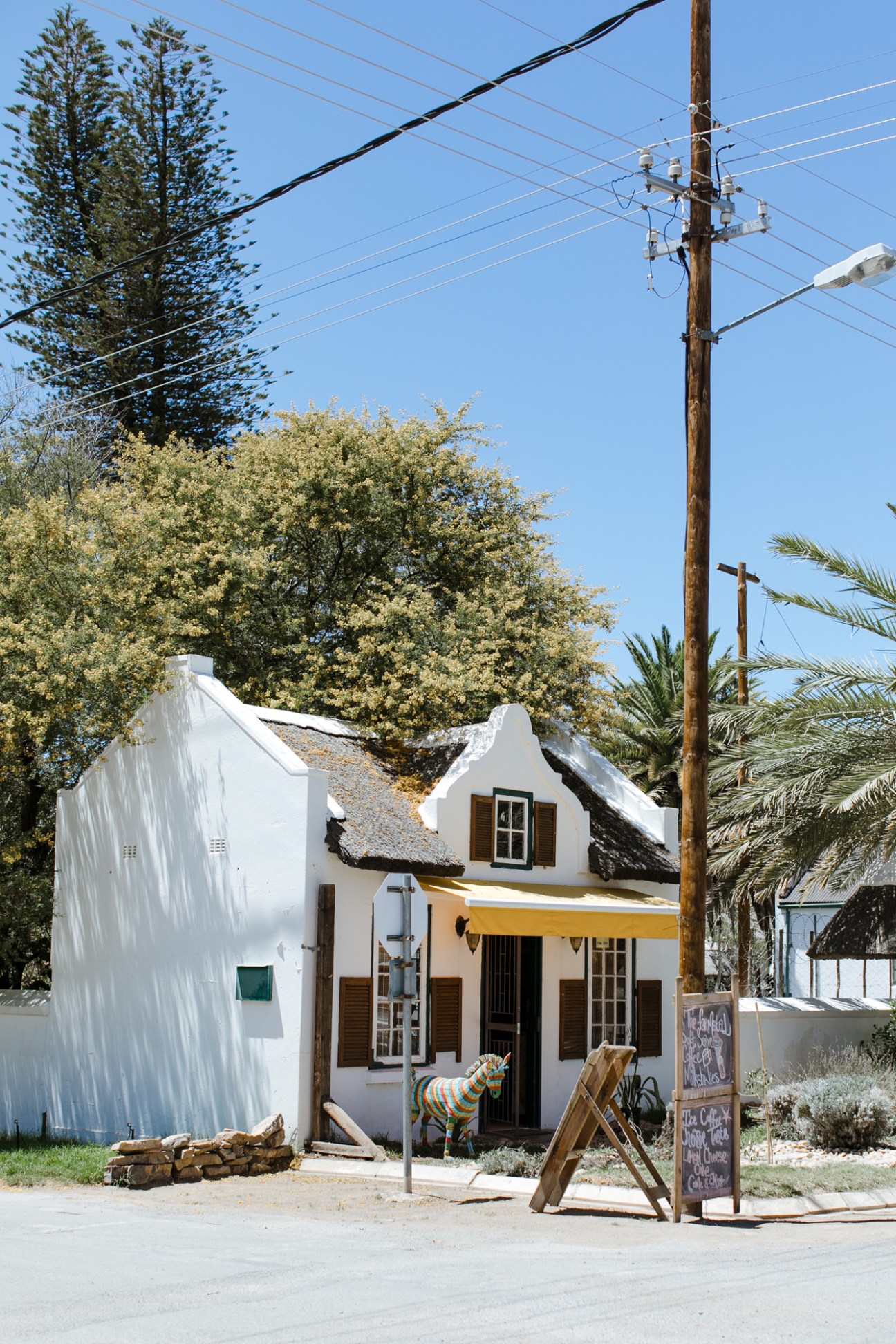
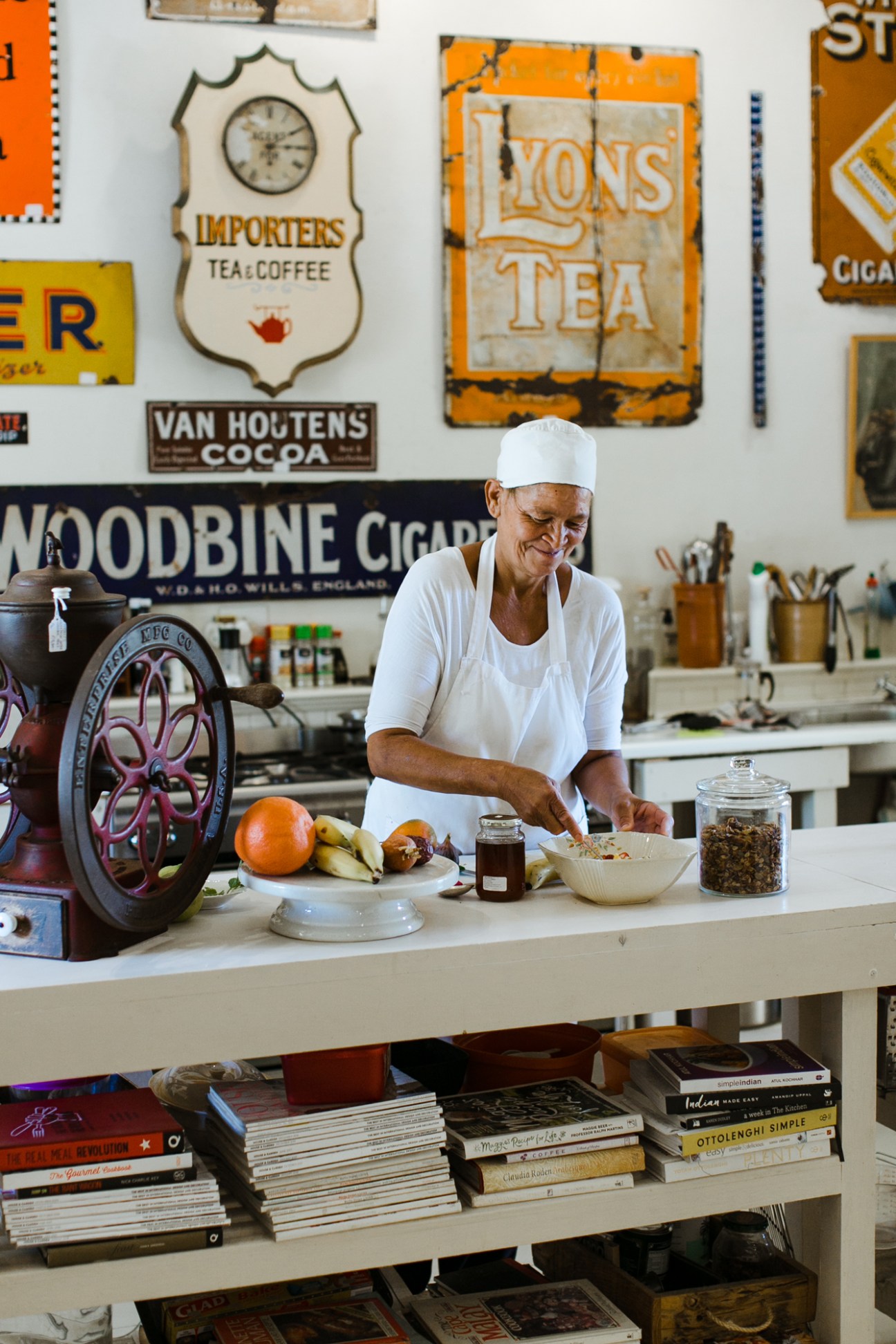
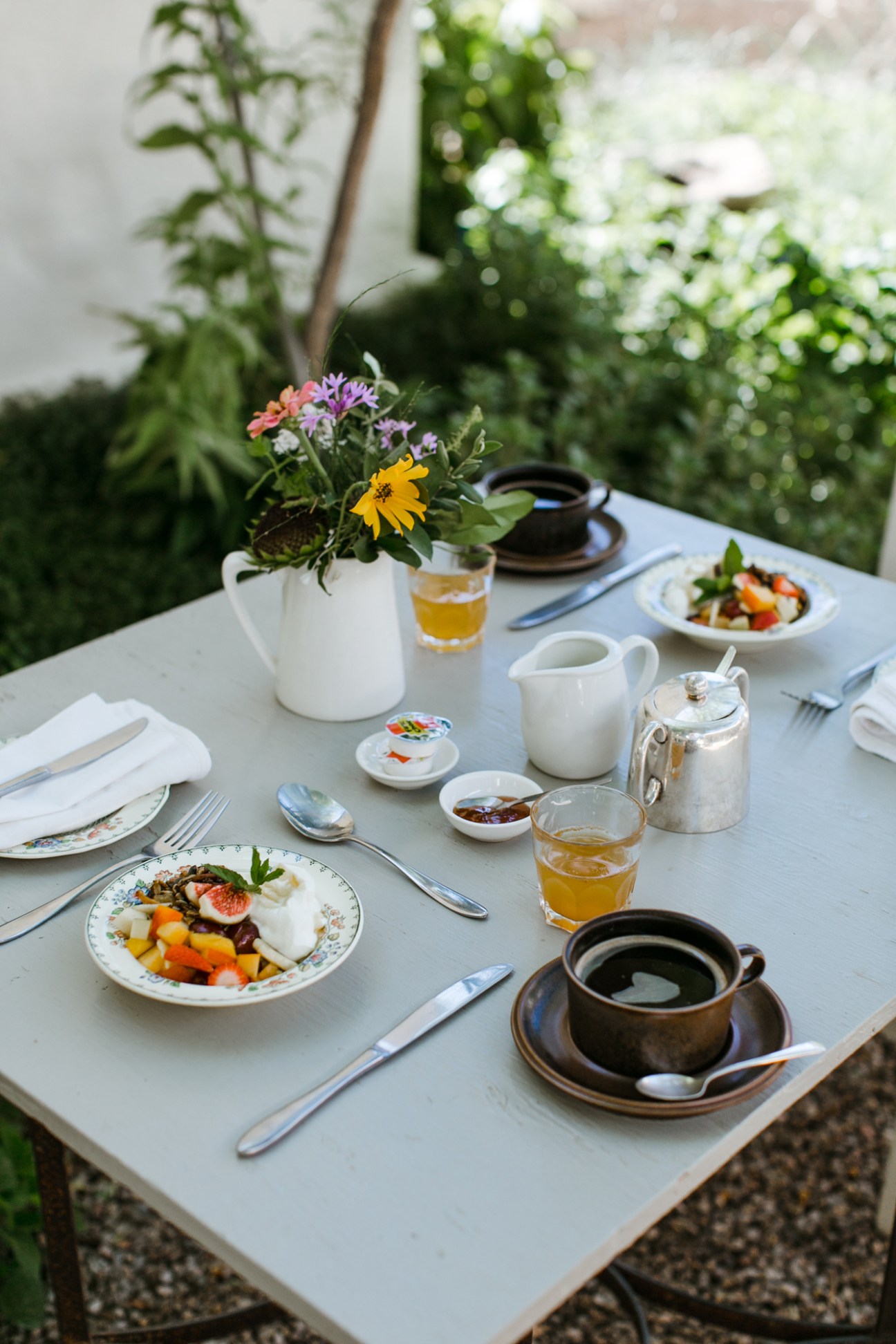
When you arrive, drop your bags at Prince Albert Country Stay, a small guesthouse hidden behind the Country Store, where shoppers can pick up everything from fig jam to antique salad servers. If you’re still in mind of an adventure, grab a cortado at Die Klein Padstal, a tiny Cape Dutch-style shop, and stop in at Gay’s Guernsey Dairy for fresh cheese and yoghurt. You can also opt for a scenic drive past the Swartberg mountains to Weltevrede Fig Farm for sweet fig tarts and tea. Appetites sated, head back to the Prince Albert Country Stay, where the creamy-hued rooms spill out onto a peaceful pebbled courtyard. Here, couches are shaded by tall trees and a welcoming plunge pool awaits.
Address book:
Striking Metal, Kashief Booley, Prince Albert
Blacksmith Kashief Booley’s workshop, where he hammers metal into fine goods for the home.
princealbertopenstudios.co.za
Frances VH, Prince Albert
Frances van Hasselt creates mohair rugs and blankets inspired by the Karoo desert.
francesvh.com
Gay’s Guernsey Dairy, Prince Albert
This dairy shop stocks cheese, yoghurt and bits and bobs from across the region.
gaysguernseydairy.com
Die Klein Padstal, Prince Albert
A corner coffee shop that serves superb flat whites. Great for watching the world pass by.
16 De Beer St, Prince Albert, 6930
Weltevrede Fig Farm, Karoo
Located deep in the mountains, this little oasis dishes up fresh fig tarts and tea.
figfarm.co.za
Prince Albert Country Stay, Prince Albert
A homey stay with creamy rooms that tumble onto a pebbled courtyard.
princealbertcountrystay.com
Time to change gear
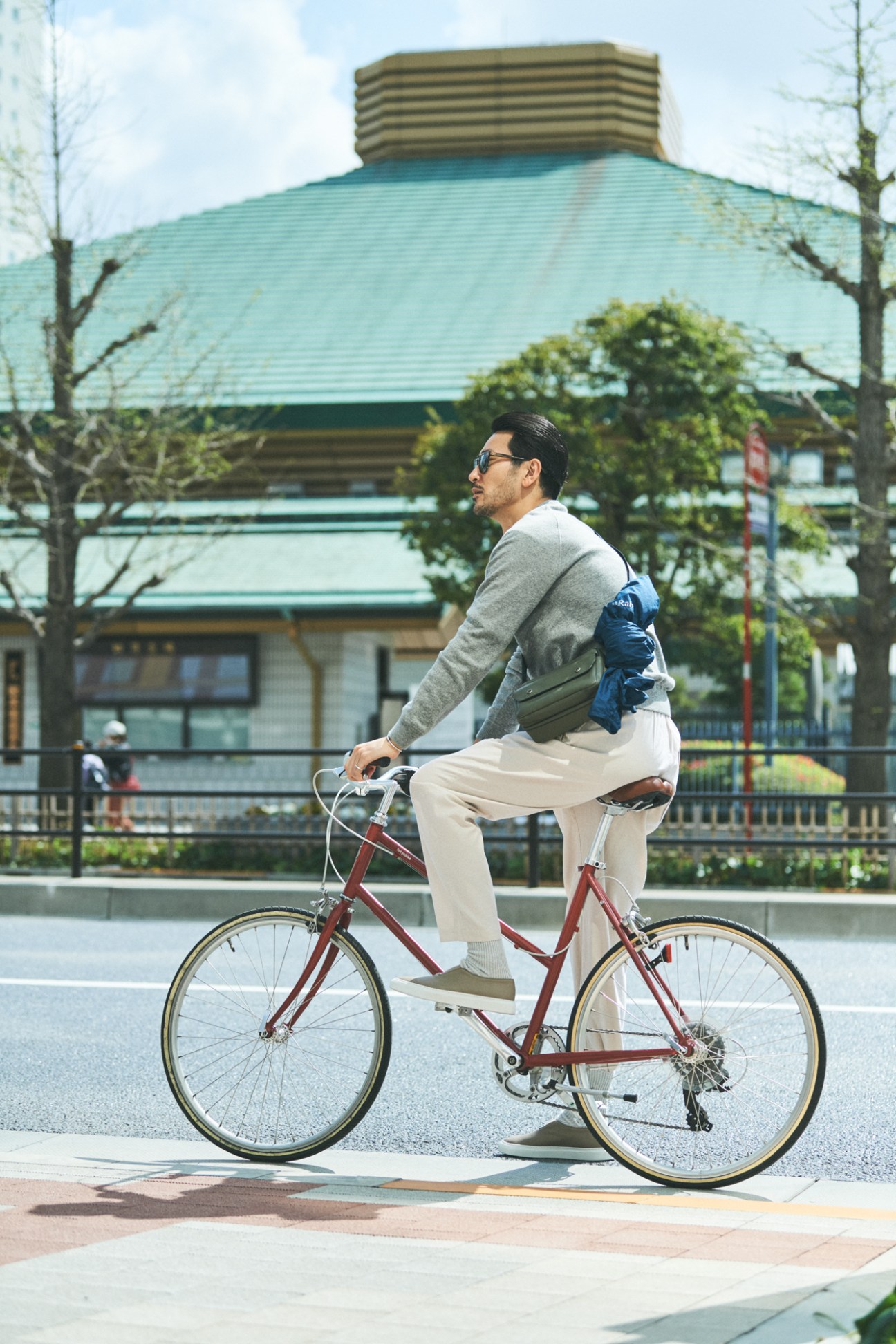
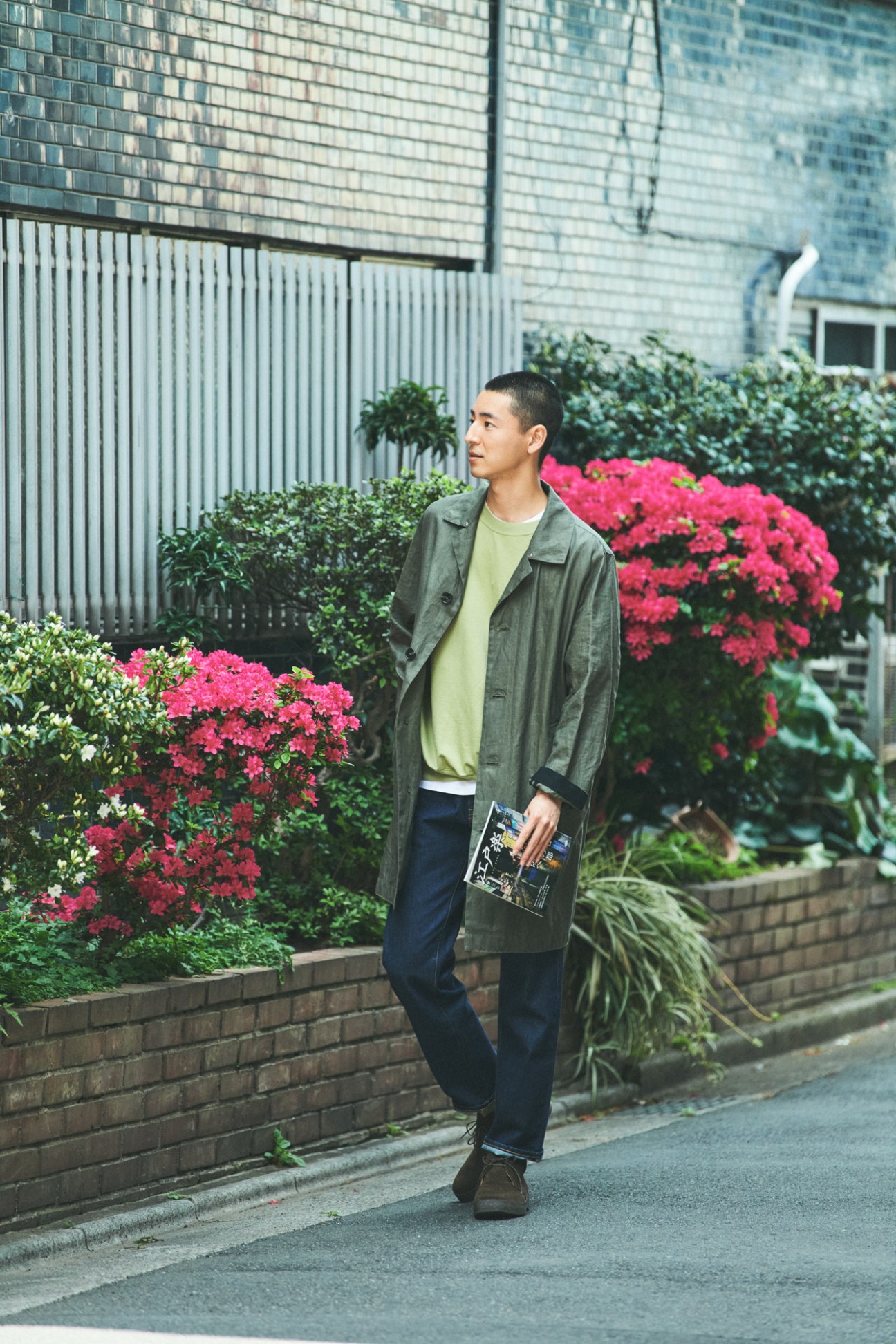
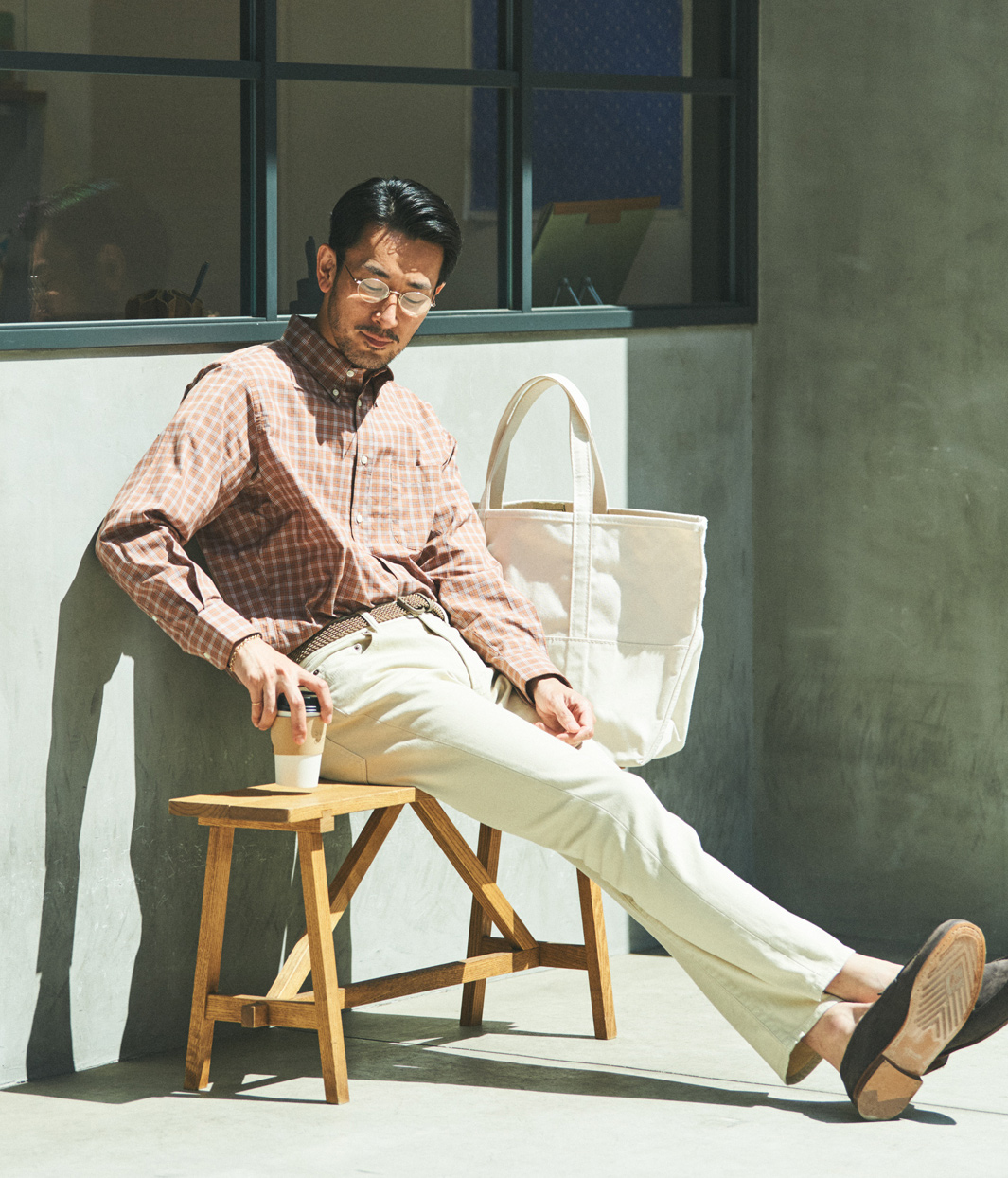
In Tokyo’s Kuramae neighbourhood, creative folk step out in fresh looks that work from commute to coffee break.
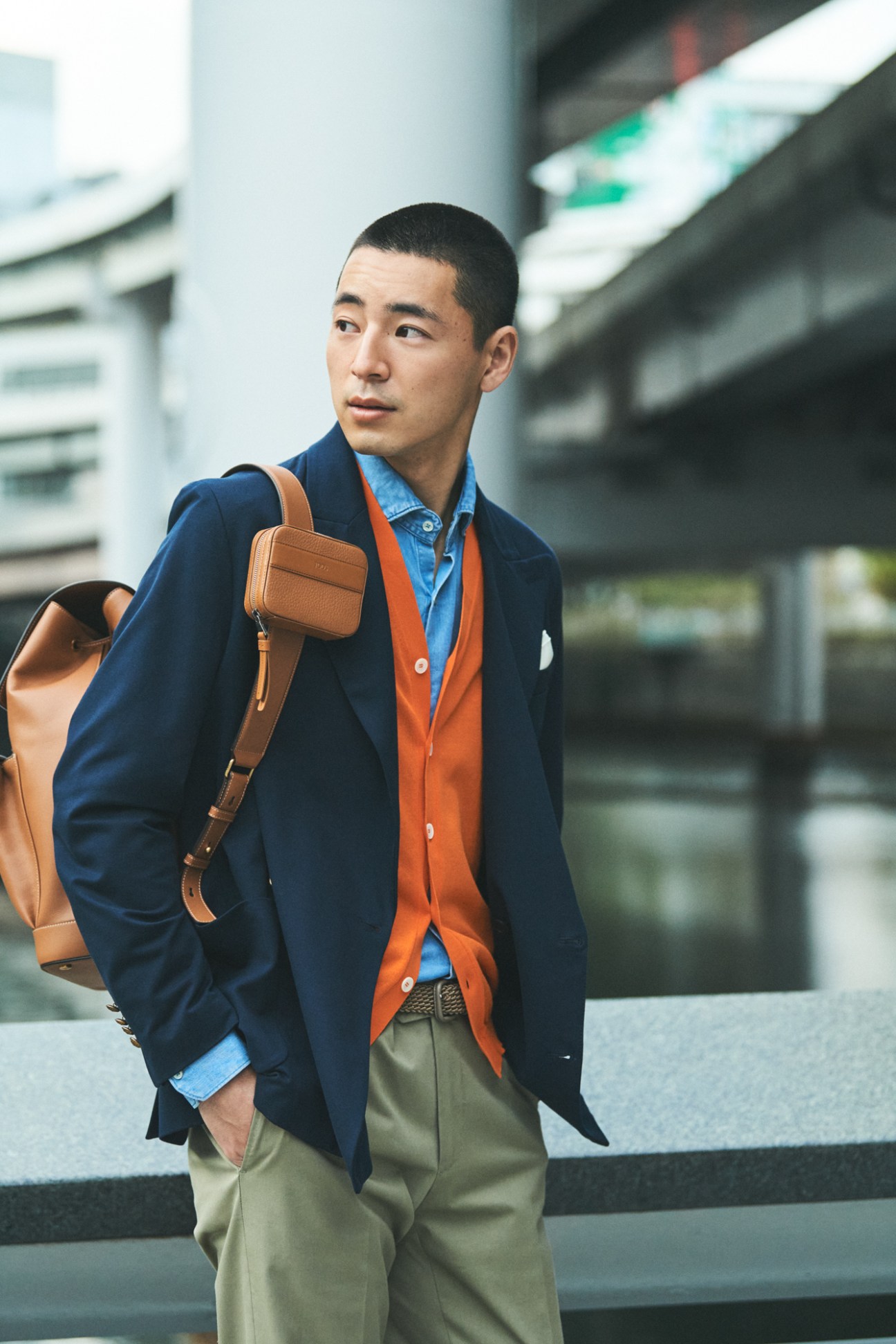
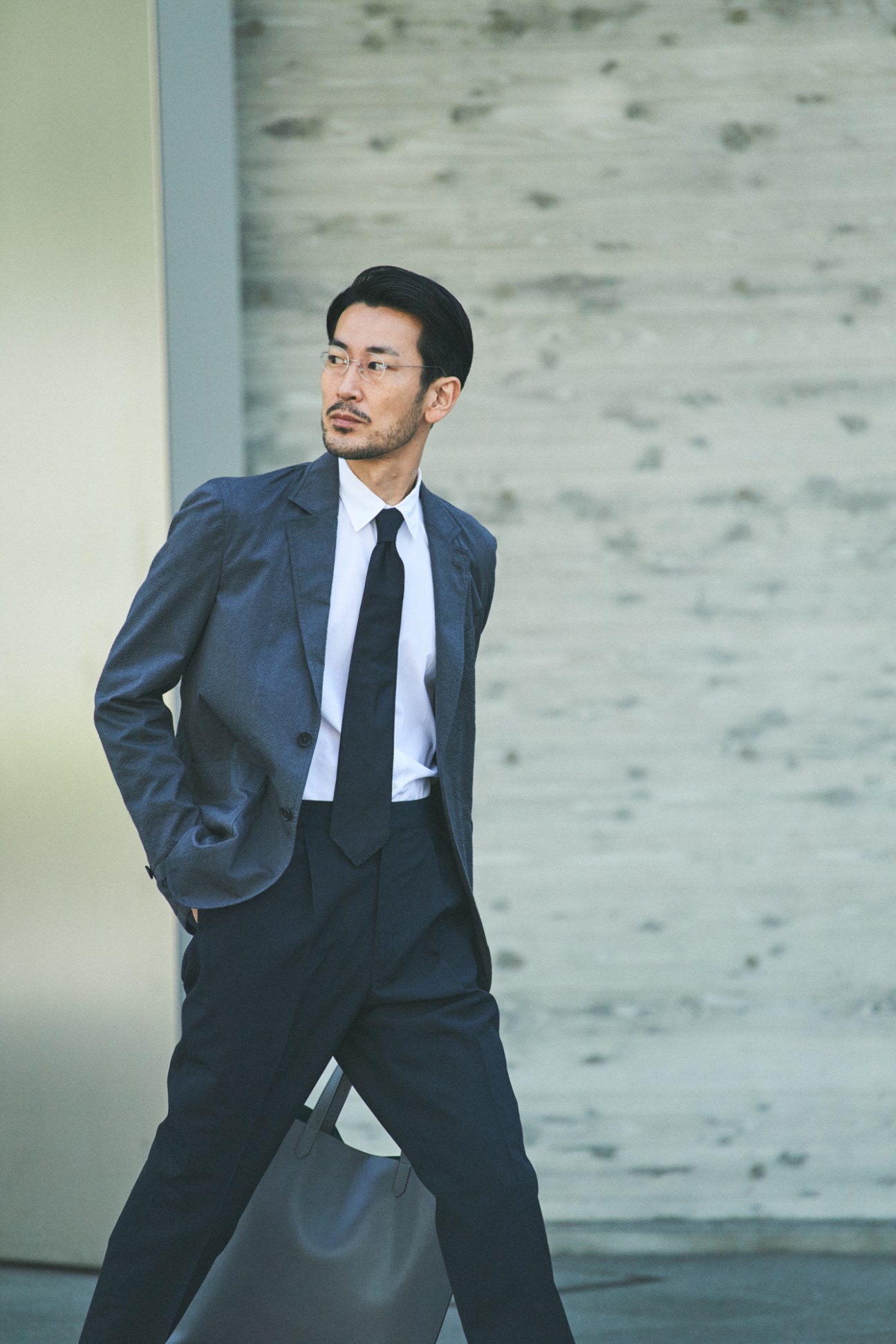
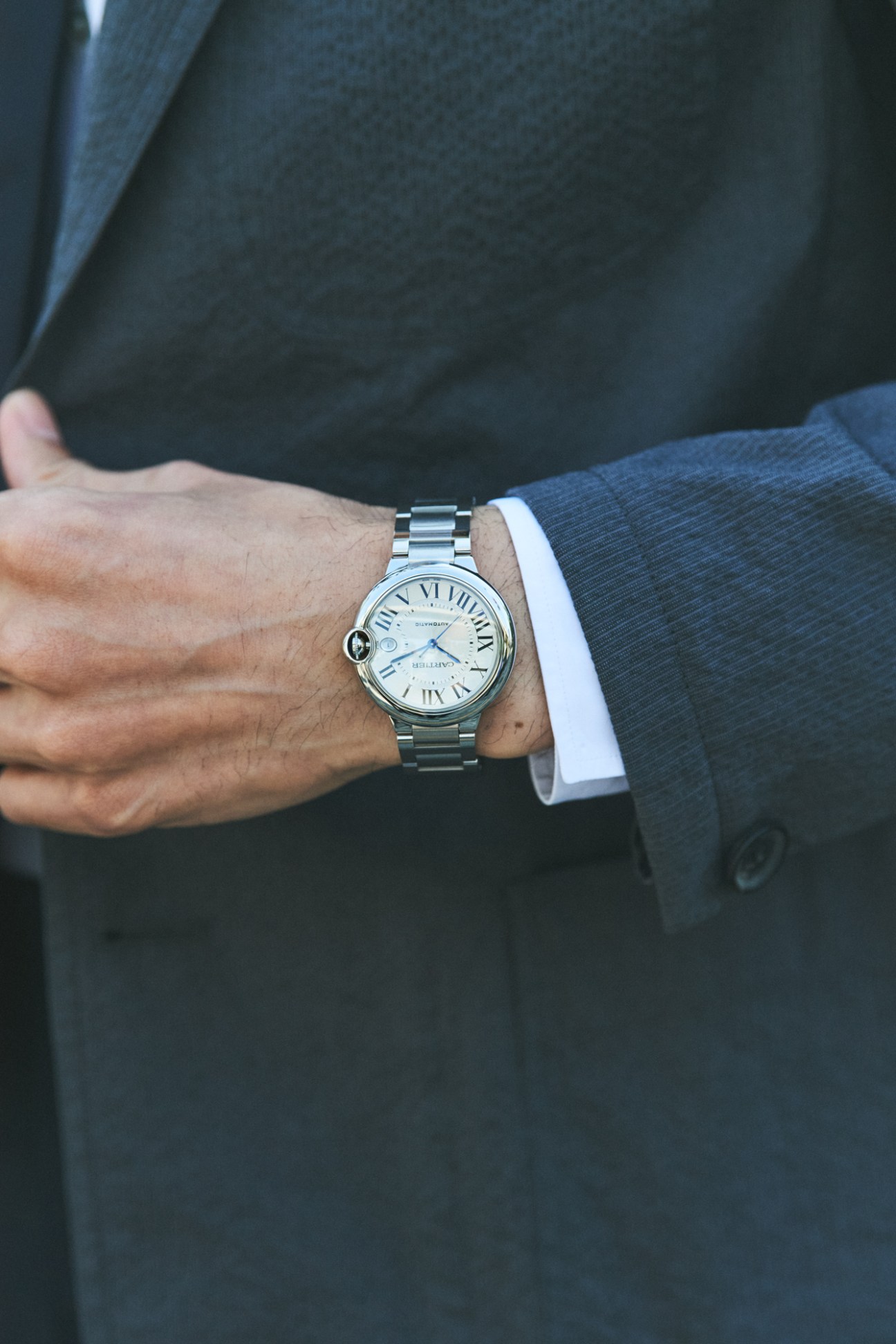
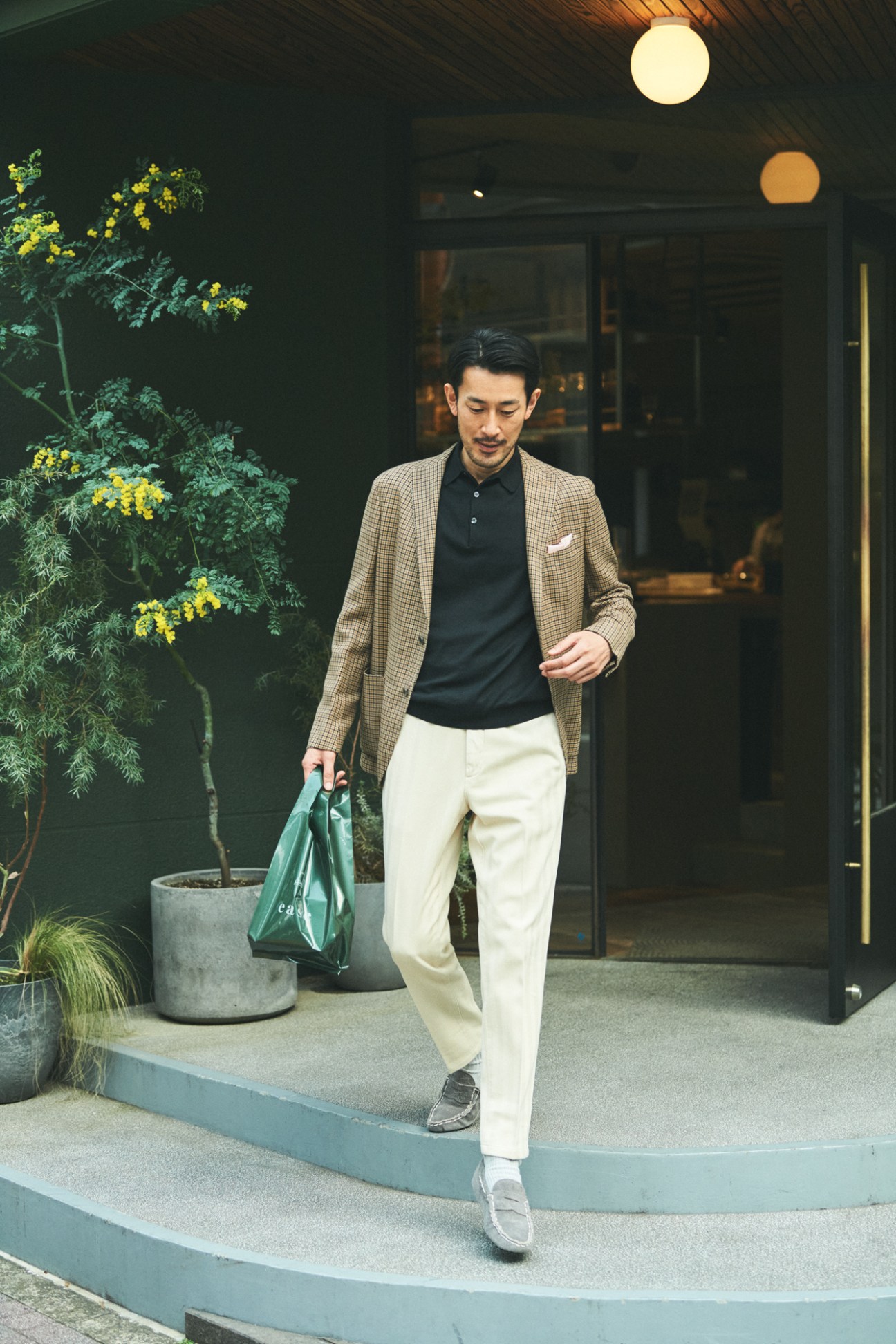
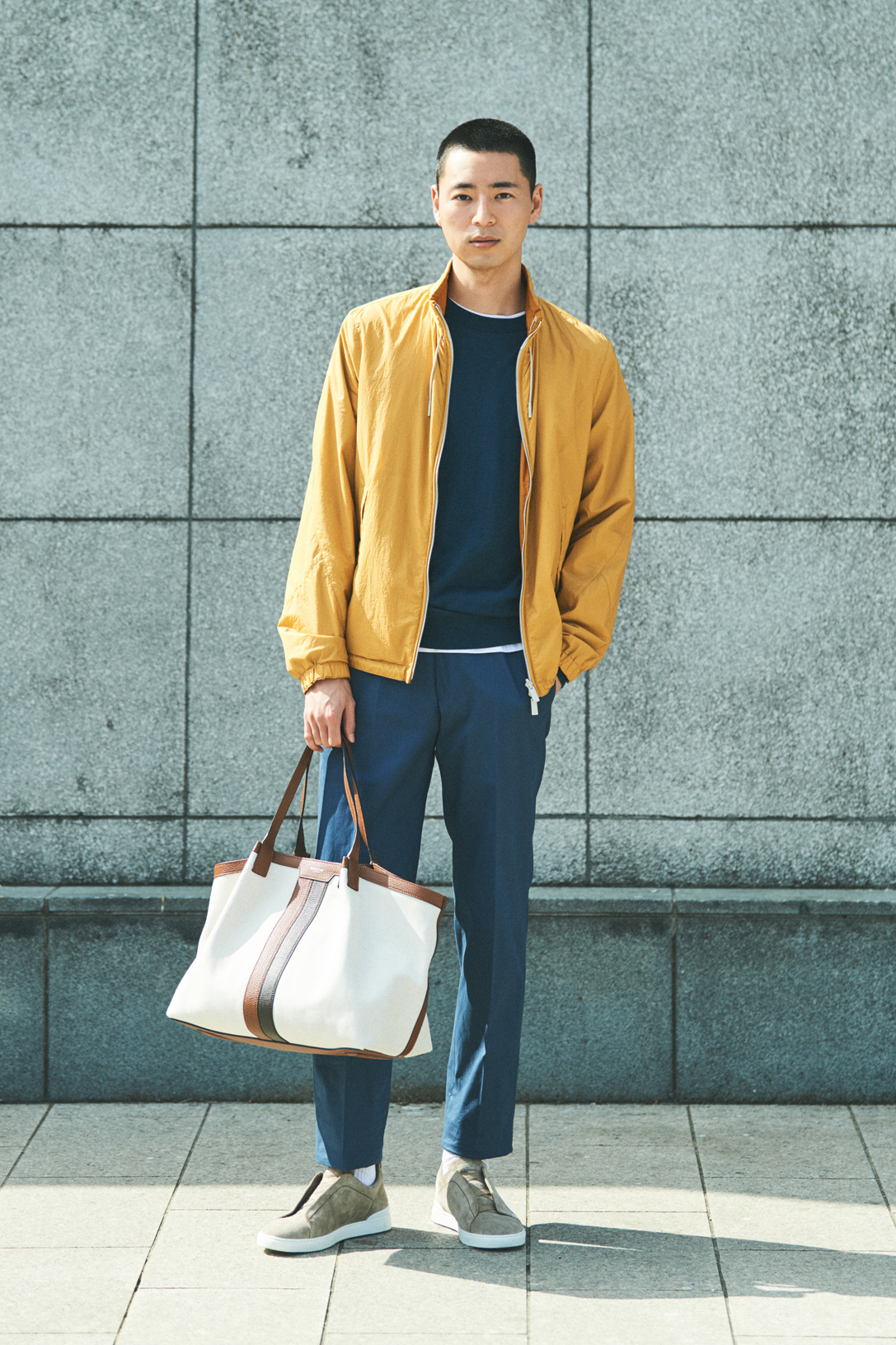
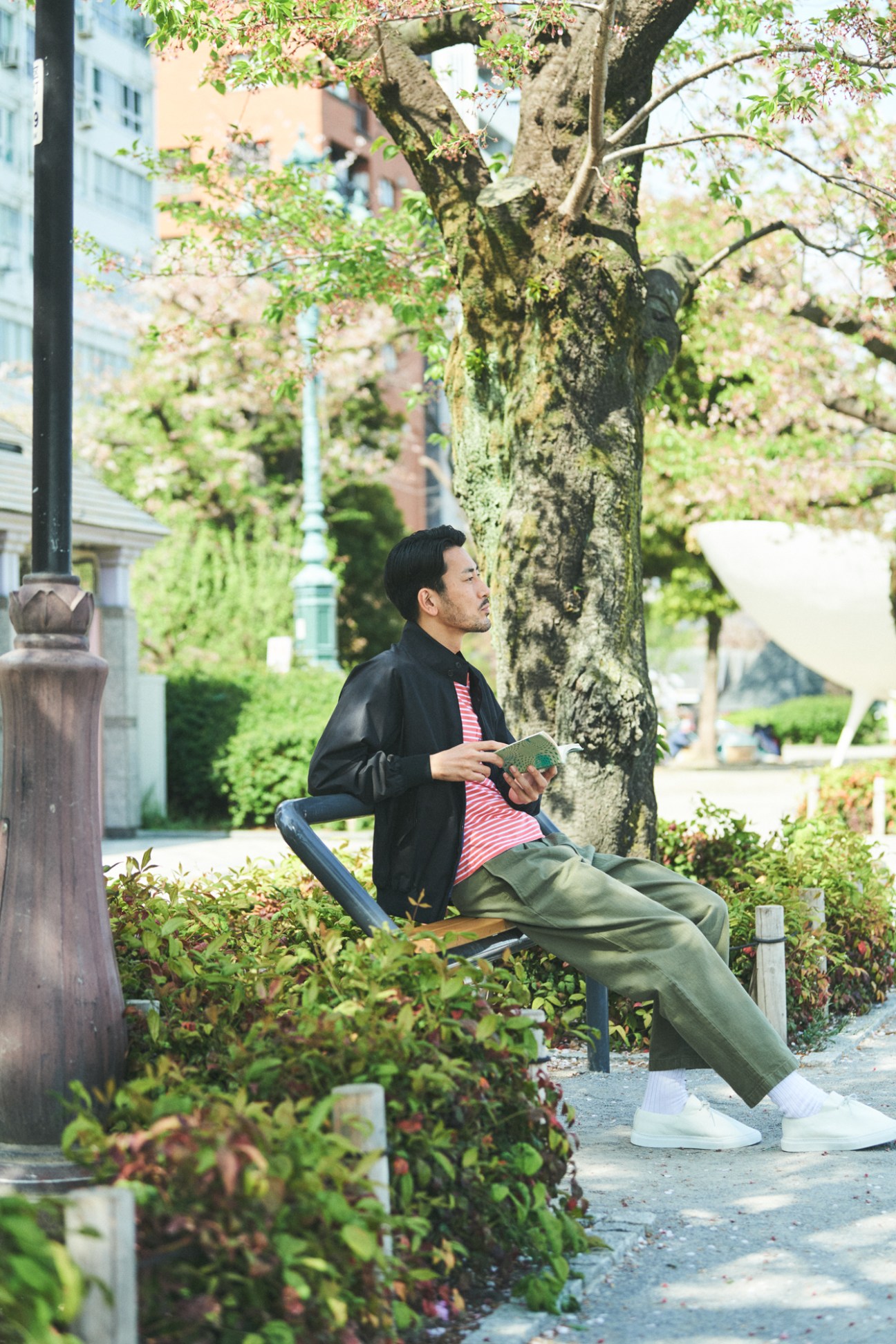
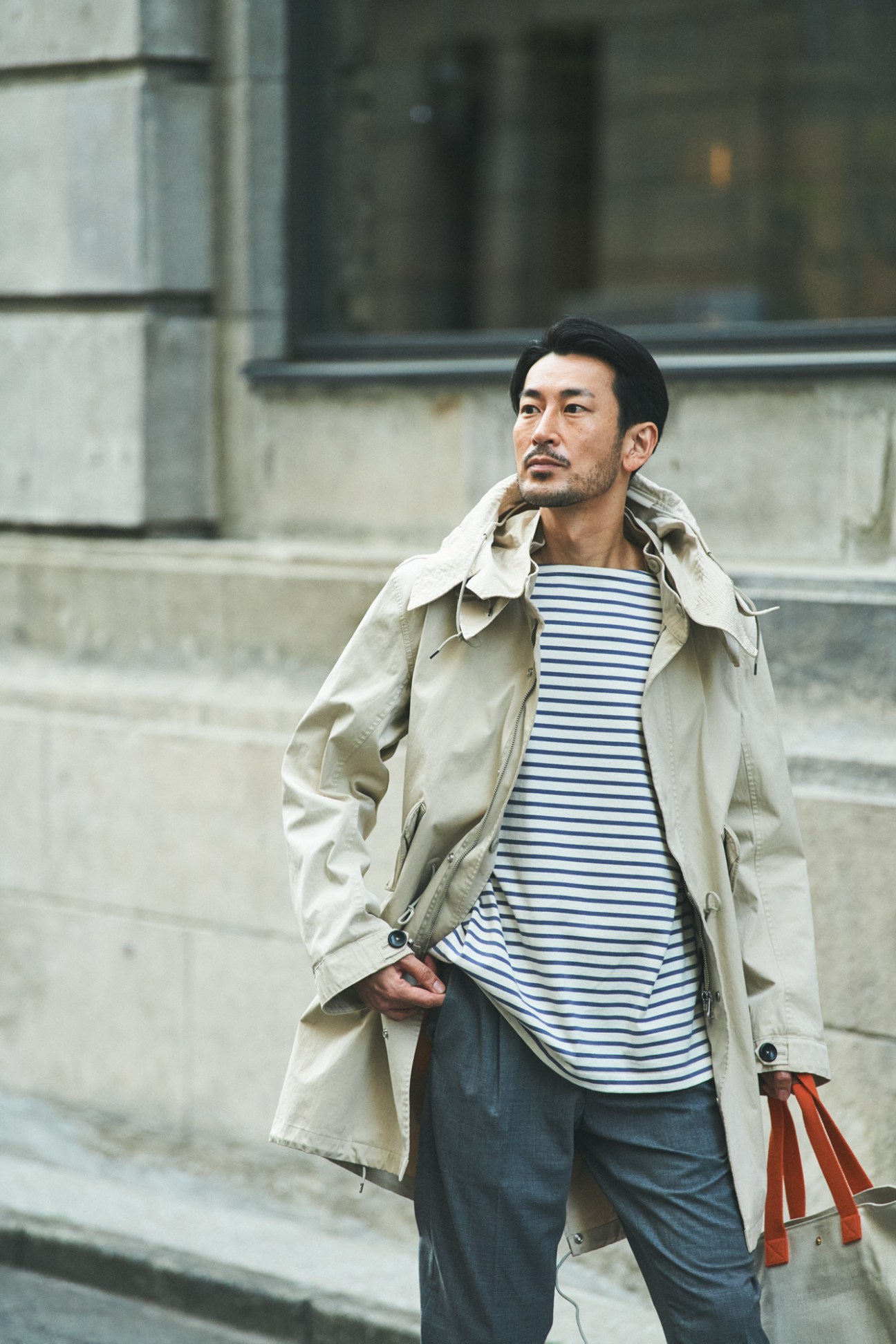
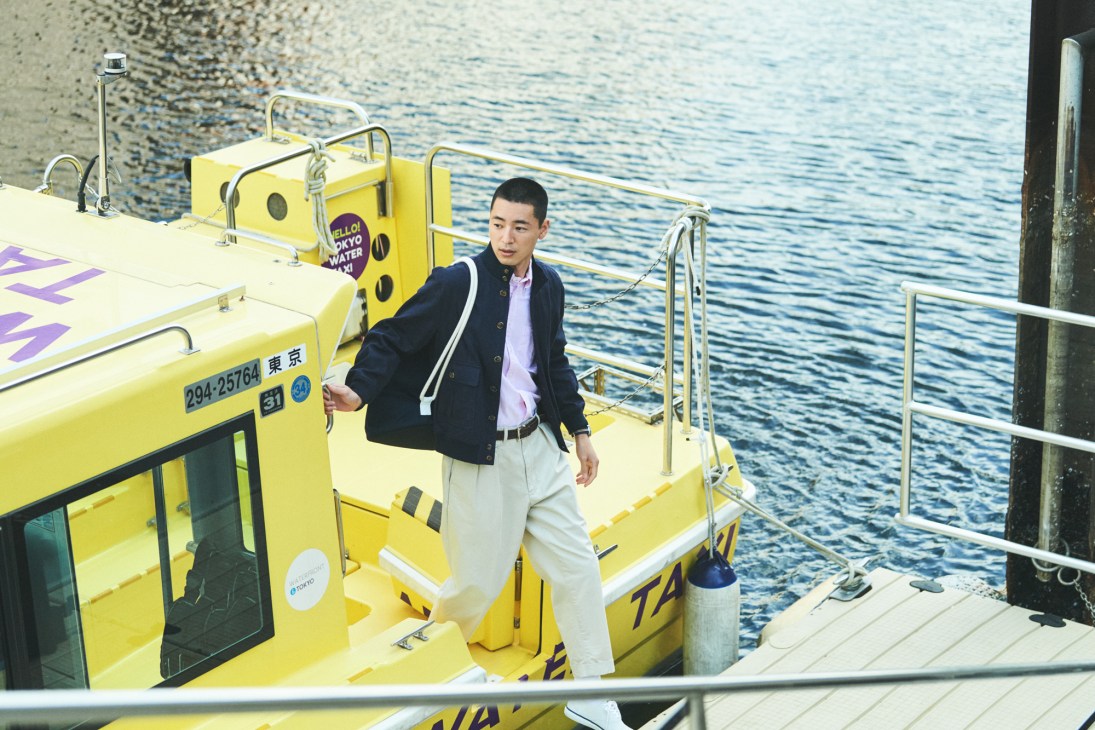
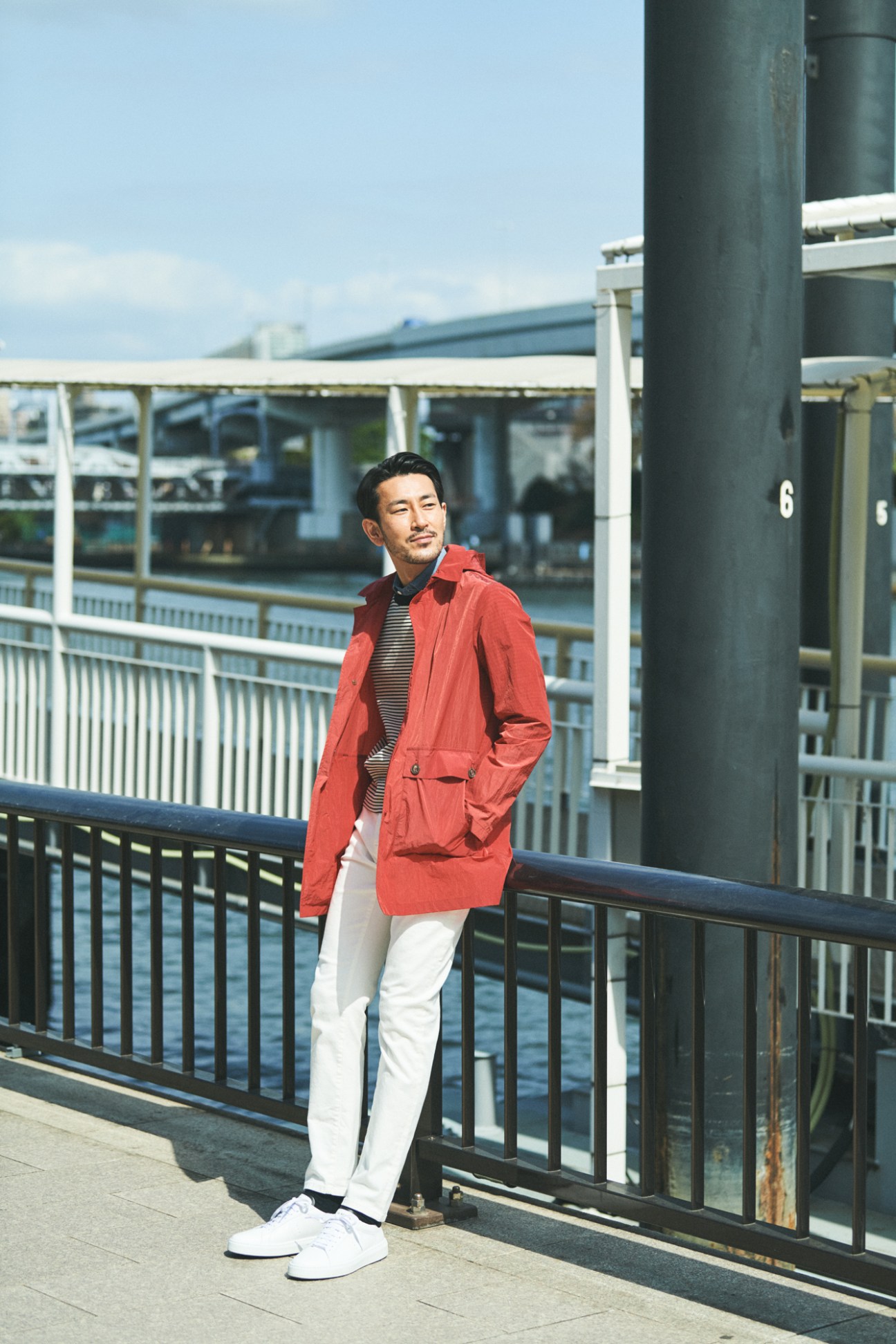
Grooming: Amano
Producer: Shinri Kobayashi
Models: Takeshi Watanabe, Kou
Styling: Naoki Ikeda
Top of the props
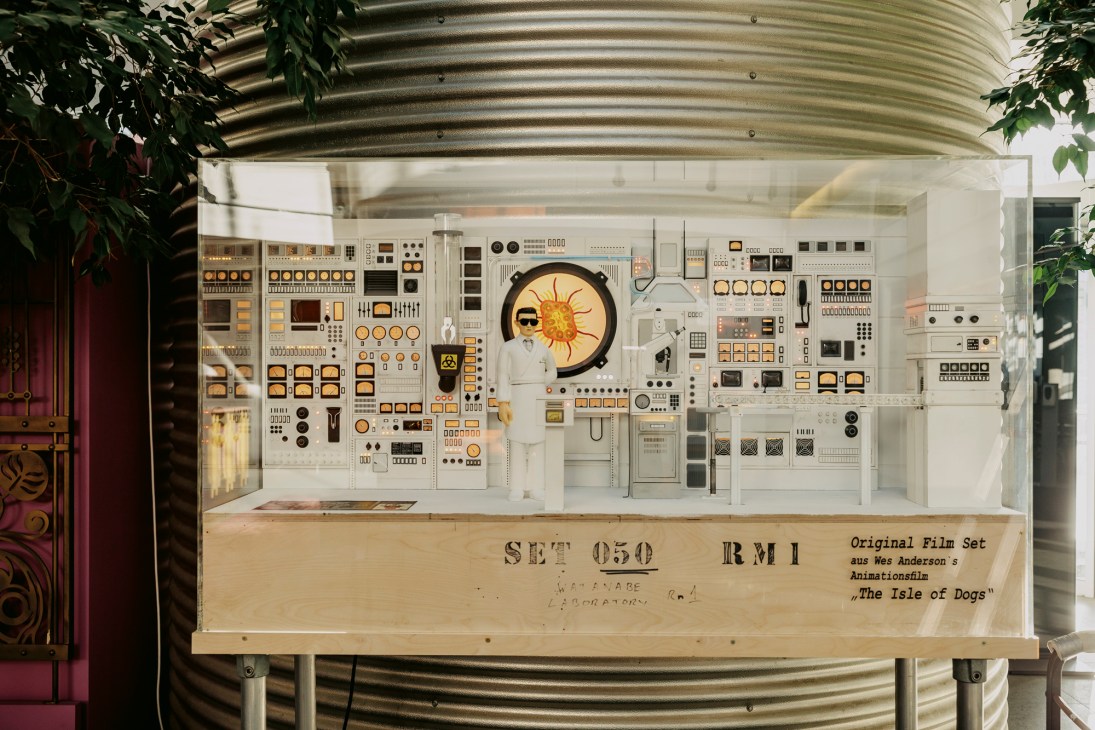
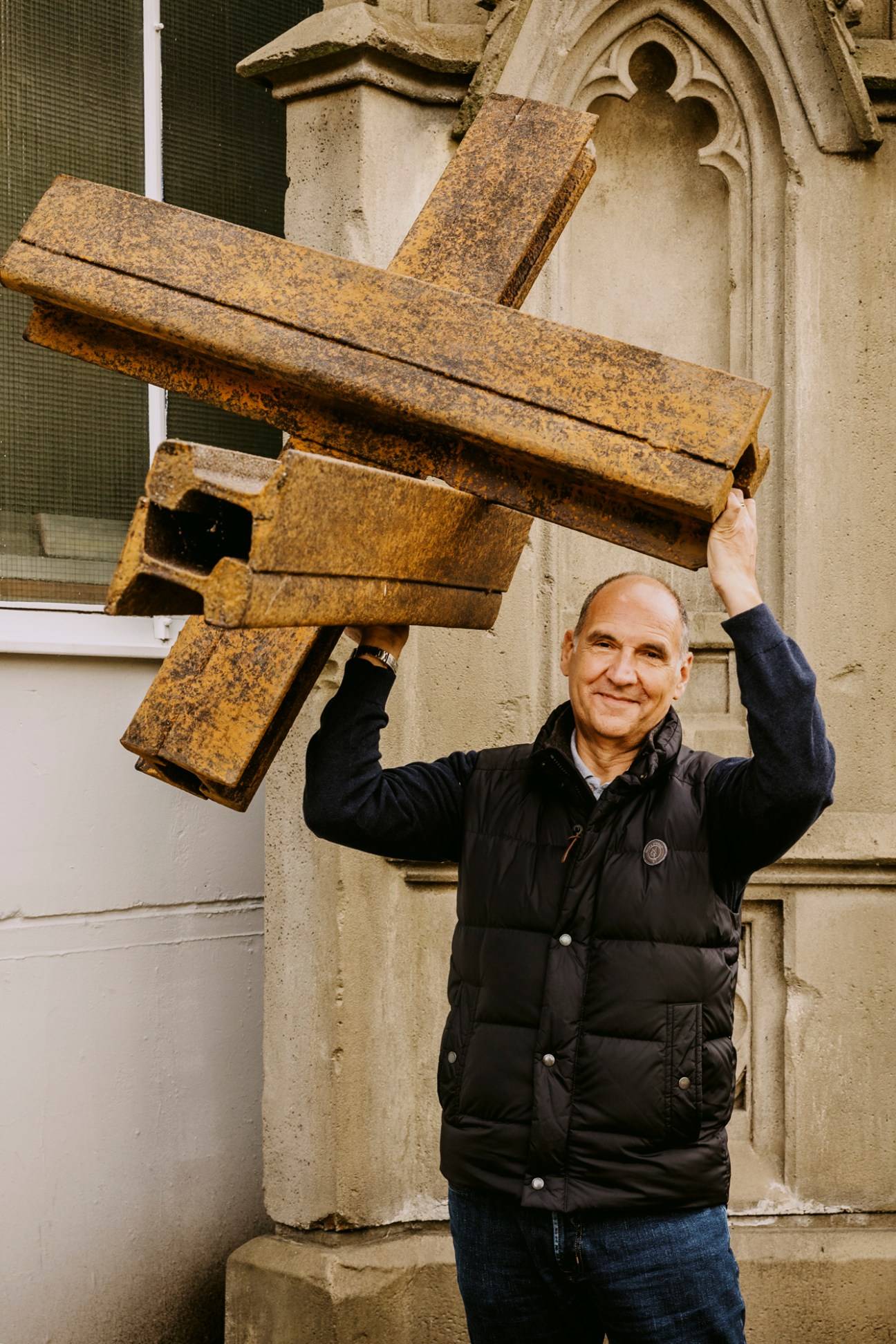
“Check this out,” says Michael Düwel, the managing director of Studio Babelsberg’s art department, scooping up an enormous metal girder with one hand. He lifts it high above his head, as if it weighs little more than a pencil. That’s because the girder is made from Styrofoam but, even close up, you would never guess it. Düwel and his team at Babelsberg are masters in trompe l’oeil trickery. As part of the world’s oldest film studios, opened in 1912, they have had plenty of time to perfect their specialist skills in creating realistic sets.
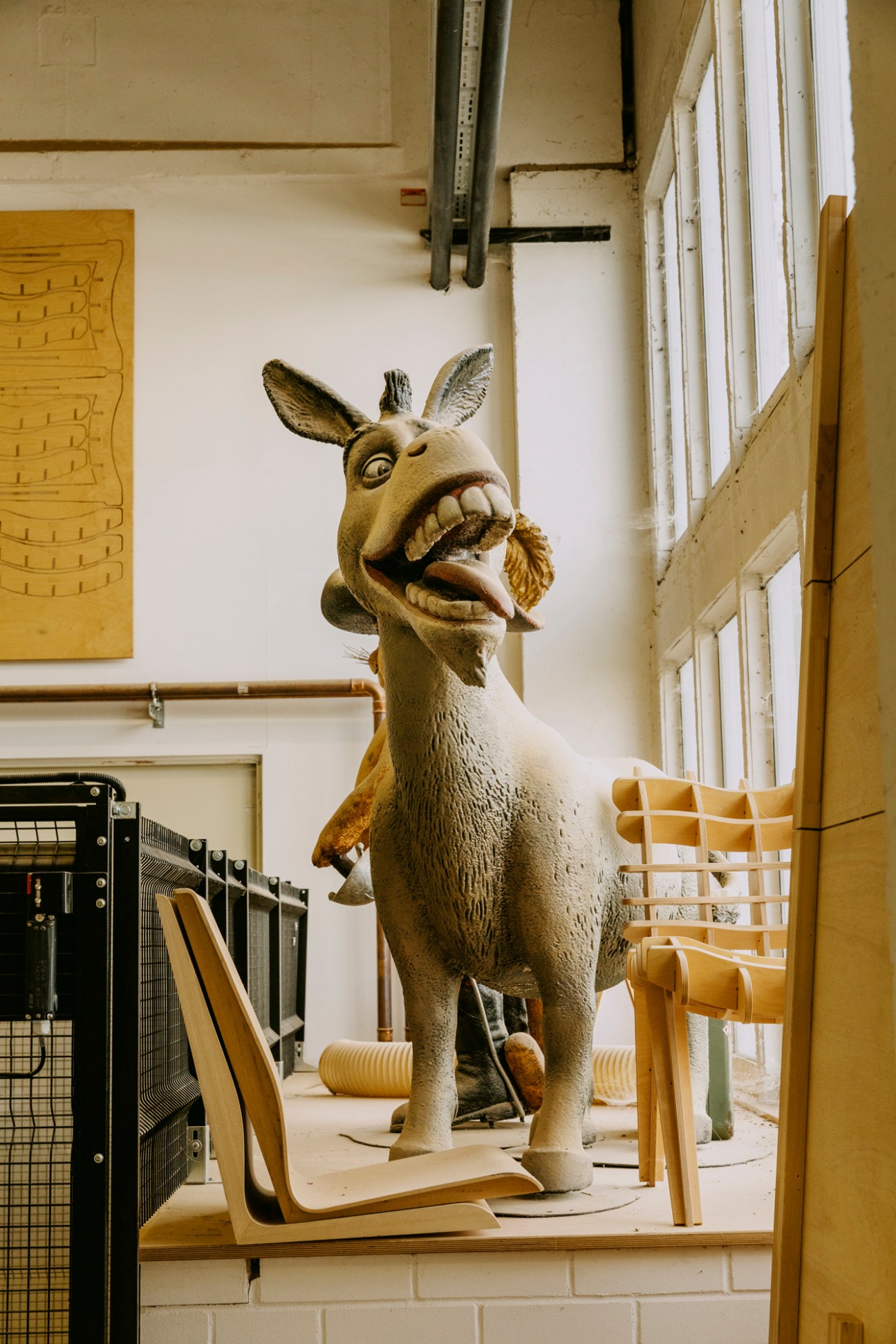
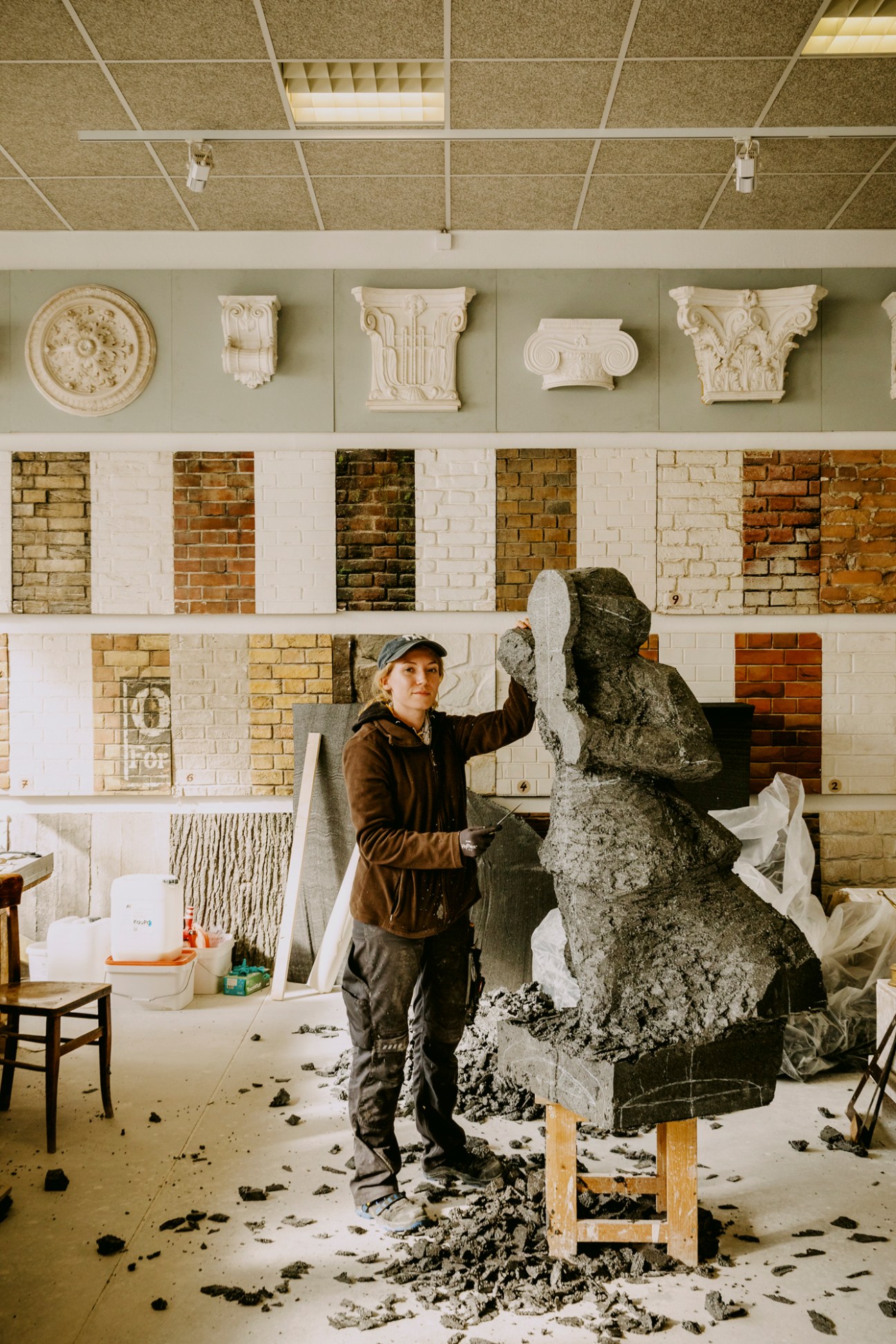
A day spent wandering the department’s lots on the fringes of Berlin can leave one with a strange sense of unreality. After hours among fibreglass shipwrecks, “marble” sculptures made from plaster and city streets that are nothing more than masterfully painted façades, the line between genuine and fake becomes blurred. When he joined the set construction department in 1995, Düwel assumed that he would have about two or three years in the job before the art department closed its doors for good. The historic studio’s workshops, which had produced everything from the dramatic city skylines for Fritz Lang’s Metropolis to the cabaret backdrops in Marlene Dietrich’s breakthrough film The Blue Angel, seemed threatened by rapid advances in visual effects but Düwel and his colleagues always believed that physical sets would still be needed.
Fast-forward 26 years, however, and the department is stronger than ever, operating under Düwel’s watchful eye. He oversees a 100-strong team of carpenters, painters, sculptors, architects and designers whose impeccable work is one of the studio’s main selling points. From a bust of the Statue of Liberty to a spaceship engine room for the 2009 sci-fi flick Pandorum, all of the studio’s commissions are wildly ambitious. When asked to pick the trickiest request to date, Düwel settles on the reconstruction of New York’s Guggenheim Museum for the 2009 Tom Tykwer thriller The International. Whereas Frank Lloyd Wright’s original took three years to build, Düwel and his team had just four months.
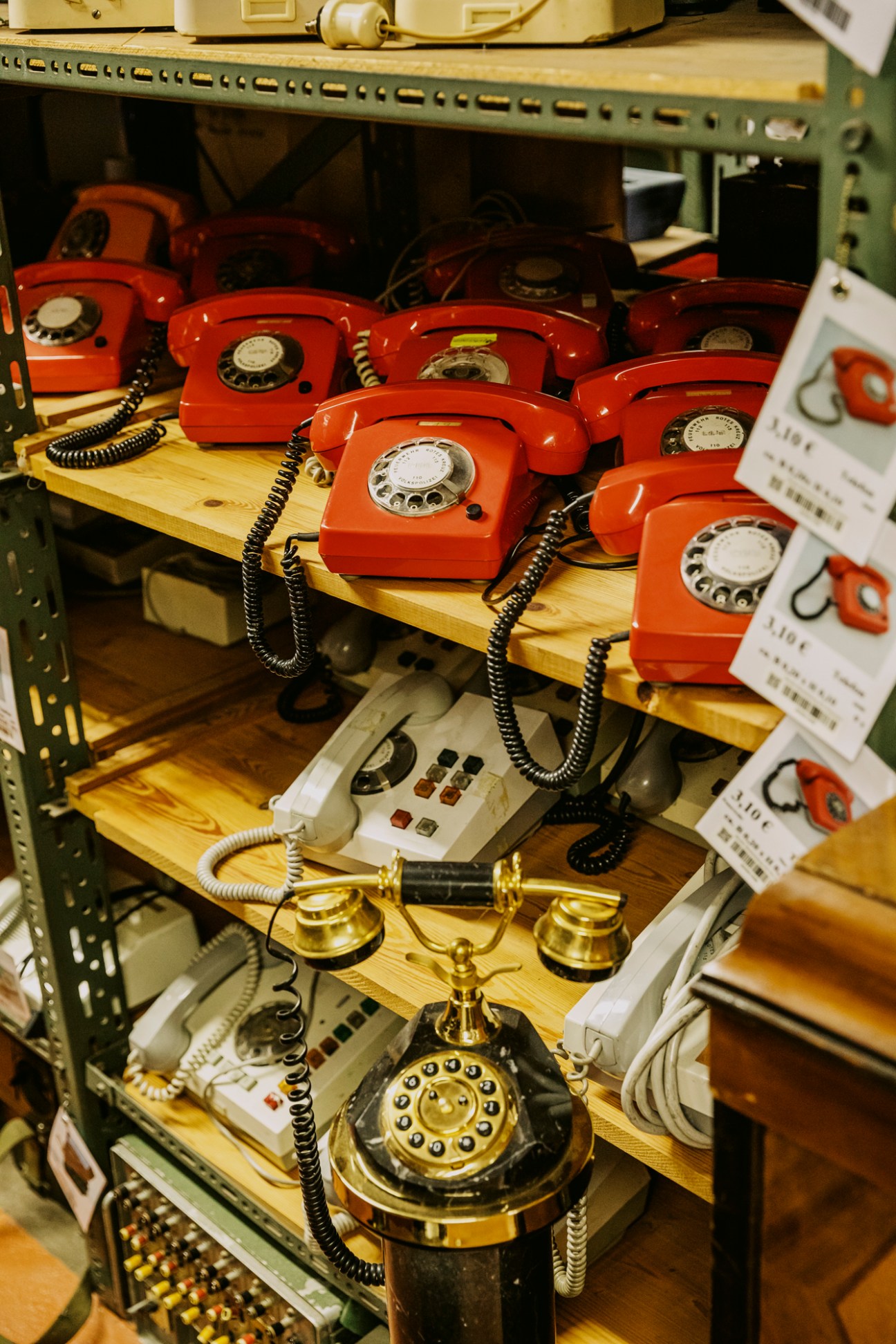
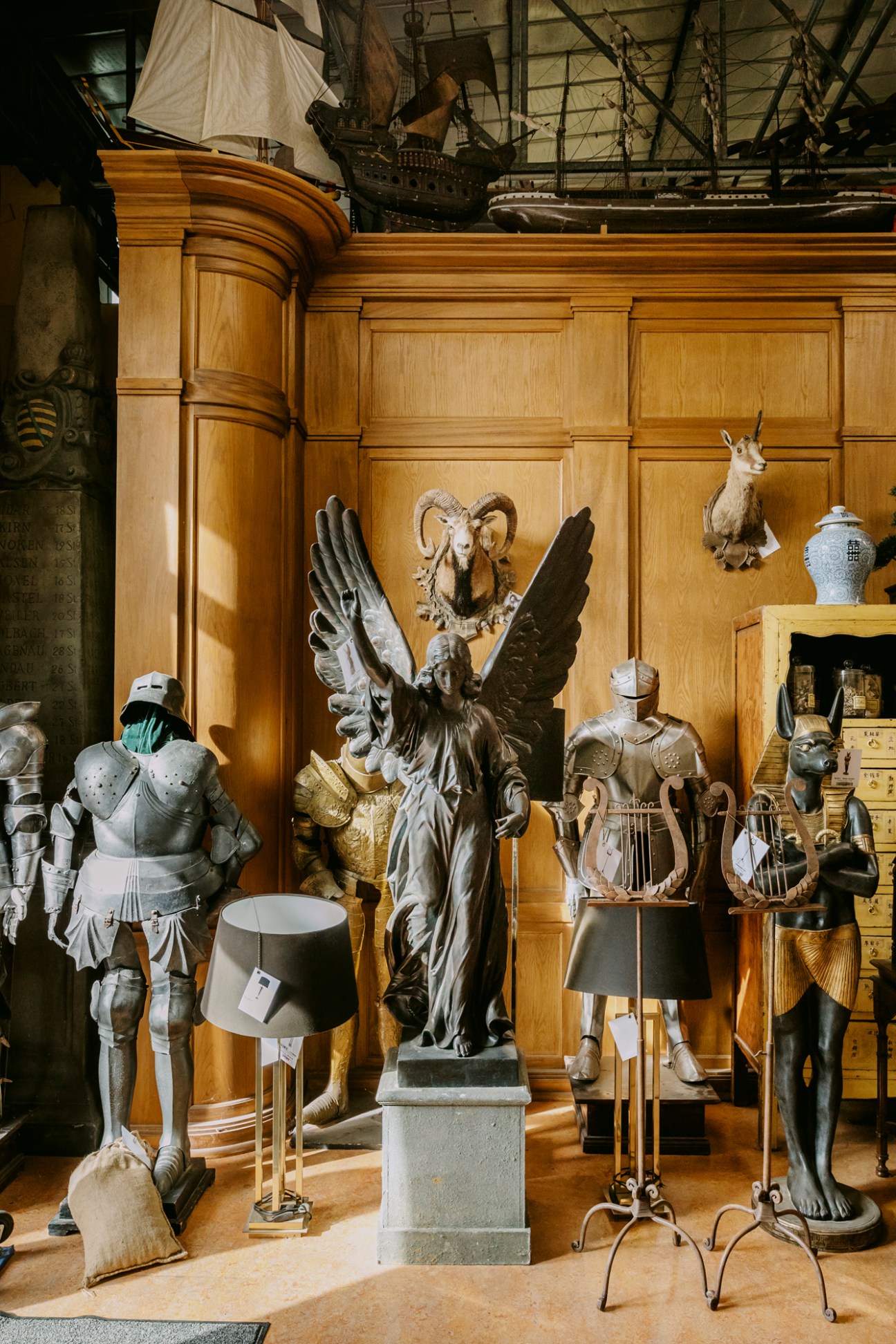
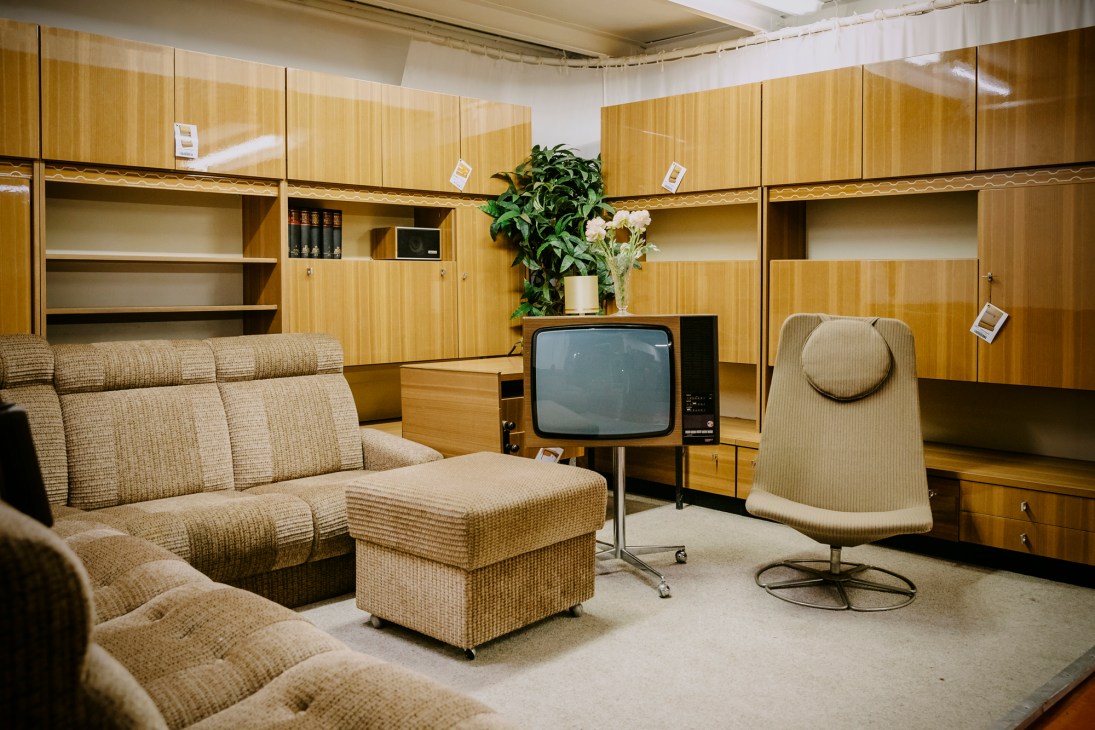
Babelsberg’s history of creating monumental sets stretches all the way back to 1912. In the early 20th century it made some of silent cinema’s most famed films, including Nosferatu and The Cabinet of Dr Caligari. Alfred Hitchcock worked at the studios in his twenties and claimed that everything he knew about film-making he learnt there. A dark cloud settled over the studio, however, when Germany came under Nazi rule. As many of the country’s actors and directors fled to Hollywood, Babelsberg was commandeered as a mouthpiece for National Socialism. Under the influence of Joseph Goebbels, propaganda films, including Leni Riefenstahl’s Triumph of the Will and the viciously anti-Semitic Jew Suss, were produced at the site.
After the war, Babelsberg became defa, East Germany’s state-owned film studio. Robert Krüger, head of the paint department, began his career at Babelsberg during this period. He first visited the studios as a child when he was enlisted as an extra and joined the studio as a scenic painter in the 1980s. “When I started working here, there was a kindergarten, butcher and even a hairdresser on site for the workers,” he says. “Naturally, our output was much more political. The government paid for everything and told us which films to make. The message always had to be, ‘Socialism is the best thing in the world.’”
After German reunification, the studios were sold to French group Compagnie Générale des Eaux which, over the following 12 years, spent some €500m updating the infrastructure. When current owners Charlie Woebcken and Christoph Fisser took over in 2004 they doubled the studio space, an investment that quickly paid off as the studio’s work started to attract an increasing number of international productions. That included big-budget Hollywood spectacles looking to take advantage of the all-inclusive production services that came with a side helping of slick German efficiency. Everything from The Hunger Games: Mockingjay to the Bourne films were made here. When Monocle visits, several big-name US blockbusters are filming at the site. Among them is the latest as-yet-untitled fourth Matrix film. The rise of streaming platforms has also boosted business for Babelsberg (in recent years it has worked on several Netflix series, including Dark and Berlin Station), which helped the studio to generate whopping revenue of more than €73m in 2019.
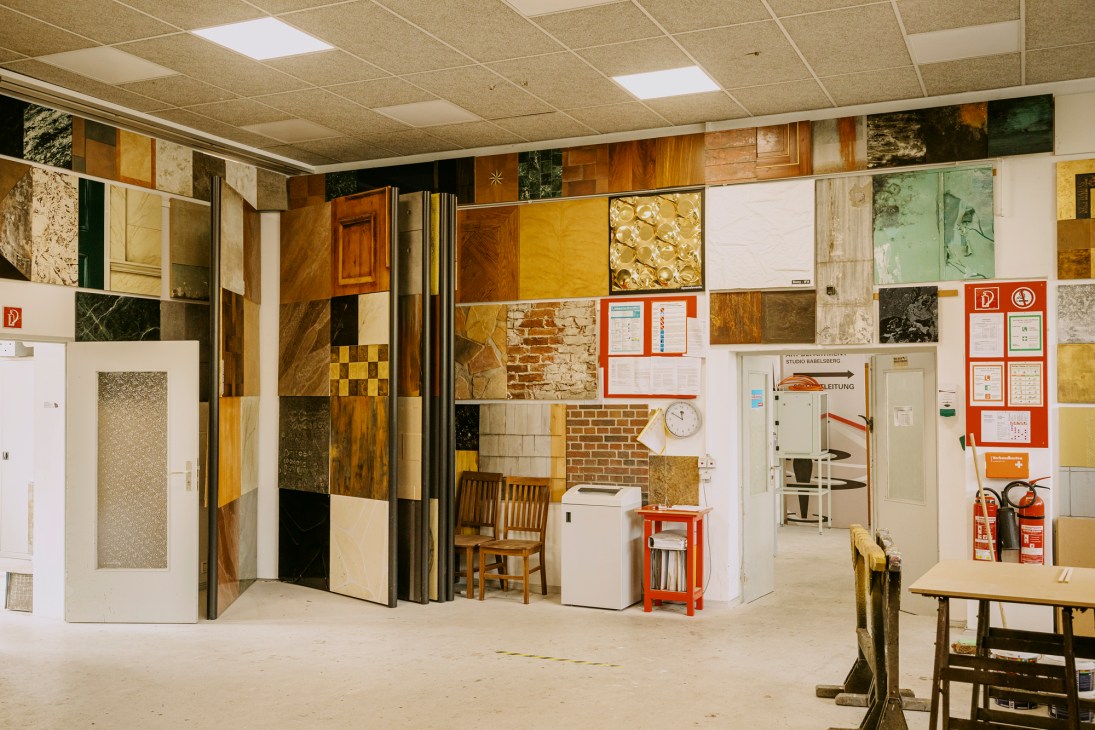
What places Babelsberg apart from other studios of its size is that the set-building workshops making up its art department are all in one place – eliminating the need for delegating specialist tasks elsewhere (contractors are brought in to bolster staff when necessary; the set-building team can number up to 300). When the pandemic struck in 2020, the studio was forced to pause production for several weeks. But postponements and unexpected delays are part and parcel of film-making, so working flexibly was something that the studio was used to. With its doors closed for shooting, Babelsberg’s workers took the opportunity to make infrastructure improvements around the site and put together comprehensive protocols that enabled it to be the first major film studio to reopen. “Filming during the pandemic is challenging and expensive,” says Düwel. “But a film studio can guarantee a high level of security and control compared with shooting on location.”
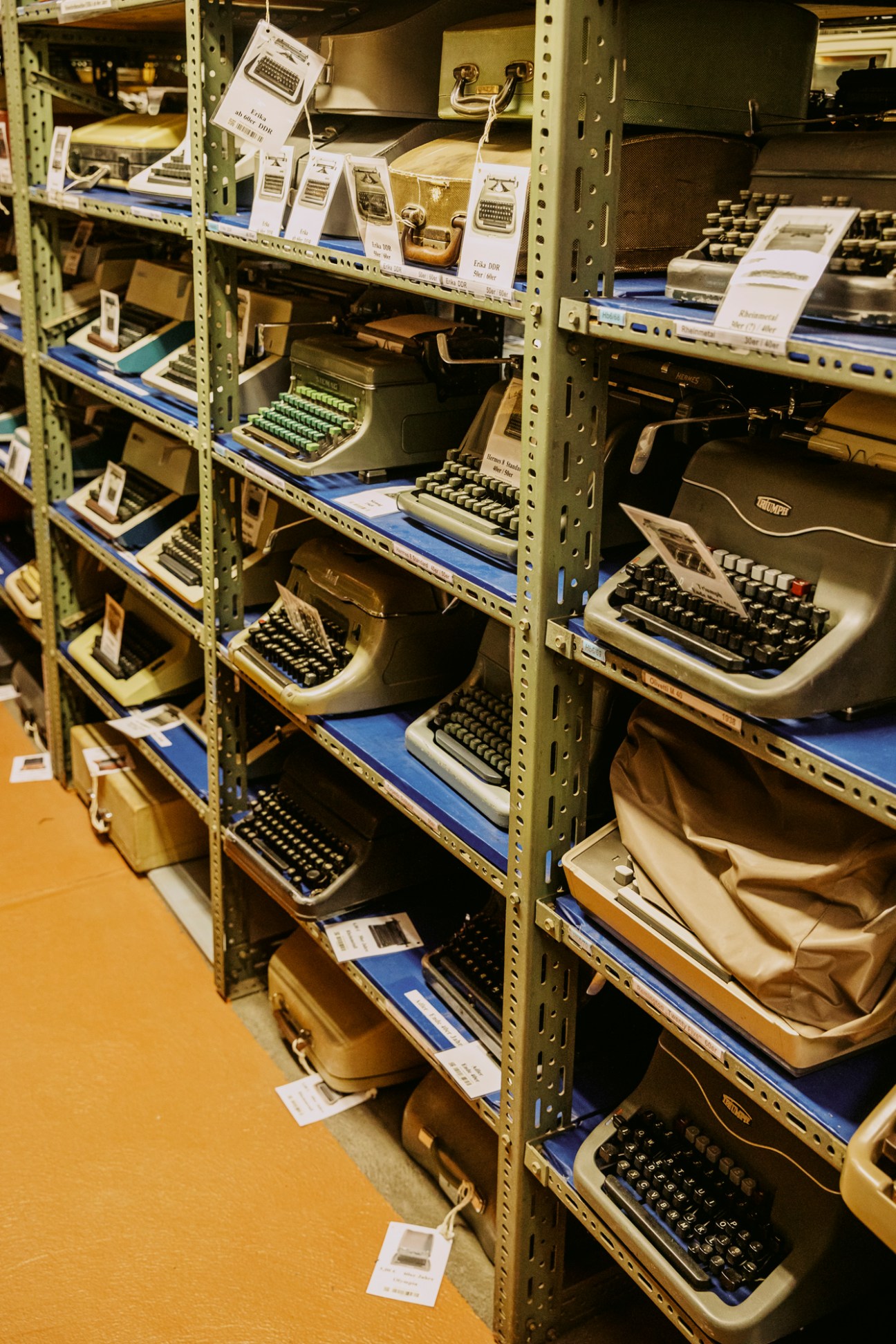
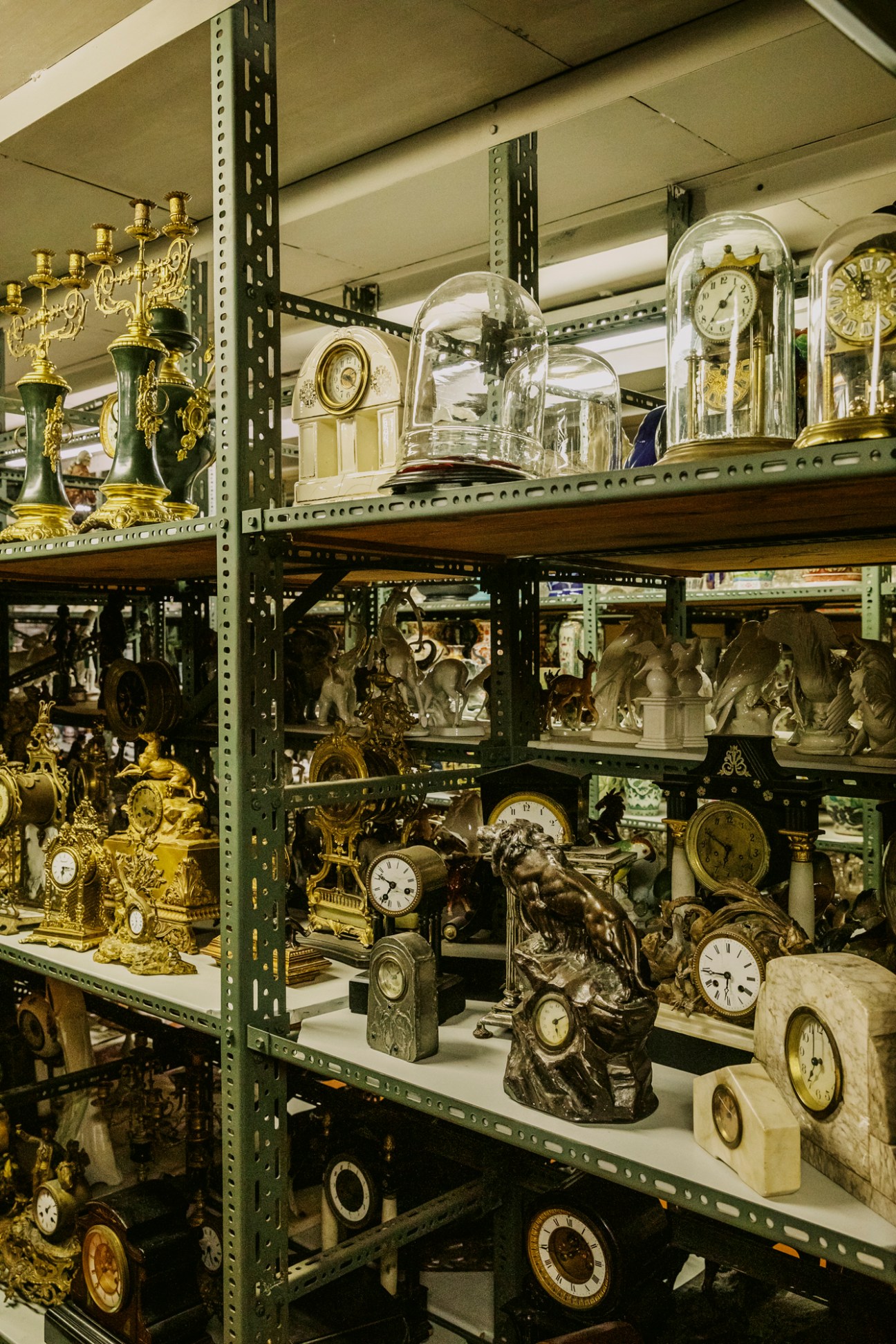
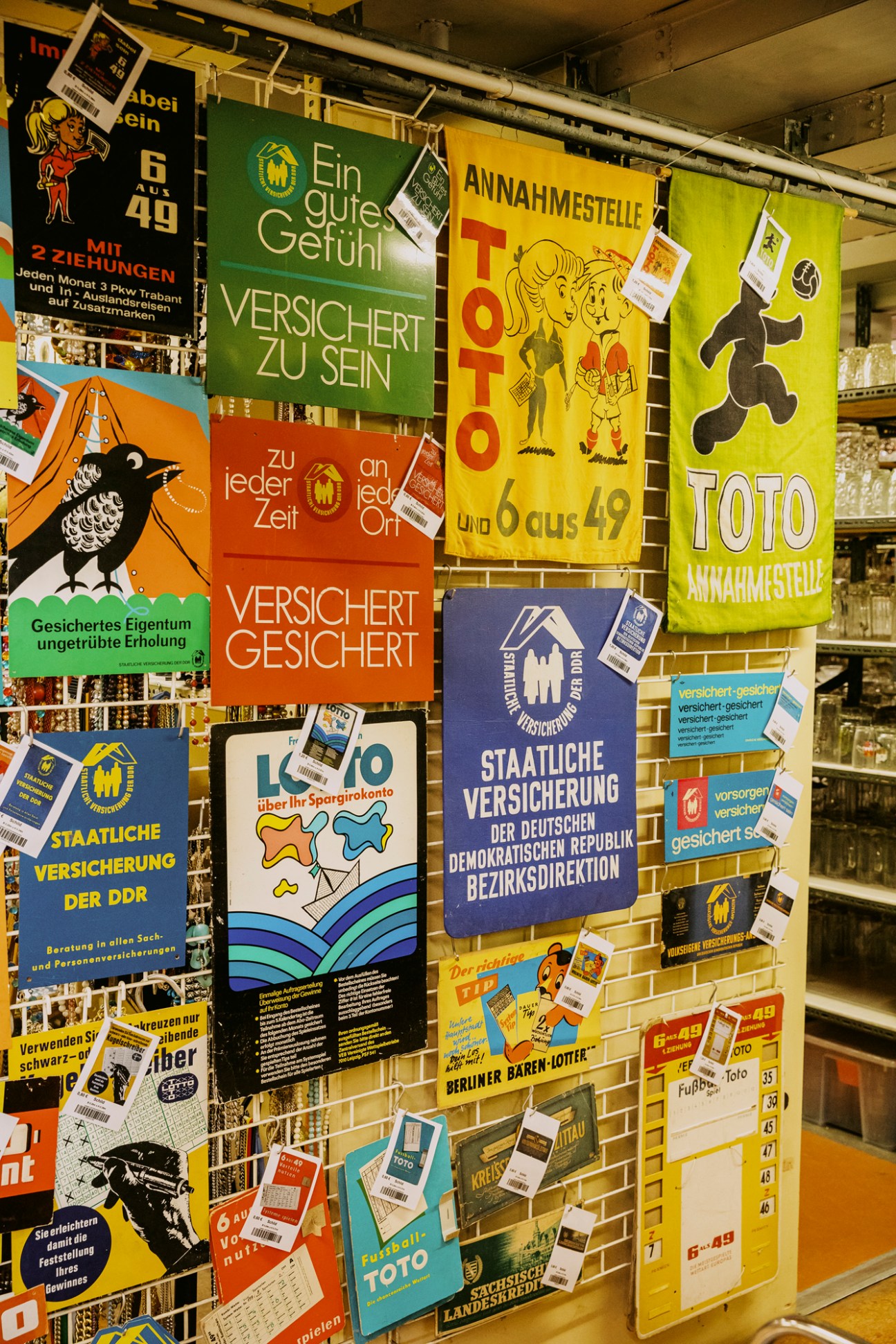
Another factor propping up the art department’s business accounts is that its clients go beyond film. Operating as a separate entity within the Studio Babelsberg group, the department designs and makes everything from bespoke museum installations to sets for morning TV chat shows. One of its most recent commissions was to build a mock train carriage for Deutsche Bahn. There’s also a large archive – more than one million props are kept across two warehouses. Items in these vast stores are loaned to productions within Babelsberg and beyond; here art directors can find everything from mailboxes to gravestones. Tightly packed shelves are laden with every imaginable variety of ashtray, apothecary bottle or sugar bowl, all carefully catalogued with an individual barcode. “This is my favourite corner,” says Düwel, admiring rows of telephones, including 1890s wall-mounted models, clunky 1950s rotary dialers and 1990s cordless models. “It’s the entire history of communication.”
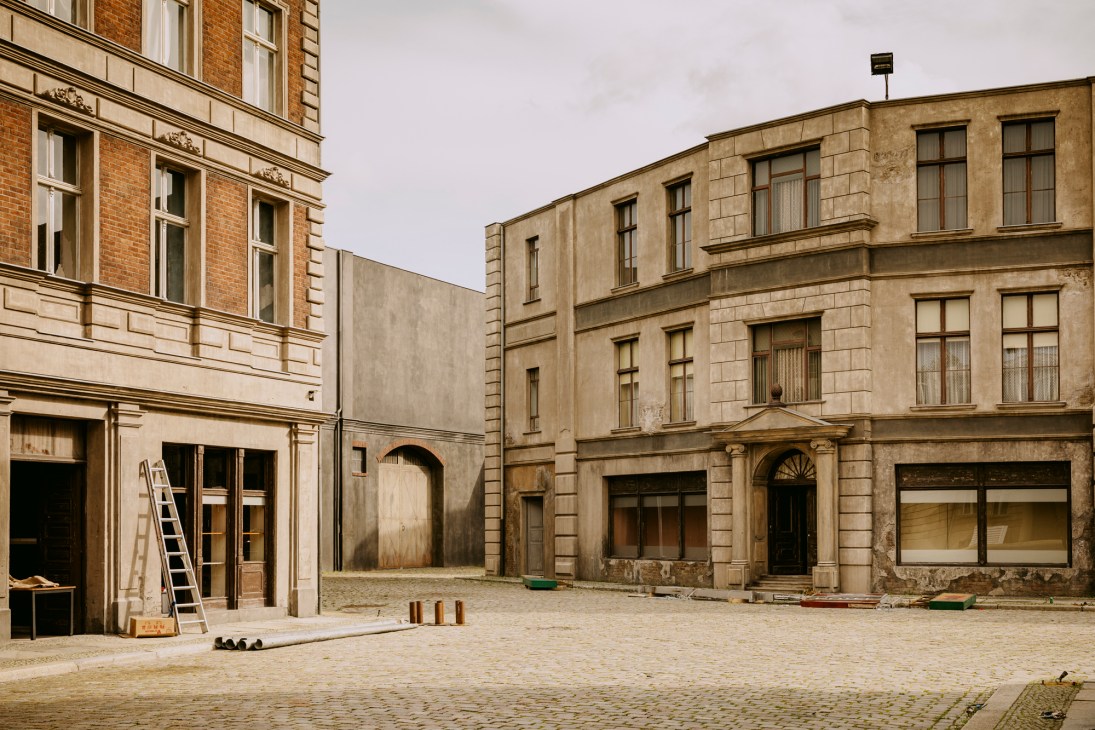
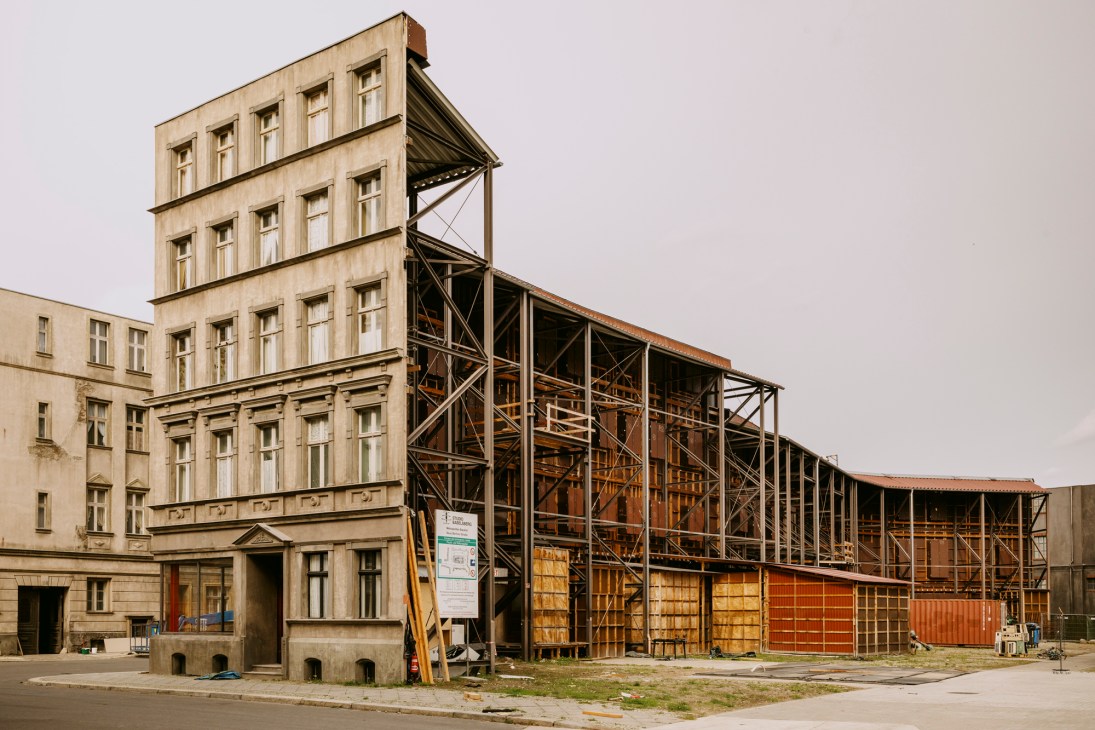
The giant warehouses that make up the prop stores are just a small corner of the site as a whole. Within the complex are 21 individual studios as well as two backlots for filming street scenes. The latest is Neue Berliner Strasse, which was built in 2016 for €12m. It might seem like a staggering sum but, Düwel says, it is actually cheaper than constantly creating computer-generated backdrops. This lot is an exact replica of Berlin in the 1920s, with each section designed to mimic a different neighbourhood. “This is Charlottenburg, that’s Kreuzberg and over there is Friedrichstrasse,” says Düwel, pointing to different corners of the realistic grid of streets. The city was all but flattened during the Second World War, so this space is important for directors wishing to show prewar Berlin. Shooting here is also more practical than filming on location. “If you want to drive through Berlin with a tank today, it’s not going to be easy,” says Düwel.
Despite its commitment to analogue props, the department’s ability to thrive in the face of digital imagery means working with, rather than against, technology. Its vast workshops are filled with the hum of gleaming high-tech machinery. In one room, a hot wire-cutting machine is crafting a gothic turret from Styrofoam, while a 3D- printing machine buzzes in the background. There are also full-body scanners to enable extras to have their forms digitised in order to be multiplied in crowd scenes. But all these activities go hand-in-hand with traditional techniques. On the floor, painters are marbling wooden panels while a woodworker is fixing a joist.
This dedication to such grandiose, tangible projects is anything but a capricious obsession with old-school methods. It is, in fact, integral to the success of a production. “Actors need a physical set to interact with,” says Düwel. “That’s why we recently built a new backlot. The original plan was just to have one big green-screen street but we discussed this with several directors and they told us to forget it.”
Düwel’s commitment to listening closely to the precise needs of his department’s clients has secured Babelsberg’s position as studio of choice for everyone from Wes Anderson to Quentin Tarantino. But Düwel has no intention of resting on his laurels. “A long history of film-making will only get you so far,” he says. “It opens the door but that’s as far as it goes. Clients want to know what we can do now.” A more pertinent question, perhaps, might be what Studio Babelsberg’s art department can’t do.
Local champion
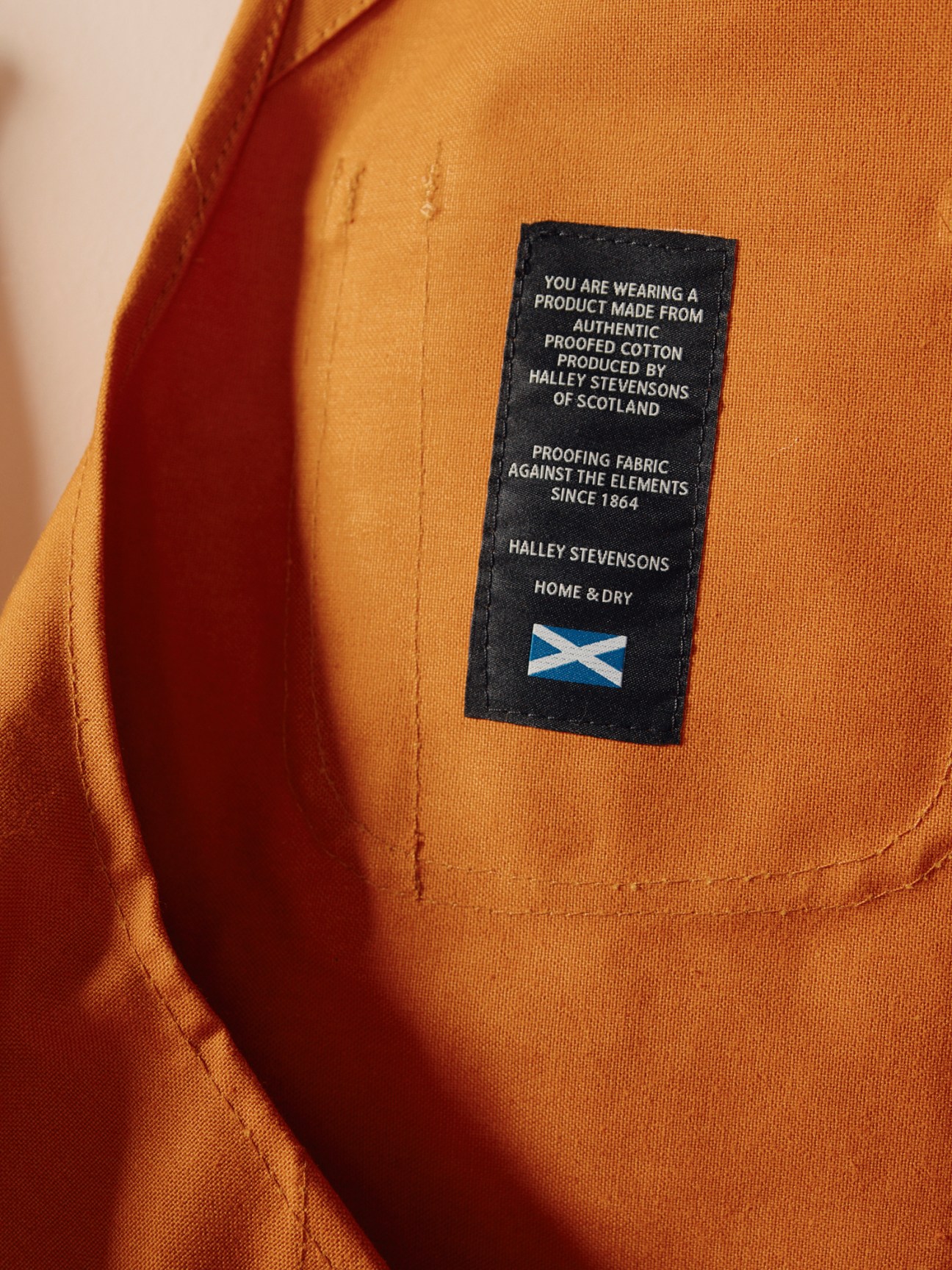
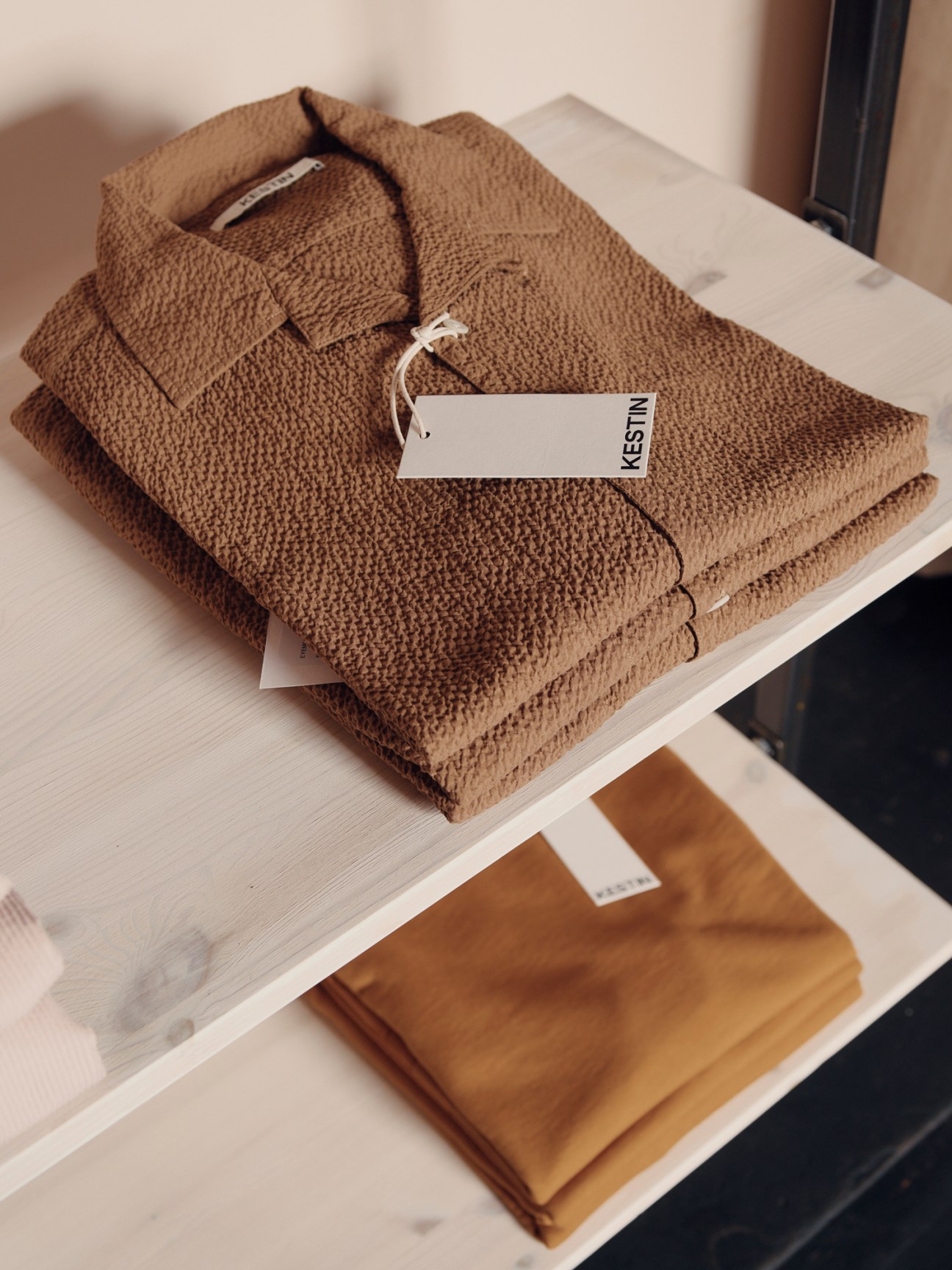
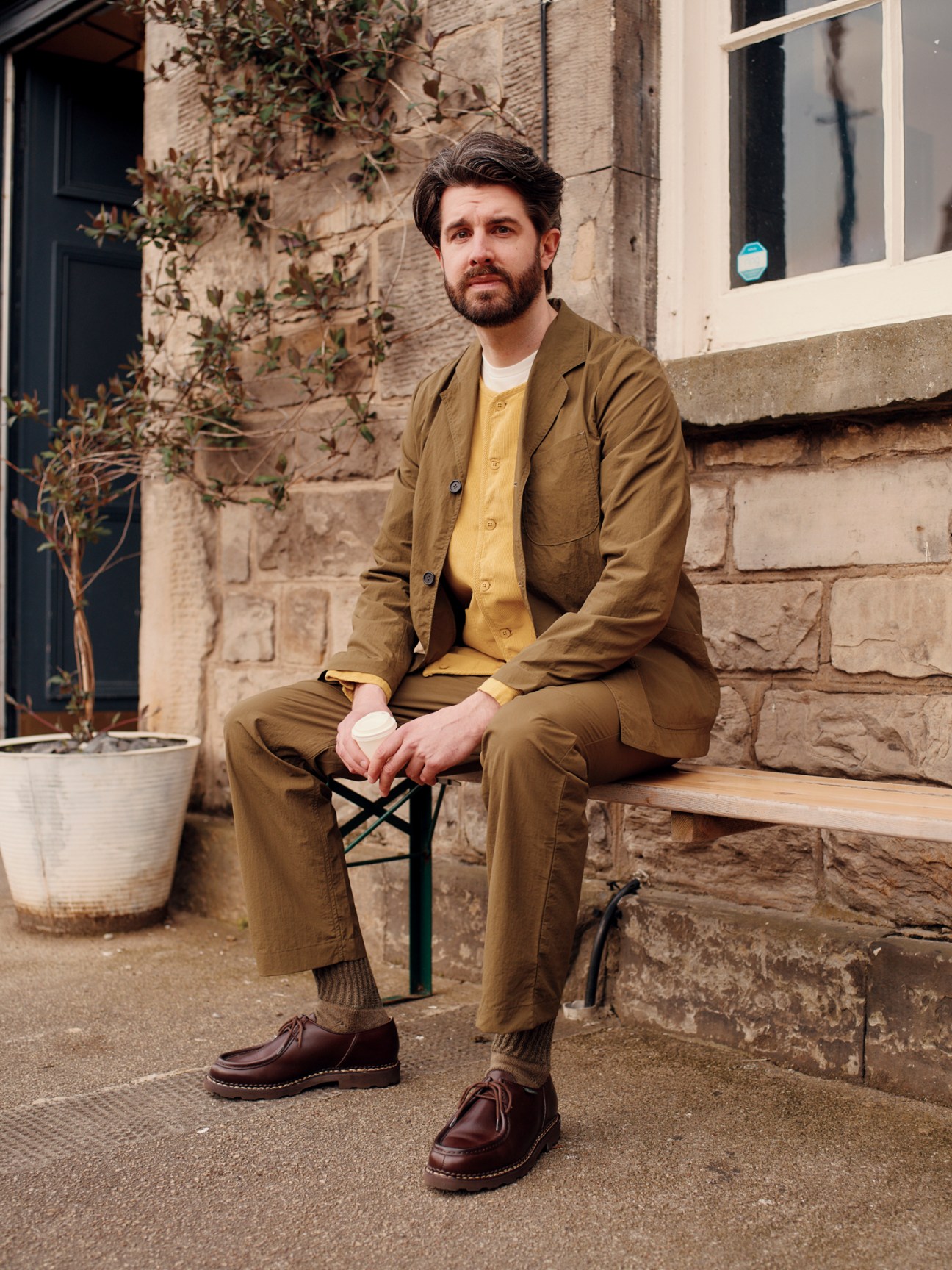
Few countries can claim a richer history of weaving textiles than Scotland. Tweed, Shetland, cashmere, tartans – the list goes on. These traditional materials and patterns were the performance fabrics of their day, insulating their wearers against the harsh climate of the Highlands. They’re also from where independent Scottish menswear brand Kestin’s creative director, Kestin Hare, draws inspiration. “In Scotland you have all these great craft industries, from cashmere knitwear to Harris Tweed,” he says. “We Scots also have a history of exploration, mountaineering and creating functional clothes that can beat the elements.”
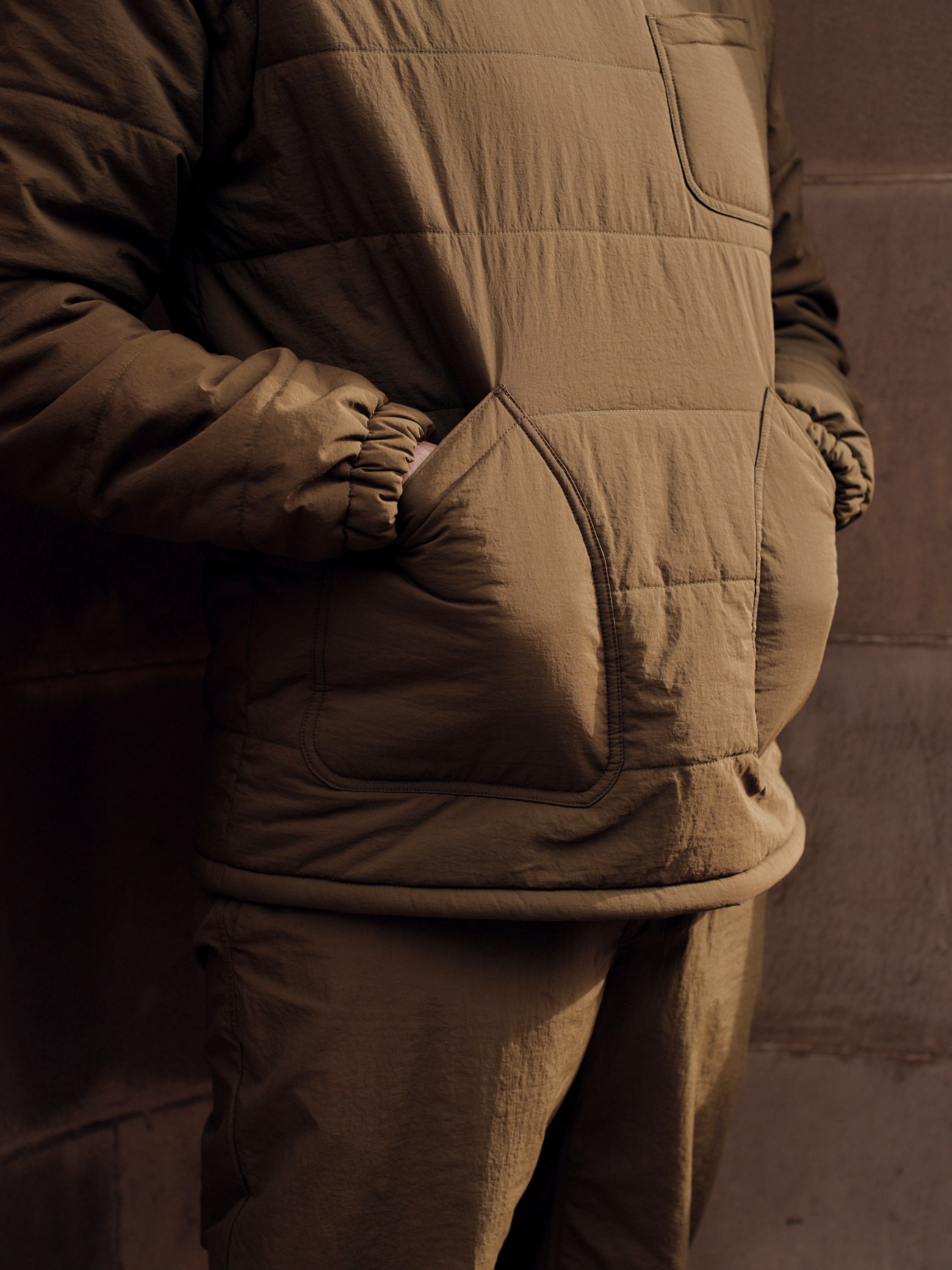
With this heritage in mind, Kestin’s designs are impressively technical – from wind and waterproof outerwear to insulated pullovers and nylon drawstring trousers. They also blend workwear and military influences into unashamedly contemporary collections. “Going back 10 years, I remember being at New York Fashion Week and people cracking jokes like, ‘Oh, you should have some shortbread on your stand’,” Hare says. “At the time, no one was putting a modern spin on Scottish clothing traditions. It just made sense to me to go ahead and show that it could be done.”
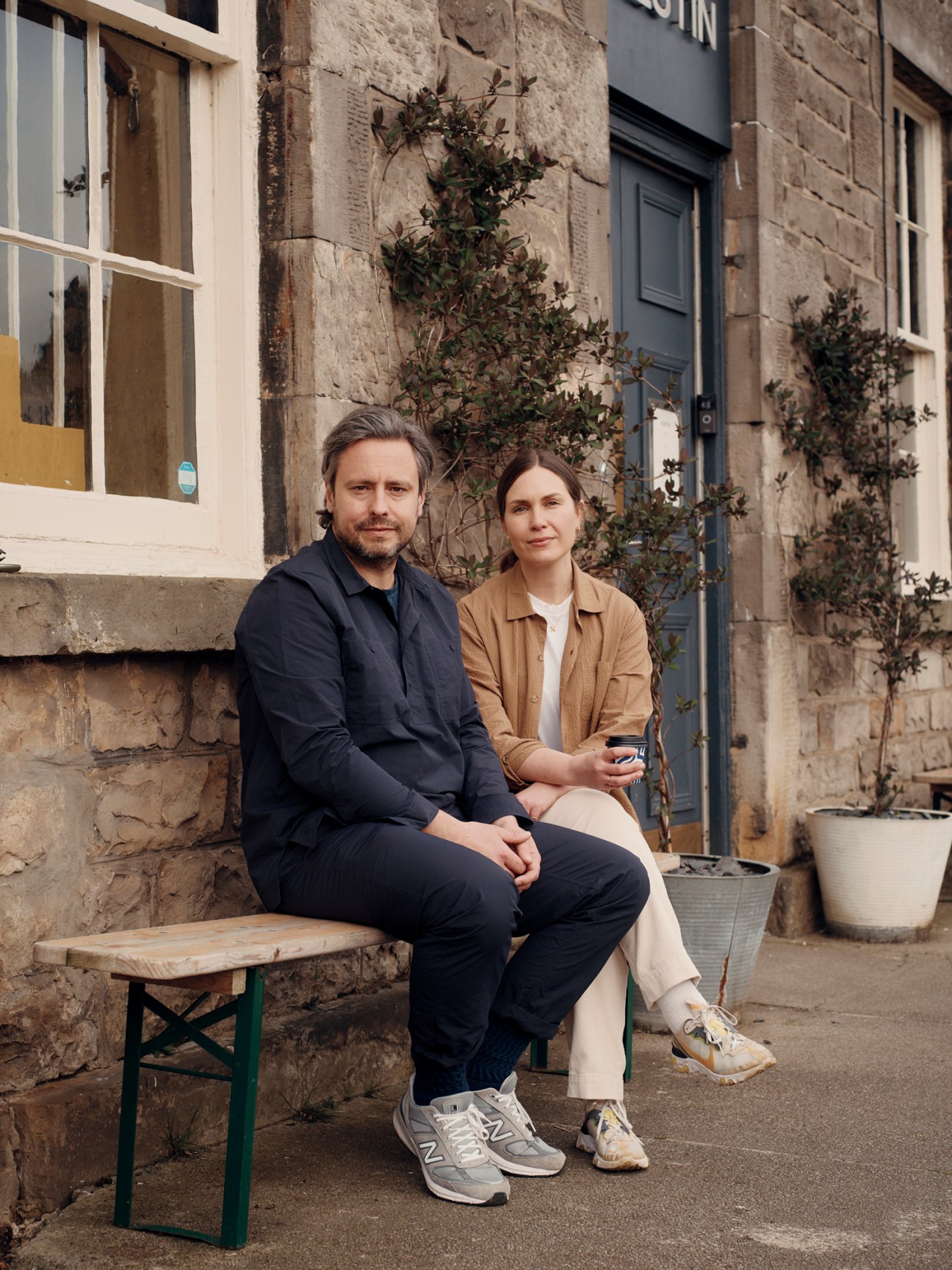
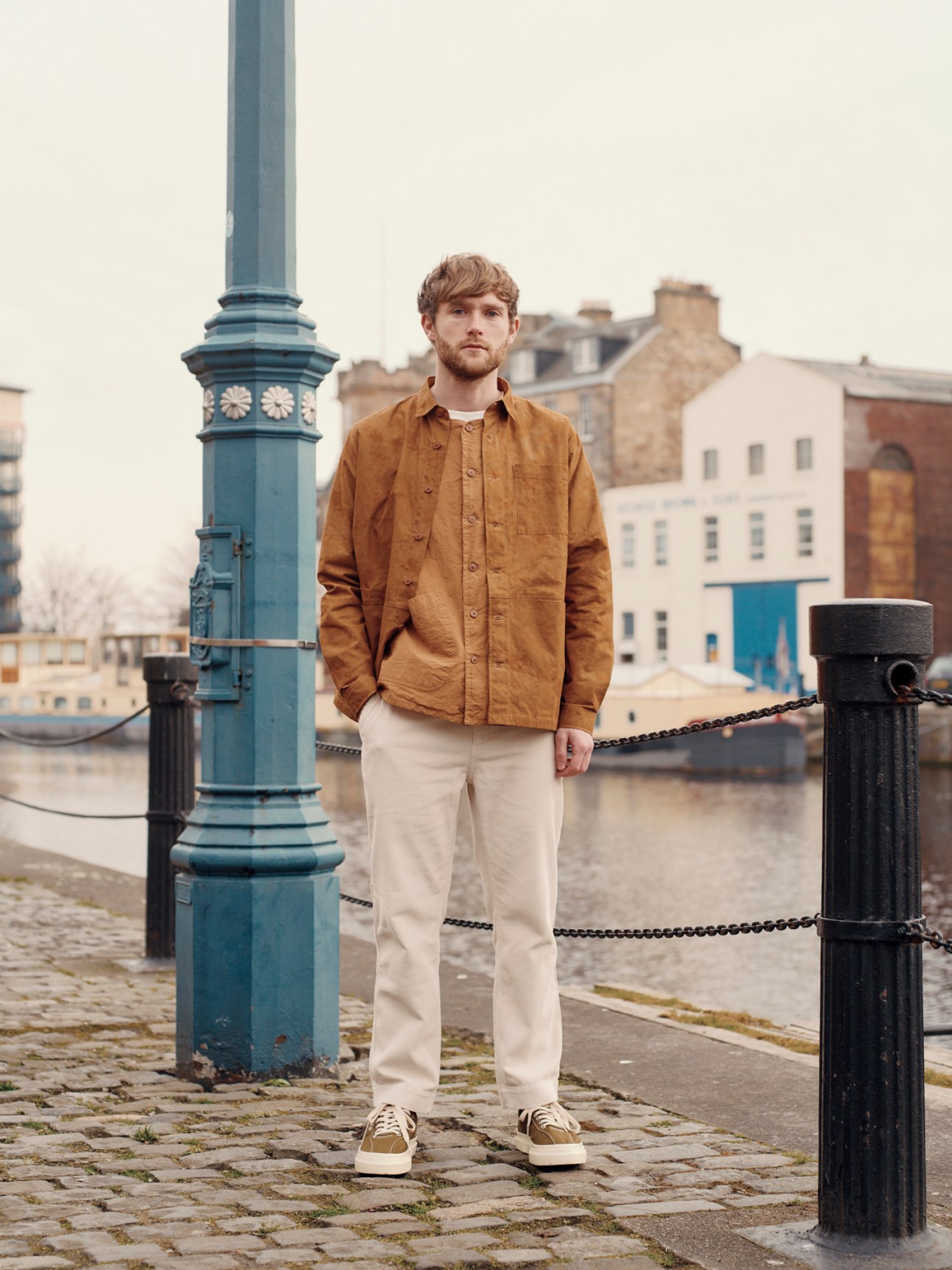
Hare was born into a creative family – his father was an architect and his mother an interior designer – and he got into fashion at a young age. After graduating from Northumbria University in Newcastle, he landed a job at Nigel Cabourn, a respected menswear label based in the city. Hare quickly worked his way up to be the brand’s head of design. Cabourn’s approach to design was meticulous and it formalised the way in which Hare looked at menswear. “Nigel was fanatical about British manufacturing,” he says. “And also about sourcing and then studying vintage pieces. I became a bit of a vintage nut and Nigel’s way of working made sense to me.”
Four years into his stint at Cabourn, Hare started to feel as though he needed a change. “Nigel was a purist,” he says. “He wanted to meticulously recreate old stuff. I wanted to use everything I’d learned to design new pieces.” So Hare jumped ship and freelanced for brands such as Burberry and Margaret Howell while he worked on the first few pieces under his name. At the same time his wife Gemma, who’s now Hare’s partner in Kestin, fell pregnant with their first daughter. “We are both Scottish and had been pining for home for a while,” says Hare. “We decided to move back and see if we could make Kestin work.” The couple packed up and drove north to Edinburgh just a few days before their daughter was born. This return kick-started Hare working on his brand in earnest.
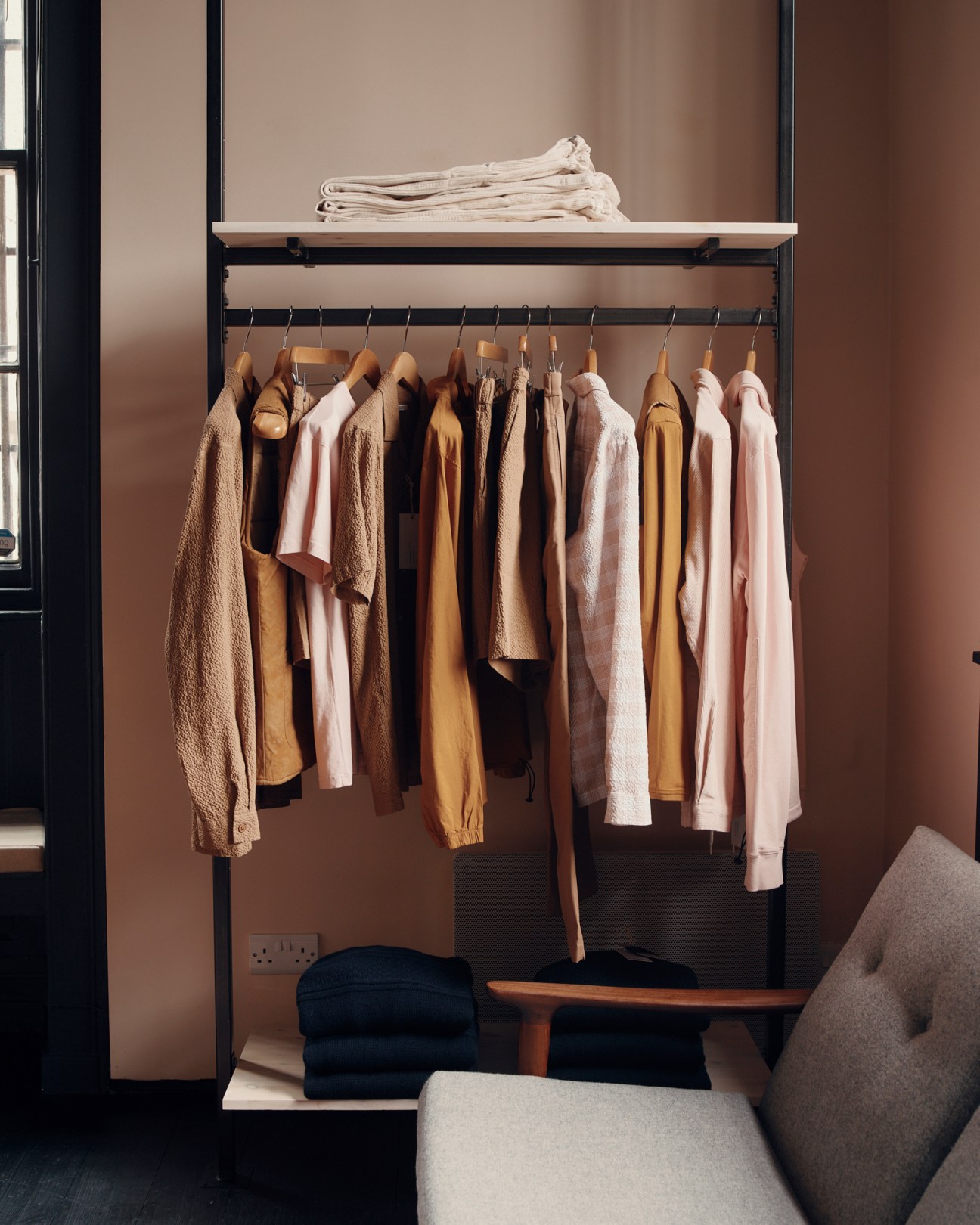
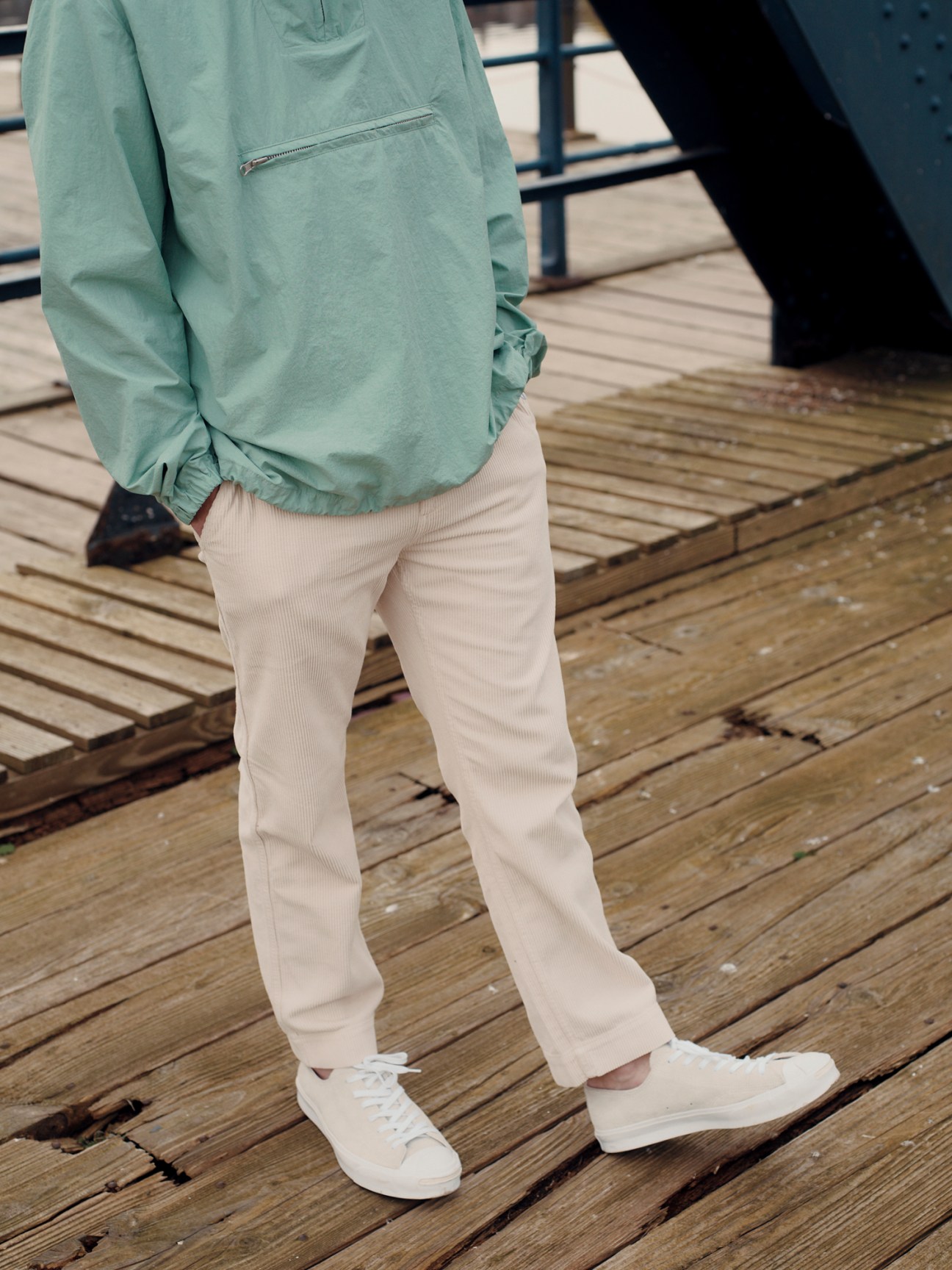
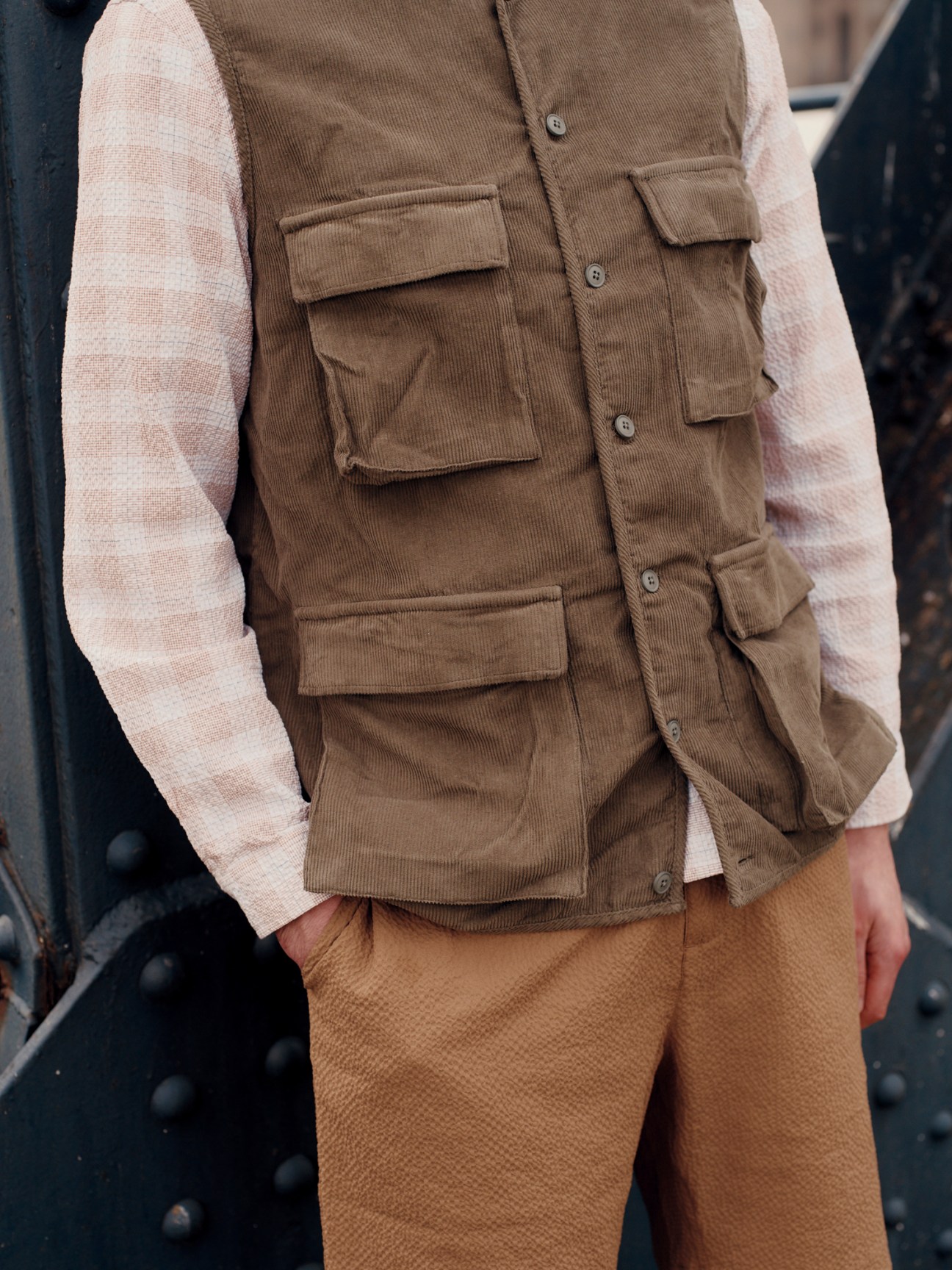
Skip forward to today and Kestin has carved out a cult following for its responsibly produced and technically impressive menswear. “I like to get down and dirty in factories,” says Hare. “I like to be able to see things up close and try to push factories to get the best from them.” He adds that it is this hands-on working mode that keeps him motivated and continues to add to the story of the brand. “We make all our knitwear in [the Scottish town of] Annan, Dumfries, for example. When we launched Kestin it felt like the natural thing to do because I’d used these workshops for Nigel Cabourn and Margaret Howell’s knitwear,” he says. “We choose British makers because we want to support local skills and jobs – but it’s always happened organically.”
When asked about Kestin’s sustainability credentials, Hare acknowledges that, while not perfect, the brand is making steady progress. “There’s so much misunderstanding about sustainability,” he says, “It’s more about responsibility and making sure that you’re doing everything in the best way you possibly can. We take care to make locally and use small production runs but we don’t want to pigeonhole ourselves either; all we’re trying to do is just take little steps.”
This focus on responsible production is one of Kestin’s strongest values, so much so that it has seen the brand safely through the persistent and continuing lockdowns of the past 14 months. As it turned out, Hare and his team were able to create a new “Made in Scotland” accessories and small leather goods collection featuring products made entirely within 50 miles of Edinburgh.
Today, Kestin’s team is 10-strong and operates from an airy studio in the centre of the Scottish capital. Despite the disruption of the past year, Hare is optimistic about the brand’s future and pleased with how he and his team have shaped Kestin in the past decade. “To be an independent business today, you have to have a great narrative,” he says. “Not only that, you’ve got to undertake thorough research, have experience and understand your own identity. That’s when you start creating something with longevity that stands out from the other things around you.”