Issues
Amsterdam’s old brown bars are pouring themselves a second life
It’s early on a Thursday afternoon and an elderly man ambles into a pub in Amsterdam neighbourhood Jordaan looking for Café de Zon. He’s in the right place but the wrong year – that was previously the name of this spot on the corner of Lindengracht for almost 40 years. Once run by a football fanatic who plastered it floor to ceiling with players’ shirts, it was shuttered during the coronavirus pandemic. Another tenant stuttered on for 18 months until Olivier Brackel and Matt Hargreaves, who were both in their twenties and working in the wine industry, stepped in and opened Café de Linden here in November 2024. “The previous owners weren’t around much,” says Brackel. “So the place lacked energy.”
These traditional Dutch pubs, known as bruine kroeg or “brown bars” because of tobacco and candle smoke that darkened their walls, have fallen out of favour. In the past 30 years, half of Amsterdam’s living rooms – as they’re also affectionately known – have been mercilessly converted into minimalist matcha spots or restaurant chains. But a handful have been taken over by a new generation intent on returning these old haunts to their former glories.


The duo behind Café de Linden’s revamp did most of the renovation themselves, revealing a 19th-century mosaic-tiled floor that had been partly concealed by the bar. A photo of the building in 1954, which was found in the city’s archives, hangs by the bar. It was the reference for replacing plastic windows with stained glass akin to the originals. The menu remains simple. “The more complex that you make something, the more expensive it gets,” says Brackel, placing menus on the outside tables. That philosophy helps keep prices reasonable, without compromising on the produce’s quality or the open-to-all ethos of classic brown bars. A glass of house wine costs €5.50; a cheese toastie is €8. The same mindset shapes working hours. The duo are striving for Café de Linden to be like “cafés on Italian piazzas: always open and for everyone”, says Brackel. It’s open seven days a week from 08.00 until 00.00. The crowd is eclectic: the Monday morning flea market brings in older residents while Friday afternoons belong to the orange-wine-sipping crowd.
A few streets away it’s a similar story at Kamer bar (formerly Café de Parel). An elderly couple sit next to a group of creatives who are trying natural wine for the first time. “Open-minded” is how Russo-Irish chef Ciaran Patrick characterises his clientele. He took over the brown bar in late 2025, together with business partner Justin Grooten. To respect the neighbourhood, a Dutch name was non-negotiable. Kamer derives from huiskamer (living room), a nod to the homely setup, with a kitchen in the corner. Housed in an 18th-century building, the space has original details including a stained-glass window bearing Amsterdam’s coat of arms.


In Amsterdam’s Oud-West, Anne, a resident of Ten Katestraat for two decades, is glad to see a dormant watering hole once known as Topido, now Bar Kaat, on her corner lively again. The pub was untouched for almost 50 years until 12 school friends took it over this summer. “People say don’t mix business with friendship but we know each other’s strengths,” says Pim Muns. The dozen kept their day jobs – in Muns’s case, as a Heineken account manager. The idea to take over came after the previous owner, his client, grew tired of running the bar and asked if he knew a buyer. The new custodians handled the bar’s makeover themselves. A steady stream of customers has kept the place busy since a local TV station from their native province, Limburg, in the south of the Netherlands, broadcast a segment about them. Drinks arrive with Dutch deep-fried bar snack bitterballen, served the Limburg way, with pulled beef rather than diced. For pudding, there’s vlaai (a fruit tart). “Eating vlaai at your own bar, that’s when you know that you have made it,” says co-founder Jérôme Spronken, with a grin.
Three of the best bars in Amsterdam
Café de Linden
An all-day café in Jordaan with an unfussy menu that shifts from freshly baked krentenbollen (currant buns) to seasonal salads and cheese toasties.
cafedelinden.nl
Kamer
At Kamer, nostalgia runs deep, from the bar setting to the plates. Standout dishes include butterflied and glazed quail and canelé with sour cream and caviar.
kamer.bar
Bar Kaat
Come to this bar, which is named after its street, following the daily Ten Kate market for a beer, cocktail and simple bar bites. For something regional, ask for sjoes – a Limburg lager topped with a dark beer.
barkaat.nl
Be careful who you hire to dress your military. The wrong choice could cost the country’s security (and soft-power influence)
It would be unwise to vault too confidently aboard a high horse about the propriety of buying clothing manufactured in China – after all, most of us own at least a few garments made there. But it’s still prudent to be a bit picky where one specific branch of public-sector employees is concerned. The UK’s Ministry of Defence has recently been considering bids to furnish new uniforms for the British Armed Forces – a process that has served as a reminder that previous winners of such tenders often subcontracted the work to Chinese manufacturers.
You don’t need to be overly paranoid to perceive the potential problem here. Several countries’ militaries – those of the US and Germany, for example – have experimented with embedding tracking devices into some of their own soldiers’ uniforms. It’s not at all hard to imagine a rival power doing something similar to the uniforms of its adversaries. Indeed, it’s quite difficult to imagine them not doing it. In 2024 the British Army delayed the introduction of Chinese-made cap badges over fears that they might have been rigged in exactly this manner.
Some cholerically conservative UK newspapers have been predictably delighted by all of this. The Telegraph solicited a quote from Iain Duncan Smith, a former leader of the Conservative Party, who thundered that it was “astonishingly stupid” and “tantamount to having our uniforms made by Nazi Germany in the 1930s”.
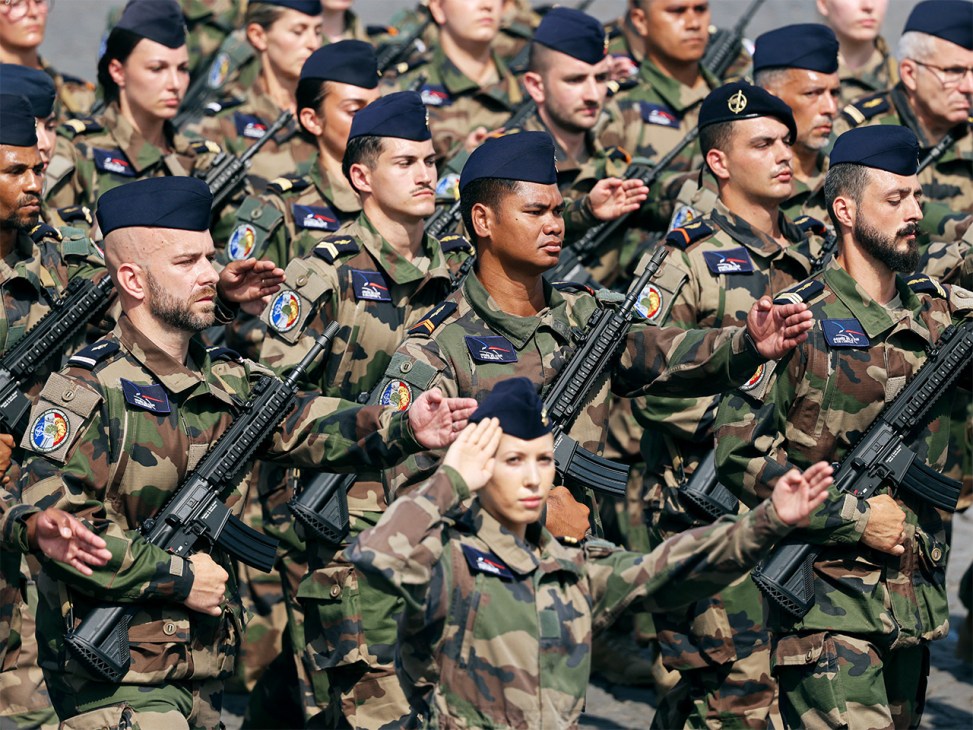
A bit of a reach – but there is a point here. A uniform is about as fundamental as military kit gets. It therefore seems unwise to allow its supply to be even slightly dependent on a country that yours could conceivably end up fighting.
It’s not as though the UK is incapable of making this stuff. AW Hainsworth of West Yorkshire has been outfitting British soldiers since before the Charge of the Light Brigade (and has done similar for the Danish, Swedish and Australian militaries). Firmin & Sons of Birmingham has been at it even longer: founded in 1655 and now part of Firmin House, it’s one of the 10 oldest continuously extant British companies of any kind and currently supplies ceremonial uniforms and battlefield kit to 34 other countries. A UK government that’s serious about encouraging homegrown manufacturing – as the administration of the current prime minister, Andy Burnham, claims to be – would be backing a win-win proposition by directing this business towards such suppliers.
Some of the UK’s Nato allies have set an example. France’s uniforms are made by French manufacturer Paul Boyé, which in 2024 supplanted the also French Marck & Balsan. The Bundeswehr is substantially dressed by German company Hexonia. Canada bet big on local produce in 2022, awarding a 20-year contract for combat clothes, kit and footwear to Logistik Unicorp of Quebec – a CA$3.7bn (€2.3bn) investment that created jobs as well as bolstering homeland security.
But there are (or so we might hope) concerns beyond the strategic and commercial. Conditions in Chinese clothing factories are rarely praised as examples of enlightened labour standards; countries engaged in defending Western values should not be subsidising those who undercut them. And though the people who wear military uniform are the personification of hard power, when we buy those garments from elsewhere, an important soft-power opportunity is squandered. A soldier, especially when serving overseas, is also an ambassador. In every respect, their country should do its utmost to make them look good.
Andrew Mueller hosts Monocle Radio’s ‘The Monocle Daily’ and ‘The Foreign Desk’.
Burgundy uncorked: The hotels, restaurants and coffee shops proving there’s more to the region than wine
It was the slow pace of life among the vineyards that kept drawing Norway-born Trond Fredheim back to Burgundy. Today the former airline professional co-owns an inn there called Maison Le Chevreuil. “Some friends and I had a tradition of meeting here for Saturday lunch,” he tells Monocle as we sit on the sweeping back terrace that he brought back into use. Other Burgundians have memories of first communions and weddings toasted here. So, when the building came up for sale in 2022, Fredheim and his three partners – two Danes and a German – bought it to give this local institution a new lease of life.
They commissioned Beaune-based architects Aubin Prost and Johanna Leserre, giving them a simple brief: everything from the materials to the craftspeople had to be from Burgundy. The 10-key space “celebrates the local surroundings”, says Leserre. “We didn’t really choose a colour palette. It chose us.” She rests against a smoked-oak cupboard door, its shape a reference to the region’s vine stock. Elsewhere, there are exposed limestone walls, clay-plastered ceilings and, in the bathrooms, burgundy-hued rounded shower cabins. Across Burgundy, there’s plenty of impetus to free it from its stuck-in-the-past image – that of heavy-curtained suites and fusty restaurants, set deep in ancient caves à vins. Those were precisely what Alice and Jérôme Tourbier found when they bought Château de Gilly in 2022, after searching for the right location for more than 20 years. It’s the third outpost of Les Sources, the hospitality arm of the family’s Caudalie cosmetics business, which uses ingredients from the winemaking process.


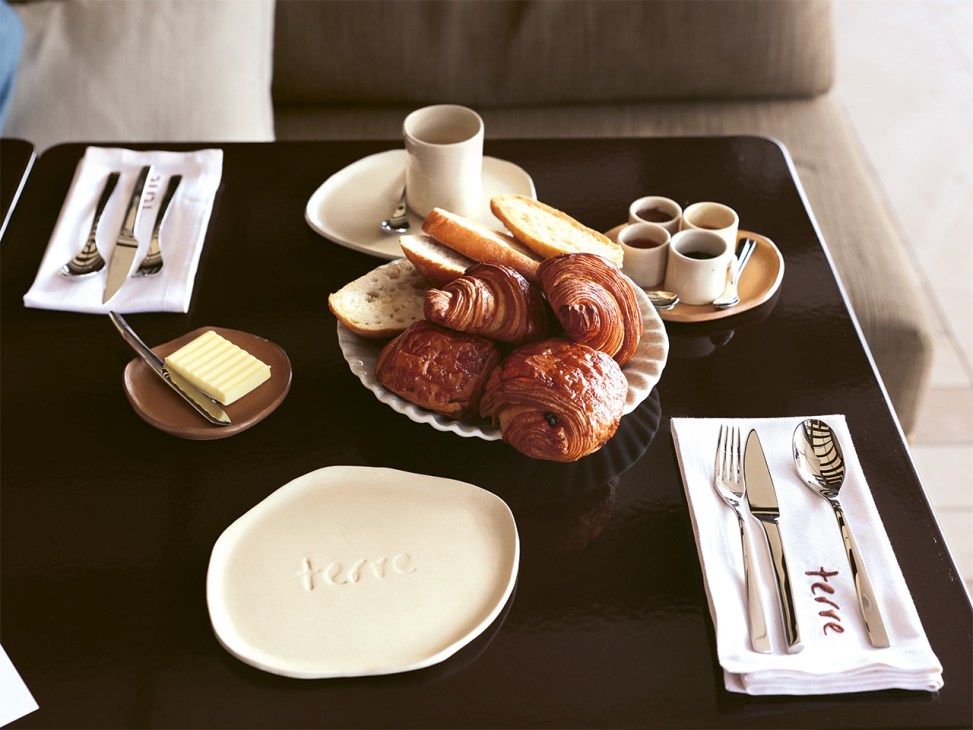
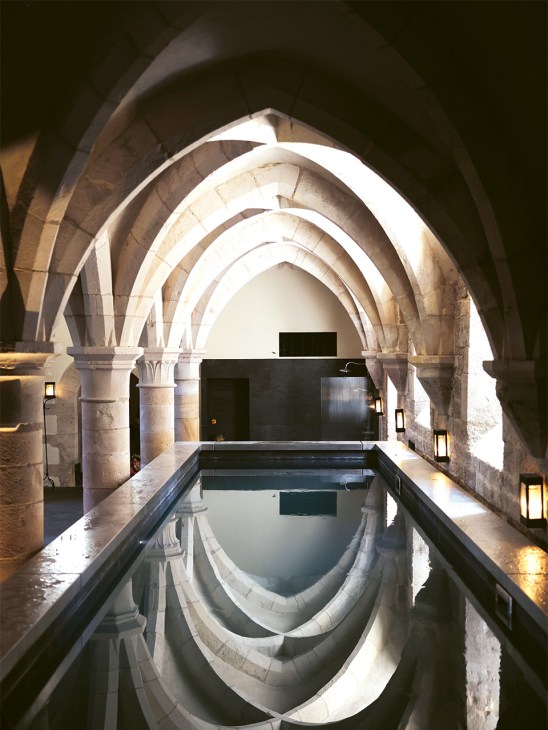
The centrepiece of what is now known as Les Sources de Vougeot – a nod to the nearby Clos de Vougeot – is the indoor pool that the Tourbiers moved to a vaulted cellar where Cistercian monks once kept their wines cool. Those familiar with Nice’s Hôtel du Couvent might recognise the imprint of in-demand Parisian design firm Atelier Saint-Lazare. Throughout the property, you’ll find stone fireplaces and original hand-painted beams, as well as wine books and vintage posters for local viticultural festivals.
Part of this region’s appeal lies in its abundance of old châteaux. What it lacks in coolness, it has always had in a sense of place. “Few areas bring together an exceptional architectural heritage, landscapes, gastronomy and fine wines like Burgundy,” says Frédéric Biousse, co-founder of Fontenille Collection, a hotel group that opened its 13th maison this summer with the Meursault-based Château de Cîteaux. “We wanted a presence here.” The same goes for Singapore’s COMO Group, Château la Commaraine and Bellevigne, which all recently joined the lively hotel scene here.
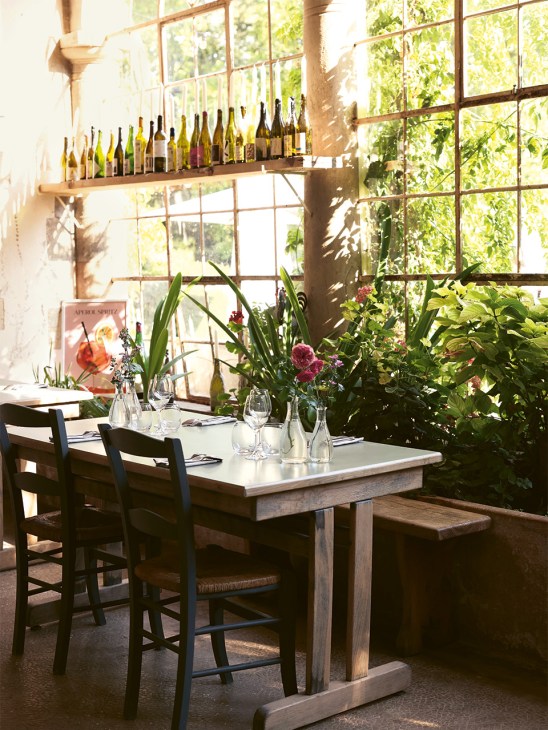
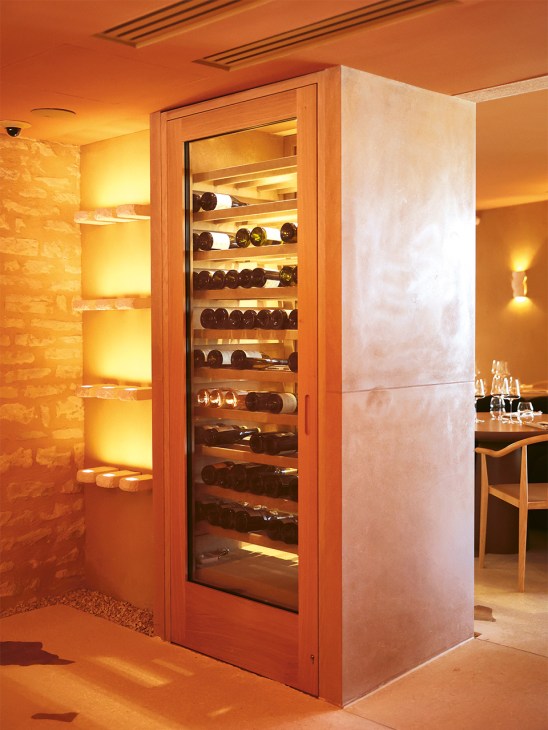
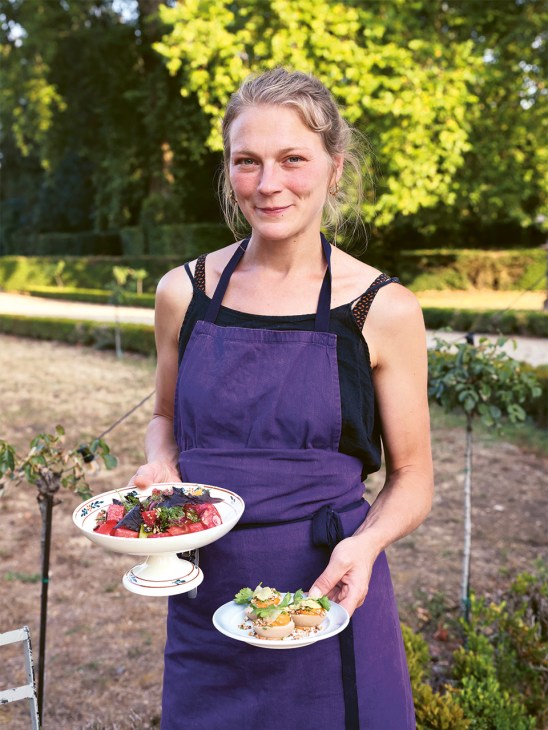
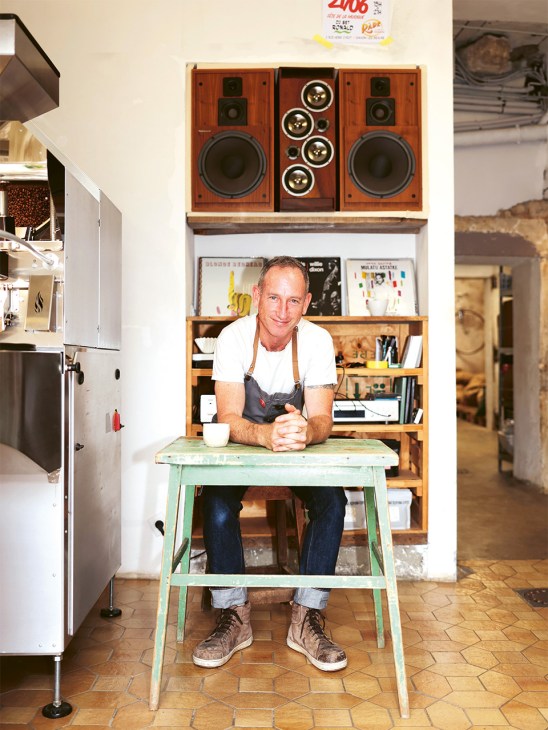
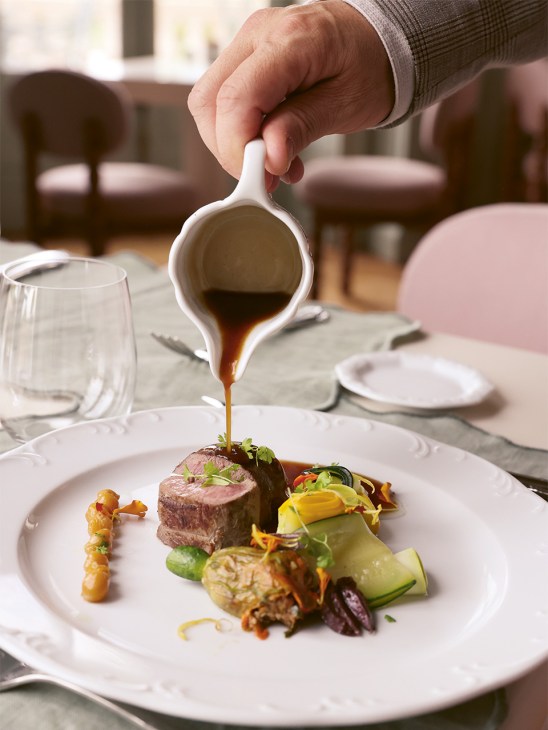
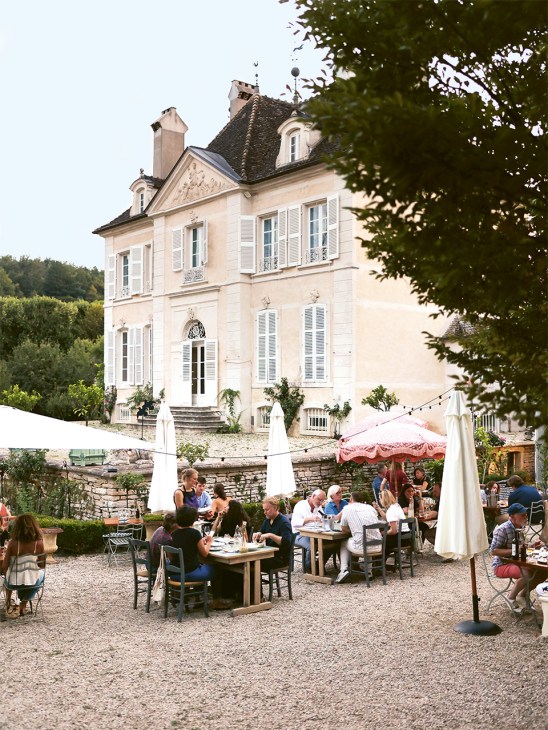
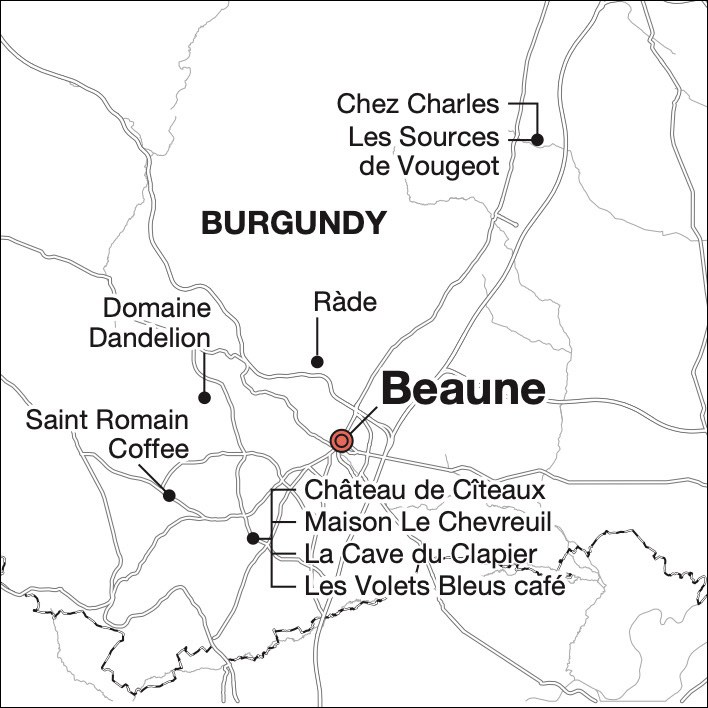
It’s not just accommodation that’s changing – there’s also an appetite for new dining options. Formerly Paris-based chef and sommelier couple Romain Tischenko and Ioulia Gourieva set up a pop-up restaurant, as an extension of their catering business, in Savigny-lès-Beaune after falling for the region while helping a winemaker friend with a harvest. Monocle buys a sourdough loaf at boulangerie Chez Charles on Gilly-lès-Cîteaux’s square, which has been revived by three entrepreneurs – a baker, a café owner and a wine merchant. Then we’re off for an allongé at micro-roastery Saint Romain Coffee, where US-born Matt McClune tells us that the region’s love of wine lends itself to an appreciation of his light-roasted Ethiopian beans.
That appreciation from locals is only part of the story. Everyone we meet says that Burgundy’s success has been helped by a boom in international visitors, as well as French holidaymakers. Many new businesses are paying their respects to the region’s past but those such as Maison Le Chevreuil’s Fredheim and the team behind Australian-French winery Domaine Dandelion are bringing fresh ideas from elsewhere too. McClune sums it up as we finish our coffee. “Kids from abroad see Burgundy’s current energy and want to stay,” he says.
Where to stay and eat in Burgundy: the best hotels and restaurants
Maison Le Chevreuil
Meursault
After several years of careful, painstaking and artisan-led renovation, the inn opened again in September 2026.
lechevreuil.com
Les Sources de Vougeot
Gilly-lès-Cîteaux
Les Sources already has hotels in Bordeaux and the Loire Valley. So another wine region felt like a fitting choice for the brand’s third hotel (a fourth is planned for Alsace in 2027).
sources-hotels.com
Château de Cîteaux
Meursault
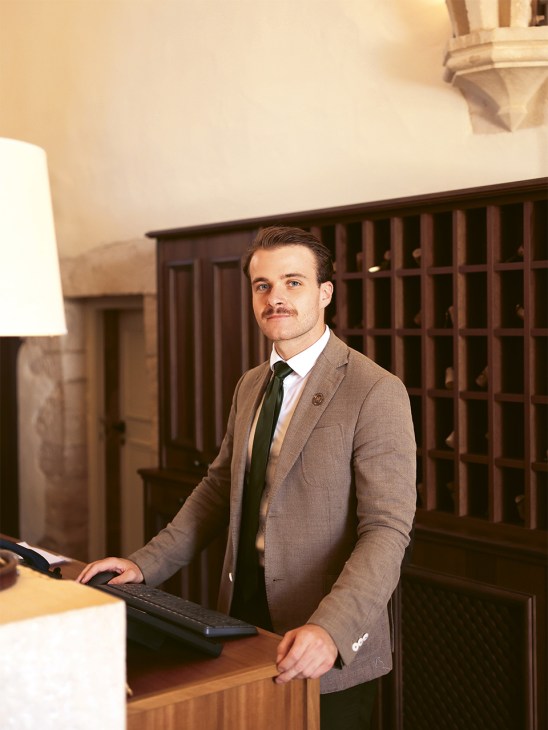
Many hotels in the region are housed in châteaux but this blue-shuttered example is set apart by its grand Napoleon III-style interiors. The bookshelves along the wooden staircase include about 5,000 volumes from publishing house Gallimard.
chateaudeciteaux.fontenille-collection.com
Ràde
Savigny-les-Beaune
Romain Tischenko made a name for himself with Paris bistro Le Galopin. After moving to Beaune with his sommelier partner in 2021, he launched Ràde La Terrasse, a summer restaurant in the gardens of Domaine de Chandon de Briailles estate.
restaurantademeure.com
Saint Romain Coffee
Saint-Romain
Matt McClune’s pint-sized roastery is open to guests on Mondays and Tuesdays only. Take a seat at the sole table and watch McClune roasting beans from the Ethiopian highlands.
saintromaincoffee.com
Domaine Dandelion
Mavilly-Mandelot
Grape surpluses aren’t an issue in Burgundy and it’s as much home to Old-World domaines as it is to a new generation of natural winemakers, such as Domaine Dandelion.
5 Place de l’Église, 21190 Mavilly-Mandelot
As the country rethinks its defence strategy, the Swedish Army Band marches to a new tune
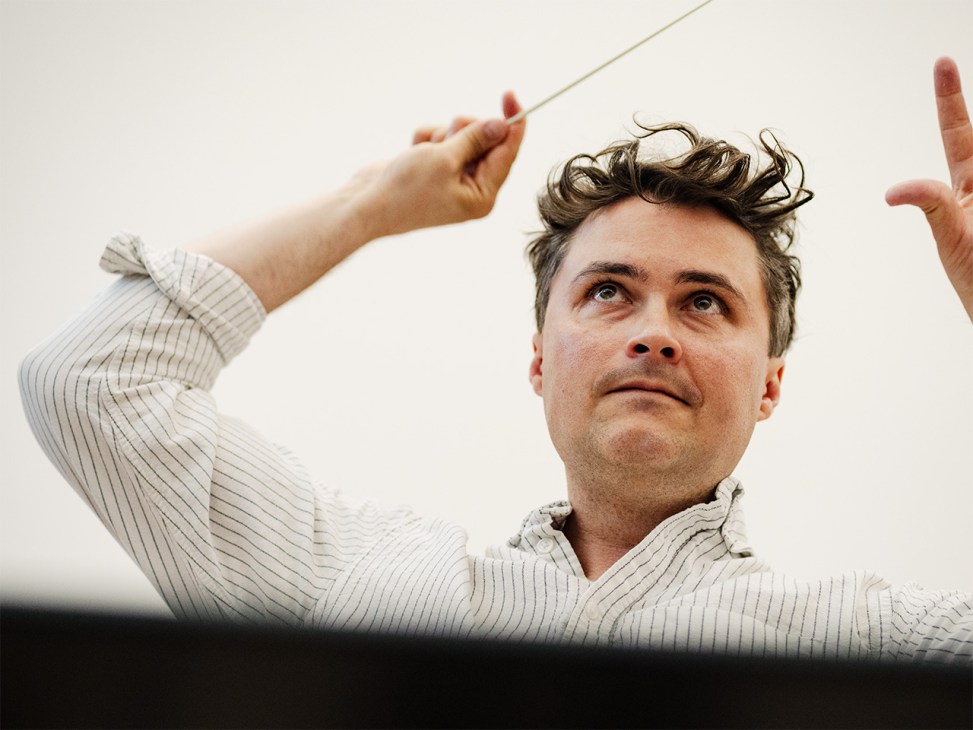
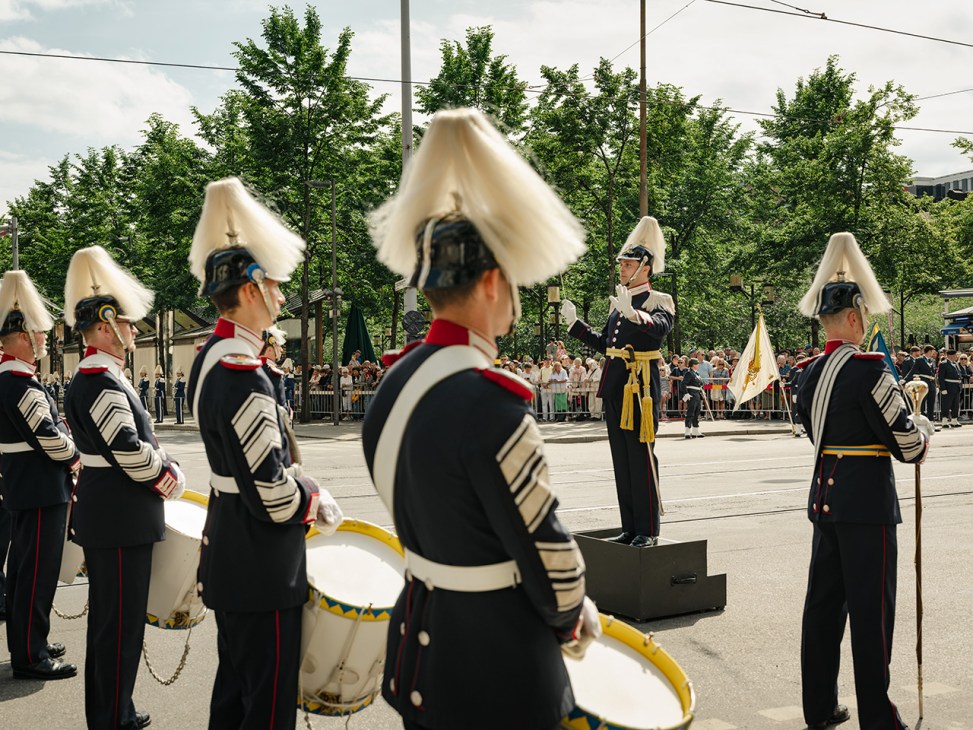
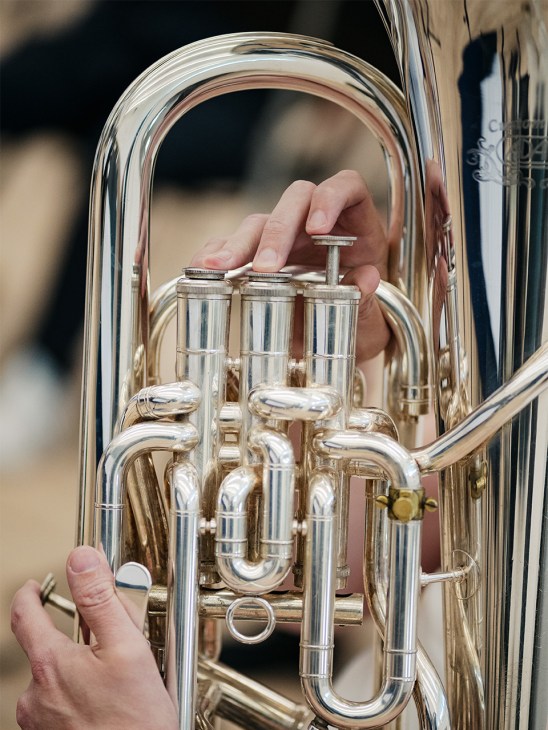
Most people recognise that pregnant pause as an orchestra readies itself to begin playing. But how many have then heard a 22-piece brass section toot out the opening notes of “Dancing Queen”? Monocle is on an industrial estate on the outskirts of Stockholm, watching the Swedish Army Band (SAB) conduct its final rehearsal before the next day’s Guldbröllop celebrations to mark the 50th wedding anniversary of King Carl XVI Gustaf and Queen Silvia.
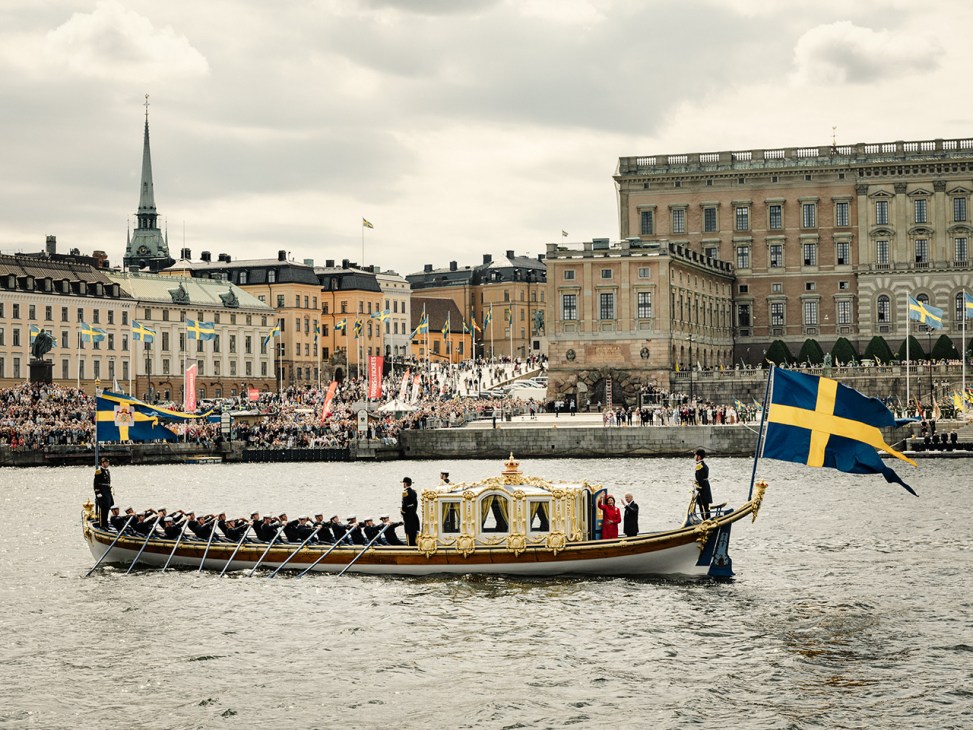
The festivities, which are the largest of three events to mark this jubilee year, will include a flotilla around Stockholm Harbour, followed by a procession through the capital’s streets, for which the SAB will provide the main soundtrack. Abba’s 1976 mega-hit is on the setlist for good reason: aside from the fact that it’s the most famous song by Sweden’s biggest band, it was played live to the royal couple on the eve of their wedding. Symbolism matters, especially on days like tomorrow, and Abba encapsulates an image of modern Sweden as joyous, multilingual and ahead of the times. Though these characteristics still largely apply, the past few years have transformed this country, its monarchy and its armed forces – as well as their marching band.
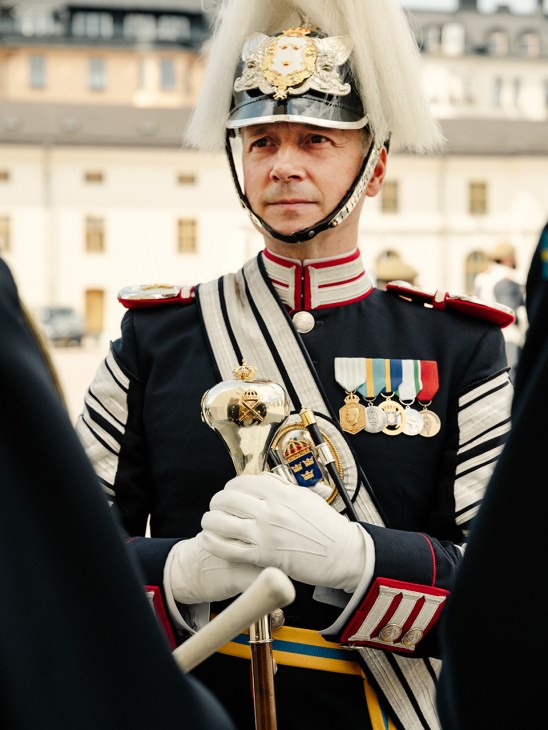
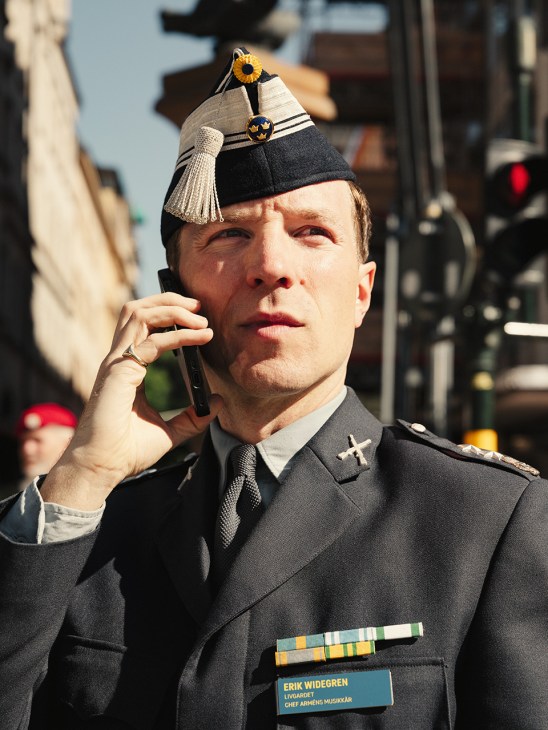
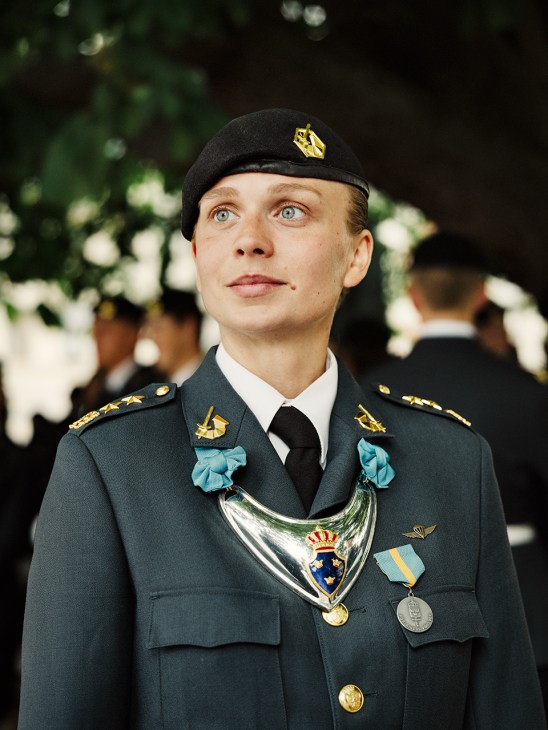
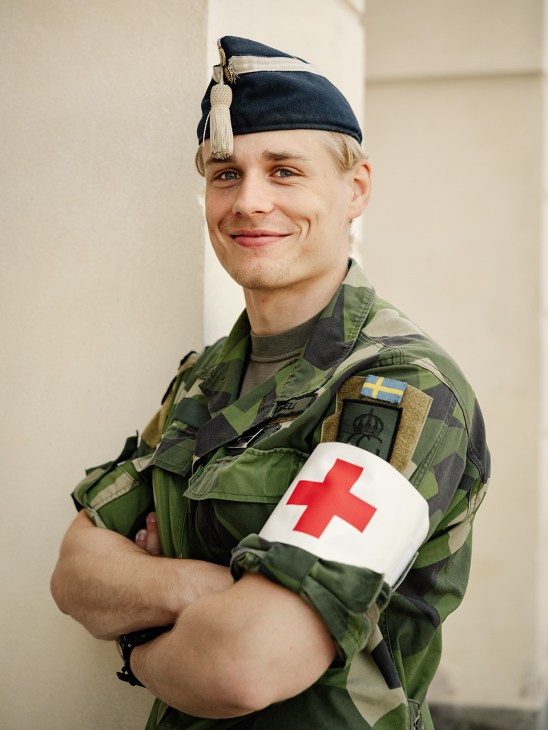
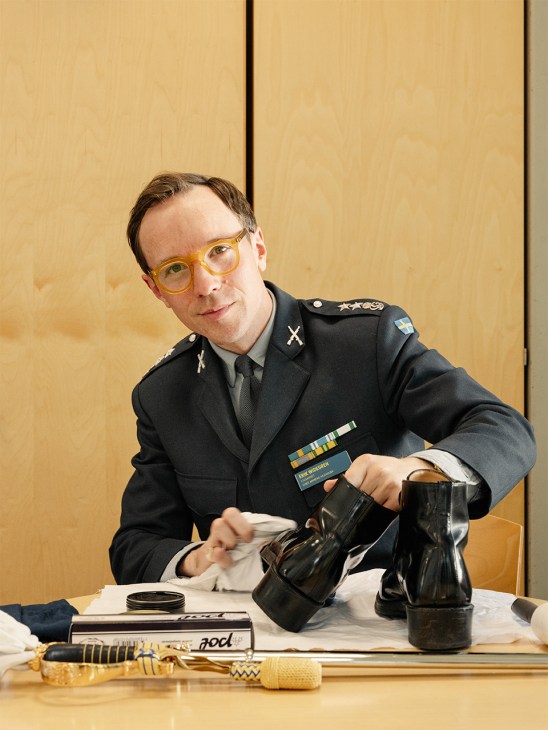
In 2024, more than 200 years since its last major war, Sweden joined Nato, ending a policy of official neutrality and committing itself to the defence of 31 other countries. As well as gaining membership of the world’s largest military alliance, the country has embarked on a huge rearmament programme in a rush to reverse decades of budget cuts and attract a new generation to its ranks. Lieutenant Erik Widegren, the SAB’s 39-year-old commander, is emblematic of this push. We meet Widegren in his office after rehearsals. Now the youngest commander in the band’s history, Widegren first became aware of the SAB at the age of 14, when it played at a fair in his hometown in southern Sweden. “I was drawn to the structure, the order, the level of commitment and the precision in everything that it did,” he says.
After finishing secondary school in 2006, he couldn’t decide whether to enlist or go to university. It was an inopportune time for a young Swede to be considering the former. “I talked to the army recruiters and they said, ‘You could have a good career with us but, at the moment, it looks like we might not have a job for you when you’re done studying,’” he says. Sweden’s 2004 Defence Act had codified a pivot away from territorial defence towards a military doctrine focused on peacekeeping and international crisis management. During the next decade or so, the country reduced its armed forces’ headcount by about 50 per cent, sold off barracks, bases and materiel, and abolished national service. So, Widegren accepted the offer of a place at the Stockholm School of Economics. After three years studying for a bachelor’s degree in retail management, he took up a position at US food giant Mondelez. Several promotions followed and, after a two-year stint in London, he found himself back in Stockholm contemplating his future. “I was talking to my wife and she asked me, ‘Didn’t you say that you wanted to be a military officer? What happened to that?’” he says. This was in 2019, when Sweden was beginning to reverse its military cutbacks, in part due to the increasing threat from Russia, which in 2014 had occupied Crimea. “A friend told me that you could become an army officer in just one year if you had a degree, because they were expanding so rapidly,” says Widegren. Most Swedish employers allow staff to take a year off to study, so he underwent officer training almost 20 years after he had first considered it.
It was a tough year but, at the end of it, Widegren decided to commit to the army, taking up a commission as a cadet in the Swedish Air Force’s Helicopter Wing. “I was 35 and had just taken a 70 per cent salary cut,” he says. A few months later, the command of the SAB – the unit that had so moved him as a 14-year-old – became vacant. “I wasn’t going to apply,” he says. “I had no command experience and my prospects didn’t look great.” The band’s commander usually has the rank of major, which typically requires a minimum of 10 years in the army. “But it was made clear to me that they would consider me for the role,” says Widegren. “They wanted leadership and people with outside experience who could change the culture.” He assumed command in January 2025.
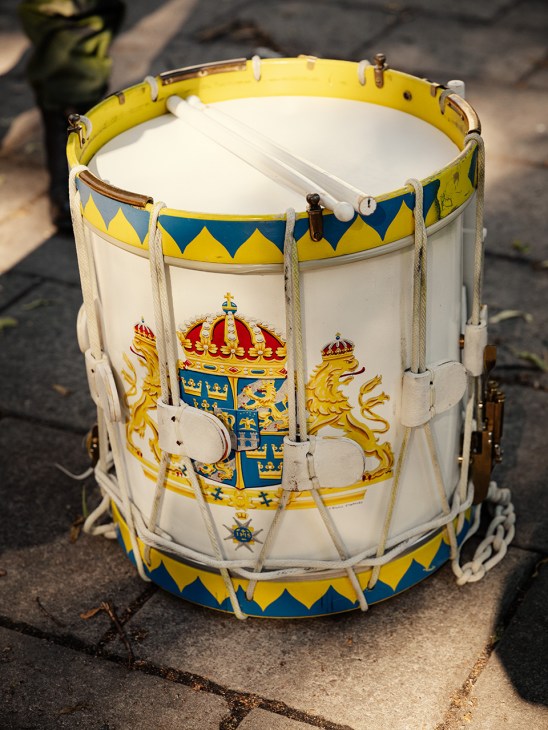
The SAB traces its modern history back to 1982, when it was instituted as a conscript band, mostly for Swedes undertaking national service. It was professionalised in 2012, when the country abolished conscription. Today there are three professional bands in the Swedish Armed Forces (one for each branch) and 25 Home Guard volunteer outfits. The SAB employs 61 full-time musicians who, combined, play about 300 concerts a year. Recruitment is competitive. “We had an opening for a percussionist and about 26 people auditioned over two days,” says Widegren. “We chose one.” Tomas Lindberg is a 47-year-old percussionist who joined in 2011. “The biggest challenge for me was to change my grip on the snare,” says the drummer over lunch in the canteen. “You’re standing and moving, so it’s not straight – it’s at an angle.” Like many of his colleagues, Lindberg was a jobbing musician on the Stockholm orchestra scene before deciding to march to a more regular beat. “This is probably the most dependable job that you can have in orchestral music,” says the band’s 37-year-old musical director, Major Emil Eliasson.
The move to a fully professionalised troupe mirrored a shift in the band’s role. Before 2012, members would provide back-up combat support or medical assistance if required. Now they’re fully focused on performing. Flautist Caroline Walldén was sent to Afghanistan in 2013 to entertain the Swedish garrison in Mazar-e-Sharif. “We played typical Swedish music, which actually made the soldiers feel a bit homesick,” she says. The Ukraine war has affected not only Europe’s battlefield tactics but also its military bands. “After the full-scale invasion, the Ukrainians went from five professional bands to almost 60, just to be able to cover all of the ceremonies and funerals, and to boost morale,” says Widegren.
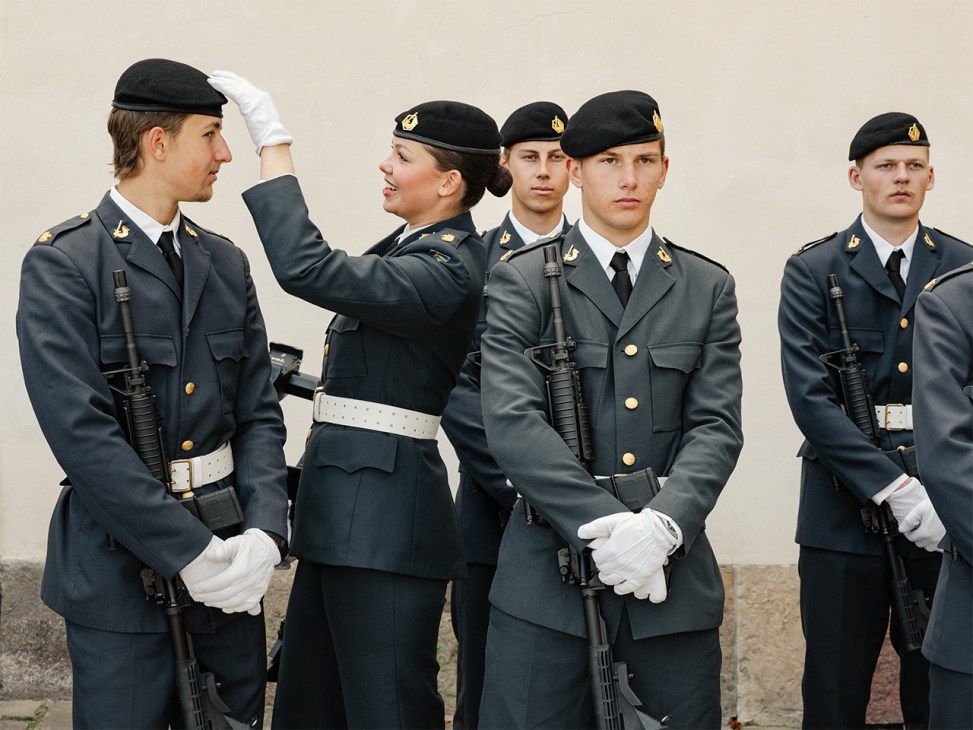
Between 2017 and 2018, Swedish defence spending fell to 1 per cent of GDP, its lowest since the Cold War. This year, it’s budgeted at about 2.8 per cent, a figure that the government has promised will rise to 3.5 per cent by 2030 to meet Nato commitments. More recruits are also being sought. A recent advert aimed at young women – the first for the Swedish army without soldiers, weapons or battlefields – shows one friend giving another a piggyback across a city bridge. “Marching with a heavy bag…” flashes an on-screen message. “You have what it takes.” Many of the troops lining up in the courtyard of the National Army Museum in Stockholm are conscripts. National service was reinstated in 2017 and Sweden’s Ministry of Defence is now targeting annual enlistment of about 10,000 conscripts by 2030, which would almost double the current intake. Nearby, patrons of the museum’s café are enjoying brunch in the sun. The contrast between the prosperous-looking, relaxed diners and the soldiers standing stiffly in gunmetal-grey dress uniforms is stark – but it also feels natural.
Because of its tradition of conscription, Sweden has always had a proportionately large army and the gap between it and civil society is not as great as it is in, for example, the UK, which has a centuries-old professional force. What has changed is an increased awareness of what Swedes are defending, at a time when the country has been engaged in some soul-searching. Since the late 2010s, Sweden has seen a surge in violent crime, mostly in poorer, immigrant communities. It peaked in 2022 with 391 shootings and 62 gun-related deaths – 2.5 times the EU average. A country that had for many years served as a role model for Europe and the world, particularly with its liberal stance on immigration, suddenly seemed like a basket case – a perception that was compounded by the electoral success of the far-right Sweden Democrats.
In some respects, Russia’s external threat has tempered national disquiet. “The army is marketing itself as defending freedom,” says Widegren. “That’s why we exist and they’re communicating that – you will see it on billboards all over town.” The defenders of that freedom have received a popularity boost too. In 2023 the Swedish Armed Forces were the top-ranked public agency in the country’s annual Confidence Barometer, with trust at an all-time high. The SOM Institute, a research organisation based at the University of Gothenburg, has found that 65 per cent of Swedes want to keep the monarchy, versus 11 per cent who favour an elected president. This might surprise those who see the country as inherently left-wing but the king and queen also seem to have benefited from geopolitical instability and political polarisation. “The king and the royal family are getting cool again,” says Widegren. “We’re so liberal in one way but we’re kind of coming back to those traditions and it’s unifying.” Like many of his European counterparts, King Carl XVI Gustaf has endured moments of scandal – indeed, the media, including Monocle, have had invitations to the post-parade palace party retracted thanks to the upcoming release of TV4’s Monarki, Sweden’s answer to The Crown, which dramatises several of the king’s alleged affairs. Yet his approval ratings are at a record high, while his heir, Crown Princess Victoria, was the most popular public figure in the SOM Institute’s 2023 poll.
June’s ceremony is typically Swedish – orderly and low-key enough to avoid accusations of jingoism. After marching through central Stockholm, the SAB positions itself at a corner of Kungsträdgården. Here, it begins a 13-song set of traditional and modern Swedish tunes. As the king and queen’s carriage comes into view, the band launches into “Dancing Queen”. The gilded duo glide past with a white-gloved wave before disappearing towards the harbour. After the crowd’s whooping dies down, the band disperses for the beginning of its summer break. When it returns to full-time work in August, it will find itself once again beating the drums of war.
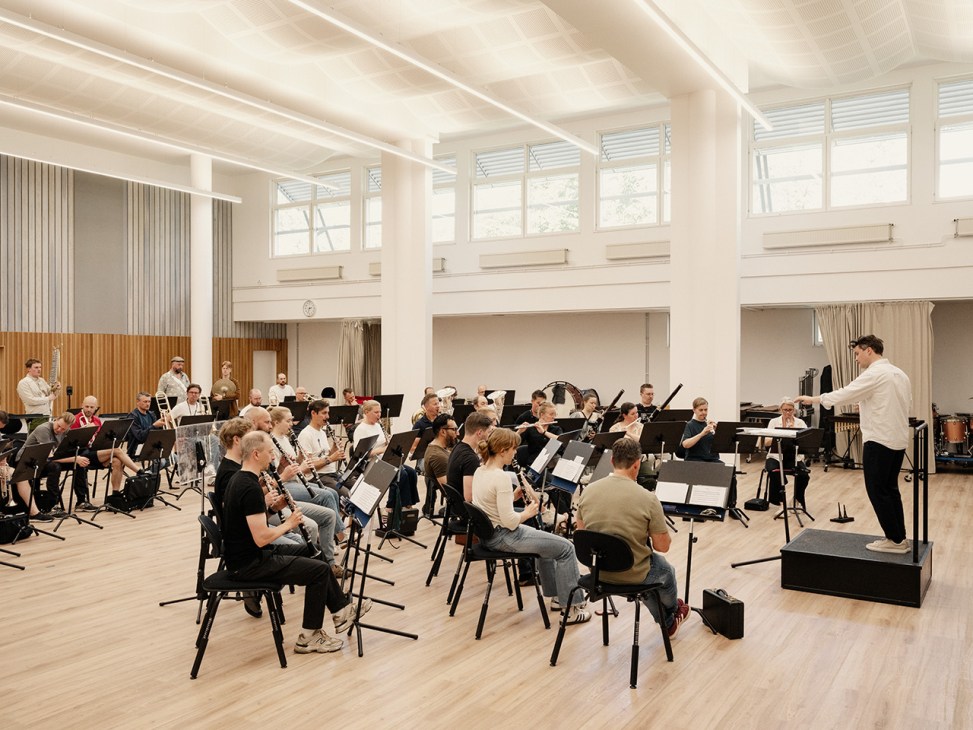
Swedish Army Band fact file
1982: The year that the band was founded.
2012: The year that it became fully professional.
61: The number of full-time musicians in the band (seven of whom are in the leadership team).
Most-played song: “Under Blågul Fana” (“Under the Blue-Yellow Flag”) is the band’s honour march.
Small business, big impact: Ten standout companies helping to drive Poland’s economic growth
Poland’s economic ascent hasn’t made many headlines but what slow-growing Western nation wouldn’t envy the country’s progress over 28 consecutive years? Perhaps it’s time for the world to look closer at what’s powering the Polish boom. First, the nation has maintained low costs despite its increasingly highly skilled and educated workforce. And it has kept alive manufacturing and a sense of entrepreneurialism, even as larger neighbours’ economies stumbled. But the story of Poland’s success can’t be captured by a line on a balance sheet – it also encompasses smaller, lesser-known brands that are making everything from drones and fire engines to bikes and clothing. Here is our pick of some of the best.
1.
Solaris
Urban transport
Solaris rises to the challenge of sharing a name with a novel by Poland’s best-known sci-fi writer, Stanislaw Lem. Launched in a small town near Poznan, the firm currently controls 11 per cent of the European electric-bus market. Its sturdy, in-demand hydrogen-powered vehicles and trolleybuses make it a one-stop shop for everything urban, public and green in transportation. Lem, a prophet of clean technologies, might scarcely have believed the tale.
solarisbus.com


Ding, ding: Residents in dozens of European cities might recognise the Urbino 12 electric model by Solaris. As well as a new longer range, the latest models can accommodate 41 seated passengers or 100 including standing.
2.
Kaisai
Air conditioning
Despite the deceptively Japanese-sounding name, Kaisai is a Polish brand addressing a global problem: heatwaves. Poland might not be known for its volatile weather but even its temperate climate hasn’t escaped the consequences of global warming. Kaisai is here to help, providing high-quality air conditioning and ventilation. A little over 20 per cent of Polish households have any air-con, so demand for Kaisai’s products is set to grow. It already provides much needed relief in more than 30 countries across Europe.
kaisai.com
3.
Wiss
Emergency vehicles
Growing up next to a big brand can bring benefits. One example is Wiss, an acronym of Wawrzaszek Inzynieria Samochodow Specjalnych. Founded by Piotr Wawrzaszek in Bielsko-Biala in 1988, it emerged as part of the automotive ecosystem in a city that was home to Poland’s largest Fiat factory at the time. Today, Wiss specialises in emergency vehicles, fire engines and special-purpose automotive projects. Though Fiat is no longer in Bielsko-Biala, Wiss is thriving – it exports its products to more than 50 countries in Europe, Asia and Central America.
wiss.com.pl
4.
The Lines
Clothing
The Lines’ Polish-designed activewear collection provides a fit and functionality that could conceivably be worn beyond the gym. Many brands claim to have dual use for sport and less informal activities – The Lines gets closer than most with its elegant designs and modest covered-up tops. Founded in 2024, it’s a new addition to the Polish retail scene but it’s a brand that seems set to flourish as Warsaw’s yoga and Pilates studios continue to grow in popularity.
thelines.pl
5.
Your Kaya, Hagi & Mokosh
Cosmetics
For years, shoppers in Poland’s beauty shops had limited choice, mostly of imported brands. Today, the scene is overflowing with new ideas, many of which are of Polish provenance. Your Kaya expanded from eco-friendly hygiene products into a full-grown cosmetics empire. Hagi, in turn, found its calling with a range of more than 150 skincare products – especially for children – and soy candles. And Mokosh, a fresh face on the market, is already competing with major brands.
yourkaya.pl; hagi.com.pl; mokosh.pl
6.
WB Group
Defence
As the largest nation on Nato’s eastern flank, Poland remains in Russia’s crosshairs and is wary of sabotage and hybrid threats. To strengthen its deterrence, it has received a total of €44bn in low-interest loans from the European Union’s Security Action for Europe programme. Of this, €2.75bn found its way to WB Group. Poland’s leading defence firm employs more than 2,500 people, half of whom are engineers working in R&D. The firm’s FlyEye reconnaissance drones and its Topaz integrated combat management system are world-class. In 2024, WB’s revenue grew more than 100 per cent year-on-year.
wbgroup.pl
7.
366 Concept
Furniture design
The years spent under the communist boot were rather bleak and grey but Polish furniture design went through something of a golden age during that time. A prime example of the era’s output is the 366 Armchair, designed in 1962 by Jozef Chierowski. It was simple by necessity – easy to assemble and cheap to produce due to the kinks of the communist system that had to be worked around. Design brand 366 Concept is now bringing it back to life, together with other adventurous pieces from this period. And with about 80 per cent of its sales being outside Poland (and a presence in some 30 countries), this firm is now sitting rather pretty.
366concept.com
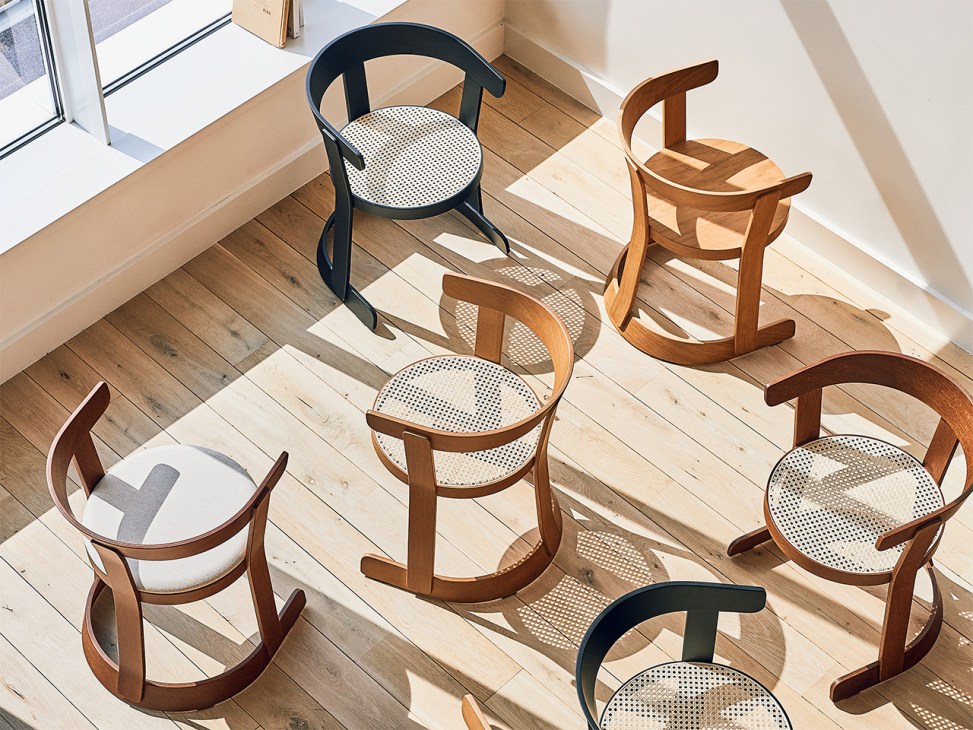
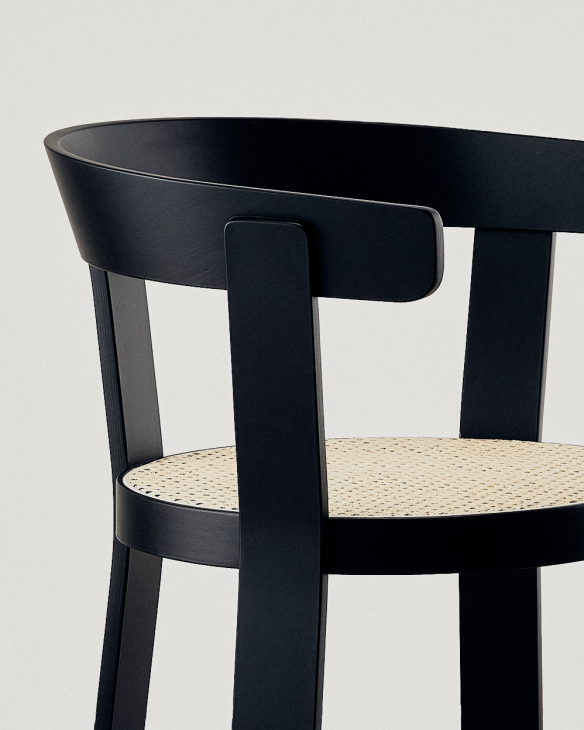
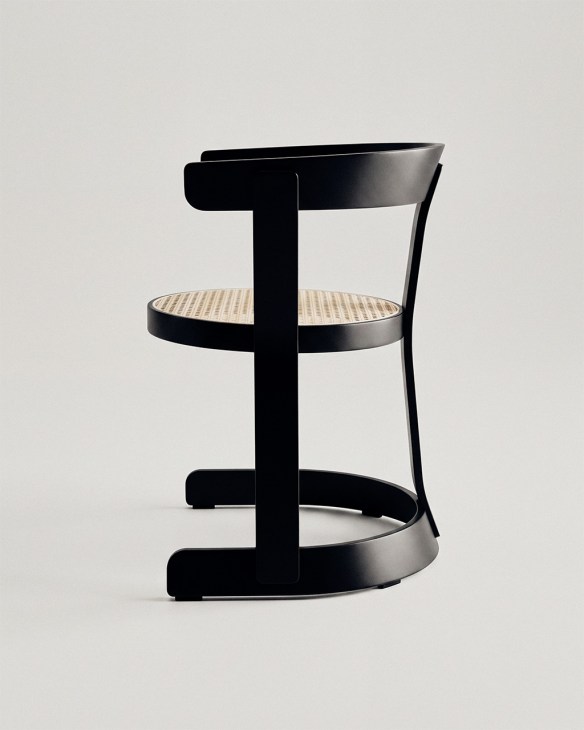
The past never sits still: These Teresa Kruszewska-designed 1960s Klepsydra children’s chairs are all grown up and have been reissued from September by 366 Concept.
8.
Creotech Instruments
Space technology
At times, Poland’s ambitions are literally stratospheric. Creotech Instruments is the country’s largest satellite manufacturer and works with the European Space Agency. It’s currently building Camila, a €52m system of Earth-observation satellites that are operated exclusively by Poland. A defence-spending bonanza has helped too – its €130m MikroGlob military satellites programme. The firm is now aiming for a new satellite factory by 2029 and quadrupling production capacity within three years. After that, the sky is the limit.
creotech.pl


9.
InPost
Delivery
Logistics firm InPost’s new initiative seizes upon a service that’s already known in Asia yet sadly lacking in Europe – “hands-free” travel that whisks your suitcases to your final destination to avoid the need to lug them onto your flight. Currently, it ferries up to 25kg of baggage to any one of 64,680 lockers across Europe. To maximise the size-to-space ratio, InPost also sells custom-made luggage designed to fit into its most capacious cubbyholes, priced at €75 for a suitcase. The only wrinkle that needs ironing out is that delivery takes up to five working days.
inpost.pl
10.
Rondo
Bicycles
During nearly a decade in the business, Rondo has established its reputation as one of the world’s best bicycle makers. Launched in 2017 in Gdansk on the Polish coast, the brand makes the most of its surrounding geography. Co-founders Szymon Kobylinski and his wife, Anna, are rooted in the windsurfing community and wanted their designs to embrace the lightness of the wind, as well as the endurance necessary to cross the gravel roads of Poland’s north. The result is Ruut, the world’s premier gravel bike, plus some rather dashing road bikes.
rondo.cc
For more bright ideas and firms, pick up our dedicated business magazine, ‘The Entrepreneurs’, which is on newsstands from 1 October. Alternatively, listen to our weekly radio show of the same name here on monocle.com or wherever you get your podcasts.
The best of October’s cultural offerings – from bright, bold beats to art showcases to visit
Books
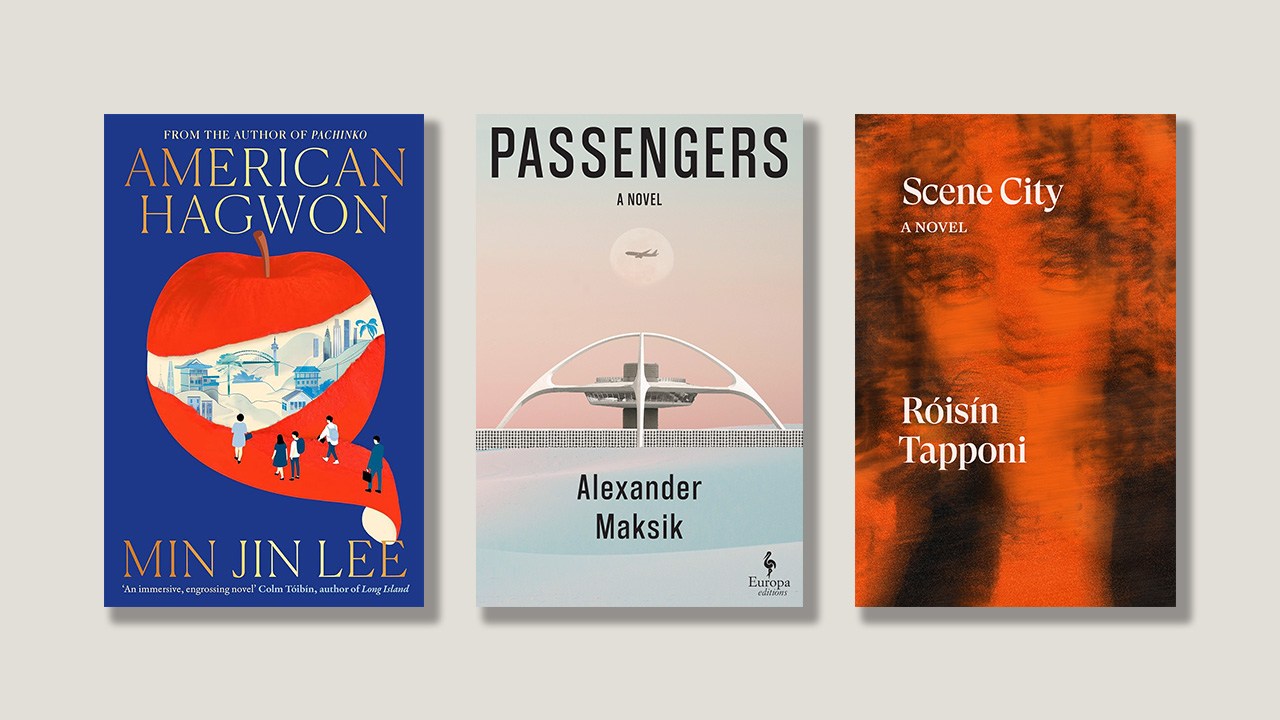
‘American Hagwon’
Min Jin Lee
The third instalment in Min Jin Lee’s Korean-diaspora quartet follows the Koh family across South Korea, Australia and the United States. Tracing decades of migration, financial upheaval and sacrifice, at its heart is a moving reflection on family, ambition and duty, set against the pressure of Korea’s hagwon private-tutoring system.
‘American Hagwon’ is published on 29 September.
‘Passengers’
Alexander Maksik
American novelist Alexander Maksik follows 2022’s The Long Corner with this tale of a father and his adult daughter delayed at LAX on a trip to Paris, the city of his youth. Tensions wax and wane, along with a creeping dread that something has gone wrong. Comparisons with Cormac McCarthy’s The Road will follow but Maksik’s work is laced with humour and arguably more subtle.
‘Passengers’ is published on 13 October.
‘Scene City’
Roísin Tapponi
Fancy being a fly on the walls of the art world? Then this is the book for you. It might read a bit like notes made on a phone but the writing scintillates. It’s a novel about losing the plot and finding a vibe – and those vibes are good.
‘Scene City’ is published on 13 October.
Music
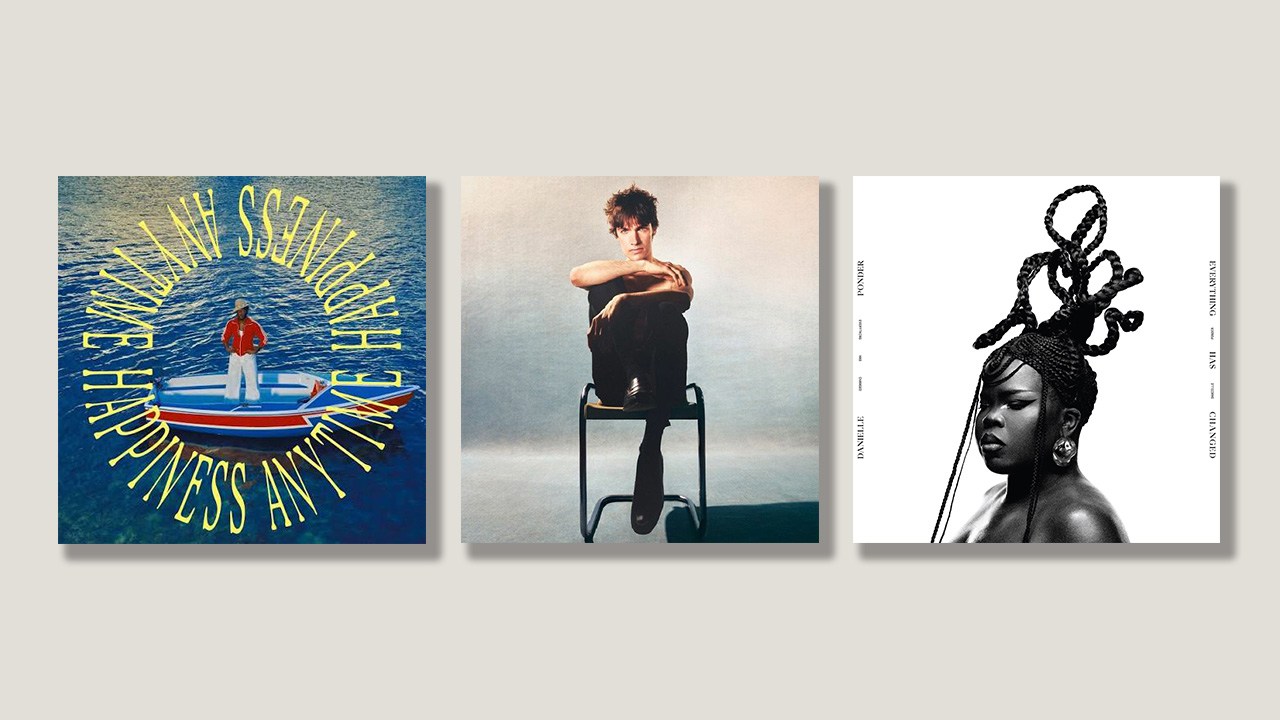
‘Happiness Anytime’
Leon Bridges
US singer-songwriter Leon Bridges worked with J Lloyd-Watson and Lydia Kitto from UK band Jungle on his fifth studio album. The results are bright, bold and full of cosmic beats and easy-listening rhythms. Highlights include the pop-funk of “Light the Way” and the suave “All Day, All Night”.
‘Happiness Anytime’ is released on 25 September.
‘Ave de Maere’
Pierre de Maere
Belgian pop is having a moment and Pierre de Maere is among its shiniest stars. His second full-length features one of the best singles of the year, Monocle Radio favourite “Je Pense à Vous”. Elsewhere, the poignant “J’aurais Fini Par te Plaire” shows off de Maere’s crystalline vocals. See him and his dance moves in person on a European tour that starts in November.
‘Ave de Maere’ is released on 25 September.
‘Everything Has Changed’
Danielle Ponder
Danielle Ponder was a lawyer before signing her first record deal in 2022 at the age of 40. On her second album, she gives powerful voice to ideas of artistic freedom and the black diaspora in “Power”, while the bluesy ballad “God of You” is another standout track.
‘Everything Has Changed’ is released on 9 October.
Film
‘Remake’
Ross McElwee
Decades on from Sundance-winning documentary Sherman’s March and years after the death of his son Adrian, filmmaker Ross McElwee is reflective. “I look at this footage not only to remind myself you were alive,” McElwee narrates over clips of his son, “but to convince myself that you’re gone.” Remake is a meditation on grief, memory and unreliable narration that defies easy categorisation – but it’s among the most astonishing documentaries of this century.
‘Remake’ is released on 25 September.
‘Digger’
Alejandro González Iñárritu
Oscar-winning director and unabashed maximalist Alejandro González Iñárritu returns to English-language filmmaking with his biggest star and biggest stakes yet. Tom Cruise’s Digger Rockwell is a boorish oil billionaire who has carelessly kick-started the apocalypse with his plundering of Earth, unencumbered by morality or any intervention from the dictatorial US president (John Goodman). With only himself to blame, it’s down to Digger to wrangle with both geopolitics and Mother Nature to ensure the survival of both humanity and his beloved cat.
‘Digger’ is released on 2 October.
‘Wicker’
Eleanor Wilson and Alex Huston Fischer
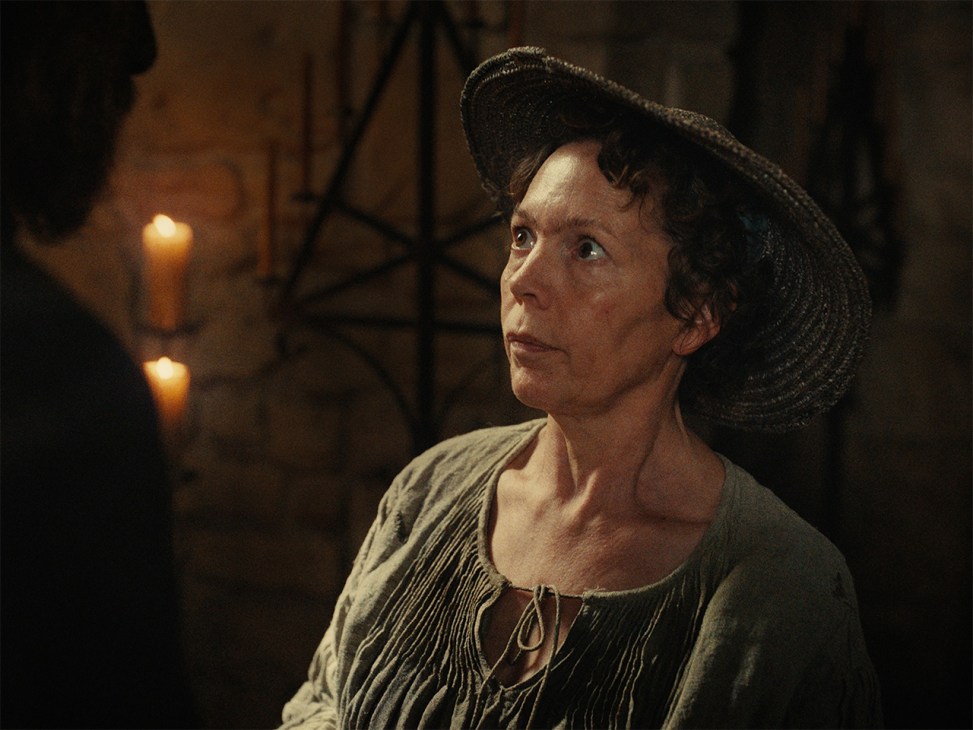
Fantastical comedy Wicker is set in a small medieval town where an unmarried fisherwoman (Olivia Colman) is a social pariah. She turns to the local basket weaver (Peter Dinklage) to create a wicker husband – the result is an Alexander Skarsgård-shaped man whose greatest desire is her sexual fulfilment. Cue chaos in the puritanical community and ridiculously horny joy on our screens.
‘Wicker’ is released on 30 October.
Photography
‘Rafael Pavarotti: Photographer’
Musée des Arts Décoratifs, Paris
Brazilian fashion photographer Rafael Pavarotti has crafted visual worlds for Vogue covers and Dior campaigns, yet at his core he’s still the same curious 12-year-old who borrowed his father’s camera and pooled money with friends to buy film. His early experimentation is seen here in more than 200 prints that are alive with saturated colour and unique storytelling.
‘Rafael Pavarotti: Photographer’ runs from 2 October to 2 May 2027.
Art
‘Roy Lichtenstein: Like New’
Whitney Museum of American Art, New York
Will debates about authorship and appropriation in the age of AI bring new relevance to Roy Lichtenstein’s magpie-like approach to pop art? The Whitney’s curators are banking on it with this vast career retrospective. About 130 comic-indebted works sit alongside recreations of three major wall paintings, including the 29-metre-wide “Greene Street Mural”, which was originally painted for a 1983 exhibition and destroyed after its six-week run. A fitting tribute to a master of recreation.
‘Roy Lichtenstein: Like New’ runs from 11 October to 10 May 2027.
‘Es Devlin: Other Worlds’
Design Museum, London
Need heavyweight artistic cred for a large-scale pop spectacle? Then call Es Devlin. The British artist and designer quoted Paul Bowles for a YSL launch, referenced Charles and Ray Eames at the Super Bowl half-time show and has crafted stage sculptures for Adele, Beyoncé and U2. Expect a dramatic setting for the largest solo presentation of her archive yet, including installations, maquettes and diaries.
‘Es Devlin: Other Worlds’ runs from 2 October to 4 April 2027.


Television
‘Carrie’
Prime Video
Social media can make modern life as a bullied teen feel like an endless digital bucket of pig’s blood, so it’s no wonder that Mike Flanagan has returned to Stephen King’s 1974 novel about a girl’s telekinetic awakening. Brian De Palma’s 1976 adaptation is hard to match but the eight episodes here allow the Haunting of Hill House creator a more nuanced take.
‘Carrie’ is released on 7 October.
‘Below’
Netflix
In Newfoundland, merciless nature collides with some of the warmest and funniest people you could hope to encounter. In Below the community is terrorised by a mysterious sea creature but still able to make it to the pub at the end of the day. Plus, Josh Hartnett nails the place’s Irish-adjacent accent.
‘Below’ is released on 8 October.
‘Nocturne’
Apple TV
Nocturne stars Stephen Graham, which alone makes it appointment television. Liev Schreiber plays a soldier-turned-detective whose search for peace in rural Pennsylvania is interrupted by Graham’s killer. The series is based on the novels of Lars Kepler, the pseudonym of a Swedish husband-and-wife duo.
‘Nocturne’ is released on 30 October.


After an extensive renovation, the Centre Culturel Suisse in Paris is back to spread the word about Switzerland’s creative prowess
Making Swiss culture stand out in a global arts and design epicentre such as Paris is a tall order. But the revamped Centre Culturel Suisse (CCS) – which reopened to the public earlier this year after a four-year, CHF7.3m (€7.9m) renovation – has set a new benchmark for those seeking to promote a nation’s creativity and values abroad.
It’s the only overseas Swiss centre of its kind to be entirely funded by Pro Helvetia, a federal council that promotes the country’s artists and cultural practitioners at home and internationally. “The fact that the Swiss government has chosen to invest in this way exclusively in Paris says a lot,” says CCS’s director, Jean-Marc Diébold. It’s proof that the French capital continues to be a key European hub of cultural promotion.
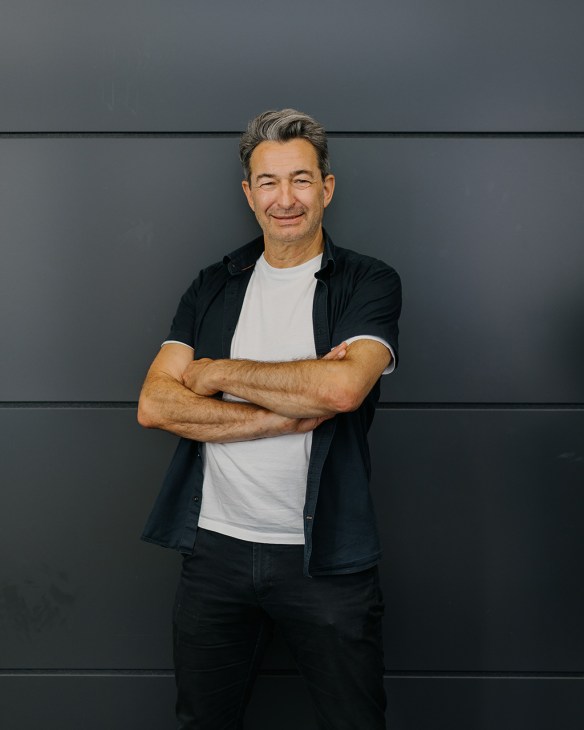
Based in the heart of the Marais district, the multidisciplinary centre was established in 1985 as a response to the growing number of Swiss painters, creatives and architects calling Paris home. “They put pressure on the Swiss government to create a space in which they could disseminate their work,” says Diébold, who previously managed French and Swiss dance and theatre companies overseas. “Switzerland is a small country surrounded by large European neighbours, so it’s only natural that the country’s artists have exported their oeuvre beyond their own borders.”
The 17th-century maison particulière combines French Renaissance elegance with Swiss idiosyncrasies. In the courtyard, neighbourhood café Le Voltigeur has created a dinky Swiss buvette – a kiosk inspired by Alpine snack hatches – that offers a Swiss renversé coffee, as well as 18 types of chocolate. There’s also a library with volumes from Swiss publishers including Park Books and Edition Patrick Frey. The building was revamped by Parisian firm ASBR and Basel studio Truwant + Rodet, giving it a post-industrial ambience. CCS also commissioned bespoke LED signage from Zürich and Paris-based graphic designer Marietta Eugster.


During the renovation, CCS conducted a “tour de France”, travelling to places such as Dunkirk, Rennes and Guadeloupe to showcase its work to broader Francophone audiences. Diébold wants to retain this outward-facing approach. “There’s a danger of becoming introspective as we settle back into our permanent space,” he says. “But we want to show the world that Switzerland is far more complex than people think.”
ccsparis.com
Comment
The Centre Culturel Suisse is an important part of Switzerland’s soft-power armoury that also enriches Paris’s artistic profile. It’s a lesson in how mutually beneficial such platforms can be.
A nose for success: Twenty-five indie perfume labels to know
In an industry dominated by a handful of big players, it takes imagination and originality for smaller brands to compete. Here are 25 whose approach hits all the right notes.
1.
Paraphrase
Canada
Natural selection
“Our customers are on the fringes of the fragrance world,” says perfumer Joshua Smith, who launched Paraphrase in 2014 and mixes its scents by hand in his studio in Edmonton, western Canada. “I’m captivated by the outdoors,” adds Smith, who once worked as a forester. “I think about the senses, how products are made and how the human body interacts with them.”
Paraphrase produces a couple of hundred bottles a year that retail at about €140. The brand’s scents are playful takes on natural settings and have evocative names such as Eros Fig and Fruit Thieves. “I make perfumes with more of a narrative than some bigger brands,” says Smith. “It’s less about a luxury born from commodity or material than the luxury of the time and the space that we give ourselves with these little pleasures.”
paraphraseperfume.com

2.
Abel
New Zealand
All in the mix
Founded by former winemaker Frances Shoemack, Abel makes scents developed with New Zealand’s only master perfumer, Isaac Sinclair, and produces them in Wellington. “It isn’t common to spend more on your perfume than on your packaging but that’s what we do,” says Shoemack, who adds that about 95 per cent of ingredients in the perfume industry are derived from fossil fuels. “We only use natural ingredients and many of them are very rare. Where other brands might use synthetic molecules, we use the real thing – for example, iris butter, which costs €10,000 per kilogramme.”
Abel received its first major investment four years ago from New Zealand-based Maker Capital, a venture-capital fund that focuses on domestic, product-led businesses with the potential to make a global impact.
abelfragrance.com


3.
Gabar
UK
Home from home
London-based brand Gabar makes unisex fragrances inspired by the childhood memories of its Myanmar-born founders, Phway Su Aye and Susan Wai Hnin – earthy jungle, still lakes and warm air – and flavours such as sesame, wild fig and smoked nuts. “We wanted to create something culturally rooted but completely at home in New York, London, Paris or Bangkok,” says Su Aye. Financed by the founders and a few angel investors, the business has seen sales doubling every year since it launched in 2021, and it now has 49 global stockists, from Hong Kong’s Lane Crawford to Stockholm’s Fablab. — Brooke Theis
gabarworld.com


4.
Jijide
Italy & China
Cultural conversation
Founded in 2016 by Adam Cavallari, Andrea Alessandri and Fanqi Guan, Italian-Chinese fragrance house Jijide eschews tradition. The brand invites different noses to create unisex scents that juxtapose Eastern and Western cultures (think notes of rice contrasted with the smell of a French boulangerie). “We bring emerging talents and diverse perspectives into dialogue to create fragrances that connect to today’s world,” says Cavallari. Every fragrance is blended within 50km of the brand’s Milan base, with prices starting at €70.
jijide.com


5.
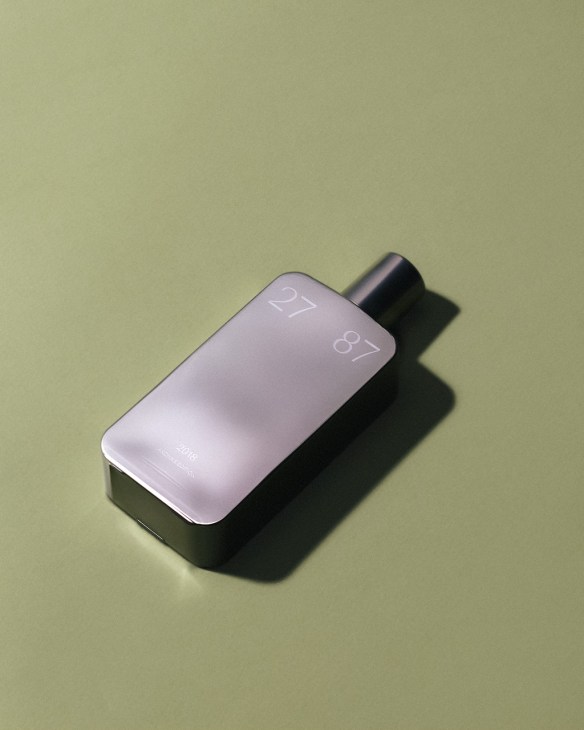
27 87
Spain
Unexpected delights
“Perfumery is an underestimated art form,” says Romy Kowalewski, the founder of Barcelona-based fragrance brand 27 87. Since its launch in 2016, it has built a cult following by giving unlikely notes such as banana, beer and burnt rubber a starring role. Bestsellers include the woody Genetic Bliss and the minty Wandervogel. “We’re interested in what hasn’t been done yet,” says Kowalewski.
2787perfumes.com
6.
Altra
UK
Into the wild
Since launching in 2022, Altra has been radically reshaping the natural-fragrance business. Founded by perfumer and creative director Beckielou Brown with Bridget Plant, its five scents are hand-blended in the UK using only botanical ingredients. The brand’s rising star is Ghst Flwr, a full-bodied combination of tropical fruit and saffron. “People are returning to nature while still expecting perfume to feel exciting and relevant,” says Brown. Altra combines a direct-to-consumer approach with a wholesale network. Its main markets are Europe and North America.
altraprofuture.com


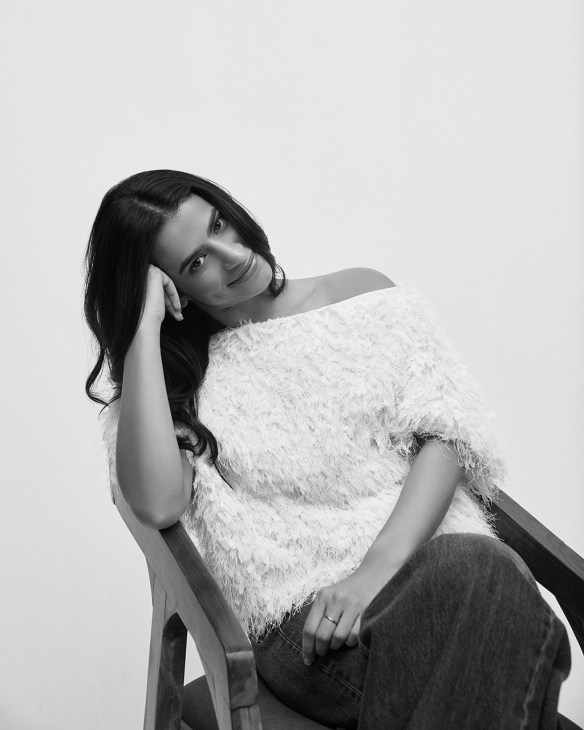
7.
Heir
India
8.
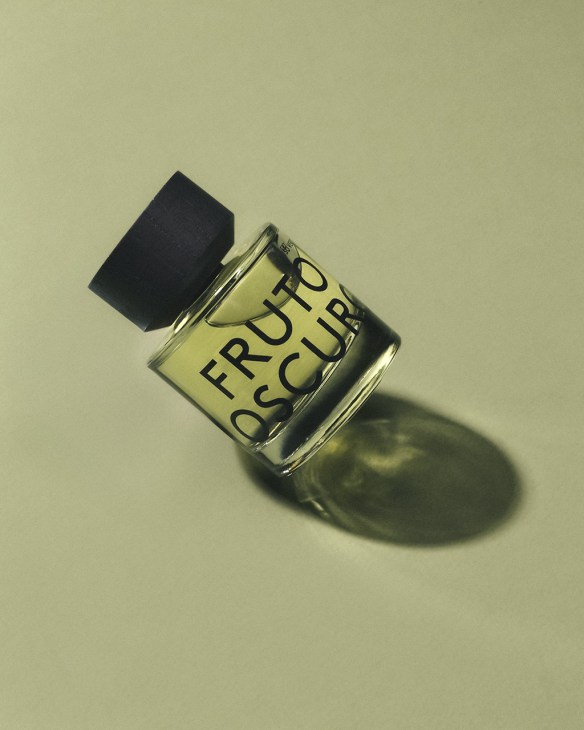
Eauso Vert
USA & UK
9.
Amyi
Brazil
10.
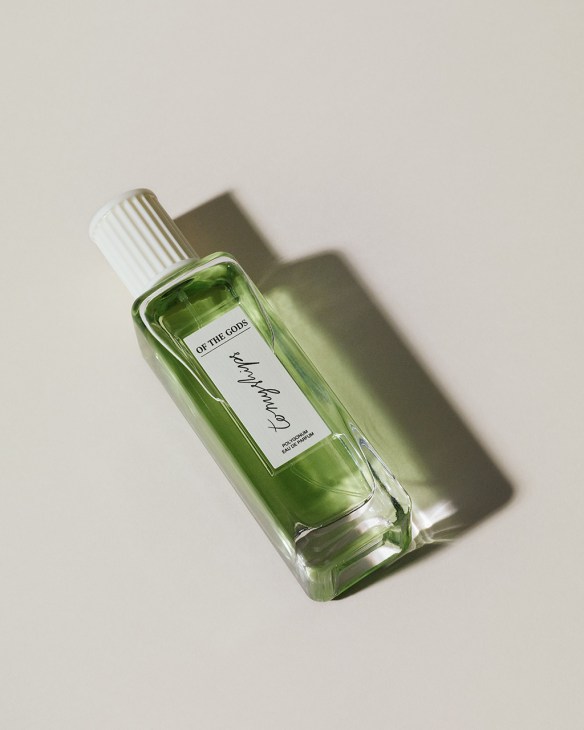
To My Ships
UK
11.
Moëhr
Monaco & Italy
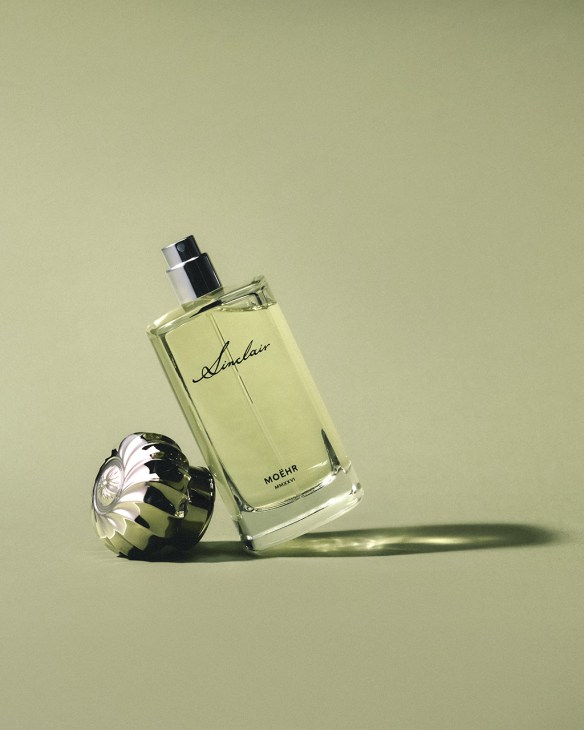
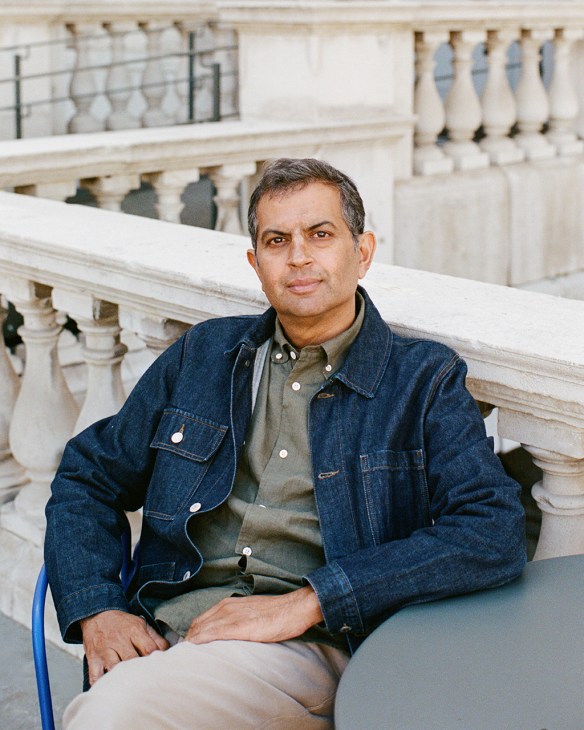
12.
Dilli House
UK
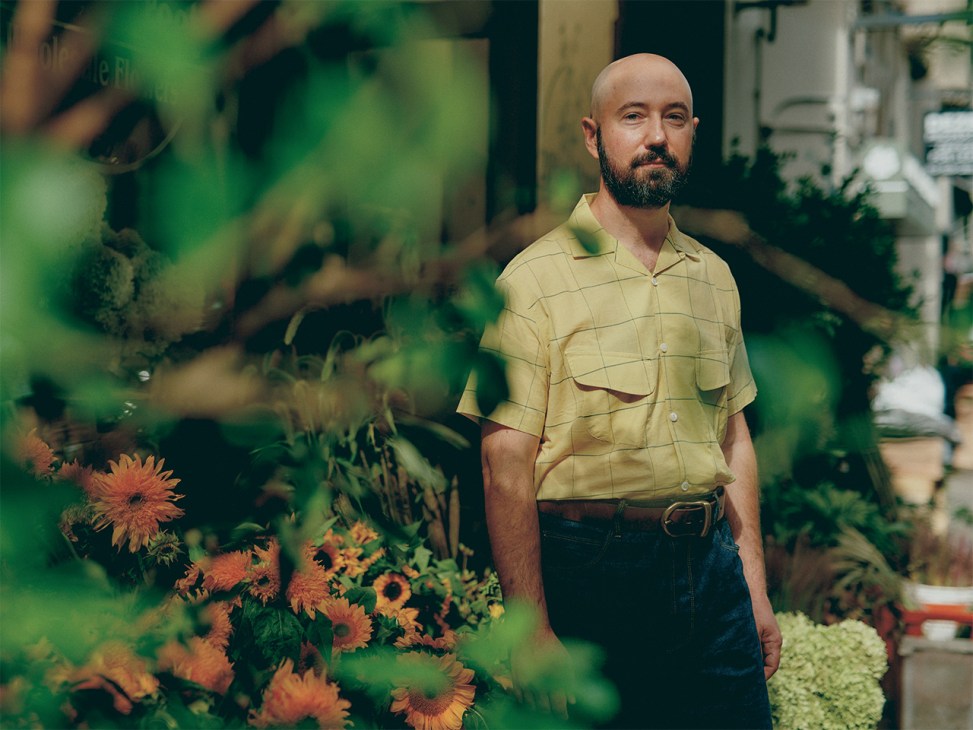
13.
Hendley
USA
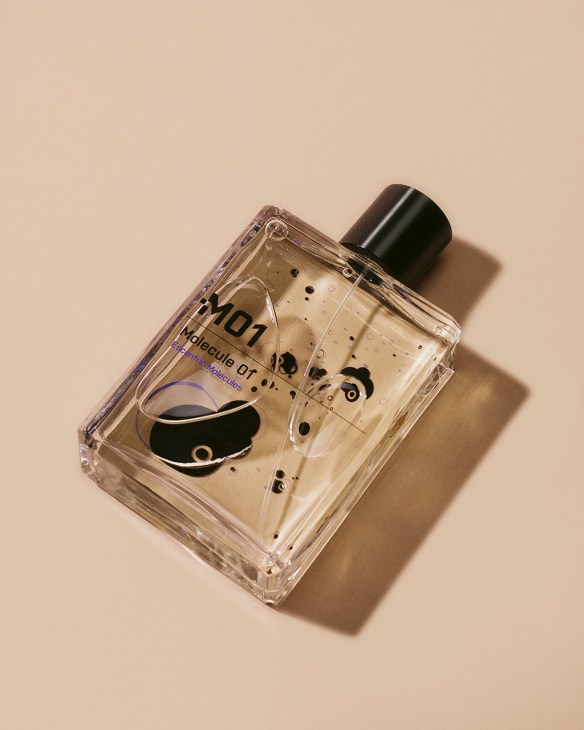
14.
Escentric Molecules
UK & Germany
15.
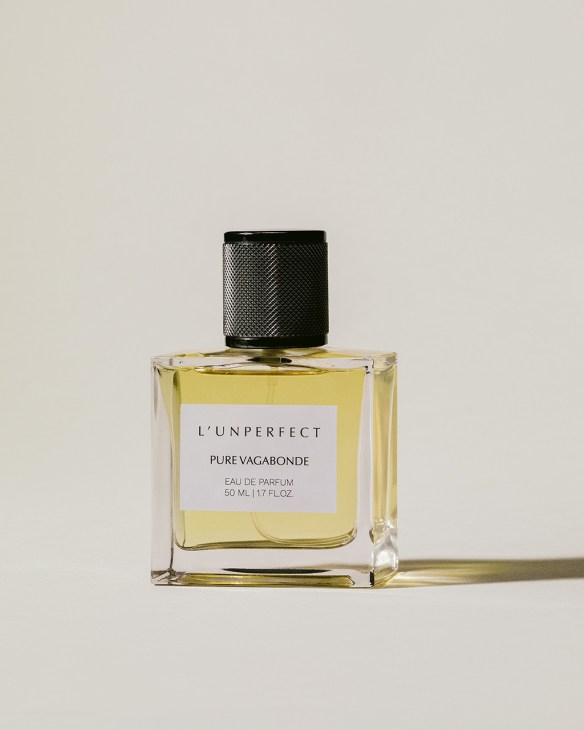
L’Unperfect
Portugal
In 2019, Seixedo Pinheiro founded the brand with her husband, Américo, following 26 years working in luxury for the likes of Guerlain, Loewe and Acqua di Parma. Entirely self-funded, L’Unperfect is made at Fábrica Confiança (one of Portugal’s oldest factories) and sold online mostly to northern and central Europe.
lunperfect.com
16.
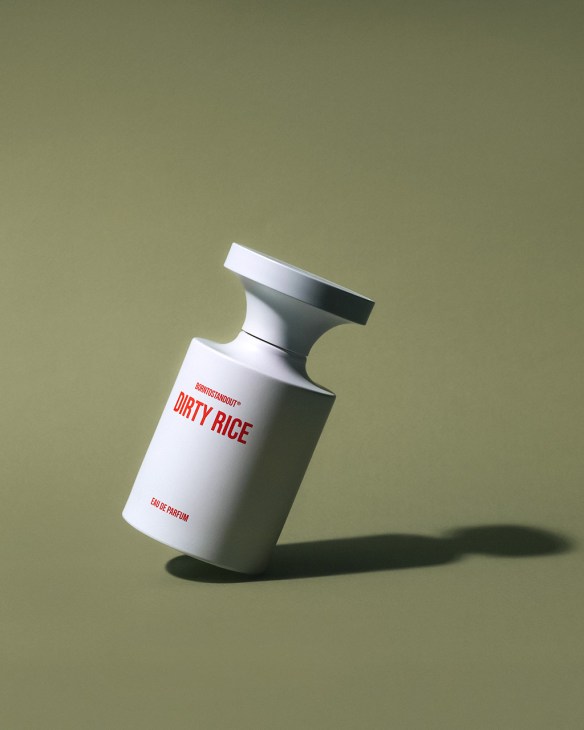
Borntostandout
France & South Korea
Centre of attention
“When we started, niche perfumery was nonexistent in South Korea,” says Borntostandout’s founder, Jun Lim. Since launching in 2022, the brand has created unconventional scents for men and women, and expanded to more than 80 countries, while securing Series A backing from investors including L’Oréal’s venture capitalist fund. Today, Paris-based Lim flies between China, Singapore and the UAE, with a retail footprint that stretches from London to Japan, with shops in Seoul. “My biggest fear is creating something that you have no opinion about,” he says.
borntostandout.com
17.
Flâner
Australia
Everyday essential
“We aren’t third-generation perfumers, nor did we come through a big fragrance house or beauty group,” says Flâner co-founder Andrew Hardeman. The self-funded brand began with one Melbourne shop and now also has a London Shoreditch flagship, with more European openings planned. Prices sit at about AU$270 (€165) – below niche competitors, despite using premium materials such as Italian glassware, custom metal caps, French atomisers and ingredients sourced from across the globe. “We believe that fragrance should be part of everyday life, sprayed liberally and enjoyed regularly,” says Hardeman.
flanerfragrances.com


18.
One Day
Hong Kong
City hunter
One Day’s perfumes are an olfactory diary for its founder, Michael Wong. “I realised how easily we overlook smell when processing memories,” he says. With the Ethos of Cities collection, Wong sought to capture the spirit of places that have left a mark on him, from Kyoto to Berlin.
The brand’s white labels and simple packaging have no visual ornamentation. Wong wanted the scent “to remain the hero”. One Day is stocked in six cities across the globe, from Taipei to Los Angeles, with a Hong Kong showroom in the works.
onedayperfume.co

19.
Oaken Lab
Indonesia
Tales of home
Indonesian ingredients are at the heart of Oaken Lab’s growing repertoire of scents, balms and candles. Its first fougère-styled perfume, Batavia Barber, incorporates Javanese vetiver and Sumatran patchouli, while its newest, Narikela, is infused with pandan, ginger and coconut. “Rather than follow a perfume structure, every scent tells a story,” says co-founder Christopher Kerrigan, who crafts everything in Jakarta. Oaken Lab’s narrative-driven approach comes to life in Stillroom, a restaurant-bar in the brand’s Ubud Bali shop. Next up is a Jakarta flagship to complement two existing smaller shops.
oakenlab.com


20.
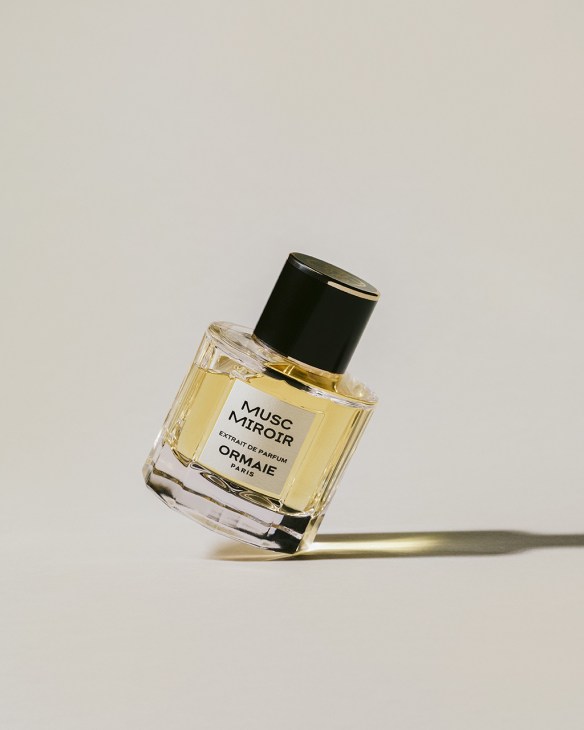
Ormaie
France
Matter of time
“I grew up surrounded by perfumers,” says Ormaie co-founder Baptiste Bouygues. “I loved staying late in their offices, watching them work.” Bouygues and his mother, Marie-Lise Jonak, a fragrance creative director, launched Ormaie in 2018. The house has deliberately stayed small, with about 150 points of sale across Europe, the US, Asia and Australia. “Our ambition has always been to build relationships that deepen over time,” says Bouygues. The latest collection is a haute-perfumery line four years in the making that explores the balance between freedom and control. “Every bottle has 12 facets, like the 12 hours of a day,” says Bouygues. “It’s a reminder of the time, patience and craftsmanship required to create a fragrance.”
ormaie.com
21.
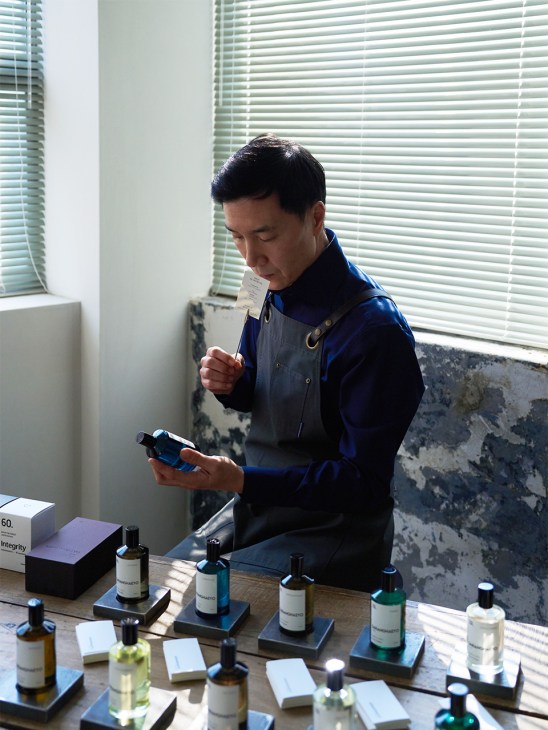
Saranghaeyo
South Korea
Personal touch
After 16 years at LVMH fragrance houses, Sung Soo Kim founded Saranghaeyo to make unique unisex scents. His perfumes pair premium ingredients with slow, cool maturation processes to preserve their brightness. Kim personally seeks out like-minded independent distributors, meeting them face to face. “They should understand my brand, love the scents and become long-term partners,” he says. The South Korean fragrance sector is growing, with exports up by 45 per cent in 2025 year on year.
srhy.co.kr
22.
Oddity
Hong Kong
Better by design
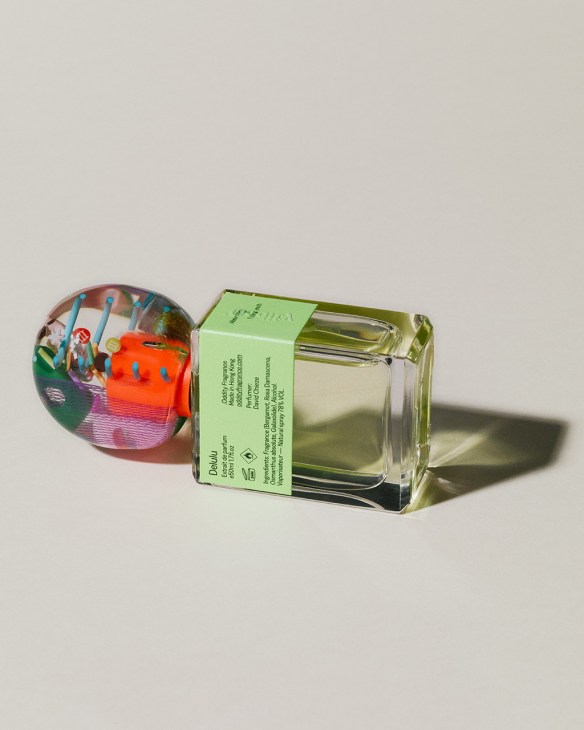
What began as a design studio grew into perfume business Oddity in 2021. “The core of our practice is creating brands so we felt that making one could be exciting,” says Alice Mourou, who co-founded it with Kirill Runkov and Nikita Shchukin. The trio, she says, are drawn to fragrance because, unlike the agency’s visual work, “scent can’t be seen”. Oddity takes a high-concept approach. Delulu embodies “fading youth”, while Naked Dance evokes the feeling of being comfortable in your own skin.
oddityfragrance.com
23.
Matiere Premiere
France
Difference in the dose
Founded in 2019 by seventh-generation Grasse perfumer Aurélien Guichard, Matiere Premiere builds scents around a single ingredient, such as saffron or oud, used at about 10 times the industry-standard quantity. “I want people to feel the quality,” says Guichard. Though Kering took a stake in the firm two years ago, the brand remains independently owned, giving Guichard the freedom to shape it on his own terms. With an HQ in Paris and shops in London, Berlin and Saint-Tropez, Matiere Premiere will soon expand with its second Paris shop and a first in Shanghai.
matiere-premiere.com


24.
Coqui Coqui
Mexico
Mapping history
Nicolas Malleville and Francesca Bonato, the entrepreneurs behind Mexico’s Yucatán Peninsula-based boutique hotel business Coqui Coqui, founded their scent brand of the same name in 2003. Its fragrances are inspired by the places that have shaped the business’s story, such as Italy’s Riviera dei Fiori and Argentina’s Sierras Pampeanas. They are made in various locations, including Mexico, France and French Polynesia. This year its European sales have risen by 70.6 per cent, reaching 4,237 bottles, with a retail price of about €145 for 100ml. Coqui Coqui is now planning to expand its distribution network to stockists in Japan.
coquicoqui.com


25.
Montroi
UAE
Making memories
Co-founded by Enrique Hormigo-Scarlett and Samir Aghera, Dubai-based Montroi takes an artisanal approach to fragrance. Its 24 scents are inspired by places and people encountered along the modern Silk Route, with rare oils sourced from producers worldwide and the perfumes crafted in Grasse. “We don’t make perfumes,” says Hormigo-Scarlett. “We make memories.” The approach has found a discerning clientele in the UAE. Montroi sells through One&Only resorts globally, while the US is its main online market. A European studio is in the works.
montroi.com


Writers
Tomos Lewis
Chloé Nakao-Pelata
Rossella Frigerio
Florian Siebeck
Brooke Theis
Fernando Augusto Pacheco
Joana Moser
Ed Stocker
Adrian Kai Fraile Itagaki
Divya Venkataraman
Laura Kramer
Alexandra Aldea
Joseph Koh
Tom Webb
Natalie Stoclet
Fashion weeks are no longer just about clothes – they’re becoming cities’ biggest branding billboards
Fashion weeks are increasingly becoming entertainment events, with attendees including not only buyers and magazine editors but also actors and sportspeople. Off the runway, such occasions are big business: Paris Fashion Week – one of the French capital’s busiest trading periods for hotels, shops, chauffeur services and restaurants – now generates an estimated €400m every year for the local hospitality sector according to the French Fashion Federation.
In smaller urban centres, the financial boost is less substantial but the buzz that surrounds fashion week can help to affirm a city’s cultural relevance for years to come. Copenhagen, foe example, has been working particularly hard over the past decade to become the “fifth fashion capital” by highlighting local brands’ environmental agendas and luring designers to the city with the promise of river swims and dinners by star chef Frederik Bille Brahe.
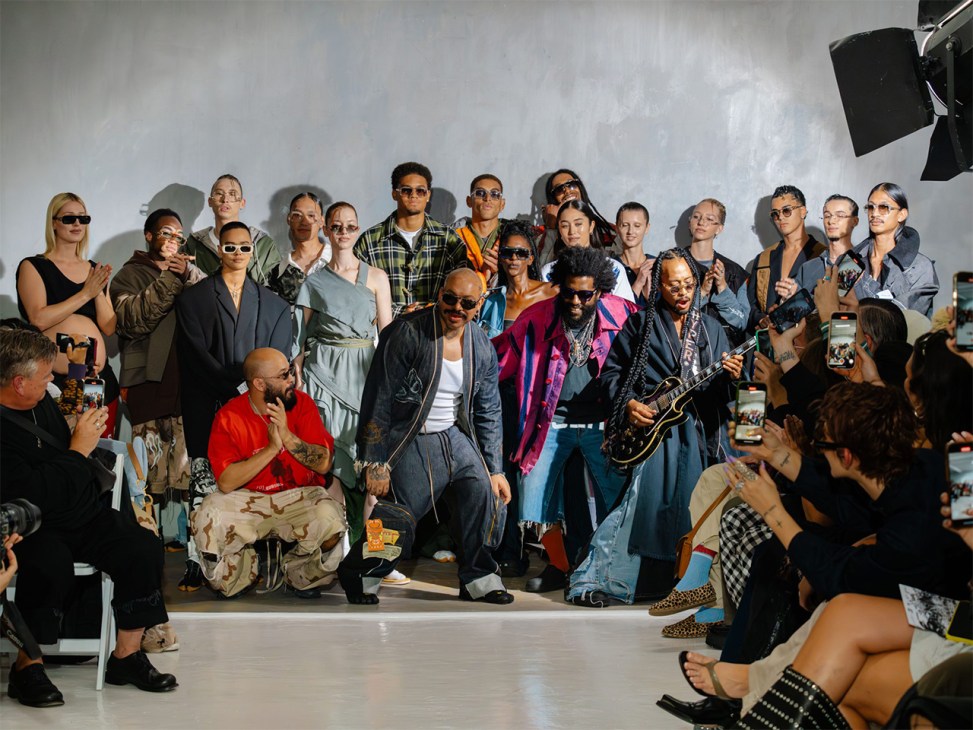
Amsterdam is the latest to claim a place on the circuit. Under Danie Bles, a former stylist and creative agency owner, Amsterdam Fashion Week relaunched in 2018 as a yearly gathering that includes as many panel discussions and street parties as runway shows. Brands don’t have to focus on the ready-to-wear category as per tradition. Denim, couture and streetwear are also welcome, while the guest list skews towards Dutch designers and museum directors.
“The goal is curation – the days when fashion week was about a new collection are gone,” says Bles, adding that she’s far more interested in highlighting “people with stories to tell” and communicating Amsterdam’s free spirit and high-low approach. “It’s about a certain vibe, about the Dutch culture and community. I want people to have time to discover the city, to have a full 360-degree experience and leave inspired, rather than exhausted from having to attend 100 events in one day.”
The latest edition, in September, opened with a dinner by designer Sabine Marcelis and stone supplier Solid Nature. A canalside gathering by knitwear specialist Extreme Cashmere followed, before a show at a supermarket by emerging designer Camiel Fortgens. “Brands should have the opportunity to show in their home country,” adds Bles. With a relaxed take on an industry staple, Bles has shown how cities can use fashion weeks to tell local stories about hospitality and creative exchange.
The artistic ‘wall dogs’ giving luxury street advertising a personal touch
Nick Metz is six storeys off the ground, paintbrush in hand, hanging from the side of a building on the corner of New York’s Canal and Lafayette Streets with a fellow “wall dog”. They are there because, even in an age of digital billboards, a mural company from New York has found itself in demand from the biggest names in luxury. Today its artists can be spotted dangling from walls in many of the US’s largest cities.
“We’ll be up here every day for a week,” says Metz, who has been working for Overall Murals, the country’s largest independent hand-painted-advertising company, for four years. “Every day, people stop and stare. That’s what I did too when I first saw someone doing this.” Wall dogs – so named because they’re leashed to buildings with safety lines – are the public face of the business, which was founded in 2010 by media planner Angel Saemai and artist Dmitry Pankov. Their first office was the size of a walk-in closet. Now, Overall Murals has a client list that includes Chanel, Google, Coach, Porsche and Häagen-Dazs, with a team of 60 painters who travel across the country. Key to its success is that, as well as the creative and engineering sides of the enterprise, it also leases locations. There are currently more than 80 across the US. Once a wall is leased, the hard work begins.
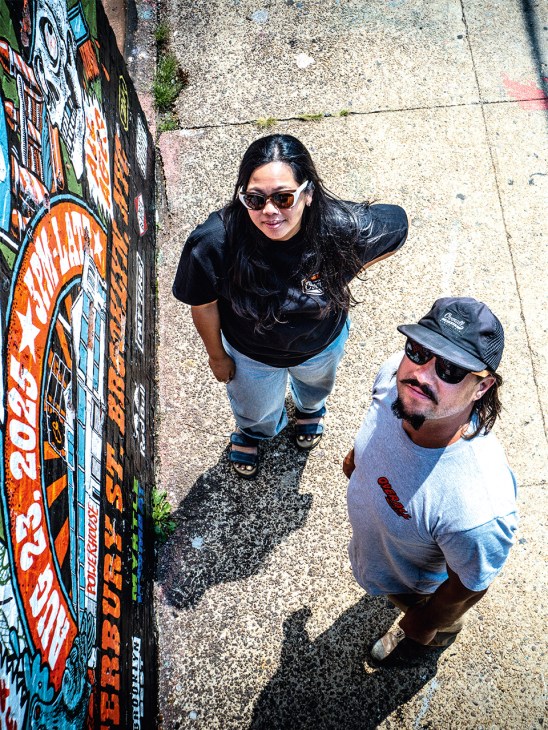
“If a surface has never been painted, it’ll be porous, so you have to build up primer and paint,” says Pankov. “In the US, creatives and advertising agencies often like to have squares and rectangles [in their imagery], and they want them to be seamless.” Working outdoors has its challenges. “We seldom miss a deadline,” adds Pankov. “We work in the heat and when it’s below zero. Oil paints don’t freeze. The viscosity changes but that doesn’t stop us.”
The scale of each project varies. “It can take between one and 10 people,” says Saemai. The walls range from a few meters square to as high as 18 meters and as long as 30 meters. The company is keen to innovate; one Ray-Ban ad featured 3-D panels allowing viewers to see a different version of the art depending on where they stood. A rain-activated project in Seattle for Ore-Ida French fries involved hydrochromic paint that displayed a message only when wet.


By the end of the week that we visit, a mural for retail giant Target will dominate an entire wall in Soho. It will stay there for two months but some advertisers purchase campaigns that last for years. These cost between $30,000 and $200,000 (€25,700 and €172,500) – about 200 to 360 per cent more than an ordinary digital billboard. “There’s something people connect with when they see a person on a wall, painting an image over several days,” says Metz. “People stop, watch, take photos and share them. The making of the advertisement becomes part of it.”
While hand-painting might seem unusual to many, heritage clients such as Chanel were around when all adverts were done this way. “This approach has been part of advertising for generations,” says Saemai. “There’s nostalgia in it. In a world where so much is instant, something made slowly stands out.” The break’s over and the wall dogs return to the job. There’s no time to waste.
overallmurals.com