Issues
The opener
Out of one’s shell
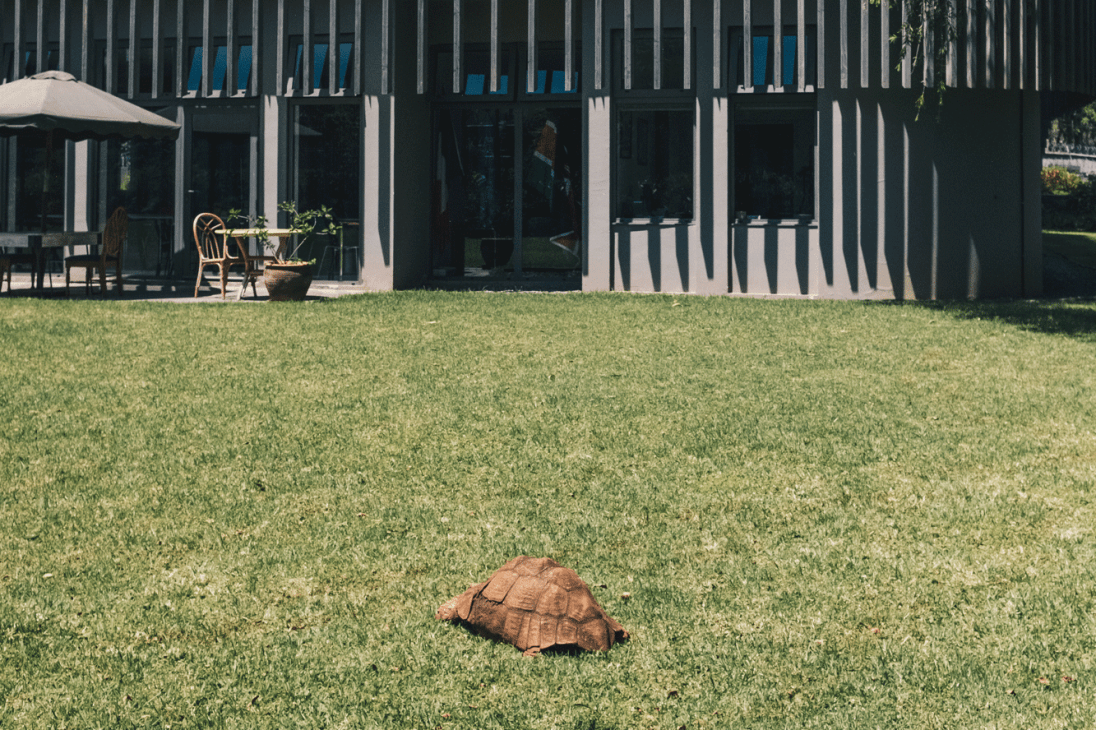
Plenty of ambassadors choose a dog as their official companion, but the French embassy in Nairobi has opted instead for some slow diplomacy of the animal variety.
Meet Tortue, the 48-year old resident tortoise, who seems rather content with his diplomatic duties and comfortable surroundings.
Read more about our visit to the embassy here.
Woodchip and pin
Paying with plastic will soon be a thing of the past if Munish Chanana has anything to do with it. The professor at eth Zürich has partnered with some academic colleagues to create the first timber credit card. Their company, Swiss Wood Solutions, compresses oak and spruce to create a thin layer of wood with the durability for atm use. Banking microchips can then be added to the card. When it expires it can simply be composted, making it good for the planet and your security too.
Electric shock
From the back section
Being an underwear model surely involves some level of self-confidence. Naturally, then, we were surprised when we came across the portfolio of a handsome Japanese clotheshorse that included a shot of him in some obviously padded underwear. This wasn’t a pair of socks stuffed down his Y-fronts but rather a cushioned rear. We rummaged deeper and found them to be electronic massage pants made by Panasonic (see page 184). We’re told that they “make your bum feel wonderful” – and anyone you wear them around extremely uncomfortable.
Gift of tongues

Latin music is popular in Israel. You’ll find singles from Static & Ben El (pictured), which wouldn’t be out of place at a reggaeton party, at the top of the charts. It’s not as surprising as you might think: there is a connection between Hebrew and Spanish, encapsulated by Ladino, a language that combines Old Spanish and Hebrew. It’s spoken by about 150,000 people and bolstered by publications for Ladino speakers. Those learning a new language can help to ensure Ladino’s survival by studying it. But if hitting the books isn’t for you, shimmy along to “Shake Ya Boom Boom” by Static & Ben El instead.
Correspondent’s view from
Berlin
by Kimberly Bradley
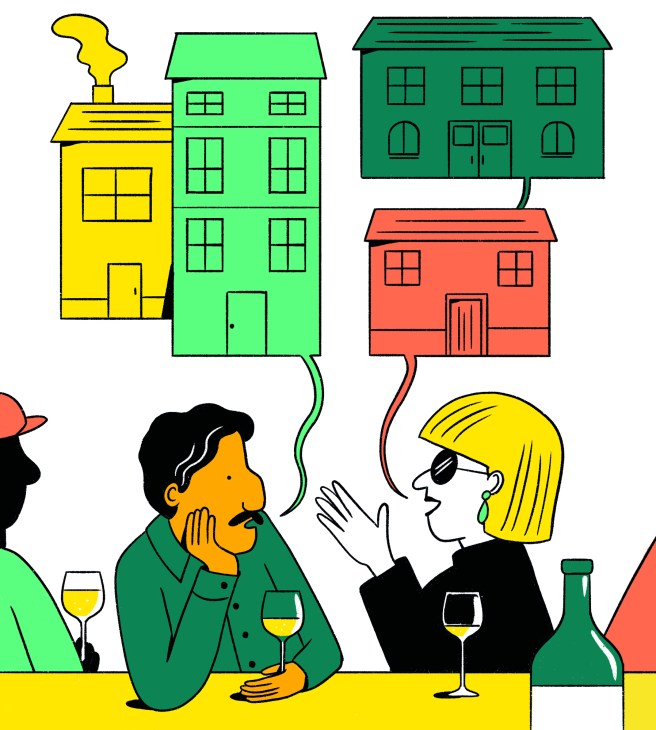
In the nearly 20 years I’ve been in the German capital, conversation at any dinner party was dominated by the topic of real estate. Back in the old days, when dinner parties were big pots of pasta and bottles of very average wine, it was often about how insanely cheap and large your flat was. Then talk turned to hot new neighbourhoods. From about 2010 my friends started buying apartments and lamented the overdevelopment of tourist spots. Gentrification talk – like gentrification itself – reached fever pitch and didn’t let up for years.
Until now. Before lockdowns, Berlin was reversing a few bad post-Wall decisions, with the city buying back properties it had sold years before and implementing strict limits on Airbnb properties. A rent cap came into effect in November 2020 but for many this news was anti-climactic.
Some time ago I had some German journalist friends over. We ordered a delicious Italian takeaway in my leafy west Berlin district and opened a bottle of sancerre. Sure enough, talk turned to housing; now, however, the speculation seems less about whether our property values will continue to go up and more about Berlin’s future in the larger sense.
We all noticed a new sense of community developing. Berliners are founding collectives and supporting nearby businesses but also more urban farming and other forms of co-operative business and housing. This is closer to the Berlin I moved to, rather than the churn it had more recently become. But – oh, joy – paired with much better beverages.
Ones that got away
Banned banners
Jonas von Lenthe’s new book Rejected Designs for the European Flag showcases more than 150 banners that were sketched by a diverse range of artists for the original Council of Europe. The circle-of-stars that was chosen in 1955 went on to be adopted as the EU’s emblem and the rest ended up on the cutting-room floor. Here are three designs that failed to be run up the flagpole – we can’t imagine why.

Salvador de Madariaga, a former chair of the League of Nations, designed this flag, where every star marks a capital city on the postwar map of Europe. They also look worryingly like gunshots.
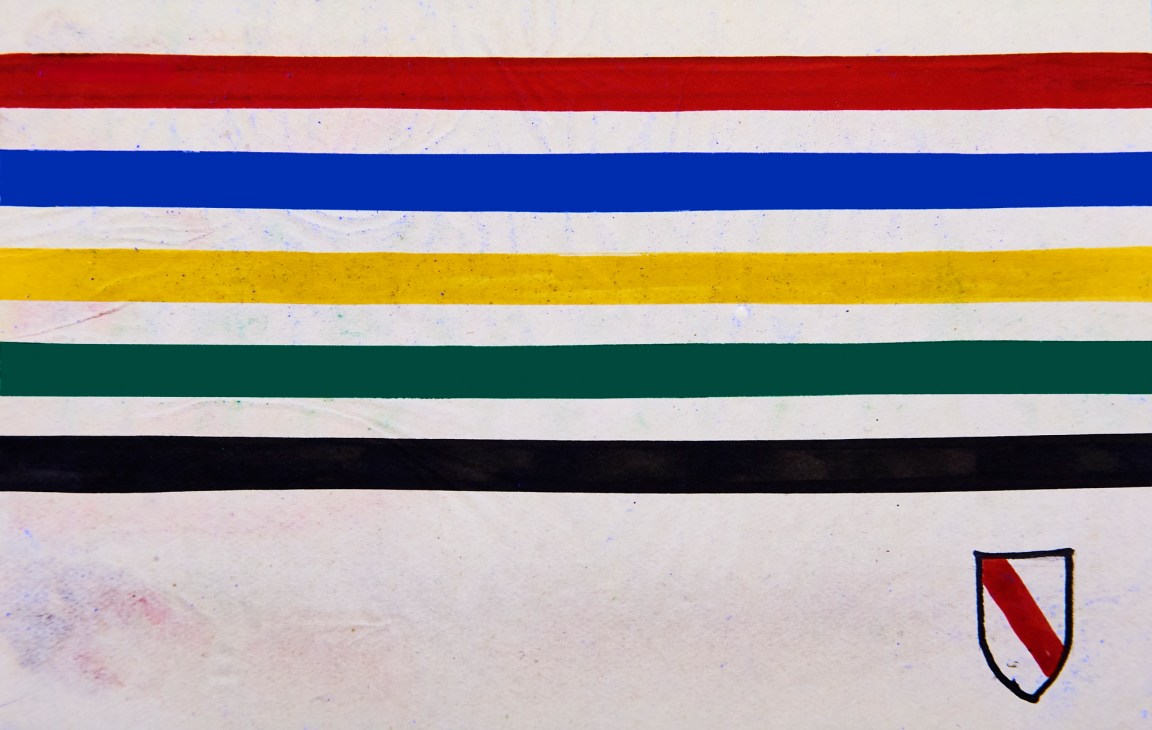
As the seat of the European Council and a symbol of reconciliation, the Franco-German city of Strasbourg saw its red-striped crest feature in many submissions. Pretty good as a T-shirt.
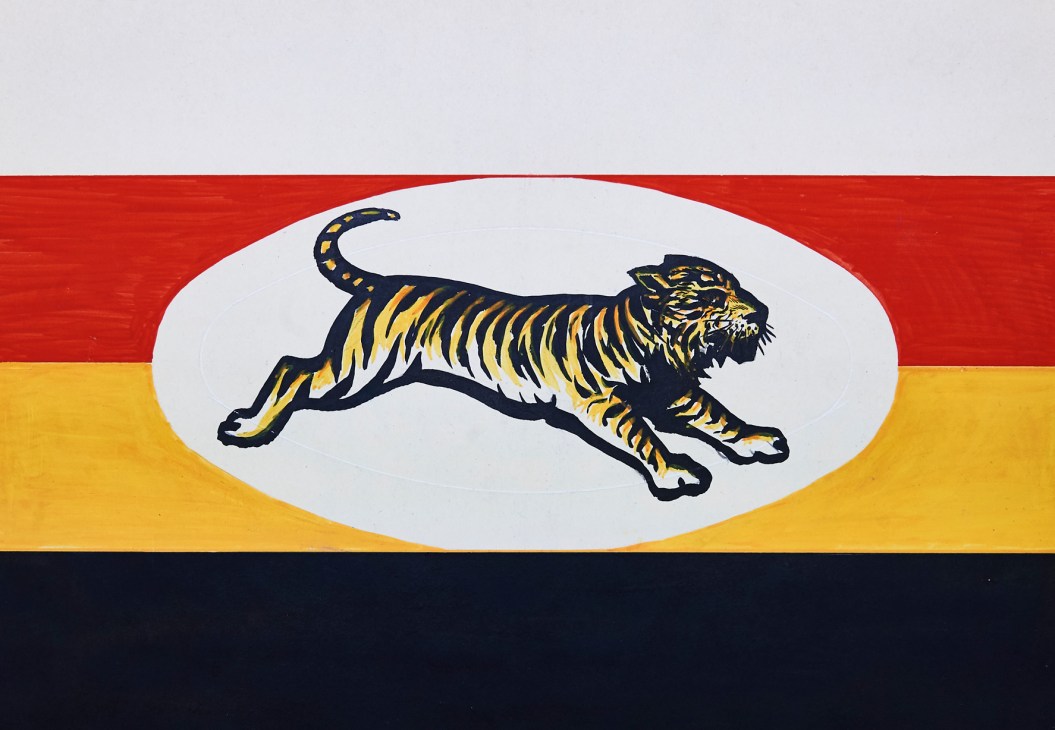
Perhaps the designer of this flag was hinting at Europe coming roaring back. But the continent is home to far less exotic creatures, so it’s perhaps strange to choose a tiger to represent it.
Cream of the crop
by Megan Gibson
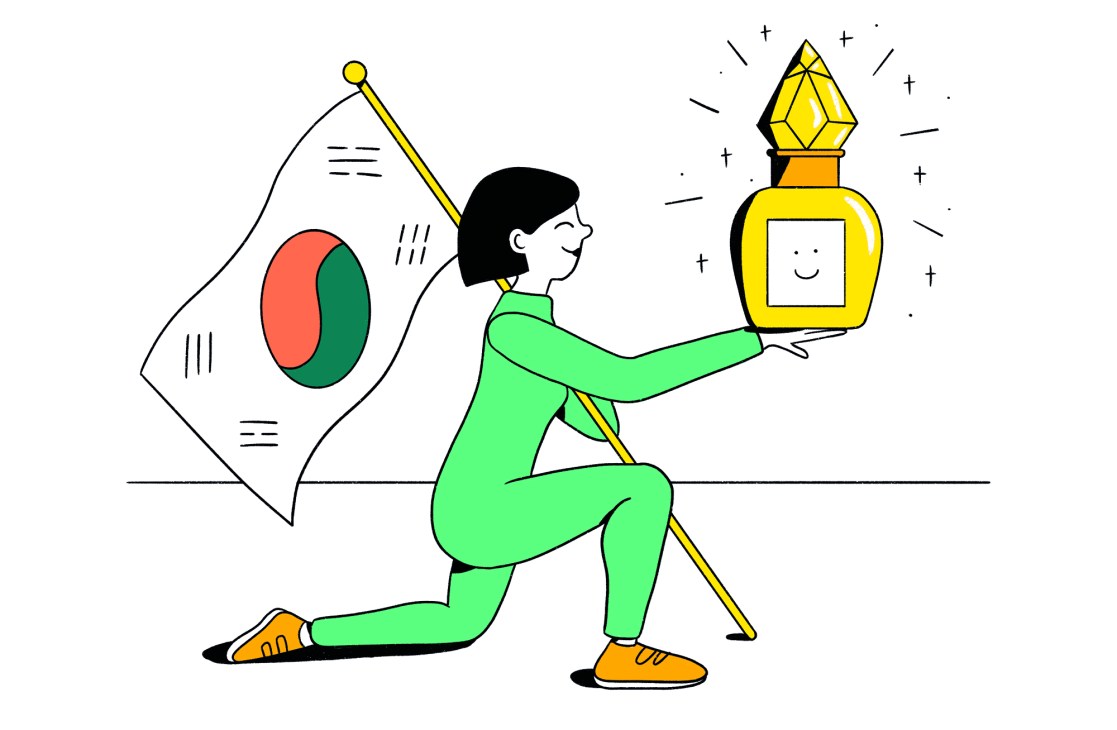
As Monocle’s foreign editor, I’m appreciative of any gift that an ambassador sends my way. Over the years I’ve had mouth-blown glass ornaments from the Czech ambassador; Taiwanese white tea from the country’s London representative; and a fine bottle of sancerre from the French embassy. But I was slightly taken aback when I opened a recent gift from the South Korean embassy to find two tubes of luxurious anti-wrinkle eye cream. Oof. Had I really looked that tired the last time I met the ambassador? Yet I’m delighted with the gift. Just because this can be a tiring job, it needn’t look like it. After all, when it comes to skincare, nothing really compares to South Korean products.
Pastures even newer
House hunters are eschewing city pads and sniffing around suburbs with new zeal. But not all are equal, says Ellen Dunham-Jones, co-author of Retrofitting Suburbia, and a recent guest on The Urbanist on Monocle 24.
Urburbs: Israeli-coined phrase used for suburbs that have an urban vibe.
Technoburbs: First used in 1987 by professor Robert Fishman, this kind of neighbourhood incorporates corporate campuses and shiny office buildings.
Ethnoburbs: A term developed in 1997 by academic Wei Li. Pushed out of cities by high prices, immigrant communities formed sprawling ethnic enclaves on their fringes.
Metroburbs: A term pioneered by Ralph Zucker of New Jersey-based Somerset Development. It describes the repurposing of defunct corporate campuses into mixed-use development.
Correspondent’s view from
Rio de Janeiro
by Lucinda Elliott
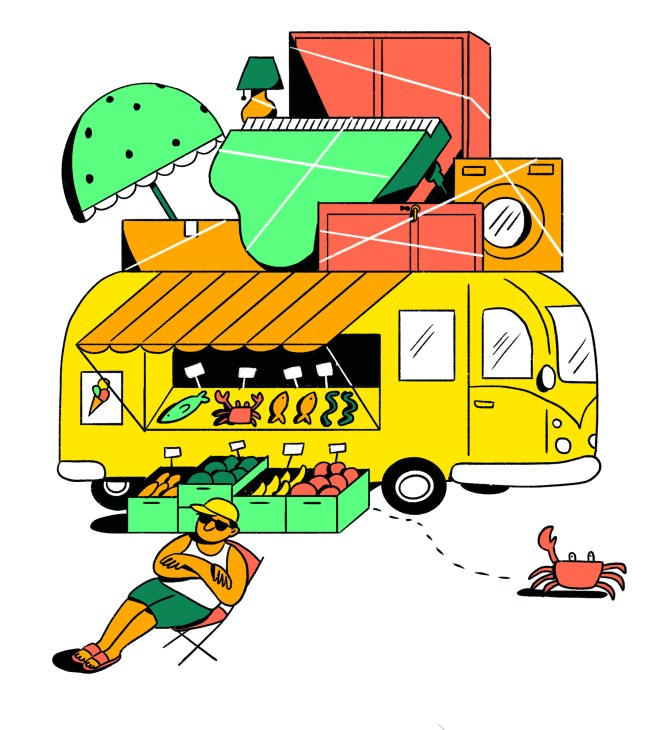
There are two flights of stairs to go until we reach the top and I’m holding the corner of a washing machine in sticky 30c heat. Until now my neighbour and I have only ever conversed from a safe distance across our balconies. But with the scrap-metal dealer parked outside the apartment building, we’ve made an exception to get this machine. A kaleidoscopic range of disused finds is strapped to the roof of his van with dubiously thin cords.
Brazilians are accustomed to door-to-door salesmen but, during the pandemic, the reliance on them has reached a different level in Rio de Janeiro. With markets closed, customers such as my middle-aged neighbour are reluctant to barter in the usual way. Kitchen knife sharpeners, vegetable growers, broom vendors and even fishmongers have instead jostled for deals by calling out from their characteristic Volkswagen Kombi camper vans or knocking on doors. To tempt potential buyers (or bring a smile to the face of a passerby) hawkers chant in the hope of securing a sale: “Three reais, three reais… your mother-in-law will thank you at just three reais.” They’re now part of the fabric of confinement in Rio. Local produce for local people, with an inherent tendency to recycle and upscale.
Some might question why, with mobile technology and delivery services, anyone would bother exchanging a washing machine with these merchants, only to have to carry it up stairs. But there’s an undeniable benefit to spontaneity when it comes to shopping. Walking back one afternoon from the supermarket a crowd had gathered around a Kombi where live crabs were being pulled from ice water. I bartered – and bought my best dinner-for-one in lockdown.
Images: Council of Europe, Getty Images
Time to hit play
The past 12 months have been tougher than many of us had hoped. But in the spirit of bringing fresh resolutions, positivity and pressing on after a year of stubborn and frustrating pauses, we decided to forego the usual format of our February issue and bring you 50 silver linings, canny case studies and smart ideas to get you going again.
We’ve stuck fast to our sense of journalistic optimism and opportunity to commission ideas that we think will help to make 2021 a year when people, firms, cities and nations stepped up and hit play on big ideas. We meet a head of state looking to recharge Greece’s image abroad, visit an Osaka library showing the next chapter in literacy for children, and a strip in Melbourne offering the world’s beleaguered high streets some tips for surviving and winning passionate fans.
As well as the bigger-picture stories, we’ve plotted new ways to work (be it literally, by scooter, or with some innovative office designs), plus a wardrobe update and ideas for new regimes and routines to improve your health and heighten your happiness. There’s also some concepts, escapism and ideas. We meet a Moroccan homeware brand putting vivid colour into its work and an entrepreneur cleaning up by reviving bathhouse culture, and we’ve even imagined what a modern kibbutz might look like. In 2021 we can be better, kinder and nicer: it could even be a turning point. Don’t believe us? Let us show you.
Here’s how to hit play:
Our 50-strong line-up features ideas and inspiring stories, businesses to back, insights to absorb and recommendations to follow. The light’s green, so shall we get going?
The Monocle Shop
Monocle brass stationery range
These handsome items are made by a Hong Kong workshop that has been honing its craft since the 1980s. Based in the industrial district of San Po Kong on Kowloon, it is one of the last remaining brass factories in the city. The workshop has created an exclusive brass range for Monocle, which now includes a trio of keyrings (featuring a flower, fan or square cut-out) and a bottle opener. All have a pleasant heft and will develop a lovely patina over time.
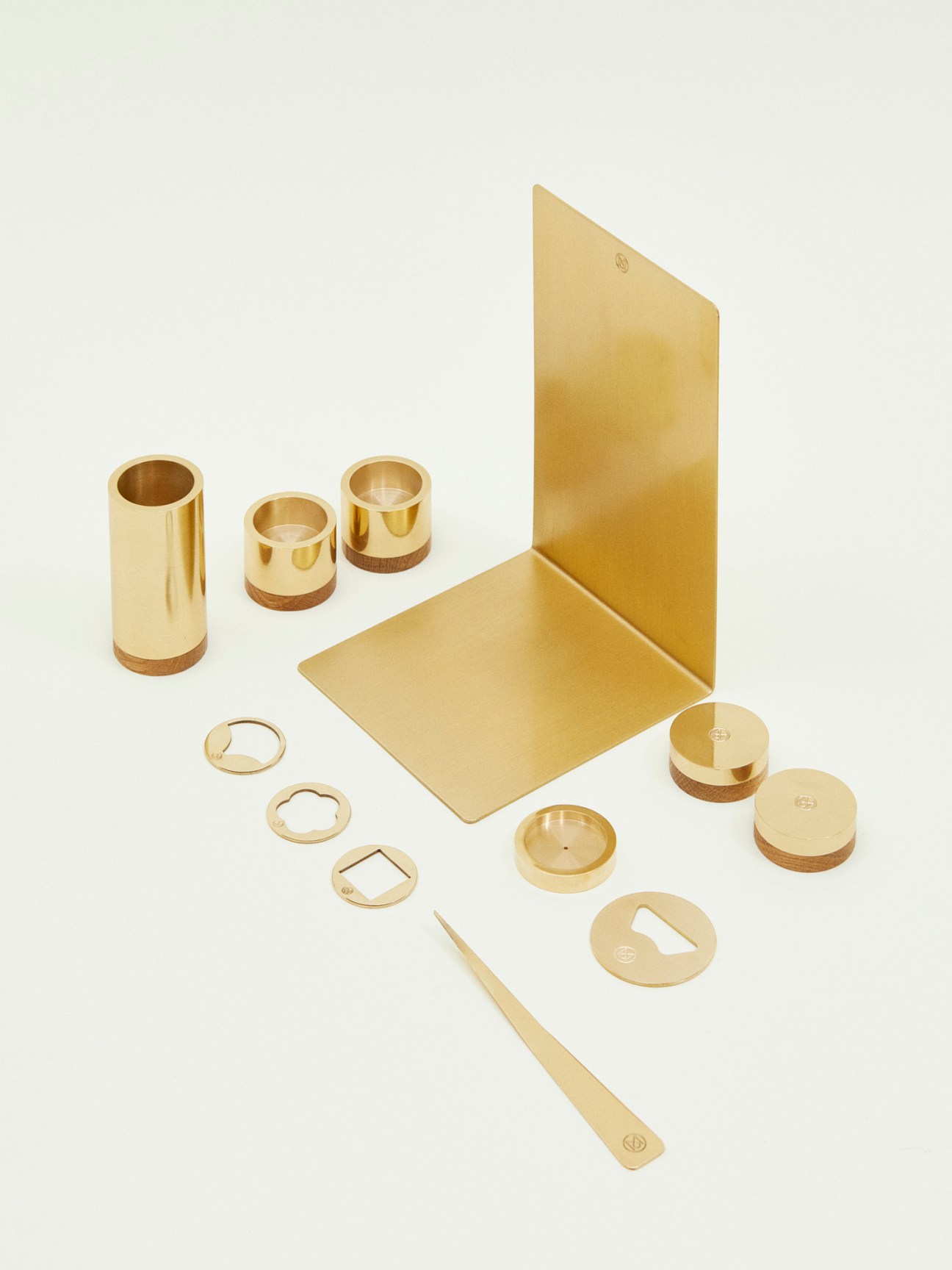
Made in: Hong Kong.
Materials: Brass and oak.
Keyrings: €18.
Bottle opener: €22.
Letter opener: €33.
Incense plate: €33.
Bookend: €50.
Paperweight (set of two): €77.
Pen pot: €105.
Candleholders (set of two): €133.
Shop now
Shoyeido incense – Nanshu
€20
Established in 1705, Shoyeido produces the highest-quality natural incense and is the preferred choice for most temples in Japan. Its newest scent, Nanshu, emits a deep and warm fragrance that features notes of sacred tree, sandalwood and chai spice. The vial contains 20 incense sticks, each of which burns for about 20 minutes.
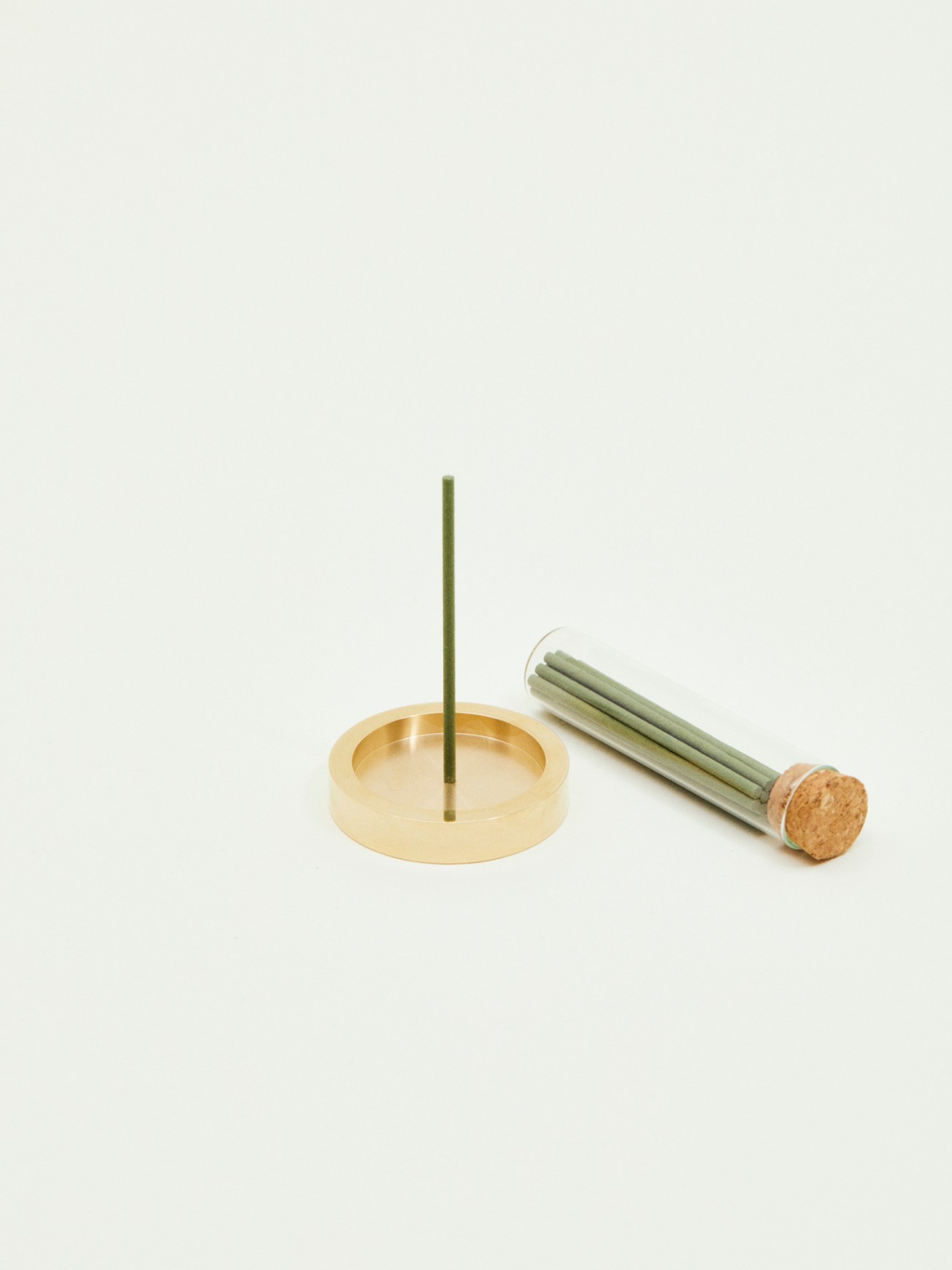
Made in: Japan.
Dimensions: 2cm x 9cm.
Shop now
Leuchtturm1917 x Monocle weekly diary 2021
€26
This 2021 diary contains weekly and monthly planners, plus an annual overview. There’s plenty of space for notes to keep on top of things and a special insert with 25 city profiles by Monocle, from Berlin to New York.
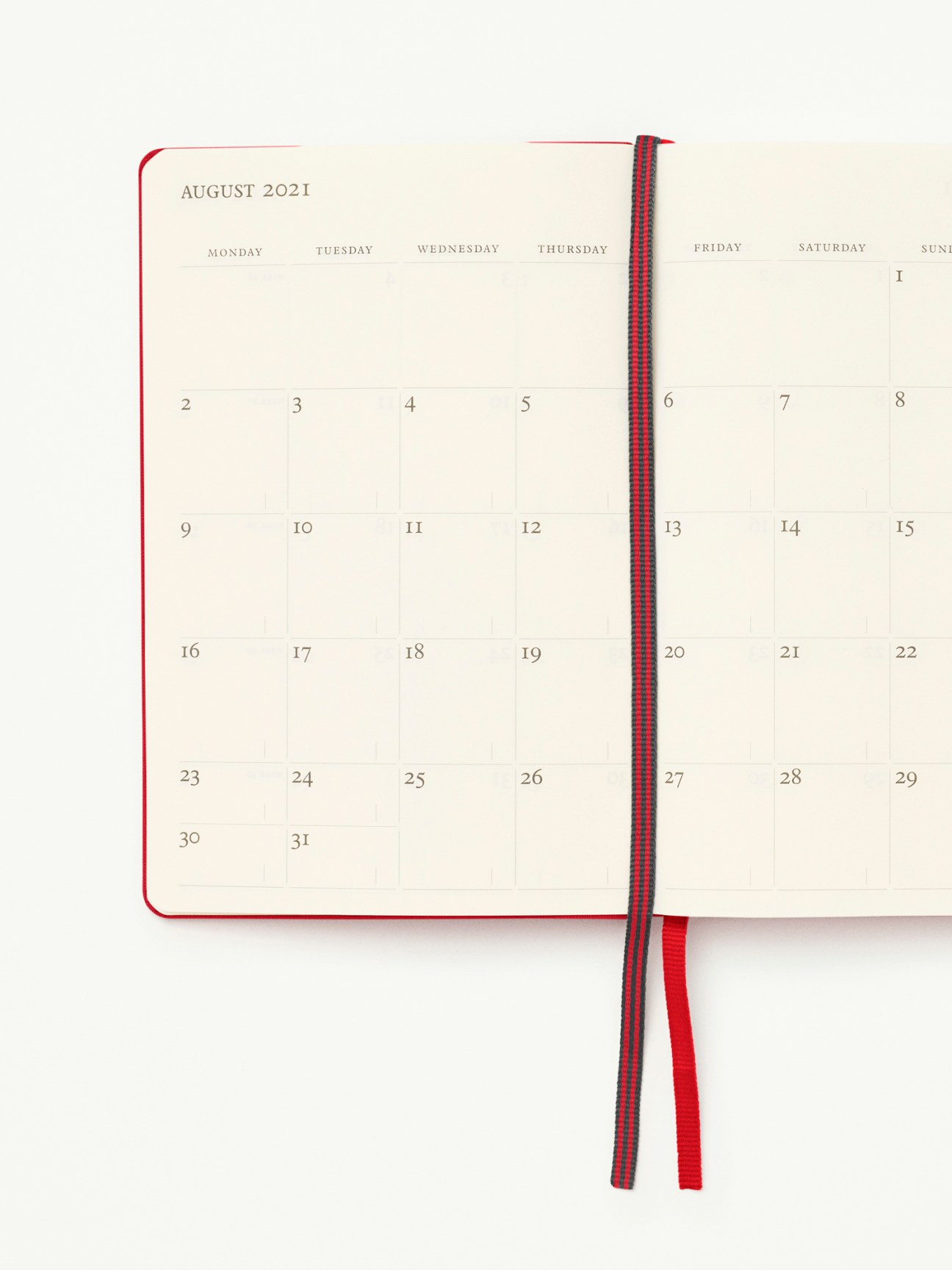
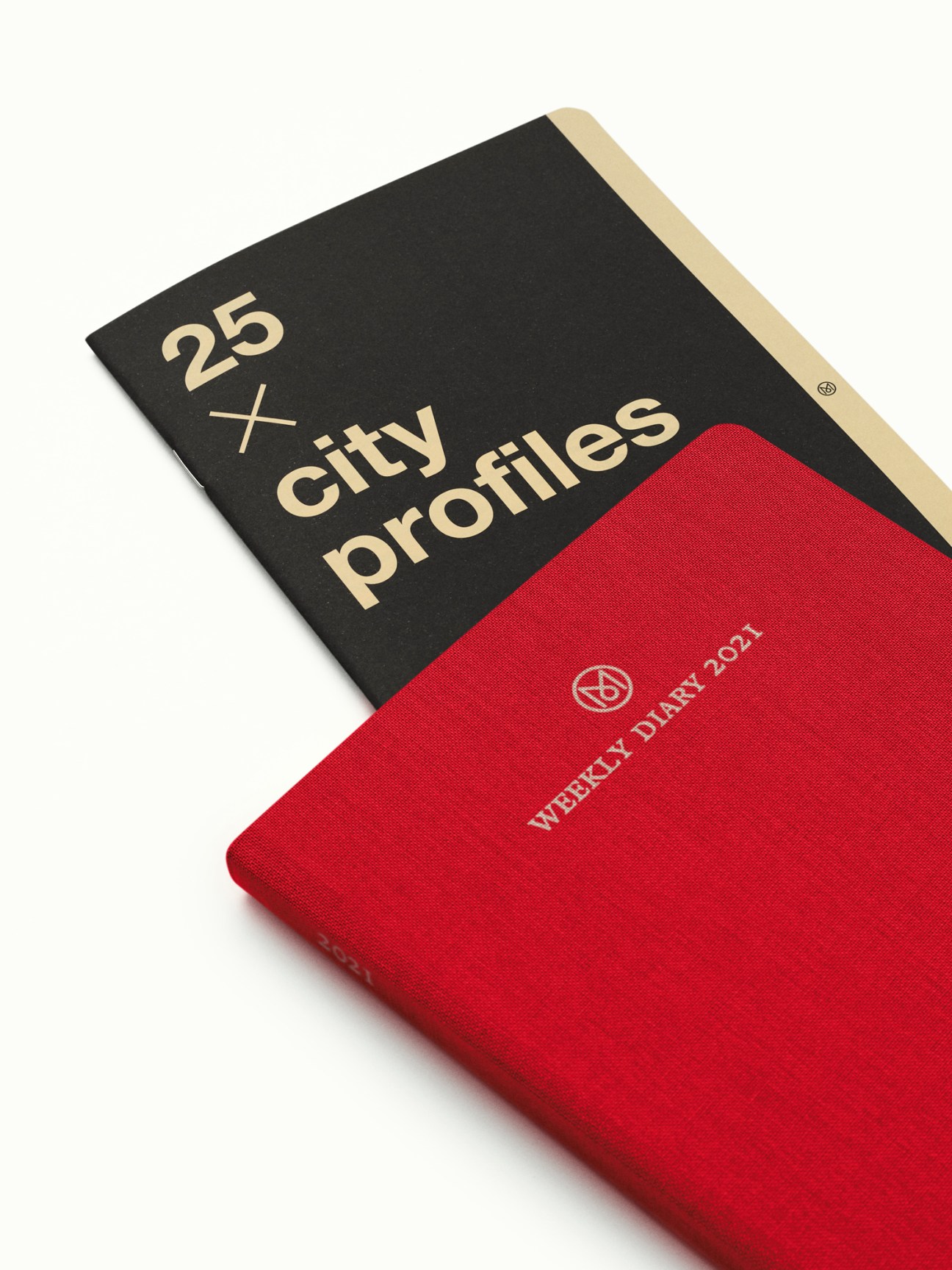
Made in: Taiwan.
Colours: Black, sand or red.
Shop now
Leuchtturm1917 x Monocle large B5 softcover linen notebook
€25
Our linen soft- or hard-cover notebooks come in three sizes, all with dot grid paper and with six pages of Monocle ideas for a quieter, more considered life.
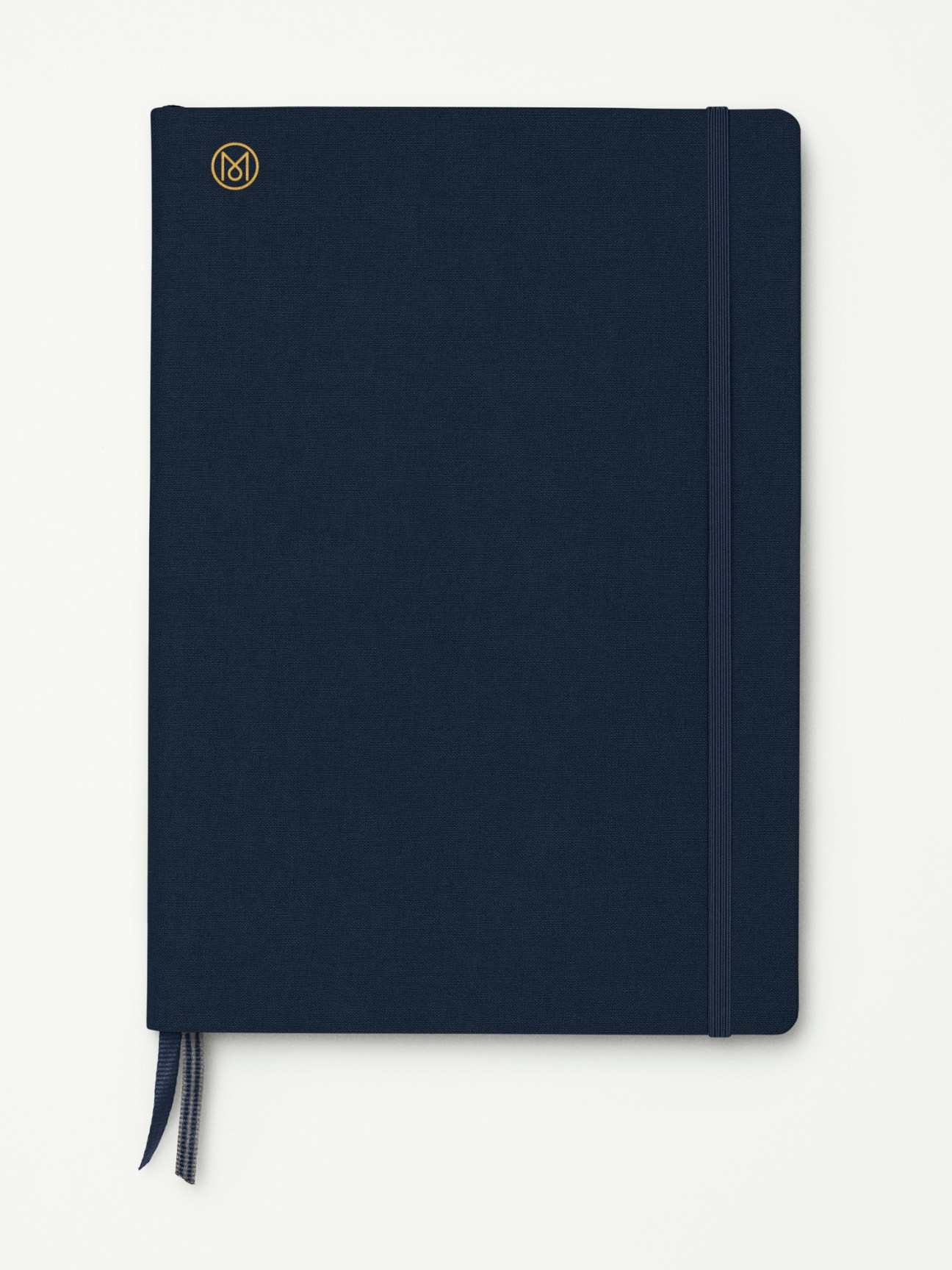
Made in: Taiwan.
Colours: Navy, Yellow, or Light Grey.
Shop now
Leuchtturm1917 x Monocle Drehgriffel pen
€25
This ballpoint pen, made to a design dating back to the 1920s, will keep your writing crisp. The pen works using a spring-loaded turning mechanism and is refillable. It comes in colours that match our notebooks and is a design object to behold, with a geometric hexagonal barrel and a pleasing weightiness that lends to its retro quality.
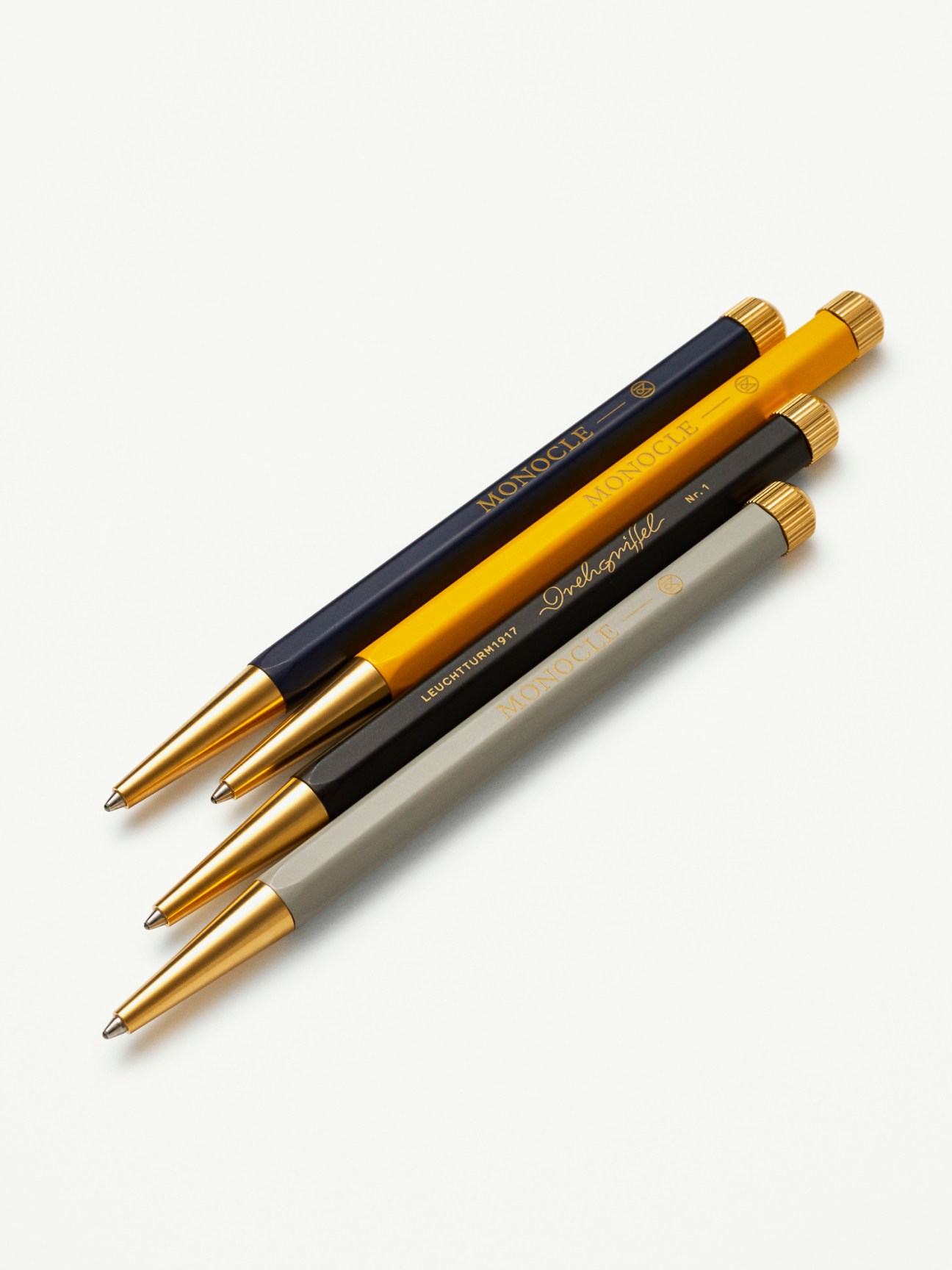
Made in: Taiwan.
Colours: Navy, yellow, light grey or black.
Shop now
Organic Basics x Monocle recycled cashmere beanie
€70
Copenhagen brand Organic Basics is serious about eco-friendly fashion. For its line of winter accessories, it worked with an Italian textile factory that specialises in recycled cashmere.
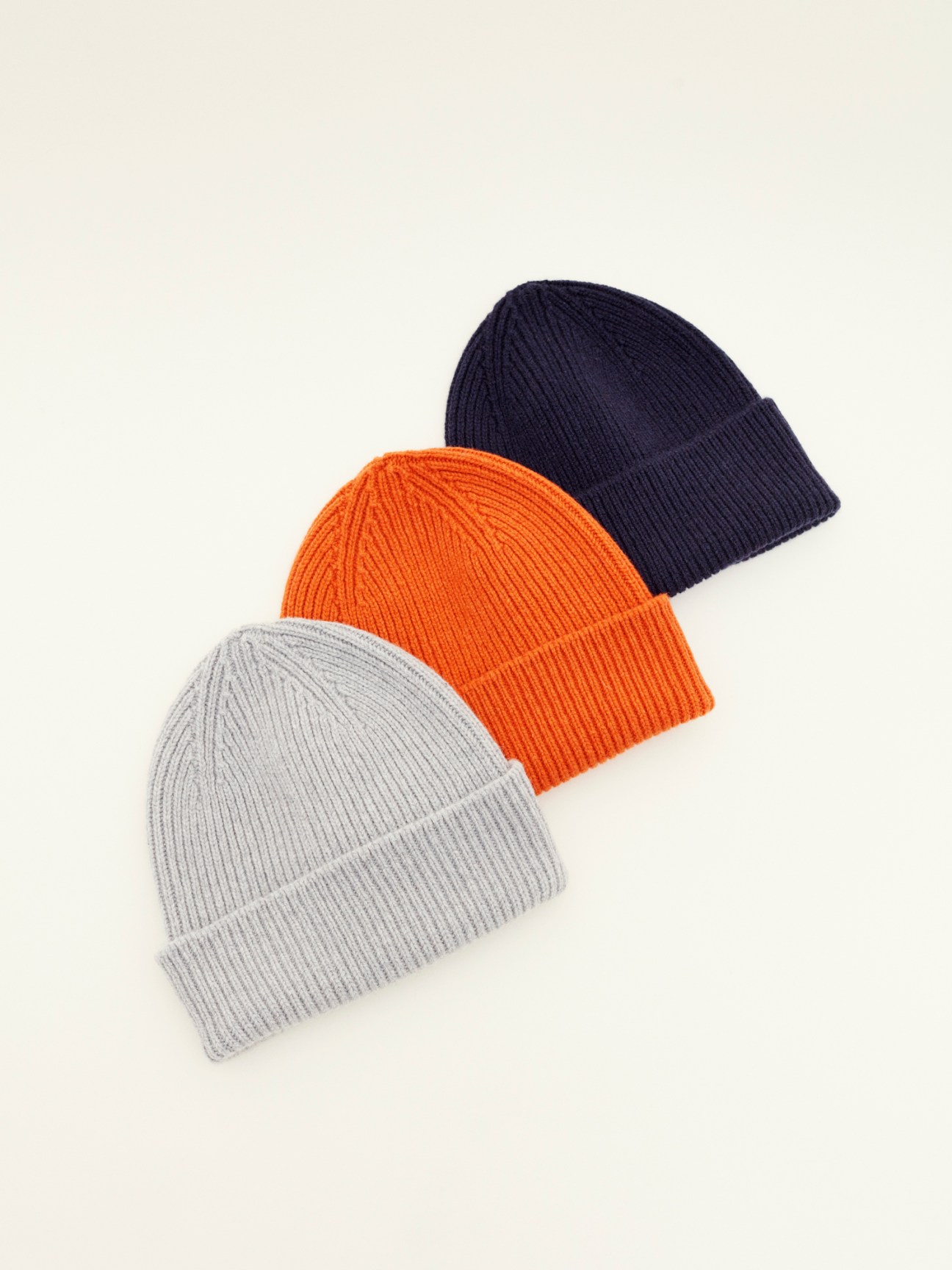
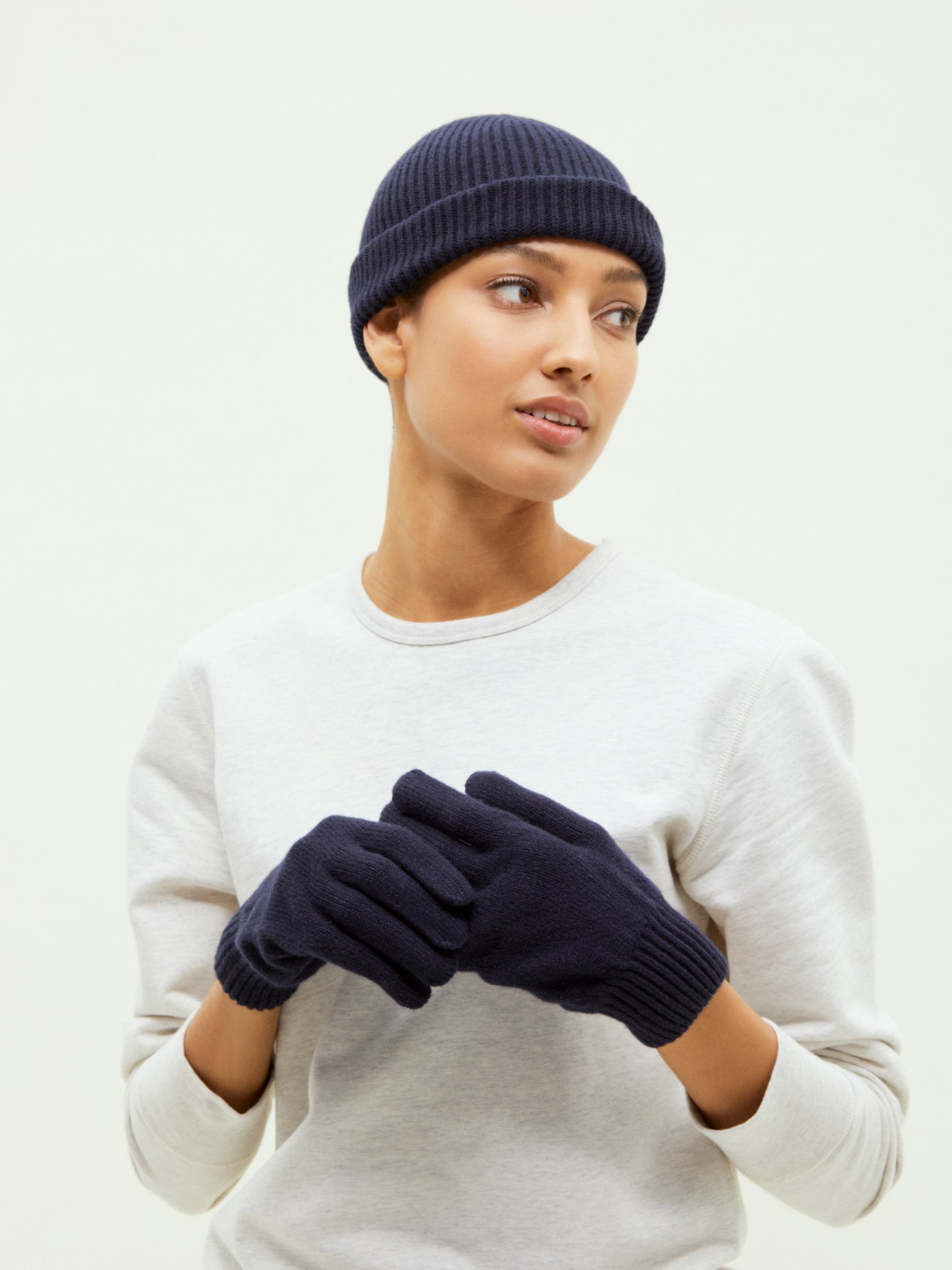
Made in: Scotland.
Material: Cashmere.
Colour: Grey, navy or hot orange.
Shop now
Porter x Monocle zip tote with pouch
€365
Our zip tote is a flexible carryall that would suit a business trip or a weekend away. There are multiple interior pockets and a detachable pouch for smaller items and valuables. The top flap keeps everything secure and there are zipped pockets for access to essentials. It comes with a detachable shoulder strap.
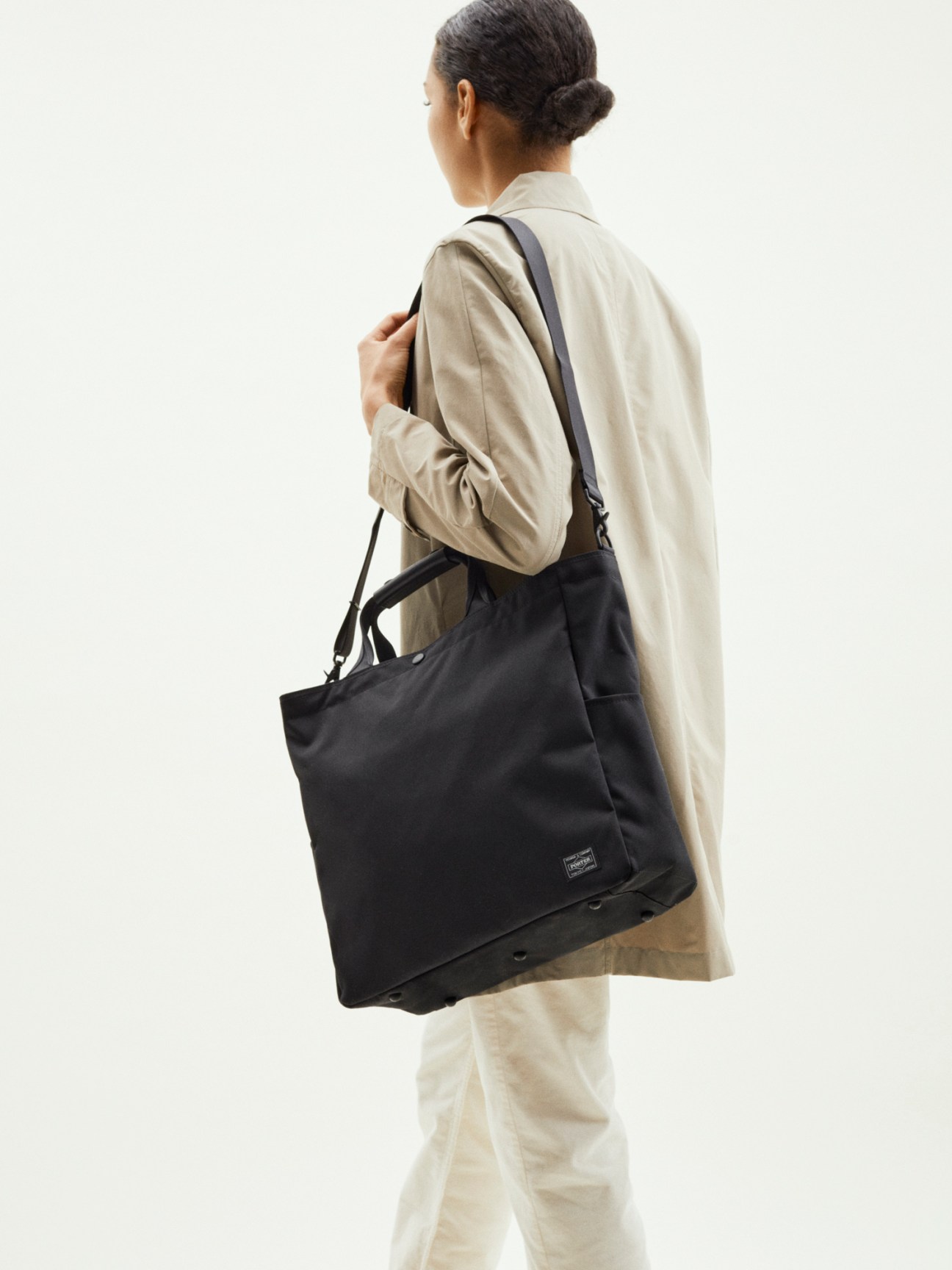
Made in: Japan.
Material: Cordura.
Colour: Black.
Shop now
De Bonne Facture x Monocle easy trousers in fine corduroy
€345
These fine-cord caramel trousers from De Bonne Facture are comfortable and chic. Sewn in Paris by Atelier Masla from 100 per cent cotton corduroy. Smart from the front with a stretchy back waistband, they’re a good travel choice and will withstand winter weight gain.
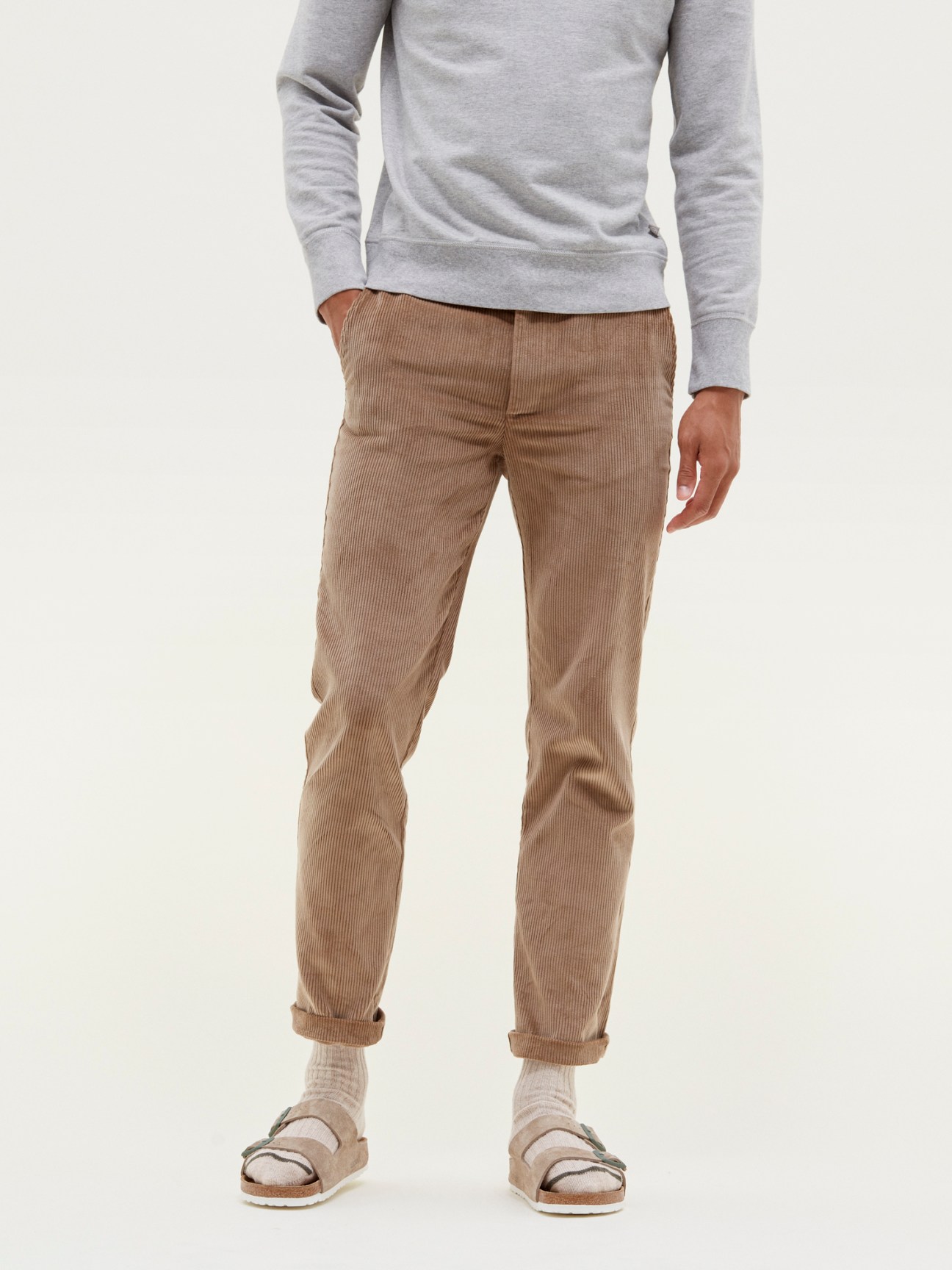
Made in: France.
Material: Cotton.
Size: 46-56 (EU).
Shop now
Bally x Monocle curling boot
€495
Bally has been linked with curling since it kitted out the Swiss team for the 1956 Olympics. We’ve teamed up with the luxury brand to put a spin on its beloved high-performance, water-resistant boot; its handsome rubber-coated leather upper, comforting wool lining and sturdy Vibram sole makes it perfect for mountain hikes and city strolls alike.
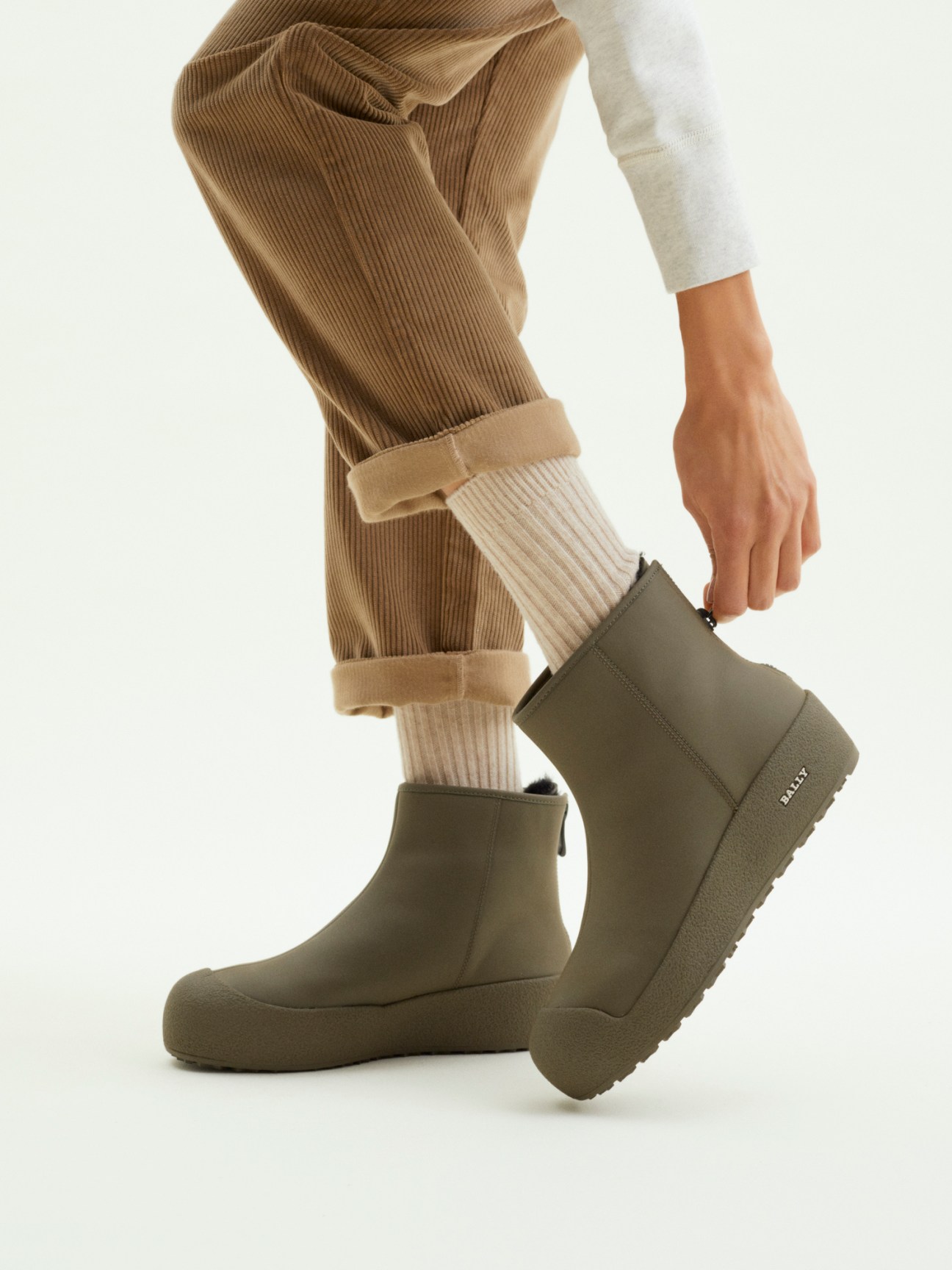
Made in: Switzerland.
Materials: pvc-coated leather and wool.
Sizes: EU 37-40 (narrow fit) and 41-45 (normal fit).
Shop now
Arpenteur x Monocle contour wool jacket
€475
The latest update to Monocle’s collaboration with the French brand Arpenteur. This jacket, made in Lyon from boiled Pyrenean wool, has a stand collar, raglan sleeves and neat angled side pockets.
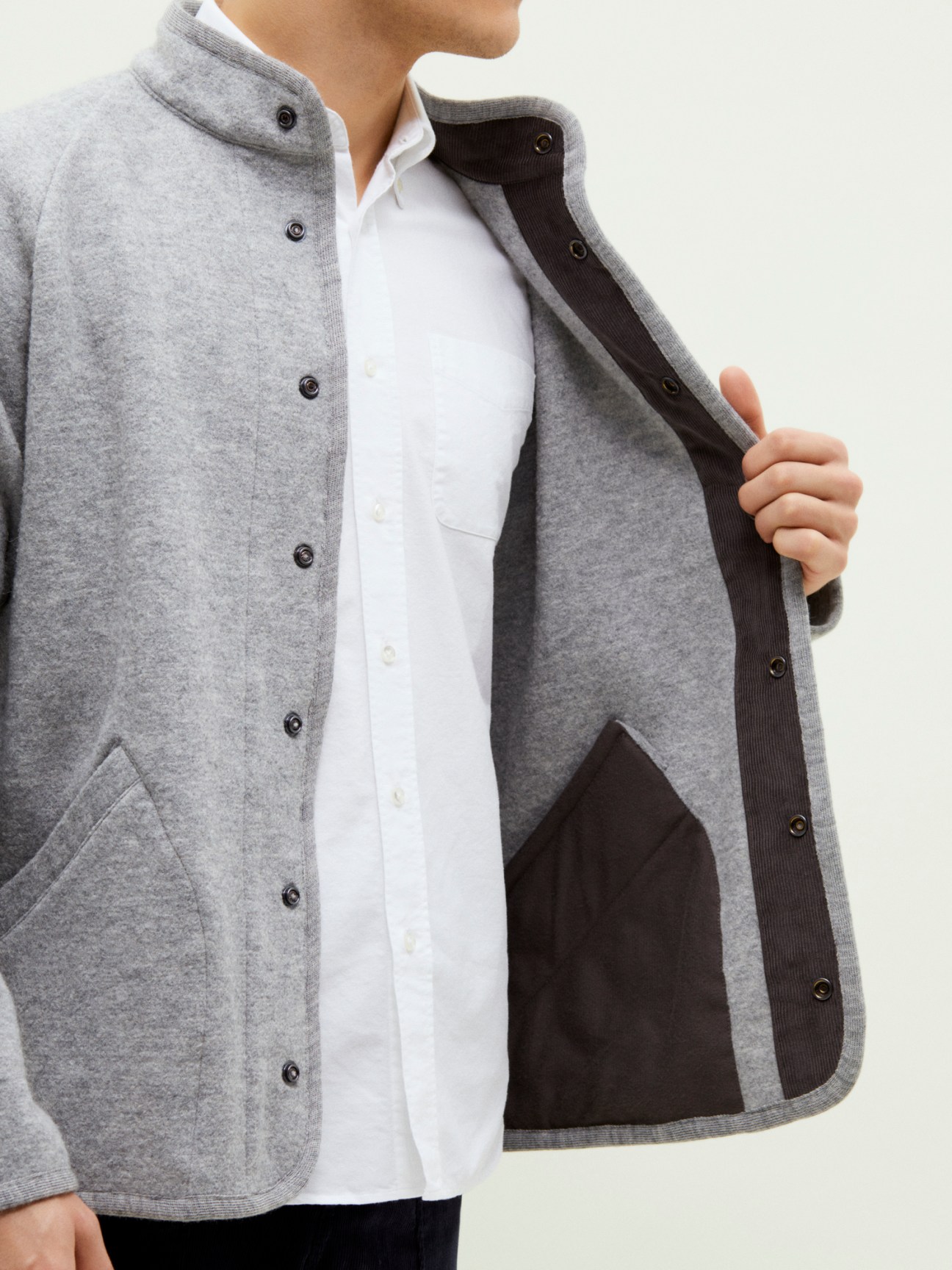
Made in: France.
Material: Wool.
Shop now
Porter x Monocle travel tote
€395
Made from Japanese paraffin-cotton canvas by Fuji Kinbai, the travel tote is perfect for both work and play. It features a separate padded pocket for a 13-inch laptop and a bigger space for loose items or even an outfit change on a short business trip. It also has a strap designed to attach over the extension handle of your suitcase.
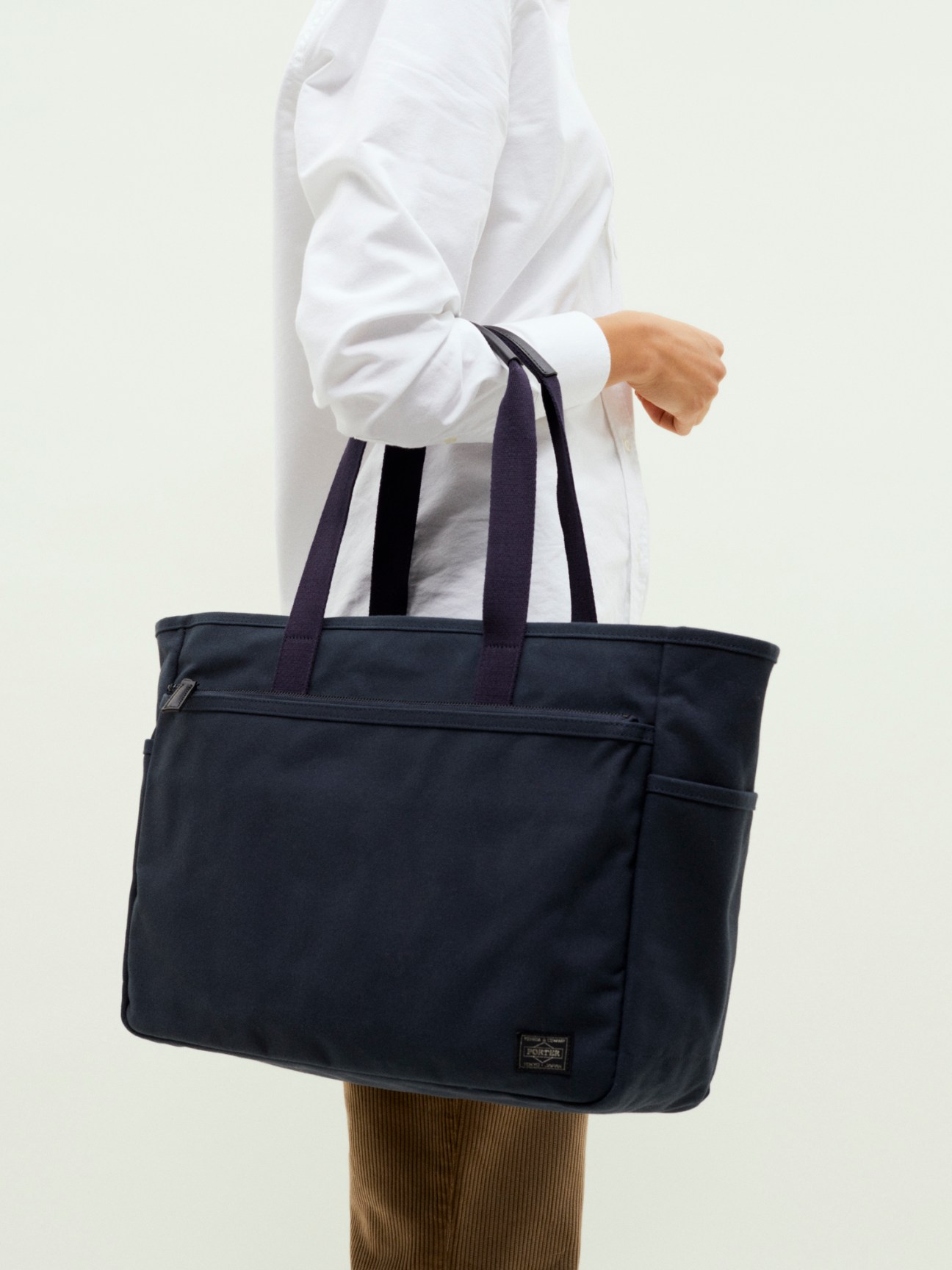
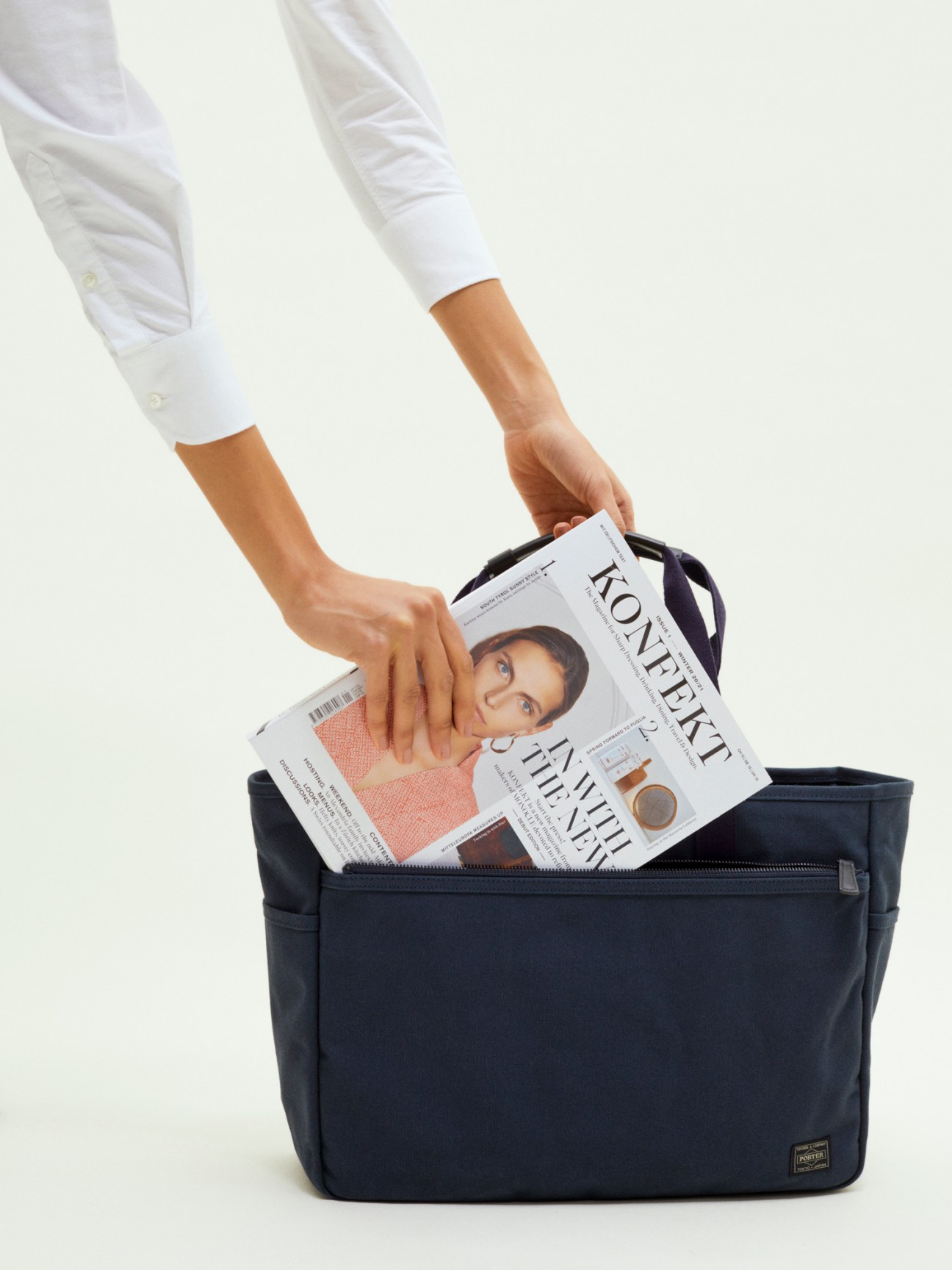
Made in: Japan.
Material: Cotton.
Colour: Navy.
Shop now
Hair & Make-up: Sam Basham
Styling Kyoko Tamato
Models: Lauren Borgers, Warner
Fill it up
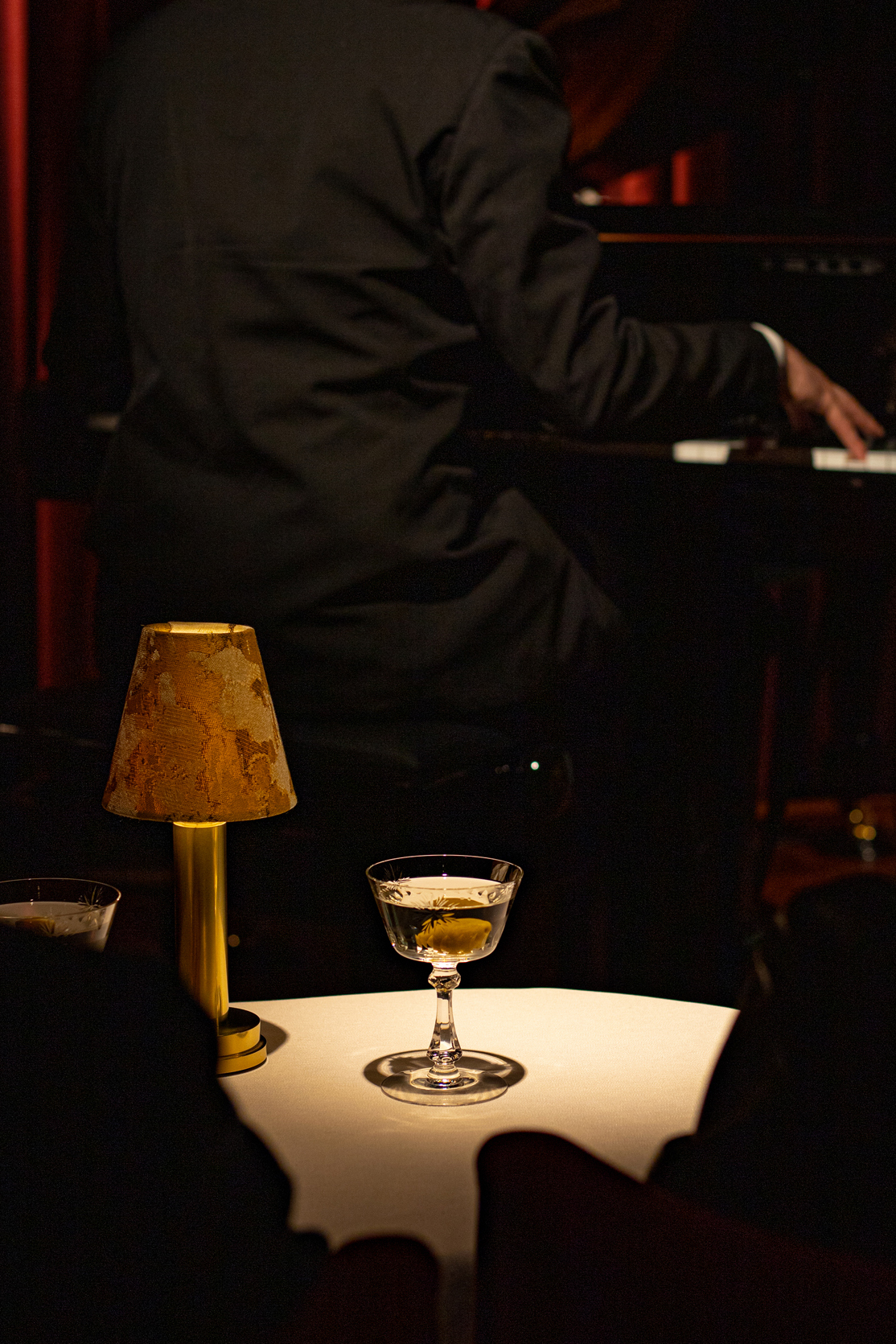
To compile our 50 ways to hit play in 2021, we sent our correspondents all over the world. But the simple joy of pulling up a chair in a favoured bar or restaurant is universal. Our Hong Kong bureau chief James Chambers was able to do just that at Carlyle & Co, where he kicked back with a martini. In that spirit, we’d like to finish by toasting all our readers and wishing you plenty of happiness in the year ahead.
Lead a merry dance
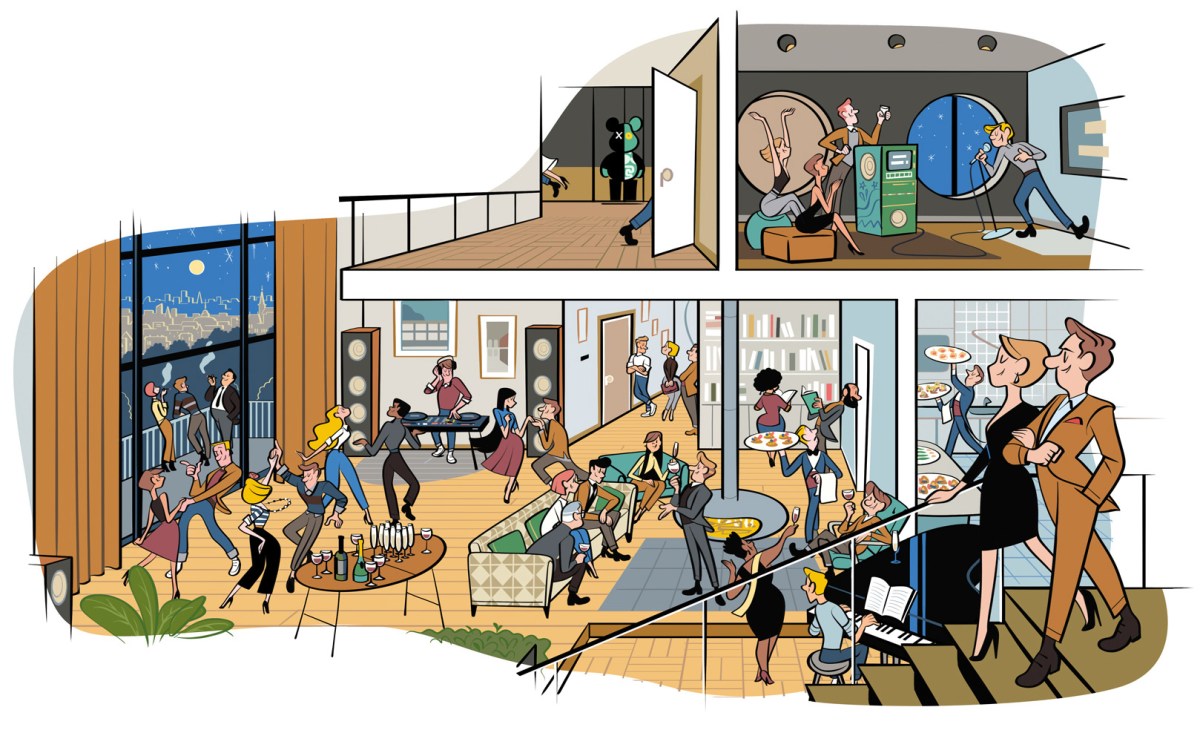
Even if it’s a few months away, it’s never too early to plan a party. After all, a proper bash requires preparation. There are guest lists to think about, caterers to book and music to select. The most memorable parties are busy, boozy and bold. They bring together your beloved friends and people who you haven’t come to know yet; they encourage random encounters, which in turn inspire kisses by bedtime; and they’re the perfect occasion to play cupid or to let your hair down. A little decadence, paired with smart outfits and a few thoughtful details, will help to make it an evening (and possibly a hangover) that lives long in the memory.
Tips for hosts:
1.
Romero Ferro & Luiz Caldas “Love Por Você”
2.
Whale Island “Ain’t Nobody Straight in LA”
3.
Nova Miller “Mi Amor”
4.
Satin Jackets “Think About It (Jack Tennis 80s Dub Remix)”
5.
Lola Le Lann “Portofino”
6.
Engelwood “Dance Dance”
7.
Bosh “Slide”
8.
Poolside “Getting There from Here”
9.
Kylie Minogue “Real Groove”
10.
Fatima Yamaha “Day We Met”
11.
Hervé “Addenda”
12.
The Pirouettes “Il N’y a Que Toi”
13.
Elodie “Guaranà”
14.
Dornik “Do You Wanna (featuring Gavin Turek)”
15.
Yelle “Karaté”
On the button
If you don’t have a DJ, or just want to give them a break, then a well-edited playlist is one way to keep your guests moving. After all, you don’t want to be lining up songs all the way through the night or, worse, allow your friends with the poorest taste to take control of the music with their questionable fascination for 1980s hair metal or experimental jazz-flute solos. Monocle’s music team has put together a few fresh recommendations that should keep toes tapping and hips swinging for the evening. It’s a truly international affair, encompassing sounds from Scandinavia and Italy to the US via Brazil – not to mention a certain Aussie pop queen. So just press play.
Tips for hosts:
1.
Make room for a dancefloor
Move sofas and rugs out of the way so you won’t stifle pirouettes, shaking hips or, heaven forbid, the late-night impromptu conga line.
2.
Plan a cosy chatter station
Those who need a break from the action (or prefer gossip to the gambol) need a soft, upholstered corner in which to unwind.
3.
Show off your keys
Your piano will never get as much action as tonight. So let the amateurs have a go – you might be shocked to discover that your work colleague is something of a secret Chopin.
4.
Hire a professional
A seasoned DJ who’s an old hand on the decks will know how to read the dancefloor and keep the party guests spinning.
5.
Set the bar high
Ease of pouring is important when setting up your drinks station. Keep it simple: one variety of red, one white, some bubbles and fail-safe gin and tonics.
6.
Get some fresh air
The smokers among you will need a balcony on which to indulge their addiction (and, of course, to have the longest and most meaningful conversations).
7.
Fill up the belly
Sustenance is key. Other than dinky canapés with the aperitif, remember that few things are as well-received as a midnight snack.
8.
Make an exit
Passion is best consumed off the dancefloor and is one of the few excuses for not saying your goodbyes to everyone. It won’t be long until someone asks: “Where did they go?”
9.
Sing your heart out
We’ve always been partial to a karaoke session. Set up your booth in a separate room, in case your performers are not quite ready for the stage.
10.
Be patient
The queue outside the bathroom door famously sparks chinwags, friendships and the occasional inspired idea. Embrace it – who knows who you’ll be stood next to?
Get some perspective
San Francisco’s hills and nearby forests are good for two reasons: to take a break from city life and, when necessary, to escape the elements. A good-weather day offers the opportunity to climb a myriad of smaller hills within the city limits – the moniker “Seven Hills of San Francisco” sells the city well short. Easy options include Corona Heights Park (pictured), which offers stunning views from its peak and sits in the heart of the city. And on a bad-weather day (any unfortunate tourist caught out on a cold and foggy San Francisco day wearing shorts and a T-shirt knows what I’m talking about), one only has to head across the Golden Gate Bridge to leave the city’s peculiar peninsula-induced weather system behind and enter the miraculously warmer climes that make northern California such an attraction.
On the other side of the strait is Muir Woods, a national park that’s filled with the skyscraper-sized redwood trees that this region is famous for. The casual walker can enjoy some quiet contemplation along the wood-paved paths near the entrance (the redwoods make great listeners), while the more adventurous can hike up through the forest. You’ll find yourself rewarded at the top when you break through the trees and look down at Stinson Beach below, and across the blue waters of the Pacific Ocean.

The beauty of a good hike is that it stays with you. I indulged in the Muir Woods walk for the first time more than a decade ago but I remember reaching the top and breaking through those trees as though it was yesterday. I’ve returned multiple times since but, let’s face it, you never forget your first time. Sure, a beach holiday will stick with you too but – this might be the mountain-loving Austrian in me talking – I find that the fresh air that comes from a good hill walk is something you can almost taste, or even escape to if you close your eyes on a rainy day back at your home or place of work. Just don’t let the boss catch you daydreaming.
But even daydreams need fresh material to draw on. So during the winter I head to the Alpine mountains of my birth nation for some skiing – I find the breeze and mountain air as rejuvenating as the sport itself – while in the summer I aim to criss-cross the national parks of my second home, the US. You’ll find me back there this summer, seeking that soul-cleansing hike that we all deserve (and should be promising ourselves) as a way of clearing the air and starting anew after a tumultuous 2020.
Live together
In a world of choice, why, when it comes to the place we call home, do we so often compromise? From boxing ourselves up in tiny urban flats to signing our financial independence away for a suburban block in a place that we hope will one day be interesting, most of us live at the mercy of rigid housing systems. So what if we were to suggest an alternative? A model that broke from the mould and could bring you more happiness at a lower cost? Well, you’d probably question our sanity, particularly when we tell you said model is more than 100 years old. Yet the ideas that define the kibbutz, a collective way of living established by Jews heading to Israel from Eastern Europe at the turn of the 20th century, feel as relevant today as they did then.
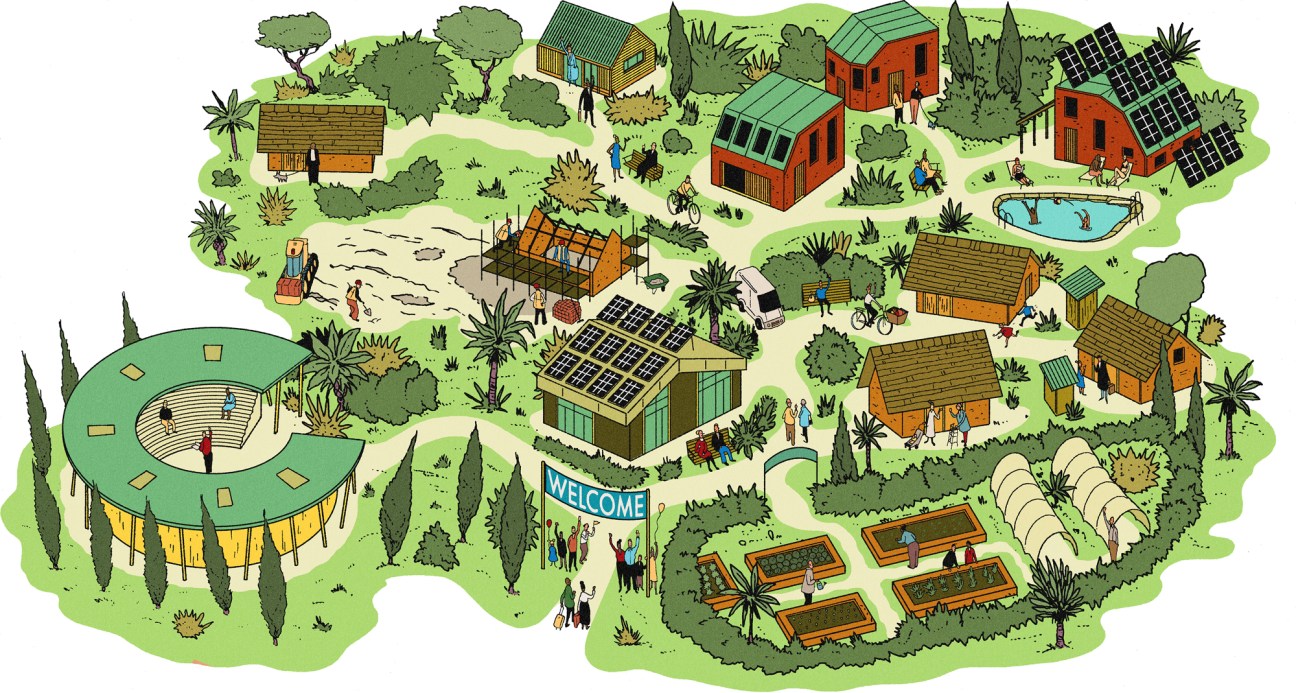
Kibbutzim brought together pioneering groups of people from different families and generations, and saw them forge self-sufficient communities. The thriving agricultural economy of Israel grew off the back of these settlements. Decisions tended to be managed democratically and everyone pitched in to not only farm land productively but make the kibbutz truly liveable. Benefits included community childcare, produce-rich dining halls, quality (and free) education and a decent social life to boot.
Dig deeper into ideas defining better housing models the world over and you’ll see striking similarities to the kibbutz. Singapore’s social-housing system blesses big apartment blocks with government-supported food courts. In Switzerland, self-governing collective housing developments are becoming increasingly desirable.
While we won’t get into how the rise of the free market and individualism rendered the kibbutz out of date, what we will say is that this model could impact housing developments going forward. In 2020 we all craved better connection and reconsidered what “home” meant to us. Many discerned that housing facilitating a sense of community was more valuable than an extra parking space or higher ceilings. This is pertinent information to developers and architects, with the more progressive among them already re-thinking the housing agenda into something more social. With this in mind, we’ve established a manifesto that defines Monocle’s Modern Kibbutz.
Tips for creating your model:
1.
Forge a diverse crew
The founders of your kibbutz should come from diverse backgrounds and age groups. In practical terms it means that the elderly feel included (and can act as babysitters for working parents), while all residents benefit from each other’s expertise and experiences.
2.
Share with care
A sharing system of mobility options, from bikes to cars, is most appropriate in this climate-conscious age. It also means that, with the kibbutz’s combined spending power, a handsome fleet of shared vehicles can be acquired.
3.
Build a variety of housing
While older residents need ground-floor dwellings with easy-access features, younger tenants might be happier to occupy more private, higher reaches. “Barrier-free design is fundamental,” says Ben Nott of Switzerland’s Blanco Architecture and Design, a specialist on community buildings, who adds that it’s worth spending more on wider doors for wheelchair access.
4.
Come together around fresh produce
While we’re not saying that your community should be funded by agriculture, there is a sense of joy that comes from growing your own food (and maybe making a few bucks on the side). While certain aspects of self-building take time, creating a flourishing vegetable patch in a matter of months can provide inspiration and confidence in the kibbutz’s grander goals.
5.
Provide a warm welcome
Hospitable design is often left by the wayside when it comes to communal areas in private developments. “Try to make them as inclusive as possible,” says British architect Sarah Wigglesworth, whose firm focuses on designing “people-centred places”, including community developments. “Children and young people need to feel welcome alongside the dog-walking fraternity and people with strollers.”
6.
Regenerate a village
Going rural is a great option for a new community development, particularly if there’s some decent existing housing stock to fix up. In doing so, broader rural regions can be revived. “The Swiss have the concept of the second home, the rustico,” says Nott. “Rustico life can now become a permanent one: the status quo has been revised because a lot of people doing the nine to five can do it from anywhere they want these days.”
7.
Work together
Working alone from home can be convenient but also isolating, as many of us learned in 2020. Collective workspaces, like those that progressive Melbourne housing and office developer Hip V Hype creates, are places where workers from different professions can collaborate with one another and draw upon diverse skillsets.
8.
Employ energy-conscious building design
Even in a rural setting, the grouping of housing closely together is a wise way to conserve energy. Nott points out that “massing” housing means heat generated from appliances and our bodies provides more warmth than we realise. But skimping on insulation is not an option. We all need the comfort of silence and privacy in our homes – no matter how friendly our neighbours, there are some things we don’t need to share.
9.
Take ownership
No matter how well-intentioned the social ideas of architects of contemporary private apartment blocks are, a lot of their best thoughts get sidelined by profit-minded developers and property managers. With a kibbutz, the self-builders set the agenda for the way the property should be run. Just make sure you have some smart architects in your gang from the beginning.
10.
Have fun
All this vegetable growing, home building and community organising needn’t be a chore. A kibbutz should be a place where ideas are explored and a collective mindset creates better ways to live. So have fun!
Let there be light
“People need bright, colourful pieces that give them energy and lighten their homes,” says Ismail Tazi, the French-Moroccan co-founder of homewares brand Trame. He’s referring to his company’s latest collection of wares: bright ceramics produced in Seminara, southwest Italy. The small Calabrian town has an artisanal tradition of making fantastical pieces with designs laden with symbolism, painted in a wild medley of custard yellow, deep green and blue. They are hues not typically seen in the pared-back interiors of the modern home but ones deployed joyfully and generously by the designers he commissioned for this project.

In Seminara, Parisian architect Sophie Dries, artist Giovanni de Francesco and Greek duo Eleni Petaloti and Leonidas Trampoukis, the pair behind the design studio Objects of Common Interest, worked with local artisans in crafting the wares – and learnt from them too. The process resulted in the design language of ornate masks typical to the area – traditionally meant to ward off evil spirits – being translated into handsome decorations to hang on walls in sharp shots of green and light blue.


Contemporary designers should be less shy to draw from different heritages, even if this goes against the grain of current trends or industry norms, says Tazi. And his Trame concept – where every collection of carpets, blankets and ceramics is inspired by the craftsmanship of a selected Mediterranean region – tends to create colourful results. An earlier journey to Meknes in northern Morocco yielded iridescent pink tableware and citrus-yellow Berber wool rugs by Swiss-French designer Julie Richoz.
“Some people think that they might get bored [with the colour] over time,” says Tazi. “But when you know that the object is the result of a technical and intellectual process, that the exact shade has been carefully picked out by the designer, then what it brings to your home is different. It’s ultimately about valuing the design.” Monocle agrees: though your home might not have a view of the Mediterranean, a well-appointed pop of colour can do wonders.
trameparis.com
Brighten up your living space
While a warm neutral palette can enhance the cosiness of your home, infusing it with some bright pops of colour will add much-needed vibrancy into your living space. Here are some pieces that provide that spark, without setting your whole interior design scheme on fire.
Pedrali
Italy
The hardy metal outdoor furniture by Italian brand Pedrali is given a lighter touch than most, with some handsome shades of red, orange and a lovely lemon yellow.
pedrali.it
Fritz Hansen
Denmark
Last year the Danish furniture maker commissioned the Italian editor and taste-maker Carla Sozzani to update its mid-20th-century Arne Jacobsen Series 7 chair, with a bright but tasteful new colour palette.
fritzhansen.com
Established & Sons
UK
Amsterdam’s Sabine Marcelis is a master of managing to meld fluoros and bright colours into her designs. Her latest victory in the vibrancy stakes comes in the form of the pink and yellow Aura lighting bars made in a semi-translucent resin for the British furniture manufacturer Established & Sons.
establishedandsons.com
Super soaker
Yoga classes and vinyl records aren’t typical features of the traditional Japanese sento (a public bathhouse) but these are challenging times for the bath business and Takuya Shimbo, owner of two such Tokyo venues, is doing everything he can to keep this beloved slice of Japanese culture afloat. Shimbo, 41, is the third-generation owner of Daikoku-yu, a 71-year-old bathhouse in northern Tokyo.
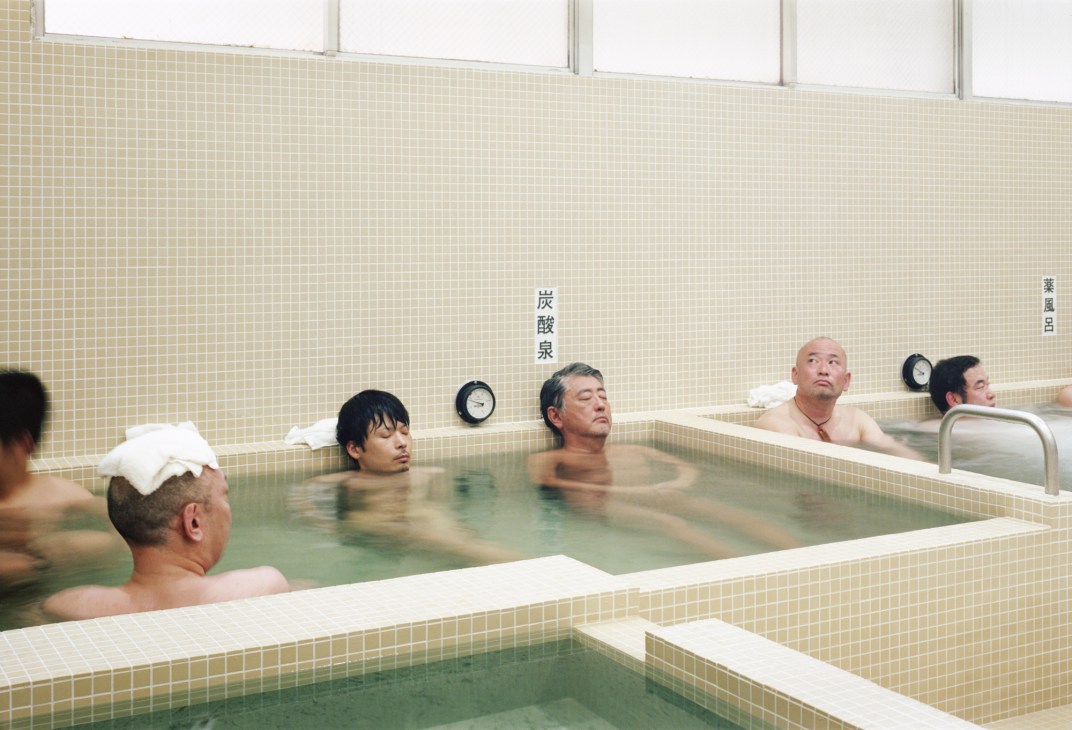
Three years ago, he and his wife Tomoko also took over Kogane-yu, an older bathhouse five minutes’ walk away. At one time there were thousands of sento in Tokyo. An essential feature of any neighbourhood, the sento provided communal bathing facilities when few people had baths of their own. Now that 95 per cent of people have bathrooms at home, the customer base is shrinking and, while some sento survive gloriously intact, many others have closed. Shimbo is determined that the sento won’t be scrubbed from Japanese life entirely – in fact, it could yet clean up.
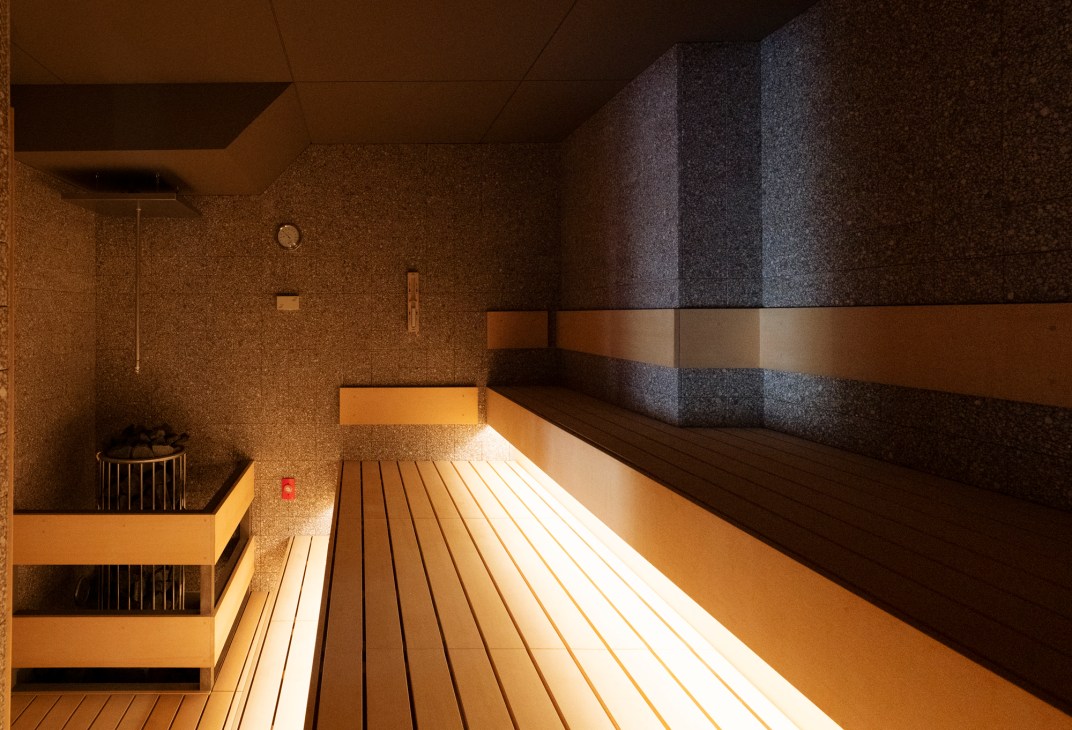
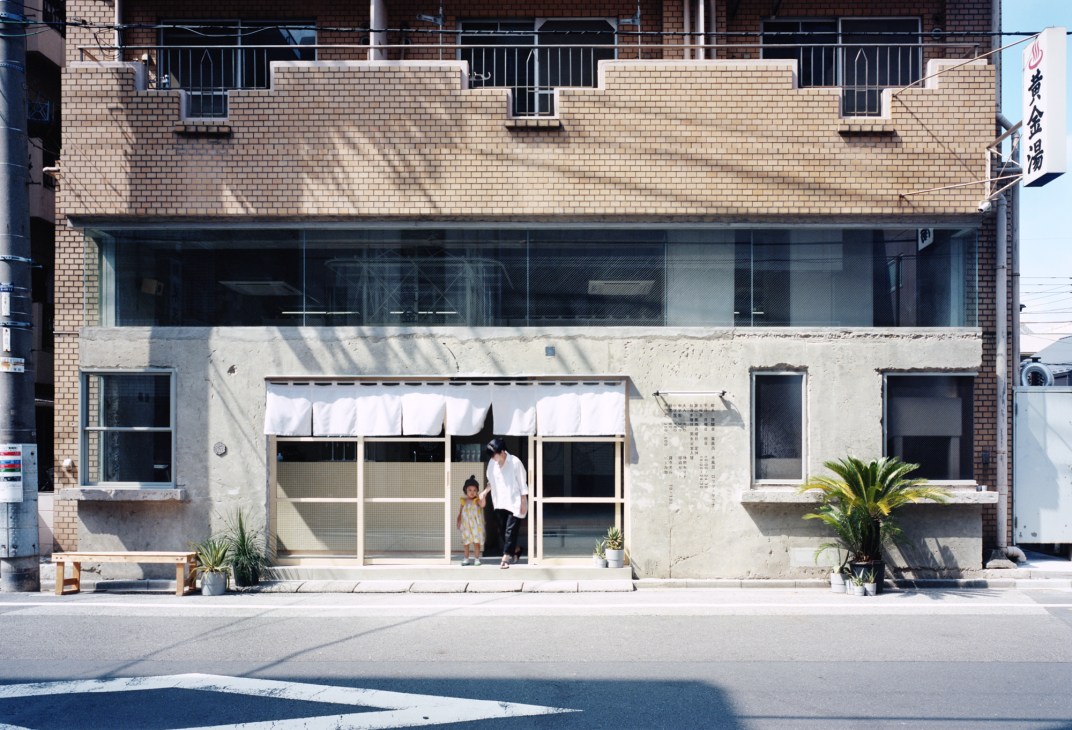
Shimbo had already introduced innovations, such as merchandise and all-night opening, to Daikoku-yu and, before the pandemic, was pulling in 800 customers a day (he says the average for a sento is about 120). He then decided to give the Kogane-yu premises a radical makeover. Artist Hiroko Takahashi pulled the project together, working with architect Jo Nagasaka (and his studio Schemata Architects), who was tasked with bringing the 88-year-old bathhouse into the 21st century. When coronavirus hit, Shimbo launched a crowdfunding appeal to keep the plan on track. The response was overwhelming: 1,034 people chipped in to raise ¥6.58m (€53,000) – more than double the original target.
The transformation is striking but for all its raw concrete, blonde wood and fresh tiling, Kogane-yu retains the core elements of the classic sento: the changing rooms, the noren fabric curtains which divide each room, the rows of low showers and, of course, the large segregated baths. The traditional Tokyo sento is also likely to have a vibrant mural of Mount Fuji, and “Fuji-san” is here too, albeit in a different guise, as interpreted by young artist Yoriko Hoshi.
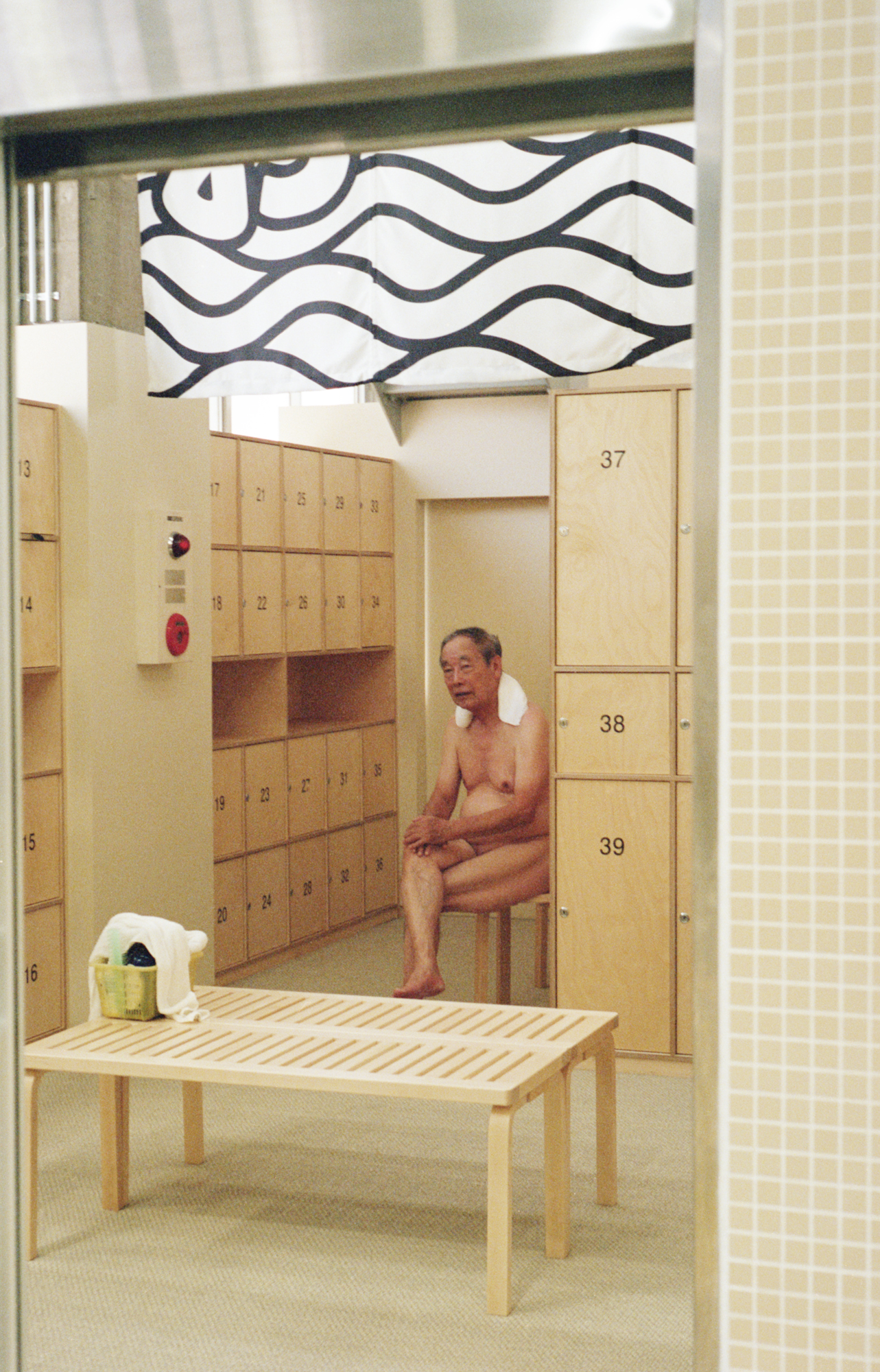
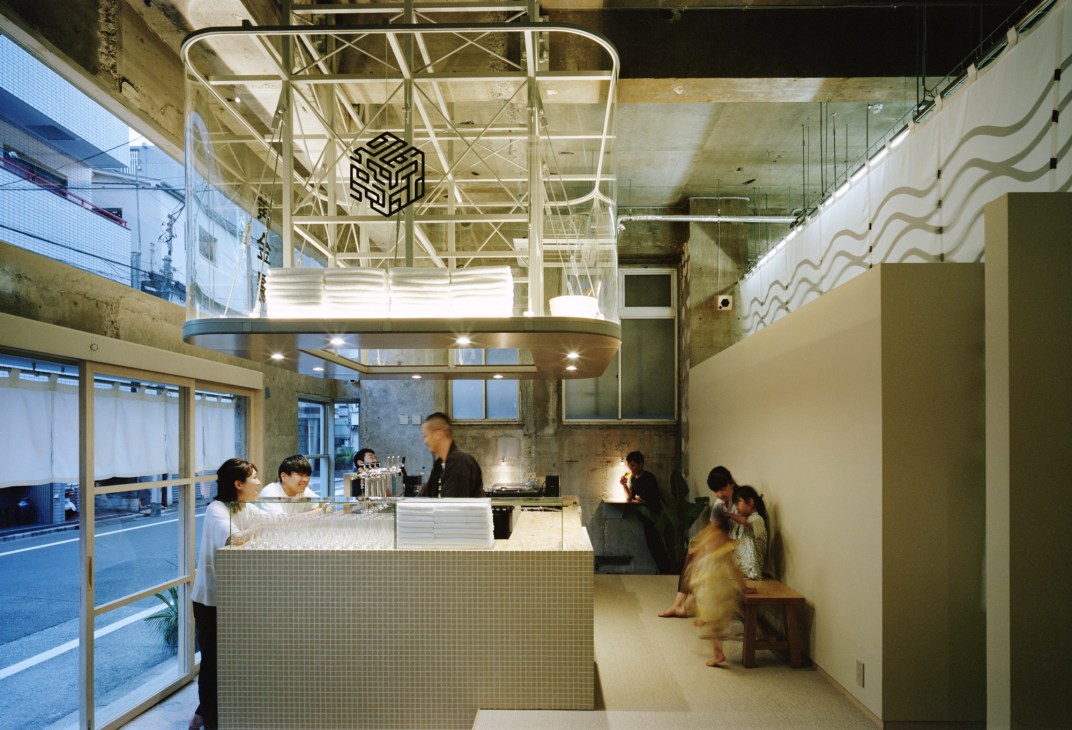
There are new additions too, including a cypress-wood sauna, a craft-beer bar and a schedule of events. The sento-going demographic is generally older but Kogane-yu is bringing in a fresher audience. “We play vinyl [in the background],” says Shimbo. “Analogue records are a great conversation starter between our young and older patrons. I really feel that the sento can play an important role in building communication between all of its customers. People in Tokyo and Japan love bath culture. Today more and more people from overseas are getting interested too. Business has been tough recently but this is a long-term project. We’re looking at the next generation, not next year.”
Regulars have always known that the sento is about more than bathing. It’s a place for the community; somewhere to linger and chat. And now a younger crowd is learning too. “Kogane-yu has been around for a long time,” says Shimbo. “And we want to keep it alive for a long time to come.”
koganeyu.com
Bathhouse etiquette
Travel light: there are lockers in every sento but they tend to be on the small side. Also, tattoos are no-no in most Japanese gyms, pools and public baths. Check before visiting.
1.
Take your shoes off at the entrance, put them in a cubby hole and head to the men’s or women’s side. A small rectangular towel is a standard piece of kit: rent or buy at the door.
2.
Leave clothes, jewellery and everything else in a changing-room locker and enter the bathing area, closing the door after you. No clothes allowed – if you have a problem with nudity, you’re in the wrong place.
3.
This part is crucial: before going near the bath, perch on one of the little stools and get to work on a seated top-to-toe scrub. Shampoo and soap are supplied but bring your own if you prefer something fancier. Rinse yourself and the towel thoroughly, run the shower over the stool and head to the bath.
4.
The water is likely to be hotter than any bath you have comfortably sat in before. Lower in gently (perching is not acceptable). No leaping around, no splashing and absolutely no soap. Find your spot and stay there.
5.
Once you start to go red in the face it’s probably time to get out. Get dressed and enjoy whatever facilities are on offer. Emerge into the cold air with a sense of wellbeing and a feeling of being heated from the inside.
Open books
Nadia Terranova
Keep a journal
Biography: Sicilian-born, Rome-based Terranova’s latest novel, Farewell, Ghosts, is her first to be translated into English. In Italy she has also published short-story collections and contributes to La Repubblica, Linkiesta and Il Foglio.

My relationship with keeping a diary dates back to when I was young. My aunt had given me Anne Frank’s diary and I remember that after reading it I was struck: somewhere in the world there had been a child like me who had been denied becoming a writer. I already knew that I wanted to become a writer myself, so from that moment on I decided that I would keep a journal. Just like Anne, I gave my diaries girls’ names and I’d write down all the daily vicissitudes that a girl that age goes through: school, friends, love stories and so on.
In Messina, my hometown, I still have about 20 of these diaries. I think I have such a good memory because I wrote down everything that happened to me. But it was after reading another book that my relationship with journalling evolved further. The book was Memoirs of a Dutiful Daughter by Simone de Beauvoir, which made me understand that you could make literature out of your own life. It was then that I started writing short stories – my thoughts started going into fictional characters rather than just myself. A novel might seem to require a much stricter approach to writing than a diary but you can find true freedom between limits, stretching them and sometimes betraying them.
Today I still have notebooks in which I freeze my thoughts and jot down notes, images and words that I might use in my books. I always use my wooden pens, made by an artisan in Ragusa; I don’t write without them. I believe that picking up the habit of writing on paper and finding that rhythm every day can take us deep, especially if we write about ourselves. The physical gesture of putting pen to paper requires a small effort but that effort is a step towards ourselves that we wouldn’t otherwise take. Even if what you’re writing is faithful to reality, by choosing what to omit and what to tell you’re not doing something that’s much different to what writers do with their work – you’re narrating. Another French novelist who I came across in my forties talks about this very well. In her autobiographical work, Annie Ernaux discusses the meaning of her writing. She talks about what memory means to her and asks herself why she chooses to recount certain things rather than others.
Everyone can benefit from writing. Leaving your thoughts in a drawer and, after some time, going back to them to read what you had to say is where the true benefit lies.
Monocle comment: Keeping a diary can lead you to literary fame but it also achieves simpler things. Writing in a journal helps you to order your thoughts and reflect on what’s worth remembering. It stops days flying past into a jumbled oblivion and is also a place to plan and plot.
Paul Mendez
Write a novel
Biography: Rainbow Milk, Mendez’s semi-autobiographical debut, was released in 2020. He reveals how he got into writing – and why you should consider doing so too.

Writing a novel might be one of the most involving, immersive and rewarding things that you’ll ever do. After working in restaurants for most of my adult life, I registered at the British Library and soon found that reading is everything. Read whatever comes into your hands because you’ll find life in it and its essence will seep into your subsoil. I’ve been surprised on re-reading books by James Baldwin, Marlon James, Andrea Levy and Sam Selvon by how much of their influence is in my novel, Rainbow Milk.
Your influences needn’t always be literary. I found inspiration in films and art. As a person of British Afro-Caribbean heritage, I know that food and music bring people together and affirm identities and relationships. Sounds, smells and flavours provoke memories. Writing a novel should be a joy that translates to readers. A discerning reader will notice if you aren’t fully invested in your material.
But it’s all very well indulging in one’s tastes and favourites. If you want to write a novel, you need to be systematic and organised, without putting too much pressure on yourself. You might find, say, 2,000 words a day difficult to stick to, so be kind to yourself lest you give up. What your novel needs, as it grows from a notion to a full draft and beyond, is consistency. There’s no rush – remember, you’re your own boss.
Monocle comment: Don’t let the length of a novel scare you away from a long-term project that instils a real sense of purpose.
Elena Lappin
Write letters
Biography: Moscow-born, London-based writer, editor and podcaster Lappin is the author of Foreign Brides and The Nose. Her memoir, What Language Do I Dream In?, explores the émigré experience. Here she remembers why long-distance correspondence feels so much better when it’s committed by pen to paper.

It is so easy to delete texts and emails but I have kept most of the letters I received since my childhood. I love losing myself in the memories and moods that they conjure up through ink on paper in so many different styles of handwriting. Even the typed letters have that same flair because the sender’s signature is like a personal seal – real and unique.
It is a rather sad fact that most stamped envelopes we now receive contain official correspondence and very rarely an actual letter from someone who we know. We all have extensive lists of contacts and a multitude of “correspondence” via text or email but the thrill of writing a letter and receiving a reply (or not) is a completely different experience.
What makes letters so special? It’s about the concept of time: the time it takes to think about and then write (and often rewrite) a letter, in solitude; the time it takes to wait for a response after posting it; and the permanence of a letter, regardless of its fate. You would have to burn or otherwise destroy a letter if you wanted it to disappear. Otherwise it will survive for as long as the paper that it’s written on, or until the ink fades. Many letters can actually live forever: they fill libraries, archives, books.
My favourite “film letter” is the one that is written by Helen Hunt to Jack Nicholson in the 1997 film As Good as it Gets. Their characters have a very difficult relationship: he is a successful writer who can’t communicate with others; she is a friendly waitress and a single mother of a chronically sick son. To ensure that she continues working at his favourite restaurant, Nicholson generously pays for the boy’s medical care. Hunt is grateful but doesn’t want to be beholden to him in any way. To express and explain this, she stays up all night, writing a 20-page “thank you letter”, pouring her life into it. But when she hands it to Nicholson, he is not interested. His refusal to read it defines a gap between them – a gap they eventually bridge by falling in love. Would a 2021 remake of this film, where the letter is written as an email, have the same effect?
Nowadays I often enjoy occasional social-media conversations with strangers when a shot in the dark brings an unexpected, fleeting response. But I would much rather put my fountain pen to elegant paper and write a good old-fashioned letter, post it and wait for a reply. Waiting is a big part of letter-exchanging joy: it slows and extends time, reminding us that not everything needs to happen right now. My parents fell in love by letter. They wrote to one another simultaneously and waited for each other’s response, ready to change their lives if the other’s letter confirmed their feelings. I am a great believer in love letters.
Monocle comment: If you miss receiving meaningful letters then ask yourself when was the last time that you actually took the time to write one. Try swapping a texting session for sitting down with a pen and paper. Letters help us to express what we mean and make the recipient feel appreciated. Your friends, family and loved ones deserve it.
Te-Ping Chen
Write fiction
Biography: Chen worked as The Wall Street Journal’s Beijing correspondent before relocating to the US East Coast. Swapping fact for fiction allowed her to explore a different side to her environs.
I wrote my collection of China-based short stories, Land of Big Numbers, while living in Beijing as a correspondent for The Wall Street Journal. On the one hand it felt like a peculiar thing to do as my day job was writing about China too. But on the other, fiction offered respite: a chance to be playful, to luxuriate in possibilities and let the imagination prowl. Every morning I’d wake up early to sit and write for an hour or so, usually huddled in a blanket on our couch before going into the bureau where I’d write about the day’s headlines. Those quiet moments felt like a kind of sanctuary, a passport to the unknown.
As an American, I was often asked what it was like to live in China. There was so much that I wanted to convey and share about the place. It’s a country of such rich human detail and surprises, many of which can be hard to capture in a news story. For me, fiction offered another kind of canvas. Beyond that, what I love about writing fiction is how it compels you to pay attention and find significance in unexpected places, even if it’s something as mundane as a late subway train or a forgotten phone number. It’s like having a secret dialogue with the world around you. I’ve found that writing fiction is a way of sorting through the threads and making meaning.
Monocle comment: It’s amazing how fiction helps us get to the truth. Let your imagination roam; you’ll feel lighter for it.
To help you start, we asked authors to reveal their tools of the trade.
1.
John Banville
Booker prize-winning author of ‘The Sea’
“My favourite pen is a Nakaya Briarwood fountain pen that I bought online. My notebook is a beautiful thing and it pains me to stain it with ink. It was made for me by a master bookbinder. It’s bound in goatskin, which pains me as I’m a vegetarian, and has Cockerell paper on the boards from a cache that my wife has from the 1970s. She was a bookbinder herself when young and made a couple of notebooks for me.”
2.
Romesh Gunesekera
Author of ‘Suncatcher’
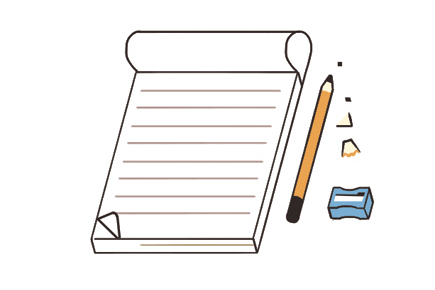
“Pencils are my choice. I used to prefer mechanical ones so I didn’t have to carry a sharpener but now I like graphite pencils. I use them for editing. I’ve rarely written first drafts on paper but I love planning stories (usually just a couple of lines) on hotel stationery. In the early days, before hotel stays, it would be rejection slips and compliment slips.”
3.
Damian Barr
Author of ‘You Will Be Safe Here’
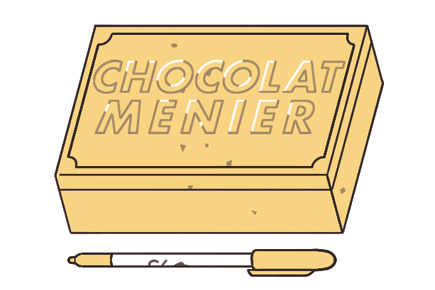
“I have increasingly terrible handwriting but I write by hand every day – mainly unintelligible notes to a less-busy future self. I collected a lot of Sharpies on my last book tour so I am using those up. I particularly like the gold one I forgot to return to a bookshop in Adelaide (sorry). I keep all my notebooks and cards in an old Menier chocolate box that I bought at a flea market. It’s gold so it imparts glamour to even the hastiest postcard.”
4.
Alan Hollinghurst
Booker prize-winning author of ‘The Sparsholt Affair’

“I wrote my first three novels with a beautiful brushed-silver Sheaffer, which had the best nib I’ve ever used. Then I changed to an also excellent black Parker that I’d won as a prize for The Listener Crossword. I wrote my fourth novel with this but the top wouldn’t stay on so I bought a new black Sheaffer that I’ve used ever since. These days the actual composition is at the keyboard but I still make notes in pencil in small Daler-Rowney pocket sketchbooks with perforated pages. I’ve used these for the past 30 years; two or three for each book.”
5.
Rupert Thomson
Author of ‘Never Anyone But You’
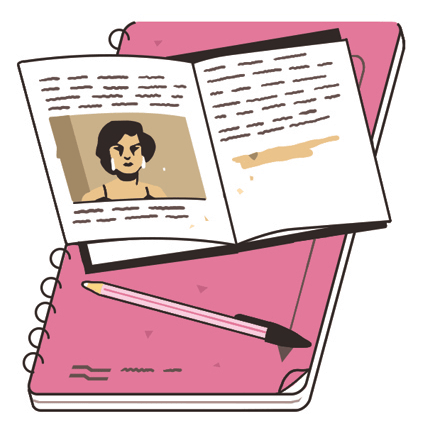
“I’ve written the first drafts of my past two novels by hand, in 120-page A4 lined notebooks made by Clairefontaine. It’s a French company that started out making notebooks for schoolchildren. It also makes its own paper. I write using the classic transparent black Bic Biro. There’s no resistance with a Biro. The words seem to flow. My last first draft was a three-Biro job. Then there are my notebooks, which are like scrapbooks. I nearly always use dark-green A5 Ryman notebooks with plain pages. They’re the perfect size to carry around and the hard cover means that I can write anywhere.”
6.
Tsitsi Dangarembga
Author of ‘This Mournable Body’
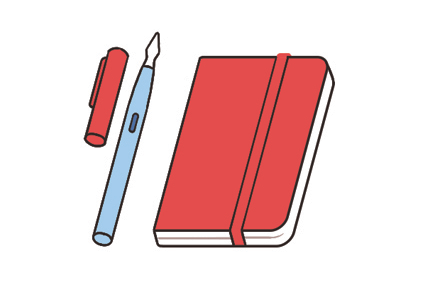
“I jot my notes down in a Moleskine. These could be initial notes or for when a passage that I thought I had cracked refuses to work. The Moleskine that I’m currently using is wine-coloured. It was a gift from my children and is inscribed with the legend, ‘The best mum writes here’. I use a fountain pen for special fragments, especially when I’ve worked on a piece or passage for a long time and it reads well at last. Then I use a Lamy with a red top and cap, and a blue bottom. It was a gift from a lovely friend.”
7.
Maaza Mengiste
Author of ‘The Shadow King’

“I use a few pens on a daily basis because I put different inks in each. For my workhorses I have two: a Pelikan m120 and a Sailor 1911s. I can take either in my purse and they’re sturdy, dependable and smooth. The Pelikan has a steel nib, which means it’s stiffer. My Sailor has a 14-carat gold nib that makes it a little smoother across the page. Nearly all of the inks are by a brand called Diamine. I use a Taroko notebook with Tomoe River paper, which is perfect for fountain pens. It doesn’t smudge or bleed through and lets you write without that ‘scratchy’ sound. For work that requires extended bouts of writing I use a Mnemosyne notebook.”
8.
Kim Ghattas
Author of ‘Black Wave’
“Years of reporting in the field taught me that I can write whole TV and radio scripts with anything on anything: a pen, a pencil, a napkin, a tiny notepad. I pause and think a lot when typing. But I write faster and in one go when I write by hand – my thinking is clearer and the flow is much better. The idea behind the structure for Black Wave was sketched on the back of a restaurant receipt. I wrote whole chapters of my book by hand, using a Pilot g-2 07 black pen. I use a large Moleskine lined notebook, always with a red cover. I start with a rough structure on one page and then I just give in to the flow and fill the pages.”
9.
André Aciman
Author of ‘Call Me By Your Name’
“I don’t write on paper any longer but I do love jotting a prose passage down when I’m walking or taking a metro or bus. There is an improvised quality to fragmentary prose in a Moleskine that feels spontaneous, almost genuine. I own three Kaweco pens. The book that just came out, Roman Hours, was all written in notes hastily jotted down in my Moleskine while walking around Rome. The pen that I loved most was a broad-nibbed Montblanc fountain pen, which I sent back to the Montblanc hospital for a check-up every two years or so. It got lost in the mail and I’ve never been the same since. Finally, I adore the 1.0 Uni-ball. I always carry it with me and love taking notes with it when I’m at my desk.”
10.
Jenny Offill
Author of ‘Weather’
“I do not allow myself to buy fancy pens because I just lose them or they explode in my purse. So my everyday is the classic Bic Cristal. They’re only $12 [€10] for 50 so I can afford to be a bit reckless; to give them to strangers even! To sign books I like a Sharpie fine point. My standard notebook is a Moleskine hardcover with lined paper. I try to get them in some colour other than black so I can spot them quickly in my backpack.”
11.
Ingrid Persaud
Author of ‘Love After Love’
“The pen – even the humble Muji Gel Ink pen, black 0.5mm – is mightier than the sword. It flows with easy precision and is brilliant for embellishing the text with doodles. I keep stashes in my desk drawer but they also poke out of kitchen and bathroom cabinets.”
12.
David Sedaris
Author of ‘Calypso’
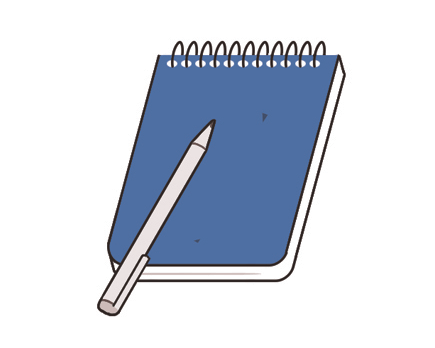
“My preferred notebook is a pocket-sized Rollbahn. The kind that I like is bound along the top and the only place I can find them any more is in Japan. Tucked inside my notebook is a Caran D’Ache palladium-coated Ecridor XS Retro ballpoint pen. It’s a bit longer than my index finger and has a great weight.”
13.
Olivia Sudjic
Author of ‘Asylum Road’
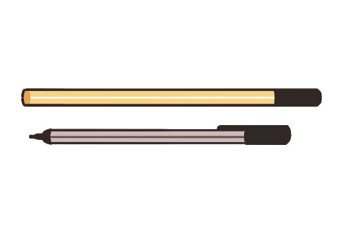
“My grandparents were architects and as a child I’d go to their practice after school, writing stories or drawing imaginary floor plans using their squared paper and black Edding Fineliner pens, 0.3mm. The brand that my grandparents used is sadly no longer in production but Muji and Stabilo make good substitutes. I think more clearly when I write by hand. It’s necessary for me to visualise a structure before I begin a novel and I repeatedly return to it as though I were building a house.”
14.
Lawrence Osborne
Author of ‘The Glass Kingdom’
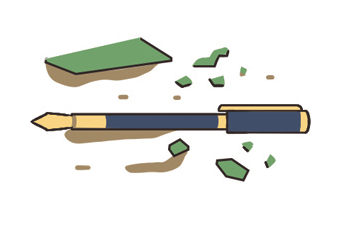
“On being awarded a French literary prize a few years ago I wandered to my nearby post office in Bangkok to collect the bounty: a handsome, heavyweight Waterman fountain pen, which by this point was swimming in champagne. This was not purposeful. The jeroboam had broken in transit from Paris and a scene unfolded as the staff and I fished the pen from shards of glass and a small lake of champagne. I love the pen and use it every day but I swear that it’s still sticky.”