Issues
Following specialist investigators on the hunt for Nazi-looted works of art
When Dutch journalist Peter Schouten rang the doorbell of a house in Mar del Plata in early August, he didn’t know that it would unleash a global media storm. Schouten had travelled to the Argentinian city at the behest of a colleague, Cyril Rosman. For a decade, Rosman had been on the trail of a trove of missing artworks; the story of which reads like a thriller, with an intriguing cast of characters and a plot that spans geographies and generations. Rosman’s investigations centred on the family of Friedrich Kadgien, a financial adviser to Nazi politician Hermann Göring, who escaped to South America after the Second World War. Rosman had long suspected that Kadgien’s two daughters, Patricia and Alicia, might have knowledge of artworks looted during the Nazi regime from Jewish art dealer Jacques Goudstikker. The latter’s heir, Marei von Saher, is in her eighties and lives in New York; she has spent much of her life searching for her father-in-law’s collection.
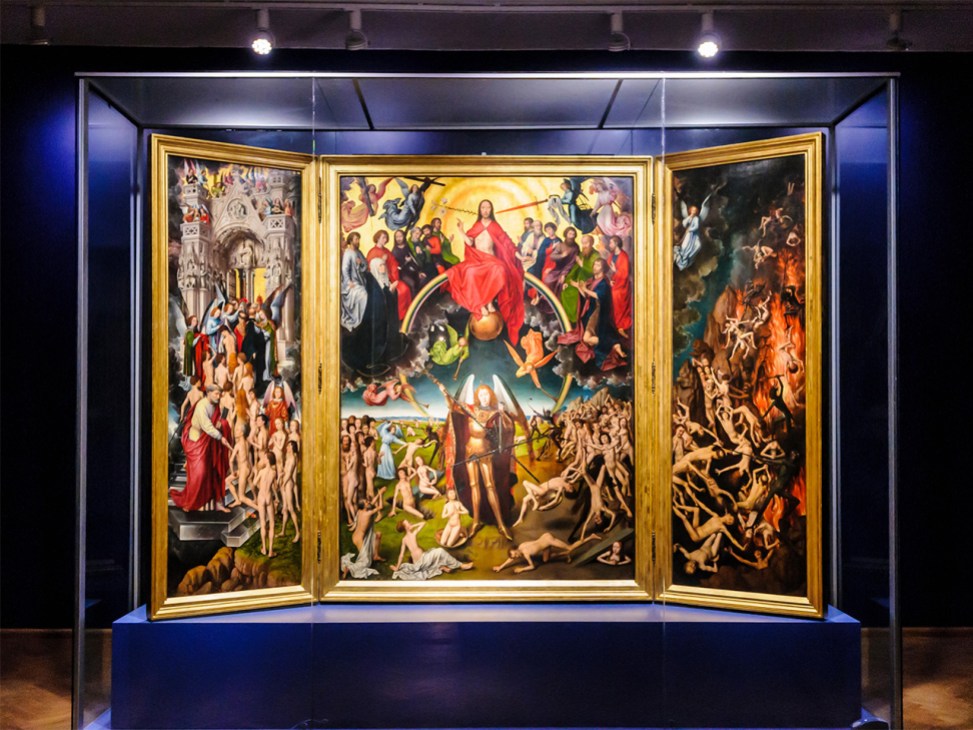
The first recorded art theft took place in the 15th century, when Polish pirates boarded a ship bound for Florence and absconded with the Hans Memling painting (above) “The Last Judgement” (1467-71). The artwork currently resides in the National Museum of Gdánsk, much to the chagrin of some Italians. (Image: Stephen Barnes/Alamy)
A dog barked inside the house but no one answered the door to Schouten. As he waited, he noticed a “For sale” sign and took a photo on his phone. Later, while having dinner at his hotel, he found the listing for the property online and spotted an image of a gilt-framed painting hanging above a green velvet sofa. He sent the link to Rosman in the Netherlands, who, the next morning, replied with excitement that he was reasonably confident that the artwork was the 1710 painting “Portrait of a Lady”. Over the next couple of weeks, Schouten was able to confirm that the painting was still in the house and tried to contact Patricia Kadgien through multiple channels. He received some ambiguous replies before being blocked on social media. Schouten’s story about the discovery was published on the Dutch news site Algemeen Dagblad (AD) on 25 August. “And then the rollercoaster started,” he says.
Along with the world’s media, multiple law enforcement agencies – Interpol, the FBI and the Argentinian police – quickly became involved. But when officers raided the Kadgien house and four other properties a few days later, the painting seemed to have vanished. The artwork’s second disappearance did nothing to quell the interest and the local general attorney assigned 15 people to work on the case. Eventually, the collective pressure of the media and the police yielded a response from the Kadgiens. On 3 September, the family handed over the painting and it was put on view at a media conference.
A criminal investigation has since been opened, which will focus on Patricia and her husband, and whether they attempted to obstruct justice by hiding the painting. “Portrait of a Lady”, meanwhile, will most likely make its way to New York and to Marei von Saher. “To dedicate your life to getting back all of your family’s possessions must be unbelievably tough,” says Schouten today, who was in regular contact with Von Saher throughout the saga. But he wishes that he could have spoken to the Kadgien sisters and heard their side of the story. “I can’t imagine what it’s like to have a father like that,” he says. “You are not to blame for your parents’ behaviour but you carry it with you your whole life.”
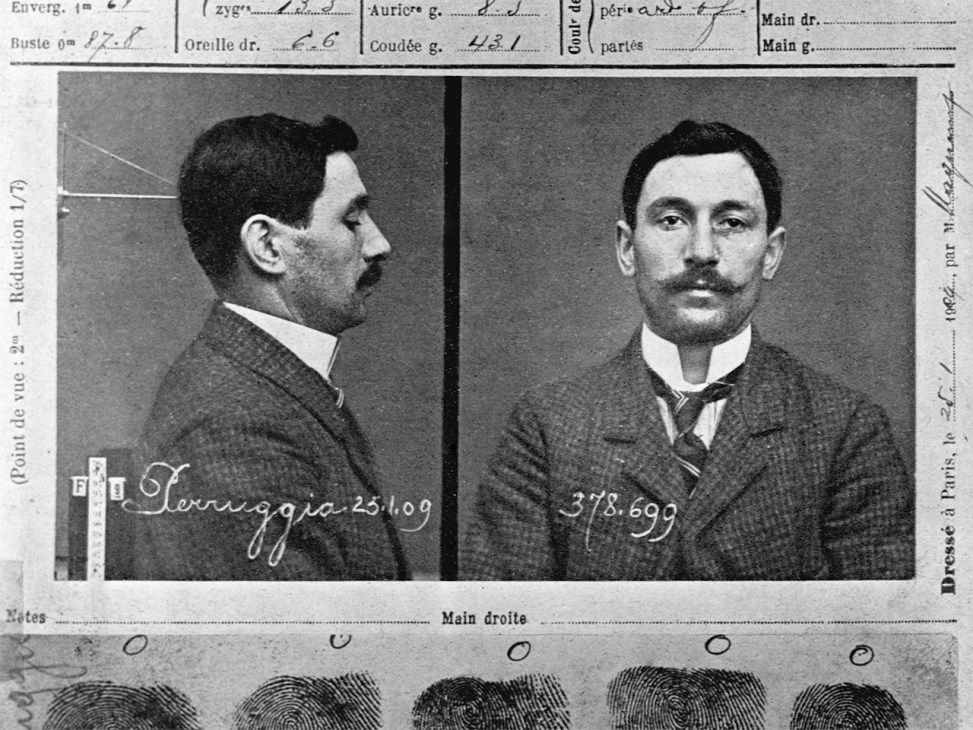
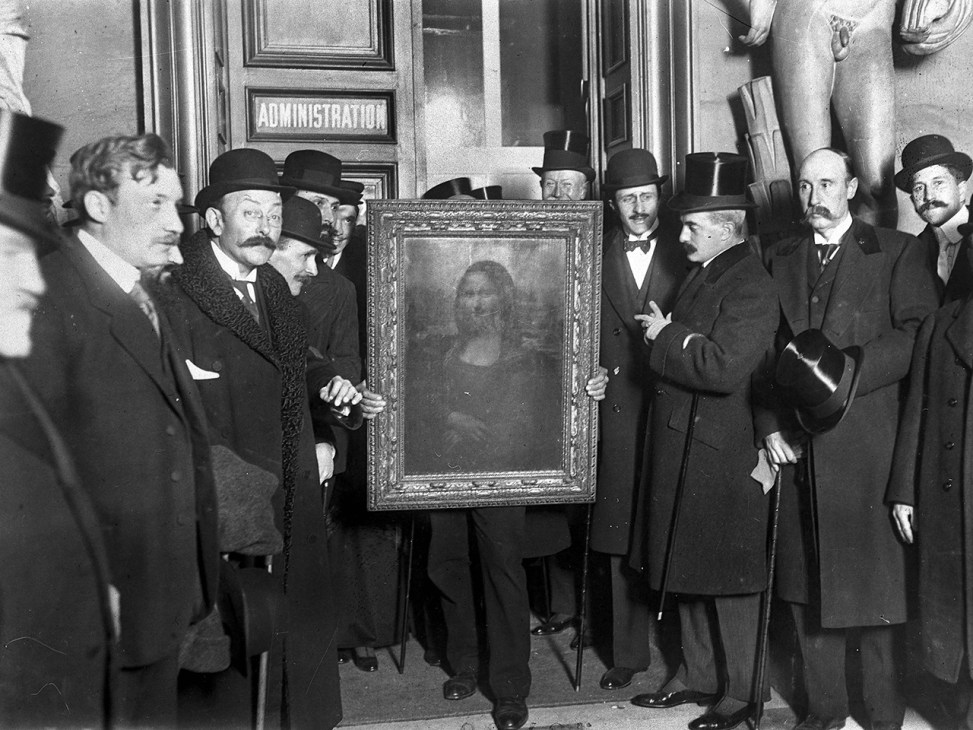
There was far less fuss about Leonardo da Vinci’s “Mona Lisa” before it was stolen from the Louvre by a thief dressed as a museum employee in 1911. Parisians flocked to see the empty space where it once hung. The thief and the painting were eventually found in 1913 when he tried to sell the work. (Images: Getty Images)
The Nazis are thought to have looted about 20 per cent of Europe’s art between 1933 and 1945, much of which – at least 100,000 objects – has yet to be returned. Of course, their regime was just one perpetrator of art theft. Schouten’s story made headlines across the globe but the everyday work of hunting for (and occasionally finding) lost or stolen artworks usually takes place with less fanfare.
On a quiet lane in central London is the unassuming office of the Art Loss Register (ALR), an organisation with the world’s largest private database of stolen art, antiques and collectables. Unlike Rosman’s quest to locate artworks from Goudstikker’s collection, the ALR checks individual items entering the market to investigate their provenance and demonstrate due diligence. The register currently features more than 700,000 lost or stolen artworks and the ALR performs about 450,000 searches on items prior to their sale. These are carried out on behalf of the likes of governments, law enforcement, museums, auction houses or private individuals.
“What we are looking for is some proof that the item can be sold on the open market,” says Olivia Whitting, the ALR’s head of cultural heritage and client manager. The organisation also registers the theft or loss of items and helps to reunite some of them with their owners. “It’s quite exciting because it’s the kind of detective work where you end up knowing so much about random parts of history, such as the great telephone exchange of the year 2000,” says Whitting. “That was when London phone numbers went from starting with ‘0171’ or ‘0181’ to ‘020’. If a document is from before 2000 but it has the newer telephone code, you might question whether it’s real.”
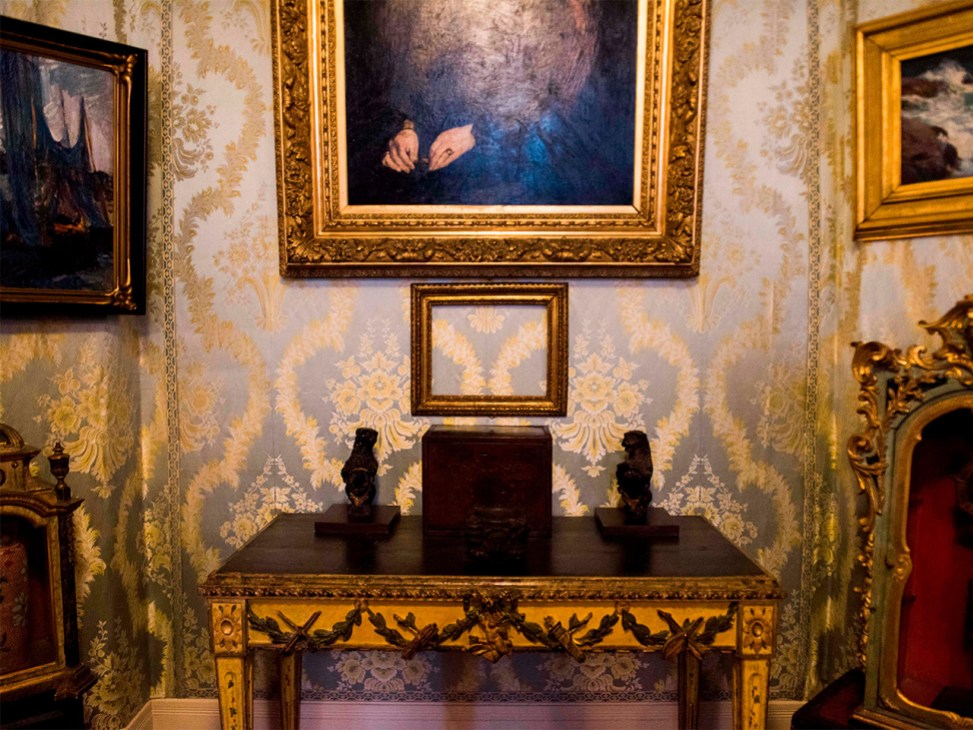
Hundreds of millions of dollars’ worth of art was stolen from the Isabella Stewart Gardner Museum in Boston in 1990. The robbery is believed to be the world’s largest art heist and remains unsolved. (Image: Ryan McBride/AFP via Getty Images)
The work of registering objects on the database – or trying to match items to them – is usually done digitally. But when Monocle visits in early autumn, among the desktop computers, coffee mugs and copies of the Antiques Trade Gazette is an extraordinary artefact. In the corner of a room, under a blanket, is a 14th-century cenotaph. The grave marker was handed over to the ALR for restitution by an antiques dealer who had been tipped off that it was probably stolen. The ALR is now researching its origin to enable its return. The organisation has ascertained that it is probably from the late-medieval Timurid empire and from the grave of a young man or a child. The next step will be to approach the relevant embassy and investigate whether it can be returned to its country of origin.
When something is registered as lost on the database, the ALR will ask for proof of loss (such as a crime reference number) and of ownership. This might be an acquisition invoice or insurance document but it could also be a family photo featuring the artwork. Whitting was recently sent an image of a three-year-old girl having a tantrum on the floor in front of a Palmyrene sculpture and another picture of a Roman bust dressed in a tinsel crown at Christmas. “It’s a window into someone else’s childhood,” she says.
The ALR database of missing artworks reflects the breadth and strangeness of the wider market. It includes a toy car (an Aston Martin replica), JMW Turner’s death mask and a set of George Washington’s false teeth. “When human remains come up, that’s often when we think, ‘I wish this wasn’t on the art market,’” says Whitting. She recounts how a Belgian zoo recently wanted to look up a human head that had somehow, years ago, ended up in its collection. The ALR refused to search it and advised the zoo to try to return it to the Polynesian island from which it originally came.
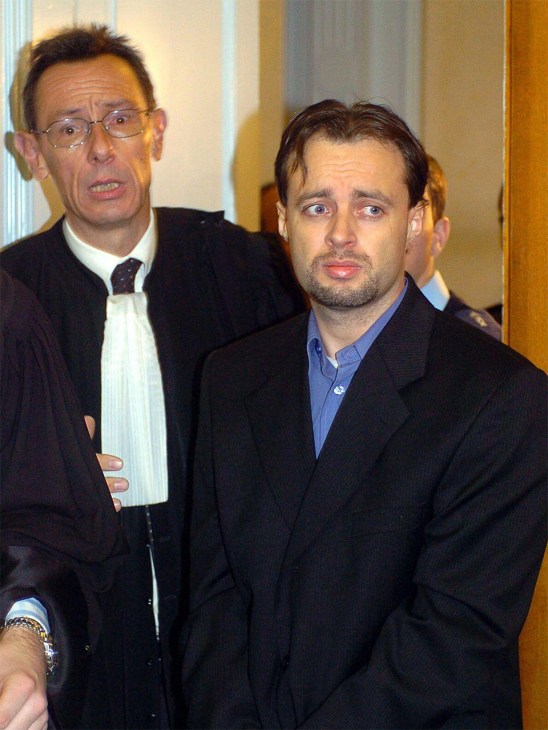
French thief Stéphane Breitwieser stole more than 200 works by the likes of Jean-Antoine Watteau from 172 European museums. When he was arrested, his mother destroyed most of the pieces to hide the evidence. (Image: Christian Lutz/AP via Alamy)
Items on the register – paintings, vases or the occasional body part – might have been taken in a burglary or looted as the spoils of war. In the estimation of James Ratcliffe, the director of recoveries at the ALR, about a quarter of the database consists of works that were lost during the Second World War. “That doesn’t even touch the sides of what was taken by the Nazis,” he says.
Others are looking for these objects too. In Magdeburg, the German Lost Art Foundation acts as the country’s central body overseeing looted cultural property. It oversees hundreds of projects exploring Nazi looted art and manages its own register, the Lost Art Database. “We always have to keep in mind that we’re not only talking about the works of Pissarro, Picasso and Cézanne,” says Andrea Baresel-Brand, the head of the documentation and research data-management department. “We’re also talking about everyday things: knives, forks, cups and plates. For a family, they could mean everything.”
The story of looted art is tied to history but shaped by the present. In Germany, that often means contending with right-wing political parties that, says Baresel-Brand, “prefer not to deal with the past”. Elsewhere, attitudes in the art market have changed when it comes to dealing with items from colonised countries. “It’s interesting to think about the new frontiers of repatriation and the moral side of acquisitions,” says Ratcliffe. “Ten years ago the colonial history of an object was a curiosity. Now there’s a recognition that it’s an issue that needs to be addressed.” It’s a complex environment and Ratcliffe believes that the art market is sometimes a scapegoat for bigger questions facing society. “We’re calling this decolonisation but it’s not,” he says.
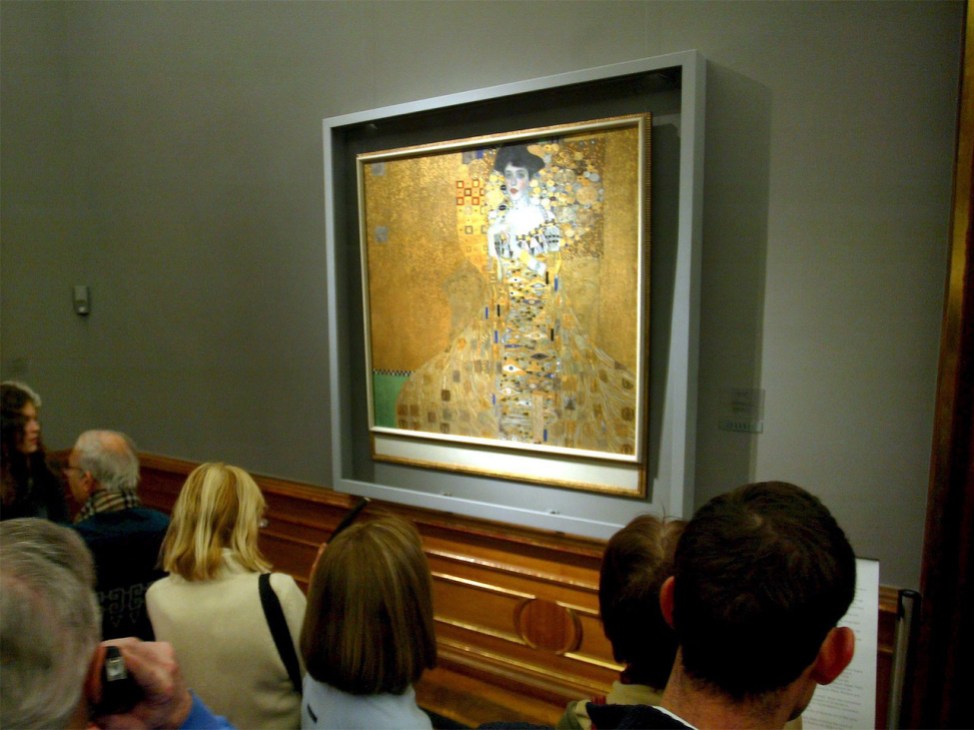
Gustav Klimt’s dazzling “Adele Bloch- Bauer I”, stolen by the Nazis from Jewish industrialist Ferdinand Bloch-Bauer, hung for years in Vienna’s Galerie Belvedere. It was returned to Bloch-Bauer’s heir in 2006. (Image: Herbert Pfarrhofer/EPA via Shutterstock)
The field of looking for lost artworks is changing in other ways too. There has been a move towards “positive registration”, with the cataloguing of artefacts in museums that might be in danger because they are in a region at risk of conflict. Meanwhile, artificial intelligence is expected to improve the image-matching process but it will take longer for it to perform the intricate work of due diligence. It’s also likely that technology will be used to create fraudulent documentation. “Say you have an export licence for a Roman mosaic from Lebanon in the 1970s,” says Ratcliffe. “Suddenly it’s possible for that document to appear with another mosaic. Tech will help people fighting against art crime but will also help those committing it.”
Combining the knowledge of an art historian with the nous of a detective, solving art crime is a complicated business. From the ALR’s database of artworks, three to five matches a week are made, while another department – the organisation’s busiest – looks into stolen watches and logs about 15 matches a day. Meanwhile, finding a “just and fair solution” to the question of what to do with a found stolen object is often not a straightforward process. Legal technicalities clash with the beliefs of individuals and, sometimes, the history of entire nations. As Schouten has discovered, the simple act of ringing someone’s doorbell can have sweeping consequences. It seems that the past, with all its painful memories and unresolved questions, is closer than we think.
How Villa Ervi in Helsinki preserves Finland’s mid-century modernism
What’s the best way to protect architecture of note? One solution is to seek heritage listing, which would help to prevent demolition or unsightly additions. “Often protected buildings are made into museums,” says Mauri Tommila, who established Tommila Architects in Helsinki in 1984. But Tommila decided to take a different approach when he and his wife, Aila, bought Villa Ervi in 1990.
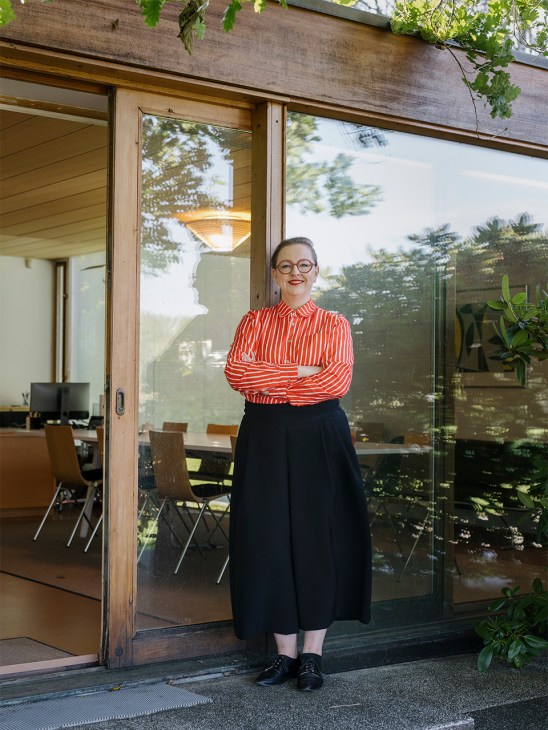
The building was looking somewhat tired and didn’t reflect its status in design circles: the former residence of prominent mid-century Finnish architect Aarne Ervi, it’s a notable example of the country’s postwar residential modernism. Mauri, now 74, says that if the structure had been listed or turned into a museum, small alterations to make it liveable would have been almost impossible. “There would always have been someone looking over your shoulder,” he adds, explaining that, without any interference from a heritage body, he has been able to maintain the building’s original function – that of a residence and architecture studio.
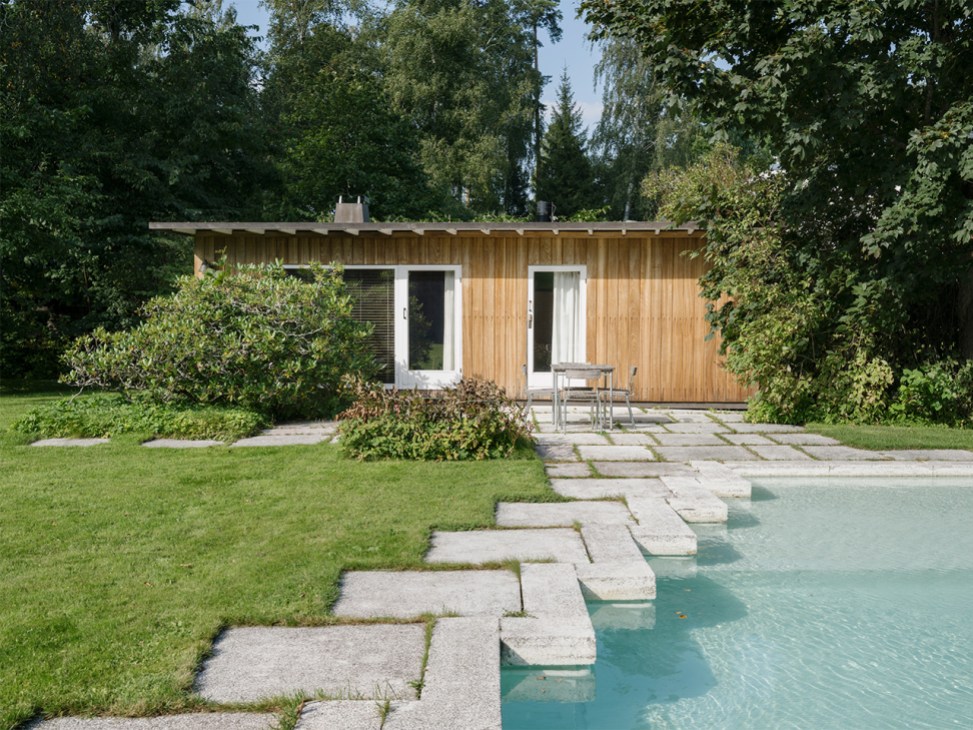
The first part of the structure was built in 1951, the year when Mauri was born. Ervi wanted the site to function as both a family home and a studio (an office annexe was added in 1962). Amid a maritime landscape in the Finnish capital’s Kuusisaari neighbourhood, the villa has a white, plastered façade that is softened by lush vegetation, and is positioned to take advantage of sea views. The roof is made from clay brick and stone tiling appears on the thresholds, where large windows open onto a garden planted with alpine roses and a Japanese maple, with the water visible beyond.
When Monocle visits, Mauri and Aila are waiting at the wide wooden front door – their usual spot when welcoming guests as they reach an entrance hall that has curved ceilings rising high overhead and natural light flooding in from skylights. Elements such as oak cabinetry with patinated brass handles feature in the foyer, which has a floor lined with handmade Italian tiles. The effect is both ethereal and earthy.

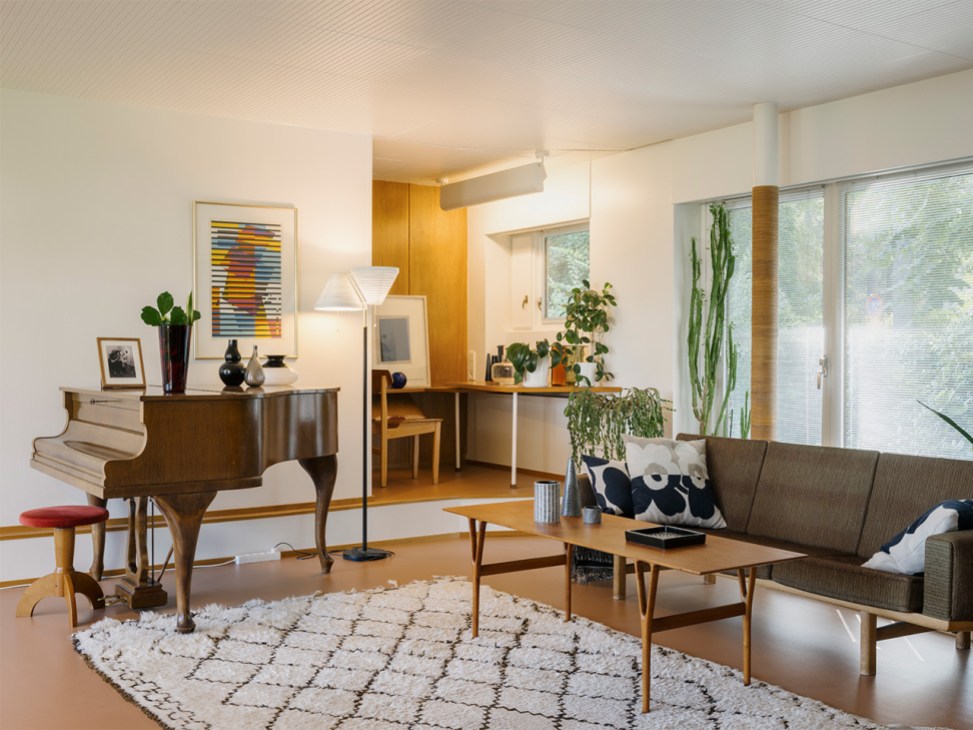
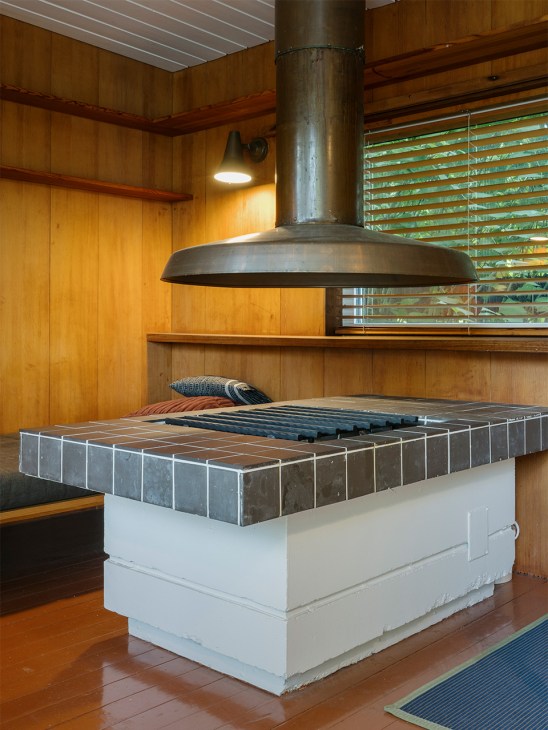
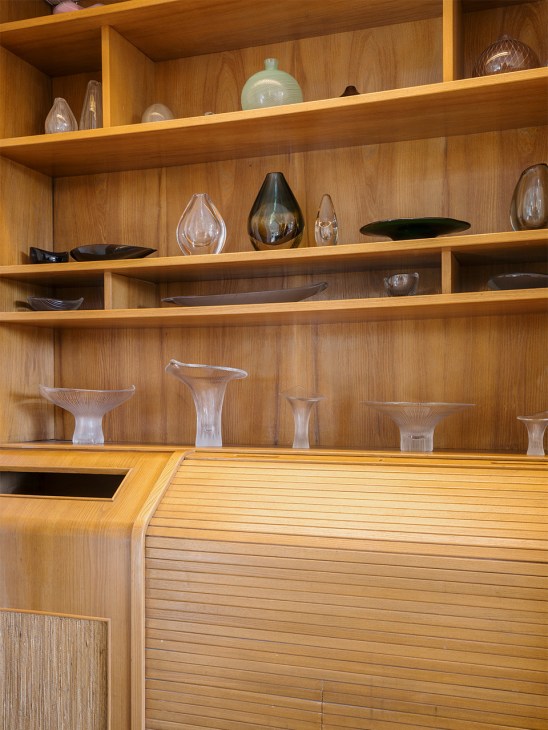
From here, the interior unfolds in a sequence of staggered, interlinked spaces: the living room, the dining room, the kitchen and the bedrooms. Each has large windows with views of the garden, sky and sea. Natural materials and a connection to the elements are prioritised. The living room has a central, open fireplace; in the kitchen, you’ll find sapele mahogany cabinets; bedrooms can be closed off by sliding timber doors and feature the original oak cupboards; the bathrooms are defined by deep-green tiles. Transitions are marked by columns wrapped in rattan cord and doors provide direct access from the kitchen and living room to the garden.
Mauri tells Monocle that the building still works well as a home, decades after its construction. It is human in scale, delivering comfort without ostentation. “Villa Ervi was built to be a home and should be used as one,” he says. The kitchen and living room, with an original Aalto table and a smaller side piece by Ervi, are still where most of the family’s everyday life takes place. The long and welcoming dining table is surrounded by 1950s Fanett chairs by Ilmari Tapiovaara, with Paavo Tynell’s lighting fixtures and Unikko-patterned Marimekko textiles dotted throughout the space.
Meanwhile, the garden is used during summer, as is the swimming pool, whose form echoes the staggered footprint of the office annexe. The sauna, an anchor of Finnish life, is in regular use, thanks to a 1995 renovation that restored its original patinated iroko-wood façade.
The office annexe now serves as the home of Mauri’s architecture practice. As in the residence, there is a strong focus on embracing the site and the use of natural materials. “It’s the most Japanese building in Finland,” says Mauri, as he walks Monocle through the low, long structure, which is defined by a Oregon pine façade. Its proximity to the home means that work often overlaps with personal life; staff meetings take place in the garden and over long dinners at the weekend.
It’s a situation that has benefited Mauri and Aila’s daughter, Miia-Liina. Now the CEO of Tommila Architects, she was immersed in her father’s practice while growing up in Villa Ervi. “I was surrounded by it all and it shaped how I think about space,” she says, recalling how she used to look into the garden, perching on the building’s broad windowsills and noticing how the changing light would alter the appearance of the walls and wood grain. “It made me an architect because I understood the value of good architecture early.”
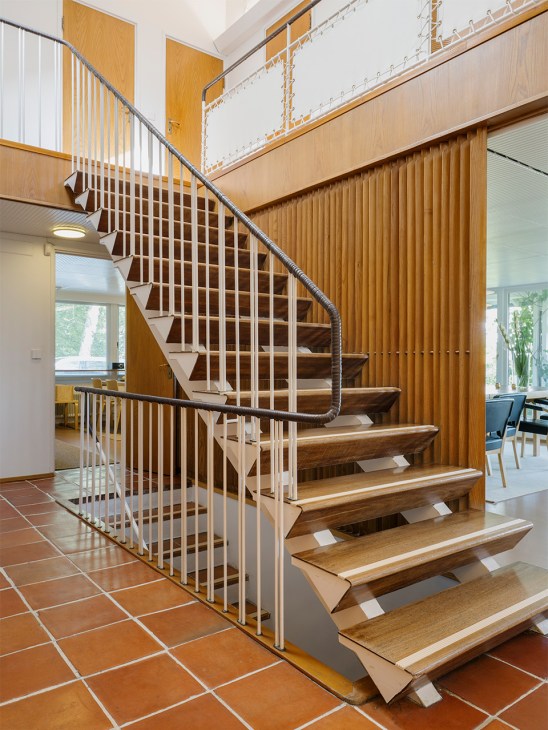
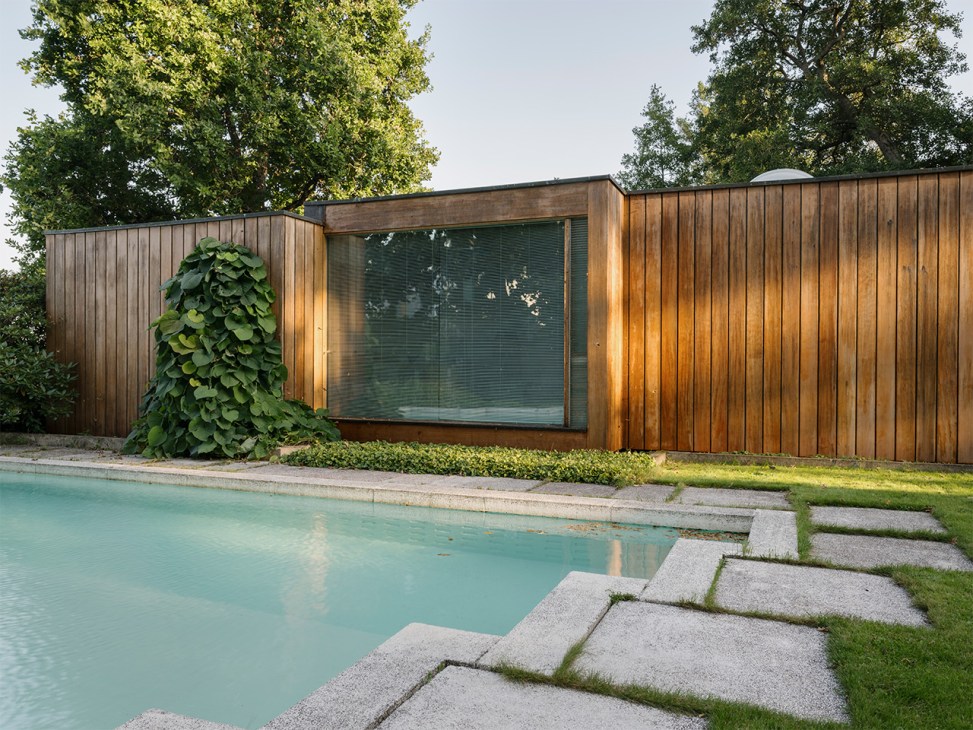
The family-run practice now works on strategic planning, and regeneration and repair projects – architecture that’s not just about building but also maintaining and evolving an environment. Its approach is partly a response to what Mauri and Miia-Liina see as a tendency among developers to demolish old buildings, even when they still have plenty of life left in them. “We should preserve the layers of architecture in our cities,” says Mauri. “They are layers of our culture.”
It’s this outlook that continues to inform Mauri and Aila’s hopes and dreams for Villa Ervi. With their children grown and no longer at home, the scale of the residence exceeds their daily needs. As such, the property has been put up for sale, though not aggressively. The couple is particular about potential future owners – and for good reason. The property’s future custodians will not only inherit walls and windows but a way of being, an architectural legacy of care and a collection of historically significant buildings that remain in constant use. It’s not, according to Mauri, architecture to be preserved as an exhibit – it’s to be lived in.
“If it sells, it sells,” he says. “If not, we’ll stay. What matters is that this place continues to be used – not turned into a museum.”
Poltrona Frau is the quiet €120m powerhouse behind luxury car interiors
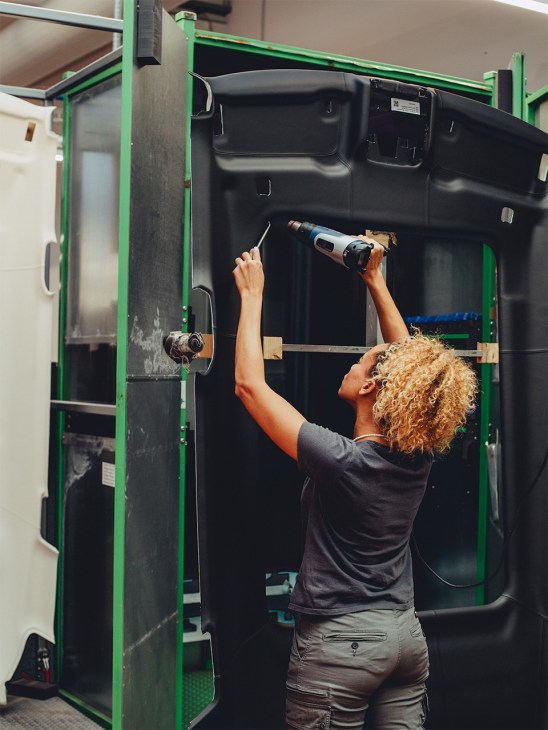
Halfway down Italy’s Adriatic flank, inside a bustling factory in the municipality of Montegranaro, car parts are zipping off the production line. Stacked on moveable shelving while awaiting the next step, every piece will be shifted around an open-plan space to different workstations. In one area, people wearing masks are spraying a blue adhesive that will be used to bind the leather upholstery to the panel through a combination of heat and pressure. This plant, which was founded four years ago, might seem like a car manufacturer’s home base. But it actually belongs to Poltrona Frau, a storied design brand that dates back to 1912 and is better known for furnishing living rooms than the insides of sports cars.
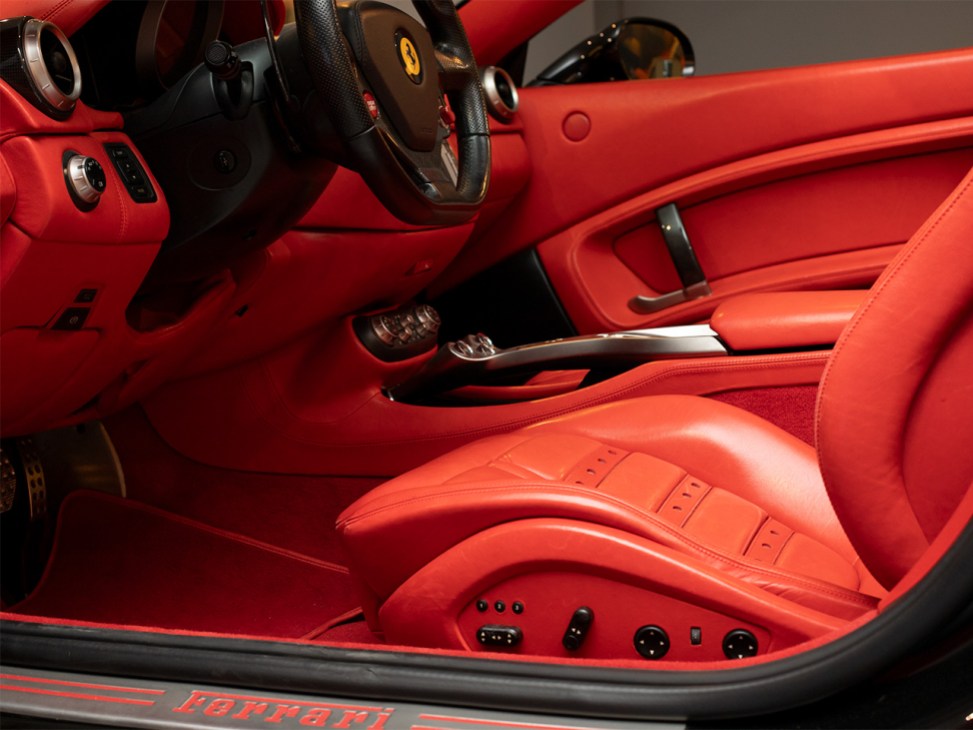
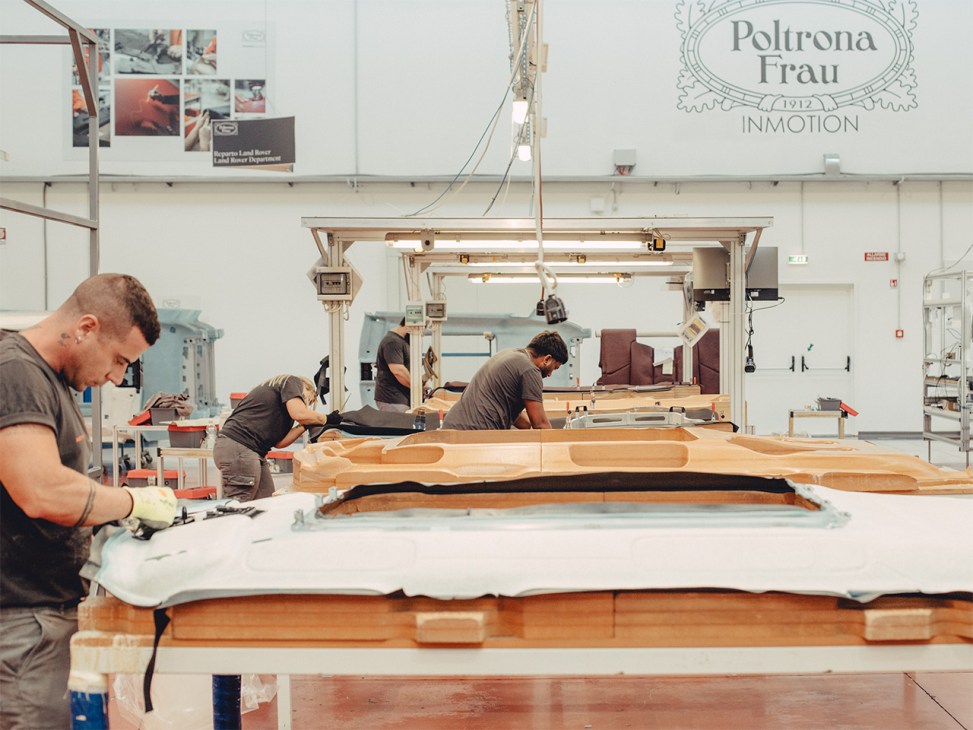
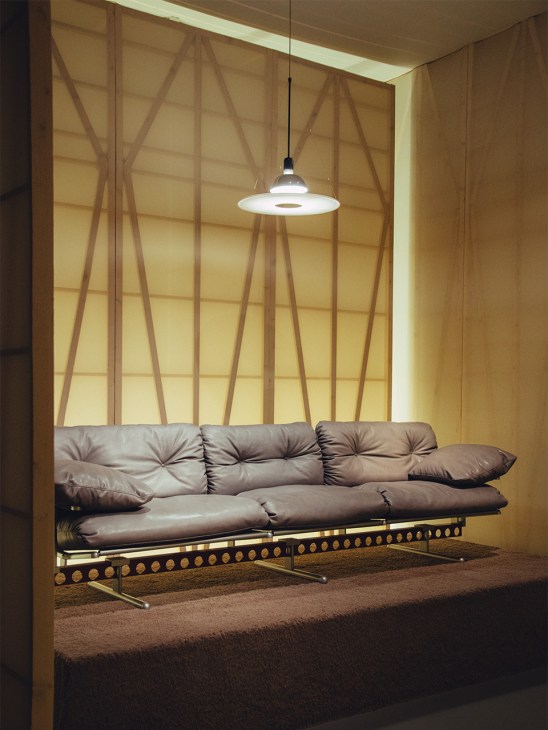
“The company has transformed in the past few years,” says senior designer Luca Bellomarì as he takes Monocle on a tour of the buildings. Bellomarì is talking about Poltrona Frau’s In Motion business, which provides pristine leather-wrapped products, including seat covers, for high-end vehicles. While Poltrona Frau is a household name as a maker of sofas and armchairs, collaborating with such design luminaries as Gio Ponti and Pierluigi Cerri, In Motion has been quietly – and rather successfully – working away from the limelight.
Founded as a standalone business division in 1985, In Motion’s first automotive project was on the Lancia Thema, which had a Ferrari engine. Today the business’s client list includes Range Rover, McLaren, Pagani, Lamborghini and Ferrari. But glance inside the leather interior of a Ferrari and you won’t see a Poltrona Frau logo anywhere, even though it has decked out all of its vehicles since 1998. And though automotive is its biggest segment, In Motion also has a footprint in the yachting and aviation sectors.
As Monocle passes workers dressed in Poltrona Frau T-shirts, some of them wearing sweatbands and gloves, Bellomarì explains that In Motion’s biggest shift has been its decision to start supplying what he calls “systems”. Rather than just upholstering pieces sent to Poltrona Frau, the business now makes everything from headliners – a car’s inside roof – to door panels. “We co-design with the original equipment manufacturers,” he says.
Though there’s plenty of powerful machinery at the plant, it’s clear that In Motion fits out vehicles in the same way as the rest of the Poltrona Frau business approaches furniture. That means it wouldn’t be anywhere without skilled artisans stretching, smoothing, cutting and checking the quality of the hides by eye. Red lasers projected onto the leather might help stitchers to maintain a straight line but technology is only intended as an aid to those carrying out the work. “We still work with our hands,” says Bellomarì. “This is something that often doesn’t get contemplated in the automotive industry.”
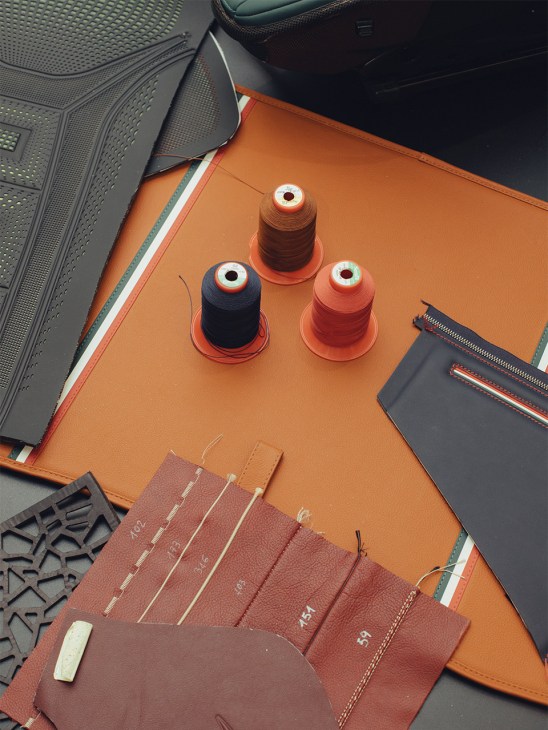
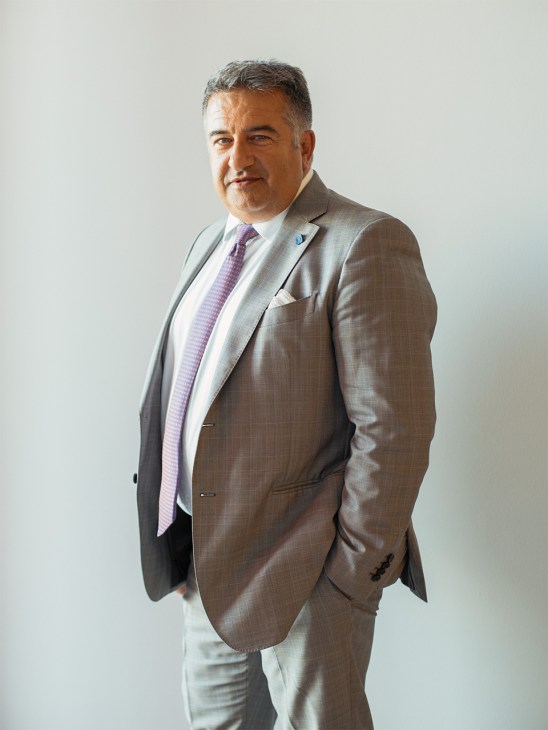
Later in the day of our visit, Monocle leaves Montegranaro for the brand’s headquarters, a short drive away in Tolentino – home to a brand museum designed by Michele de Lucchi. On hand to meet us in its café is Giovanni Maiolo, the general manager of Poltrona Frau In Motion. Maiolo joined the company in 2019 and has been responsible for much of its recent success. “Before our change of business model, we were just the last step in the value chain,” he says. “We have completely transformed our approach and started to work with the customer at the beginning of a project.”
In Motion has the advantage of servicing a luxury car industry in which the vehicles are often limited editions and maintain or increase their value over time. This makes the business largely recession-proof. Demand in the segment outstrips supply and Maiolo says that while there was a global slowdown in the furniture market last year, In Motion has been moving in the opposite direction, with an expected turnover of €120m this year. “We have increased turnover by 100 per cent in five years,” he says. “We are now considered a pillar of the group.”
In Motion is clearly a well-oiled machine – and it has to be in a business where a competitor doing something better or more quickly could lead to the loss of a vital contract. Its leather needs to behave in a different way to furniture upholstery too. Designer Bellomarì talks about it being more rigid and “having a completely different characteristic”. In the boating, car and aviation worlds, Poltrona Frau must strike the right balance between craft and performance. Exactly how hardy it needs to be becomes apparent at a testing lab, where leather is exposed to temperatures ranging from -30C to 115C and put through a stress test of being repeatedly tugged for as many as 100,000 cycles – an attempt to cover all bases for the sorts of extremes that the leather might be exposed to in its lifespan.
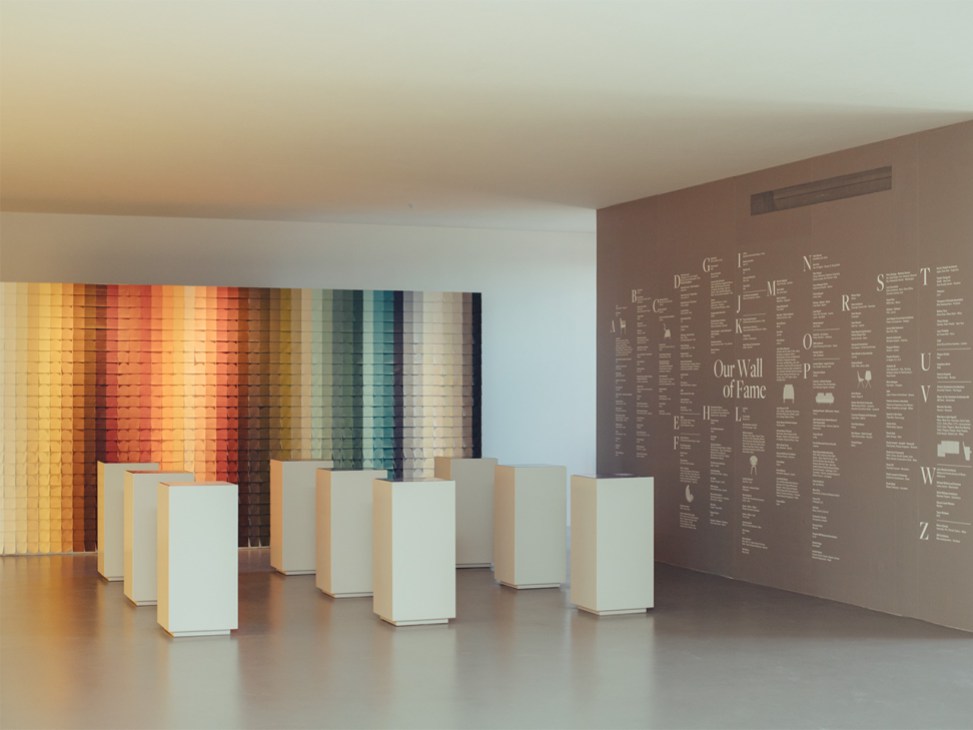
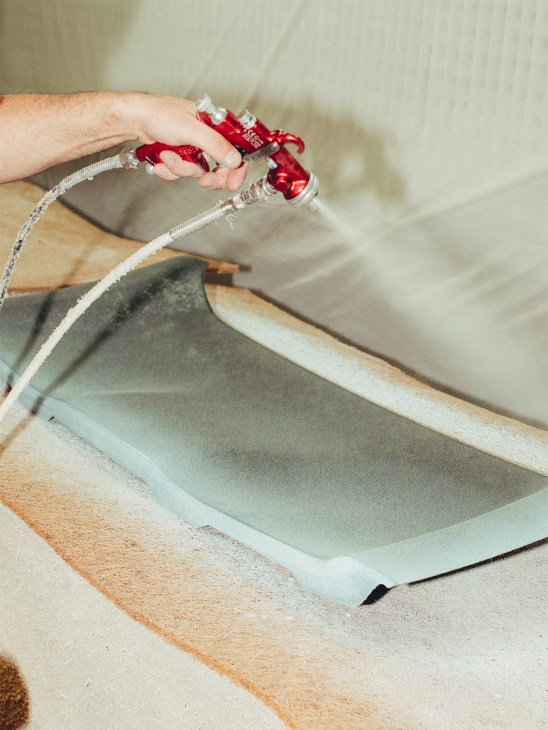
Daniele Gardini, the R&D leather manager, says that In Motion has about 10 leather collections and can provide the client with everything from digital printing to microembroidery to complete a custom look. The search for innovation is constant. Gardini says that metallic leather is a recent addition, something that has clearly been borrowed from the fashion-accessory world. One major breakthrough has been Poltrona Frau iBreathe, a product that came out of development in 2024. “We have been working on the lightness of leather,” he says. “Removing 10kg from the weight of a vehicle is a good saving for speed and fuel consumption.” It weighs less because there are wider spaces between the fibres in the fabric. Aesthetically, however, you wouldn’t know the difference.
Innovation is crucial to In Motion’s survival. If a declaration of intent were needed, it came in June 2024 when it bought a majority stake in KJ Ryan, a UK company based in the city of Coventry that makes high-end automotive components. It was Poltrona Frau’s first overseas acquisition. With Italy and the UK producing more than 80 per cent of the world’s luxury cars, it was a shrewd move from In Motion, which has worked in the country since 2007 and has clients including Rolls Royce, Bentley, Aston Martin and Range Rover. “The UK was already a market that we knew in some way,” says Maiolo. “But what we were missing was all the rest – everything connected with the culture.” The plan is to eventually shift more production to Coventry for local clients.
With more than 600 employees now spread between Italy and the UK, In Motion continues to move through the gears, even if its touch, in many ways, remains light. Poltrona Frau doesn’t make a song and dance about the work that it does at In Motion but Maiolo jokes that he needs to start talking about it to keep winning more clients and ensure a resilient future – which he has started to do more now that the “hardware” of the business model is airtight. With it, he hopes that the work of In Motion will soon be as recognised and requested in cars as a Bose stereo or a Brembo braking system. “Our goal is that in five years’ time, when you shop for a luxury car, the first thing you ask when looking inside it is, ‘Is this made by Poltrona Frau?’”
Vale Palheiro Earth Resort, a countryside retreat in Portugal that promises total relaxation
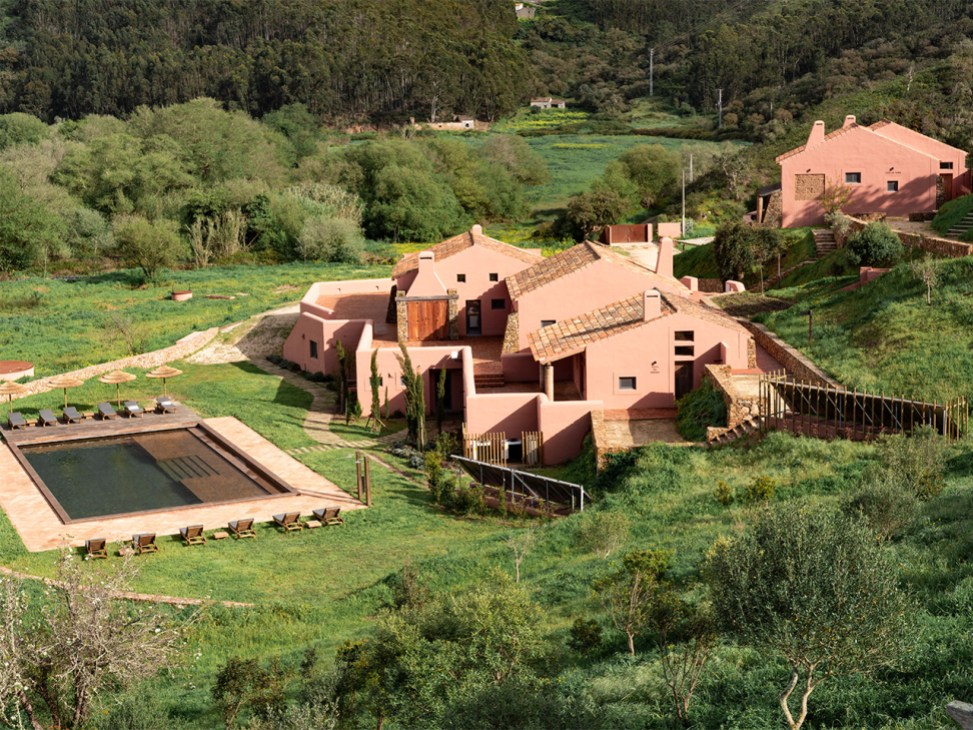
In the raw beauty of Portugal’s Costa Vicentina natural park, the ochre buildings that make up Vale Palheiro Earth Resort don’t just complement the surroundings – they were literally built from the earth beneath it. To erect the dozen structures perched on the verdant hillside, the hotel’s founders, Madalena and Pedro Rutkowski, turned to rammed-earth construction, a sustainable but labour-intensive method once popular in Portugal but long in disuse. “Very few people know how to build like this today so we needed specialised hands who started working on this project 12 years ago,” Madalena tells Monocle. Combined with dry-stone walls of local schist, and brick roofs and floors from the region’s still thriving pottery industry, this rural retreat feels as though it has always been there.

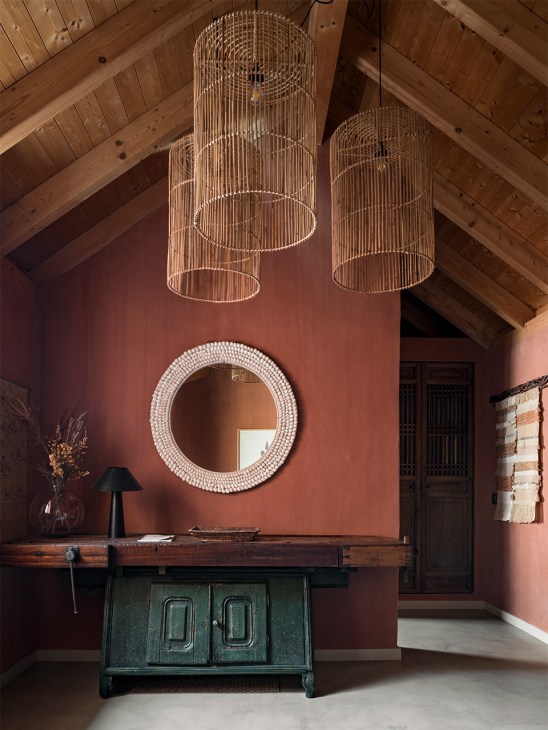
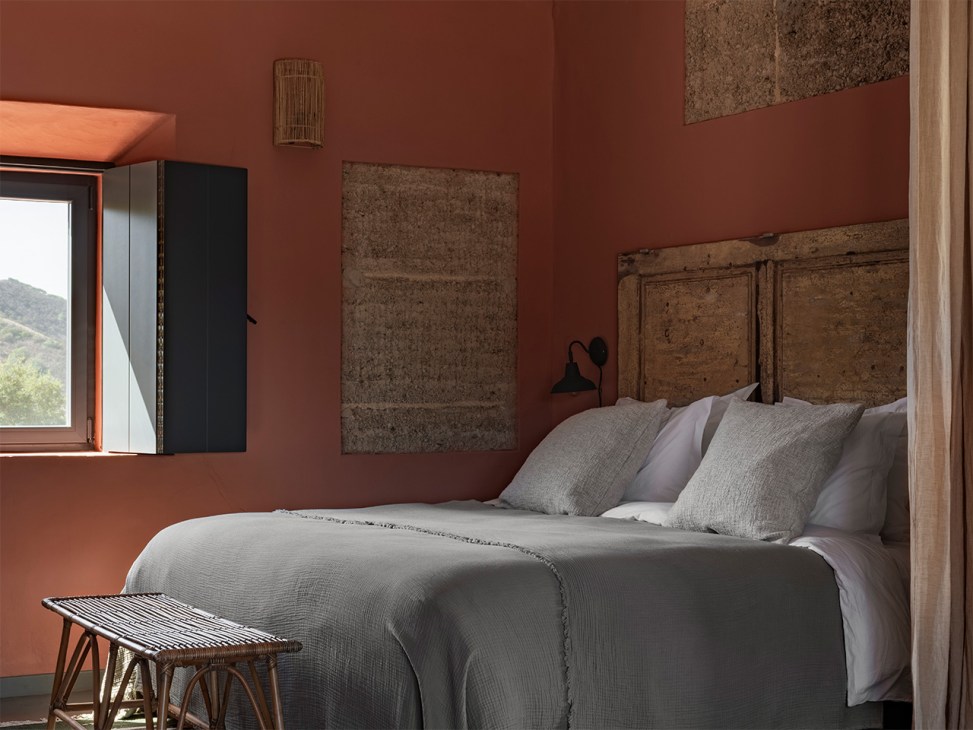
The attention to provenance carries through to the interiors, which have been designed by Lisbon’s Arkstudio. “The goal was to create comfort with these organic materials,” says Arkstudio principal Margarida Matias, who went through an exercise of her own to uncover regional materials and crafts suited to the terrain. Natural cotton fibres woven on traditional looms upholster generous wooden benches, with clay amphorae decorating tables and outside spaces. Thick, textured tapestries by artist Rita Sevilha adorn walls, where unpainted patches show the layers of the earth within. Meanwhile, windows open onto views of the surrounding valley, with whitewashed houses of nearby beach town Aljezur climbing the hill at a distance. “It was very important that everything felt integrated into the landscape,” says Matias. The result is decor with a rustic charm but an open, uncluttered feel.
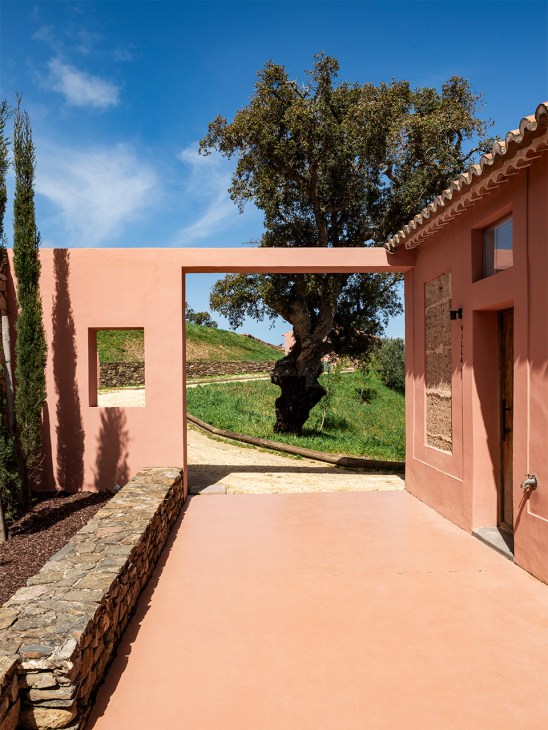
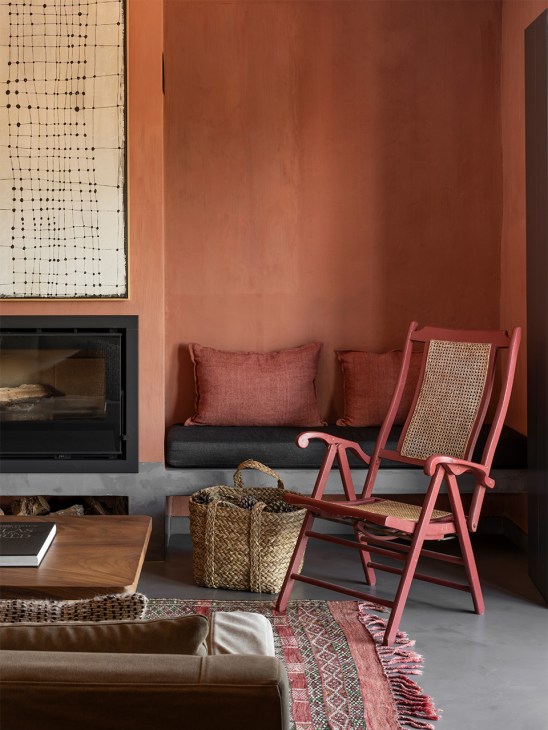
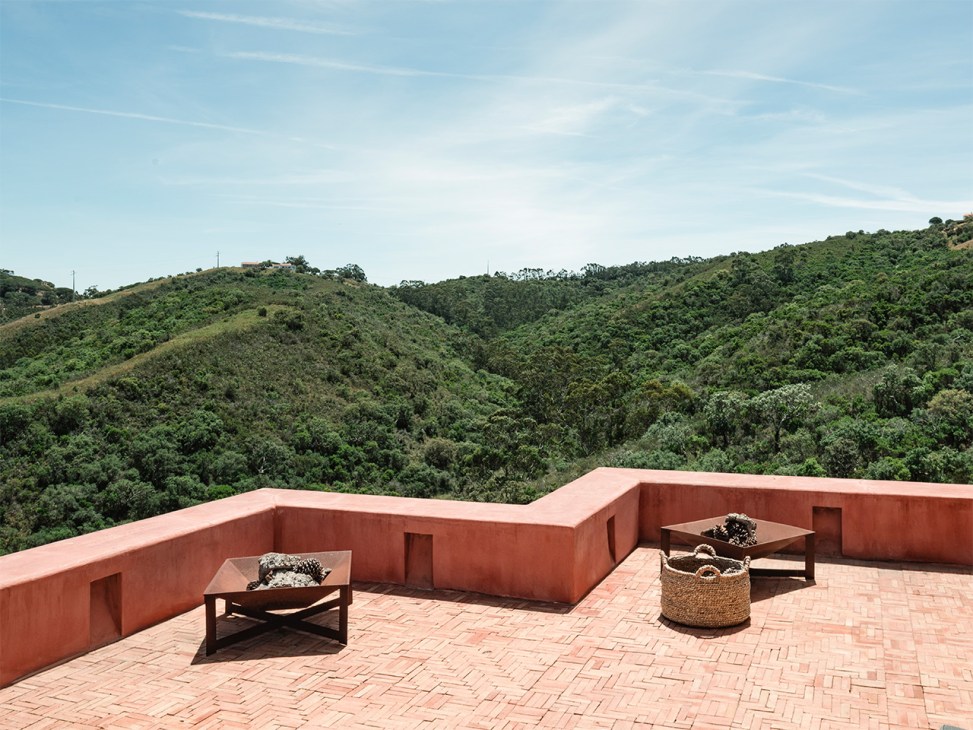
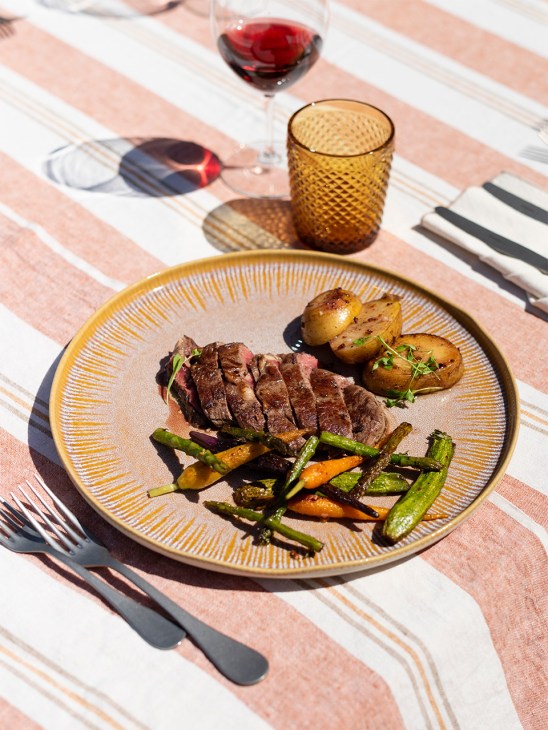
Spread across 60 hectares, the accommodation is split between selfsufficient villas with kitchen and dining areas, and smaller but equally comfortable suites with high-domed ceilings. Vale Palheiro also has a pool, a wellness centre and a farm-to-table restaurant that draws on the estate’s hives, orchards and chicken coop, as well as seasonal ingredients from the surrounding region. Shaded porches invite slow afternoons with a book; games rooms come with fireplaces for cooler nights; and the rooftop terrace, equipped with firepits, is designed for stargazing. “We wanted to create plenty of space for contemplation,” says Matias. “Somewhere to read, draw and dream.”
How to get to Vale Palheiro
Vale Palheiro is an 80-minute drive from Faro airport and a three-hour drive from Lisbon.
During your stay
Some of Portugal’s most dramatic wild beaches can be found near Vale Palheiro, including Odeceixe, Amoreira (where a river meets the sea) and Arrifana (famous with surfers). On Saturdays, a stroll through the cobbled streets of Aljezur should include a visit to the market, where stalls offer regional bounty such as the lira, a variety of sweet potato. Arte Bianca in Aljezur is a simple restaurant that serves excellent pizzas.
Designer Harry Thaler’s breathtaking Dolomites farmhouse transformation
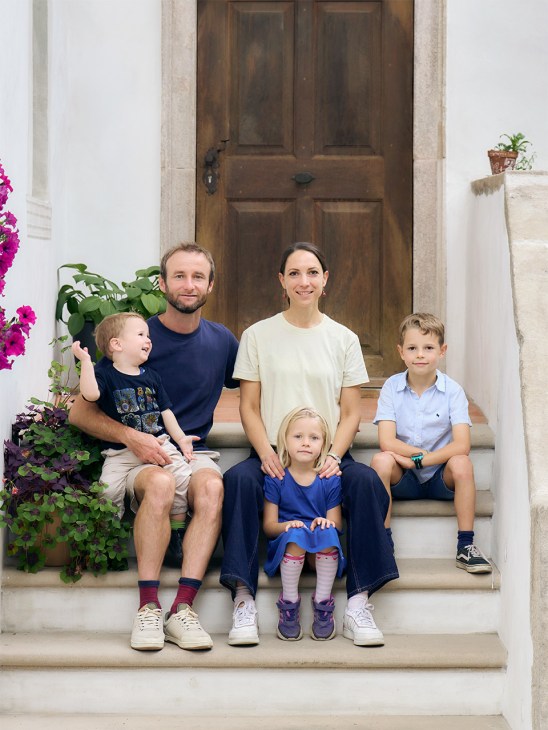
Stay at Ansitz Layshof, a new guesthouse in Merano’s Maia Alta neighbourhood, and you might well find the owners’ three children playing football on the garden lawn behind the historic property with new-found friends lodging for the weekend. “It’s a family-like atmosphere as it always has been,” says Christa Klotzner, who runs the place with her husband Andreas. “But now it’s for everyone.”
The beautiful, traditional South Tyrolean house – a stone’s throw from the Dolomites – can trace its history back to 1254 and has been in Andreas’s family for more than 150 years. Until recently, though, it was a private farmhouse. Even today, the tractor parked in a dark-wood barn round the corner from the main building points to Andreas’s main job, tending nearby fields. Hailing from the fifth generation of apple farmers, he grew up in the home with his five sisters, parents and nonna. “There was always family in the house visiting my grandmother,” he says.
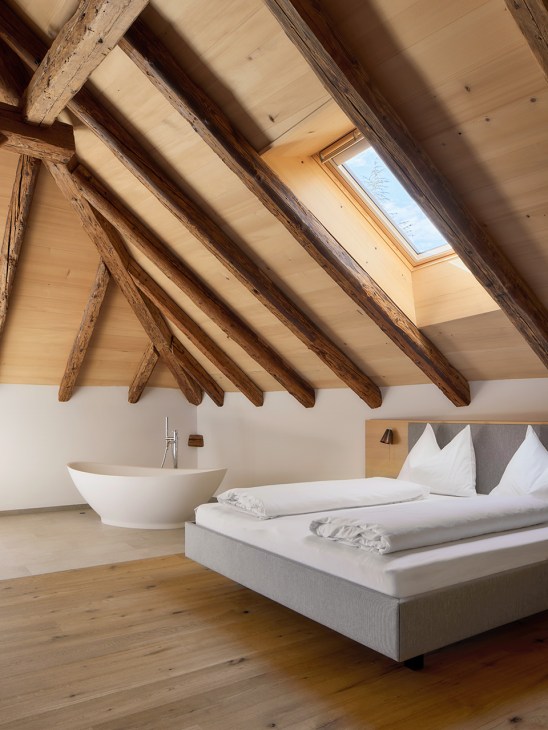
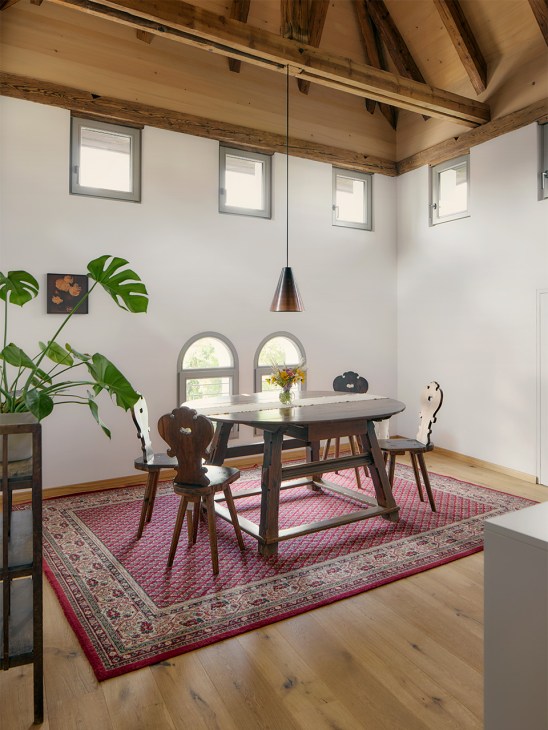
With the passage of time, it became clear that the house needed work – and was too big for the family’s changing needs. “We got to a situation where we had to decide whether we wanted to go somewhere else to live or refurbish it,” says Christa. The couple, who took over the farm in 2013, decided on the latter, embarking on an ambitious two-year project that converted part of the space into a guesthouse. The work retained the beautiful wooden beams, old doors and stucco ceilings that date to the 18th century, focusing on much-needed structural updates such as restoring the roof and stabilising the structure. Happily for Christa, who jokes that she was always cold when she first moved in, there is now central heating throughout.
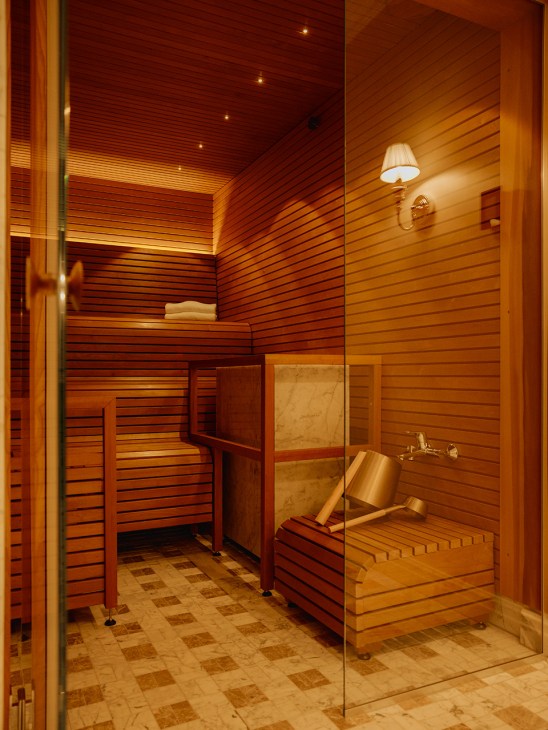
The five spacious guest apartments – all with kitchens and one with a private rooftop sauna – are set over the first and second floors, with the owners living at ground level. The rooms mix tasteful contemporary oak parquet with original pieces from the family, including traditionally painted Tyrolean cupboards and sturdy wooden beds.
At one point during the thorough renovation, the couple understood that they needed a designer’s magic touch. “When the work was almost done – and we had wanted to do a lot ourselves – we realised that we needed some help,” says Andreas. The couple drafted in a designer who grew up in Maia Alta, Harry Thaler, the man behind the Monocle Design Awards trophy, who had gone to school with one of Andreas’s sisters.
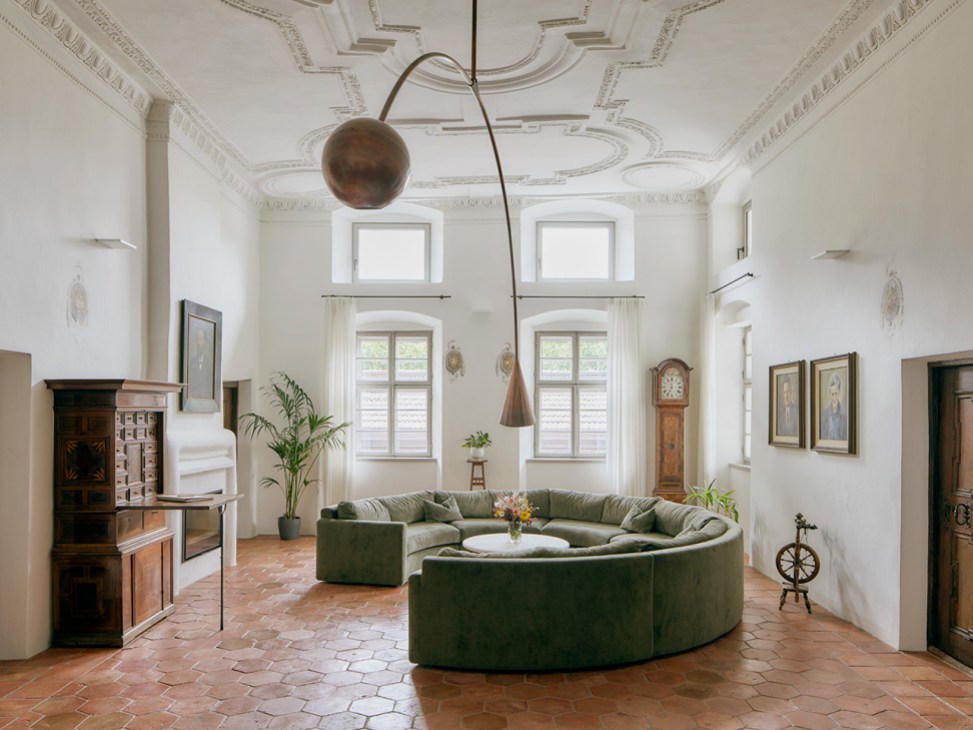
Thaler’s flourishes take Ansitz Layshof to the next level. As well as turning his attention to all the room lamps, he designed a mezzanine level in the “Weyer” apartment and advised on the rooms’ armchairs. But it’s his work in the firstfloor communal area that stands out the most. The huge, sculptural copper chandelier hangs from the ceiling above a circular sage-green sofa – also Thaler’s work – juxtaposing wonderfully with old paintings and a grandfather clock set against a wall. “When we saw how beautiful the restoration was,” says Christa, “we knew that we wanted to share it with others.”
layshof.com

Merano mini guide
1.
Meteo
A Monocle favourite run by Agata Erlacher, Thomas Strappazzon and friends, Meteo is a Mediterranean-inspired restaurant that uses excellent ingredients and has top views.
Passeggiata Inverno 51; 139 0473 055 001; cometometeobaby.it
2.
Kunst Meran
An impressive 500 sq m art museum set over three floors covering everything from architecture to photography.
Via dei Portici 163; 139 0473 212 643; kunstmeranoarte.org
3.
PianoPiano Record Store
This great record shop run by DJ Thomas Strappazzon with Alessandro Cappelli is a real music-lover’s haunt.
Vicolo Passiria 25/27; 139 339 395 9486
4.
Riedingerhof
You’re spoilt for choice when it comes to crisp whites in this corner of majority-German-speaking Italy, but Riedingerhof, which only produces organic wine, is a firm favourite.
Via Scena 45; 139 377 253 2967; riedingerhof.wine
5.
Carte Blanche
A new contemporary-art gallery space promoting regional and international creatives, located inside Hotel Aurora.
Passeggiata Lungo Passirio 38; 139 0473 211 800; hotel-aurora-meran.com/carte-blanche
6.
The Monocle Shop
Run by the brilliant Linda Egger, our shop, which recently celebrated 10 years in Merano, has all your clothing, accessories and stationery needs covered.
Via Dante 25; monocle.com
A tour of the spectacular upgrade of Kämp, Finland’s first grand hotel
There are hotels and there are institutions – and Kämp in Helsinki is among the latter. Since opening in 1887, the country’s first grand hotel has been a discreet stage for diplomats, composers, artists and statesmen. Kämp didn’t just offer comfort: it introduced Finland to an entirely new vision of civility and cosmopolitan life. Beneath its soaring chandeliers, Helsinki’s high society gathered in the Mirror Room. Kämp housed one of Finland’s earliest cinemas, its American-style bar brought cocktail culture to the nation and its suites were the backdrop to cultural breakthroughs and political meetings that changed the course of history: including the founding of the newspaper of record and being a HQ for resisting the Soviets.
More than two decades since its last overhaul, Kämp is preparing for its next act. The €100m renovation isn’t simply a matter of upgrading rooms or adding floor space (though it will do both). “This is about staying relevant without becoming a museum,” says Tuomas Liewendahl, Kämp’s general manager. “It’s the setting, not the story itself. But, for it to serve people today and tomorrow, it needs a face-lift and a bit of modernisation.”
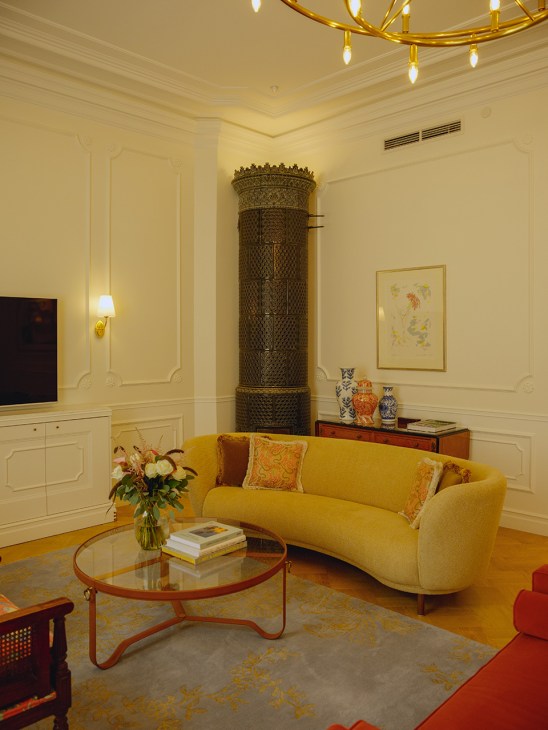
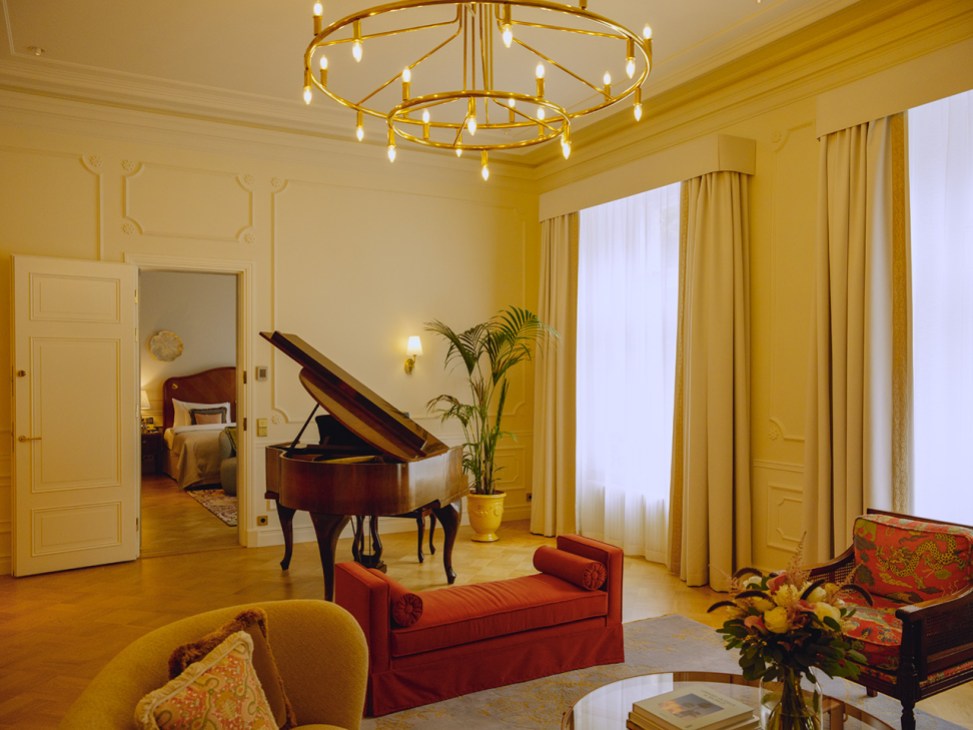
The renovation, which began in late 2023 and will continue in phases until 2026, is being overseen by Finnish architecture studio Sarc 1 Sigge, with interiors led by Helsinki-based Fyra and London’s Archer Humphryes Architects. The building will remain open throughout the revamp – no small feat when all of its 179 guest rooms, along with the public spaces, are being reimagined. The most visible change so far is the new extension into the adjacent Helander House, a historic building that will contain 22 suites and rooms and a new entrance to Esplanadi park. “This is where the city breathes,” says Liewendahl of the boulevard that cuts through central Helsinki. Kämp’s original entrance faced the bustling thoroughfare but, in recent decades, the hotel has been using other doors on the quieter Kluuvikatu street. This is now being reversed. A restored grand entrance, complete with a new reception, will open later this year.
The Helander House suites are notable not only for their size and views but also for the ways in which they accommodate modern travel trends. Four include kitchenettes, spacious wardrobes and cocktail stations with shakers and recipe cards. “We’re seeing longer stays, more private chefs, more people who treat their suite as a personal residence – so we designed for that,” says Liewendahl. Kämp will also offer a new spa, including two pools, a well-equipped gym, treatment rooms and – this being Finland – three saunas. The ambition is not just to pamper guests but to enhance their long-term wellbeing – an aim aligned with the global shift towards holistic travel. “We’re thinking about how people want to feel, not just what they want to see,” says Liewendahl.
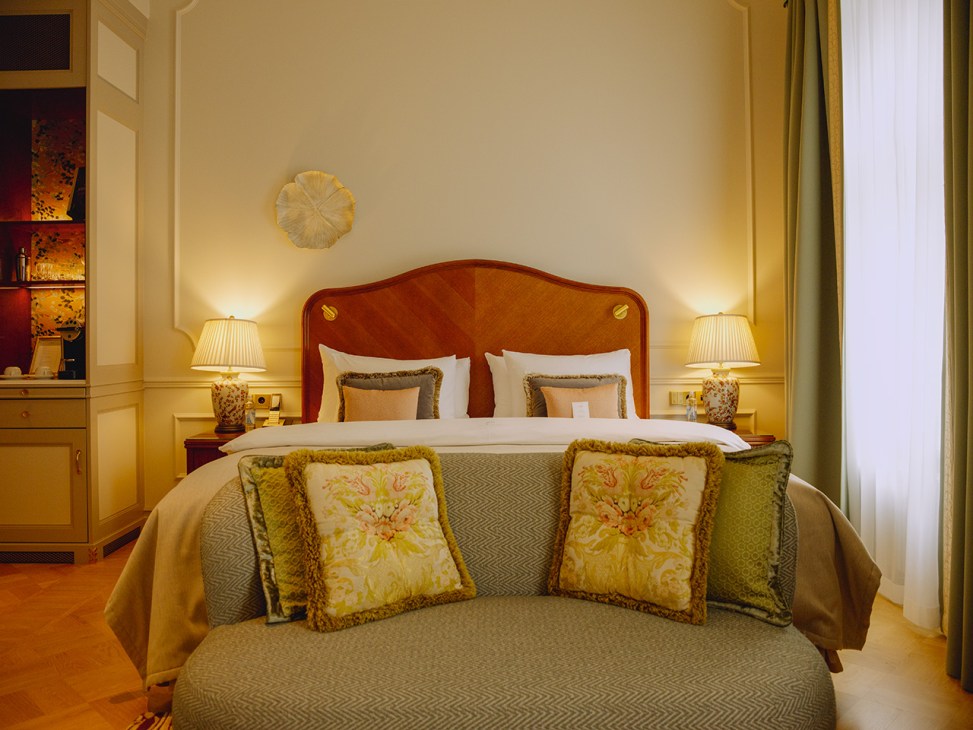
The dining areas are also being upgraded. Kämp’s bar will be moved to make way for a new reception hall. An improved restaurant offering will anchor the ground floor, while a breakfast space on Kluuvikatu will serve as a florist and deli by day. The terrace spaces are being kitted out for year-round use too.
The hotel’s guests might include heads of state and international pop stars but it’s the personal connections that give Kämp its resonance. Staff members such as Anders Sjöblom, Kämp’s guest-relations manager, have worked here for more than 20 years. Liewendahl’s grandparents once danced in the Mirror Room; a photograph of the space was presented to him when he hosted a party in the same space. “There aren’t many hotels where the staff, the guests and the city all feel invested,” he says. “But Kämp has always been more than just rooms and keys.”
hotelkamp.com
Inner visions
At Kämp, solid-oak floors are laid in patterns reminiscent of the 19th-century interiors. Marble bathrooms, brass details and restored ceramic stoves give the rooms a tactile sense of history. But there’s softness here too: think creamy textiles, hand-drawn wallpapers and suites inspired by Helene Schjerfbeck paintings or the seasonal themes of a Jean Sibelius score (the composer was a regular at Kämp). No two rooms are exactly alike. “It shouldn’t feel like it was delivered on a truck,” says Fyra’s Eva-Marie Eriksson. “It should feel like Kämp has always been this way.”
Lighting – restored and new – plays a key role. Fyra designed fixtures made by Innolux and Saas Instruments, while Kämp’s past life is also an influence. “Light changes the mood,” says Eriksson. “It’s how we bring coherence across different eras of architecture.”
Les Roches opens its first hospitality school in the Middle East, aiming to elevate the Emirates’ luxury industry
“When guests arrive, they should feel an Emirati welcome,” says Scott Richardson, the academic dean of Les Roches Abu Dhabi. We’re sitting in the sleek rotunda of the Swiss hospitality school’s new campus, where students in chef whites are bustling around us. Richardson’s phrasing distils a big shift in how the uae wants to present itself. For decades, luxury hospitality here was an import. It was delivered, sometimes falteringly, with European precision and Filipino and South Asian resilience – but rarely with a local voice. Things, however, are changing.
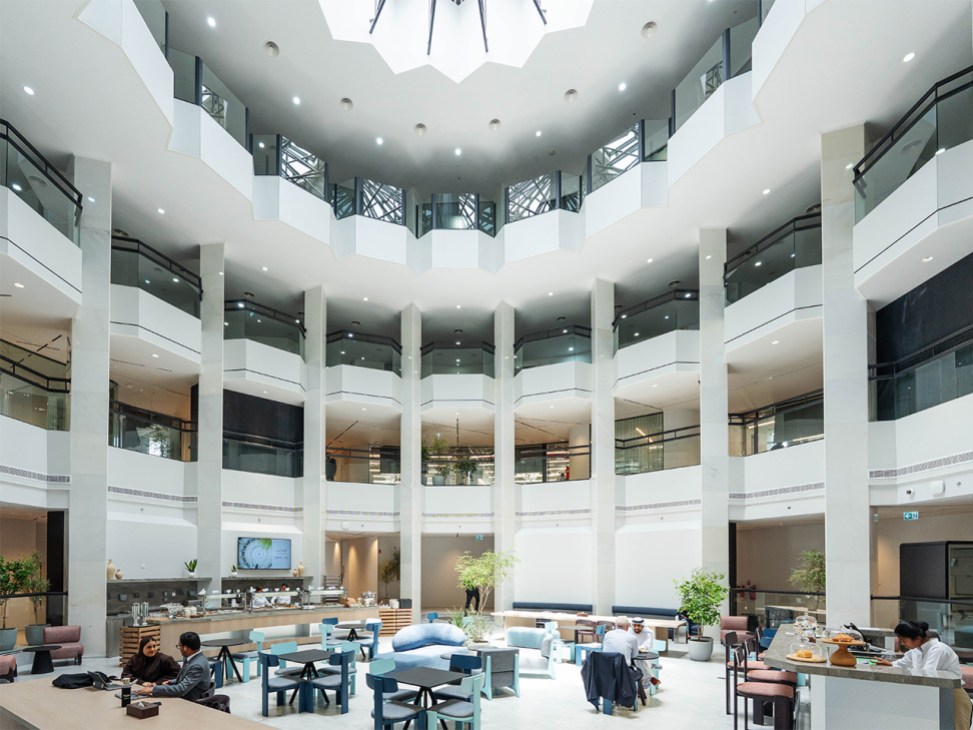
In a country known for building big and thinking bigger, a quiet back-of-house revolution is under way, complete with a well-choreographed turndown service. Abu Dhabi might be a capital more commonly associated with museum-scale statements but with Les Roches’ Middle East campus, it is betting on a different kind of soft power: fluency in five-star service, with an Emirati accent. Minutes by car from the Louvre and the forthcoming Guggenheim, the new campus is designed to back talent from within the region, not import it. While the original institution in Switzerland boasts alumni in top-tier hotels in cities from Singapore to New York, its UAE outpost is trying to localise leadership in an industry that has long been defined by transience.
“Being in Abu Dhabi is absolutely crucial to the success of this academy,” says its managing director, Georgette Davey. “Students can experience so much here.” She points to Abu Dhabi’s expanding cultural footprint – from global museum collaborations to the arrival of Disney – as part of a broader movement. “We’re teaching them about the diversity of the world of hospitality. It’s not just a hotel any more. It’s also about luxury retail and theme parks. It’s about corporate head offices too.”
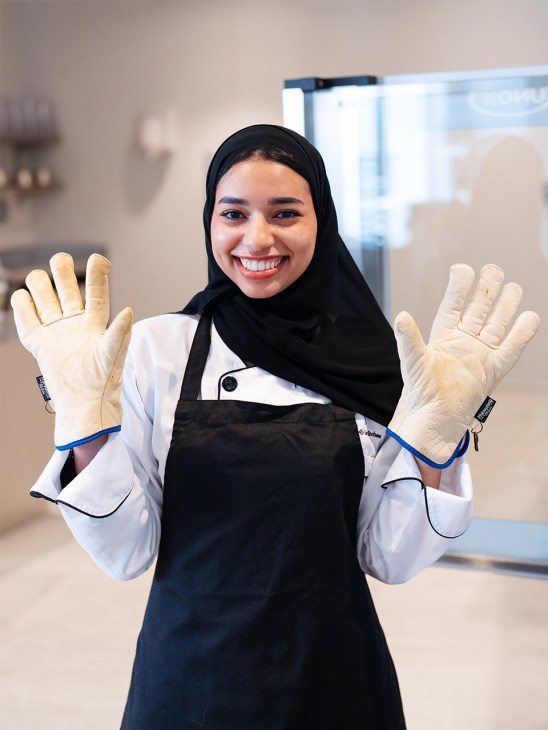
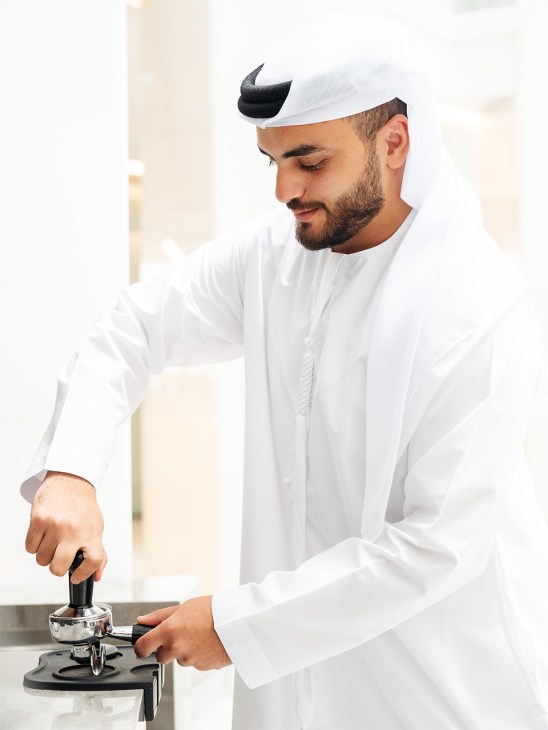
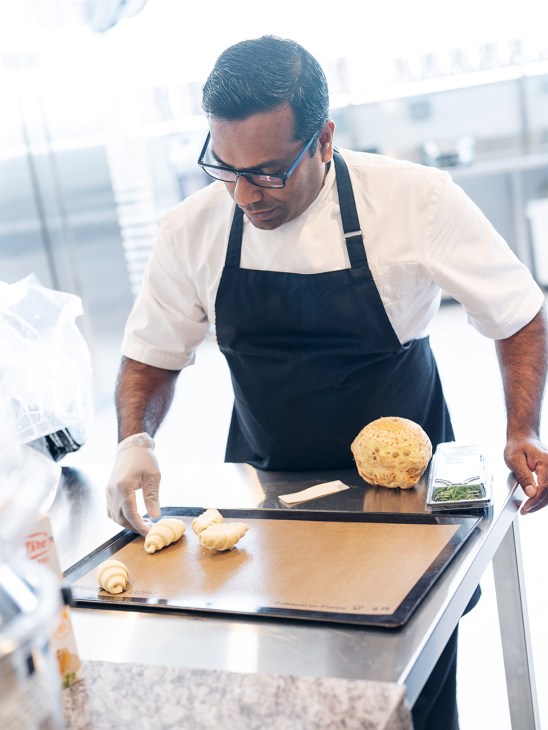
Alumni and students are embedded across the capital and hospitality here is beginning to feel more elevated – and more Emirati. The next time a visitor checks in at a luxury hotel or enters a restaurant, the person greeting them might just be a local – fluent not only in service standards but also alive to cultural nuance. “We couldn’t just copy-and-paste a European model,” says Richardson. “Hospitality is cultural. It’s about how you make people feel.”
Davey agrees. “In our first intake, about a third of the students were uae nationals,” she says. “Now it’s closer to 95 per cent. We’ve even had requests to launch summer camps for 15-to-17-year-olds.”
Among those leading the shift is Abu Dhabi native Tahnoon Al Qubaisi. “As Emiratis, hospitality runs in our blood,” he says. “From an early age, we are taught to welcome, serve and honour our guests as a reflection of who we are.” Now on placement at Emirates Palace Mandarin Oriental, Al Qubaisi says that he sees hospitality not only as an industry but also as a cultural inheritance.
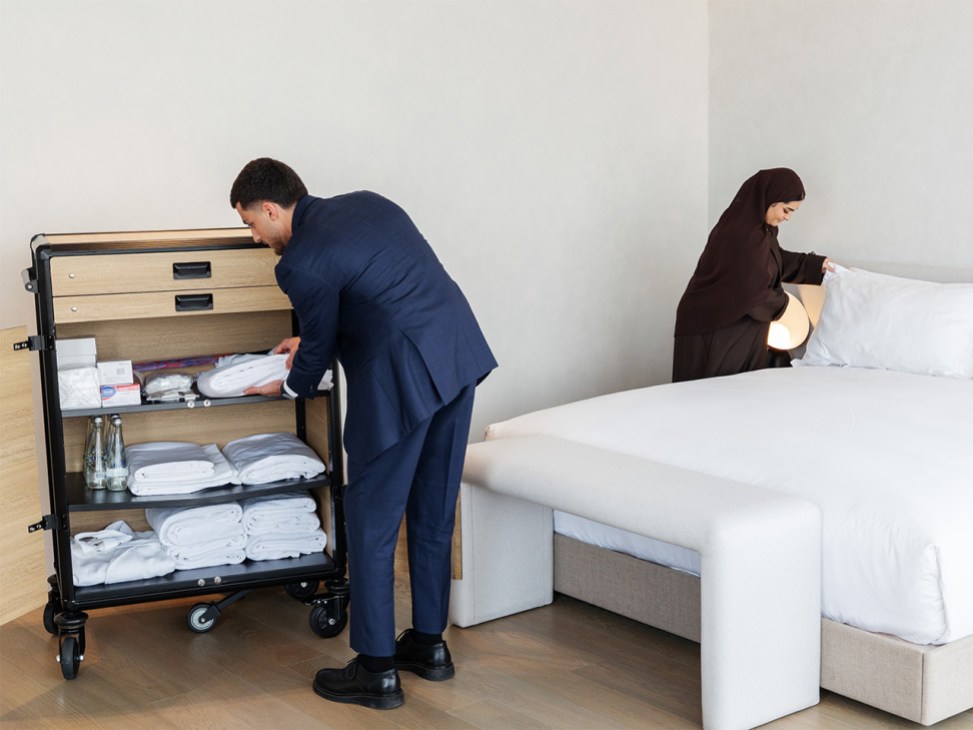
Richardson has plans to have more Emirati professors. “Up to this point, local professors were in engineering and petroleum but things will change,” he says. “We already have an Emirati professor teaching our hospitality culture course. He teaches respect for elders, open-door policy and being welcoming.”
There’s a business case for this shift in emphasis. “Abu Dhabi wants to provide 178,000 tourism-related jobs by 2030,” says Emirati student Mohammed Al Hammadi. “I want to see at least 78,000 of those being filled by Emiratis.”
“We’re already seeing the ripple effect,” adds Al Qubaisi. “Emirati and non-Emirati students are gaining experience at top five-star hotels, government tourism entities, museums, historical attractions and more. This is the beginning of something truly powerful.”
lesroches.edu
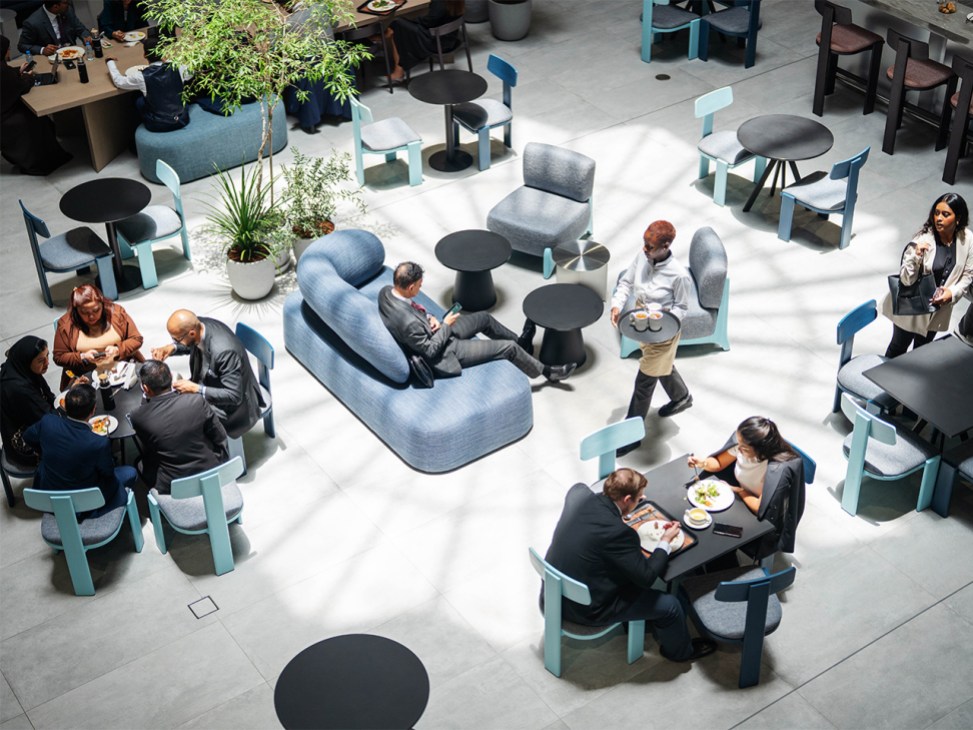
Les Roches in numbers
The Swiss-founded hospitality and hotel management school offers bachelor’s degrees and postgraduate qualifications, as well as tailored courses, in-work placements and internships.
1954: Founded in Switzerland
16 to 1: The ratio of students to staff
100: Total nationalities represented among the students
1995: Les Roches opens its campus in Marbella
98 per cent: The proportion of students employed after graduation
192: The number of companies represented by recruiters on the most recent career day
2024: Les Roches admits first batch of students at its Abu Dhabi campus
Around the world in 40 designs: The best furniture, country by country
Japan, for oustanding craftstmanship
Merging minimalist designs with innovative techniques, Japan’s artisan furniture-makers, renowned for their work with timber, create wares that are as durable as they are beautiful. To buy Japanese is to invite a legacy of outstanding craftsmanship into your home.
1.
N-T01
by Norm Architects for Karimoku Case, 2022
This drinks trolley is a collaboration between Denmark’s Norm Architects and Japanese furniture manufacturer Karimoku. A beauty on wheels, it comes with a paper-cord-wrapped oak handle and takes its form from the umbrella racks that stand at the entrances to many Japanese temples.

2.
Kigo Side Table 70
by Gam Fratesi for Koyori, 2024
Copenhagen-based studio GamFratesi drew inspiration from the organic forms and rich textures of Isamu Noguchi’s mid-century stone sculptures for its Japan-made table series. Light oak and dark walnut evoke the harmony of nature, while the skilled human touches that finish these small tables make for seamless, smooth surfaces.

3.
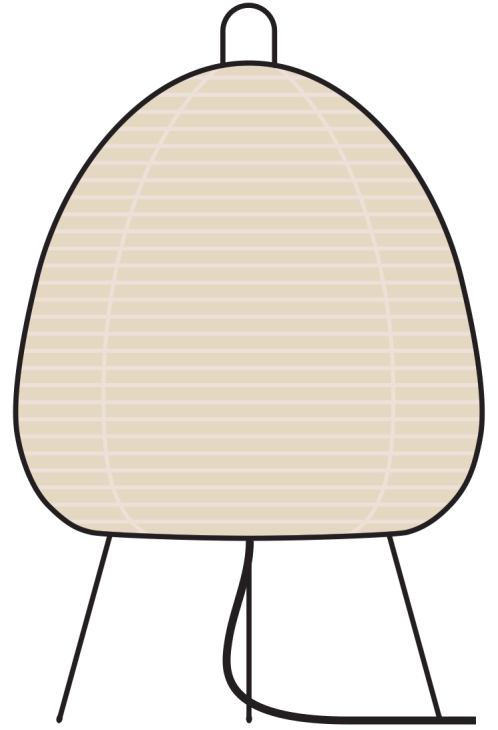
1AD Akari light
by Isamu Noguchi for Ozeki Lantern, 1951
Japanese-American sculptor Isamu Noguchi started designing his Akari lights in 1951 and they’re still handmade with washi paper and bamboo ribbing in the Gifu workshop of Ozeki Lantern. Noguchi compared the Akari’s soft glow to “the light of the sun filtered through the paper of shoji”. There are many sizes and shapes but 1AD is a good start.
4.
Three-legged Drawer
by StudioYO, 2023
This made-to-order piece reimagines traditional storage, stripping away the outer casing to reveal a set of drawers supported by three legs. The effect is a cabinet system that appears to be floating, blurring the boundary between design and art.

5.
Elephant Stool
by Sori Yanagi for Vitra, 1954
With a masterly blend of functionalism and tradition that’s difficult to beat, Sori Yanagi set the standard for Japanese product design. His work on everything from cutlery to pots and pans are as fresh today as ever. This stackable stool from 1954 can be used either indoors or outdoors. It can be a seat or a side table, is easy to clean and will last for years. Another Yanagi classic.
6.
Mushroom Stool
by Yamanaka Design Group for Tendo Mokko, 1961
This moulded-plywood masterpiece is so complicated to make that even though it won a competition in 1961, it didn’t actually go into production until 42 years later. A small piece in natural grain teak, it encapsulates so much about Japan: the skill of its artisans, the power of its postwar design and the enviable depth of manufacturer Tendo Mokko’s back catalogue.

7.
Foldable Clothing Rack 3000
by Kenmochi Design Institute for Akita Mokko, 1984
Japanese designers are well-versed in making items for tight spaces and this folding clothing rack by Kenmochi Design Institute offers slimline hanging for clothes. Meticulously crafted in beech by Akita Mokko – makers of bentwood furniture since 1910 – it comes in a variety of colours and you can attach matching hooks for additional storage.

8.
Sing Sing Sing chair
by Shiro Kuramata for XO, 1985
Shiro Kuramata created functional, highly prized pieces that blurred the lines between art and design. The Sing Sing Sing chair, designed for French manufacturer XO, features steel mesh and a curvy tubular frame that perfectly encapsulate the designer’s architecture-meets-industrial style. And, as a bonus, it’s also a terrific (and comfortable) conversation starter.

9.
Meguro lounge chair and ottoman
by Naoto Fukasawa for Maruni, 2025
The Hiroshima chair, also designed by Naoto Fukasawa for Maruni (for whom he’s the art director), is already in the pantheon of chair classics. His new Meguro lounge chair – here in walnut and brown leather with an accompanying ottoman – is just as special.

10.
Stone Garden
by Time & Style, 2024
Sadly, we can’t all live in a historic Japanese temple but this Stone Garden collection from Time & Style can bring the same natural materials and contemplative mood into any home. Its low-level seating, made in Asahikawa in Hokkaido, comes with tatami mats or cushions to encourage relaxation and more appropriate posture.

Spain, for designs as sunny as España
Spanish design is celebrated for its vibrant and playful character, which is in step with the national temperament of the sundrenched country. With a heritage of craft as well as manufacturing facilities that are still going strong, when it comes to design, it’s safe to bet on Brand España.
11.
Tatu lamp
by André Ricard for Santa & Cole, 1972
Named after the Portuguese word for armadillo, this lamp has an appeal that has endured since it was released in the 1970s. Conceived by Catalan industrial designer André Ricard, Tatu takes its inspiration from the focal glow of aeroplanereading lights. With three independently rotating sections and an adjustable beam, Tatu is best suited to quiet and focused activities.

12.
Suricata desk
by Inma Bermúdez for Sancal, 2025
This versatile desk-and-stool piece is inspired – and named after – the inquisitive suricata, which is Spanish for “meerkat”. The desk embodies the energy and dynamism of the small mammal, while encouraging active sitting. Available in a natural maple veneer or a colourful range of wood stains, this desk can turn even the smallest of spaces into a stylish study.
13.
Altar table
by Miguel Milá for Kettal, 2023
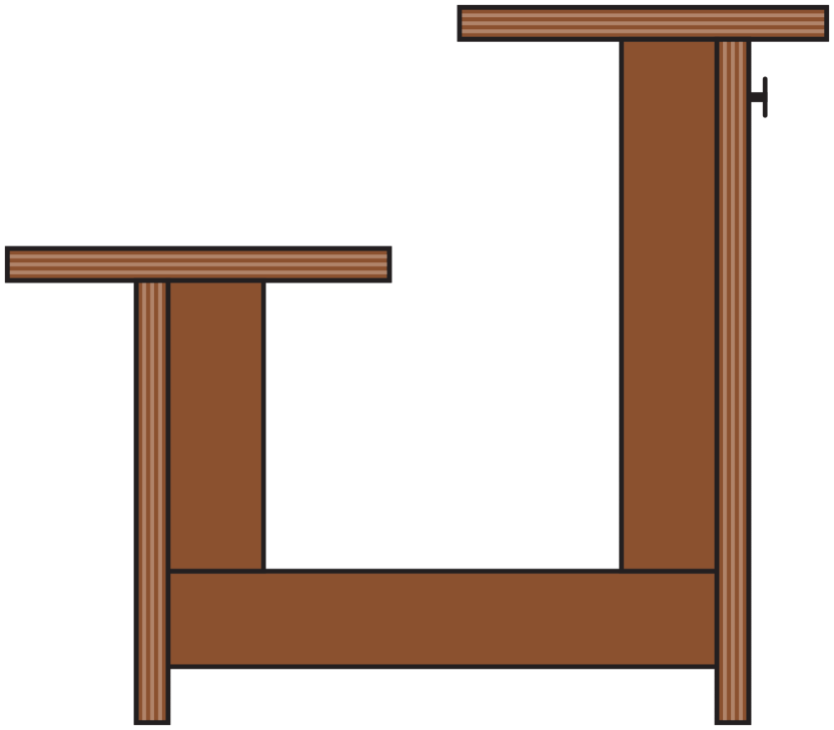
Barcelona-born designer Miguel Milá created this table in the mid-1960s as an altar for his wedding. Later it became part of his everyday use. Though not mass-produced at the time, Kettal picked up the patent for this simple yet charming design in 2023. It’s made from teak and its top comes in a variety of colours and finishes.
14.
Salvador chair
by Miguel Milá for Trenat, 2013
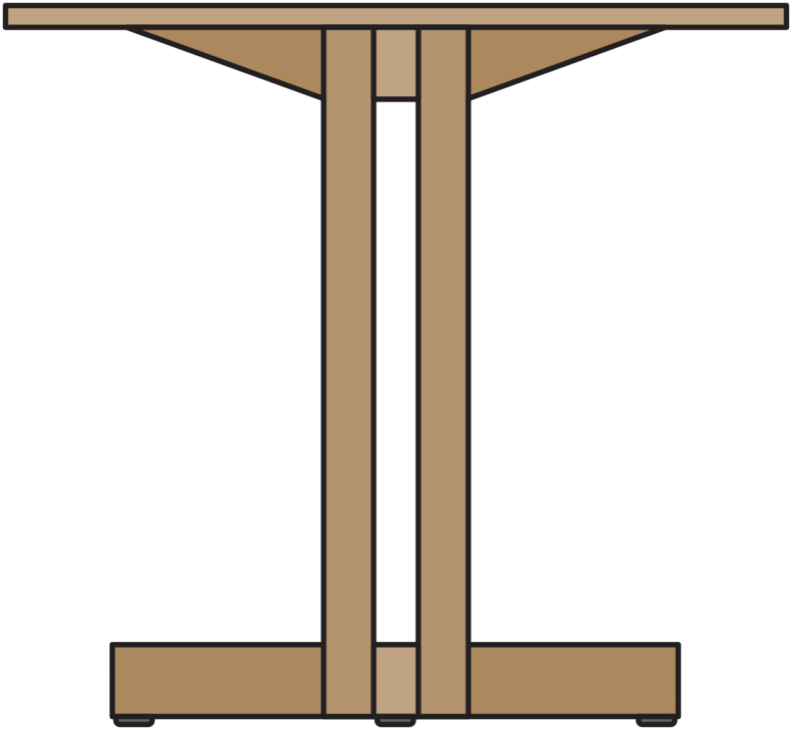
The elegant Salvador chair highlights not only Miguel Milá’s unending search for simplicity and economy of resources but also his appreciation for existing craft traditions. Manufactured by Trenat, the chair uses natural rattan cane, reed and reed strip or coloured ribbons, blending Mediterranean heritage with modern-day design sensibilities

15.
BKF chair
by Antoni Bonet, Juan Kurchan and Jorge Ferrari-Hardoy for Isist Atelier, 1938
Known as the BKF but also the Hardoy, the Butterfly, the Safari, the Sling or the Wing, this chair was designed in 1938 by Spanish architect Antoni Bonet, in partnership with Argentinian design duo Juan Kurchan and Jorge Ferrari-Hardoy. The chair immediately became a symbol of postwar modernity. While many versions exist in the market, Isist Atelier has been handcrafting the original steel-and-leather model to exact specifications since the 1990s.

16.
Tria
by JM Massana and JM Tremoleda for Mobles 114, 1978
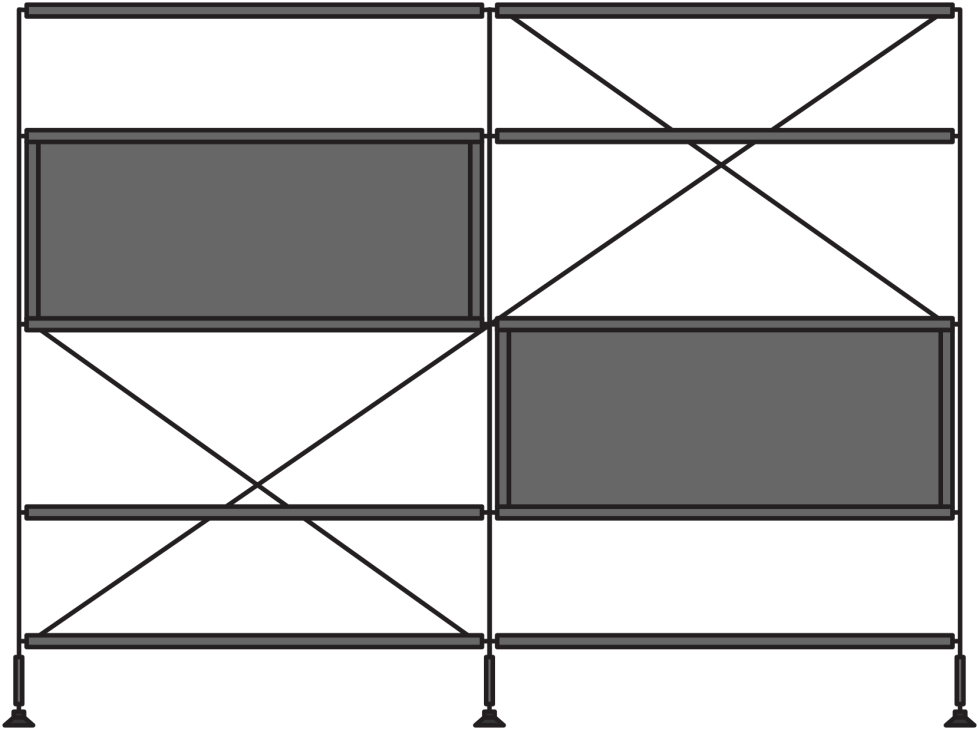
Tria, which means “choose” in Catalan, is a shelving system originally designed for Mobles 114 in 1978 by industrial design pioneers JM Massana and JM Tremoleda. The modular unit can be adapted to almost any space thanks to its configurable nature and range of materials, which include oak, walnut and cedar, and colours, such as ochre, orange, green and grey anthracite.
17.
Õru sofa
by Patricia Urquiola for Andreu World, 2022
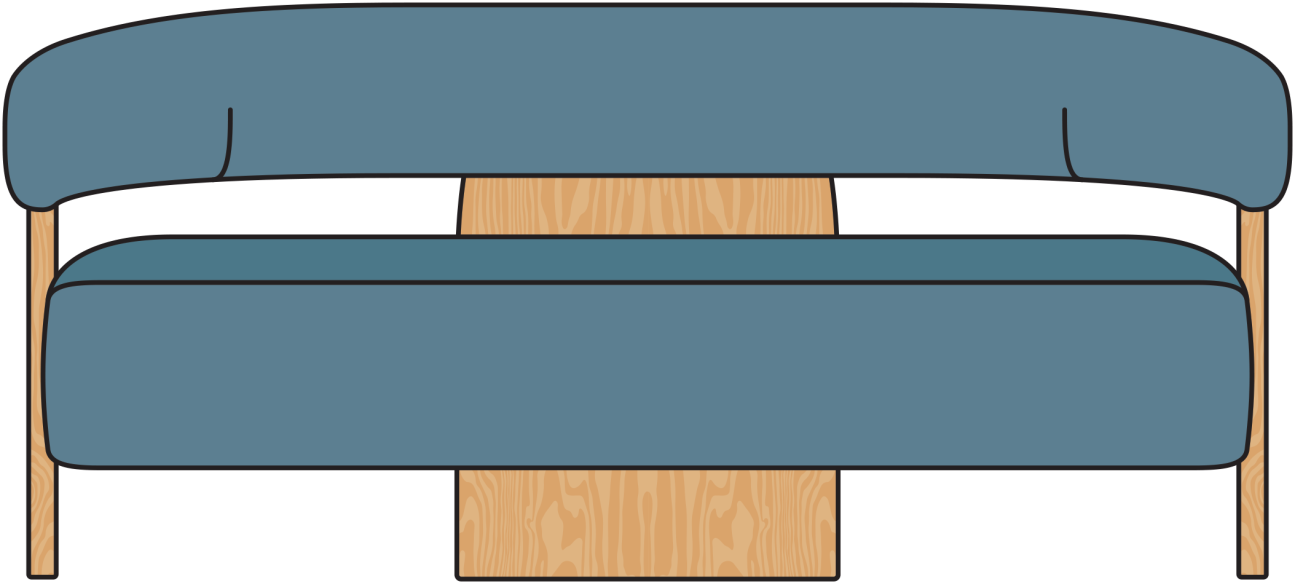
Spanish architect Patricia Urquiola looked to the design direction of the 1970s and Japanese aesthetic sensibilities to create this curved and low-slung sofa. Its three oar-shaped feet are the result of woodworking prowess combined with cutting-edge industrial technology, all of which is brought together beautifully in the Valencia manufacturing facility of Andreu World.
18.
Dipping Light
by Jordi Canudas for Marset, 2018
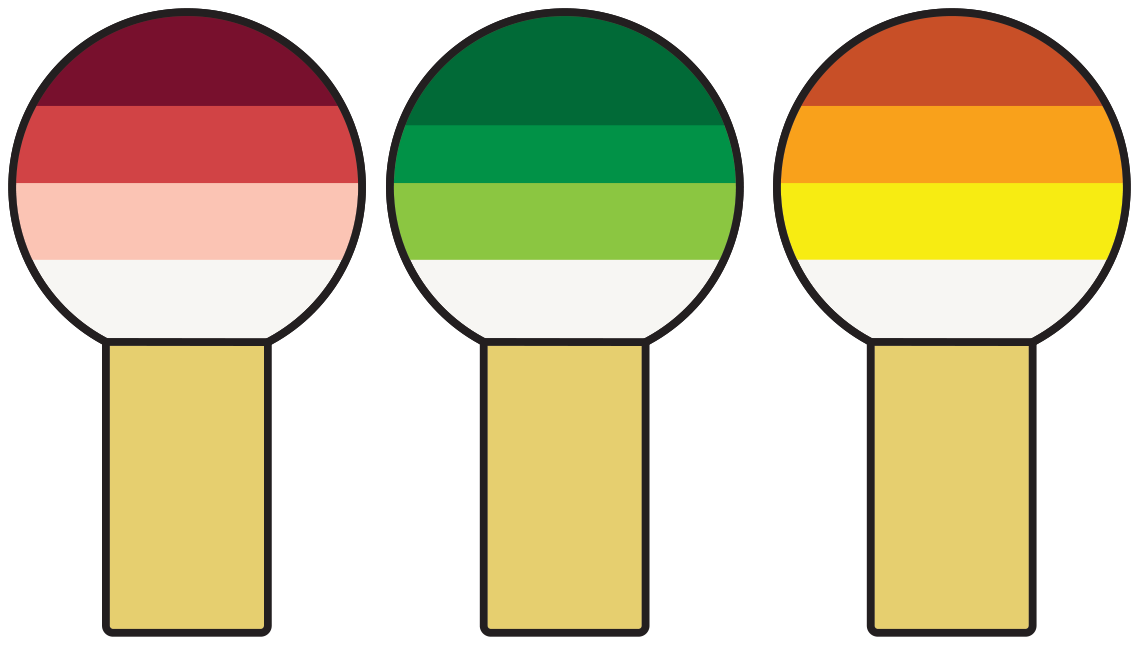
Jordi Canudas’s lightbulb moment came when he was experimenting with plunging a lit lamp into a vat of paint at repeated intervals. The result is the Dipping Light, an instantly recognisable piece – and a Marset bestseller – that features gradients of colour and casts a warm glow.
19.
Balensiya
by Gonzalo Milà and Juan Carlos Ines for Indoors, 1991
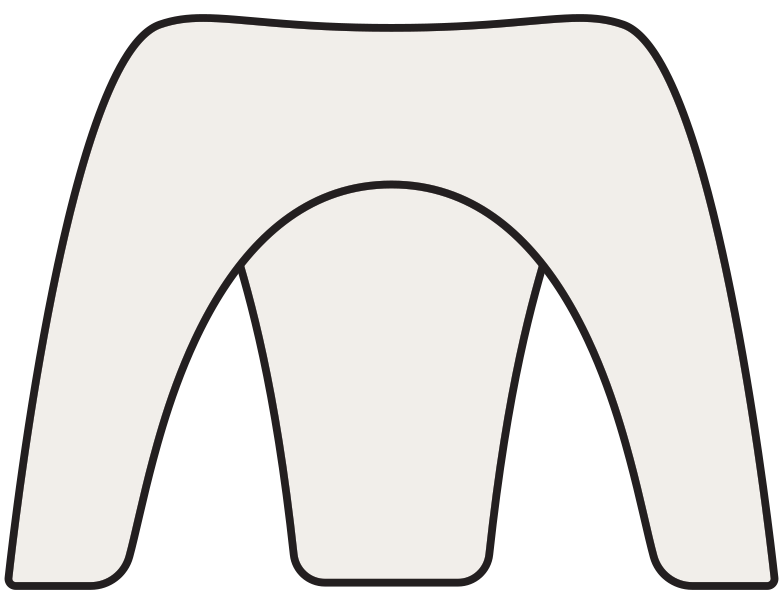
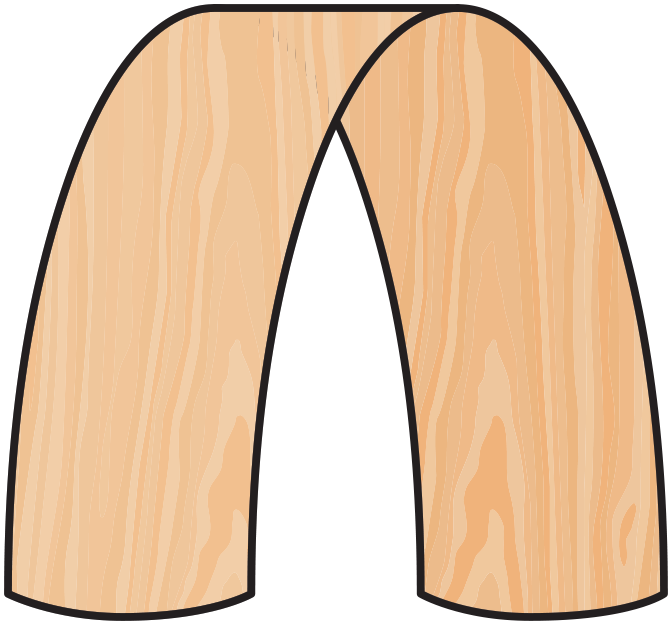
Balensiya is a sculptural seat with a gentle rocking motion that’s designed for playful interaction. Made from varnished beech plywood and incorporating traditional woodworking techniques, it was designed by Gonzalo Milà and Juan Carlos Ines in the early 1990s. The arch-shaped stool is now issued by Barcelona-based design company Indoors.
20.
Explorer cabinet
by Jaime Hayon for BD, 2019
This cabinet features in Jaime Hayon’s 2019 Explorer collection for Barcelona firm BD. The smooth lines and playful colour of the cabinet take their cues from hot dogs, a simple source of inspiration that exists in fun contrast to the hand-finished and high-gloss lacquer usually found on pianos. The result is a humorous and visually striking yet functional piece.

Switzerland, for quality as reliable as clockwork
The Swiss enjoy a reputation for precise and clean-cut design that is simple, certainly, but never boring. Makers balance function with durability, often using local timber and high-quality metals. To buy Swiss is to invest in the enduring appeal of quality that lasts and lasts.
21.
B77 MK III
by Revox, 2024
Released last year, Revox’s updated version of this classic tape recorder retains the brushed aluminium, dials and restrained design of the original. But its more modern electronics and digital counter bring it firmly into the present. Swiss-engineered, this is a machine for anyone who values outstanding audio quality.

22.
DS-1025 Terrazza sofa
by Ubald Klug for De Sede, 1973
Part-furniture, part-landscape architecture, Ubald Klug’s Terrazza sofa takes its sculptural cues from terraced hills. With its leather layers and modules that can be mirrored, extended or combined, it is capable of forming the dramatic centrepiece of any living room. Manufactured in Klingnau, in the Swiss workshop of De Sede, the Terrazza continues to intrigue more than 50 years after its release.

23.
SBB Clock
by Hans Hilfiker for Mobatime, 1944
With its bold markings and luminous face, Hans Hilfiker’s iconic railway clock is easily legible by day or by night. With its sweeping carmine-red second hand and thick black markings, the pared-back design is recognisable around the world. In Switzerland, the clock is still on proud display in every train station, quietly keeping time on the nation’s comings and goings.

24.
Landi chair
by Hans Coray for Vitra, 1938
Though the Landi chair was designed for the 1939 Swiss National Exhibition, it wouldn’t look out of place at a contemporary design fair today. Made from durable weather-resistant aluminium, its perforated seat and back make it an ideal outdoor companion, while its stackable design ensures practicality.

25.
Rey chair
by Bruno Rey for Dietiker, 1971
Thanks to a patented screw-free wood-to-metal joint, this stackable classic from Bruno Rey combines curved forms with a clean, graceful look. Durable, comfortable and instantly recognisable, it is the first Swiss chair to earn this patent. Moreover, it still feels modern and worth owning to this day.

26.
Wall/Ceiling Lamp
by Georg Gisel for Lehni, 1976
This 1970s lamp by Zürich-born Georg Gisel uses a mirrored bulb to throw light onto a reflective disc, casting a glowing halo that softly illuminates a room. Designed to be used as a wall or a ceiling fixture, it pulls off the rare feat of being minimal, sculptural and atmospheric, all at the same time.

27.
USM Haller system
by Fritz Haller and Paul Schärer for USM, 1963
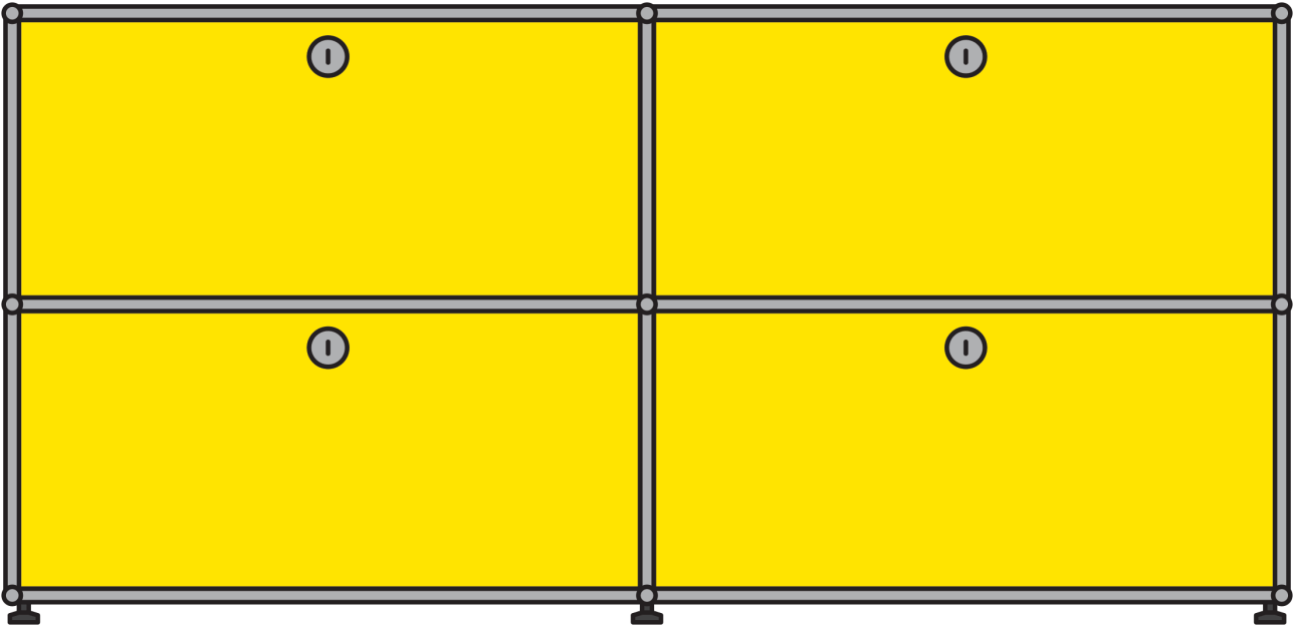
Built from chrome-plated steel frames and colourful powder-coated panels, the USM Haller system has been helping the Swiss stay organised since the late 1960s. Conceived as modular cubes, the storage units can be endlessly reconfigured. For its functionality, the USM Haller system is one of the undeniable benchmarks of Swiss modernism.
28.
Loop chair
by Willy Guhl for Eternit, 1954
In the 1950s, Willy Guhl bent a single fibre-cement panel into a continuous loop, creating a seat and a backrest in a simple gesture. Made from repurposed roof panels, the chair was discontinued in 1980 because of the presence of asbestos in the material. It was later put back into production – thankfully without the carcinogenic content – and its elegance continues to impress even today.

29.
Spaghetti outdoor chair
by Huldreich Altorfer for Embru, 1948
Huldreich Altorfer’s laidback lounger consists of colourful PVC cords stretched over a tubular steel frame. Stackable and comfortable, it earned the nickname Spaghetti chair thanks to its playful strands, which resemble the Italian pasta. A postwar garden staple, the chair has furnished Swiss terraces for generations.

30.
TMP paper collector
by Willi Glaeser for Thomas Merlo & Partner, 1989
Willi Glaeser was walking around his office when he identified the need for a design that could keep A4 sheets of paper stacked and tidy. The result is this simple steel frame that is functional but also surprisingly discreet. It turns out that Glaeser wasn’t the only person hankering for a quietly stylish paper collector: the design has since sold more than one million units worldwide.

Brazil, for fun pieces with a touch of quirk
Celebrated for its beaches, samba and football players, Brazil should also be acclaimed for its design. The country’s makers know how to infuse the austere with a touch of quirk and create designs that feel elegant but never boring; fun but never gimmicky. This is craftsmanship at its coolest.
31.
Botton lamp
by Jader Almeida, 2023
Designer Jader Almeida’s style revolves around natural, sinuous lines. This quality is on display in 2023’s Botton lamp, a canopy-like structure that bends outward then collapses into itself. Its modest, compact shape lends itself to a variety of settings, from bedside tables and dining rooms to the office.

32.
Mesa cabana
by André Grippi, 2024
Designed by São Paulo-based André Grippi, the Cabana series perfectly combines rattan and wood. Held up by three legs, this table’s amorphous shape is just the right amount of whimsical. With its playful silhouette, Grippi brings Brazilian modernism into the 21st century.

33.
Pé de Ferro armchair
by Lina Bo Bardi, 1950
Lina Bo Bardi was a modernist architect who lived in Milan, Rio de Janeiro, Rome, Salvador and São Paulo. This chair, designed with Giancarlo Palanti, is all tubular shapes, clean silhouettes and white upholstery. As well as being beautiful, it is also functional. As Bo Bardi once said, “It is necessary that the work does not fall from the sky over its inhabitants but rather expresses a need.”

34.
Mole lounge armchair
by Sergio Rodrigues, 1961
Designed in 1961, this armchair is Sergio Rodrigues’s best-known piece. Mole is Portuguese for “soft” but you don’t have to be fluent to guess that. The chair’s leather upholstery, which flaps outward from its base structure like a pair of wings, is equal parts plush and pleasant.

35.
Sleeper chaise longue
by Lucas Simões, 2025
Simões’s Sleeper resembles a chaise longue refracted and reflected back at you in a funhouse mirror. Its concrete base is sci-fi-like, while its undulating, seemingly gravity-defying design adds a touch of the surreal. The name is fitting: this feels like something out of a dream.

Australia, for bold silhouettes and creativity
Laidback attitudes and a landscape of natural beauty inspire Australian design. Here, bold silhouettes and a focus on fabrication and honest materiality underscore all that is important to its creativity and craftsmanship.
36.
Studio K desk lamp
by Bill Iggulden for Planet Lighting, 1962
In the 1960s, designers such as Bill Iggulden put a practical, Antipodean spin on mid-century modern. Case in point is this lamp, which has a sharp armature jutting from a solid metal base, exposing coils and wires. The bulb cover creates a concentrated pool of light in which to work.

37.
Linear Sunlounge
by Tait, 2022
Melbourne-based Tait’s sunlounger is made from marine-grade stainless steel and timber, with a form that’s as sleek as its moniker suggests. Its two-wheel set-up means that it can be easily moved from poolside to backyard patio, making it a hit with those soaking up the sun or unwinding after a barbecue.

38.
Clipped wing side table
by Simon Ancher Studio, 2018
Australian designer and maker Simon Ancher’s side table, which can also be used as a stool, is manufactured in Tasmania and made to order from the state’s famed blackwood timber. The result is a carefully crafted piece with visible, rich timber grains. Small but solid in stature, it’s robust like the Australian island from which it hails.

39.
Event Horizon table
by Marc Newson Edition, 1992
Fabricated in spun aluminium with four trumpet-shaped legs supporting a hollow tabletop, Marc Newson’s Event Horizon table was first made by an Aston Martin restoration firm near London. The coachbuilders worked the aluminium in an approach akin to that of glassblowers, creating its bulbous forms.

40.
R160 contour chair
by Grant Featherston for Emerson Bros, 1951
This piece’s name sums up Australian designer Grant Featherston’s intent: to create a chair that comfortably contours to the body. The back of the seat curves along the length of the user’s spine, while its plush upholstery and the gentle taper of its ashwood legs make it a treat to look at.

Five luxury hotels waiting for you to check in, from Marrakech to Malaysia
1.
The Brach
Madrid
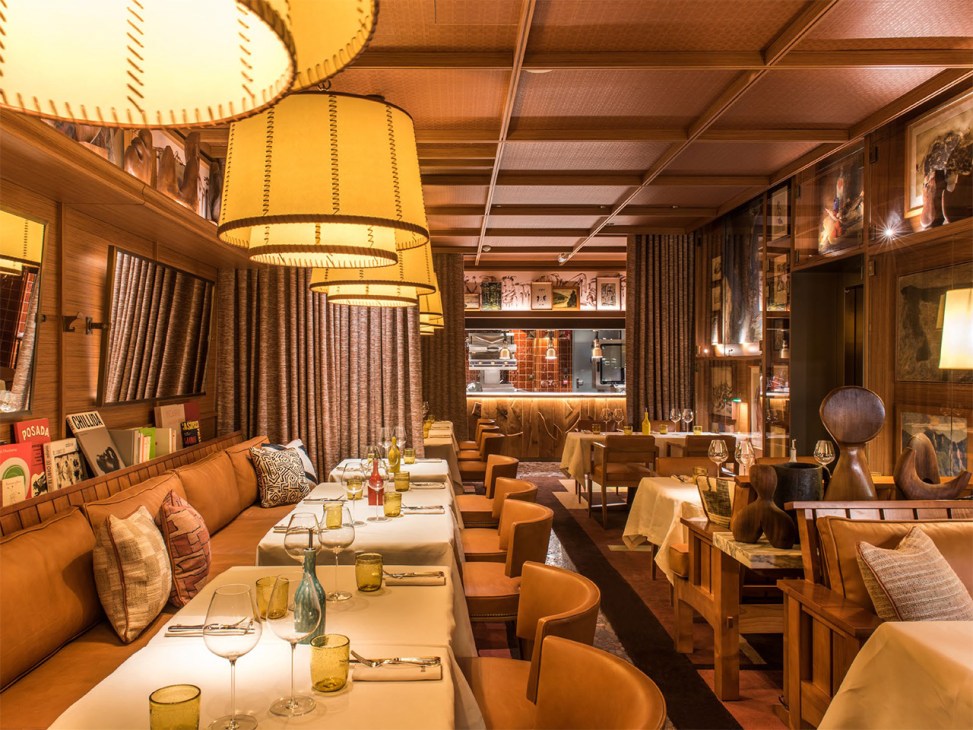
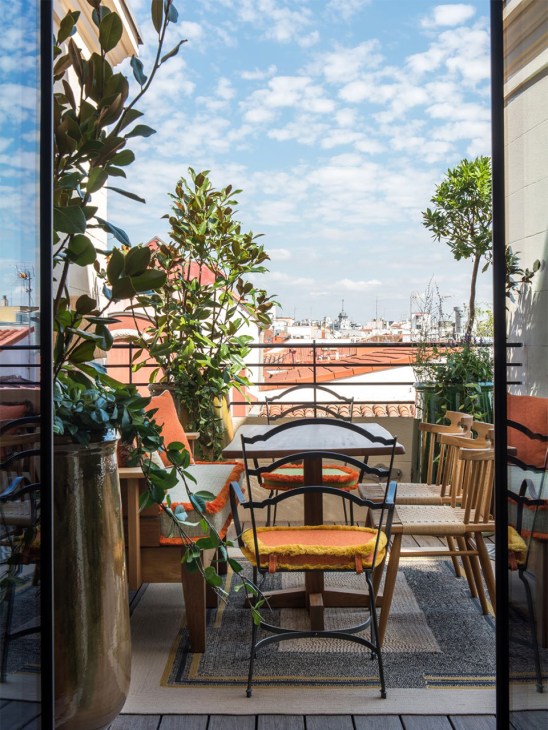
The Gran Vía is one of Europe’s most well-trodden streets but you wouldn’t guess it when you step inside the Brach Madrid, the Evok Collection’s first Brach venture beyond France. The seven-storey hotel has been thoughtfully soundproofed but the interiors also help to turn things down with ornamental textures, dark hues and moody lighting. Once the childhood home of Victor Hugo, the building retains the feel of a stately mansion, quietly ensconced on a main street.
Each of the 57 guest rooms and suites is filled with vintage souvenirs, adventure books and even the odd musical instrument. The spa is kitted out with an oxygenation chamber and an infrared sauna but there’s also a long marble pool and massage rooms – perfect if getting here via the Gran Vía takes its toll.
brachmadrid.com
2.
The Twenty One
Athens
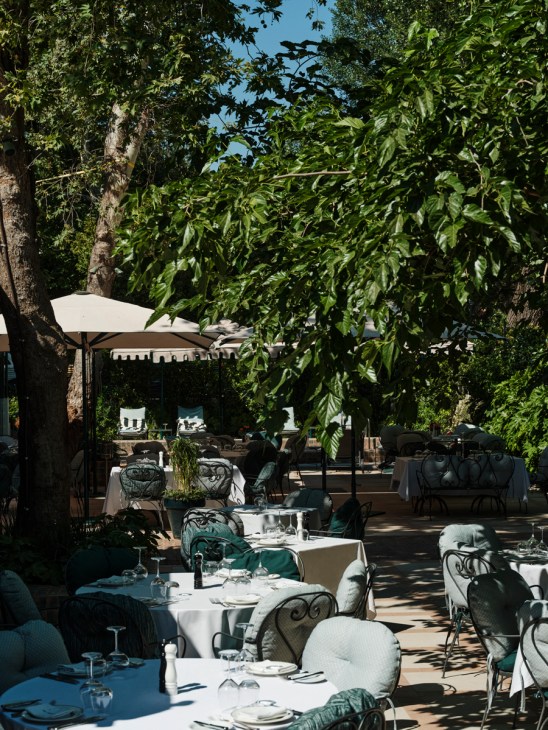
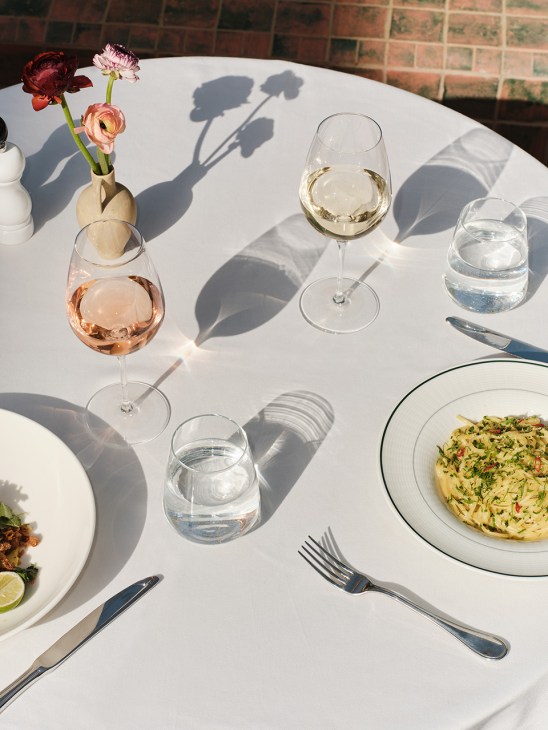
The renovated Twenty One sits among the sprawling private homes of Kifisia, an area that “blends a glorious past with a vibrant present”, says co-owner Alexandros Varveris. The hotel’s – you guessed it – 21 rooms are decorated with Punto tiles by French design team Ronan and Erwan Bouroullec, while marble-and-terrazzo bathroom interiors come courtesy of the co-founders’ family business, Moda Bagno and Interni, founded in 1974. A pink-and- green tiled swimming pool is nestled in a lush garden, while in the restaurant, Isabella’s, chef Nikos Dimitras focuses on refined Mediterranean fare.
thetwentyonehotel.com
3.
Izza
Marrakech
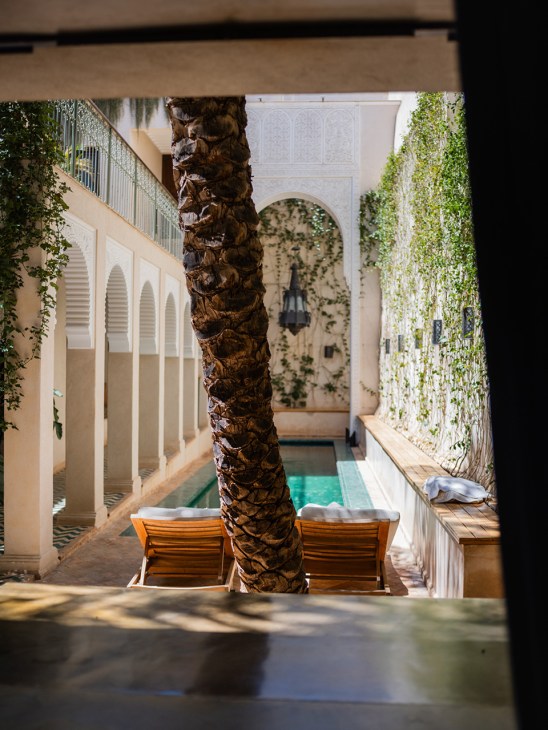
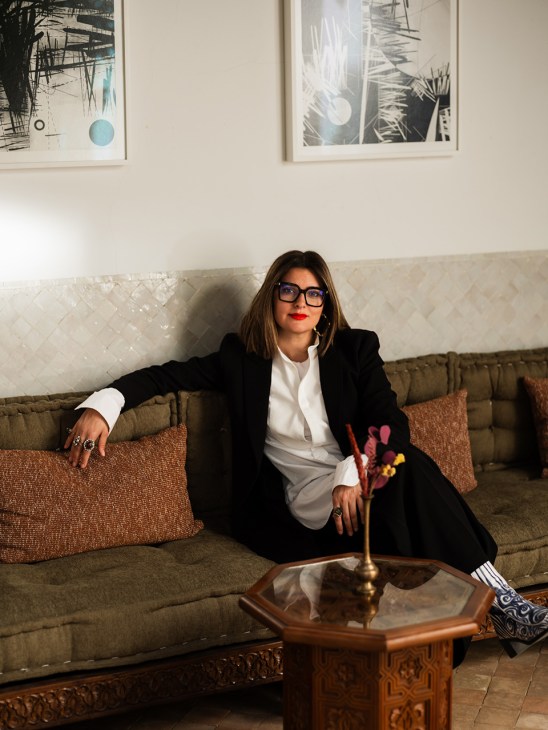
“To be surrounded by so many artworks and artists is a form of nourishment,” says Aicha Benazzouz, who, as part of Izza’s art-direction team, conducts several tours per day. As she leads Monocle up a slender stairwell to a balcony overlooking one of three interior courtyards, she details the hotel’s years-long renovation. “We connected seven adjoined properties on a quieter part of the medina,” she says.
Having started as the project’s interior stylist, Benazzouz now oversees the entire operation, which functions as both hotel residence and museum.
Typically, riads are inverted houses that shelter inhabitants from the bustle beyond. Izza takes a different approach, like a labyrinth with surprises at every turn, and Moroccan and African artists are given pride of place. Interiors riff on Morocco’s rich heritage, with woodwork as well as zellige, tadelakt and arabesque tiling providing the backdrop. The head chef, Ahmad El Hardoum, fuses Moroccan flavours with Mediterranean touches.
izza.com
4.
Schloss Schauenstein
Fürstenau, Switzerland
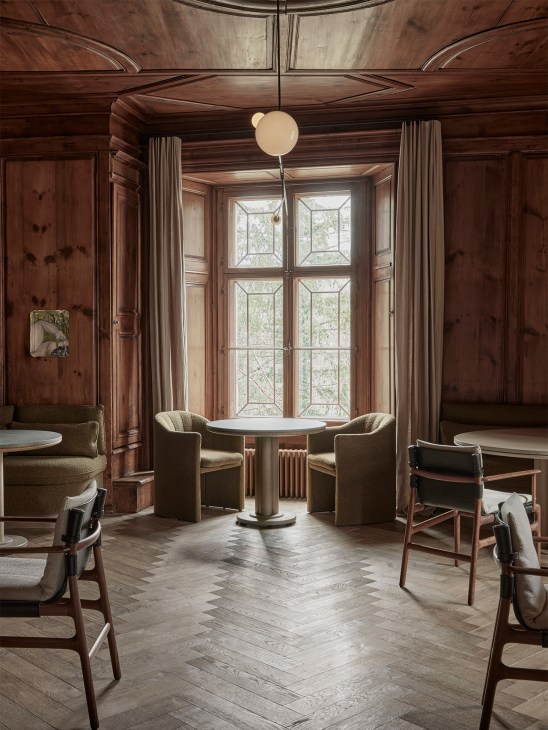
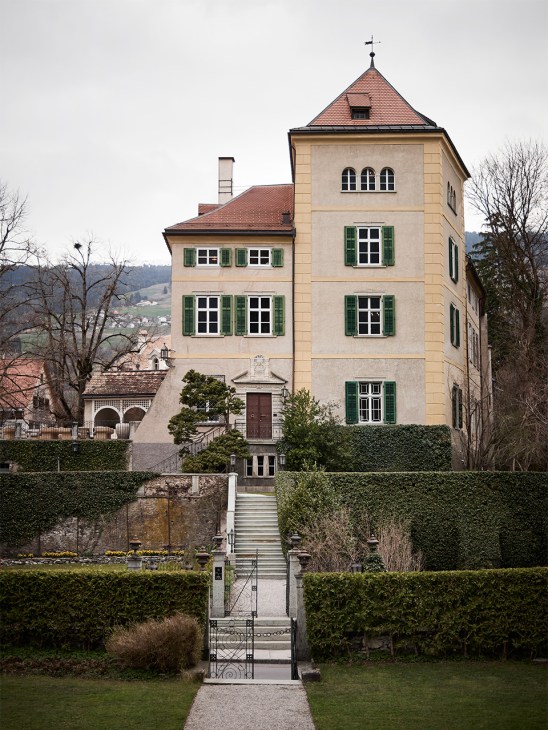
The ivy-clad, medieval Schloss Schauenstein in the small Alpine town of Fürstenau has long been a place of culinary excellence under chef Andreas Caminada. The Graubünden-born restaurateur is known for his love of local produce, serving up delights such as herb and roe cannelloni, fresh fish and hölzige geiss goat’s cheese.
To mark the hotel’s 20th anniversary, the castle’s interiors have been renovated by Danish design studio Space Copenhagen. Its ancient stone walls, timber beams and winding staircases have been softened with oak, wool and linen finishes. Vintage pieces mingle with modern designs – sofas by &Tradition, Gubi chairs, Frama’s Sintra stone tables – while bedrooms have been refreshed with furniture from the likes of B&B Italia and Cassina. Bathrooms, finished in stone with minimalist fixtures, have rainfall showers and deep tubs.
schauenstein.ch
5.
Park Hyatt Kuala Lumpur
Kuala Lumpur
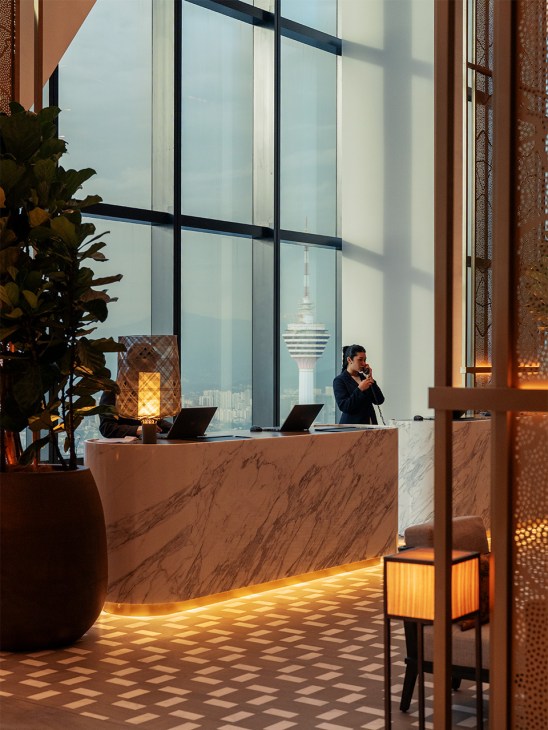
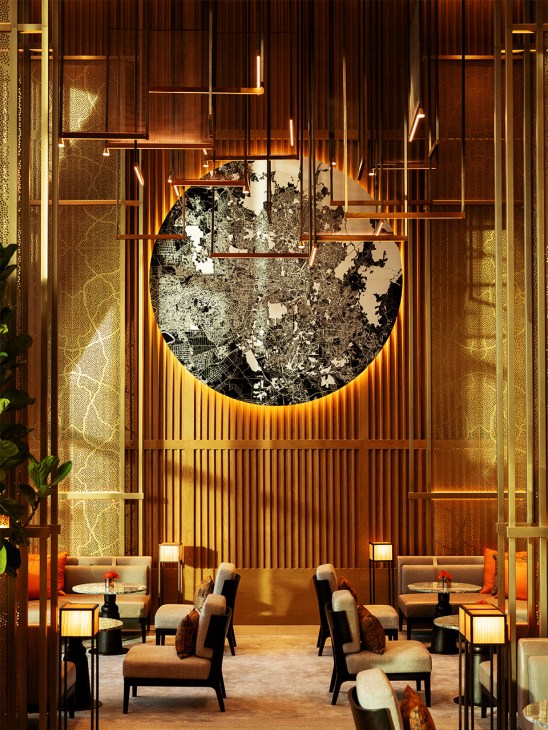
Park Hyatt’s roll-out across Southeast Asia’s major cities shows no sign of abating. For its 50th outpost worldwide and debut Malaysian property, the brand has taken the top floors of Kuala Lumpur’s Merdeka 118 tower. It is one of the first tenants to move in – the HQ of one of Malaysia’s biggest banks will follow next year. By virtue of a spire on top, Merdeka – meaning “independence” in Malay – is Southeast Asia’s tallest building and its design is intended to reflect the silhouette of the country’s first prime minister, Tunku Abdul Rahman, with a hand pointing skywards in recognition of Malaysia’s independence in 1957.
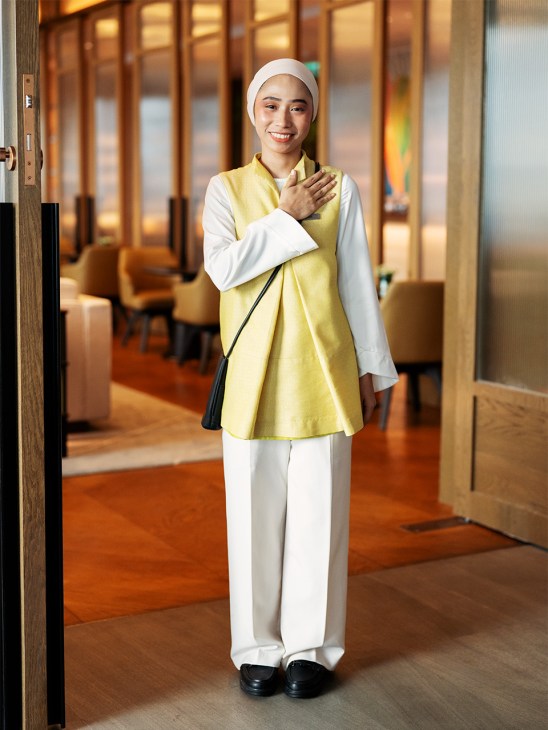
For the interiors, the hotel’s design team worked with GA Group – the London-based hospitality company behind 1 Hotel Mayfair and Rosewood Schloss Fuschl, a converted Austrian castle – to inject a sense of heritage and place. The entrance stairway is designed to evoke a traditional Malay home, typically built on stilts, while local design elements, including pivoting shutters, feature throughout, alongside works by Malaysian artists such as Tunku Khalsom and Agnes Lau. “Our guests are surrounded by quiet references to local craftsmanship that feel intuitive,” says Herman Kemp, the general manager.
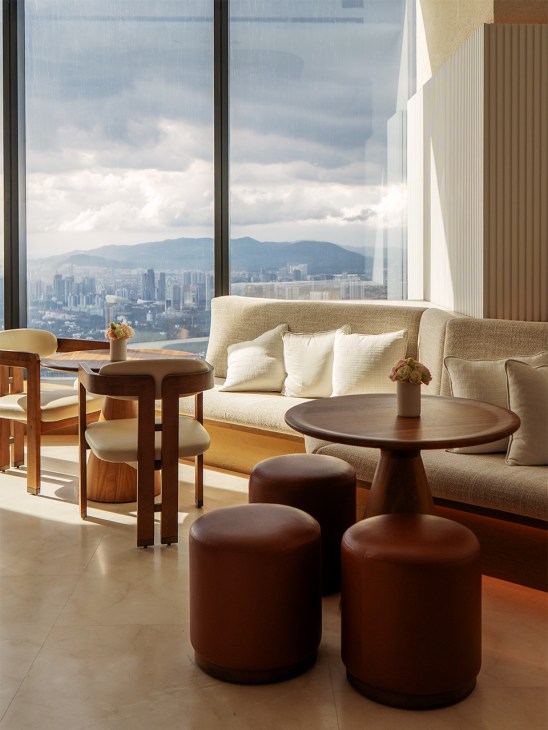
At the Merdeka Grill restaurant on level 75, Norwegian chef Stig Drageide brings a dash of Scandinavia to the likes of spicy Angus steak tartare and cedarwood- roasted salmon. But the real treat is the view of the city’s skyline, particularly of the Petronas Twin Towers and the Stadium Merdeka. “Once you come up to level 75, you’re in a different world,” says Kemp. “It’s impressive no matter how many times you’ve seen it.”
hyatt.com
A pilot’s case for paper maps in an age of automation
Not long ago I was flying in my helicopter when the bracket holding the GPS suddenly snapped. The receiver fell and smashed. I was in the air without a navigation system, with a flight visibility of between 3km and 4km – comparable to a foggy motorway when drivers can see about 300 or 400 metres ahead. My workload doubled immediately. It was a good example of why we shouldn’t rely on tech alone. Sometimes it takes a paper map to get us home safely.
In aviation today, there’s a dangerous over-reliance on automation. Pilots are trained to plot a course on a map, taking into account the weather and the speed at which they will travel. But once they’re out in the working world, they pack away the maps. A few years ago a British team tried to re-enact the famous “Dambusters” raid of 1943. It involved planes locating specific dams in Germany’s Ruhr valley. But I’m sorry to say that most modern navigators can barely find Germany without GPS, let alone a dam.
There are numerous problems with GPS, ranging from iPads shutting down the system to inputting the wrong co-ordinates – not to mention jamming attacks, which currently affects more than 1,000 civilian flights per day. So my advice is to be prepared and practised. Switch off the screen now and then, know where your map is and plot a course before you set off. Convenience suddenly becomes chaos if the backlit screen you’re beholden to breaks.
Andrew Harvey is a UK-based helicopter pilot and instructor with 25 years’ experience. As told to Monocle’s writer and researcher Julia Jenne.
Read next: Why airlines should keep veteran pilots in the skies for longer