Issues
How Japan’s schools teach life lessons beyond the classroom
Anyone who goes through secondary education in Japan will be familiar with bukatsu (after-school clubs). Though participation in these activities isn’t compulsory, almost everyone does something, whether the focus is on sports or culture. (The Japan Sports Agency identified 47 types of the former and 26 of the latter.) It could be a daily commitment, such as baseball, which some say is the most demanding club of the lot, or a weekly martial-arts session (kendo, for example). Others join a brass band or choose calligraphy, anime or photography. Not long ago, being clubless was considered so anomalous that those who weren’t part of one were referred to slightly derisively as the kitaku-bu (“go-home club”).
As with so much of Japanese education, the purpose of bukatsu is bigger than the clubs themselves. When Thomas Blackwood, an American sociologist and professor at Tokyo International University, asked adults in the country about the importance of bukatsu, more than 70 per cent said that participation in them during their school days had been useful in later life. What they valued wasn’t always the technical skills they acquired but rather the life lessons they had picked up along the way: the ability to read a room, consideration for others and persevering after failure.

Japanese education always scores highly in formal global rankings but many abroad wrongly assume that it’s all rote and no fun. There is, of course, a certain amount of drilling out of necessity. The written Japanese language is among the trickiest to master; to read a newspaper, you need to know 2,000 to 3,000 kanji characters (mainly derived from Chinese ideograms), as well as two phonetic alphabets: hiragana and katakana. Even for native speakers, learning it all is a slog and there’s no way of cutting corners. But beyond that, the public school system is built around the goal of creating decent citizens, as well as literate ones. The result of this effort can be seen in the sense of cleanliness, order and calm that so impresses visitors to the country.
The idea of cleaning has an elevated place in Japanese culture, influenced by the concept of do (“way”), which frames the honing of any skill as a journey of self-improvement. In disciplines including judo and sado (the traditional tea ceremony) cleaning is a key part of training and seen to be good for the practitioner’s character.
Buddhism in Japan also prioritises the act of cleaning over study or chanting. The ministry of education set out detailed procedures for daily, regular and special cleaning in schools as long ago as 1897. This partly explains why the streets of Japan are so clean. Generations of people have learnt to tidy their classrooms at school and taken this approach to cleanliness with them into their adult lives.
Wielding a mop or a broom (as well as a zokin cleaning cloth, which every child has in their school kit) is a worthy life skill. In this context, it’s no surprise that the Japanese national team left behind a spotless locker room at the 2026 World Cup or that its fans cleared up litter after matches. Osoji (cleaning) isn’t a lesson as such but it’s part of daily life and starts for people when they’re students.
Even the country’s low obesity rate can be traced back to patterns practised in class. The local cuisine plays its part but there’s also an emphasis on eating properly at school. Forget chips and lasagne – Japanese children eat a balanced diet of rice, fish and miso soup (though what they buy in konbini when their parents and teachers aren’t looking is another matter). The pressure from some teachers to eat every last grain of rice isn’t always welcome but it teaches kids to appreciate the food that they’re given. Serving lunch to peers is another student responsibility, even at nurseries (where preschoolers given the task wear an adorable white hat and apron – surely this should be exported?).
The school sports days that I have attended have been organised with Olympic efficiency. They’re also inclusive and never designed for individual glory. The school divides pupils into two teams for the day and sports aces and less accomplished athletes compete together.
Most students also walk to and from elementary school solo from their first week, lugging on their narrow shoulders their distinctive, boxy randoseru school bags. Waving goodbye to a small child for their first unaccompanied commute is a nerve-racking moment for parents but the journey to school teaches kids plenty too – how to conduct themselves in public and be aware of the world around them.
Japanese education is built on tradition but it isn’t set in stone. Even bukatsu are being re-evaluated for modern Japan. Some after-school clubs are being moved into the community to give hard-working teachers a break, particularly those conducted at weekends.
It also helps to pool students in areas where the depopulation problem is most acute. In some places, the ageing population means that high-school rolls are declining and small schools can’t muster a sports team. No system is perfect and there are exceptions to every rule but, beyond academic achievement, the purpose of a Japanese education is to impart life skills. Don’t we all want a generation of polite, independent people who are considerate of the world that they inhabit? Surely there’s something here that we can all learn from.
Inside the ‘randoseru’
Today’s randoseru dates back to the late 19th century, when the Gakushuin school was opened to educate the children of the imperial aristocracy. Its students carried a black-leather hold-all, whose name was borrowed from the Dutch word “ransel”. By 1897 the dimensions were set and little has changed since. The quality is high and the best cost a small fortune: a cordovan-leather randoseru from Tsuchiya Kaban in Tokyo has 150 parts and takes more than 300 steps to complete. A solid randoseru is an investment – often a gift from proud parents or grandparents. It’s robust and designed to last for the six years of a child’s elementary-school education.
About the writer: Fiona Wilson is Monocle’s Tokyo bureau chief and has been covering the nation – between school runs, clubs and sports days – for more than 20 years.
From doctors to plumbers: Ten human jobs that will survive the AI onslaught
1.
Doctors, nurses and paramedics
Though many of the more utopian AI-related predictions concern medicine, few expect the technology to put professionals in that sector on the breadline. This is partly because demand for their services is constant. It is also because lateral thinking, nuanced judgement and spontaneous inspiration might be the difference between life and death. And if something does go wrong, someone has to be accountable. It also matters that medical professionals of all kinds are also the people we interact with at our most vulnerable and worried. It’s annoying enough when we’re expected to check in for our doctor’s appointment on a screen smeared with who knows what. Hearing the worst from R2-D2 would feel like insult added to injury.
2.
Hospitality workers
Frequent hotel guests are burdened more than most with dolorous insights into the annoying and tedious tech dystopia that might await us – QR codes instead of room-service menus; receptionists who will only interact with you on WhatsApp and might not even be in the same building; touchscreen check-ins; controls for lights, the TV and bathroom that would baffle a submarine navigator. Nobody asked for any of this and it’s difficult to imagine the kind of weirdo who prefers this sort of thing to picking up the phone and having your enquiry answered by a human. It seems a reasonable bet that higher-end hotels – as well as bars and restaurants – will eventually realise that their guests are paying a premium not just for a room or a table but for things to be made easier, rather than more complicated. And that they’ll hire accordingly.
3.
Plumbers
Even the most pessimistic assessments of the post-AI jobs market – those portents of a world of shoeless data analysts plodding door to door, offering to track key performance indicators for spare change – acknowledge that people who can fix and build stuff should be OK. Plumbers are especially emblematic of the forthcoming aristocracy of the practical. These are people we usually call in an emergency and the kind of emergency that we would rather have dealt with now. Plumbers have specialised, expert knowledge about mechanisms that most of us would not and should not trifle with for fear of making matters even worse. Building a robot capable of replacing a shower mixer is probably more trouble than it is worth. Plumbers have only two things to fear from AI. One: a stampede of financial advisers retraining as plumbers. Two: the increasing dominance of electronic payments reducing opportunities to ask, with a nudge and a wink, to have the bill settled in cash.
4.
Gardeners
It is already possible to get a robot to mow your lawn. In 2023 an AI-powered robot developed at the University of California held its own in a vegetable-growing trial against six human horticulturalists. At this year’s Chelsea Flower Show in London, some green-fingered hands were raised in horror at the inclusion of three gardens designed by an AI app. All of which might sound discouraging but human gardeners still have a place. There will always be sentimental sorts who maintain a garden precisely because it reconnects them to nature and the illusion of the bucolic idyll is hardly reconcilable with sleek machines zooming about the place making beeping noises. Nor will any android be able to furnish the kind of folk who hire gardeners because they seek authentic interactions with the muddy-kneed peasant classes that they can boast of later to burnish their person-of-the-people credentials.
5.
Air-traffic controllers and airline pilots
Air travel is likely to prove a special case. On purely technological grounds, it will probably be possible to outsource control towers and cockpits to computers: Embraer, for one, has floated a concept for a fully autonomous business jet. It might even make sense from a safety perspective: studies consistently identify human error as the most common cause of plane crashes. Airlines would certainly prefer not to pay pilots. However, people don’t think rationally about flying. Safe though it is – and automation might make it safer still – getting on an aeroplane still feels different from getting in a car, on a train or on a boat. Polling so far detects little enthusiasm for being 11km up in the sky without a calm voice from the flight deck reassuring us that we are in good – and human – hands.
6.
Police officers
Several cities in China already have their traffic directed by androids in hi-vis uniforms. Police forces around the world have trialled robot dogs – tireless in rescue work and building searches, and no need for biscuits. Surveillance drones are becoming commonplace. All of which might actually make the human component of policing more important. AI and robots can pick up the dull stuff – removing the need, for example, to endure long shifts shivering in an unmarked vehicle outside a suspect’s house while doughnut wrappers gather in the footwell – freeing human officers to do the work most valued by the citizenry, such as catching criminals. Human officers will also remain necessary for the more pastoral aspects of policing. No one would appreciate being told of a death in the family by RoboCop. It also seems likely that AI-powered android officers, if deployed in societies less deferential than China, will end up with traffic cones on their heads and/or heaved into a canal.

7.
Politicians
Politicians might appear ripe for being superseded by an entity that is efficient, logical, incorruptible and sober. At least one country – Albania – has unleashed what it claims is an AI cabinet minister: Diella, a hallucination of a woman wearing traditional costume, nominally responsible for improving access to public services. But even if turning AI loose on our bureaucracies does result in more effective governance, voters will still expect human leadership. We would not rally, during a crisis, to even the most Churchillian of holograms. We would feel weird standing on our doorsteps discussing bin collections with a cyborg. We will not beat an eager path to the polling station to vote for a party whose slogan is, essentially, “Your call is important to us.” An increasingly automated world might even prove more susceptible to office seekers blessed with an ability to radiate warmth, empathy and sincerity – or, at least, convincingly simulate them.
8.
Athletes
In 2025 the first World Humanoid Robot Games took place in Beijing. It’s meant to be an annual occurrence but it’s hard to imagine any such event displacing the Olympic Games or World Cup in our affections, however faster, stronger or more skilful than us the robots become. We watch sport to marvel at people endowed with broadly the same physical equipment as ourselves do things that we cannot. We watch it to relish vicarious risk, to thrill to the spectacle of someone putting everything on the line. It’s probably possible to race Formula 1 cars remotely in total safety. It’s tough to imagine anything less interesting. Obviously, elite sport is not accessible to most – that’s what makes it elite. But jobs in elite sport are: coaches, trainers and everybody else involved in getting someone to the starting line or a team on the field. Though there might well be football fans reading who believe that the most rudimentary chatbot could do a better job than the bozo managing their mob presently.
9.
Journalists
One of the more depressing consequences of the advent of AI is a further corrosion of trust in the media. There is already a canon of scandals pertaining to hacks sneaking AI-generated copy past their editors and a depressing quantity of outlets knowingly serving up AI slop to their readers. Most of us will already have found ourselves wondering about some succession of plodding paragraphs whether we are consuming something merely written by a dullard or something written by nobody at all. There is a case, however, that this makes proper, diligent, informed journalists more valuable than ever. Any AI-generated news article is assembled, if often haphazardly, from facts gathered by an actual reporter. All AI-generated journalism is therefore a demonstration of the truth of the acronym GIGO: garbage in, garbage out. AI cannot and will not pack a notepad and hit the road.
10.
Comedians
This is genuinely what you get back if you ask ChatGPT to tell you an original joke about an elephant. “Question: Why don’t elephants use smartphones? Answer: Because they’re afraid of forgetting their trunks… and ending up with too many ‘undelephant-ed’ files.” Wouldn’t open with it, and so forth. It is already the case that AI can cough up to order words, pictures and music, and that – depressingly – a non-zero number of people are content to consume all of this, cultural junk food though it is. But AI can’t make us laugh and it won’t. There will never be a queue outside your local comedy club for an evening with the ChuckleBot 3000. Henri Bergson called it back in 1900, in “An Essay on the Meaning of the Comic”. He wrote, “The comic does not exist outside the pale of what is strictly human.” Bergson won the Nobel Prize in Literature in 1927 – another accolade likely to elude AI.

About the writer: Andrew Mueller is the host of Monocle Radio’s The Monocle Daily and The Foreign Desk, as well as a Monocle contributing editor – and he would like to see AI try to do any of those.
Can neuroscience help architects design buildings that make us feel better?
Anyone who erects a building today must be prepared to face a backlash. The Roche towers, which rise unadorned into the Basel sky as the tallest buildings in Switzerland, were mocked in 2014 by culture editor Till Briegleb in Art magazine. He suggested that the architects responsible for the towers, Herzog & de Meuron, so obviously despise the idyllic nature of their surroundings that they feel compelled to drive a brutal wedge into it.
Andres Janser, then curator at the Museum für Gestaltung in Zürich, saw things differently. He considers the first building, completed in 2015, to be “successful overall”. In 2022 a second taller tower was completed next to the first.

Dimensions of wellbeing
Opinions differ on what constitutes successful architecture. A relatively young field of research, “neuro-architecture”, is attempting to determine how we should build in order for people to feel comfortable about the structures that surround them. According to a 2023 review analysing all studies published up to that point, its aim is to positively influence our dimensions of wellbeing: body, mind, emotions and behaviour. One of the initiators of neuro-architecture was American virologist and biomedical scientist Jonas Salk, who discovered the polio vaccine. When he visited the Basilica of Saint Francis of Assisi in Umbria in the 1950s, he said that he could feel the ancient structure’s creative and stimulating atmosphere. After returning to the US, he founded the Salk Institute for Biological Studies in La Jolla, California.
The architect commissioned to design the institute was instructed to ensure that it would inspire the scientists working there in their research. At the time, however, there were no generally accepted criteria for architecture that fosters wellbeing. Those designing buildings had to rely on intuition if they wished to evoke positive emotions.
To provide the young discipline with a platform, US architects founded the Academy of Neuroscience for Architecture in 2002. It now counts almost 400 members worldwide. Through conferences and academic exchange, it promotes and disseminates knowledge that connects neuroscience with the growing understanding of human responses to buildings.
Natural forms
This is also the aim of researchers Simone Kühn and Nour Tawil from the Max Planck Institute for Human Development in Berlin. Kühn is a professor and the director of the Research Center for Environmental Neuroscience, while Tawil is an architect and research associate in Kühn’s group. Together with other researchers, they are investigating how the environment affects individuals. They work under the assumption that the complexity of our surroundings influences our brain and our behaviour to a greater degree than previously thought.
In their experiments, Kühn and Tawil use images of houses that are generated by a specially trained artificial-intelligence system. Thanks to this technology, they can alter and combine individual characteristics of buildings and thus determine how important these features are in terms of their impact. Among other things, they measure people’s eye movements in order to observe the often unconscious guidance of attention.
Using such methods, the researchers can test which characteristics are relevant for human perception and evaluation. The façade images were generated by a machine-learning model that consists of two neural networks and was trained on photographs of real façades and their corresponding human evaluations.
One façade characteristic that appears to have a particularly strong psychological effect is the quality of naturalness. When materials, light and complexity signal a connection to nature, this benefits the human psyche, according to the biophilia hypothesis. To create such an impression, however, vegetation (such as ivy or climbing vines) is not strictly necessary. The building itself can also appear natural.
In nature, rounded forms – waves, clouds, hills and trees – occur far more frequently than sharp edges and angles. It therefore comes as little surprise that curves appear to be more appealing to people than sharp angles. A lot of modern architecture features curves: the Shell-Haus in Berlin, with its strikingly undulating façade, opened in 1932.
The researchers tested the differing effects of angular and rounded furniture and window frames. The results showed that angles were rated almost equally as attractive and unattractive, whereas curves were clearly more appealing. This aligns with other research findings that suggest that people generally prefer curves to angles and sharp edges in objects and abstract shapes.
This preference for curves was particularly pronounced among female participants. However, this might not necessarily be a specific response to the curves themselves, since women generally seem to respond more strongly to external stimuli. “I sometimes wonder whether women are generally more open to their surroundings,” says Kühn. For example, a walk in nature has a far stronger effect on women than on men.
Kühn and Tawil were surprised, however, that participants did not necessarily perceive faces in houses. As social beings, humans tend to interpret many structures as having “faces”. Yet even façades that clearly resembled human faces didn’t appear significantly more attractive to people in these experiments than those that did not.
It’s not about imposing rules
At present, the researchers are still finding it difficult to translate their findings into direct advice for builders. “I think that, in a few years, we will be able to provide concrete recommendations,” says Kühn. However, such insights should not be misunderstood as prescriptions.
Andréa de Paiva, the founder of architecture platform Neuro AU, shares this view. “Neuroarchitecture is not about imposing specific rules that architects must follow,” she says. “It is up to them to decide what, when and how they draw on these insights.”
Architects build according to their own visions and this is rarely questioned within the profession. The buildings most admired within industry circles are not necessarily those in which future residents might feel most at ease. For Kühn, creating a stress-free, cosy and comforting environment need not always be the declared goal. Nevertheless, she says, “I believe that it’s a problem that there is little exchange between experts who can measure human responses and those who design our surroundings.”
If architects choose to build differently despite such dialogue, at least it would be a conscious decision. A story from the 1960s and 1970s illustrates how building plans can be revised when modern architecture meets strong resistance. At that time, a huge development project was planned in Hamburg. The Alsterzentrum was expected to house 20,000 residents. There were plans to demolish the St Georg district almost entirely, leaving only two churches standing. In its place, a crescent-shaped ring of high-rise buildings up to 200 metres tall was to be constructed. The pyramid-like structures tapering upward bear a striking resemblance to today’s Roche towers in Basel. Only after critical voices grew louder were the plans for the Alsterzentrum abandoned in 1973. Perhaps even then, some people could not imagine how anyone was supposed to feel good in such a soulless giant.
About the story: Christian Weymayr’s essay was first published in Neue Zürcher Zeitung in German. It appears here with the newspaper’s permission and was translated by Monocle.
Why our family chose home-schooling in Bangkok
Here’s a scene that will be familiar to many parents. We are at a children’s party. This one is in Bangkok but a similar crowd could be summoned in London or Hong Kong. Our eldest is playing on the bouncy castle with a balloon sword; our youngest is getting her face painted. Another parent drifts into our orbit. After introducing ourselves by our progeny (“We’re Lucian and Charlotte’s mum and dad”), one of us asks, “Where do your kids go to school?” The answer to this icebreaker comes swiftly from the predictable list. Now it’s our turn. “We’re homeschooling our children…”
The mood changes, as do the questions: “Are you religious?” I might have asked the same thing five years ago, before we had our first. (We’re not, for the record.) Sometimes, we find common ground; most people we talk to know someone home-schooling their brood, even if they’re not sure why. It ranges from Western expats in the Thai capital, like us, to Chinese in Beijing. A surprising number of parents say that they would like to try it themselves and the trend isn’t limited to our little Bangkok bubble. The numbers are ticking up across the developed world and the idea is creeping into popular culture. A cursory search reveals podcasts offering support and books warning of the potential pitfalls.
Stefan Merrill Block’s coming-of-age memoir from earlier this year, Homeschooled, played right into my own outdated perceptions and ill-informed fears. My finger was hovering over the “buy” button until I found out that the poor guy’s mother was totally off the wall and it was more a tale of child abuse than alternative education. So why do we do it? My wife is Chinese and I’m British. We come from two very different cultures and educational systems but when it comes to our kids, we have landed on the same page.

For us, home-schooling just happened. There was no childhood trauma, strong ideology or chance meeting with an educational evangelist. It was just the way that things unfolded. Our son was born in Hong Kong during the coronavirus pandemic. Schools were closed and that made it easy to opt out of a highly competitive system that encourages mums to take their newborns straight from the hospital to be registered at their preferred school and subjects toddlers to – in my mind – somewhat draconian admission tests.
Moving to Bangkok for Monocle narrowed our options further and presented a clear choice. My wife could either get a nine-to-five job, pausing her artistic career to pay for hefty international school fees on par with private schools in the UK, or stay home and directly guide our kids’ education. Both, we knew, would be hard work.
She chose option two. It was her lightbulb moment, not mine, but the idea clicked right away. It took us a while to get comfortable saying it out loud but this September, Lucian “should” start school (judging by my own UK yardstick) and, well, he won’t be. We’re happy with our choice. Lucian too. Our kids know that they can go to school if they want to – that’s the deal.
The experts, practitioners and podcasters call what we are doing “child-led” learning. I would describe our children’s input at the moment as more of a steer. My son likes to write Chinese characters in the morning and do sums in the evening, so we work around him and there’s no set schedule. Our main job is to expose them to a broad array of interests, spot what takes their fancy and explore these topics together. Normal parenting – just all the time, with no let-up.
Some will frame our choice as a privilege, others as a sacrifice. I see it as an investment – a decision about where we put our time, effort and other finite resources and control how it’s all spent. It’s the educational equivalent of strategic philanthropy. We bought a car for less than the price of two years’ tuition and now take the kids on field trips outside Bangkok.
Home-schooling is actually a bit of a misnomer. Done right, I think it shouldn’t mean spending all of your time at home. There’s a push to rebrand it as “unschooling”. Life is certainly not tethered around the school day or the holidays – a dreaded void to fill for many parents.
This kind of flexibility and convenience is part of the appeal. We’re not following a curriculum and there are only a few fixtures in the weekly schedule, such as swimming lessons, Thai classes and sports. There’s plenty of free play but not a free-for-all. We are the sole disciplinarians and we choose to be strict about behaviour and what they consume. We get to decide every meal, snack and sugary sweet they eat; we maximise the use of paper, pens and other tactile tools while minimising screen time. There are no photos of them posted on social media and no television at home – by far our best decision.
It’s one day at a time. Secondary school will present the next fork in the road but by then we will all know a lot more about the home-schooling hows, whys and what-fors. So far, my thoughts on education, which I have been trying to reverse-engineer while writing this essay, boil down to a mild aversion to authority and a lifetime of hearing teachers, including my mum and sisters, moan about how awful their jobs could be. My decade in Asia might have rubbed off on me too. In the West, we’re taught how to become independent adults, questioning everything and leaving for university at the age of 18, like I did. Toodle-oo! Asians want to keep their kin close. I’m staggered by the number of families who sleep in the same bed as their kids for up to 10 years. I like to think that we’re taking a balanced approach – even though the load is never shared equally.
My wife is the headmistress, the school nurse and everything in between. I’m taking maths, history and geography. She speaks to them in Chinese; I use English. The hardest part for me is trying to forget everything that I have learnt about education from my own childhood and starting again with a blank slate (and yes – we do have a blackboard). Sending children to school has been ingrained in us since the Industrial Revolution, along with the five-day working week and eating three square meals a day. Breaking out of that system and dispensing with all of the useful tools that come with it, from daycare to a structured curriculum, exams and report cards, is a struggle.
As parents, we want to know that our kids are doing well and we defer to teachers and standardised tests much as we trust doctors with our health. We also look to the school playground to prepare our children for life. My programming keeps telling me, typically during moments of frustration, that going to school will “toughen them up” and my wife keeps having to remind me that coping with bullies and being picked on doesn’t have to be a rite of passage.
Without school to fall back on, we’re taking on all of the responsibility for the experiment. We won’t know if we passed or failed for another 10 or 15 years and our children could still turn around and say, “Daddy, why didn’t you send me to school?”
Sound familiar? Ultimately, every parent shares a similar concern. We all make choices. We try to do what’s best for our kids. We’re not experts. No one is. Comparing education styles is like comparing kids. It all depends on personal circumstances and every child’s needs. That’s what I would say if I started a home-schooling podcast. But I still find myself comparing them and worrying about their developments relative to the friends enrolled at St Andrews or Shrewsbury. Their English reading level is behind the curve but they already speak two languages fluently. That comforts me. It’s already more than anyone on my side of the family has ever managed.
About the writer: James Chambers is Monocle’s Bangkok-based Asia editor, managing our output in the region. He can frequently be found reporting in Hong Kong, Ho Chi Minh City and beyond.
Lisbon’s abandoned commercial spaces are offering creative solutions to the housing crisis
In the Lisbon neighbourhood of Campo de Ourique, you’ll find traditional knitting shops pressed up alongside new specialist cafés. Portuguese grandmothers, digital nomads and a new French expat community share the cobbled streets. It’s a popular area but a hard one in which to build new housing, so prospective residents are getting creative.
When architect José Guimarães returned to Lisbon after several years living abroad, he struggled to find a place to live. Eventually, he converted an abandoned commercial space into a 50 sq m flat. Completed in 2024 for less than €40,000, the result is a series of interconnected rooms behind a shopfront: the kitchen leads into the living room, followed by a bedroom and an office. At the back is a north-facing courtyard. “I made few changes,” he says, pointing to the original kitchen floor tiles and the untouched walls.
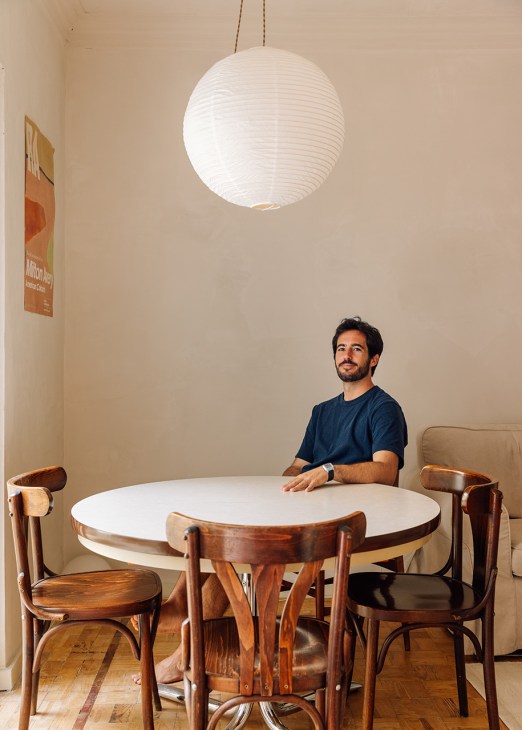
Guimarães kept the property’s layout almost entirely as he found it and spent a significant portion of his budget on the one space that had real potential: the triangular concrete courtyard. Out went the old timber-framed windows and in came slim aluminium and glass. White gravel now bounces light into the flat and ferns, palms and strelitzias adorn the corner, where the morning sun lands first. “I was going for a tropical feel,” says Guimarães.
On the street side, rather than closing the old shopfront, he kept the original metal door and added a wall of glass blocks behind it to let in light and create a sort of indoor terrace. “I wanted to open it up to the city as much as possible, while still preserving a sense of privacy,” he says.

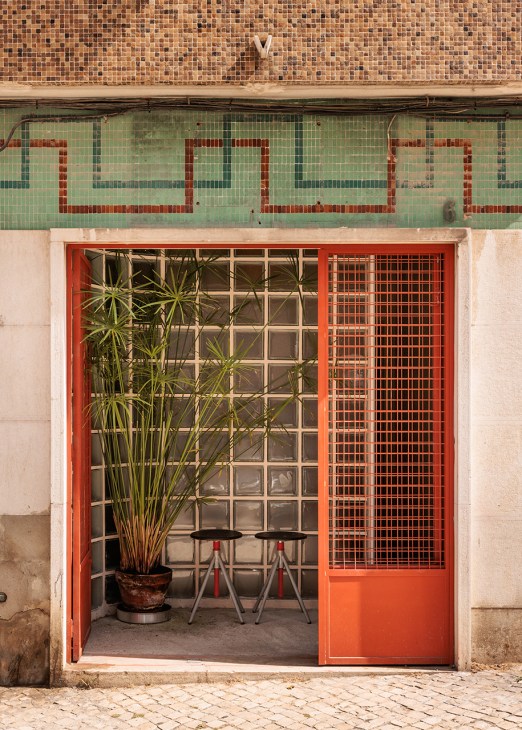
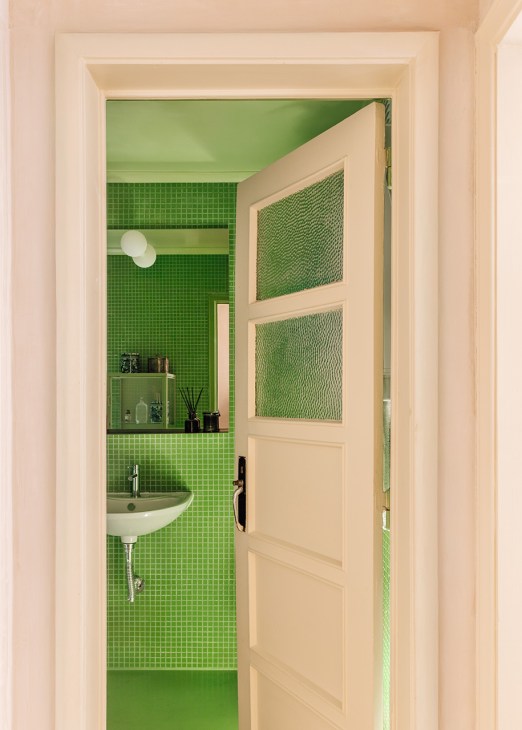
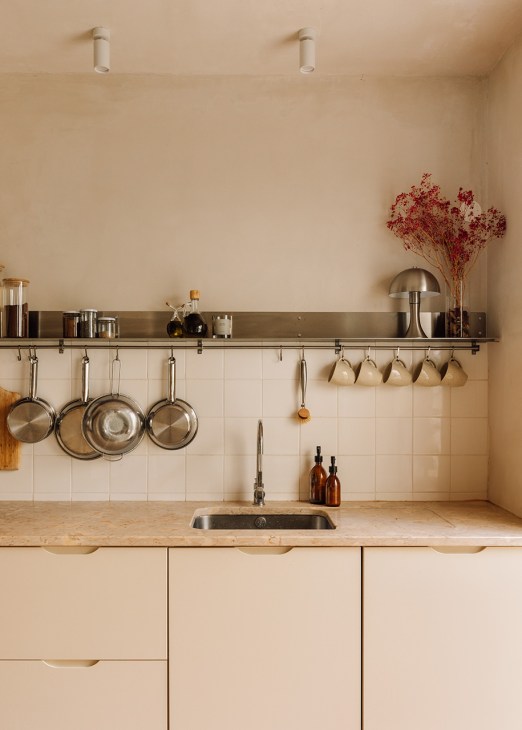
Across the city, Lisbon’s ground floors are subtly transforming a creative response to the housing crisis assisted by a council that has made it easier to turn commercial spaces into homes. For Guimarães, this project has brought in new clients who want to renovate other shopfronts and warehouses. “Rehabilitating is promising new happiness to a space that seemed like nothing,” he says. The architecture practice that he founded in 2025, José Studio, takes pride in searching for small interventions that can enhance a space, as opposed to imposing a signature style. “There’s a lot of richness in what already exists,” he says.
jose-studio.com
Meet the restaurant fixers: Three hospitality specialists helping get branding, uniforms and lighting just right
1.
The restaurant consultant to protect your identity: Imschweilers
Munich, Germany
Few people understand the workings of a good bar better than Martin Imschweiler. His credentials as a hospitality consultant stem from 12 years behind the counter at Schumann’s, the Munich institution that, as Süddeutsche Zeitung once put it, helped make the Bavarian capital “more than just another mid-sized city”.
In 2021 he founded Imschweilers, a consultancy that develops hospitality concepts from the ground up. “Too often, we see excellent restaurants with weak branding or beautiful spaces without a strong food concept,” he says. “It becomes an either/or proposition.We create places that people genuinely want to return to.” What matters are the details. “When the staff greet you by name, remember your usual order or notice that you haven’t been in for a while – that’s when a restaurant or bar becomes more than somewhere to eat or drink.”
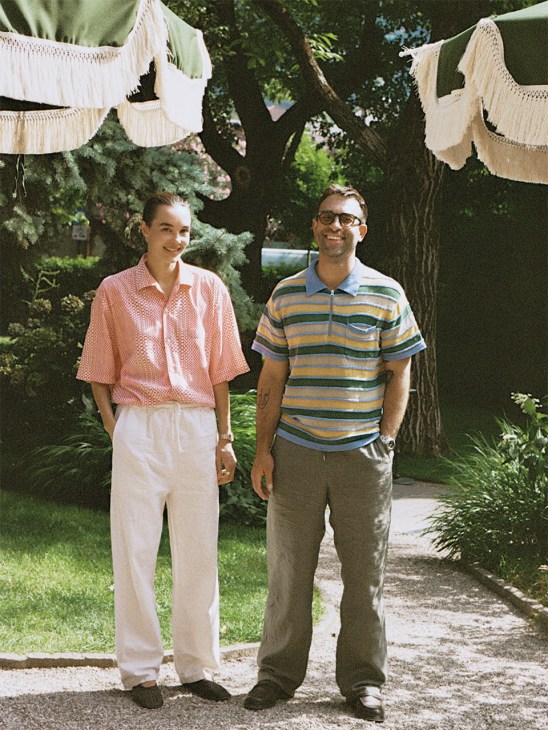

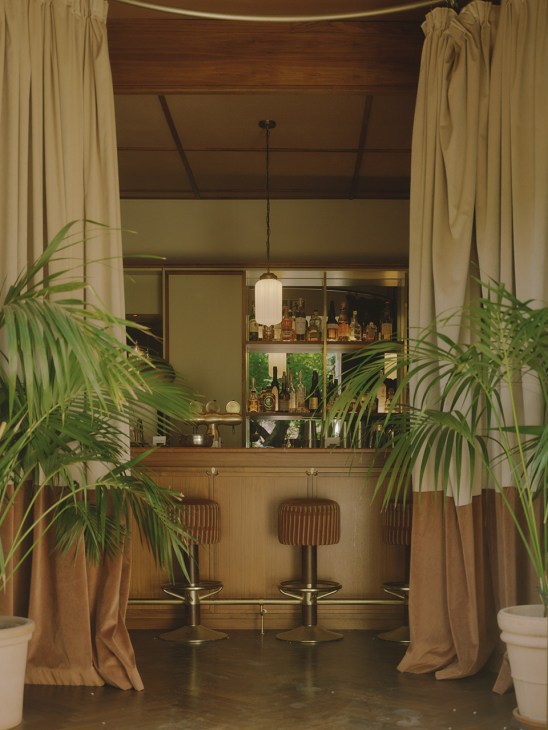
Imschweilers always begins with the space. “We look at what’s already there: the architecture, the history, the light and the neighbourhood,” says Verena Glup, the company’s creative director. This guided Imschweilers’ work at Parkhotel Mondschein in Bolzano in 2021, one of its first commissions. “The building already had a soul and a rich history so we wanted to create something that felt as though it had always belonged there,” says Imschweiler. They used the region’s culinary traditions as a blueprint, turning the restaurant into an ambassador for South Tyrolean produce. The owners also wanted the bar to become a gathering place for local residents. “Guest chefs and collaborations with artists, musicians, designers and makers create an evolving platform that carries the spirit of the region beyond the hotel,” he says. Then there are the operations. “We often say that they are the perfume of a place. You may not notice them consciously but you feel them.”
Clients come to the company at every stage of the process. “Some arrive with little more than an idea; others want to rethink an existing concept or venue,” says Glup. Recent projects include a modular bar with Swiss furniture-maker Lehni that fits into a trunk; a café concept for Munich design brand Orno; and the identity for Iza Noodle Bar, due to open later this year in the Bavarian capital. “The strongest stories come from the food, the founders, the location and the culture behind a place. We’re here to uncover them.”
imschweilers.com
Three lessons from Imschweilers
Don’t try too hard. Give a place a clear personality and let every detail follow. When the menu, interiors, music, service and visual identity speak the same language, guests sense the coherence.
Design for real life. Spaces should support daily operations rather than hinder them. When it works effortlessly for the team, the guest experience naturally improves. And train the staff properly, ideally with a refresher every six months.
Don’t chase trends. Translate enduring principles into a contemporary setting. That’s what keeps a place relevant without making it feel dated a few years later. Even beautiful concepts lose their appeal if the quality of the experience starts to slip.
2.
The outfitter for a timeless uniform: Service Works
London, UK
After Tom Chudley made the move from working in kitchens to fashion, he realised that the staid uniforms in which he had spent years cooking had been research for a brand idea.
Launched in 2020, Service Works makes organic cotton workwear that’s breathable for hot kitchens and able to withstand countless washes. Its checkered chef trousers, designed to conceal stains, pay playful homage to the traditional version, while the seersucker suit jacket recalls traditional waiters’ tailoring. “It was never about making fashion inspired by kitchens – it was about making better products for the people working in them,” says Chudley. “A uniform doesn’t need to look intimidating. Comfort, personality and practicality can all exist together.”
Seals of approval from the likes of London restaurants Impala, St John and Wildflowers are a compelling sales pitch, while Service Works also weaves its utilitarian aesthetic into everyday wear. “Good uniforms shouldn’t just look good on opening day,” says Chudley. “They should work for their lifespan.”
serviceworks.xyz

Three lessons from Service Works
Think beyond your first week. A uniform needs to survive constant washing, long shifts and daily wear, so durability is every bit as important as appearance.
Involve the people who will wear your clothing. They will tell you very quickly what works and what doesn’t.
Don’t force an identity. The best restaurant uniforms tend to feel like a natural extension of the space.
3.
The lighting luminary for perfect ambiance: Lundi
Bangkok, Thailand
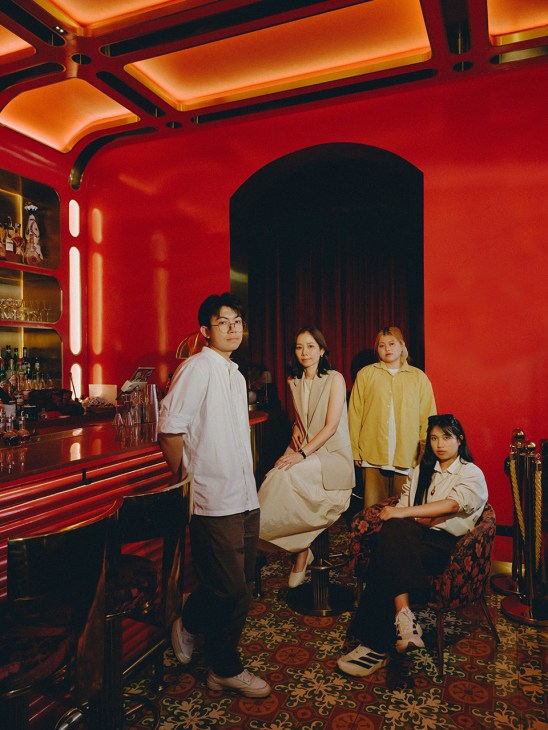
Even the best meal can be ruined by bad lighting. Too bright and guests are rendered in a ghostly pallor; too dark and you begin to worry what the restaurant has to hide. The conundrum is something to which Bangkok-based lighting firm Lundi has devoted itself for the past decade.
“In Thailand, it’s common for restaurant lighting to be set up in a way that focuses on aesthetics, at the expense of creating the right atmosphere or enhancing the presentation of food,” says Lundi’s CEO and founder, Kunlatida Suwintrakorn, who studied architecture in France, where she learnt to custom-make lighting. “Architecture creates the physical structure of a space. Light gives it atmosphere, emotion and a human dimension.”
Rather than interior designers, she says, it takes a lighting designer to understand complex technicalities and spatial psychology that can be easy to miscalculate. “This also eliminates costly on-site rewires and guesswork,” she adds.
Whether working with fine-dining spots or casual restaurants, the same process holds true. After developing a concept with the client and installing the fixtures, the Lundi team visits to fine-tune the space. “We’re always one of the first in and one of the last teams on site,” she says.
At Bangkok restaurant Nusara, Lundi analysed its views of Wat Pho, which shift with the daylight, and adapted the set-up to create an intimate evening dining experience. “When lighting is done well,” she says, “it becomes part of what people remember after the meal is over.”
Three lessons from Lundi
Don’t compromise on colour. The Colour Rendering Index (CRI) runs from zero to 100, with 100 being natural sunlight. It measures how good a light source is at showing something’s true hue. Keep the level above 90 on the food to ensure that dishes arrive looking appetising.
Avoid fixed downlights. Restaurant layouts evolve, so use track systems or adjustable fixtures that can spotlight tables in whatever formation they are rearranged in the future.
Automate the dimming. A smart control system allows lighting to shift seamlessly from daytime brightness to evening glow, without having to rely on a busy member of staff to remember the settings – or, worse, twiddling around in attempts to fix the issue by eye while diners are trying to enjoy themselves.
Great escapes: Four new hotels worth knowing in Chianti, Vienna, Fort Lauderdale and Rome
1.
La Darbia
Chianti, Italy
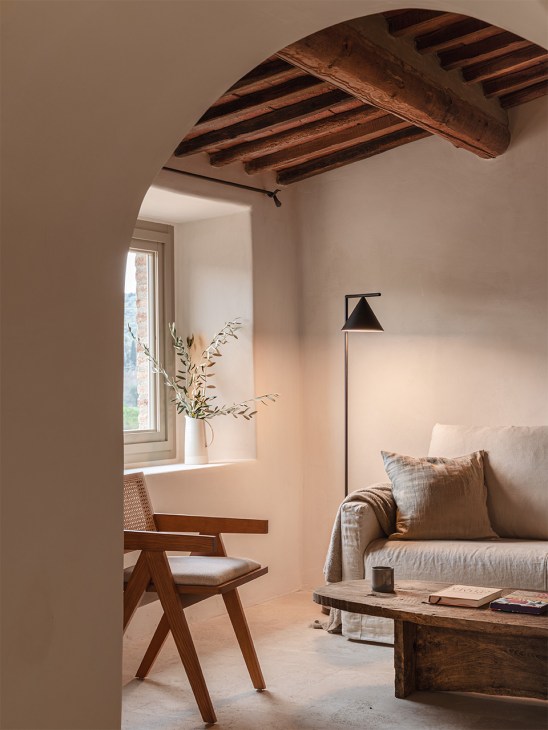
Sometimes it’s no bad thing to fall for the Tuscan clichés: cypress trees, sun-bleached stone farmhouses and sloping vineyards. Less than an hour’s drive south of Florence, La Darbia is set in an 11th-century hamlet. In restoring it, architect brothers Gian Carlo and Matteo Primatesta kept the materials strictly regional: pietra serena, the “stone of the Renaissance”, a firm favourite of Michelangelo; terracotta from Impruneta, the town that made the tiles adorning Florence’s cathedral dome; and travertine from centuries-old quarries in Rapolano.
“We weren’t looking for a famous destination for its own sake,” says Gian Carlo, “but for somewhere with a strong sense of place and a genuine identity.” The restaurant, led by chefs Matteo Monfrinotti and Sebastiano Pagliaro, honours the estate’s agricultural rhythms. Its olive oil comes from the on-site grove and 40 beehives produce lavender honey.
chianti.ladarbia.com



2.
The Companion
Vienna
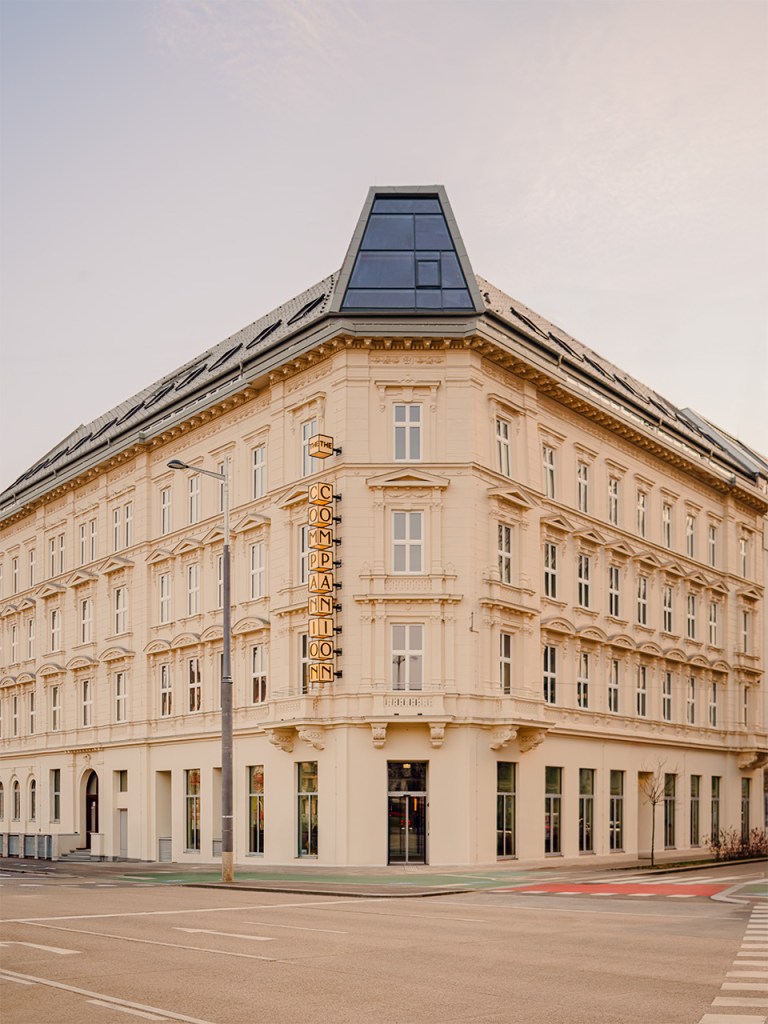
Berlin-based architect and interior designer Piotr Wisniewski was entrusted with the interior design of The Companion on Mariahilfer Strasse in the Austrian capital. He has revitalised the historic Wilhelminian building with contemporary clarity. Columns marked by time are flanked by black-lacquered metal beams; terrazzo floors reference the city’s material heritage; and shelves made from bubinga veneer surround the lobby fireplace. At restaurant Boca, chef Lauryn Therin, who sharpened her skills at London’s Ottolenghi, delights with communal Mediterranean dishes such as tuna skewers with pistachio, tahini and sumac.
companion-hotels.com



3.
Perroquet
Fort Lauderdale
In Fort Lauderdale, where ever-larger resorts continue to reshape the “Venice of America”, Perroquet has taken a less brash route. Hidden on a leafy residential street between the Intracoastal Waterway and the Atlantic Ocean, the 37-key hotel occupies a 1950s motel that has been turned into a polished retreat by Belgian architect Bernard Dubois.
The emphasis is on quiet craftsmanship versus the spectacle that often typifies south Florida – neighbouring Miami, in particular. Rather than erasing the building’s history, Dubois has embraced it. Its original low-rise footprint remains, while lush landscaping and carefully choreographed outdoor spaces unfold gradually from arrival to the pool.The guest rooms continue that narrative with custom furniture, Sferra linens, Byredo amenities and an art collection featuring works by Jean Cocteau and Jeff Koons.
Perroquet has opened at a time when Fort Lauderdale is broadening its cultural appeal. Las Olas Boulevard’s boutiques, the 14-hectare Bonnet House Museum and Gardens, NSU Art Museum and the beach are all within a 10-minute drive, making the hotel an appealing base from which to explore the city’s pizzazz.
perroquethotels.com

4.
Casa JK Place
Rome
Walk into a room at the new Casa JK Place in Rome and it’s clear that this is far more expansive than the average hotel. Each unit is an apartment imagined on a grand scale, with five-star services and amenities. In the living rooms, gold-handled double doors seem to lead in every direction.Through one doorway, a black marble bathroom; through another, a sprawling Calacatta marble-topped kitchen, then bedrooms with walls painted Venetian red, ivy green and tobacco tones.
“Everyone dreams of a home that’s like a hotel and a hotel that’s as cosy as a home,” says Michele Bönan, the Florence-based architect of Casa JK Place and its European counterparts. The hospitality group has become synonymous with a lavish aesthetic: Florentine grandeur rendered in richly saturated tones, chrome and velvet, with antique statuary and vintage pieces akin to a collector’s house.
“Michele and I have developed a hospitality concept that’s become iconic over 25 years of working together,” says Ori Kafri, the owner of the JK Place group, which also has properties in Capri, Paris and a 41-key hotel opening next year in Milan. “Our clients are looking for privacy and flexibility,” says Kafri.
jkplaces.com

Rome address book
Amanita
The Italian contemporary art gallery opened an outpost in New York before finally setting up a base in Rome.
spazioamanita.com
Cantina Pipistrello
This intimate wine-tasting space is a new extension of beloved natural-wine bar Fischio.
Piazzale degli Eroi, 7, 00136
Drink Kong
Rome’s hottest cocktail bar has a new location next door to Casa JK Place.
drinkkong.com
Le Tre Sarte
This Roman brand, which tailors clothes from dead-stock fabrics, launched a second boutique this year with matchy-matchy outfits for children and parents.
letresarte.com
Retrobottega
Rome’s torchbearer for innovative cuisine and great natural wine. Now, it has been reborn as a rooftop venue at the Jean Nouvel designed Rhinoceros hotel.
retro-bottega.com
Teatro della Cometa
A vintage theatre that has been relaunched by Fendi designer Maria Grazia Chiurias as a fresh home for culture.
teatrodellacometa.com
Rome City Guide
Explore the breathtaking beauty and illustrious cultural heritage of the Italian capital, while eschewing the tourist traps, with our in-the-know travel guide.

A place to remember: Oslo’s Carpe Diem is helping people with dementia age gracefully
It’s a Monday afternoon and residents of a village outside Oslo are throwing an impromptu dance party in the central square. Soul music blares from two speakers – feet tap, hips shimmy. It would be a moving scene anywhere but every participant here has severe dementia, a condition that erodes memory and cognition and that is increasing along with the world’s average age: nearly 10 million new cases are diagnosed every year, a figure expected to triple by 2050.
For decades, dementia care meant locked wards and sedated patients. But this afternoon’s shindig shows another way. The dementia-village concept was born in the Netherlands when two nurses, dreading institutionalising their parents, created De Hogeweyk, a residential development where sufferers move freely rather than being confined to rooms. It opened in 2009 and began inspiring others.

The Norwegian government’s 2015 Dementia Plan emphasised a desire to build communities in which those with dementia can remain integrated within wider society. Carpe Diem, the country’s first dementia village, opened in Bærum, a municipality on the outskirts of Oslo, ten years later.
Camilla Heier Anglero, head of healthcare design at Nordic Office of Architecture, which designed Carpe Diem, explains that the brief was novel in a number of ways. “It had to be a village,” she says. “Which is hard as we don’t have many villages in Norway.” Here, 18,000 sq m of wooden-clad postmodern Scandi buildings contain 158 bedrooms split between 17 apartments around a garden square. There are no sterile white corridors but individually designed, brightly coloured housing units entered using special wristwatches. Paving stones aid natural and intuitive wayfinding.
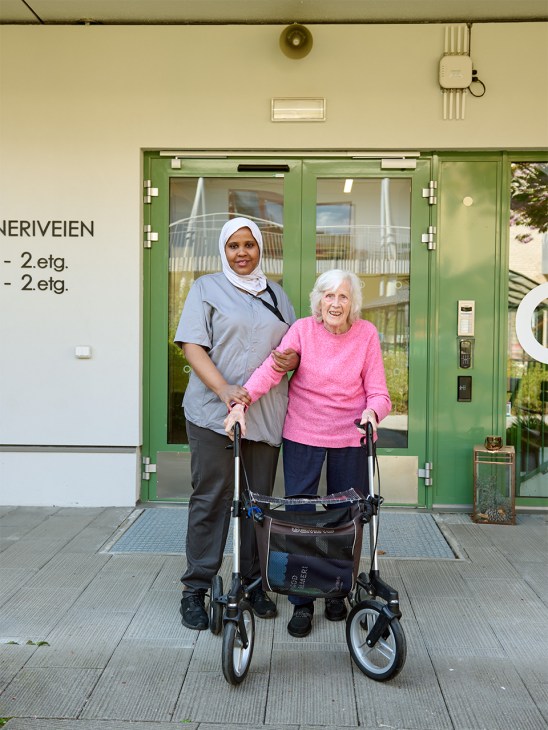
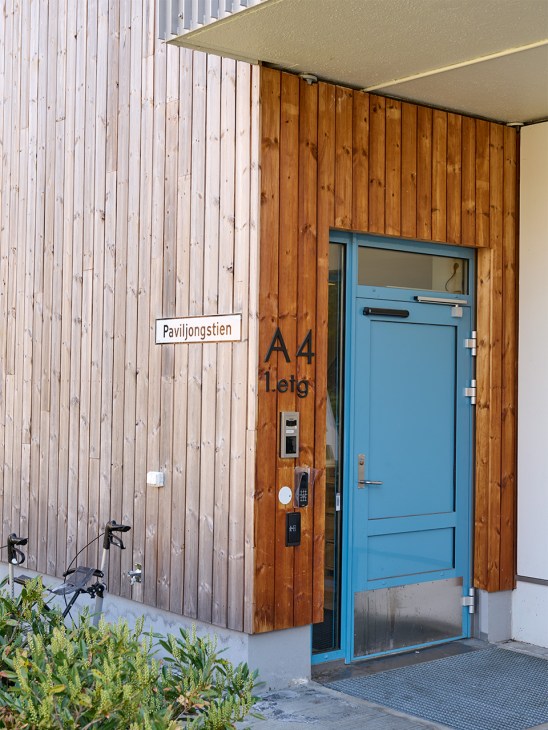
Textured walls, carpets and paving stones allow hands, eyes and feet to “remember” a route when minds no longer can. “When you have dementia, it’s your senses that go last,” says Heier Anglero. “We made sure we designed spaces with this in mind. That’s why, for example, there are hundreds of different plants in the yard.”
Carpe Diem has a pub, a hairdresser, a supermarket, a gym and a tiki bar. There’s a boat workshop for the village’s many former casual seafarers. Haircuts and pints are paid for using a card preloaded with funds by a resident’s family, allowing for independent sustenance rather than favours dispensed by staff.
Later-life care places financial strain on both families and governments. Though Bærum is an affluent district in a wealthy country, Carpe Diem’s residents cover most of their bed and board. Fees are paid from their state pension, which usually accounts for 75 to 85 per cent of the bill. While the generosity of Norway’s system might limit the potential for this model to be exported, its obvious benefits – longer-living patients and less carer burnout – have altered the way that policymakers think about dementia. Villages such as Carpe Diem allow the dance of life to continue a little longer.

Comment:
In terms of major advances, dementia care has long lagged behind treatments for other conditions. But governments are finally waking up to the need for a more holistic approach. Villages such as Carpe Diem show how good design can help deliver more effective social care
Mount Street Printers demonstrates the appeal of fine print in a digital age
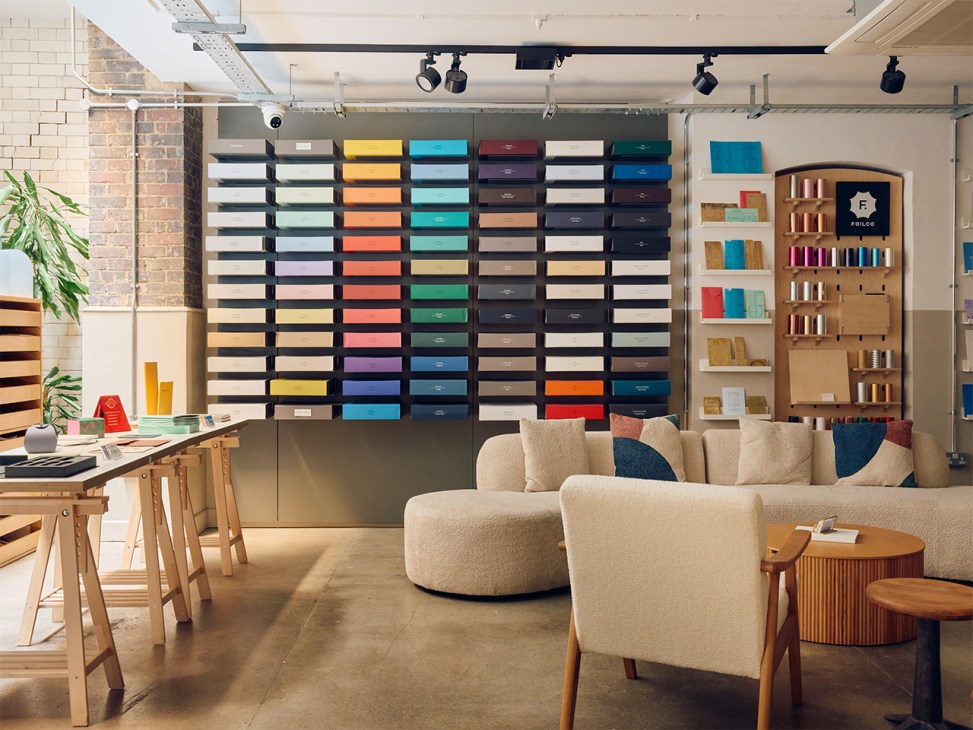
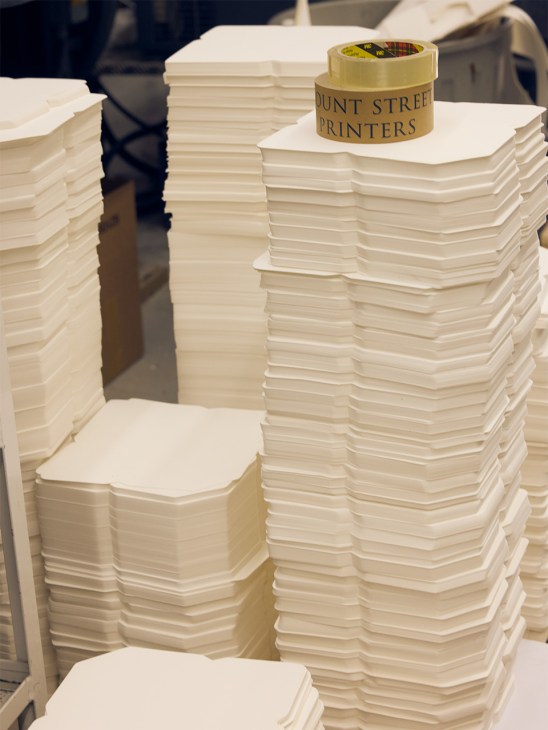
In a struggling industry, London-based Mount Street Printers is a rare linchpin of stability. Work at its production facility in the west of the city is in rude health: customers include the likes of Burberry and Sotheby’s. The business’s original Mayfair shop also remains a dependable institution. While neighbouring luxury brands come and go, the company, which specialises in fine corporate printing and luxury stationery, has maintained a constant retail presence at 4 Mount Street since 1981. “When we started, everything was printed – there was no such thing as email,” says the business’s director, Alex Cain. “But the marketplace and the area around us have changed. We have gone with what the customers are demanding.”
The son of Mount Street Printers’ founders, Peter and Fridette, Cain has found success by embracing what others fear. “We love programmes such as Canva because they enable people to create their own vision,” he says. “But the real test of a designer today is whether they can make things look good in print. The big agencies are moving towards these touchpoints that make a product feel special.”

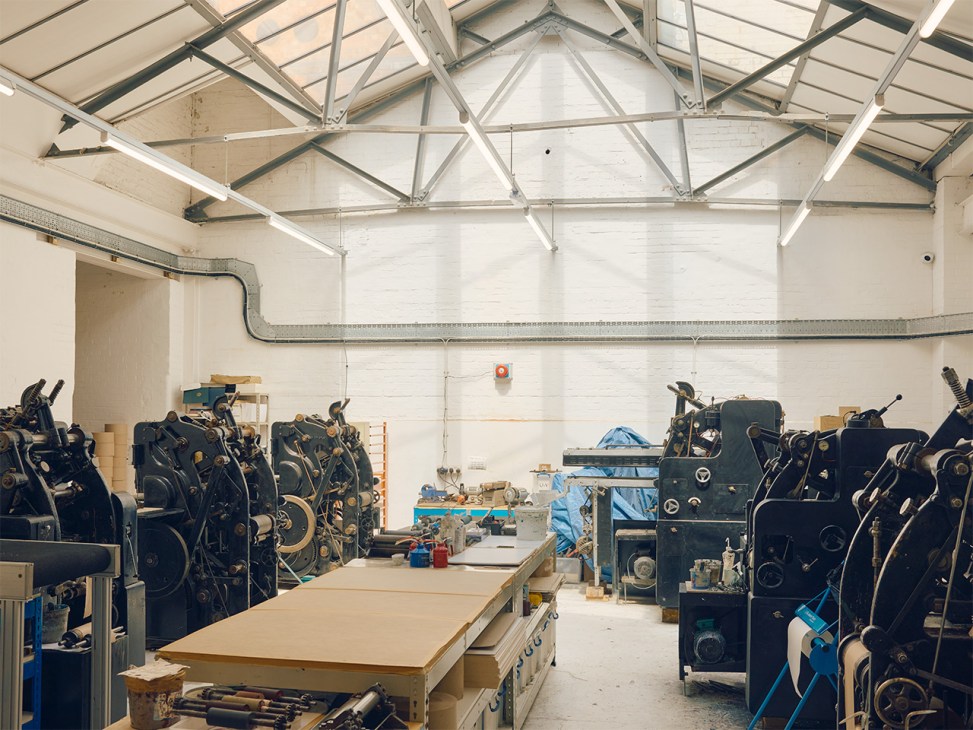
At its production facility, innovation is crucial. Traditionally, when a client places an order for, say, an event invitation at a printer, jobs such as making envelopes or letterpress are outsourced because of a lack of specialist skills. “But because we buy the equipment and do it all in-house, we can build a high level of trust with our customers,” says Cain. “You can start from a point of inspiration and let your imagination run wild with techniques, colours, shapes, materials and sizes.”
During Monocle’s visit, we see a wedding announcement with gold-foiled lettering shimmering over a digitally printed watercolour design. Nearby, an employee operates a laser, cutting out plates for die-stamping; the machine was adapted for the business two years ago. Cain has his eyes on what comes next. “We’re obsessed with future-proofing the business,” he says. “My objective is to ensure that it lasts 100 years.”
mountstreetprinters.com

Comment
Though trends can offer short-term success, it’s worth looking elsewhere for longer-term rewards. Something that has gone out of fashion will invariably come back – hold tight and you might be pleasantly surprised. It’s why Monocle has always believed in the power of print.
As interest in Stem careers fade, Germany turns to foreign workers to fill the technical talent gap
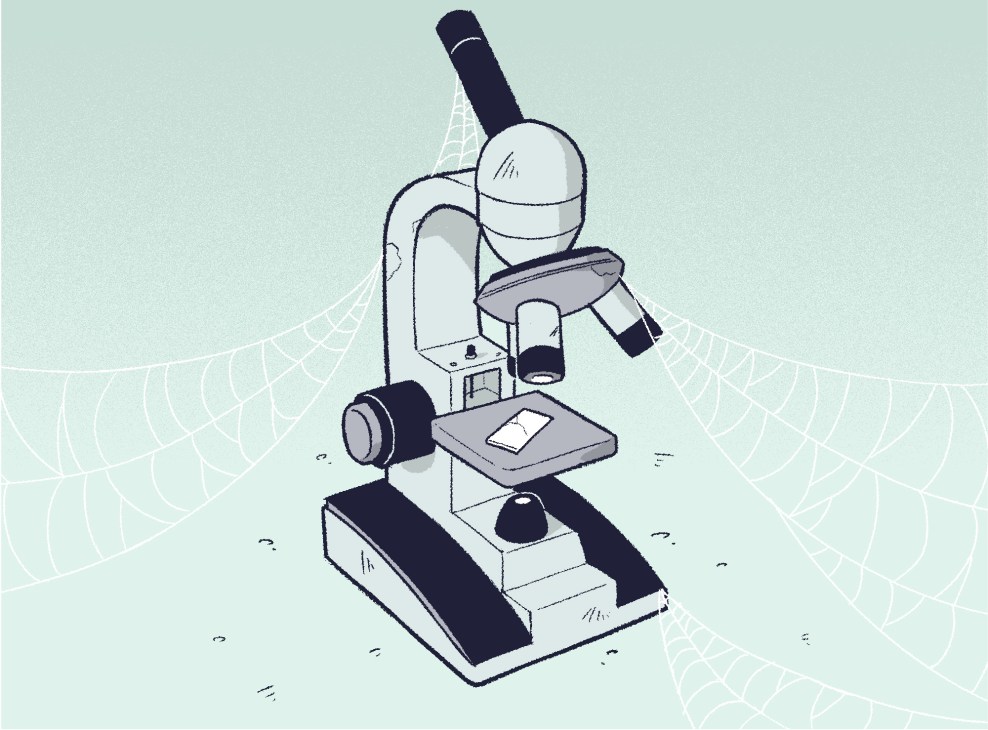
German-speaking countries were once considered a stronghold of tinkerers and inventors. But today young people are avoiding technical degree programmes with serious consequences. If a company can’t find young engineers or IT specialists, workers from India are often the last hope. Immigrants can compensate for the lack of motivation among domestic employees to enter the fields of science, technology, engineering and mathematics (the so-called Stem subjects). Germany now has 33,000 Indian nationals in Stem professions. In 2012 there were 4,000.
That shortage of homegrown workers will worsen. An estimated 200,000 German engineers will retire in the next 10 years. At the same time, fewer young people are choosing to study the subjects necessary to replace them. Only 80,000 students are enrolled in mechanical engineering. A decade ago that number was 120,000. The situation is particularly precarious in fields such as electrical and civil engineering, and especially bridge construction. Once, this nation produced ground-breaking inventions, thanks to pioneers such as Carl Benz and Werner von Siemens. Now, that engineering prowess is disappearing.
The same trend can also be observed in Switzerland and Austria. The University of Applied Sciences Upper Austria has investigated the career interests of different age groups. The results show that the younger the age group, the less popular Stem subjects seem to be. For Generation Z, which comprises those born between 1997 and 2010, a technical or scientific degree is the least appealing. Among young men, physics and chemistry are considered particularly unattractive. Mechanics and mechatronics degrees receive the least interest from women. The latter combines the former with electronics and computer science – a specialism required in robotics and medical technology.
Statistics professor Harald Kindermann, who led the study, describes the findings as “alarming”. “The low interest of the younger generation in technical professions jeopardises the future competitiveness of our economy,” he says. Kindermann notes that competition, particularly from China, has significantly increased too.
Without enough young, talented people entering the workforce, European industry risks losing its pre-eminent position. Kindermann is concerned that the attractiveness of technical fields has declined further since the most recent survey three years ago. “This affects both genders,” he says. “Among men, interest has decreased even more sharply.” Nevertheless, the traditional gender disparity persists, in which women are far more likely to avoid technical fields.
What’s the explanation for the growing disinterest? Kindermann cites a number of factors, which he bases on his study as well as his practical experience as a lecturer. A Stem degree is perceived as more demanding and strenuous, which deters many people despite the good career prospects it offers. “The younger generation tends to be less resilient,” he says. “Furthermore, they increasingly struggle to understand more complex content that requires logical thinking.”
Shifting incentives
This is partly due to the school system, which doesn’t adequately train people in these skills. Societal trends exacerbate the problem. “Social networks shape a model in which young people focus on well-being rather than achievements,” says Kindermann. The goal of contributing to society also seems to have lost some of its sheen. The professor believes that young people should be challenged more. Likewise, skilled trades and apprenticeships need to regain some prestige. “Because the academic path is considered more attractive, there’s a lack of talented young people at technical universities,” he says.
Stem departments face a dilemma. The public funding that they receive is tied to student numbers. These are also expensive courses that require modern laboratories and equipment. When fewer people enrol on a subject, the revenue disappears.
Matters of scale
According to Kindermann, this increases incentives to make exams easier and lower performance standards to avoid losing even more students. Smaller universities, in particular, are at risk of falling below thresholds at which they would have to discontinue certain subjects.
This divergence can also be observed in Switzerland. Leading university ETH Zürich continues to attract a large number of students, with more and more coming from abroad. Nearly half of the master’s students there now hold a foreign passport. By contrast, universities of applied sciences are experiencing a decline in enrolment in Stem subjects among domestic young people; since 2017, the number of new students has fallen by 7 per cent. While there has been a slight increase in computer science, the drop in the wider technical fields is in double digits. Non-Stem subjects, on the other hand, continue to attract more applicants.
High price of cost-cutting
The Haute École Arc in western Switzerland has first-hand knowledge of the threat that this decline in interest poses for engineering faculties. It operates in three cantons: Neuchâtel, Jura and Berne. In engineering, the number of bachelor’s students plummeted by 28 per cent in just eight years. The fall was even more dramatic for new enrolments, which fell by 38 per cent from 160 to a record low of 100.
According to Tristan Maillard, the Haute École Arc’s director general, the school management has had to implement painful cost-cutting measures. “We were forced to part ways with several lecturers,” he says. “Nevertheless, we made every effort to retain the best professors.”
In response to this tug-of-war with industry, the Haute École Arc reformed its Stem education last year with great success. New enrolments quickly rose again to 130 and the university expects a further increase in the coming semester.
Without the co-operation of the cantons, the cuts would have been even more drastic. Maillard says that the already significant shortage of young professionals has exacerbated the decline in student numbers. “Companies are fighting to retain their apprentices,” he says. “They pay them good wages to keep them in their jobs instead of attending university.”
Flex appeal
“We thoroughly analysed the students’ needs and found that they wanted greater flexibility,” says Maillard. In response, the school now offers part-time study at the bachelor’s level, three days a week, allowing students to remain at their companies for the other two days. This change makes it far easier for companies to retain sought-after young talent.
To accommodate such alterations, the programme has been extended from three to four years. Full-time study, meanwhile, will continue to be offered, albeit with a reduction from five to four days a week. From next year, the number of weekly hours will be cut from 36 to 32 too. “We are confident that we can maintain the quality of the training here despite this streamlining,” says Maillard.
Despite such efforts to make Stem studies more attractive, little progress has been made in addressing the low proportion of women. Eight years ago, 12 per cent of engineering students at Swiss universities were female; the current figure is barely higher at 15 per cent. According to the Swiss Academies of Sciences, Stem education in the country has hit a “glass ceiling”.
The gender-equality paradox
Research suggests that this situation won’t be changing any time soon. The data shows that the proportion of women in technical professions is generally lower the wealthier and more egalitarian that a country is. This trend is known as the “gender-equality paradox”. The most common explanation for it is that increasing wealth and the pursuit of individual self-realisation often have the effect of reinforcing gender-specific career aspirations.
The proportion of women in Stem degree programmes is at about 40 per cent in countries such as India or Algeria; it is particularly low in Scandinavia. The same phenomenon can be observed at German universities. According to the country’s Centre for Higher Education, only a ninth of domestic first-year engineering students are female. Among international students, however, women make up a quarter.
Kindermann too says that the low interest in Stem subjects is a consequence of greater material prosperity. This makes it all the more important to raise young people’s awareness of the economic implications. “Quality of life in Europe depends on our ability to maintain our leading position in technological expertise.”
The country’s technical-expertise shortage is already resulting in a €13bn loss of added value, according to the Association of German Engineers. The wave of retirements among skilled workers means that even more skills will need to be replaced in the future.
About the writer: Albert Steck is a journalist at the Neue Zürcher Zeitung and NZZ am Sonntag. This article first appeared in the NZZ in June and has been translated by Monocle.