Issues
Inside Hamar Atriumhus – one of Scandinavia’s most admired architectural templates
Along the green banks of Mjøsa, Norway’s biggest lake, industrial railway and timber town Hamar offers a lesson in the country’s architectural history. An hour and a half north of Oslo, it’s home to contemporary wooden villas, modernist apartment blocks and 19th-century period buildings. These sit alongside landmark structures such as Pritzker Prize-winner Sverre Fehn’s masterful Storhamarlåven museum building and Snøhetta’s Rådhus (Town Hall). It’s also the setting for a less obvious yet equally important example of Norwegian architecture: a low-slung wooden Atriumhus. This building typology, which was developed in the late 1950s, perfectly exemplifies the ideology, material use and design principles of the Nordic nation’s mid-century modernism.
On a secluded plot, the residence is part of the first set of atrium houses constructed in Norway. It was designed by Norwegian architect Are Vesterlid, a contemporary of Fehn and a professor at the Oslo School of Architecture and Design, who lived in the building until his death in 2013. The unassuming structure, made of local pine and spruce, is a masterclass in egalitarian architecture. Deeply connected with Norway’s mid-century, left-leaning intellectual community, Vesterlid rejected the era’s bourgeois tendency for architects to design exclusively for wealthy clients. Instead, he championed a human scale of affordable architecture that suited the daily life of the building’s user.

It’s an approach to practice that appealed to the home’s current resident, Hamar-based Scottish architect Gary Parkes. His first encounter with the house came after a decade working for local practices on premier Norwegian builds he serendipitously found the property when it hit the market in 2014. Walking past the hidden plot on a crisp winter evening, he peered through the expansive glazing and watched the blue winter light filter through the central skylights. “I felt the hairs rise on the back of my neck,” he tells Monocle, as we sit down for a cup of coffee under a black Louis Poulsen PH 5 lamp in the open kitchen. “I immediately fell in love with the space and the atmosphere.” Recognising what he calls its “brilliant structural footprint”, Parkes purchased the home directly from Vesterlid’s children, ensuring that the building’s design-friendly stewardship remained intact.
It was a significant coup, given Parkes’ appreciation of the structure’s history. In 1962, Vesterlid partnered with multidisciplinary collective Arkitim, alongside architects Finn Bø and Per Torp Ildahl and interior designers Hans Østerhaug and Edvin Helseth. Together, they drafted a radical neighbourhood master plan. It was intended to include up to 70 prefabricated, highly affordable homes in Hamar; only eight were eventually realised, with four inhabited by the partners and their young families. Dismissed by sceptical mid-century residents who derisively nicknamed them grisebinger (“pig houses”), the atrium buildings have since transcended that early criticism to become some of Scandinavia’s most coveted architectural templates.
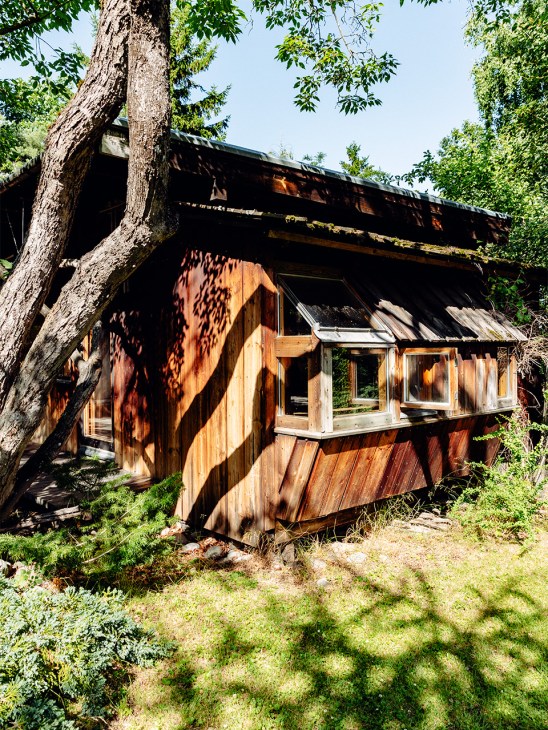

The floor plan is organised around a fully enclosed inner courtyard, or atrium, that serves as the primary light source and a private outdoor living space. Enclosing it is a grid-like framework that can be endlessly repeated, giving the home a comforting rhythm. “The structure is timber post and beam,” says Parkes, explaining that the home was constructed in such a way that the frame is not hidden by cladding – a conscious choice by Vesterlid revealing the building’s skeleton to its inhabitants. “The inside of the interior wood panelling sits slightly clear of the frame. It expresses pride in the cuts and materials.”
Indeed, the interiors are characterised by a reduced palette of regional materials: floors of solid, handmade dark brick tiles; walls and ceilings of natural timber boards left unpainted to show the wood grain. Rather than modernising or neutralising the surfaces to make the house look more contemporary, Parkes has preserved its mid-century patina. “I have a busy life as an architect,” he says. “If you want a house to look brand new constantly, it becomes a never-ending job.” Instead, he has chosen to celebrate the gentle marks of time, such as the faint vertical ghost lines left on wooden walls from Vesterlid’s original shelving units or sun-bleached wooden planks on the building’s outer walls.


For Parkes, the living room is the emotional heart of the home, dominated by a sunken sofa and daybed area. Nearby, a long timber dining table is surrounded by Eames chairs. The open kitchen is integrated into the living room, with an island, designed by Vesterlid and Helseth, near the centre of the space. Most technical components, including a cold room, are tucked behind one wall. Everything remains remarkably true to its original form, except for a modern oven. The central ventilation system dates from 1962 and still works so powerfully that the fireplace goes out if it’s turned on. Modern interventions have been executed with patience: a bathroom update took Parkes four painstaking years of design, research and careful installation to match Vesterlid’s exacting standards.
Environmental comfort is achieved through smart, passive design. Fully insulated, draft-free walls are married with electric underfloor heating hidden beneath the brick tiles, keeping the home cocooned when Hamar’s winter temperatures plunge to minus 30C. During summer, deep roof overhangs and a lush screen of native plants – meticulously mapped by Vesterlid in his original landscaping drawings – help keep the home cool.
A defining characteristic of these atrium houses, which reflects the social beliefs of the time, is a sense of communal living, exemplified by the large garden shared by the houses. Here, a powerful neighbourhood camaraderie still thrives. Seasonal garden work and spontaneous summer terrace parties are shared with a creative cohort of neighbours, including Finn Bø’s daughter, who works in film and television, and a pair of Oslo-based architects who use their house as a summer retreat. “The people who have lived in these homes over the decades have had long and happy lives and, instead of a care home, have lived in them until the end, says Parkes. “The way that these buildings are set up encourages a more collective way of living.”

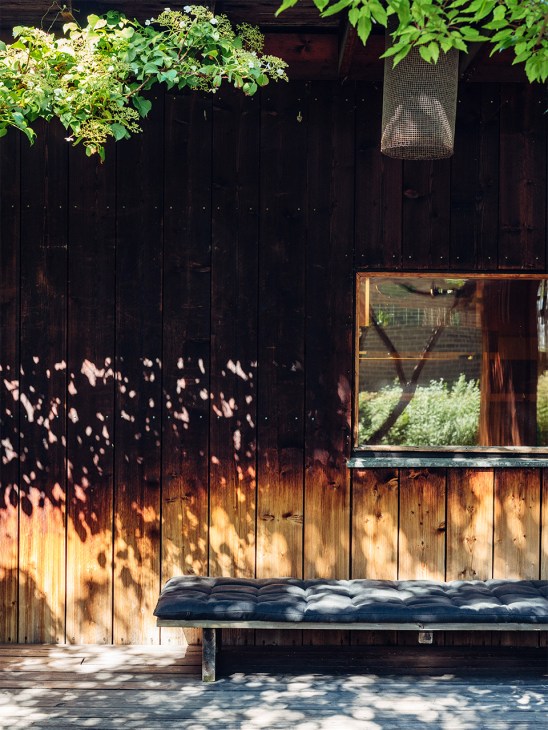
It’s a mindset that means Parkes sees himself as a custodian of something more than just a home. He often hosts architecture students and other architects, sometimes even leaving his front door unlocked when he’s out so that visitors can wander in and study Vesterlid’s proportions. It’s a beautiful gesture of architectural generosity and one that directly honours Vesterlid’s optimistic belief that great design belongs to everyone. The fact that the Atriumhus still attracts such interest, more than six decades after it was built, is a testament to its ultimate lessons: small houses can achieve extraordinary, enduring quality without being expensive; and buildings designed with an economy of materials and a respect for human scale can help us live better and, perhaps, even a little longer.
Why it works
Small, human scale: The compact, 115 sq m footprint successfully demonstrates how affordable, prefabricated modular systems can meet the essential requirements of a home and deliver architectural character.
Stewardship over modernisation: By accepting and embracing the patina of the original timber and brick, the design eliminates any need for exhausting cycles of renovation and modernisation.
Passive climatisation: The integration of heating beneath the brick-tiled floors, as well as deep roof overhangs, naturally protects against Norway’s harsh winters and hot summers.
When Google isn’t enough: Three libraries that are providing fashion creatives with rich, printed archives
1.
The MOP Library, A Coruña
The new home of fashion photography for A Coruña’s growing creative cohort.
Ever since the Marta Ortega Pérez (MOP) Foundation moved into A Coruña’s disused docks, the old concrete jetties and buildings have grown increasingly lively. “People never used to come here,” says architect Elsa Urquijo, who was entrusted with the transformation. “They’re coming back now.”
A former warehouse has become a focal point in the city after Ortega Pérez – daughter of Inditex founder Amancio Ortega and the group’s non-executive chair – turned it into an ever-evolving cultural centre to house the foundation’s HQ, exhibition space, book shop and café.
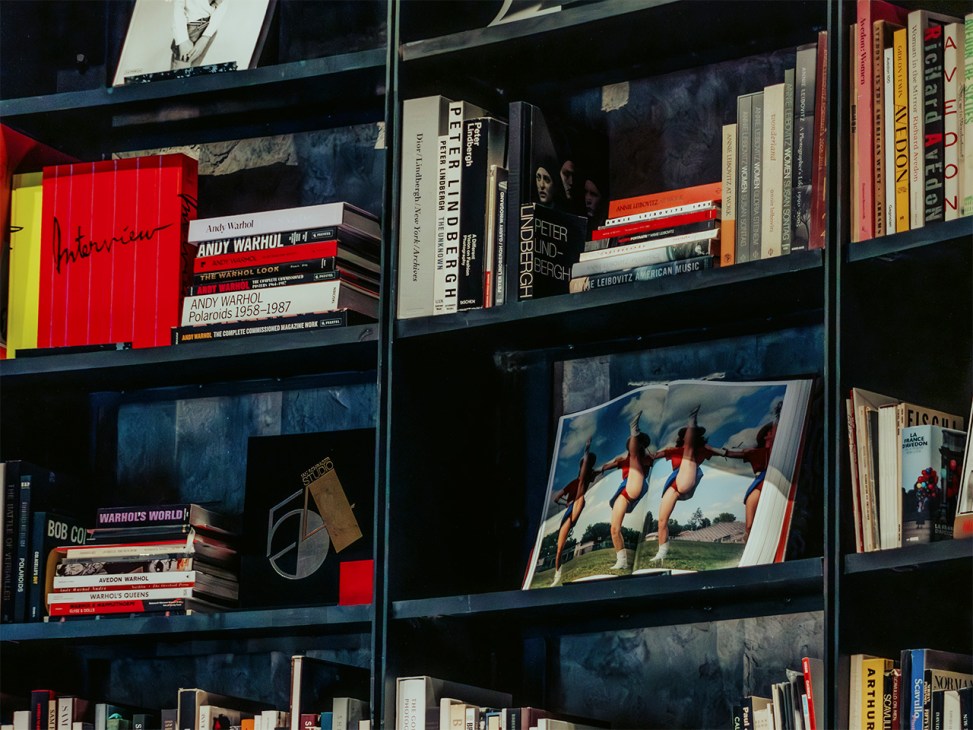
Recently, a fashion photography library has been opened, encouraging visitors to rediscover the joys of offline research. It contains more than 5,500 rare books and magazines, including original brand catalogues from the 1980s, full collections of titles such as System and Interview (Herb Ritts’s Madonna cover from 1990 is a highlight) and various editions of Vogue. Browse the floor-to-ceiling shelves and you might also come across rare monographs signed by John Galliano and Richard Avedon, along with a copy of Flair from 1953.
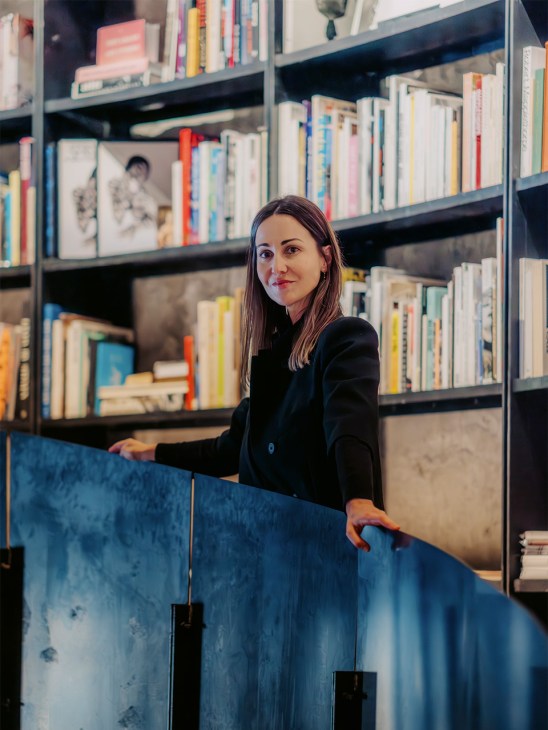
“We started editing books for our exhibitions and it went very quickly from there,” says the MOP Foundation’s director, Leticia Castromil, as she turns the pages of a vintage magazine while wearing cotton gloves. “We wanted to create something that people could connect to after visiting the exhibitions. A more private kind of moment, where you can delve deeper into the works of the photographers many of us hear about but might not recognise.”
For her, looking at great photography in a beautifully designed book is more intimate than staring at an image on a wall. “It made sense to have a space just to hold books,” she says.“Creativity still starts with the page.”
The collection began with a major acquisition from private collectors and has continued to grow through further purchases carefully selected by the Foundation. The plan is for the library to grow by 200 titles a year and to create a space where anyone can visit, request a journal and browse it on site.
Ultimately, the MOP team see the space a way of bringing high fashion and culture closer to the Spanish seaside. It has helped that A Coruña is already home to Zara owner Inditex and, unlike every other port city in the country, attracts thousands of style connoisseurs every year. “Even if you don’t work in fashion, you end up being attuned to it here,” says Castromil, who has been a resident of the city most of her life.
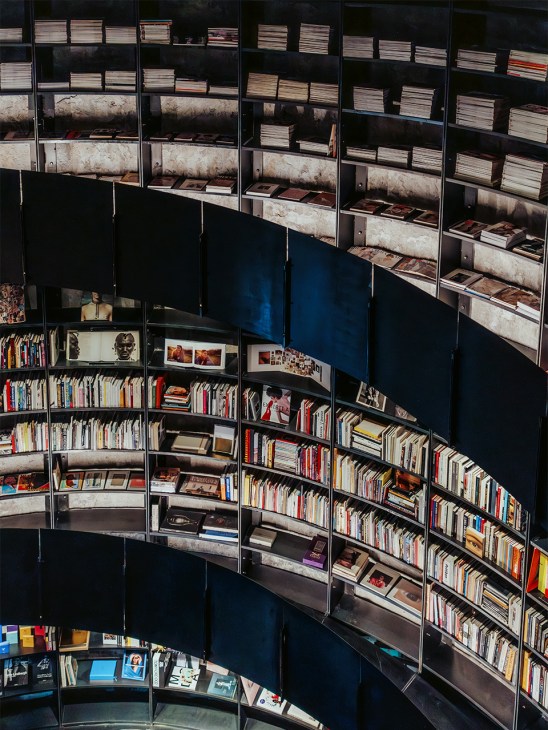
The imposing architecture adds to the experience: the library is perfectly cylindrical, taking the form of the silo from which it was constructed. Inside, the rest of the world fades away; the building’s solid structure ensures a natural hush. When Monocle visits, a young woman lingers at a stack of The Face magazines (the library has a complete set), while another young browser flicks through a 1988 Galliano catalogue. Everything around them falls into darkness. Other people are shadows.
The design is typical of the stark, unfussy style for which Urquijo is known. “We wanted to make it honest nothing to hide, nothing pretending to be anything else,” she says. “Just a focus on the books. The architecture reflects the city itself, she adds. “People say that we are at the end of the world and isolated by mountains – we are a little more inward, more calm, more discreet and we always look to the sea.”
Urquijo draws on these qualities in her work, creating a sense of detachment and the feeling of a world within a world. But the foundation is intent on connecting A Coruña with the rest of the planet and establishing it as a different type of fashion capital – one where students can create at a slower pace, photographers can host world-class exhibitions of their work and professionals can find time for creative research. “The city is in a really lively moment,” says Castromil. “Our young people are more and more interested in non-traditional work. They see how you can really make a career in art and fashion.”
It’s why the foundation has been working with the Royal College of Art in London to offer students funding to develop personal projects. It has also been raising the bar when it comes to its own exhibitions. “We have shows that have never been done before,” says Castromil. “We can’t bring over an exhibition that was just in Paris. That wouldn’t be interesting.”
Doubts, a show about Italian photographer Paolo Roversi (best known for his work for Vogue and Vanity Fair), runs until 20 September; an exhibition spotlighting David Sims, the British photographer who helped shape the visual language of the hedonistic 1990s in the pages of i-D and The Face, will open later this autumn. “It has to be really special because we want to draw people to the area and give them the chance to discover the city while they’re here,” says Castromil.
The foundation’s plan to bring A Coruña “to the world” is clearly working. Whenever you visit the MOP Centre, you will find gaggles of schoolchildren, tourists and local creatives converging on one of the hulking cement blocks that make up the building. Inside the library’s reading room, there’s always someone quietly browsing the catalogues, cracking the spines on decades of work by Richard Avedon and Steven Meisel or exploring the best of Juergen Teller. “For so many people, seeing this kind of brilliance up close, looking at the work, turning the page and then returning to it that experience is just not the same online,” says Castromil. “It makes the world feel less far away.”
2.
Idea, London
A space for creatives to put their phones away, delve into research and discover rare books.
As a student, Angela Hill would roam the halls of Zwemmer – an art and photography bookshop in London’s Charing Cross Road – to take notes, gather inspiration and make a wish list of everything that she wanted to buy. “They knew that I couldn’t afford anything but they let me hang around,” she says. “I knew every book back to front and, when I could save up, I’d go back and buy a few things.” Hill, a photographer, went on to open her own bookshop, Idea, in the 1990s, along with her husband, David Owen. It occupied half a room of 101 Wardour Street but has since taken over the whole building.
Today, fashion and art students from around the world visit Hill in her Soho base to research their next collection or find fresh references. When Monocle visits, Makx Sperber, a womenswear student at Central Saint Martins, is flipping through the latest catalogue by design duo August Barron. “Being here makes you feel a certain way and get more curious,” says Sperber. “If you want something more out of your education, research is part of that and here I can look at anything, from a Miu Miu lookbook to museum-grade artefacts. Everything feels precious.”
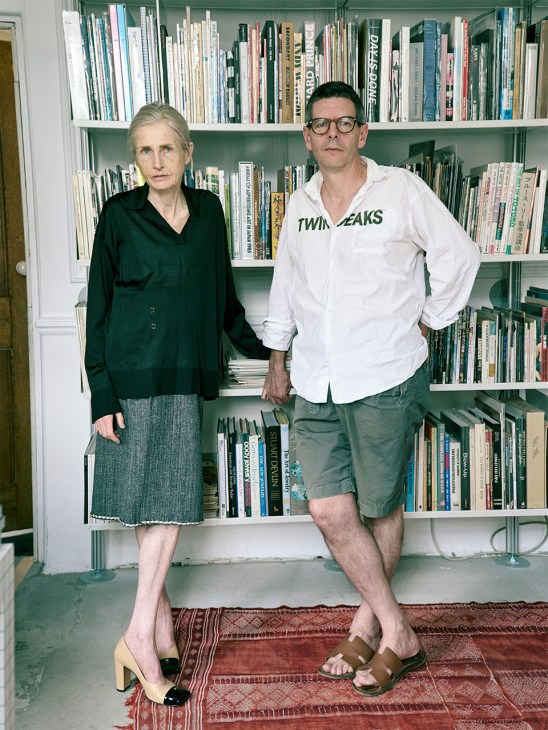
Over the years, Hill and Owen have worked with thousands of students and can spot the best ones – they’re naturally curious, have their own interests and usually start visiting Idea before their tutors have given them an assignment, they say. Like Sperber, a young Jonathan Anderson was also an Idea regular during his student days. “The minute that he got the job at Loewe, we received a huge order,” says Owen, with a smile.
Idea is now open to the public so anyone can browse the collection and have a chat with Hill or Owen – provided that you can spot the discreet signage and buzz yourself in. “It’s very social,” says Hill. “We have our regulars, our fans, people who come in because they feel lonely and here they can have an espresso and a conversation with someone.” Idea also encourages lingering, with biscuits on the table, lounge music in the background and a no-phone policy.
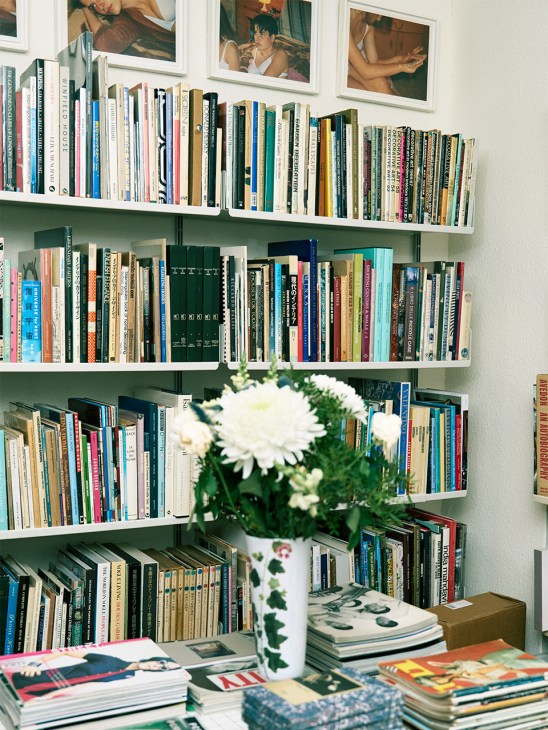
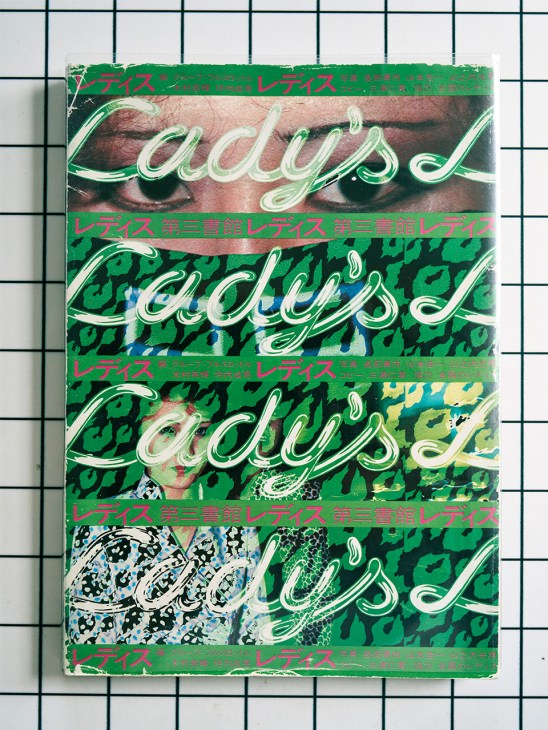
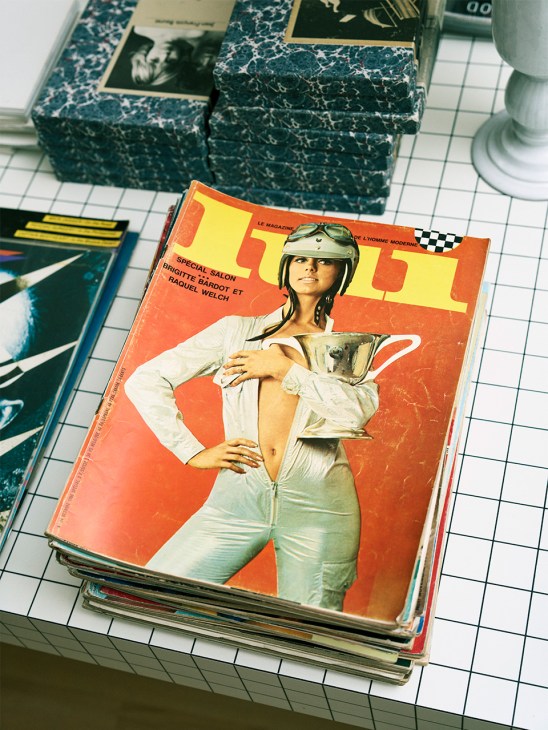
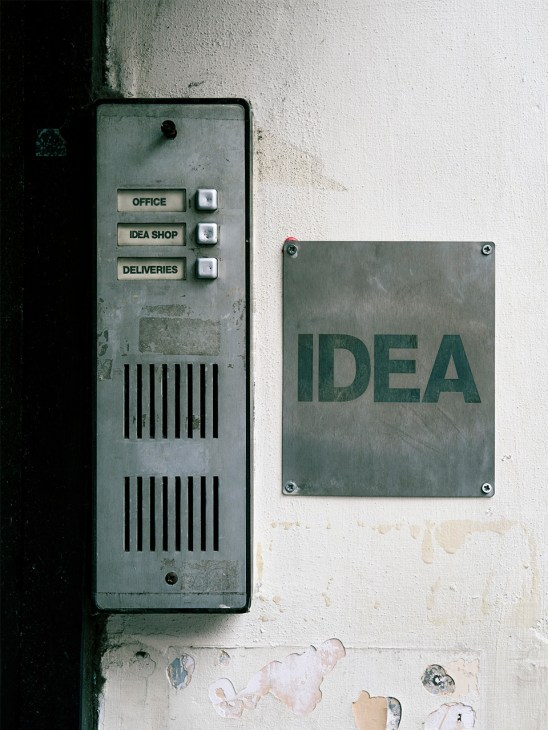
Such spaces are important resources for fashion designers, art directors and photographers who want to produce original work and expand their research beyond Google. Hill often receives briefs from creative directors (looking for anything from 1970s countercultures to communal living) and goes on to select relevant books for them. “I research for myself all the time so I love doing that,” says Hill, who sources books from places such as Ebay and Spitalfields Market. “You’re sharing the excitement and the energy of discovering an interesting book with other people. My best find was a series of Women’s Wear Daily bulletins with Bill Cunningham photography and the Yves Saint Laurent 1980 collection on the cover. It’s a lot of visual research but it can lead you to the stories of the art directors and the photographers behind the images.”
Conversations with the creatives who visit Idea to research might also lead to new print projects, executed through Idea’s publishing arm. It’s a one-of-a-kind ecosystem that takes you back in time: here, working relationships meld into friendships and projects aren’t purely driven by commercial interests. It’s a place where the best creative work still happens offline.
3
Library180, New York
An invaluable reference library and archive for the fashion community.
Nikki Igol, an image researcher and archivist who has worked with make-up artist Pat McGrath and other fashion and beauty heavyweights, started collecting magazines when she was 10 years old, living in the suburbs of Detroit. Now in her forties and based in New York, Igol continues to add to that collection, which currently comprises some 4,000 works. After storing these items in her home for years, she and Steve Chaiken, co-founder of creative agency SN37, opened the catalogue to the public with the launch of Library180, a non-profit reference archive.
Igol’s pieces now sit inside an airy library overlooking the East River where anyone is welcome to visit by appointment. Stepping inside the space, which brims with old copies of The Face and Casa Vogue, as well as niche publications such as the marijuana-focused High Times, feels like entering a time machine.
When Monocle visits, menswear designer Willy Chavarria stops by with his team.When he tells Igol that he is looking for images depicting nightlife culture, she begins pulling from her collection, handing over out-of-print copies of Blitz and After Dark magazines, and Tod Papageorge photography from Studio 54.“I remember purchasing every single thing here,” says Igol. Most of these images don’t exist on the internet but, even if they did, “you want to digest the image the way that it was meant to be digested – and that includes the surrounding text, the font, the advertisements, even the feeling of the paper that it was printed on”.
Igol dreams of managing Library180 for a while yet before handing the keys to a young, ambitious person who believes in her mission. “I will walk away from this,” she says, “and give it to the community.”
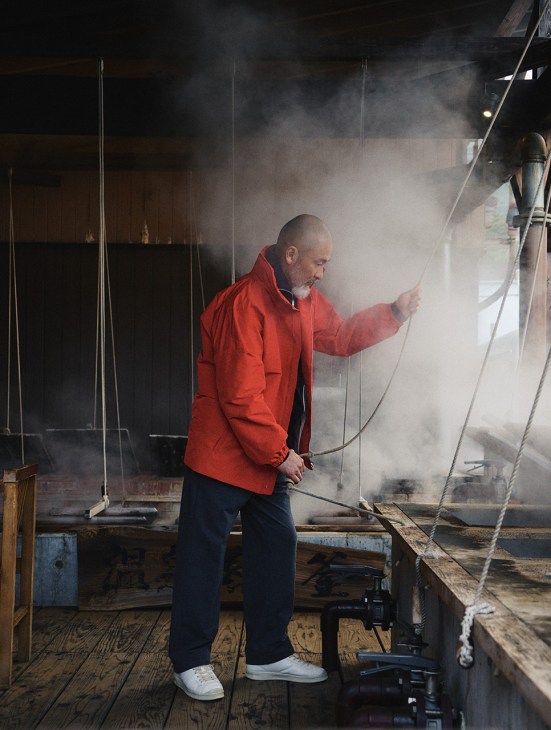
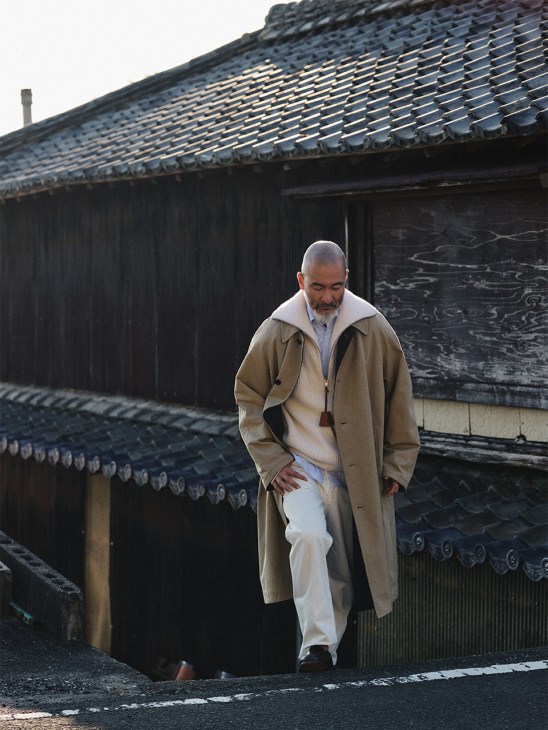
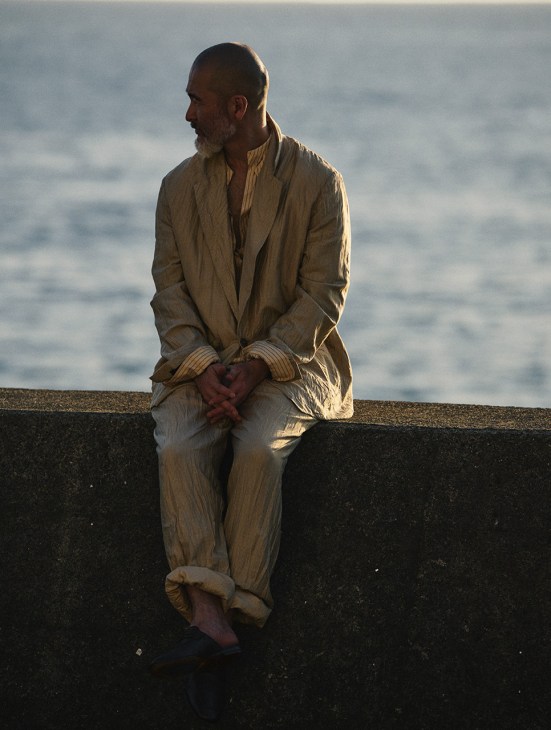
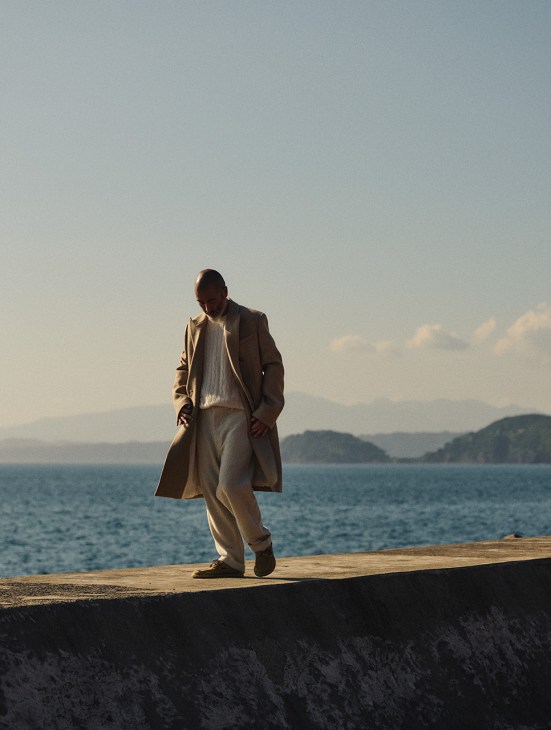
Chef Shinichiro Harakawa models the versatile menswear that will fill your wardrobe this autumn
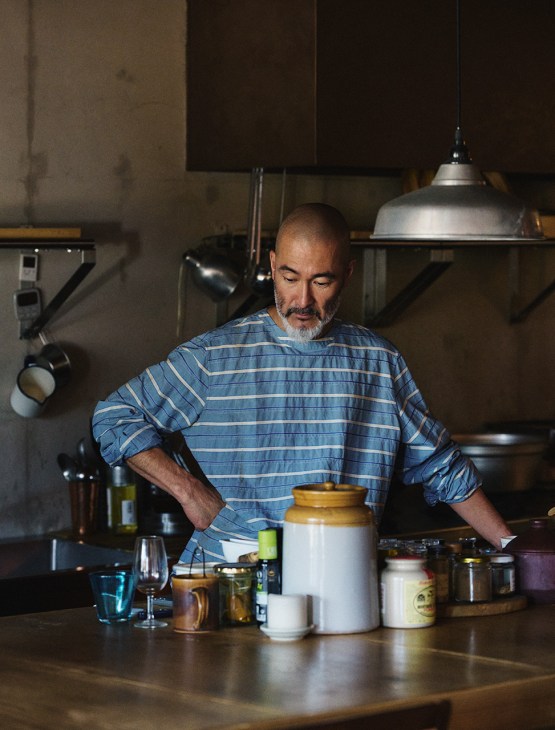
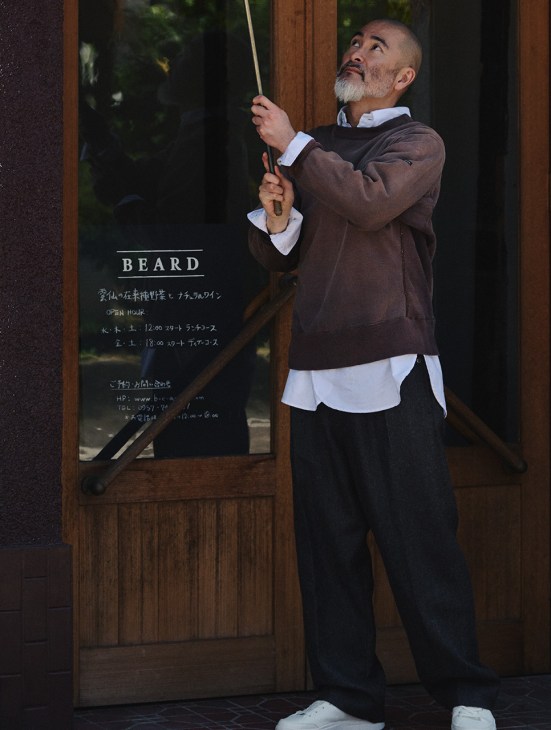
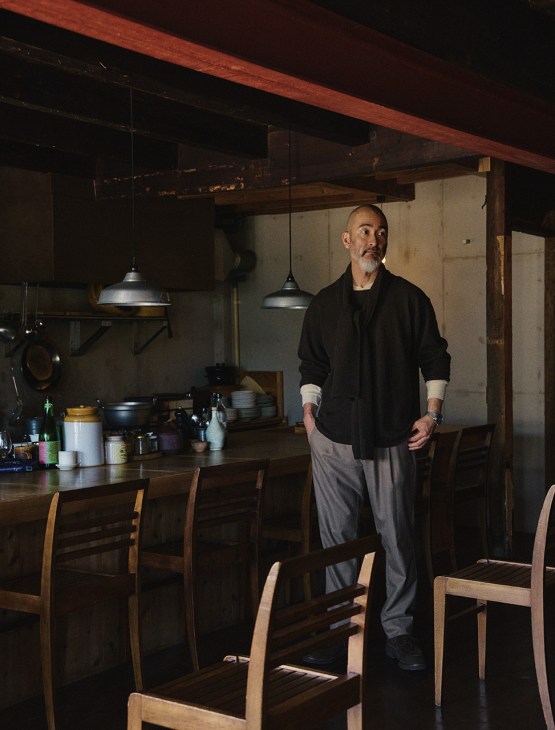
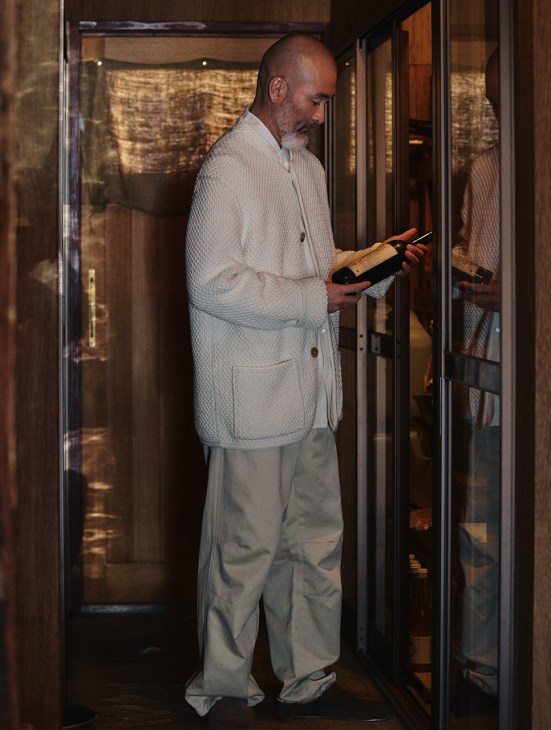
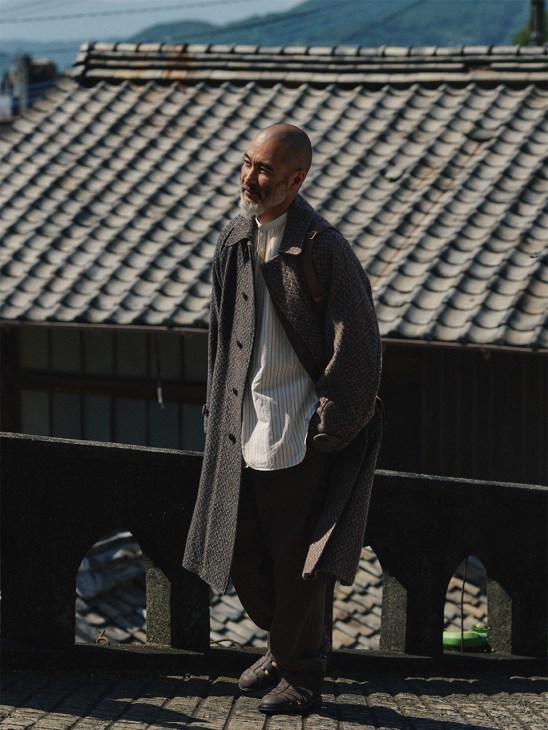
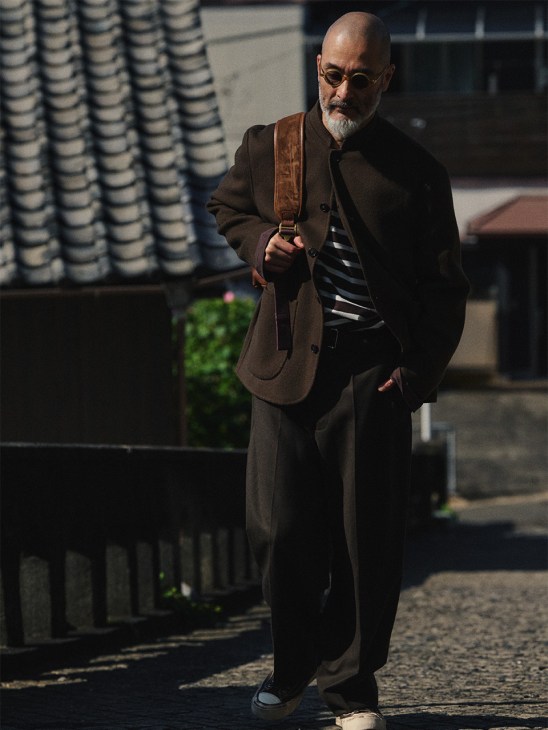
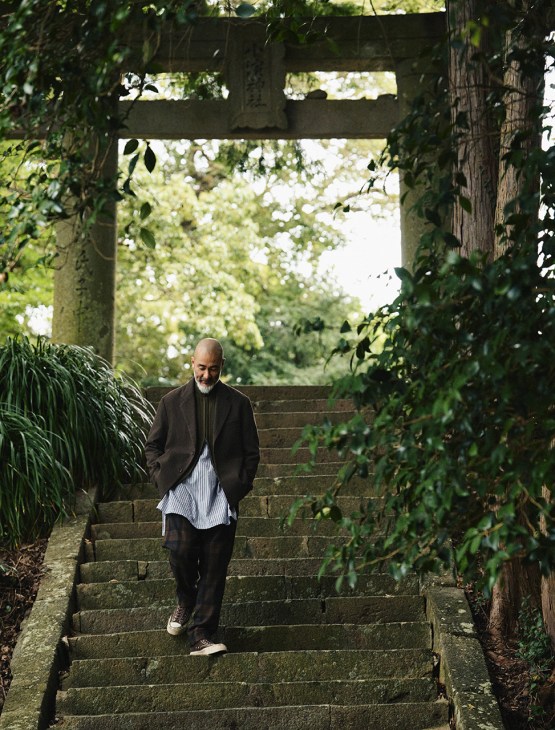
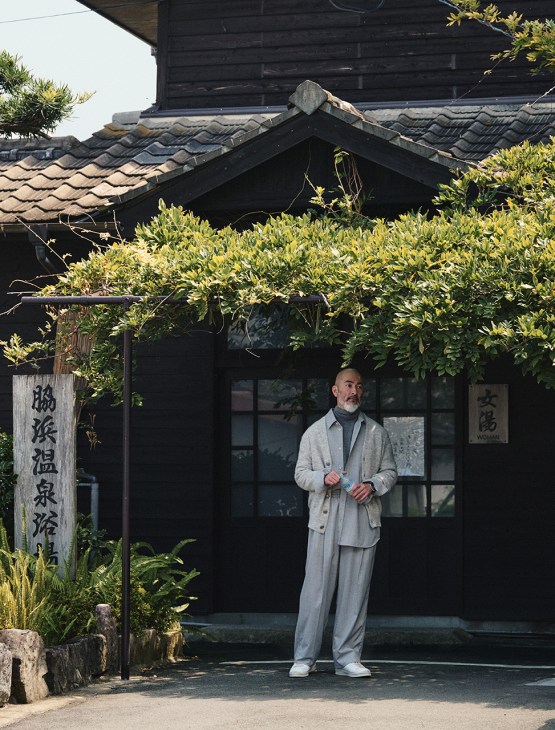

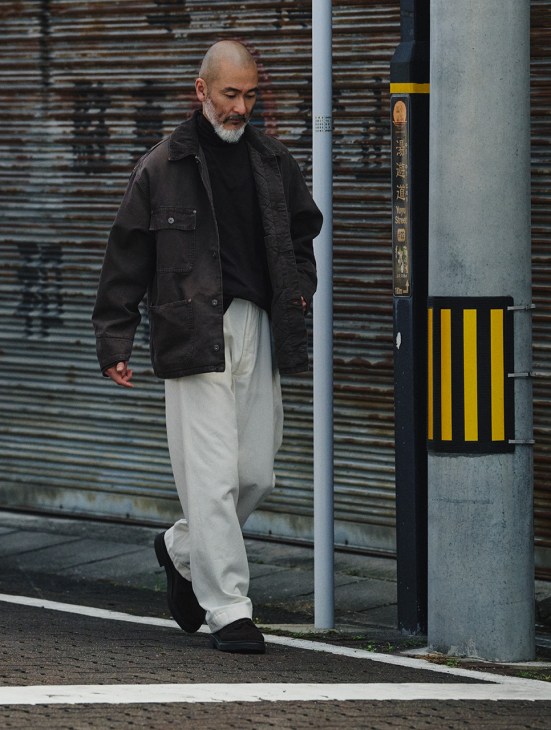
On the road again
Though Shinichiro Harakawa’s much-loved Tokyo restaurant Beard closed in 2017, it still lingers in the memory of its former patrons. The compact dining spot was highly influential, celebrated for its excellent wines and use of Japanese ingredients, as well as Harakawa’s unconventional approach to hospitality. There was a daily menu but the chef would often simply ask what customers felt like eating (his seared steak was always irresistible).
He went on to open The Blind Donkey in Tokyo’s Kanda neighbourhood, before moving to Unzen, a small city an hour’s drive south of Nagasaki in Kyushu. He was drawn there by the quality of the region’s produce; meeting organic farmer Masatoshi Iwasaki, who was growing 80 different types of indigenous vegetables, sealed the deal. “No restaurant in Unzen was using his vegetables,” he says. “So I decided to open my restaurant here.” His instincts paid off and diners were soon coming from far and wide. Earlier this year, however, he announced that he would be closing Unzen Beard in August. In no time, every seat was booked. His fans – Monocle included – eagerly await his next chapter.
Stylist: Akio Hasegawa
Model: Shinichiro Harakawa
Groomer: Norikata Noda
Producers: Ryo Komuta and Takahiro Kawata (Rhino Inc.)
Two new restaurants to have on your radar: Adam Albin in Stockholm and Odo East Village in New York
Adam Albin
Stockholm
Chefs Adam Dahlberg and Albin Wessman have cooked together for more than two decades. In April they re-emerged as Adam Albin in Norrmalm, the historic heart of Stockholm, overlooking the Royal Palace, Royal Swedish Opera and Swedish Parliament.
The three-level space, which was designed by Swedish studio Halleroed, effuses warmth courtesy of dark walnut panelling and a black-and-cream checkerboard trim in the lounge.There, a vinyl player and drinks trolley strike a smart note, alongside softly arched windows, white tablecloths and a built-in wine display. Contemporary Swedish art, selected by gallerist Magnus Karlsson, hangs throughout.
Among the kitchen’s creations are bread-crusted langoustine with parsley butter and artichoke, mussel rice with grilled pikeperch and whey sauce, squid and morel stuffed with ramsons.
adamalbin.se


Odo East Village
New York
According to Japanese chef Hiroki Odo, New York’s dining scene is increasingly moving away from long tasting menus in favour of a more casual set-up. His answer to this shift is Odo East Village, a space designed by Shinichiro Ogata that reinterprets the traditions of kaiseki – Japan’s most formal dining style – through the warmth and conviviality of an izakaya snack bar.
Odo East Village retains a multi-course structure but presents its dishes as shareable plates based around the binchotan grill. In the intimate 24-seat dining room, guests create their own kaiseki menu, moving between bluefin tuna, Hokkaido uni-topped tofu and braised wagyu tongue. In the spirit of playing with traditional Japanese dining concepts, soy sauce, panko and miso are not on the menu.
odoeastvillage.nyc


Further reading: Monocle’s complete travel guides to New York and Stockholm
The commute: Cycle through Mexico City with Tatiana Bilbao
Tatiana Bilbao, an award-winning Mexican architect, is known for her nature-led approach to design in projects such as the Sea of Cortez Research Center aquarium in northwest Mexico, which combines concrete with vegetation near the shore of an ocean estuary. It’s little surprise then that she opts for a green commute in her native Mexico City – one of the world’s most congested capitals. Monocle meets Bilbao as she completes her daily cycle to her office along the city’s celebrated Paseo de la Reforma.

Tell us about your commute. First, what brand of bike do you use each morning?
I’m currently riding one made by American brand Specialized. Over the years, I’ve changed from a regular bike to electric.
Is the car ever an option?
Our garage has only bikes and motorbikes in it – nothing else. In terms of transport [beyond my commute], I am a pedestrian first. I try to walk, use public transit or bike in every city that I go to. The only time that I really have to change this is when I take a taxi to the airport – or drive from New York to New Haven.
Does cycling help set you up for a good day?
For sure. I like to feel the fresh air on my face as I cycle through Chapultepec Park, which is near my home, where I start my ride. Paseo de la Reforma has a lot of traffic and it’s sometimes closed by protesters. So it makes me smile that I can pass through it very fast.


What’s your choice of clothing for the office? Do you have a uniform?
I don’t think that I have one. But ask anyone and they will say that it’s black.
You mentioned seeing protesters on your way to work. Would you say that politics and your daily work as an architect are connected?
My grandfather was an architect who then became a politician. He was a true democrat in the traditional sense of the word – he was pro-community and understood that the better off we are as a collective, the better we will be ourselves.
Looking ahead to the projects that you’re working on, are there any that you expect to make an impact on daily life in Mexico City?
We’re designing all the stations for Mexico City’s Cablebús Line 4. It’s an 11.4km elevated transit line that is under construction in the city’s south – we’re very excited.
Tatiana Bilbao is speaking at Monocle’s Quality of Life Conference in Barcelona this September. For more information and to secure your ticket, click here.
The smarter AI becomes, the more crucial people skills will be
Corporate culture has a weakness for what can be counted, such as revenue, growth or targets – the things that fit neatly into a spreadsheet. Soft skills can’t. You can’t put a number on the ability to read a room, defuse a tense moment or notice that a colleague has fallen quiet or feels ignored. But those are often what determine whether work gets done or a client signs on the dotted line.
Most organisations eventually discover that being good at the mechanics of business isn’t the same as being good at the business of people. Plenty of executives rise up the ranks because they can analyse a market, build a model or string a few slides together on PowerPoint, only to then find that true leadership demands a set of skills and instincts that are better honed in the canteen than in the classroom.
Bad leaders sometimes confuse silence with support and compliance with commitment. Good leaders, on the other hand, notice things. They sense when energy drops, when someone is being talked over or when a polished presentation is papering over doubt. They don’t just deliver the message; they watch how it lands.

In our leadership programmes at IMD business school, we spend a great deal of time helping executives to develop these instincts. Reading a room isn’t a single skill but a combination: active listening, curiosity, emotional intelligence and adaptability. The best leaders listen for what is being said and left unsaid. They note the hesitation before an answer. Most importantly, they are prepared to change course when those signals tell them that they should.
Humility isn’t weakness or a lack of ambition. It’s the confidence to say, “I might not have the full picture.” Research consistently shows that humble leaders don’t necessarily outperform everyone else on all measures. What they do is enable the people around them to perform better. Teams become more creative, more engaged and more willing to speak up. That creates the trust that allows for better judgement.
Too many companies become prisoners of their own language. They parrot phrases such as “best practice”, “operating model” and “This is how we do things” long after those terms have stopped describing anything useful. Frameworks are valuable but they’re tools, not commandments. Sometimes, the smartest thing that a leader can do is to put the playbook down, make room for judgement and respond to what’s happening in front of them. This comes from time spent with people, not systems.
It matters now because AI has changed the conversation around human skills. The common assumption is that machines will take over technical work, while people focus on the softer parts of business. But this misses the point. People skills, human skills, whatever you want to call them, aren’t optional. They never have been.
Several recent studies, including Danish and US labour data, have found that AI adoption so far has changed what people do, far more than whether they’re needed, shifting workers towards monitoring and judgement calls. It hasn’t eliminated roles outright, as earlier technologies such as power looms or CNC machines did. The tools are getting smarter but the tasks that they’re leaving behind are the human ones.
Ironically, the smarter the tech becomes, the more demanding leadership becomes too. When information is abundant and analysis is instant, competitive advantage moves elsewhere: towards judgement and the ability to cajole people. AI can draft a proposal, analyse data or summarise meetings. It can’t shake a hand, rebuild trust after a mistake or persuade a talented colleague to stay at your company. Business is about relationships. Relationships still depend on attention and empathy. The winners of tomorrow won’t necessarily be the ones with the smartest AI. They’ll be the ones directed by the most humane leaders.
About the writer: Ginka Toegel is professor of organisational behaviour and leadership at IMD business school. She is the author of The Confidence Myth: How Women Leaders Can Break Free from Gendered Perceptions.
Good impressions: Lisbon’s O Momento combines print and craft in its stationery design space
“The idea was born from the shared pleasure and joy of working with print, design and paper,” says O Momento’s co-founder João Costa. After years of running a print studio in Lisbon’s Baixa neighbourhood, he knew that there was an appetite for something bigger. So when the shop next door became vacant, Costa and his business partner, Cláudia Baeta, saw their chance to take the next step.
O Momento – which combines a shop, a co-working space and a printing house – opened in 2024. Here, customers can find exquisite craft paper, rare journals and high-quality pencils, as well as locally made prints.
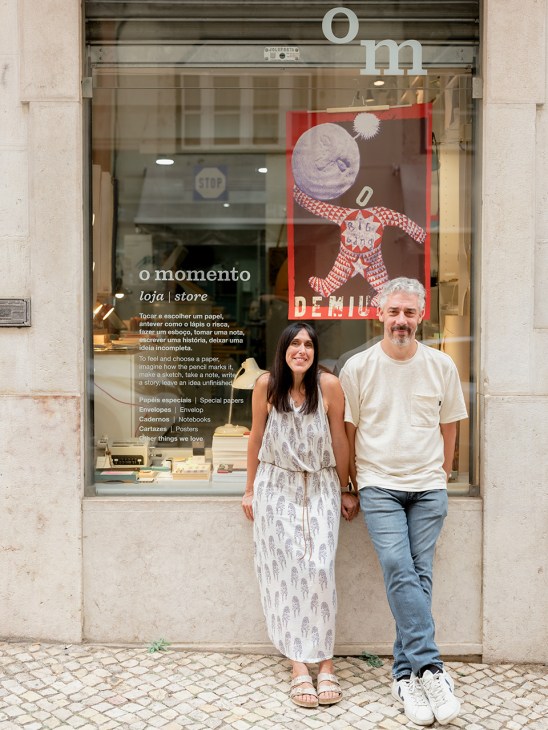
“There were so many materials and supplies that we had been using for years and it made sense to share them with the public,” says Baeta. “The best thing in the world is when people ask us what type of paper or binding to use for a certain project.”
In the co-working space, workshops introduce Lisboetas to new printing techniques. Recently, Baeta ran a course alongside Pedro Salgado, the leading scientific illustrator in Portugal. Their gyotaku workshop introduced participants to the 1800s Japanese art form in which you apply ink to a fish before printing onto paper. “We brought these enormous fish into the workshop and a group of very brave people tried to master this technique,” says Costa. “It produced some spectacular works.”
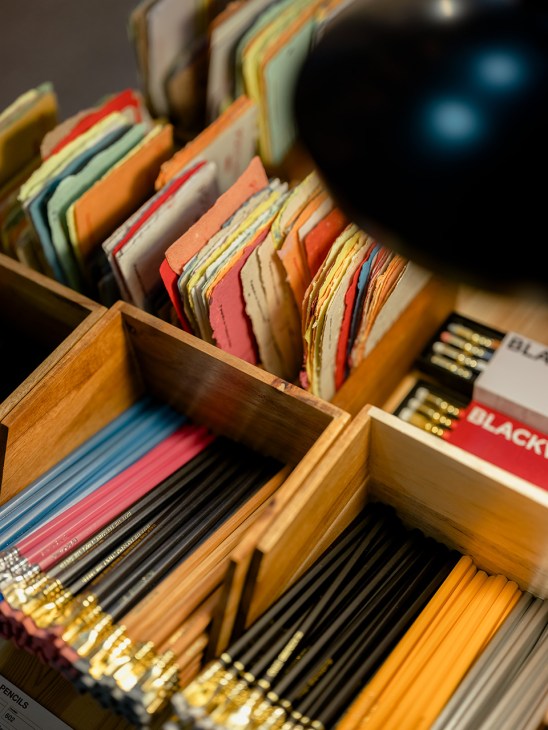
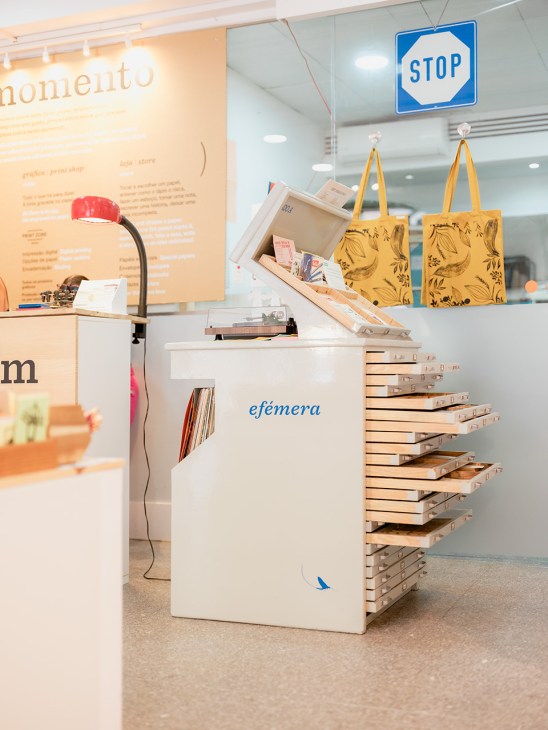
During Monocle’s visit to O Momento, we see its “ephemeral cabinet”, which features Portuguese stationery that you can’t find anywhere else. “We travelled up and down the country in search of old shops or factories that had this stock in a warehouse,” says Costa. “They were very happy to see us pick up these things that they thought no longer had any value.”
While digital reigns supreme in so much of our lives, places such as O Momento remind us of the power of physical media. “Print will never disappear because people have a tactile relationship with the objects that they like,” says Baeta. “Print is irresistible.”
omomento.pt
How beloved neighbourhood restaurant Dez Prá Uma evolved into a 12-shop food business
At Dez Prá Uma, Mafalda Travassos’s restaurant on Lisbon’s Rua Castilho, the lunch rush would always begin at 12.50 – hence its name, which means “Ten to One”. Opened in 2003, the restaurant was “always bursting at the seams”, says Travassos. When regulars increasingly began to request takeaway food, Travassos made the decision in 2015 to turn the restaurant into a business offering fresh and frozen meals. Now Dez Prá Uma has 12 shops across the city.
The packaged servings of bacalhau espiritual, croquettes and arroz de pato that fill the Dez Prá Uma shops are mostly made following family recipes. Everything is prepared in one kitchen in Campo de Ourique, overseen by chef Dinha dos Santos.


The shops, created by interior designer Marta Lucena, have a friendly, distinctly Portuguese feel with their green tiles, old weighing scales and flour tins. Travassos personally sources these decorative pieces at antiques fairs in the historic town of Estremoz.
Over the years, Travassos’s four children have spent summers helping with the business, clearing tables and packing orders at Christmas. Now they have taken over the day-to-day running of Dez Prá Uma, with plans for more outposts in Lisbon and the business’s first in Porto. Travassos’s advice to the next generation draws deeply on her experiences. “Growth has to be built on good roots, not for its own sake,” she says.
dezprauma.com
Laying the ground work: How a tiny group of artisans keeps Portugal’s stone pavements intact
In Alverca do Ribatejo, a sleepy suburb 20 minutes outside of Lisbon, Vítor Graça begins his working day at 08.00. Today the former fishmonger is fixing a patch of broken pavement outside his local cemetery. The 59-year-old is one of Portugal’s calçeteiros – the skilled workers responsible for constructing and maintaining calçadas, the traditional stone pavements that cover 290 of the country’s 308 municipalities.
It’s summer and sweat is dripping down Graça’s forehead. Immersed in his art, he hardly seems to notice. “This is more of a hobby than a job,” he tells Monocle. “The repetitive nature of it gives me time to think.”

Graça removes loose stones and fragments of broken limestone by hand, before raking away debris. (Lisbon’s pavements are made with limestone from nearby quarries in the Aire and Candeeiros mountains but cities further north use locally sourced granite.) He then pours powdered stone mixed with water into the gap that this reveals. Next, he takes out a hammer with a blunt face on one side and a long, curved end on the other. His work has a gentler soundtrack than the noisy business of concrete street maintenance: he taps the hammer against the limestone, then scrapes his spade against the rock dust. As he lays each stone, he smiles at the symmetry. Periodically, he rummages through his bag of stones to find the best fit. “This part is like my old job: selecting the best, juiciest fish,” he says.
After losing his job as a fishmonger during the 2008 financial crisis, Graça enrolled on a one-year course at Lisbon’s School of Calçeteiros 10 years ago. He is now contracted with the local parish but self-employed and paid by the hour. In the private sector, workers are under pressure to lay between 20 sq m and 40 sq m of pavement in the time that the calçeteiro might have laid just seven. “The quality of the job doesn’t matter,” says Graça. “They just want it done.”

Outside the cemetery, he has paved the words Passeio de Saudade (“Walkway of the Missing”). In front of a nearby florist, he stencils a heart in pink limestone. Sometimes, Graça leaves a “tag”, like a graffiti artist: a V nestled inside a circular G.
Today there are about a dozen calçeteiros registered with Lisbon’s council. In 1927 there were 400.
In part, the decline is because of the advancing age of those in the profession. The working conditions also make the job unappealing for younger people. “The pay is terrible too,” says Graça. Calçeteiros receive minimum wage – typically €920 a month. Many prospective workers drop out before they even qualify; of the 21 people on Graça’s course, only five completed it.
There are glimmers of hope for the future. A new Unesco campaign supported by the Portuguese government seeks to give calçadas Unesco’s Intangible Cultural Heritage status. Among other things, this would allow the country to apply for World Heritage Fund grants to improve working conditions for the calçeteiros. Graça hopes that the money will help to recruit new calçeteiros who love the work as much as he does. “People need to like what they do,” he says.
How Portuguese band Napa turned a Eurovision flop into 143 million streams
“Deslocado” by Napa, Portugal’s entry for Eurovision 2025, came a lowly 21st place but the story of the gentle ballad didn’t end with the competition. In the weeks that followed, it went on to become the most streamed song of last year’s song contest. The track landed in the charts not only in Europe and the Lusophone market of Brazil but also in Indonesia and Saudi Arabia.
With an impressive 143 million plays on Spotify, “Deslocado” was a game-changer for the five-piece Lisbon-based band behind it. “We can now live off making music and doing concerts,” vocalist and guitarist Guilherme Gomes tells Monocle. “We have so many fans in Portugal and around the world. Eurovision changed everything.”
Napa’s members are friends who formed a band in high school in Madeira in 2013. Back then, they were called Men on the Couch and mostly sang in English. “We were what you would call a textbook garage band,” says Gomes. Their rebirth as Napa (the name refers to a fabric used to cover their old sofa) happened in 2019 and, with it, they started to sing in their mother tongue. “When we switched to Portuguese, it opened a lot of doors for us,” adds Gomes. “We could express ourselves more creatively and more organically.”
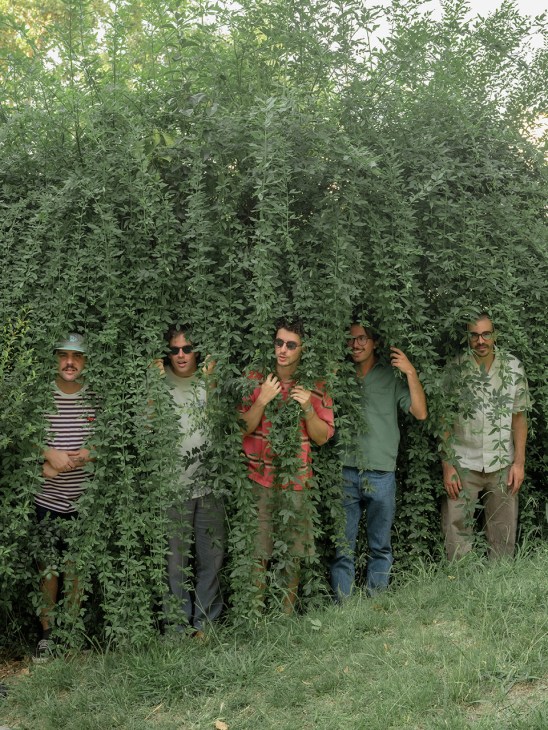
Before their turn on Eurovision, Napa had released two albums, in 2019 and 2023. Their third is expected this autumn. Its first single, “Sortudo” (“Lucky”), hints at the sunny nature of the upcoming record. The chorus translates as, “I’m so lucky/I have friends around the world/I have a safe haven.” Clearly, the band is feeling upbeat. “It’s optimistic music – we wanted to reflect everything that happened to us last year and all the luck that we had,” says Gomes. “For the new album, expect more of that tropical feeling that we associate with Madeira. There’s a bright side to the island that we wanted to capture in the music.” “You are surrounded by these extremely good musicians everywhere you go in Madeira. I guess that fuelled us”
Madeira is known for its impressive nature, distinctive fortified wine and great hotels but less so for its contribution to Portugal’s thriving pop-music scene. While the influences of the island might be subtle, they can still be heard on Napa’s new record. “We used some instruments that are traditionally from Madeira,” says guitarist Francisco Sousa. “It’s our interpretation of what the Madeiran music scene is today.” Madeira might not have many breakout chart stars but music is everywhere on the island. “Because you have a lot of tourism in Madeira, there are musicians playing at hotels and bars,” says drummer João Rodrigues. “You’re surrounded by these extremely good musicians everywhere you go. I guess that fuelled our love for music.”
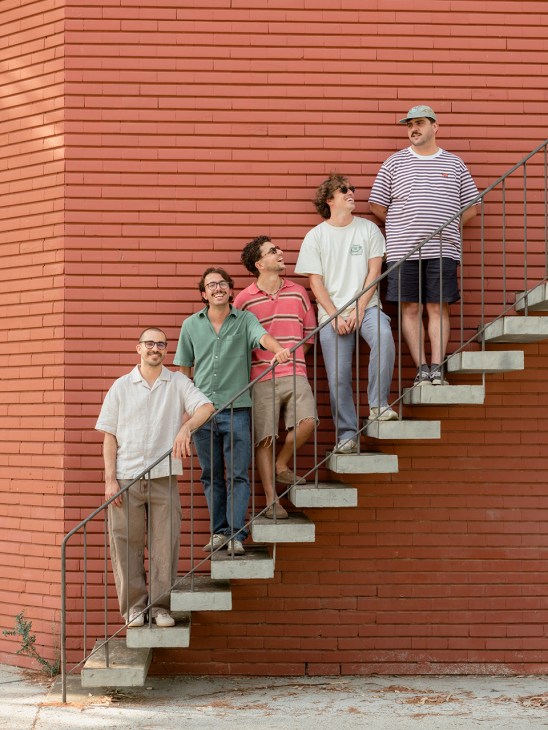
The new album also features influences from further afield: the band travelled to Brazil to record parts of it, adding an extra layer of texture to their songs. On some tracks, you can hear the noises of everyday life in the country. “One day it was raining and you can hear a bit of that, as well as some dogs barking in the background,” says Sousa. More generally, though, Napa’s breezy take on rock is reminiscent of beloved Anglophone bands such as American dream-poppers Beach House or Australian group Parcels. There is sometimes a hint of melancholy to Napa’s songs and Gomes’s soulful vocals but it’s always underpinned by punchy, propulsive beats and guitar.
The band’s influences vary depending on which member you ask: The Strokes, Fontaines DC, Geese and Wet Leg are all mentioned when Monocle asks what the group has been listening to as they prepare for their upcoming gigs. In November, the band will tour across Europe, including dates in Frankfurt, London, Madrid and Paris. The new album will take centre stage but fans of the song that made the band stars shouldn’t worry. “I just have a feeling that we will play ‘Deslocado’,” says Rodrigues, with a laugh.
Boys are back in town: Napa’s favourite spots in Lisbon
Francisco Sousa, guitarist
“I would recommend Chão do Prado. It’s a beautiful winery and restaurant close to the city – it’s perfect for a sunny afternoon with great wine and a relaxed atmosphere. If you’re looking for a slightly different vibe, O Ninho, just across the Vasco da Gama Bridge, is a favourite for its meat dishes and cosy feel.”
Diogo Góis, bassist
“First, grab a drink at Javá – it has a great view over the city. For food, Gandaia Club and Teimar are two of my favourite places.”
Lourenço Gomes, keyboardist
“I really like Bar Alimentar in Príncipe Real – it’s a unique spot and the cod cannoli is my absolute favourite. And I definitely recommend Foxtrot for a drink – it has excellent cocktails. I always order the Moscow mule. And at Távola, the best jazz musicians in Lisbon play every week.”