Issues
Schloss Fuschl is a luxury alpine retreat in The Sound of Music’s landscape
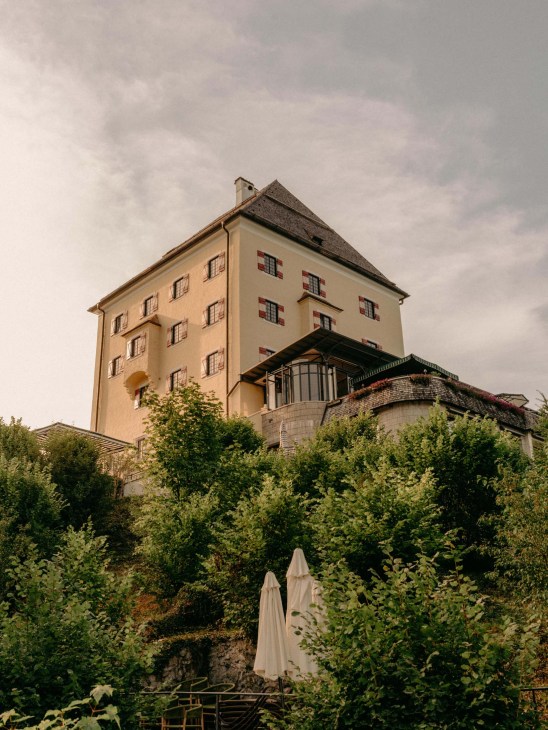
On the eastern shore of the Alpine lake is Schloss Fuschl, built as a hunting lodge in 1461 and once a retreat for Salzburg’s nobility. It has been a seasonal hotel since the 1940s but was recently reopened under the Rosewood banner. “It’s a legacy hotel and many regulars are happy to see ‘their’ castle back,” says Sascha Hemmann, who swapped his role as managing director of Rosewood Bermuda for the Austrian Alps. “If you take away the mountains, it’s like being in the Caribbean,” he adds, without irony, nodding to the calm turquoise waters that line the lakeside resort.
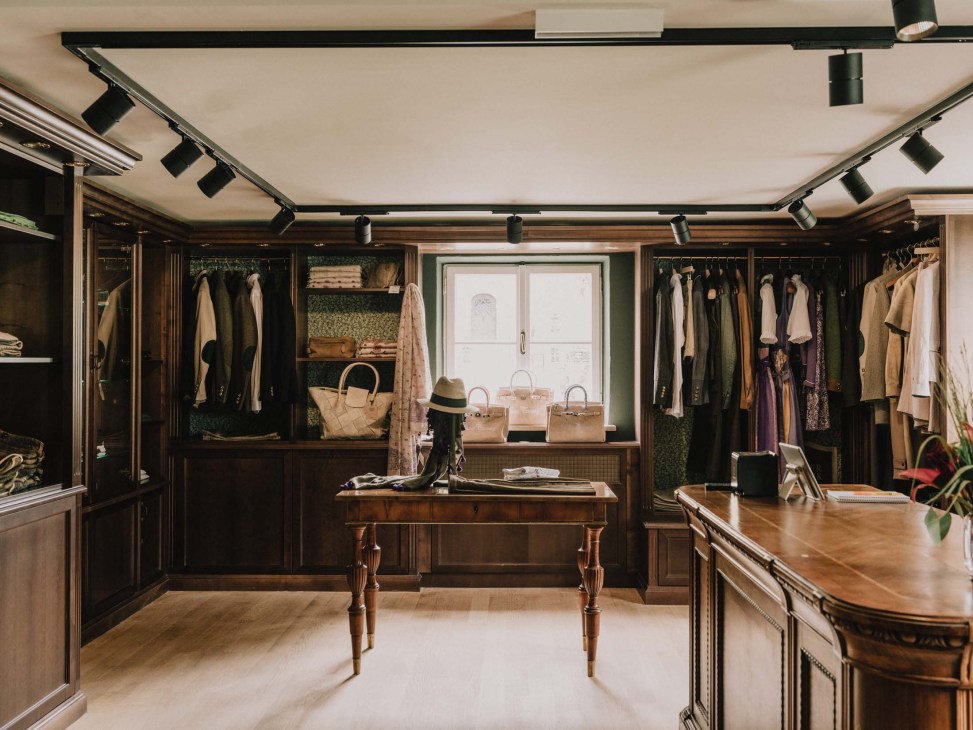
It’s just a 20-minute drive from Salzburg’s main train station to Lake Fuschl but the two locations feel worlds apart. Beyond the city are the lush green meadows and mountains of the Salzkammergut region: if it looks like something from The Sound of Music, that’s because it is: this is where the 1965 classic was filmed.
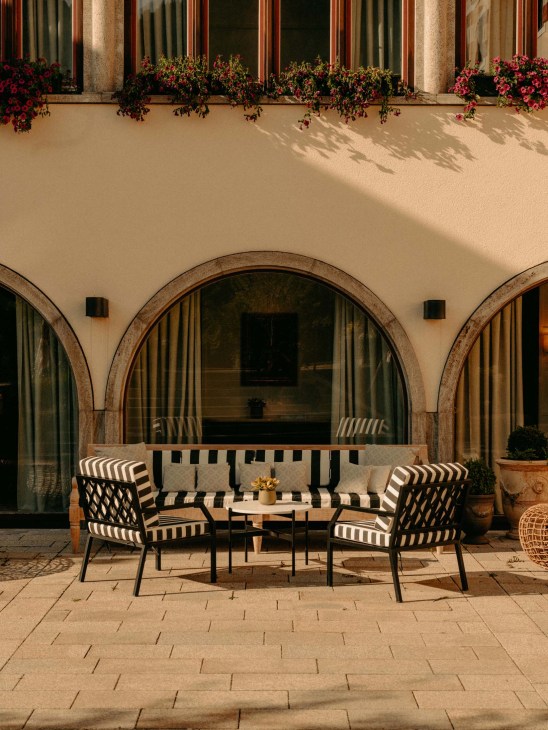
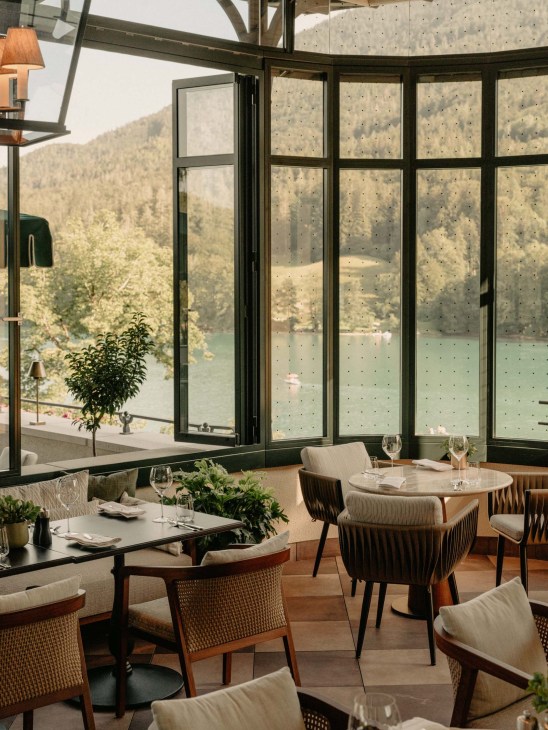
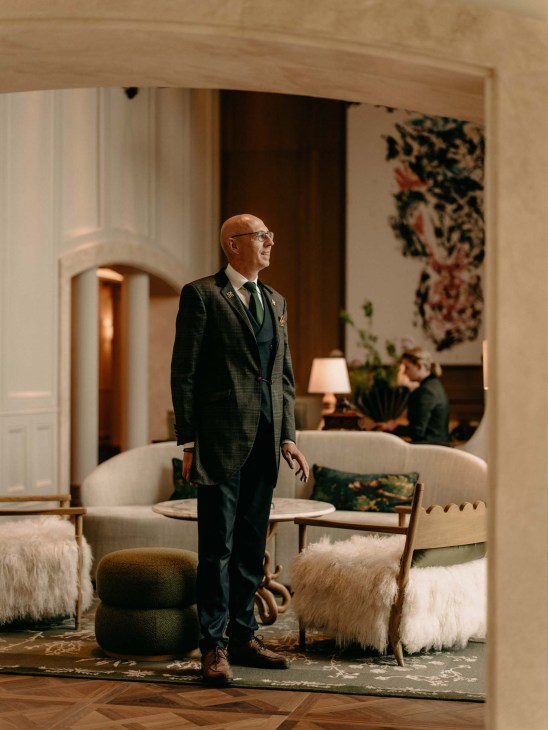
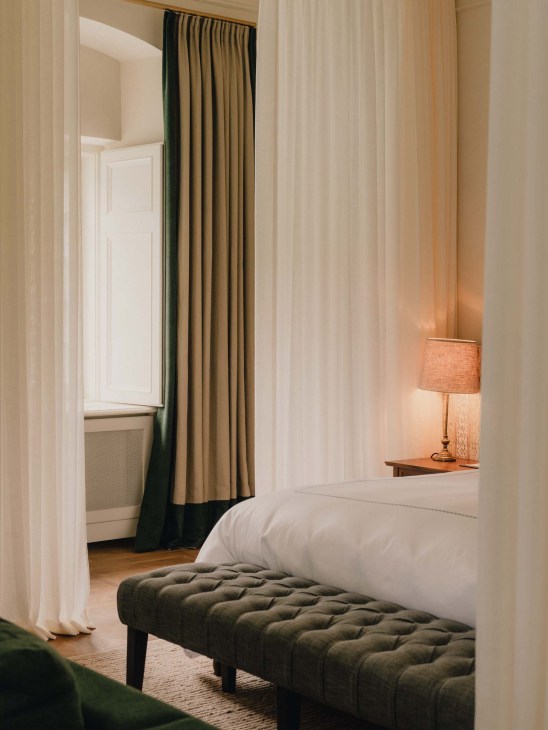
Rosewood’s latest property is its second in the country following the opening of its Vienna hotel in 2022. Fuschl’s 98 guest rooms, including its 42 suites, were fully refurbished and now feature hand-painted minibars and marble bathrooms. In the suites on the upper floors of the historic tower, old walls have been uncovered and layers of paint removed to reveal original 15th-century ornamentation. In the lobby, antlers nod to the lodge’s history, while the corridors are lined with old paintings; the hotel has the world’s largest collection of “old masters” outside a formal museum.
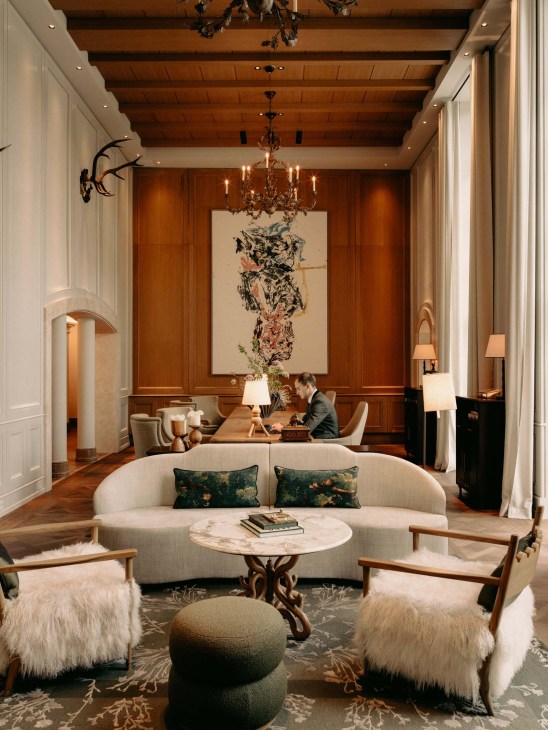
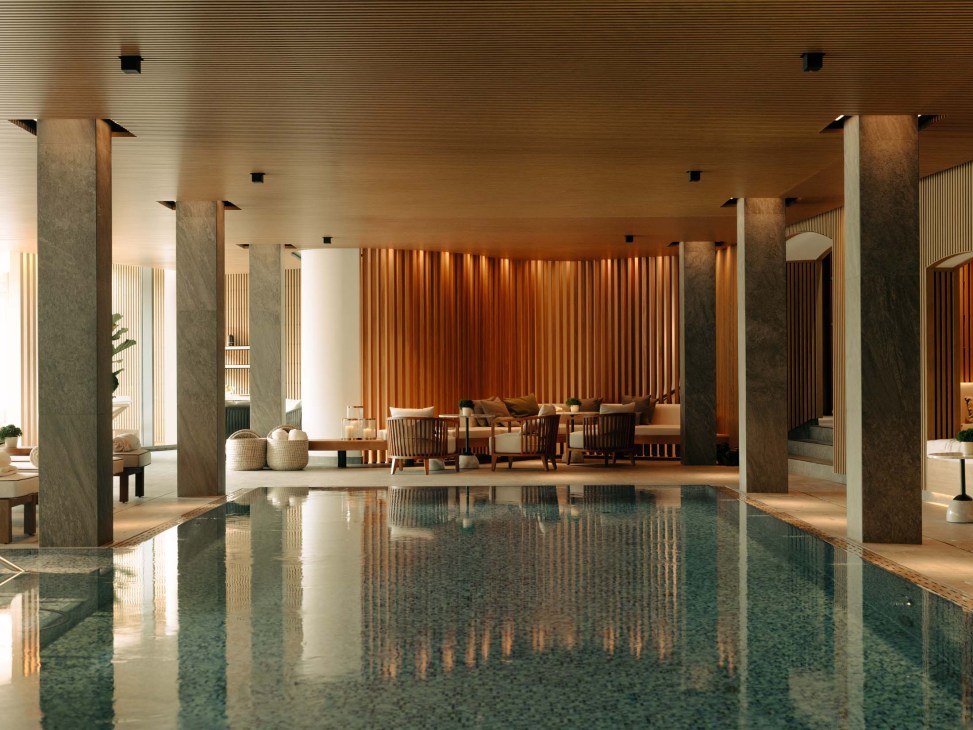
From after-hours tours to hot-air balloon rides, forest walks, herb picking and umbrella-making, Fuschl offers guests plenty to enjoy. Most people, though, are here to idle, either on a slow ride in the hotel’s own gondola or by indulging in a little pampering in the vast spa, which boasts indoor and outdoor pools, three saunas and a steam room.
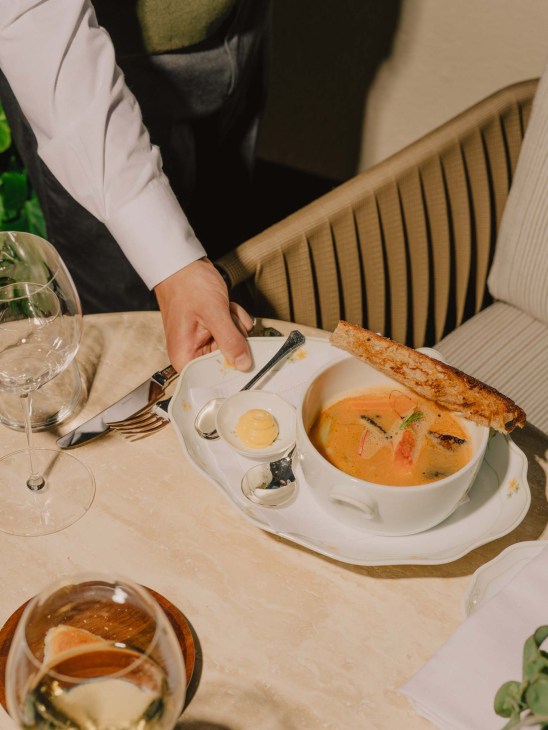

There’s a parlour for afternoon tea (try the pastries; you’re in Austria), a Jausenstation serving cold cuts and cheese, and a fine dining outlet that pays tribute to the region’s diverse flavours. Dishes such as Styrian mountain prawns (really) with sauerkraut beurre blanc are accompanied by more than 1,400 wines that have slept in the castle’s cellars for decades, waiting to be uncorked.

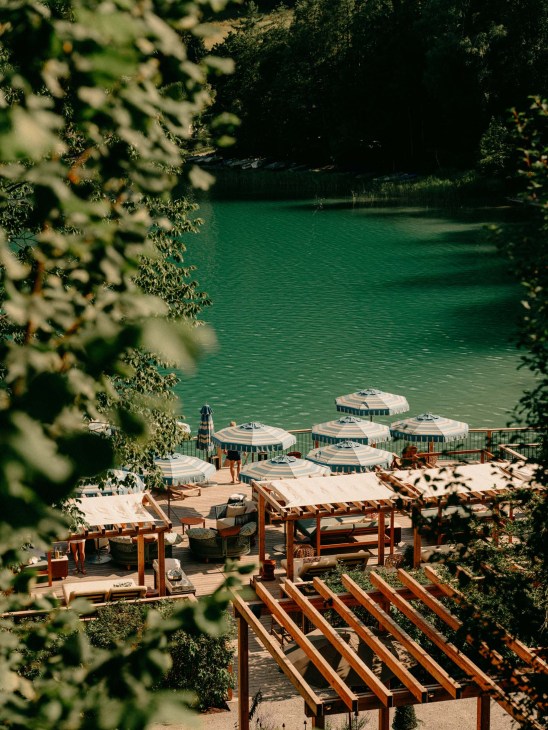
For those who prefer to keep to themselves, the hotel’s Saint-Tropez-style beach club serves oysters and lake trout ceviche. The expansive deck, well suited to lounging and diving, is a first for the region. “We underestimated just how popular it would be,” says Hemmann. “So far, hardly anyone has left the hotel. People are at the lake from morning to night.” We can’t blame them. rosewoodhotels.com
Fuschl address book
Eat
Seehotel Schlick
As well as being the chef, the owner of Seehotel Schlick fishes daily and serves the catch in a lakeside beer garden.
seehotelschlick.at
Drink
Café Zauner
Set in the picturesque spa town of Bad Ischl, about 30 minutes from Fuschl, this café offers a range of drinks and pastries – don’t miss the Zaunerstollen.
zauner.at
Visit
Gerald Aichriedler
This experienced carpenter offers workshops on how to craft skis and paddleboards.
geraldaichriedler.at
Fuschlseerundwanderweg
Follow the lakeshore trail through forests, meadows and pastures and stop for a skinny dip at a nudist beach.
First-class fashion for the road out of summer

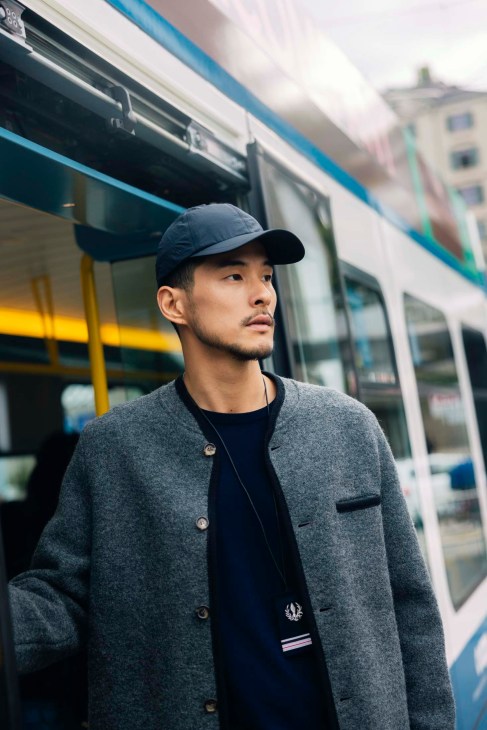
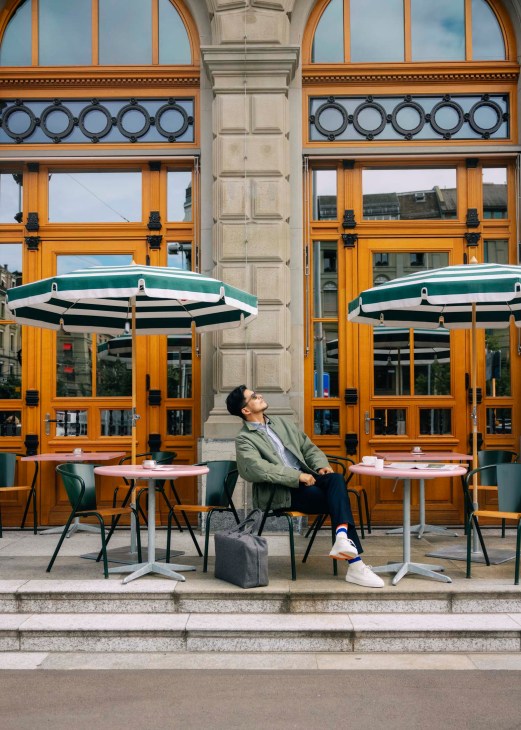





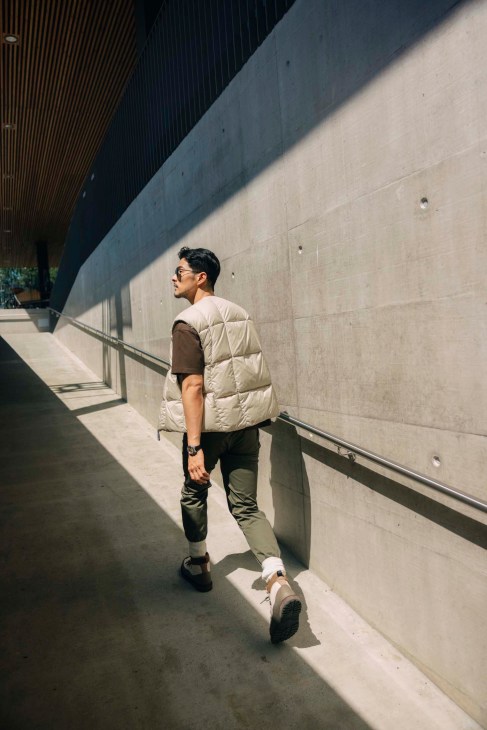
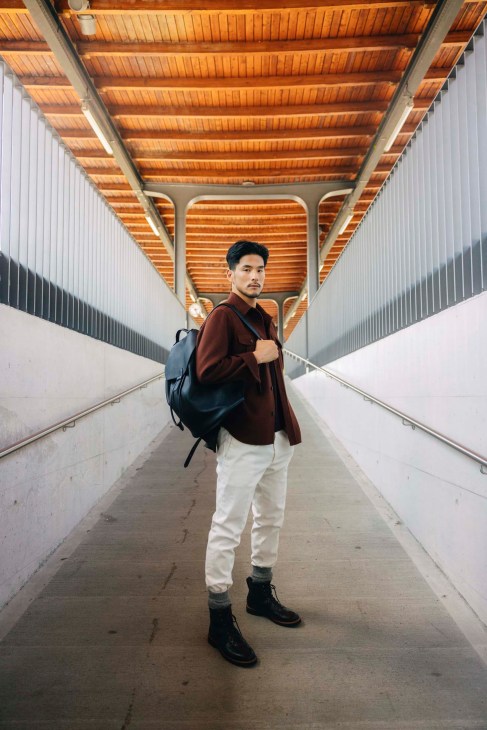
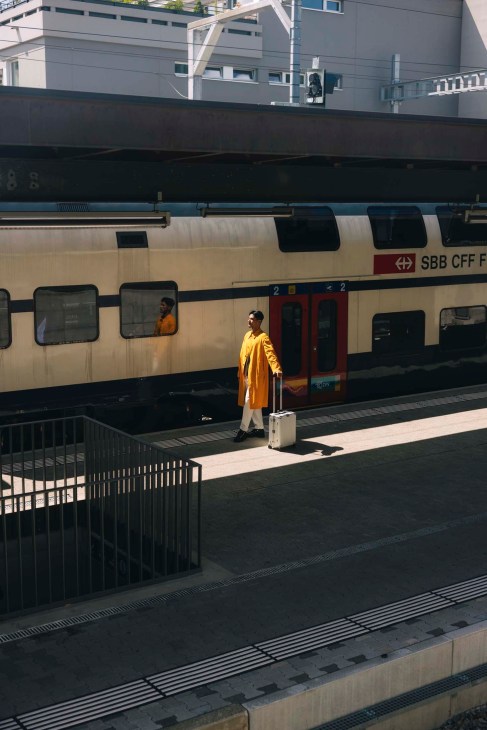
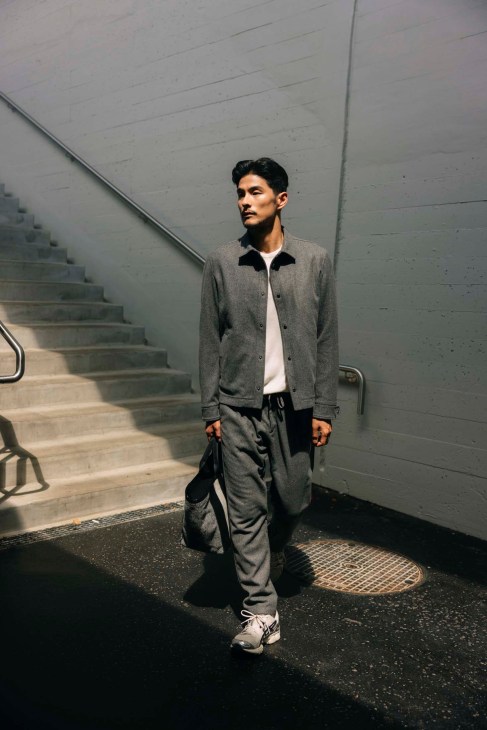
grooming: Zakiya Jordan-Singleton
model: Takayuki Suzuki
Lithuania’s Song Celebration marks a century of music, culture and unity
In the car park next to Vilnius’s Twinsbet arena, boys and girls in their finest attire are balancing instruments under their arms and looking over laminated sheets of Lithuanian marching music. It’s not long before everyone is due on stage and, over at a nearby catering tent, more musicians are loading up on pancakes, yoghurt and fruit. Alongside amateur youth groups from all over Lithuania, tonight’s concert also features the Baltic state’s professional military bands. Egle Juciute, dressed in a blue-and-red 18th-century-style uniform complete with gold-trim trousers, has been playing in Lithuania’s Military Orchestra for 14 years, an ensemble normally dispatched to welcome international dignitaries. “It’s a responsibility to be here and to play,” she says, flute in hand. Crowds have gathered to watch and the show is beamed around the country via the state TV broadcaster.
The wind-and-brass band evening is just one event in a huge, week-long extravaganza known as the Song Celebration, which takes place every four years. The event, which marks its centenary this year and is also observed by neighbouring Latvia and Estonia, is recognised on Unesco’s lists of intangible cultural heritage. It is known for the staggering number of participants; in Lithuania’s case, 37,000 performers are taking part this year.
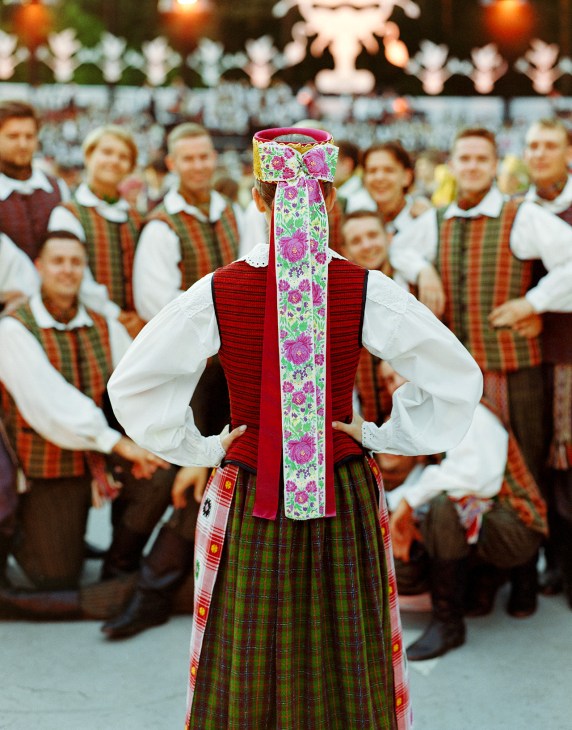

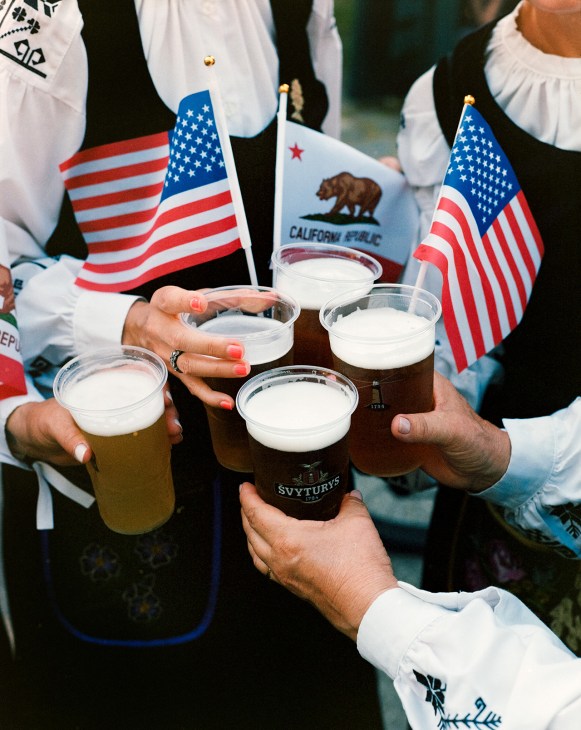
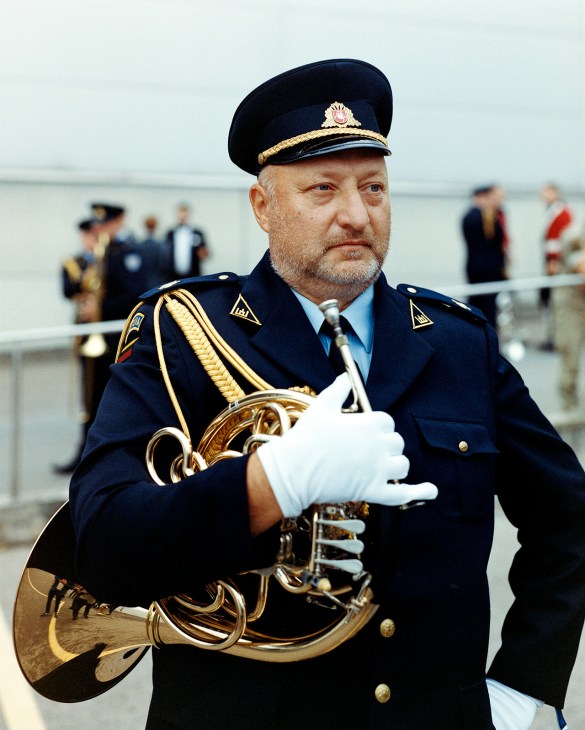
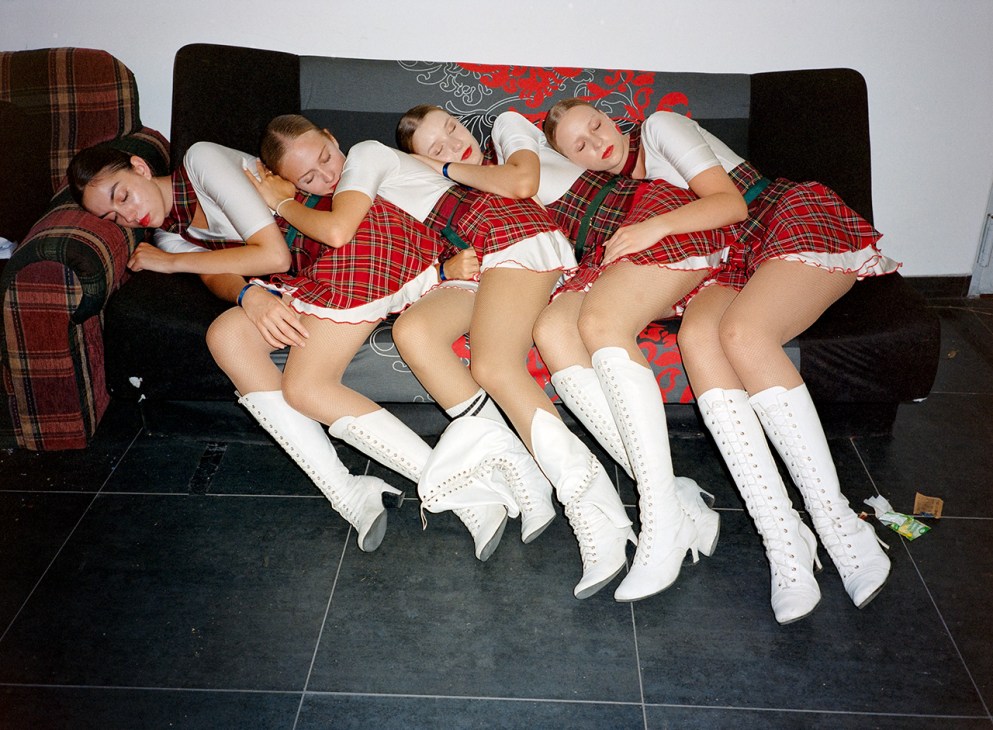
Tonight’s concert, introduced to the repertoire just over a decade ago, is an acquiescence to the growing popularity of brass bands. Under the bright lights of the indoor basketball arena, there is a mishmash of outfits, including a group of young children dressed in black, complete with yellow rain boots, who run onto the stage as bands play behind them. Primed, prepped and beaming, there are barefoot girls in flower headdresses and others in red tartan who are shaking pom-poms, making it feel a little like a US beauty pageant.
But it’s a piece of music set to a video and shown on a screen behind the stage that gets to the heart of what the Song Celebration is all about. It shows the Baltic Way – the peaceful, pan-Baltic human-chain protest that was staged against Soviet occupation in 1989. It stretched for hundreds of kilometres and was part of the “Singing Revolution”. Rich in symbols and symbolism, it’s a chance for independent, democratic Lithuania to get misty-eyed and in touch with its history. To finish the night, everyone gathers for a final rendition of “Kur giria zaliuoja” – an unofficial anthem that mentions Lithuania stretching “as long as the river flows” – as the night’s TV presenters put their arms around each other and sway, one of them gesturing that she has goose bumps.
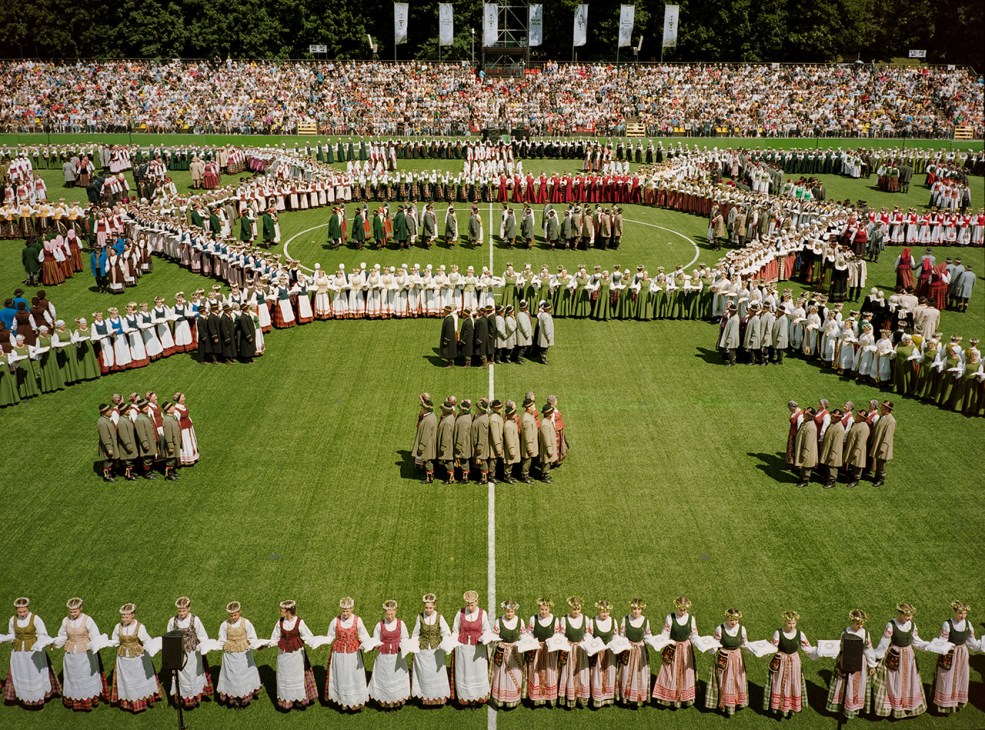
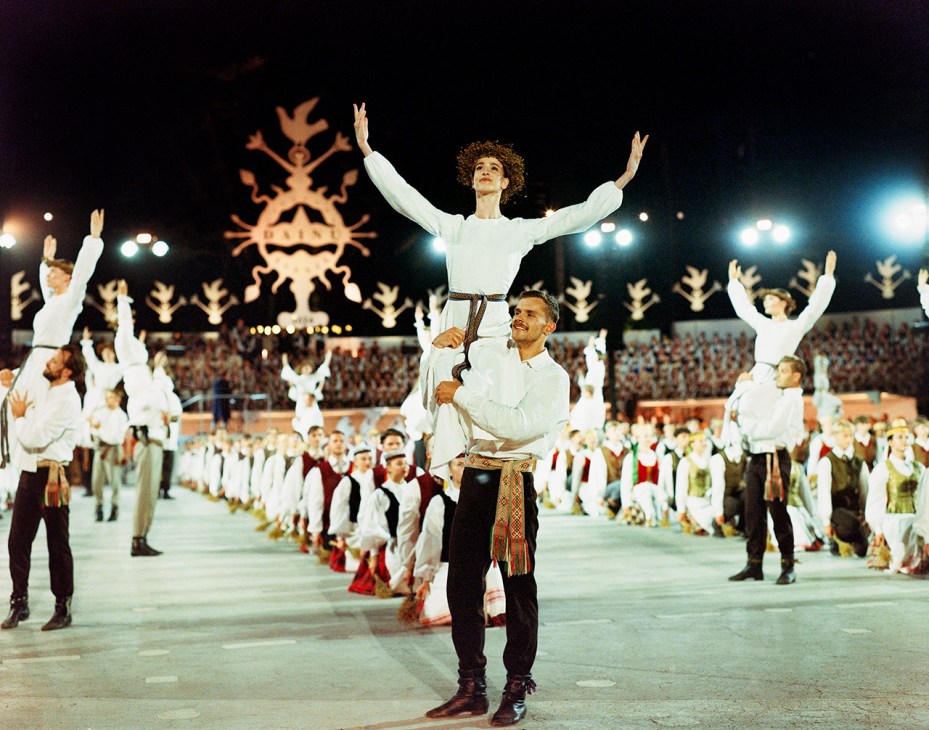
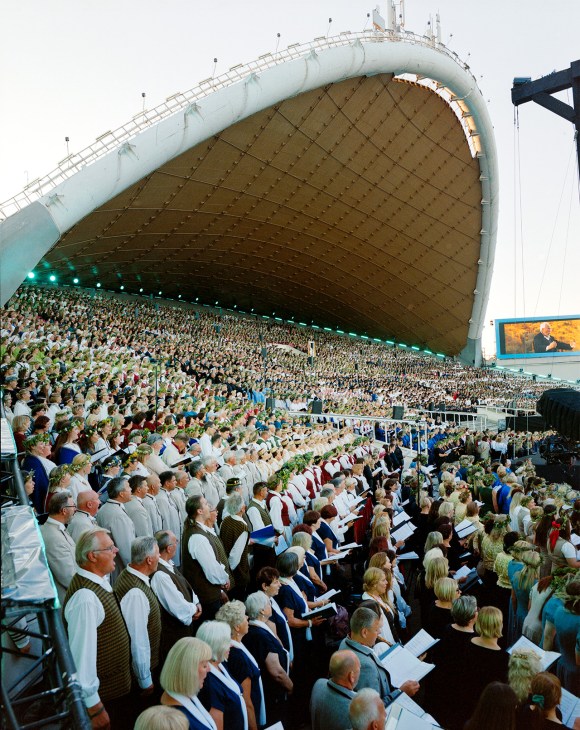
The self-reflection reaches fever pitch on the last two days, when everyone dons traditional dress. First there is the football-stadium dance performance which, at one point, has 9,000 people linking arms and moving in lines and circles on the pitch at the same time. Some of the people streaming into the stadium at speed occasionally lose the grip of the dance companion next to them, causing a panic to catch and rejoin the chain. The event culminates with song night, which features several hundred choirs and 12,000 people lined up in rows on an open-air stage that was custom-built in 1960 in wooded parkland. The same stage also stands in Estonia’s capital, Tallinn. The music is often traditional and folkloric but there is also space for new compositions, which often reference Lithuania’s pagan past.
During one of the choir rehearsals for what proves to be a dizzying organisational and choreographic set piece, Saulius Liausa – choir conductor and the director of the Lithuanian National Culture Centre, which runs the Song Celebration – plants an oak tree on the edge of woodland near the stage. Ripe with symbolism, it’s designed to tie in with this year’s theme, which is “May the green forest grow”. As people take turns to shovel earth around the sapling, one heralds Lithuania’s independence while another salutes the young generation and the hope that they might sing the same way for another 100 years.
Liausa says that in a small country like Lithuania, with a population of about 2.8 million, it’s essential to safeguard culture. “We have all kinds of laws and documents to protect nature,” he says. “But what we sometimes forget is that culture is also a fragile thing that needs protecting and that’s what we want to draw attention to.” He says that there are hundreds of customs and traditions that have been lost. And the Soviet past, in which the Song Celebration was hijacked by the occupiers, is still fresh in memories and painfully brought back to the surface by Russia’s invasion of Ukraine. “The wars that are happening in the world, Ukraine included, are about culture,” he says. “It’s language and culture that people are fighting for, not money or land as such. What we’re seeing in Ukraine – and what we also think here in Lithuania – is that a nation that really loves its culture and itself is very, very difficult to defeat.”
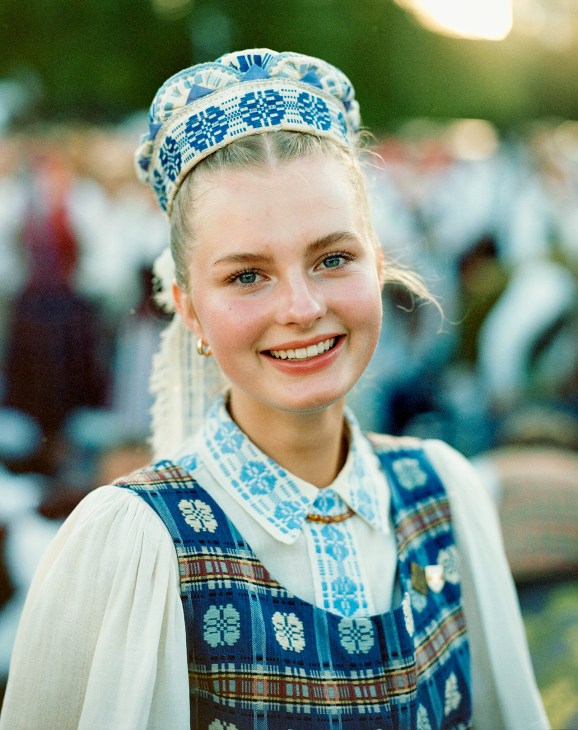
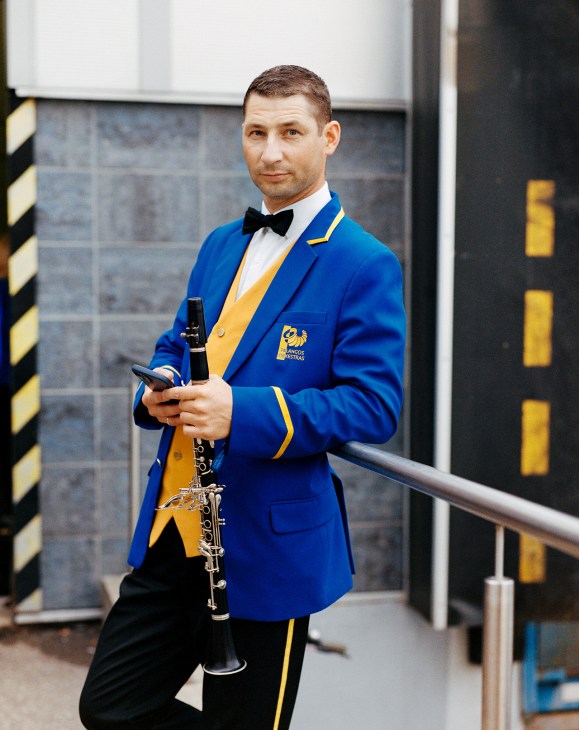
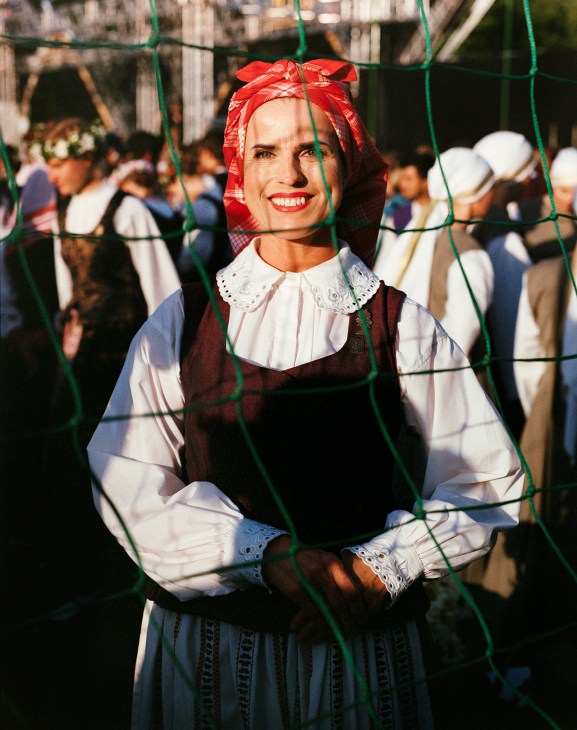
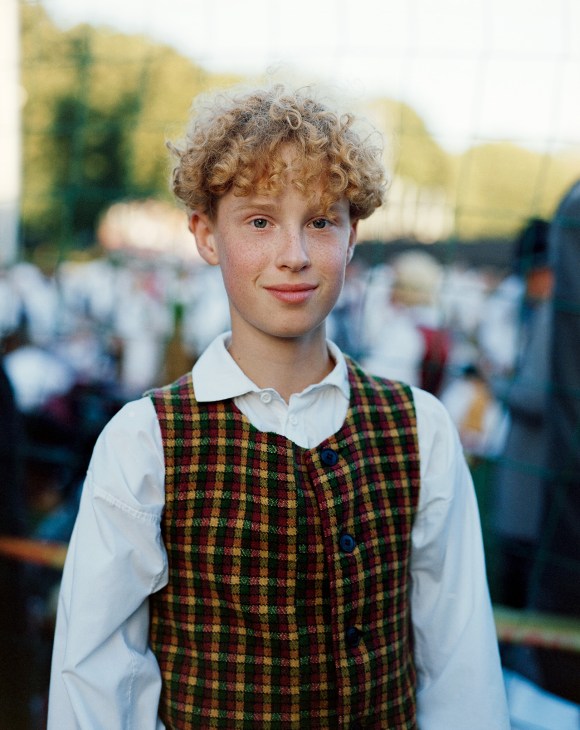
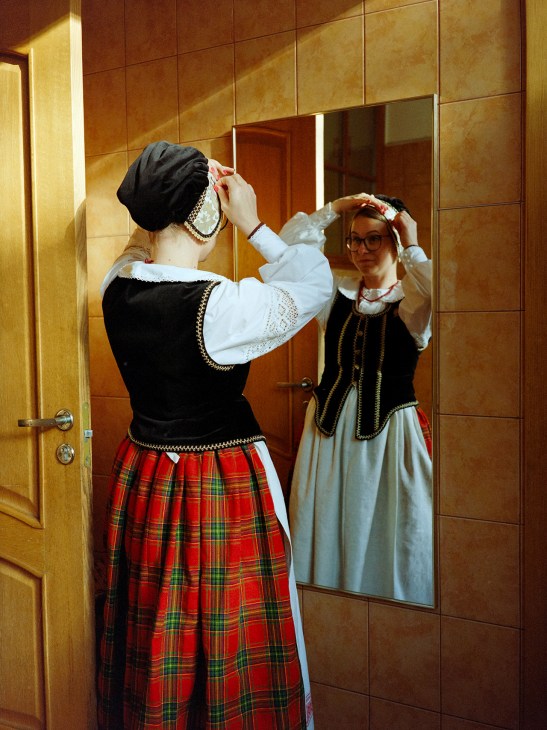
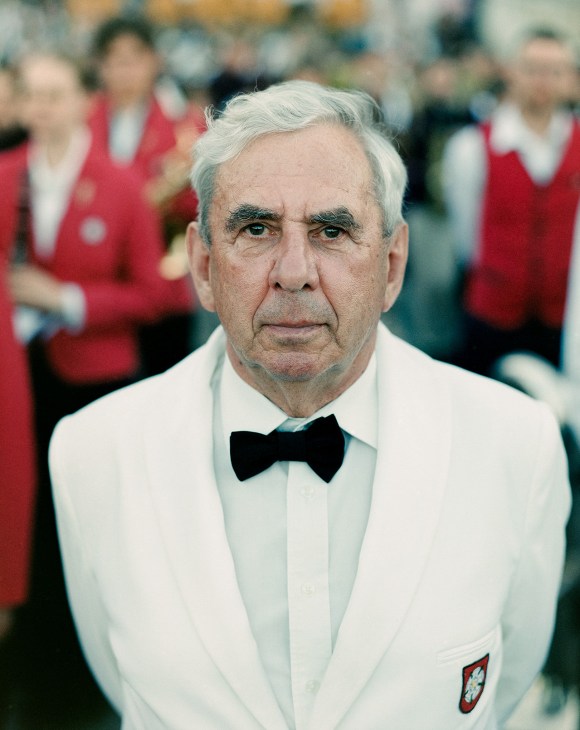
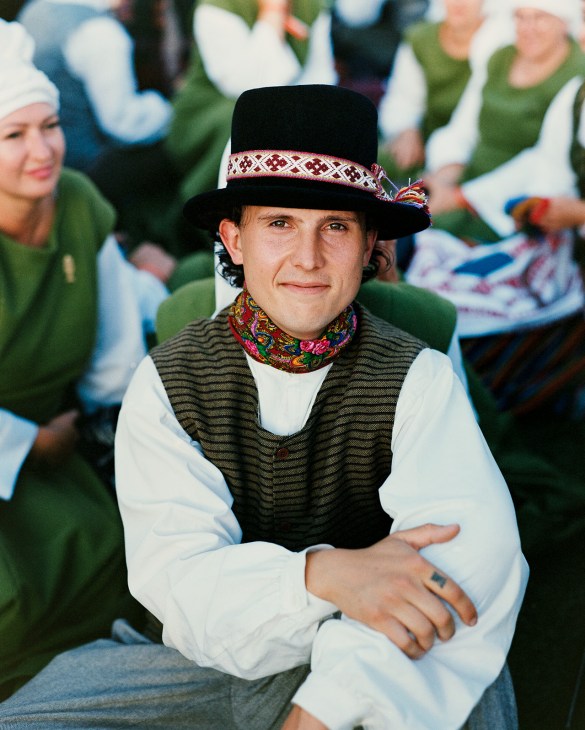
Given that view, it’s not surprising that the state plays such a top-down role. The celebration, which costs about €5m, is paid for by the country, with almost every procurement going out to tender; the provider offering the lowest cost wins. The price of helping to support a year-round ecosystem of dance and song clubs around the country, where people practise the repertoire, is harder to estimate but it needs support. While performer numbers have managed to stay stable, the number of music groups has been declining, even if the membership within those remaining is growing.
Alongside the culture ministry, education, internal affairs and foreign affairs all play a part. Municipalities send delegates and help parents to chaperone groups of children, as well as providing buses to get people to the capital. The state spends €1.1m on keeping bellies full, dishing out 250,000 portions of food, and it turns schools into accommodation, which become makeshift encampments for a week.
Monocle visits Vilnius Liepkalnis School, where more than 200 children and adults, mostly from Pasvalys, a city near the Latvian border, are either playing basketball outside, resting on green camp beds or reapplying make-up ahead of the evening’s celebrations. Ruta Jaruseviciene, from the municipality, shows us around. Remarkably, given the number of people temporarily living here, all is going smoothly, she says, even though six children came down with a mysterious vomiting bug the day before. Jaruseviciene offers us home-brew from several kegs in the makeshift bedrooms (the Pasvalys flag features a bull and hops in a nod to its beer tradition), while someone else is soon proffering a plate of lasiniai – seasoned and smoked pork served in slices. “I thought that the children would be tired after a full day,” says Jaruseviciene. “But they eat and then go wild!”
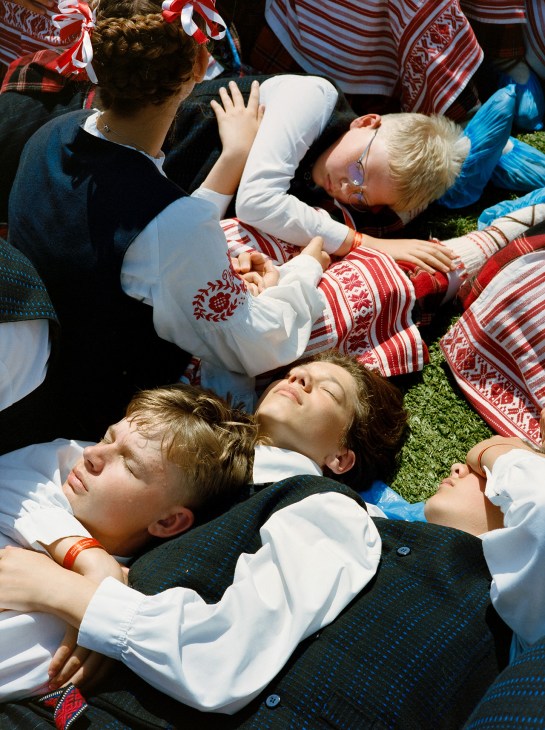
During the dance day, performers pack into a backstage area to sit on rugs or pass out under the sun from the excitement and exertion. A German flag tacked to net fencing and a sign for the Chicago Suktinis – a dance troupe made up of Lithuanian American teenagers – point to the 2,000 performers from Lithuania’s diaspora who flock back to the motherland to be a part of this mass showing of collective memory. After the show, Monocle meets a dance group from Scotland, which includes an Indian with no link to Lithuania and an Argentine called Santiago Markus from Berisso in Buenos Aires province, whose grandfather is the son of Lithuanian immigrants. “It’s something I do to represent him,” he says of his second Song Celebration.
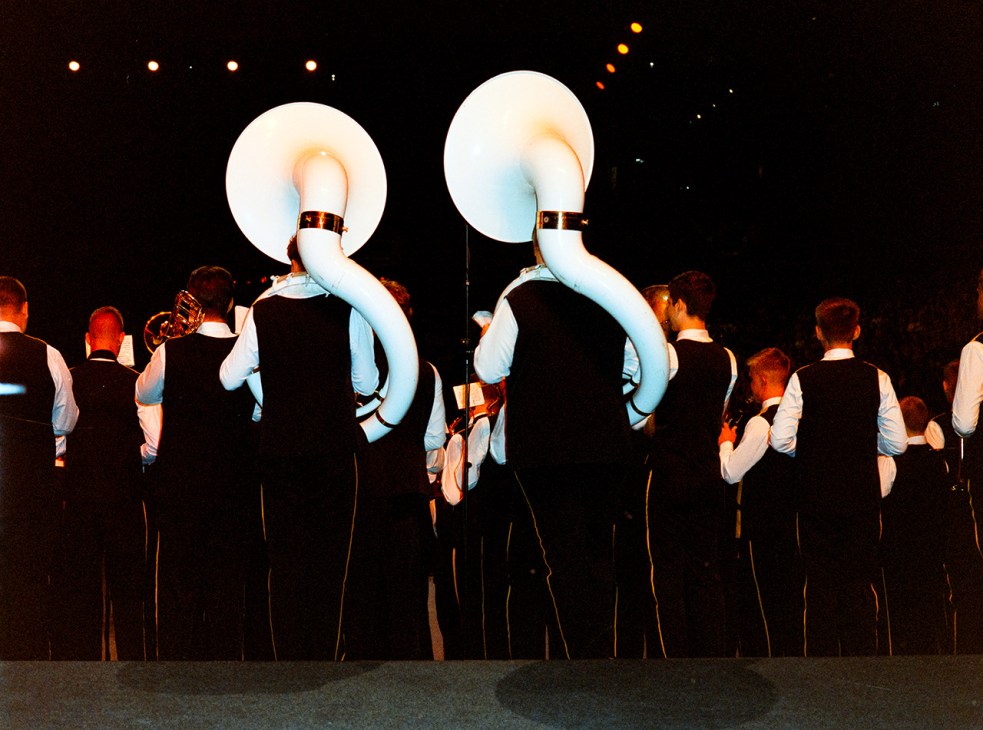
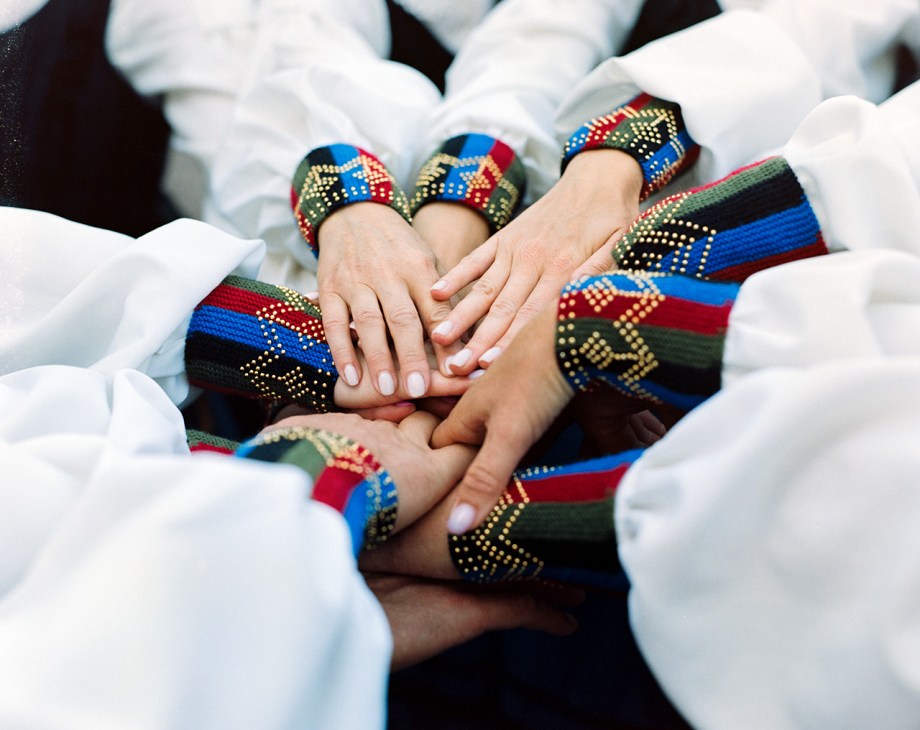
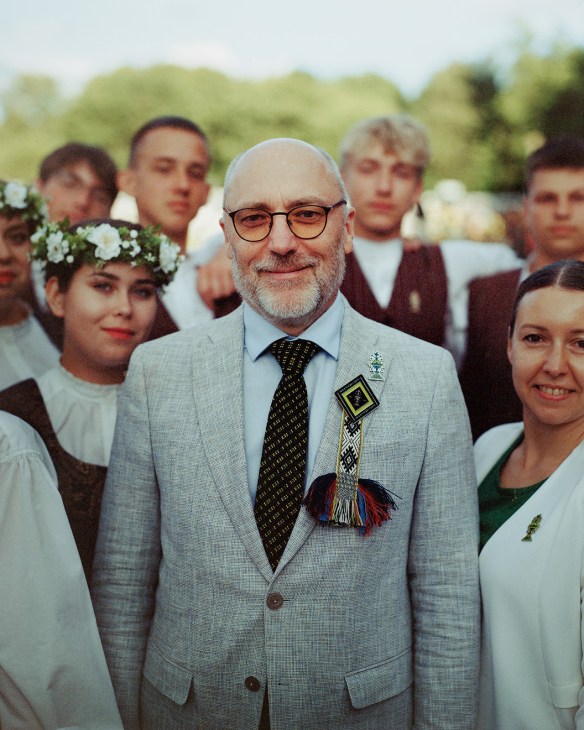
Milling in the crowds is Simonas Kairys, Lithuania’s culture minister, who is dressed in a traditional shirt from Dzukija in the south of the country. The minister calls himself a liberal and a globalist but he says that it’s important to show where you’re from. So, given the messaging and what can be seen as an interventionist approach towards culture, is this a political event? “Visit the Venice Biennale and you’ll see how art is affected by current events,” says Kairys. “This isn’t political but it’s the basis of statehood, humanity, a peaceful world. When you’re singing, you’re not fighting with somebody.”
Some have reservations about elements of the Song Celebration, which are clearly designed to rouse the nation. “Too much is made of nationalism,” says Nerija Putinaite, associate professor at the Vilnius University Institute of Political Sciences. “The focus should be on civic, not ethnic identity.” Still, you would be hard-pressed to find anyone in the crowd, from cheering family members to someone who has travelled here from abroad, who isn’t overwhelmingly enthusiastic about the event, which has an atmosphere that often verges on the euphoric.
By the time the last night of celebrations approaches, the mood is festive, with people tucking into sausages from food stalls and sipping beer or kvass, a sweet malt drink. Choir music – including catchy numbers such as “Zmones ant kalnu” (“People on top of hills”), conducted by one of the evening’s 31 conductors, all greeted like rock stars – can be heard well past midnight. The thousands of choral members are visibly elated, pleased to have eyes on them. On several occasions, a Mexican wave sweeps through the choir, with songs often finished with a collective ripple of jazz hands. The crowd responds, some singing along, raising phones where once there would have been lighters and enthusiastically applauding.
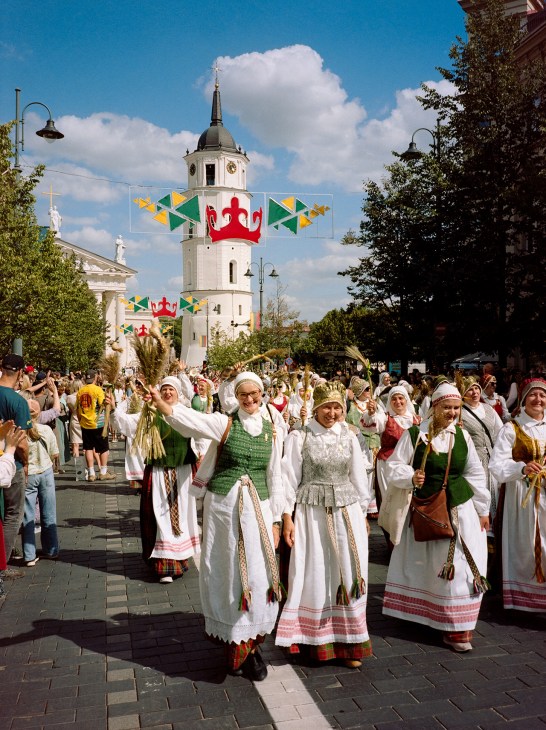
To arrive at the stadium, the performers had assembled in Vilnius’s Cathedral Square and walked for several kilometres in a giant procession – often accompanied by more brass bands. They were waved on by people lining the streets, some of whom were perched on grass embankments to get a better view. Inside the park just before the clearing where the stadium stands, Micheline Beniusis is sitting on a bench, wearing a lilac dress, with a crown of flowers in her hair. Born in Montréal to Lithuanian parents, she is in her late eighties, which doesn’t seem to get in the way of her flying over to join what is a physically demanding event alongside three grandchildren and two nephews.
“It’s very deep-rooted,” she says of the festivities, as the procession stream past her. And then her group of maple-leaf flag-wavers arrives, a sea of lilac and flowers, ready to pick her up to join the night’s mega-choir. She’s off with a wave of her hand – ready to belt her heart out in the name of Lithuania.
Interview: Sara Zewde on how she is designing for a changing climate
Landscape architecture is often viewed as a “nice to have” design discipline, one that’s focused on making projects look pretty once architects have finished their work. It’s a notion that Sara Zewde is turning on its head. The New York-based landscape architect’s work for Studio Zewde – the practice she founded in 2018 – merges her work with social and environmental causes.
The young designer has been earmarked as a generational talent thanks to projects such as the installation of temporary public spaces in Seattle and a winning commission to shape the gardens of the Dia Art Foundation’s gallery in Beacon, New York. Here she tells us about the importance of one of design’s lesser-heralded fields.

How did you arrive at the decision to practise landscape architecture?
Architects often say, “I started drawing houses when I was five.” But landscape architects typically don’t have a straight career trajectory. I initially studied sociology, statistics and urban planning but landscape architecture emerged, for me, as a discipline that could take on some of the major challenges of our society and engage culture at the same time. I also cite 2005 as a shift in my thinking, when Hurricane Katrina hit the Gulf Coast, where I’m from. It affected me deeply and awakened me to the importance of design and urban planning.
What can the discipline do better?
Historically, landscape architecture hasn’t necessarily been practised to its full potential. It has been seen as a sub-discipline, as a new field relative to architecture. But people have been shaping land for all of history. There’s a lot of latent genius in indigenous histories of land design and management from across the planet that could lend itself to contemporary landscape architecture.
Tell us about your planned work on the Dia Art Foundation’s Dia Beacon site and why the museum approached you to redesign its grounds.
Dia Beacon is in the town of Beacon on the Hudson river. At the moment, visitors can’t access the eight acres [3.2 hectares] of land to the south of the gallery buildings, where there’s a flat lawn ringed by trees and a railway running past. This landscape needed to be addressed because when Hurricane Sandy hit in 2012 there was flooding on the site. Nothing disastrous happened to the collection but it showed just how vulnerable it is to climate change. Before the railway was built, separating the site from the river, this property was a part of the floodplain. That is why the flooding happened – and will continue happening.

What can visitors expect when it opens in 2025?
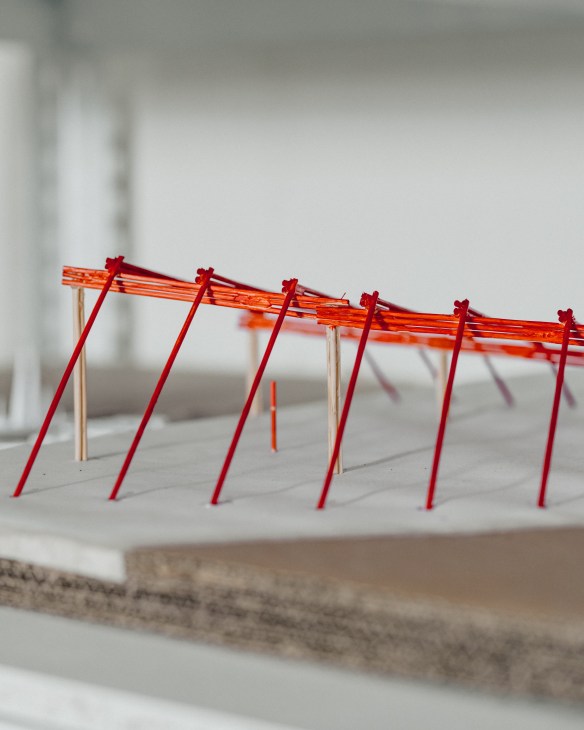
We’ve designed sculptural landforms that highlight the historic pattern of water moving from east to west on the site. These landforms also serve as basins for water when it does rain or flood. Aside from relieving some of this environmental pressure, those basins are a way for people to engage with a changing climate. One hundred years from now, when we have very different levels of precipitation, the experience of visiting the site will be different. We’re also converting more than four acres [1.6 hectares] of lawn into native meadow. There’s an emphasis on seasonal expression across the planting palettes of the meadow, so there will be a lot in the landscape in terms of texture, colour and seasonality.
Is landscape architecture as a field going in the right direction when engaging with social and environmental issues?
Frederick Law Olmsted, who’s often understood to be the founder of our profession, spent time travelling the southern states in the 1850s, where he was commissioned by The New York Times to write about conditions of slavery. He came back with strong views about the role that public space plays in a democracy. From there, he launched the profession of landscape architecture. So these aren’t new ideas; they’re the origin of the profession. We need to keep making progress in terms of thinking about the role of public space in a civic society.
The architectural diplomacy of Swiss embassies in Singapore, Cuba and the UK
Embassies are more than just outposts in foreign lands. They serve as diplomatic hubs and cultural centres, playing a role that extends beyond waving flags and displaying national emblems. We visit three Swiss embassies to see how the confederation’s ambassadorial outposts are not only functional buildings but architectural ambassadors, projecting values and fostering understanding between nations.
1.
Raising the standard
Singapore
The newly renovated Swiss Embassy in Singapore is striking yet unassuming. Its entrance is a low-slung white gate flanked by pale concrete walls separating it from a quiet, tree-fringed road. An unobservant passer-by could mistake the structure for an art gallery or the home of a contemporary architect.
From the street, a gently sloping path leads to a bright white, single-storey building wrapped in floor-to-ceiling windows with one side of its roof jutting tent-like over the front doors, a corner stretching towards the sky. The impact is simple but dramatic. From outside, the effect is akin to that of a welcome mat. Heading up the drive, the visitor feels that they are being invited in. Inside, the result is abundant natural light – a perk for the embassy’s staff.

“The idea was to have a bungalow in nature and that means we needed to open the building up as much as possible,” says Jaime Rodriguez, who oversaw the construction as part of the team from Berrel Kräutler Architekten, the Swiss firm that carried out the project. As is standard practice for all public building projects in Switzerland, the job went to the winner of an open competition, which was held in 2019. Berrel Kräutler Architekten’s vision for the embassy beat 53 others and the architects got to work.
The Swiss Embassy had occupied the same building in Singapore’s Bukit Timah district for 35 years when the time came for an update. Decades of fierce equatorial sun and storms had weathered the building but its foundations were sound. Rather than tear it down and start again, the embassy opted for an environmentally friendly renovation. “We kept 90 per cent of the old concrete structure,” says Rodriguez. “It’s important not only to be sustainable with materials, but to keep as much as possible. That’s what we did for this embassy.”
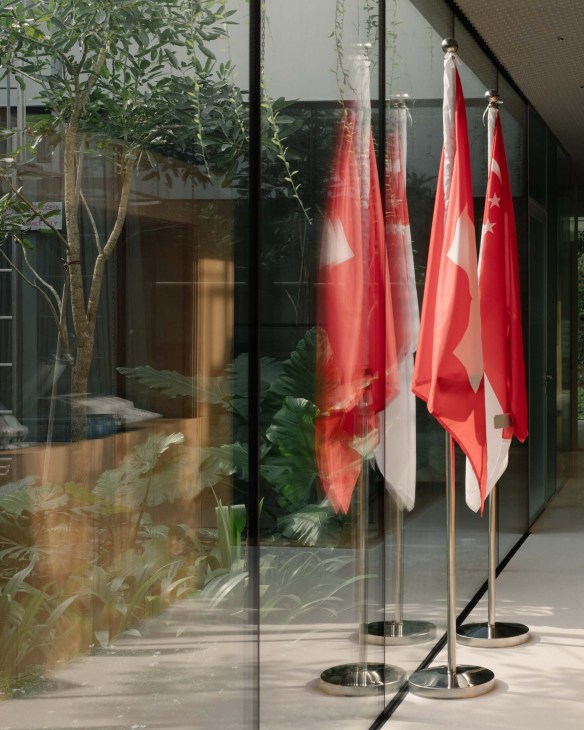

The total office space was expanded to accommodate 35 people, from a previous maximum of about 10. Solar panels were added to the new roof, helping the embassy to generate a substantial part of its energy in-house and powering the new EV charging stations in the garage. The renovation was completed at the end of 2023.
“I am proud that we did a lot to reduce our energy consumption,” says ambassador Frank Grütter. Stepping into the building, visitors find themselves in the light-filled public area for consular services; staff sit behind glass-fronted booths, and a secure door leads to the main office, which is laid out in an open-plan format and ringed around a courtyard where plants sprout abundantly.
The ambassador occupies a corner office with glass walls; he says his favourite part of the renovation is its transparent design. “The open glass walls are a sign of the Swiss government’s willingness to be transparent and close to its citizens,” says Grütter. This is echoed by Sarah Theus-Clausen, a consular officer and interior designer. “We’re approachable as an embassy and that’s something that people enjoy,” she says.
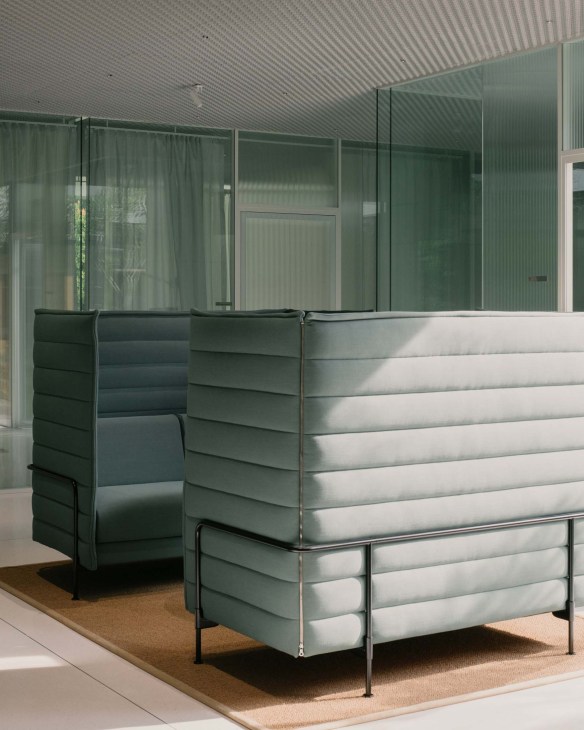

The building embodies a blend of values from Switzerland and Singapore. One challenge for the architects was how to fuse an authentically Swiss aesthetic with Singaporean architectural traditions and the local environment. They achieved it with a minimalist spin on the colonial black-and-white houses of Singapore and a careful integration of the surrounding tropical flora. Swissness is evoked in the clean lines and modernist furniture – and subtle nods to patriotism, such as the coat of arms in light relief on the walls outside.
The white walls do well in the year-round sunshine and the architects constructed the windows with three layers of insulated glass and UV filters to ensure that the ambassador and his colleagues can enjoy the rays without suffering from their heat. “Being able to work in this environment every day really gives me pleasure,” says Theus-Clausen.
2.
Home from home
Havana, Cuba
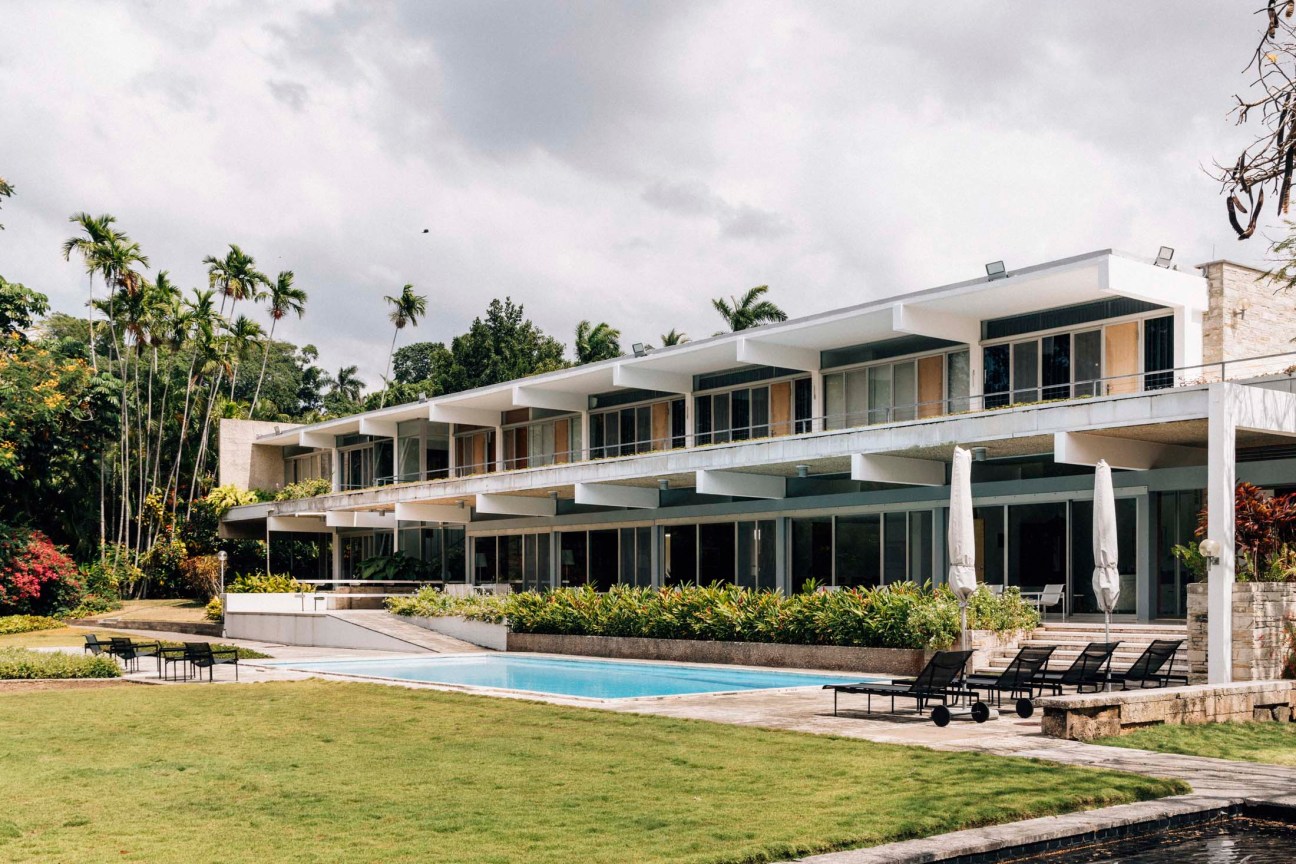
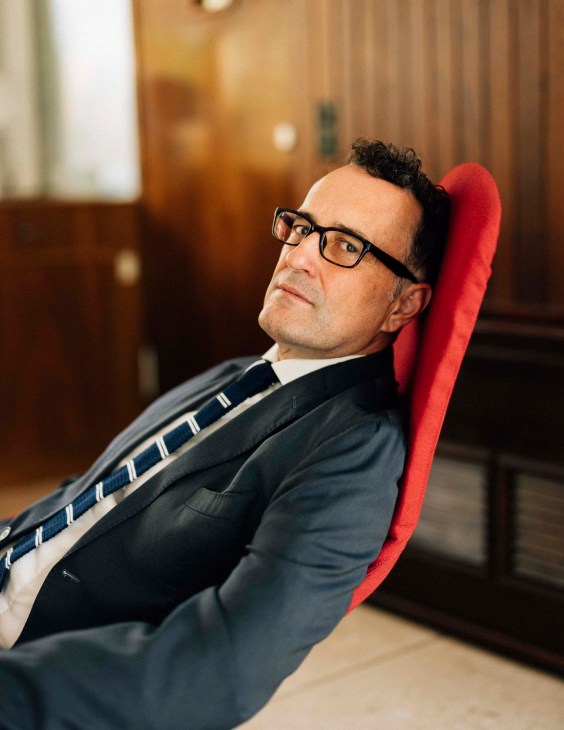
Switzerland’s ambassadors to Cuba have occupied a revered piece of modernist architecture – by late Austrian-American designer Richard Neutra – for almost 70 years. Built in 1956 in Havana’s leafy Cubanacan neighbourhood, the house was commissioned as a family home by Swiss banker Alfred de Schulthess. Ater the onset of Cuba’s socialist revolution three years later, it was sold to the Swiss government, which has accommodated its representatives there since 1961. “People love this house,” Switzerland’s current ambassador to Cuba, Stefano Vescovi, tells Monocle. Here, he explains the value of high design in a diplomatic setting and tells us about the restoration of the embassy’s gardens by Brazilian landscape architect Roberto Burle Marx.
What role does your official residence play in Switzerland’s diplomatic presence in Cuba?
There is a convening power to this house; everybody is welcome. It’s helpful to be able to meet colleagues and people from different countries, who might have different perspectives on the world, in a setting like this. While we do it in different ways, both Switzerland and Cuba have a power to convene diplomatically. There are about 120 foreign bilateral embassies here – more than almost any North American city, second only to Washington (and Brasília in the Americas). Additionally, very important people have met in this house. As ambassadors and diplomats, it is critical to have conversations that are quieter, in a venue that feels relaxed. It’s important to have a place where you can look somebody in the eye and discuss and listen, and not just engage in diplomacy that is public.
How is the house designed to host this broad range of conversation?
The southern façade has wood panelling along the exterior of the first floor and was designed to offer privacy. It depends on the politics, of course, but generally speaking we like to think of Swiss embassies as open houses with Chatham House Rules.
How valuable is the residence as a showcase of Swiss design?
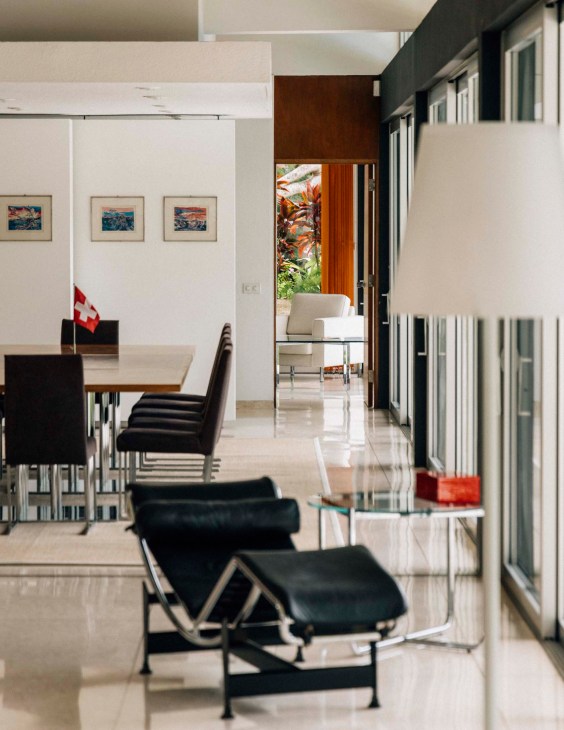
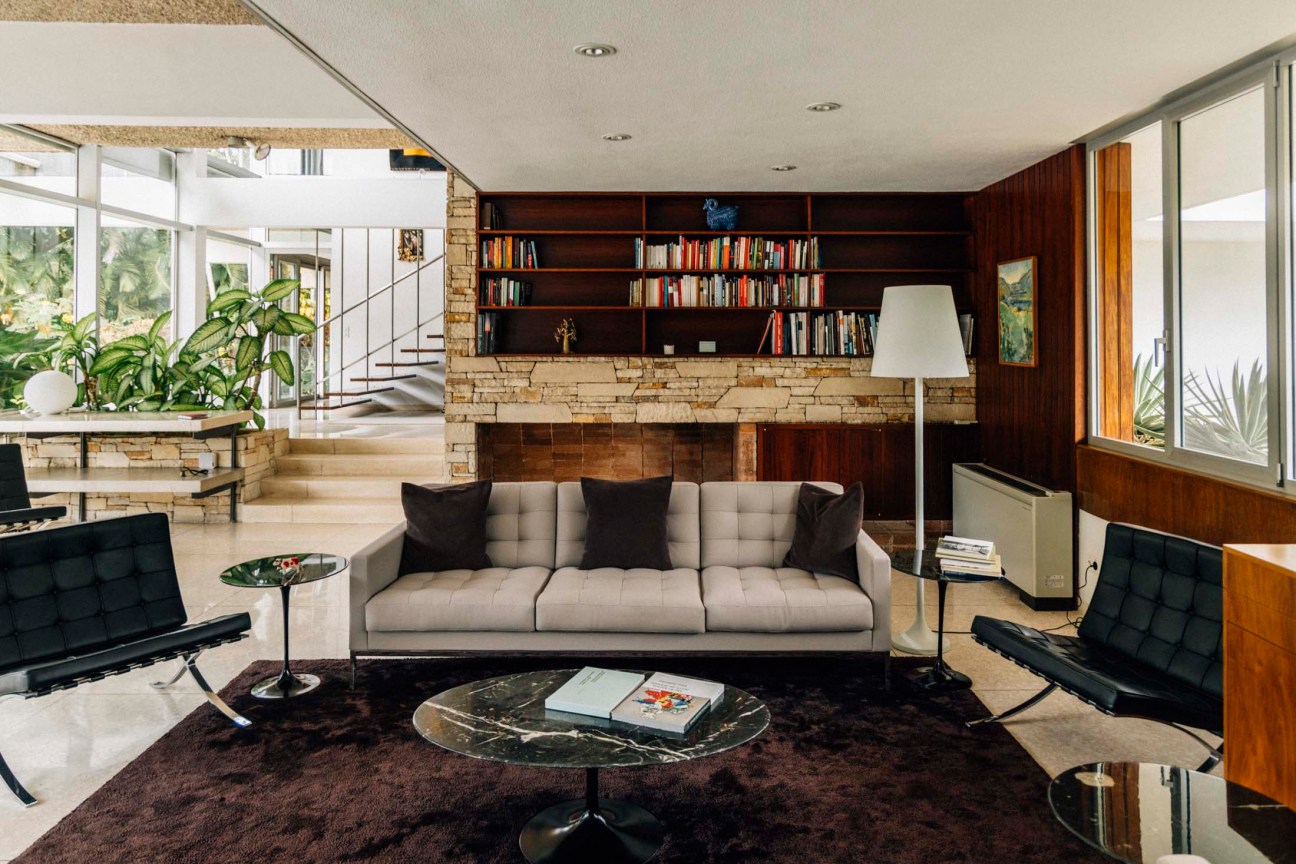
The design is really thought-through. It is very functional and there is wood throughout the house because the De Schulthess family wanted it to feel like their home in Switzerland. In 2000 the Swiss Confederation changed the furnishing concept, in keeping with the broader tradition of classical modernism. Today it is finished with pieces by Mies van der Rohe, Eero Saarinen, Le Corbusier, and pieces of art from the Swiss government’s collection, as well as rotating, smaller exhibits of art by Cuban creatives.
What relationship do the house and garden have to each other?
This was the only project that Neutra and Burle Marx worked on together in the Caribbean. To have these big names in one setting is extraordinary. It’s also the only surviving garden that Burle Marx ever made in the Caribbean. The result is that you have this visual contract between the rectangular house and the first part of the garden, which is thought-out in a rational way – like a Mondrian flower garden, where everything is very angular, complementing the swimming pool area where we host official events. There are 70 varieties of plants from across Cuba here, which bloom and flower at different times of the year. So it feels natural.
Do you think the two designers met their ambition with this project?
The combination they had in mind was a synthesis of two concepts. And it works nicely. There are fruit trees and a vegetable garden where we grow the ingredients that we use for the official receptions that we host. When our Cuban colleagues who come to enjoy the garden are here, I sometimes joke that “around this table, we might not all be Marxists but we are all Burle Marxists”. That seems to go down very well.
3.
Mission to modernise
London
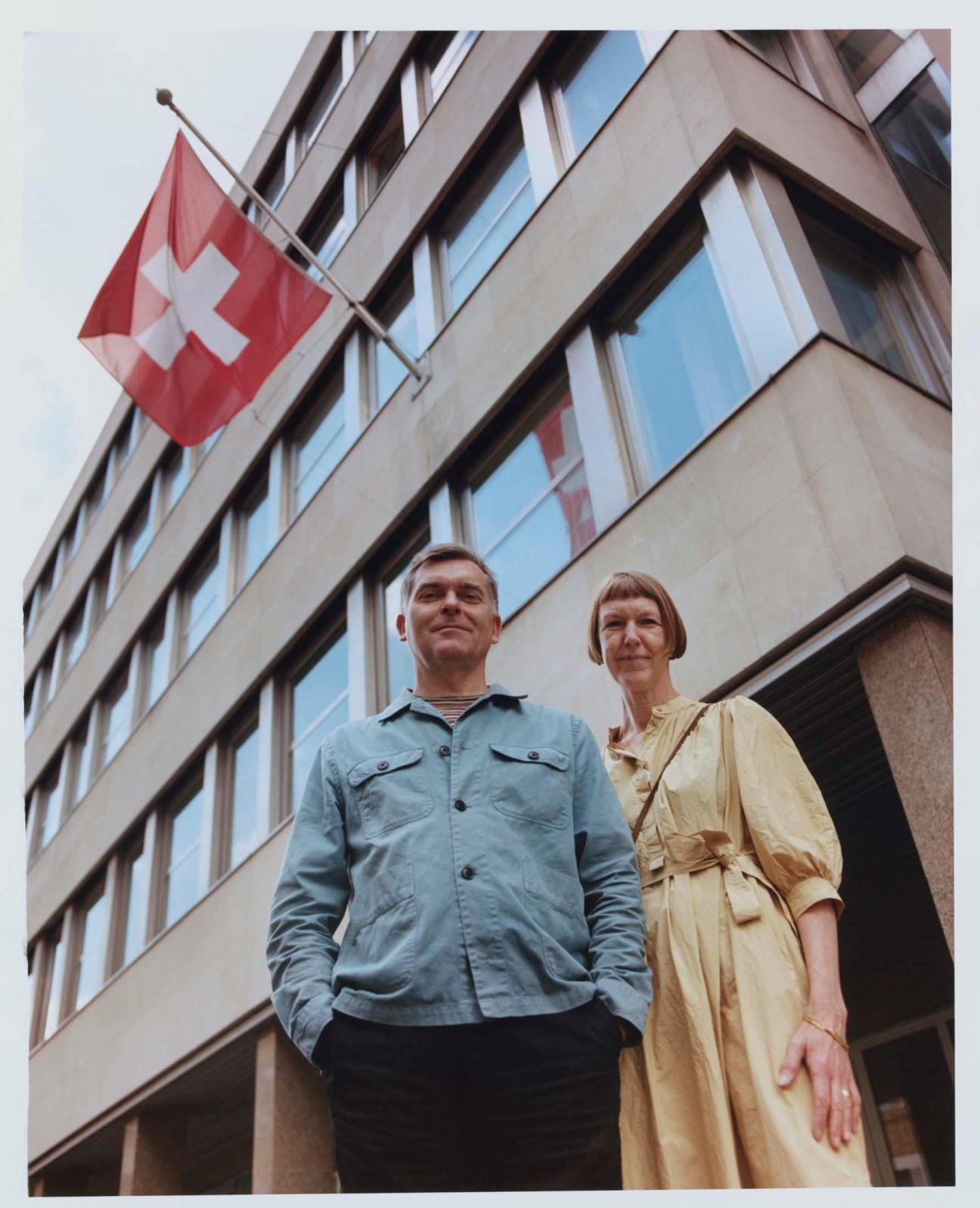
Alun Jones and Biba Dow of Dow Jones Architects are leading the renovation of the Swiss Embassy in London. Together with Bern-based Studio DIA, they have been tasked with bringing the building into the 21st century. The current embassy, which juxtaposes a heritage-listed Georgian-style mansion façade with a modernist annexe, was completed by Swiss architect Jacques Schader in 1971.
What are the key changes of the renovation?
Alun Jones: Currently the middle of the plot is occupied by the visa centre but the embassy no longer needs such a large space for this. The idea is to make this space an external courtyard so that we can drop natural light and ventilation into the building’s heart.
Biba Dow: The embassy’s representational spaces, visa hall, offices and the residence all have different entrances. We’re bringing a certain democracy to the building by renovating these entrances with a similar level of clarity and detail.
Can designing for diplomacy be a challenge?
BD: Any Swiss embassy project is the expression of the relationship between Switzerland and the host country. This needs to be embodied in everything, from sourcing the materials to the construction and furnishing of the space.
How does this project in London represent contemporary Swiss values?
AJ: The Swiss government included specific decarbonisation requirements in the brief. That’s unusual, as a lot of our UK clients will want to reduce their carbon but have no precise implementations.
dowjonesarchitects.com
Craft and nature come together in Tomales Bay as as a new generation finds inspiration and space
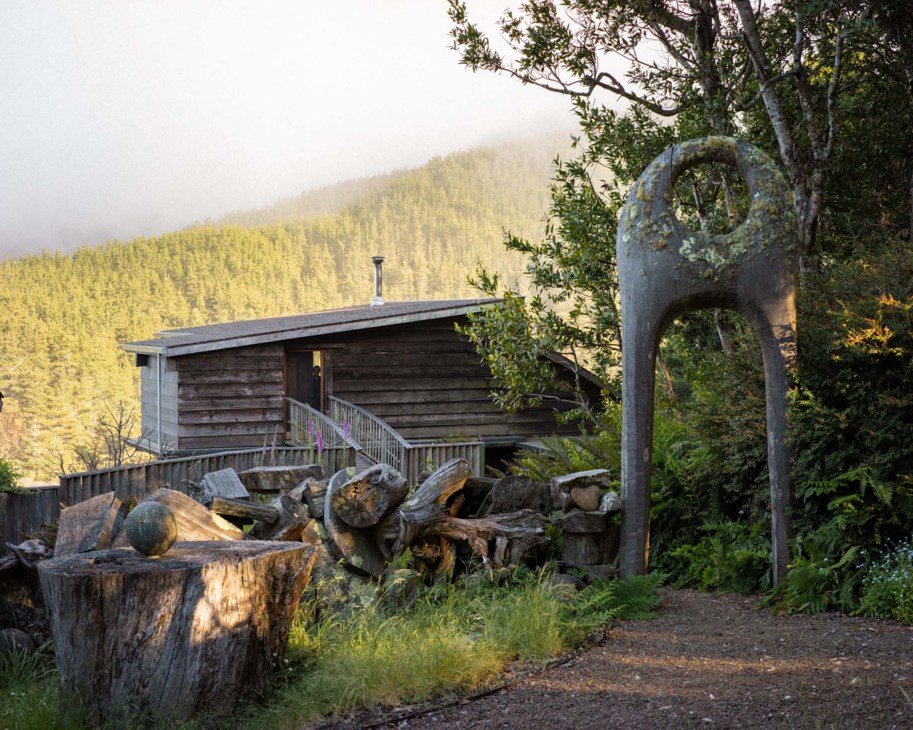
Mariah Nielson is leaning on a heavy wooden door to a cabin in Tomales Bay, California. The house – from the Japanese garden out front to the wide deck that overlooks a valley of mossy forest – was built by her father, modernist sculptor JB Blunk. We step into a serene, shadowy living room, where squares of golden light fall on oak floors and recessed tokonoma shelves arranged with carvings, flowers and trinkets. “I’ve been calling my return here ‘the reckoning’,” says Nielson, a design curator who moved back to California last year after a long career in London. “I’ve been peripatetic for 20 years – always moving, always on flights, always changing apartments or jobs. But here, there’s a consistency and a rhythm that I feel I’m tuning in to.”
Blunk apprenticed with master Japanese potters and was a maestro with a chainsaw. He turned fallen logs into fine furniture and petroglyph-like forms, such as the tall, somewhat mysterious archway that welcomes visitors to the house. It sits at the top of a winding lane cloaked in laurel and oak trees, high above the south shore of Tomales Bay. The enclave is only a 90-minute drive from San Francisco but it has a totally different state of mind; poet Robert Bly, who lived locally, wrote about hills that “roll all the way to the sea”. Blunk moved to the area in 1957, seeking space to find his voice as an artist.
“People thought that he was mad to leave the city,” says Nielson. Yet 60 years later, his daughter is following in his footsteps – and she’s not alone. Many people are turning their backs on the promise of the US technology mecca for a quieter life in nature. Nielson, meanwhile, came back to Tomales Bay to continue tending to her late father’s legacy and the Blunk estate, which now hosts designers and artists; somewhere they could take time out to reconnect with their craft. During our visit to the house, London-based ceramicist Francesca Anfossi was just setting the clay on a new body of work. Nielson has also opened an art gallery named Blunk Space in the area’s only proper town, Point Reyes, and new work made at the house is being exhibited there, along with Blunk’s pieces.
Blunk’s story is an echo of what many here are trying to achieve: creative renewal beyond the big city. Though close to San Francisco in well-heeled Marin County, Tomales Bay has remained remote. There are no tourist-trap hotels, few estate agents’ signs and dining is low-key (but great). A gentle process of rediscovery is under way as a new generation arrives seeking inspiration.


The bay’s first new hotel in years has recently opened and there is a smattering of new places to dine. Nick’s Cove, one longstanding restaurant that draws in fans from the city, has turned its row of waterside cottages into short-term lets and crafting sheds for visiting artists. Some are choosing to stick around: Los Angeles-based design studio Commune is currently working on several houses dotted around the bay, creating holiday homes for city folk, some of whom decamp to the area to turn their hand to ceramics, painting and sculpture.
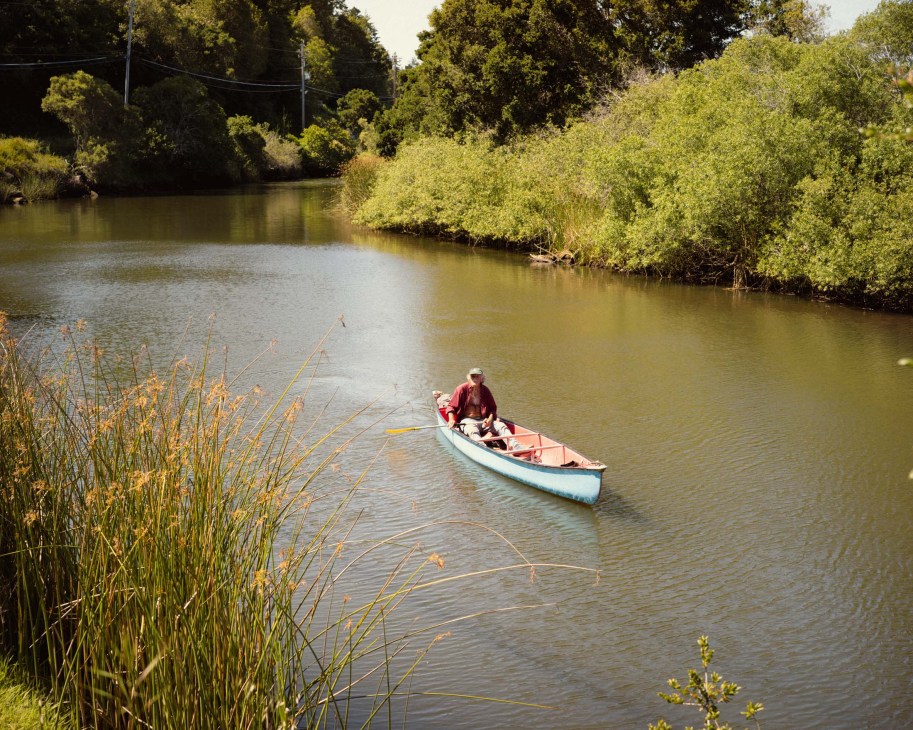
A single two-lane road follows the gently lapping bay that disappears in sea fog in the early mornings. To drive it is to circumnavigate an awe-inspiring geography – the San Andreas Fault bisects the area, so each side sits on a different continental shelf. The south is heavily wooded, with the air perfumed by the cola-like scent of sagebrush, while the opposite side is starker, with rolling hills and working dairy farms that were founded by Swiss émigrés at the turn of the 20th century.

On the banks of the bay, Catherine Bailey and Robin Petravic – who run homeware brand Heath Ceramics in Sausalito – have restored a fishing cottage for their own weekend retreat, and have begun opening it to guests in the past year. “It was once a fishing village of one-room shacks, all made from redwood trees,” says Petravic, while leading us through a living room adorned with flowers, art and a floor of Heath tiles that has the brown hue of raw clay. Some years ago, a previous owner consolidated these shacks under a single roof. The couple’s restoration has turned what was a fishing cottage with poky windows into a cosy hideaway with broad views of the water and the windsurfers carving up the waves.
“We’re happiest when we’re camping,” says Bailey, who spent the morning swimming off the jetty. “This is the closest we can get to that while still being in a house.” Bailey has found inspiration and perspective from being around this body of water. “This place feeds our projects now,” she says. “I’m currently working with seaweed.” The bay’s most sought-after bounty is its oysters. Shellfish that have grazed on this seabed are now shucked all over the state. Some three million oysters were harvested locally last year. One custodian of that brood is the Hog Island Oyster Company, whose co-founder, John Finger, came out to Tomales Bay expecting to return to the East Coast after a few years. But he fell in love with the area and decided to stay. From a tiny shack, named after a spit of land out in the bay, Hog Island’s operations have expanded to several restaurants, a hatchery and saltworks dotted around northern California.


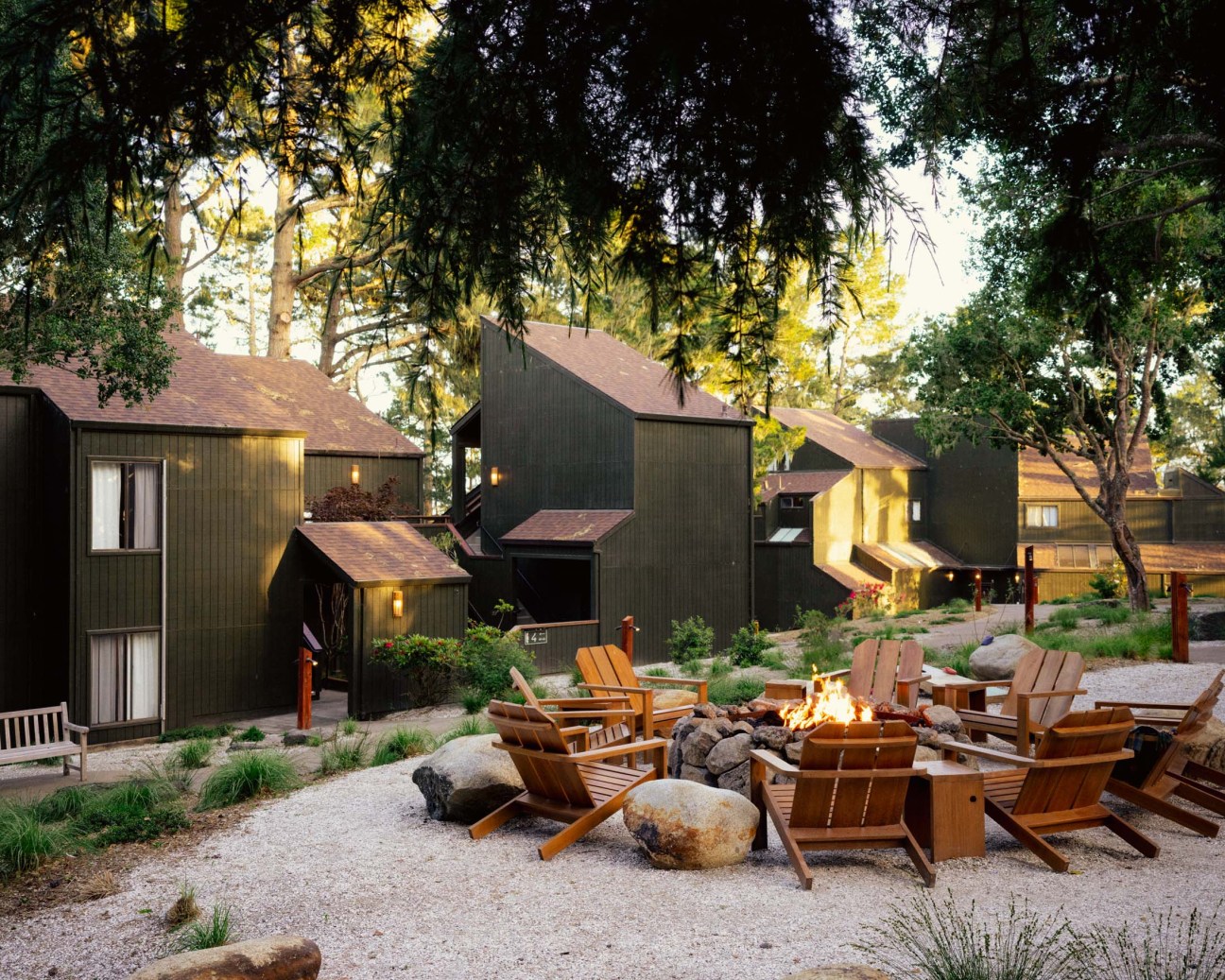
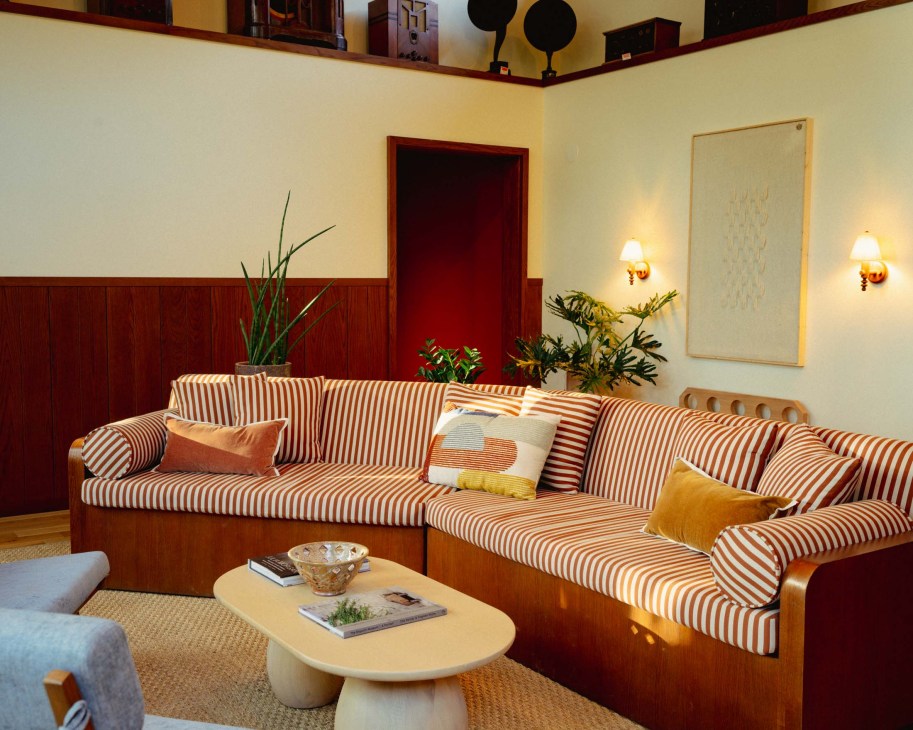
The Marshall Store, a Tomales Bay institution, serves regional oysters and crisp sonoma wine at the water’s edge, with a simple setup of benches and clear views. There are only a handful of restaurants in the area and accommodation in Tomales Bay has always been sparse – but a new arrival is shaking things up. The Lodge at Marconi sits on a forested hillside of national parkland and was once a radio outpost of the Marconi company, built in the 1930s to receive telegraph transmissions from across the ocean. The masts have long since come down, the estate remains mostly intact and has had a bucolic redesign by New York-based Home Studios, with retreat-like rooms of spartan design that foreground bishop pines rustling outside the windows. The charcoal-coloured cabins are reminiscent of the sea ranch architectural style found a little further up California’s coast.
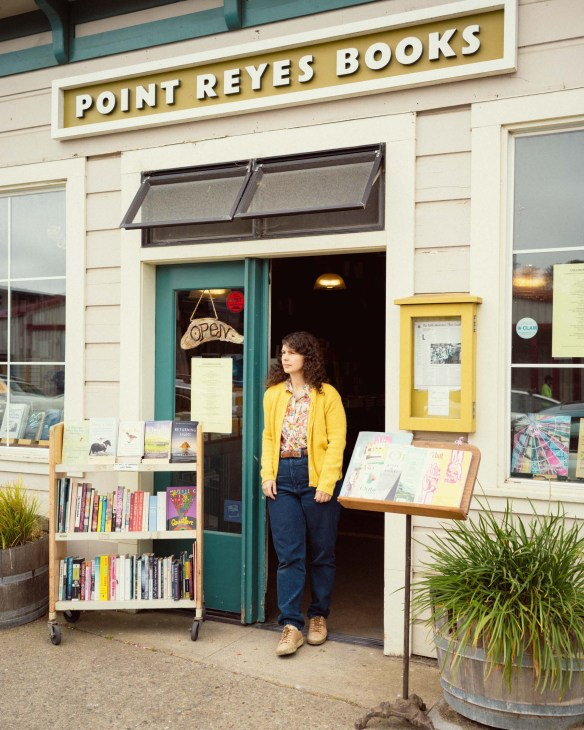
Local bookshop Point Reyes Books is a West Coast literary landmark; author Robert Macfarlane held a book launch there and brought the town to a standstill. It has passed through various owners, with each successive owner vetted by the last. Its latest custodians are Molly Parent and Stephen Sparks. They keep its shelves stocked with broad lists of new travel writing, photography books and poetic paeans to northern California’s mountains, forests and ocean. “We had fantasised about this bookshop because we would come up here on day trips from San Francisco and came to love this area,” says Parent. “It is the quintessential small-town bookstore.”
Even the local newspaper has a story to tell. The Point Reyes Light unearthed the goings-on of a cult called Synanon in the 1970s and helped to have the group shut down. The Light won a Pulitzer Prize and gained national attention. It still has a newsroom in town, keeping an eye on community affairs from week to week.
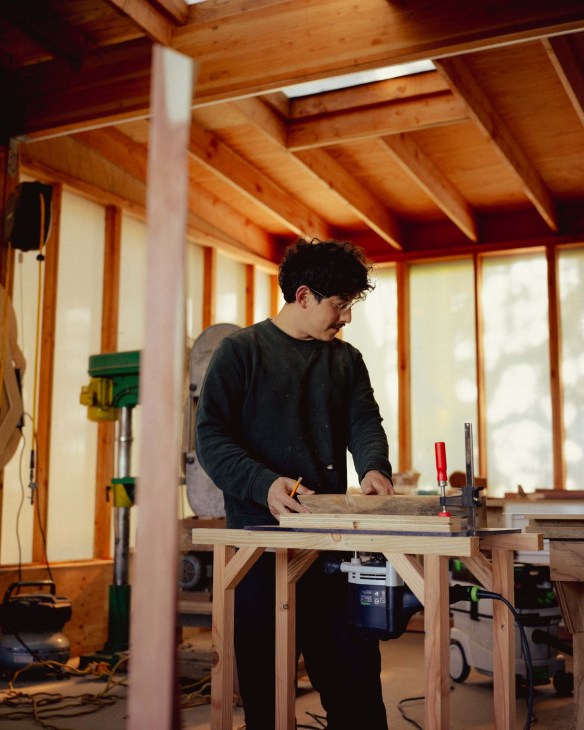
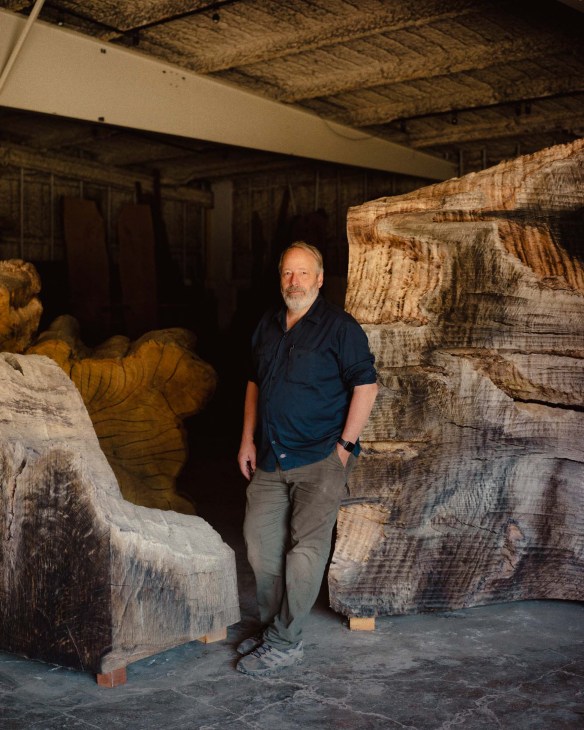
Getting out of the city has the potential to reframe one’s creative endeavours. Nothing offers perspective like a little distance. That was particularly true for Evan Shively, who worked as a chef before moving to the hills outside Tomales, hoping to reinvent himself as a furniture designer. He became fascinated by the sculptural qualities of the logs found in northern California and his lumberyard, Arborica, has a renowned inventory of salvaged wood, from burnt eucalyptus to what he calls “baroque” husks sought out by artists including Welsh sculptor David Nash.
Helping others realise their vision in wood, Shively explains, has given him a sense of permanence that’s rooted in the landscape of Tomales Bay. “I gave my youth to the kitchen,” he says, as we stop to admire one silvery and dramatic knot of roots. “But I wanted to make something that didn’t disappear at the end of every day.”
Shell company
“This is a pristine body of water,” says Hog Island Oyster Company co-founder John Finger, after we’ve polished off a few cucumber-flavoured Kumamoto oysters, hauled up from the bay that morning. Finger, the so-called “head hog”, explains that the tides expose the oysters to the open air every day, causing the sweetest part, the central muscle, to thicken and grow as the shell opens and closes. Originally from Long Island, Finger says that a group including environmentalists and ranchers from the area have prevented Tomales Bay from becoming just another exclusive enclave, a Hamptons of the West Coast. “There’s still that foundation of a working place here,” he says.
Tomales Bay address book
Stay
Fisherman’s Cottage
The couple behind Heath Ceramics have rescued waterside shacks and turned them into a homely retreat.
marshallfishermanscamp.com
Dine
Saltwater
Serving oysters from the bay and crisp Sonoma wines in a dining room in Inverness.
saltwateroysterdepot.com
Shop
Monk Estate
Lazuli Whitt presents inspiring one-off jewellery pieces from European markets, as well as books and homeware.
monkestate.com
Shop
Point Reyes Books
A bright light of literary northern California with a thoughtful selection of nature and travel writing to inspire local rambles.
ptreyesbooks.com
See
Blunk Space
An art gallery run by the daughter of sculptor JB Blunk, showing new work relevant to Tomales Bay.
blunkspace.com
Interview: Adrian Joffe on why he changed his mind about Dover Street Market in Paris
“It felt right,” says Adrian Joffe, president of Comme des Garçons International and Dover Street Market (DSM) International. He keeps returning to this phrase when discussing the opening of DSM’s first Paris outpost in Hôtel des Coulanges, a 17th-century landmark that once belonged to French aristocrat and writer Madame de Sevigné.
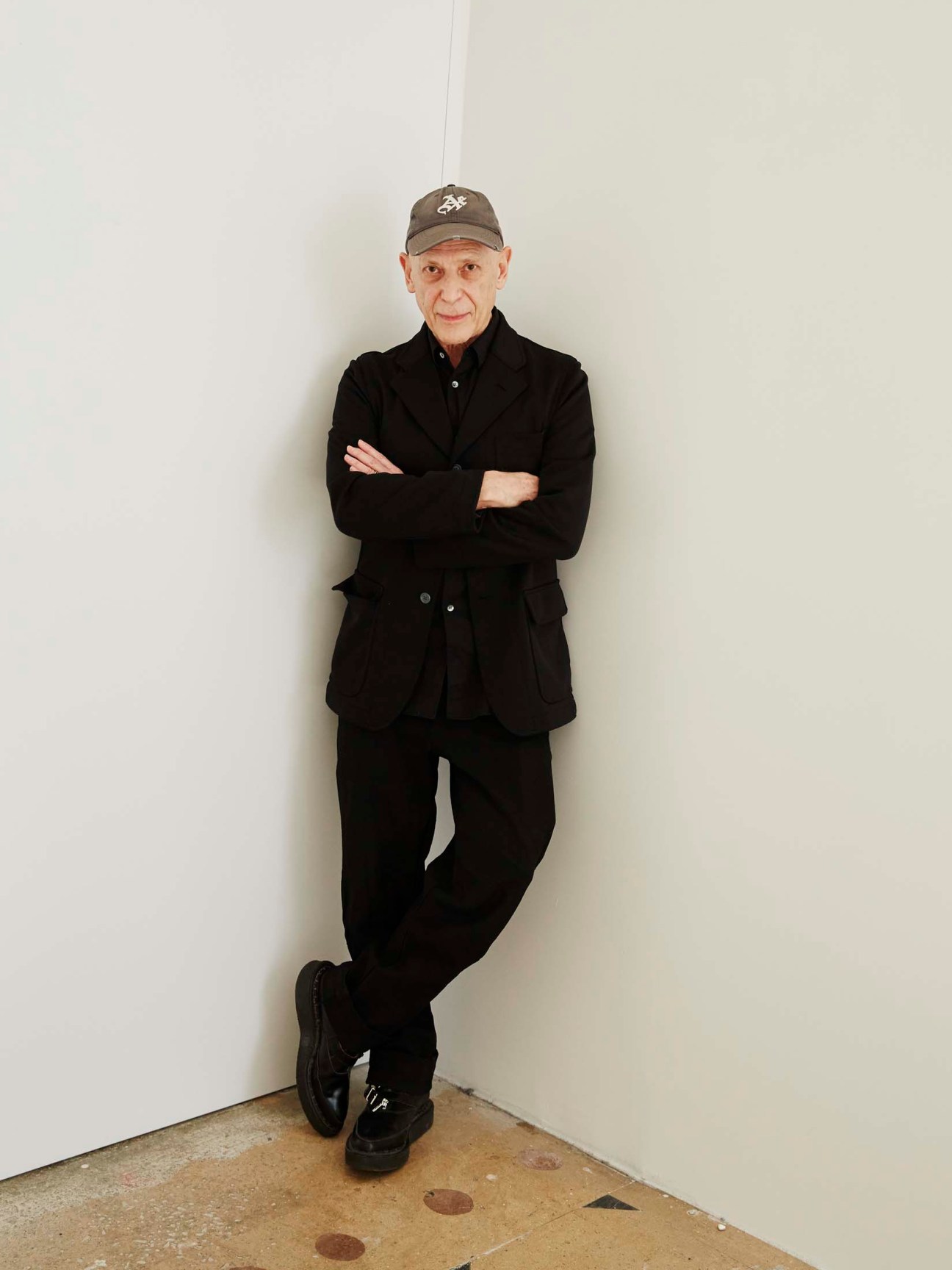
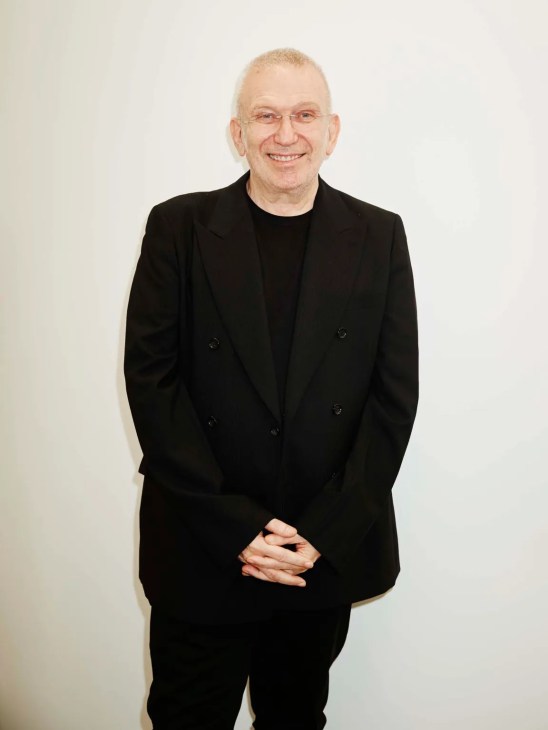
Joffe, (pictured), had a good feeling about the former hôtel particulier when he first entered its courtyard. His instinct guided him to renovate the historic property alongside revered Comme des Garçons designer Rei Kawakubo, his partner in both business and life. The duo converted the space into both an office for DSM’s retail and brand-development teams, and a multi-brand boutique complete with a Rose Bakery café. Kawakubo designed the interiors, which feature futuristic steel displays spread across the shop floor, while Joffe was in charge of the buying. “We knew that we wanted to open another DSM,” says Joffe, dressed in his usual all-black uniform as he sits in his minimalist top-floor office. “Our aim is still to create beautiful chaos – but in a new way.”
Joffe started working for Comme des Garçons in 1987 in Paris and has since become a true Le Marais local and a fluent French speaker. Despite this, he has previously said that Paris “didn’t deserve” its own DSM. “I like to contradict myself,” he says now. “It’s probably a character flaw; I have nothing against the city.”
The opening comes at a pivotal time for both DSM and the retail industry, which is moving away from traditional wholesale modelling. Many retailers are relinquishing control of shop floors to luxury brands operating on a concession basis. But DSM Paris, which describes itself as an “anti-department store”, is going against this ascendent formula. The shop’s exterior bears no logos or window displays, while clothing from various labels is mixed together inside the spaceship-like structure: jackets by Prada are hung next to leather items by Bottega Veneta and dresses by Simone Rocha.
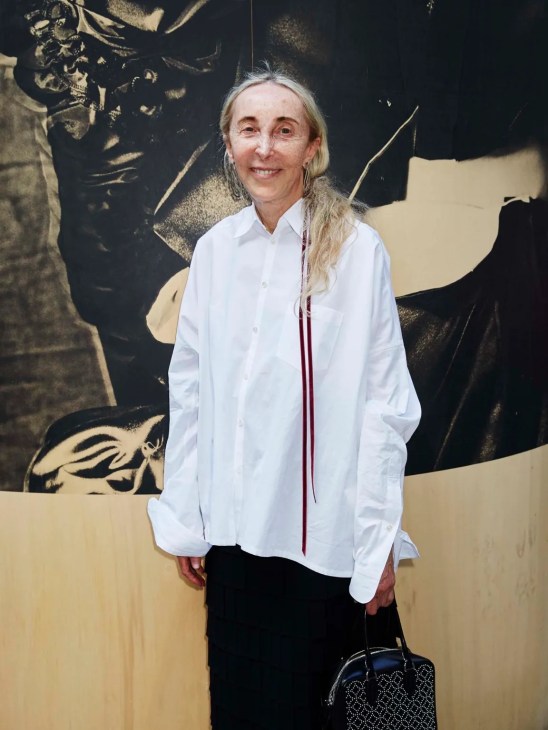
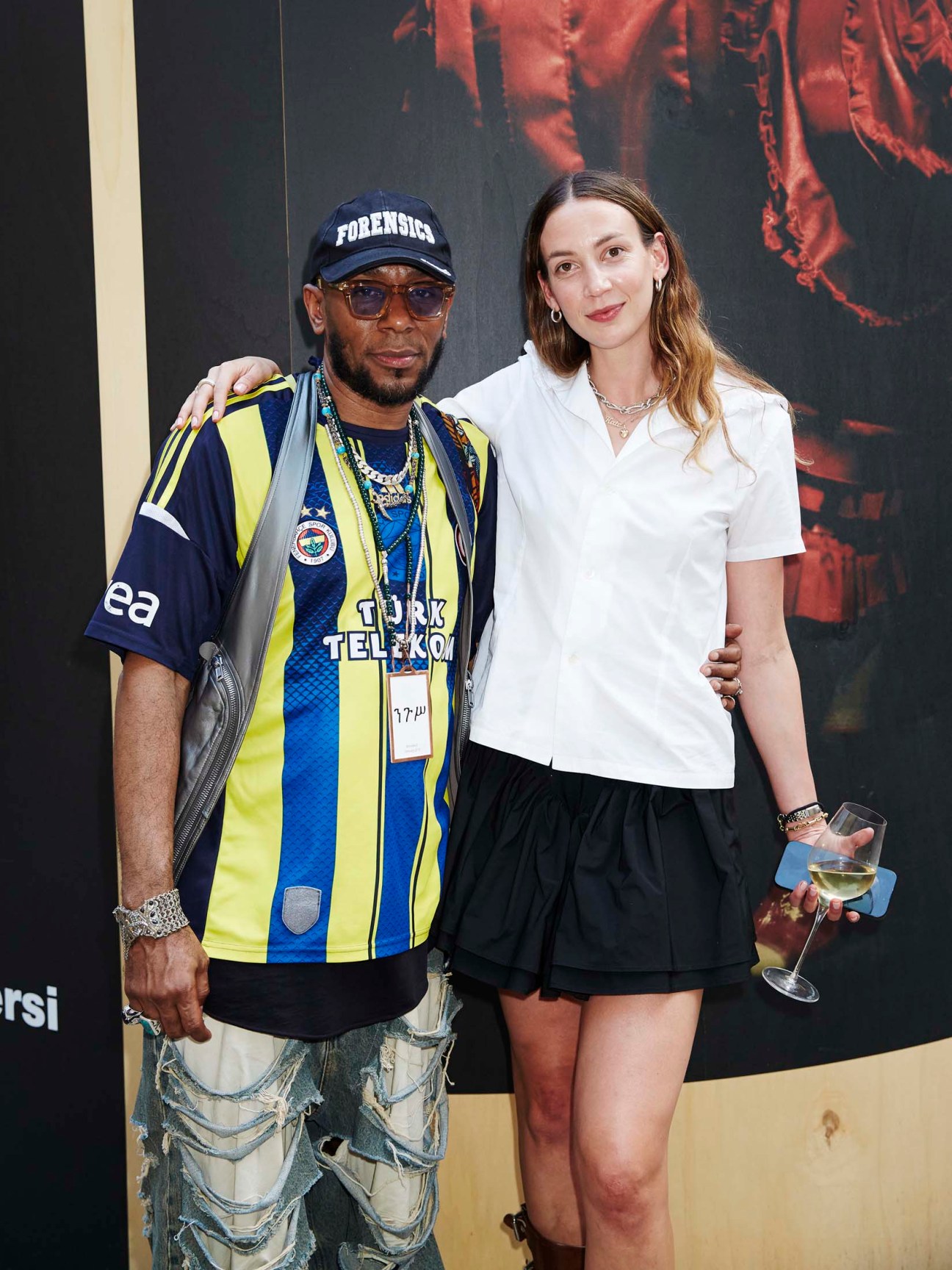
It’s this free spirit – and Joffe’s ability to convince designers to take bigger risks – that has allowed him to shape the future of up-and-coming brands and build a community of DSM loyalists. Supporters range from milliner Stephen Jones and retailer Carla Sozzani to Jean Paul Gaultier – all of whom paid Joffe a visit in Paris to toast the new opening.
Joffe might be one of the few retail executives still guided by instinct and creativity rather than data. But he’s also aware that the company needs to turn a profit to stay alive. Here, he tells Monocle about his plans to achieve this, as well as the DSM business model and his vision for the future of Comme des Garçons Parfums.
Why did you decide to open Dover Street Market Paris and why in Le Marais?
We had known for some time that we wanted to establish a Paris outpost and had been thinking about where it could be. We knew that we didn’t want it to be on main streets such as Avenue Montaigne or Rue Saint-Honoré. This has always been the DSM way, to occupy areas that are outside [the luxury sphere] or about to be developed.
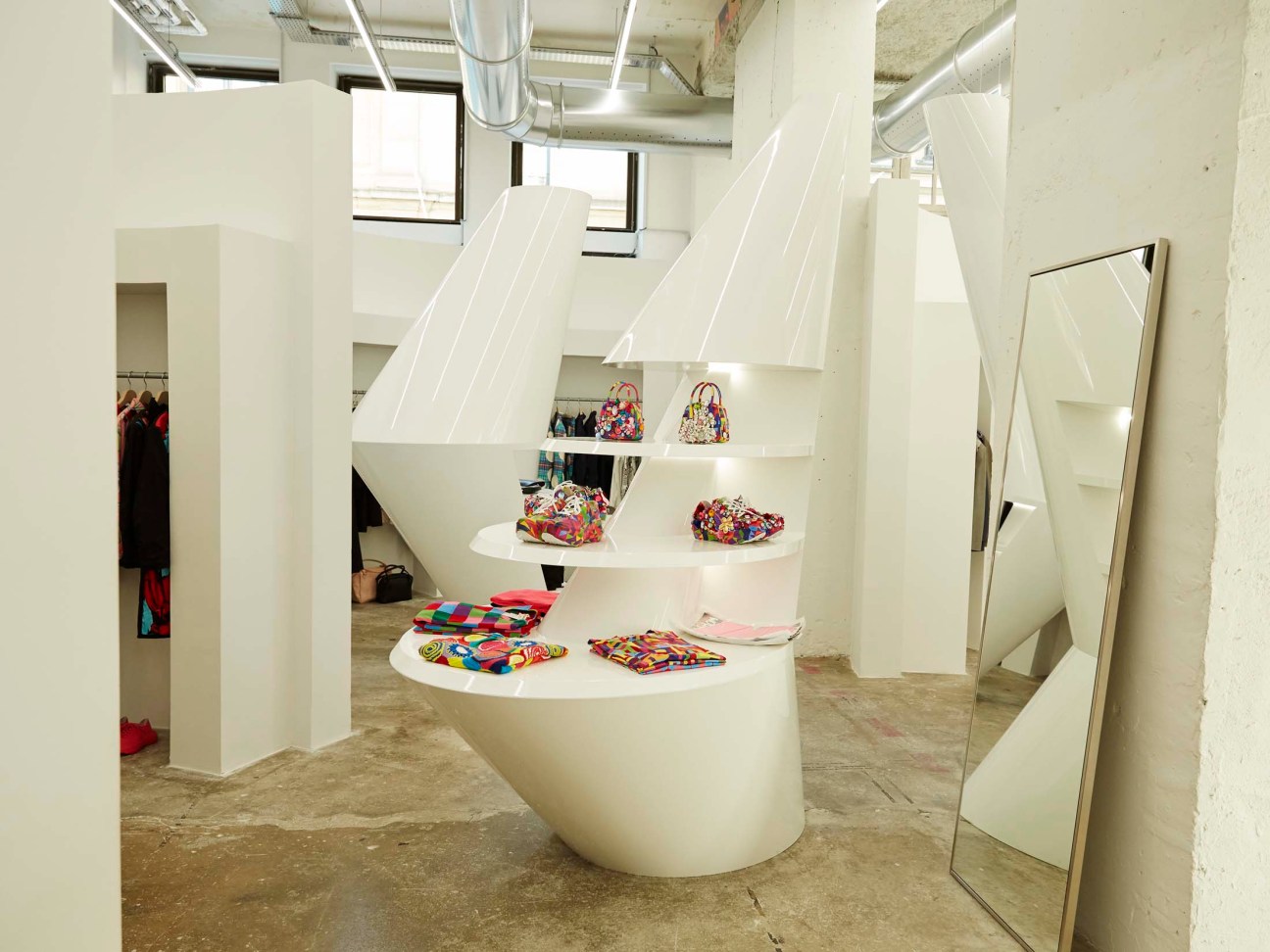
We were open to any kind of interesting place. The feeling, atmosphere and feng shui of a space was a lot more important than the location. I had my doubts about Le Marais because it’s very touristic but we had to choose a central area. Parisians can be a little lazy; they don’t like to go too far out of their way to shop. Every city is different. In London and New York, people are willing to travel from far and wide to get to DSM and, in Singapore, they go to [retail enclave] Dempsey Hill.
What’s your relationship with Paris?
Rei has always said that if she were to venture outside Japan, she would go to Paris. For her, it’s the most important city in the fashion world. In 2016, I said that it didn’t deserve a DSM but a lot has happened to make me change my mind over the past eight years.
Paris seemed to be losing its spark for a while. Many of my friends were moving to Berlin and international avantgarde films, which traditionally debuted in Paris, were showing in London or Venice. The city was becoming less creative. After Brexit and the coronavirus pandemic, however, people became tired of cities such as Berlin and more creatives returned to the French capital. Everyone now says that Paris is the place to be. The atmosphere and energy are so good.
Then again, the rise of the far-right is scary. Macron is a decent politician but his decision to call an election right before the Olympics was arrogant. As designers, we have to remain optimistic, believe in what we do and try to always offer alternatives. I’m not saying that we can solve the political situation – but we’re here and we stand for a different perspective.
You used the new Dover Street Market location as a cultural centre to host fashion shows and exhibitions before opening the permanent shop. How did that influence the final concept?
We fell in love with the building because it used to be a home. It has such perfect proportions and a beautiful garden. We thought that we would be able to do great things here one day and knew that we wanted to make the property more energetic inside. It felt restricted by its 19th-century aristocratic beauty, so we had to modify the structure and liberate the walls. From there, we kept developing ways to make the shop different. We wanted to create a new DSM that felt as though it had moved on from the other six locations, not that there’s anything wrong with them.
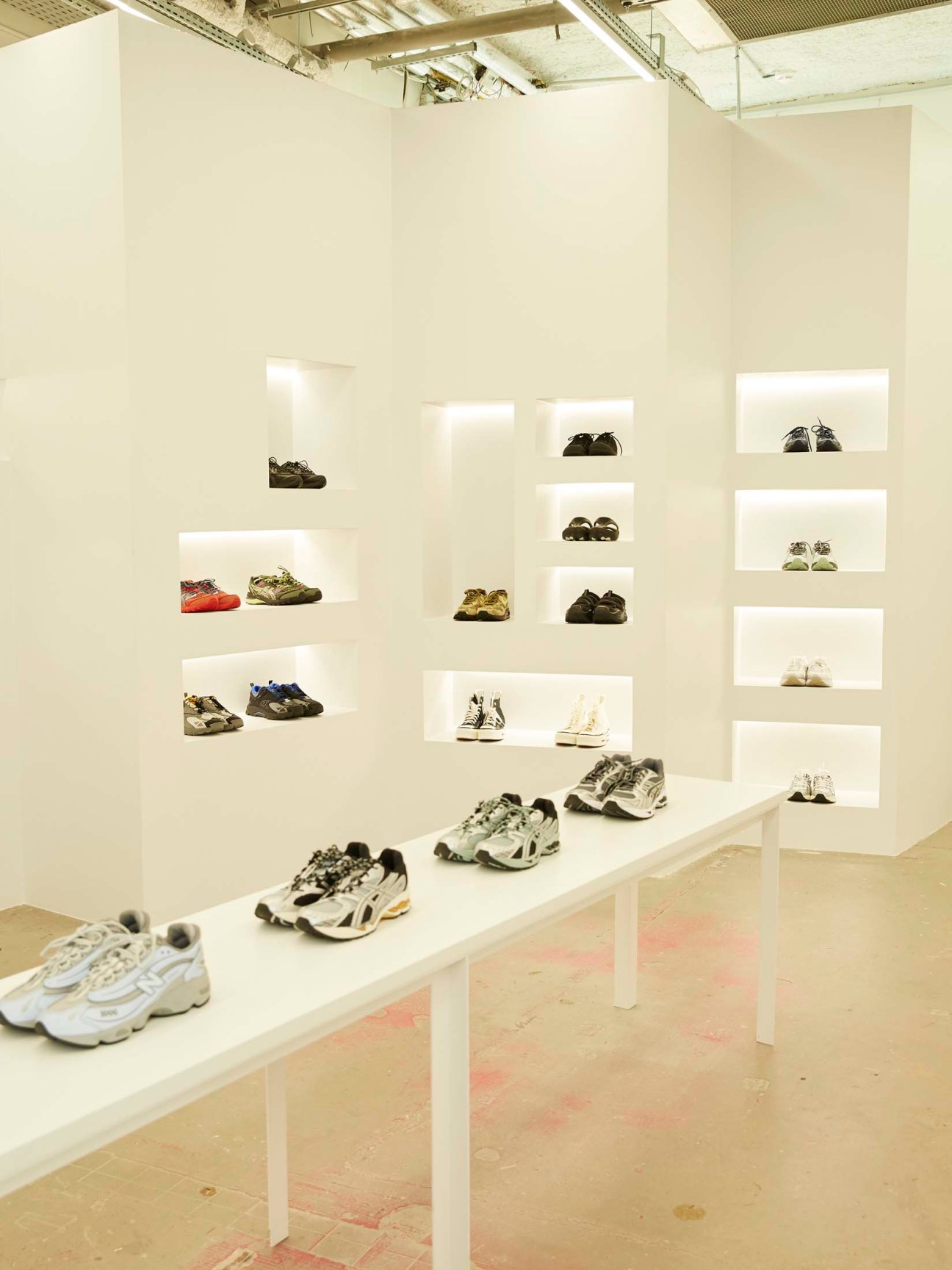
Other DSM shops have event spaces, where there are pop-ups, launches and book signings. Brands can come and do what they like. But we didn’t want that to be the case here. Yes, the building is more permanent than a pop-up but everything eventually comes to an end. For that reason, I like calling the shop an event.
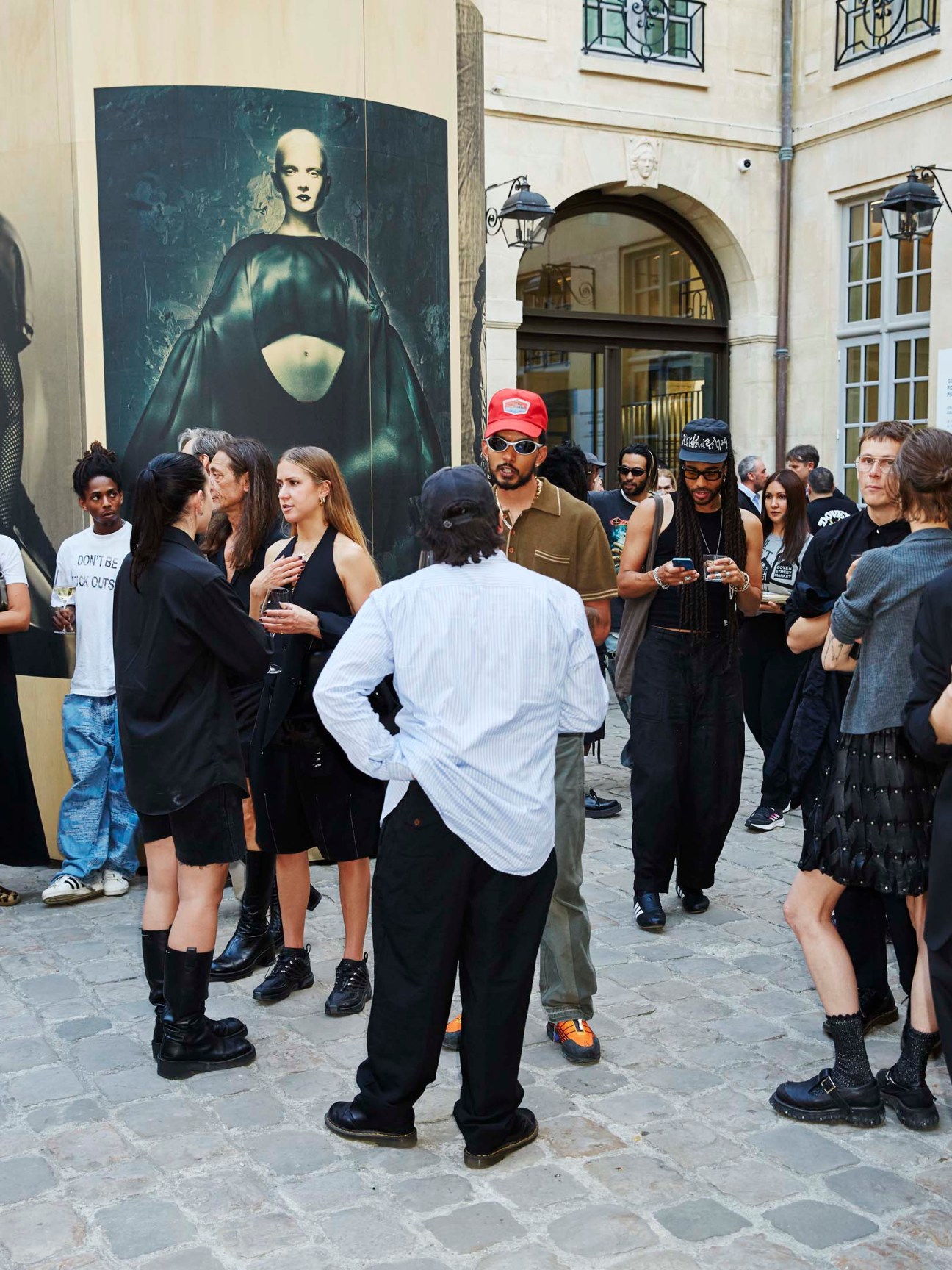
It is also a small space, so we played around with the layout: our offices are upstairs and a Paolo Roversi exhibition is outside. The shop is just one of the things happening here. Anything that we do in the courtyard and café is separate. The building is what holds it all together.
How did the new set-up affect the interior design?
We knew that there needed to be something different about its visual identity, not only because of the history of the building but also because the shop wasn’t the sole focus of our operations. We share rent with the brand-development division of DSM here. The shop wouldn’t be able to survive on its own.
To differentiate ourselves from our other sites, we had to understand and agree on the design. How could we take it to the next level? For Rei, the answer was simple: she would design it all. I thought, “Perfect.” That’s how we created this point of difference. At a time when so much power and control is held by luxury houses, it felt like the right move. There’s so much ego in fashion; it’s all about logos and labels. We decided not to create any dedicated brand spaces. It’s all egalitarian.
Four major luxury brands – Prada, Miu Miu, Balenciaga and Bottega Veneta – agreed to be here next to up-and-coming names. How do you achieve the right mix?
We need powerful brands to want to be in our shop. But there seems to be less room for smaller, independent labels to grow in today’s market. More well-established houses are eager to get inside younger companies to draw on their energy and their creativity. The problem is that bigger brands usually swallow them up rather than raise them high.
I don’t want to give the impression that we are trying to save independent designers. Some luxury brands are amazing too. They accept our approach and agree that we have to find alternative ways of doing things. I want to give everybody, including well-known labels, the chance to change and adopt working practices that aren’t driven by ego, power and profit. If we don’t, then the industry will fall apart.
What’s your buying strategy?
DSM is famous for mixing together products from different brands. We were the first company to put Prada next to Supreme on a shop floor. Everyone was wondering what was going on and who our target audience was. Today streetwear and luxury are heavily linked. There are some brands that sell hoodies for $2,000 (€1,840). It doesn’t make any sense. So I thought that here, we would have less of these so-called “categories”. I wanted to move away from the borders that fashion has created. Definitions, categorisation and departmentalisation are all tied to a very old way of thinking. It explains the demise of the department store, especially in the US. The very word suggests that items are being separated, which is illogical these days. Our way of buying is about that big, beautiful middle ground: brands that have something to say. This is also the heart of the business. We have always wanted to give spaces to people with a vision.
Will the pieces on display represent a mix of price points?
Luxury pricing is depressing; I don’t know how long it can go on for. I look for reasonably priced pieces, particularly when it comes to young designers. I explain to them that they’re not obliged to follow the corporate way of doing things. If it costs €10, you don’t need to charge €50. That model is wrong. If you want to cover your expenses and do some marketing, then you could charge €25. They don’t teach this enough in schools.
Is streetwear still relevant?
There are still great brands. Take Denim Tears, Online Ceramics and Humanmade by Pharrell, which is an example of a label with good intentions. If a streetwear producer is sincere, well-maintained and run by the people who started it, then it will stay relevant. What I think happened was that too many people tried to jump on the bandwagon; not necessarily luxury houses but perhaps Italian conglomerates. They tried to make streetwear and it didn’t work. It happens all the time. Major corporations see the opportunity to turn a profit from trends, such as tartan and punk, so they start producing clothes in these styles and strip all of the feeling from them. Brands have made a lot of money by doing this but it has ruined the market in many ways. Categories become too mainstream and, therefore, less authentic. People are seeking more authenticity now.
You have never embraced the idea of window-shopping at DSM. But in Paris, you seem to have stripped things back even further. Why?
Rei never liked windows. When we first opened in Paris, people would pass by and wonder, “Where’s the shop? Why don’t you make it more obvious?” That was good. I explained to them that it was because we wanted to incite curiosity. You take away the satisfaction of having found something yourself when a brand is in your face and you hear that it’s the place to go. If you keep a sense of curiosity and adventure alive, you’ll get much more out of your shopping experience. You’re not told by social media or any form of advertising what to do. It’s an opportunity to make people feel a little more free.
Can you maintain this sense of freedom and ‘beautiful chaos’ while also making the store profitable in the long term?
Profit has never been our main goal. What we want to do is to create something new and different. This has been the DNA of Comme des Garçons for 55 years and DSM for 20 years. But, of course, the aim of a business is to survive. We have never needed to make huge profits but we do need to make money. Our model works: every shop was profitable before the coronavirus pandemic. That time was problematic but we have to continue to believe in the model. So far everything is going according to plan in Paris. We have actually had the problem of there being too many people in the shop, especially during the weekend when there might be between 4,000 and 5,000 customers. I don’t want us to become like the Eiffel Tower or the Louvre but it’s great to see the excitement. We will make it work. It’s also important to have additional activities for people to engage with, such as the Paolo Roversi exhibition in the courtyard.
Who are the customers who have been walking into the shop?
There are a range of customers and we value all of them. Some people purchase items such as our €13,000 Prada jacket but others just come for a cup of coffee and stay for an hour. The feedback that I have enjoyed the most is that people feel at home, whether they’re here to shop or see an exhibition. The staff have also been told not to try to sell and instead allow people to have a look and, perhaps, come back later.
What types of companies is your in-house brand-development team interested in working with?
We want to collaborate with fashion labels that do things outside the norm. An example is former Saint Laurent creative director Stefano Pilati’s Random Identities. Tailoring, streetwear and leather goods are all part of his brand’s offering. You also have to like the people behind the clothing; personal relationships are key. They have to be patient and not too ambitious. We’re all too busy to work with egomaniacs. It’s important to have talent but not be too greedy and want to become the next Yves Saint Laurent overnight. It takes hard work – and that’s very humbling.
New York-based label Vaquera has been around for 10 years but I still think that it has so much unrealised potential. We have to work harder to make sure that it’s where it needs to be. We’re even discussing the possibility of it setting up shop in Paris. I’m very excited about what that could look like. The brand is our number-one best-seller. Miu Miu is number two. It’s very encouraging so far.
Comme des Garçons Parfums is about to turn 30. What’s next for that part of the business?
We agreed to do perfume when I took over the business. I wanted to be independent from the Tokyo branch; introducing a perfume and a Comme des Garçons shirt brand were two of the ways that we achieved this. Rei agreed, as long as we kept the same level of creativity and DNA of Comme des Garçons. For me, fragrance offers many different ways to be imaginative.
We haven’t come up with a new scent for a long time but we’re now working on eight amazing projects. We hope to launch one new perfume, Odeur 10, this year and publish a photo book with all of our achievements from the past 30 years. We have a great reputation in the fragrance industry but the business is tiny in proportion. We barely turn over €6m per year and have just three members of staff, so a lot of my energy will go into expanding this part of our offering next.
Brands tend to license fragrances, which keeps them detached from the creative side of the business. How have you resisted this model?
We initially signed a licensing deal with Puig, which has now ended. The company grew and became very successful, so it needed to either buy out our entire business or stop making our fragrances. In the end it couldn’t continue to produce our range. But it was amazing that Puig had accepted the offer to work with us and allowed me to continue to do what I liked.
After about 20 years, we thought that it was time to part ways. We’re still very good friends. It has been beneficial to keep the perfume business a small operation. Instead of selling it, we want to put the energy into it ourselves to make it the best that it can be.
Who do you want to collaborate with next?
We’re working with one of the artists from the Dia Art Foundation in New York to create a perfume for the company’s 50th anniversary. Other brands now want us to create fragrances for them – but they have to know what they want. What does the label smell like? I always tell them that they shouldn’t expect to start seeing a profit immediately.
Above all else, you need to want to make a scent that reflects the image of the brand. If it’s really successful, then you can sell it to anyone. But I can’t produce huge quantities from the get-go and other fashion houses need to agree to that first, otherwise they’ll be disappointed. I’m also producing a perfume for Vaquera and working with a musician to create a bespoke fragrance. I like to draw from a wide pool of creatives.
Culture round up: A thrilling Japanese crime drama, a cult Norwegian novel and a New York exhibition
Music
Girl
Coco & Clair Clair

After their successful 2022 album, Sexy, Atlanta duo Coco & Clair Clair are back with another playful mix of hip-hop and electronica. The new record takes inspiration from UK groups such as Saint Etienne and Everything but the Girl. Highlights include the incessant electro undercurrent of “My Girl” and lead single “Aggy”, a breathy, synthy track that will do wonders on the dance floor.
‘Girl’ is released on 30 August
Milton + Esperanza
Milton Nascimento and Esperanza Spalding
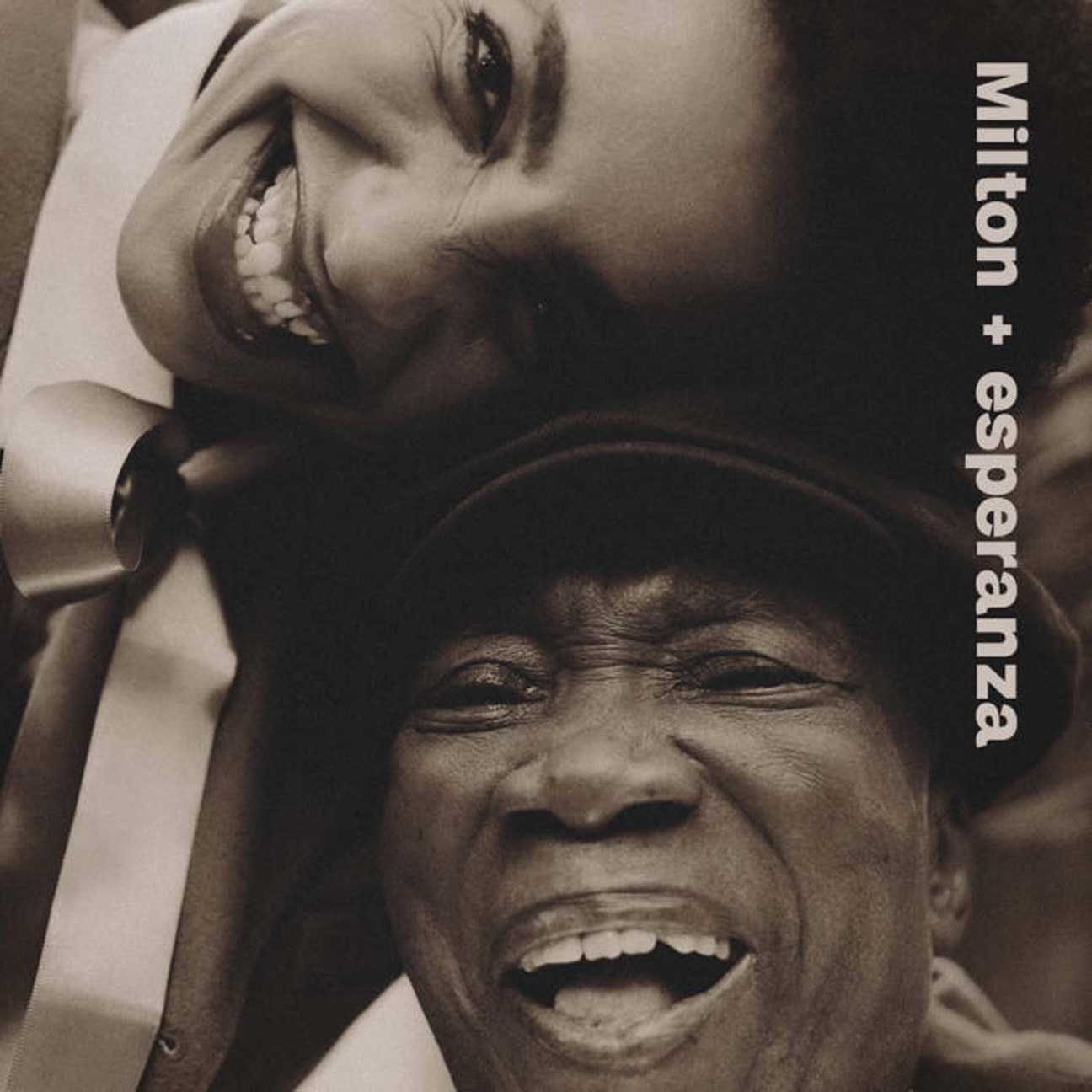
Brazilian singer Milton Nascimento and American vocalist and bassist Esperanza Spalding – friends for 15 years – celebrate their rapport by reworking some of Nascimento’s classic songs, including “Outubro” and “Cais”, with Spalding’s glorious vocals. There are plenty of original tracks too, such as the joyful “Wings for the Thought Bird”. An inspired meeting of musical minds.
‘Milton + Esperanza’ is out now
In Waves
Jamie xx

The long-awaited second solo album by English musician Jamie xx does not disappoint with its line-up of club-ready delights. In Waves is a beautiful mix of 1990s house and sunny optimism. The song “Life” went down a treat at this year’s Glastonbury Festival when performed live with its featured guest, Swedish singer Robyn. “Treat Each Other Right” is a more nostalgic highlight.
‘In Waves’ is released on 20 September
TV
Tokyo Swindlers
Netflix
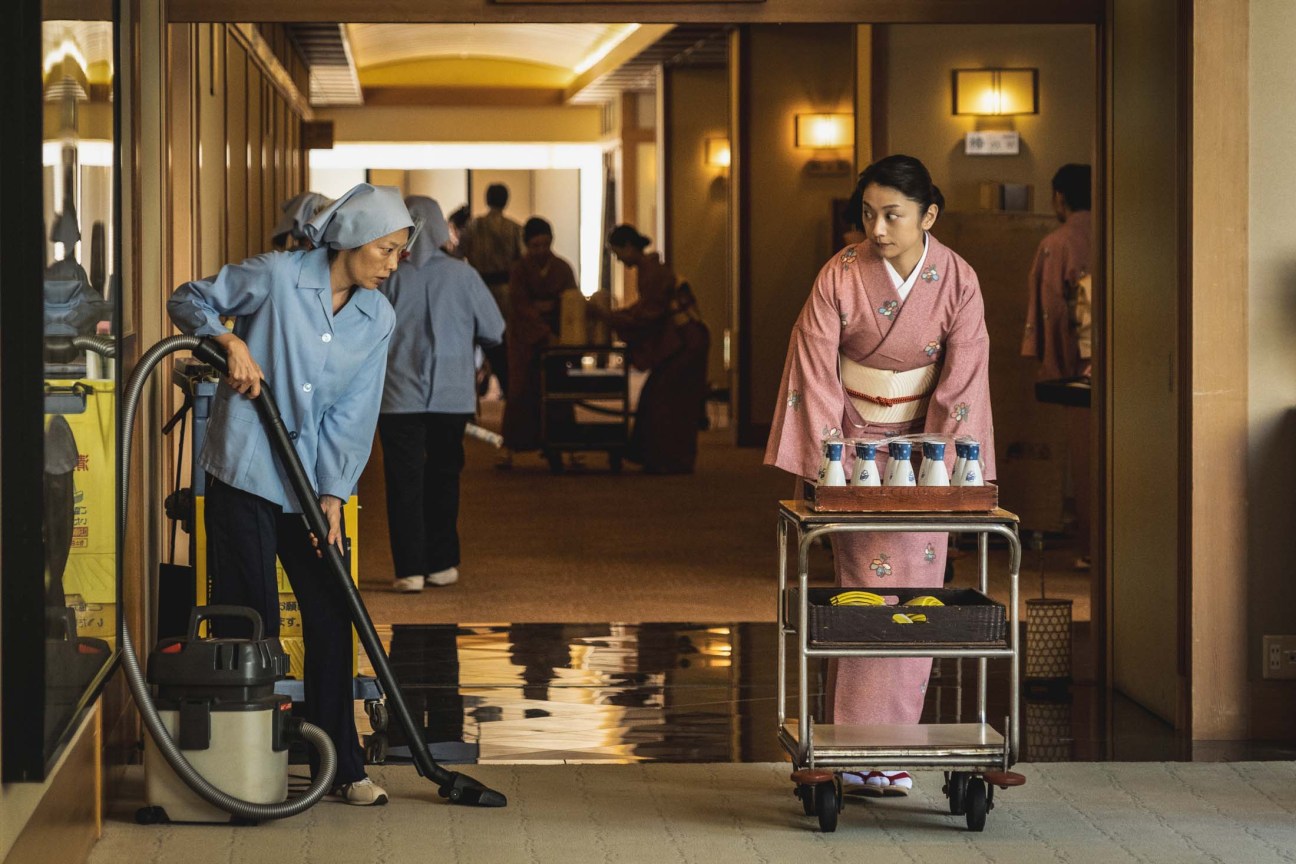
On paper, a crime drama about an elaborate property scam might not sound the most engrossing but the stakes involved here (¥10bn; €59.8m) create a high-octane drama full of suspense, explosions, intrigue and murder. This seven-part Japanese series is an adaptation of the acclaimed book by Ko Shinjo and stars award-winning actors Etsushi Toyokawa (Love Letter) and Go Ayano (Gatchaman).
Pachinko (season two)
Apple TV+
For the many fans of Pachinko, it has been a long two-year wait for the epic family saga to return to screens. Based on the best-selling 2017 novel by Min Jin Lee, Pachinko follows a Korean immigrant family over 70 years told, in the series, through two parallel storylines. Look forward to bold plots, excellent cinematography and exceptional attention to detail.
La Maison
Apple TV+
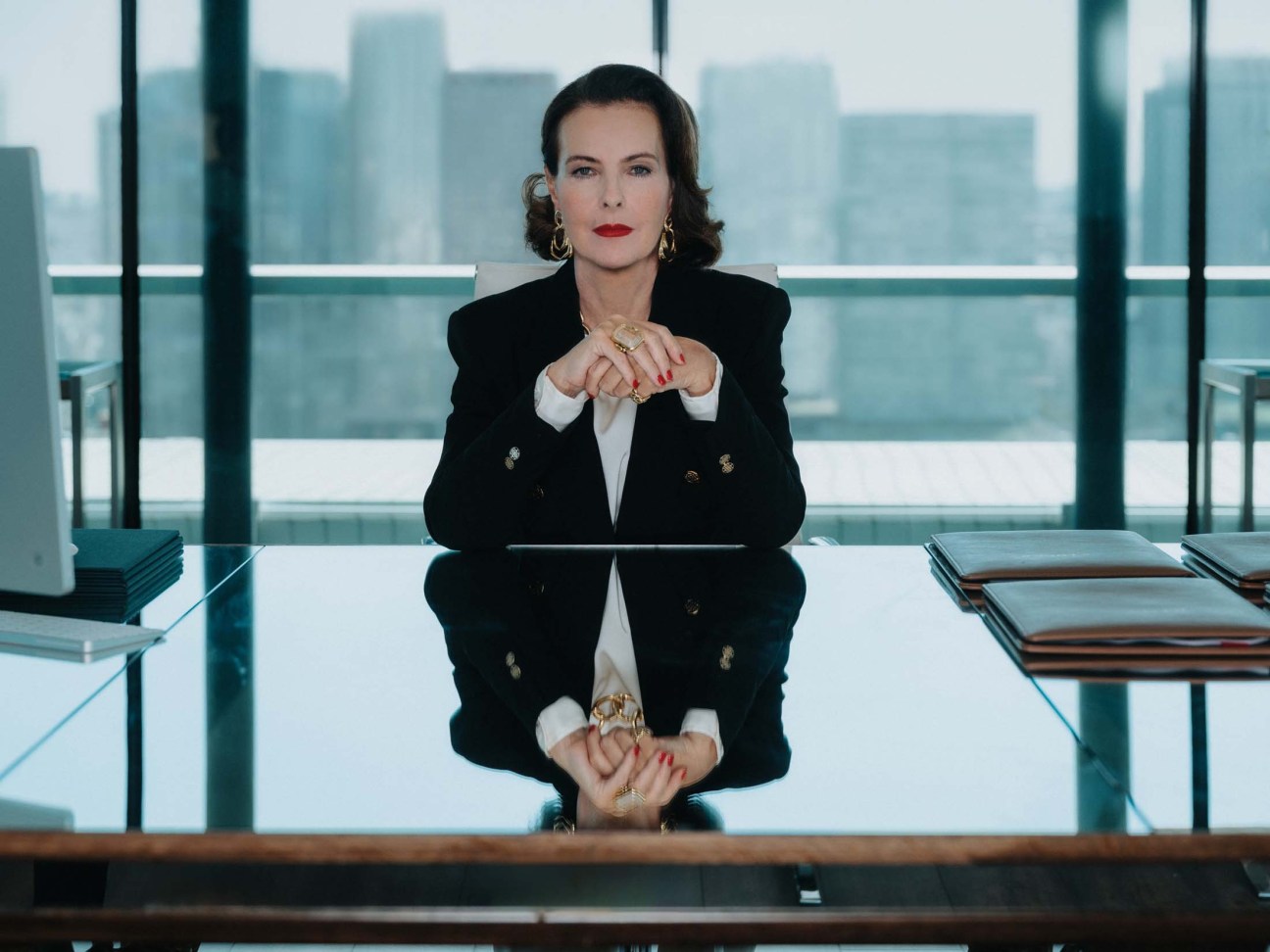
Streaming series that examine the world of high fashion are all the rage. This fictional French show takes us behind the scenes of a fashion house and explores what happens when creative ambition collides with family politics. Expect a deep dive into French couture, with sage reflections on reinvention and creativity.
Film
Kneecap
Rich Peppiatt

Real-life Irish hip-hop band Kneecap play themselves in this madcap coming-of-age comedy about their (largely fictionalised) origin story. There’s street fighting, romance, robbery, interrogations and a lot of swearing. Spice World for rap fans.
‘Kneecap’ is released on 23 August
Sing Sing
Greg Kwedar
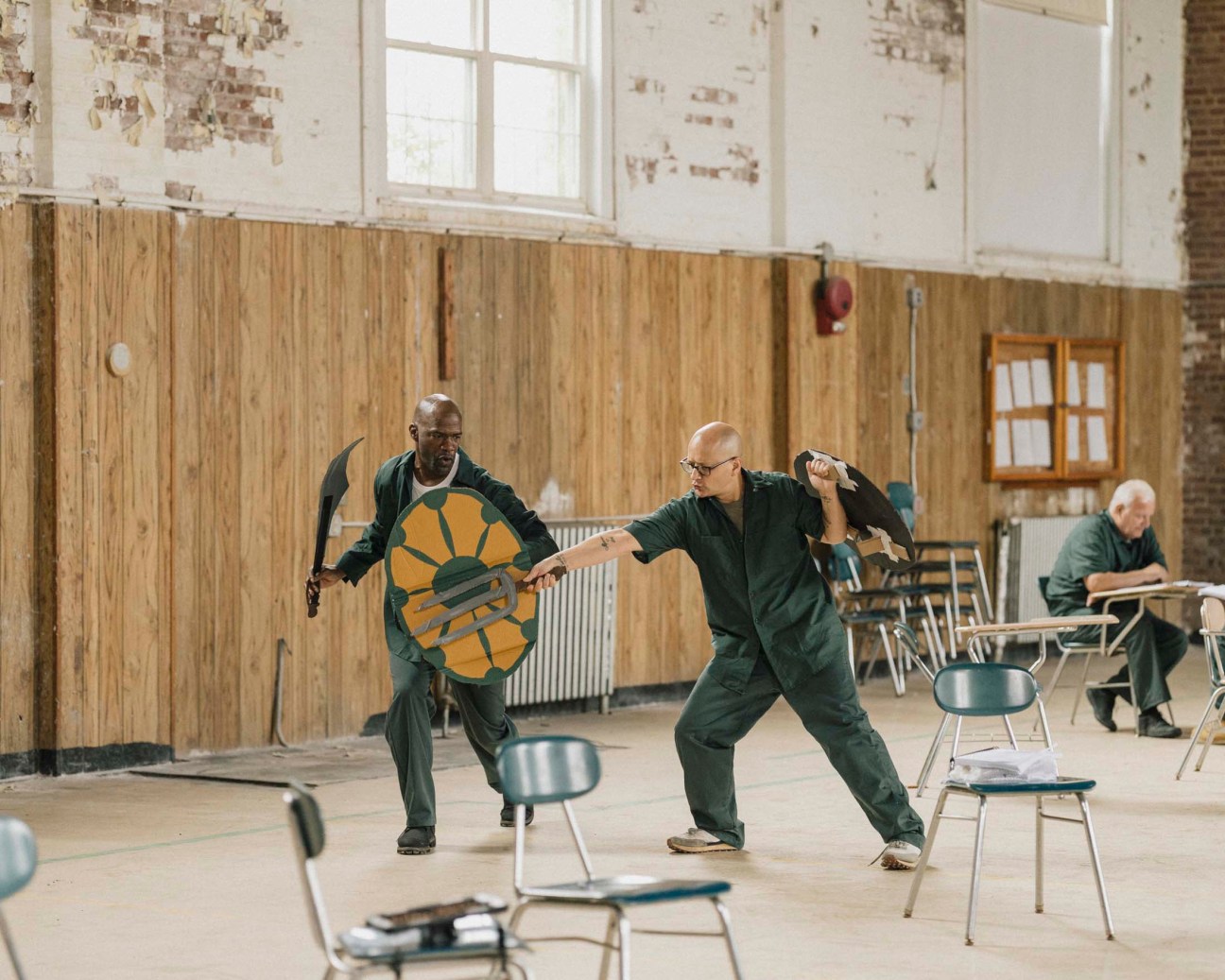
Oscar nominee Colman Domingo leads this drama about a group of inmates at infamous maximum-security prison Sing Sing, as they stage their own theatre production. Through the foibles of theatre-making, they find a humanity that seemed lost to them in the harsh conditions of their everyday lives. The cast of professional actors and former inmates imbues this drama with palpable emotion.
‘Sing Sing’ is released on 30 August
In Camera
Naqqash Khalid
Filmmaker Naqqash Khalid’s fierce debut is about an actor, played by Nabhaan Rizwan, striving to create a new role for himself while fed up with endless rejections and the reductive roles that he is asked to audition for. In Camera dissects who’s doing the looking and who’s being looked at, both in fiction and real life.
‘In Camera’ is released on 13 September
Art
Chiharu Shiota: I to Eye
Nakanoshima Museum of Art, Osaka
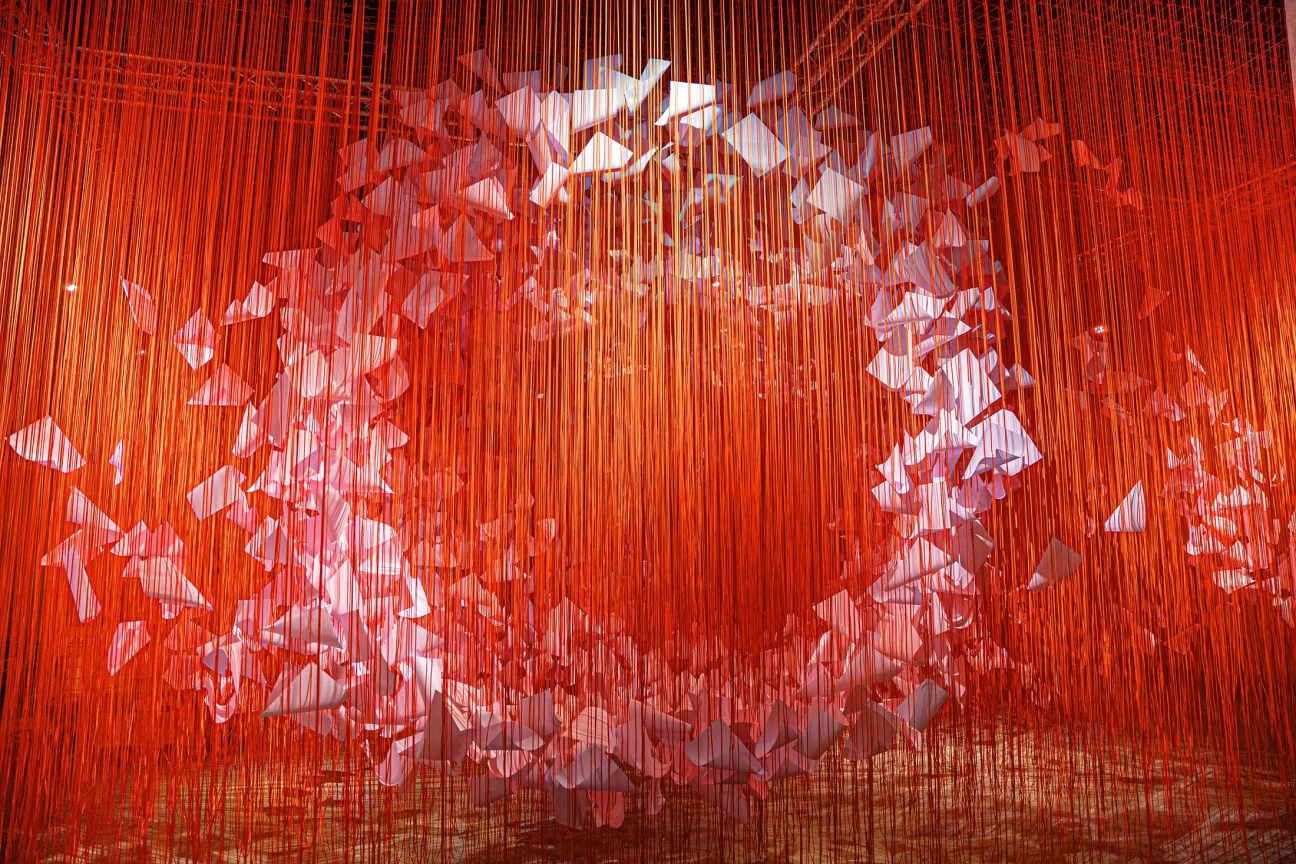
The Nakanoshima Museum of Art’s six-metre-high ceilings will be put to good use in Chiharu Shiota’s first major exhibition in her hometown for 16 years. Now based in Berlin, the Japanese artist creates immersive installations where the scale is matched by the conceptual ambition, as bright blood-red yarns evoke thoughts of life and death. Paintings, drawings and video work will add further context to this welcome mid-career survey.
‘Chiharu Shiota: I to Eye’ runs from 14 September to 1 December
Van Gogh: Poets and Lovers
The National Gallery, London
From spiralling starry nights to idealised asylum gardens, Vincent van Gogh had many unlikely visions during the final two years of his life. This landmark exhibition, which is part of The National Gallery’s 200th-anniversary celebrations, focuses on the Dutch artist’s period in Provence and makes good on one of those unrealised visions – a triptych comprised of a portrait flanked by two of his “Sunflowers”. A curatorial coup, the show reaffirms that the creator of some of the world’s most enduring single paintings also had one eye on the bigger picture.
‘Van Gogh: Poets and Lovers’ runs from 14 September to 19 January 2025
Books
Planes Flying Over a Monster: Essays
Daniel Saldaña París, translated by Christina MacSweeney & Philip K Zimmerman
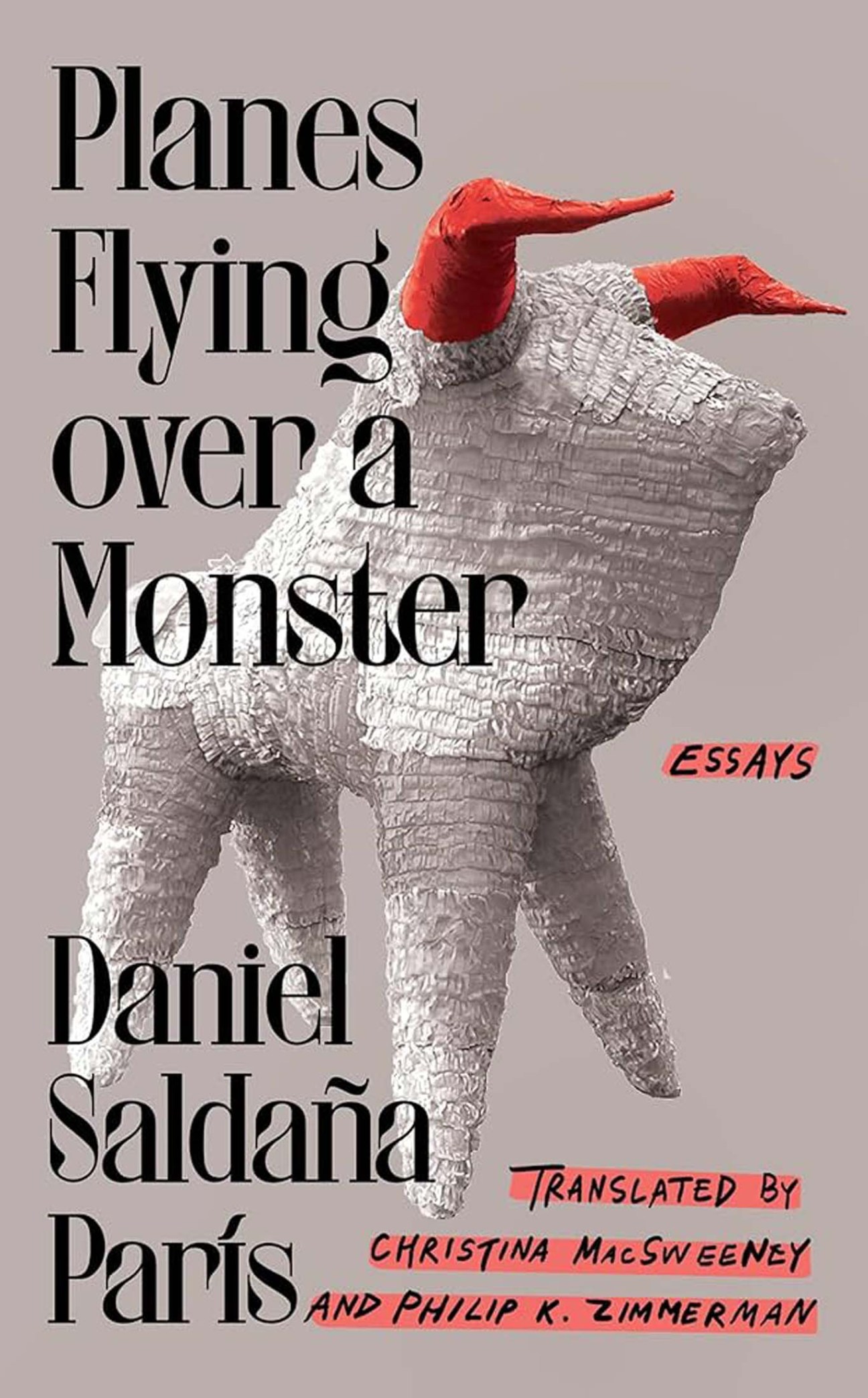
In this beautifully translated collection, Daniel Saldaña París – the novelist whom American author Ottessa Moshfegh called “the Mexican Philip Roth” – considers the cities that formed him. From trying to be a writer in Mexico City to attending NA meetings in Montréal, Saldaña París draws in the reader as “a witness capable of compassion and laughter”.
‘Planes Flying Over a Monster’ is out now
If Only
Vigdis Hjorth, translated by Charlotte Barslund
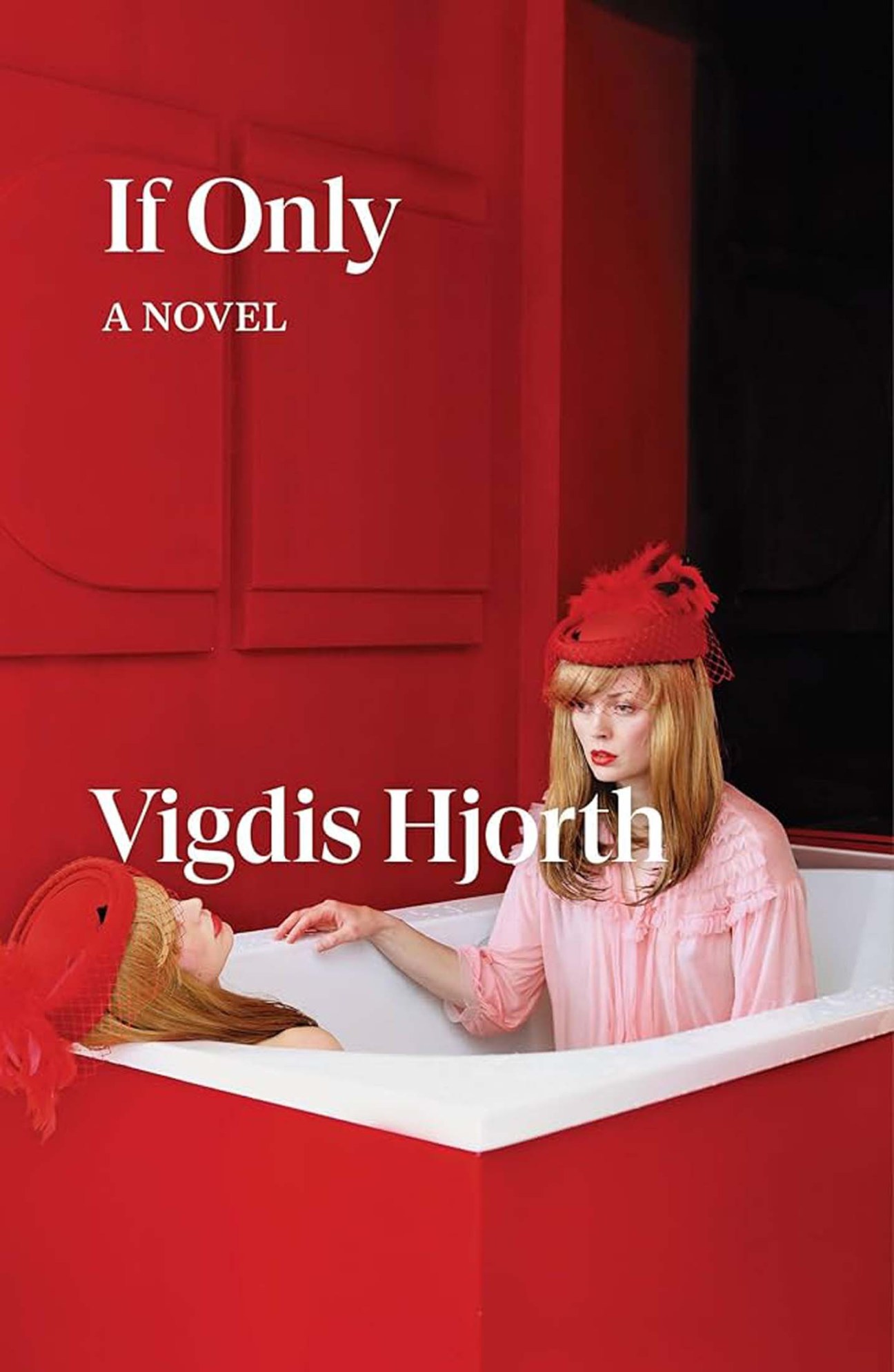
First published in Norway in 2001, this diary of a passionate but ultimately destructive love affair is considered cult author Vigdis Hjorth’s most important novel. Now out in English for the first time, If Only exposes the tragedy of both longing for and attaining one’s love object – it’s A Sport and a Pastime meets Anna Karenina.
‘If Only’ is released on 3 September
A Complicated Passion: The Life and Work of Agnès Varda
Carrie Rickey
A female filmmaker in the boys’ club of French New Wave, Agnès Varda (1928-2019) was underappreciated for most of her life. In this definitive biography, the first in English, film critic and historian Carrie Rickey traces Varda’s trajectory, which included genre-defying films such as Cléo from Five to Seven (1962), Vagabond (1985) and Faces Places (2017).
‘A Complicated Passion’ is released on 27 September
Photography
We Are Here: Scenes from the Streets
International Center of Photography, New York
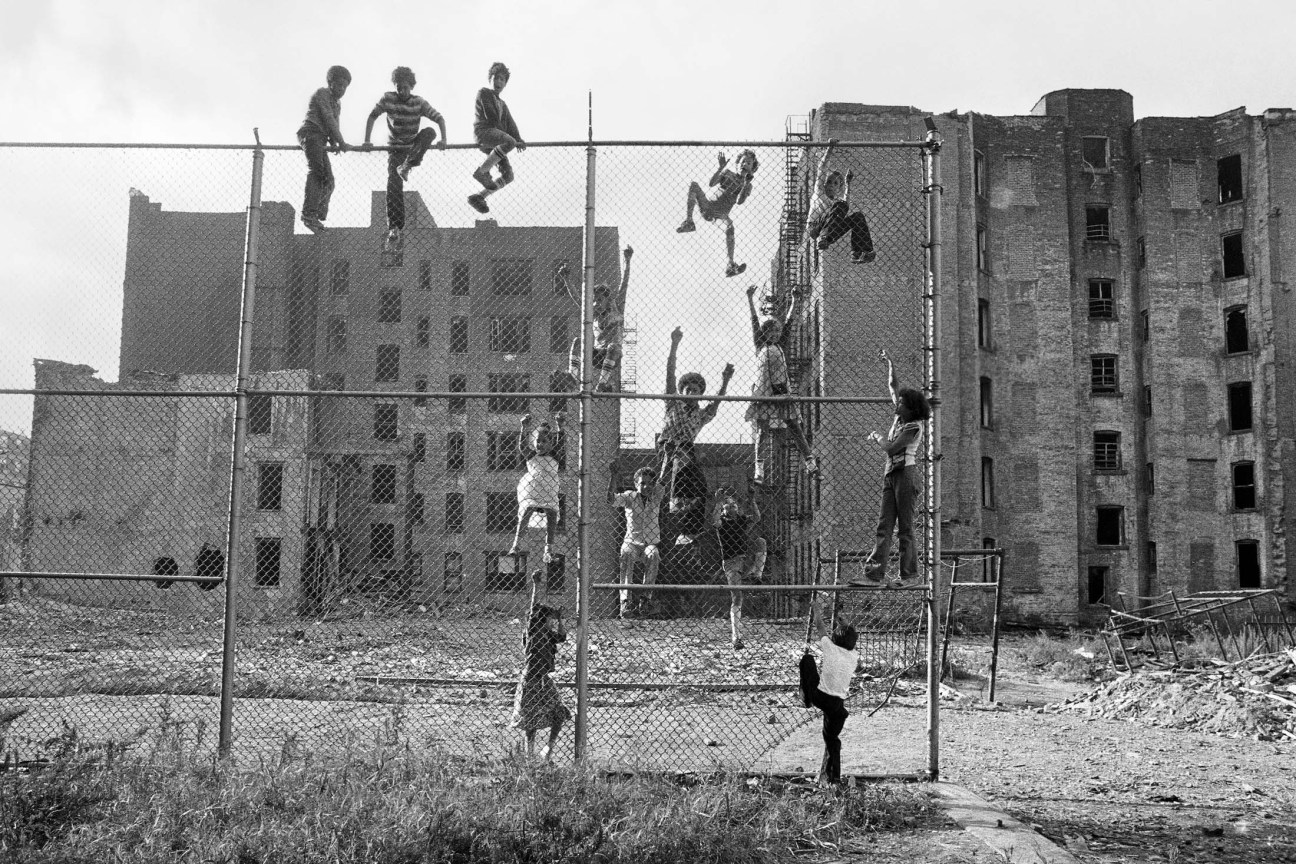
Street photography came of age in a less self-aware era, prior to the ubiquity of smartphones. The 30 contemporary practitioners who are featured here, including Iran’s Farnaz Damnabi and Cairo-based Randa Shaath, must work harder to capture authentic moments that stand out from the crowd. It will be interesting to see how curator Isolde Brielmaier incorporates fashion-focused portraits and documentary shots from global protests into this expanded definition of street photography.
‘We Are Here: Scenes from the Streets’ runs from 26 September to 6 January 2025
Inside the Tuscany tannery shaping luxury leather for LVMH
If you have ever wondered how cow or lambskin hides end up as a pressed, coloured and treated final product for your fashion accessories, then the family-run Nuti Ivo Group in Tuscany is the place to visit. The tannery might be rooted in Italian craft but its ambitions are global – especially since LVMH took a majority stake in the business last year.
“Here we can change the texture of the leather as well as dye it,” says production planner Umberto Nuti. He is pointing out the complex and multistage process involved in turning the raw material into a finished product as he gives Monocle a tour of the four factory buildings belonging to the group. Founded in 1955 by Nuti’s grandfather, the group is headquartered in Santa Croce sull’Arno, a Tuscan district that is home to more than 250 companies working with animal hides. “We can make the leather loose, grainy, tight, smooth or even fireproof,” he says, as the skins are loaded into giant metal drums. Nearby, a room is filled with boxes, each column of 18 palettes representing a truckload of skins. Once you are over the musky smell – more intense in the summer months – it offers a fascinating lesson in what remains an artisanal craft, even if the scale of the Nuti Ivo Group, which has five other tanneries in the area, is industrial.

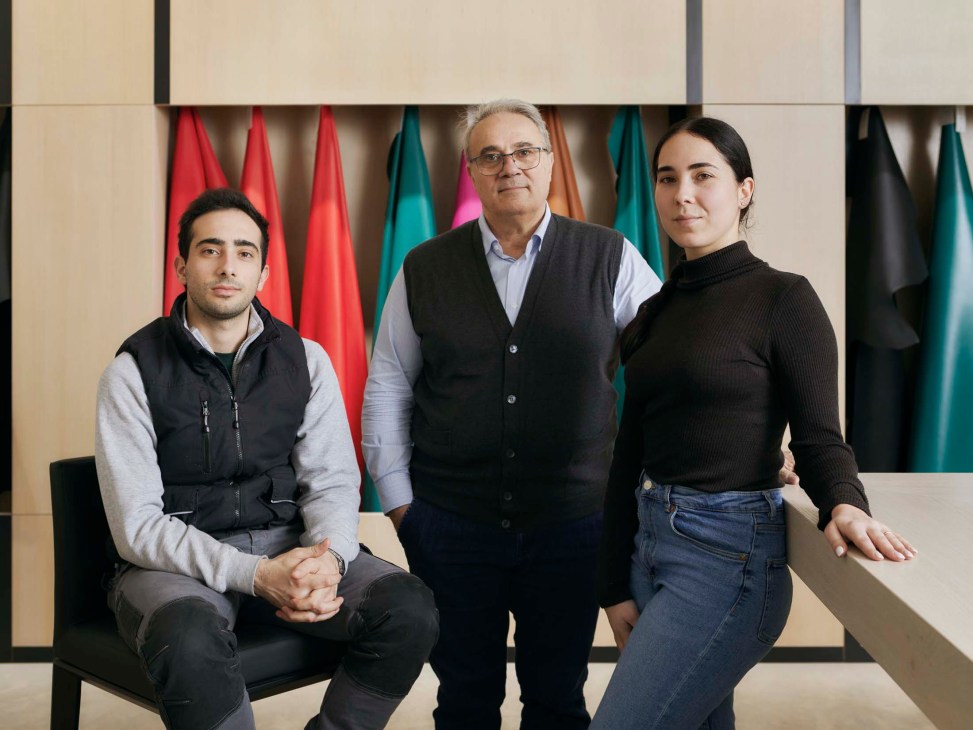
At the head of the group is Fabrizio Nuti (Umberto’s father), who explains the intricacy of the craft that he first learned as a teenager, while working on the factory floor during his summer holidays. “You’re starting with a material that is a moving target,” he says from the factory’s showroom. “Because your skin is not like my skin. You can try to standardise it but it’s not easy.”
Fabrizio says that the skills on display in Santa Croce can’t be codified in a book; it’s only something that can be learned through years of experience. It’s an intense job working the leather into shape, including washing in soap and salt to remove hairs, and turning hides into what is known in the trade as “wet blue”, the result of the chrome-tanning process. Then there are the manual checks, under intense lights, to see whether there are any defects before hides are graded from A to C. There’s also the cutting in half to separate the low-grade crosta (crust) from the most sought-after fiore (flower). And that’s just a small part of the washing, dying, cutting and smoothing being performed on a daily basis.
It’s no surprise, then, that the Nuti Ivo Group has been commanding the attention of the luxury industry, particularly LVMH. In May last year, LVMH Métiers d’Art, which is owned by the French fashion behemoth, took a 55 per cent stake in the tannery – part of a broader mission to develop a global network of specialised manufacturing facilities to service (albeit not exclusively) LVMH’s wide-ranging portfolio of brands. Given the Nuti Ivo Group’s reputation as a leader in the industry with generations of know-how, LVMH, which has ramped up its investment in manufacturing recently, wanted to be involved.
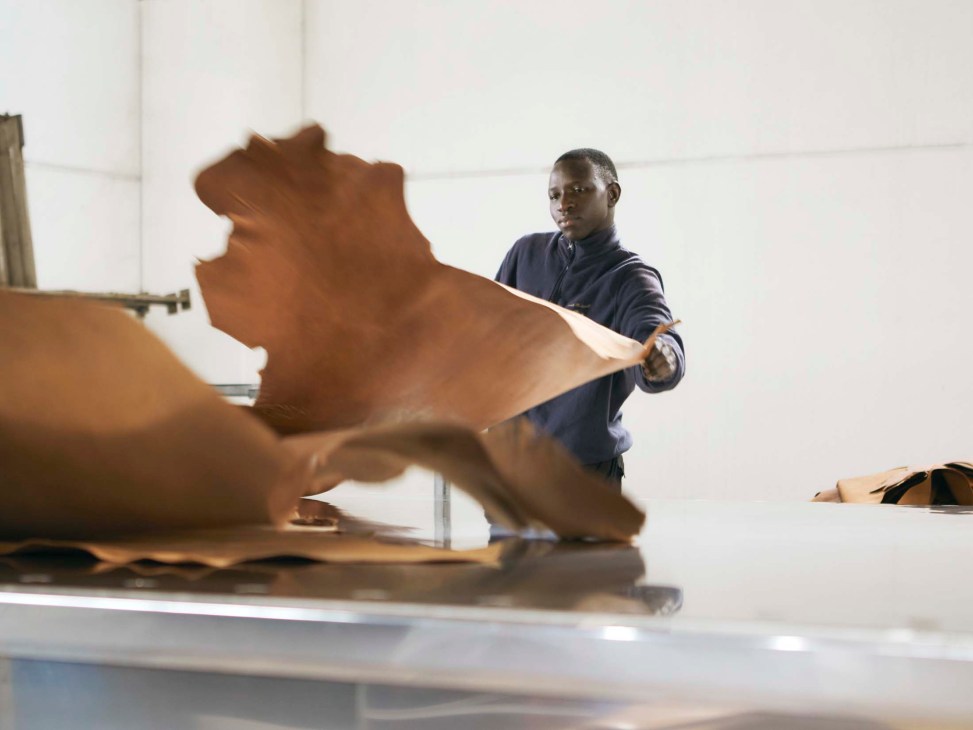
In fact, the relationship between the two companies goes back more than 30 years, so the decision to work closer together can be seen as a natural evolution. Fabrizio says that it was a good move – perhaps the only one his group could have made to secure its future, given the consolidation happening in the fashion sector in the past decade and the level of control retained by the big groups.
There are a lot of mutual benefits too. “As a customer and partner, we can share much more information and we will be able to better understand LVMH’s needs,” says Fabrizio. “They will also better understand what we need for our production. Plus, we expect that they’ll help us grow.”
A fashion multinational buying up a tannery might not come as a huge surprise any more. Most fashion groups have been doing this in order to have more control over the supply chain and to maintain an advantage over competitors. But there’s much more to be gained in the long term. “It’s a whole ecosystem that the luxury industry can tap into for excellence as well as innovation,” says Pierre Mallevays, co-head of merchant banking at Stanhope Capital in London, who has worked for luxury brands such as Celine and Tom Dixon. “LVMH, as the sector’s leading and most powerful player, has embraced it with enthusiasm.”
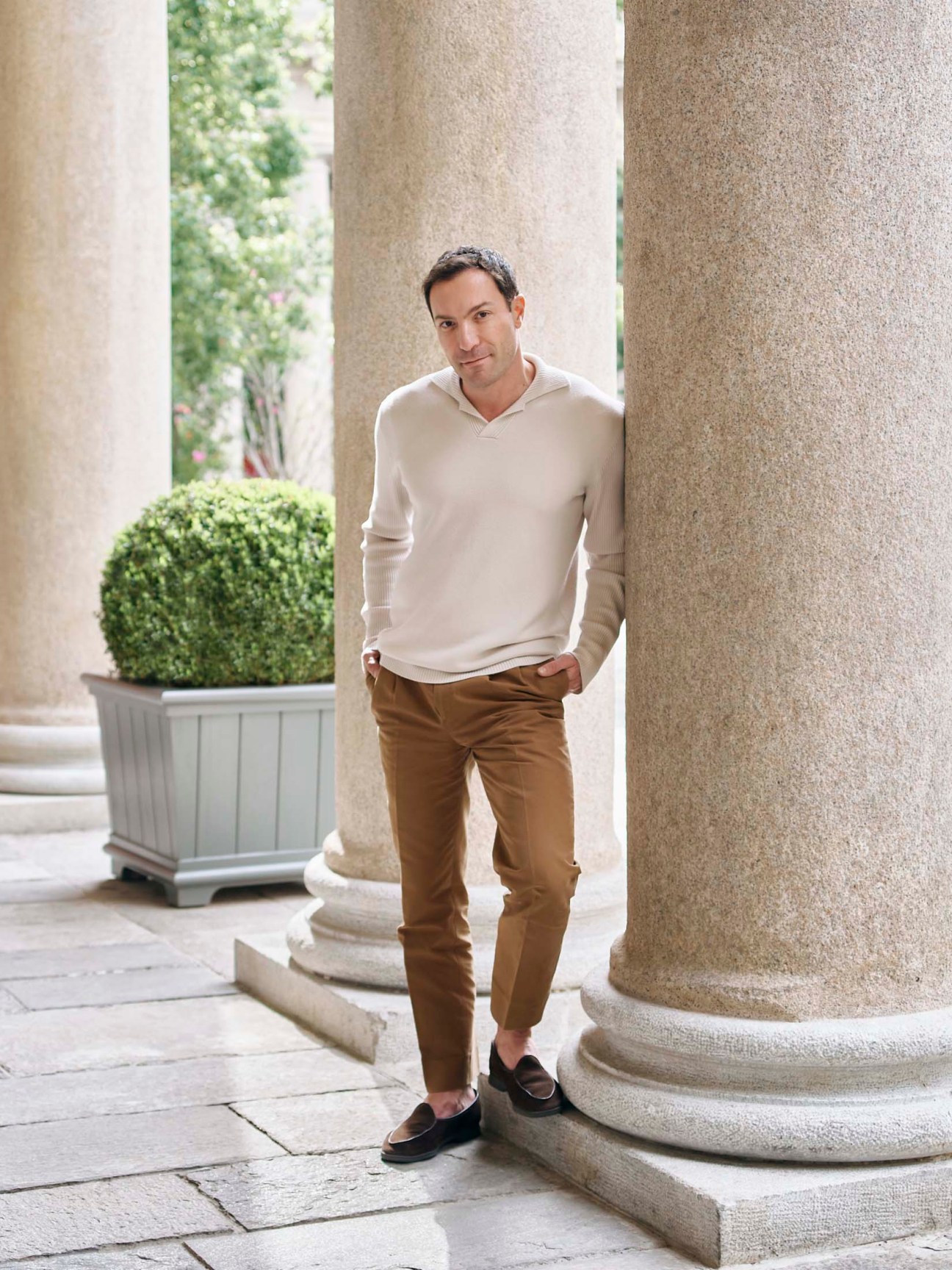
Italian-born Matteo De Rosa, CEO of LVMH Métiers d’Art since 2021, agrees. He was on the road for 240 days last year, thanks to the speed with which the company has been growing, and has overseen a move to a new Paris HQ on Rue Réaumur. His plan now is to consolidate the expansion and ensure that the company’s network is future-proof.
De Rosa, who meets Monocle for a coffee in Milan, is keen to point out that when LVMH Métiers d’Art invests in a manufacturer, it can continue to work with the rest of the industry. The Nuti Ivo Group, for instance, will still work with existing clients outside the group, which is not a problem for LVMH. “What we’re really doing is scouting and creating partnerships that will move the industry forward,” says De Rosa. “Of course, it’s about a positive bottom line but it’s also about maintaining the availability to the full industry – we’re open to the market.”
He calls the work he does an “insurance policy”, which essentially harnesses the deep pockets of LVMH to make sure that these world-class facilities can continue to operate. The model mirrors the work that the Chanel Group has been doing for decades by investing in artisan workshops such as embroiderer Lesage or milliner Maison Michel – and recently giving them all a new, modern home to operate from in Aubervilliers, Paris’s fast-developing suburb.


De Rosa jokes that appointing him as CEO of the Métiers d’Art division was something of a “strategic gamble” by LVMH. But his experience across luxury production has proven invaluable. Before joining the group, he co-founded leather-goods brand Sartie and served as president of Puig-owned Dries Van Noten in Antwerp, alongside other roles in China and Australia. The Nuti Ivo Group deal, which took about 18 months to cement, was one of De Rosa’s first at LVMH and he calls it a “meeting of like-minded people” who are committed to safeguarding the future of the tanning craft.
The Nuti Ivo Group partnership is only a small part of the LVMH Métiers d’Art investments, which also spans animal farming, textiles and metalwork. LVMH Métiers d’Art opened in Tokyo last year and now works with the likes of Kuroki, a denim producer, and Kyoto’s Hosoo, a family-run silk-production company, which started out by making kimonos in the 17th century. There are currently 17 companies in its network, from the US and Singapore to Australia, though LVMH doesn’t currently have a stake in Hosoo.
Being CEO of the division means working across time zones and sectors but also knowing how to deal with a range of personalities who might have had to make difficult decisions about their company’s future. De Rosa compares his job to that of a psychologist, given that he has to build trust and persuade companies to open up to potential change and innovation. “Opening your kitchen to others is not always simple,” he says. “Especially for people whose competitive advantage was to close the door and not show the recipes in their kitchens. It requires a huge effort.”
LVMH Métiers d’Art, which has a turnover of about €700m, is cash positive and De Rosa is keen to point out that his company is “a profit centre and not a cost centre”. Still, there isn’t an aggressive venture-capitalist mindset here, meaning that LVMH is happy to invest for the long term if everything looks to be heading in the right direction. “We say to our partners that this is a wedding that won’t end in divorce,” says De Rosa, explaining that the bottom line isn’t always the first conversation when he is holding discussions with a potential partner.
Instead, it’s “a question of mindset” and the willingness to “produce the excellence of yesterday, today and tomorrow”. He might be talking to the best company in the world but if the owners are fixed in their ways or too stubborn to see how change can be positive, then the deal is never going to go through.
One way in which LVMH Métiers d’Art has looked to open minds has been through artistic residencies. The programme sees artists spending at least six months at the facilities in its network and producing works that show off every workshop’s craft skills. Last year, for example, French artist, performer, and writer Josèfa Ntjam worked with metal specialists Jade Groupe, a tie-in that culminated in a show in Paris.
To sceptics, it might sound like a facile brand extension or a way to get into the cultural sphere. But for De Rosa, it goes back to the idea of getting people out of their comfort zones and celebrating the artisans, and encouraging them to keep growing. “What interests me is the creative process that is generated inside the company,” says De Rosa. “Because it completely changes the way they work and the way they think about their jobs.” It has already had a positive effect: new techniques, from colouring metals to a transparent leather, have been developed as part of the residencies.
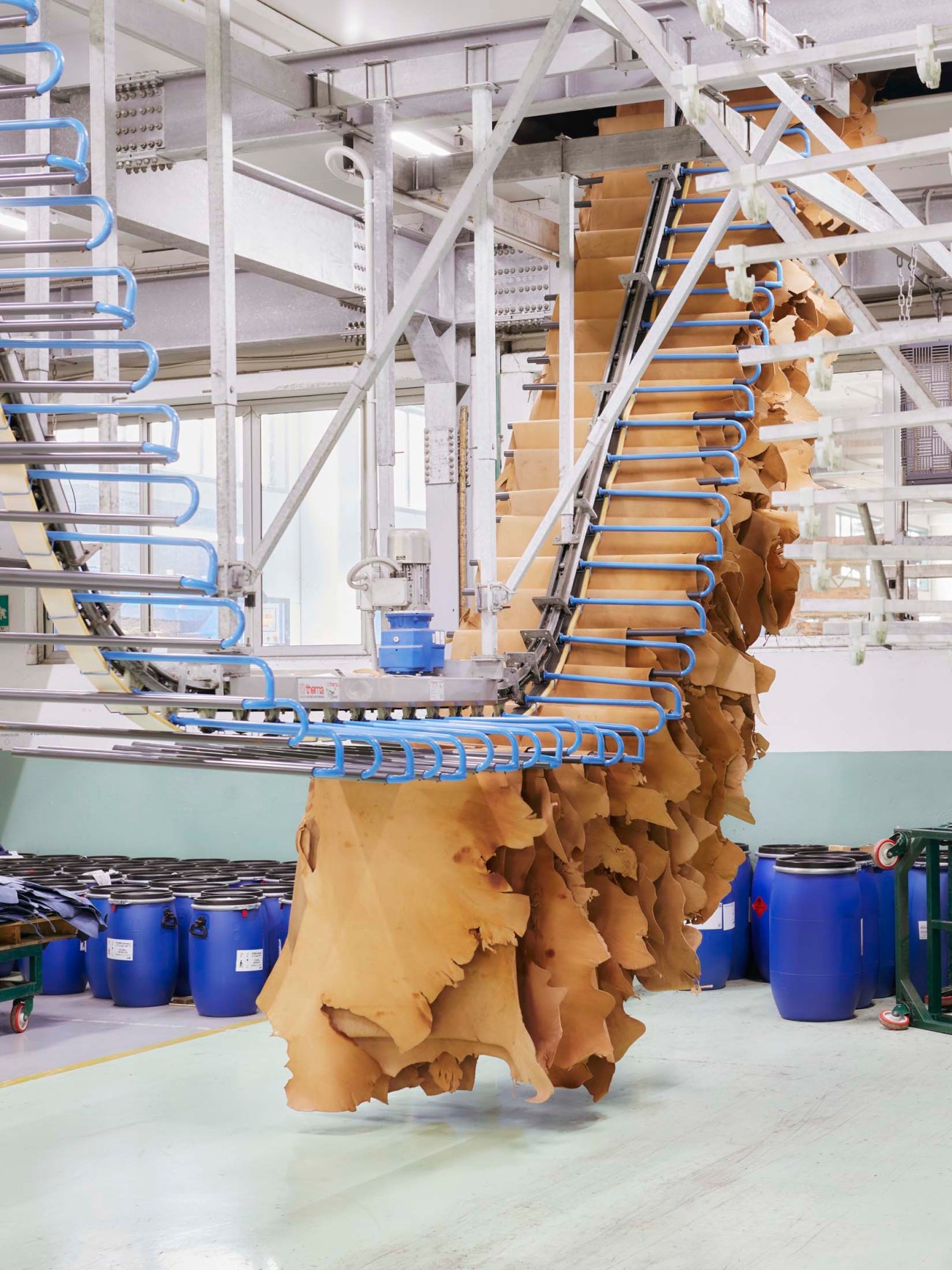
Back at the Nuti Ivo tannery in Tuscany, work is showing no sign of slowing down. Hides are being hung on mechanised racks that move around the space to dry; this is just a small number of the roughly one million skins that the company works with every year, most of which are exported around the world. “There are a lot of tanneries that jump from one thing to the next because fashion is a bit like that,” says Fabrizio Nuti, as he walks over to meet his son, Umberto, and daughter Rebecca, the group’s traceability manager. “We’ve focused on doing fewer things and being the best.” Thanks to their well-endowed French benefactors, the Nuti Ivo Group’s best is about to get even better.
All aboard The Monocle Express, redefining luxury travel one dream at a time
Trains are a smart, smooth way to travel. A well-designed train can connect communities and make business and leisure a pleasure. Sadly, many railway companies are relying on old rolling stock and tired notions of onboard hospitality, occasionally excelling in one area while falling short in another (big windows but small seats, for example).
That’s why we’re designing our own. If we were to chart a route, our train would offer unrivalled connections, reaching areas not readily served by routes that cross state and national borders. To make this vision a reality, we’ve enlisted a wish list of global talent to create a train that gets you where you want to go on time, and in style. So grab a ticket and hop on The Monocle Express. All aboard!

1.
Proper dinning cars
First-class fare
Dinner service often feels dull, so The Monocle Express is reinstating the refined onboard restaurant. Our train takes inspiration from the blue dining cars found on Switzerland’s Rhätische Bahn and older carriages belong to state operator SBB. Staff, who wait tables covered with crisp linen and tableware, are trained in a finely tuned apprenticeship programme that’s the gold standard in the hospitality sector.
2.
Good bar car
One for the rail
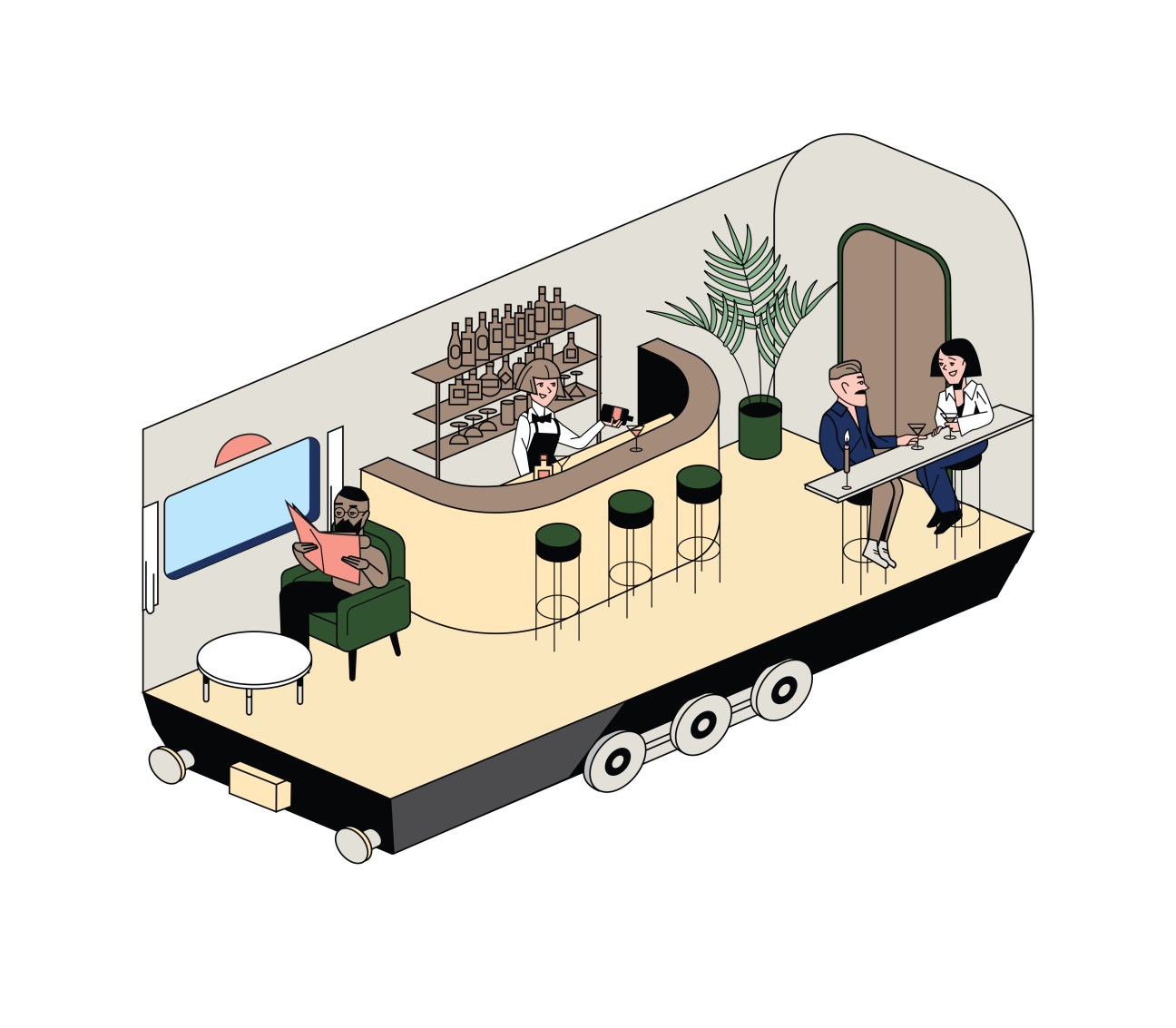
Our bar car has an actual bar, helmed by staff trained by the team at Berlin’s Château Royal. There’s a variety of seating, including freestanding armchairs and stools by French firm Alki, ensuring that the space feels domestic and calming, while providing moments for a team drink or solitary sip on the last train home. As for the menu? We’ll be serving wines local to the route, beers and cocktails.
3.
Service trolley
Rolling stock
A trolley serving pretzels, wine and coffee ensures that passengers are always sated. To keep the peace, its wheels are smooth and quiet, and the trolley is thin so that it doesn’t bang into seats as it passes down the aisle.
4.
Proper cooking
Flavour of the month
The kitchen serves classics that passengers look forward to. Its bakery makes great sourdough and the spaghetti bolognese is ideal for late-night commutes. Emerging chefs also devise seasonal menus that capture the best of regional produce.
5.
Gentle lighting
Subtle distinction
Good lighting can make or break a space. As such, the whole train is illuminated by warm-hued lights that are recessed in subtle ceiling grooves, creating a diffused glow and a relaxing atmosphere. And yes, those are real candles on the tables in the dining car.
6.
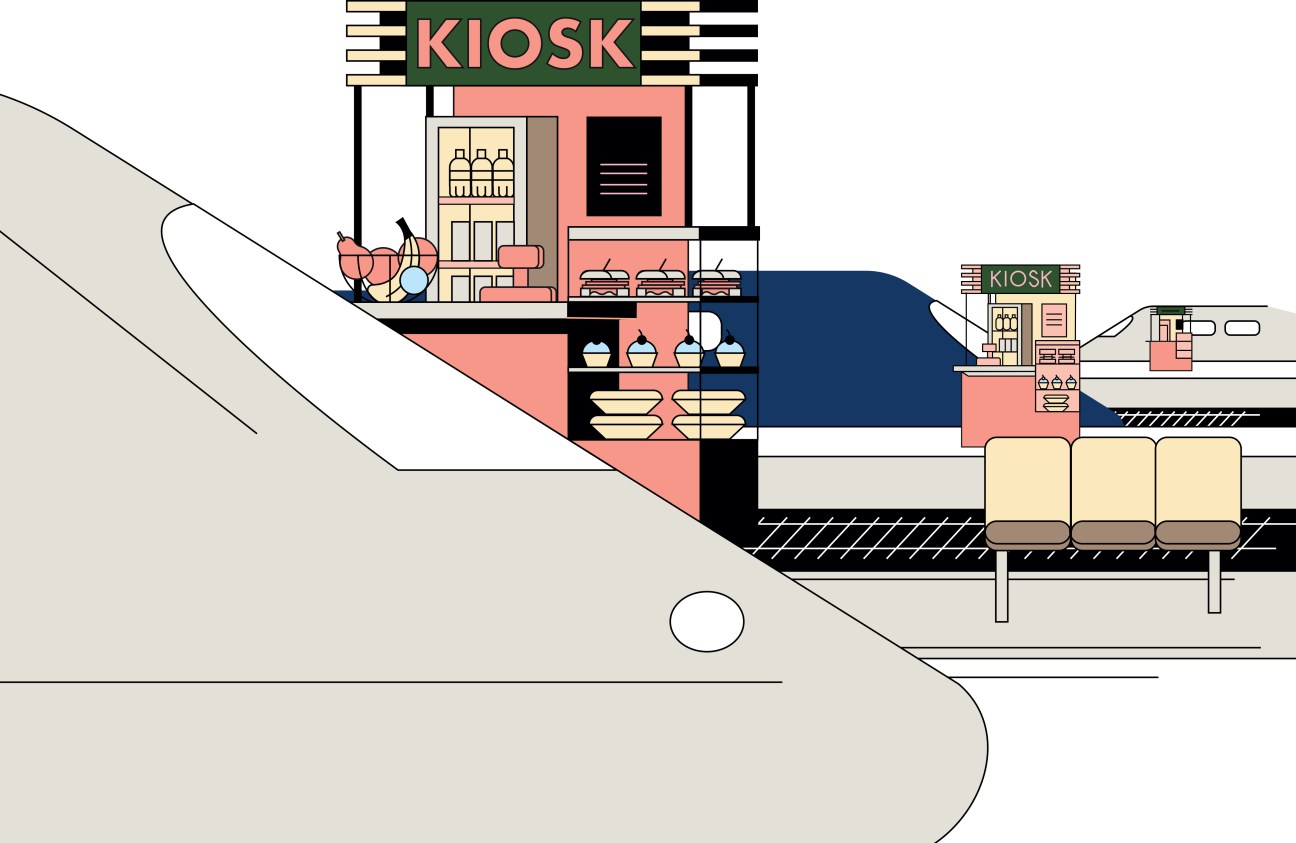
On-platform kiosk
Sales pitch
For those who can’t wait until they board the train for refreshments, there’s a small kiosk on the platform, similar to the set-ups found across Japan. It’s stocked with the day’s newspapers, the best magazines and a surprising selection of pocketbooks. Depending on the station, we’re also working with the very best local coffee roasters and, of course, the baristas are always sunny.
7.
Later departures
Railway sleepers
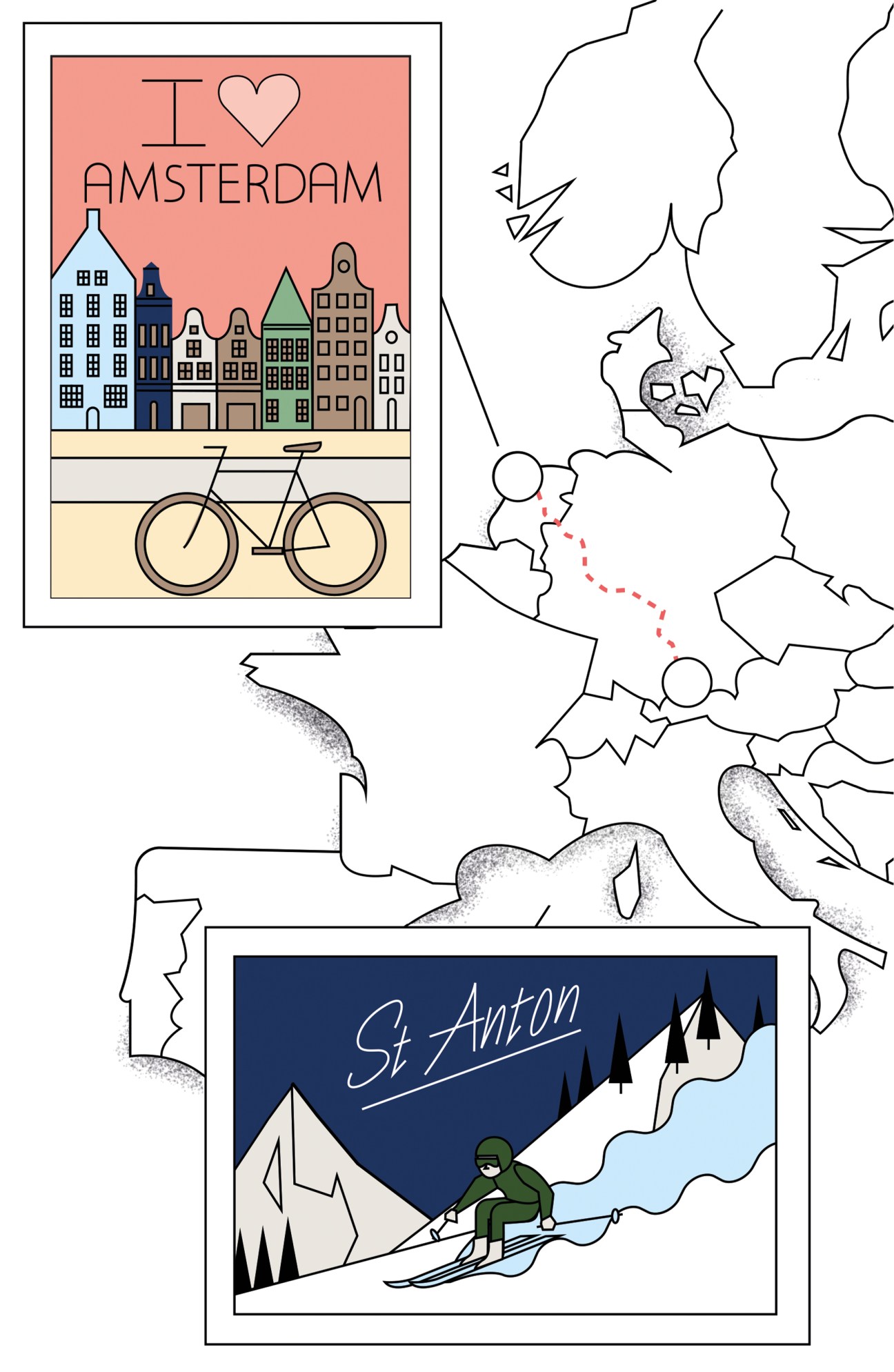
Our timetable also offers late departures so that you can enjoy dinner in Paris and still roll into Zürich at 04.00. Rather than a proper sleeper service, special seats go into deep recline, lights go down and there are fresh pillows and blankets for a solid four-hour sleep.

8.
Resort routes
Station to vacation
Much like seasonal airline services connecting city dwellers with island destinations, The Monocle Express tailors its routes to passengers’ holiday preferences. A line runs across the Alps in winter and routes track Italy’s west coast in summer. Viewing carriages – inspired by Switzerland’s Bernina Express – are attached to the train for these journeys, with double-pane floor-to-ceiling windows running the length of the carriage.
9.
Boarding music
Laying down the tracks
The Monocle Express is known for its superior approach to audio: signature jingles for pulling into stations, kicky boarding tracks and an infectious theme song that defines the brand in slick TV, radio and digital campaigns. Also, there’s special emphasis on training our on-board staff to sound both in control and silky smooth.

10.
Business carriage
Work in progress

High-speed rail travel doesn’t mean that work can’t continue at pace. Those looking to continue wheeling and dealing in peace can book into our dedicated business carriage designed by Caon Design Office. The Australian studio, which specialises in transit interiors, has designed a timber-clad space that feels more like a cosy office than a charmless train compartment, offering acoustic relief and a calming space in which to get down to busines
11.
Family pods
Letting off steam

While many rail operators have family-themed carriages, we also offer special cabins for moments when a tantrum can unsettle the other 300 passengers on board. Just as we have call cabins for chattier passengers (see above), parents should be able to have less stressful moments when junior needs to calm down. Of course, there’s a special call button when mum and dad need a calming glass of pinot bianco.
12.
Phone booth
Chatter boxes

Looking for a moment of discretion? Or just want to catch up with a friend without pouring your heart out to the whole carriage? Jump into one of our soundproof phone booths. Inspired by Spanish brand Kettal’s Kall phone pod, these have a compact footprint and a glass door that provides transparency but still allows for privacy (curtains are optional). Clad in wood, it has a warm character and comes with integrated yet silent ventilation.
13.
Silent cars
Train of thought
There’s an unspoken rule that noise should be kept to a minimum and sometimes it’s nice to sit still and simply watch the world go by. Our silent cars really are silent: no talking, no typing.

14.
Dimmable lights
Dip, don’t dazzle

Personal reading lights should offer a gentle, direct glow – and not illuminate the carriage like a spotlight. We’ve tapped German firm Occhio to create a bespoke light system to meet this brief.
15.
Particular porters
Friends of the line

Porters line the platform. They’re there to help and organise rather than just point passengers toward seats. The porter will ensure that no stray briefcases, backpack handles or coats come tumbling onto the floor. These customer-facing staff members are also on hand to make boarding as seamless as possible, by rolling bags on and off platforms. Plus, the porter team have exceptional knowledge of the towns along the route and can provide hot tips on where to go and what to see – they’re the train’s concierge service. You’ll recognise them from their uniforms by Milan’s Older Studio.
16.
Soft surfaces
Curtain call

There’s a reason why our homes have curtains: they ensure privacy and offer great acoustic insulation. A train is no different and the windows of The Monocle Express are dressed in fabric drapes by Danish textile specialist Kvadrat. In addition to curtains, other plush furnishings, including seats upholstered by Italian brand Dedar, are essential onboard inclusions. Hard surfaces can amplify noise, making it difficult to have a quiet conversation, so acoustic panels made from natural materials have been prioritised over metal where possible, thanks to their acoustic absorption properties.
17.
Spacious bathroom
Clean getaway

Every carriage has a bathroom, separated from passengers’ seats by the luggage storage area (so there are no unpleasant wafts). Facilities are spacious and clean, with a shelf for travellers to place their skincare products and glasses while freshening up before arrival. There’s also a custom fragrance diffused in the space, made in collaboration with London’s Perfumer H.
18.
Bathroom attendants
Groom service
This unsung hero of The Monocle Express is our toilet attendants, who keep things running. They make sure the facilities are clean and well-stocked with grooming essentials to ensure that passengers are always looking, feeling and smelling their best.
19.
Smart seating
Noble berth
We’ve turned to Marc Newson, who recently created a beautiful task chair for furniture giant Knoll, to design our bespoke seats. All are equipped with in-built phone and computer chargers, a discreet footrest and a generously proportioned timber table and reading light, which folds out from the back of every seat. With temperature controls built into the armrests, guests can warm and cool their perch, which is finished in Poltrona Frau’s Impact Less Leather.

20.
The right retail
Revenue booster
Our investors are impressed that our retail sales account for more than 15 per cent of The Monocle Express’s turnover. The kiosk near the bar car and the well-stocked trolleys offer everything from handsomely designed souvenirs, toiletries for moments when the trip becomes an overnighter and always the best in print from Monocle’s presses.

21.
Lounges
Comfort zone
Every journey should have a distinct starting point, which is why we’ve built a specific station for just that purpose, which also serves as a city landmark. It has dedicated passenger lounges with comfortable armchairs, complimentary newspapers and magazines, and high-speed wi-fi. For its interior design, we’ve commissioned German architecture firm Hollin 1 Radoske, after being inspired by its time-tested work on the Lufthansa First Class lounge at Frankfurt International Airport.
22.
Meeting rooms
Business class
Travellers require transit lounges to provide more than simply a moment of respite. They should also comprise functional spaces in which to take important calls, draft emails and even host small meetings. As such, these dedicated workrooms are fitted out with facilities enabling conference calls and presentations, allowing business to continue at pace.
23.
Shower facilities
Signal of intent
Did you get the overnight from Milan and want to freshen up before that meeting in London this morning? (Yes, we charted a new route.) Our top-tier shower facilities have a spa-like atmosphere, with soft imabari towels, high-pressure shower heads from Spain’s Roca and a pamper pack that includes a skincare range that we created with South Korea’s Beauty of Joseon. All this will have guests looking fresh on arrival. This is about more than hygiene; it’s a statement of passenger care.
24.
Play space
Fun of the fare
A train station should be a welcoming space for all, and that includes the youngest travellers. Our dedicated children’s playground transforms the potential stress point of a long wait into a joyful experience. We’ve taken inspiration from our favourite playgrounds (designed by Dutch firm Carve), with a bouldering wall and a train-shaped climbing structure. It’s a small but significant step towards inspiring and engaging the next generation of rail travellers.
25.
Nap rooms
Bed and boarding
Train travel can be an exhausting process, especially when crossing time zones or involving early departures. To help travellers feel fresher on arrival, our dedicated nap room allows passengers to grab a quick moment of shut-eye. This appropriately lit space is equipped with comfortable loungers for shorter rests and sleep pods for those in need of a longer snooze. The result? Passengers who feel refreshed and ready to embark on their next adventure.
Your carriage awaits…
We’ll turn to some experienced manufacturers to make The Monocle Express a reality. One of these is Nagoya-based Nippon Sharyo, which has been making rolling stock since 1896 – its Shinkansen trains for Japan’s state railways hit speeds of up to 320km/h. We’ll also partner with Switzerland’s Stadler Rail so that our train has a striking livery and aerodynamic curves. The result? A slick train that draws on the best rail solutions that the world has to offer.