Amsterdam’s old brown bars are pouring themselves a second life
A new generation of owners is reviving Amsterdam’s brown bars – the city’s beloved, smoke-darkened “living rooms” – proving that old haunts can still pull a crowd.
It’s early on a Thursday afternoon and an elderly man ambles into a pub in Amsterdam neighbourhood Jordaan looking for Café de Zon. He’s in the right place but the wrong year – that was previously the name of this spot on the corner of Lindengracht for almost 40 years. Once run by a football fanatic who plastered it floor to ceiling with players’ shirts, it was shuttered during the coronavirus pandemic. Another tenant stuttered on for 18 months until Olivier Brackel and Matt Hargreaves, who were both in their twenties and working in the wine industry, stepped in and opened Café de Linden here in November 2024. “The previous owners weren’t around much,” says Brackel. “So the place lacked energy.”
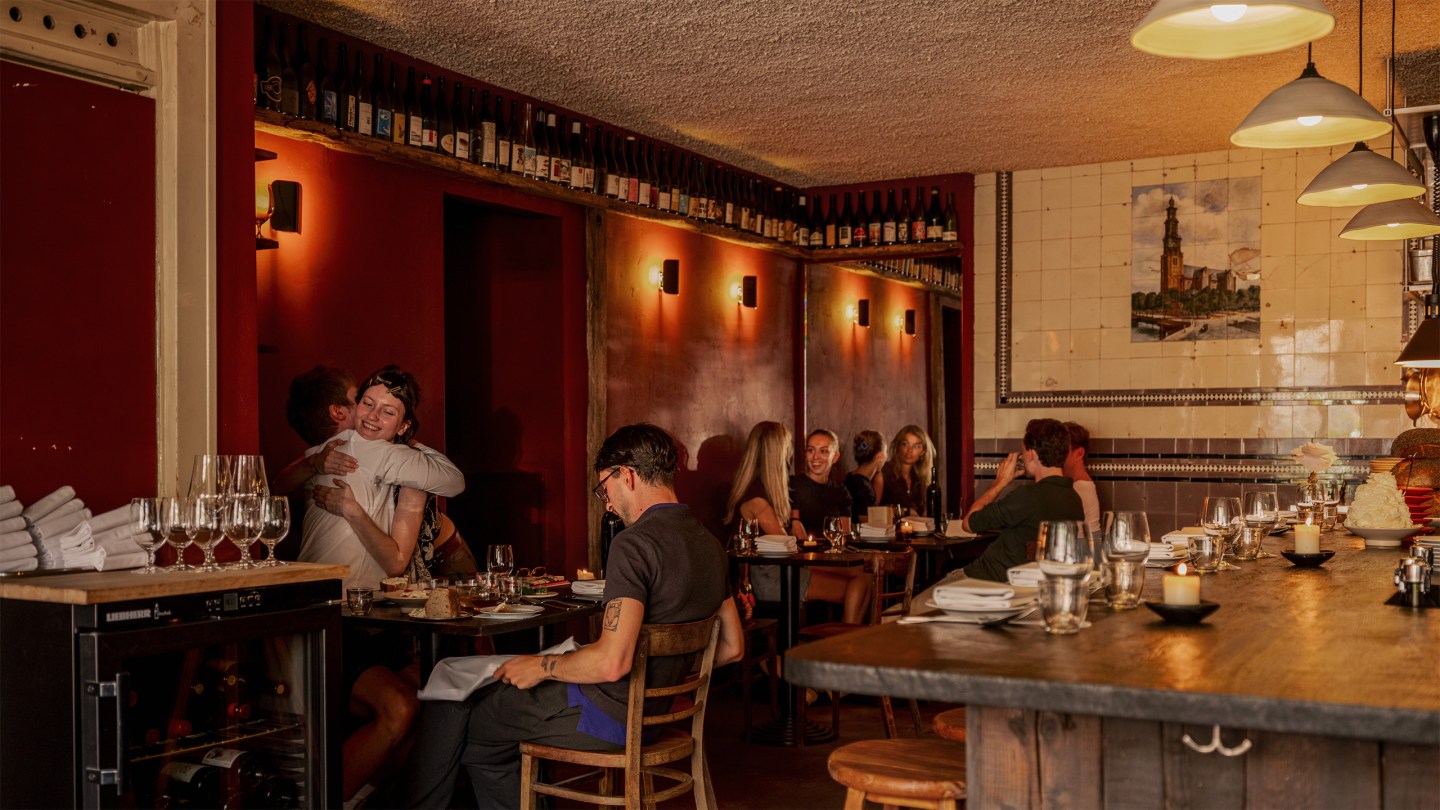
These traditional Dutch pubs, known as bruine kroeg or “brown bars” because of tobacco and candle smoke that darkened their walls, have fallen out of favour. In the past 30 years, half of Amsterdam’s living rooms – as they’re also affectionately known – have been mercilessly converted into minimalist matcha spots or restaurant chains. But a handful have been taken over by a new generation intent on returning these old haunts to their former glories.


The duo behind Café de Linden’s revamp did most of the renovation themselves, revealing a 19th-century mosaic-tiled floor that had been partly concealed by the bar. A photo of the building in 1954, which was found in the city’s archives, hangs by the bar. It was the reference for replacing plastic windows with stained glass akin to the originals. The menu remains simple. “The more complex that you make something, the more expensive it gets,” says Brackel, placing menus on the outside tables. That philosophy helps keep prices reasonable, without compromising on the produce’s quality or the open-to-all ethos of classic brown bars. A glass of house wine costs €5.50; a cheese toastie is €8. The same mindset shapes working hours. The duo are striving for Café de Linden to be like “cafés on Italian piazzas: always open and for everyone”, says Brackel. It’s open seven days a week from 08.00 until 00.00. The crowd is eclectic: the Monday morning flea market brings in older residents while Friday afternoons belong to the orange-wine-sipping crowd.
A few streets away it’s a similar story at Kamer bar (formerly Café de Parel). An elderly couple sit next to a group of creatives who are trying natural wine for the first time. “Open-minded” is how Russo-Irish chef Ciaran Patrick characterises his clientele. He took over the brown bar in late 2025, together with business partner Justin Grooten. To respect the neighbourhood, a Dutch name was non-negotiable. Kamer derives from huiskamer (living room), a nod to the homely setup, with a kitchen in the corner. Housed in an 18th-century building, the space has original details including a stained-glass window bearing Amsterdam’s coat of arms.


In Amsterdam’s Oud-West, Anne, a resident of Ten Katestraat for two decades, is glad to see a dormant watering hole once known as Topido, now Bar Kaat, on her corner lively again. The pub was untouched for almost 50 years until 12 school friends took it over this summer. “People say don’t mix business with friendship but we know each other’s strengths,” says Pim Muns. The dozen kept their day jobs – in Muns’s case, as a Heineken account manager. The idea to take over came after the previous owner, his client, grew tired of running the bar and asked if he knew a buyer. The new custodians handled the bar’s makeover themselves. A steady stream of customers has kept the place busy since a local TV station from their native province, Limburg, in the south of the Netherlands, broadcast a segment about them. Drinks arrive with Dutch deep-fried bar snack bitterballen, served the Limburg way, with pulled beef rather than diced. For pudding, there’s vlaai (a fruit tart). “Eating vlaai at your own bar, that’s when you know that you have made it,” says co-founder Jérôme Spronken, with a grin.
Three of the best bars in Amsterdam
Café de Linden
An all-day café in Jordaan with an unfussy menu that shifts from freshly baked krentenbollen (currant buns) to seasonal salads and cheese toasties.
cafedelinden.nl
Kamer
At Kamer, nostalgia runs deep, from the bar setting to the plates. Standout dishes include butterflied and glazed quail and canelé with sour cream and caviar.
kamer.bar
Bar Kaat
Come to this bar, which is named after its street, following the daily Ten Kate market for a beer, cocktail and simple bar bites. For something regional, ask for sjoes – a Limburg lager topped with a dark beer.
barkaat.nl