Meet the restaurant fixers: Three hospitality specialists helping get branding, uniforms and lighting just right
It takes more than a menu to make a restaurant successful. From dapper uniforms to perfect lighting, there’s plenty to decide before the first order arrives. Here are three top global talents to call.
1.
The restaurant consultant to protect your identity: Imschweilers
Munich, Germany
Few people understand the workings of a good bar better than Martin Imschweiler. His credentials as a hospitality consultant stem from 12 years behind the counter at Schumann’s, the Munich institution that, as Süddeutsche Zeitung once put it, helped make the Bavarian capital “more than just another mid-sized city”.
In 2021 he founded Imschweilers, a consultancy that develops hospitality concepts from the ground up. “Too often, we see excellent restaurants with weak branding or beautiful spaces without a strong food concept,” he says. “It becomes an either/or proposition.We create places that people genuinely want to return to.” What matters are the details. “When the staff greet you by name, remember your usual order or notice that you haven’t been in for a while – that’s when a restaurant or bar becomes more than somewhere to eat or drink.”
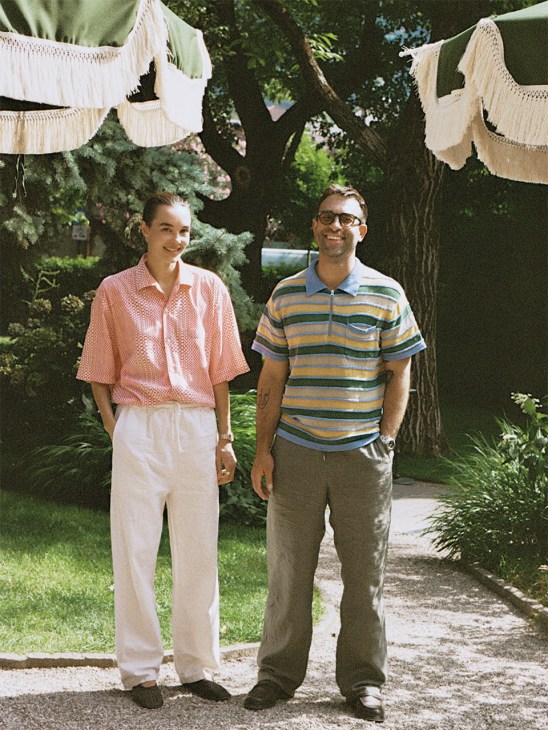
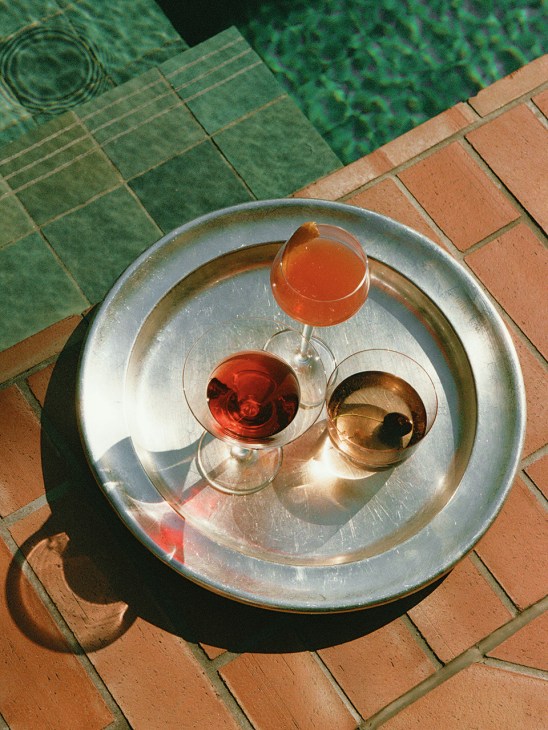
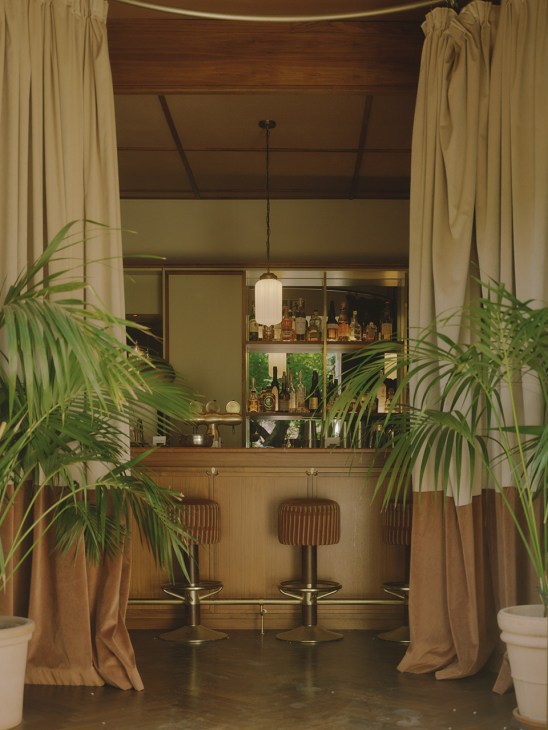
Imschweilers always begins with the space. “We look at what’s already there: the architecture, the history, the light and the neighbourhood,” says Verena Glup, the company’s creative director. This guided Imschweilers’ work at Parkhotel Mondschein in Bolzano in 2021, one of its first commissions. “The building already had a soul and a rich history so we wanted to create something that felt as though it had always belonged there,” says Imschweiler. They used the region’s culinary traditions as a blueprint, turning the restaurant into an ambassador for South Tyrolean produce. The owners also wanted the bar to become a gathering place for local residents. “Guest chefs and collaborations with artists, musicians, designers and makers create an evolving platform that carries the spirit of the region beyond the hotel,” he says. Then there are the operations. “We often say that they are the perfume of a place. You may not notice them consciously but you feel them.”
Clients come to the company at every stage of the process. “Some arrive with little more than an idea; others want to rethink an existing concept or venue,” says Glup. Recent projects include a modular bar with Swiss furniture-maker Lehni that fits into a trunk; a café concept for Munich design brand Orno; and the identity for Iza Noodle Bar, due to open later this year in the Bavarian capital. “The strongest stories come from the food, the founders, the location and the culture behind a place. We’re here to uncover them.”
imschweilers.com
Three lessons from Imschweilers
Don’t try too hard. Give a place a clear personality and let every detail follow. When the menu, interiors, music, service and visual identity speak the same language, guests sense the coherence.
Design for real life. Spaces should support daily operations rather than hinder them. When it works effortlessly for the team, the guest experience naturally improves. And train the staff properly, ideally with a refresher every six months.
Don’t chase trends. Translate enduring principles into a contemporary setting. That’s what keeps a place relevant without making it feel dated a few years later. Even beautiful concepts lose their appeal if the quality of the experience starts to slip.
2.
The outfitter for a timeless uniform: Service Works
London, UK
After Tom Chudley made the move from working in kitchens to fashion, he realised that the staid uniforms in which he had spent years cooking had been research for a brand idea.
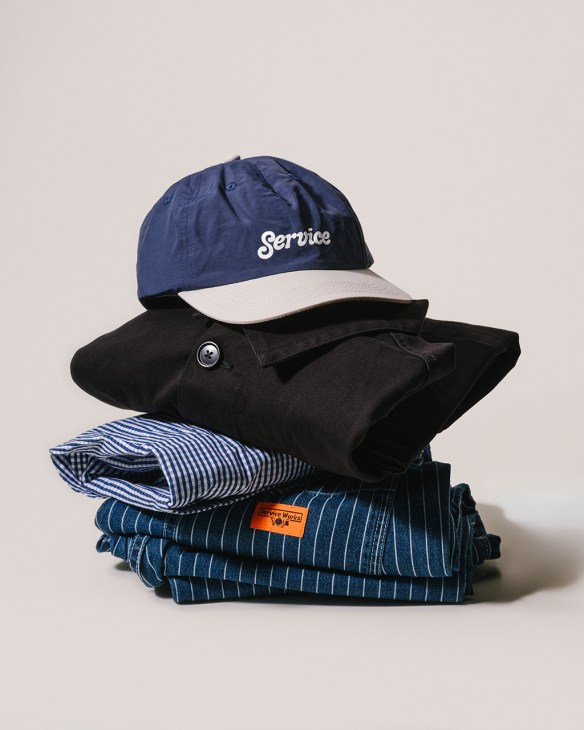
Launched in 2020, Service Works makes organic cotton workwear that’s breathable for hot kitchens and able to withstand countless washes. Its checkered chef trousers, designed to conceal stains, pay playful homage to the traditional version, while the seersucker suit jacket recalls traditional waiters’ tailoring. “It was never about making fashion inspired by kitchens – it was about making better products for the people working in them,” says Chudley. “A uniform doesn’t need to look intimidating. Comfort, personality and practicality can all exist together.”
Seals of approval from the likes of London restaurants Impala, St John and Wildflowers are a compelling sales pitch, while Service Works also weaves its utilitarian aesthetic into everyday wear. “Good uniforms shouldn’t just look good on opening day,” says Chudley. “They should work for their lifespan.”
serviceworks.xyz
Three lessons from Service Works
Think beyond your first week. A uniform needs to survive constant washing, long shifts and daily wear, so durability is every bit as important as appearance.
Involve the people who will wear your clothing. They will tell you very quickly what works and what doesn’t.
Don’t force an identity. The best restaurant uniforms tend to feel like a natural extension of the space.
3.
The lighting luminary for perfect ambiance: Lundi
Bangkok, Thailand
Even the best meal can be ruined by bad lighting. Too bright and guests are rendered in a ghostly pallor; too dark and you begin to worry what the restaurant has to hide. The conundrum is something to which Bangkok-based lighting firm Lundi has devoted itself for the past decade.
“In Thailand, it’s common for restaurant lighting to be set up in a way that focuses on aesthetics, at the expense of creating the right atmosphere or enhancing the presentation of food,” says Lundi’s CEO and founder, Kunlatida Suwintrakorn, who studied architecture in France, where she learnt to custom-make lighting. “Architecture creates the physical structure of a space. Light gives it atmosphere, emotion and a human dimension.”
Rather than interior designers, she says, it takes a lighting designer to understand complex technicalities and spatial psychology that can be easy to miscalculate. “This also eliminates costly on-site rewires and guesswork,” she adds.
Whether working with fine-dining spots or casual restaurants, the same process holds true. After developing a concept with the client and installing the fixtures, the Lundi team visits to fine-tune the space. “We’re always one of the first in and one of the last teams on site,” she says.
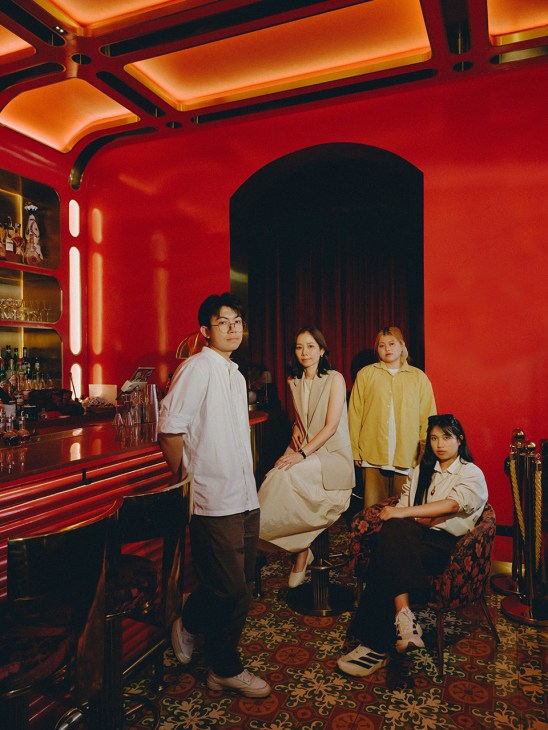
At Bangkok restaurant Nusara, Lundi analysed its views of Wat Pho, which shift with the daylight, and adapted the set-up to create an intimate evening dining experience. “When lighting is done well,” she says, “it becomes part of what people remember after the meal is over.”
Three lessons from Lundi
Don’t compromise on colour. The Colour Rendering Index (CRI) runs from zero to 100, with 100 being natural sunlight. It measures how good a light source is at showing something’s true hue. Keep the level above 90 on the food to ensure that dishes arrive looking appetising.
Avoid fixed downlights. Restaurant layouts evolve, so use track systems or adjustable fixtures that can spotlight tables in whatever formation they are rearranged in the future.
Automate the dimming. A smart control system allows lighting to shift seamlessly from daytime brightness to evening glow, without having to rely on a busy member of staff to remember the settings – or, worse, twiddling around in attempts to fix the issue by eye while diners are trying to enjoy themselves.