How a rising generation of North Africans are awarding Tangier new life
The bustling Moroccan city has long stood at the crossroads of cultures but now a new generation of entrepreneurs and creatives is asserting a fresh homegrown identity.
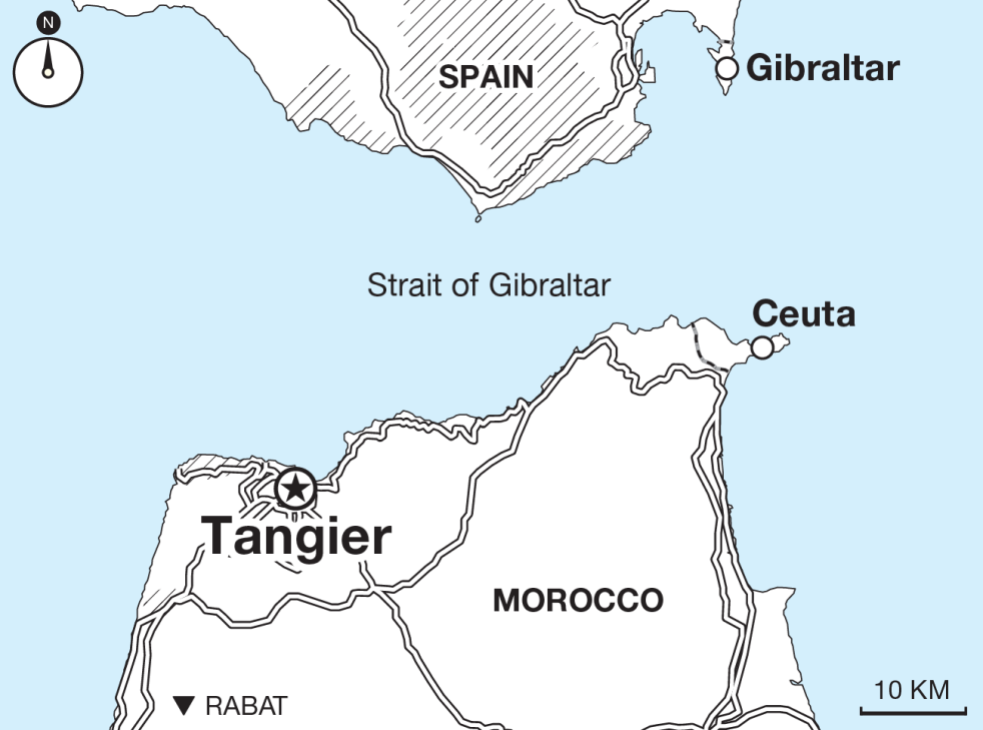
Perched patiently on a bar stool, a black cat is silently negotiating a spot of lunch from Ray Charly’s smoky grill. The cheeky feline is wedged between locals tucking into chicken-and-foie-gras sandwiches but isn’t raising any eyebrows until a passing tourist squeals at the social-media opportunity, takes a picture and vanishes. In Tangier, people tend to see what they want to. To some, the city is a place of eccentricity and exile, of exported goods, imported ills and exoticism on the Med. To others, it’s home – and everyone needs their lunch. Residents’ default mode seems to be to carry on as though they have seen it all before.
That said, if you haven’t visited, the sartorial codes of the Tanjawis (locals) and tourists offer a lively primer for what to expect. People in boxy djellabas stroll alongside those in slim-fit tracksuits. Many here are second-generation Moroccans returning for family visits or holidays. There are tarboosh hats and baseball caps, hijabs and bouffant hairstyles. Children peek playfully around the corners of old buildings while wrinkled elders smoke cigarettes on terraces, the image only slightly spoiled by the presence of smartphones playing tinny symphonies.
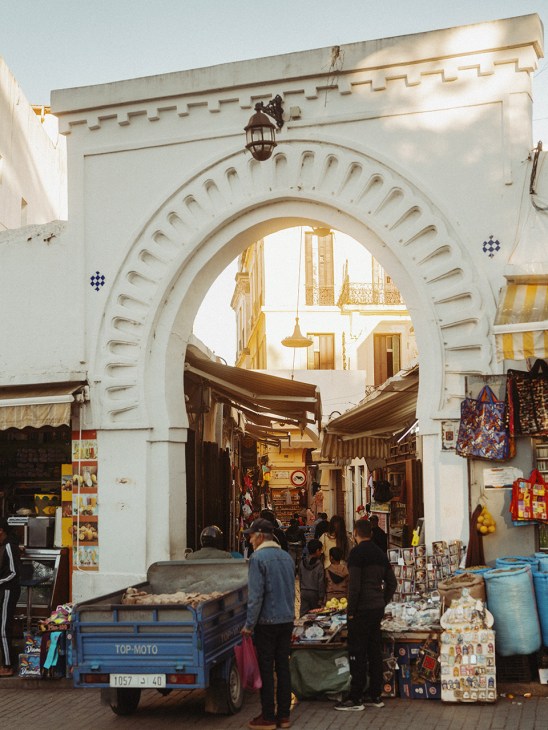
But let’s get orientated. The Rue Siaghine is a good place to start: it snakes its way up into the city from the old customs gate, Porte de la Douane. It’s a well-trodden path, shaped by Phoenicians, Romans and, in later centuries, various rival European powers. Depending on who you ask, Tangier (or Tánger or Tanjah – even the name changes depending on the speaker) has long been buffeted by different perspectives on its place in the world.
Between 1923 and 1956, the so-called “international zone” saw the city jointly administered by no fewer than nine countries (France, Spain, the UK, Portugal, Italy, Belgium, the Netherlands, Sweden and the US). The strange yet strategic arrangement was overseen by the Moroccan sultan. Tangier sat at the vanguard of Mediterranean espionage and statecraft. Many outsiders arrived hoping to lose themselves in the tight maze of streets and markets. One of them, William S Burroughs, holed up in the Hotel El-Muniria to write his 1959 novel Naked Lunch, the paranoid plot of which features duplicitous agents of Interzone Incorporated. A stream of (often oddball) authors followed and Tangier was recently designated a Creative City of Literature by Unesco. Yet another accolade for people to disagree about.
As a host for other powers and a place onto which people were keen to project their own image, it became a city whose architecture, language and culture occupied a bewildering in-between space, drawing both from the rest of Morocco and Europe. Some locals in their thirties and forties tell Monocle about how they used to switch on their TVs in the 2000s and watch the extravagances of Spanish TV channel Telecinco (controlled by Italy’s Berlusconi family) or Andalucía’s Canal Sur. At the time, Morocco’s national broadcasters still hadn’t bothered to direct their signals to Tangier in the country’s north. As such, Spanish accidentally became the language of entertainment, shaping the fashion tastes and aspirations of an entire generation that looked northward. Today, though, Tanjawis are increasingly tiring of their story being told from the outside looking in.
“We try not to cling to nostalgia,” says Kenza Bennani, the founder and creative director of ready-to-wear kaftan brand New Tangier, sitting in its showroom. Tonight she is hosting a get-together for friends, all of whom seem to be confidently reimagining their city. “The popular idea of Morocco always seemed to miss the mark when it came to expressing who we really are,” she says, placing plates of boquerones (anchovies) and Moroccan pastries on the table, before pouring the first of the night’s many negroni sbagliatos. “All of that orientalism and exoticism helped to romanticise Tangier for some but the younger generation born here no longer feels the need to live up to imported fever dreams. Reflection has resulted in a new way of seeing the city and where we want to go.”
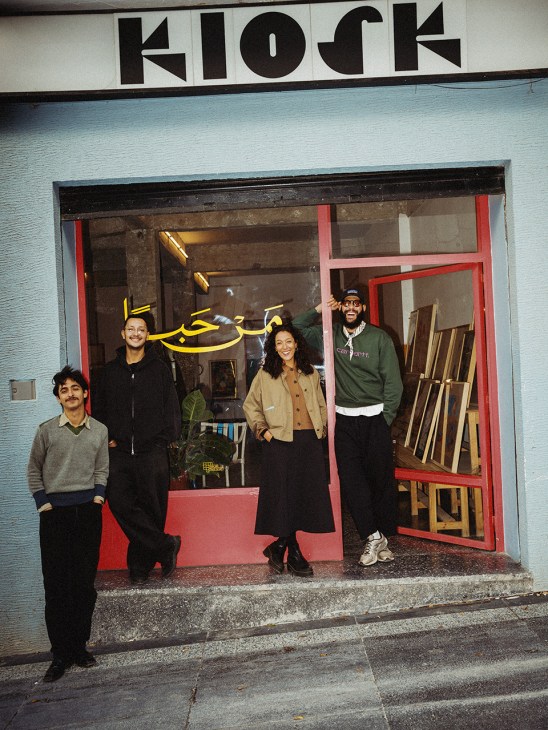
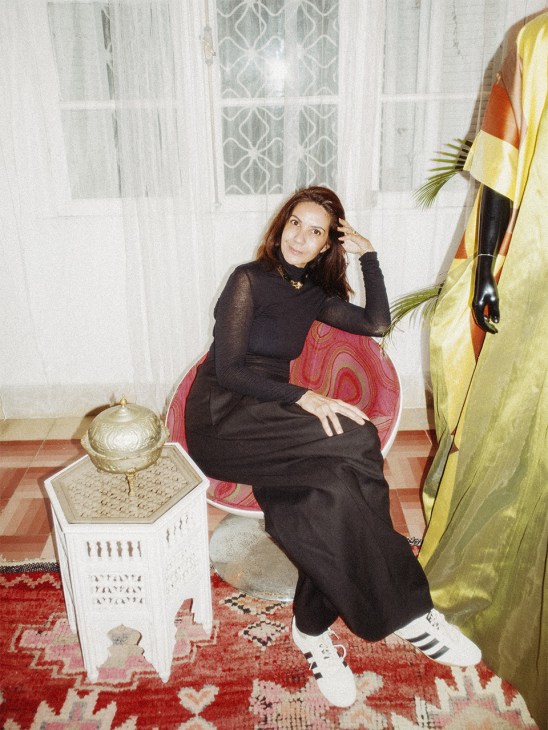
The evening’s chatter isn’t idle. The sentiment circling the sofas is backed by stories of imminent openings and works in progress. Graphic and interactive designer Malak Khattabi is nearing completion of her creative residency, Telegraph Studio. She describes the acquisition of the Tetris-block-like building in the Kasbah as “a small but proud act of resistance” to the waves of overseas capital that have washed over the city centre. Creative director and curator Hicham Bouzid stops by with Amina Mourid. The pair co-founded a think tank-turned-art and urban regeneration venture, Think Tangier, in 2016 after working together in Marrakech. Planned as a one-year experiment, it’s now about to celebrate its 10th anniversary with a future-focused symposium and a new café soon to join its cultural space and gallery, Kiosk. Monocle also meets art publicist Zora El Hajji and jewellery designer Lamiae Skalli, both of whom are opening new restaurants in the coming months.
“What’s beautiful about Tangier is that we build each other up,” says Bennani. “Seeing the city’s changing face as a long-distance race, rather than a sprint, keeps us anchored, not competitive.” Having studied in Spain and worked in the film and TV industries, Bennani built her brand from her mother’s living room until she had enough money to hire in-house seamstresses for her atelier. She now counts high-profile Moroccan artists as clients. “I’m someone who grew up in colour: I can’t see fashion in terms of black and white. Like everyone else here tonight, I found my own way by rebuilding production chains on my own terms and repaving the path to success.”
In 2026, Morocco will have its first pavilion at the Venice Biennale, a milestone that coincides with France’s pavilion being represented by French-Moroccan artist Yto Barrada. The artists and delegation members will wear bespoke garments designed by Bennani, she tells us.
The next day, Skalli invites Monocle to meet at Alma, a restaurant that she runs with her husband, Seif Kousmate, who is also a celebrated photographer. “When we opened in 2022, customers kept asking us where the owners were from, incredulous that such a contemporary, Mediterranean-style eatery came from Moroccans,” says Skalli. “It’s important that they see more models of homegrown success,” she says.
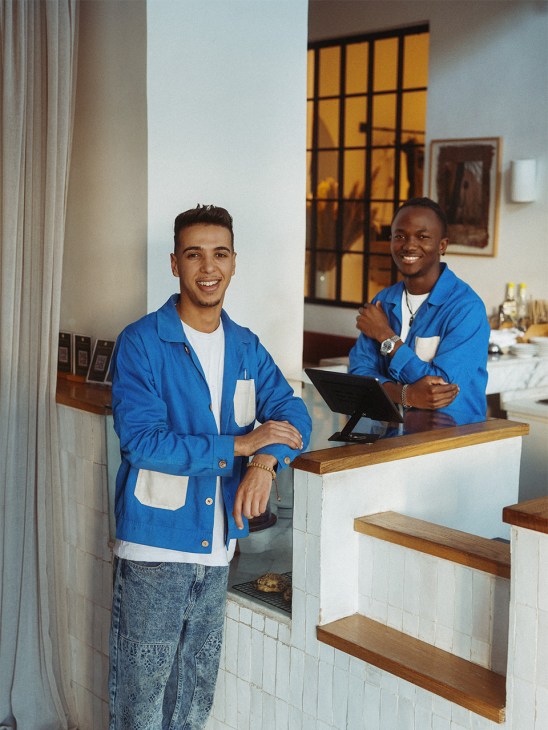
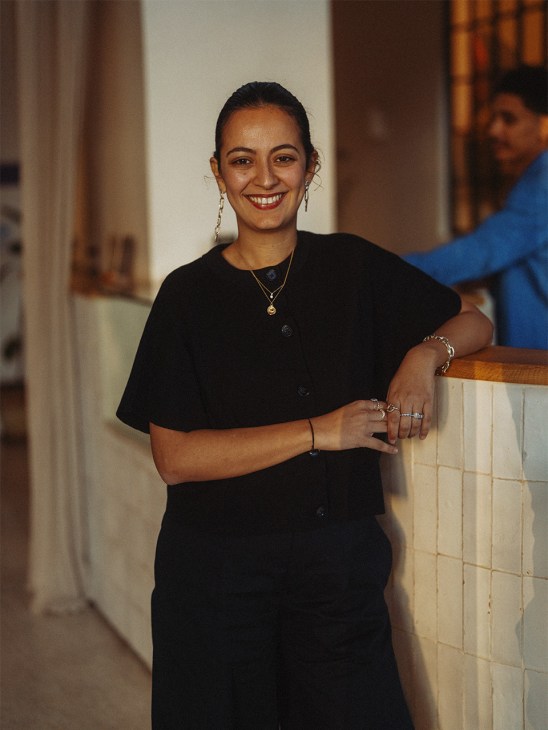
The couple are working on their second restaurant, Soli, in the Medina. It’s a venture that aims to expand people’s perceptions of Moroccan cuisine. “So many restaurants in the old part of the city have French owners who simplify menus based on what they think tourists want,” she says, pointing to the standard offering of only six options of shlayed (assorted salads and vegetables that accompany bigger dishes). “At home, we eat up to 20 varieties. These are the small stories that we want to share.” The new space will open once the refurbishment of a dilapidated textile workshop is complete; this will be followed by a coffee shop next door, then a Moroccan pantry selling everything from spices to cheese. “It’s all about inviting people to have a happy Moroccan experience, not just immersing them in an outdated postcard image.”
Shortly after leaving Skalli, we drive through the hills just outside the city proper in an area that locals call “California” to visit The Mothership. Set over three hectares, the former home of Scottish painter James McBey was taken over by artist Barrada and her husband, Sean Gullette, more than 20 years ago. Today it collaborates with art collectives and artisans through a sought-after art residency. Sprightly US-Moroccan Mounia Yasmine recently became the project’s manager. Today she leads us through the garden with her beloved pooch Mimosa in tow.
The focus here is on textiles. Interiors are colourful and cluttered, and we spy a giant raft-shaped treehouse outside, atop a gnarled and wide-leaved fig. A dye garden is being protected from the donkey by faithful gardener Ba Mjido. The view across the Strait offers a glimpse of the Spanish coastline, lightly blurred by a flicker of sea mist. “Though she spends most of her time abroad, Yto has a strong connection to her hometown,” says Yasmine, who is impressed by Tangier’s expansion, which she says has increased threefold in size since she was a child here. “Artists are leading efforts to ensure that historic gems aren’t lost.” In 2004, Barrada rescued the Cinema Rif, reviving it as the Cinémathèque de Tanger. The arthouse picture house includes a café, an exhibition space and a film archive.
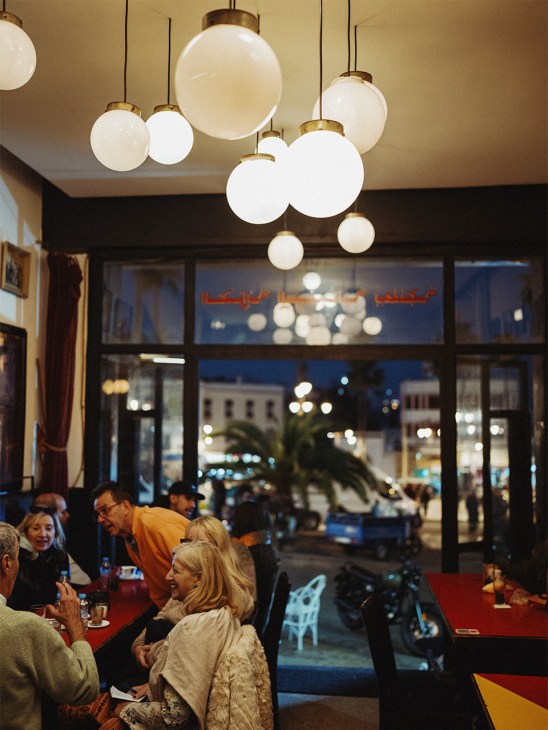
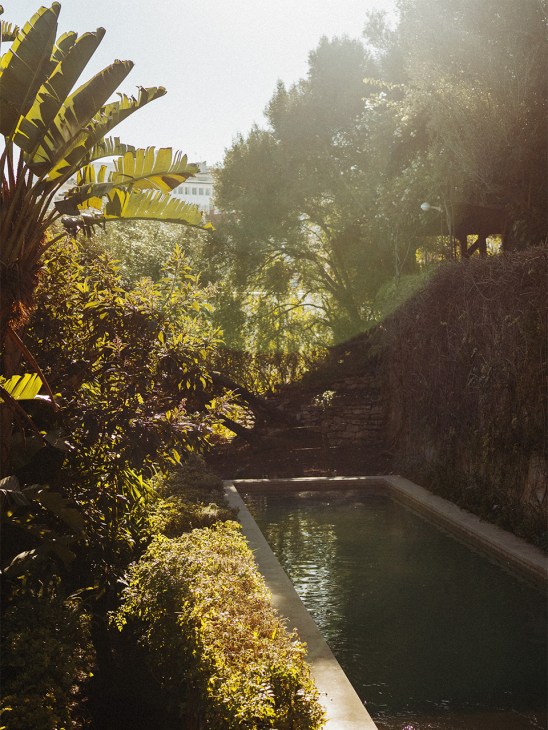
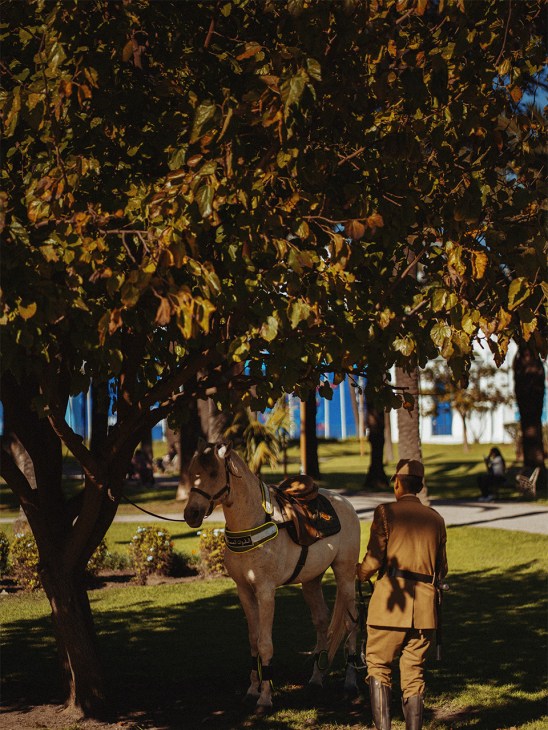
Tangier has its share of elaborate estates and extravagant villas, many of which were built for diplomats and dignitaries or housed spies and foreign correspondents. The repair or otherwise of these magnificent structures has always followed the city’s tides of influence. Today several cultural institutions are stepping in too. UK designer Jasper Conran purchased Yves Saint Laurent and Pierre Bergé’s private home in 2019, which is now the 12-key Villa Mabrouka. His re-glorification effort involved scouring the globe for original pieces from the late designer’s scattered estate. Curious visitors can see the stunning gardens by making a booking at the restaurant but a strict no-photography policy keeps high-profile hotel guests’ privacy intact. Another palatial mansion on the other side of town is Villa Harris, which was bequeathed to the city by a British journalist and is a museum of modern art.
Murmurs about the city’s future often focus on 2030, when Tangier will host part of the joint Spain-Portugal-Morocco football World Cup. When Monocle visits, the 75,000-seat Ibn Batouta Stadium’s upgrade has just been completed on schedule, just in time for the African Cup of Nations, which Morocco is hosting until January 2026. All of this investment in stadiums, their surrounding roads and tourist-related infrastructure, however, is fuelling frustration. In September 2025 an unprecedented nationwide wave of youth-led protests resulted in a wave of arrests. Some welcome budget allocations towards health and education have ensued but the conversation will continue.
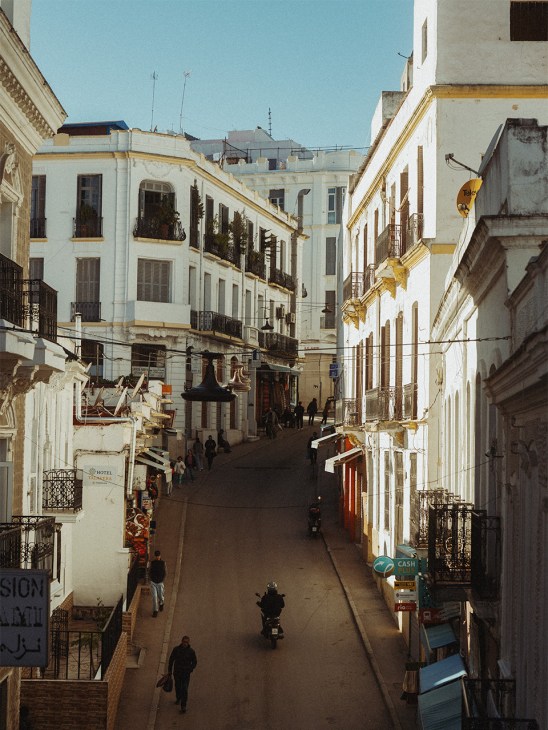
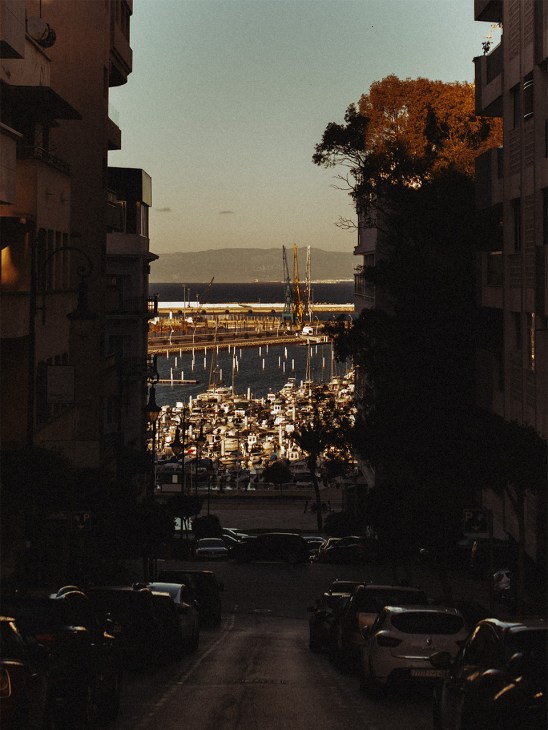
In Tangier, the development that has tongues wagging the most is the modernisation of the old port, which has made way for a new marina that will soon fill up with yachts, residents of sea-view apartments and luxury retail. Backed by Emirati developer Eagle Hills, the project’s full cost hasn’t been made public but, as it nears completion, it’s clear that work still needs to be done to win over sceptical residents. On the other side of the Plage Municipale, there are more concrete-hoisting cranes stacking the skyline with hastily erected high-rises that show another, slightly less charming, vision of the future.
That projection of Tangier is mercifully far away as we arrive at Kiosk, where Bouzid and Mourid are joined by younger members of their team (Kamal Daghmoumi, 23, and Amine Houari, 25) to discuss the implications of a recent tourism-board grant that will help fund a café. “It took a while but the authorities finally understand and appreciate what we’re doing,” says Bouzid. “Many of our events and urban installations invite large swaths of society.” One upcoming project, for instance, consists of building seating areas for workers in a neglected industrial zone. “We’re always encouraging younger audiences to rewrite, recalibrate and celebrate their heritage, which is how we embrace new narratives,” he says. “This is good for Morocco. It’s great for Tangier.”
Later that night, on the terrace of the Cinémathèque de Tanger, the conversation continues – and, as always, so do polite disagreements. There are familiar faces and several new ones too. Some have arrived from a screen-printing workshop at the Tangier Print Club, another of Bouzid and Mourid’s initiatives. “The creative scene hasn’t been this alive for a long time,” says Bouzid, the aperitivi adding some gusto to conversations in the humid night air. “The good news is that today the people leading this era of exciting change are all Moroccans.”
Address book
Stay
Mimi Calpe
A dishevelled charm runs through this colonial-style Jewish homestead, which survives as an eight-key hotel (plus one treehouse) and overflows with plants and quiet pockets in which to read or enjoy the sound of birdsong.
mimicalpe.com
Stay
La Tangerina
This elegant 10-key riad in the Kasbah was revived by a German-Tanjaoui couple who placed radios in each room in lieu of TVs, running an in-house station for classical music in the morning, pop in the afternoon and jazz in the evening.
latangerina.com
Eat
Darna
Co-founded by artist Yto Barrada, Darna is a non-profit establishment designed to train women and young people. Open for lunch, it only serves chicken, fish or vegetarian tagines under the shade of a fig tree.
associationdarna.ma
Eat
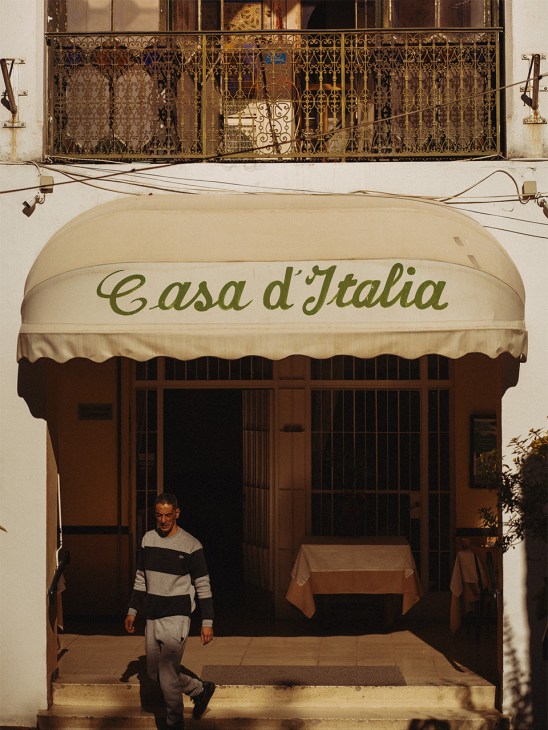
Casa d’Italia
Inside a former Sultan’s palace, this restaurant sits in the same building the Italian consular residence. It was recently taken over by art PR Zora El Hajji and her Italian husband, Luca Ravera.
Visit
Kiosk
In keeping with the founders’ vision of uniting people around new narratives, Kiosk by cultural collective Think Tanger combines a bookshop, an exhibition space, a small concert hall and a dynamic café.
think-tanger.com
Visit
The Mothership
You’ll need to wait until this art residence hosts one of its regular workshops or open days for a visit but Barrada’s eco-campus is an expansive garden estate focused on growing and experimenting with natural dyes. There’s a Roald Dahl-inspired caravan and a constant retinue of visiting artists from whom to learn.
mothershiptangier.org
Visit
Cinémathèque de Tanger
Reclaimed by Barrada in 2004, this adjunct to the ailing Cinema Rif has grown into a café, an art space and a film archive. Pull up a chair on the terrace to soak up the evening air and the action on the busy Grand Socco square with a mint tea or aperitivo.
cinemathequedetanger.com
Shop
New Tangier
Kenza Bennani’s hand-sewn modern kaftan collections are snapped up by Morocco’s film stars, artists and expats. This appointmentonly showroom is located inside the childhood home of Bennani’s father.
newtangier.com