Spain’s migration gamble: How open-border policies are helping its economy to flourish
Spain is bucking a global anti-immigration trend by granting legal status to 500,000 undocumented migrants. We explore why the embattled left-wing minority government is banking on this move with migration minister Elma Saiz.
On a winter weekday in Madrid, Spain’s minister for inclusion, social security and migration is pushing back against clichés about her country. “It isn’t just sun and beaches,” says Elma Saiz at the ministry’s headquarters in the north of the capital. Above her head hangs a large photo of a cat; on another wall, near the requisite ministerial flags, is a painting of a man asleep on a park bench. While the setting might be unremarkable, Spain’s recent economic performance has been anything but.
Many Eurozone countries have limped into the new year with sluggish growth. Spain, however, has cemented its position as one of the continent’s fastest-growing economies, with GDP rising by 2.9 per cent in 2025. The figure is expected to remain above 2 per cent for the next few years – numbers that the likes of the UK, France and Germany can only dream of. The reasons for the upswing are many and varied, and include thriving sectors such as services and tourism. Much of it, however, is down to internal demand generated by a strengthening jobs market and a decision by the government to make it easier for foreigners to settle in the country. “One of the important influencing factors in this growth is our migration policies,” says Saiz.
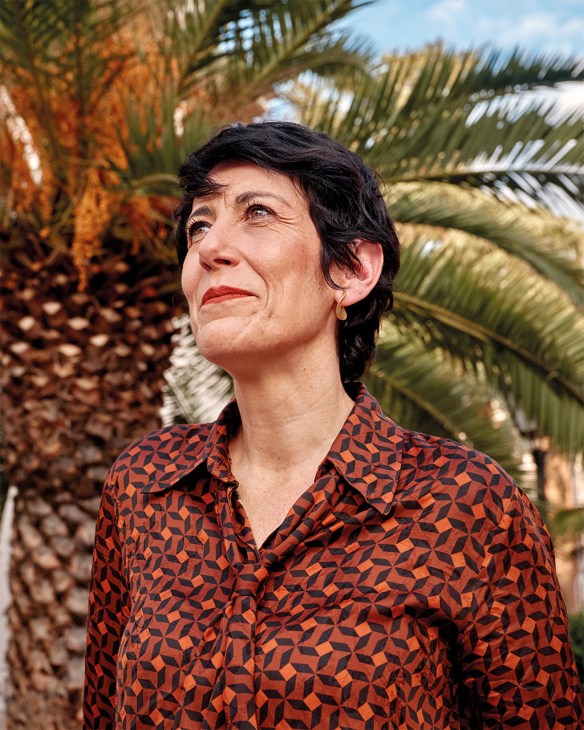
A reform of the nation’s reglamento de extranjería (immigration regulations) that came into force last May could benefit as many as 900,000 new residents over three years, through an expanded visa system and a mechanism called the arraigo, which allows people to apply for residency through three routes: “family, employment and training”, according to the minister. Saiz – a member of the leftist Spanish Socialist Workers’ Party (PSOE), which governs in a minority coalition with the left-wing Sumar party – talks about migration as “a right” and “a question of values, human rights and ethical responsibility”. But there’s also a cannier element of realpolitik at play.
Like other southern European nations such as Italy and Greece, Spain has a rapidly ageing population and needs new workers to prop up the pensions system through social security contributions. Saiz, who has been in her role since late 2023, speaks of a “demographic winter” and says that the country needs 250,000 new workers a year from now until 2050 to maintain the welfare state. The government is working hard to attract them. In 2024, Spain admitted 368,000 new permanent migrants (including many from Latin America, who make up two-thirds of new legal residents via the arraigo), putting it in the top five of oecd countries in terms of numbers (the US tops the list). “Spain took a decision to be an open and prosperous country, not a closed and poor one,” says Saiz.
In 2025 the number of foreigners in the country’s workforce reached a historic high of more than three million – about 14 per cent of the in-work population – but, of course, not all entrants to the labour market are from overseas. Saiz is keen to talk about the government’s other achievements, such as helping more women into work, as well as increasing participation among under-thirties and over-fifties. And yet, though the economy is doing well, many Spaniards, like their European counterparts, believe that their leaders are out of step with the people on the subject. According to Spanish research institute, Centro de Investigaciones Sociológicas, immigration is Spain’s principal concern. It’s set to be a key issue in the next general election, which is scheduled for 2027.
Saiz says that these sentiments are generated by “disinformation and hoaxes” rather than analysis of the facts. “It’s curious that when you ask about people’s worries about migration, you’ll find that levels are at their highest – but when you ask whether they’re affected directly, that concern collapses,” she says. Yet there have been integration issues as Spain has become more diverse. Last summer, a mob took to the streets of Torre-Pacheco in Murcia in search of people of North African origin, after a pensioner was attacked in the town. It had been whipped up in part by a video on social media falsely attributed to the assault. One of the ministry’s jobs is to monitor online hate through a racism and xenophobia observatory known by the acronym Oberaxe.
Talk of disinformation allows Saiz to pivot to a subject that she clearly feels more comfortable discussing: what she refers to as the “forced narratives” generated by the two main opposition parties, the right-wing People’s Party (PP) and far-right Vox, which is led by firebrand Santiago Abascal. “What’s damaging is having a political opposition that doesn’t have a project for the country,” she says. Saiz cites the parliamentary right’s votes against labour-market reform, increasing the minimum wage and raising pensions – what she says amounts to “anti-politics”. She is equally scornful of the PP’s decision to oppose a bill – introduced to parliament after receiving more around 700,000 signatures from the public – that aimed to grant large-scale legalisation to immigrants living in Spain who fall outside the arraigo parameters. Frustrated at it being blocked by the opposition, the government took matters into its own hands in January – passing a mass normalisation law by royal decree that bypassed parliament that could see around 600,000 people granted residency for an initial one-year period, with the ability to work from day one. Applications will open in April and run through until the end of June, for those who have lived in Spain for at least five months and arrived before the end of last year.
Still, a progressive government thwarted by a right wing bent on what Saiz calls “electoral calculations” is only a partial picture. Beyond the country’s rosy image and macroeconomic figures, significant structural challenges remain, meaning that jobs are being created but not for everyone. Despite record numbers of people in the formal economy – and very few empty positions, among the lowest in Europe – the situation for young people in the country remains precarious. One in four Spanish youths under the age of 25 is unemployed, considerably more than the EU average. Saiz rebuts this point by citing the significant progress that has been made in the past few years – as recently as 2015, youth unemployment stood at 49 per cent. There have also been improvements in everything from school dropout rates to scholarships.
She wants to make another thing very clear. “Someone from overseas doesn’t come and take a job from a Spanish national – nor do they take a house or public healthcare.” So do migrants work different jobs to the Spanish youth who find it hard to find an income? Instead, she would rather focus on education gains and the fact that young people today “are much better prepared than they were a few years ago”.
Despite Spain standing out as a progressive country with a government that is attempting to implement a pro-migration agenda, there remains a danger of selfinflicted damage. Its prime minister, Pedro Sánchez, might be heading his third government and have survived impropriety investigations into his wife and brother, but the PSOE has recently been engulfed in a double-headed scandal that has led some to question whether he can see out his full term. A corruption case over kickbacks has implicated the country’s former transport minister José Luis Ábalos and the PSOE’s now ex-secretary Santos Cerdán in what’s known as the Caso Koldo.
“Let whoever needs to pay, pay,” says Saiz, who would sooner cite the ongoing Montoro corruption case involving the PP’s former finance minister, as well as a scandal in 2018 that led to the same party’s former treasurer Luis Bárcenas receiving a 33-year prison sentence for fraud and money laundering.
But there is a fresher problem facing the psoe: a series of sexual harassment allegations made against party members in several Spanish regions. “It disgusts me to hear what we have learnt,” says Saiz, when pressed. “No woman, wherever she is, should have to live through situations like these.”
As for the possibility of early elections, the minister will hear nothing of the sort, responding with that deft political trick of answering a slightly different question to the one being asked. “We have a lot to do and, in Spain, terms of office last for four years,” she says. And then she is on her feet, bidding farewell with a kiss on each cheek, off to her next meeting.
Migration and jobs in Spain
352,089
Number of people who have residency in Spain through the arraigo system
225,428
Arraigo residents from Latin America
4.2 million
People born in Latin America living in Spain. Colombia makes up the biggest number (857,000)
370,346
Moroccans in the Spanish workforce
3.1 million
Foreigners in the country’s workforce, 14 per cent of the total number
506,451
New jobs created in 2025
57 per cent
The percentage of overall employment created in the third quarter of 2025 filled by foreigners
54.8 per cent
Increase of employed foreigners since 2019, compared to 10.1 per cent for Spanish-born workers