How a North Korean construction company cornered the market for monument building in Africa
The Pyongyang-based Mansudae Overseas Projects has built monuments all over the world. It is one of the hermit nation’s few soft power exports.
If you ever find yourself in Windhoek, the capital of Namibia, head east down Fidel Castro Street, then turn right onto Robert Mugabe Avenue and you’ll see the country’s Independence Memorial Museum, rising 40 metres above the city. It was designed and built by Mansudae Overseas Projects, a Pyongyang-based construction company with a particular reputation for such projects.
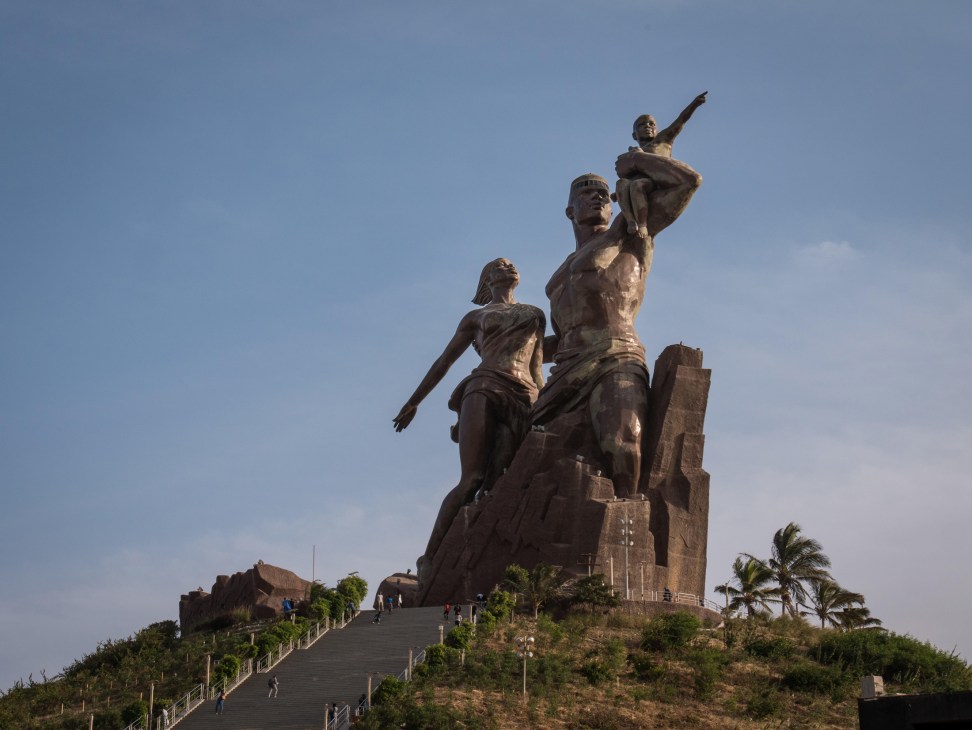
The Democratic People’s Republic of Korea doesn’t have an abundance of soft-power riches to mine, largely because of its decidedly loose adherence to the “democratic” part of its name. But in one area, the country can credibly claim supremacy: the construction of vast, socialist-realist monuments. As well as Windhoek’s brass behemoth, it has built, among others, the 49-metre-high African Renaissance Monument in Dakar and the gargantuan 120-metre-tall mausoleum of Angola’s former president Agostinho Neto in Luanda. All are shrines not just to the people and events that they honour but also to North Korea’s monument-building largesse. Through Mansudae Overseas Projects, the hermit nation has helped to erect statues in 17 countries, including Cambodia, the Democratic Republic of Congo, Germany and Zimbabwe.
The firm was founded in 1959, during the rule of North Korea’s first supreme leader, Kim il-Sung, who, alongside fomenting revolution abroad, saw grand public architecture as a key propaganda tool. “North Korea played an important role in supporting the national liberation movements and anticolonial struggles of Cold War-era Africa,” Benjamin Young, a North Korea analyst and professor of homeland security studies at Virginia Commonwealth University, tells Monocle. After winning independence, these countries were drawn to North Korean socialist realism because of its avowedly modern style and anticolonial connotations.


In recent years the US and UN have cracked down on the activities of Mansudae Overseas Projects as they tighten sanctions on North Korea. However, the country’s current leader, Kim Jong-un, is keen to retain his premier soft-power asset. “Pyongyang has shifted its foreign artistic operations to a smaller, lesser-known studio called Paekho, which continues to be active in sub-Saharan Africa,” says Young.
In the interests of balance, it’s only fair to note that these giant statues usually receive a mixed reception from local people, used as they are to venerate regimes rather than nations. Monocle sought comment from North Korean officials about its budding building business but the response, fittingly, was as silent as a statue.