Drilling returns to Venezuela’s Lake Maracaibo: good news for Trump but locals still yearn for relief
Amid global conflict and rising energy prices, the once-affluent heartland of Venezuela’s oil industry is placing hope in US investment.
No place on earth experiences a higher concentration of lightning than Venezuela’s Lake Maracaibo. But on a recent morning the noise continued long after the storms had dissipated. Beneath the hum of private jets carrying slick oil-company executives, constant metallic blows reverberated across the waters as workers from the state-owned Petróleos de Venezuela (PDVSA) hammered at pieces of long-latent equipment. A few days later, France’s Maurel & Prom announced that one oil rig on the lake was back in action for the first time in eight years. Onshore, the city’s sands are tanned by oil. The call to action – “Drill, baby, drill” – carries far and wide.
Maracaibo has long been characterised by its idle lake as oil production was halted for years – causing a mass exodus of the city’s workforce to neighbouring countries, fleeing low incomes, volatile exchange rates and barren supermarket shelves. After years of neglect, January’s military offensive on Caracas and the removal of president Nicolás Maduro by US troops, crude is pumping again. Venezuela’s new government, made up of old Maduro allies, has willingly become US president Donald Trump’s regional energy partner – and, possibly, the ace up his sleeve as a protracted conflict with Iran chokes global supply chains.
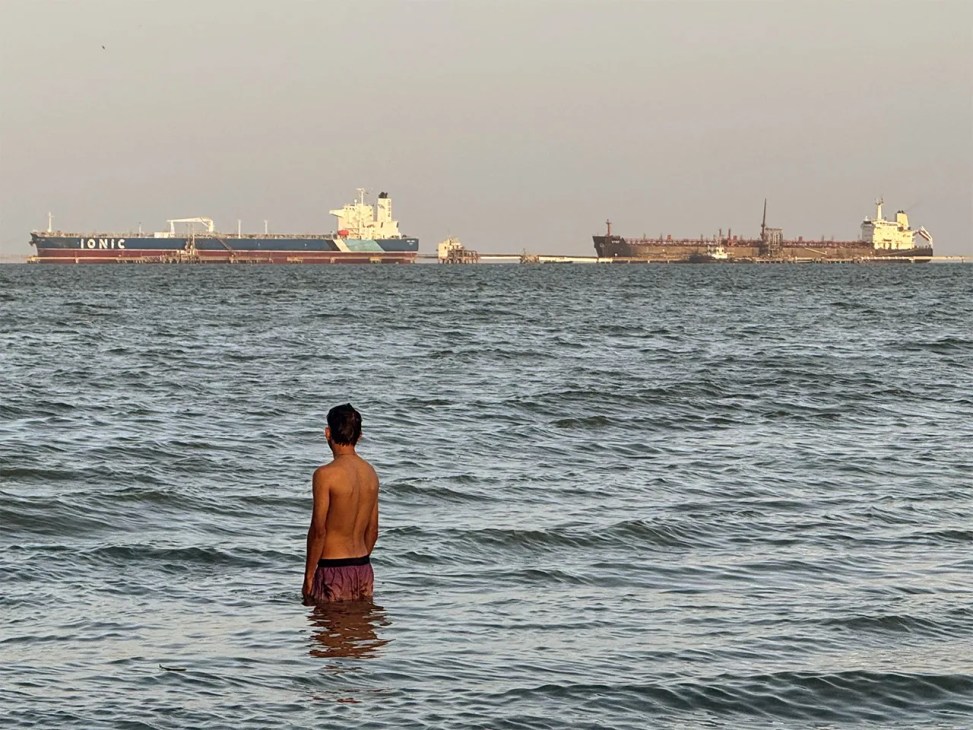
Military attacks by Israel and the US against Iran, retaliatory strikes on Gulf allies and the closure of the Strait of Hormuz have sent the oil price above $100 (€86) a barrel and shaken world markets. Despite the many challenges of its dated oil fields, Venezuela holds the largest oil reserves in the world (an estimated 300 billion barrels, including a significant quantity of the scarce heavy crude variety) and appears to be a reliable new supplier after the US’s January incursion in Caracas. The new Venezuelan authorities have reformed their hydrocarbons laws, allowing US companies to dominate energy operations. Unlike the scenes in Hormuz, tankers loaded with Venezuelan oil now depart the waters of Lake Maracaibo – bound not for Cuba or China but rather sailing for US ports instead.
About 20 gas and oil contracts are under review, with a high probability that many will be reassigned to US firms with better experience and more robust capital than those signed under the Maduro administration. Meanwhile the White House is easing sanctions and promoting business by sending senior officials to Caracas and Maracaibo. Companies such as Chevron have promised to increase crude-oil production in Venezuela by 50 per cent. But families in Maracaibo have not yet felt the effect of that oil money, the inflation of basic commodities is still marked on every supermarket bill. At least $100bn (€86.3bn) over a decade would be needed to revive the country’s peak production period of three million barrels a day, according to analysts. Before then, truck drivers, shippers, logistics experts and rig workers in Maracaibo will continue to live frugally.
US interior secretary Doug Burgum was recently in Caracas for the signing of an oil and gas contract with British firm Shell and interim Venezuelan president Delcy Rodríguez, where the pair discussed mining law reforms and lobbied for broader business opportunities. At the foot of the plane that would take him back to Washington, Burgum spoke to the press about the need for “a stable government” to be constituted, so that capital can flow as well as oil. But while Trump’s White House has promised that there will be elections, secretary of state Marco Rubio explained that the original three-phase US plan for Venezuela remains in situ: stabilisation, recovery and then transition.
Does anyone want to make Venezuela great again? Or is the country merely a convenient fuelling station for a wider geopolitical game? Those who have waited through years of poverty in Maracaibo will hope that the nation can make the most of this new democratic gateway and investment. Will Venezuelans be able to capture lightning in a bottle?
Gustavo Ocando Alex is a journalist based in Maracaibo. For more opinion, analysis and insight, subscribe to Monocle today.