Five new-generation, millennial mayors reaching across the US political divide
As US national politics grows ever more polarised, youthful leaders from the left and right are pragmatically focusing on solving their cities’ problems – helping to restore voters’ faith in the democratic process.
1.
Matt Mahan, Democrat
The mayor bringing a fresh sense of ‘compassion with accountability’ to his city.
San Jose
Matt Mahan steels himself as he heads into neighbourhoods in San Jose, California, with a hard proposal to sell: to build homeless shelters where the median house price is $1.5m (€1.3m). Homelessness is a pressing political issue for US mayors, as the number of people sleeping rough hits record highs. It’s acute on the West Coast, where big cities and state governments are dominated by the Democratic Party. Many perceive tent encampments – associated with litter, crime and fires – as a symbol of the failures of blue-state governance. The 43-year-old Mahan wants to change his party’s reputation.
The California native brings a data-driven approach to governing the Golden State’s third-largest city. Convinced that he could effect such change state-wide, in June he ran to become California’s new governor. He was the youngest candidate by almost a decade in a field that included former Los Angeles mayor Antonio Villaraigosa, Joe Biden-era cabinet member Xavier Becerra and billionaire Tom Steyer. Though Mahan lost the June primary, the fact that he polled well enough to make the debate stage proved that he is among the vanguard of a nationwide millennial cohort with less ideological fervour. “There’s a politics of pragmatism that younger leaders are bringing to the table,” says Mahan.
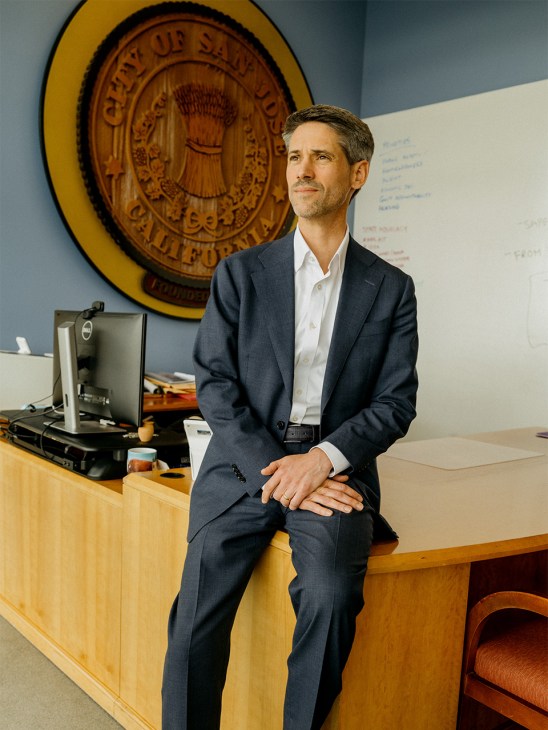
He describes his approach to homelessness as “compassion with accountability”. Shelters built on his watch provide security and case management, while enforcing rules such as no drug use or weapons. They prioritise beds for rough sleepers in the vicinity so that neighbourhoods quickly see improvement. The city enforces a camping ban for a two-block radius around them to make it clear that taking help and heading indoors are the only options.
This walks the fine line between fed-up residents who want a magic bullet and activists who see enforcement as criminalising poverty. “No, we can’t just ban camping and make thousands of people magically disappear – that’s not a practical or ethical solution,” says Mahan. “But also, no, we can’t allow people to camp anywhere they choose. If you have an unmanaged tent encampment, you have made it harder for people in interim housing to turn their lives around.”
At community meetings, Mahan has endured irate members of the public shouting at him. But lately the tone has changed. “Now I have people thanking me,” he says. The reason for this is that his proposal works. The number of unsheltered homeless people in San Jose has fallen by a third since Mahan took office in 2023. (Critics suggest that the figure is closer to a quarter.) Left-leaning forms of government that deliver measurable results are in the zeitgeist, partly thanks to books such as Marc Dunkelman’s analytical history Why Nothing Works and Abundance by Ezra Klein and Derek Thompson – and Mahan has seized that mantle. “My generation and younger voters do not have the luxury of performative politics.”
2.
Mattie Parker, Republican
For the first millennial mayor of a major US city, all politics is local.
Fort Worth
Upon taking the oath of office in June 2021, Mattie Parker, who was then 37 years old, became the first millennial mayor of a major US city. It wasn’t a claim to fame that the lawyer sought. “I have an old soul,” she tells Monocle. But having cruised to re-election in Fort Worth in 2023 and 2025, she concedes that her “age and generation have been a strength on most days”.
Now 42, Parker has overseen a generational shift in governance in Texas’s fourth-largest city. Though the cattle town has grown into Dallas’s twin city, with a population of more than a million residents, its charter stipulates that its mayoralty is a part-time role, with a modest salary of $29,000 (€25,000). “My husband jokes that it might cover my dry-cleaning bill,” she says.
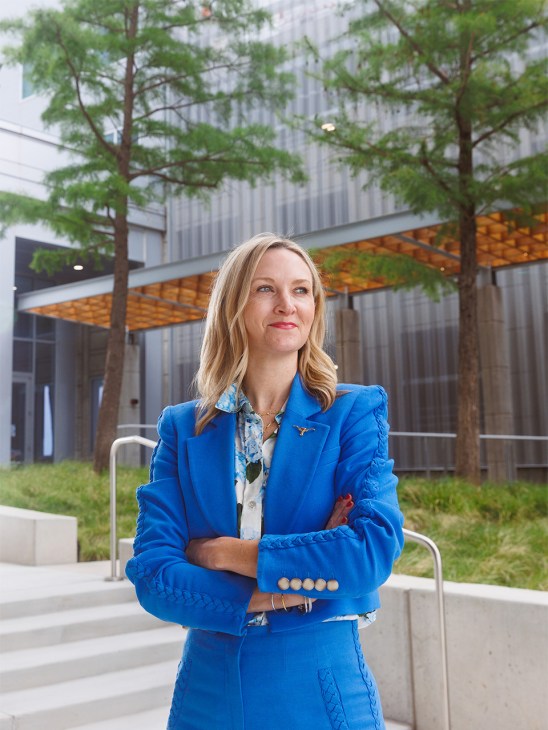
Before Parker’s election, it was common for a retiree to hold the office. But social media and the 24-hour news cycle have “turned this into a full-time type of job”, she says. “There’s no off switch.” Despite this, Parker, who has a chief of staff, holds down another part-time role as chief of staff to the CEO of a children’s hospital. The juggling that this involves hasn’t gone unnoticed by Fort Worth’s residents. In May they approved the doubling of her salary.
That vote of confidence has come as she attempts to stay focused on local issues at a time when municipal politics is becoming more national. “People are moving to our city because we have a very commonsense approach to governance – streets, streetlights, parks, libraries, public safety,” she says. “Cities that are well run fend off partisanship and ideological breakdown.”
Though Parker is a Republican, she admits that her party’s brand is “increasingly messy”. Having served as a former mayor’s chief of staff and then as a congressional district director, she has had a front-row seat to the growing polarisation of US politics. Parker now cherishes the chance to serve in an officially non-partisan elected office that allows her to break with party dogma. She complied with the White House’s dismantling of DEI (Diversity, Equity and Inclusion) initiatives but still touts Fort Worth’s diversity. And she isn’t afraid of government spending, leading the charge for the largest bond issue in the city’s history.
“I have principles and beliefs but my job is to build consensus and improve quality of life for every single resident, regardless of the party that they belong to,” Parker says.
However, she’s not afraid to draw a line between her position on public safety and those of her rivals. While her 2021 opponent, the chair of the local Democratic Party, dabbled in “defund the police” rhetoric, Parker made hiring more officers (as well as firefighters) a central part of her manifesto. “‘Back the blue’ doesn’t have to be partisan terminology and we can reject the ‘defund the police’ movement,” she says. “Any American city that wants to be successful has to adopt that philosophy.”
That conviction is paramount for the mother of three. She speaks to Monocle via telephone while wrangling her shirtless 10-year-old son. Higher office, for now, holds little appeal. “I can serve as mayor and be home for my family,” she says. “Public service needs to be treated as a calling, not a stepping stone.”
Parker’s modesty recalls the writer and intellectual Gore Vidal’s famous line: “Any American who is prepared to run for president should automatically, by definition, be disqualified from ever doing so.” Perhaps – who knows? – higher office does beckon for Parker. At least she knows that time is on her side.
3.
Justin Bibb, Democrat
The political moment demands energy and decisive action, says the 39-year-old Midwestern mayor.
Cleveland
Justin Bibb understands all too well the key concerns of his fellow millennials. “Our generation of voters is frustrated with the pace of change and the status quo,” he tells Monocle. The Democratic mayor of Cleveland, Ohio’s second-largest city, lists the climate crisis, the cost of living and housing affordability as his cohort’s principal worries – and his own too. “I’m one of them,” he says. “I can’t afford to buy a home yet.”
The connection that Bibb has with the US’s largest electoral group helped him to sweep to power as Cleveland’s second-youngest mayor in 2021, when he was 34. Cleveland native Bibb was previously an intern for former president Barack Obama, then moved into strategy for finance and tech start-ups before returning to public service with his run for mayor.
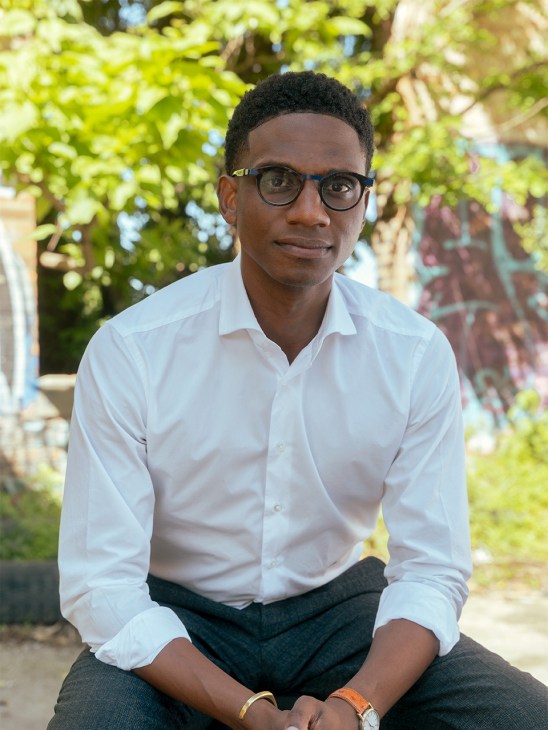
His 2021 slogan, “Cleveland can’t wait”, promised energetic renewal for the metropolis of more than 360,000 people, tapping into younger people’s frustrations during the coronavirus pandemic and offering a sense of hope for the future. But while it was Cleveland’s younger voters who helped to propel him into office, Bibb quickly understood that their problems didn’t exist in a vacuum. Addressing generational inequality meant dealing with various interlinked economic and social issues. Without safe streets and streamlined processes, businesses wouldn’t want to invest. And without the solid, well-paying jobs that come with investment, people couldn’t afford housing.
“The through-line of my campaign and our governing agenda has been prioritising a core set of issues that affect every Clevelander, whether you’re a working-class black senior on the East Side or a new Gen-Z graduate from Ohio State,” says Bibb. His first term was an exercise in transforming the city into an attractive destination for businesses, while taking on the scourges of the property market, including a crackdown on predatory landlords and investing $2m (€1.7m) to tackle homelessness. Clevelanders clearly felt that he was making good on his promises. Last year, he was reelected for a second term, increasing his share of the vote from 63 to 74 per cent.
Today, Bibb is excited about a huge waterfront development project on Lake Erie, industrial rejuvenation and pushing forward his innovative housing programme. He has seen other millennial mayors approach these issues with similar gusto. “We’re bringing a different level of energy and excitement, as well as a ‘Let’s get shit done’ attitude, that’s speaking to this political moment right now,” he says. He wants politicians in Washington to sit up and pay attention. “Americans don’t trust members of Congress,” he says. “They don’t trust whoever’s in the White House right now. But in many cases, they do trust their mayors.”
With crucial midterm elections in November, when the Democrats have a chance to win back the House of Representatives and the Senate, Bibb thinks that highlighting the successes of Democratic mayors is key to flipping red seats blue. “If the Democratic Party wants to win more elections – if it wants to expand its map and be more credible – what better champions than Democratic mayors in red states who are fighting a good fight and solving problems?” he asks.
Bibb is the president of a coalition of Democratic mayors in Republican-run states that brings them together “so that we can work across the aisle to solve some of the biggest issues facing America”. He is also a co-chair of the bipartisan National Housing Crisis Task Force. The issue of affordable homes dominates chat groups with other millennial mayors in cities across the US, says Bibb. In Cleveland, he is continuing to forge innovative solutions, including a $100m (€86m) fund aimed at creating thousands more units of affordable housing, a new portal to streamline development permits and investment in modular homes.
He is also optimistic that the $5bn (€4.2bn) “Shore-to-Core-to-Shore” project that will redevelop and connect the Lake Erie shoreline and Cuyahoga Riverfront to Cleveland’s downtown can boost jobs, investment and housing stock over the coming years. Then there’s the $1.6bn (€900m) renovation of Cleveland Hopkins International Airport. All of which is leaving Bibb hopeful that cost-of-living and climate refugees abandoning the large coastal cities will choose his Midwest home to put down their roots. “I want Cleveland to be the new capital for jobs and investment as we enter this next chapter of America’s economic story.”
4.
Bryan Calvo, Republican
Meet one of the country’s youngest mayors shaking up the status quo.
Hialeah
Bryan Calvo, the 28-year-old mayor of Hialeah, Florida, is ideological poles apart from the poster boy for young American mayors, New York’s Zohran Mamdani. Calvo is a life-long Republican serving in a city where 75 per cent of residents voted for Donald Trump in the 2024 presidential election. But 100 days into his first term as mayor, Calvo is happy to chat about the through-line between him, Mamdani and other young mayors across the country. “He’s trying to shake the system as well,” Calvo tells Monocle. “We look at it from a totally different political lens but I think he’s trying to shake the tree the best he knows how.”
Calvo is the youngest mayor of any large US city and an outlier when it comes to his politics. Almost all of his millennial and Gen Z counterparts in similar-sized cities are Democrats, reflecting a trend towards the left among urban dwellers and young people. Hialeah, however, has a unique electorate: about 80 per cent of its population are Cuban Americans, who traditionally support the Republican Party for its opposition to their home country’s communist regime. But while it may have a distinct identity, the generational concerns in Florida’s sixth-largest city (with a population of around 250,000) are similar to those seen across the country.
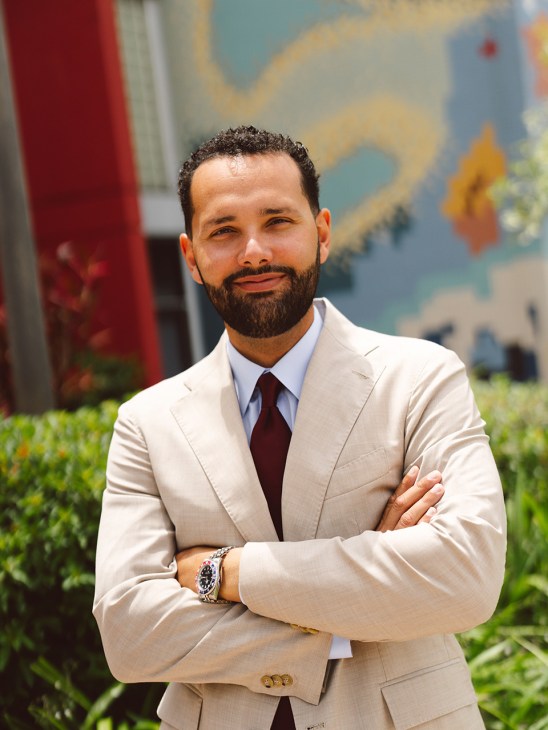
“From the standpoint of an older generation, it’s, ‘Hey, I’m retired and I can’t afford the home that I live in,’” says Calvo. “From a younger standpoint, my generation, it’s, ‘I can’t afford a home in my city.’”
Calvo sees his election in November 2025 as a consequence of the anger among voters towards stagnation in US politics and the inability of older politicians to understand the concerns of younger people. With the average age of a US senator hovering at about 64 years old and with a generation of both Republicans and Democrats unwilling to relinquish their power, there is a thirst for change at every level of American politics.
“If people were happy with the status quo, I would have never been elected to office,” says Calvo. “My youth was probably my biggest strength. I’m an attorney, I’m a Harvard graduate, but none of those things matter as much as the fact that I am young.”
He cites the coming challenges with technology and AI, which he believes that his generation is better prepared to legislate for. “If you watch some of the congressional hearings, people don’t know what social media is and now AI,” he says. “Though everybody is talking about it, people don’t really know how it works. You can’t regulate something that you don’t understand.”
Calvo is delighted with what he has achieved so far, trumpeting his success in eliminating property taxes for seniors, launching audits of city spending and consolidating city departments to increase efficiency. He plans to open bids in the coming weeks to convert underused city-owned spaces into multi-use developments, combining residential units with restaurants, shops and other community sites. With a new Democratic mayor, Eileen Higgins, in Miami (about 18km from Hialeah), Calvo is also getting a crash course in the politics of compromise and thinks deeply partisan Washington could learn a thing or two about working together.
“In the cities, it’s just about solving the problem,” he says. “It’s not about grandstanding, it’s not about pandering, it’s not about your next election as much as it is about solving the problems today.”
5.
Gina Ortiz Jones, Democrat
For this Texas mayor, breaking the rules is part of the job.
San Antonio
Military recruiting is a competitive endeavour in a country with an all-volunteer force, and soldiers from San Antonio typically take top honours for their ability of convincing young Americans to serve their country. It helps that their turf covers the metropolis with the trademarked nickname “Military City, USA” – an appellation not lost on the city’s new mayor, Gina Ortiz Jones, a combat veteran who previously served as undersecretary of the US Air Force. Given that her domain contributes an outsized number of recruits, she tells Monocle, “If we are not raising enough healthy or academically prepared kids, it’s in fact a national security issue.”
That motivation is one reason why the 45-year-old used her bully pulpit in October to raise $1.6m (€1.4m) for pre-paid grocery cards when the federal government cut food aid for low-income residents. In April her office released a set of recommendations for improving access to free early-childhood education, a topic close to the heart of the San Antonio public-school graduate who was raised by a single mother from the Philippines.
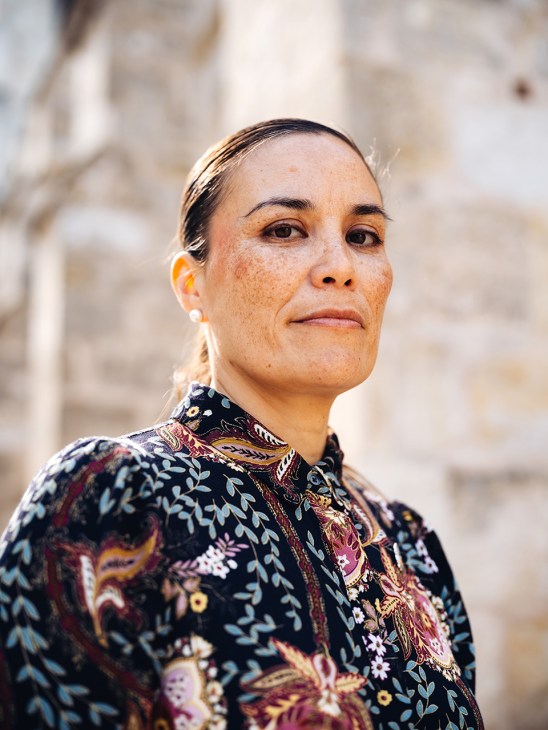
While a local government can only do so much to staunch the bleeding amid federal retrenchment on social benefits, she leans on her Pentagon experience when responding to funding cuts. “You plan endlessly,” she says. “And not necessarily to have the right answer, but to understand how you can mitigate risk.” Her focus on fundamentals such as nutrition and schooling stem from a confounding reality. San Antonio is among the country’s fastest-growing cities but struggles with a stubbornly high poverty rate – it is the third poorest of the US’s top 25 largest metro areas. Jones seeks to redress this imbalance wherever she can, recently pushing for higher wages for municipal employees.
Holding that line has made Jones a rare sceptical voice on Project Marvel, a blockbuster downtown revitalisation proposal anchored by a new arena for the city’s NBA team, the San Antonio Spurs. Even after voters approved plans to spend public money on the arena, Jones has been the single dissenting vote on multiple occasions for decisions related to the multi-billion-dollar scheme. She cites broken promises from 20 years ago, the last time the Spurs built a new arena with public funding.
“My background as an intelligence professional at the highest level of the military taught me due diligence,” she says. “We have to ensure that we are being good stewards of the public’s money.” Analysts now call her a “lone wolf” suffering high staff turnover and quickly running out of political capital but Jones remains unfazed. She sees her contrarian views as part and parcel of her unique biography. “I’m an Asian lesbian air-force veteran who served in Iraq under the “don’t ask, don’t tell” policy, so I’ve bucked the system a couple times,” she says.