How Prince Rupert became central to Canada dodging a trade-war bullet
US tariffs have forced Canada to rapidly seek new markets in Asia. And in British Columbia, the speed and scale of this pivot is most evident in its ports and its railroads.
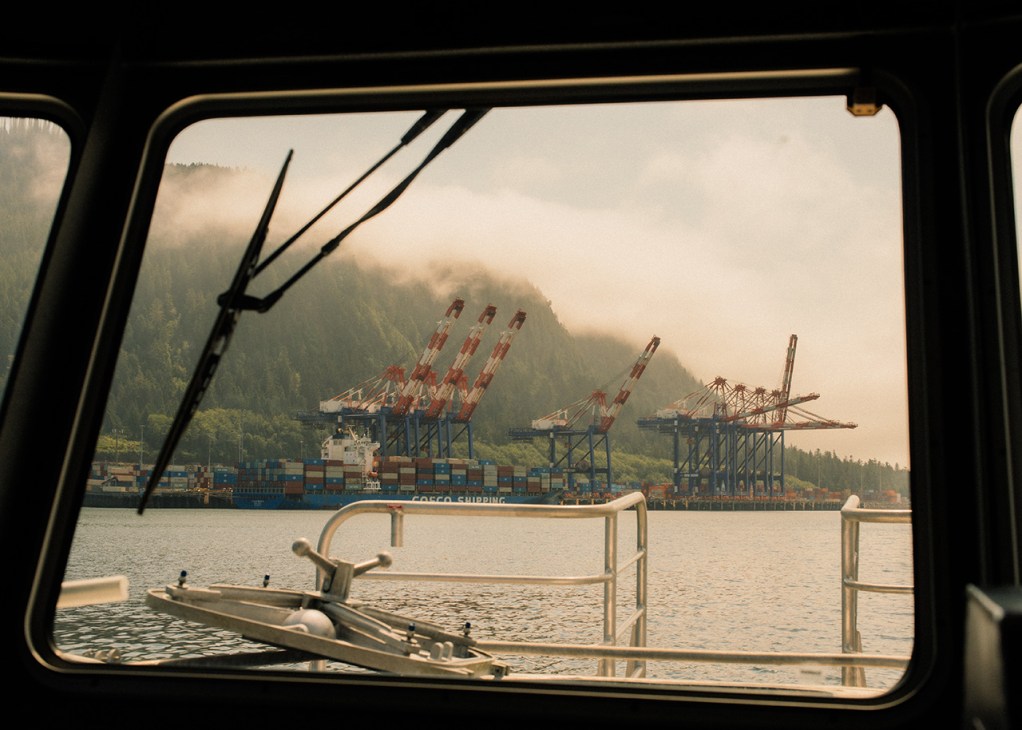
Porpoises and bald eagles greet the GSL Lydia as the 350-metre-long container ship glides into Prince Rupert Harbour in British Columbia after a 12-day journey from Yokohama. It makes an 180-degree turn, then pulls up to a terminal where cranes are waiting to lift its cargo onto trucks or railcars. Until recently, containers would often go back empty. North American consumers have long been eager to buy Asian goods but Canada hasn’t been exporting across the Pacific with the same gusto. Sending raw materials to its southern neighbour, the world’s largest economy, has simply been easier. But a year and a half of belligerence from Washington has damaged the once ironclad relationship between the US and Canada, causing the latter’s prime minister, Mark Carney, to pivot his country’s trade policy towards global diversification. For Ottawa’s current leadership, the race is on to end the nation’s reliance on America.
New facilities for exporting commodities and propane are now arriving at Prince Rupert. The GSL Lydia docks alongside a sliver of port infrastructure that runs for 800 metres. Barely a blemish on this landscape, the container terminal hugs a stretch of coastal rainforest where British Columbia drifts into southeast Alaska. But this remote area, with a population of just 13,000, is the linchpin of Canada’s economic strategy to cultivate new trading partners and build closer diplomatic relations with fellow middle powers.
“We have had a tendency in the past to chart bold new foreign policies without substance behind them,” says David Perry, the president and CEO of the Canadian Global Affairs Institute. “Making a meaningful contribution to a country’s food security or keeping its lights on is something substantial that you can anchor a relationship around.” However, Canada is also discovering how difficult it is to have a virtuous foreign policy and thrive in a fractious world.
On the day that Monocle boards a De Havilland Dash 8 plane for the sole Air Canada flight from Vancouver to Prince Rupert, the White House announces 50 per cent tariffs on a range of Canadian goods. The latest broadside against a neighbour that Donald Trump has needled as the “51st state” is likely a high-stakes tactic in the ongoing renegotiation of the United States-Mexico-Canada Agreement (which replaced Nafta in 2018). The move elicits a fresh round of harsh words – at least, by Canadian standards. Trump is “clearly a bully”, says British Columbia’s premier, David Eby, during an annual meeting of provincial leaders, vowing that there’s “not a chance in hell” that Kentucky bourbon or California cabernet will be returning to his territory’s liquor stores any time soon. A US-Canada trade war has also scuttled a planned opening ceremony for the Gordie Howe International Bridge. The long-awaited crossing between the city of Windsor in Ontario and Detroit, Michigan – named after a Canadian ice-hockey player who made his career on a US team and designed to improve trade flows – couldn’t have come at a worse time.


These rocky relations, however, could be welcome news for the Port Authority of Prince Rupert, which has been tasked with ensuring that Canada’s most geographically favoured Pacific port is ready for a future in which exports increasingly head west, rather than south. “I don’t focus on soundbites,” says its CEO, Kurt Slocombe. “I focus on what countries need from a stable trading partner.” Originally from Vancouver, Slocombe moved his family to Prince Rupert, Canada’s rainiest city, in 2007 to open the Fairview Container Terminal. But why offload cargo almost 500 nautical miles from Vancouver, a west-coast metropolis with a major international airport?
Railroad baron Charles Melville Hays would probably have said it was destiny. In 1905 he determined that this deep, ice-free harbour promised the quickest shipping route from North America to Asia, while offering the flattest rail route through the Rockies to a western terminus. Prince Rupert’s pre-eminent booster perished aboard the Titanic in 1912. Two years later, the first train from Winnipeg arrived but Hays’s vision of a “metropolis of the north” didn’t come to pass.
Instead, the town grew more modestly, focusing on fishing and logging. During the Second World War, it served as a logistics hub. By 2001, commercial fishing had collapsed and a pulp mill closed. From a peak population of 18,000, Prince Rupert lost a quarter of its residents. The shift from halibut and lumber to containers was a gamble but also the realisation of Hays’s vision, almost a century after he scoured Canada’s coastline for a suitable Pacific port.
Canada’s west-coast fossil-fuel infrastructure
In June 2025, LNG Canada shipped its first load from Kitimat, 110 nautical miles east of Prince Rupert. The North American west coast’s first liquified natural gas plant is the result of a CA$40bn (€25bn) investment, the largest private-sector initiative in Canadian history. Another LNG terminal is under construction in Squamish, near the resort town of Whistler. Two years ago crude oil began flowing through an expanded trans-mountain pipeline from Alberta’s tar sands to tidewater near Vancouver. In July, prime minister Mark Carney announced a new pipeline from oil-rich Alberta to the Pacific that could begin construction in 2027. A long-planned major expansion of the Port of Vancouver’s container terminal could commence the following year.
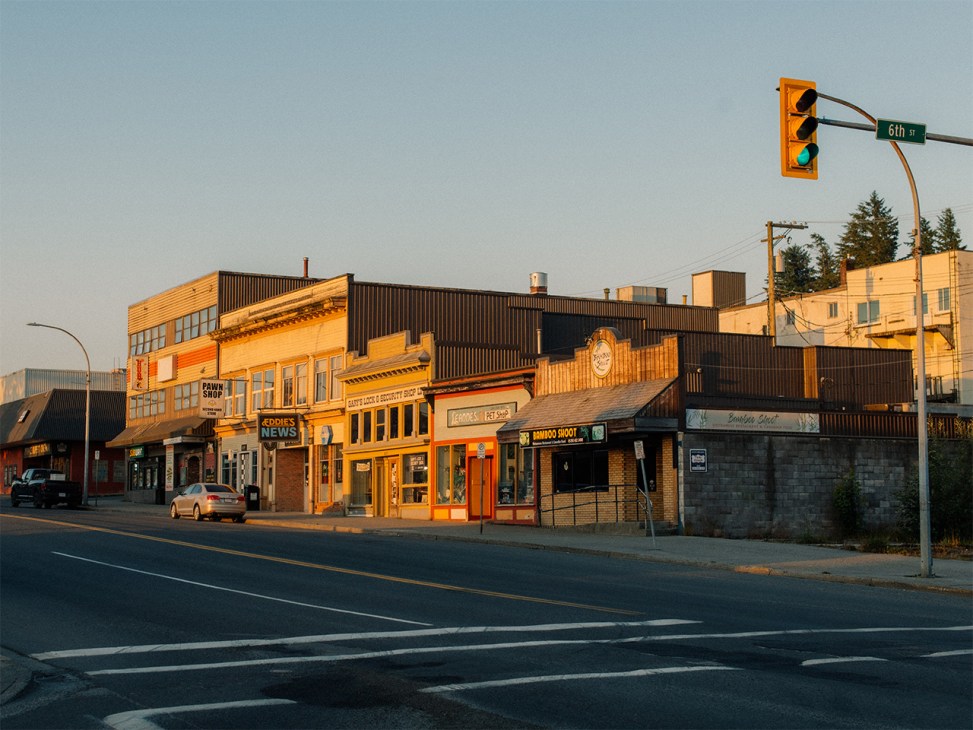
The bespectacled Slocombe is mild-mannered and prone to understatement. He has been here from the get-go: first at the container terminal, now at the port authority. Over the past two decades, he has watched both the port and the town grow slowly but surely. Canada’s northern communities can often feel neglected but here there’s a sense of optimism and prosperity in the air. Monocle visits a new longshoremen’s union hall and strolls past a sleek detachment for the Royal Canadian Mounted Police. New trucks and SUVs are parked outside a well-stocked grocery shop, with abundant fresh produce on display – a rare sight in most remote pockets of Canada. The bar and restaurant at Crest, the town’s best lodging, are packed on a Monday night.
How much the longshoremen will move in the coming years depends on the success of Carney’s globetrotting during his first year in office. His four-day trip to China in January, the first by a Canadian leader in almost a decade, pointedly included a stop in Prince Rupert en route. He has also been to India, Japan and Saudi Arabia this year on trade-focused trips.
While the prime minister was making his rounds, construction workers 5km south of the container terminal were toiling in the rain to build Canxport, a CA$750m (€468m) facility designed to make it easy to move exports into containers for shipment overseas. Carney might be returning to Prince Rupert in late August to formally inaugurate it.


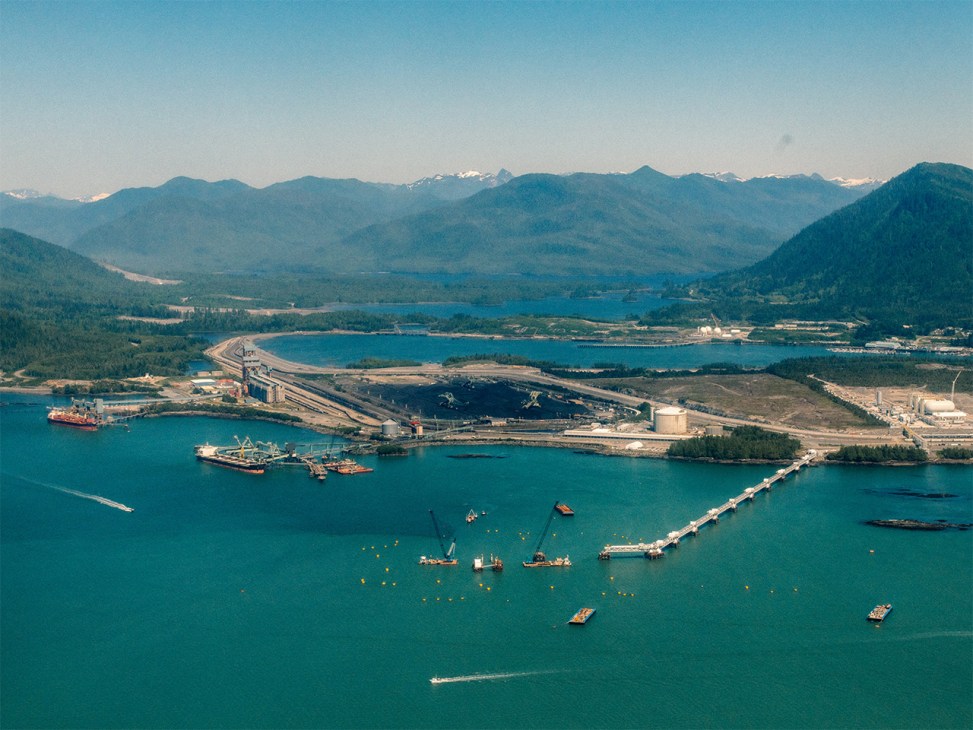
Monocle hops in a Ford F-150 Lightning for a spin around Ridley Island, a port-authority-owned hive of industrial activity. In addition to Canxport, a CA$1.35bn (€842m) project named the Ridley Island Energy Export Facility will help to unleash a flood of Canadian raw materials onto global markets. When it becomes active at the end of this year, it will welcome tankers destined for countries such as China, Japan and South Korea that rely on liquefied petroleum gas (of which Canada is a leading global producer) to power homes and industry.
In the meantime, customers can already make orders for another, less glamorous Canadian export: polyurethane pellets. Their exporter is Montréal-based Ray-Mont Logistics, for which our guide, Ryan Storry, is the local terminal manager. “I’m in charge of this jigsaw puzzle,” he says, gesturing at the choreographed chaos of cranes and containers. Inside a huge, white-domed building, an army of vacuum pipes suck pellets from hopper cars, before soaring five storeys to fill 25kg bags with tiny plastic beads, then stacking them on pallets. Ray-Mont’s Vancouver-based automation expert Luca Villa is troubleshooting the state-of-the-art equipment, which has reduced railcar unloading times from four hours to one, ensuring that Canxport is running at full steam before a potential prime ministerial visit.
Prince Rupert’s new export investments are just the prow of the ship for Canada’s Indo-Pacific trade ambitions. While projects such as Canxport faced traditional regulatory and permitting hurdles that took years to overcome, many of the flurry of new proposals are from Carney’s Major Projects Office, which promises to cut red tape and expedite construction. “The government of Canada is working at a pace we have never seen before,” says Slocombe.

Inevitably, there are detractors: the full-steam-ahead trade strategy, much of it powered by fossil-fuel-based commodities, jars with the image of a country that until recently prided itself on its green credentials. As former prime minister Justin Trudeau said in 2016, “My predecessor wanted you to know Canada for its resources. I want you to know Canadians for our resourcefulness.”
Under his successor, a fellow member of the Liberal Party, the pendulum has swung back in the other direction. Though Carney has maintained a ban on oil tankers in northern BC waters such as Prince Rupert, there has been enough of a U-turn to cause the environment and climate change minister, Steven Guilbeault, to resign from his cabinet. But dissent in the Liberal ranks is unlikely to cost Carney much political capital, says Heather Exner-Pirot of the Macdonald-Laurier Institute, an Ottawa-based conservative think tank. “Elbows up has become more important than environmental purity,” she says.
The economic underpinnings of this Canada-strong foreign policy seem to have also become more important than holding the line on human rights. With the exception of his March trip to Japan, Carney’s trade-focused tours have been to nations where, until recently, the maple leaf was flora non grata. The 2018 arrest of Chinese telecom executive Meng Wanzhou in Vancouver angered Beijing; yet the Canadian prime minister made a point of visiting the city in January to meet Xi Jinping. New Delhi and Ottawa withdrew their respective high commissioners in 2023 following the assassination of a Sikh separatist leader in British Columbia; in February, Carney talked business with Narendra Modi in Mumbai. “Whereas Canada led with its values for those 10 years [under Trudeau], now it’s leading with its interests,” says Exner-Pirot. “We are in an era of realism and pragmatism.”
Prince Rupert in numbers
2,600: Millimetres of annual rainfall
2030: The year that it is projected to become Canada’s second-biggest port, surpassing Montréal
750,000: Maximum capacity of Canxport in 20-foot (six-metre) equivalent units – a unit of measurement used in the shipping industry to quantify how much cargo can be processed
80,000: Barrels per day of liquefied petroleum gas that the Ridley Island Energy Export Facility will be able to process when active
114: Hours saved when sailing to Shanghai compared to journeys from Los Angeles