The Gulf’s best mediators are not immune to conflict – even with each other
Saudi Arabia and the UAE have presented themselves as the twin pillars of Gulf power for much of the past decade. Aligned on security, broadly synchronised on diplomacy and increasingly influential beyond the region, they have mediated conflicts, bankrolled fragile states and styled themselves as pragmatic problem-solvers in a volatile world. This is why the latest tensions between Riyadh and Abu Dhabi over Yemen feel both striking and consequential.
On the surface, the dispute looks procedural: flights suspended at Aden airport, diplomatic delegations prevented from landing and disagreements over inspections, airspace and who ultimately exercises authority on the ground. But there is a strategic divergence between the two allies, whose visions for Yemen – and, by extension, regional order – no longer align as neatly as they once did.
Yemen has long been fragmented. After more than a decade of war, the country remains divided between the Iran-aligned Houthis in the north and a loose constellation of forces in the south, backed by different external actors and driven by competing agendas. Saudi Arabia entered the conflict in 2015 with a clear set of priorities, including border security, the rollback of Houthi influence and the restoration of Yemen’s internationally recognised government. The UAE joined the fight with similar ideas but gradually pursued a different logic – cultivating local power brokers, securing ports and coastlines, and backing the Southern Transitional Council (STC), a separatist movement seeking autonomy, if not outright independence, for the south.
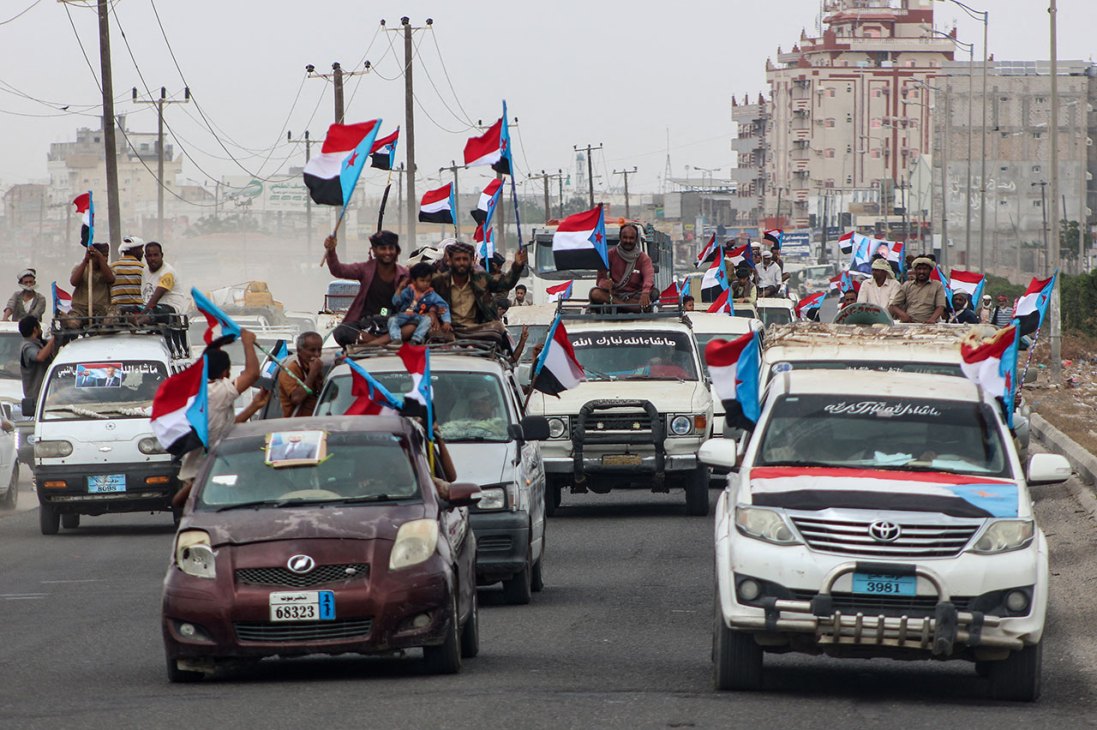
These differences were managed for many years. Co-ordination continued, disagreements were contained and the shared imperative of countering the Houthis provided enough common ground to keep the partnership intact. What has changed recently is not the existence of divergence but its visibility and stakes. The STC’s expanding territorial reach across southern Yemen, particularly in areas close to the Saudi border and key infrastructure, has sharpened Riyadh’s concerns.
The UAE, meanwhile, has further reduced its overt military footprint but retained significant political leverage through local allies. This recalibration has left space for those allies to act more assertively, testing not just Yemen’s fragile arrangements but also Saudi Arabia’s tolerance for a southern power structure that it does not fully control.
What makes the current moment unusual is how public the friction has become. Airports closed, delegations turned away and accusations exchanged in plain sight – these might not equal a partnership in collapse but they are not the signs of seamless strategic alignment. Rather, they point to a relationship under strain; one struggling to reconcile competing priorities at a time when both capitals are keen to project stability and diplomatic maturity.
The irony is that Saudi Arabia and the UAE have spent recent years positioning themselves as brokers of de-escalation: in Sudan, across the Horn of Africa and even on more internationally visible stages (Russia and Ukraine, Israel and Palestine). Yet in Yemen, they appear unable to mediate between their own interests. Two states that increasingly speak the language of restraint abroad now find themselves locked in a contest at home, conducted through proxies, pressure points and procedural disputes rather than direct confrontation.
Will this lead to an open rupture between Riyadh and Abu Dhabi? That remains unlikely. The economic, political and security costs would be enormous and both capitals are acutely aware of the value of their partnership. This is not a march towards conflict. It is, however, a reminder that Gulf alliances are fundamentally transactional. Shared history does not guarantee shared futures. For the wider Gulf, the lesson is sobering. Unity cannot be assumed, even among the closest of partners.
While regional powers recalibrate and jostle for influence, ordinary Yemenis bear the consequences, trapped between rival agendas that they have little ability to shape. Each diplomatic standoff entrenches that fragmentation further; each unresolved power struggle pushes a political settlement a little more out of reach.
Inzamam Rashid is Monocle’s Gulf correspondent, based in Dubai. For more opinion, analysis and insight, subscribe to Monocle today.