Slovenia has a patriotic problem: The centre left held out but it shouldn’t be proud
Following recent victories in The Netherlands and the Paris municipal elections, Europe's centre-left is gaining ground. But Slovenia's leftist win on Sunday poses a bigger issue.
On the face of it, Slovenia has pulled back from the brink. Polls ahead of Sunday’s parliamentary elections had indicated that the Orbán-allied, media-bashing, Trump-supporting, right-wing former prime minister Janez Janša was the favourite to triumph with his well-organised SDS party. That would have lined up Slovenia with the EU awkward squad, alongside the likes of Hungary and Slovakia.
Instead, incumbent prime minister Robert Golob and his centre-left Freedom Movement (Svoboda) squeaked the narrowest of victories. With diaspora and postal votes still to be counted, Svoboda is poised to take 29 parliamentary seats – just one more than Janša’s SDS. A thwarted Janša has already been muttering about “illegal polling stations”, a “kidnapped state” and the need for fresh elections “the sooner the better”. In other words, the voters are wrong; try again.
The headlines naturally focus on a vindicated centre left and frustrated right wing. But the full picture is considerably more complicated – and far less flattering for Slovenia.
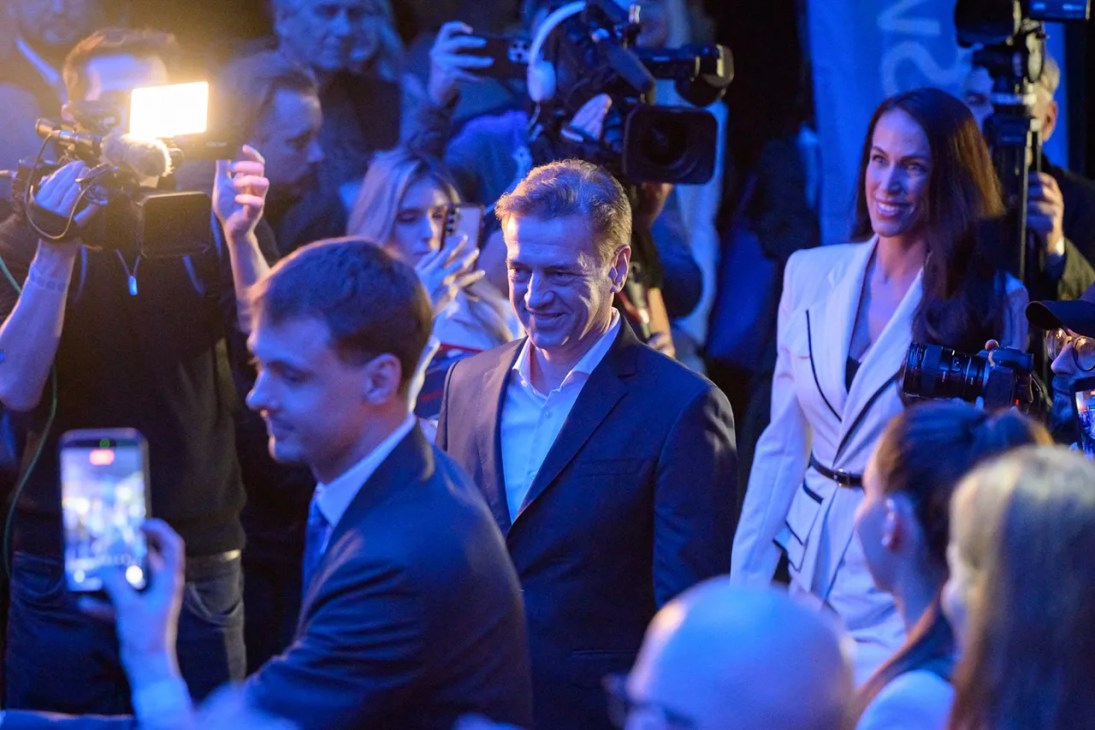
For starters, voters turned to Golob out of fear of Janša, rather than enthusiasm for the programme of the Freedom Movement. Meanwhile, right-of-centre parties claimed a majority of the votes overall, making post-election coalition talks tricky. Slovenian voters have not delivered a decisive victory for progressive politics. Indeed, there are strong indications that some extremely regressive attitudes played a significant part in the polls.
But the other factor that might have sent voters back to the familiar left was the extraordinary final fortnight of the campaign. First came the anonymous leaks of covert recordings of prominent centre-left figures, which the SDS claimed proved that Slovenia had been captured by a corrupt cabal. Then came the revelation that leading members of notorious Israeli intelligence agency Black Cube had made repeated visits to Slovenia in the months leading up to the election.
Janša, a staunch supporter of Israel, admitted that he had met Black Cube agents on at least one occasion. This allowed the Freedom Movement to present a narrative that the SDS had been undermining Slovenia’s sovereignty by colluding with para-state actors from a foreign power. The Golob government’s outspoken criticism of Israel’s actions in Gaza and Iran – not to mention Slovenia’s withdrawal from the Eurovision Song Contest – offered further credibility to allegations of malpractice.
Party leaders, analysts and journalists all insisted that healthcare – and how to reform Slovenia’s ailing system – would be the key issue of the election. But the campaign posters said something quite different, with none of the leading parties so much as mentioning the issue.
Janša’s party led with an image of a winsome young boy cradling an accordion, with the slogan, “Vote SDS, so your grandson will still sing Slovenian songs.” The Slovenian National Party made the message explicit, “Slovenia for Slovenians.” Days before the election, they added a barely believable image depicting a man wearing a white, Albanian cap, a woman in a niqab and a black man wielding a long knife. Scrawled over the top, in blood red letters, was a single, emphatic word: “No!”
The Freedom Movement has been at it as well. Golob’s numbers in the opinion polls started to revive late last year when he pushed through repressive measures targeting Slovenia’s Roma population. Critics believe that the measures might be unconstitutional – but they had the desired effect for Golob, demonstrating that he could be tough on people deemed problematic by the country’s Slovene majority.
Slovenia enjoys its reputation as the best-behaved, most-successful country to emerge from the bloody demise of Yugoslavia. But behind that is a strong sense of Slovene identity that endured throughout centuries of control by Habsburgs, Italians and various iterations of Yugoslavia. The flipside of that unity is a deep-rooted suspicion of outsiders that can make it hard for newcomers to integrate – and easy for ill-intentioned politicians to turn patriotism to their advantage.
Elements of this have undoubtedly been at play in these elections – and, on this occasion, might even have been to the benefit of the ostensibly centre-left Freedom Movement. Anyone celebrating the apparent defeat of right-wing populism in Europe might want to pause before they quaff their fizz.
Guy De Launey is Monocle’s Ljubljana correspondent. For more opinion, analysis and insight, subscribe to Monocle today.
Further reading?
– Why Montenegro is the small but mighty future of the European Union
– Trump’s towers don’t tend to last. Is Belgrade taking a backwards step?
– The idea of EU membership for the Western Balkans has run aground