Has the need for productivity become a barrier to living well?
Time wasn’t always a precious resource to maximise use of – perhaps the ancient Romans had it right.
Look, I get it. You don’t have time to read this. You’ve been at the time-management apps again and they are clear: you must not waste a moment. “Don’t let your precious time slip away,” demands one app-review website (we don’t even have time to research our own time-management apps, it seems).Come on, you need to fill every second. Be efficient and productive. Maximise life. Nothing to do this weekend? No time for slackers. Fill up those calendar slots and get busy! Is it lunchtime yet? Check in with Google.
The tragedy is that this rush is nothing new. In the year 263BC, Rome got its first public sundial and, according to playwright Plautus, its residents hated it. “Confound him who in this place set up a sundial, to cut and hack my days so wretchedly into small pieces! I can’t fall to unless the sun gives leave.” But you can bet that if the Romans had our technology, the streets around the Forum might have been filled with the urgent pings and buzzes of calendar notifications: a Times Square for ancient times.
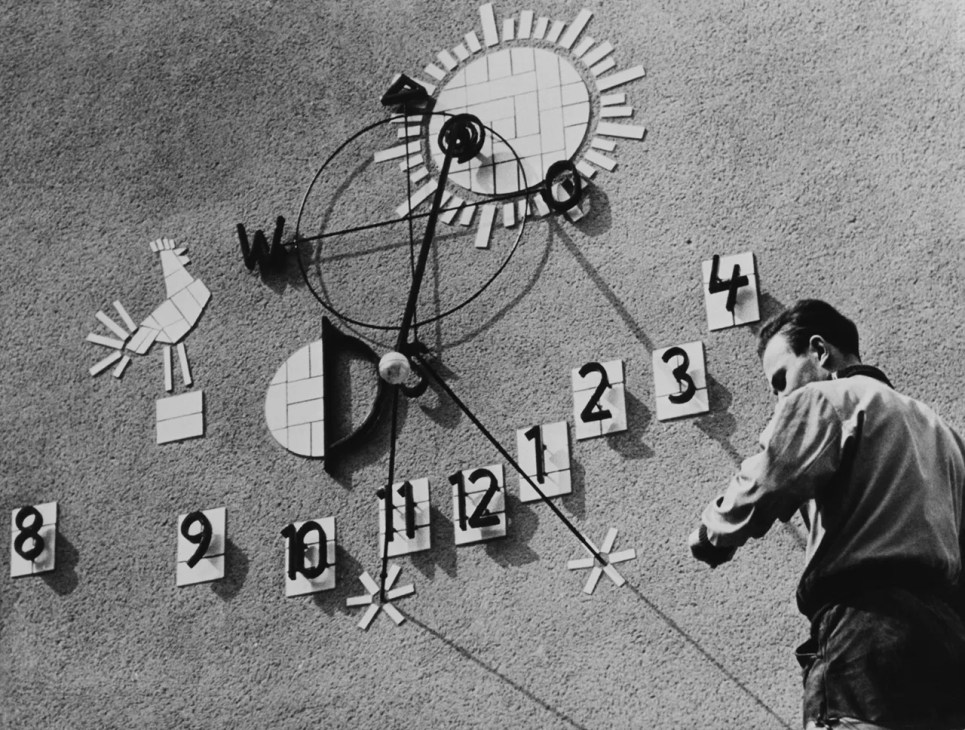
Spin the hands of the clock forward to the year 507AD, in the city of Verona. No longer part of the Roman Empire, it was then ruled by the Ostrogoth king Theodoric, who ordered the construction of a huge acoustic water clock that not only displayed the time but also shouted it across the streets and squares of the city in “strange voices obtained by the violent springing up of waters from beneath”. The king himself explained that the clock was there to help the people of Verona “distinguish the various hours of the day and thus decide how best to occupy every moment”. The Goths, or their efficiency-seeking leaders at least, would have been very much at home with the notion of time management.
The idea that time was something we could waste – rather than spend as we please – took off when the English Puritans began thumping the pulpit. Time, they insisted, always in stern voices, was not yours to waste.
The 17th-century Puritan preacher Richard Baxter claimed that idleness was a great sin, for by wasting time “you are guilty of robbing God himself”. Steady on. Pocket watches were then starting to trickle down through society; a new style was known as the “Puritan” watch. Undecorated, austere. A reminder of the sin of idleness every time you produced it from your waistcoat pocket. Time started ticking a little faster. The first watch acquired for the British Museum was a Puritan watch, made in about 1635 and alleged to have belonged to the puritan’s puritan himself, Oliver Cromwell.
A century later, the industrial revolution began its all-conquering march towards greater productivity. Here too, under capitalism, we poor mortals were shaped by insistent messages of temporal efficiency. It was the American founding father and polymath Benjamin Franklin who, in a 1748 treatise, told the world to “remember that time is money”. Sitting idle? You’re throwing away your own cash, you loser.
We’ve been imbibing this stuff for centuries. Today’s timekeeping tech can hack our days into fragments so small that it’s hard to conceive of them as real moments. Atomic clocks, which use the fundamental properties of atoms to keep time, have been with us since the 1950s. The latest ones keep time on a femtosecond scale: quadrillionths of a second. If one of these had been set running at the Big Bang – the birth of the universe and everything in it, including time itself – it would be wrong today by less than half a second. Atomic clocks now set the beat for the modern world.
When Rome woke up to its first public sundials, some 2,300 years ago, one writer called for the columns on which they were mounted to be torn down. Now I’m not saying we stop the clocks but it’s a thought, isn’t it?
Do we need to submit so fatalistically to the drumbeat of time or the cacophony of smartphone calendar notifications? In some sense, isn’t it like having an angry little Richard Baxter at his Puritan pulpit in our pocket, preaching against idleness 24 hours a day. Or a tiny Ostrogoth water clock pouring scorn on us to make more plans. Do we really need that in our lives? Perhaps we could just choose to sit still for a while every now and then, and, you know, think. Off the clock, of course.
Ultimately it’s up to us whether we cram “leisure” time with activities and tasks rather than stopping to raise our heads, breathe deeply and consider the happy fact of our time-limited lives. It’s your call – my time here is up and I’ve got other things to be getting on with.
About the writer
Rooney is the author of About Time: A History of Civilization in Twelve Clocks. We appreciate him taking a moment out of his packed schedule to write this essay. This was first published in The Monocle Companion, our paperback collections of essays.