Money doesn’t grow on trees? The nursery cashing in on the world’s need for urban canopies says otherwise
As cities swelter in heatwaves of increasing ferocity and the need for climate-regulating and shadeproviding canopy cover grows clearer, urban planners and landscape architects are turning to tree services and suppliers, to import trees.
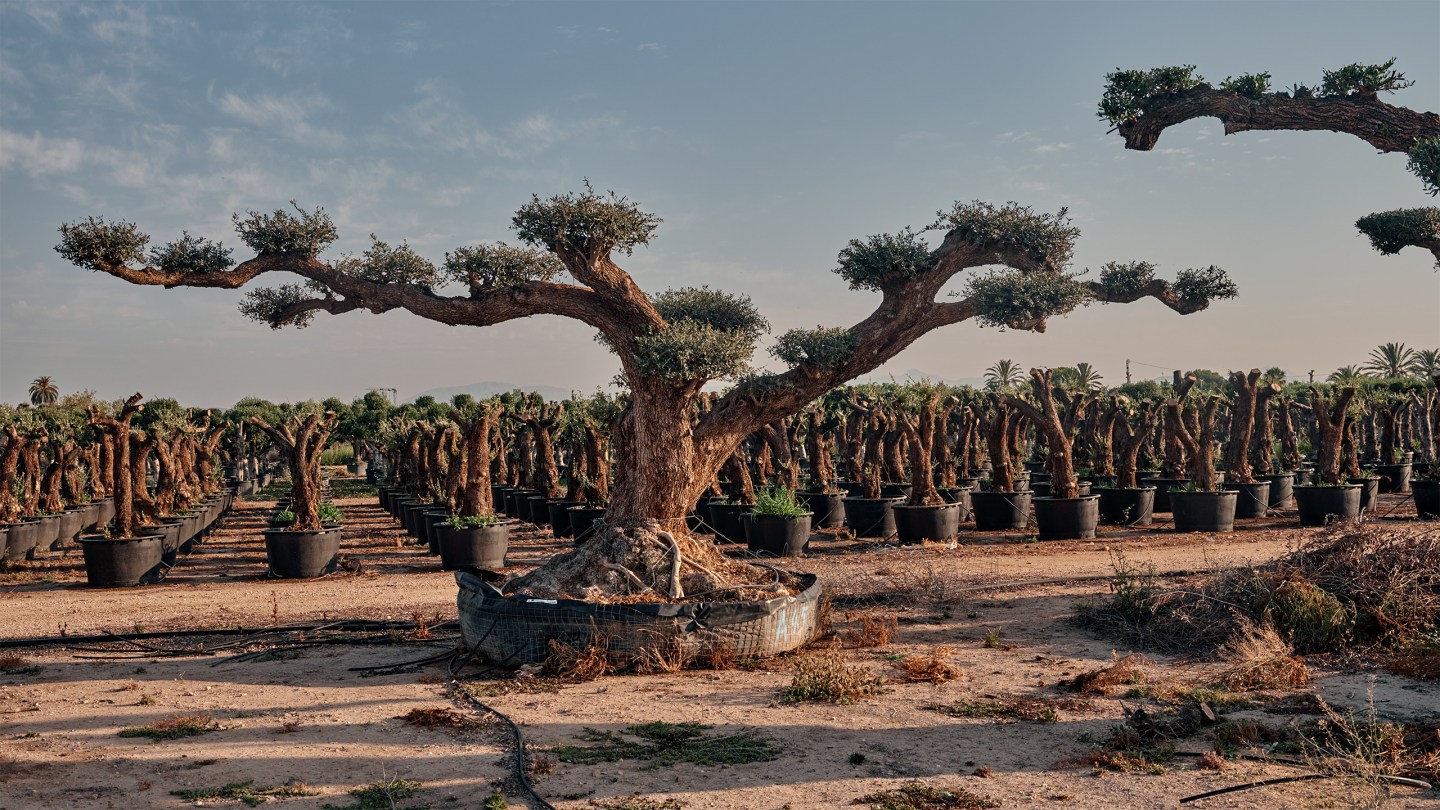
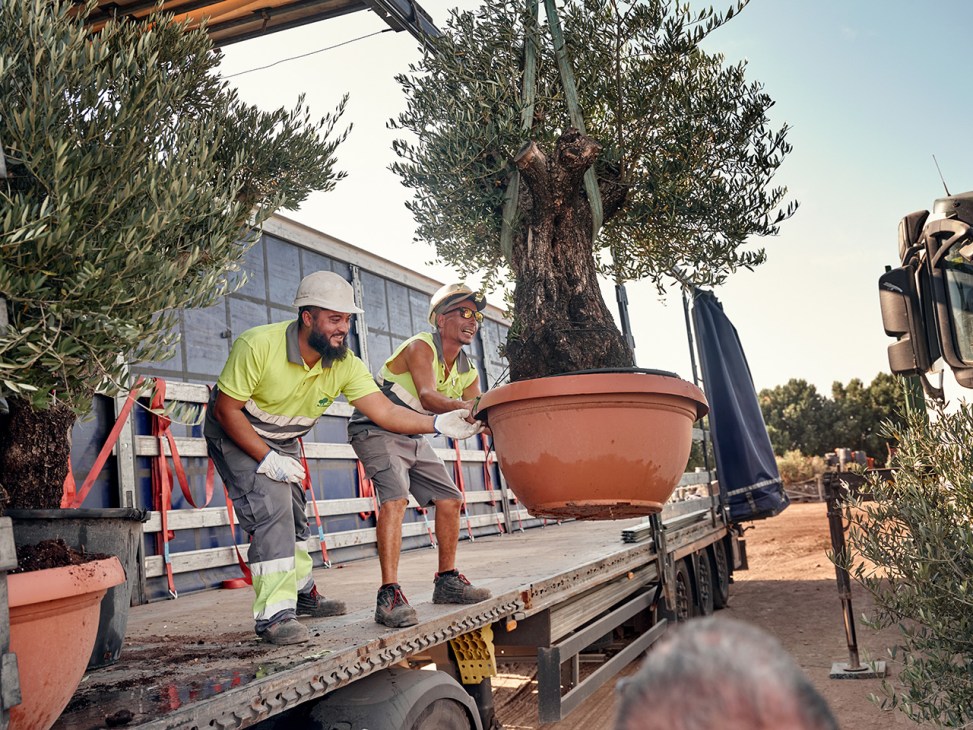
Gardeners have set down their tools and are watching as a crane lifts a 60-year-old olive tree and slowly lowers it on to a large truck. It’s only 09.00 but the sun is beating down on Finca Hermosa, a tree nursery near Spanish city Alicante. This careful choreography is the final step in a process to ensure that this shipment of trees arrives at its final destination, across the continent in Romania, in good condition.
“Olive trees are incredibly strong and adaptable,” says Sílvia Botía, the company’s sales representative, as we seek shelter below the branches around us. This shade is precisely what many of Finca Hermosa’s clients are after. “Sooner or later, an awning will tear or get dirty and you’ll have to replace it. But a tree, especially one like this, can be planted for the next generation to enjoy too.”
With Europe experiencing brutal heatwaves exceeding 40C this summer, trees are important business. They keep cities cool and improve wellbeing, which is why everyone from local governments to individuals with private gardens are planting more. The global tree-services market has grown rapidly in recent years and is expected to reach €2.5bn in 2030 – largely thanks to an increased focus on urban greening and a rising investment in green infrastructure.
Canopy cover plays a crucial role in cooling cities. Studies recommend a minimum of 30 per cent tree coverage in urban areas to meaningfully improve microclimate, air quality and health, so this is becoming a priority for densely populated cities. In April, New York announced plans to increase its tree canopy to about a third by 2040.
Limited space in urban areas means that planting large trees is not always viable; pollution and lack of space for the root system can also be challenging. Small trees can take several years or even decades to grow – but saplings are easier and cheaper to plant and will adapt to their environment. “In five years, saplings can grow into a forest but a mature forest is much harder to create – the chance of a big tree surviving is lower,” says Belgian landscape architect Bas Smets. His projects include a new park around Notre-Dame in Paris that is set to be completed in 2028.
As the need for shade becomes more urgent, full-grown trees are becoming more desirable. Those with a larger trunk diameter can store more carbon; are better at intercepting precipitation and air pollutants; and regulate temperatures more effectively. Planting and protecting taller species in cities is something that officials and landscape architects are also having to consider. “There’s no trick formula,” says Smets. “It’s about understanding the timeline in five, 20, 50 years and then coming up with the right strategy.”
Finca Hermosa, founded in 2008 by eight Dutch business partners, including Anton Visser, specialises in fruit trees such as fig, palm and citruses, as well as a variety of olive trees. It also has one of the oldest examples of urban green space on its doorstep. Nearby city Elche is home to a vast Unesco World Heritage-listed palm grove, planted during the Moorish era as a planned oasis. Its irrigation network, combined with the palms, is a good example of an effective cooling method for extreme heat.
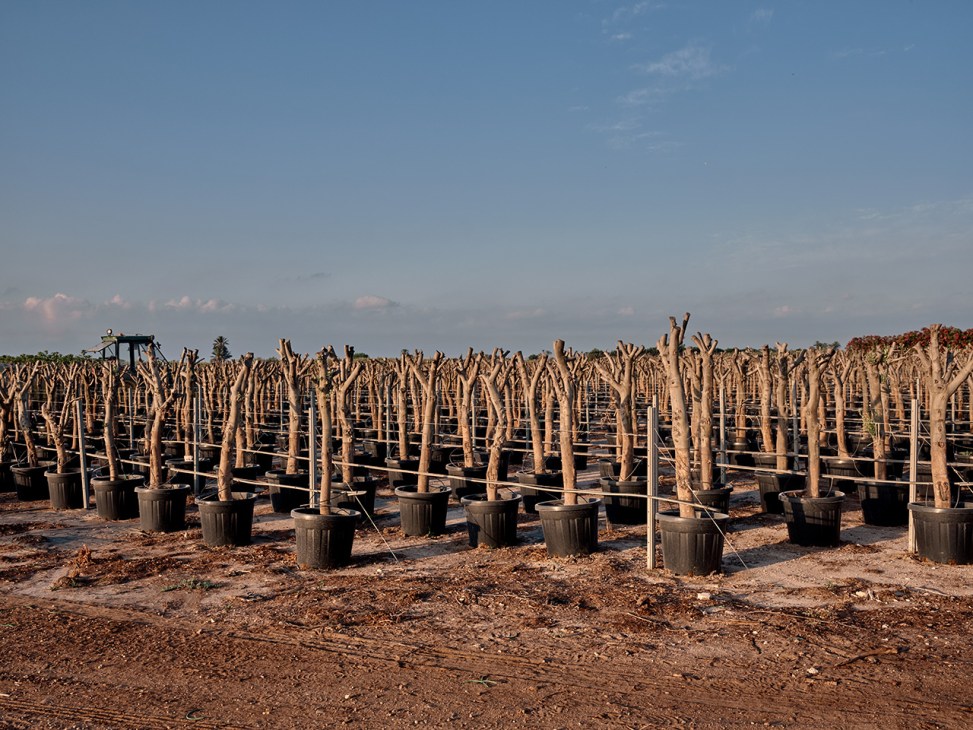
Despite geographical limitations, demand for trees is rising. Vivers Planas, a nursery near Girona in northeastern Catalonia, supplies conifers across the EU and beyond. “We’re seeing a 20 per cent increase of our revenue yearly; we can hardly keep up with demand,” says Vivers Planas’s Manel Gálvez, who works with private and public clients. “There has been an important shift in mindset at the public level. Town councils have realised – perhaps a bit late – that there’s a clear need for more trees.”
Gálvez adds that many redevelopment projects must now include greenery. “Before, you had public projects that were all pavement with just one or two trees; now, with the temperatures that we’ve had recently, it’s clear that this will be unbearable. There’s a huge demand from town councils and architects coming from public works for large quantities of plants,” he says. “We’re also seeing more demand from smaller nurseries, private homes, architects and landscapers.”
There’s still a long way to go before officials and architects move away from concrete paving and make towns that resemble forests. But the business of trees is growing. “The question you must ask yourself is: would you prefer to live in a desert where it’s hot, unprotected from the sun and the wind or in a forest with a constant temperature and moisture?” says Smets. “Instead of just saying that we need more trees, the whole city should be rethought as a way to introduce nature.”
Best tree species for avenues, parks and gardens in Mediterranean climates:
1.
Hojiblanca olive tree
By far the bestselling tree, this resilient classic is prized for its silvery foliage and gnarled trunk. Drought tolerant once established, it thrives in hot, dry climates.
2.
European nettle tree
Tough and long-lived, with a broad, rounded canopy, the European nettle provides shade aplenty. Highly adaptable to poor soils, pollution and droughts once rooted, it’s perfect for avenues, squares and parks where summer shade is needed.
3.
Iberian holm oak
This evergreen oak with dense, dark foliage provides year-round shade. It’s slow-growing but thrives in Mediterranean and mild, temperate climates, making it excellent for parks, gardens and coastal streets.

This article is from Monocle’s Med, Mountains & More newspaper. Purchase a copy of the newspaper here.