Who is actually in charge of Cuba?
Raúl Castro? Miguel Diaz-Canel? ‘Raúlito’? If you ask Cubans, nobody is leading.
There was high drama and heavy symbolism on Wednesday when the US indicted Cuba’s elderly former president Raúl Castro. The charges – for the alleged downing of two small civilian planes by Cuban military jets in 1996 – were announced on Cuba’s Independence Day (20 May) in the grand hall of Miami’s Freedom Tower, which has served for decades as the first port-of-call for migrants who escaped Cuba for the US.
But in practice, it isn’t entirely clear how the indictment moves the Trump administration any closer to its goal of toppling an old and outsized adversary once and for all. Meanwhile, the US’s crippling fuel blockade against the island has been in effect since January.
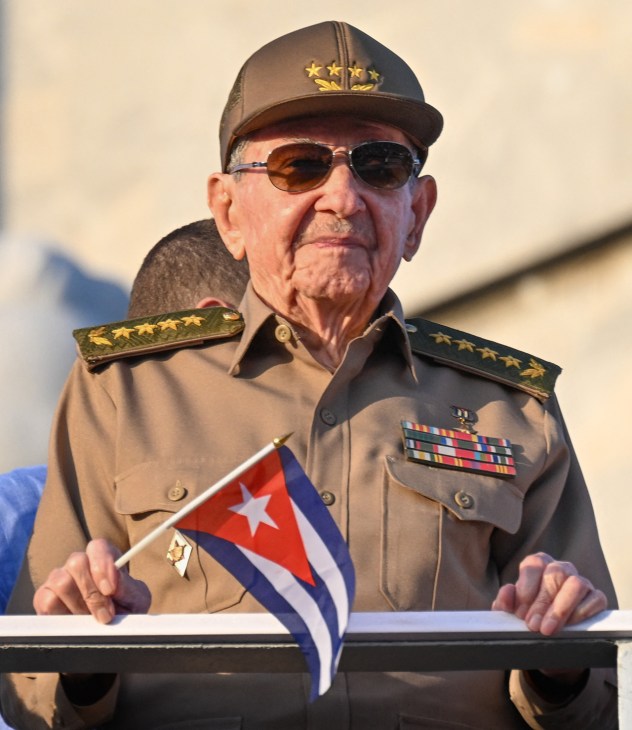
“Indicting Raúl Castro suggests that he’s actually still in charge, even though he’s retired,” says Mark Manger, a professor at the University of Toronto’s Munk School of Global Affairs. “So it might be a move [that turns out] to be pointless.”
Castro, soon to turn 95, stepped back from public life in 2019 and was replaced as president by Miguel Díaz-Canel, a long-serving insider of Cuba’s Communist Party. He is the first person from outside the Castro family to lead Cuba since the socialist revolution in 1959. In April, Trump demanded Díaz-Canel’s resignation in return for an easing of US sanctions.
Díaz-Canel is what, in the Soviet Union, people called an apparatchik. “He is not a powerful figure,” says Manger. “He does not have a power base. He has been put there largely because he is somebody who other more important forces in the Cuban government can control. Removing him [from office] and replacing him would change absolutely nothing. [The US] had to be disabused of its perception [of Díaz-Canel’s influence] by Marco Rubio himself. Whereas [Venezuela’s] Nicolás Maduro was at least bestowed with a sort of authority as the successor to Hugo Chávez, Díaz-Canel commands no respect whatsoever – not in the population, not in the other parts of the regime.”
It’s a fact that I learnt firsthand in 2024. When I arrived in the town of Viñales in northern Cuba, my host told me that I’d “missed the big show today”. Viñales, he explained, had earlier been visited by Díaz-Canel. Buildings in the central square had been freshly painted, cheerful schoolchildren withdrawn from their classrooms and convened to greet the de facto leader. Even a herd of cattle was assembled from across the region for the president to inspect. But it was all an illusion, dutifully constructed for the afternoon. At the end of the day’s pleasantries, Díaz-Canel’s departing helicopter was still visible in the sky when the electricity was switched off, returning the community to the routine of rolling hours-long blackouts.
So as Cuba’s civilian population grapples with the worst living conditions on the island since the collapse of the Soviet Union in the early 1990s, who is in charge? Seasoned observers point to Castro’s chief bodyguard and elusive grandson, who is known by his nickname, Raúlito. “We do know that Marco Rubio has talked to him directly,” says Manger. “But all of this comes down to the fundamental problem that a government in an authoritarian country will only change if the people who benefit from the [status quo] lose their grip.”
The military leadership, of which Raúlito is part, has enjoyed a relatively comfortable life in Cuba. Billions of dollars flowed in from the tourism industry, which is run by the military-controlled mega-conglomerate, Gaesa. There are videos of Raúlito partying on a yacht and photos circulating of particularly handsome luxury cars. “Even when the Cuban population is starving, the people in the military – the officer class and above – are doing fine,” says Manger.
In indicting Castro, the Trump administration has made its most provocative move yet against a state that has loomed large in the US imagination for decades. It’s a powerful statement for Cuban-Americans in southern Florida and beyond, who have long abhorred attempts to normalise relations with Cuba’s government, even if those moves, such as the détente put in place by then-president Barack Obama in 2016, lifted many out of poverty.
What the indictment doesn’t do, however, is give a clear signal of what happens next or what a recast Cuba might look like. Civilians still find themselves stuck in a gruelling and increasingly intolerable waiting game as the powers that be fight out their future for them. Who is in charge? For now, Cubans remain in the dark.
Tomos Lewis is a regular Monocle contributor. For more opinion, analysis and insight, subscribe to Monocle today.