Stay on the scent of fresh opportunities in the fragrance sector – from key industry players to a breakdown of regional markets
The perfume industry is worth €52bn and encompasses a network of businesses all focused on creating fragrances that sell as well as they smell. Looking to break in? Here are the names to watch.
Keen to sniff out fresh opportunities in the fragrance sector? To help you on your way, we have put together a guide to creating a thriving perfume brand, from manufacturing and distribution to the key names that should be on your radar. It’s a competitive field – but those who can cut through the fragrant fog stand to win big.
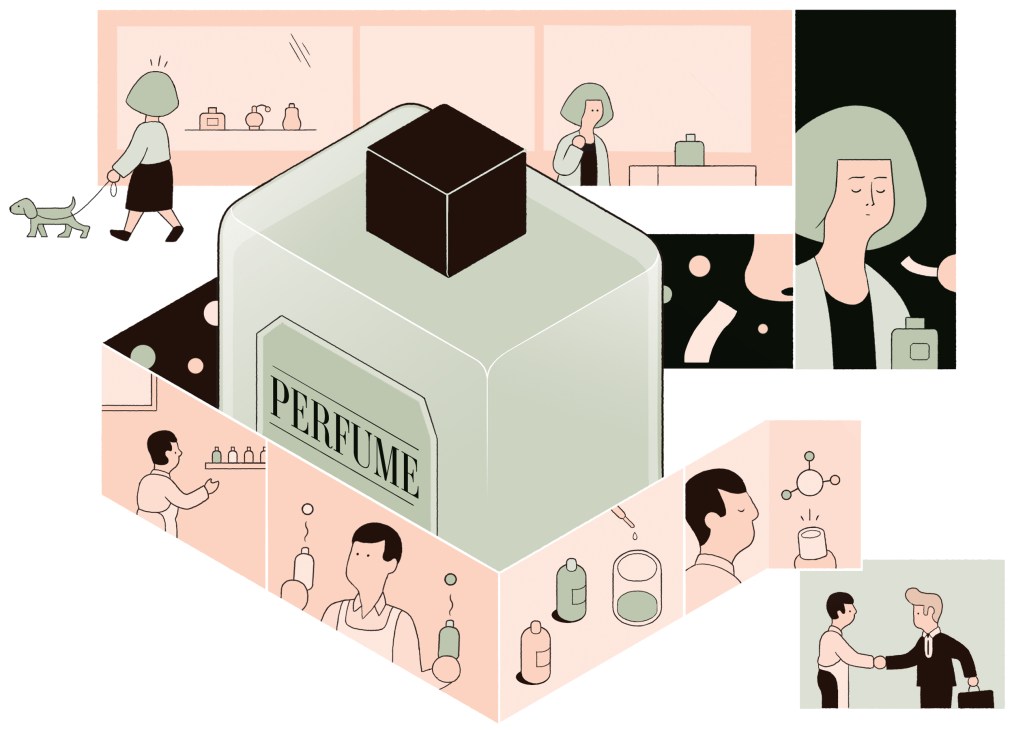
Follow the science: The four fragrance manufacturers to know
Between a brand and its bottles, the fragrance business has a hidden layer: a cluster of companies powering much of the €52bn global industry. They develop the extracts, compounds and formulas used to make the scents, and employ star perfumers (known as “noses”) to blend them. Here are four firms to know.
1.
DSM-Firmenich
Switzerland/Netherlands
DSM-Firmenich is one of the industry’s biggest players, with €3.8bn in perfume and beauty sales in 2025 alone. The merger of Dutch science and nutrition company Royal DSM and Swiss fragrance house Firmenich in 2023 brought together two juggernauts; the company now manufactures both the raw ingredients of perfume and finished fragrances for some of the world’s top fashion brands, including Marc Jacobs, Valentino and Dolce & Gabbana. For 2025’s Burberry Goddess, DSM-Firmenich found a new way to extract vanilla that preserves its natural character.
dsm-firmenich.com
2.
International Flavors & Fragrances (IFF)
USA
IFF is a leader in “functional” scents: it blends the fragrances used in laundry detergents, shower gels and more, alongside those for cosmetics from giants such as Procter & Gamble and L’Oréal. In 2025 the corporation made €2.14bn in sales across both scent compounds and finished fragrances. It also has a storied history in the commercial-fragrance sector. IFF created Calvin Klein’s Eternity in 1988 and launched a new era of celebrity-fronted perfumes with Elizabeth Taylor’s White Diamonds in 1991. Today it employs some of the world’s best perfumers, including Carlos Benaïm.
iff.com
3.
Symrise
Germany
Formed in 2003 by the merger of German companies Haarmann & Reimer and Dragoco, Symrise has been helping to shape the fragrance industry for more than 150 years (the former firm developed the first synthetic vanilla scent). Like many of its competitors, the company is diversified across consumer goods and fragrances, and its scent and care division turned over about €1.9bn in 2025. Natural ingredients are a key focus for the company; it agreed to acquire French producer Floral Concept in 2026, which specialises in processing raw materials for scents, including orange blossom and rose.
symrise.com
4.
Givaudan
Switzerland
Arguably the world’s biggest “flavour house”, Givaudan shows no signs of slowing down. Based in Geneva, the company reported sales of about €8bn in 2025 and its fine-fragrance category grew by more than 18 per cent on the previous year. Givaudan is an R&D powerhouse, with innovation centres in Zürich and Singapore that create almost 2,000 new molecules a year. In February it announced plans for Campus 52, a €59m centre in Grasse pioneering new uses for natural ingredients – bringing hi-tech research to the historic cradle of perfumery.
givaudan.com
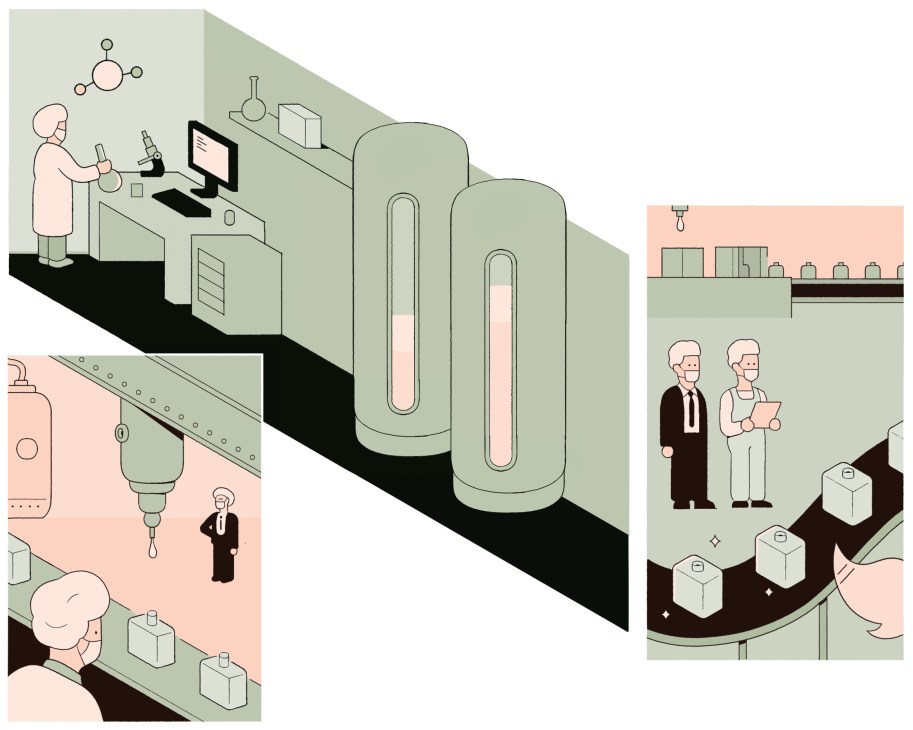
Master mixologists: The perfumers
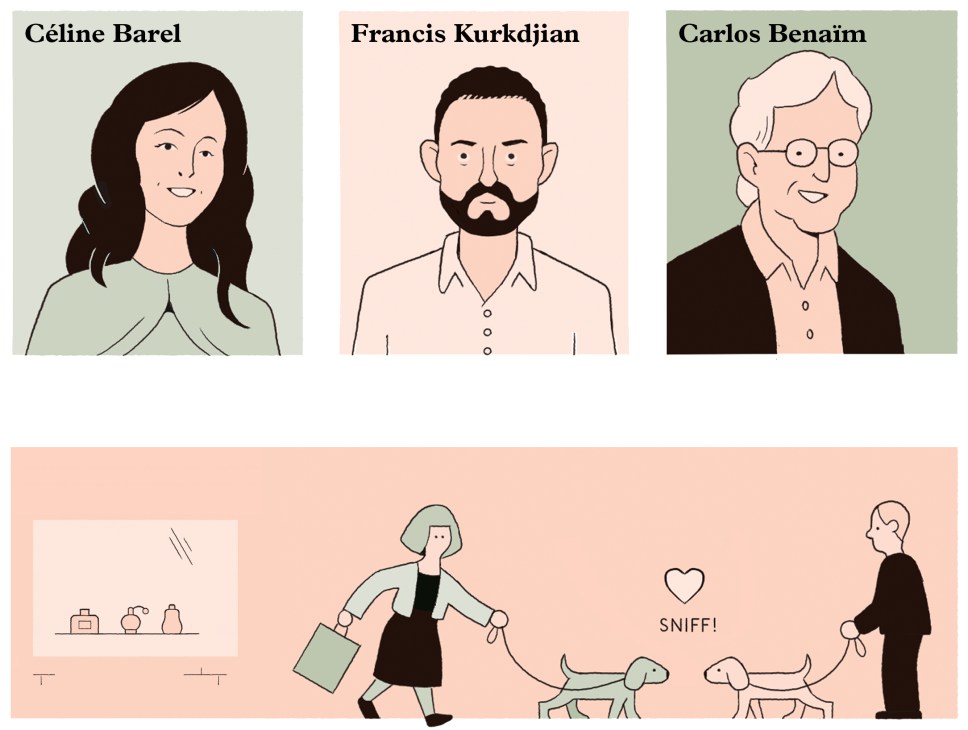
The perfumers behind the world’s most famous scents are a curious mix of chemists and creatives. They talk of fragrances like poets and analyse chemicals like the scientists they are. Some devote their careers to a single fragrance house, shaping its legacy, while others move between mass-market and luxury. Meet three of the world’s keenest noses.
Carlos Benaïm
“The most interesting creations happen at the intersection of imagination and logic,” says Carlos Benaïm, IFF’s master perfumer. Over five decades, he has worked on bestsellers including Calvin Klein’s Eternity and Euphoria. But the scent that he describes as the foundation of his olfactory imagination still eludes him. “It’s the smell of my grandfather’s snuff, made from wild Moroccan tobacco and perfumed by my father with a violet fragrance,” he says. Chasing the intangible has allowed him to make perfumes suffused with a sense of boundless potential. “I have spent a lifetime revisiting that emotion,” he says.
Francis Kurkdjian
Armenian-born French nose Francis Kurkdjian often begins with an idea or image, then finds ways to conjure it in scent. Kurkdjian is the perfumer behind Baccarat Rouge 540, whose success in 2014 made Maison Francis Kurkdjian one of the most celebrated names in its sector (in 2017, LVMH took a majority stake in the house). He also serves as the creative director of perfume at Dior, where reformulating iconic scents is as important as creating new hits.
Céline Barel
Known for work that leans into the enigmatic, Céline Barel is one of just two noses creating fragrances for L’Oréal-owned brand Aesop. For her latest scent, Entirely Aurner, the brief was to make “a floral that would not smell like a flower”. Barel, who has synaesthesia, layers smells inspired by novels, music, colours and sights into perfumes for the likes of Loewe and McQueen. Her most unusual creation might be Squid for niche house Zoologist: a briny scent that uses synthetic accords of black ink and musky ambergris.
Hit the big time: The conglomerates
For the founders of independent perfume brands, acquisition by one of the big luxury conglomerates often means a significant payout. In 2022, for example, Spanish beauty and fashion company Puig bought a €1bn majority stake in Byredo, a respected Swedish fragrance maker. Those seeking to emulate Byredo’s founder, Ben Gorham, take note. We look at the five industry leaders.
Estée Lauder, USA
In 1946 cosmetics pioneer Estée Lauder co-founded her eponymous brand with her husband, Joseph, in New York. The duo launched their first olfactory product in 1953: a bath oil called Youth Dew. The company has since climbed to the top of the beauty industry, acquiring brands such as Le Labo and Tom Ford. Last year it launched a fragrance atelier inside La Maison des Parfums – the corporation’s 2,000 sq m innovation hub and fragrance centre on Paris’s Rue Volney. The hub, which opened under the patronage of Emmanuel Macron, seeks to revolutionise scent-making by using AI to combine olfactive and neuroscience research across its perfume brand stable.
Puig, Spain
Founded in Barcelona in 1914 by Antonio Puig Castelló, Puig launched Agua Lavanda, its trademark scent, in 1940. The family-run Spanish giant is now the pre-eminent conglomerate for smaller, niche luxury brands. In 2015 it acquired L’Artisan Parfumeur and Penhaligon’s, and has since also added Byredo, as well as the licence for Christian Louboutin Beauty. Meanwhile, Puig has agreements with the likes of Antonio Banderas and Shakira to develop their own fragrance lines. In 2026, buoyed by the success of its Carolina Herrera brand, the company’s fragrance and fashion division grew by 3.7 per cent, reporting revenues of €819m.
LVMH, France
In 2023 the LVMH group became the first European company to surpass a valuation of $500bn (then €400bn). Founded in 1987 through the merger of Louis Vuitton and Moët Hennessy, the group runs some 60 subsidiaries that manage 75 luxury brands. Its perfume portfolio spans storied fashion-house fragrances, such as Parfums Christian Dior, and smaller players including Officine Universelle Buly. In the first half of 2026, LVMH’s fragrance and cosmetics arm, which represents 10 per cent of group sales, brought in €3.9bn, with strong performances from labels such as Guerlain offsetting weaker results elsewhere in the division.
Shiseido, Japan
Established in 1872, Shiseido started as Japan’s first Western-style private pharmacy. In 1926 it began to focus fully on cosmetics. The company’s success in the early 20th century cemented Japan’s status as a key player in the sector; the first-ever Japanese-created fragrance was Shiseido’s Hanatsubaki, launched in 1917. Today its portfolio includes fragrance-driven luxury brands Serge Lutens, Issey Miyake Parfums and Narciso Rodriguez. Though the company has suffered setbacks in recent years, its core operating profit surged by 90 per cent to ¥44.4bn (€240m) in the first half of 2026, following the implementation of a corporate turnaround plan.
L’Oréal, France
French chemist Eugène Paul Louis Schueller founded L’Oréal in 1909. More than a century later, it’s the world’s leading cosmetics company, with a fragrance portfolio spanning budget-friendly brands including Diesel and high-end houses such as YSL, Armani Beauty and Maison Margiela. Earlier this year it acquired Kering Beauté, including the Creed fragrance house, for $4.7bn (€4bn). Second-quarter sales saw €11.6bn in revenue, an 8.2 per cent year-on-year increase, with Creed growing by double digits within the group.
The merger that almost was
A potential merger between Estée Lauder and Puig, which would have created a fashion and beauty mega-brand worth about €35bn, was first reported in March. Despite shareholder rancour, the deal progressed to an advanced stage, before breaking down due to issues around how the new entity would be structured. A key obstacle was Charlotte Tilbury, whose eponymous beauty brand is majority-owned by Puig. The deal collapsed in May – but don’t be surprised if both parties pick up the scent again.
Play to the crowd: Market analysis
The world’s three biggest markets for perfume differ in subtle ways, reflecting each region’s culture and character.
Europe
Despite geopolitical volatility and economic uncertainty, Europe remains a stronghold of luxury. The world’s largest perfume market is enjoying sharp growth in premium fragrances, with year-on-year sales of bottles costing €150 or more rising by 32 per cent in 2024. Designer brands dominate the top 20 bestsellers, with an 89 per cent market share. Dior’s Sauvage continues to set records, selling more than 12 million bottles a year. European consumers are particularly fond of delicate, floral notes with Italian bergamot, French lavender and Moroccan orange blossom consistently popular.
North America
Scent sales in North America currently stand at about €13.6bn. The US accounts for a fifth of the global market, making it the world’s largest perfume-buying nation. There’s a preference for heady fragrances: seven out of 10 consumers are willing to pay more for stronger, longer-lasting scents. The region has a sweet spot for notes of vanilla, caramel and pistachio.
Asia-Pacific
Though the smallest perfume market of the three, Asia-Pacific’s 8.5 per cent annual growth rate dwarfs Europe’s 3.8 per cent. The region has the world’s fastest-growing fragrance economy, which is projected to reach almost €16.4bn by 2030 (more than double its value in 2020). These figures are driven by higher disposable incomes and shifting consumer habits. In China, 81 per cent of shoppers now consider fragrance a daily staple rather than an occasional luxury. Layering, a cultural fixture of the Mena region, is taking off in India too and fragrance start-ups are drawing on local ingredients such as rose, jasmine and vetiver to encourage consumers to own multiple scents.
Close the sale: The independent shops
Congratulations! You’ve made a perfume. So how do you get it out there? At Monocle, we’re partial to independent retailers. Here are three whose shelves we’d like to fill.
Villa 515, Dubai
Behind the leafy courtyard of Villa 515 – a Dubai villa reimagined as a café, restaurant and concept shop – is an atelier devoted to perfumes. Its co-founder Dhaher Bin Dhaher created it as a home for his fragrance label, Tola, but its shelves also carry a selection of independent perfume brands, including France’s État Libre d’Orange and Histoires de Parfums. “I wanted to create a place that would be a home for different perfumery brands,” he says. An on-site perfume lab adds an educational element. Many UAE customers, says Bin Dhaher, buy as many as six perfume bottles a month.
villa515.com
Rawness, Brescia
Founded in 2020, Rawness stocks fragrances and skincare products from well-known brands alongside those of smaller labels including Raer and Vahy. “We choose functional fragrances according to the therapeutic properties of plant and flower extracts,” says the shop’s founder, Giovanni Norcia.
rawness.it
30ml, Montréal
Pat O’Reilly conceived 30ml as a space where perfume intersects with art and self-expression. “I’m not interested in having 20 brands that occupy the same square metre of the fragrance world,” he says. The space, which features O’Reilly’s art and a coffee bar, welcomes anyone, whether they’re looking for a scent or a conversation.
30ml.ca

Perfumes timeline
Much like fashion or music, scent is an art form that can capture the spirit of its time – and remain relevant for decades to come. Here are six perfumes that defined their eras.
The 1920s: Chanel No 5
Launched over a century ago, Chanel No 5 still sells about 10 million bottles a year. Conceived as a “women’s perfume which smells like a woman”, it has top notes of citrus and a vanilla base.
chanel.com
The 1940s: Miss Dior
In 1947, Christian Dior called time on wartime austerity with his fresh, optimistic New Look collection. To complete the look, the couturier launched this floral fragrance, Miss Dior.
dior.com
The 1950s: L’Interdit by Givenchy
Created for Audrey Hepburn, L’Interdit is an early example of using a film star in fragrance advertising. With its vetiver and patchouli base notes and orange-blossom top notes, it was one of the era’s most iconic perfumes.
givenchybeauty.com
The 1970s/1980s: Opium by YSL
Released in 1977, YSL Opium was initially criticised for its name, which was accused of glamorising drug use. But it proved a global hit, with its seductive amber notes chiming perfectly with an era of excess.
yslbeauty.com
The 1990s: CK One by Calvin Klein
Instead of targeting an affluent clientele, this citrussy 1994 fragrance was made for the overlooked teenage demographic – becoming one of the first unisex perfumes to become a top seller.
calvinklein.com
The 2010s: Santal 33 by Le Labo
It’s said that US fragrance house Le Labo made 400 prototypes of Santal 33 before its launch in 2011. The result is a smoky scent with dominant notes of Australian sandalwood and cedar.
lelabofragrances.com
Home brew
Monocle launched its own perfume line with Japanese brand Comme des Garçons in 2008 and Scent One: Hinoki remains a mainstay of our shops. Last year we launched our fifth fragrance. All are available online and in-person at the Monocle Shop.