Against the encroaching shadow of automation, Homo Faber is a beacon of light
Homo Faber’s exhibition this year is proving that craft, like host city Venice, is still buoyant.
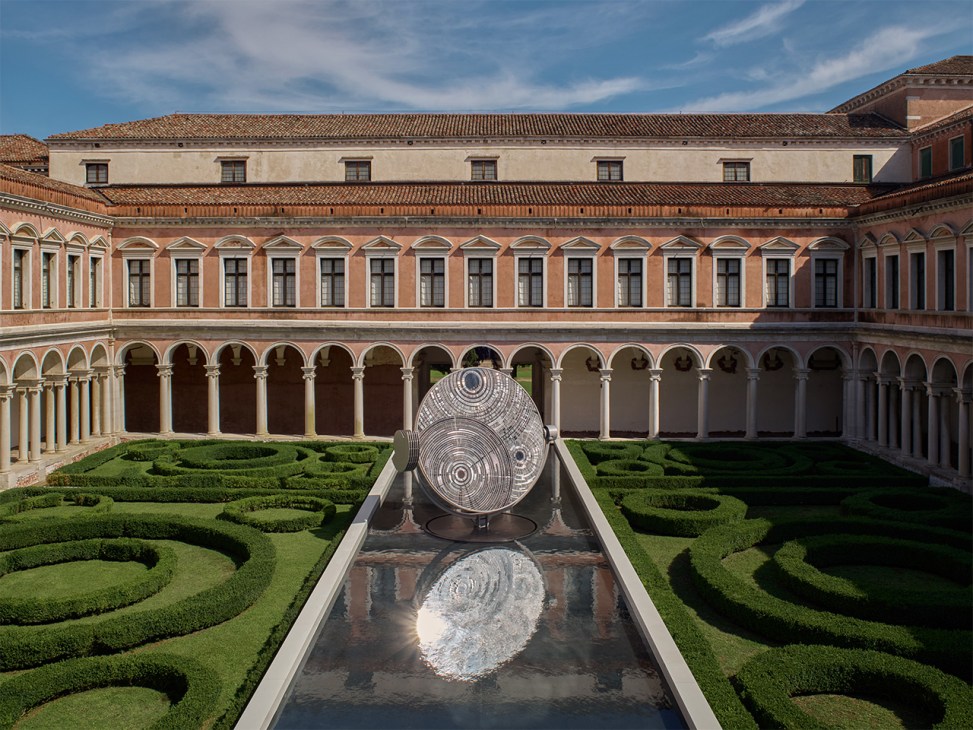
Homo Faber is open and it’s mighty impressive. The biennial dedicated to the world of contemporary craft, which takes place on Venice’s San Giorgio Maggiore island and runs until 30 September, has benefitted from some stardust this year in the form of Es Devlin. The British designer is overseeing the artistic direction of the showcase, which features the work of more than 500 artisans from some 70 countries. Devlin, channeling her extensive experience in stage design, has created a mesmerising, immersive event that features poetic voiceovers, mood-setting music and a series of installations. Highlights include a moonlike structure rising out of a swimming pool and a kinetic disc – “A Great Turning” – that reflects light around San Giorgio’s Palladian cloister.
While Devlin’s footprint is all over Homo Faber’s fourth edition, An Island of Light, the exhibition also features about 700 artisan pieces, from vases to ornamental animals. The first room of the show, “A Language of Hands”, is a dramatic recreation of atelier workstations, with sketches on the walls and a creative mess spread across the tables. In other spaces, artisans sit at their desks showing off their crafts, from metal hammering to reed weaving. None of this should come as a surprise: forecasting agencies unilaterally predict strong growth for the arts and crafts market over the next few years. Homo Faber certainly feels in a good spot, rising in stature at a time when the design and fashion worlds both seem obsessed with the word “craft”.
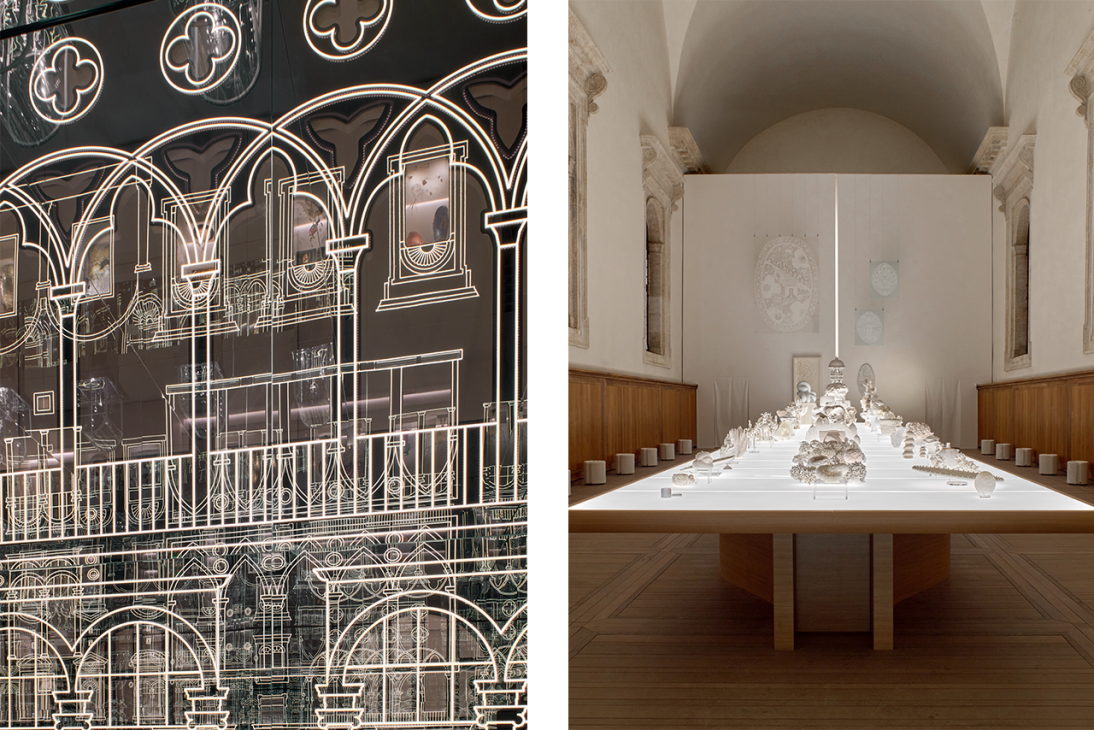
And yet, lurking behind the handmade objects on show is an underlying fear of our march towards automation. At Casa Sanlorenzo, another Homo Faber venue, an exhibition from Luxembourg curated by De Mains de Maîtres called Fiat Lux is accompanied by a sombre message: “In the face of automation and seemingly limitless reproducibility, the pieces assert themselves through their singularity, their irregularities, and the slowness with which they were conceived and crafted.” It’s an important message in an age when the challenge of making a career in craft is evermore economically unviable, with craftspeople competing with everything from AI to makers creating cheap copies that undercut original works.
Thankfully, it seems unlikely that AI could ever undermine the deep connection between mind and body required to produce the kinds of pieces displayed at Homo Faber, though it might end up writing the catalogue notes. It’s clear that part of the reason that craft is having a moment is because the result is tangible and tactile, with a real story – and a real person – behind it rather than a bot. Homo Faber is a global smorgasbord of human creativity and talent, from Japan and Lebanon to South Africa and Denmark, that needs time and patience to be completed. “The world is running at 500 kilometres an hour,” says Alessandro Boscolo, a glassblower who is showing a murano glass triptych at Homo Faber this year. “People are tired of this frenetic life.” In a world grasping for machines to answer all its questions, An Island of Light is a reminder of what it means to be human.
Ed Stocker is Monocle’s Milan-based Europe editor. The 2026 edition of Homo Faber, ‘An Island of Light’, runs until the end of September. For more opinion, analysis and insight, subscribe to Monocle today.