‘Architecture should be equally functional and beautiful’: Matt Goodman’s thoughtful approach to beachside builds
The Australian designer proves he’s the hot name to commission with his refined approach to crafting buildings.
Like doctors, lawyers and teachers, the best architects have strong principles and a sense of integrity. That’s exactly what imbues the work of Matt Goodman (and why he’s being commissioned by those in the know across Australia). With work that spans offices to apartments, the Melbourne-based architect’s ethos – one that’s about respecting existing conditions, context and craftsmanship – is consistent across his portfolio. “As a studio, we care about context and enjoy the process of crafting buildings,” says Goodman. “It’s about being collaborative and solving design problems. We bring simplicity to complex briefs. Wherever possible we use natural materials and a limited palette to create refined designs.”
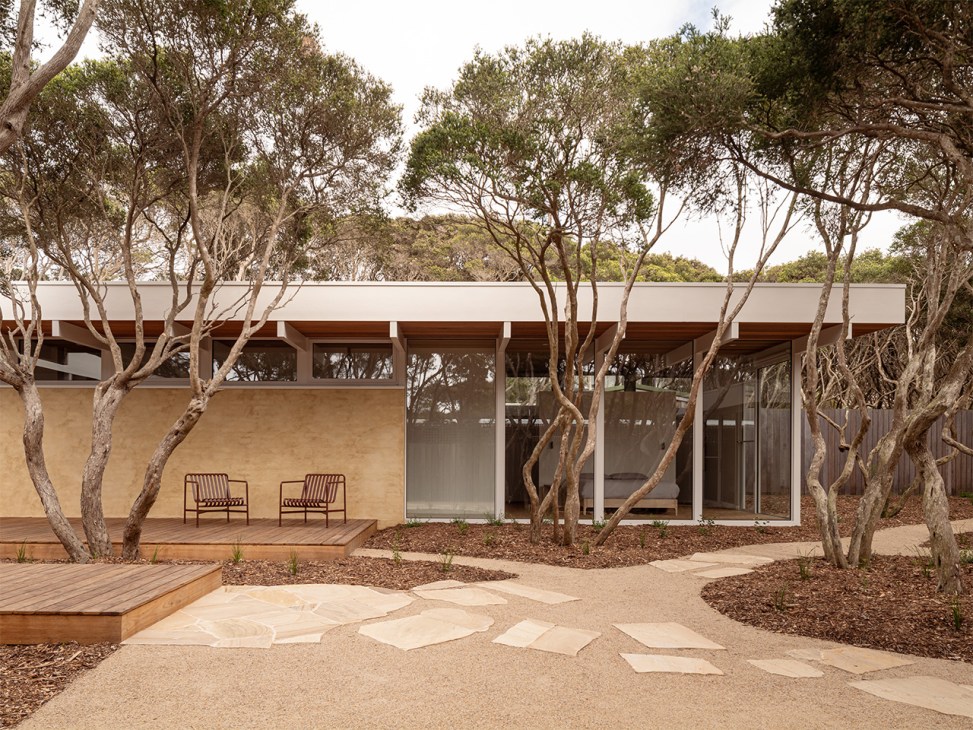
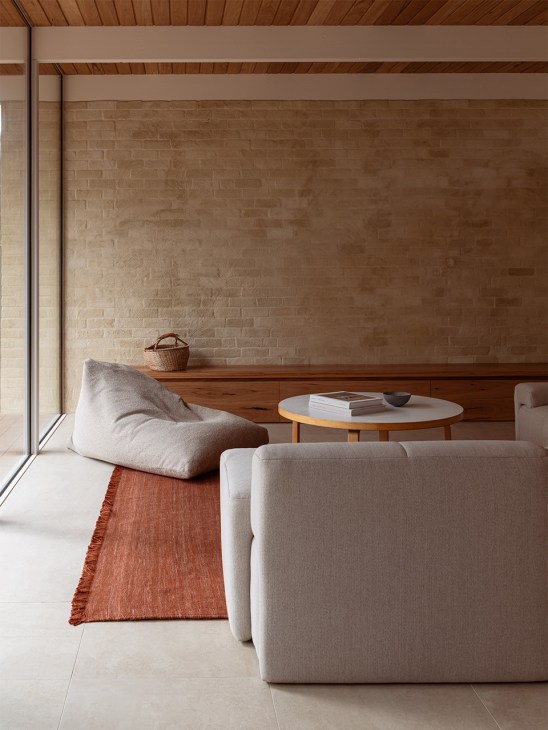
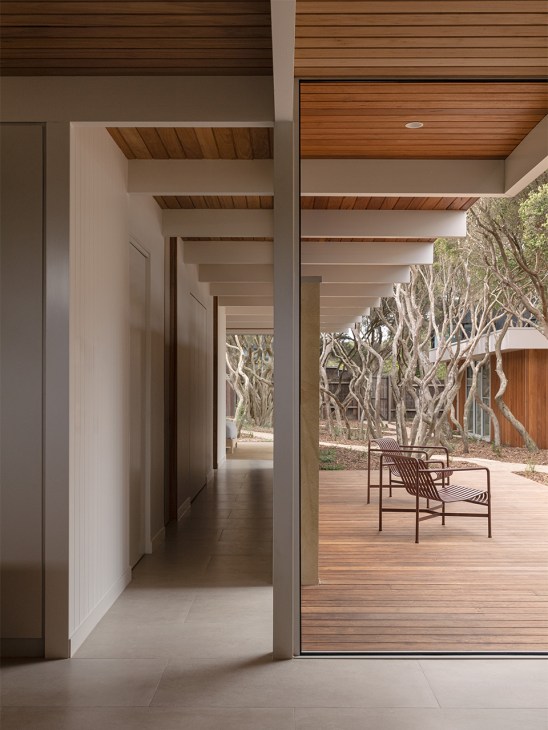
It’s an approach that’s best imbued in his residential work, which frequently draws upon cultural traditions and the landscapes in which it is embedded. “For the house at Anglesea we kept the soul of its mid-century origins intact,” says Goodman of the beach house that he renovated on Australia’s south coast. The home was sensitively rebuilt, maintaining the original L-shaped layout, allowing the living space to flow into the garden where existing native trees connect the space with the verdant landscape beyond. Brick rendered in an earthy colour and blackbutt-timber ceilings further enhance this natural atmosphere. “Every decision respected its character, while bringing it up to modern standards,” he adds.
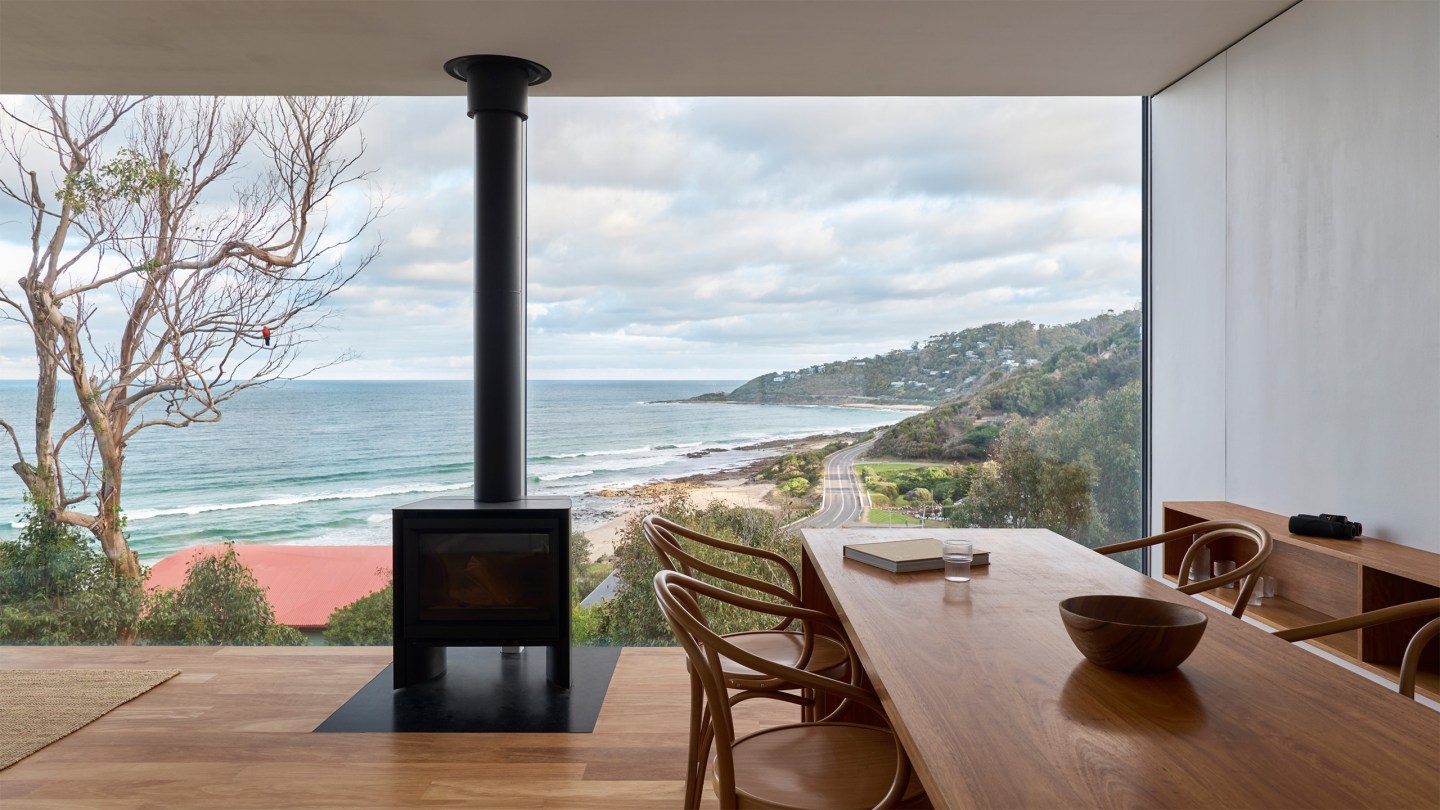
A similar approach can also be found in Goodman’s work on the Olive Street Cabin in the coastal town of Separation Creek. The project is a contemporary take on 1950s and 1960s Australian beach cabins, which populated the country’s coastlines following the Second World War. An iconic but increasingly rare form of architecture, such structures hold a place in the national consciousness: the skillion roofs, pared-back fibre-cement façades and simple floor plans represented the bare-boned nature of coastal life.
“The project started with the idea of doing something simple, marrying the character of Separation Creek,” says Goodman. “It’s true to the area’s history.” And, true to his word, Goodman’s design blurs the indoors and outdoors, encouraging easy beachside living. Its compact layout feels generous, with external spaces flowing easily into the living area and kitchen, which is connected to the dining space by a custom stepped bench. Residents are also invited to connect with the environment beyond thanks to large windows with frameless details that make the glass appear to float, dissolving the barrier between home and landscape.
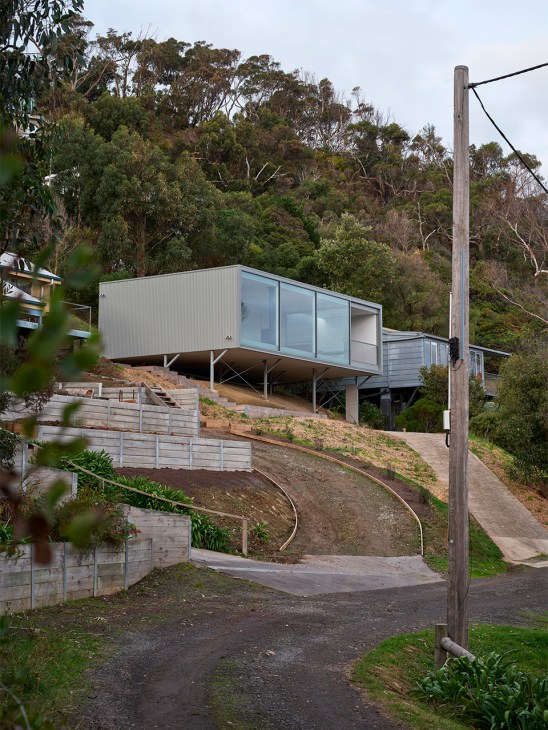
Far from being stuck in the past, however, Goodman has introduced architectural innovations that respond to the changing climate. “It’s robust and bushfire-safe,” he says, explaining that sliding corrugated-aluminium doors ensure it shuts up tightly, protecting it from the elements. This means that its owners can be assured of security when they aren’t holidaying in the residence – representative of Goodman’s ethos, one that balances aesthetics and operation. “Architecture,” he adds, “should be equally functional and beautiful.”
mgao.com.au
This article is from Monocle’s March issue, The Monocle 100, which features our editors’ favourite 100 figures, destinations, objects and ideas.
Read the rest of the issue here.