Dane in the life: Takeaways from Copenhagen’s 3 Days of Design
Monocle’s design editor, Nic Monisse, rounds up his key takeaways from 3 Days of Design in Copenhagen.
The most significant design event in Scandinavia, 3 Days of Design, kicks off today throughout Copenhagen with hundreds of brand launches and installations. Many Nordic labels are now skipping Milan Design Week to show their work here and there’s an abundance of fresh ideas and takes on the industry. Here are some takeaways from the opening day.
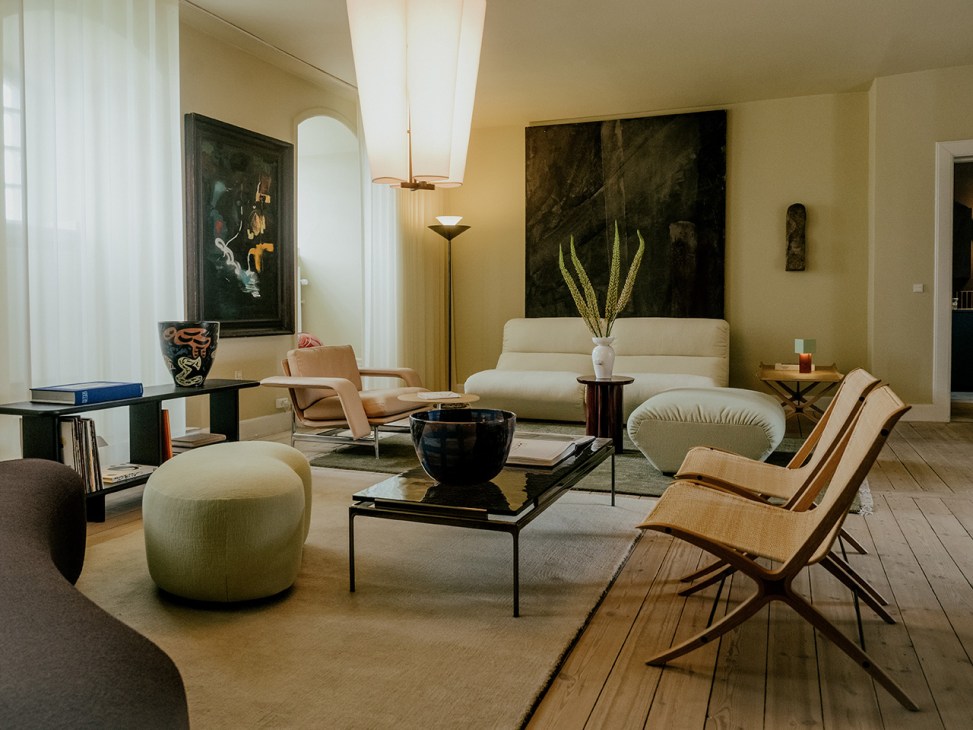
Objects shape feelings
“An object is never just an object: it shapes a room and holds memory,” says Marie-Louise Høstbo, who has curated an exhibition at Postbyen, a new cluster of buildings in central Copenhagen. Hosted under the banner of her namesake gallery, it features works by Danish studios, including Frederik Gustav and Anna Søgaard, with pieces positioned in relation to daylight and movement. “Objects can influence how we move, act and feel.”
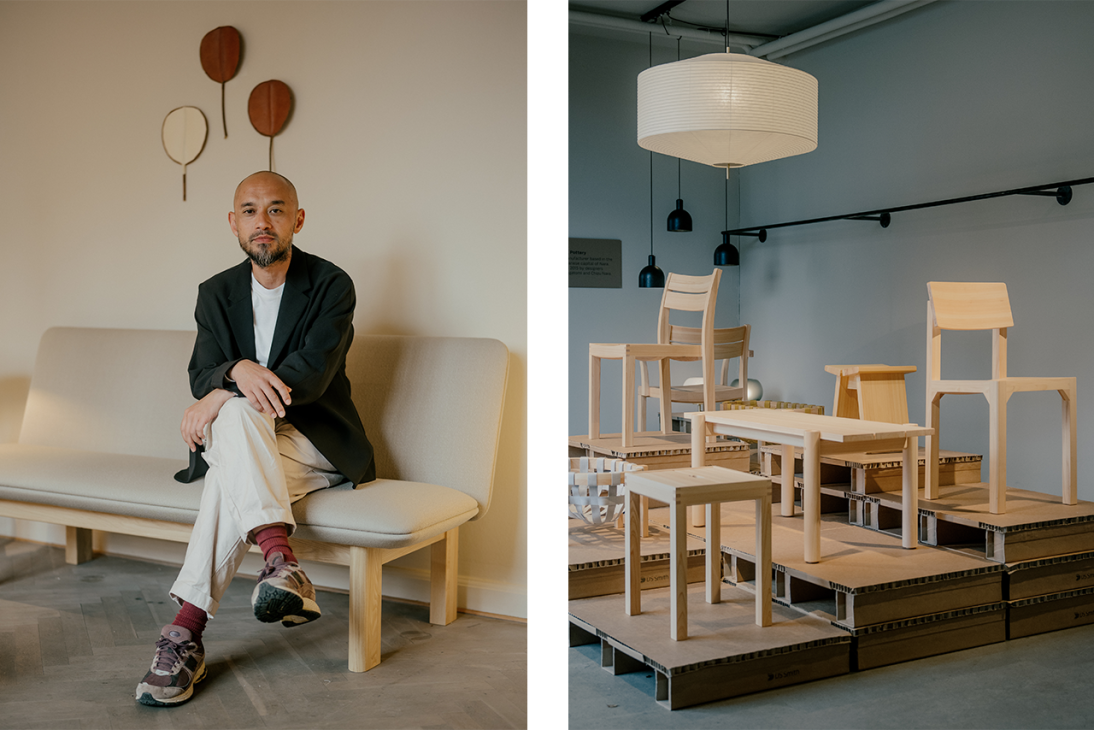
Hidden potential (pictured below)
“Hinoki wood was primarily used for temples and shrines but the demand has dropped in recent years, presenting an opportunity for it to be used for furniture,” says Wataru Kumano (pictured), who has produced chairs made from the native Japanese timber for Mas, an emerging brand backed by Karimoku furniture. It’s an approach that shows potential for supply chains to be adjusted to match changing needs. The work is being presented in the Japanmade Vol 1 showcase, curated by Jens H Jensen with exhibition design by OEO Studio, featuring paper brand Naowashi, lighting studio New Light Pottery, homeware specialist Sekisaka and fragrance brand Sheep.
A return to physicality
“As more of our lives move into digital environments, physical spaces take on a different meaning,” says Muuto’s Line Brockmann Juhl. “There is a renewed appreciation for places that feel warm, intuitive and human.” The brand is celebrating its 20th anniversary and the CMO has been considering the changing conditions in which it has operated over the past two decades. “This way of thinking influences workplaces, hospitality environments and public spaces. As a result, the distinction between residential and contract design feels less important than it once did.”
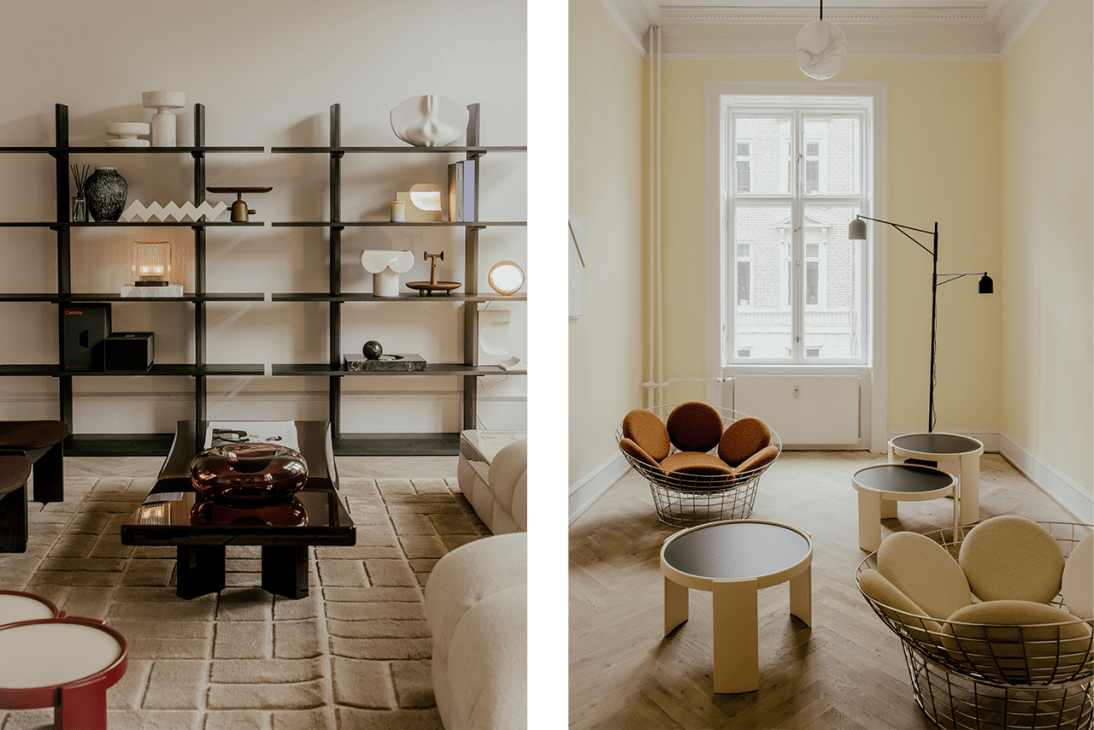
Complementary countries (pictured below)
Copenhagen and Milan are both vying for the crown of world design capital – but the two have been inadvertently shaping each other for years, says Karakter’s COO, Kim Mekawi. “Danish design has become more expressive, while Italians have become more Scandinavian in how they use materials,” says Mekawi. “We’re seeing a lot more lighter timber, such as ash. Mekawi is presenting the Danish brand’s work in partnership with Italy’s Cassina at this year’s edition of the fair – a position that leaves him well placed to comment on the similarities. “The Danes will never be as expressive as the Italians but with new Nordic design you’ll see that bold colours and unusual shapes are now more accepted.”
Make way for the new wave
“We are part of a new group of design brands dedicated to the Earth,” says Lasse Lund Lauridsen, CEO and co-founder of Form & Refine. The Danish label, established in 2018, prides itself on producing furniture in a material’s country of origin in partnership with local craftspeople. This approach has resonated with environmentally minded consumers, with the company experiencing 30 per cent growth over the past year. “Sometimes legacy brands have difficulty keeping up, even though they have many more resources.”
A note on curation
“We don’t have a broader theme for the exhibition,” says Silas Adler, co-founder and curator of Other Circle. The group showcase, featuring more than 50 exhibitors, is spread across multiple floors in The Lab, an expansive factory-like space. Rather than forcing participants to respond to a brief, Adler and his team have let themes emerge organically. “For me, a theme needs to be developed thoroughly and thought through – otherwise, it just becomes a phony cover-up. We try to trust our instincts.”
Make the invisible visible
“Architecture and design have a habit of celebrating the final work without asking how it came to be,” says Magdelis Santos, who curated architecture studio 3XN GXN’s show, Working Matter, with Marie Hesseldahl. The group exhibition champions creatives who treat their design process with as much value as the finished object. “By making this visible, we help to build the kind of critical awareness around materials that the food and fashion industries have already encouraged,” says Hesseldahl. “That conversation is overdue in design.”
Nic Monisse is Monocle’s design editor. For more from 3 Days of Design, tune in to Monocle Radio.