Alvar Aalto’s designs define Finland abroad. But Unesco recognition is marring his legacy at home
Architectural powerhouses Alvar, Aino and Elissa Aalto are the pride of Finland. But could a new Unesco designation for 13 landmark projects threaten to do more harm than good?
Unesco’s decision to inscribe Aalto Works – a series spanning 13 landmark Alvar Aalto-designed sites across Finland – on the World Heritage List has been widely celebrated in the late-modernist architect’s homeland. Many locals believe the designation will act as a catalyst for tourism and regional investment, cementing Finland’s reputation as the spiritual home of human-centred modern design. Though the decision brings these architectural marvels onto Unesco’s ledger, it’s not entirely clear whether freeze-drying evolving spaces is what Alvar Aalto, or his co-designers and partners Aino and Elissa Aalto, would have wanted for their legacy.
Firstly, there is the glaring question of upkeep, considering that so many of the sites are in a precarious state of repair. Take the National Pensions Institute Headquarters in Helsinki. My recent walk through its red-brick and copper-clad halls confirmed that it requires far more than a cosmetic touch-up. Official estimates indicate that restoration will cost between €130m and €170m. In Imatra, the Church of the Three Crosses has suffered such severe moisture damage that sections have been cordoned off for safety reasons. The problem is not unique to Aalto’s buildings but their new status does make the question harder to sidestep.
Signing the World Heritage Convention legally commits Finland to protect and maintain these sites in good condition. But Unesco supplies global prestige, not cash. Meanwhile, Finland’s austerity-minded government has introduced sizeable cuts to public-sector funding and is unlikely to foot the bill. The hope is that private foundations will step in, though relying on philanthropy to cover a multi-million-euro shortfall is always a gamble.
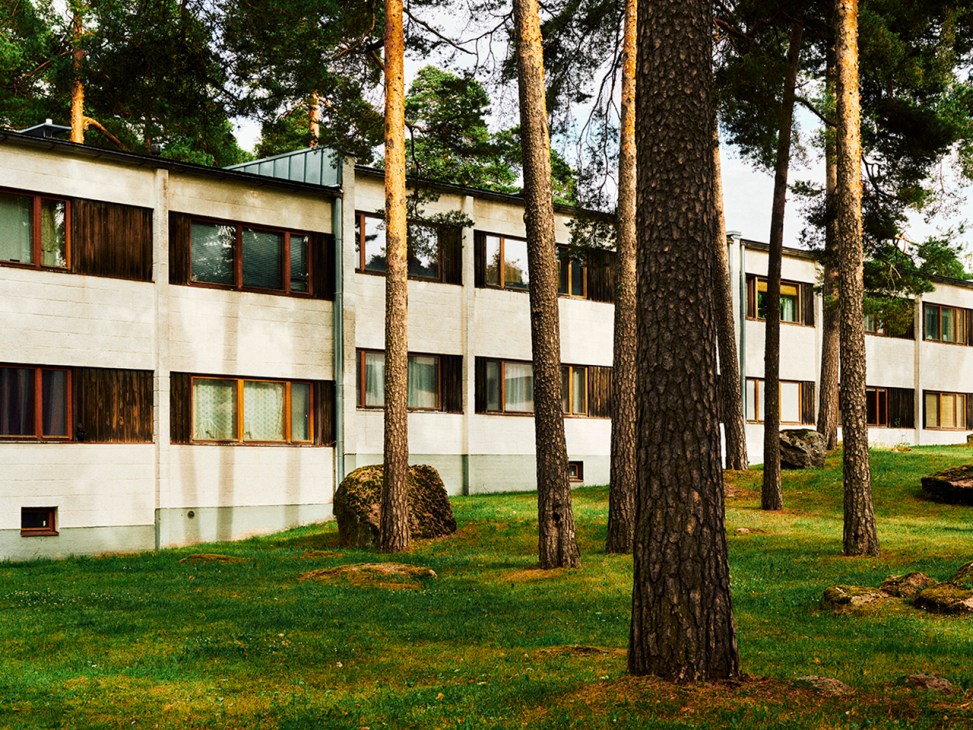
Then comes the tricky question of access. Civic accessibility was a core tenet of the Aalto studio’s philosophy, yet several newly listed sites remain off-limits to everyday visitors. The Kela headquarters remains an active administrative workspace for Finland’s social insurance institution, meaning that its interior is closed to the public (unless you happen to be a Monocle journalist pulling strings for a private tour). The Sunila Pulp Mill residential area in Kotka (which Monocle visited in Issue 166) is a neighbourhood of private homes, and residents can hardly be expected to welcome tourists peering through their windows, even in the world’s happiest nation. Meanwhile, the Muuratsalo Experimental House on an island near Jyväskylä is reachable only via guided boat tours during a brief summer window.
Now, Unesco does not mandate open-door policies for all heritage properties, it only requires host countries to “present and promote” them. In Finnish policy circles, this has been pragmatically interpreted as ensuring that people can physically reach the grounds and gawk at the exteriors. That might satisfy those penning the fine print but does a view from the outside truly do justice to Aalto’s legacy? Alvar, Aino, and Elissa designed total environments. Buildings such as Villa Mairea in Noormarkku are just as extraordinary on the inside, where tailored lighting and bespoke furniture prove just as inviting as the surrounding lawns and swimming pool.
Beyond the logistical concerns, there’s a philosophical dilemma: is institutional preservation really what Aalto would have desired? The Aaltos designed their buildings to evolve alongside society. While Unesco has grown more flexible regarding adaptive reuse, its guidelines still stipulate that listed structures must retain their original materials, craftsmanship and composition. This creates an awkward tension for buildings conceived to respond to changing circumstances. Forward-thinking studios are working to navigate this fine line between Aalto’s ambitions and today’s regulations —most notably Snøhetta, whose ambitious masterplan for the Paimio Sanatorium balances wellness with conservation. Still, it will be difficult to ensure that rules do not turn these once-revolutionary living spaces into architectural relics.
Ultimately, Unesco’s nod is a mandate for active, imaginative civic stewardship. And yes, that requires financial resources and a more democratic approach to access. If Finland treats these 13 sites merely as museum pieces preserved behind velvet ropes, it risks betraying the very pragmatism that made Aalto’s architecture revolutionary in the first place.
Petri Burtsoff is Monocle’s Helsinki correspondent. For more opinion, analysis and insight, subscribe to Monocle today.
Further reading:
– Snøhetta unveils plan to transform Alvar Aalto’s Paimio Sanatorium into ‘Finnish Camp David’
– Collector by chance: How Pertti Männistö became one of the world’s most accomplished Alvar Aalto archivists
– Inside the restoration of Alvar Aalto’s Sunila housing estate