Snøhetta unveils plan to transform Alvar Aalto’s Paimio Sanatorium into ‘Finnish Camp David’
The Finnish architectural masterpiece, which was once a treatment centre for tuberculosis and later a hospital, has undergone a grand transformation into a multi-purpose resort – yet many of its features remain intact.
Tucked away in a vast pine forest in southwestern Finland, Paimio Sanatorium stands as a masterpiece of modernism and the career-defining work of Alvar and Aino Aalto. Completed in 1933, the building was designed as a tuberculosis sanatorium but it soon became a project that propelled Finnish architecture onto the global stage. Over the subsequent decades, the complex transitioned into a general hospital before eventually being left vacant in the mid-2010s to face an uncertain future as nothing more than a decaying architectural relic.
To secure a sustainable future for the estate, the Paimio Sanatorium Foundation commissioned Norwegian architecture practice Snøhetta to develop a visionary masterplan. The concept, unveiled last week, transforms the massive property into a multi-faceted resort blending premium hospitality, wellness and culture. To ensure long-term financial self-sufficiency, the plan relies on three distinct operational pillars. The former patients’ rooms will be converted into a high-end hotel, while the grounds and communal areas will remain open to day visitors, students and local residents. Finally, the plan leverages the site’s isolated, highly secure environment to position itself as a host of soft diplomacy summits for global leaders.
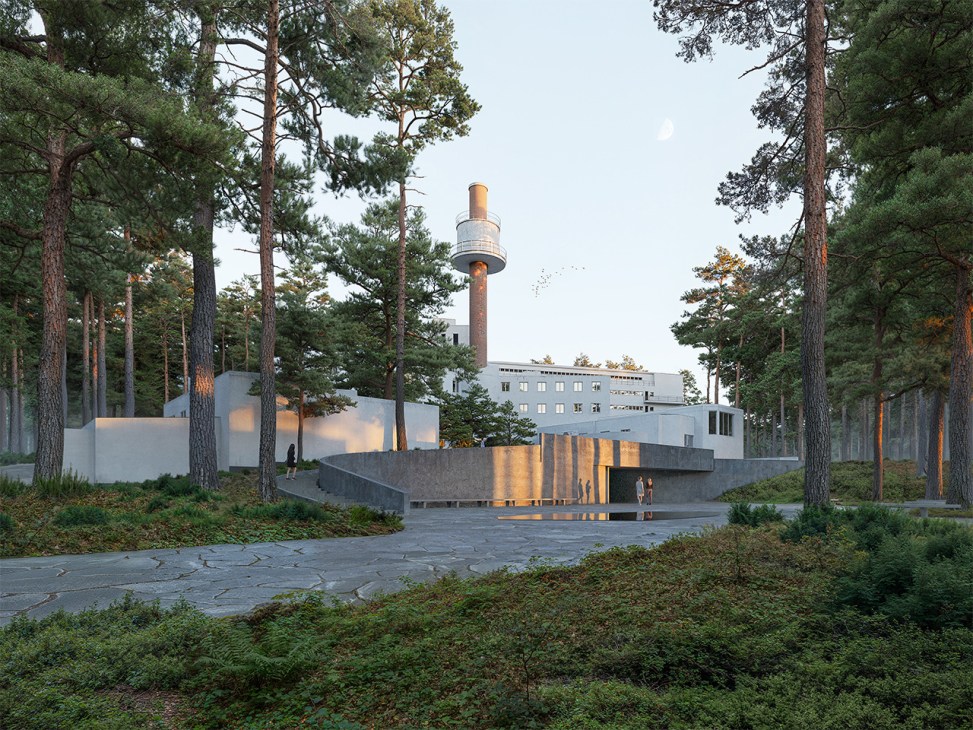
It is a vision shared by the Finnish prime minister, Petteri Orpo, who sees the forest campus as a major asset for international relations. “This would have a significant impact on Finland and the Finnish national image,” Orpo tells Monocle. “We currently lack an internationally recognised, distinctive venue that combines meetings, wellbeing, nature and architecture in the same way that Davos is known as a global meeting place. Paimio Sanatorium has the potential to rise as a world-class hub for wellness, events and international gatherings.”
The modesty of Snøhetta’s architectural approach has earned widespread praise from conservationists, who applaud the fact that the studio resisted the urge to leave a loud, contemporary stamp on the protected landmark. “A building of this magnitude required us to put Snøhetta second and Aalto first,” says Snøhetta’s co-founder Kjetil Trædal Thorsen. “It was about distilling Aalto’s spirit and using it to keep the building relevant in today’s world.”
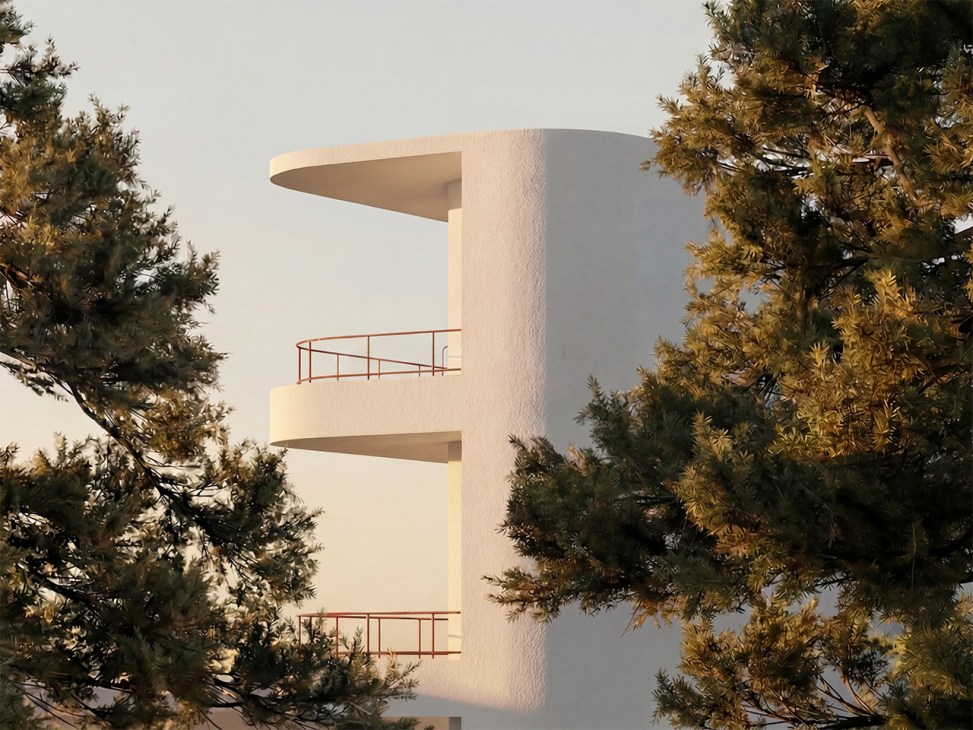
The physical interventions required to support this repurposing are being handled with immense care alongside local studios ALA Architects and Mustonen Architects. In the surgery wing, a later addition, the non-original interiors will be removed to make way for an exhibition hall and auditorium capable of hosting up to 700 people. Inside the patient wing, characterized by its slim lines and curved balconies, the original rooms will be turned into retreat spaces built for rest. Ten of these rooms will be restored to their exact 1933 state, complete with custom Aalto-designed ceramic wash basins and historical details, while the remaining rooms will either be combined into larger suites or fitted with modern, wooden bathroom pods. Externally, the heavy glass enclosures that were added during the building’s hospital era will be stripped away to reopen the sun balconies, celebrating the indoor-outdoor threshold spaces that characterised the Aaltos’ design.
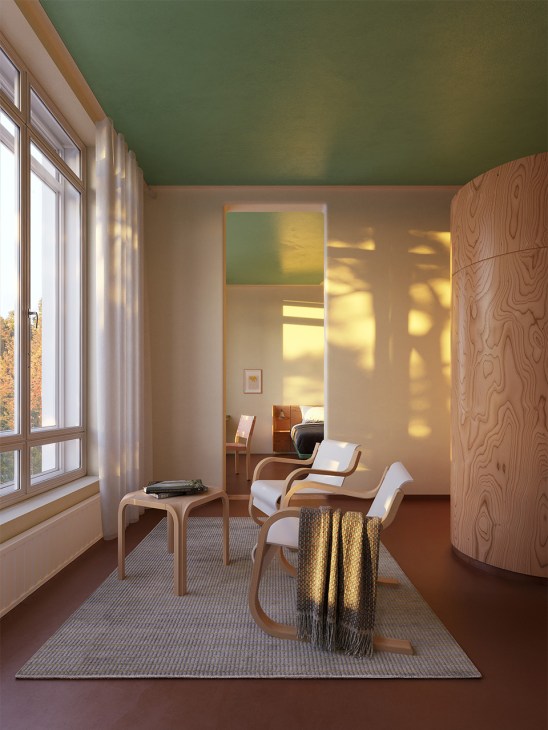
Beneath these wings, a lower-level spa equipped with hot tubs, cold plunges and traditional Finnish saunas will offer guests direct access to the surrounding forest. “You have to approach a building like this with utmost care and precision, as there are stringent protection stipulations,” says Tommi Lindh, director of the Alvar Aalto Foundation. “That said, changes are inevitable as the building’s original purpose [to house and treat patients with tuberculosis] has become unnecessary. The Aaltos always knew this and I am sure they would love to see their work find a new life that reflects the needs of today’s society.”
With the first phase of the masterplan now public, the foundation is moving into commercial development and feasibility testing, shares. “We will start meeting with premium hotel operators and investors to secure the necessary funding to bring the resort to life,” says Mirkku Kullberg, Paimio Sanatorium Foundation’s chair of the board. The ambitious revitalisation requires an estimated €30m in private investment on top of a €10m grant provided by the Finnish government. The state’s backing is intended to signal long-term institutional commitment to external partners. “The government views this site as a critical national priority,” says Orpo. “Our role is to help build a rock-solid foundation so that we can attract international private capital and world-class hospitality operators to anchor themselves in Finland.” Now, momentum is expected to build quickly as the sanatorium awaits the decision, due at the end of July, that could potentially inscribe it to the Unesco World Heritage List as part of the broader Aalto Works series.
The project is expected to act as a powerful economic catalyst, triggering an influx of visitors and development to the region. For Orpo, a politician native to Southwestern Finland, the transformation is deeply personal. “The Turku region is already one of Finland’s strongest growth areas and Paimio Sanatorium could bring an entirely new kind of international attraction factor to the region,” says Orpo. He envisions the remote setting as an ideal landscape for modern conflict resolution. “We could even talk about a new kind of healing diplomacy, where the environment, nature, architecture and wellbeing support dialogue and trust-building between people.” But its effect goes beyond that. “Aalto was a cosmopolitan in the truest sense of the word, and we want this place to reflect that spirit and his internationalist ideals,” says Kullberg. Hence why the successful execution of this masterplan represents a massive opportunity for brand Finland and the country’s international standing. By blending cultural heritage with premium wellness tourism, Paimio is poised to become a landmark within the growing Nordic hospitality market. “People shouldn’t underestimate just how attractive a destination the Nordics are from a tourism perspective,” adds Thorsen. “With most of Europe struggling with 40C heatwaves, our summers are pleasant, the air is pure and nature is everywhere.”
Yet the stakes extend beyond regional economics as the upcoming Unesco designation is directly tied to the building finding an active, protected use. Because Paimio stands as a central component of a 13-site serial nomination, the success of this financial and architectural model is vital – a failure at Paimio could put Finland’s entire Unesco series in jeopardy. But that is unlikely considering Snøhetta’s track record. This is, after all, the Architects of the Year from the 2023 Monocle Design Awards that we’re talking about.