If you do one thing…
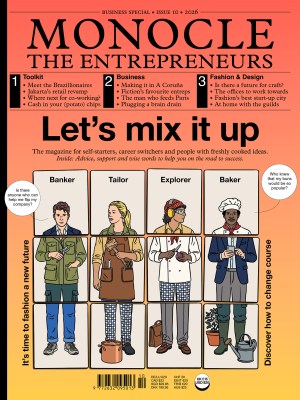
You know your product, but building a thriving firm requires more. Three business leaders share key lessons they learned on the route to success, from branding and funding to finding your company's voice.
If only starting a business were as easy as signing a piece of paper. It would save you all the hassle of choosing a suitable typeface, finding the right people to ask for money and developing a tone of voice that distinguishes your brand from any other.
For those who might be lacking in enthusiasm for these details, we’ve rallied some of the sharpest minds in copywriting, design and investment to save you from figuring things out for yourself. And for those who actually enjoy learning about all the different acts of creation that go into founding a successful venture – well, perhaps this might even offer a little light entertainment. Whichever category you fall into, read on.
Have you heard?
If you want weekly advice about running a start-up or a growing company, listen to our radio show The Entrepreneurs, which is also available as a podcast. Every week it delivers tips from people who have created successful enterprises and deep dives into the struggles and triumphs of going it alone.

30 /100
Select your brand’s perfect font
Design
Long before Bruno Maag established his name designing fonts for The New Yorker, he was a typesetter for Switzerland’s biggest daily, Tages-Anzeiger. This skillset put him in good stead and his London-based type foundry Dalton Maag has sold custom fonts to everyone from the BBC to bmw. He tells us how to pick the best font for your brand.
“Finding the perfect font depends on its purpose. You need to look at it from three points of view. One is emotional: how the font expresses the personality of the brand. The second is functional: this considers whether the letters do what they’re supposed to; whether they are legible. And finally, there’s the logistical element: can you access and legally use the font?
Bigger corporations, such as banks, will seek fonts that express authority and security. A serif typeface would do this, as it’s more traditional. An architecture firm would be more likely to go with a simple sans-serif font, for its constructed appearance that doesn’t distract attention from the product. But for a small business such as a car mechanics, legibility is less crucial: the font can be fun or quirky to grab attention.
It’s common for people to choose from a purely aesthetic perspective but that is a mistake. It’s no use if a font is illegal or illegible. You should tailor every aspect; a quick conversation with a design professional will make all the difference.”

31 /100
Secure funding – here’s how
Investment
An investment from Camille Kriebitzsch could launch your concept from extracurricular activity to full-time business. As principal and co-founder of Eutopia, a venture-capital fund with offices in Paris and New York, Kriebitzsch oversaw €38m in investments for consumer start-ups last year. But getting a piece of the pie isn’t as easy as just asking.
“Bringing in an investor is a bit like getting married. You’ll be tied to them for five years, minimum. You don’t just want their money, you want a partner to help you grow. That’s why you need to know who you’re asking, why you’re asking them, exactly how much you need and when you’re going to need it.
Begin talking six months to a year before you need the money. This gives you a chance to get to know one another. It’s important that the investor knows you as a person because that’s what they’re investing in: your commitment, your charisma and the strength of your vision. In the long run, the team behind a product will make or break an investment.
Don’t ask for too much too early. A lot of new businesses request a lot for their first round of funding and push for high valuations. Once the second round comes along, though, it’s hard to repeat. Better to do it with no money or with a small loan from friends or family than launch an unsustainable business. Or else, it could end in an early divorce.”

32 /100
Find your voice
Copywriting
As head of copy for Monocle’s sister company, creative agency Winkreative, Ed Yeoman knows a thing or two about finding the appropriate tone of voice for your company. Read on as he spills the beans on how he does it.
“Writer Maya Angelou said that people will forget what you do and say but never how you make them feel. It’s good advice, especially for those building a brand. While most focus on design, colour, art and materiality, a more potent way to evoke a feeling is through language. A distinctive voice separates a brand from its competitors, helps build client relationships and – if done properly – can shape an organisation’s culture.
Once you’ve decided on your values, audience and what you want to say, you need to work out how you’re going to say it. You can be warm, brash, genial, irreverent, polite, witty or sincere; the key is to make sure it comes from an authentic place. Often, in newer businesses, the voice will be directed by a charismatic leader. As the firm grows, that style needs to be codified so that others understand how to use it. This is where a tone-of-voice guide with practical advice and examples is essential. If the guide is your bible, training is your sermon: get your staff well versed.
Every interaction is a chance to gain a fan for life. Consistency, whether in a tweet or a CEO’s email, is essential to build trust. And if you want your audience to remember a feeling, trust is a good one.”