What I learned during New York City Design Week
Monocle’s design editor enjoyed all the fun of the fair at New York City Design Week. Here are some crafty lessons from the event.
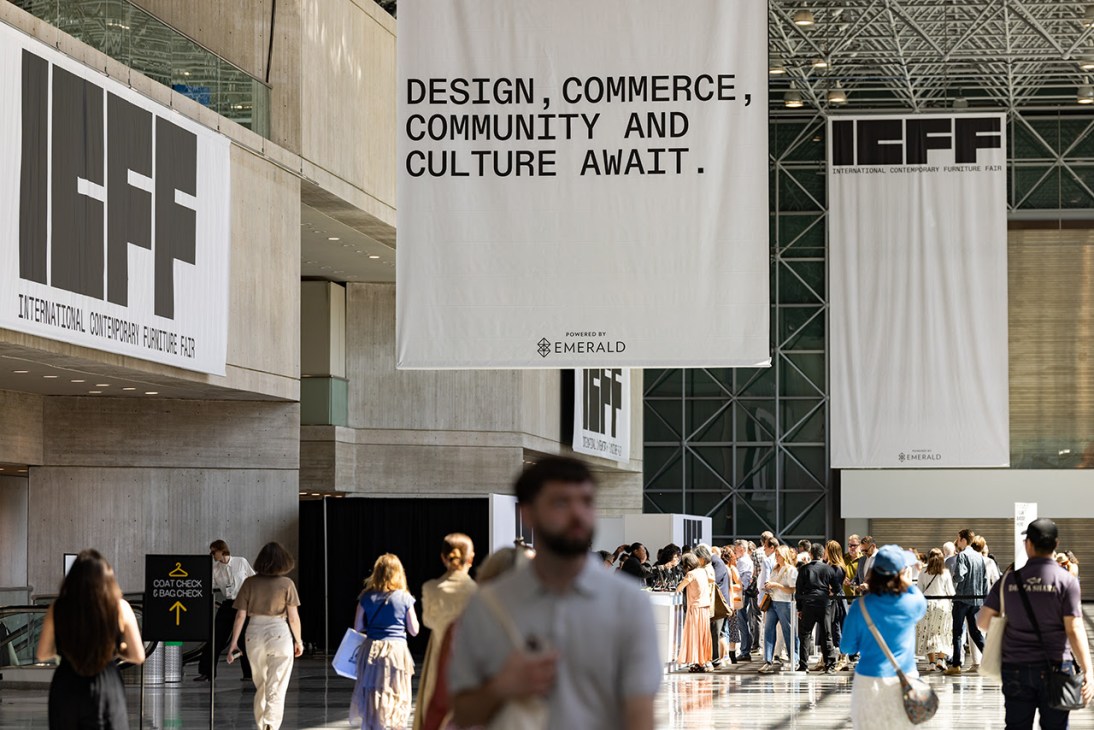
New York City Design Week wraps up today. The event, which is headlined by the ICFF trade fair and spans all five boroughs, is one of the most significant gatherings for the US furniture, interiors and design community. It’s an internationally important event too – the US leads the global furniture market in terms of revenue generation, which is forecast to be a healthy $265bn (€228bn) in 2026. Despite this number, the country is often seen to be behind European powerhouses such as Italy and Denmark when it comes to contemporary creativity; many US-based designers descend on the likes of Milan and Copenhagen for their respective design weeks and not vice versa. Turning the tide might require American creatives to better articulate new and innovative ways forward in the industry. Here are some insights that I have gleaned from New York, which might just entice the international crowd to pay the country a visit.
Strength in numbers
Nidhi Kapur is the founder of New York-based furniture brand Maiden Home. “American homes got bigger and American furniture got bigger but American design got lost along the way,” she said when I visited her showroom in the city’s Meatpacking District to see her newest release: a handsome credenza and wardrobe. “In the 1990s, we traded our workshops for warehouses. American furniture became about scale, speed and cost.” So, how to find that confidence again? For Kapur, it’s not about leaning into a particular style but embracing the expertise of the material and maker, with form following from there.
Build on a legacy
The US has, historically, been the launchpad for a host of globally important design groups, including the West Coast Studio Craft movement. Led by Californian makers such as Sam Maloof and John Nyquist in the 1950s and 1960s, it rejected mass production in favour of handmade, experimental designs. It provides a ripe foundation for contemporary creatives to build on – and that’s exactly what Stockton-based Jared Rusten is doing. His work was on show at ICFF and is a natural evolution of the likes of Maloof. “I like to think that the work I’m making is a bit of a continuation of the style and values of those woodworkers,” said Rusten. “Clean, Scandinavian- and Japanese-inspired but with a bit of Californian influence.”
Start a new one
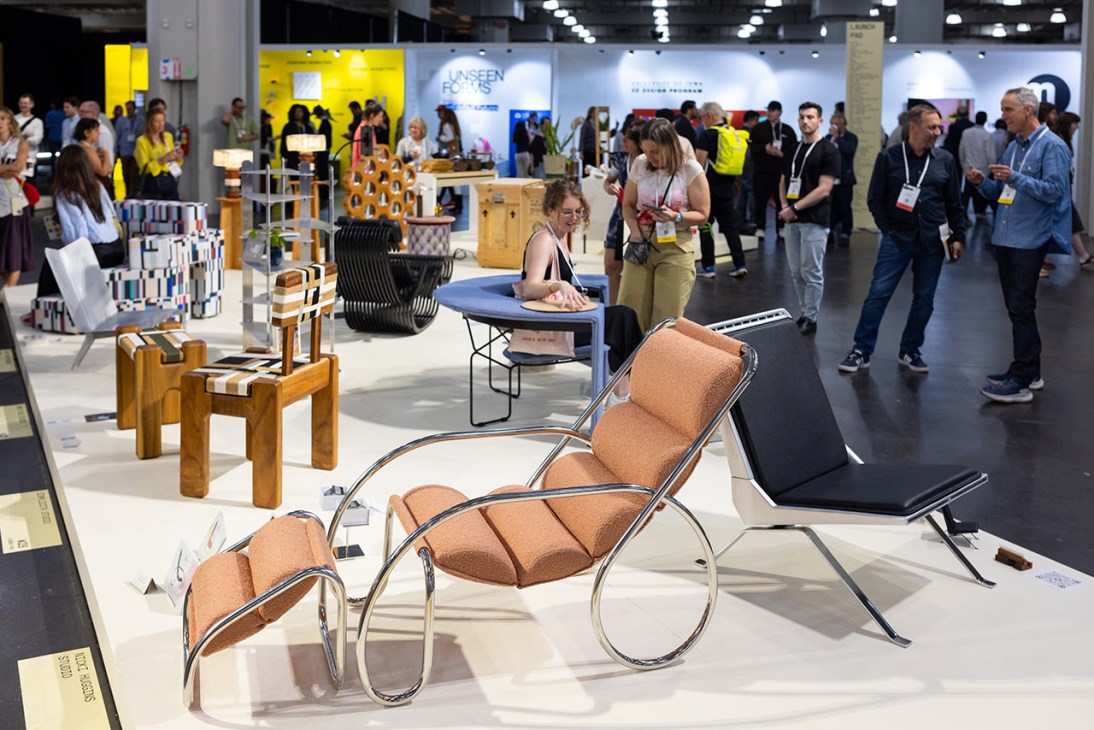
While there are legacies to build on, there are also opportunities to establish new ones rooted in distinctly American materiality. Just ask Ryan Twardzik of Unform Studio, who has coined his own design ethos: Pennsylvania Modern. “I want to harness the craft, materials and regionality of Pennsylvania to make forward-looking pieces of design,” said Twardzik from the floor of ICFF. “It combines traditional techniques with new forms that speak to those who make furniture here but can be offered to a global audience that wants something beautiful, well-made and considered.”
Reinvent the wheel
Sometimes it pays to do something different. That’s exactly what Joey Aji, winner of ICFF’s Emerging Designers Spotlight, has done with his winning works. The New York-based designer used marble dust, combined with non-toxic resin binders, to produce furniture with the look and feel of a solid block of stone without the associated weight. An ingenious approach to manufacturing.
Emotion, not style
Astraeus Clarke is a homeware and lighting brand. Their approach is not influenced by a particular aesthetic but rather an ability to evoke feelings. “When we design we aren’t trying to make something in a ‘style’ or are even focused on using a particular material – those things come but are usually secondary,” says co-founder Jacob Starley. “The most important thing is that someone sees our work and it evokes a memory or sensation. If the goal of the space was to feel sexy and someone comes in and says that it is, that’s a success as far as I’m concerned. It can be that simple.”
Nic Monisse is Monocle’s design editor. For more from ICFF, tune in to Monocle Radio.