To celebrate what’s special about Nordic design, Copenhagen Fashion Week needs to return to its roots
Copenhagen Fashion Week has been celebrating its 20th anniversary edition in the past week, drawing international buyers and editors to the Danish capital as it continues to carve out a distinct identity in an increasingly crowded fashion calendar. But whether it’s the brands being showcased or the mission underpinning the week, that effort to be distinctive hasn’t always gone according to plan.
On the mission front, a key element of Copenhagen’s positioning in the past few years has been a framework for sustainability, which was introduced in 2020 to establish the city as a benchmark for responsible fashion. Among its provisions was a requirement that at least 60 per cent of each participating brand’s collection be made using recycled or deadstock materials. But that requirement was suspended for the spring/summer 2027 season, while the criteria is apparently undergoing revision.
Still, the event’s appeal has always extended beyond its sustainability ambitions. This season once again brought together many of the designers who exemplify Copenhagen’s collaborative and close-knit creative community. Showcases favour intimacy over spectacle, opting for pared-back settings – from the garden of a museum to the backyard of a family home – rather than the grandeur associated with some of the industry’s larger fashion capitals. “Copenhagen Fashion Week has always been about something broader than the runway,” says Isabella Rose Davey, chief operating officer of Copenhagen Fashion Week. “I’ve seen inspiring creativity across every aspect of what goes into making each edition better than the last and it’s those elements that continue to set Copenhagen Fashion Week apart.”
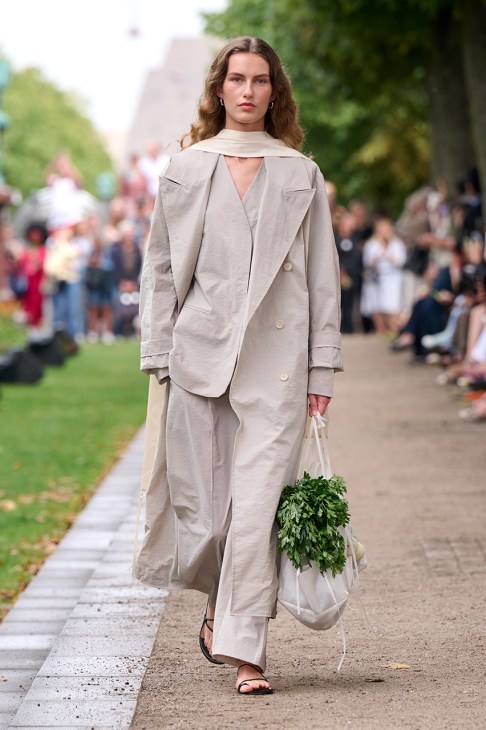
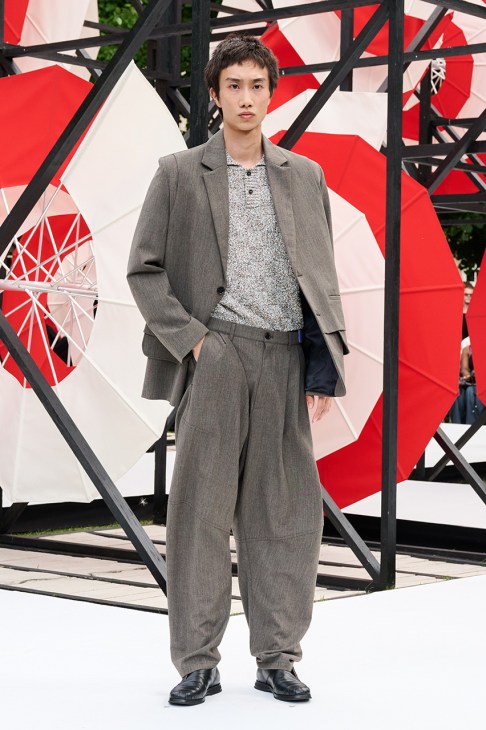
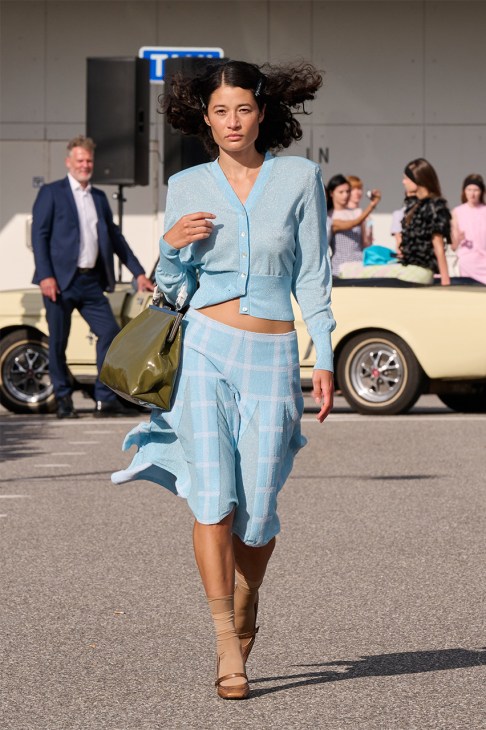
The schedule also served as a reminder of the region’s most compelling emerging designers. Among the highlights was Nicklas Skovgaard, a semi-finalist for the 2025 LVMH Prize, who staged another of his signature theatrical presentations in a deserted car park on the edge of Nordhavn. Models emerged from vintage cars, wearing colourful, checked, 1960s-inspired silhouettes that were co-ordinated yet distinctly individual. “The collection is ultimately about different expressions of femininity, where glamour, emotion and individuality exist side by side,” Skovgaard tells Monocle. The designer, who has shown at Copenhagen Fashion Week for the past three years, attributes much of the event’s appeal to the network of designers, makers and collaborators behind it. “It has never lost sight of the local creative community that makes it unique,” he says. “There’s a real sense of openness and collaboration here.”
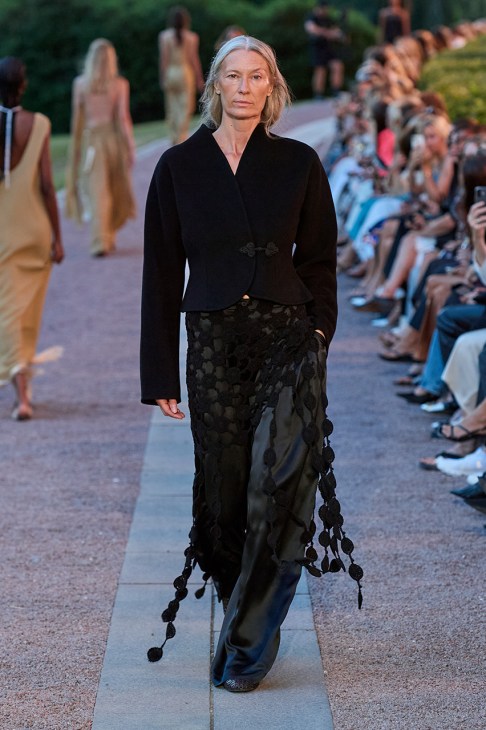
Among this year’s signature moments was the homecoming of By Malene Birger. Founded in 2003 by its namesake designer and long regarded as one of Denmark’s leading fashion labels, the brand returned to Copenhagen Fashion Week for the first time in six years. Its showcase also marked the runway debut of newly appointed creative director Emilie Martinsen-Kønigsfeldt, who presented a collection built around the brand’s signature sleek tailoring and a restrained monochrome palette. For Martinsen-Kønigsfeldt, returning to Copenhagen was as much an introduction to her vision for the house as it was a gesture towards the city where the brand was founded. “It’s a way to reconnect with the community that has helped shape Danish fashion on the global stage,” she adds. “The show itself is intended as both a celebration of our return and a statement of where the brand is today.”
At a time when some of the week’s best-known names have chosen to look elsewhere – Ganni, arguably Denmark’s most internationally recognised fashion brand, left the Copenhagen schedule in 2023 in favour of Paris – the return of an established house such as By Malene Birger suggests that there is still confidence in Copenhagen Fashion Week’s ability to shape the conversation around Nordic fashion. As it enters its third decade, the real question is not whether it can compete with the scale of Paris or Milan but whether it can remain true to the qualities that have made it distinctive. In a city that is modest in size yet rich in creativity, the event’s greatest strength is the innovative ideas and people behind it.
For more on Copenhagen Fashion Week, tune in to Monocle Radio’s conversation with CEO Cecilie Thorsmark on ‘The Globalist’.