When Google isn’t enough: Three libraries that are providing fashion creatives with rich, printed archives
Preserving the fashion industry’s history and heritage is a colourful, creative business. We head to Spain, London and New York to visit three archives that are inspiring the next generation.
1.
The MOP Library, A Coruña
The new home of fashion photography for A Coruña’s growing creative cohort.
Ever since the Marta Ortega Pérez (MOP) Foundation moved into A Coruña’s disused docks, the old concrete jetties and buildings have grown increasingly lively. “People never used to come here,” says architect Elsa Urquijo, who was entrusted with the transformation. “They’re coming back now.”
A former warehouse has become a focal point in the city after Ortega Pérez – daughter of Inditex founder Amancio Ortega and the group’s non-executive chair – turned it into an ever-evolving cultural centre to house the foundation’s HQ, exhibition space, book shop and café.
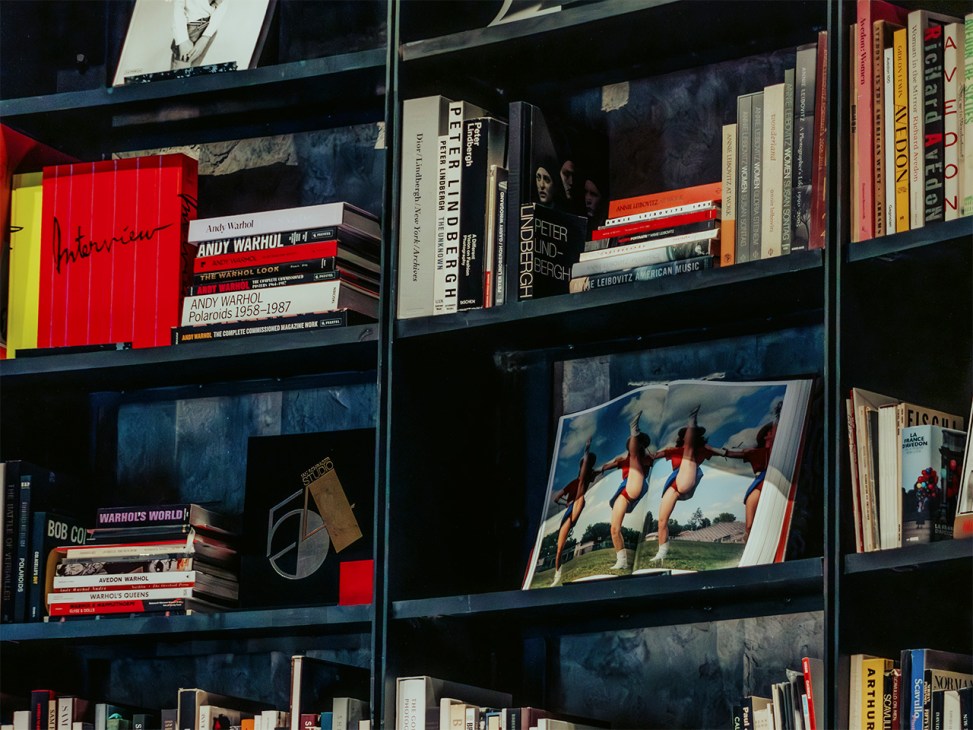
Recently, a fashion photography library has been opened, encouraging visitors to rediscover the joys of offline research. It contains more than 5,500 rare books and magazines, including original brand catalogues from the 1980s, full collections of titles such as System and Interview (Herb Ritts’s Madonna cover from 1990 is a highlight) and various editions of Vogue. Browse the floor-to-ceiling shelves and you might also come across rare monographs signed by John Galliano and Richard Avedon, along with a copy of Flair from 1953.
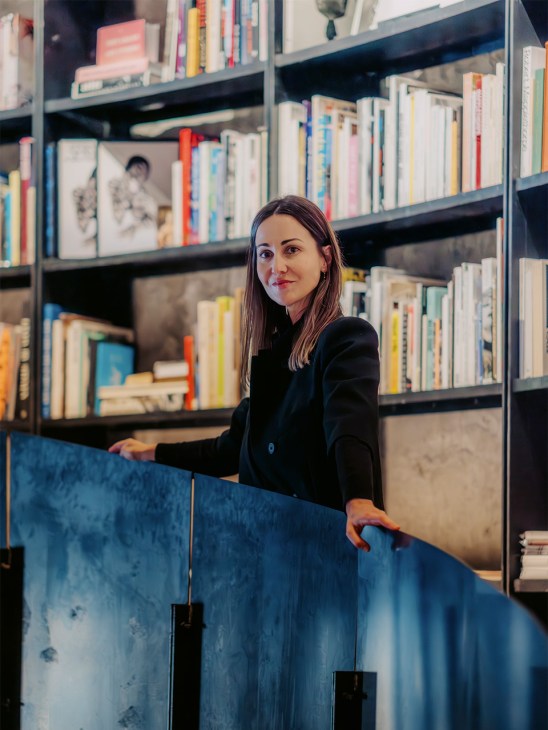
“We started editing books for our exhibitions and it went very quickly from there,” says the MOP Foundation’s director, Leticia Castromil, as she turns the pages of a vintage magazine while wearing cotton gloves. “We wanted to create something that people could connect to after visiting the exhibitions. A more private kind of moment, where you can delve deeper into the works of the photographers many of us hear about but might not recognise.”
For her, looking at great photography in a beautifully designed book is more intimate than staring at an image on a wall. “It made sense to have a space just to hold books,” she says.“Creativity still starts with the page.”
The collection began with a major acquisition from private collectors and has continued to grow through further purchases carefully selected by the Foundation. The plan is for the library to grow by 200 titles a year and to create a space where anyone can visit, request a journal and browse it on site.
Ultimately, the MOP team see the space a way of bringing high fashion and culture closer to the Spanish seaside. It has helped that A Coruña is already home to Zara owner Inditex and, unlike every other port city in the country, attracts thousands of style connoisseurs every year. “Even if you don’t work in fashion, you end up being attuned to it here,” says Castromil, who has been a resident of the city most of her life.
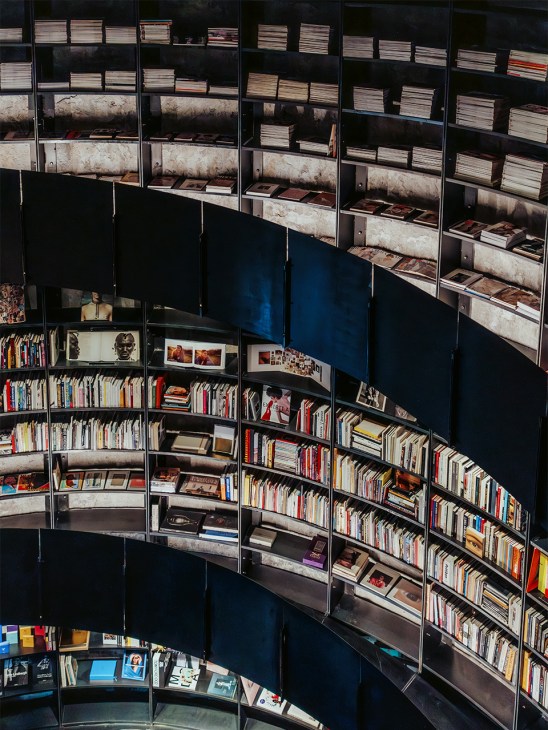
The imposing architecture adds to the experience: the library is perfectly cylindrical, taking the form of the silo from which it was constructed. Inside, the rest of the world fades away; the building’s solid structure ensures a natural hush. When Monocle visits, a young woman lingers at a stack of The Face magazines (the library has a complete set), while another young browser flicks through a 1988 Galliano catalogue. Everything around them falls into darkness. Other people are shadows.
The design is typical of the stark, unfussy style for which Urquijo is known. “We wanted to make it honest nothing to hide, nothing pretending to be anything else,” she says. “Just a focus on the books. The architecture reflects the city itself, she adds. “People say that we are at the end of the world and isolated by mountains – we are a little more inward, more calm, more discreet and we always look to the sea.”
Urquijo draws on these qualities in her work, creating a sense of detachment and the feeling of a world within a world. But the foundation is intent on connecting A Coruña with the rest of the planet and establishing it as a different type of fashion capital – one where students can create at a slower pace, photographers can host world-class exhibitions of their work and professionals can find time for creative research. “The city is in a really lively moment,” says Castromil. “Our young people are more and more interested in non-traditional work. They see how you can really make a career in art and fashion.”
It’s why the foundation has been working with the Royal College of Art in London to offer students funding to develop personal projects. It has also been raising the bar when it comes to its own exhibitions. “We have shows that have never been done before,” says Castromil. “We can’t bring over an exhibition that was just in Paris. That wouldn’t be interesting.”
Doubts, a show about Italian photographer Paolo Roversi (best known for his work for Vogue and Vanity Fair), runs until 20 September; an exhibition spotlighting David Sims, the British photographer who helped shape the visual language of the hedonistic 1990s in the pages of i-D and The Face, will open later this autumn. “It has to be really special because we want to draw people to the area and give them the chance to discover the city while they’re here,” says Castromil.
The foundation’s plan to bring A Coruña “to the world” is clearly working. Whenever you visit the MOP Centre, you will find gaggles of schoolchildren, tourists and local creatives converging on one of the hulking cement blocks that make up the building. Inside the library’s reading room, there’s always someone quietly browsing the catalogues, cracking the spines on decades of work by Richard Avedon and Steven Meisel or exploring the best of Juergen Teller. “For so many people, seeing this kind of brilliance up close, looking at the work, turning the page and then returning to it that experience is just not the same online,” says Castromil. “It makes the world feel less far away.”
2.
Idea, London
A space for creatives to put their phones away, delve into research and discover rare books.
As a student, Angela Hill would roam the halls of Zwemmer – an art and photography bookshop in London’s Charing Cross Road – to take notes, gather inspiration and make a wish list of everything that she wanted to buy. “They knew that I couldn’t afford anything but they let me hang around,” she says. “I knew every book back to front and, when I could save up, I’d go back and buy a few things.” Hill, a photographer, went on to open her own bookshop, Idea, in the 1990s, along with her husband, David Owen. It occupied half a room of 101 Wardour Street but has since taken over the whole building.
Today, fashion and art students from around the world visit Hill in her Soho base to research their next collection or find fresh references. When Monocle visits, Makx Sperber, a womenswear student at Central Saint Martins, is flipping through the latest catalogue by design duo August Barron. “Being here makes you feel a certain way and get more curious,” says Sperber. “If you want something more out of your education, research is part of that and here I can look at anything, from a Miu Miu lookbook to museum-grade artefacts. Everything feels precious.”
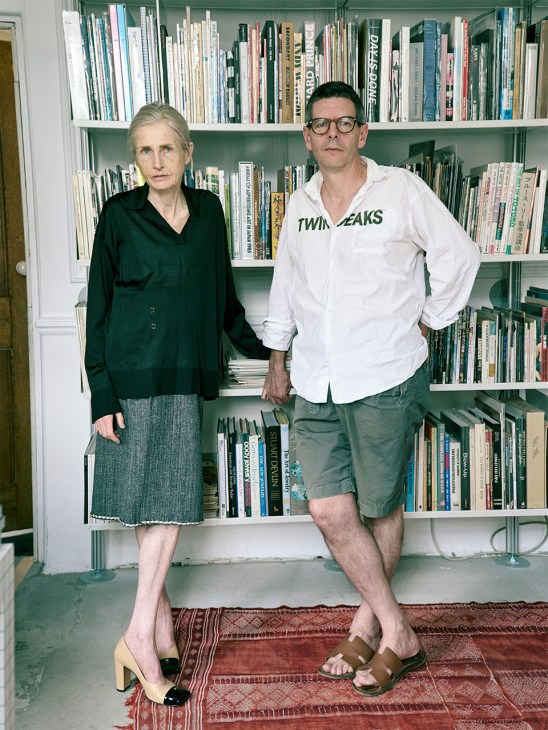
Over the years, Hill and Owen have worked with thousands of students and can spot the best ones – they’re naturally curious, have their own interests and usually start visiting Idea before their tutors have given them an assignment, they say. Like Sperber, a young Jonathan Anderson was also an Idea regular during his student days. “The minute that he got the job at Loewe, we received a huge order,” says Owen, with a smile.
Idea is now open to the public so anyone can browse the collection and have a chat with Hill or Owen – provided that you can spot the discreet signage and buzz yourself in. “It’s very social,” says Hill. “We have our regulars, our fans, people who come in because they feel lonely and here they can have an espresso and a conversation with someone.” Idea also encourages lingering, with biscuits on the table, lounge music in the background and a no-phone policy.
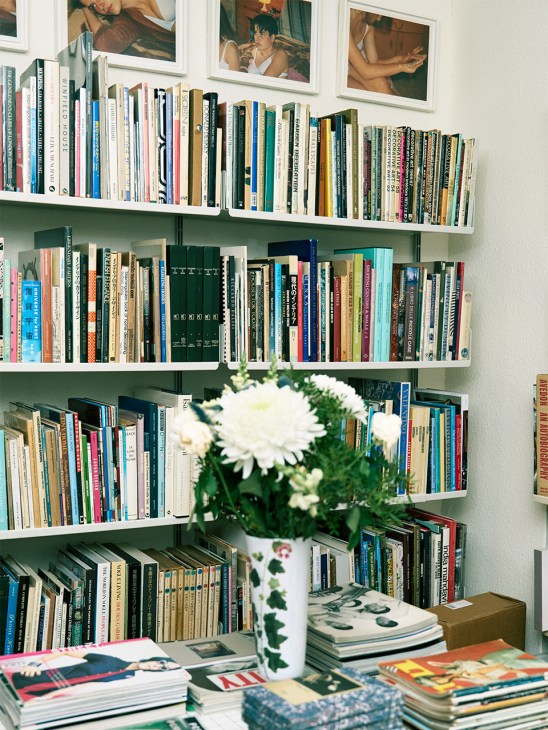
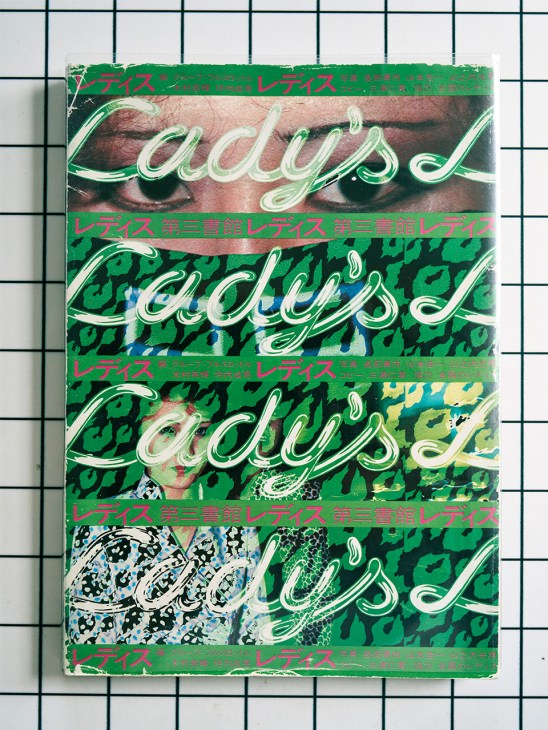
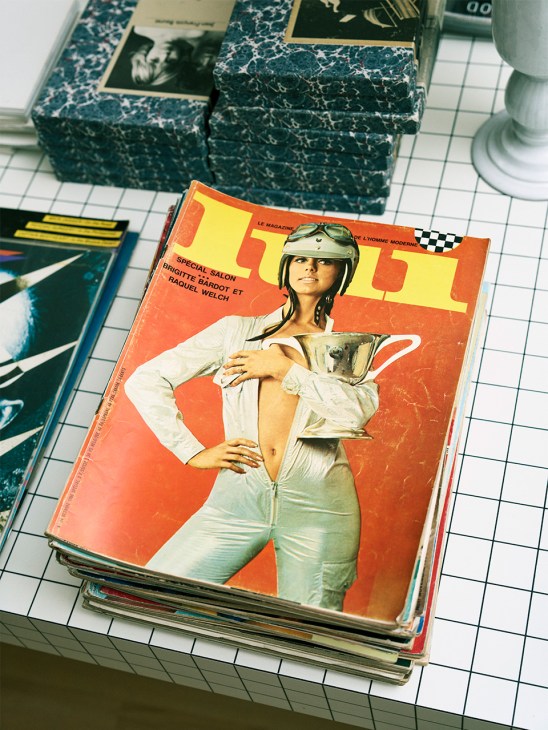
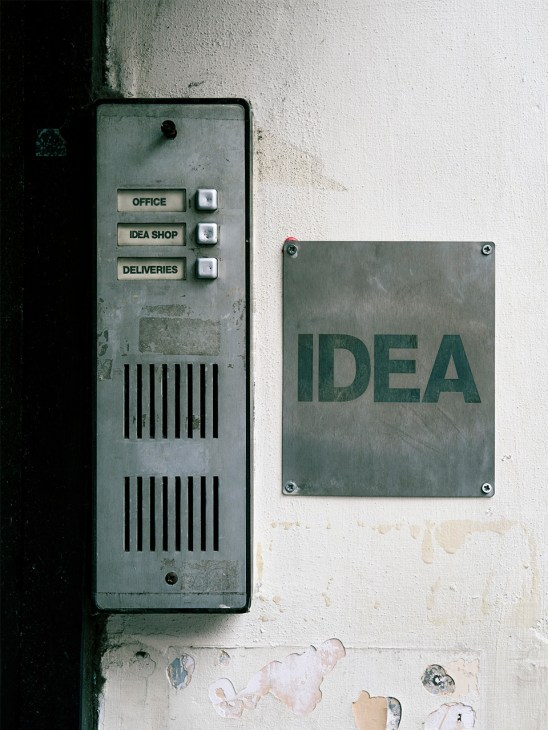
Such spaces are important resources for fashion designers, art directors and photographers who want to produce original work and expand their research beyond Google. Hill often receives briefs from creative directors (looking for anything from 1970s countercultures to communal living) and goes on to select relevant books for them. “I research for myself all the time so I love doing that,” says Hill, who sources books from places such as Ebay and Spitalfields Market. “You’re sharing the excitement and the energy of discovering an interesting book with other people. My best find was a series of Women’s Wear Daily bulletins with Bill Cunningham photography and the Yves Saint Laurent 1980 collection on the cover. It’s a lot of visual research but it can lead you to the stories of the art directors and the photographers behind the images.”
Conversations with the creatives who visit Idea to research might also lead to new print projects, executed through Idea’s publishing arm. It’s a one-of-a-kind ecosystem that takes you back in time: here, working relationships meld into friendships and projects aren’t purely driven by commercial interests. It’s a place where the best creative work still happens offline.
3
Library180, New York
An invaluable reference library and archive for the fashion community.
Nikki Igol, an image researcher and archivist who has worked with make-up artist Pat McGrath and other fashion and beauty heavyweights, started collecting magazines when she was 10 years old, living in the suburbs of Detroit. Now in her forties and based in New York, Igol continues to add to that collection, which currently comprises some 4,000 works. After storing these items in her home for years, she and Steve Chaiken, co-founder of creative agency SN37, opened the catalogue to the public with the launch of Library180, a non-profit reference archive.
Igol’s pieces now sit inside an airy library overlooking the East River where anyone is welcome to visit by appointment. Stepping inside the space, which brims with old copies of The Face and Casa Vogue, as well as niche publications such as the marijuana-focused High Times, feels like entering a time machine.
When Monocle visits, menswear designer Willy Chavarria stops by with his team.When he tells Igol that he is looking for images depicting nightlife culture, she begins pulling from her collection, handing over out-of-print copies of Blitz and After Dark magazines, and Tod Papageorge photography from Studio 54.“I remember purchasing every single thing here,” says Igol. Most of these images don’t exist on the internet but, even if they did, “you want to digest the image the way that it was meant to be digested – and that includes the surrounding text, the font, the advertisements, even the feeling of the paper that it was printed on”.
Igol dreams of managing Library180 for a while yet before handing the keys to a young, ambitious person who believes in her mission. “I will walk away from this,” she says, “and give it to the community.”