Does the acquisition of Harvey Nichols hold Fraser Group’s key to the luxury industry?
Mike Ashley’s Fraser Group has swooped in to acquire the UK department-store chain from administration. But will it do more harm than good?
The UK’s Frasers Group – owner of discount sportswear chain Sports Direct – has announced the acquisition of British department store Harvey Nichols from administrators. Frasers paid a measly £40m (€46.8m) for the retailer’s six shops across the UK, as well as its e-commerce platform and international franchises.
Unsurprisingly, many are concerned about the acquisition, including Harvey Nichols’ some 1,000 employees, luxury brand partners and the industry at large. Frasers founder Mike Ashley has a long track record of buying troubled fashion companies at low prices without a solid plan on how to revive them. Frasers has always specialised in discounting or high-street businesses and any attempts to dabble in luxury have so far failed. Department store chain Flannels opened an Oxford Street flagship in 2019 with big ambitions to create a luxury shop for a new generation. Yet it hasn’t managed to sustain interest, despite the area’s high foot traffic, or convince labels to get on board. The group also bought Matches Fashion, which entered administration a mere three months later. The collapse of Matches pushed many independent brand partners, which were left unpaid for large orders, to the brink of bankruptcy.
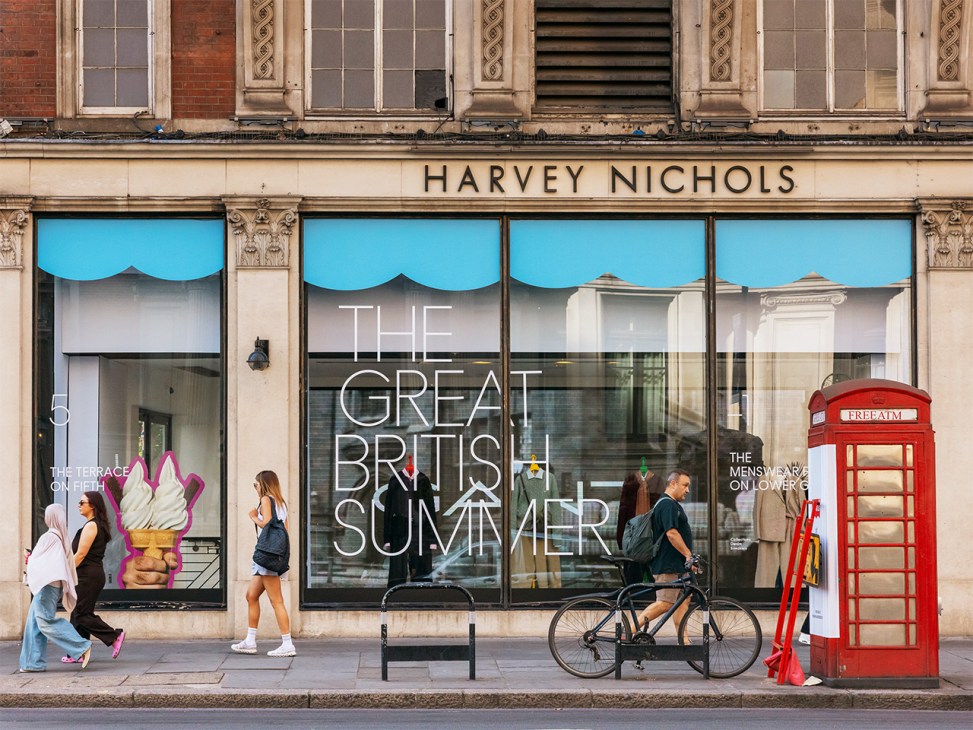
Now there are industry-wide concerns that history might repeat itself, especially because Harvey Nichols has racked up pre-tax losses of £190m (€222m) over the past six years. Ashley has even admitted to the Financial Times that the business is on “a death spiral”.
The difference here is that Frasers is inheriting a history that spans nearly 200 years (Harvey Nichols started as a linen shop in 1831), as well as one of London’s most coveted retail locations between Sloane Street and Knightsbridge. In its heyday in the 1980s and 1990s, the retailer was firmly established in pop culture – with references in the beloved Absolutely Fabulous series – and managed to strike a fine balance between the grandeur of a department store and the intimacy of a neighbourhood shop. Luxury brands, from Loewe and Valentino to Gucci, have also continued to see value in maintaining presence on Harvey Nichols shop floors across the country.
Over the years, the company has failed to keep up with changes in luxury retail. Selfridges has mastered the art of retail theatre, while Harrods has targeted high-net-worth customers, particularly from the Middle East, with private shopping suites and exclusive collections. CEO Julia Goddard (who joined in 2024 from Alexander McQueen) and creative director Kate Phelan, have been rebuilding momentum, with revamped jewellery and interiors concepts on the ground floor of the London flagship, refreshed campaigns and one-of-a-kind partnerships with the likes of Los Angeles-based beauty retailer Violet Grey. Now there is an opportunity to form more partnerships with international brands looking to increase their London presence and serve the mid-tier luxury customer. But it will take time and investment – two of the most important ingredients in any business model.
To return to profitability, consolidation and closures of some of the regional shops will also be inevitable: Frasers CEO Michael Murray already spoke of the “tough choices” that he is willing to make. But if Murray plays it smart and keeps experts such as Goddard and Phelan close, he might be able to restore the reputation of this historic British retailer – and finally gain the luxury industry access that he and Ashley have long hoped for.