Issues
Italy charts a new course for the boat industry with this years’ edition of the Genoa International Boat Show
At Genoa’s waterfront on the Ligurian Sea, the sun is shining following a brief but powerful autumn shower. Moving among the luxury boats bobbing on the water in front of a Jean Nouvel-designed pavilion, barefoot deckhands are towelling down wood finishing and removing waterproof covers from tables and seats, readying them to accommodate potential buyers. After the lethargy of summer, it’s back to business in Italy. Liguria’s Genoa International Boat Show, which takes place annually in September, is the country’s most important boating event. It is sandwiched between a bustling nautical schedule that features a Cannes event before it and a Monaco one immediately afterwards.
Historically, Genoa was the world’s most important global boating event. In recent years, however, it has lost out to its Francophone Mediterranean rivals – but there are signs of buoyancy. “At Cannes, everyone comes to us; lots of Italians and even Australians,” says Rosario Alcaro, the general manager of Cantieri Aschenez, showing off the company’s 17-metre Invictus TT550. “But there are a lot of people at Genoa.” The visitor numbers make for positive reading too, up 2.8 per cent on 2024.
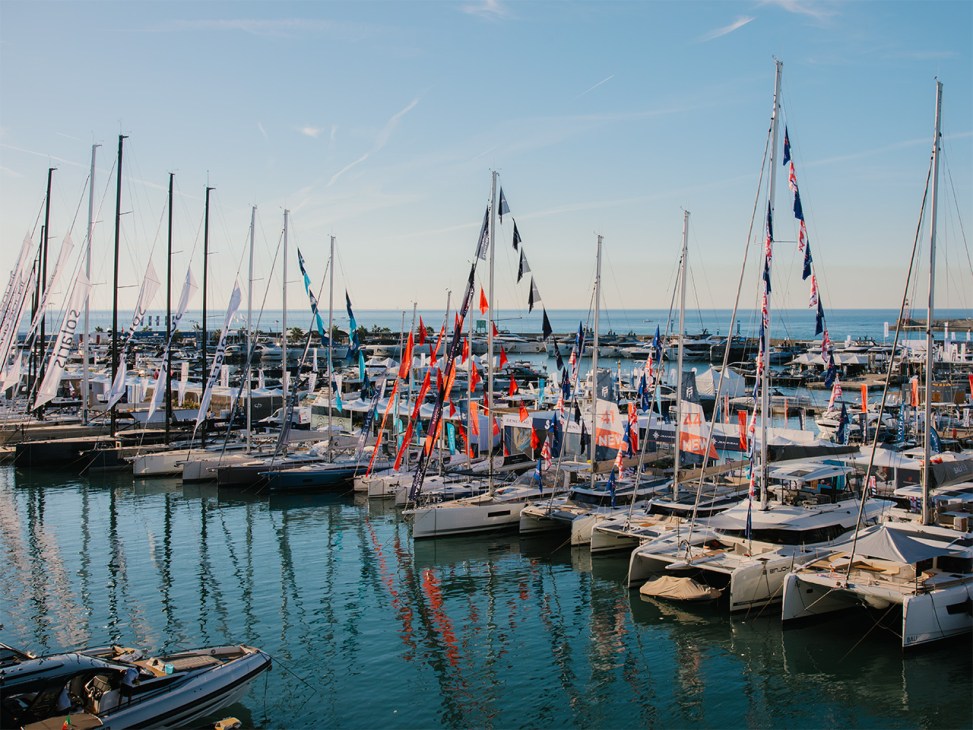
The chatter around the sun-dappled docks and inside the pavilion is focused on recyclable materials and lightening the load (though the latter is often more about gaining speed and less about sustainability). The TT550, for example, has recyclable thermoplastic resin instead of wood. But bigger still seems to be better, with Aschenez planning to produce a large boat in its TT series. “People want a bigger boat; it’s like houses,” says Alcaro.
Indeed, a standout at this year’s show is San Lorenzo’s 33-metre SL110A, with its huge flybridge. Like many boats on display here, it had its premiere at Cannes – that’s just the way the dates fall, perhaps, but it is something that Genoa might like to redress given Italy’s gargantuan contribution to the sector. Last year, the Italian boating industry had a turnover of €8.6bn, the highest figure on record, while the Global Order Book – an annual report by Boat International that ranks the world’s top superyacht builders – has Italy as a clear frontrunner. Surely, then, Italy deserves to have the leading event?

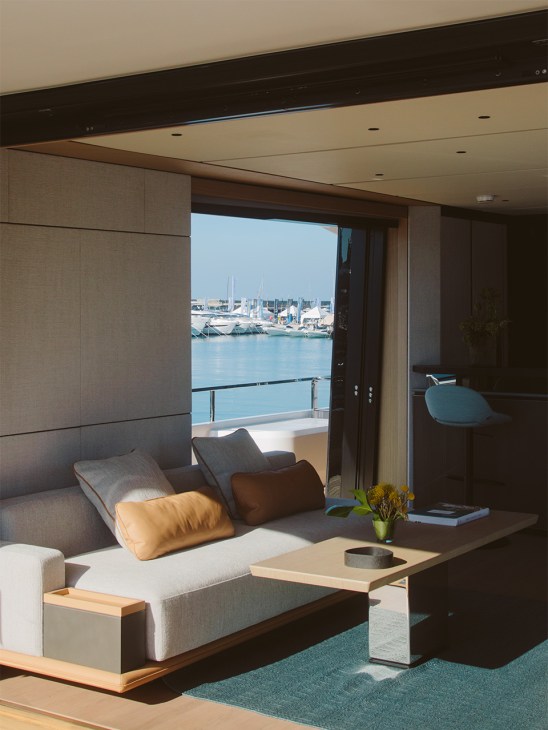
Gigi Servidati, the president of Pardo, Grand Soleil and VanDutch, says that both Cannes and Genoa have been good for sales. While there are more than 1,000 boats and exhibitors from 45 countries here, Servidati is convinced that the show could be more international. “The potential is there but the infrastructure needs to be improved,” he says. Indeed, while Cannes has the corniche and a plethora of luxury hotels, plus the know-how gained from hosting everything from its film festival to property fair Mipim, Genoa is paddling hard to catch up. Still, the future looks bright given the number of cranes around the waterfront – all part of an urban mega-project from the studio of Renzo Piano and OBR Architects that includes new residential, office and retail space. In September, meanwhile, Accor announced that it would open a waterfront Sofitel in 2027. All of which is helping put the wind back in Genoa’s sails.
Genoa International Boat Show in numbers
124,000: Number of visitors this year (up 2.8 per cent on the previous year)
€8.6bn: Italian boating industry turnover in 2024
1st: Italy’s global position among top superyacht builders according to Boat International
1,000: Number of boats from
45 countries on display this year
How Broadsheet founder Nick Shelton is bringing his Australian city-guide formula to London
Like many Australians, Nick Shelton worked as a barista in London in his early twenties and found the UK capital to be “a dynamic, cosmopolitan metropolis”. In 2009, after returning to his home country, he founded the city-guide company Broadsheet. It initially focused on highlighting what to eat, see and do in Melbourne, then expanded to Sydney, Brisbane, Adelaide, Perth and, in 2022, New Zealand. Now, Shelton is back in London and bringing his discerning eye to the city that sparked that sense of possibility.
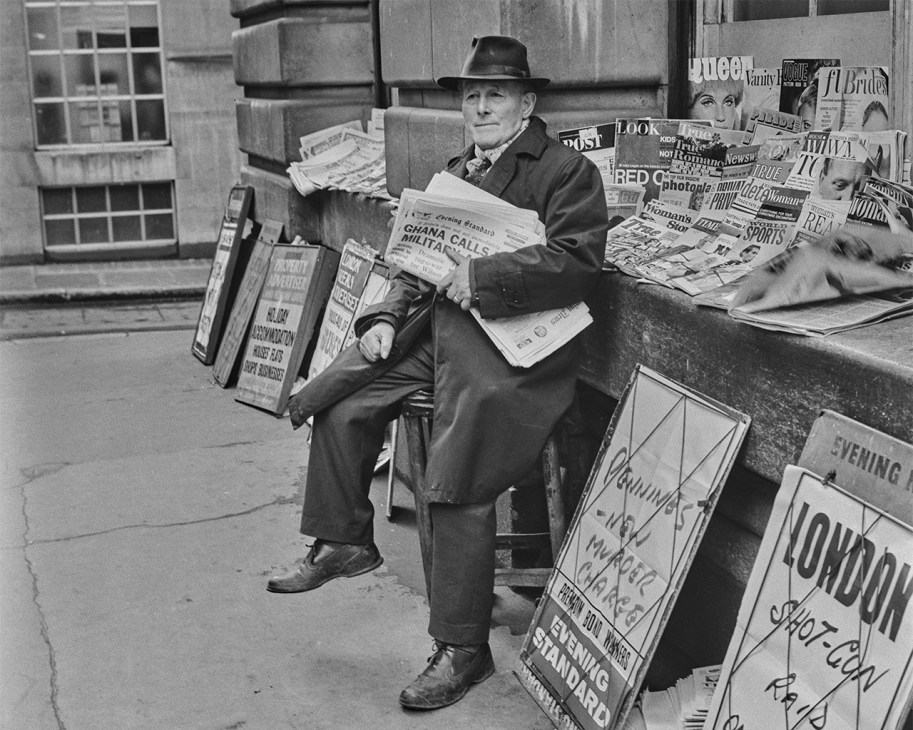
“We focus on reportage and questioning why something is worth knowing about,” says Shelton. “It’s not about churning out bits of ‘news’.” He also believes in print, which is “where we can control who we are as a brand and as a publisher”. Broadsheet London’s first paper edition is out now, available for free in cafés, hotels and other businesses.
Broadsheet isn’t the only organisation newly attempting to document London. In the past year, several digital newsletters have appeared, including London Centric, which is among the UK’s top local news products in terms of subscribers. The site, which began as a one-man operation run by former Guardian media editor Jim Waterson, has 30,000 subscribers, 3,500 of whom pay a monthly fee for exclusive investigations, event invites and access to the editor.
It relies on shoe-leather journalism: being out and about and talking to people. “This is a brilliant city,” says Waterson. “That’s the voice I want London Centric to have – laughing at the preposterous nature of the city, rather than despairing that it’s beyond saving.”
Five outlets reporting reputably on London:
1.
Broadsheet
Aussie Nick Shelton’s new launch covers hospitality and leisure.
2.
London Centric
Ex-Guardian journalist Jim Waterson’s deep-dive newsletter publishes agenda-setting investigations.
3.
The Londoner
Manchester-based Mill Media moved south to start this promising capital-focused website.
4.
The Fence
A London-based magazine packed with satire, fiction and proper reporting on the capital.
5.
The Slice
News and culture across the borough of Tower Hamlets in east London, founded by Tabitha Stapely and dedicated to community journalism.
To read Monocle’s excellent city guide to London, tap here.
The Commute: Tag along Rebekka Bay’s bike ride through Copenhagen
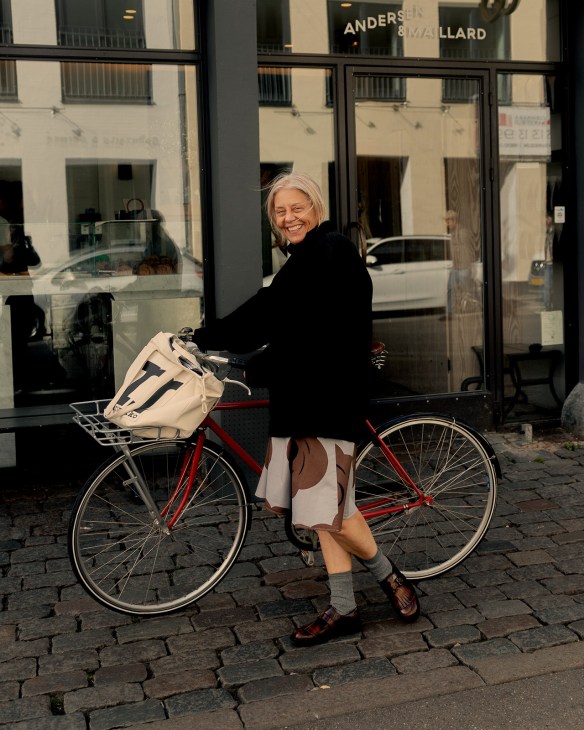
In the latest leg of The Commute, we join Rebekka Bay, the creative director of Nordic textile and homeware brand Marimekko, for a bike ride through the Danish capital. Based within a few minutes of the company’s Danish creative studio, Bay doesn’t have far to pedal – which is lucky, because her bike basket is often full of fabric bolts, swatches and items that inspire her.
Are you a morning person?
No. If I’m planning to do something, such as a run, it requires careful organisation the night before. I don’t really have breakfast. If I’m lucky – and on most days I am – my husband gets up first and brings me coffee in bed. Then I have a ginger shot and I’m out the door.
What’s your preferred mode of transport?
I live so close to the office that I walk or ride my bike – it’s an old, red men’s bike without gears. I gave up on fancy bicycles when my previous one was stolen. It was very beautiful, with a Brooks leather saddle, for which I had picked out my own Pantone colour. After losing that, I wanted the most basic bike in the world.
What do you carry with you?
A few years ago I had a wire basket fitted. I work between Helsinki, the office in Copenhagen and my home, so I tend to carry things around for my own reference: magazines, books, colour swatches, clippings, prints and samples that I ferry from Helsinki to Copenhagen. It’s a bit like an office on wheels. I’m also someone who always has a pencil case and a notepad to hand. My favourite place to pick up supplies in Copenhagen is Cinnober, a bookshop that stocks beautiful Japanese stationery.
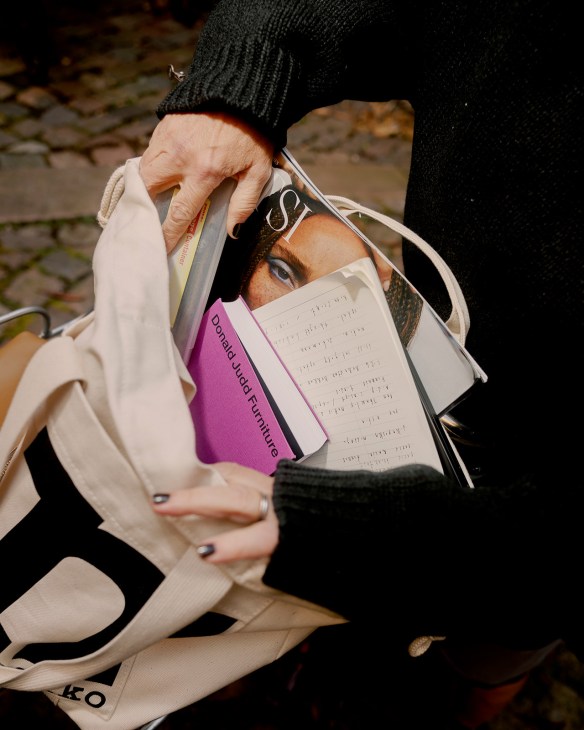
Any stops along the way?
I always grab a coffee. In summer I sit outside at Andersen & Maillard on Ny Østergade; when it’s colder, I go to Coffee Collective around the corner.
You moved to Copenhagen five years ago. What do you like about living here?
It feels as though I’m a tourist in my own town, which means that I can see all of the great things about it. Something that continues to amaze me is the harbour. It’s clean and you can jump in at any time of the year. I enjoy the food here too. We have the best bakeries, such as Hart Bageri and Buka. The restaurant scene is informal with democratic price points, casual settings and high-quality produce. The restaurant that I eat at most is an Italian one called Locale 21.
Headphones in or out?
I love the privacy that headphones give you. When I’m on a walk I usually listen to a podcast. I enjoy Bella Freud’s Fashion Neurosis and I have always loved Arman Naféei’s Are We on Air?
What do you do when you want a break from city life?
I’ll often jog around Kastellet, a citadel that still houses our secret service. But if I really need to switch off, I’ll drive north of the city to the Rudolph Tegners Museum and Statue Park. It’s really remote with no one around; the best time to visit is now.
Further commuting:
Take the Paris metro with shoe designer Alexia Aubert
Join José Miguel de Abreu biking from Porto to the central Ribiera district
In a digital world, reading printed media has become more important than ever
There is little that has shaped the West more than popular literacy. The fall in reading skills poses no less of a threat than the decline of our knowledge-based civilisation. Studies have long shown that reading activity, especially among younger people, is steadily decreasing. According to a recent report in The Guardian, children’s enthusiasm for reading has sunk to an all-time low in the UK. There has been plenty of discussion on social media and in other publications – including Switzerland’s NZZ newspaper – about how dire this finding really is. But there have also been prominent intellectuals attempting to counter the alarmism. Among them is UK zoologist and author Matt Ridley, who argues that writing is simply being replaced by audio and video, and other skills are being developed.
Are audio and video equivalent to the written word – and, if so, in what way? You can listen to a crime novel as an audiobook; a physics textbook, however, is a different proposition. But why learn physics at all these days, when you can simply ask artificial intelligence for answers? Is the acquisition of in-depth and comprehensive knowledge – the main purpose of reading – still necessary? Why bother trying to hold in your mind what you already have in your hand on a digital silver platter? Well, to rely solely on such devices would be a mistake that couldn’t be more fundamental.

Use your brain
If we want to evolve as intellectual and cultural beings – and retain autonomy and control – we must have knowledge in our heads, not least to be able to properly question, evaluate and regulate what AI provides. Johann Wolfgang von Goethe gave us the decisive argument long ago: “One only sees what one knows.” And you can only enjoy what you see or sense. While the wine novice can discern just a few aspects of taste, the sommelier has hundreds of terms at their disposal and their instruction will help the novice to perceive more about what’s in their glass.
Perception and knowledge always develop in interaction. The abstract knowledge that we acquire can shorten our path to an enriched experience, diversifying and intensifying our engagement with the sensory world. The apparent richness of the external world is in reality the richness of our inner world. Think of an exhibition: only those with knowledge of cultural history can fully comprehend the wealth of associations that it offers.
The reliability of printed information
Fulfilment and happiness in life have a lot to do with knowledge. One thing is essential for humans as spiritual beings: the acquisition of information and ideas, and their internal organisation into conceptual models of the world. This process can be broken down into two steps. First, we must memorise the building blocks of knowledge. Second, we must internally organise these into complex and coherent models. The first step requires effective ways to “imprint” it all in our minds, including repetition; the second requires time for processing and leisure for playful reflection.
The best way to acquire such inner wealth is to read paper books. Their stable form makes it simpler to learn things. You’ll always find a certain piece of information in the same place, instead of in a variety of locations, depending on format and advertising; you might remember that what you are looking for is at the top of the right-hand page near the end of the book. And there you will spot it, especially if it has been underlined. All of this is considerably more difficult with digital books.
Our understanding of a text is enhanced by making handwritten notes, underlining important sections and so on. Studies have shown that multisensory learning that incorporates handwriting is particularly effective and also has advantages over typing. Digital devices offer a host of distractions, while analogue reading helps us to get a firmer hold on a text’s content. Even the mere presence of an inactive digital device has been found to reduce students’ concentration.
Video and audio formats can be valuable additions to knowledge transfer in terms of multi-sensory learning. But they are unsuitable on their own when it comes to tackling demanding content. First, the fleeting nature of these formats reduces how memorable their message is. Above all, it’s the temporal control over the flow of information that gets in the way. When we are reading, we can pause at any time, reflect and reread a sentence or paragraph. This is essential for the internal organisation of complex knowledge. Pausing and replaying videos or podcasts, on the other hand, is so fiddly that it is not done nearly as often as necessary. That’s why reading remains essential for education.
Intelligence is already in decline
Even the educated middle class today is little aware of the revolutionary impact that reading has had on cultural and social development. Harvard anthropologist Joseph Henrich explores these themes in his important 2020 book, The Weirdest People in the World. Here, he shows that widespread literacy was the decisive factor that led to the development of a special set of psychological abilities. These include abstract-analytical thinking, increased self-discipline, the desire to understand yourself as an individual and the impulse to further develop your personal skills, as well as the ability to become part of institutions that function according to abstract, impersonal rules. This was the breeding ground on which the scientific and industrial revolution began to flourish, from which our modern, liberal-democratic and affluent societies grew.
Just as intensive bodybuilding visibly changes the physique and makes it more efficient, intensive reading strengthens the mind and demonstrably alters the brain. Among other things, it leads to changes in the prefrontal cortex, particularly in the area of the language centres, and to a thickening of the corpus callosum, which connects both hemispheres of the brain. It’s probably more than a matter of correlation if, in parallel to a drop in quantitative reading activity, the ability to understand the content of complex texts declines. Contrary to the trend of previous decades, the IQ of the average population is now beginning to stagnate or even fall – the inverse of the long-celebrated Flynn effect.
Reading culture is the pillar of Western civilisation. Do we really want to test how stable our way of life will remain once it has been removed? Humans are analogue creatures. We can neither digitise our reproduction nor the core processes of our self-education. It’s important to preserve reading culture and limit digitalisation in schools. We must continue to teach in the old-fashioned way: with paper and pen.
About the writer:
Dietmar Hansch is a physician, psychotherapist and publicist. A version of this article was originally published in German-language newspaper NZZ. Translation by Monocle.
In defence of middle management: why bureaucracy keeps companies running
“The ideal racing car would be one that beat its nearest rival by a couple of metres and then immediately fell to pieces.” This apocryphal statement is most convincingly attributed to Colin Chapman of Lotus but it might also have been Ferdinand Porsche who said it. Regardless of its true origin, the quip captures a certain kind of design philosophy. When there is a specific task to be achieved, the most elegant solution is the one that precisely achieves that objective with minimum resources. Anything extra – a slightly bigger winning margin, a little more robustness – is a waste.
But it’s a bit of a conjuring trick. This approach only makes any sense at all because winning a race is a very specific and unusual objective for an automobile: driving a known distance, over known terrain, with a defined victory condition. If you wanted to apply this philosophy to any other kind of car, how would you even begin to do so? Is the ideal SUV one that finishes the school run at exactly 08.59 and then explodes? Of course not.
A strange thing has happened in our political and economic system, however. Without really realising, many organisations and companies have decided to adopt this proverb as a philosophy of management. In the name of efficiency, governments and businesses have spent the past few decades trying to remove management, cut bureaucracy and eliminate waste.

The results are disappointing and occasionally disastrous. Trying to slim down the government has resulted in higher ratios of tax to GDP and lower economic growth. Companies that have managed themselves to maximise financial returns have ended up stripping out innovation and stumbling from one crisis to the next. Nearly all of the actual value that has been created this century has been in companies that concentrated on technology and customer service, not on shareholder returns.
A large proportion of the modern world’s problems comes down to something as simple as this: the pursuit of a mistaken set of design principles and an excessive concern with efficiency in a world of uncertainty. As computer scientist Donald Knuth once put it, “Premature optimisation is the root of all evil.” This means that the measures making a system more efficient in one environment can be disastrous in another. Because of this, you absolutely must not try to optimise something until you’re sure of the problem for which you are optimising.
So what might be a better design philosophy? How can we design systems that won’t fall to pieces as soon as they cross a hypothetical finish line? Weirdly, the answer might be that we need to take another look at one of the most maligned classes of knowledge workers: the middle manager.
What do middle managers actually do? A lot of the time, they seem to get in everyone’s way. They hold interminable meetings, compile handbooks and policies, and spend every spare moment engaged in internal politics. If we define a “middle manager” as somebody who is not directly involved in producing the product or talking to the customer, it’s not hard to see why they have always attracted suspicion. If there is any waste or dead wood in an organisation, middle management is often where it’s found.
But let’s look again at those activities and ask a question that used to be taken much more seriously: what is an organisation for? Why do companies employ a permanent staff at all, rather than just buying services and hiring staff by the day on an open market? If we go beyond the assumptions of conventional economics, in which information is assumed to be frictionless and perfect, and think about the actual mechanisms by which it is preserved and transmitted, we get some real answers.
The application of the theory of information to organisations used to be called “management cybernetics”, a school of management theory so totally eclipsed by “shareholder value” that it scarcely exists today beyond second-hand bookshops and the personal idiosyncrasies of some ageing professors.
A company produces products but its management produces decisions. A company, or any other organisation, is an information-processing system – in effect, an artificial intelligence consisting of people, memos, telephone calls and emails. The reason that a large permanent organisation exists, rather than a “virtual” company made up of outsourced services purchased by a single founder, is that the information-processing system needs more bandwidth and more storage than any single human can provide. Humans form organisations to extend their capacity and take on bigger projects than they can achieve on their own. That’s as true of decision-making as it is of bridge building and iron smelting. The Industrial Revolution was a revolution in the industrialisation of decision-making, not just of manufacturing.

That’s what good middle managers do. They hold knowledge and make communication happen so that the organisation can work. The real job of middle management is to ensure that information arrives where it needs to be, in a form in which it can be the basis for a decision and in time to be useful. To do this, middle managers use a lot of standard techniques. They write down policy manuals so that commonly recurring decisions can be sped up or delegated to front-line staff. They send memos and emails to get the facts to the right places. And, yes, a lot of the time, they hold meetings, partly to keep looking for information and to share it but also to build the formal and informal communication channels that will come in handy at some future date.
The failure to employ enough of these people (or, worse, to employ them but not listen) leads to a kind of corporate cognitive disorder that’s sometimes called “founder’s syndrome” when it happens in start-up companies. (When it happens in larger or established corporations, it’s just called “being badly managed”.) Founder’s syndrome is what happens when a company’s first management team is unable to understand, or to accept psychologically, that the organisation is now bigger than its capacity to process information. The symptoms of founder’s syndrome can be obvious (except to the person who’s causing it). Details get missed, deadlines are stretched, processes can’t be scaled up and everyone starts talking about “micromanagement”. But, even more destructively, the organisation develops tunnel vision. Only information that can get through the founder’s screens can affect anything, just at the moment in time when the founder is least likely to have the spare bandwidth to think about the outside world. Venture capitalists are often highly attuned to the risk of founder’s syndrome and start to demand that visionaries stick to having visions, then “hire good people and let them get on with it”.
So who’s right? To answer anything other than “it depends” would show a profound lack of respect for the question. To solve a problem in any specific case, we need to go back to the design principles and take seriously the idea that an organisation is an information- processing system. Taking this approach is like putting on a pair of magic glasses that suddenly reveal the true structure of management reality. Is this role helping the flow of information or hindering it? Does having this policy help to free up time for creative thinking or does it consume time in dealing with exceptions and details of the policy? Is the organisation focused on immediate here-and-now problems or is it able to look outside and to the future – and can it effectively deal with outside information once it has been gathered? And, perhaps most crucially, how would things look if the world changed?
What is interesting here is that none of these questions seems to be closely related to cost efficiency or shareholder value. There is a pretty good reason for that: you can’t understand a business by looking at its accounts. An accounting system is one way of organising some kinds of information about certain aspects of a company. And it’s always backwards-looking. This makes it into exactly the kind of information-reducing filter that can dangerously impair your ability to adapt.
You might put it like this: almost always, the amount of money that a project will cost is vastly less important than the simple question of whether it’s likely to work or not. But all too often, people spend all of their effort on the former rather than the latter. We don’t even have a word equivalent to “costing” to describe a process of thoroughly and rigorously estimating the benefits of doing something. And so we get the kind of companies and projects that we deserve because we treat financial returns as the only goal of business, rather than one constraint among many that has to be met on the way to doing something truly interesting.
In our current economy, founders are often the only people who have the social and institutional permission to look beyond the accounts, take risks and think about the big picture. But it doesn’t have to be that way. Consider Nokia, for example. A century ago, the company made rubber boots; today, it makes telecom switching equipment. Content and entertainment group Vivendi used to run the sewerage system in the town of Lyon. Less dramatically, IBM and Apple have reinvented themselves several times.
The good thing about “founder mode” might be that a company with a strong sense of identity and purpose has the ability to adapt to its environment. It isn’t a supercar that delivers outstanding performance in a straight line, then wrecks itself on the first speed bump.
Perhaps the last lesson of cybernetics is exactly that a sense of identity and purpose is at the heart of what makes an organisation work. You can only start thinking about a company from an information-centred perspective once you have first decided what counts as information, what the system “cares about”. This is the true responsibility of founders in a start-up. In an established corporation, it might rest with the CEO but it’s more likely to be distributed across the whole of the management.
The distinction between founders and managers, modes and syndromes, is a false one. Excess bureaucracy is not always bad, nor is efficiency always good. What matters for a company is viability – the ability to respond to unanticipated changes. And the cornerstone of viability is self-knowledge, the understanding of what the company is for.
That is the start of being able to describe what kind of environment it needs to be able to cope with – and only then does it make any sense to start optimising. Middle managers are the brain of the firm but the brain needs to follow the heart.
About the writer:
Dan Davies is a journalist, author and former Bank of England economist who has worked as an analyst for several investment banks. His books include Lying for Money and The Unaccountability Machine.
Read next: How we work must change – let’s not have a meeting about it
From counterfeit goods to sand mafias: the modern underworld explained
A the world hopes for peace in Ukraine, one Europol analyst tells me of a seemingly esoteric concern about what it might entail. For years, he has tracked the flow of Chinese counterfeit goods into Europe – some seemingly harmless, such as fake designer bags or jeans; others including cheap car tyres that are likely to shred at speed or dubious cosmetics containing potentially dangerous ingredients.
“Until 2022, the Russian and Ukrainian gangs had no trouble working together and the counterfeit goods would pour through by the container-load,” he says. The invasion shattered these partnerships and, for a while, the flow faltered. His concern is that peace would see alliances – trading in everything from Afghan heroin to stolen cars – reforged. “There’s just too much money to be made,” my contact concludes.

It is a useful reminder that almost every political twist and turn – war, peace, a ban or a liberalisation – creates opportunities for those who are engaged in organised crime. Ban refrigerators that use polluting CFCS and you’ll create a market for mafia front companies claiming to dispose of them in an eco-friendly way at a fair price, then dumping them at sea or at a landfill site. This is exactly what happened when the chemicals were proscribed by the 1987 Montréal Protocol on Substances that Deplete the Ozone Layer.
Planning to raise taxes on cigarettes? You’re also helping to make profit margins on counterfeit or untaxed packs all the more substantial. This “buttlegging” was one of the mainstays of the rebel Donetsk People’s Republic in eastern Ukraine after 2014, where factories were turning out thousands of cigarettes an hour that were distributed worldwide.
Gangsters are the truest capitalists and internationalists, and take fullest advantage of the fact that markets are global but laws are normally corralled behind national borders. This is also because organised crime isn’t a hostile and separate “other”, as we might like to believe. It’s not all about tattooed hard men with thick foreign accents, conspiring menacingly in the shadows. It has become embedded even in what might look like the most upstanding societies.
Surveys such as Transparency International’s annual Corruption Perceptions Index tend to split the world roughly between honest, wealthy countries and corrupt, impoverished ones. But ask yourself: where does the bribe money end up? Banks in Swaziland rather than Switzerland, property in Laos instead of Luxembourg? Hardly. Corruption is actually just another mechanism draining assets, even criminal ones, from the Global South northwards – just so long as the money has been laundered enough that we can faithfully ignore its provenance.
On some level we all understand that our financial systems float on oceans of dirty money. But we too rarely appreciate just how much the other foundations of our world are built on crime – not the old sins of empire and slavery that gather attention but modern ones that underpin our daily lives. Think of the trafficked labourers mining the minerals that go into our pockets as mobile phones (stereotypes notwithstanding, most victims are used for labour, not sexual exploitation, and remain within their home countries). Or those who are picking the crops that end up in our supermarkets.
Sometimes those foundations are not only metaphorical but also literal. Construction globally uses more than 40 billion tonnes of sand and gravel every year and its extraction is a €387bn industry. The result is the emergence of so-called sand mafias. In China, criminals use GPS jammers to mask boats that suck up thousands of tonnes of what local builders have come to call “soft gold” from river beds. In India, beaches are disappearing, river and marine ecosystems are being disrupted and even coastal currents are being redirected.
I am not saying that we should learn to love our gangsters or stop trying to police and prosecute them. They exploit the weak, corrupt the strong, defraud the state and undermine society. They even get in the way of movie night: almost a quarter of global internet bandwidth is being taken up by the illegal downloading of copyrighted materials – which means that you can blame the criminals for the time that your film takes buffering.
It does, however, indicate that we need to be more thoughtful when it comes to how we address the challenge. Treating crime as an ethical failure overlooks how mafias colonise the no-man’s land between the moral economies of state and society. In other words, when we ban things, unless society is on board with that, we create new markets for the criminals.
Indeed, as the Americans found during Prohibition in the 1920s and the Soviets when they launched a heavy-handed anti-alcohol campaign in the 1980s, the risk is that people come to see the criminals not as oppressors but as allies. After all, crime can sometimes be a liberating force.
The survival of the Lithuanian language is arguably thanks to gangsters who smuggled in books and newspapers printed in neighbouring Prussia in the 19th century, when Tsarist Russian censors were trying to erase it. Today, the illegal “frog markets” of North Korea – named after the way that traders leap from their positions when the police arrive – offer a taste of forbidden freedoms, from USB sticks loaded with K-pop tracks to South Korean Choco Pie cakes, all banned since 2014.
In the most controlled societies, for better or worse, a little criminality can also offer a pressure valve. In the famously law-abiding 1970s Japan, the Sukeban, gangs of delinquent teenage girls in school uniforms and surgical masks, wielded chains and razor blades as they shoplifted, brawled and generally misbehaved as though they were in a cross between Pacific Rim and a particularly boisterous St Trinian’s story. They weren’t only criminals – they also challenged hidebound notions of quiet and deferential womanhood. In other words, crime doesn’t just pay; it also defines the jagged margins of our societies, the clashes between old and new values. Understanding it is crucial to understanding the world.
Today, during unprecedented economic and technological change, when existing social and political orthodoxies crumble, we’re living in a gangster’s paradise.
About the writer:
Professor Mark Galeotti runs Mayak Intelligence and is a senior associate fellow at RUSI. His latest book, Homo Criminalis: How Crime Organises the World, is out now, published by Penguin.
Pritzker Prize winner Riken Yamamoto on creating spaces that connect people and generations
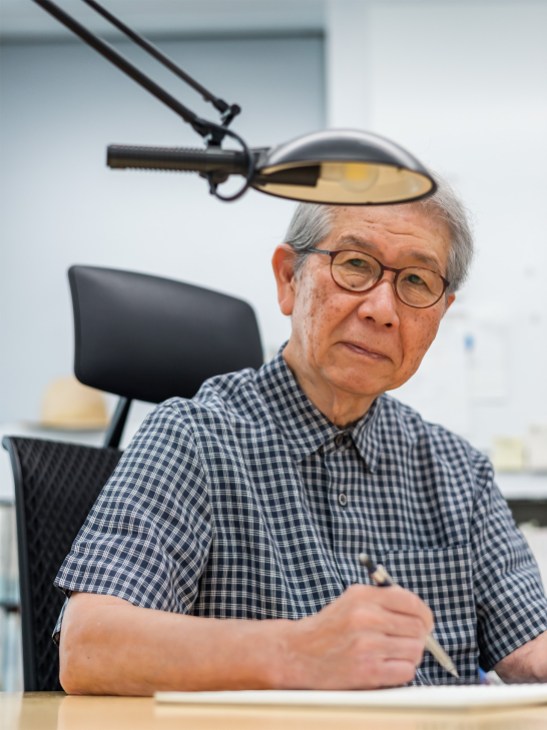
Riken Yamamoto was born in Beijing. Shortly after the end of the Second World War, he moved with his family to Yokohama, where they lived in a home modelled on traditional Japanese machiya – long wooden townhouses with a shopfront and interior courtyards. His mother’s pharmacy faced the street and the living quarters were at the rear. “The threshold on one side was for family and, on the other side, for community,” says Yamamoto. “I sat in between.”
It’s a position in which the 80-year-old architect still finds himself: his long career has been defined by an architectural approach that reconsiders such boundaries. His portfolio – which includes Yamakawa Villa (1977), a residence that is open on all sides, and The Circle (2020), a mixed-use hub at Zürich Airport – expresses his design outlook physically. The architect is also articulate when it comes to explaining his ethos.
“The current architectural approach emphasises privacy, negating the necessity of societal relationships,” he said when accepting his Pritzker Prize in 2024. “But we can still honour the freedom of each individual while living together in architectural space, fostering harmony across cultures and phases of life.” In short, the blurring of indoors and out, public and private, has the potential to build not only better personal spaces but stronger communities too.
The notion of community often comes up when you discuss what drives you in your work. How can architects help to create feelings of belonging?
It’s important to speak with the people who will be using the building or space. Communication is the most crucial thing for me in my work, because it allows me to understand what I should create, what kind of architecture the space is calling for and how it can contribute to dialogue. The work of an architect is to foster communication – with a client, with the user and even with tourists who are visiting a space temporarily. This is the power of architecture.
You have worked in many countries and markets, blending this notion of public and private. Are there any specific challenges associated with having a global practice?
I don’t find it challenging because the first thing that we do with every project is decide what public and private mean in that context: in other words, we ask what the relationship is between the building and what’s outside. This applies to everything, from a client wanting us to deliver an airport to creating a small house for an individual. It doesn’t matter if it’s a big tower, a different country or a new culture. The basis is always the same: to understand what the meaning of public and private is.
Earlier this year, when you received the Crystal Award at the World Economic Forum, you mentioned that architecture acts as the memory of a community. Can you explain this?
Architecture is powerful because our built environment is a manifestation of our collective memory. And architecture is the present community’s touchpoint for the next generation – we might come and go but what we build remains. Many generations will use the same building; they will be born and die with that space as part of their lives and it will be a symbol, a memory of the community that inhabited it before us. Architecture allows and encourages people to remember.
Do you find that is the case for all architecture?
Architecture can either foster and help to build a community or not. That is a decision entirely made by the architect. I’m always trying to help instil that philosophy, the sense of community and belonging. Doing so is what brings people back to their community. Think of your hometown or the house where you grew up. Many would like to go back to a certain place from their past because there is a memory of the community there – not just their family but how life was together with their neighbours. It’s crucial that we create spaces where people can live together because that’s the true meaning of community.
This conversation is timely, given that there are wars in Europe and the Middle East that are currently tearing groups of people apart. What role can architects play in rebuilding communities?
It’s difficult because everything is being destroyed – not just buildings but entire villages. That’s very dangerous in terms of the continuity of a community. When the time comes, we should keep the architecture and rebuild, even if it’s a very small thing. Doing so brings back important elements. For instance, right now, almost all of the architecture in Gaza has been destroyed and in Ukraine places are also disappearing. But something similar happened in Japan after the Second World War when many places were destroyed by US bombing. After that, we had no tradition left. It changed the way we think. From that moment onwards, we knew that we needed to preserve and fight for architecture because otherwise you’re destroying memory.
What is the one thing that you would like to pass on to the next generation of architects?
Honour the plight of the community. And ask yourselves, “How do we keep fighting?”
A long overdue spotlight on Goossens, the jewellery maker beloved by Coco Chanel
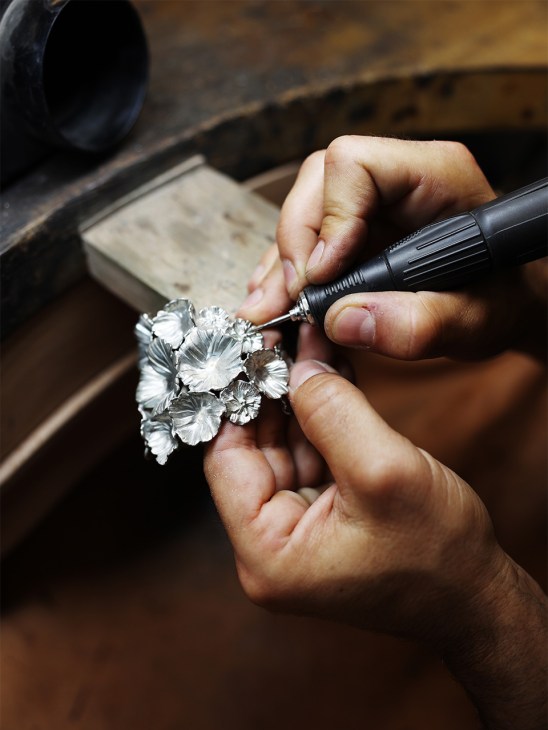
“Look at the details on this,” says Caroline Gauthier, the creative director of Goossens, holding up a golden hydrangea leaf, its delicate veins just visible in the workshop’s stark light. Moulded from a real plant, the challenge was to capture the leaf’s fine details in brass – the main material used to craft Goossens’ jewellery collections. This is then dipped in 24-carat gold to create a delicate replica.
The same technique was used to mould a hazelnut, half a walnut shell and a poppy, all foraged during a forest stroll and brought back to the atelier to be transformed into jewellery. “Goossens is about craftsmanship, of course, but it’s also a question of seeing,” says Gauthier. The 44-year-old designer, who wears the golden hazelnut on a simple red thread around her neck, is only just audible over the drilling, buzzing and hammering that echo through the workshop, which is in Paris’s 19th arrondissement. “Our artisans work with their hands but always with an eye for beauty. That’s what gives a piece of jewellery its soul.”
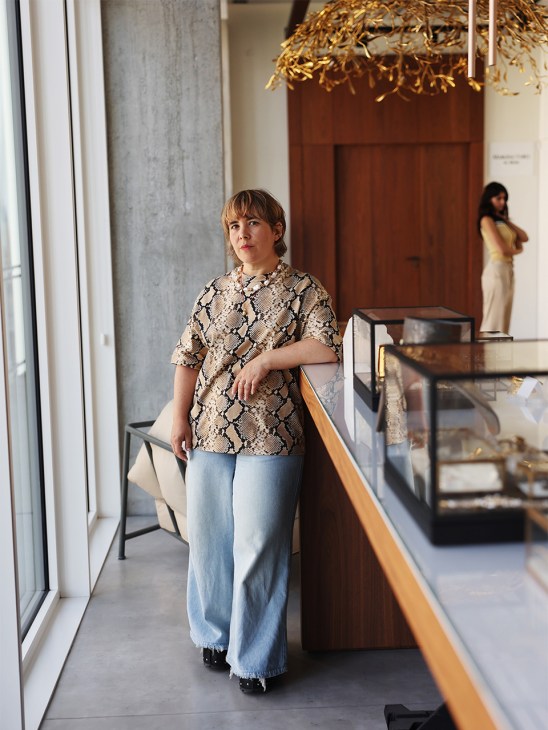
Gauthier, who has some 20 years’ experience in the world of accessory design, is Goossens’ first creative director since the death of its founder, Robert Goossens, in 2016. The appointment is a sign of the house’s ambition to expand. Goossens has long been the go-to for fashion houses seeking a partner to help them develop jewellery collections – but with Gauthier at the helm, there’s a new opportunity to be more creative, step into the spotlight andbecome equally known for its in-house designs.
A graduate of École Duperré Paris, Gauthier started her career at Maison Michel and Chanel before moving on to Marc Jacobs’ studio at Louis Vuitton and spending 10 years as the head of design for fashion accessories at Hermès. It was at Louis Vuitton that she first collaborated with Goossens. “At the time, I was struck by the fact that there were no limits to its creativity,” she says. “Together with Nathalie Abscheidt, Goossens’ atelier manager, we brought so many exciting projects to life.”
Founded in the 1950s, the atelier is known for its signature style that blends fine jewellery making with the creative freedom of creating costume pieces. Precious metals are embellished with freshwater pearls, rock crystals, semi-precious stones or glass-paste inserts, mirroring the founder’s obsession with Byzantine and Egyptian antiques. His creative flair caught the eye of Gabrielle Chanel in 1954, who entrusted him with designing the fashion house’s jewellery collections. That first endorsement initiated a long line of fashion collaborations. The house made jewellery for Yves Saint Laurent for more than 30 years, working closely with Loulou de la Falaise, but also for 1990s icons such as John Galliano, Alexander McQueen and Thierry Mugler. More recently, Goossens helped to create the bejewelled plastron spotted on Sarah Burton’s first runway for Givenchy.
In a full-circle moment, Chanel bought Goossens in 2005 and the latter became the main jewellery manufacturer for the brand. In the atelier, now inside Le19m – Chanel’s home for the Métiers d’Arts – Abscheidt’s workbench, decorated with dried flowers and colourful crystals, proudly bears Karl Lagerfeld’s signature.
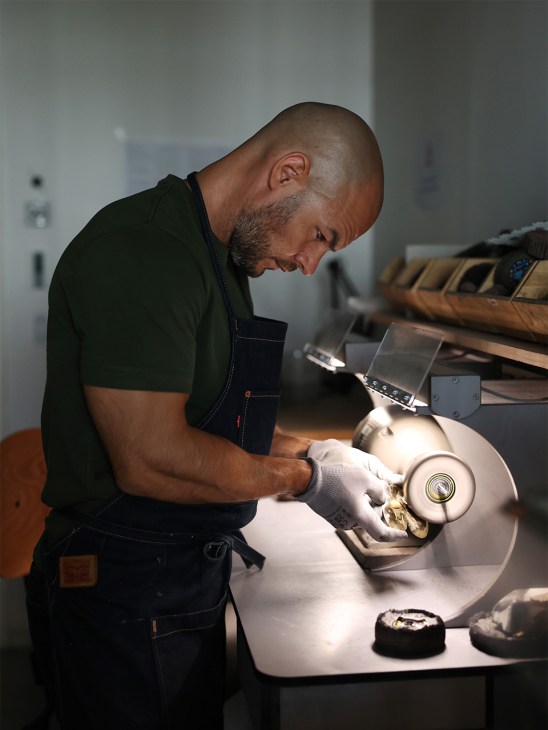

Walking into the Goossens workshop, you’re immediately greeted by many rows of beaten-up tools that line the walls and weathered workbenches littered with pearls, crystals and twisted pieces of precious metal. “I feel incredibly lucky to be in such close contact with the atelier,” says Gauthier. “When I arrived, I made sure to spend time with every artisan to understand their technique and see what’s possible. We’re in constant dialogue. Witnessing a piece of jewellery being born in real time is very exciting.”
At the beginning of every collection, Gauthier brings her ideas and sketches to the atelier. After visiting the Arte Povera exhibition at the Bourse de Commerce last winter, she became obsessed with the idea of creating jewellery inspired by Giuseppe Penone’s tree sculptures. She headed straight to what the Goossens team calls the “foundry”, a small room where two artisans ladle bubbling pewter into lost-wax casting, an ancient technique used to create jewellery moulds. Many different versions were made until the right shape and texture were obtained, and the result became part of the Balade line, a segment of the autumn/winter 2025 collection: a brooch, a cuff bracelet, a torque and an oversized pendant shaped like a sinewy tree branch.
Gauthier’s ambition for Goossens is to help it reach new audiences by bringing back archival designs with a contemporary twist. “I ensure that our collections have something for everyone, from an ear cuff or small animal charm to more show-stopping pieces,” she says. “Going through the archives is like opening a treasure trove. You never know what you’ll find when you open a drawer.” Her personal collection has significantly grown since joining. Her first pick was the house’s signature astrology necklace. Her star sign? “I’m a Leo, just like Coco Chanel,” she says.
goossens-paris.com
Editor’s letter: Monocle’s Style Special shows how designers, CEOs and mayors are shaping a more considered world
Welcome to our Style Special. It’s the issue in which my colleague Natalie Theodosi gets to make an editorial land grab as she brings to page stories of fashion brands on the rise, retailers that are delivering fresh takes on luxury and rather a lot of nice things for us all to wear too. And, as always, our fashion director has also ensured that her pages take us beyond the glossy surface of this powerful industry to hear from its key creatives and business leaders about the forces shaping the sector’s future.
You will get to meet Peter Copping, the new artistic director of Lanvin, as he seeks to give the house a new trajectory and relevance by revisiting the work of its founder, Jeanne Lanvin. Also stepping up to the interviewer’s mic is Renzo Rosso, the founder of the Milan-based OTB Group (short for Only the Brave), which owns the likes of Diesel, Jil Sander, Marni, Viktor & Rolf and Maison Margiela. He sets out how he is navigating a politically turbulent time in which people are “spending less and questioning whether they need more clothes”. Don’t worry, he has a plan. As does Catherine Rénier, the CEO of Van Cleef & Arpels, makers of high-end jewellery and watches, who is ensuring that the company delivers designs rooted in craft and which ignore the fashion industry’s often insatiable appetite for newness.
There is another theme that plays out across the pages of this issue and that’s how cities, towns and villages are plotting radical new futures. Montpellier is France’s fastest-growing city, thanks to its status as a technology, media and innovation hub. In recent years, it has also stood out because of its passionate determination to become a place where pedestrians, cyclists and public transport users are always king. To achieve this, Montpellier became one of the first cities in Europe to reintroduce trams in 2000 and then, in a bold move, it made all public transport free for residents. Now it is building cycle lanes at pace. Overseeing the push to remake the city is Michaël Delafosse, Montpellier’s 48-year-old mayor, who takes us around town to show us how he’s delivering on his green agenda while also being tough on crime. No wonder many commentators see a big future for him in French politics.
Our foreign editor, Alexis Self, reports on another fascinating tale of urban development in Muscat, the Omani capital, as he meets city planners and global architects tasked with growing and developing the city at speed, while ensuring that it doesn’t lose touch with its history and traditional architectural values. I admit to being a little jealous of his reporting mission because he has returned with a fascinating tale of ambition and tradition trying to march in step. Mr Self’s fine reporting is matched by the photography of Paulius Staniunas, which brilliantly captures the city and this tension between storied past and hoped-for future.
We are also in Jakarta, a city with a falling population, to meet the young creatives determined to keep their home base vibrant. And we head to the town of Calonge in Spain to see how bookshop owners are riding to the rescue of another place that was facing the stark challenges of depopulation. It’s a thrilling read.
This issue also features great travel coverage, advice on how to bring your work and home lives together and a story about why compound houses, with no external windows, could be good for a neighbourhood.
Feel free to let me know what you think about our digital makeover, the issue or anything else. As always, you can reach me at at@monocle.com
Monocle’s Style Top 25: The best designers, makers and retailers redefining luxury
1.
H-O-R-S-E, USA
Fit for purpose
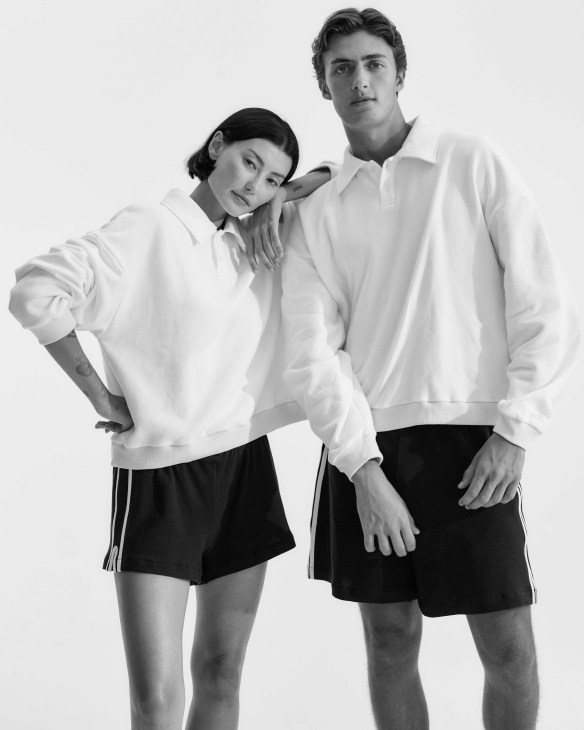
The perfectly executed basics and minimal silhouettes of California-based activewear brand H-O-R-S-E are made with the gym in mind. Inspired by PE uniforms and vintage sports clothing, the kits – including shorts, matching sweatshirts and T-shirts – are made using 100 per cent cotton fabrics. The results are light, breathable and practical, harking back to a time when going to the gym was a straightforward affair.
“Fitness has become increasingly regimented,” says the brand’s founder, Sue Williamson. “You might have to spend €35 on a class, schedule around it and commute. But real fitness is about moving your body, picking up something heavy, squatting and running. We’re making clothes for that.” In the future, Williamson hopes to launch new styles, explore other natural materials such as hemp and wool, and expand into accessories. For now, the brand is taking it slow. “We’re going at our own pace,” she says.
h-o-r-s-e.net
2.
Nitty Gritty, Sweden
Best in store
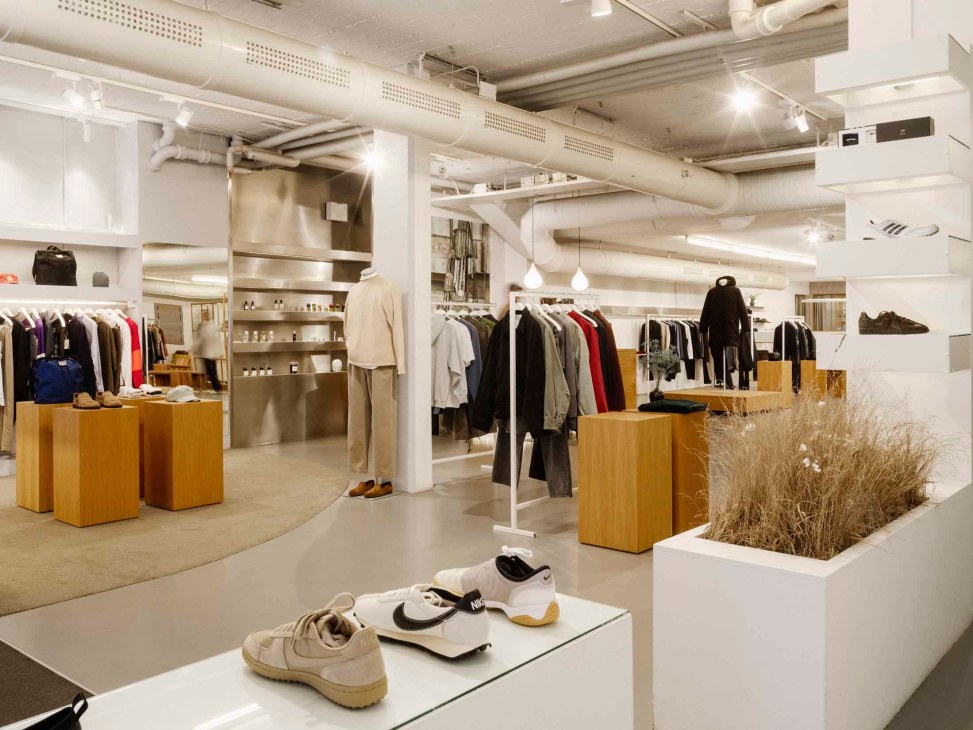
Tucked away in Krukmakargatan, a quiet street south of central Stockholm, multi-brand boutique Nitty Gritty was among the first to put the city on the fashion map. “We always try to find the most interesting brands around the world to present to Stockholm – and, through our website, to the world,” says Marcus Söderlind, the shop’s owner. His approach to curation prioritises labels that pay attention to the details and aren’t distributed too widely. Silhouettes tend to be loose, with oversized shirts, parkas and barrel-leg trousers in the mix.
For this autumn, Söderlind has picked up fellow Swedish label Salon C Lundman and Norlha, a yak khullu wool atelier from the Tibetan plateau. There’s also an in-house line, Nitty Gritty Worldwide, whose collections are built on a simple idea: every item should be made by the artisans with the most expertise, wherever they might be.
Nitty Gritty’s success is also down to the sense of community that it fosters in-store – every visit is an experience and there’s always something new to discover, including art exhibitions of emerging and established talent. Music is just as central: DJs and musicians perform there most weeks, reinforcing the shop’s status as a cultural hub.
nittygrittystore.com
3.
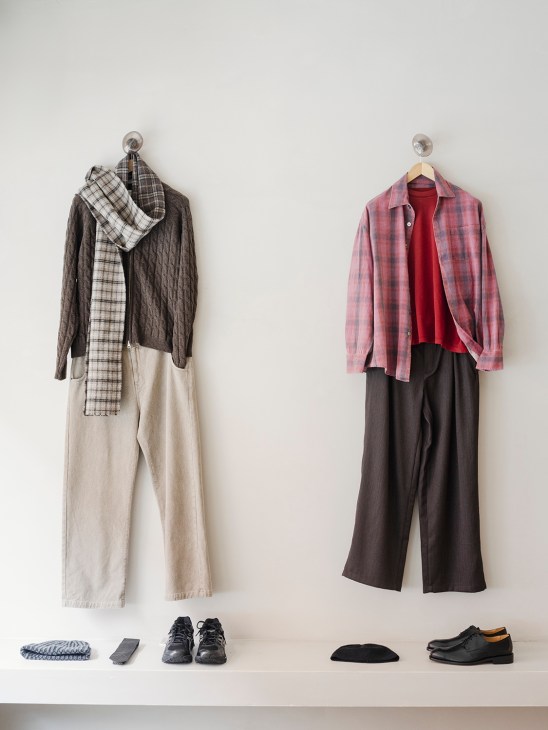
Nami, France
New to market
Every season, Paris-based Philippine Namy looks to Scotland to inspire her label Nami’s collections. References can vary from the architecture of Charles Rennie Mackintosh to golf or the uniform of a lighthouse keeper. As a child, Namy spent many family holidays in the Highlands, where her grandfather owned a house. “I find the folklore of Scotland fascinating,” she tells Monocle. “Every collection tells a story of the country, though I avoid gimmicks such as kilts.”
Instead, details carry a narrative. A side pocket on a pair of suit trousers is a reference to where golfers store their tees. A broderie-anglaise light cotton dress evokes Celtic tunics. The tailoring of wool trousers, flannel shirts and waterproof cotton-canvas jackets is kept sharp and a little oversized.
With extensive experience in the fashion industry, notably at French label Isabel Marant, Namy was well placed to build a sustainable supply chain. She began by sourcing deadstock fabric from LVMH brands when she launched the business in 2024. When demand picked up, she forged partnerships with Italian and Scottish mills, where she sources materials such as silk-and-cashmere blends, herringbone twills and angora mohair wool. “I want Nami customers to feel like they’re wearing clothes that have been passed down through generations,” says Namy. “It’s a homage to my family and our time spent in Scotland.”
namiofficiel.com

4.
Kiivu, Japan
The atelier brand
Tokyo might be Japan’s fashion capital but new brand Kiivu is making a name for itself in the small coastal town of Onomichi in Hiroshima prefecture. Its proposition is simple: unisex garments made with fabrics produced by Sanyo Senko, a century-old dyeing house from nearby Fukuyama, and sewn by a team of female seamstresses who migrated here from a nearby sewing factory that recently shut down. Sanyo Senko wanted to offer the women a space where they could continue their craft and the combination makes perfect sense – the women’s peerless sewing skills have been preserved and the dyeing factory can now produce fully fledged collections and show off its craft to the broader industry.
Everything at Kiivu begins with the fabric and continues in-house, from textile development to dyeing and sewing. Clean lines allow the fabrics to shine in corduroy shirt-jackets, pigment-dyed chinos and the softest indigo denim – the kind that could only be produced by an atelier brand.
kiivu.jp
Belt by Giorgio Armani
Shoes by Paraboot X Sunspel
Scarf by Bigi Cravatte for Trunk
5.
Burberry, UK
The comeback
For autumn/winter, Burberry is returning to its roots: checks, rainwear and plenty of British charm. The brand’s creative director, Daniel Lee, has put particular emphasis on outerwear, including signature trenches (updated with embossed leather), intricate shearling and jacquard-weave floor-length coats – that he imagines Londoners slipping into before boarding the train and escaping to the countryside for the weekend.
“It’s that Friday-night exodus from London – long, rainy walks in the great outdoors and day trips to stately homes,” says Lee. Alongside the CEO, Joshua Schulman, he has been helping to put Burberry back on the map by turning every collection and brand campaign into a celebration of the city of London and all things British. “We’ve been looking at tropes of classic British film and television and all their deeply layered social observations,” says the designer.
burberry.com

Shoes by Paraboot
6.
Fendi, Italy
Fit for collectors
Edoardo and Adele Casagrande Fendi founded their eponymous brand a century ago. This year, Silvia Fendi pays homage to her family’s business with a collection that evokes Roman refinement: think A-line leather dresses, boiled-wool coats and oversized leather trenches. For her first womenswear collection, she wanted to relive her memories of growing up in the Fendi atelier and seeing Hollywood movie stars passing through.
fendi.com

7.
Luca Ferreira, Switzerland
Menswear maverick
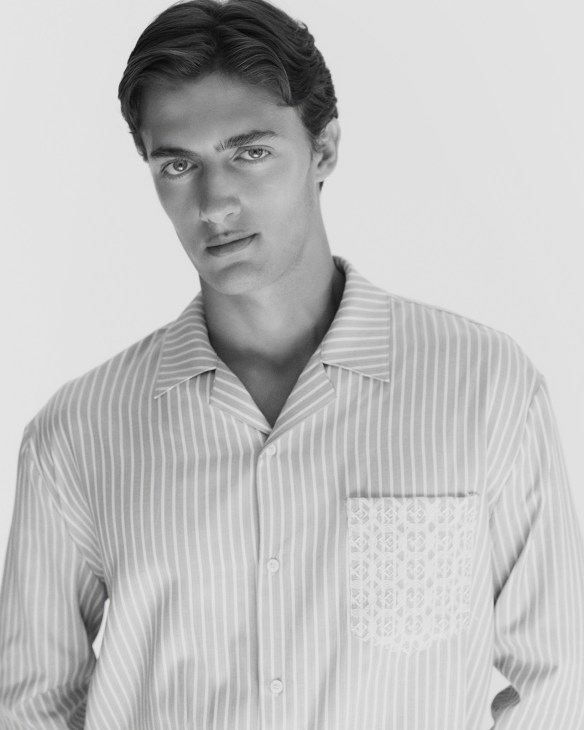
Luca Hasler established Luca Ferreira in his hometown of Zürich in 2022. “I wanted to show people that Switzerland can produce some amazing clothes,” says the founder and creative director.
Before launching his label, Hasler worked in a bespoke-suit shop, where he developed a sharp eye for made-to-measure tailoring. Those influences have helped to shape his brand’s signature two-piece wool sets. Working primarily with Swiss mill Schoeller Textil, the label’s bestselling knits are crafted from fibres such as merino wool, cotton and silk blends. Other pieces are produced in small factories in Italy and Portugal, where Hasler frequently visits to delve into textile archives and gather inspiration for his designs. “I call my clients first movers,” says Hasler. “They’re willing to try new things and have an instinct for well-made clothes.”
lucaferreira.com
8.
Olga Basha, USA
Best denim
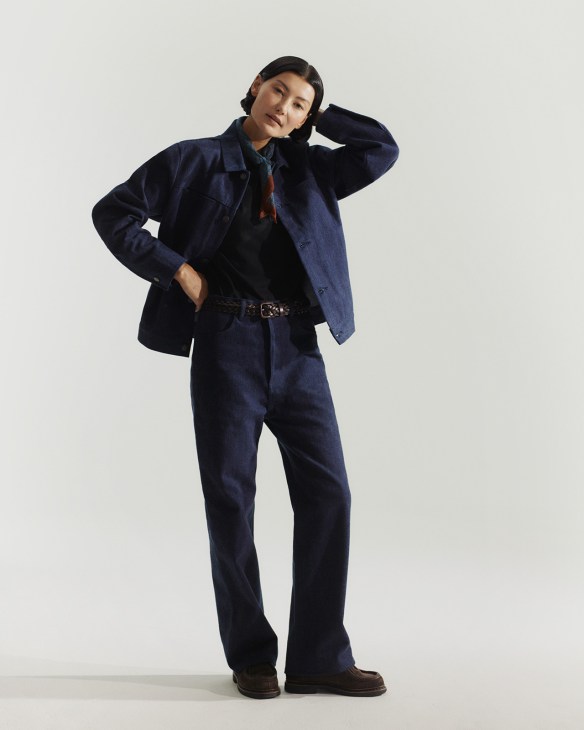
Celine Eriksen, the founder of New York denim brand Olga Basha, understands that there’s such a thing as having too much choice. It’s why her label offers jeans in two made-to-order unisex styles: low-rise and mid-rise, both straight cut with a button fly. “Our focus might seem narrow but we find joy in obsessing over the details,” says Eriksen.
olga-basha.com

Pocket square by Bigi Cravatte for Trunk
9.
Bottega Veneta, Italy
Must-visit
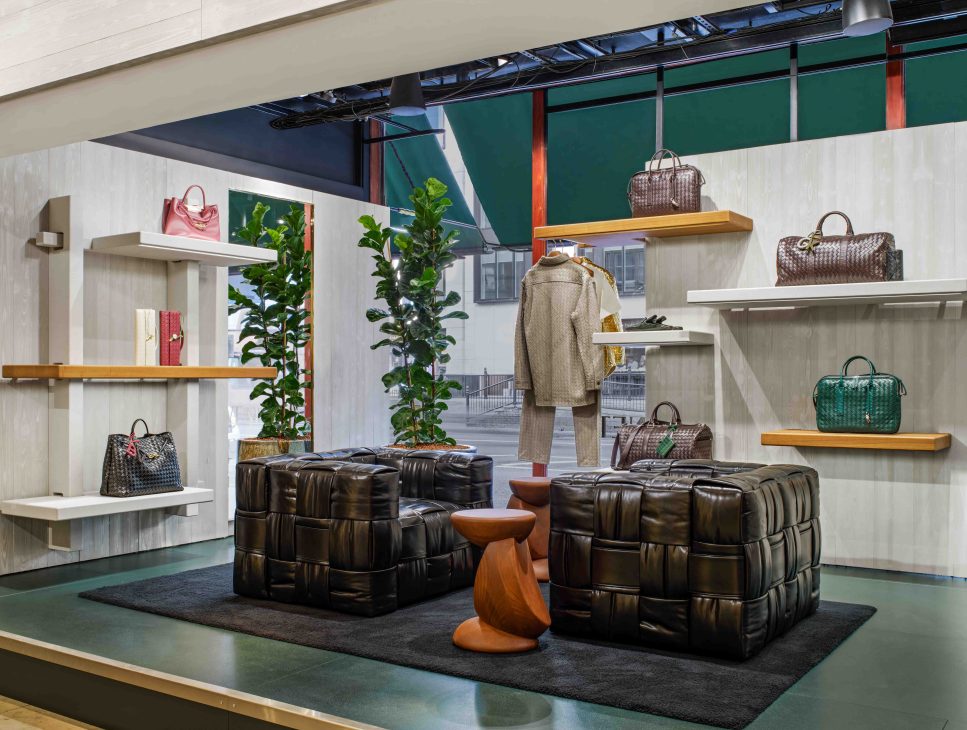
This autumn is a pivotal season for Bottega Veneta. The Italian luxury label is celebrating the 50th anniversary of its signature intrecciato (interwoven) leather, while preparing to unveil the first collection by its new creative director, Louise Trotter. To celebrate this milestone, the house has launched the “Craft Is Our Language” campaign, paying homage to Italian graphic designer Bruno Munari and highlighting the house’s commitment to handwork: intrecciato clothing and accessories require the expertise of artisans who weave the leather by hand. “For 50 years, intrecciato has embodied Bottega Veneta’s craft and creativity,” Leo Rongone, the brand’s CEO, tells Monocle. “From the start, the house was defined by the softness of its leather and the excellence of its craftsmanship.”
A pop-up space in London’s Harrods is in the works for September. The interiors will feature interlocking wood and concrete structures – another nod to the label’s signature style.
bottegaveneta.com
10.
Aimé, UK
London’s best-kept secret
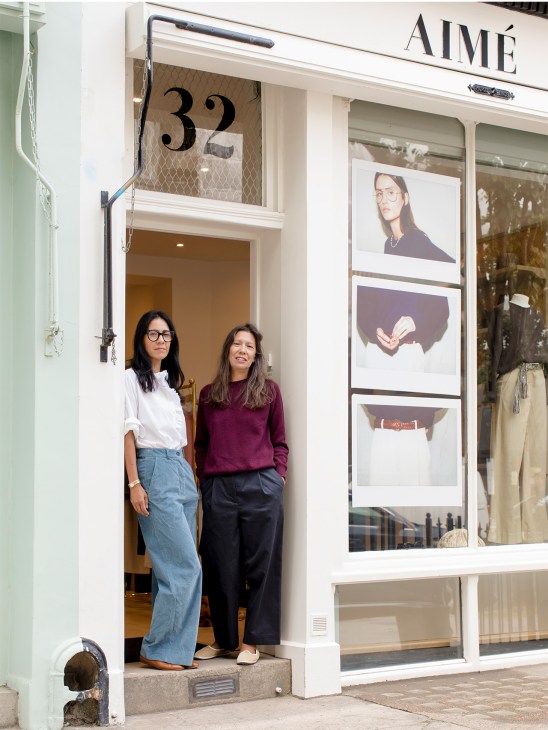
When French-Cambodian sisters Val and Vanda Heng-Vong moved to London from Paris in 1999, they found themselves missing the quintessential French brands that they knew back home. They took a big bet on Notting Hill’s Ledbury Road – there was little but antiques shops in the area at the time – and opened Aimé, stocking Parisian favourites from Repetto ballerina flats to APC denim and Isabel Marant’s breezy dresses. Twenty-five years later, the boutique is still in its original spot. It still stocks seasonal pieces by Isabel Marant, alongside elegant cotton shirts by Spain’s Masscob, woven Dragon Diffusion bags and tailored trousers by Los Angeles-based Jesse Kamm.
The business’s focus is firmly on the boutique. It’s why the duo recently joined forces with a local architect to refresh its interiors. “We take it personally,” adds Vanda. “It’s almost like opening the door to our house.” The duo have also begun developing an in-house line of seasonless staples – cashmere jumpers, ruffled shirts, waterproof trench coats – following research trips to India, Italy and Scotland. “We’re not trying to reinvent the wheel,” says Val. “We want products that don’t need to change every season. It’s a project that we want to keep small, luxurious and authentic.”
aimelondon.com

11.
Hitting the big time
In the bag
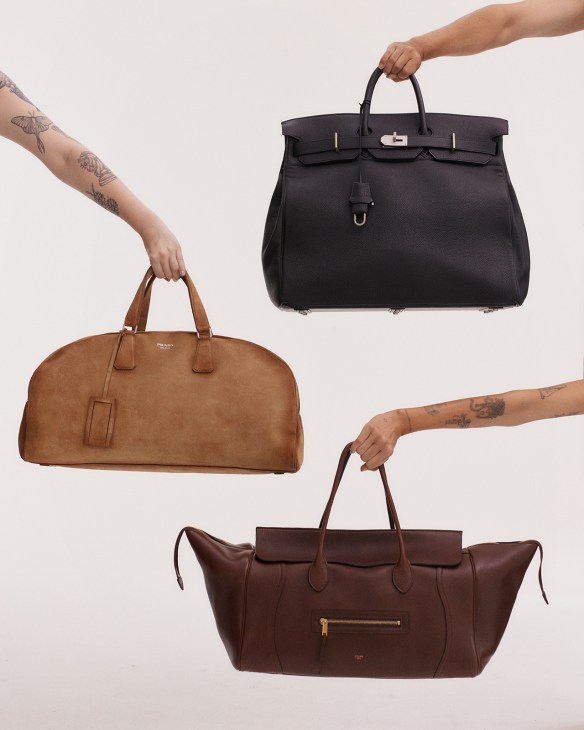
Autumn/winter is the season of the super-sized tote. Designers are leaving minaudières and compact crossbody bags behind and replacing them with extra-large totes that can double as elegant weekender bags. Prada has oversized, vintage-inspired bowling bags on offer, while Celine’s new artistic director, Michael Rider, has relaunched the label’s roomy Phantom bags. Meanwhile, Véronique Nichanian, the artistic director of men’s fashion at Hermès, generated enthusiasm for her large Birkin bags on her autumn/winter 2025 runway. “People joke that, despite my height, I’m designing such big bags,” she says.
12.
Sturlini, Italy
Tuscan touch
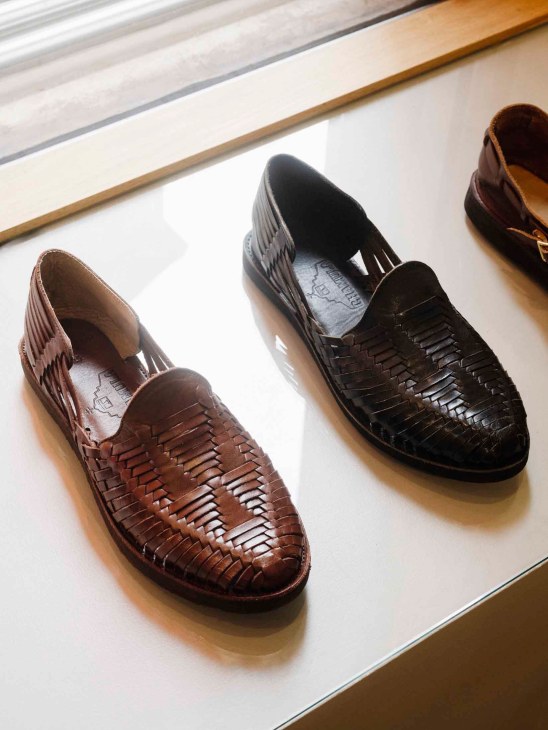
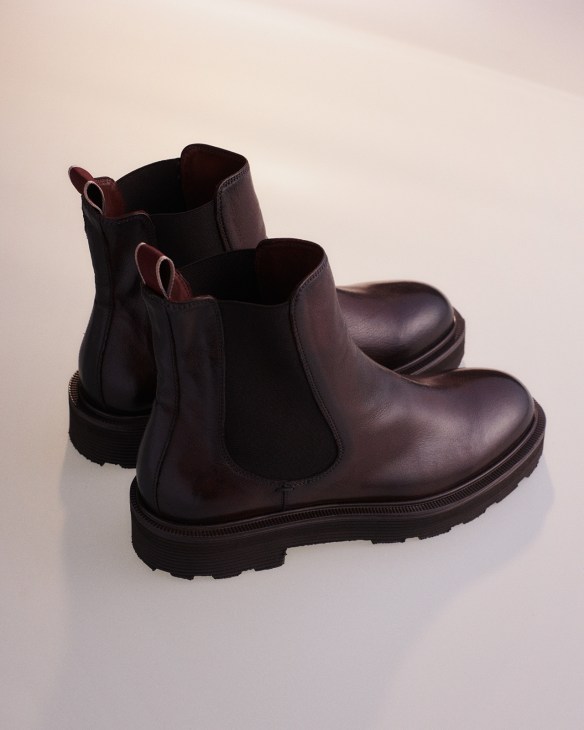
“I’m proud to be Tuscan,” says Alessio Sturlini, Florentine shoe brand Sturlini’s CEO. “We manufacture everything in Tuscany so that we can have control over every step.” Sturlini’s approach to dyeing leather consists of immersing shoes in tanning drums, using natural dyes and pigments. The result is a softer, more comfortable shoe that would befit a Florentine dandy.
sturlini.com
13.
Colin Meredith, Canada
Best performance
Having grown up on Vancouver Island and studied visual arts and technical apparel design in Montréal, Colin Meredith’s eponymous brand naturally takes its cues from the Canadian outdoors. “I also take inspiration from vintage sportswear and then combine it with newer technical fabrics,” he says. Since the brand launched in 2023, Meredith’s output has focused on base layers, insulated vests and sturdy shell jackets – ideal for cold-weather adventures.
colinmeredith.com

14.
Chopard, Switzerland
Stirling idea
A passionate car enthusiast, Chopard’s co-president Karl-Friedrich Scheufele has forged a longstanding partnership between the Swiss watchmaker and the 1000 Miglia, the iconic Italian motor race first held in 1927. The eponymous collection of timepieces has become a cornerstone of Chopard’s expanding offering of men’s watches. Pictured here is a stainless-steel model with a brown calfskin strap, created in tribute to Stirling Moss, who set a record in the 1955 Mille Miglia by winning the race at an average speed of 158km/h – a feat that remains unmatched.
chopard.com

15.
Celine, France
Best debut
Celine’s new artistic director, Michael Rider, presented his debut collection in July at the brand’s HQ, Vivienne. It was a masterclass of rebranding, a vision of modern-day dressing marrying past and present, reality and fantasy. “Celine stands for quality, timelessness and style – ideals that are difficult to grasp,” he says.
celine.com

16.
Unlikely, Japan
New from Japan
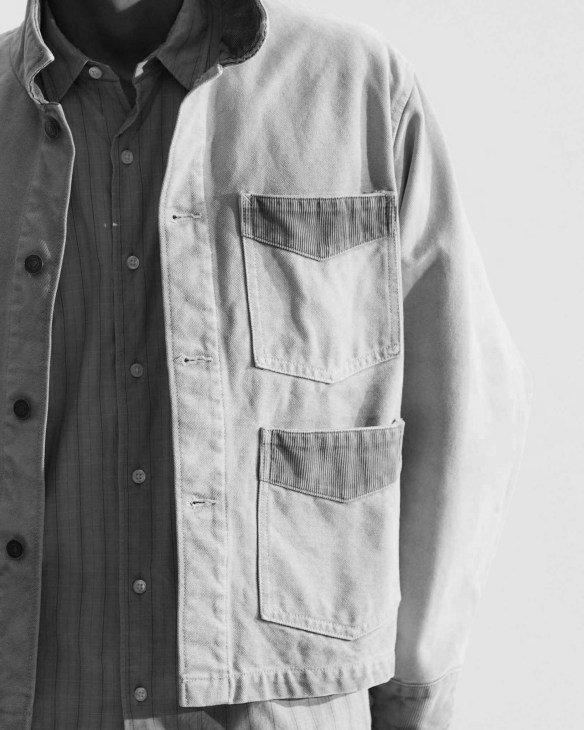
Shinsuke Nakada joined Japanese fashion giant Beams straight from college: he started on the shop floor and worked his way up to creative director over a period of 22 years. “After years of collaborating with different companies and manufacturers, I felt a growing urge to challenge myself [and create] something that was truly my own,” he says. Nakada took the leap in 2023, starting menswear brand Unlikely, which he envisions as a blend of US and Japanese styles, old-school workwear and menswear staples, all woven into something fresh. Some of its most popular garments include reversible outerwear, patched sweatshirts and sweaters inspired by natural landscapes. Its autumn/winter offering is looking particularly sharp, with a corduroy-cuffed, washed-canvas hunter jacket and twill trousers in faded navy. Unlikely is stocked in Japanese shops including Beams Plus and, with growing interest from overseas, it is officially going international this autumn.
17.
Mohawk General Store, USA
Best curation
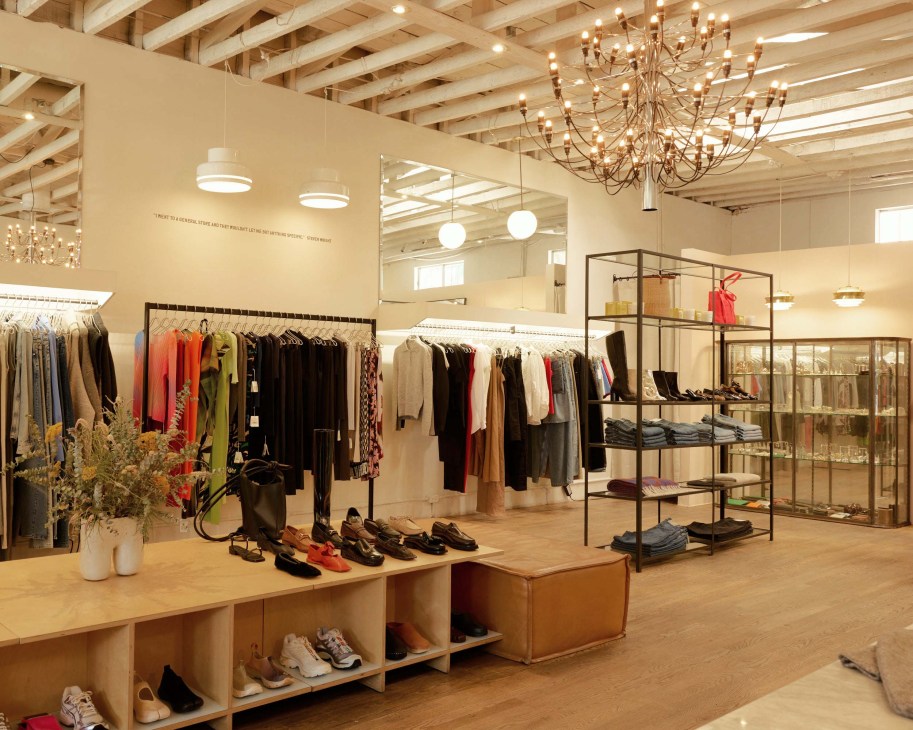
Bo and Kevin Carney’s Mohawk General Store in Los Angeles’ Silver Lake neighbourhood stocks seasonal ready-to-wear clothing, jewellery, home goods, books, apothecary items and its in-house menswear line, Smock. What these items have in common is that they evoke a sense of Californian cool, be it flax-coloured linen shirts or olive oil from the Big Sur.
This is especially true of Smock, whose breezy trousers, Velcro back cap and canvas jackets look as though they were made for sauntering underneath palm trees. Mohawk has an event space nearby and also partners with brands to host gatherings at its stores – a strategy that serves as a good reminder that fashion is often at its best when it’s rooted in a sense of place.
mohawkgeneralstore.com

18.
James Purdey & Sons, UK
Heritage revival
UK brand James Purdey & Sons is starting a new chapter in its 200-year history. Now owned by Swiss luxury group Richemont, it has tapped London-based designer Giles Deacon as its new creative director. His first full collection makes its debut in autumn 2025 and introduces the Tom Purdey House Tweed, inspired by the family’s chief salesman, who carried the Purdey name across the UK and US from the 1920s to the 1950s. The tweed uses 21 yarns and 16 twists to capture the colours of the Highlands. “We want to make timeless, elegant countrywear – clothes that you’ll wear for life,” says Deacon.
purdey.com

19.
Grey’s, USA
New talent
Los Angeles-born designer Emily Grey had spent a decade in London, studying fashion and planning the launch of her brand, Grey’s. But last February, New York came calling. From her Manhattan studio, she tells Monocle how being in England drew her attention to the singularity of US fashion. “It’s a little bit more real, designed for everyday life, without compromising on quality.”
Grey imagines her customers wearing her designs to attend soirées but also to lounge around at home. Her shapes are voluminous and comforting: a knitted wool sack coat has a drawstring hem that can be pulled into a bubble shape or left to fall naturally, while a coat is cinched by internal ties. “It’s all about ease,” she says. “Those details make [every piece] more functional and less precious.”
greys.studio

20.
Best in scents
Autumnal fragrances
This season we’re adopting perfumes that offer complexity and freshness in equal measure. London-based perfumer Vyrao’s Verdant does exactly that, with notes of moss, Italian bergamot, frankincense and cyclamen that vibrate in unison. Meanwhile, New York- and Paris-based brand Régime des Fleurs’s Green Vanille eschews the cloying sweetness typically associated with vanilla perfumes by combining it with notes of coriander, sandalwood and vetiver – a compelling reinterpretation that might change your mind about what a vanilla scent can be. Bottega Veneta is expanding its range of perfumes with Mezzanotte, a collection of three new fragrances presented on marble bases. Our pick is Hinoki, a scent that harmoniously blends Japanese hinoki, fir and patchouli. Finally, US perfume house Maison d’Etto’s Noisette leaves lingering notes of French lavender, magnolia and orris wrapped in a grounding mix of musk and amber leaves.

21.
The Decorum, Thailand
Sharpest fit
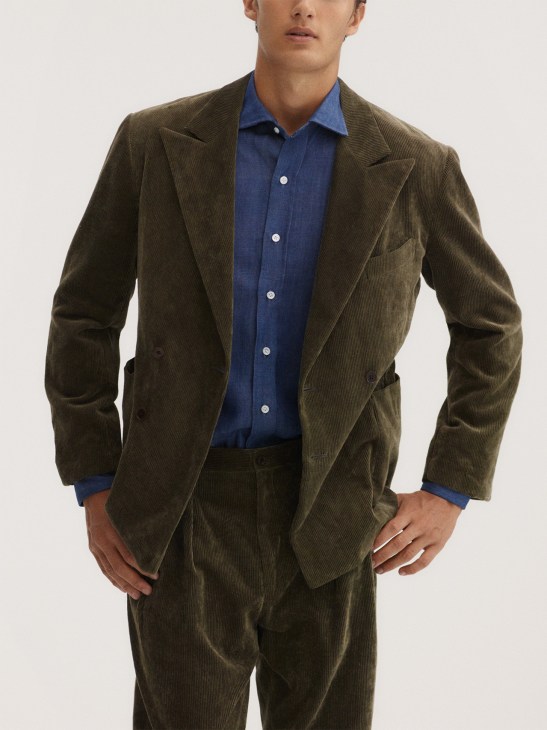
Bangkok-based menswear retailer The Decorum has been growing its label. The third season of the Decorum Continuum Collection continues a collaboration with Yasuto Kamoshita, co-founder of Japan’s United Arrows, who has led all three collaborations. “The collection takes its name from the way that we like to evolve,” says Sirapol Ridhiprasart, co-founder of The Decorum. “Our styles evolve season by season but they stay true to their roots.” Highlights from the new autumn collection include a stripped-back Harrington jacket and corduroy suits in forest green. “Fabrics and textures take centre stage,” says Ridhiprasart.
thedecorumbkk.com
22.
K-Way & Soeur, France
Collaboration to know
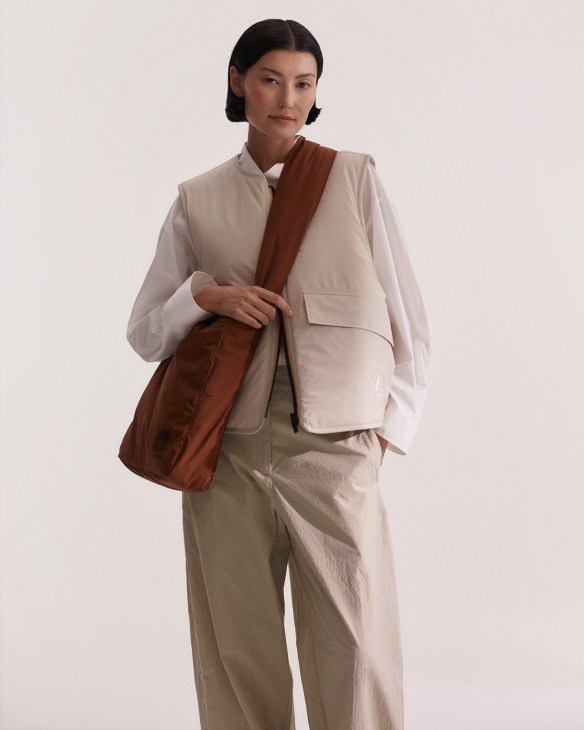
In this collaboration between French brands K-Way and Soeur, the former’s expertise in outerwear meets the latter’s Parisian flair. K-Way’s expansion plans have been turbo-charged by investment from private-equity firm Permira. “We believe that we sell products that are high quality and at a reasonable price,” says co-CEO Lorenzo Boglione. “And we have a strong narrative to tell.”
k-way.com; soeur.fr
23.
Begg x Co, UK
New beginnings
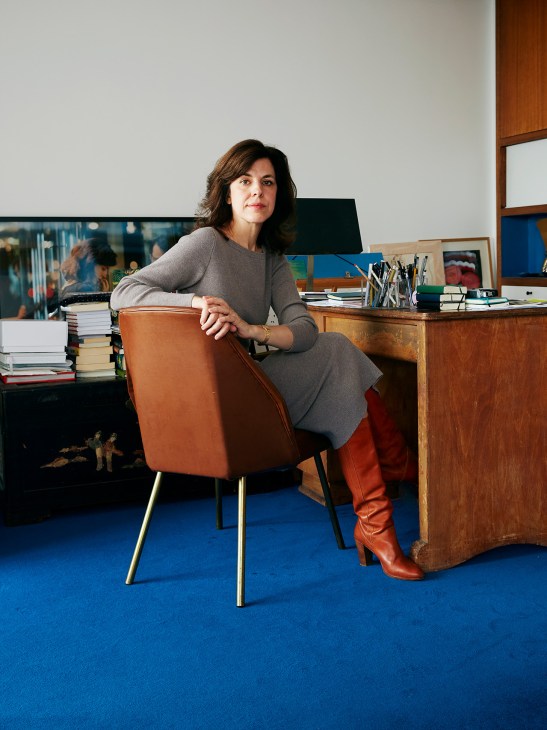
Buenos Aires-born and Paris-based designer Vanessa Seward is taking the reins as creative director of Scottish cashmere brand Begg x Co. As a preview, Seward – who has worked alongside Karl Lagerfeld at Chanel and Tom Ford at Yves Saint Laurent – launched a capsule collection. It features striped cardigans, elegant polo sweatshirts, a cape and marle jumpers, all made from cashmere.
beggxco.com
Begg x Co represents a slice of Scottish manufacturing history. What does it mean to become the new custodian of the brand?
I have always admired Scottish culture and heritage from afar. So I can dare to go further in [highlighting] this Scottish identity: when you’re approaching it from the outside, you can bring freshness. As creative director, I want to help make Begg x Co the go-to Scottish cashmere brand.
Where did you turn to for inspiration when creating your first capsule collection?
I started with the idea of what my ideal cashmere wardrobe would look like. I designed staples for men and women, with a Scottish touch that comes through in the knits, particularly in the stitching. And the colours are to die for. We created a bespoke marle inspired by the moors.
What’s your philosophy around clothing?
Clothes have to enhance a personality. They need to be flattering and give you confidence. I never design something that can’t be worn – that’s absurd. I believe in clothes, rather than fashion.
24.
Morrow, Australia
Sydney’s finest
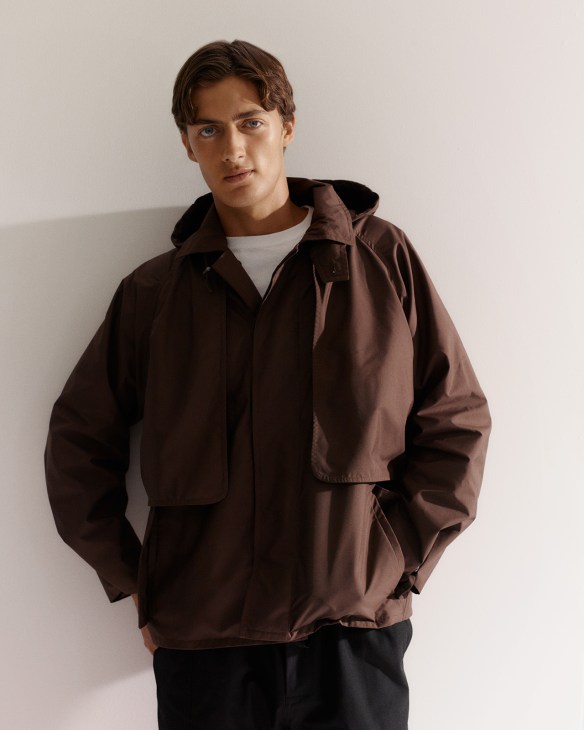
After working for Sydney-based brands Jac + Jack and P Johnson, Ryan Morrow launched his own label in May. “I spent my weekends escaping from the city to the country to go camping and couldn’t find clothes that were able to seamlessly transition between the two,” says Morrow. “I realised that I needed to build this brand myself.” Colour palettes are usually neutral, allowing the construction of the garments to take centre stage. “Silhouette makes the difference between something looking sharp or falling completely flat,” he adds.
morrowaustralia.com
25.
Kilentar, Nigeria
Rethinking craft
Up-and-coming designer Michelle Adepoju had no intention of working in fashion – let alone launching her own brand. After a year spent travelling around West Africa, from Senegal to Burkina Faso and Nigeria, she was captivated by the textiles that she discovered in markets and started asking more about how they were made. In Burkina Faso, for instance, she learnt about faso dan fani, which translates to “woven cloth of the homeland” and is usually hand-woven on looms, while in Nigeria, she began building relationships with artisans weaving the region’s traditional aso-oke fabric. “I fell in love with the ways in which these fabrics are made and knew that I could use them to create styles that are more wearable for the women of today,” says Adepoju, who began to learn Mossi (Burkina Faso’s most widely spoken language) to convince local artisans to work with her. “It was through that sense of curiosity and experiencing the beauty of craftsmanship that I got inspired to start a fashion brand.”
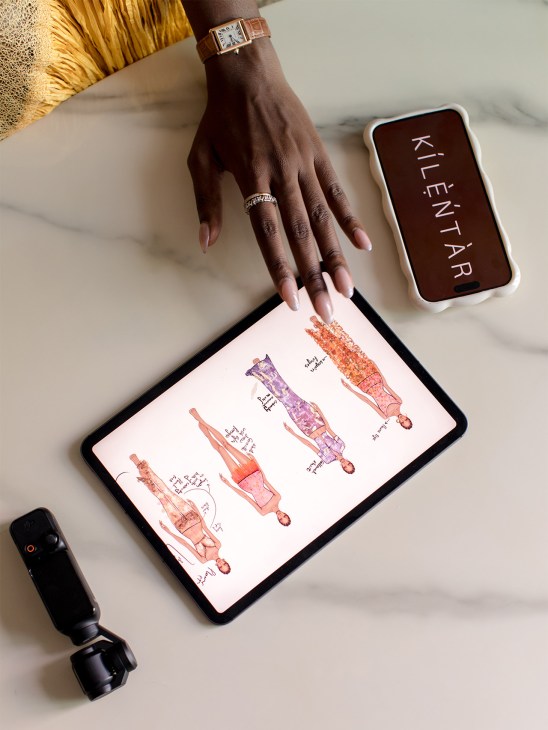

Kilentar – which translates to “What are you selling?” in Yoruba and is often heard in the markets of Nigeria) now offers one-of-a-kind garments that are hand-woven, hand-dyed and hand-finished, from tweed suiting to patchwork column dresses for the evening. “We only make two collections per year because of how time-consuming the process is,” adds Adepoju, pictured here wearing her brand’s clothes. “We want to respect the process and educate our audience about how each garment is made.” This involves holding workshops at which people can try their hand at weaving and meet artisans. “Craft is about more than just techniques,” says Adepoju. “It’s a language that unites communities.”
kilentar.com
Stylist: Kyoko Tamoto
Hair: Hiroki Kojima
Make-up: Irina Cajvaneanu
Models: Amalie G, Antonio Pinto