Issues
How to remake a city, according to Cape Town mayor Geordin Hill-Lewis
At this year’s Quality of Life conference, Cape Town’s mayor Geordin Hill-Lewis joined Monocle Radio’s Carlota Rebelo and Andrew Tuck to discuss how investing smartly in infrastructure and building resilience can truly transform a city, and why tourists are always welcome on his watch.
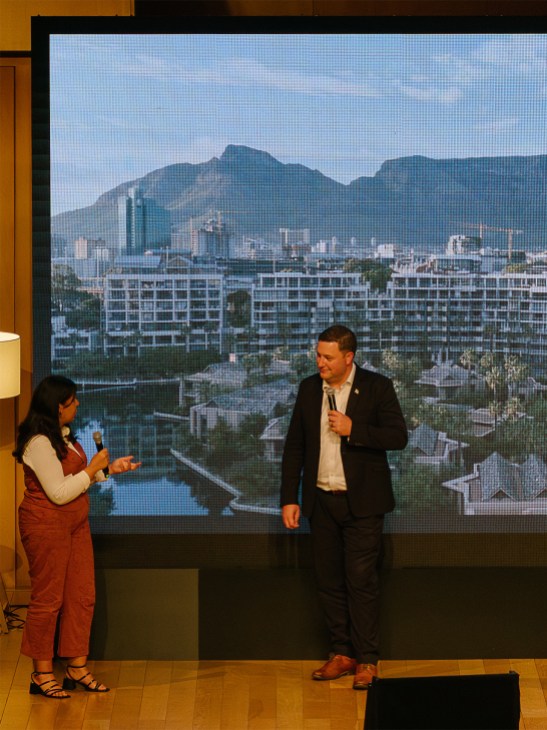
Andrew Tuck: A simple question: what made you want to be the mayor of Cape Town?
Geordin Hill-Lewis: I was a member of parliament during the coronavirus pandemic, which was tough on Cape Town, as it was on many cities around the world. I had been in opposition for quite some time. I felt a growing sense of dissatisfaction about sitting on the sidelines at parliament, unable to do what I wanted. I increasingly felt that I was watching these things happening without being able to step in and that was incredibly frustrating, especially as I had very clear ideas about what should be done. It dawned on me that I had every reason to run for mayor. It was a hectic primary – I had to run against an incumbent from my own party – but I got there in the end.
Carlota Rebelo: Tourism is one of the main economic drivers of your city. How do you balance the desire for investment and growth with the related challenges that many cities, such as Barcelona, are facing?
GHL: This summer we achieved record tourism numbers in Cape Town. But for us, that number was 1.5 million, whereas Barcelona had about 15 million. The mayor told me that in June alone, Barcelona had more visitors than Cape Town has annually. In that regard, we’re in a very different situation to Barcelona. We are desperate to keep growing our tourism numbers. In terms of keeping our citizens happy, Cape Town currently has the lowest unemployment figure in South Africa. But it’s still 20 per cent, so the most important priority in our government now is to get more people out of poverty and into employment. That way, everyone is included and has access to a more dignified and hopeful life.
CR: What about tangible changes? I know that there has been a push for the reopening of the public swimming pools, which relates to our connections to water, nature and mental health, but also ensures social equity between citizens.
GHL: I’m glad that you bought this up. Cape Town has 38 magnificent public swimming pools and 19 coastal tidal pools. But when I became mayor, most of these were closed to the public – they hadn’t been maintained properly for years. If you live in a township anywhere in a developing-world context, heat is an important consideration. There is nowhere to escape it and many of these climates, Cape Town’s included, are getting hotter. I took it upon myself to ensure that they were fixed up. These are essential for the public; they are not luxuries. They’re a source of community.
AT: Is there a sense that the arc of Cape Town is separate from the rest of the South African story?
GHL: We wanted to show everyone in South Africa, whether they lived in Cape Town or not, that this could be a model for the success of our country. The national economy has been in a tight spot for the better part of a decade. It hasn’t ever properly recovered from the 2008 crisis, let alone the coronavirus pandemic. But in the past 12 months, we have had an extraordinary political shift. Now, the question is really whether political reform can go fast enough to deliver the social change necessary.
CR: Speaking for Cape Town, what’s one thing that you can offer the world?
GHL: The reason why I love Cape Town is its connection to the outdoors and wild spaces. We have a magnificent national park in the heart of our city that’s the size of Liechtenstein. I’m not sure there’s any other place where you can get that kind of seamless connection and accessibility to nature, with an amazing quality of life. It’s healthy for the mind, body and soul. That makes it the best city in the world.
Monocle comment:
Geordin Hill-Lewis’s keenness to get things done has given his mayoralty impact and made tangible changes to life in Cape Town, from pools to cool off in to a welcoming stance on tourism.
Adriana Dominguez on what happens when a heritage fashion brand thinks like a start up
Adolfo Domínguez, one of Spain’s most cherished heritage fashion labels, is being steered into its next chapter by its third-generation leader, Adriana Domínguez. At Monocle’s Quality of Life conference she was interviewed onstage about the power of Spanish fashion by Natalie Theodosi, Monocle’s fashion director, and Enric Pastor, the editor in chief of Manera magazine.
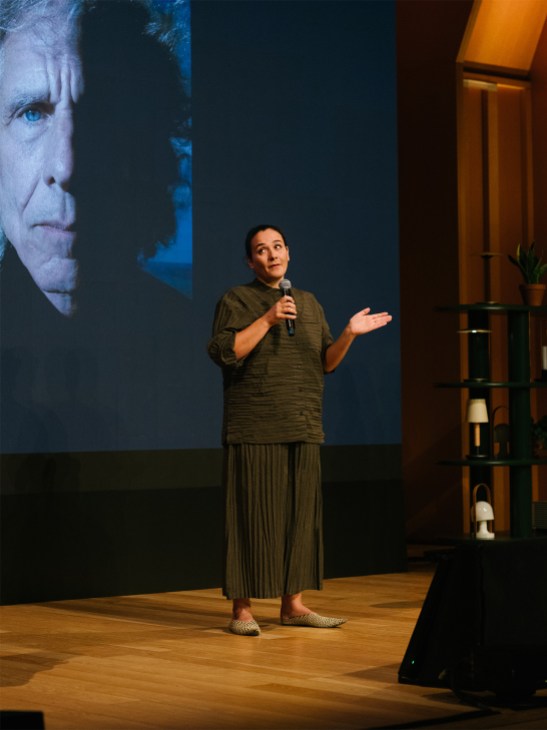
Enric Pastor: I grew up in the 1980s, when your father launched his new tailored linen line and created the slogan, “Wrinkles are beautiful”. It was a revolutionary success in Japan, breaking new markets and becoming such a major part of the fashion identity of Spain. How do you keep the heritage of the brand alive and thriving, while continuing to reinvent it for new markets and generations?
AD: I am the third generation in control of the brand, following my father and grandfather before him. I didn’t have to read a brand book – it was part of my education. One of the biggest things that a brand can do is to bring someone younger on board and trust them. They will have a different connection to the current landscape and often a completely different lifestyle. In the past eight years of being CEO, I’ve endeavoured to make the company more relevant to today. But, of course, this is a process that never ends.
Natalie Theodosi: In previous conversations, you told me that building a modern business is about striking a balance between heritage and global expansion. To do so, you need to experiment and think outside the box. What is your vision of a modern business?
AD: We have been thinking about how we get to the market. There are physical shops and online options, which have now been going for a long time. They’re necessary, to a degree. But an online presence is no longer innovative. We currently have some 370 spaces in 51 countries; one of the ways in which we are using them experimentally is through renting.
Most fashion brands do not rent out their products. Another thing that we have been trying is to offer a personal stylist, similar to the Stitch Fix model. They do a style test, then, between a human stylist and an algorithm, create the customer a box of selected clothes that they haven’t bought yet. Then the customer pays for whatever they don’t return. We have been seeing good conversion rates there and have been tailoring this to the customer using a blend of personal shoppers and AI. This, for me, is innovation.
EP: Let’s talk about your roots and about Galicia. How important is it for you to be local and what’s the global impact of keeping things close to home?
AD: If we’re talking about linen, in the beginning, there was a producer in the north of Italy called Solbiati. That’s where both Armani and my father would source the material. My father didn’t choose the local option; he didn’t go with Galicia. So what has happened in our generation? Why are we looking closer? What feels modern to me is to draw from real experience in somewhere that you know. That way, there’s no copy-and-paste; it’s homely, it’s specific and it has a flavour. This year, we’re launching part of a collection that’s made with cotton from Spain. We didn’t know cotton was grown in the country but there are farmers near Seville in the south, so we’re using them. We’re also doing a capsule made with wool exclusively from Spain’s migratory sheep. In doing so, we’re supporting local economies and lifestyles that would otherwise go extinct.
NT: It’s a formula that’s working – you’re seeing growth. Can you give us a few clues about your vision for the future of the brand, post-turnaround?
AD: What’s important for creative brands first and foremost is a sustainable business model. Working on that, I believe, is the best thing that I can do to secure the vision that we already have. Fashion is “new, new, new” every six months – products, shows, communications. I’m working on heritage pieces, slowing things down, so that we can have the same product in the shop season after season. People don’t say, “Oh, boring.” It’s quite the opposite. They see heritage and legacy. That’s what’s valuable to a brand.
Monocle comment:
An online presence is nothing new. Innovation sometimes lies in how you use your assets in the real world, know the market and engage with your customers. Care is key to keeping a brand fresh in its third generation and beyond.
Paris radio darling La Patate Douce turns up the volume with a new café in Le Marais
If you have eaten in a decent Paris restaurant lately, you might well be familiar with La Patate Douce radio station – perhaps its lively, on-the-hour jingle or its upbeat playlist that keeps your toes tapping, whether you’re a pot-washer, a chef or a diner. “I once recognised our playlist in a restaurant by the beach in Biarritz,” says Jules Effantin, the station’s founder. “That made me smile.”
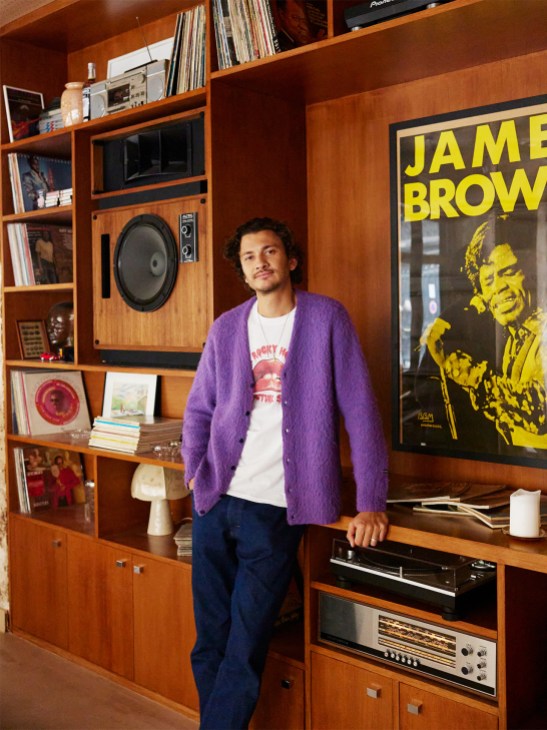
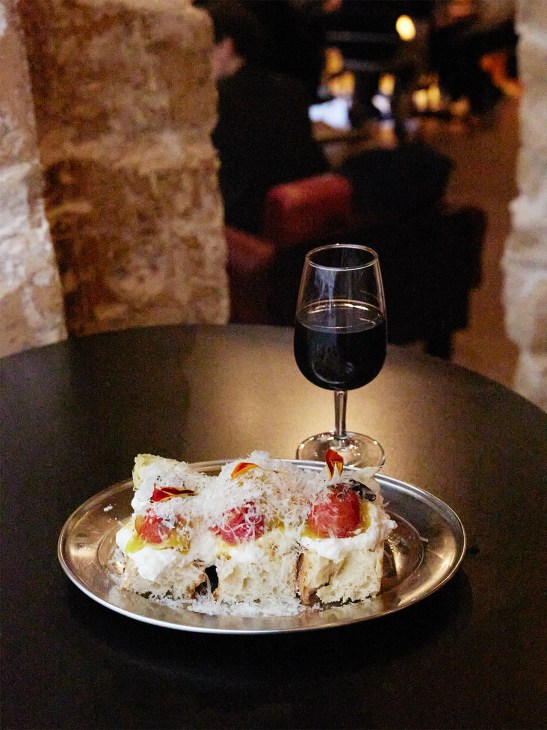
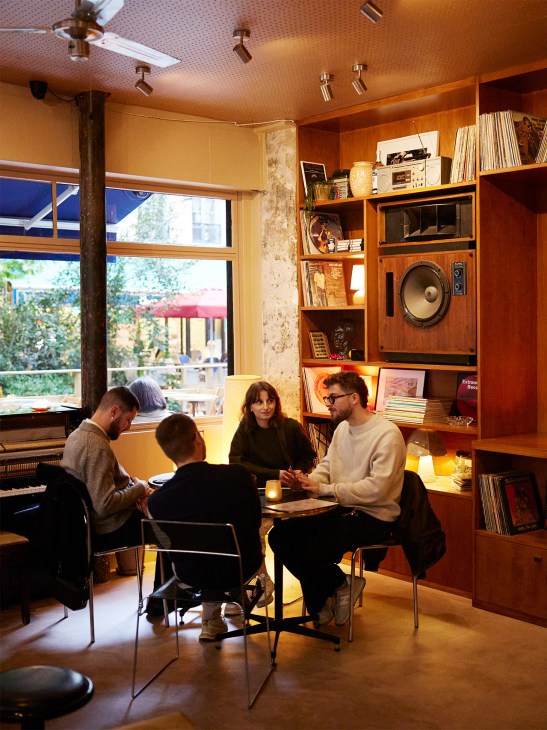
To mark the fifth anniversary of La Patate Douce (which means “The Sweet Potato”), Effantin, a former DJ, has combined his penchant for music with his other love, hospitality. He has created a physical space for fans of the station: a café and listening bar in Le Marais. Furnished with his own objets d’art sourced from flea markets, the 1970s-style interior invites the station’s 200,000 monthly listeners – and those yet to discover its eclectic mélange of disco-funk, jazz, Afro-soul and house music – to gather in the company of its creators.
If Effantin’s name sounds familiar, it’s because he’s the brother of Victoria Effantin, one of the co-founders of Parisian boulangerie Mamiche. By day, customers can enjoy the music with one of her pastries in hand. “This is the only other coffee shop in the capital where you’ll find Mamiche’s treats,” says Effantin. By night, there are musical soirées, DJ sets and concerts.
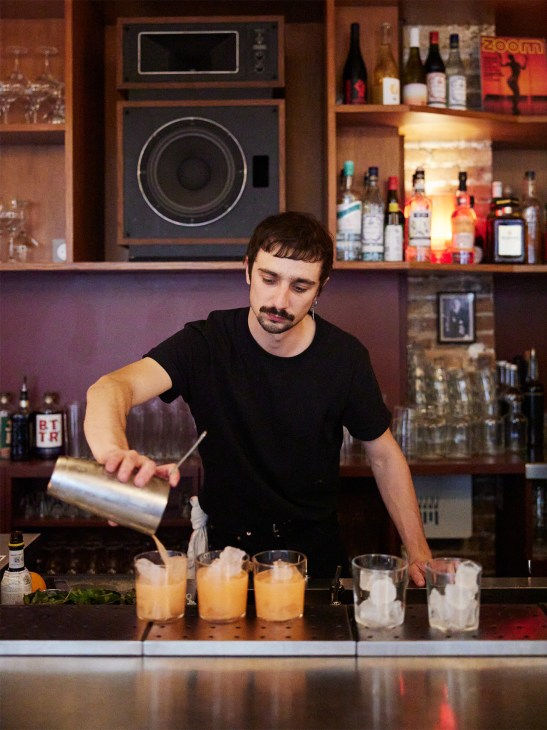
The radio station and café’s enthusiasm for the humble patate of their name makes itself known on the menu, which tries not to take itself too seriously. Wash down the ceviche with the cocktail à la Patate Douce: tequila, lime juice and, you guessed it, a little sweet-potato juice.
lapatatedouceradio.com
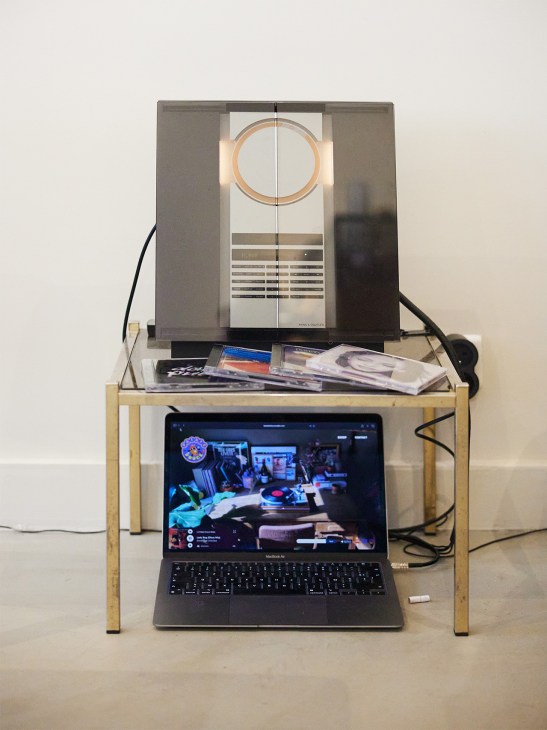
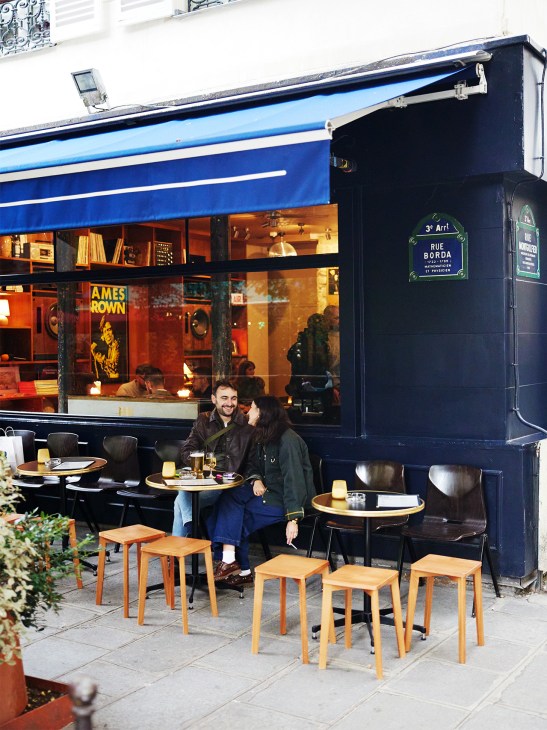
Read next: The Monocle City Guide to Paris, featuring the best hotels, restaurants and retail spots in the French capital
Italy charts a new course for the boat industry with this years’ edition of the Genoa International Boat Show
At Genoa’s waterfront on the Ligurian Sea, the sun is shining following a brief but powerful autumn shower. Moving among the luxury boats bobbing on the water in front of a Jean Nouvel-designed pavilion, barefoot deckhands are towelling down wood finishing and removing waterproof covers from tables and seats, readying them to accommodate potential buyers. After the lethargy of summer, it’s back to business in Italy. Liguria’s Genoa International Boat Show, which takes place annually in September, is the country’s most important boating event. It is sandwiched between a bustling nautical schedule that features a Cannes event before it and a Monaco one immediately afterwards.
Historically, Genoa was the world’s most important global boating event. In recent years, however, it has lost out to its Francophone Mediterranean rivals – but there are signs of buoyancy. “At Cannes, everyone comes to us; lots of Italians and even Australians,” says Rosario Alcaro, the general manager of Cantieri Aschenez, showing off the company’s 17-metre Invictus TT550. “But there are a lot of people at Genoa.” The visitor numbers make for positive reading too, up 2.8 per cent on 2024.
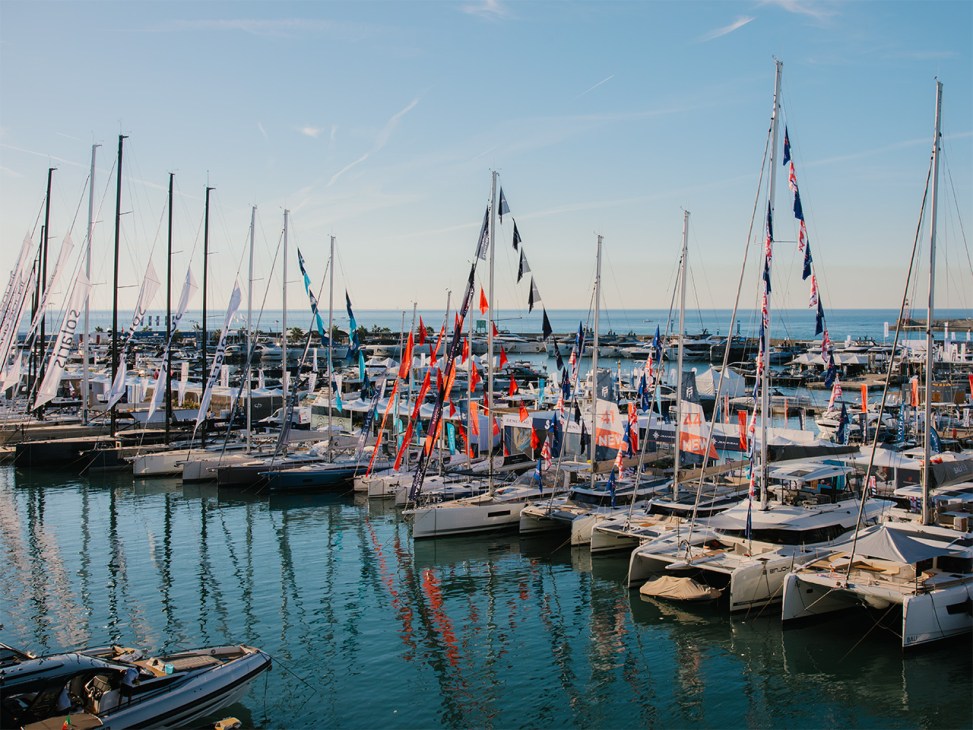
The chatter around the sun-dappled docks and inside the pavilion is focused on recyclable materials and lightening the load (though the latter is often more about gaining speed and less about sustainability). The TT550, for example, has recyclable thermoplastic resin instead of wood. But bigger still seems to be better, with Aschenez planning to produce a large boat in its TT series. “People want a bigger boat; it’s like houses,” says Alcaro.
Indeed, a standout at this year’s show is San Lorenzo’s 33-metre SL110A, with its huge flybridge. Like many boats on display here, it had its premiere at Cannes – that’s just the way the dates fall, perhaps, but it is something that Genoa might like to redress given Italy’s gargantuan contribution to the sector. Last year, the Italian boating industry had a turnover of €8.6bn, the highest figure on record, while the Global Order Book – an annual report by Boat International that ranks the world’s top superyacht builders – has Italy as a clear frontrunner. Surely, then, Italy deserves to have the leading event?
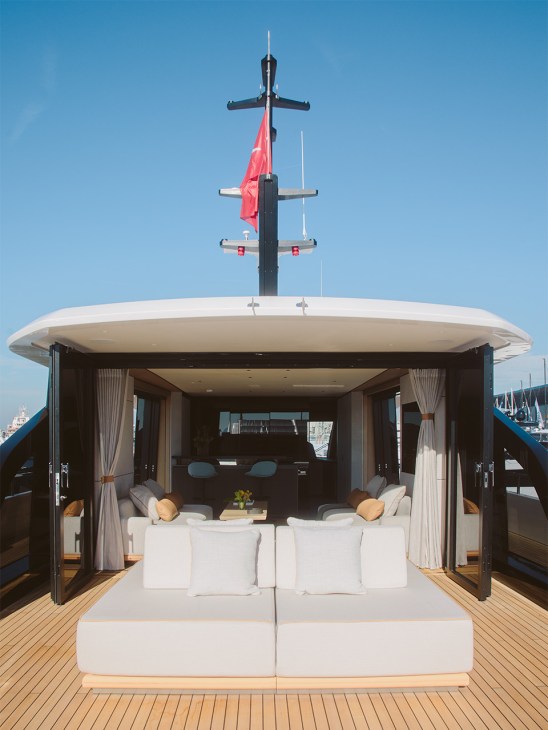
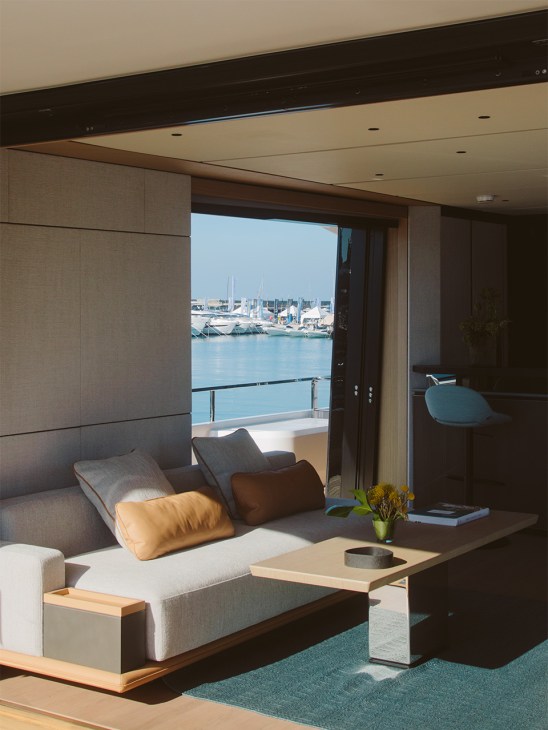
Gigi Servidati, the president of Pardo, Grand Soleil and VanDutch, says that both Cannes and Genoa have been good for sales. While there are more than 1,000 boats and exhibitors from 45 countries here, Servidati is convinced that the show could be more international. “The potential is there but the infrastructure needs to be improved,” he says. Indeed, while Cannes has the corniche and a plethora of luxury hotels, plus the know-how gained from hosting everything from its film festival to property fair Mipim, Genoa is paddling hard to catch up. Still, the future looks bright given the number of cranes around the waterfront – all part of an urban mega-project from the studio of Renzo Piano and OBR Architects that includes new residential, office and retail space. In September, meanwhile, Accor announced that it would open a waterfront Sofitel in 2027. All of which is helping put the wind back in Genoa’s sails.
Genoa International Boat Show in numbers
124,000: Number of visitors this year (up 2.8 per cent on the previous year)
€8.6bn: Italian boating industry turnover in 2024
1st: Italy’s global position among top superyacht builders according to Boat International
1,000: Number of boats from
45 countries on display this year
How Broadsheet founder Nick Shelton is bringing his Australian city-guide formula to London
Like many Australians, Nick Shelton worked as a barista in London in his early twenties and found the UK capital to be “a dynamic, cosmopolitan metropolis”. In 2009, after returning to his home country, he founded the city-guide company Broadsheet. It initially focused on highlighting what to eat, see and do in Melbourne, then expanded to Sydney, Brisbane, Adelaide, Perth and, in 2022, New Zealand. Now, Shelton is back in London and bringing his discerning eye to the city that sparked that sense of possibility.
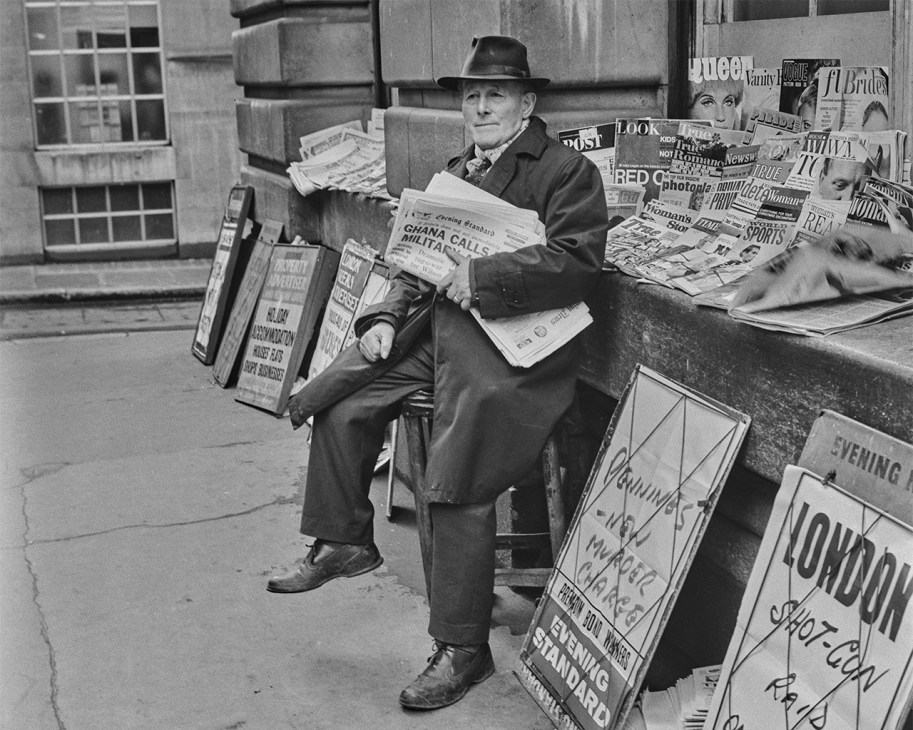
“We focus on reportage and questioning why something is worth knowing about,” says Shelton. “It’s not about churning out bits of ‘news’.” He also believes in print, which is “where we can control who we are as a brand and as a publisher”. Broadsheet London’s first paper edition is out now, available for free in cafés, hotels and other businesses.
Broadsheet isn’t the only organisation newly attempting to document London. In the past year, several digital newsletters have appeared, including London Centric, which is among the UK’s top local news products in terms of subscribers. The site, which began as a one-man operation run by former Guardian media editor Jim Waterson, has 30,000 subscribers, 3,500 of whom pay a monthly fee for exclusive investigations, event invites and access to the editor.
It relies on shoe-leather journalism: being out and about and talking to people. “This is a brilliant city,” says Waterson. “That’s the voice I want London Centric to have – laughing at the preposterous nature of the city, rather than despairing that it’s beyond saving.”
Five outlets reporting reputably on London:
1.
Broadsheet
Aussie Nick Shelton’s new launch covers hospitality and leisure.
2.
London Centric
Ex-Guardian journalist Jim Waterson’s deep-dive newsletter publishes agenda-setting investigations.
3.
The Londoner
Manchester-based Mill Media moved south to start this promising capital-focused website.
4.
The Fence
A London-based magazine packed with satire, fiction and proper reporting on the capital.
5.
The Slice
News and culture across the borough of Tower Hamlets in east London, founded by Tabitha Stapely and dedicated to community journalism.
To read Monocle’s excellent city guide to London, tap here.
The Commute: Tag along Rebekka Bay’s bike ride through Copenhagen
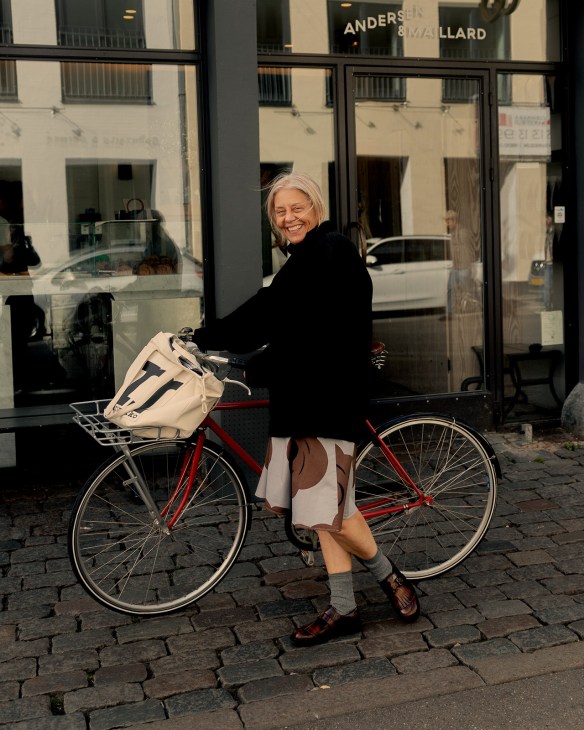
In the latest leg of The Commute, we join Rebekka Bay, the creative director of Nordic textile and homeware brand Marimekko, for a bike ride through the Danish capital. Based within a few minutes of the company’s Danish creative studio, Bay doesn’t have far to pedal – which is lucky, because her bike basket is often full of fabric bolts, swatches and items that inspire her.
Are you a morning person?
No. If I’m planning to do something, such as a run, it requires careful organisation the night before. I don’t really have breakfast. If I’m lucky – and on most days I am – my husband gets up first and brings me coffee in bed. Then I have a ginger shot and I’m out the door.
What’s your preferred mode of transport?
I live so close to the office that I walk or ride my bike – it’s an old, red men’s bike without gears. I gave up on fancy bicycles when my previous one was stolen. It was very beautiful, with a Brooks leather saddle, for which I had picked out my own Pantone colour. After losing that, I wanted the most basic bike in the world.
What do you carry with you?
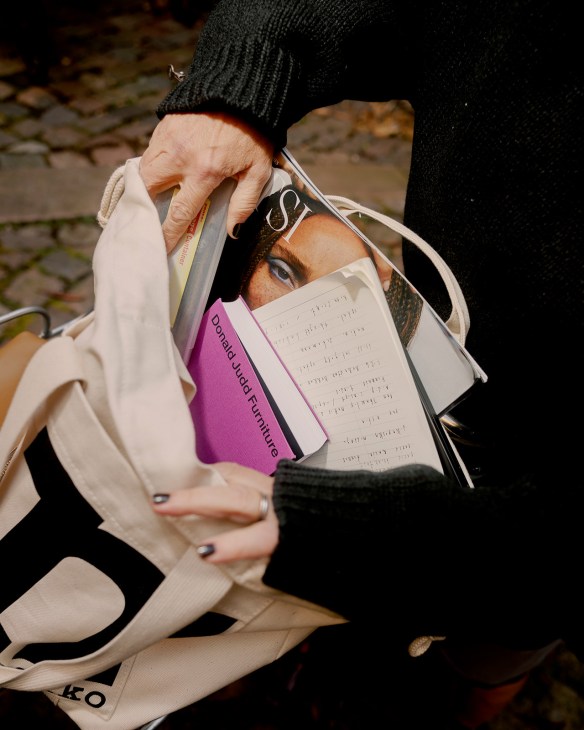
A few years ago I had a wire basket fitted. I work between Helsinki, the office in Copenhagen and my home, so I tend to carry things around for my own reference: magazines, books, colour swatches, clippings, prints and samples that I ferry from Helsinki to Copenhagen. It’s a bit like an office on wheels. I’m also someone who always has a pencil case and a notepad to hand. My favourite place to pick up supplies in Copenhagen is Cinnober, a bookshop that stocks beautiful Japanese stationery.
Any stops along the way?
I always grab a coffee. In summer I sit outside at Andersen & Maillard on Ny Østergade; when it’s colder, I go to Coffee Collective around the corner.
You moved to Copenhagen five years ago. What do you like about living here?
It feels as though I’m a tourist in my own town, which means that I can see all of the great things about it. Something that continues to amaze me is the harbour. It’s clean and you can jump in at any time of the year. I enjoy the food here too. We have the best bakeries, such as Hart Bageri and Buka. The restaurant scene is informal with democratic price points, casual settings and high-quality produce. The restaurant that I eat at most is an Italian one called Locale 21.
Headphones in or out?
I love the privacy that headphones give you. When I’m on a walk I usually listen to a podcast. I enjoy Bella Freud’s Fashion Neurosis and I have always loved Arman Naféei’s Are We on Air?
What do you do when you want a break from city life?
I’ll often jog around Kastellet, a citadel that still houses our secret service. But if I really need to switch off, I’ll drive north of the city to the Rudolph Tegners Museum and Statue Park. It’s really remote with no one around; the best time to visit is now.
Further commuting:
Take the Paris metro with shoe designer Alexia Aubert
Join José Miguel de Abreu biking from Porto to the central Ribiera district
In a digital world, reading printed media has become more important than ever
There is little that has shaped the West more than popular literacy. The fall in reading skills poses no less of a threat than the decline of our knowledge-based civilisation. Studies have long shown that reading activity, especially among younger people, is steadily decreasing. According to a recent report in The Guardian, children’s enthusiasm for reading has sunk to an all-time low in the UK. There has been plenty of discussion on social media and in other publications – including Switzerland’s NZZ newspaper – about how dire this finding really is. But there have also been prominent intellectuals attempting to counter the alarmism. Among them is UK zoologist and author Matt Ridley, who argues that writing is simply being replaced by audio and video, and other skills are being developed.
Are audio and video equivalent to the written word – and, if so, in what way? You can listen to a crime novel as an audiobook; a physics textbook, however, is a different proposition. But why learn physics at all these days, when you can simply ask artificial intelligence for answers? Is the acquisition of in-depth and comprehensive knowledge – the main purpose of reading – still necessary? Why bother trying to hold in your mind what you already have in your hand on a digital silver platter? Well, to rely solely on such devices would be a mistake that couldn’t be more fundamental.
Use your brain
If we want to evolve as intellectual and cultural beings – and retain autonomy and control – we must have knowledge in our heads, not least to be able to properly question, evaluate and regulate what AI provides. Johann Wolfgang von Goethe gave us the decisive argument long ago: “One only sees what one knows.” And you can only enjoy what you see or sense. While the wine novice can discern just a few aspects of taste, the sommelier has hundreds of terms at their disposal and their instruction will help the novice to perceive more about what’s in their glass.
Perception and knowledge always develop in interaction. The abstract knowledge that we acquire can shorten our path to an enriched experience, diversifying and intensifying our engagement with the sensory world. The apparent richness of the external world is in reality the richness of our inner world. Think of an exhibition: only those with knowledge of cultural history can fully comprehend the wealth of associations that it offers.
The reliability of printed information
Fulfilment and happiness in life have a lot to do with knowledge. One thing is essential for humans as spiritual beings: the acquisition of information and ideas, and their internal organisation into conceptual models of the world. This process can be broken down into two steps. First, we must memorise the building blocks of knowledge. Second, we must internally organise these into complex and coherent models. The first step requires effective ways to “imprint” it all in our minds, including repetition; the second requires time for processing and leisure for playful reflection.
The best way to acquire such inner wealth is to read paper books. Their stable form makes it simpler to learn things. You’ll always find a certain piece of information in the same place, instead of in a variety of locations, depending on format and advertising; you might remember that what you are looking for is at the top of the right-hand page near the end of the book. And there you will spot it, especially if it has been underlined. All of this is considerably more difficult with digital books.
Our understanding of a text is enhanced by making handwritten notes, underlining important sections and so on. Studies have shown that multisensory learning that incorporates handwriting is particularly effective and also has advantages over typing. Digital devices offer a host of distractions, while analogue reading helps us to get a firmer hold on a text’s content. Even the mere presence of an inactive digital device has been found to reduce students’ concentration.
Video and audio formats can be valuable additions to knowledge transfer in terms of multi-sensory learning. But they are unsuitable on their own when it comes to tackling demanding content. First, the fleeting nature of these formats reduces how memorable their message is. Above all, it’s the temporal control over the flow of information that gets in the way. When we are reading, we can pause at any time, reflect and reread a sentence or paragraph. This is essential for the internal organisation of complex knowledge. Pausing and replaying videos or podcasts, on the other hand, is so fiddly that it is not done nearly as often as necessary. That’s why reading remains essential for education.
Intelligence is already in decline
Even the educated middle class today is little aware of the revolutionary impact that reading has had on cultural and social development. Harvard anthropologist Joseph Henrich explores these themes in his important 2020 book, The Weirdest People in the World. Here, he shows that widespread literacy was the decisive factor that led to the development of a special set of psychological abilities. These include abstract-analytical thinking, increased self-discipline, the desire to understand yourself as an individual and the impulse to further develop your personal skills, as well as the ability to become part of institutions that function according to abstract, impersonal rules. This was the breeding ground on which the scientific and industrial revolution began to flourish, from which our modern, liberal-democratic and affluent societies grew.
Just as intensive bodybuilding visibly changes the physique and makes it more efficient, intensive reading strengthens the mind and demonstrably alters the brain. Among other things, it leads to changes in the prefrontal cortex, particularly in the area of the language centres, and to a thickening of the corpus callosum, which connects both hemispheres of the brain. It’s probably more than a matter of correlation if, in parallel to a drop in quantitative reading activity, the ability to understand the content of complex texts declines. Contrary to the trend of previous decades, the IQ of the average population is now beginning to stagnate or even fall – the inverse of the long-celebrated Flynn effect.
Reading culture is the pillar of Western civilisation. Do we really want to test how stable our way of life will remain once it has been removed? Humans are analogue creatures. We can neither digitise our reproduction nor the core processes of our self-education. It’s important to preserve reading culture and limit digitalisation in schools. We must continue to teach in the old-fashioned way: with paper and pen.
About the writer:
Dietmar Hansch is a physician, psychotherapist and publicist. A version of this article was originally published in German-language newspaper NZZ. Translation by Monocle.
In defence of middle management: why bureaucracy keeps companies running
“The ideal racing car would be one that beat its nearest rival by a couple of metres and then immediately fell to pieces.” This apocryphal statement is most convincingly attributed to Colin Chapman of Lotus but it might also have been Ferdinand Porsche who said it. Regardless of its true origin, the quip captures a certain kind of design philosophy. When there is a specific task to be achieved, the most elegant solution is the one that precisely achieves that objective with minimum resources. Anything extra – a slightly bigger winning margin, a little more robustness – is a waste.
But it’s a bit of a conjuring trick. This approach only makes any sense at all because winning a race is a very specific and unusual objective for an automobile: driving a known distance, over known terrain, with a defined victory condition. If you wanted to apply this philosophy to any other kind of car, how would you even begin to do so? Is the ideal SUV one that finishes the school run at exactly 08.59 and then explodes? Of course not.
A strange thing has happened in our political and economic system, however. Without really realising, many organisations and companies have decided to adopt this proverb as a philosophy of management. In the name of efficiency, governments and businesses have spent the past few decades trying to remove management, cut bureaucracy and eliminate waste.

The results are disappointing and occasionally disastrous. Trying to slim down the government has resulted in higher ratios of tax to GDP and lower economic growth. Companies that have managed themselves to maximise financial returns have ended up stripping out innovation and stumbling from one crisis to the next. Nearly all of the actual value that has been created this century has been in companies that concentrated on technology and customer service, not on shareholder returns.
A large proportion of the modern world’s problems comes down to something as simple as this: the pursuit of a mistaken set of design principles and an excessive concern with efficiency in a world of uncertainty. As computer scientist Donald Knuth once put it, “Premature optimisation is the root of all evil.” This means that the measures making a system more efficient in one environment can be disastrous in another. Because of this, you absolutely must not try to optimise something until you’re sure of the problem for which you are optimising.
So what might be a better design philosophy? How can we design systems that won’t fall to pieces as soon as they cross a hypothetical finish line? Weirdly, the answer might be that we need to take another look at one of the most maligned classes of knowledge workers: the middle manager.
What do middle managers actually do? A lot of the time, they seem to get in everyone’s way. They hold interminable meetings, compile handbooks and policies, and spend every spare moment engaged in internal politics. If we define a “middle manager” as somebody who is not directly involved in producing the product or talking to the customer, it’s not hard to see why they have always attracted suspicion. If there is any waste or dead wood in an organisation, middle management is often where it’s found.
But let’s look again at those activities and ask a question that used to be taken much more seriously: what is an organisation for? Why do companies employ a permanent staff at all, rather than just buying services and hiring staff by the day on an open market? If we go beyond the assumptions of conventional economics, in which information is assumed to be frictionless and perfect, and think about the actual mechanisms by which it is preserved and transmitted, we get some real answers.
The application of the theory of information to organisations used to be called “management cybernetics”, a school of management theory so totally eclipsed by “shareholder value” that it scarcely exists today beyond second-hand bookshops and the personal idiosyncrasies of some ageing professors.
A company produces products but its management produces decisions. A company, or any other organisation, is an information-processing system – in effect, an artificial intelligence consisting of people, memos, telephone calls and emails. The reason that a large permanent organisation exists, rather than a “virtual” company made up of outsourced services purchased by a single founder, is that the information-processing system needs more bandwidth and more storage than any single human can provide. Humans form organisations to extend their capacity and take on bigger projects than they can achieve on their own. That’s as true of decision-making as it is of bridge building and iron smelting. The Industrial Revolution was a revolution in the industrialisation of decision-making, not just of manufacturing.
That’s what good middle managers do. They hold knowledge and make communication happen so that the organisation can work. The real job of middle management is to ensure that information arrives where it needs to be, in a form in which it can be the basis for a decision and in time to be useful. To do this, middle managers use a lot of standard techniques. They write down policy manuals so that commonly recurring decisions can be sped up or delegated to front-line staff. They send memos and emails to get the facts to the right places. And, yes, a lot of the time, they hold meetings, partly to keep looking for information and to share it but also to build the formal and informal communication channels that will come in handy at some future date.
The failure to employ enough of these people (or, worse, to employ them but not listen) leads to a kind of corporate cognitive disorder that’s sometimes called “founder’s syndrome” when it happens in start-up companies. (When it happens in larger or established corporations, it’s just called “being badly managed”.) Founder’s syndrome is what happens when a company’s first management team is unable to understand, or to accept psychologically, that the organisation is now bigger than its capacity to process information. The symptoms of founder’s syndrome can be obvious (except to the person who’s causing it). Details get missed, deadlines are stretched, processes can’t be scaled up and everyone starts talking about “micromanagement”. But, even more destructively, the organisation develops tunnel vision. Only information that can get through the founder’s screens can affect anything, just at the moment in time when the founder is least likely to have the spare bandwidth to think about the outside world. Venture capitalists are often highly attuned to the risk of founder’s syndrome and start to demand that visionaries stick to having visions, then “hire good people and let them get on with it”.
So who’s right? To answer anything other than “it depends” would show a profound lack of respect for the question. To solve a problem in any specific case, we need to go back to the design principles and take seriously the idea that an organisation is an information- processing system. Taking this approach is like putting on a pair of magic glasses that suddenly reveal the true structure of management reality. Is this role helping the flow of information or hindering it? Does having this policy help to free up time for creative thinking or does it consume time in dealing with exceptions and details of the policy? Is the organisation focused on immediate here-and-now problems or is it able to look outside and to the future – and can it effectively deal with outside information once it has been gathered? And, perhaps most crucially, how would things look if the world changed?
What is interesting here is that none of these questions seems to be closely related to cost efficiency or shareholder value. There is a pretty good reason for that: you can’t understand a business by looking at its accounts. An accounting system is one way of organising some kinds of information about certain aspects of a company. And it’s always backwards-looking. This makes it into exactly the kind of information-reducing filter that can dangerously impair your ability to adapt.
You might put it like this: almost always, the amount of money that a project will cost is vastly less important than the simple question of whether it’s likely to work or not. But all too often, people spend all of their effort on the former rather than the latter. We don’t even have a word equivalent to “costing” to describe a process of thoroughly and rigorously estimating the benefits of doing something. And so we get the kind of companies and projects that we deserve because we treat financial returns as the only goal of business, rather than one constraint among many that has to be met on the way to doing something truly interesting.
In our current economy, founders are often the only people who have the social and institutional permission to look beyond the accounts, take risks and think about the big picture. But it doesn’t have to be that way. Consider Nokia, for example. A century ago, the company made rubber boots; today, it makes telecom switching equipment. Content and entertainment group Vivendi used to run the sewerage system in the town of Lyon. Less dramatically, IBM and Apple have reinvented themselves several times.
The good thing about “founder mode” might be that a company with a strong sense of identity and purpose has the ability to adapt to its environment. It isn’t a supercar that delivers outstanding performance in a straight line, then wrecks itself on the first speed bump.
Perhaps the last lesson of cybernetics is exactly that a sense of identity and purpose is at the heart of what makes an organisation work. You can only start thinking about a company from an information-centred perspective once you have first decided what counts as information, what the system “cares about”. This is the true responsibility of founders in a start-up. In an established corporation, it might rest with the CEO but it’s more likely to be distributed across the whole of the management.
The distinction between founders and managers, modes and syndromes, is a false one. Excess bureaucracy is not always bad, nor is efficiency always good. What matters for a company is viability – the ability to respond to unanticipated changes. And the cornerstone of viability is self-knowledge, the understanding of what the company is for.
That is the start of being able to describe what kind of environment it needs to be able to cope with – and only then does it make any sense to start optimising. Middle managers are the brain of the firm but the brain needs to follow the heart.
About the writer:
Dan Davies is a journalist, author and former Bank of England economist who has worked as an analyst for several investment banks. His books include Lying for Money and The Unaccountability Machine.
Read next: How we work must change – let’s not have a meeting about it
From counterfeit goods to sand mafias: the modern underworld explained
A the world hopes for peace in Ukraine, one Europol analyst tells me of a seemingly esoteric concern about what it might entail. For years, he has tracked the flow of Chinese counterfeit goods into Europe – some seemingly harmless, such as fake designer bags or jeans; others including cheap car tyres that are likely to shred at speed or dubious cosmetics containing potentially dangerous ingredients.
“Until 2022, the Russian and Ukrainian gangs had no trouble working together and the counterfeit goods would pour through by the container-load,” he says. The invasion shattered these partnerships and, for a while, the flow faltered. His concern is that peace would see alliances – trading in everything from Afghan heroin to stolen cars – reforged. “There’s just too much money to be made,” my contact concludes.

It is a useful reminder that almost every political twist and turn – war, peace, a ban or a liberalisation – creates opportunities for those who are engaged in organised crime. Ban refrigerators that use polluting CFCS and you’ll create a market for mafia front companies claiming to dispose of them in an eco-friendly way at a fair price, then dumping them at sea or at a landfill site. This is exactly what happened when the chemicals were proscribed by the 1987 Montréal Protocol on Substances that Deplete the Ozone Layer.
Planning to raise taxes on cigarettes? You’re also helping to make profit margins on counterfeit or untaxed packs all the more substantial. This “buttlegging” was one of the mainstays of the rebel Donetsk People’s Republic in eastern Ukraine after 2014, where factories were turning out thousands of cigarettes an hour that were distributed worldwide.
Gangsters are the truest capitalists and internationalists, and take fullest advantage of the fact that markets are global but laws are normally corralled behind national borders. This is also because organised crime isn’t a hostile and separate “other”, as we might like to believe. It’s not all about tattooed hard men with thick foreign accents, conspiring menacingly in the shadows. It has become embedded even in what might look like the most upstanding societies.
Surveys such as Transparency International’s annual Corruption Perceptions Index tend to split the world roughly between honest, wealthy countries and corrupt, impoverished ones. But ask yourself: where does the bribe money end up? Banks in Swaziland rather than Switzerland, property in Laos instead of Luxembourg? Hardly. Corruption is actually just another mechanism draining assets, even criminal ones, from the Global South northwards – just so long as the money has been laundered enough that we can faithfully ignore its provenance.
On some level we all understand that our financial systems float on oceans of dirty money. But we too rarely appreciate just how much the other foundations of our world are built on crime – not the old sins of empire and slavery that gather attention but modern ones that underpin our daily lives. Think of the trafficked labourers mining the minerals that go into our pockets as mobile phones (stereotypes notwithstanding, most victims are used for labour, not sexual exploitation, and remain within their home countries). Or those who are picking the crops that end up in our supermarkets.
Sometimes those foundations are not only metaphorical but also literal. Construction globally uses more than 40 billion tonnes of sand and gravel every year and its extraction is a €387bn industry. The result is the emergence of so-called sand mafias. In China, criminals use GPS jammers to mask boats that suck up thousands of tonnes of what local builders have come to call “soft gold” from river beds. In India, beaches are disappearing, river and marine ecosystems are being disrupted and even coastal currents are being redirected.
I am not saying that we should learn to love our gangsters or stop trying to police and prosecute them. They exploit the weak, corrupt the strong, defraud the state and undermine society. They even get in the way of movie night: almost a quarter of global internet bandwidth is being taken up by the illegal downloading of copyrighted materials – which means that you can blame the criminals for the time that your film takes buffering.
It does, however, indicate that we need to be more thoughtful when it comes to how we address the challenge. Treating crime as an ethical failure overlooks how mafias colonise the no-man’s land between the moral economies of state and society. In other words, when we ban things, unless society is on board with that, we create new markets for the criminals.
Indeed, as the Americans found during Prohibition in the 1920s and the Soviets when they launched a heavy-handed anti-alcohol campaign in the 1980s, the risk is that people come to see the criminals not as oppressors but as allies. After all, crime can sometimes be a liberating force.
The survival of the Lithuanian language is arguably thanks to gangsters who smuggled in books and newspapers printed in neighbouring Prussia in the 19th century, when Tsarist Russian censors were trying to erase it. Today, the illegal “frog markets” of North Korea – named after the way that traders leap from their positions when the police arrive – offer a taste of forbidden freedoms, from USB sticks loaded with K-pop tracks to South Korean Choco Pie cakes, all banned since 2014.
In the most controlled societies, for better or worse, a little criminality can also offer a pressure valve. In the famously law-abiding 1970s Japan, the Sukeban, gangs of delinquent teenage girls in school uniforms and surgical masks, wielded chains and razor blades as they shoplifted, brawled and generally misbehaved as though they were in a cross between Pacific Rim and a particularly boisterous St Trinian’s story. They weren’t only criminals – they also challenged hidebound notions of quiet and deferential womanhood. In other words, crime doesn’t just pay; it also defines the jagged margins of our societies, the clashes between old and new values. Understanding it is crucial to understanding the world.
Today, during unprecedented economic and technological change, when existing social and political orthodoxies crumble, we’re living in a gangster’s paradise.
About the writer:
Professor Mark Galeotti runs Mayak Intelligence and is a senior associate fellow at RUSI. His latest book, Homo Criminalis: How Crime Organises the World, is out now, published by Penguin.
Pritzker Prize winner Riken Yamamoto on creating spaces that connect people and generations
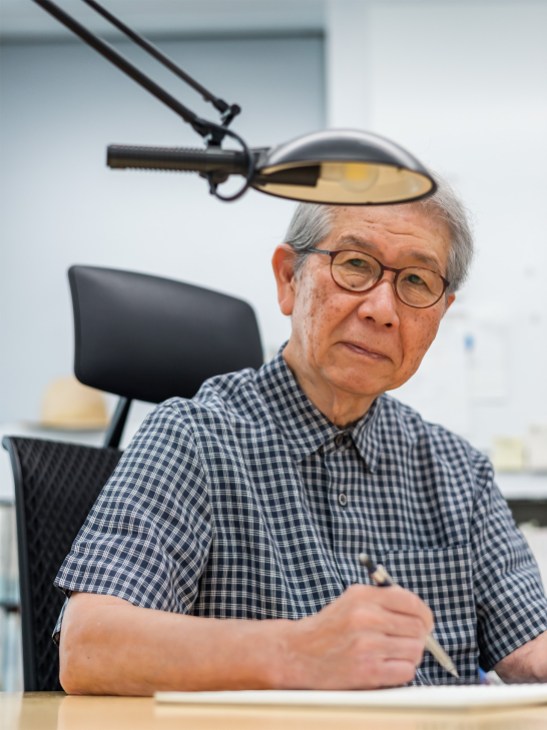
Riken Yamamoto was born in Beijing. Shortly after the end of the Second World War, he moved with his family to Yokohama, where they lived in a home modelled on traditional Japanese machiya – long wooden townhouses with a shopfront and interior courtyards. His mother’s pharmacy faced the street and the living quarters were at the rear. “The threshold on one side was for family and, on the other side, for community,” says Yamamoto. “I sat in between.”
It’s a position in which the 80-year-old architect still finds himself: his long career has been defined by an architectural approach that reconsiders such boundaries. His portfolio – which includes Yamakawa Villa (1977), a residence that is open on all sides, and The Circle (2020), a mixed-use hub at Zürich Airport – expresses his design outlook physically. The architect is also articulate when it comes to explaining his ethos.
“The current architectural approach emphasises privacy, negating the necessity of societal relationships,” he said when accepting his Pritzker Prize in 2024. “But we can still honour the freedom of each individual while living together in architectural space, fostering harmony across cultures and phases of life.” In short, the blurring of indoors and out, public and private, has the potential to build not only better personal spaces but stronger communities too.
The notion of community often comes up when you discuss what drives you in your work. How can architects help to create feelings of belonging?
It’s important to speak with the people who will be using the building or space. Communication is the most crucial thing for me in my work, because it allows me to understand what I should create, what kind of architecture the space is calling for and how it can contribute to dialogue. The work of an architect is to foster communication – with a client, with the user and even with tourists who are visiting a space temporarily. This is the power of architecture.
You have worked in many countries and markets, blending this notion of public and private. Are there any specific challenges associated with having a global practice?
I don’t find it challenging because the first thing that we do with every project is decide what public and private mean in that context: in other words, we ask what the relationship is between the building and what’s outside. This applies to everything, from a client wanting us to deliver an airport to creating a small house for an individual. It doesn’t matter if it’s a big tower, a different country or a new culture. The basis is always the same: to understand what the meaning of public and private is.
Earlier this year, when you received the Crystal Award at the World Economic Forum, you mentioned that architecture acts as the memory of a community. Can you explain this?
Architecture is powerful because our built environment is a manifestation of our collective memory. And architecture is the present community’s touchpoint for the next generation – we might come and go but what we build remains. Many generations will use the same building; they will be born and die with that space as part of their lives and it will be a symbol, a memory of the community that inhabited it before us. Architecture allows and encourages people to remember.
Do you find that is the case for all architecture?
Architecture can either foster and help to build a community or not. That is a decision entirely made by the architect. I’m always trying to help instil that philosophy, the sense of community and belonging. Doing so is what brings people back to their community. Think of your hometown or the house where you grew up. Many would like to go back to a certain place from their past because there is a memory of the community there – not just their family but how life was together with their neighbours. It’s crucial that we create spaces where people can live together because that’s the true meaning of community.
This conversation is timely, given that there are wars in Europe and the Middle East that are currently tearing groups of people apart. What role can architects play in rebuilding communities?
It’s difficult because everything is being destroyed – not just buildings but entire villages. That’s very dangerous in terms of the continuity of a community. When the time comes, we should keep the architecture and rebuild, even if it’s a very small thing. Doing so brings back important elements. For instance, right now, almost all of the architecture in Gaza has been destroyed and in Ukraine places are also disappearing. But something similar happened in Japan after the Second World War when many places were destroyed by US bombing. After that, we had no tradition left. It changed the way we think. From that moment onwards, we knew that we needed to preserve and fight for architecture because otherwise you’re destroying memory.
What is the one thing that you would like to pass on to the next generation of architects?
Honour the plight of the community. And ask yourselves, “How do we keep fighting?”