Inside Club Metrópolis, a heritage landmark-turned-boutique hotel and gastronomic hub
Madrid’s Metropolis Building was set to be turned into office space – until Marta Seco and Sandro Silva stepped in. Now reimagined as hospitality destination, featuring seven restaurants and a members’ club.
From a window overlooking the busy mouth of Madrid’s Gran Vía, Marta Seco recounts the past few years in the cadence of a rescue mission. “It was part fightback, part forward push,” the restaurateur tells Monocle. For almost a generation, the Metrópolis, one of Madrid’s few instantly recognisable landmarks, had languished empty and off-limits. In 2019, its owner invited Seco and her husband, Sandro Silva, to open a restaurant on the ground floor, revealing that the rest of the building was earmarked for office space. Under the Grupo Paraguas, the couple have opened some of the most successful restaurants in the city. So they made a counteroffer. “We told him that we wanted the entire building,” says Seco. “The Metrópolis – and Madrid – deserved better.”


Seven years later, the century-old beaux arts-style building stands anew. A glass sculpture of a phoenix – in part a nod to the original tenant’s corporate symbol – hangs above the entrance hall. Inaugurated as the headquarters of insurance company La Unión y El Fénix Español in 1911, the six-storey building has long been one of Madrid’s most photographed, with its gold filigreed cupola capturing an era of stately splendour. Once boarded up, today the windows brim with inner life; the opening represents a bellwether of Madrid’s most recent hospitality boom.
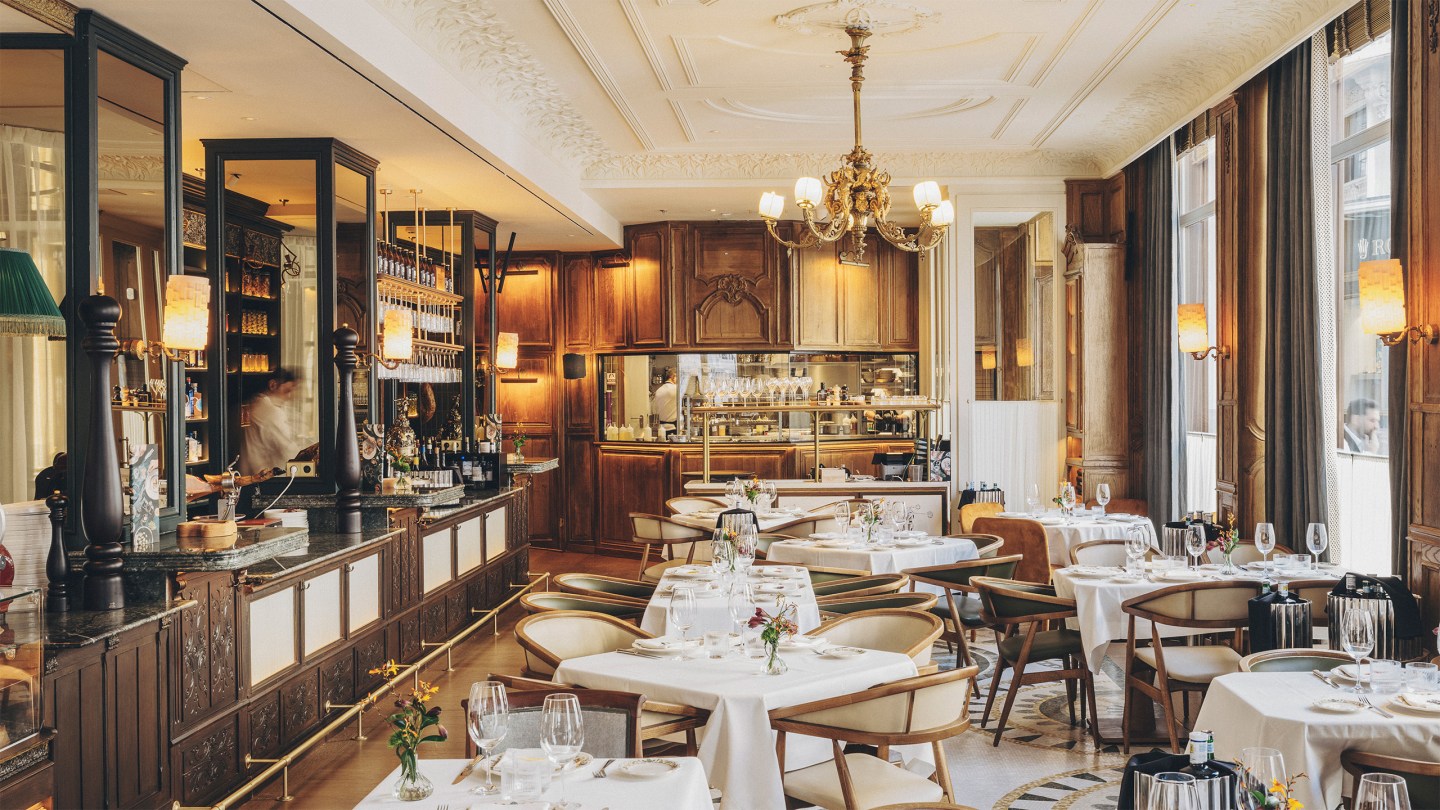
Club Metrópolis features seven restaurants. “It was important to keep the essence unashamedly Spanish,” says Seco. This meant developing seven menus to showcase the best of Spain’s regional produce, with nods to the Cantabrian and Mediterranean seas. “We chose not to anglicise any of the restaurant names either,” adds Seco.


There were challenges: among them, the building’s 6,000 sq m size, proximity to city hall and the national bank, plus a strict heritage listing. According to Seco, it’s these factors that probably kept international investors at bay. “To make it work, we had to get creative,” she says. A 19-key hotel was designed for the upper floor, while a much-talked-about members’ club offers exclusive access to two further restaurants, plus private meeting rooms and a calendar of 200 or so annual events that include talks, wine tastings and parties. “The idea was to emulate the spirit of a home, creating a sense of fealty and making it economically feasible,” says Seco. Before the opening in January, 1,500 members had already signed up, each courted through Grupo Paraguas’s customer base, which has reached more than 1.5 million people in the past 22 years.
While not the official brand line, Seco also speaks about evoking the spirit of the late Duchess of Alba, Spain’s irrepressible aristocrat whose untamed fiestas united a colourful carousel of Spanish society – all under one roof. “Reclaiming such an emblematic building is as much about the aesthetic details, such as choosing the right designers and telling their stories, as it is about imbuing it with sustained life,” she says. There’s a palpable sense of warmth on display throughout Club Metrópolis. Seco puts this down to recruiting people with a certain degree of empathy and who “personify our friendly culture”, across 397 members of staff.
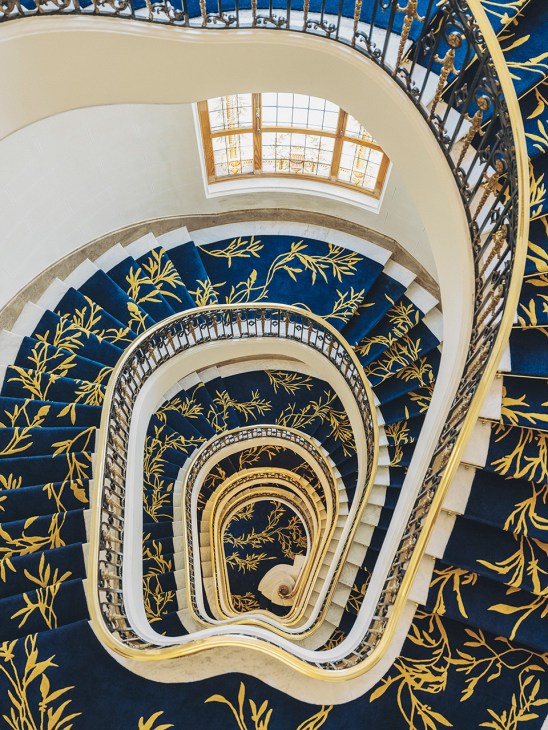
The walls are lined with playful smatterings of art and photography curated by Lázaro Rosa-Violán, one of Madrid’s most admired interior designers. Ornate cornicing, opulent carpets and further contemporary elements, such as the elegant cascading paper structure by Wanda Barcelona that hangs above the ground-floor bar, all work to marry the Metrópolis’s esteemed past to the capital’s more intrepid present.


With late afternoon sun warming the building’s southern façade, fresh faces are gathering at the circular bar, Barra de Oricios. It’s that uniquely Madrid time of day between the sobremesa (a post-meal period of long chats and sips of liqueur) and the piscolabis (a leisurely pre-dinner aperitivo). While this is a leisurely stretch for some, for Seco, duty beckons. A folder is thrust into her lap so that she can sign-off on a decision about the colour of new awnings. The rooftop terrace atrium, set to be installed before the end of spring, also merits discussion. Several seasoned customers, many of whom appear to be friends of Seco, circle over to our table, offering warm words and enhorabuenas (congratulations). “It makes a difference to be here and to be hands-on,” she says. “This is not just one of Grupo Paraguas’s most important projects to date – it’s also a symbolic and sentimental milestone for the entire city of Madrid.”
metropolismadrid.es
About Grupo Paraguas
Beginning with El Paraguas, an Asturian-styled restaurant, in 2004, Grupo Paraguas is behind some of the Spanish capital’s most popular spots, including Ten con Ten, Numa Pompilio, Aarde, Ultramarinos Quintín, La Destilería, Áurea, The Library and The Jungle Jazz Club. Amazónico, which opened its doors in 2016 and was initially envisaged as a Brazilian grill in a nod to co-founder and chef Sandro Silva’s homeland, has since expanded into a vibrant, more tropical-inspired diner and nightlife venue, with locations in Madrid, Dubai, London, Monte-Carlo and Miami.
elparaguas.com