A day in the life of Ibiza’s Cala Llonga beach, one of Europe’s favourite suntraps
As third spaces go, a sandy stretch of shore takes some beating. We chart how this once-sleepy sliver of Spain became one of Europe’s chosen summer-holiday destinations.
Before our toes touch the sand, let’s get a run of this beach. The sun is still a few moments from rising over the eastern Mediterranean – we have some time.
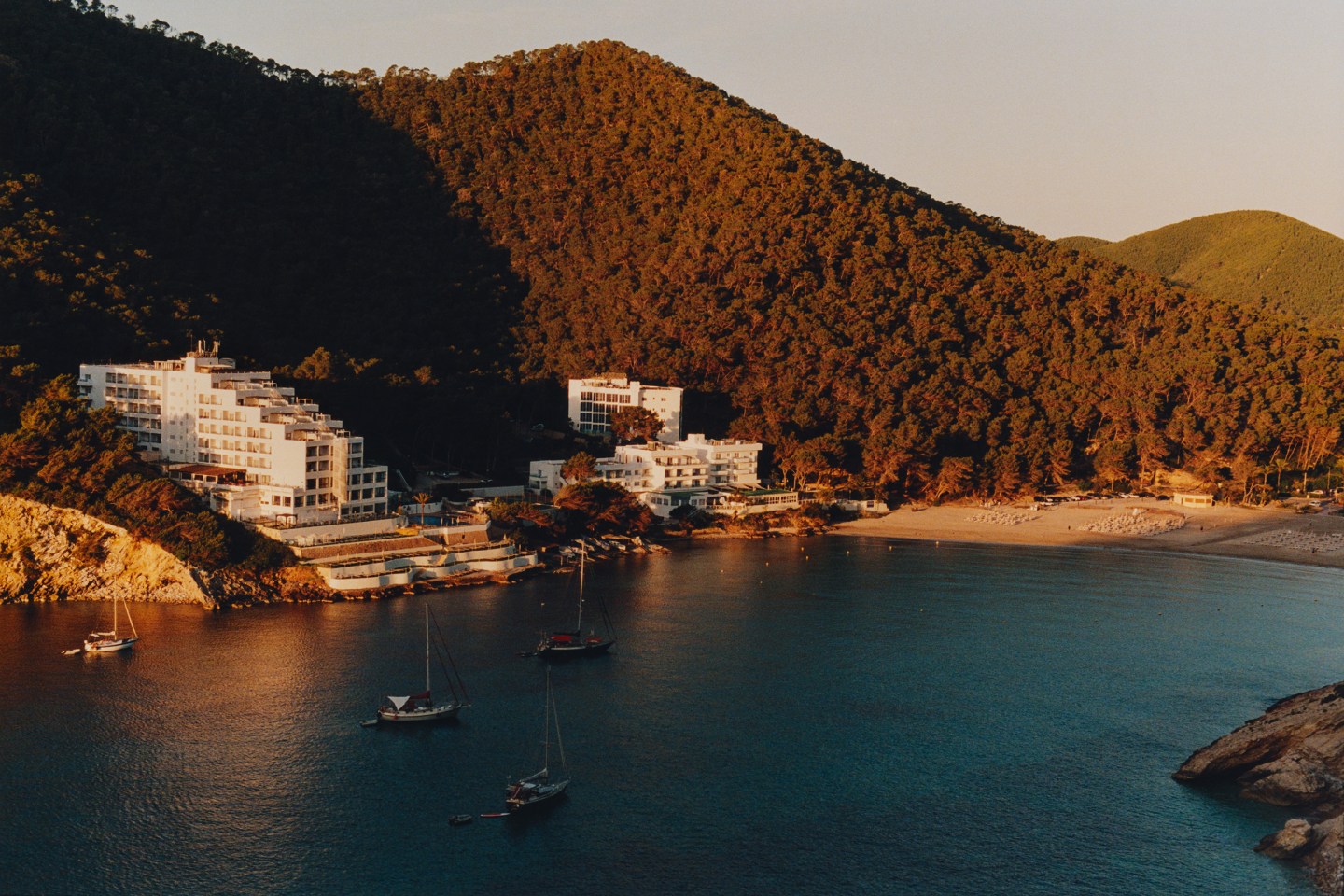
Ibiza’s Cala Llonga is one of those easy-to-picture postcard scenes. The sand blanketed with sunbeds. A panoply of different skin pigments are all vying for a healthier hue. Thickets of pine trees swallow the cliffside, where gigantic hotels jut out like postmodern megaliths. Every day, people gaze at the boats bobbing in the water, wondering whether they will ever be so lucky. It’s been this way – at different scales – for nearly six decades. The first major pioneering hotel, Playa Dorada, opened its doors on the beach’s left flank in 1969. Back then, pedal-powered swans made of fibreglass were predecessors of the inflatable flamingos seen bouncing in the water today.
Cala Llonga’s sandy shoreline is protected by a stretch of narrow cove (llonga – it’s in the name) carved naturally into the island’s eastern coast. This beach is emblematic of a much larger story. There is the island’s evolution from agrarian outpost to gregarious hotspot; the rise upon rise of tourism, or what philosopher Yves Michaud called “the industrialisation of pleasure”. And, of course, the adaptability of locals to serve and sate all and sundry. Most recently, new developments around Cala Llonga have mirrored the island’s wider embrace of high-end holidaymakers. But the seaside town’s prevailing sense of solidarity remains untrammelled. Spending a full day on these sands offers a glimpse of the many interrelated stories at play here. Now, a few seconds before the sun appears, let’s see who’s down on the sand.


Brimming with intensity is Dutch visitor Seth Kamphuijs, who is sitting and doing breathwork while staring into the pink-tinged sunrise. After a few words, he wastes no time before promoting his upcoming retreat. Early morning appears to be the shared province of wellness-seekers like Kamphuijs and workers scoping out another day under the sun. As a yoga class lays out its mats, the overseers of five demarcated territories for hamacas (sunbeds) – a pair of which will set you back €30 for the day – are busy dusting and straightening their beach furniture.
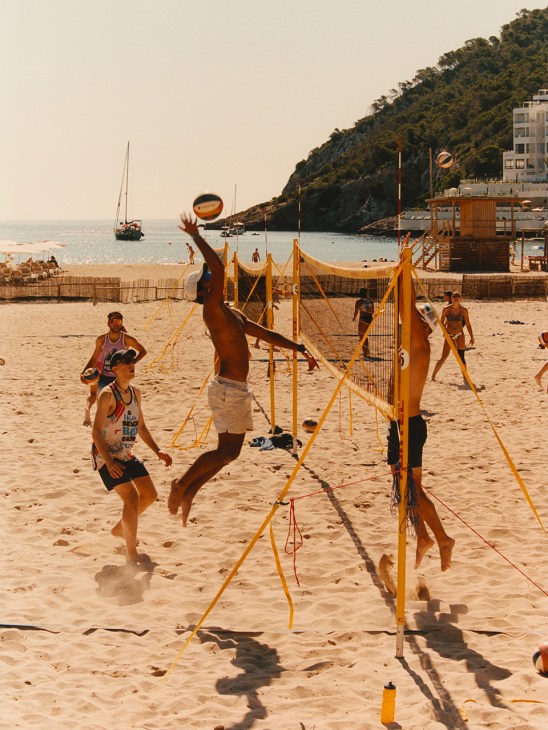
Across most of Ibiza, slow starts invariably stem from long nights. This beach has always been a favourite with families though. Some, toddlers in tow, are already arriving just before 10.00. We have an inkling that those longer, naughtier nights are wired into a few of these parents’ not-too-distant, still-cherished memory banks. In harmony with the sun, all sorts of activity starts heating up. Beach volleyball courts fill with leaping and bounding bodies for a training session. Dads drag parasols into position before initiating games of padel with their sons. The neatly ordered spread of beige hamacas starts to fill. In about an hour’s time, multi-toned towels will be held down by heavy bodies and restless minds. You can take your pick of pastimes on this shoreline: some do sudoku, others clutch summer novels. There’s lots of suntanning and screen-scrolling too.
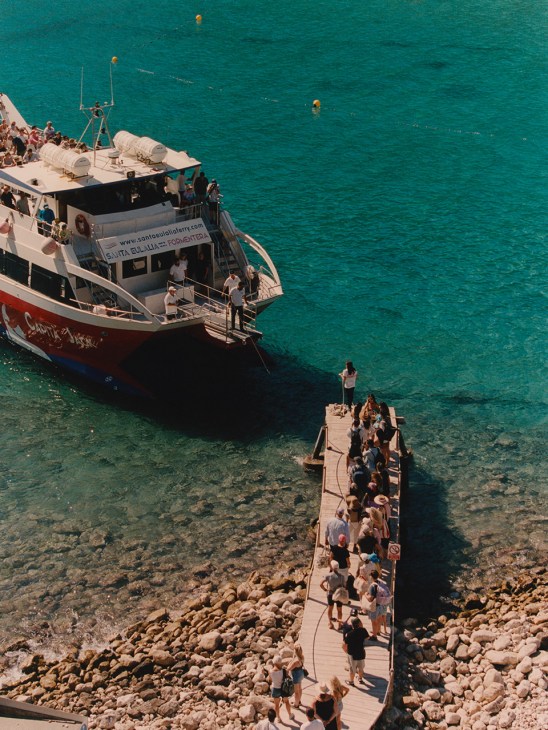
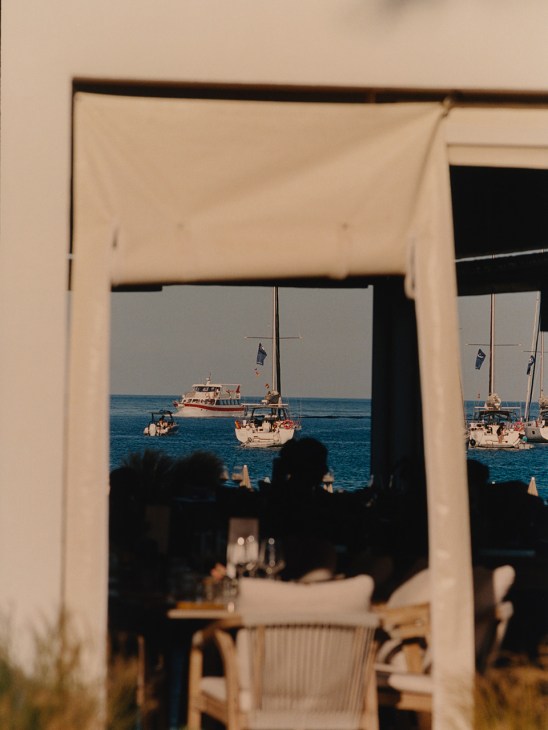
At 10.43 a ship’s horn heralds the arrival of the inter-island ferry, a relic of the past that still chugs along. Two dozen passengers queue atop the wooden pier, all packed and ready for a day on the second Pityusic island, Formentera. The Torres family formalised informal beach-hopping boat rides back in the late 1960s with a proper ferry service aboard the llaüt Virgen de Fátima, the same year that Playa Dorada opened its doors. In 1972, the route expanded to Formentera – a 40-minute ride on a good day. There’s only one daily service there and back, which might explain why today’s line formed before 10.00, brimming with eager faces ready to swap this stretch of paradise for another. In the case of Formentera, we can confirm that the sea is indeed bluer on the other side.
“Coco, tengo cocos!” A small bucket of unbroken coconuts in hand, Tomás weaves his way through the masses, hawking his sip-and-snack treats with a burst of semi-song. At €10 a pop, he cheekily assures us, a purchase “will neither make me rich, nor you poor”, then opens the shell with his knife, waits for us to drink the electrolyte-rich water and carves out the flesh for us to snack on. “They’re cracking down on little guys like me working on the beach,” he says. “On a good day, I might sell up to 50 coconuts – but I have to always keep an eye out for the police.”
He’s not the only one. Last year, the island’s coastal authority ordered the beach’s two surviving quioscos (beach bars) to shut down, then issued a demolition order. It’s part of the Balearic Islands’ wider clean-up of makeshift architecture peppering these cliffsides, some of which stretches back decades, was never legal and now finds itself in the crosshairs of unsympathetic administrators. The other side of this story is a wave of investor consortiums snapping up rickety resorts and transforming them into high-end hotels.
In 2023, the 154-key Mondrian Ibiza opened on the site of the Hotel Playa Dorada, which had since become a three-star establishment. Its arrival and the more well-heeled guests who came with it have spurred similarly stylish restaurants to open around the shoreline. Industry data shows that the resulting increase in visitor numbers has led to expenditure topping €4.25bn in 2025 (about 85 per cent of Ibiza’s GDP). And while stays are getting shorter, nearly 3.4 million travellers touched down on the island last year – up from 3.27 million in 2024 and 70 per cent higher than in 2001. Once synonymous with the package-holiday crowd, the contrasts visible along Cala Llonga illustrate the latest uptick. A little way along the beach, a snorkel-wearing good Samaritan emerges from the water clutching a sliver of plastic and a sand-encrusted aluminium can. Behind him, channelling their inner children, a senior couple splash each other atop duelling pink inflatables. Here, people tend to reveal themselves. When you think about it, it’s an especially peculiar place – even though too much overthinking can feel a little misplaced.


For those who savour the salted air, sand on skin and full-bodied submission to heat and happenstance, a spot on the playa is one of life’s meridian moments. All other mandatory mechanics – the deskbound clacking on keyboards, the staring at spreadsheets, the endless chores and chagrin of the everyday – have finally led here: a down-tempo laydown where trivial troubles seem to melt away. A sense of relief is written across the many faces staring out to sea, observing and being observed. Unless you’ve come to play a proper ball game, the beach stretches out interstitial time – the time between time. It is a place of liminal leisure where one arrives, has nowhere to go and finally finds a moment to be truly present. There’s suddenly space for play, for pause, for flickers of pensive reflection. And yes, even a forceful splash or two with your companion.
If the pinkening backs of several heedless tourists are anything to go by, it’s high time to seek shelter from the relentless sun. After a short walk along Carretera Cala Llonga, the town’s main street, we order a couple of cañas at the Madisson bar. There, we meet its proprietor, Pepe – and barely get a word in edgewise. He tells us how he was born on this very beach, back when there was only a single farmhouse facing the shoreline. Back when Pepe was in nappies, his father would drive a donkey-drawn cart to lay out the beach beds; then came the quioscos, the makeshift guesthouses, increasing numbers of tourists and finally the monumental construction projects. Pepe is a football fanatic so his retro-styled wood-and-Perspex panelled establishment doubles as an exhibition space for old sporting photos. He points to a picture of the playa’s original football pitch, which was built in 1959 and has been the home ground of the local club ever since. It has even attracted occasional football stars from the mainland. The other framed photos in the bar offer vignettes of long-gone halcyon days. So is Pepe nostalgic for those slow-fading, simpler times?
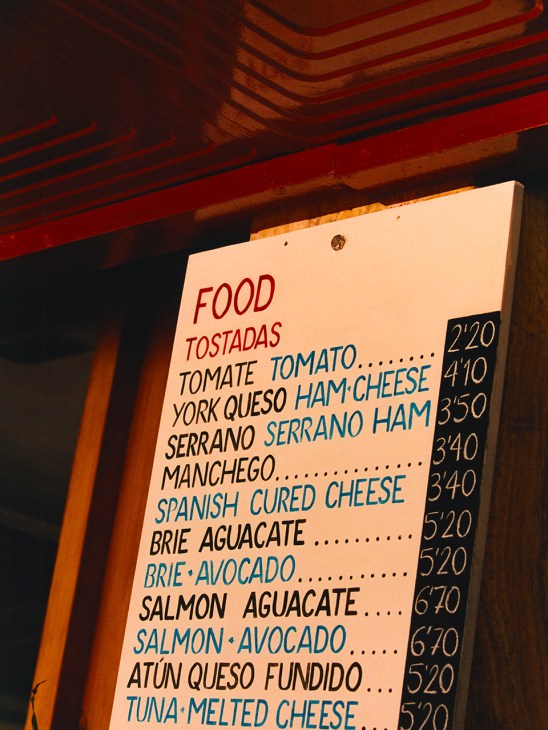
“People say how beautiful it was back then – cojones!” he exclaims, squashing any notion of sentimentality with Spain’s linguistic equivalent of “bullshit”. He explains: “In those days, I only owned one pair of trousers and shoes, there was no electricity and it took me an hour to walk to school. Now it’s not uncommon to see a Ferrari here.” For the record, there is no Italian stallion-emblazoned sports car in Pepe’s life – the 77-year-old, who is well known and beloved by returning visitors, prefers motorbikes. “He’s good with people; tourists always followed him wherever he set up shop,” says his daughter Laura, who splits her time between managing the bar with her sister Elena and filling in the gaps in her father’s story. There’s a lot to tell, too, the family having been in this spot since the mid-1980s.
Back on the sand, a punchy remix of Simple Minds’ “Don’t You (Forget About Me)” blares across the cove. The DJ on the decks beside the Hyde Hotel pool, which adjoins the Mondrian, is unaware that several portable speakers on the sand have cranked up their volume as a sonic countermeasure. It’s now past 16.00, the hottest part of the day, and the energy on the beach softens. Even the group of UD Ibiza football players, enjoying their off-season break with a cooler full of beers and a low-stakes ball game, have surrendered to the sun.
The day’s first instance of drama comes in the form of a jellyfish sting. Little Leo is promptly treated by attentive lifeguards who later clarify that this kind of thing – along with ensuring that oblivious swimmers don’t get squashed by the daily ferry – is about as dramatic as their job gets. “Why is it always Leo?” cries a friend of the boy’s mother (rather unhelpfully) as the group decamps back to their hotel.


By 18.00 the beach crowd has started to thin. As a few volleyball players return to the nets, we meet restaurateur Antia Pagant, who has brought her baby, Roco, to Cala Llonga’s playground. “There’s been a spirited effort to restore the beach,” she says. “Things like standardising the colour and the make of the sunbeds, and keeping the atmosphere family friendly.” She also tells us about Klaus, the beach’s seasoned bohemian and permanent resident for nearly 20 years, who has always been happy to give local businesses a helping hand. “Recently, a community-led effort collected funds for him to visit the dentist,” she says. “Cala Llonga is nice like that.”
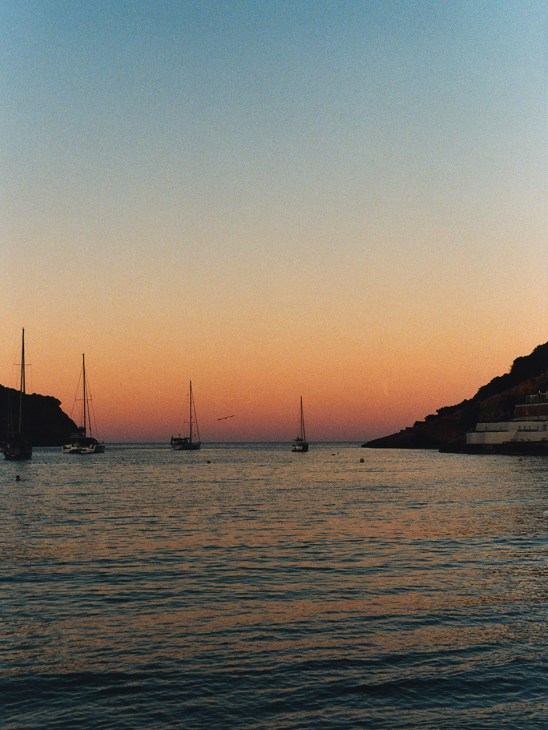
This part of Ibiza was immortalised in Elliot Paul’s oft-recommended 1937 novel The Life and Death of a Spanish Town, which is set in neighbouring Santa Eulalia (a town that has since swelled to the size of a small city). While Paul charts the tragedy of the civil war in the spiritual self-destruction of a village community, he also captures the area’s prevailing beauty. His description of “a life more suited to human limitations and capacities, a rhythm more in accord with beneficent natural surroundings, a verdant sub-tropical landscape by the sea” feels entirely familiar as the sun dips below the horizon.
With a whole day of sand having sifted through Cala Llonga’s hourglass, it’s easy to behold the balancing power of the beach. A place where life’s ups and downs temper, simmer and then slow; where busy bodies meet newly calmed minds and a burst of cheering celebrates a barefoot goal, harmonising with a light siesta snore. And all of us adjust unwittingly to the natural cadence of sea and shore, until tomorrow and another sunrise.
Cala Llonga through the hourglass
06.33: Early morning sun peeks over the hills and the Med horizon
07.05: A motorised beachcomber cleans the sand
08.15: Meditators line the shoreline to practise morning breathwork
09.09: A yoga class on the playa strikes a warrior pose towards the sun
09.30: Raúl kicks off the day’s first multicourt volleyball practice
09.45: Sunbeds sit prepped and ready for another daily onslaught of towels and torsos
10.43: The ferry docks promptly at the pier, where a patient queue of passengers awaits
11.03: Beach beds or hamacas are already half full
12.10: The first wave of swimmers slips into the water for one of many cooling dips
13.31: A Brit is overheard complaining about everyone being on their phones – while talking on his phone
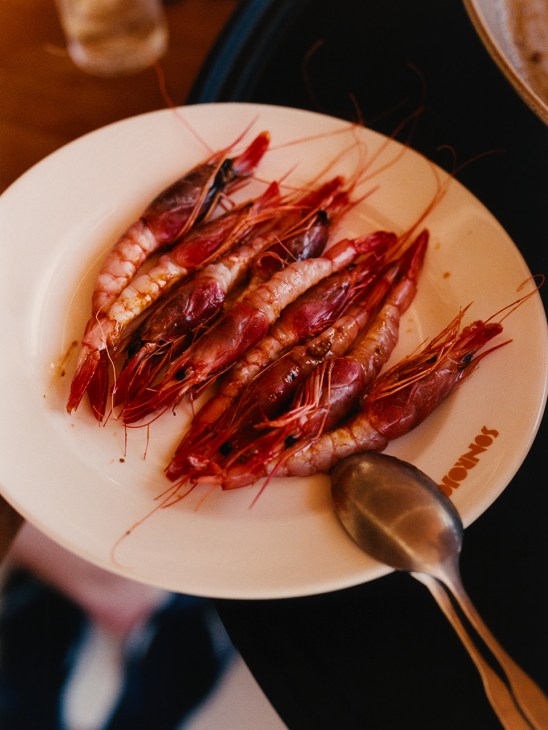
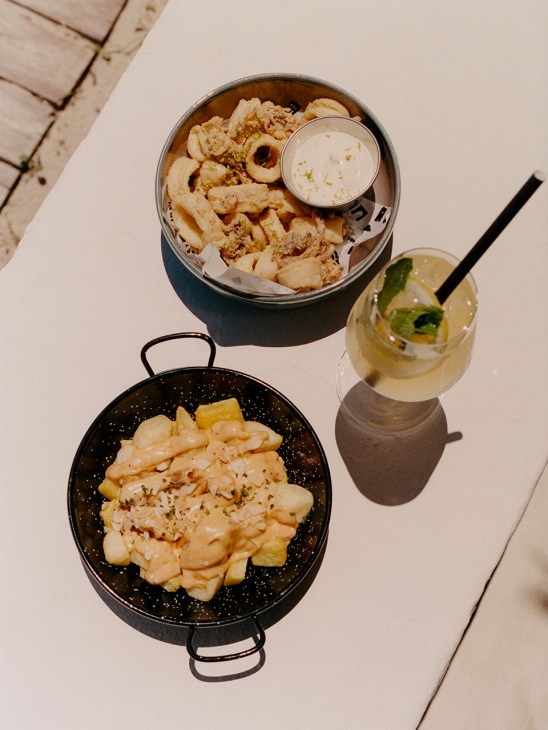
14.00: First round of lunchtime paella served at Sonrojo restaurant
15.30: Music begins blaring across the beach from the DJ decks at the Hyde Hotel pool
16.00: The harshest heat of the day hits the beach; a lull in all sporting activities ensues
17.00: Sunbeds sit half empty and seagulls begin to circle and swoop at any sign of scraps
17.45: First sign of strife: lifeguards attend to a jellyfish sting
18.30: Volleyball players return to the nets for another round of friendlies
19.01: Hamacas lie empty; families begin trouping back to their cars
19.16: Ferry Capita Jack returns, dropping off a boatload of slightly burnt daytrippers from Formentera
19.30: The beach tractor traverses the sand to empty overflowing bins
19.45: The footballers’ tally of beer bottles now numbers 24
20.00: A handful of people remains on the shore. The sea turns an opaque shade of turquoise
20.30: The flurry of dinner service is underway at restaurant Nun; the waiter doesn’t recommend the fish
21.00: The sun sets behind an eastern hill, 10 minutes earlier than on the island’s west side
21.30: The Mondrian’s elevated beach bar fills with freshly showered, sunkissed faces
22.00: The tinkle of drinks and conversation sees out another glorious day at the beach