A food lover’s guide to Parma: A city built on Prosciutto and Parmigiano Reggiano
Thinking of a long weekend in Italy in the new year? Whether you have a day or a more leisurely grazing stretch ahead of you, here are the spots you’ll want to seek out.
Eating in Parma means enjoying a trio of heavyweights: Parmigiano Reggiano, Prosciutto di Parma and Culatello di Zibello. These Protected Designation of Origin (PDO) products need little introduction and reward deep exploration. Once you understand that every facet of Parma – its markets and cafés, osterie and trattoria – revolves around the making and eating of these three staples, you’ll start to see the city in its truest light.
From there, the city’s food culture becomes as much about lessons in produce as it does about cooking and tasting. Language and ingredients are intensely local.
Nowhere is that regional loyalty clearer than in a scene witnessed in a cramped bar on Viale Giovanni Mariotti, where a debate unfurled over the specificities of fried dough. Monocle sat back to watch two sharp-suited gentlemen, one from Modena and one from Parma, argue intensely over whether the golden pillows on their plates were gnocco fritto or torta fritta.
Fighting over the etymology of a provincial speciality might seem eccentric. But in Parma, such distinctions matter – as you’ll find out during your discovery of the city.
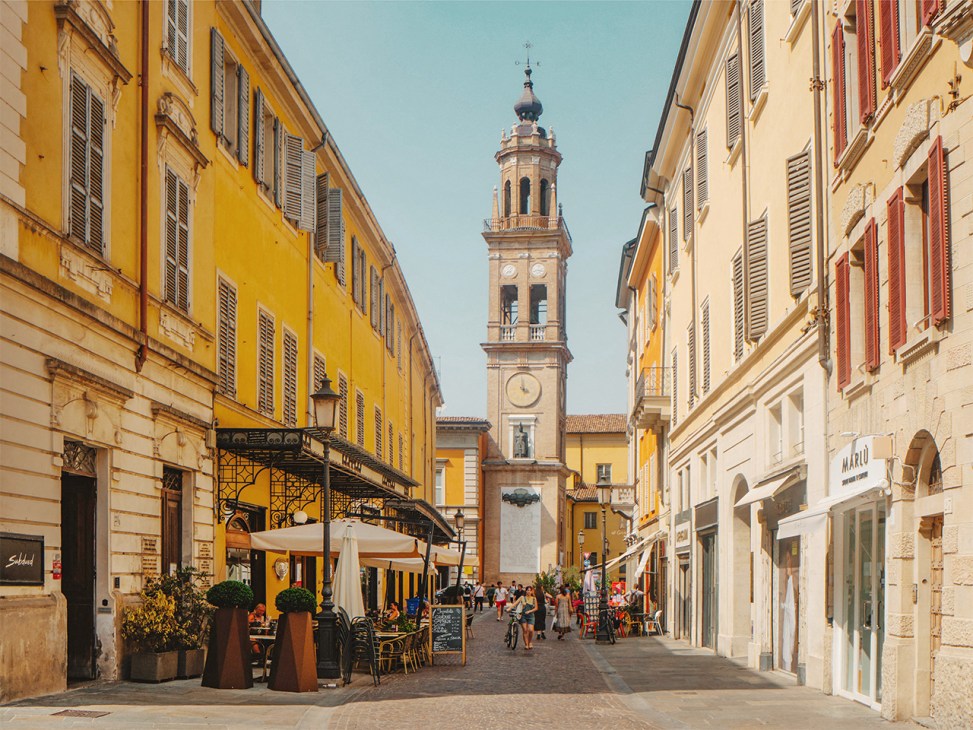
Where to eat in Parma if you’re visiting for the day
If you only have a day to spare, give it to the cheese that built the city. Start at one of Emilia-Romagna’s 300 dairies, get lost in the old town for an hour or two and finish at a vintage trattoria, if only to taste what wonderful things can be done with Parmigiano Reggiano.
Caseificio Bertinelli has stood on the same site in Noceto since 1895 and is now run by Nicola Bertinelli, a sixth-generation farmer who knows this cheese inside and out. What looks like mass production, he says, is an ancient process born from four ingredients: milk, salt, rennet and time. In the dairy room, the air is thick with copper steam as the casaro coaxes twin curds from a bell-shaped vat and hoists them into their moulds. Next door, the warehouse is filled floor to ceiling with rows of maturing wheels while an affineur makes his rounds, tapping each wheel with a small hammer to test whether it’s ready for the PDO firebrand.
For the ham enthusiasts, here’s where to find the best prosciutto in Parma:
· Podere Cadassa, Colorno: Ancient curing cellar with 7,000 Culatelli. Grab a bite next door at Al Vèdel.
· Antica Corte Pallavicina: Hotel and restaurant offering cooking classes and tours of its historic cellars.
· Museo del Prosciutto di Parma: Quirky museum with year-round events and tastings.
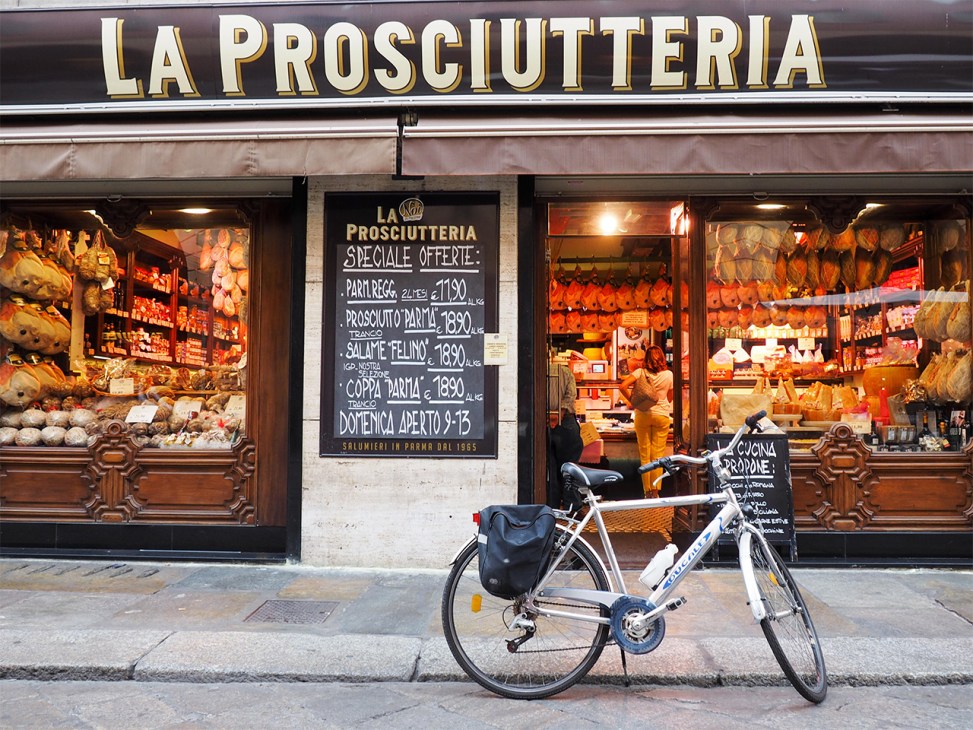
Back in town there are two essential afternoon stops: Salumeria Garibaldi and La Prosciutteria. Both are stocked with PDO products of every imaginable age and variety, and can count themselves among the most fascinating food shops you will ever set foot in. It will be no surprise if you find yourself leaving with a wedge of 24-month Parmigiano for cooking, a packet of 48-month shards for aperitivo and a vacuum-packed Culatello for whoever waters your plants.
By night the discipline that dictates Parma’s dairies softens into pleasure at an old guard of restaurants that have stood for generations. Trattoria del Tribunale is convivial and gloriously kitsch, the sort of place where the menu hasn’t changed because it never needed to. Ristorante Cocchi, meanwhile, is the 100-year-old elder statesman of the city: think linen-clad tables and waiters who know the wine list by heart. The benchmark, though, is Ai Due Platani. Tricky to get a table, it regularly tops any serious list of the best trattorie in Italy and holds a Bib Gourmand for good measure.
And with so many well-heeled couples lingering over bottles of lambrusco, you soon see why. The waiter recommends a selection that showcases different ways Parmigiano Reggiano can be used. Great hunks of 48-month-aged cheese to enjoy as an aperitivo (salt crystals crunching as you bite), then 24-month with hot torta fritta (or gnocco fritto, depending on who you ask). And don’t leave without trying the tortelli. Half the plate is di erbetta, silken and green with ricotta and chard, and the other is zucca, tawny and sweet pumpkin with marsala wine. Both demand a generous snowfall of 12-month Parmigiano Reggiano to make the dish whole. If you only have a single evening in Parma, this is where to spend it.
Two dairies to visit in Parma:
· Caseificio Bertinelli, Noceto: Established in 1895 and run by the current president of the Parmigiano Reggiano Consortium, Nicola Bertinelli.
· Caseificio Gennari, Collechio: Family-run dairy with one of the most extensive ageing programmes in Italy.

A gastronomic adventure for longer stays in Parma
If you have more than a day, you have enough time to venture out into the lowlands and visit the curing cellars beginning with Podere Cadassa in Colorno for a masterclass in Emilia-Romagna’s other great obsession. As the iron door swings open, the space nearly knocks you sideways with its scent. “The secret?” asks Enrico Bergonzi, whose family have been curing Prosciutto di Parma and Culatello di Zibello here since 1780. “Good mould!” he says. Ducking between hanging rows of Culatelli – each tied and re-tied throughout the seasons – you feel and smell how produce can hold centuries of family history.
Thankfully you needn’t go far to taste that history either as the Bergonzi family’s cellar adjoins Al Vèdel, one of the region’s most beloved dining rooms. A word of warning: Sunday lunch in Italy is part meal, part opera with families descending on the restaurant in their multi-generational dozens. The volume level rises slowly throughout the afternoon and on more than one occasion, the waitstaff will need to steer the dessert trolley clear of an overly animated hand gesture. The kitchen is just as charming, making fine use of its prized Culatello in dishes such as tortel dols, a bittersweet ravioli, and a selection of rare cuts served with butter from Urzano.
Back in Parma you have the chance to see how the city’s chefs are reimagining its best-known exports. Just behind the yellow façade of Piazza Garibaldi is the pared-back Croce di Malta – welcoming and minimalist with pale walls, soft light and an understated crowd. A highlight is the deconstructed aubergine parmigiana with seared slices resting on a foamy cloud of Parmigiano-Reggiano béchamel. Across town, Cortex Bistrot pushes things even further with ambitious tasting menus that nod to tradition without being bound by it.
Then there’s Parma Rotta: the 40-year-old grande dame of the city. A meal here begins with the classics (tortellini in brodo is a non-negotiable) before a surprise from chef Antonio di Vita, who wheels out a trolley of fior di latte soft serve with an array of retro sauces. Chocolate and strawberry are tempting but he insists on his housemade zabaglione, a warm custard of egg yolks, sugar and marsala wine poured over ice cream. The two components meet, melt and make a strong case for one of life’s great unions.
Parma gets on with things whether you are paying attention or not. Dairies churn at dawn, cellars slice before lunch and dinner lands on linen that never stays white for long. But spend even a short time in this city and what stays with you is the sense that produce and place have never been separate. They are simply the same story, told in a million mouthfuls.
When to visit Parma
Caseifici Aperti, the city’s open-dairy festival, takes place twice a year (spring and autumn). But most dairies offer tours and tastings year-round.
What to order in a panic
Torta fritta with Culatello. Anolini in brodo. Tortelli di erbetta or pumpkin. A wedge of 24-month Parmigiano Reggiano for the table. A glass of good lambrusco.
How to sound like a local
Call it torta fritta in Parma and gnocco fritto in Modena. Smile either way.