One drug-smuggling scandal shouldn’t bring down brand Thailand
Thailand’s outdated reputation as a haven for criminal drug networks has reared its ugly head again thanks to the poor judgement of one Thai Airways cabin crewmember. But isn’t it all a little overblown?
Thailand has been gripped by a different kind of travel story this summer: a young air hostess for flag carrier Thai Airways was caught by Australian customs officials trying to smuggle 1.8kg of heroin through Melbourne Airport. The story might have been a page-six article elsewhere but it touched a nerve here in Bangkok. Thailand has been associated with illegal drugs since at least the 1970s. That was when a US assistant secretary of state coined the term “Golden Triangle” to describe the lawless border area that northern Thailand shares with Myanmar and Laos, a nexus of the global opium trade.
Though the Thais have long since turned their part of the triangle into a tourist attraction with a museum and shops selling T-shirts and fridge magnets, these borderlands remain a permissive hub for foreign criminals. Individual groups have become transnational networks, bolstered in recent years by Myanmar’s civil war and technology advances such as crypto.
The UN’s regional office on drugs and crime is based in Bangkok. Its latest report on transnational crime, which was released on Tuesday, outlined this worsening situation over a whopping 265 pages: “The Golden Triangle continues to be the region’s main production and trafficking hub.”
Seizures of methamphetamine and ketamine have skyrocketed in the past decade, which suggests that many more kilos of these synthetic drugs are getting through the net. Weak government and limited law enforcement access are apparently to blame. Meanwhile, cross-border solutions cannot be enacted by one country alone.
Speaking at the report’s launch, co-author Inshik Sim predicted that this Southeast Asian model will be replicated by organised crime around the world – not the type of innovation any country cares to export. Heroin from Southeast Asia is also on the rise, plugging a gap left by the Taliban’s crackdown on poppy production in Afghanistan. Exports travel beyond the region, the bulk to Australia.
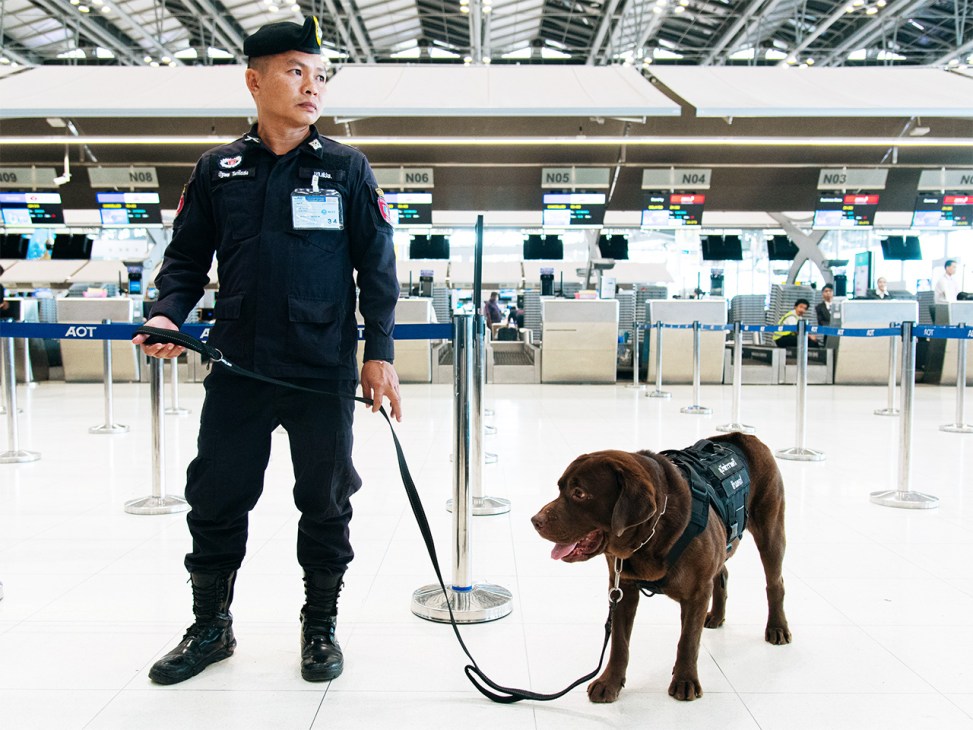
For Thailand, the recent arrest in Melbourne revives an outdated reputation at a time when the government is trying to attract high spending tourists and applying to join the OECD. Thai police have been quick to uncover the international nature of the syndicate responsible for moving heroin from Laos to Australia via Thailand. They have also rounded up a bunch of other bad actors and sent the K9 sniffer dogs to patrol Bangkok’s Suvarnabhumi Airport and pose for photos with waiting reporters. Cute pups in uniform and a very public crackdown will buy them time at home but the kneejerk strategy will do little to alter global perceptions.
The damage that his kind of coverage does to the Thai brand is not just felt by the current administration. This story has made headlines here because it feeds a very real and regular frustration that will potentially affect every passport holder planning to travel overseas this summer. Thais can get a rough deal when they travel abroad and encounter suspicious customs officials in Seoul, Tokyo or Sydney. Travelling in first class or business offers little protection – indeed, it can be an even bigger red flag.
Multiple wealthy Bangkokians, male and female, young and old, have shared stories with me about their miserable experiences. These range from having to cancel business trips because of visa problems to having to face humiliating questions about their reasons for visiting and endure bag searches that presume the traveller is either a drug mule, sex worker, habitual overstayer or all of the above. Thais were particularly cheesed off in January when US president Donald Trump included Thailand – the US’s oldest ally in Asia – in his list of 75 countries unable to apply for immigrant visas.
The Thais have my deepest sympathy and they certainly deserve the same kind of hospitality that they offer to travellers. For every Thai Airways cabin crew member making a dumb decision, there are many, many more visitors from across the globe who fly into Thailand to get up to mischief.
The US military presence during the Vietnam War provided the demand for this industry to grow and the idea of Thailand being a haven for foreigners to come and do bad things persists to this day. A Vietnamese gang meet at a Bangkok hotel in 2024 and end up being poisoned to death by one of their own. A Chinese actor gets kidnapped in 2025 by scammers after flying into Thailand en route to a “job interview” in Myanmar. A British man falls to his death from Pattaya balcony – a headline that appears in the Bangkok Post every few months.
Thailand’s druggie reputation has risen in recent years following the liberalisation of its cannabis laws in 2022. As a progressive, I agree with the initiative in principle. However, the hastily decided policy and slapdash implementation of the laws, which continue to cause confusion and a fair bit of eyerolling, has undoubtedly added to the country’s woes; again, because of the actions of other nationalities. Weed smokers from around the world come to Thailand, make the daft decision to take a few plants home with them and get caught by customs officials in Sydney or London.
A German resident of Bangkok told me that he no longer checks in bags when he flies home because the wait to get from plane to luggage carousel is far too long. Thai authorities have been working with their British counterparts for two years to try to reduce the number of UK nationals veering from fun-seeking holidaymaker to opportunistic drug smuggler.
A new measure came into force in June to confiscate the contraband and impose a fine of up to 30,000 baht (€780) – less than a return flight between London and Bangkok on Thai Airways. Knowing my countrymen as I do, I doubt that this will be enough to put off every Tom, Dick and Harry coming to Thailand on their gap year and the news that cannabis can only be bought for medicinal use has not made its way to the Khao San Road yet, let alone London and Manchester.
The Thais could get tougher, for sure. Authorities are likely to make an example of the young Thai Airways crewmember, who faces a sentence of 25 years. But there are limits. Locking up every chancer is not affordable, nor would I want the authorities here to aspire to an Indonesian or Singapore-style approach. Both countries have executed foreign nationals convicted of drug smuggling in the past decade, either by firing squad or hanging. Singaporean authorities make it known that they actively swab travellers arriving from Thailand. No thanks.
Thailand is a special place in Southeast Asia because of its tolerance, acceptance and colourful grey areas. Bangkok is a fun capital, a playground, a haven. This reputation is well deserved and it has plenty of positives for the national brand (including Thailand’s status among the region’s LGBTQ community). Gay and lesbian Singaporeans and Indonesians come to Bangkok to live life in the open and walk down the street with their partner without anyone batting an eyelid. A country of stiff rules, strict enforcement and absolute obedience just wouldn’t be Thailand.