Though the Iran war has put the world on high alert, the people of the UAE are keeping their cool
After a drive down the highway I’m sitting in my hotel’s courtyard. A cool, late-afternoon breeze is making the palm trees dance. Squawking mynah birds are cruising the decking, in search of food. Meanwhile, people are working on laptops and having meetings at the tables around me. It’s a normal close of day in Dubai. Except, well, there’s a war in the region, currently on pause, that’s proving to be a distraction.
Monocle Radio has been in the UAE all week, reporting from Abu Dhabi, Sharjah and Dubai (listen to the special episodes of The Globalist and The Briefing that we have made in each of these emirates). We came here to explore the nuances of a story that’s affecting the whole world and to find out what’ll come next. We have spoken to ministers, business leaders, designers and media folk about events that have caused oil prices to soar, airlines to cancel flights and questions to be raised about a country that some are always too quick to write off.
As with most stories, when you speak to the people at the heart of the narrative, it turns out that the headlines and op-eds, often written in London and New York, don’t always reflect the mood on the ground. The war is undoubtedly causing pain. While restaurants might be busy, the hotels that we have stayed in have been quiet. We have been told about projects put on hold and staff let go. While property prices have held, the velocity of sales is down. Yet something more interesting strikes you in interview after interview: a focus not on a moment of crisis but on the bigger vision.
Whether it’s Issam Kazim, the CEO of the Dubai Corporation for Tourism and Commerce Marketing, Noura al-Kaabi, the minister of state at the UAE’s Ministry of Foreign Affairs, or Mohamed Khalifa al-Mubarak, the chairman of the Department of Culture and Tourism in Abu Dhabi, our guests have turned up to speak to us smiling, unflustered and engaged. Their vision remains the same. They are nation builders and will not let this moment deter them. They have a plan.
During times of crisis, it’s not unusual to see people rallying around their flag and reaffirming the values that give them strength, wherever you are in the world. But it’s fascinating to watch this happening in a nation of 11.5 million people, where only 11 per cent of the population is Emirati. Yes, some residents did leave when the first rockets and drones targeted the country but many more stayed – not just because they like the tax system but because they also feel loyalty to a place where they have lived for 10, 20 or 30 years. Some were even born here.
Again, there has been a lot of strange reporting about the UAE in the media, with some journalists suggesting that such attachment is misguided. Why don’t we let the people who moved here decide how they feel? In the UK, we’re often suspicious of anyone who is proud of where they live but that’s not something for residents of Abu Dhabi, Sharjah, Dubai and beyond to worry about.
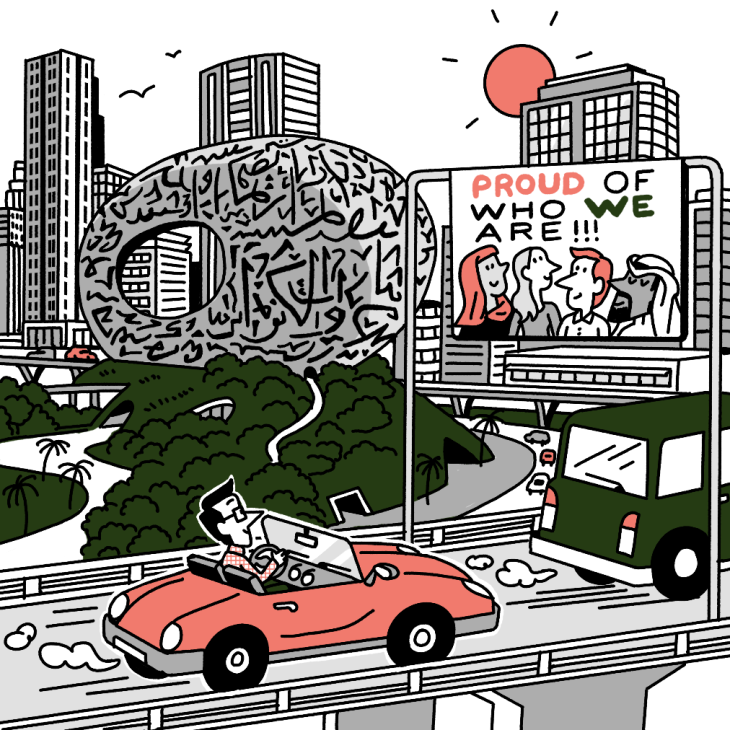
On our drive to our hotel, we passed billboards decorated with patriotic messages. Others carried slogans underlining how the people of this country have found common cause: “One nation, one community”, “In the UAE, everyone is Emirati”, “Proud of who we are”. Judging by what people have told us this week, these express something genuine.
Countries change in the face of crises, moments that force people to reflect on who they are and what they stand for. What seems likely to emerge from this episode is a place that knows how to stand up for itself and is clear about who its friends are. Meanwhile, there’s a final team dinner – and I’m as hungry as a pacing mynah bird.
To read more from Andrew Tuck, click here.