‘What we are dealing with is a moral trauma’: How NGO Superhumans is helping to rehabilitate battle-scarred Ukrainians
Non-profit, non-governmental organisation Superhumans provides physical and psychological support to Ukrainians injured by Russian aggression, helping them to adjust to a post-war life.
If Russia were to abandon its assault on Ukraine tomorrow, the war-torn country would still face another generational challenge. Though the official numbers of Ukrainian casualties are still unknown, it is certain that at least tens of thousands of Ukrainians, both military and civilian, have suffered life-changing physical and psychological injuries. When the day comes for Ukrainians to properly rebuild their nation, the needs of the impacted must be taken into account.
Getting ahead of this task is the NGO Superhumans, which provides free care to severely wounded Ukrainians by offering surgery and psychological support. Co-founded in 2023 by Ukrainian shipping magnate Andrey Stavnitser and Olena Pinchuk Foundation’s former executive director Olga Rudnieva – now Superhumans’ CEO – the organisation has established centres in Lviv and Dnipro, with another to open soon in Odesa.
Superhumans’ work is a precursor of what will be a significant aspect of the country’s post-war reconstruction. Ukrainian architects and city planners are already discussing how to design new homes and urban spaces that will not only accommodate a significant disabled population but encourage them to live their lives as fully and freely as possible. There seems a general and commendable determination to avoid the cloistering and forgetting of this community, which was often the lot of the severely injured of previous wars.
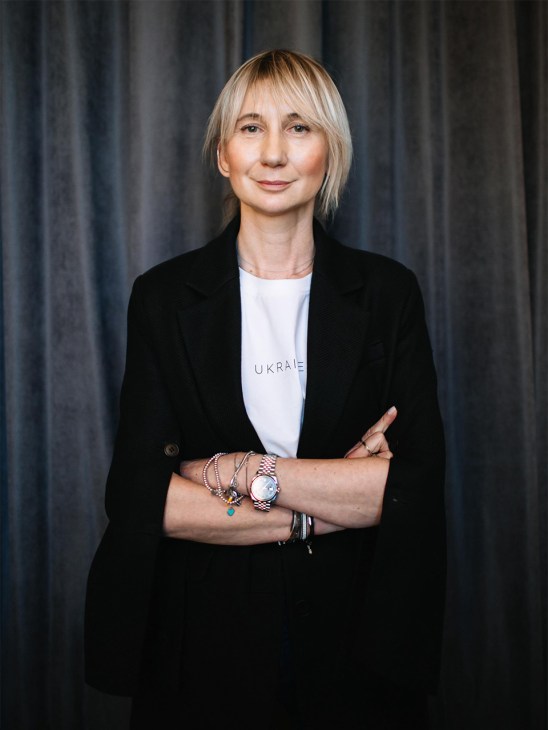
Monocle spoke with Rudnieva about how Superhumans is providing medical care to 1,500 people a day, “moral trauma” at the front lines of war and why Ukraine must begin to think about what a post-war society looks like.
This conversation has been edited for clarity and length.
Tell us about how Superhumans began.
When the full-scale invasion started, the Ukrainian health-care system wasn’t ready. We already had people with coronavirus, the flu and cancer, then we started seeing this huge inflow of injured people – civilian and military. Also, a lot of women left the country and it’s predominantly women who populate the nursing sector. We decided to jump in and complement the work that the government was doing.
How has the work evolved?
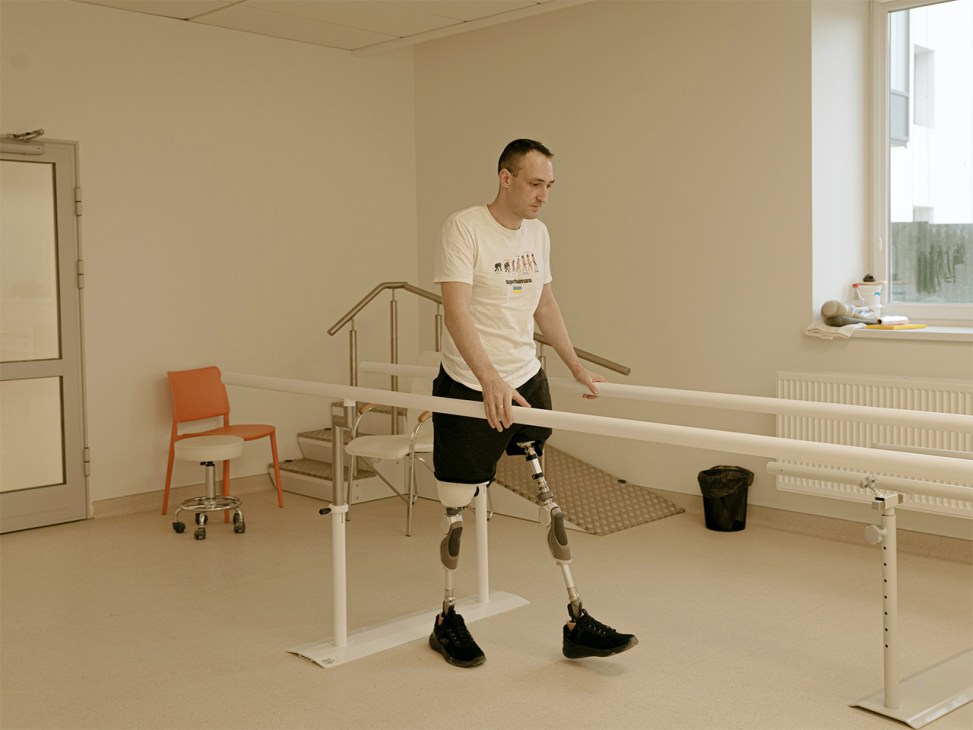
We looked at data [from the 2014 war, when Russia annexed Crimea], and we realised that people were going to be losing limbs [from a high number of land mines]. We saw that limb reconstruction and prosthetics were going to be needed but what we couldn’t have predicted is that the trauma would change dramatically. At the beginning of the full-scale invasion, most trauma was in the lower parts of bodies because people were stepping on mines or running over mines. Right now it’s more first-person view (FPV) drone trauma, which more frequently injures the upper parts of the body: upper limbs, head trauma and facial reconstruction. A lot of these people have hearing loss because of concussions, so we’ve added surgeries to restore hearing and we’re giving hearing aid devices to people.
Can you give us a scale of what you’re facing? Do you have a number for how many people that you’ve helped already?
More than 5,000 patients over three years received prosthetics, facial reconstruction or hearing-aid services but the need is much more. On any given day we have 1,500 people standing in line at Superhumans, and the line is not getting shorter. By the end of this year we’ll have three centres – but the idea of Superhumans is not just providing services. We want to actually fix the system and start sharing this experience with the rest of the world. Ukraine has become very experienced in working with war trauma.
Are there specific lessons that you’ve learned?
This is the first war in a long time that has happened under cold conditions, with people fighting in freezing temperatures. They’re losing fingers, which causes other conditions. Evacuation at the beginning of the invasion took five to six hours but now it takes days, weeks and months because of the dominance of FPV drones, and because the Russians are targeting our medics. If you kill the medic, they can save fewer lives, which demotivates the whole military unit because they understand that there is no help. The longer it takes to get a person from the front line, the more complications you’re going to have.
How does contact get made between the injured person and Superhumans?
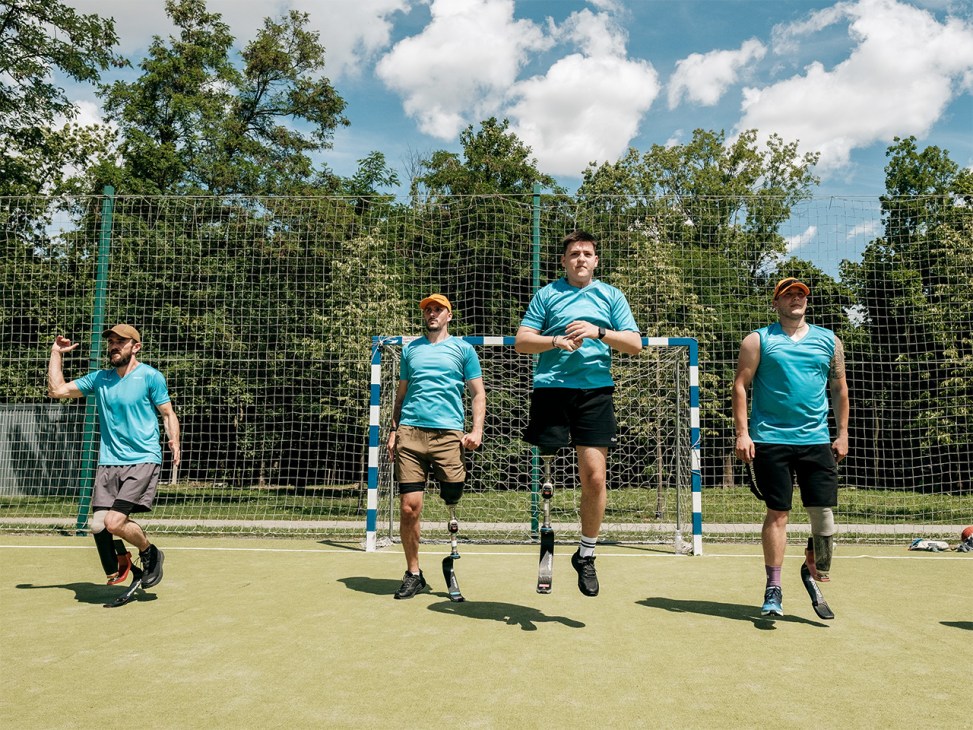
It happens in two ways. We can admit the patient if they meet our criteria of face trauma or amputation. We work directly with the Ukrainian military, so if they have a patient, they immediately connect to us. Or the patient can apply at our website. They have to have trauma as a result of Russian aggression. [The people we have treated so far include] civilians, military personnel and children. The youngest patient we have [treated] was five years old, the oldest was 76. The idea is to create a full ecosystem where the patient gets everything: psychological support, prosthetics, surgical support and rehabilitation. We’ve added social reintegration – basically helping our patients to find new roles in life, because these patients are very expensive to the health-care system and to Superhumans. It’s a pity if they are sitting at home without having a reason to leave their apartment.
What are you learning about the psychological aspects of trauma? How hard is it to get people past that?
We were expecting a lot of post-traumatic stress disorder (PTSD) but that’s not true. We have a very low level of PTSD – about six to 10 per cent [of patients who have been treated by] Superhumans. That’s because they’re relatively fresh patients and PTSD is something that happens a bit later, or might never happen. What we are dealing with is a moral trauma, which is a new concept: you live all your life and you know this is right and this is wrong – and then you get to the front lines and everything is mixed. Also, we need to take into account that it’s not trained military personnel fighting for Ukraine. It’s civilians who, just yesterday, were IT workers, and now they’re at the front with their Kalashnikov [assault rifle] or their drone. So the moral trauma really impacts them.
In what kind of ways?
If I’m a commander who sends their unit to a task, and everyone is killed, am I a bad person? The right decision brought the wrong results, so maybe I did something wrong? Or I’m in the city where I grew up, and I had to bomb the school because Russians occupied it. Everyone in this country has survivor’s guilt. Only the dead don’t have it. So, people come to Superhumans worried that they didn’t fight enough, or they weren’t skilled enough because they were injured.
Does Ukraine’s government fully understand the challenge ahead, that the country will have to adapt for so many injured citizens?
We need to start predicting what the future is going to look like but we have so many challenges that we have to deal with right now. We have this joke: we don’t buy green avocados, because there is no guarantee you will survive until the avocado is ripe. It’s very difficult to shift your whole attitude from surviving today, to forecasting what kind of resources we will need in the future.