The Monocle Design Awards 2026: The best homeware and equipment
The year’s most ingenious tools and objects, designed to enhance your everyday living.
Best in audio
Turntable PP-1 by Waiting for Ideas
France
This sleek aluminium turntable combines analogue ritual with digital convenience to deliver the best of both worlds.
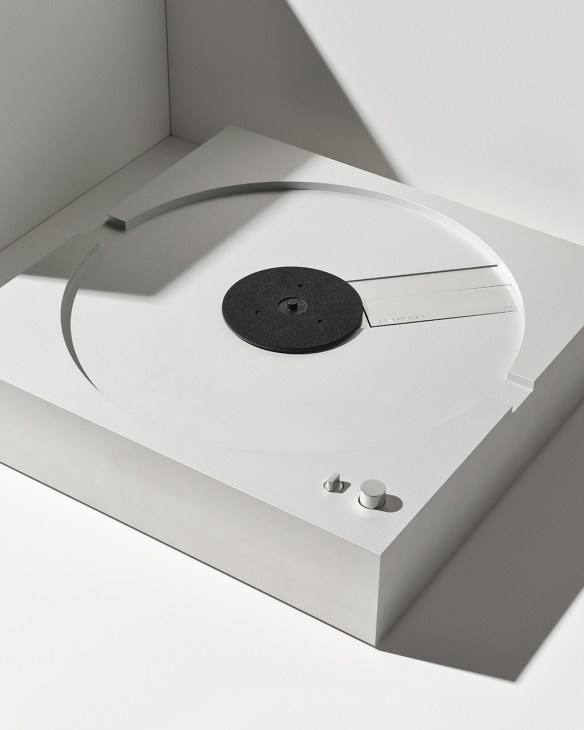
Paris-based studio Waiting for Ideas created the PP-1 record player to eliminate fiddly settings and the conventional version’s cumbersome tonearm. Its two discreet dials – one to set the RPM speed and another to pause, play, skip and adjust the volume – strip the listening experience back to its essence.
“PP stands for ‘Plug and Play’,” says Jean-Baptiste Anotin, the founder of Waiting for Ideas. “The goal was to create a product as seamless and intuitive as a music app while preserving the quality and ritual of vinyl.” The manufacturer’s considered approach to design sets it apart, with its made-to-order items functioning as pieces of art in their own right. “I engage with music daily,” adds Anotin. “Designing for it feels like an extension of that art. By facilitating the listening experience, I feel as though I’m part of a wider creative process.” waiting-for-ideas.com
Best in lighting
Bothi
The Netherlands
Bothi’s lighting strikes a delicate balance between physical form and intangible illumination.
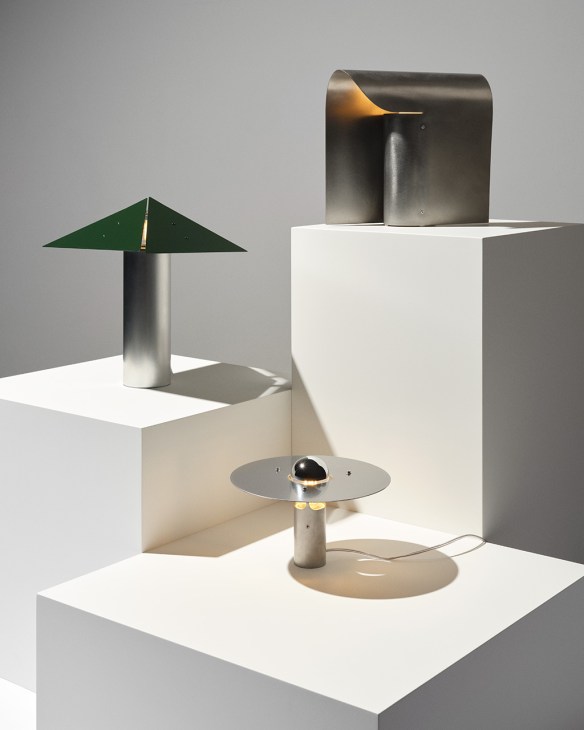
Founded in 2025 by Ollee Means, Amsterdam-based design brand Bothi is fast emerging as a name to know, thanks to its confident approach to simple, enduring design. Lights in its collection are designed to emit a soft glow and quietly hold their presence in a room. “Creating a lamp is creating atmosphere, which I find intriguing,” says Means. “Light is quiet but decisive.”
bothi.design
Best camera
Fujifilm instax mini Evo Cinema
Japan
This satisfyingly tactile new camera is a hybrid that brings digital convenience to analogue rituals.
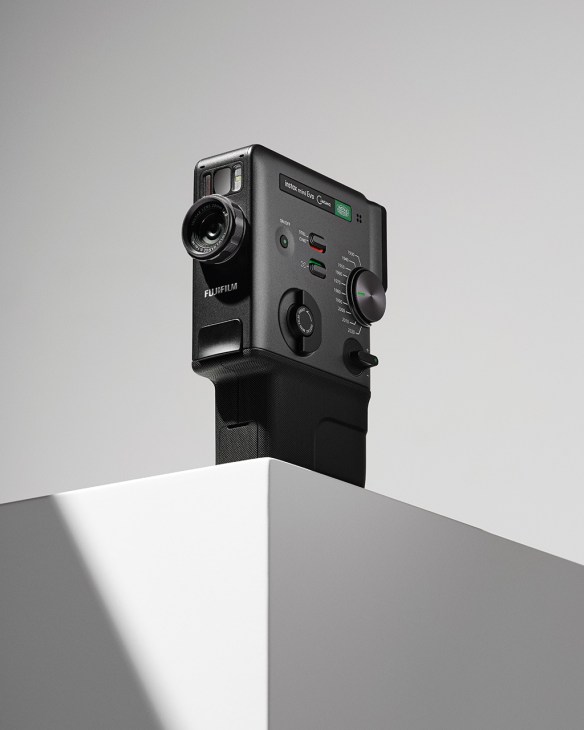
Fujifilm is making a strong case for using a real camera instead of your smartphone with its instax mini Evo Cinema, an all-in-one instant camera, smartphone photo printer and video camera. The look and vertical shooting style of this fun-packed device was inspired by the company’s Fujica Single-8 film camera, which was released in 1965.
The result is a gadget that’s easy to use (just click in a film cartridge) and offers visually compelling prints and endless options for tinkering with stills and footage. “We found that users feel the actions involved in photography – looking through a finder, deciding on composition and pressing the shutter – make each photo and the memories captured in it feel more special,” says Ryuichiro Takai, the general manager of Fujifilm’s Consumer Imaging Group. This camera, he says, is about recording the emotion of a moment.
global.fujifilm.com
Best dining chair
After by Fritz Hansen
Denmark
This chair draws on the core principles of Danish design – but also updates them for the present.
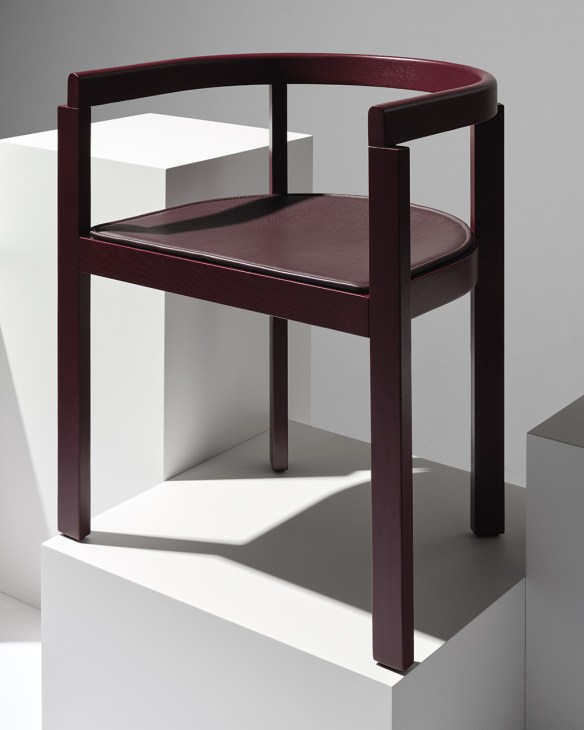
It takes skill and chutzpah to reinvent Denmark’s considerable design heritage, particularly as a non-native. But that’s what Cyprus-born, London-based designer Michael Anastassiades achieved when he unveiled his After series for Danish manufacturer Fritz Hansen. The collection comprises a dining table and this generously proportioned chair, which comes in ash or deep burgundy, with the option to include a seat cushion.
While the classic, clean curves of the After chair’s silhouette evoke mid-century masters Kaare Klint and Poul Kjaerholm, the quiet confidence of its execution is distinctively Anastassiades’s own. The outcome is a continuation of a design dialogue rooted in honouring the work of past luminaries by gently nudging the conversation forward.
fritzhansen.com
Best armchair
Eri Swivel by Fumie Shibata for Flexform
Italy
A combination of Japanese and Italian elements makes this chair stand out, whether in the living room or the boardroom.

The Eri Swivel armchair is a masterclass in harmonising structural integrity and sculptural appeal with a soft, enveloping form. Designed by Tokyo-based Fumie Shibata for Flexform, it reflects a pleasing coming together of Japanese minimalism and Italian manufacturing nous.
The Eri’s silhouette gently curves around the body, creating cocoon-like comfort. The seat and back cushions are filled with goose down. The armchair comes with a swivel metal base (pictured) or finely crafted, hand-turned wood legs – a detail that neatly reflects Shibata’s meticulous approach.
flexform.it
Best timekeeper
Bedside clock by Habity
Denmark
This nifty bedside clock doesn’t just tell the time or wake you up in the morning: it’ll help you to switch of at night too.
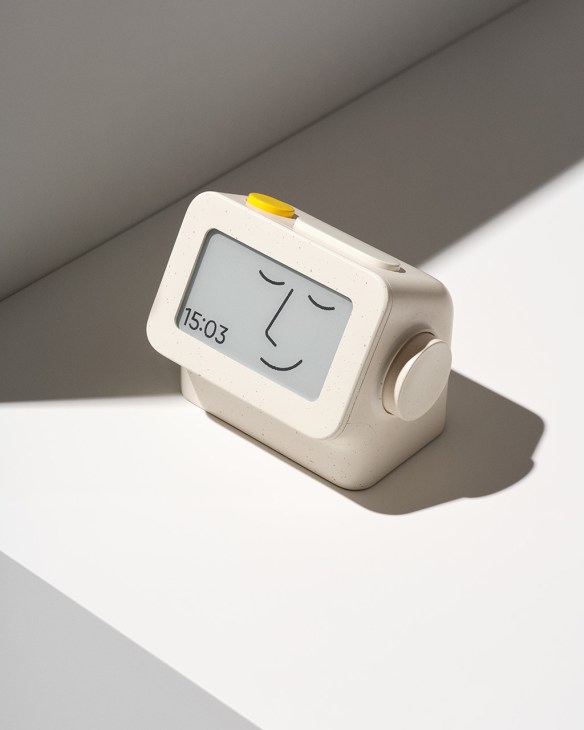
We appreciate this clock both for everything that it offers and for what it does away with – namely the need to download an app or fiddle with complex settings. Created by Copenhagen-based design company Habity, this compact alarm clock is intuitive to use and pleasing on the eye, thanks to its rounded shape and e-paper display.
At night, the clock plays calming ambient sounds to suit all tastes – from the trickling of a creek or a snowstorm’s white noise to the dulcet tones of a snoring dog. In the morning, its light gradually brightens for a gentle wake-up call.
habity.design
Best bicycle
Bliksem by Onguza
Namibia
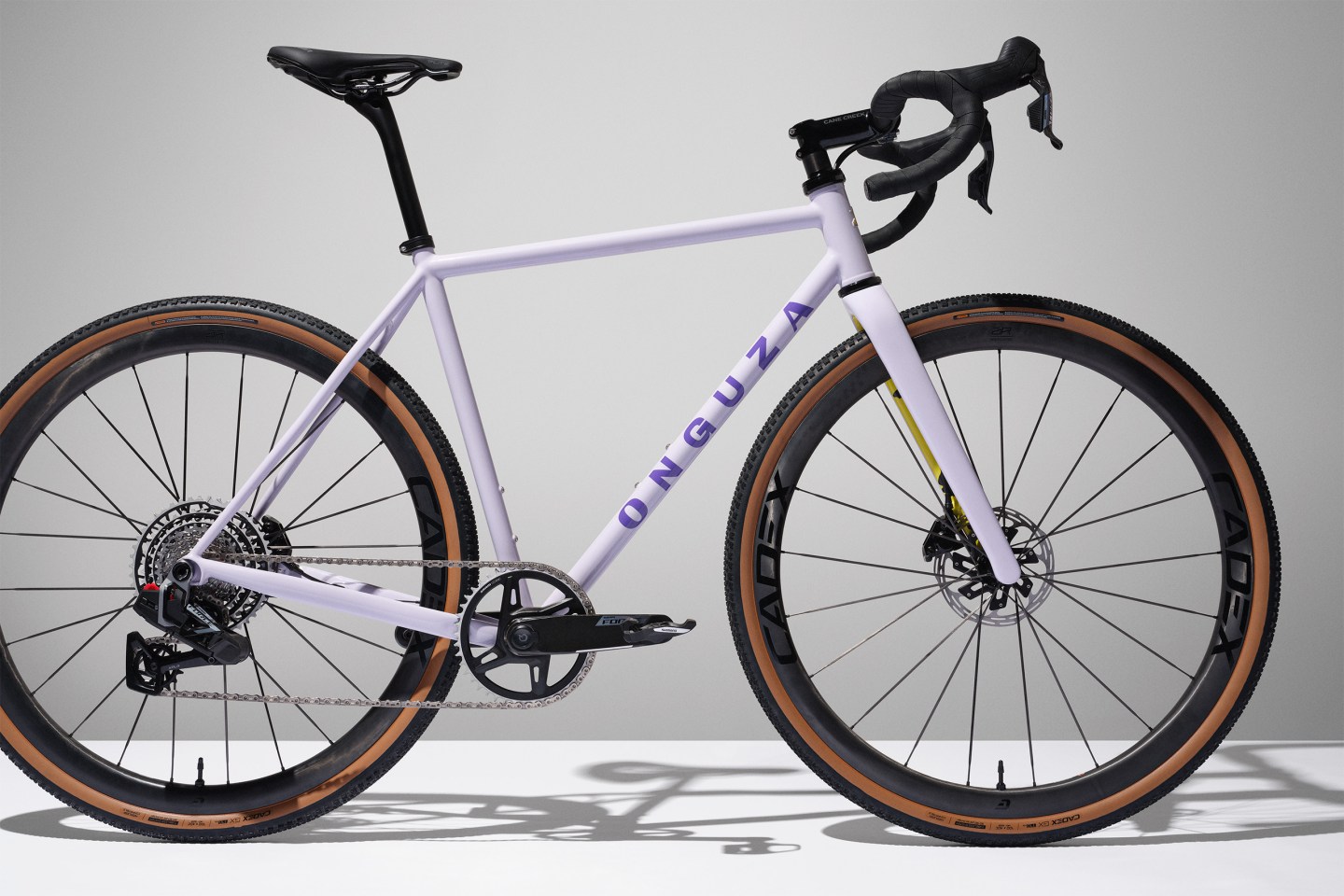
Meticulously constructed and with every model custom finished for its rider, this bike proves that keeping people at the centre of a process can put you ahead of the peloton.
Dan Craven launched Namibian bike brand Onguza after he retired from the world of professional cycling in 2021. “As with so many ex-professional athletes, my future was unclear,” says the company’s founder and co-owner. But he was certain that he wanted to spotlight his homeland’s manufacturing potential. “I’ve come to think of Namibia as a land of makers. Maybe because of the lack of resources or the harshness of our climate, we’re exceptionally skilled at making things that last.”
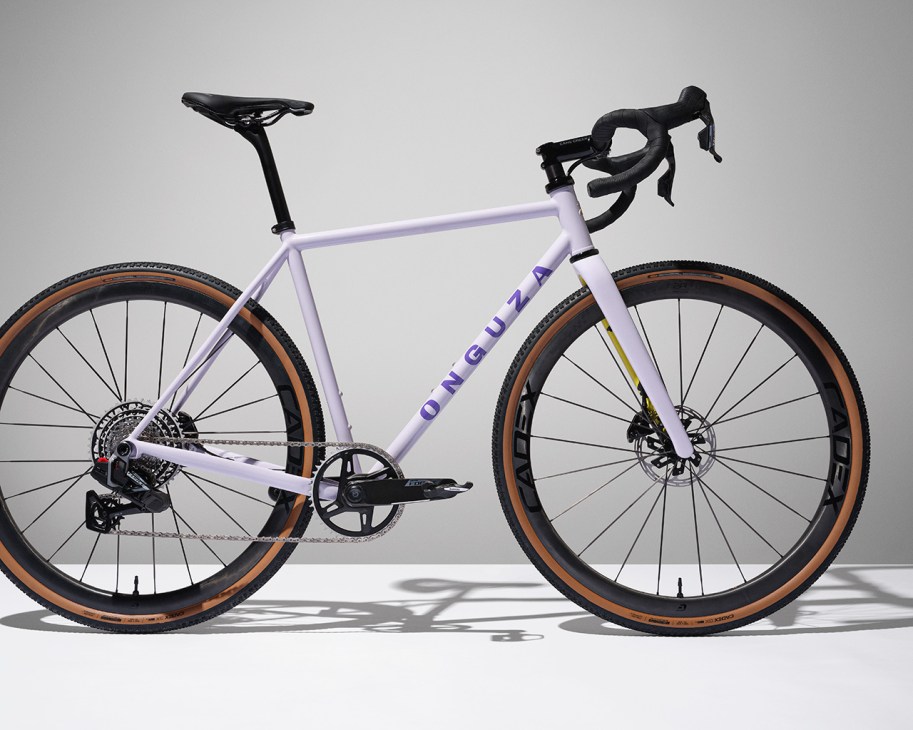
The Onguza factory in Omaruru, a small town in central Namibia, is led by co-owners and master builders Sakeus Nkolo and Petrus Mufenge. It produces bikes that are as visually striking as they are capable of high-speed adventures. The brand’s Bliksem model (pictured) features a hand-built steel frame and fork that can be customised with different finishes and colourways. “The Bliksem is the culmination of three years of developing what we think a fast gravel bike should be: clean lines, functional elegance and with standout colour choices that reflect the rider’s unique personality,” adds Craven. Named after the Afrikaans word for “lightning”, the Bliksem promises style and speed, even in harsh conditions.
“So few people expect Onguza to come from Namibia,” he says. “For me, it has always been the unexpected places that have left the biggest impression. I wanted to show the world what Namibia is made of.” To get this message out beyond Omaruru, Onguza partners with leading bike shops including London-based Via Atelier, which specialises in custom builds and bespoke installations of everything from hydraulic disc brakes to carbon wheel sets.
onguza.com
In the frame
Every tube used in the bikes is hand-measured, cut and filed before being fillet brazed – a welding technique using brass or silver that prevents damage to the steel frame.
Smartest mobility solution
Tatamel Bike by Icoma
Japan
The best design solutions emerge from everyday frustrations – and, like this collapsible bike, quietly change how a city moves.
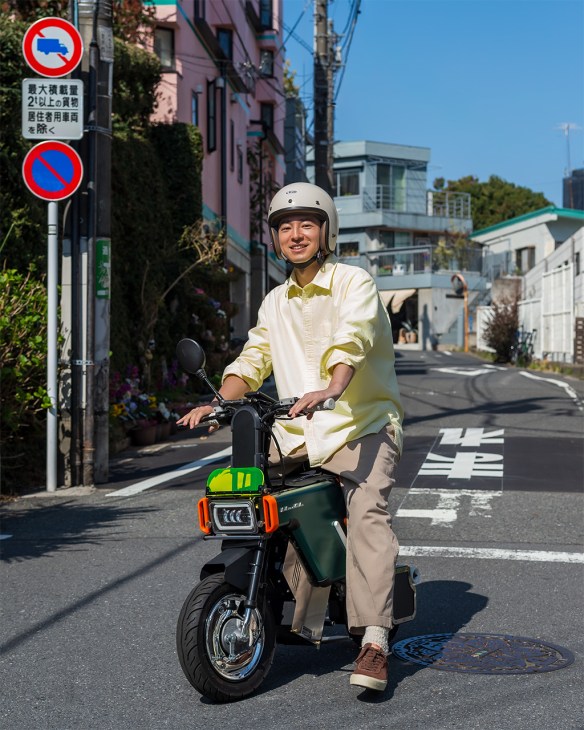
About a decade ago, industrial designer Takamitsu Ikoma had an idea for an electric-powered two-wheeler that could be collapsed to the size of a suitcase and kept near the front door of a flat or under a desk at the office. Without an engine, it wouldn’t reek of petrol fumes or leak chain grease. His Tokyo-based start-up, Icoma, put the idea into production in 2024 with the foldable electric Tatamel Bike (tatameru means “foldable”). It has proved a hit – there’s a six month waiting list – and has a top speed of 45km/h. “In the city, most people travel an average distance of 10km to 20km at a time,” says Ikoma, so it’s perfect for urban streets.
icoma.co.jp