How Bauhaus design duo Josef & Anni Albers’s archive is being revived by an Italian design brand
The Albers Foundation and Mutina collaborate on unique tile collection inspired by 'Homage to the Square'
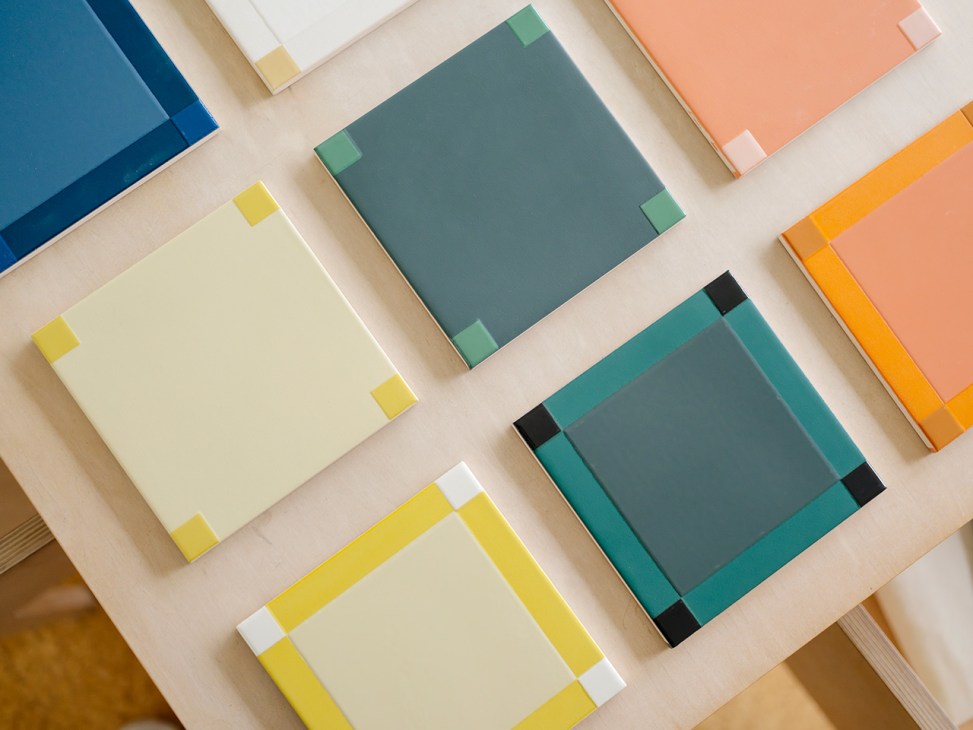
At the Josef & Anni Albers Foundation in Bethany, Connecticut, Monocle is being shown tiles that the organisation has made with Italian brand Mutina. Fresh off a flight from the Bel Paese, the team is excited to share the newly launched collection. The pieces of glazed stoneware come in seven shades, including peach, chocolate and sage. They feature just two patterns – a dot or a dash – but juxtaposing the tiles allows for almost endless arrangements. Standing in the heart of the rustic-style building, with pitched white ceilings and windows that look onto trees and a misty lake, associate curator Karis Medina lays the tiles side by side on a long table flanked with wooden chairs. Medina then leads Monocle into the gallery space, where paintings from Josef Albers’s iconic series Homage to the Square hang on a white wall: three squares in shades of grey and sea blue, neatly layered on a board. The tiles’ inspiration is suddenly plain to see.
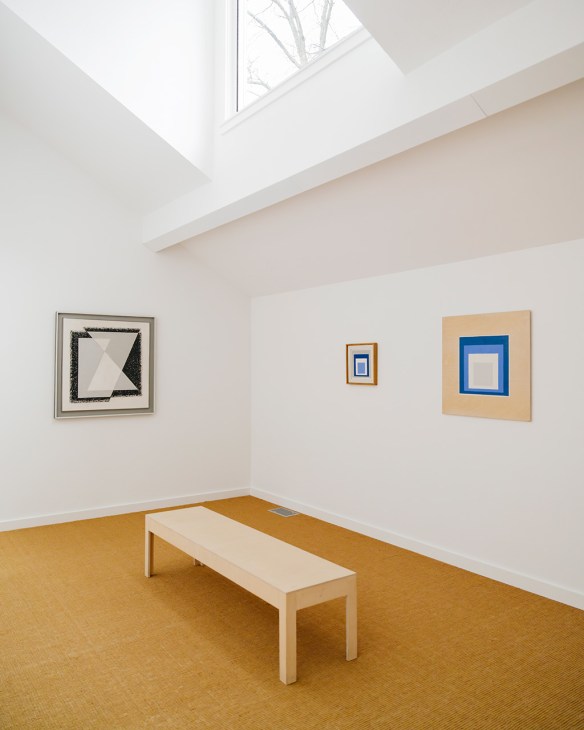
The foundation, founded by Bauhaus artists Josef and Anni Albers in 1971, is home to many of their artworks but also acts as a research centre, collaborating with creative brands and promoting education (it offers two artist residencies on the property). Both Josef and Anni were “deeply committed to pioneering processes of making work, finding new ways and paths”, says Medina. Next, she leads us into the vault, a room that houses many artworks, as well as Josef’s half-used paint tubes, left untouched since his death in 1976. Medina trails her finger across the shelves and pulls out another Homage to the Square painting with three squares in white, charcoal and mustard.
The Albers – especially Anni – were always keen to experiment with new technologies and believed that good design should be accessible, functional and embedded in everyday life. At the helm of the foundation is its executive director, Nicholas Fox Weber, who knew the couple personally and is always seeking out new ways to extend their mission. This is what prompted the foundation’s collaborations with brands such as Loewe and now Mutina. “The Albers were open to new ideas,” says Weber, speaking from Paris, where he spends much of the year. “I try to maintain that tradition of being receptive to what comes our way. They loved things that were well made. Production quality was extremely important to them.”
Mutina is known for its intricately made tiles and ceramics, making it a natural fit with a foundation that has deep dedication to craft at its heart. Founded in 2005 in the Emilia-Romagna region – the heartland of Italy’s tile industry – Mutina collaborates with leading figures including Spanish architect and industrial designer Patricia Urquiola and Japanese artist-designer Tokujin Yoshioka.
For the brand’s ceo and founder, Massimo Orsini, working with the Josef & Anni Albers Foundation was “a real honour”. An art lover and a serious collector of sculptures, paintings and photographs, Orsini is very open to interesting collaborations with brands and organisations that he respects and admires. But, for him, this partnership felt particularly intuitive. “We were all working together in the same direction, trying to respect the work of Josef Albers,” says Orsini. The idea to bring the two teams together came from Ambra Medda, the co-founder and former director of Design Miami, who works as a consultant for the Josef & Anni Albers Foundation. “We really wanted to achieve something that echoed the work of the artist,” says Medda, who is based in Milan. “The connection with Mutina was very natural because it’s working with the best designers in the world,” she adds. “Massimo loves painting and design, and is a true collector.”
While the partnership felt right, bringing Josef’s work back to life in a fresh way was a careful process and not without its challenges. “We felt a massive amount of responsibility because we were interpreting his work,” says Medda. The success of the collection, she explains, didn’t just lie in each individual tile’s design; it was crucial to ensure that there was a “very simple system where you could create many different patterns with only two variations”. This approach was true to Josef’s work, which challenged our perception of colours and how they relate to one another. “There’s a sense of playfulness – a never-ending play on the square, a sense that these two tiles can be used in different ways,” says Medda.
To create the tiles, Mutina used a traditional firing technique that preserves the natural variations that happen in the kiln and gives the glazed surfaces depth and richness. Much like Josef’s layered paintings, the tiles are built up through the application of successive layers of glaze, a process that demands patience. It took various stages of experimentation and two years of back and forth before everyone agreed on a final design that feels true to the spirit of how the Albers worked. “The Albers could be difficult because they had a very clear vision,” says Weber. “They didn’t compromise on things.” But when they arrived at the final idea for the tiles, both the Mutina team and Weber recognised it immediately. “It was like hearing a piece of music and knowing that you were on pitch or you were in tune,” says Weber. “It wasn’t what I would call an intellectual decision. It was a gut decision.” He likens it to a chef perfecting a dish. “There’s a moment when the taste and texture feel just right.”
mutina.it; albersfoundation.org