Reputation building
Self-reliant and dismissive of fame, W Earl Wear was an unsung hero of modernist architecture. His handful of sculptural homes now command a growing band of devotees.
Beatrice Faverjon knew from the moment that she saw it. Nestled among boulders and ancient oaks on a dusty 0.4-hectare site near the top of Topanga Canyon, just inland from Malibu, the sprawling 1958 residence, crafted from stone, concrete and redwood, was Frank Lloyd Wright meets coastal California modern. Due to its panoramic glass walls and wingspan cantilevers, the design blurred the boundary between building and landscape.
The architect’s name, according to the real-estate listing, was W Earl Wear. And though the Wright style – organic yet voluminous, boxy but open-plan – was present in the design, nobody had heard of this particular interpreter.
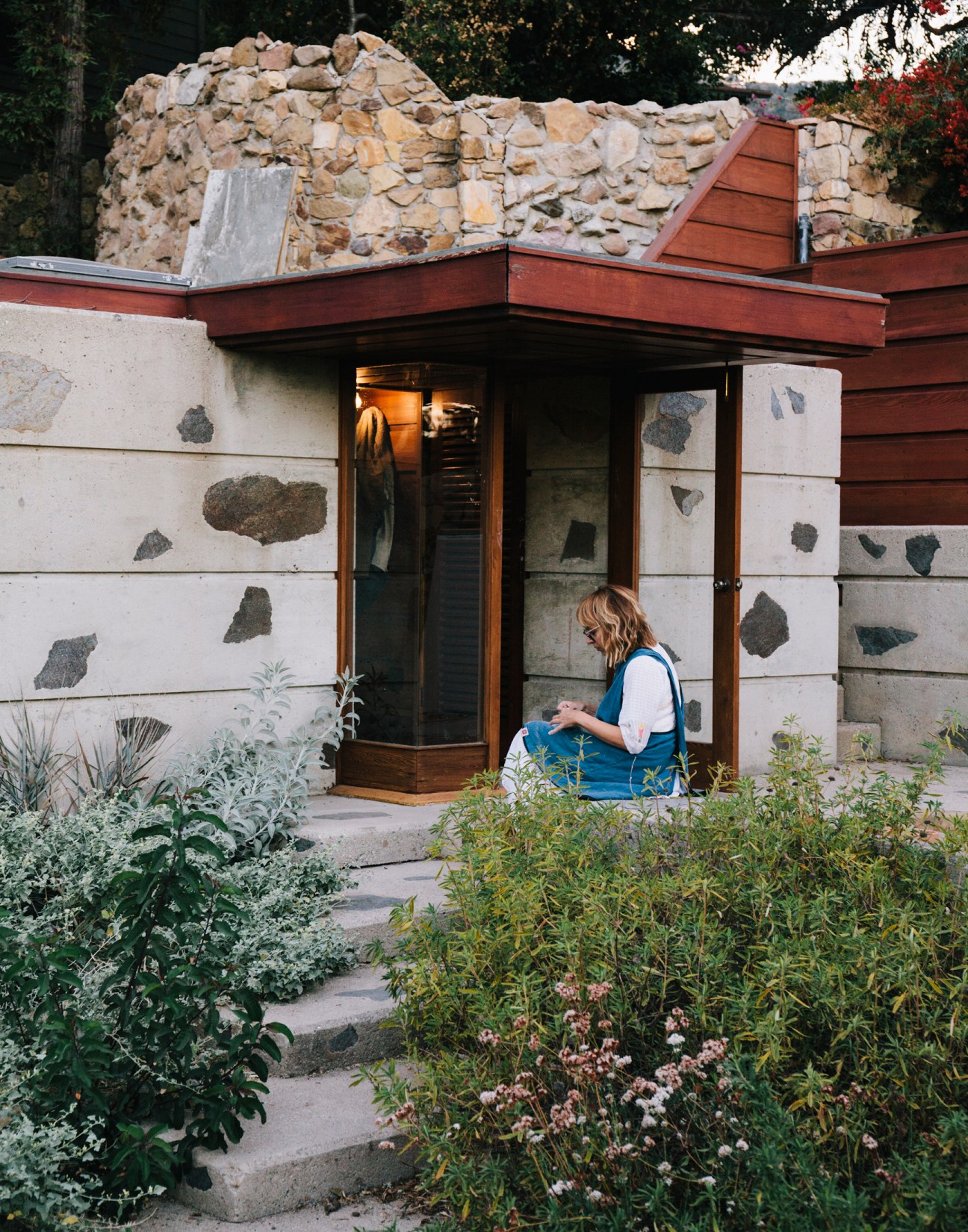
Faverjon, a ballet dancer turned director and designer, couldn’t forget her dream home. So one day she drove her old Mercedes up Topanga’s steep switchbacks until it stalled, forcing her to walk the final mile. She knocked on the door, then followed up with an email. “If you ever want to sell…” Faverjon began. A few months later, the owner replied that she was ready to do just that.
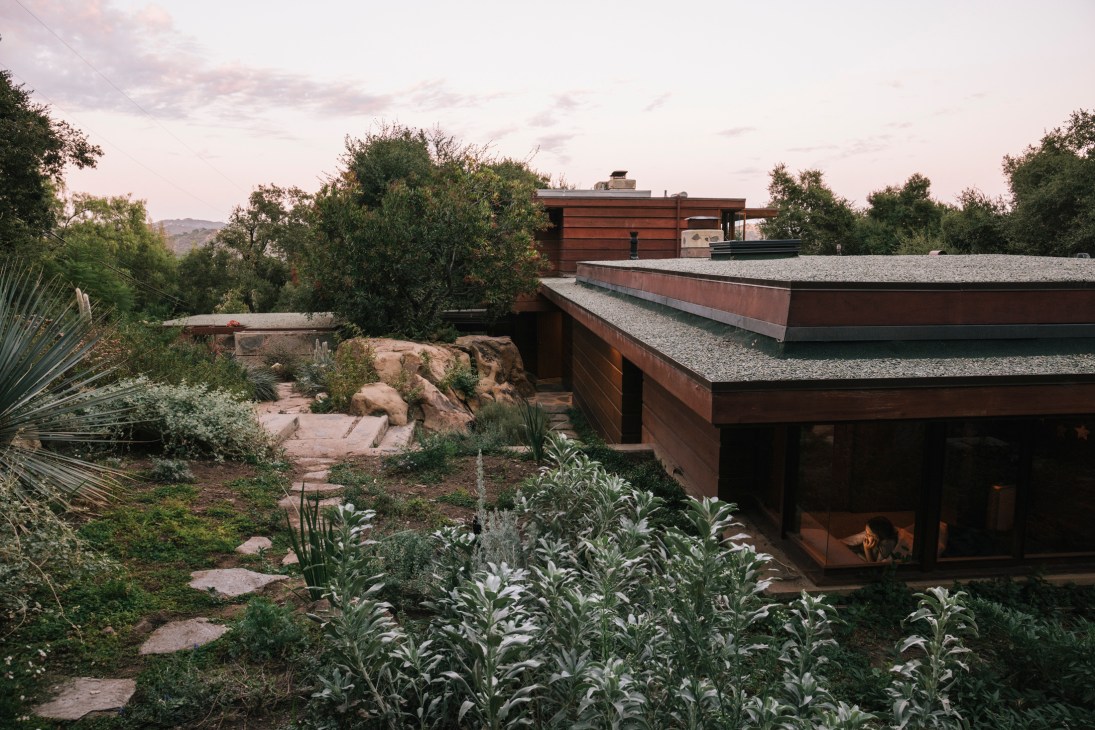
Today, Faverjon belongs to a new generation of Californian designers, craftspeople and homeowners who are determined to preserve and promote the legacy of the man they consider to be Los Angeles’s finest forgotten modernist. To say that they have rediscovered Wear (pronounced “wee-a”) would be an overstatement; he was never discovered in the first place. Hailing from Windsor in Ontario, Wear, who died in 2011, showed little interest in architecture until he returned from flying Mosquito bombers in the Second World War and took a Canadian Royal Air Force aptitude test that steered him into the field. Wear first encountered Wright’s work at the University of Toronto. He was so “blown away”, according to daughter Hannah Wear, an architect herself, that organic design became “the doctrine of his life”.
In 1952, Wear came to California from Boston, where he’d helped to restore Henry Hobson Richardson’s Trinity Church. Two years later he rented a cabin in Topanga, a bohemian enclave that would soon attract the likes of Woody Guthrie and Neil Young. Before long, Wear’s neighbour, Dr George R Anderson, hired the fledgling architect to transform his own modest bungalow into the masterpiece that Faverjon now calls home.
“From the start there was a right way to do everything,” says Hannah. “It could make [Earl] hard to live with but it also made him such a master. He built everything himself. Entire houses. He invented his own desert concrete. He’d demand a box of a client’s favourite laundry detergent so he could design a custom cabinet for it. He was pissed off when he got older and could no longer see the 1/64th-inch [4mm] mark on his tape measure.”
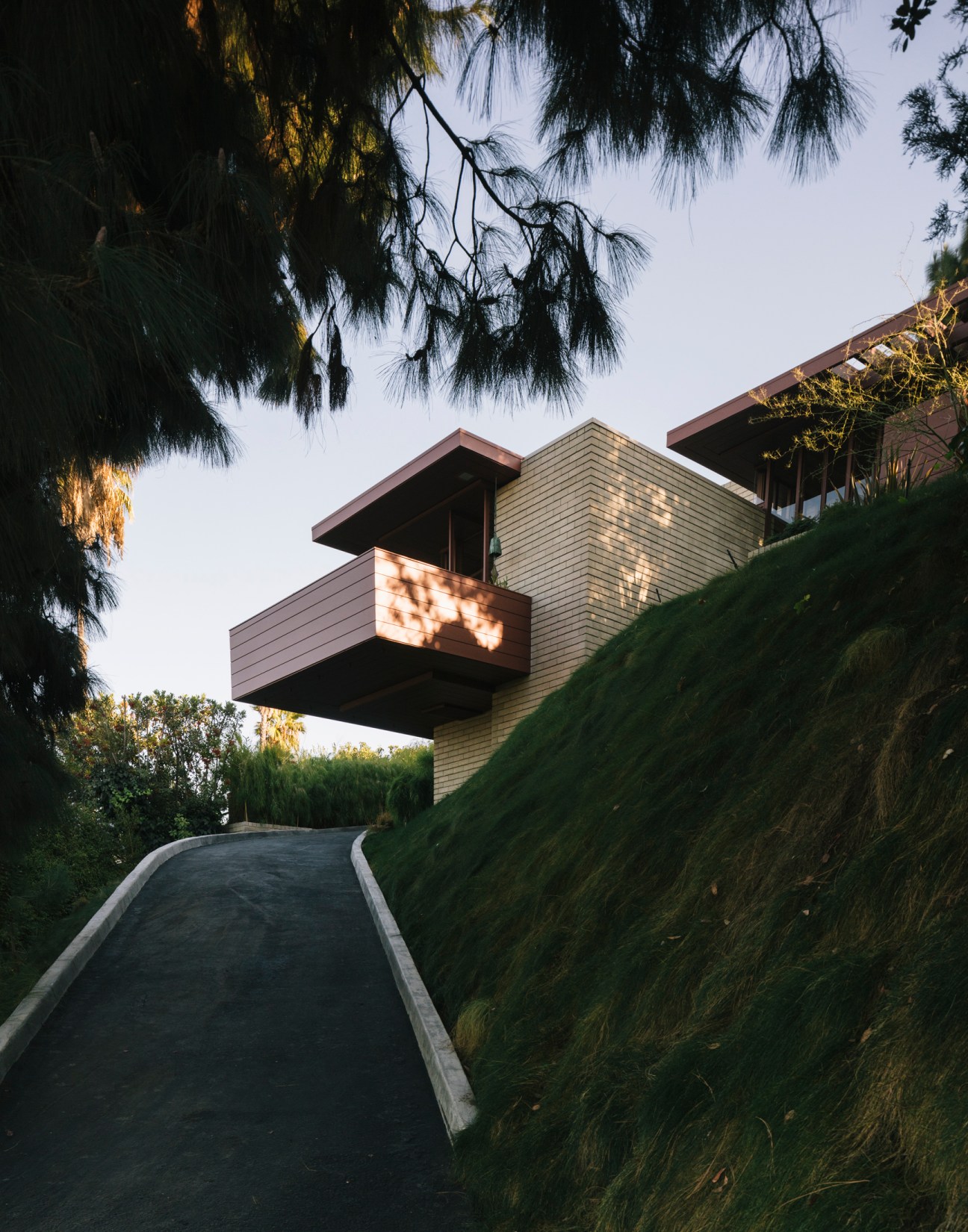
Wear’s standards were so exacting that he managed to complete only nine houses during his 30-year career. There’s the early Bud and Joan Ware House, just up the street from Faverjon, with its swooping roofline and sharp triangular clerestory;the Fong and Lorraine Jing House of 1958, a dramatic wood and concrete cantilever hovering above a Mount Washington hillside; the 1980 Shubin House, now owned by Scottish actor Gerard Butler and nearly destroyed in the 2018 Malibu wildfires; and the architect’s own house in Topanga, its towering concrete fireplace inlaid with a vine-like motif of local stone. No attempts were made to photograph or publicise any of them. “He absolutely abhorred any kind of vanity,” says Hannah. “In fact he was anti-publicity. He really didn’t care what people thought.” As a result Wear’s houses represent the only remaining testament to his genius – a fragile record, forever a few heedless remodels away from oblivion.
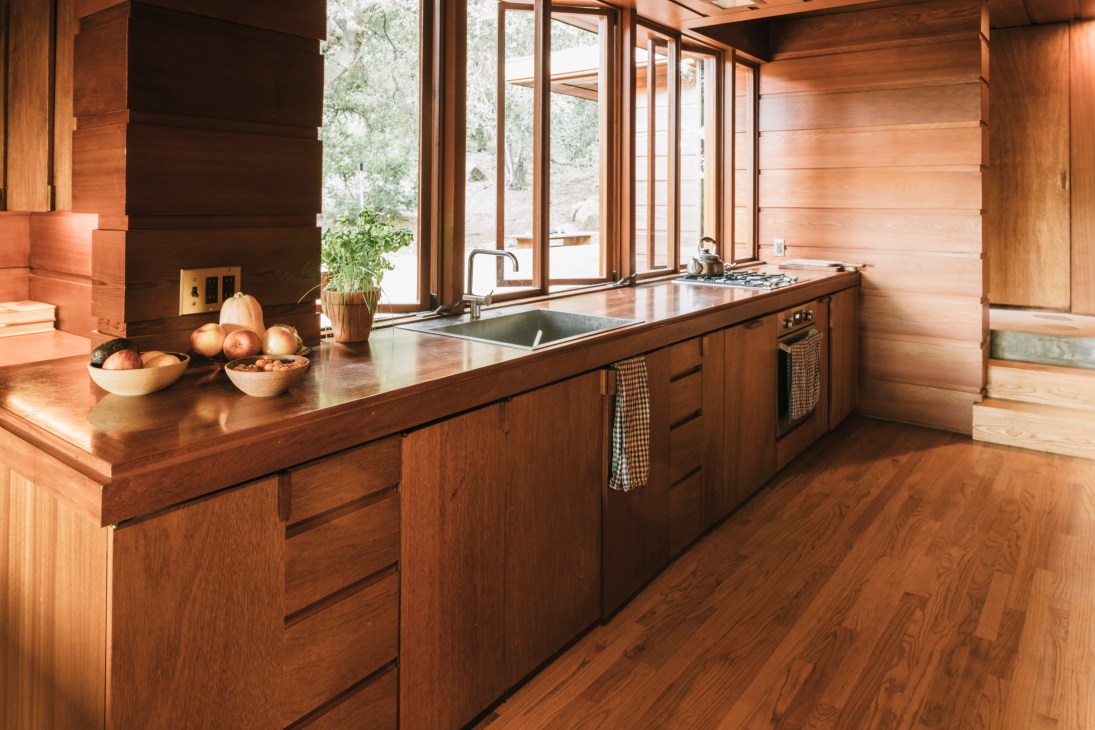
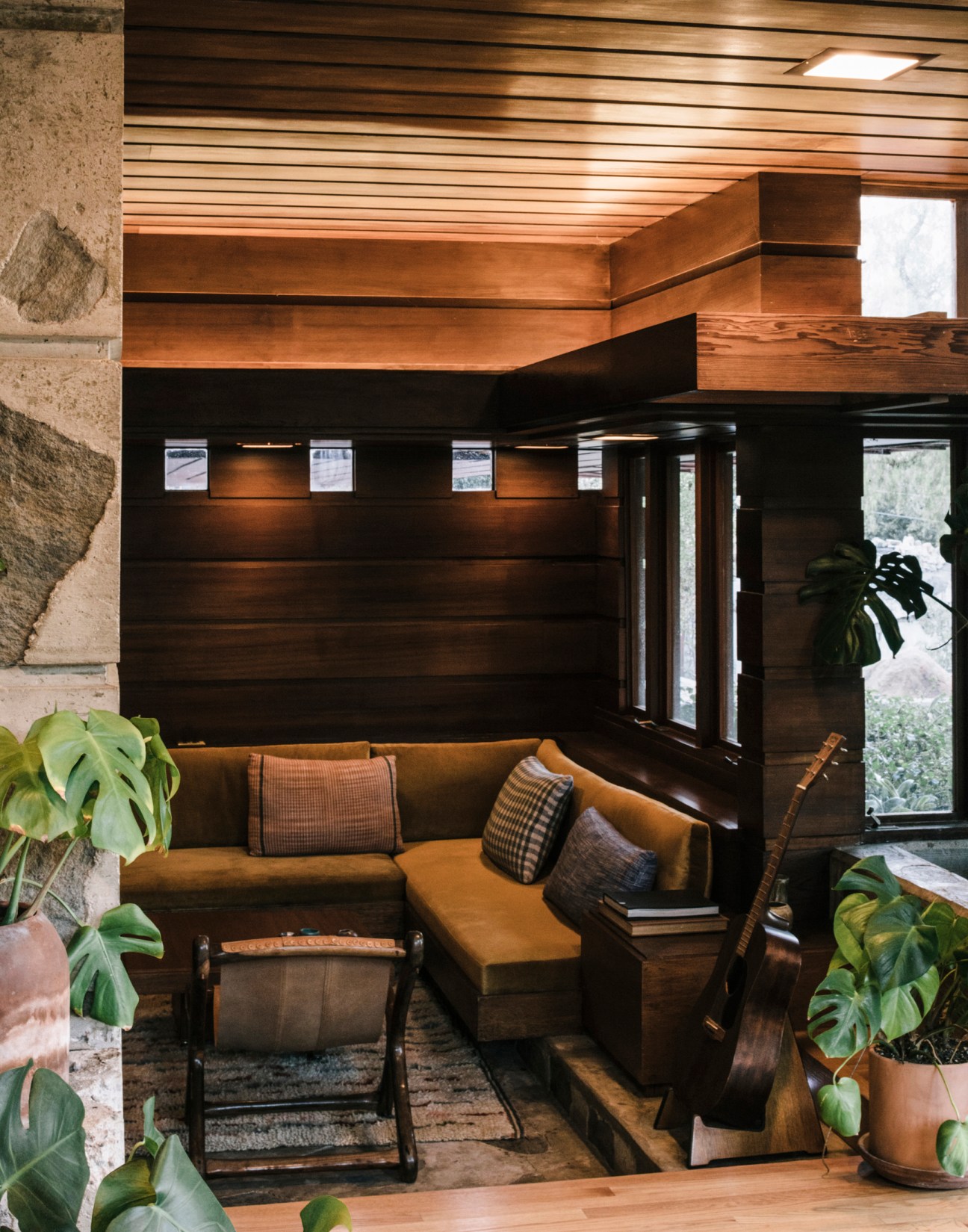
Faverjon and her fellow Wear devotees are determined to not let that happen. The former owner of the Anderson House painted over Wear’s signature redwood and repanelled the interior with knotty pine; Faverjon spent years sourcing rare old-growth timber to replace any woodwork that was too far gone to strip and refinish.
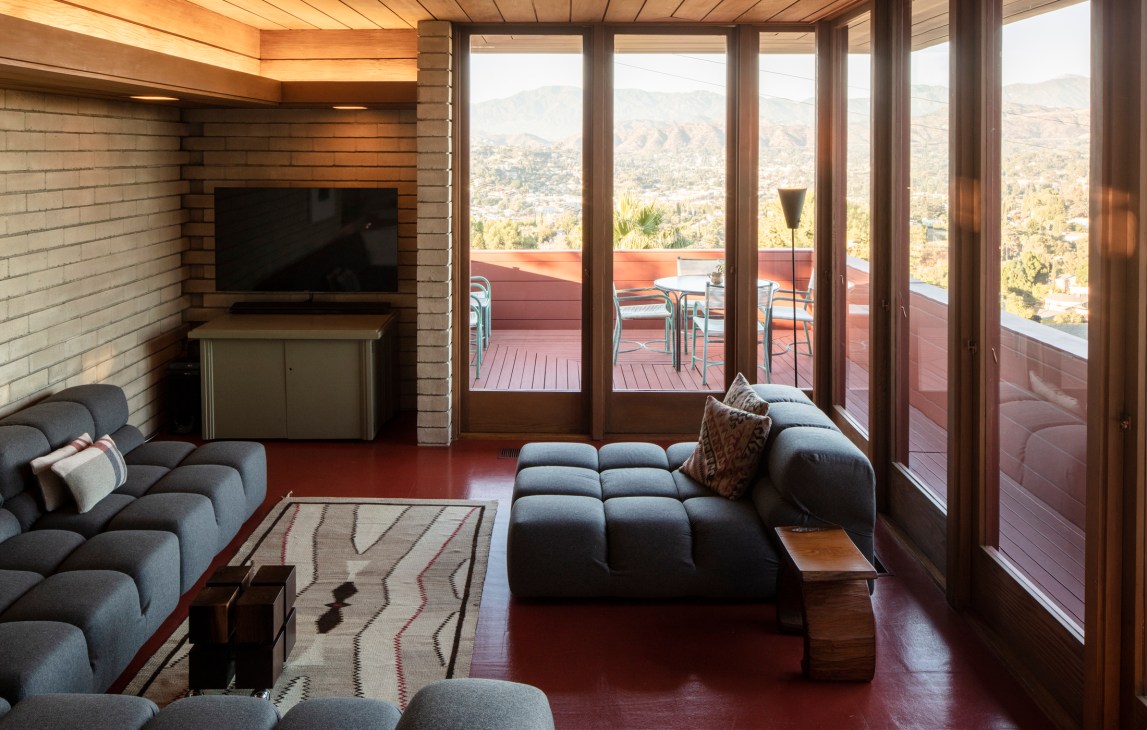
At the Fong House, previous owner Brian Moore, an estate agent, completed a decade-long restoration that preserved nearly all of its period details before passing the baton to John Gray, a TV producer who overhauled its leaking roof and refreshed its redwood siding. Next, Gray plans to refabricate Wear’s lost custom furniture. Meanwhile, Hannah – who served as a chief associate of Frank Lloyd Wright’s grandson, Eric, before founding Topanga’s Design Integration Group – has sensitively updated several of her father’s houses.
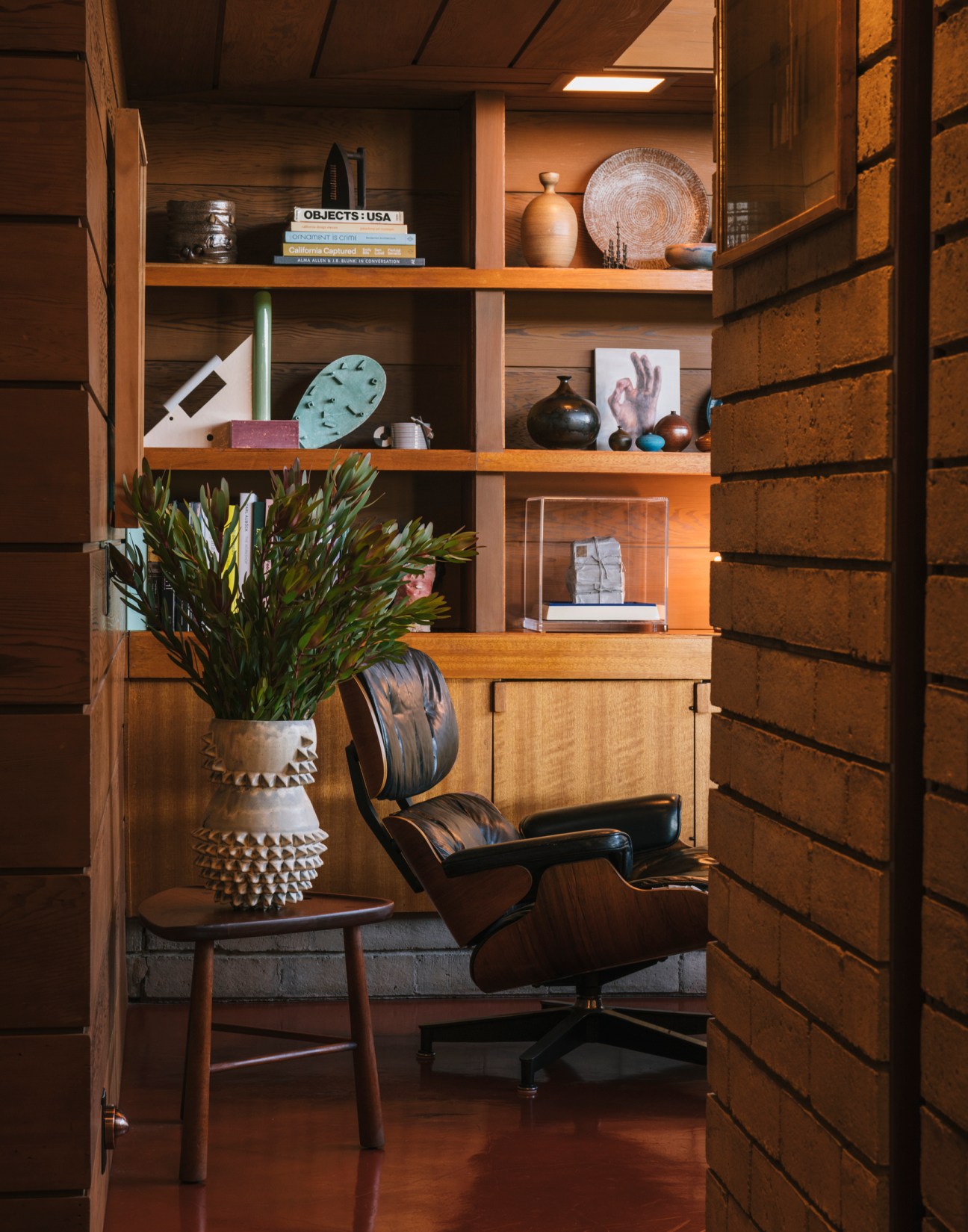
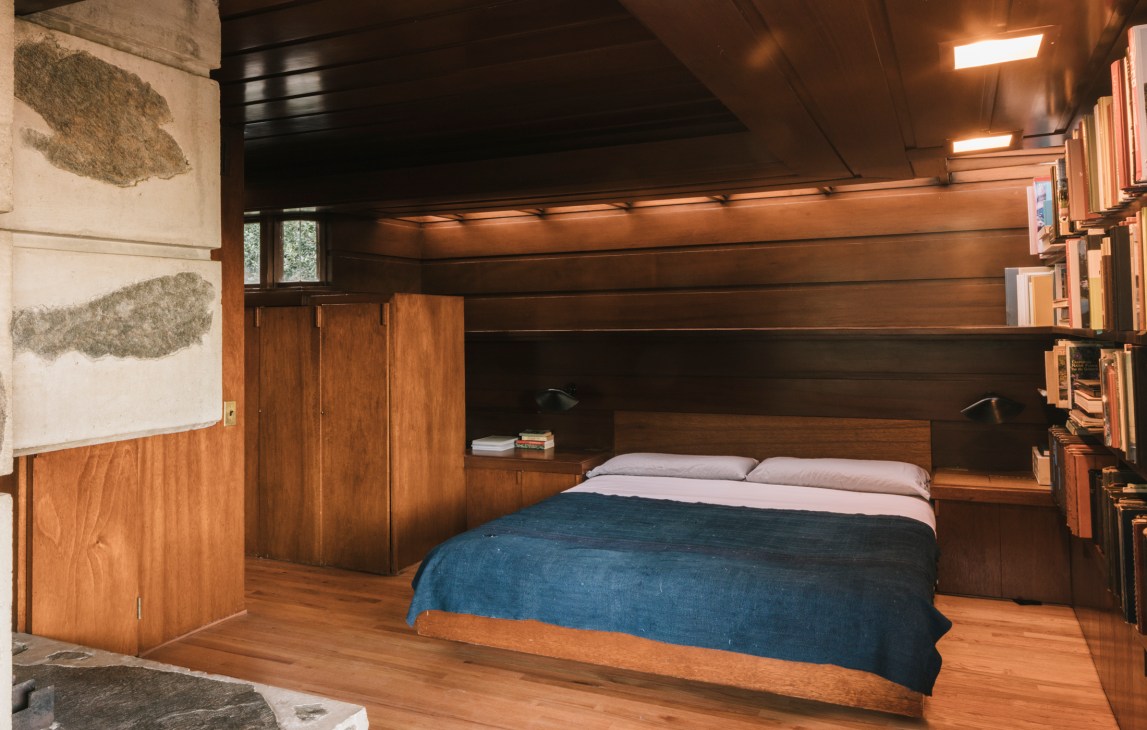
“Dad’s work is just so elegant and light on the land,” says Hannah, at her small office next to the Topanga Creek General Store. “But he just didn’t catch the lightning, for whatever reason.”
Not while he was alive, at least. But up the road on a recent afternoon, the air orange with smoke and ash from fires to the north, Faverjon and her fiancé Ryan Soniat, a restoration specialist, are discussing their plans to undo earlier kitchen and bathroom remodels. They plan to mimic the original cabinetry and fixtures from Gray’s place across town. “You have to be humble,” says Soniat as he gazes at Wear’s monolithic hearth from his seat on the long low built-in sofa. “If you change something, the architect’s purest vision goes away. And it goes away forever.”
On Mount Washington, Gray glances from his balcony towards the street below. “This house is like living in a sculpture,” he says. “People look up and ask, ‘What is that? Is that a Wright?’ I hope one day they know that it’s a Wear.”