The perfect lobby can be many things but a buzzing, multi-purpose room is not one of them
Hotel lobbies come in many forms. Some have become crowded digital hubs but the best offer a sense of tranquility.
The hotel lobby might be the most misunderstood space in hospitality. Everyone agrees that it matters but nobody seems to agree on what it should be. In recent years, the lobby has been asked to shoulder an exhausting number of roles at once: reception desk, living room, co-working hub, cocktail bar, social condenser, pop-up retail floor and, increasingly, an upholstered waiting room for guests to take Zoom calls.
In an anxious attempt to please everyone, many hotels end up pleasing no one. The irony is that the brief is not especially complicated. A good lobby follows one simple rule: make an entrance without making a fuss. Designers say that it takes about seven seconds to form a first impression of a room. A successful lobby uses those seconds to reassure guests – quickly and quietly – that they are in the right place.
The best hotels do this with disarming ease: clear sightlines, confident proportions, a sense of calm authority. Take Aman Tokyo. Suspended high above the city, its scale is monumental but its palette is hushed, with stone, timber and washi-paper lights. Low-slung sofas are placed with near-ceremonial symmetry and their dramatic contrast to the soaring ceiling heightens the sense of space.
Crucially, laptops don’t take over the tables; no ambient buzz masquerades as atmosphere. The recent obsession with turning lobbies into all-day “social hubs” has produced a form of low-grade acoustic fatigue. There’s nothing wrong with good coffee but there is something exhausting about the permanent hiss of milk steamers and the nervous shuffle of people hunting for power sockets. A lobby should offer refuge from the city, not replicate its most irritating traits.
A lobby is not a living room and it shouldn’t pretend to be one unless it has the space, the choreography and the crowd to pull it off. The Manner in New York, for example, channels a kind of Italianate grandezza. The atmosphere is generous, not busy, which is partly because check-in happens discreetly one level below, leaving the main lounge free from the constant stream of arrivals.
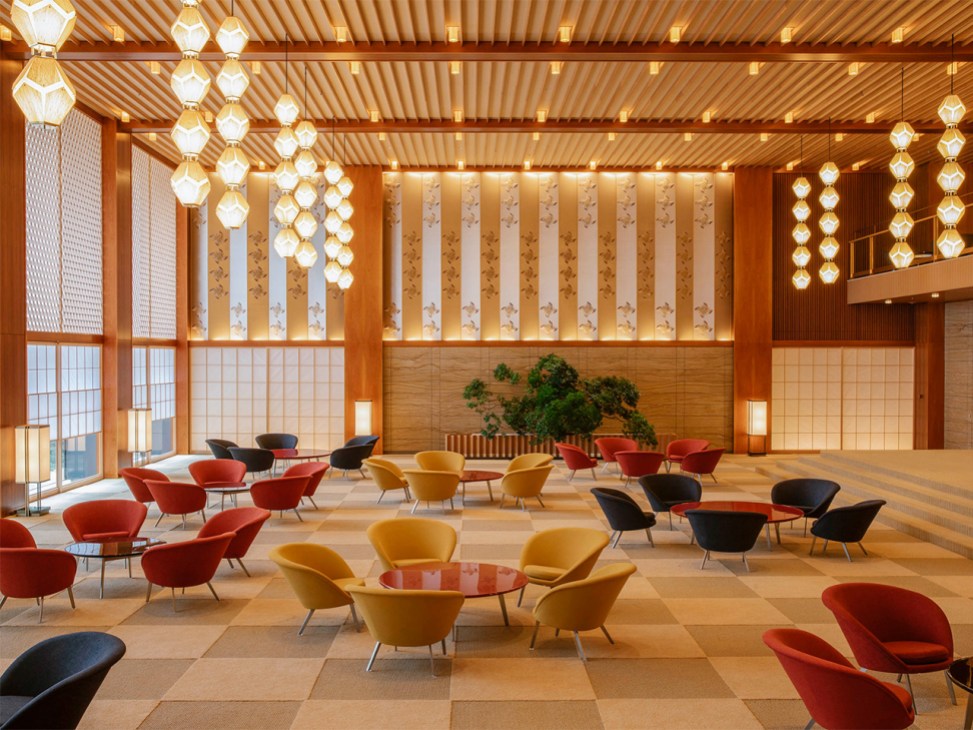
The best lobbies share a certain restraint. At The Okura Tokyo, carpets absorb sound, crystal-like lanterns hover beneath a timber ceiling and chairs are arranged like plum blossoms. However busy the gold-toned space becomes, it remains serene. When the hotel’s 1962 modernist landmark building was demolished in 2015 to make way for a less distinguished replacement, the lobby was reconstructed with forensic care as a result of public protest. Its proportions were laser scanned and its light, temperature and acoustic properties were meticulously measured to create an exact replica.
A lobby is a threshold, not a destination. It isn’t there to entertain you, to distract you or to sell you scented candles and cold-brew subscriptions. At its best, a lobby is a pause, an intake of breath. It doesn’t insist that you stay (though you might) and gives you enough composure to move on. In an age of perpetual stimulation, that sense of composure might be the most convincing first impression of all.
Florian Siebeck is Monocle’s Frankfurt correspondent. For more opinion, analysis and insight, subscribe to Monocle today.