Good mayors zone in on the details – just ask Zohran Mamdani
When it comes to curing the ills of a big city such as New York, the devil is in the details. Mayor Zohran Mamdani’s policy of focusing on the mundane promises big dividends.
During a live televised debate last June in the run-up to New York’s mayoral election, the nine candidates who were vying for the Democratic party’s nomination were asked where each would hypothetically travel for their first official overseas visit in office. The candidates dotted from destination to destination: Israel, Colombia, Ukraine, Jamaica, Canada. Apart from Zohran Mamdani, who turned his gaze homeward. “I would stay in New York City,” he said, in what became a memorable exchange. “My plans are to address New Yorkers across the five boroughs – and focus on that.”
Almost six months into his mayoralty, Mamdani has been true to his word. His role so far has been painted in big, broad rhetorical brushstrokes by left and right, supporters and cynics – the former styling him as a grand socialist urban saviour; the latter as the author of a great city’s undoing. But he has placed his focus on something altogether more tangible than either of those caricatures allow: the nuts and bolts of city life.
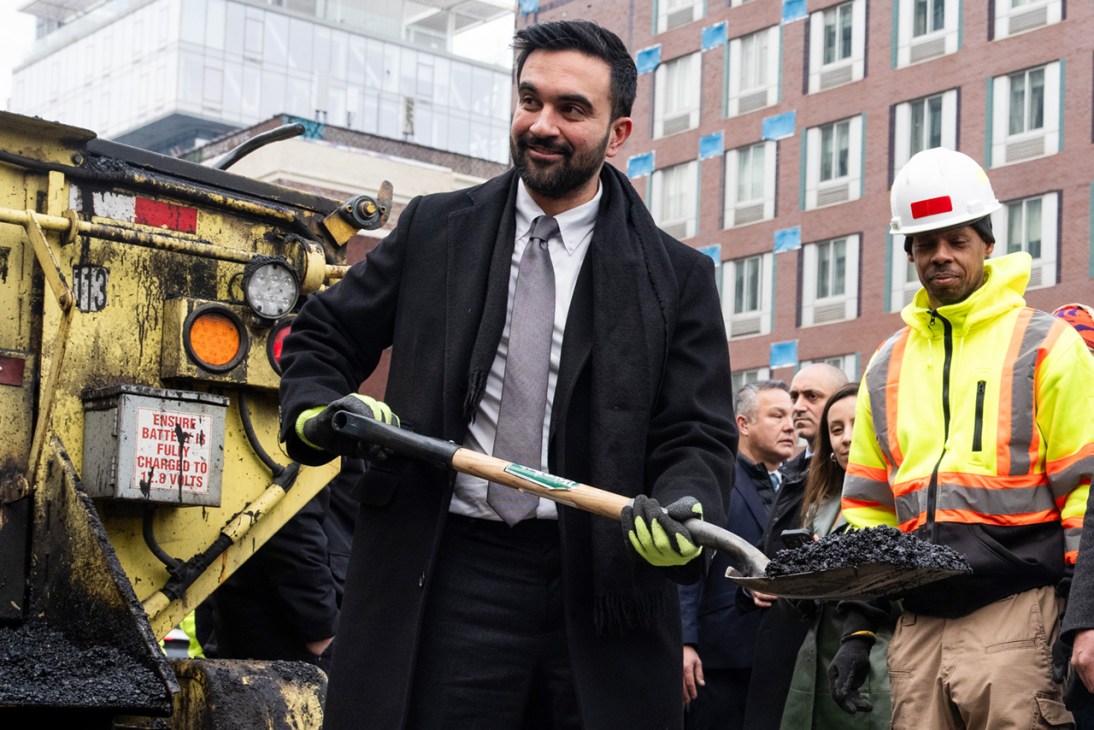
Mamdani has been keen to demonstrate that he is working – in a visible way – to achieve something that many assumed would elude him once he came to power: getting things done. That has included decluttering public thoroughfares by limiting the amount of time that scaffolding can remain up around a construction site; converting on-street car-parking spaces into areas for large new rubbish receptacles; personally guiding New Yorkers through their preparations for a snowstorm; and visiting subway-maintenance workers underground during a midnight shift.
“A mayoralty is a unique – and uniquely difficult – institution in politics,” says Brian Kelcey, an author, mayoral advisor and commentator on urban affairs based at Winnipeg city hall in Canada. “It’s a role that is highly visible, so people have high expectations of their mayors. But one of the things that has been most catastrophic to public trust in governments has been that many cities have simply been ineffective at making change. It just takes too long to do reasonable things. And that has created a lot of scepticism.” Small, key milestones are critical. Being able to say “we saved $1,000 here” or “we fixed this pavement that hasn’t been fixed in 20 years” builds trust.
By fixating on repairing or transforming the smaller, more tangible aspects of city life, Kelcey says, the way is paved for bigger transformations to come – in Mamdani’s case, for example, city-owned grocery stores or free public-bus journeys. “The momentum that you build by doing that buys you political capital to go back to your state or federal government and say, ‘We’re good partners.’”
Mayors operate in proximity to their constituents in a way that the holders of other high political offices rarely do. But this also means that mayors are often held to account more quickly and acutely for things that occur on their watch. Los Angeles mayor Karen Bass, who is currently involved in an uphill re-election campaign, has struggled to recover her standing since being absent from the city when wildfires arrived in the Palisades in early 2025 – or her on-the-ground mishandling of their aftermath. (She was on an official visit in Ghana when the fires broke out.) Similarly, Pete Buttigieg’s controversial demotion of South Bend’s first black police chief while he was mayor of the Indiana city could still curtail his presidential ambitions among black voters, in 2028 or beyond.
Mamdani has also learned this recently – a public backlash to a proposal to cut spending on New York’s public libraries spurred a rapid response. Baseline library funding in New York of $37.1m (€32m) will now be protected by law, in effect, forever.
All of this is something of which leaders perched higher up the electoral ladder would be wise to note. Realising bigger ambitions is often most successful when they are anchored in the smaller achievements that precede them. It’s from there that the bigger picture begins to paint itself.
Further reading:
After 100 days of Zohran Mamdani’s New York, is the first-time mayor living up to the hype?