The Monocle Design Awards 2026: The best craftspeople who have truly mastered their trades
The makers driving craft and industry today, across all disciplines.
See the full list of 25 winners here
Best landscape and construction
Robert Plumb Collective with Dangar Barin Smith
Australia
Landscape design is only as good as its delivery. By keeping the process in-house, this collective has been creating some of Australia’s best residential and commercial spaces.


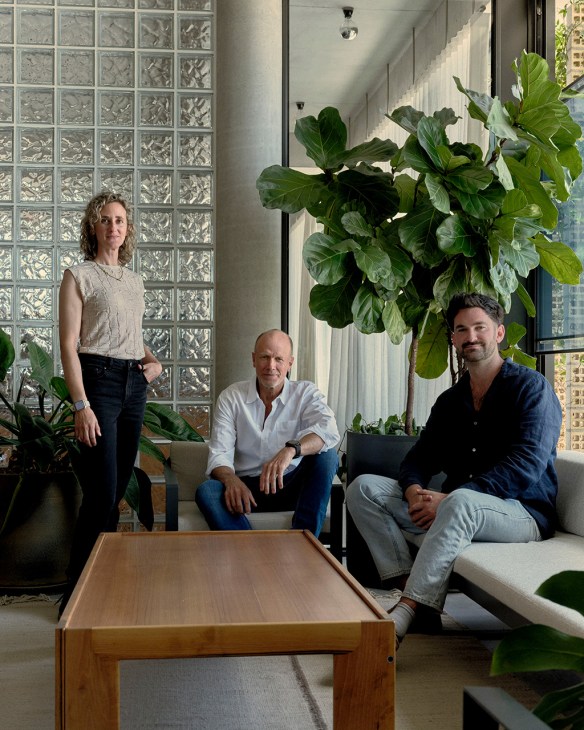

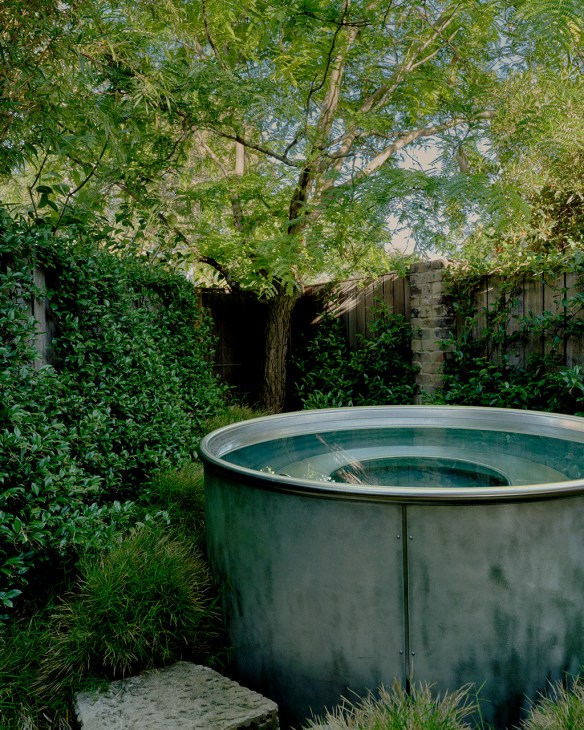
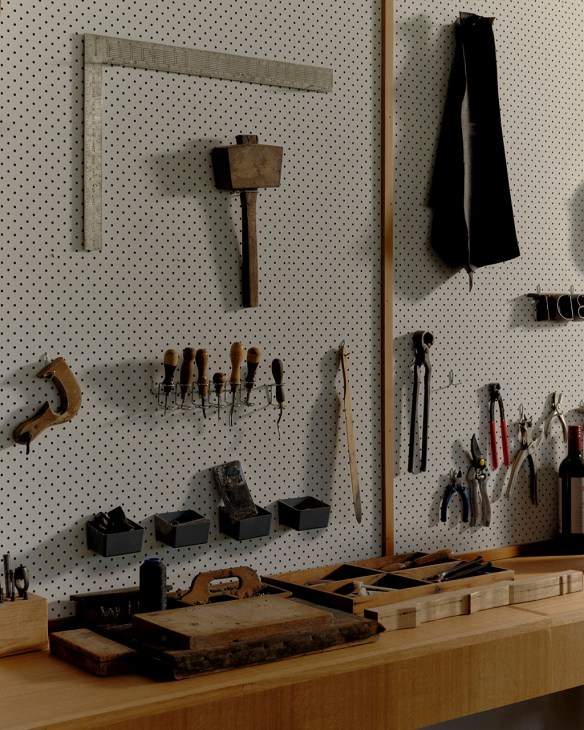
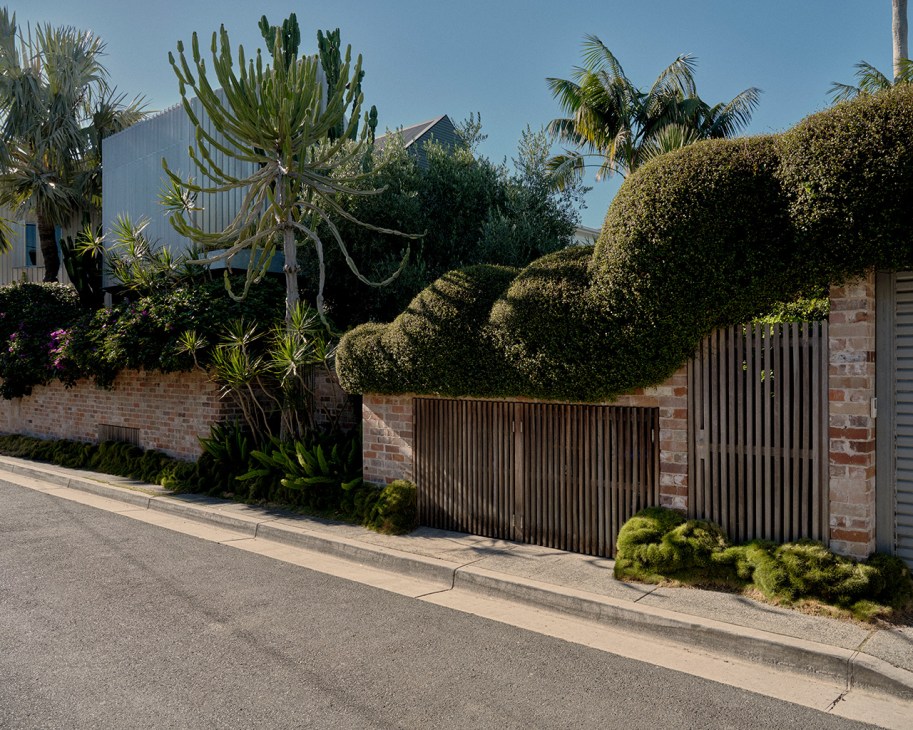
“Dangar Barin Smith started as a lawnmowing business in the 1990s and evolved into a creative practice,” says Will Dangar. “Then Robert Plumb was just sort of tacked on.” Dangar is explaining the evolution of landscape and contracting group Robert Plumb Collective, which he established and co-owns with Bill Clifton. “I was making furniture and doing some installing for Will,” adds the latter. “We had the same accountant, who said that it would be a good idea to team up.”
In the decades since, the creative practice – now a landscape-architecture studio run with Naomi Barin and Tom Smith – became the headline act, delivering some of Australia’s best residential and commercial spaces, prioritising horticulture as much as physical construction.
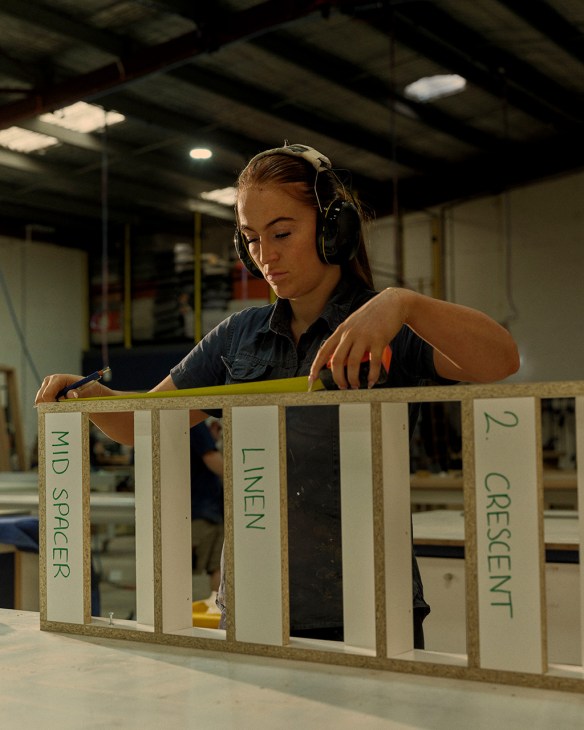
Thanks to the family of businesses formed with Clifton, however, construction remains of the highest standard. Robert Plumb Build is an evolution of Clifton’s original residential building practice, with joinery studio Cranbrook Workshop creating custom furniture and Robert Plumb Fix, Landscape and Management supporting delivery and more. The collective recently added Second Edition, a research practice that minimises construction waste through material reuse. Across the group, there are carpenters, draughtspeople, horticulturalists and wood machinists too.
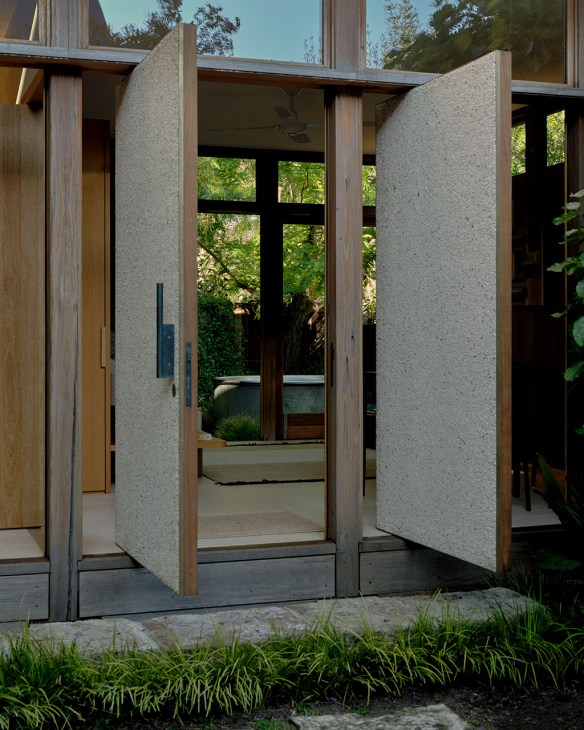
“We can control much of the process in-house, eliminating risk,” says Clifton, pointing to projects such as Love Shack, a small dwelling that was built in a private garden, featuring materials developed by Second Edition. Bismarck House is another standout. Here, Robert Plumb Collective built a landscape defined by a Bismarck palm that provides instant visual impact – an apt metaphor for a company shaking up how our homes and landscapes are delivered.
robertplumbcollective.com.au; dangarbarinsmith.com.au
Material matters
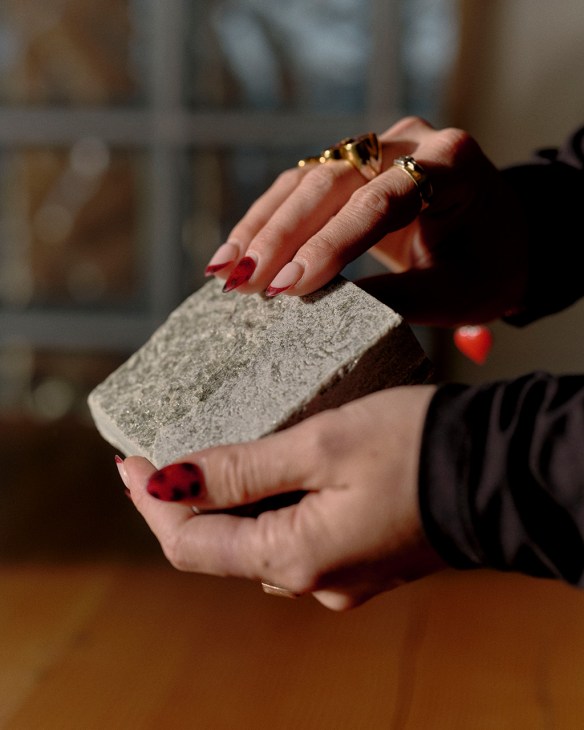
Evolution is essential in the landscape and construction industry, which is why the addition of Second Edition, a pioneering research-based materials company, is a boon for the collective.
Legacy architect
Tilla Theus
Switzerland
For architecture that stands the test of time, imbue it with character by celebrating context and culture.


Swiss architect Tilla Theus has spent more than 50 years proving that architecture can be warm and inviting. She graduated from ETH Zürich in 1969 and immediately opened her own practice, developing a distinctive approach involving the introduction of a sense of atmospheric warmth to historic buildings and new-builds alike. To discuss her continually evolving practice, Monocle meets her at Widder Hotel, a grouping of medieval townhouses dating from the 11th to 15th centuries that she turned into a cosy hospitality outpost.
You often work with heritage buildings. Tell us about your process.
Widder Hotel was a complex project that encompassed everything that defines my passion for this work: it was about understanding the substance of eight medieval townhouses and transforming them into a five-star hotel without imitating the luxury language of the time, with its arches, balustrades and brocade.
How does this work express your broader architectural ethos?
A building has a soul. The task is to understand it and to make it visible through precise and sustained engagement. Old buildings, in particular, have souls. They must be understood and translated into the present.
What do you think should be the architecture industry’s priorities?
The task today is to create buildings that not only meet current needs but can also accommodate future uses. A modern hospital must be modular so that it can adapt to new processes and technologies. The same applies to offices, industrial buildings, hospitality and housing.
tillatheus.ch
Leading creative director
Pierre-Alexis Guinet
France
Good creative directors can deliver snappy new logos but great ones – like Guinet – can help brands both tell and understand their own story.


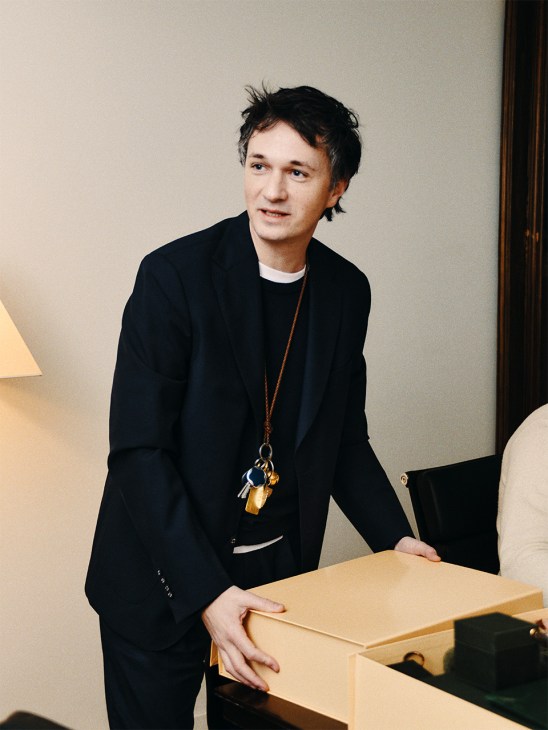
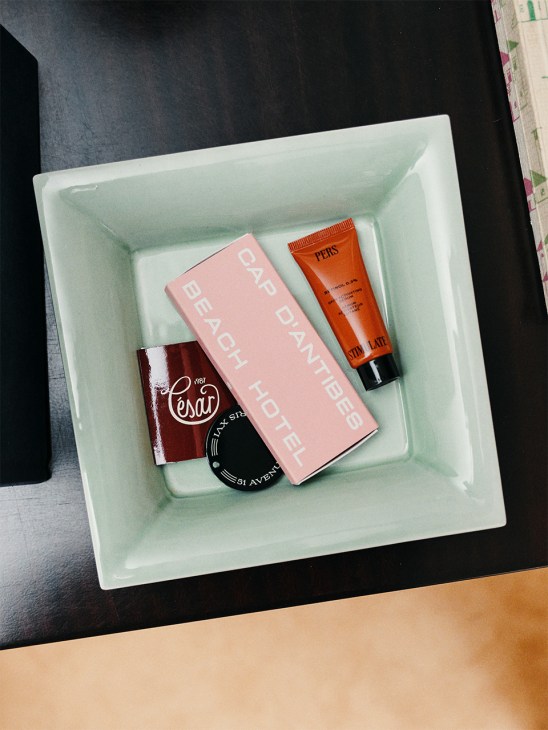
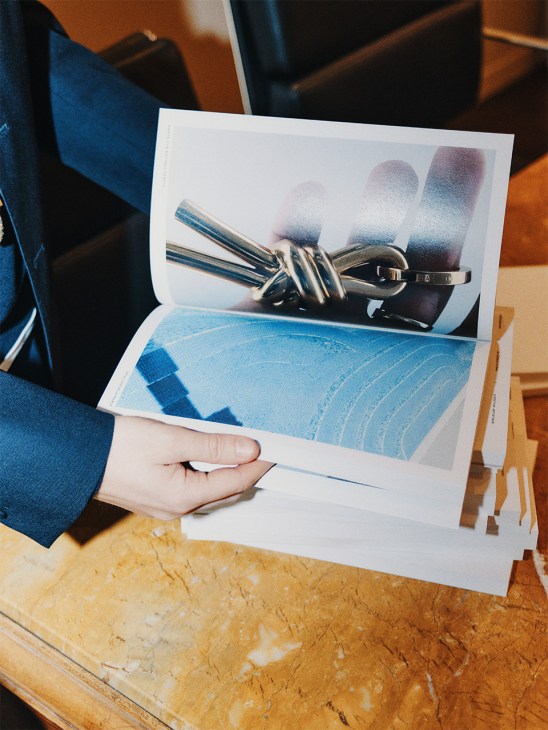
After initial meetings, clients of Paris-based studio Pierre-Alexis Guinet – which works on projects ranging from visual identities to refreshed packaging – are handed a magazine-style book. The bespoke publication is filled with visual references from snippets of historical archives and auction catalogues to travel snaps and screenshots from the internet. “It’s our bible,” Guinet tells Monocle from his studio in Île Saint-Louis. “It outlines the story that we aim to tell.”
It’s an approach that makes Guinet and his team stand out. In an industry dominated by endless scrolling, the book is a welcome antidote. He encourages clients and colleagues to scribble on, earmark or even tear out pages of their copy, allowing it to evolve as a project’s direction takes shape.
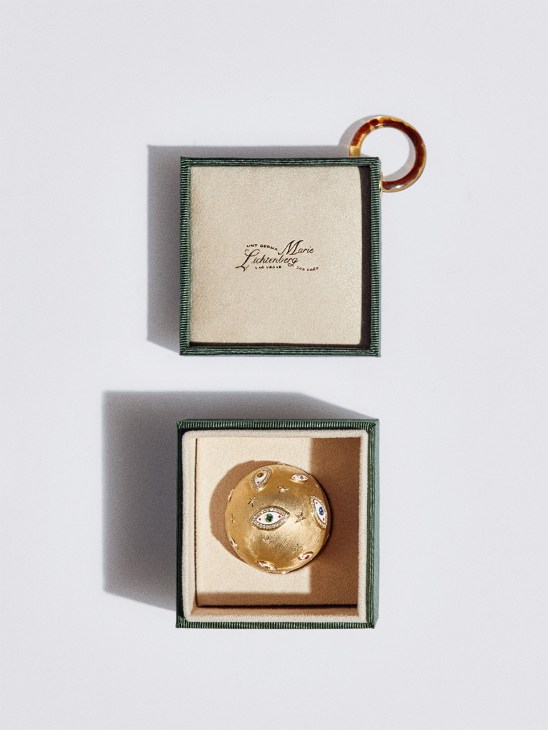
In the seven years since founding his namesake studio, Guinet has worked with hospitality, fashion and lifestyle companies based in France and abroad. Key clients include luxury houses Balenciaga and Hermès (he conceived the modular, block-colour packaging for the brand’s haute joaillerie division), rugmaker Les Editions de Tapis and jewellers Pascale Monvoisin and Marie Lichtenberg, as well as hoteliers and restaurateurs in Saint-Tropez, Miami and beyond. The studio’s services range from art directing a campaign to designing a monogram or staff uniforms that hit the mark.
While Guinet trained in graphic design, he says that his work is about more than just building an eye-catching visual identity. Instead, he seeks to create entire worlds, replete with “props” that range from brand books to bathrobes, coffee cups, keyrings and even scents. “That’s how to create heritage,” he says. All of it, though, starts with a book – which is appropriate, given that even in a digital age, it remains one of the most effective storytelling mediums.
pierrealexisguinet.com
Designer-maker
Andu Masebo
UK
Some of the best contemporary designers, such as Andu Masebo, know how to get their hands dirty, balancing bespoke and industrial production to deliver playful, expertly made works.


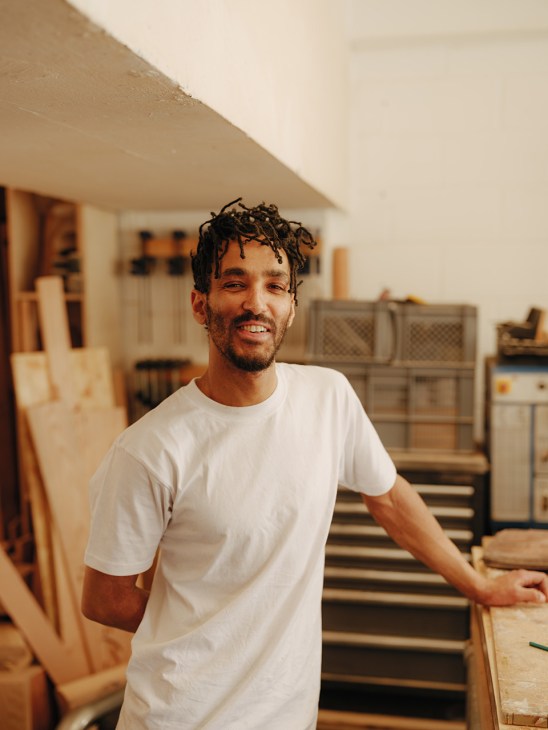
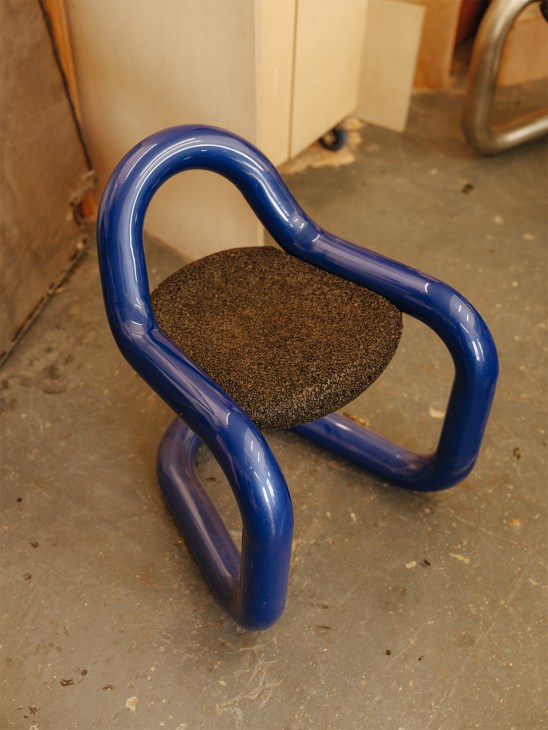
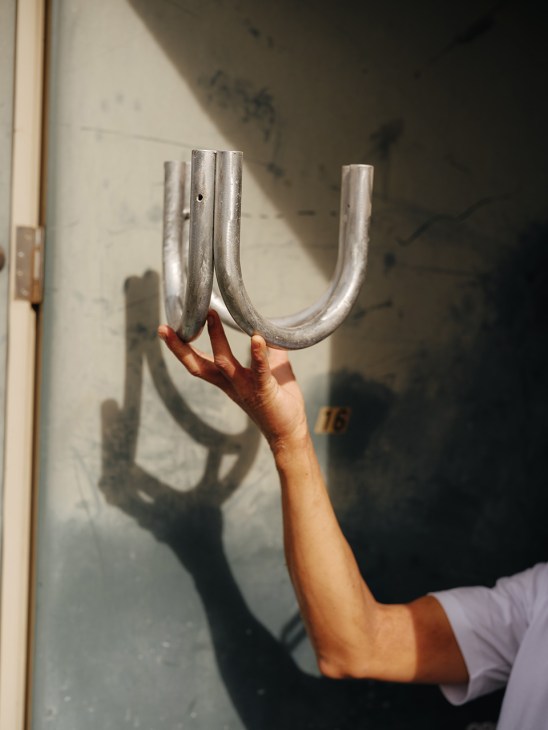
In his London workshop, Andu Masebo takes a hands-on approach to design. With a background in carpentry, metalwork and ceramics, Masebo creates furniture and homeware with unexpected details for users to enjoy. Take, for example, his On the Round shelving system. The freestanding unit is made from soft douglas fir and features rotating dividers that can be tilted at will. Metal designs for the tabletop include a bent piece of tubular steel repurposed as a candleholder or an incense holder that can rock back and forth for better smoke diffusion. Masebo’s applied approach to design creates a conversation between the workshop and the final destination of a piece.
How would you describe your design style?
I see design as an excuse to insert myself into the world. I am interested in the places and the conversations that it can bring about. The interactions that I would have within the parameters that I set for a project lead to the choice of materials or a form.
How do you approach a new project?
You have to establish a set of brackets, the parameters of what a project is about. A precondition could be finding out what the local shopkeepers think of how an area is changing. I’ve done projects where I’ve followed a bus route or started off by disassembling a car. You set yourself a task or a process of investigation. From there, the output is filtered through interactions, observations, people you’ve met, places you’ve gone.
How important is it for you to have a hands-on approach and be a maker, as well as a designer?
There is meditation to be found in the act of doing. For me, it’s not so much about the ritualistic elements of making. It’s more that, when I design something, I want it to be considered from top to bottom – the intention for the overall object but also the way that the bolts connect to the feet that interface with the floor. I want that to be part of the object and not an afterthought. It requires going through the motions of making to really understand the process of how it comes together.
andumasebo.com
Printer of choice
Zürich Print Institute
Switzerland
This institution dedicated to printmaking is keeping traditional methods alive and working to broaden the craft’s reach.


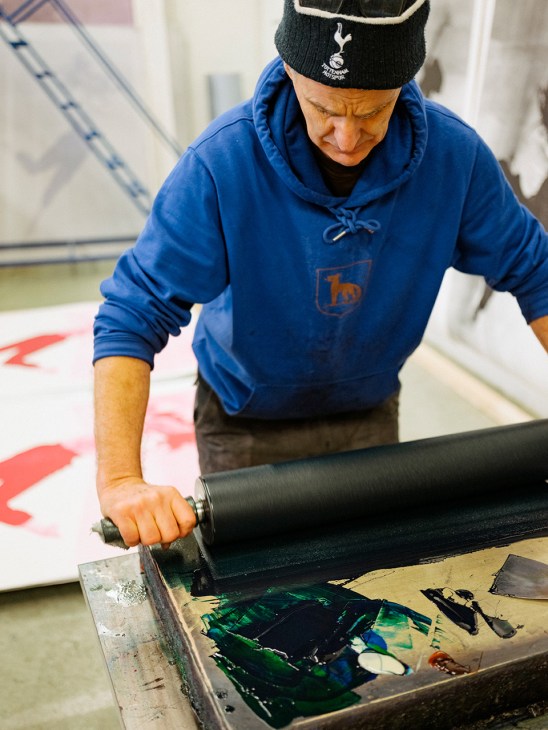
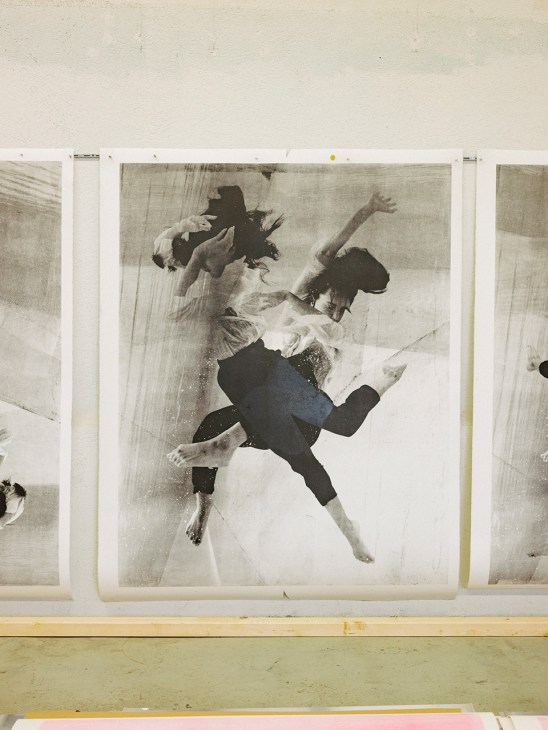
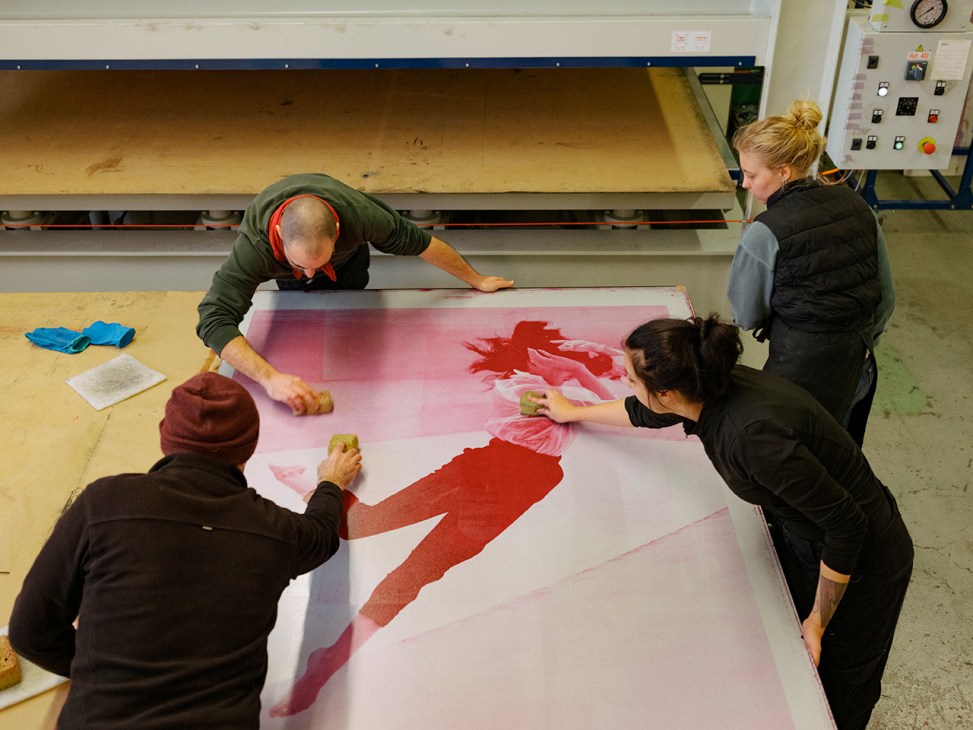

The Zürich Print Institute has a mission: to promote printmaking by bringing ever more people into the fold. Established in 2023 by gallerist David Khalat and master printer Thomi Wolfensberger, it offers high-end production facilities for world-class artists to practice all four processes of traditional printmaking: relief, intaglio, lithography and screen printing. “On the one hand, we’re trying to keep the tradition of printmaking alive,” says Khalat. “But we’re also pushing the boundaries with format. The work often starts as a print, then becomes an art object.”
The institute also wants to engage with people beyond the artistic community, offering consultancy on everything from classical techniques to digital and 3D methods. It brings in the public through exhibitions and cultural programming at its location in central Zürich too. “It’s a programme that interests both the artists and the audience,” says Khalat.
zurichprintinstitute.com
Keepers of the flame
The survival of traditional production methods such as printmaking is essential if we want to preserve cultural identities, maintain irreplaceable human skills and support local economies.
Designers of the year
Formafantasma
Italy
Drawing from manufacturing, technology and material research, this Milan-based studio has made a strength out of connecting disciplines and cultures.


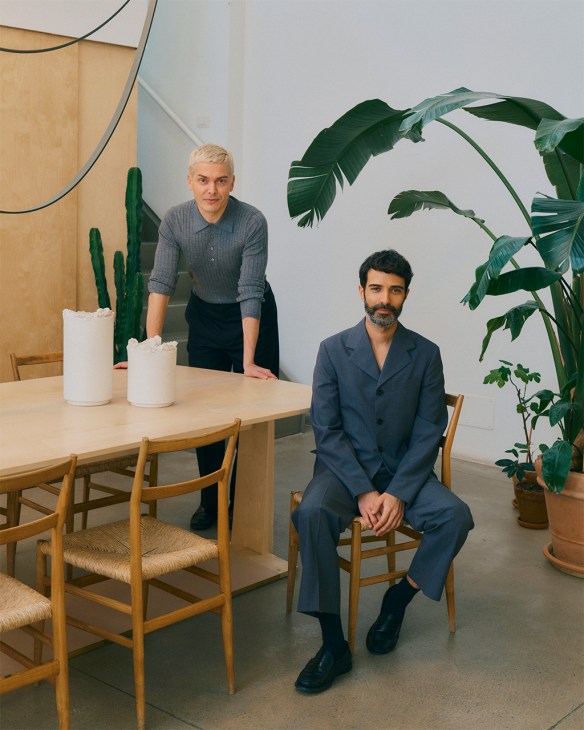
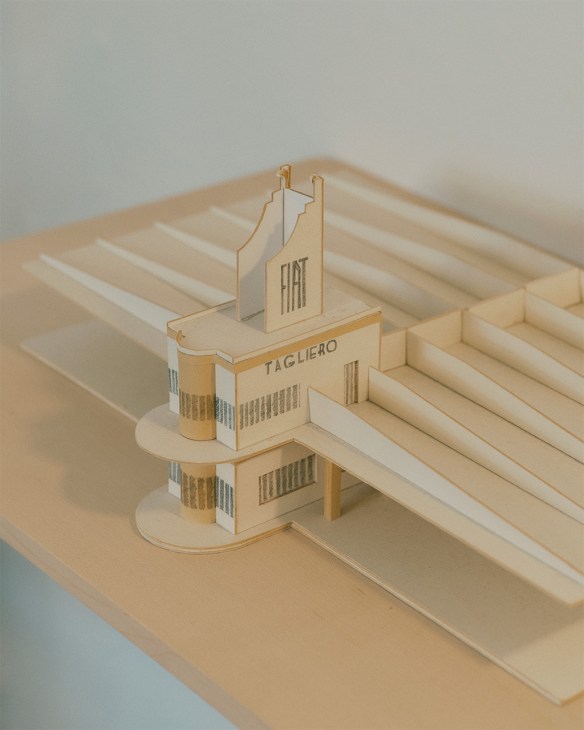
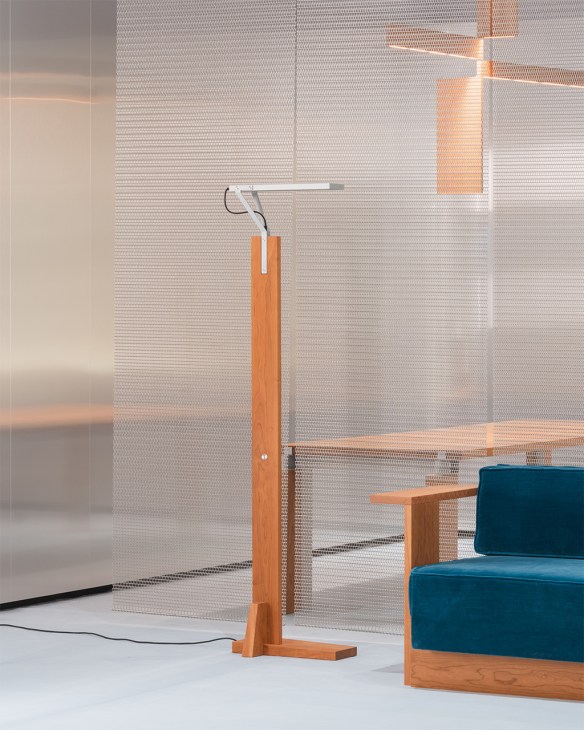
“Our name includes ‘fantasma’, which means ghost,” says Simone Farresin. “Someone once said that’s because our work is always haunted by other things. It’s a good point.” The Milanese designer is one half of Formafantasma, the studio that he established with Andrea Trimarchi in 2009. The practice is renowned for drawing on influences ranging from film and art to technology, manufacturing and material research. “We don’t think about our work in isolation,” says Trimarchi. Recent portfolio highlights include set design for Marni, exhibition design for Fondation Cartier, staging for Cassina, repairable lighting for Flos and symposiums for Prada.
“Design sits in between economy, ecology, the life of people and visual culture,” says Farresin. “So why is it so strange that in our work we implement all those things?” We’re certainly not arguing.
formafantasma.com
Research in action
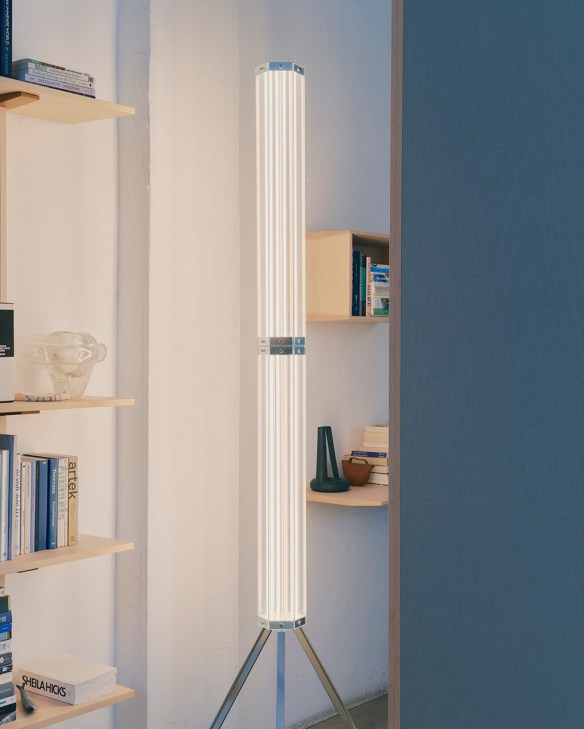
Formafantasma’s work for lighting brand Flos drew inspiration from their research project into repairable technology. The resulting Superwire light features readily replaceable LED lights.
Best industry event
Nomad Abu Dhabi
UAE
Nomad demonstrates what a design fair can achieve by embracing the architecture, geography and culture of its setting.

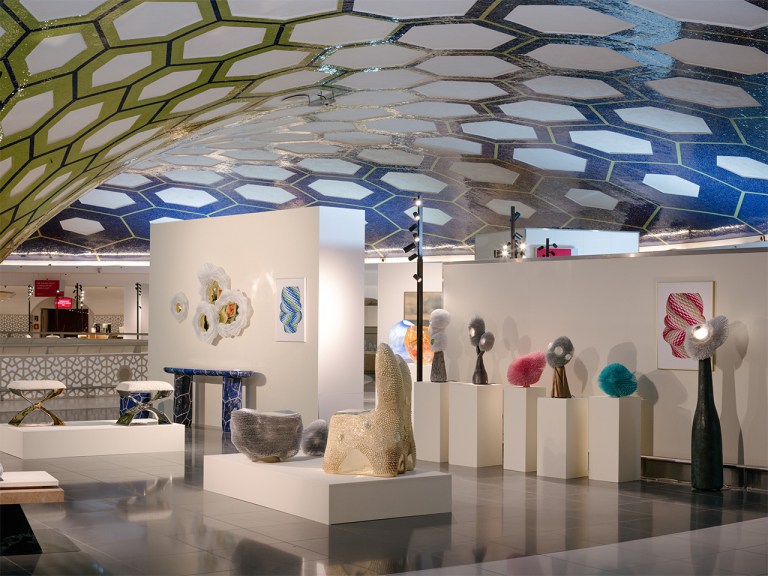


Nomad is one of the most compelling platforms in collectable design and its move into Abu Dhabi last year cemented its position as a benchmark global event for the sector. Its Middle Eastern debut in Zayed International Airport’s decommissioned Terminal 1 felt almost like spatial theatre: works were staged not against neutral walls but within the emotional residue of a place once defined by movement.
“This concept is all about the experience,” says Nomad’s founder, Nicolas Bellavance-Lecompte. “It’s not a pure fair, nor just an exhibition. It’s the intersection of many things.” Rather than defaulting to the white cube, every iteration of Nomad is embedded within a location that shapes the narrative. Abu Dhabi’s edition shows that the future of the design fair lies not in bigger halls but in better settings.
nomad-circle.com
Best design imprint
Monade
Portugal
This publishing house produces architecture books that are accessible without shying away from deep academic enquiry – giving the discipline the respect it deserves.
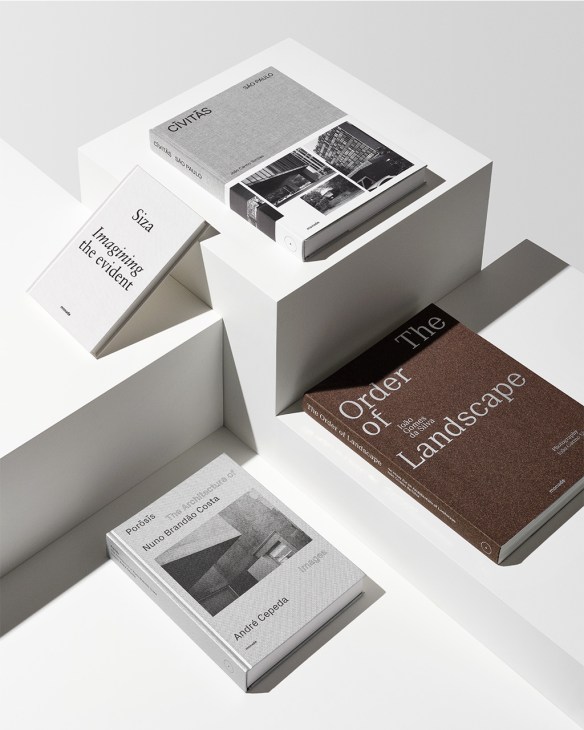
João Carmo Simões and Daniela Sá launched Lisbon-based publishing house Monade in 2016. Over the past 10 years, they have edited books that are neither didactic nor merely decorative, showing the breadth and depth of architecture. “We don’t want our books to be siloed because architecture itself isn’t that way,” says Sá.
With 12 titles to date, Monade offers an insightful window into the discipline. One of its books might delve into the creative mind of a celebrated designer through sketches and journal entries or turn the lens on a single building through layered photography.
monadebooks.com
Best material development
Hydro Circal 100R
Norway
Hydro’s commitment to circularity offers a shining example of what real progress looks like in the materials sector.


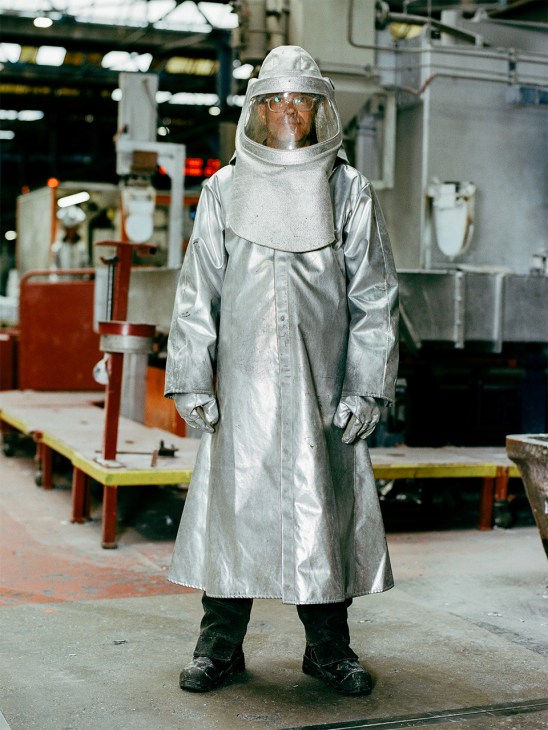
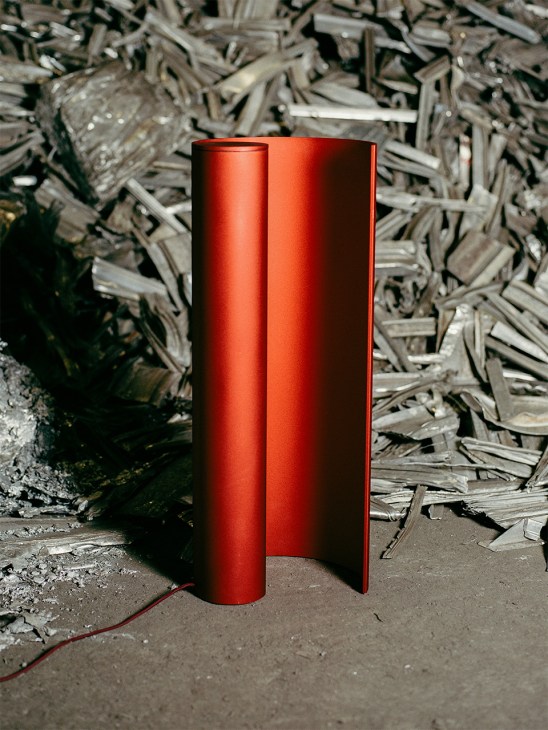
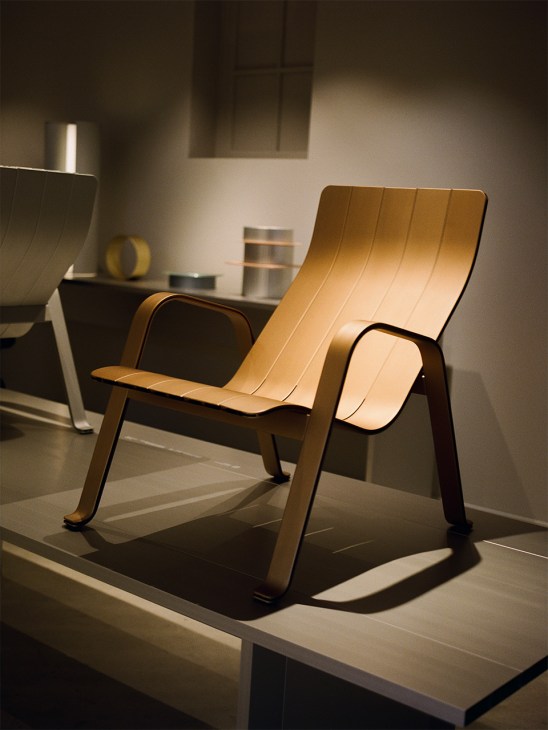
Norwegian raw-materials supplier Hydro’s Circal 100R initiative seeks to elevate the status of aluminium and build more circular economies. It also showcases how a global manufacturer can both recycle and produce on a local scale. Scrap is refined into Hydro Circal aluminium, made from 75 per cent post-consumer waste, and turned into bespoke furniture and lighting pieces constructed within a 100km radius of one of the Norwegian firm’s European manufacturing facilities.
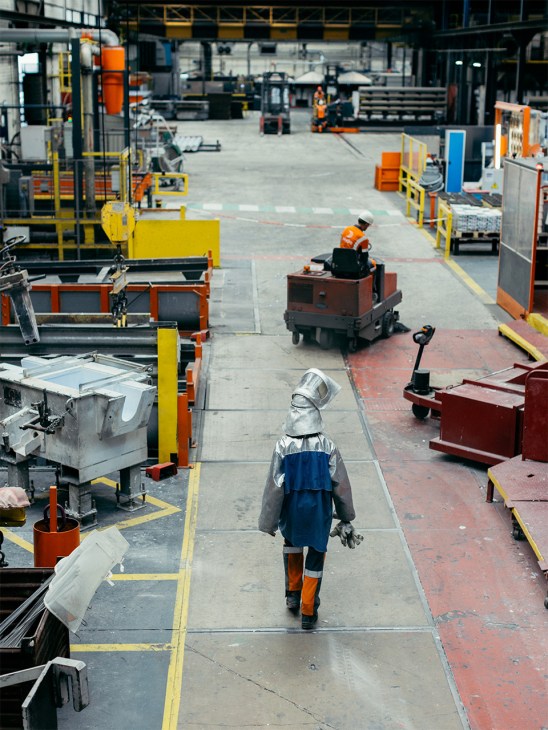
“We had to find new partners for bending and anodising within that radius,” says Hydro’s business-development manager for the Benelux region, Yon van den Oever, when he shows Monocle around one of the firm’s facilities in the Dutch city of Drunen, just ahead of the country’s annual design week in Eindhoven. Here, everything from crushed window frames to streetlight poles are being melted, purified and extruded into aluminium profiles before designers turn them into covetable wares. The result, presented at Dutch Design Week, is a model for how materials industries can evolve to have a bigger focus on tighter supply chains, closer partnerships and designing for reuse from the start.
hydro.com; r-100.no