On the hunt for a reliable everyday ride? Here are four high-quality bike makers you should know
From city commuters to long-distance road racers, these are makers who pride themselves on sturdy construction and steady riding.
In the quest for environmentally friendly transit, many people turn to bicycles. The (usually) two-wheeled vehicles have zero emissions and take up very little parking space. Visit any climate-conscious city and you’ll find a network of cycling lanes, with shops and mechanics that fuel a local bike culture.
But as anyone uninitiated who has ever entered a cycle shop knows, the process of buying a bicycle is anything but simple. Options seem infinite: hybrid, road, mountain, commuter or cargo? Do you want a steel or carbon frame? How many gears will you need – or do you need to shift at all? Those are just the top-level decisions. And we haven’t even begun to talk about the brands. Navigating the market can feel like pedalling across a chaotic highway: some are trustworthy, others are not and the stakes are high.
For those on the hunt for high-quality rides that will reliably take you from A to B, here’s a round-up of four manufacturers from our archive – and one maker who can take you even further afield (for a price).
Achielle
Made in: Pittem, Belgium
Known for: Premium bikes that blend performance, style and heritage for discerning cyclists.
Peter Oosterlinck and his brother, Tom, are steering their third-generation family business, Achielle, back to the front of the continental peloton. “When my grandfather Achiel started building frames in 1946, there were about 250 companies in Europe doing the same,” says Peter. “By 2000, there were only four.” The cause of this decline? Cheap Asian imports of steel bicycle frames. Rather than go toe-to-toe on price, the Oosterlincks changed gears, deciding to construct entire bicycles using high-quality European-made parts and accessories, including Brooks England saddles and Busch & Müller headlights from Germany.


Read more about the 80-year-old manufacturer.
Flinc
Made in: Zürich, Switzerland
Known for: Compact cargo bikes made from a special steel alloy that weighs 16kg, about a third of the weight of the average cargo bike.
Markus Freitag’s passion for pedals was first ignited in 1982 while watching Steven Spielberg’s ET. Some 40 years later, the Zürich-born entrepreneur has created a Spielberg-inspired bicycle brand that’s perfect for nipping around his hometown. Called Flinc, its namesake model is a svelte two-wheeler that is as compact as an urban minibike, as capacious as a cargo bike and as sturdy as ET’s BMX. “Our niche is an easily manoeuvrable model with a simple but sophisticated luggage system,” says Freitag.


Read more about the Zürich-based bicycle brand.
Canyon
Made in: Koblenz, Germany
Known for: A range of custom-build models and innovative e-bikes tailored to your needs.
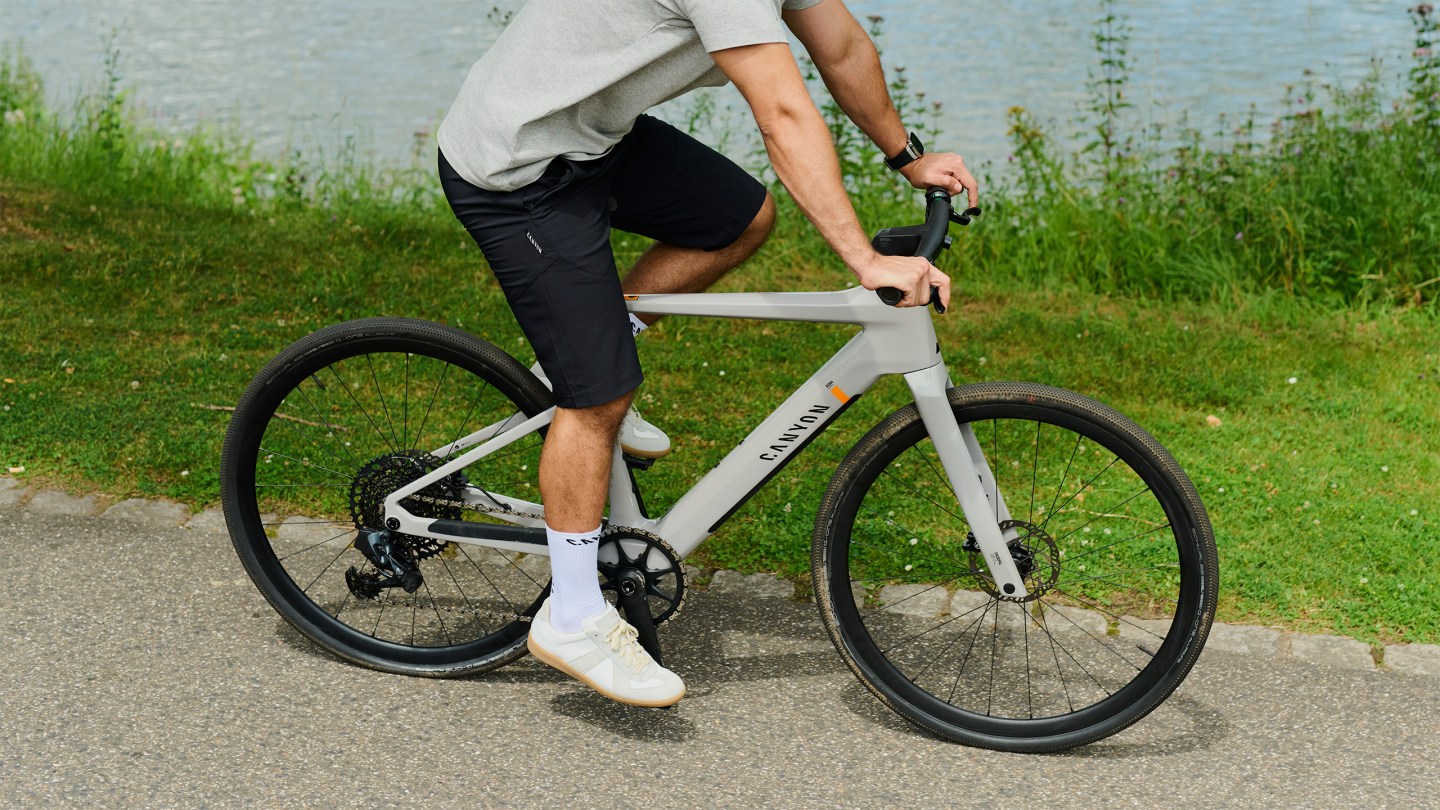
Founded as a bicycle retailer called Radsport Arnold in the 1990s, Canyon now has an extensive number of both pedal and e-bikes – from road to mountain – on offer via its website. It’s determined to be at the forefront of a bicycle industry that’s continuing to develop at almost the same lick as the automotive trade. The company, which employs nearly 1,700 people worldwide, including at a hub in Amsterdam, isn’t aiming to be the next Specialized or Giant Bicycles. In fact, being the biggest bike company in the world isn’t part of its game plan. “Others play that role,” says De Ros Wallace. “Our ambition is to be the most innovative and inspiring.” The brand is banking on differentiation to stand out from the pack as it looks to tweak its catalogue. Part of the plan, being an e-commerce player, is striving to provide the best customer service and extending the ways in which consumers can interact with the brand. Canyon’s physical presence is also being extended with the growth of its Canyon Factory Service (CFS) centres – essentially repair workshops – that are currently operating in towns including Rotselaar in Belgium and Eindhoven in the Netherlands.


Read more about the brand and take a tour of Canyon’s headquarters.
FES
Made in: Berlin, Germany
Known for: High-speed bicycles made for Olympians.
FES, short for Institut für Forschung und Entwicklung von Sportgeräten, was founded in 1963, when this part of Berlin was inside the GDR. With the Cold War as a motivator, East and West Germany were often racing helmet to helmet in Olympic velodromes. Many of FES’s bicycle innovations were quickly adopted across the Iron Curtain, including making frames from carbon fibre and switching from spokes to disc wheels. Preserved post-reunification, the institute works with a modest budget – about €10m in 2024. Only a few firms can rival the wheels moulded at FES. “Regulators often look for features that only FES has and ban them,” says director Michael Nitsch. “We take it as a compliment.”
The manufacturing process begins with the frame, made almost entirely from carbon fibre. It arrives pre-mixed with glue and rolled up like a textile, before being cut, moulded and baked into shape. The B20, FES’s latest model used at the Paris Games, is made from more than 500 components – all individually engineered and moulded in-house. The improvements included a tweaked fork (the bit that connects the wheel to the frame) and a carbon-fibre crank (the part that the chains bolt onto). “At this level, the improvements are tiny tweaks,” says Nitsch. “Everything counts.”
When Monocle asks whether we can take a bicycle out for a spin, Nitsch looks appalled. “We don’t even let these bikes roll on normal floors,” he says. “It makes no sense.” Only professional athletes – as well as the occasional lucky intern – are welcomed into the FES velodrome. Still, there is hope. Olympic regulations stipulate that all gear used by athletes must be commercially available, so FES bikes are for sale. These Weltspitze wheels could yet be ours – for a mere €70,000.


Read more about these bespoke bicycles.
Want more stories on two wheels?