Philippine tourism is about to get a new identity under secretary Christina Garcia Frasco
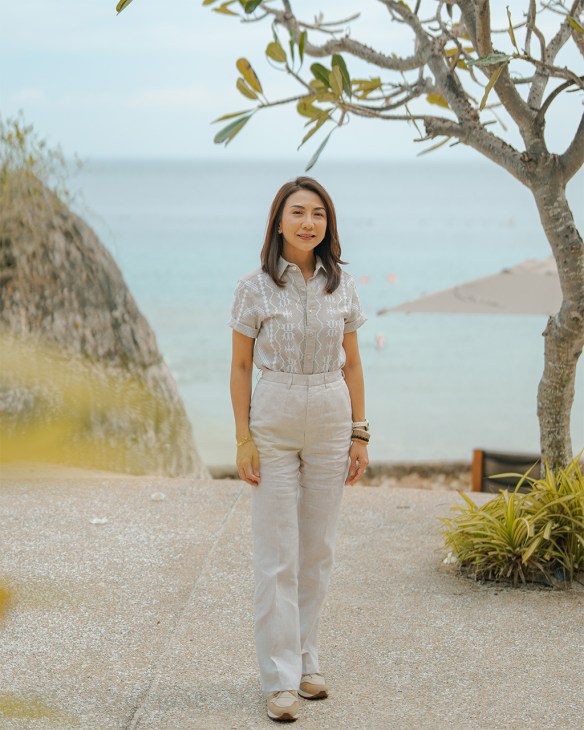
Lawyer-turned-mayor Christina Garcia Frasco stepped onto the national stage in 2022 when incoming Filipino president Ferdinand Marcos Jr asked her to be his tourism minister. Tasked with steering the archipelago out of the pandemic and towards a new model of higher-value tourism, Frasco made waves by replacing the much-loved marketing campaign “It’s More Fun in the Philippines” with the snappier “Love the Philippines”.
The 44-year-old prides herself on canvassing industry views and her project to broaden the country’s appeal is beginning to have results. She brought the Michelin Guide to the Philippines and in 2026 the country will host the UN’s World Forum on Gastronomy Tourism. Frasco sat down with Monocle in her hometown of Cebu to talk about domestic holidaymakers and putting Filipino cuisine on the global menu.
In your national branding, why did you decide to put the focus on food?
Our president was clear that he wanted the Philippines to be reintroduced to the world in a more comprehensive way. Food became a key pillar of our national tourism development and we worked in partnership with the gastronomy sector. Early on in my term, I conducted a listening tour; chefs and restaurateurs were quite forthright about the challenges that they face, their aspirations and the interventions that they wanted to see from the government. The Michelin Guide was one of the first things that they asked for.
Has it been worth the investment?
Yes. It’s an investment in our people and creates opportunities for international travellers to have a deeper engagement with our nation. We want longer stays, higher spending and repeat visits. Overseas tourists used to stay nine nights on average in 2019; now they’re staying 11. We also have the highest tourism spend per capita in Southeast Asia at $2,073 [€1,800]. Our data shows that more than 17 per cent of the tourism spending is on food. We want to increase that.
Why didn’t everyone love the new ‘Love the Philippines’ brand?
It wasn’t an easy transition and it might have been more convenient just to continue to market the country as “fun”. But we have provided more opportunities for more products to be marketed. If our recovery in tourism receipts is any indication, this multidimensional approach is working.
Revenues are up but numbers are down. What matters most?
The traditional measure of success has always been the number of international arrivals but, at a global level, the value of tourism for our communities is certainly getting more attention. We have positive growth rates for visitors from the US, Australia, the UAE, Canada, the UK, Spain and Germany. That speaks to our effort to project ourselves as a high-value destination.
Where does domestic travel fit in?
Last year there were 134 million domestic trips across our islands and the World Travel & Tourism Council ranked the Philippines as number one in this category in Asean. It’s a backbone for our country and we will continue to support it by working with our transportation and aviation sectors. Our local carriers are continuing to invest and we’re also encouraging sea travel.
What’s the pitch to foreign investors?
For every peso spent on tourism, there’s a yield of 5.50 pesos – a 450 per cent return on investment. We have more than 7,000 islands and, compared to the rest of the region, we are still fairly unsaturated. There are about 335,000 room keys across the country but it is projected that by 2028 there will be a demand for about 456,000 rooms. We’re inviting investors to build more accommodation, resorts, marine transportation, airports, amusement parks and more.
Where should we explore in the Philippines?
Batanes will leave you with gratitude for having encountered not just a vast array of terrain and well-preserved heritage houses but also a rare community built around honesty. It has a communal shop where you can take whatever you want and leave money or a donation. Meanwhile, the Cordillera Administrative Region is home to our rice terraces. Much of that region was untouched by colonisation and tribes have carried on their traditions, from clothing to food.
Give us a flavour of Filipino cuisine.
Sisig [minced pork served on a hot plate] is really popular in the north of the country, such as Pampanga, while Cebu is known for its lechon [roasted pig]. And every region has a version of adobo, a chicken or pork dish that is simmered in soy sauce and spices.
And finally, do secretaries of tourism in the Philippines ever go on to become president?
None that I’ve known of, so far.
Christina Garcia Frasco’s CV
1981: Born in Cebu, Philippines
2006: Completes legal studies at Ateneo de Manila University
2007: Becomes a commercial litigation and international arbitration lawyer at Romulo law firm in Manila
2016: Elected mayor of Liloan, Cebu. She goes on to win three consecutive elections
2022: Appointed 18th secretary of the Department of Tourism
2023: Unveils the new tourism campaign “Love the Philippines”
2025: Philippines pavilion at the World Expo in Osaka wins silver award for exhibition design
Read next: The Philippines’ infrastructure revolution has an unlikely architect