This award-winning Chilean football stadium is an architectural triumph
Stadiums aren’t just sports facilities. Done well, they can foster a sense of community and even enhance landscapes – as this example shows.
Claro Arena by Idom
Monocle Design Awards 2026: Best civic renovation, Chile
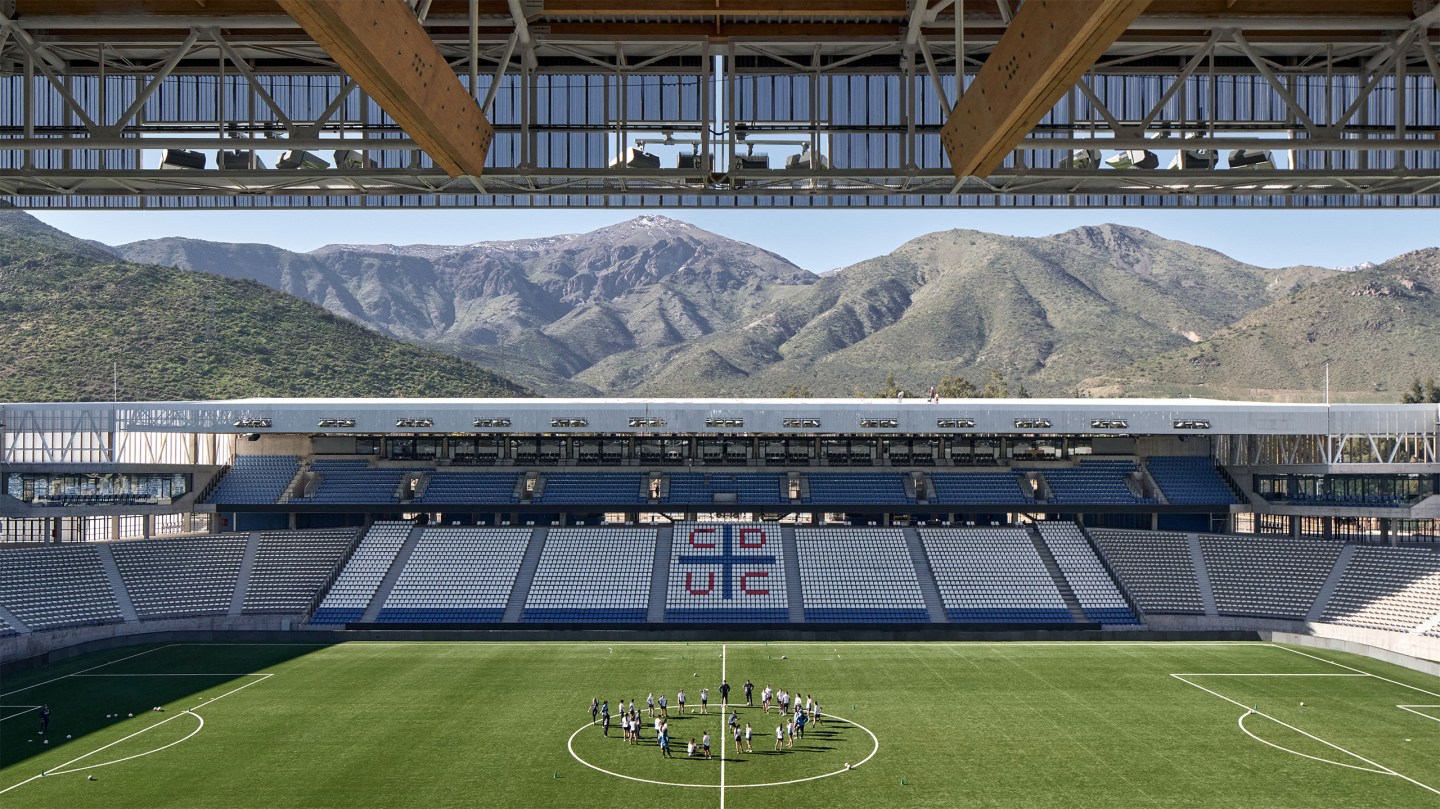
A good work of architecture should enhance the landscape that it’s in – and that’s exactly what the Claro Arena does, framing a striking view: the distant peaks of the Andes. Located in Santiago’s northeastern foothills, it has been the home of football team Club Deportivo Universidad Católica since the 1980s and has hosted concerts for the likes of Andrea Bocelli and Oasis. But the ground’s former 12,000-seat capacity needed expanding and modernising. “We maintained 95 per cent of the sightlines,” says Borja Gómez Martín, a lead architect at Spanish architecture firm Idom, which was tasked with transforming the brutalist and beloved sporting landmark. “By approaching the project like a tailor, we elevated and extended the ground, rather than tearing it down, expanding capacity to 20,000 spectators.”
The stadium originally sat low in the terrain but Idom introduced a lighter frame that hovers above the concrete base. A new upper level incorporates dressing rooms, press centres, technical areas, premium hospitality spaces and viewing galleries. Central to this is the 360-degree perimeter boulevard, a concourse that operates as the ground’s circulation system. It connects all areas of the site and choreographs the movement of visitors while offering them panoramic views of Santiago and the landscape through its slatted wooden façade.


Gómez Martín and fellow lead architect, César Azcárate Gómez, resisted the generic steel and glass used in most modern stadiums. Instead, Idom opted for laminated Chilean radiata pine slats that tilt and extend to offer shade, open to allow ventilation and can be narrowed where sound needs to be kept in, amplifying the atmosphere created by spectators.
For architects, modern football stadiums are a difficult proposition: how do you create a lively atmosphere in residential neighbourhoods that are averse to too much noise; make matchgoers feel welcome while striking fear into the opposition; and adapt the space for dual use, while maintaining a place that devoted fans have adored for generations? “We approached it sensitively,” says Gómez Martín. “We collaborated with local firms and we sought to understand how locals in the Los Condes neighbourhood interact with the stadium.” The renovation shifts the space from a single-purpose venue into a multipurpose one with better hospitality, commercial and event infrastructure. It ensures that the Claro Arena generates revenue beyond match days, embedding itself into the city’s economic fabric and corporate offering year-round. It’s a project that understands that a stadium is not just a container for sport but also a piece of civic architecture. Oh, and in this case, something that frames a famous view too.
Care to learn about the other beautiful buildings and architectural design that won a Monocle Design Award this year? Here are eight spaces that caught our eye this year – from a trade school to a revived waterfront.